Perfect Baked Potato Recipe (Oven & Microwave Methods)
Ingredients
Scale
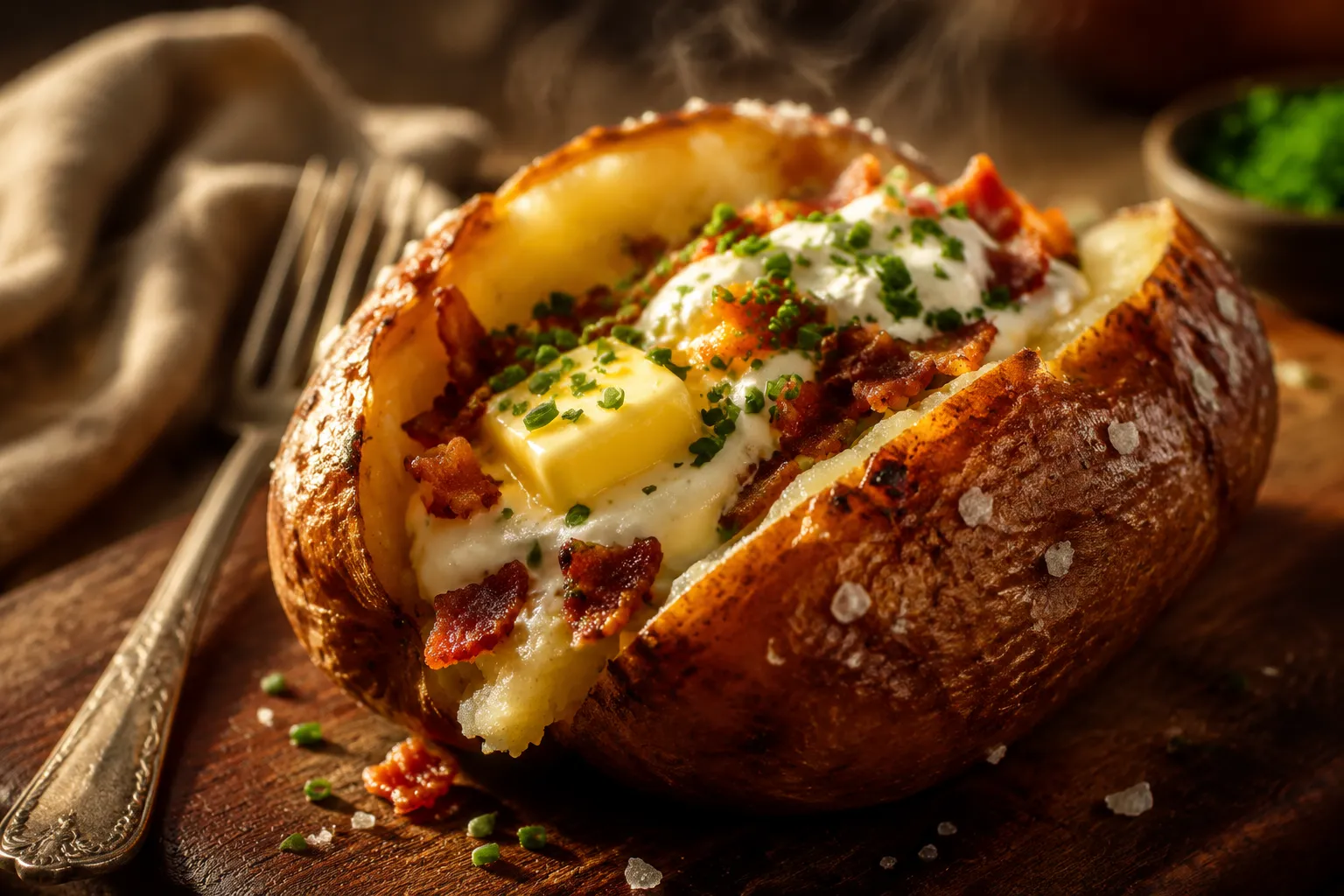
The ultimate baked potato with shatter-crisp salted skin and a cloud-fluffy inside. Two foolproof methods: classic oven and 10-minute microwave.
There's something deeply satisfying about a perfect baked potato — the kind with shatter-crisp salted skin that crackles under your fork and a snowy white interior so light it practically floats off the plate. After years of testing, I'm convinced the difference between a good baked potato and a great one comes down to a handful of simple choices: the right potato, a generous oil-and-salt rub, and an oven hot enough to do the work.
This guide gives you both my gold-standard oven method and a faster microwave shortcut for weeknights when you need dinner on the table in 15 minutes flat. Either way, you'll end up with that fluffy interior steakhouses charge nine bucks for, plus a roundup of every topping idea worth knowing — from classic butter and chives to a fully loaded chili-cheese situation.
Whether you're building a quick weeknight dinner around one or planning a full potato bar for a crowd, this is the only baking-a-potato playbook you'll ever need.
When it comes to baking, not all spuds are created equal. The best results come from starchy varieties — and that's where russet potatoes earn their crown. Their high starch content and low moisture mean they bake up exceptionally fluffy on the inside, while the thick, sturdy skin crisps into something genuinely craveable. Yukon Golds and red potatoes have their place, but they're too waxy and dense for what we're going for here.
Size matters more than you might think. Aim for medium russets in the 8 to 10 ounce range — roughly the size of your fist. Anything larger and the outside dries out before the center is fork tender; anything smaller and you sacrifice that signature fluffy interior. Buying loose lets you hand-pick uniform sizes, which is key because they all need to finish at the same time.
At the store, look for potatoes that feel heavy for their size with smooth, taut skin. Skip any with green patches, sprouting eyes, soft spots, or wrinkled skin — those have been sitting too long and will bake up gluey rather than light. Store them in a cool, dark, well-ventilated spot at home, never in the fridge, where the cold turns their starches sugary and weird.
The beauty of this recipe is how few pantry staples it asks of you. Four medium russets, good olive oil, and flaky kosher salt are technically all you need to get to crispy skin, fluffy heaven. Everything else is about how you want to dress things up at the table.
For the rub, olive oil is my go-to — it spreads easily, takes high heat without smoking, and gives the skin a savory sheen. Some folks swear by softened butter for richness, but it browns faster and can lead to spotty burnt patches if your oven runs hot. Save the butter for the inside, where it belongs.
Don't skimp on the salt. Flaky kosher salt (Diamond Crystal or Morton) sticks to the oiled skin and forms a savory crust as the potato roasts. Fine table salt slides right off and over-seasons everything it does land on, so reach for the bigger crystals. Crack a little fresh black pepper over the top right before serving for a bright, peppery finish.
Here's the foolproof routine I come back to every single time. The classic oven method takes about an hour, almost entirely hands-off, and rewards you with the kind of restaurant-quality results that justify skipping the foil and the shortcuts.
Start by scrubbing each potato well under cool running water — these are coming to the table skin-on, so a clean canvas matters. Pat them completely dry with a kitchen towel; any leftover moisture steams the skin instead of crisping it. Use a fork to prick each potato 8 to 10 times all over, which lets steam escape and keeps them from bursting in the oven.
Drizzle each potato with olive oil and use your hands to massage it into every nook and crevice, then sprinkle generously with flaky kosher salt, rolling the potato so the salt sticks to all sides. The oil helps the salt cling and conducts heat directly into the skin, which is the whole secret to that addictive shatter-crisp finish.
Place the potatoes directly on the middle rack of an oven preheated to 425°F, with a parchment-lined sheet pan on the rack below to catch any oil drips. Direct contact with the rack means dry, hot air hits all sides at once — much better than a sheet pan, which steams the bottom. Bake for 50 to 60 minutes, depending on size, flipping once halfway through.
You'll know they're done when a paring knife slides into the center with zero resistance and the skin looks deeply golden, blistered, and crackly. If you're after pure precision, an instant-read thermometer should hit 205 to 210°F at the center — that's the magic temperature where the starch granules fully gelatinize into that cloud-like fluffy interior.
Don't slice them open with a knife — that compresses the inside and ruins everything you just worked for. Instead, pinch the ends toward the middle to crack the top open, then use a fork to fluff the steaming insides. A pat of butter goes on first so it can melt into every fluffy crevice before the rest of the toppings pile on.
On busy weeknights, a microwave baked potato saves the day. The trick is treating the microwave as a shortcut to fully cooked starch, then finishing under the broiler for two or three minutes to give you that signature crispy skin. Pure microwave-only potatoes have flabby, sad skin — but a quick broil fixes it completely.
Scrub and dry your potato as usual, prick it all over with a fork, and microwave on high for 5 minutes. Flip it and microwave for another 3 to 5 minutes, depending on size. A medium 8-ounce russet usually needs about 8 to 10 minutes total; if your microwave runs weak, add another minute and check.
Once it's tender all the way through, rub the cooked potato with olive oil and flaky salt and slide it under a hot broiler for 3 to 5 minutes, watching closely. The skin will blister, brown, and turn audibly crispy in real time. The result tastes shockingly close to the full oven version in a fraction of the time — it's now my secret weapon for weeknight dinners and last-minute lunches.
This is where the real fun begins. A finished spud is a blank canvas for whatever loaded potato toppings sound good that night. The classic combo — cold sour cream, melty butter, crispy bacon crumbles, snipped fresh chives, and a generous shower of sharp cheddar — earned its reputation for a reason. It hits every craving at once: rich, salty, creamy, oniony, and crunchy.
For a vegetarian-leaning option, broccoli and cheddar is hard to beat. Steam small florets until just tender, then pile them onto the open potato and top with sharp shredded cheddar and a quick blast of broiler heat to melt everything together. Chili and cheese turns one potato into a full meal — ladle on a generous scoop of beef or vegetarian chili, top with cheese, sour cream, and pickled jalapeños, and you've basically built a chili dog out of a potato.
If you're meal-prepping or feeding a crowd, this is also where you stop thinking of a baked potato as a side dish and start thinking of it as the entire dinner. Set out small bowls of toppings — caramelized onions, sautéed mushrooms, leftover pulled pork, herby Greek yogurt, hot sauce, scallions — and let everyone build their own.
A loaded baked potato is right at home next to a grilled steak, a roast chicken, or a piece of pan-seared salmon. For a complete plate, serve one alongside a crisp green salad and maybe a piece of crusty bread to mop up any stray sour cream. They're also a smart side for backyard cookouts since you can bake a whole tray ahead and keep them warm wrapped loosely in a clean towel.
The real win, though, is what you can do with leftovers. Cooled, refrigerated potatoes are the starting point for some of the best second-day recipes in the rotation. Scoop the flesh out, mash it with butter, cream, and cheese, then pile it back into the skins for twice baked potatoes. Whip the cooled flesh with cream and butter for fluffy baked mashed potatoes that get a quick crispy top under the broiler. Or dice them into a creamy, smoky pot of baked potato soup with bacon, sharp cheddar, and chives — basically a loaded spud in soup form.
The base recipe is endlessly riffable. Once you've nailed the oven and microwave methods, try one of these variations the next time you fire up the oven:
Cool baked potatoes completely, then store them whole and unloaded in an airtight container in the fridge for up to 4 days. Don't refrigerate them with toppings already on — sour cream and butter break down quickly and the texture suffers. For longer storage, scoop out the flesh, freeze it in zip-top bags for up to 2 months, and use it for soup or mashed potatoes later.
To reheat without drying out, place the whole potato on a sheet pan in a 350°F oven for 15 to 20 minutes, or until heated through and the skin re-crisps. Skip the microwave for reheating if you can — it makes the skin rubbery and the inside gummy. If you must use the microwave, slice the potato in half first, cover loosely, and heat in 30-second bursts until just warm.