Cheese Sauce Recipe: Silky, Foolproof in 10 Minutes

4.8 from 12 reviews
0SHARES

Now Playing

Cheese Sauce Recipe: Silky, Foolproof in 10 Minutes

0:00
0:00
Cheese Sauce Recipe: Silky, Foolproof in 10 Minutes

A silky, foolproof cheese sauce recipe made with sharp cheddar, butter, and milk in just 10 minutes. Perfect over pasta, fries, broccoli, or nachos.

Why You'll Love This Recipe
  • Ready fast: From the first pat of butter to the final glossy whisk, this sauce comes together in about 10 minutes of cooking time.
  • Silky and lump-free: A simple roux gives the sauce structure, so the cheddar melts into a smooth, pourable base instead of clumping.
  • Big cheddar flavor: Freshly shredded sharp cheddar keeps every bite tangy, savory, and deeply cheesy.
  • Everyday ingredients: Butter, flour, milk, cheese, and a few seasonings are all you need for a homemade sauce that tastes restaurant-worthy.
  • Endlessly useful: Drizzle it over vegetables, fries, pasta, baked potatoes, nachos, or pretzels.
This cheese sauce recipe is the kind of silky, glossy, restaurant-style pour that makes broccoli disappear, fries feel like dinner, and a bowl of pasta taste instantly cozy. It starts with a simple butter-and-flour roux, turns creamy with whole milk, and finishes with a generous handful of freshly shredded sharp cheddar. The result is rich without feeling heavy, smooth without clumping, and ready before you can talk yourself into opening a jar.
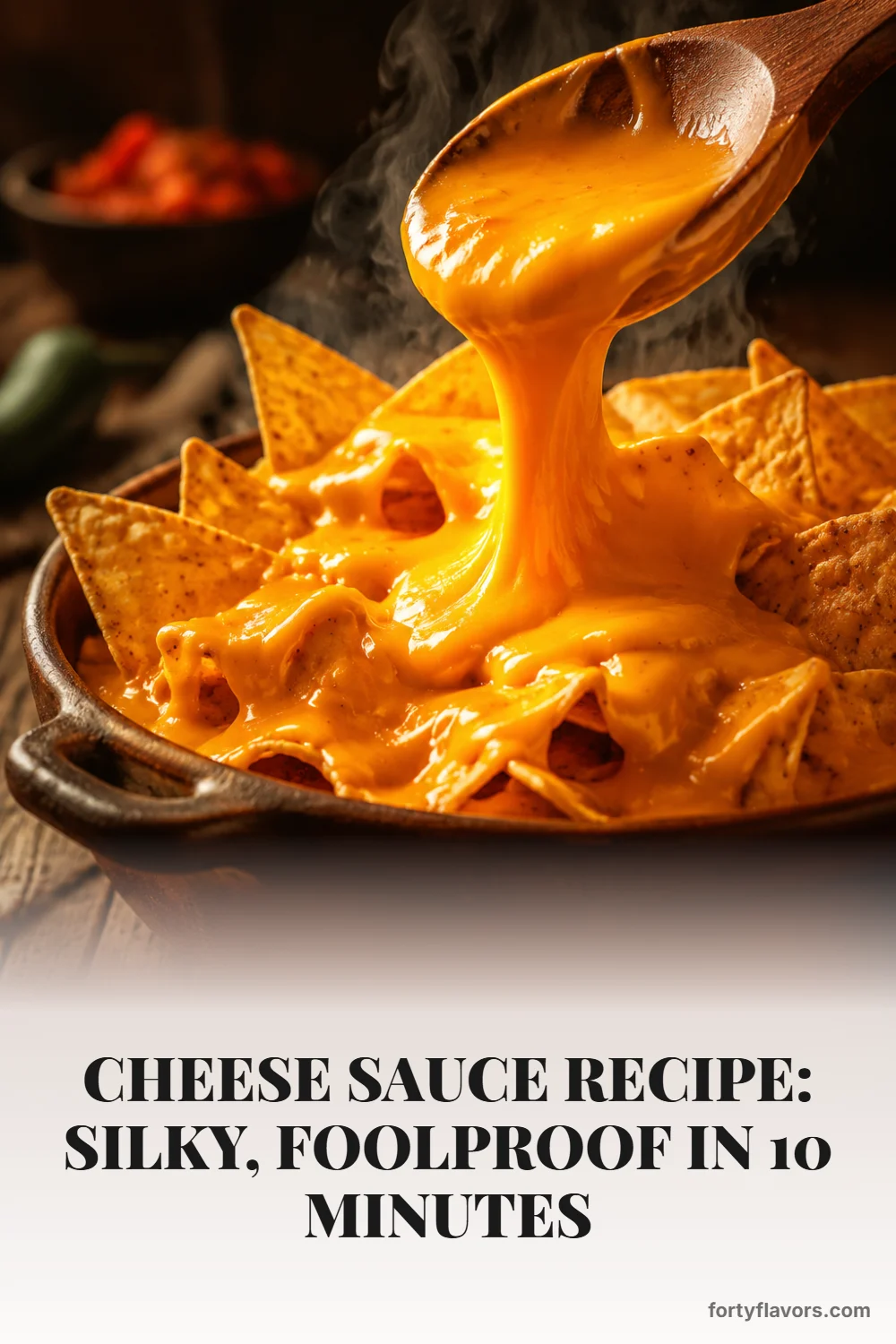
Cheese sauce recipe being poured over tortilla chips with golden cheddar drip
If you have ever wondered how to make cheese sauce that stays creamy instead of turning grainy, the secret is less about fancy ingredients and more about timing, temperature, and texture. A gentle heat, a whisk, and cheese shredded from a block make all the difference. Think of this as your go-to homemade sauce for weeknights: spoon it over steamed vegetables, fold it into macaroni, drizzle it on a loaded baked potato, or serve it warm as a dip for pretzels and chips. I especially love that this easy cheese sauce sits right in the middle of everyday and special. It is humble enough for after-school nachos, but polished enough to serve with roasted cauliflower or a steakhouse-style baked potato bar. Keep the base classic, then make it your own with mustard, cayenne, smoked paprika, or a splash of beer when the mood calls for something pub-style.

What Makes This Homemade Cheddar Sauce So Good

A great cheddar sauce should be thick enough to coat the back of a spoon, but loose enough to pour in a golden ribbon. This one gets there by building a classic roux first, which gives the dairy structure and keeps the melted cheese suspended in a smooth, stable base. That means no greasy puddles, no stringy clumps, and no chalky texture when it hits warm pasta or vegetables. The flavor is intentionally bold, because sharp cheddar brings that tangy, deeply savory bite people expect from a true cheddar cheese sauce recipe. Ground mustard wakes up the cheese without making the sauce taste mustardy, while a tiny pinch of cayenne adds warmth in the background. You can leave the cayenne out for kids or add a little more if you are heading toward nachos. This is also the kind of foundational sauce that earns a permanent spot in your kitchen rhythm. Once you understand the base, you can turn it toward homemade mac and cheese, broccoli cheddar soup, beer cheese dip, or a quick nacho cheese sauce with just a few small tweaks. It is simple, but it opens the door to a lot of very good dinners.

Ingredients You'll Need for a Velvety Cheese Sauce

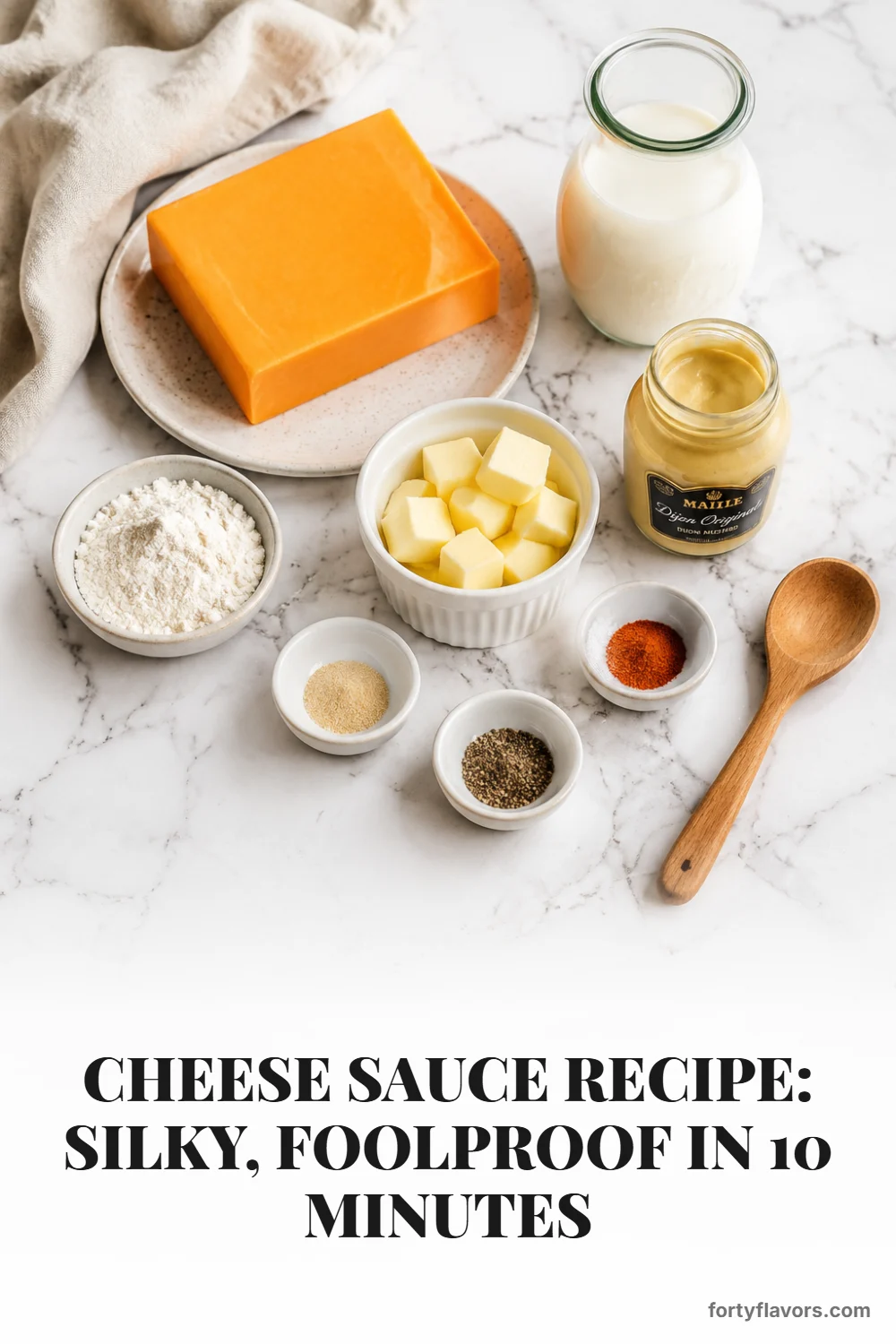
Cheddar cheese sauce recipe ingredients flatlay with butter, flour, milk, and cheese
The ingredient list for this cheese sauce recipe is short, so each piece matters. Butter and all-purpose flour create the roux, the creamy foundation that thickens the milk and helps the cheddar melt evenly. Whole milk gives the sauce body and softness without making it overly rich; it is the sweet spot between thin skim milk and heavier half-and-half. Sharp cheddar is the star, and freshly shredded is worth the extra minute. Pre-shredded cheese is convenient, but it is usually coated with anti-caking starches that can prevent a silky melt. A block of sharp cheddar gives you better flavor, a smoother texture, and that glossy golden color that looks like it came from your favorite diner. Kosher salt is essential because dairy can taste flat without it, but you will want to season thoughtfully. The cheese already contributes salt, so start with the amount in the recipe card and adjust after the cheddar is fully melted. Ground mustard is a small but mighty addition, giving the sauce a gentle savory lift that makes it taste more complete. If you like your sauce extra creamy, you can swap a few tablespoons of the milk for half-and-half. I would not use all cream here, because it can make the sauce feel heavy and mute the tang of the cheese. For a sauce that pours beautifully over pasta, vegetables, fries, and nachos, whole milk is the dependable everyday choice.

How to Make Cheese Sauce Step by Step

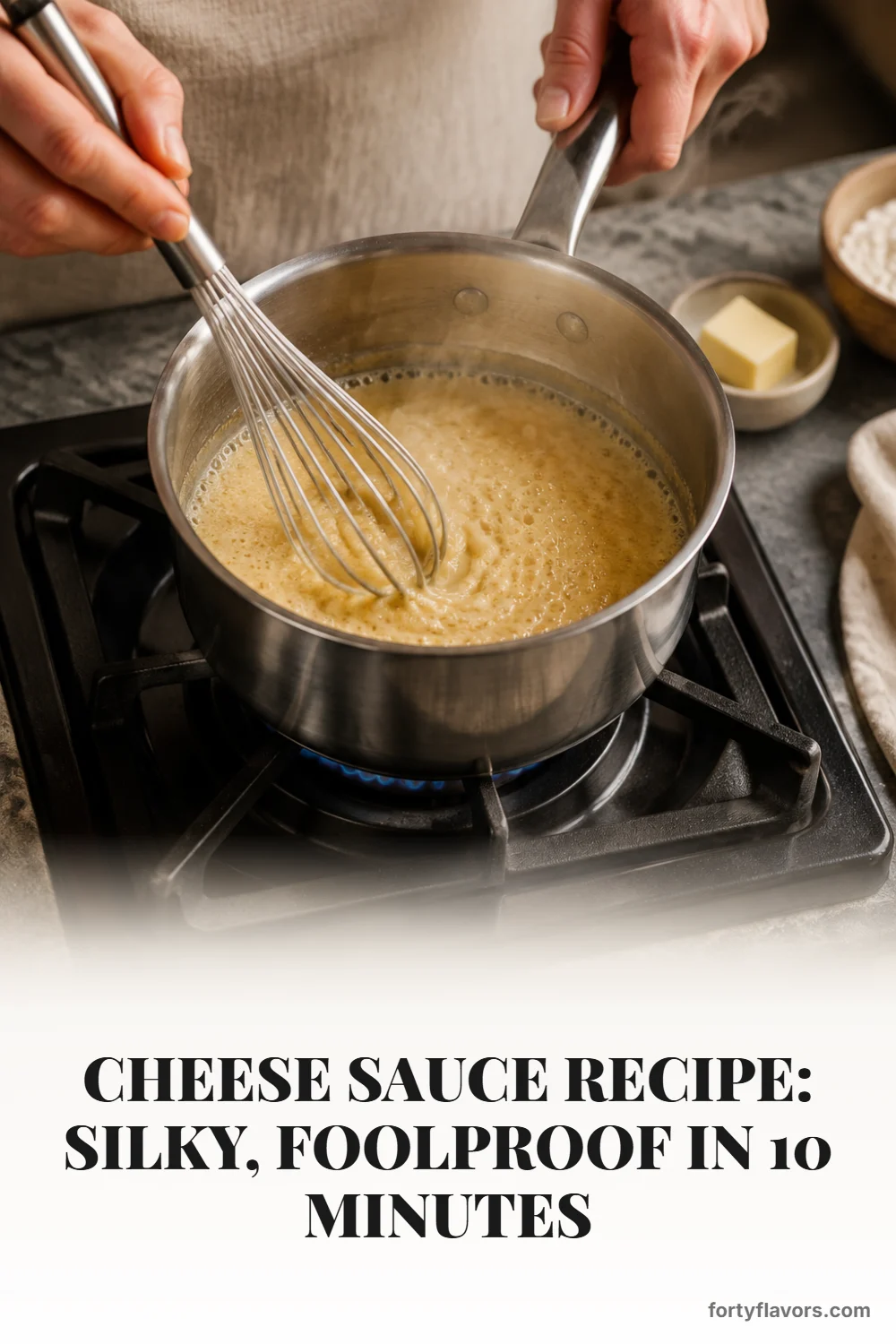
The method begins with a blonde roux, which is simply butter and flour cooked together until smooth and lightly bubbly. This step takes only a minute or two, but it is what separates a smooth sauce from a pot of melted cheese that may split. Whisk constantly and keep the heat moderate so the flour cooks gently without browning.
Whisking butter and flour roux to make homemade cheese sauce
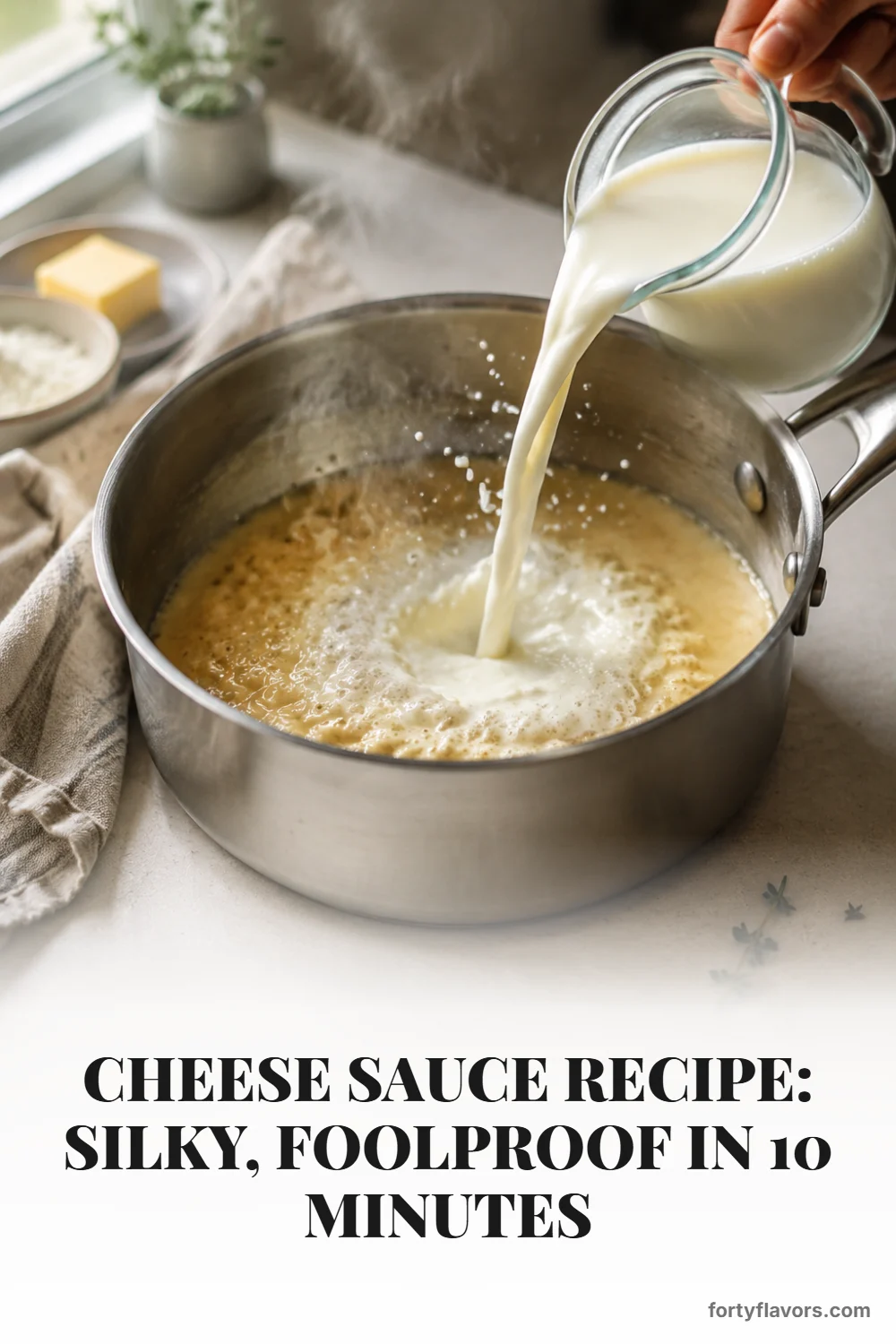
Once the roux is ready, the milk goes in slowly while you whisk. Adding the liquid gradually helps the base stay smooth, and you will see it transform from paste-like to creamy as the milk incorporates. Let it simmer just until it thickens enough to lightly coat a spoon; you are making a soft béchamel that will carry the cheddar.
Pouring milk into roux for easy cheese sauce recipe
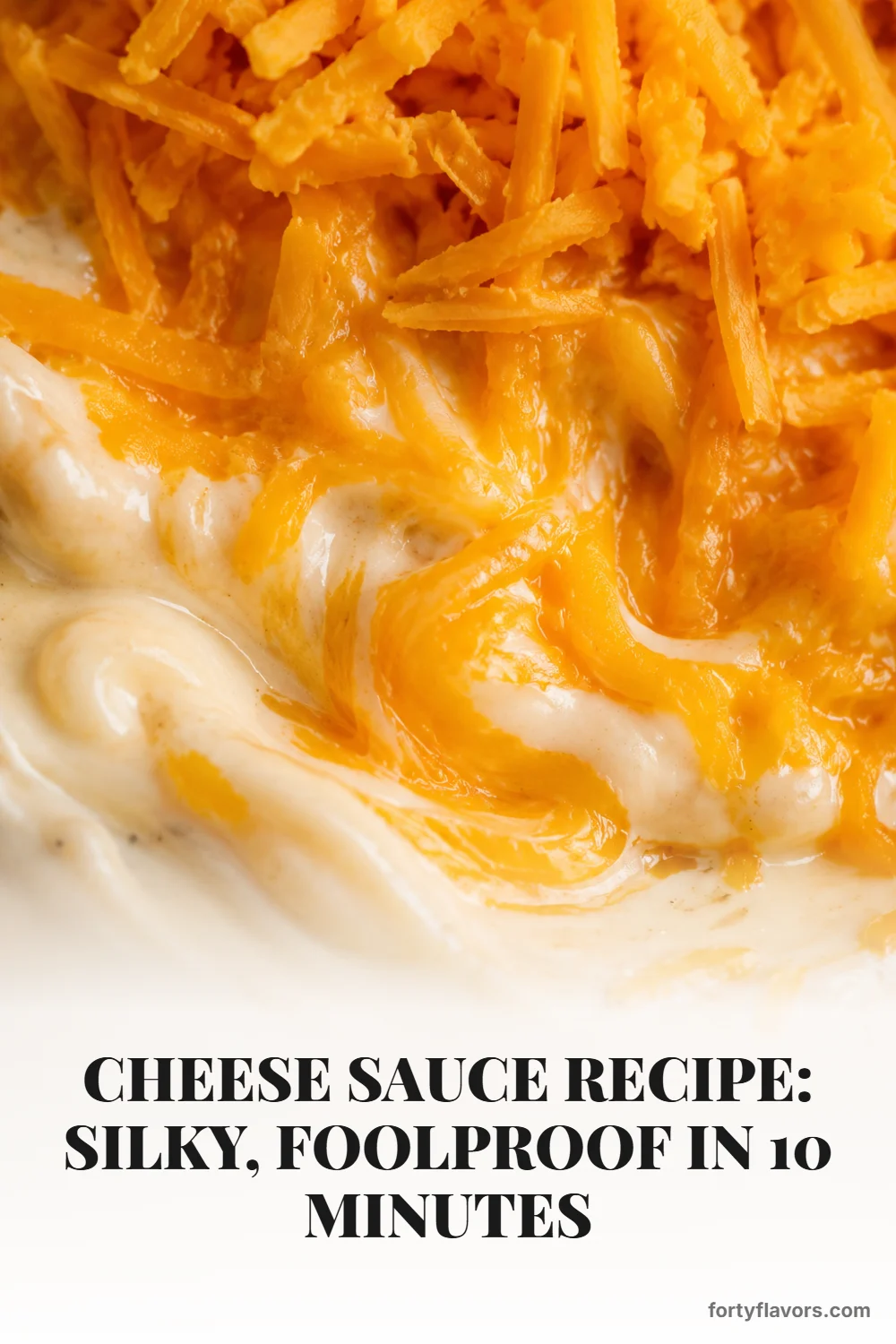
Then comes the most important moment: take the pan off the heat or reduce it to very low before stirring in the cheese. Cheddar melts best with gentle residual heat, not a hard boil. Add the shredded cheese by handfuls, whisking until each addition melts before adding more, and the sauce will turn glossy and beautifully smooth.
Shredded cheddar melting into milk for smooth cheese sauce
This is the point where the sauce becomes your own. If it looks too thick, whisk in a splash of warm milk until it loosens. If it needs more punch, add a pinch of salt, a little mustard, or a whisper of cayenne. The finished texture should be silky enough to drizzle, but rich enough to cling to whatever you pour it over.
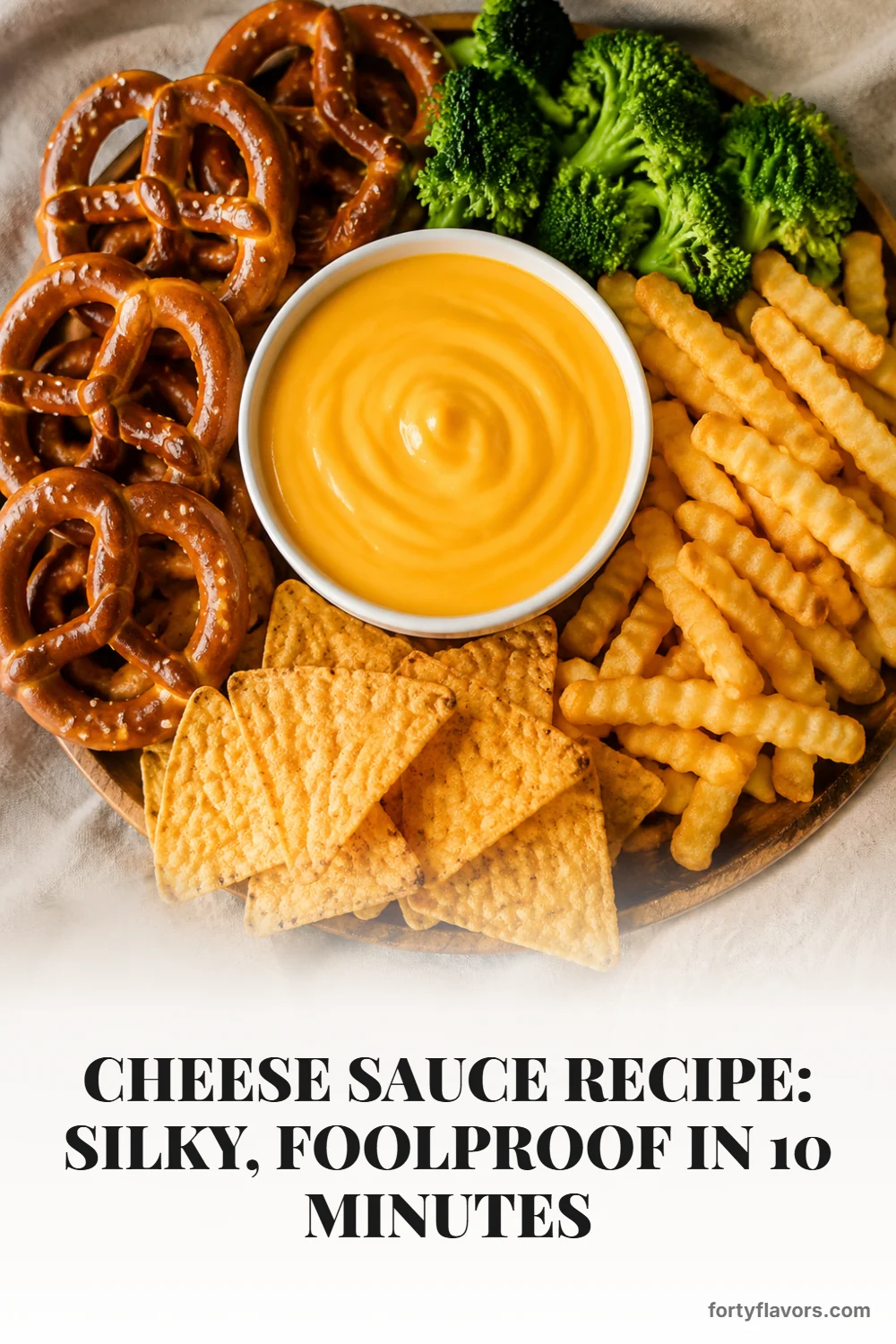
Finished cheddar cheese sauce recipe in a bowl with pretzels and broccoli

Texture Check: The Silky Sauce Moment

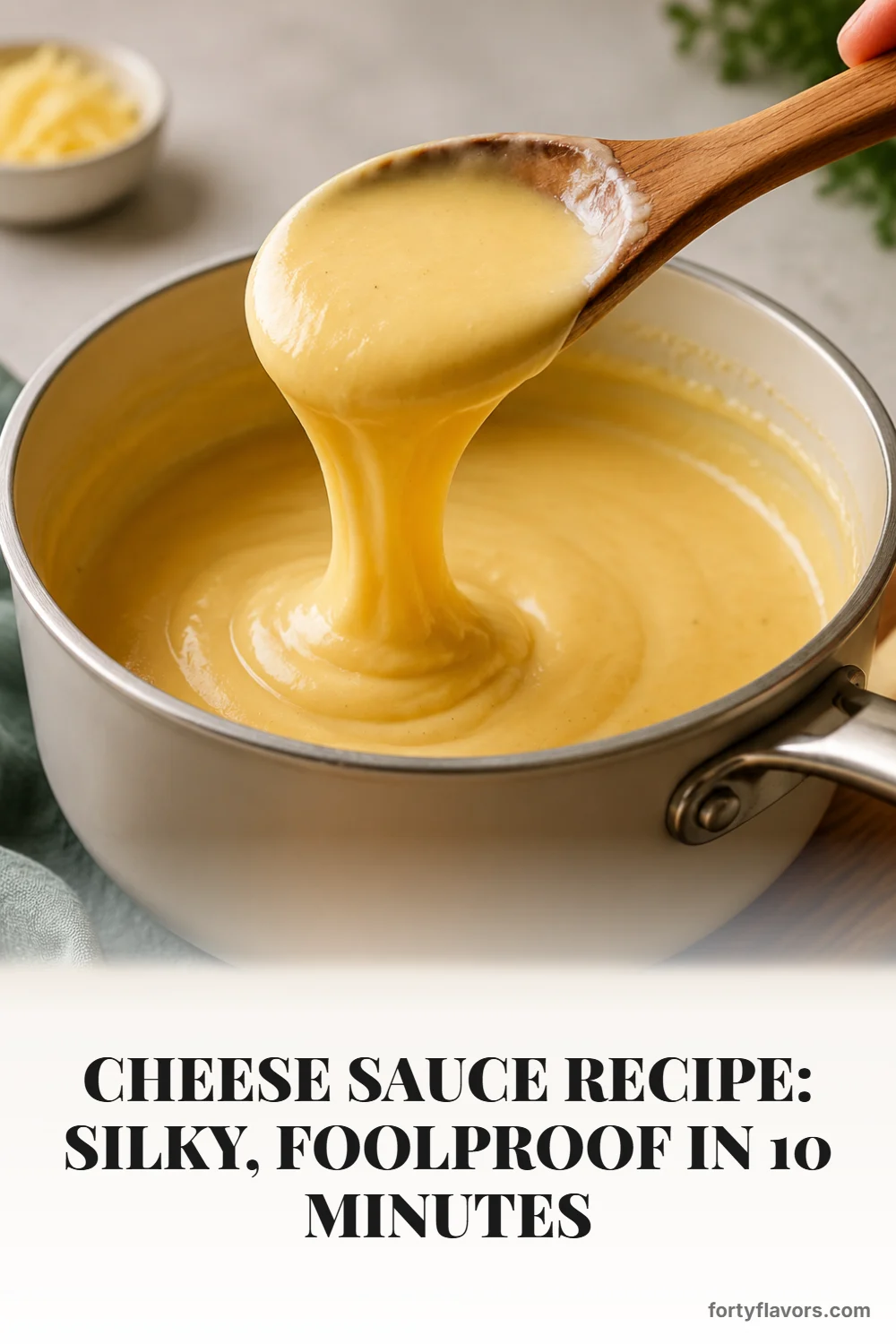
A finished cheese sauce should look glossy, cohesive, and thick in a soft, flowing way. When you drag a spoon through the pan, it should leave a brief trail before settling back into itself. If the sauce stretches like melted mozzarella, it may need a splash more milk; if it looks loose, let it stand for a minute because it will thicken as it cools.
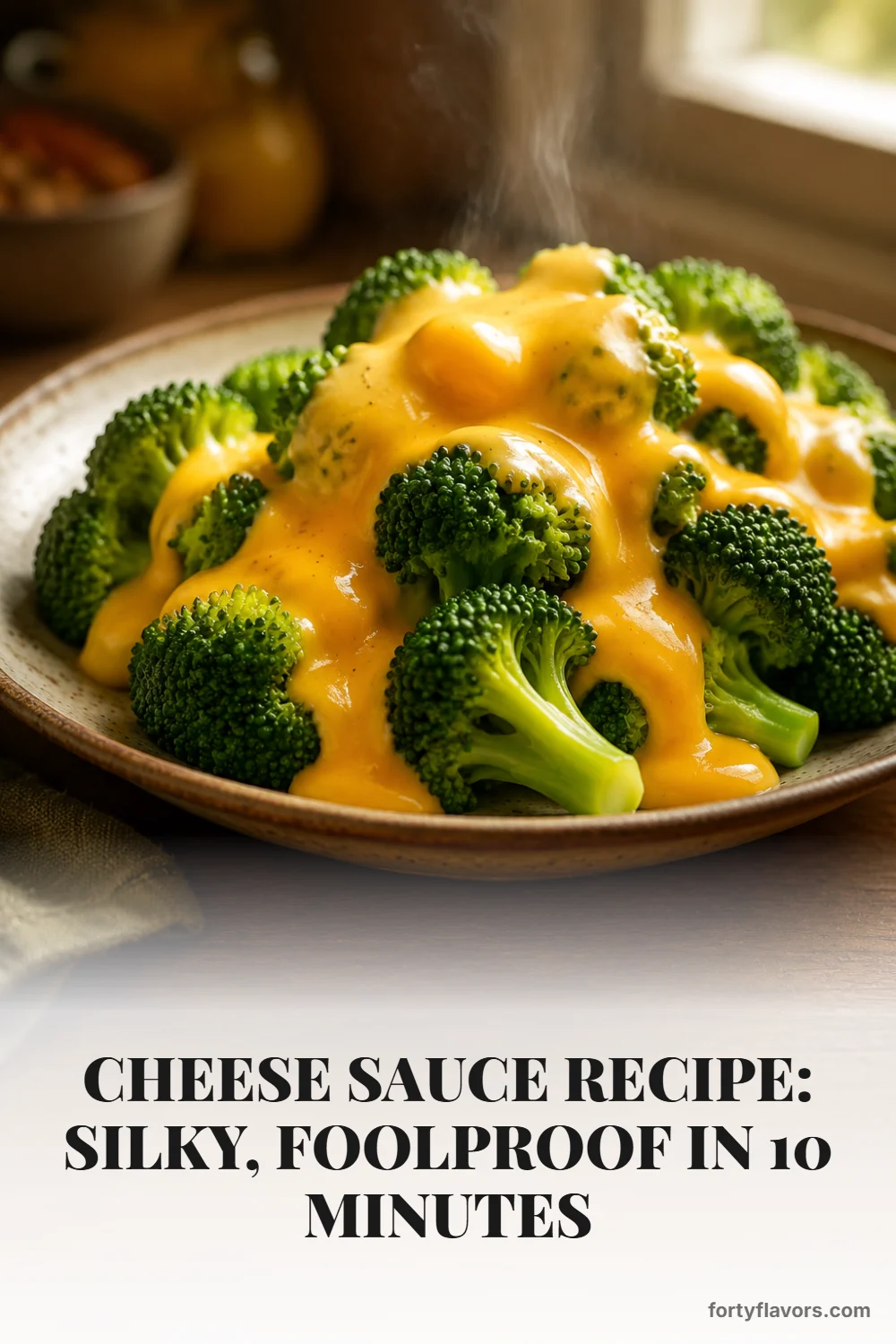
Cheese sauce poured over steamed broccoli serving idea
The easiest way to judge doneness is the spoon test. Dip a spoon into the sauce and lift it up; the back should be coated in a smooth golden layer with a slow drip at the edge. That is the sweet spot for drizzling over roasted potatoes, folding through macaroni, or spooning into a warm bowl beside soft pretzels. If the sauce ever looks slightly too thick on the stove, do not panic. Cheese sauce naturally firms as it sits, especially if the cheddar is bold and the roux is doing its job. A tablespoon or two of warm milk whisked in over low heat will bring it right back to a pourable consistency.

Serving Suggestions for Pasta, Vegetables, Fries, and More

This cheese sauce recipe is made for the kind of meals that need one creamy, golden thing to pull everything together. Toss it with elbows or shells for a fast stovetop pasta, then add toasted breadcrumbs or cracked pepper if you want a little texture. It also makes an easy shortcut for homemade mac and cheese when you want comfort food without baking a casserole.
Showing perfect smooth cheese sauce consistency on a wooden spoon
Vegetables are another perfect match, especially broccoli, cauliflower, roasted Brussels sprouts, or steamed green beans. If your family loves broccoli cheddar soup, you already know how beautifully sharp cheddar and green vegetables play together. Spoon the sauce over a bowl of roasted broccoli and crispy potatoes, and suddenly a simple side dish feels like the main event. For game day or snack night, keep the sauce warm and use it as a dip for fries, pretzels, tortilla chips, or soft breadsticks. With a pinch of cayenne and a little extra milk, it becomes an easy pour for nachos, especially with pickled jalapeños and scallions on top. It also makes a baked potato bar feel instantly generous, right alongside sour cream, bacon, chives, and the cozy spirit of a loaded baked potato. You can also use this sauce anywhere you might normally reach for a creamy alfredo sauce, especially if you want a sharper, more cheddar-forward flavor. Try it with chicken and pasta, spoon it over roasted mushrooms, or drizzle it into grain bowls with charred vegetables. It is simple enough for Tuesday, but flavorful enough that no one thinks of it as a backup plan.

Troubleshooting a Smooth, Pourable Finish

If your sauce is too thick, the fix is usually warm milk and patience. Add the milk one tablespoon at a time over low heat, whisking until the sauce relaxes. Avoid adding cold milk in a big splash, which can shock the sauce and make it harder to bring back to a smooth texture. If the sauce looks oily or broken, it probably got too hot after the cheese went in. Remove it from the burner and whisk vigorously for a moment; sometimes it will come back together with a small splash of warm milk. For future batches, remember that cheese prefers gentle heat, and the base should not be boiling when the cheddar is added. If the flavor tastes a little flat, it may need salt, mustard, or a small acidic lift from a drop of hot sauce. Dairy has a way of softening seasonings, so taste after the cheese melts rather than judging too early. A balanced cheese sauce should taste savory, tangy, and creamy, with enough sharpness to stand up to potatoes, pasta, and vegetables.

Make-Ahead Notes for Busy Cooking

This sauce is at its absolute best right after it is made, when it is glossy and warm from the pan. That said, you can make it ahead for meal prep or entertaining if you know it will need a little loosening later. Keep extra milk nearby for reheating, and plan to whisk gently rather than blast it with high heat.
Storing leftover homemade cheese sauce in a glass jar
For parties, a small slow cooker on the warm setting can help hold the sauce for dipping. Stir it occasionally and add a splash of warm milk if it thickens over time. This works especially well for pretzels, fries, and nacho spreads, where guests can spoon or drizzle as they go. If you are using it for pasta, combine the sauce with noodles just before serving. Pasta continues to absorb moisture as it sits, so a little reserved pasta water or warm milk can help keep everything creamy. The goal is a sauce that coats, not a sauce that clumps, and a little extra liquid gives you that luscious finish.

Final Thoughts on This Easy Cheddar Sauce

A good cheese sauce recipe should feel like a small kitchen superpower: fast, flexible, and reliably delicious. With butter, flour, whole milk, and sharp cheddar, you can build a sauce that tastes homemade in the best way—warm, savory, and full of real cheese flavor. It is the kind of recipe you memorize after a few rounds because the technique is simple and the payoff is immediate. Once you get the base down, you will find reasons to use it everywhere. Pour it over broccoli, spoon it onto fries, fold it through pasta, or set it out with chips for a quick snack board. Keep the heat gentle, shred the cheese yourself, and this cheese sauce recipe will reward you with a smooth golden ribbon every time.

💡 Expert Tips

  • Shred cheese from a block: Pre-shredded cheese often contains anti-caking starches that can make sauces grainy or less smooth.
  • Keep the heat gentle: Once the milk base has thickened, reduce the heat or remove the pan from the burner before adding cheddar.
  • Add cheese gradually: Stir in one handful at a time so each addition melts fully before the next goes in.
  • Season after melting: Cheddar varies in saltiness, so taste the finished sauce before adding extra salt.
  • Adjust with warm milk: If the sauce thickens too much, whisk in warm milk a tablespoon at a time until it pours easily.

🔄 Variations & Substitutions

This base recipe is intentionally classic, which makes it easy to take in a few delicious directions depending on what you are serving.
  • Spicy nacho style: Add cayenne, diced pickled jalapeños, a splash of hot sauce, and a pinch of cumin.
  • Beer cheese version: Replace 1/4 cup of the milk with a mild lager or amber beer, whisking it into the roux before the remaining milk.
  • Smoky gouda blend: Use 1 cup sharp cheddar and 1 cup smoked gouda for a deeper, campfire-like flavor.
  • Extra-melty diner sauce: Swap 1/2 cup of the cheddar for American cheese or Monterey Jack for an even smoother texture.

🧊 Storage & Leftovers

Store leftover cheese sauce in an airtight container in the refrigerator for up to 4 days. It will thicken quite a bit once chilled, which is completely normal. To reheat, place it in a small saucepan over low heat with a splash of milk and whisk gently until smooth and warm. Avoid boiling, as high heat can cause the sauce to separate. Freezing is not ideal because dairy-based cheese sauces can thaw grainy, but if you do freeze it, reheat slowly and whisk in warm milk to help restore the texture.

Frequently Asked Questions

Why is my cheese sauce grainy?
Grainy cheese sauce usually comes from heat that is too high or cheese that does not melt cleanly. Pre-shredded cheese is a common culprit because it is coated with anti-caking starches that can interfere with a smooth melt. For the best texture, shred sharp cheddar from a block and add it after the milk base has thickened. Keep the heat low or take the pan off the burner, then stir until the cheese melts gently into the sauce.
What's the best cheese for cheese sauce?
Sharp cheddar is the best all-purpose choice because it brings bold flavor, a classic golden color, and the tangy taste people expect from cheddar sauce. For an even smoother melt, you can blend it with Monterey Jack, Gruyere, fontina, or a little American cheese. The key is choosing cheeses that melt well and shredding them yourself. Very aged cheeses can be delicious, but they may melt a bit less smoothly on their own.
Can I make cheese sauce without flour?
Yes, you can make cheese sauce without flour if you need a gluten-free option or simply prefer a different thickener. One easy method is to whisk a small cornstarch slurry into warm milk, then melt in the cheese over low heat. Another option is to use evaporated milk, which has enough concentrated milk proteins to help create a creamy, stable sauce. The texture will be slightly different from a roux-based sauce, but it can still be smooth and pourable.
How do I thin out thick cheese sauce?
To thin thick cheese sauce, whisk in warm milk one tablespoon at a time over low heat. Add the milk gradually so you can control the consistency and avoid making the sauce too loose. If the sauce has been sitting for a while, it may simply need gentle heat and steady whisking to relax again. Avoid using high heat to loosen it quickly, because boiling can cause the cheese to separate or become grainy.
How long does homemade cheese sauce last?
Homemade cheese sauce will keep in an airtight container in the refrigerator for up to 4 days. It will firm up as it chills, so expect it to look thicker when you take it out. Reheat it gently in a saucepan over low heat with a splash of milk, whisking until it becomes smooth and glossy again. For best results, do not microwave it on full power or boil it after reheating.

Cheese Sauce Recipe: Silky, Foolproof in 10 Minutes

Pin Recipe
  • Prep Time5 min
  • Cook Time10 min
  • Total Time15 min
  • Yield4 servings

Ingredients

Scale

Instructions