Italian Seasoning Recipe (Better Than Store-Bought)

4.8 from 12 reviews
0SHARES

Now Playing

Italian Seasoning Recipe (Better Than Store-Bought)

0:00
0:00
Italian Seasoning Recipe (Better Than Store-Bought)

A 5-minute Italian seasoning recipe made with 7 pantry herbs you already own. Fresher, cheaper, and more flavorful than any jar from the spice aisle.

Why You'll Love This Recipe
  • Fresher and more fragrant. Hand-mixed herbs smell brighter the moment you open the jar than anything sitting on a grocery shelf for a year.
  • Costs a fraction of jarred. Using bulk-aisle dried herbs, you can fill a half-cup jar for a couple of dollars instead of paying premium spice-aisle prices.
  • Fully customizable. More heat, less sage, no rosemary because you hate it: you are the boss of this blend.
  • No salt, no fillers, no anti-caking agents. Just seven herbs and two optional upgrades, so you can season generously without worrying about sodium creep.
  • Five minutes, pantry staples. If you cook Italian food more than once a month, you almost certainly already have everything you need.
  • One jar, a dozen dinners. Chicken, pasta sauce, soups, pizza, dressings, garlic bread, marinades. It earns its real estate fast.

This italian seasoning recipe is the kind of small kitchen project that quietly upgrades everything you cook for the next six months. Five minutes, seven herbs you almost certainly already own, one jar, and suddenly your weeknight chicken, soups, sauces, and roasted vegetables taste like they belong on someone's grandmother's stovetop. It is the most useful thing I keep on the shelf.

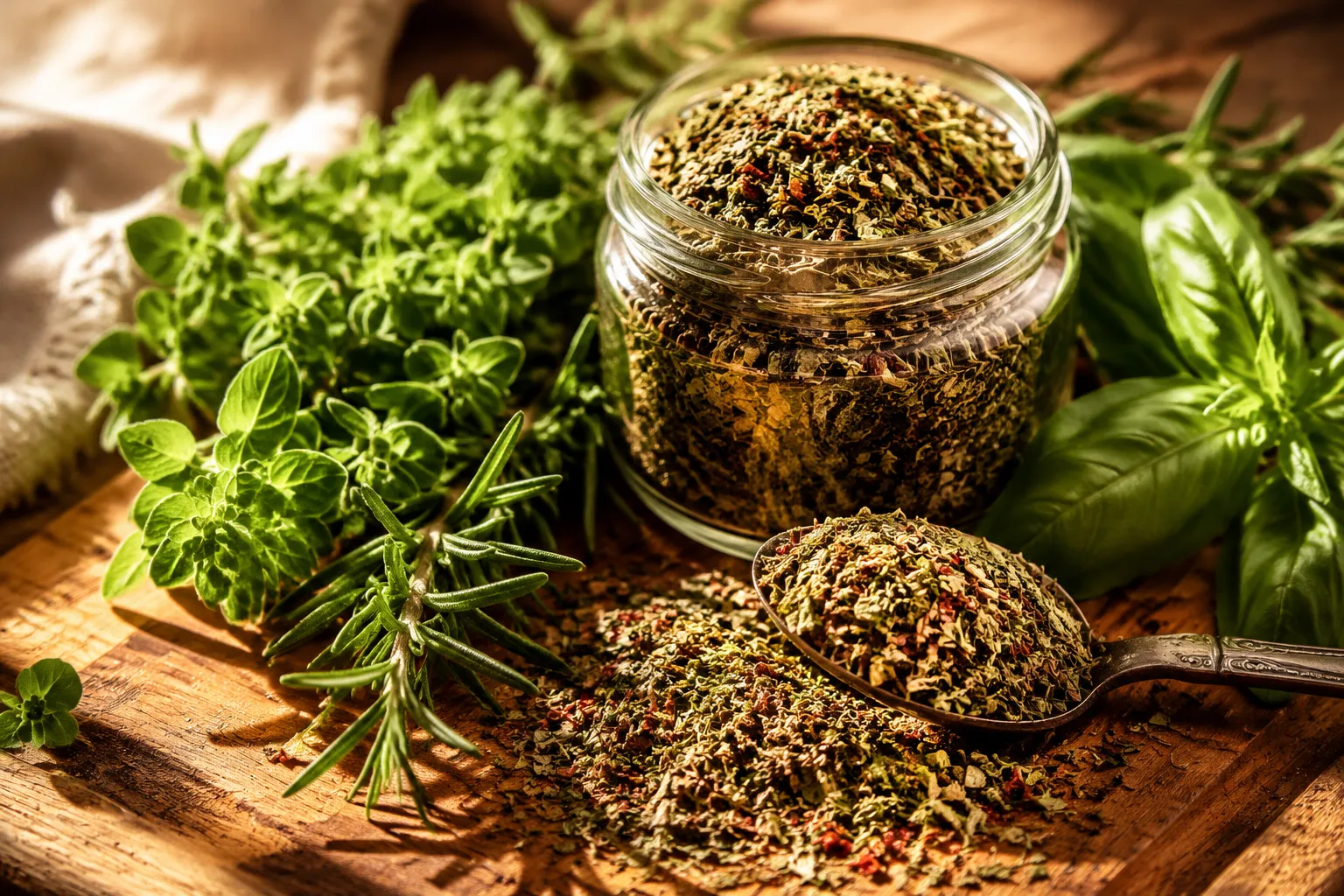
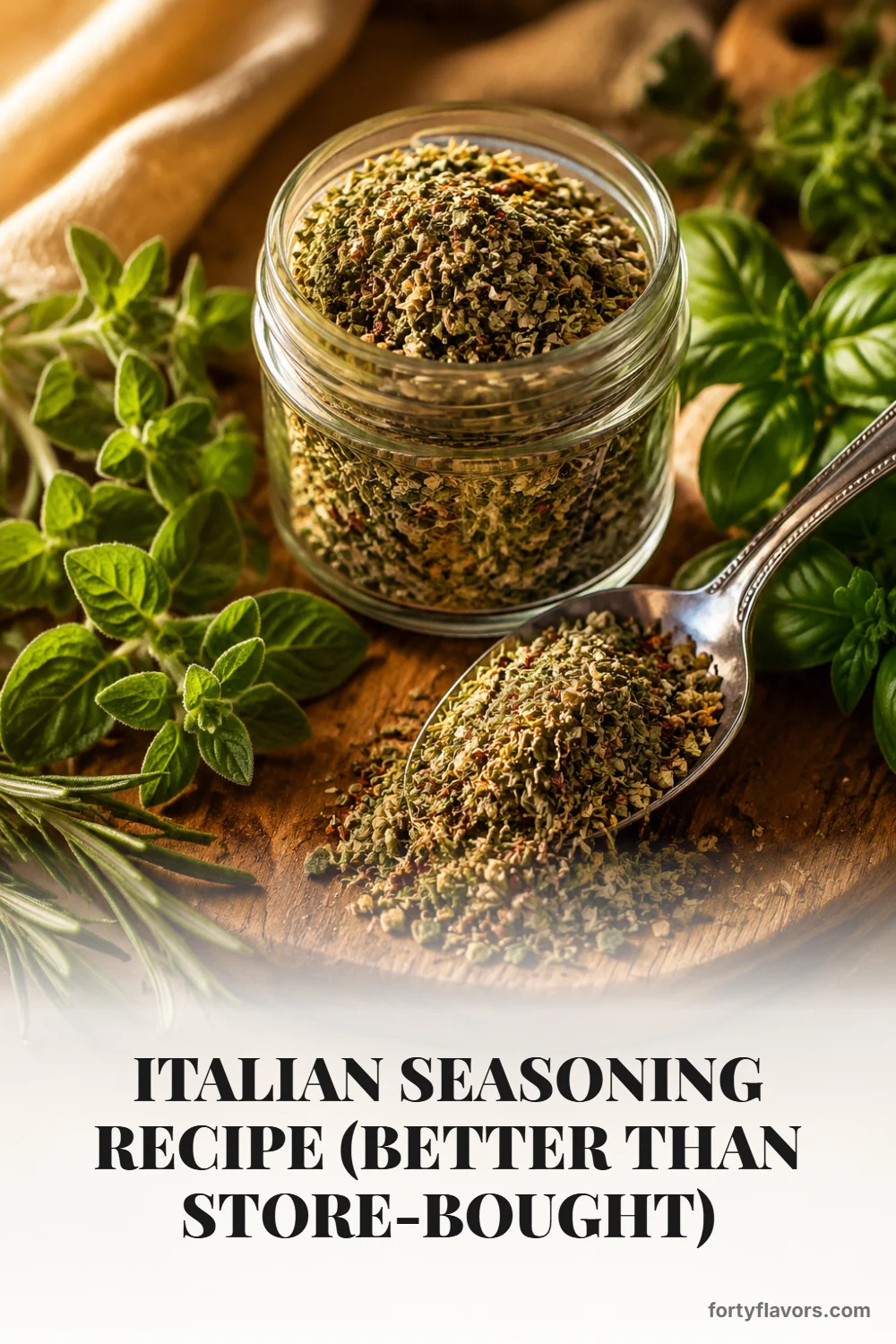
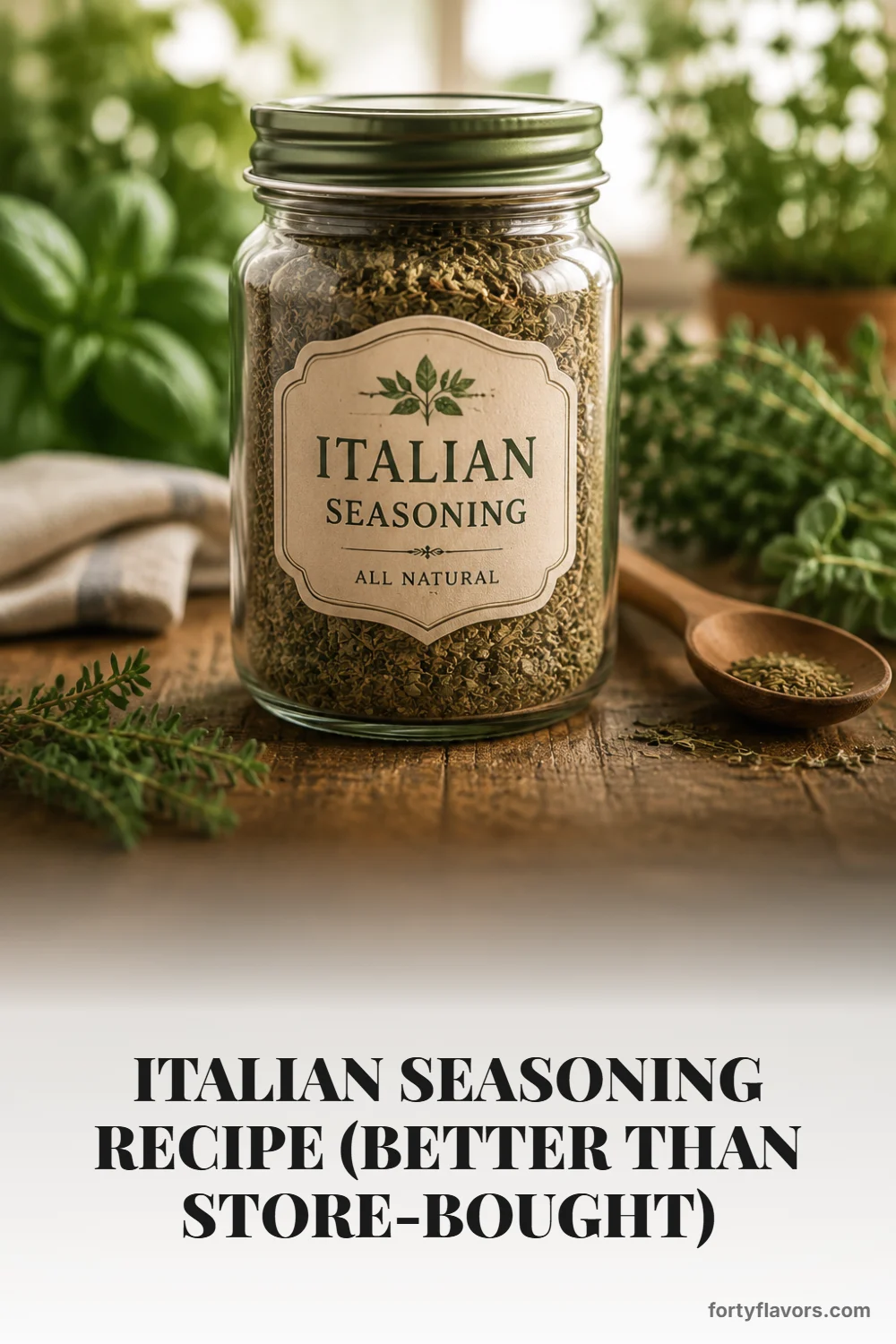
Italian seasoning recipe in a glass jar with fresh herbs on a wood board

I started mixing my own blend years ago because I kept buying those little supermarket jars, finishing half of them, and then forgetting they existed at the back of the spice drawer. By the time I dug them back out, they smelled like dust. A homemade italian seasoning fixes all of that. You get a fresher, brighter, more aromatic spice blend, you control the ratios, and you spend roughly a quarter of what the brand-name jar costs.

The version below is a balanced seven-herb formula with two optional upgrades, garlic powder and red pepper flakes, for cooks who want a little more backbone. No fillers, no anti-caking agents, no surprise salt. Just herbs, well-measured, ready to make everything else on your stove taste like it was cooked by someone who really meant it.

What's in Italian Seasoning?

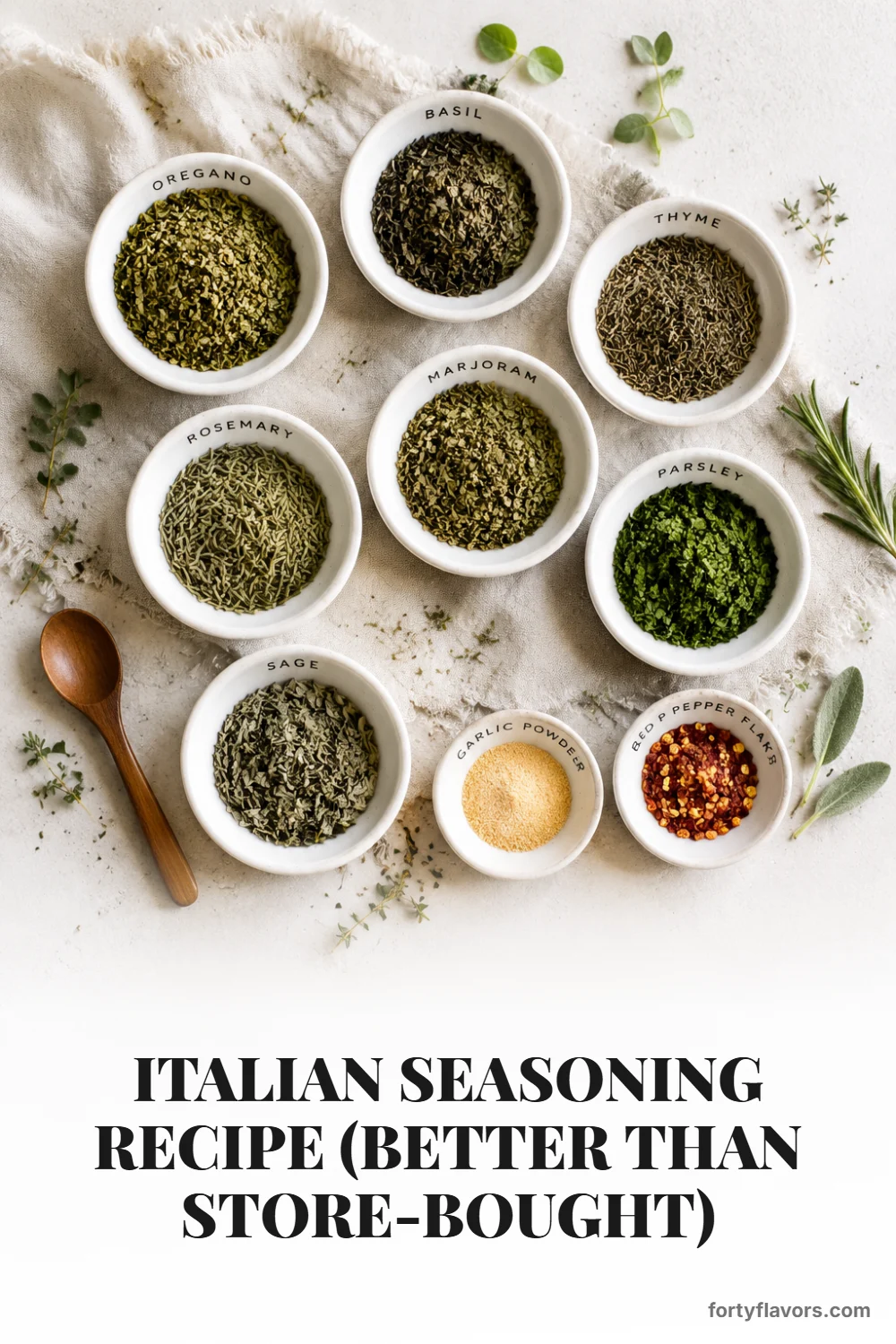
If you have ever wondered what's in italian seasoning beyond the green dust in the jar, the answer is surprisingly simple. Authentic Italian-style blends rely on a small core group of Mediterranean herbs that grow wild across the hills of central and southern Italy. The classic seven are oregano, basil, thyme, rosemary, marjoram, parsley, and sage, though many commercial blends drop one or two to cut costs.

Italian seasoning ingredients flatlay with seven dried herbs in white bowls

What separates this herb blend from herbes de Provence or a Greek mix is the ratio. Italian seasoning leans heavily on oregano and basil, the two anchor flavors of southern Italian cooking, with thyme and rosemary playing supporting roles. Marjoram adds a sweet, floral lift, parsley brings grassy freshness, and sage contributes the warm, slightly peppery undertone you taste in good sausage and stuffing. Some cooks add a pinch of red pepper flakes or garlic powder for extra dimension, and I am firmly in that camp.

What it does not include: lavender (that's herbes de Provence), fennel seed (closer to a Tuscan or sausage blend), or salt. A good Italian-style mix is pure herb, which means you can season aggressively without worrying about over-salting whatever is in the pan.

Italian Seasoning Ingredients You'll Need

The italian seasoning ingredients list is short, forgiving, and built from the dried herbs already living in your spice rack. You do not need anything fancy, just decent quality and reasonably fresh jars. If a herb has been sitting open for two years, it has been working on a different project. Replace it before mixing.

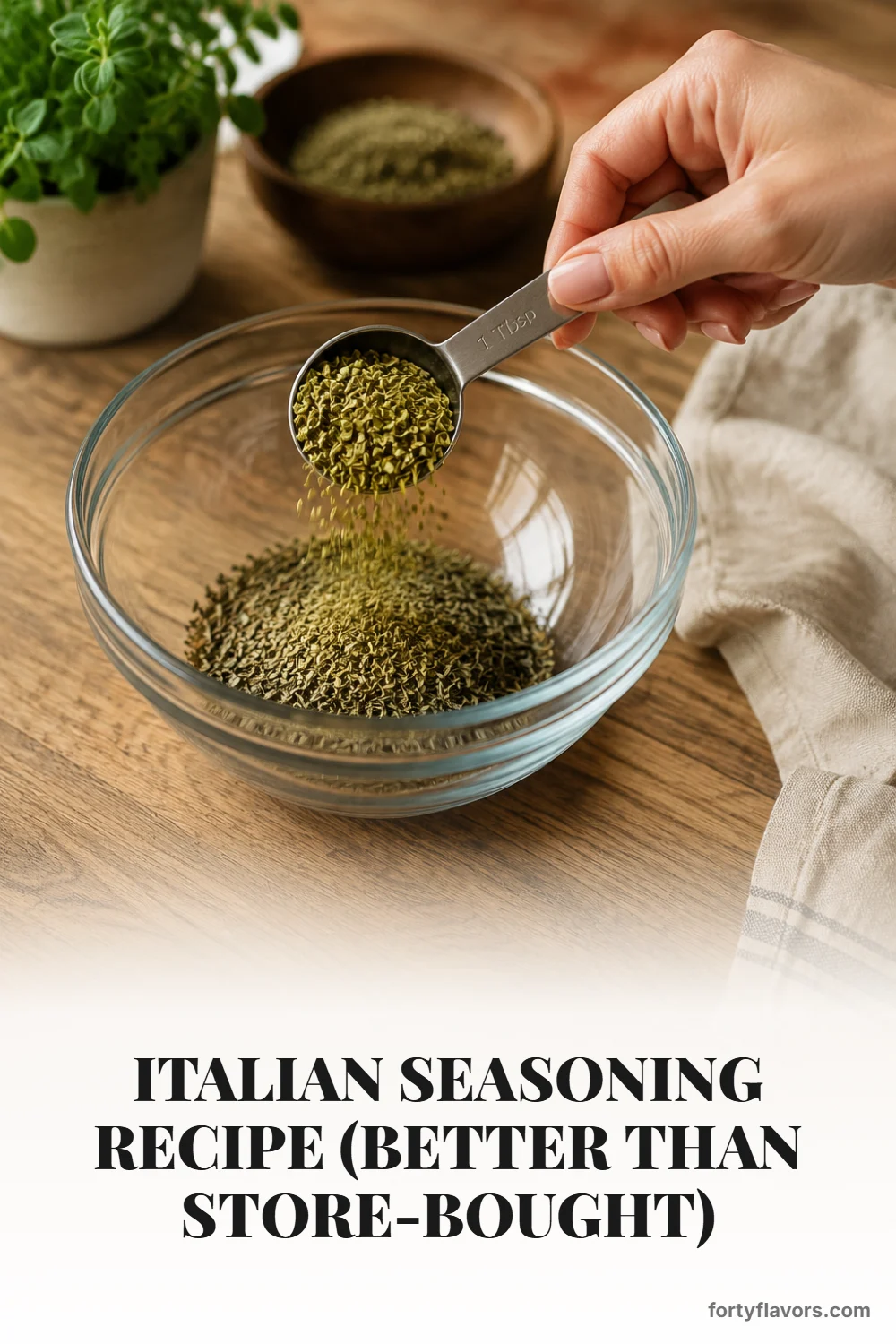
Measuring dried oregano for homemade Italian seasoning

Here is what each one brings to the party:

  • Dried oregano is the loudest voice in the room: woodsy, slightly bitter, deeply savory. It is the herb you smell first when you open a jar of pizza seasoning. Mediterranean oregano is sharper and brighter than Mexican oregano, which leans citrusy.
  • Dried basil rounds out the oregano with a sweet, almost minty note. Together they form the two-herb backbone of nearly every Italian dish.
  • Dried thyme adds an earthy, slightly lemony depth that makes meat dishes taste roasted even when they are just simmered.
  • Rosemary brings piney, resinous intensity. Crush it lightly between your fingers before measuring so the needles do not end up like little splinters in your finished sauce.
  • Marjoram is oregano's gentler cousin: sweeter, softer, more floral.
  • Dried parsley mostly contributes color and a fresh, grassy finish.
  • Dried sage is the secret weapon. A small amount adds the warm, peppery note that makes the blend smell like Sunday dinner.

A quick word on quality: whole-leaf dried herbs are noticeably more aromatic than ground, and they hold their flavor longer in storage. If your oregano looks like green sand, it has probably been sitting too long. Look for visible leaf flakes and a sharp, immediate smell when you open the jar.

How to Make Italian Seasoning at Home

This is barely cooking. It is measuring and stirring. But a few small moves make a real difference, and the italian seasoning recipe below scales perfectly, so you can double or triple it once you know you love the ratio.

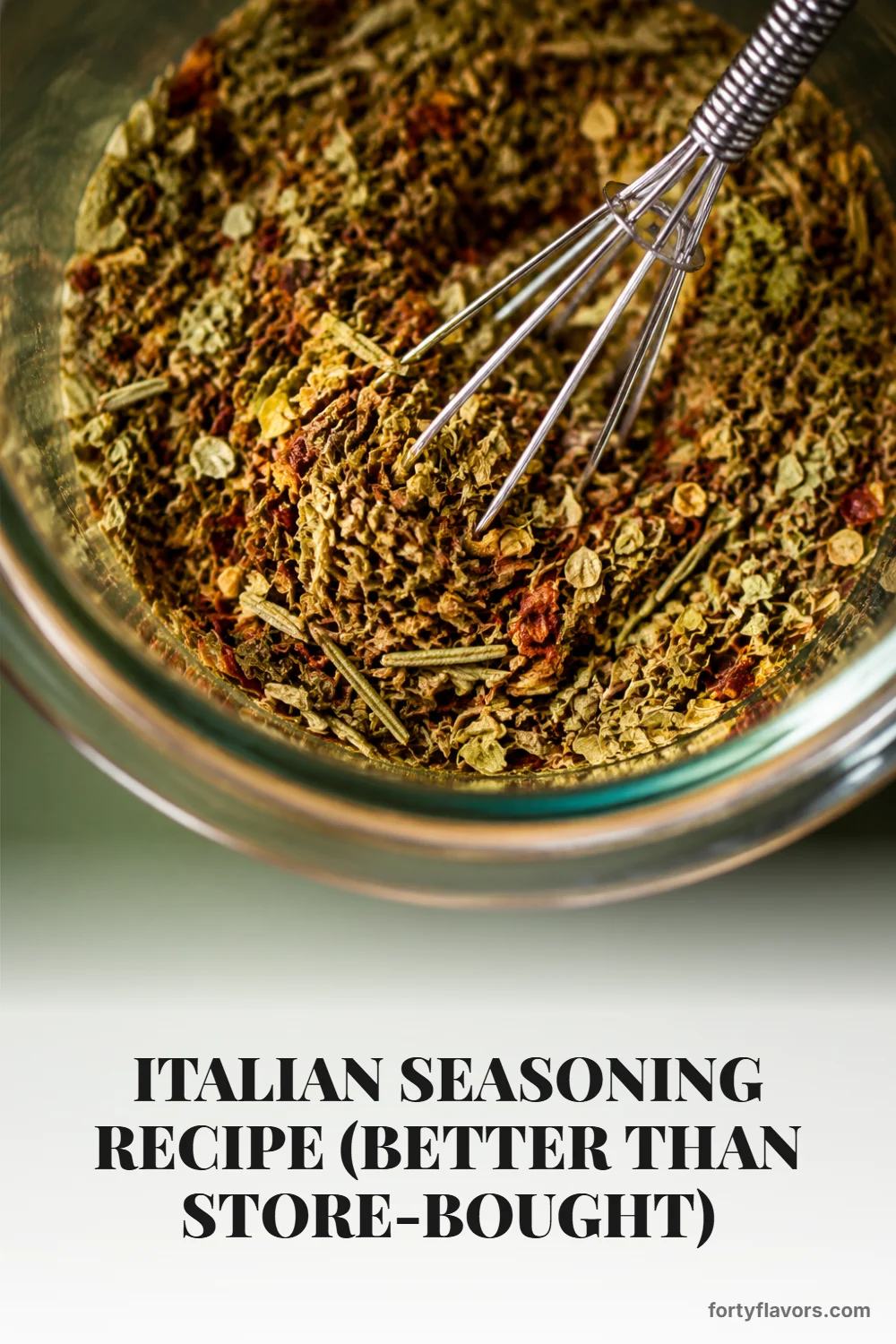
Whisking together homemade Italian seasoning herb blend

Start by setting out a small mixing bowl, your measuring spoons, and all seven jars before you begin. The whole process takes five minutes, but only if you are not rummaging through the cabinet for the marjoram halfway through. Crush the rosemary needles between your palms before measuring; this releases their oils and softens their texture so they distribute evenly through the blend. Whisk everything together with a small whisk or fork until the colors look uniform and you cannot see distinct streaks of any single herb.

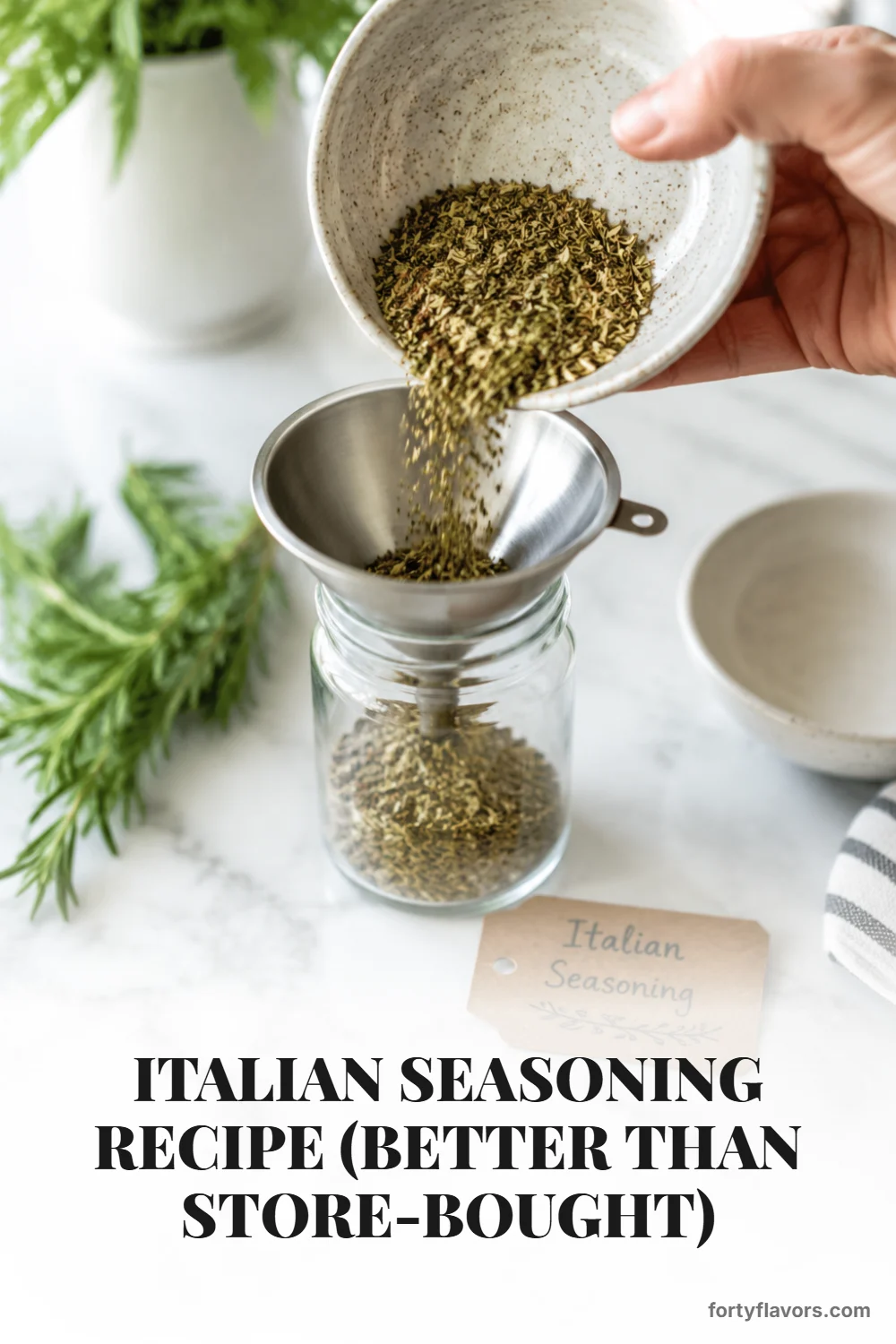
Pouring homemade Italian seasoning recipe into a glass jar

Funnel the finished mix into a clean, dry airtight jar with a tight-fitting lid. Glass spice jars or small canning jars work beautifully. Label it with the date so you know when it is time for a fresh batch. The full numbered method, ratios, and timing live in the recipe card below.

How to Use Italian Seasoning in Everyday Cooking

Once you have a jar of this herb blend on the shelf, the question stops being "what should I make with it?" and starts being "what doesn't this go in?" The short answer: anything that wants to taste like Italy.

Finished jar of homemade Italian seasoning on a kitchen counter

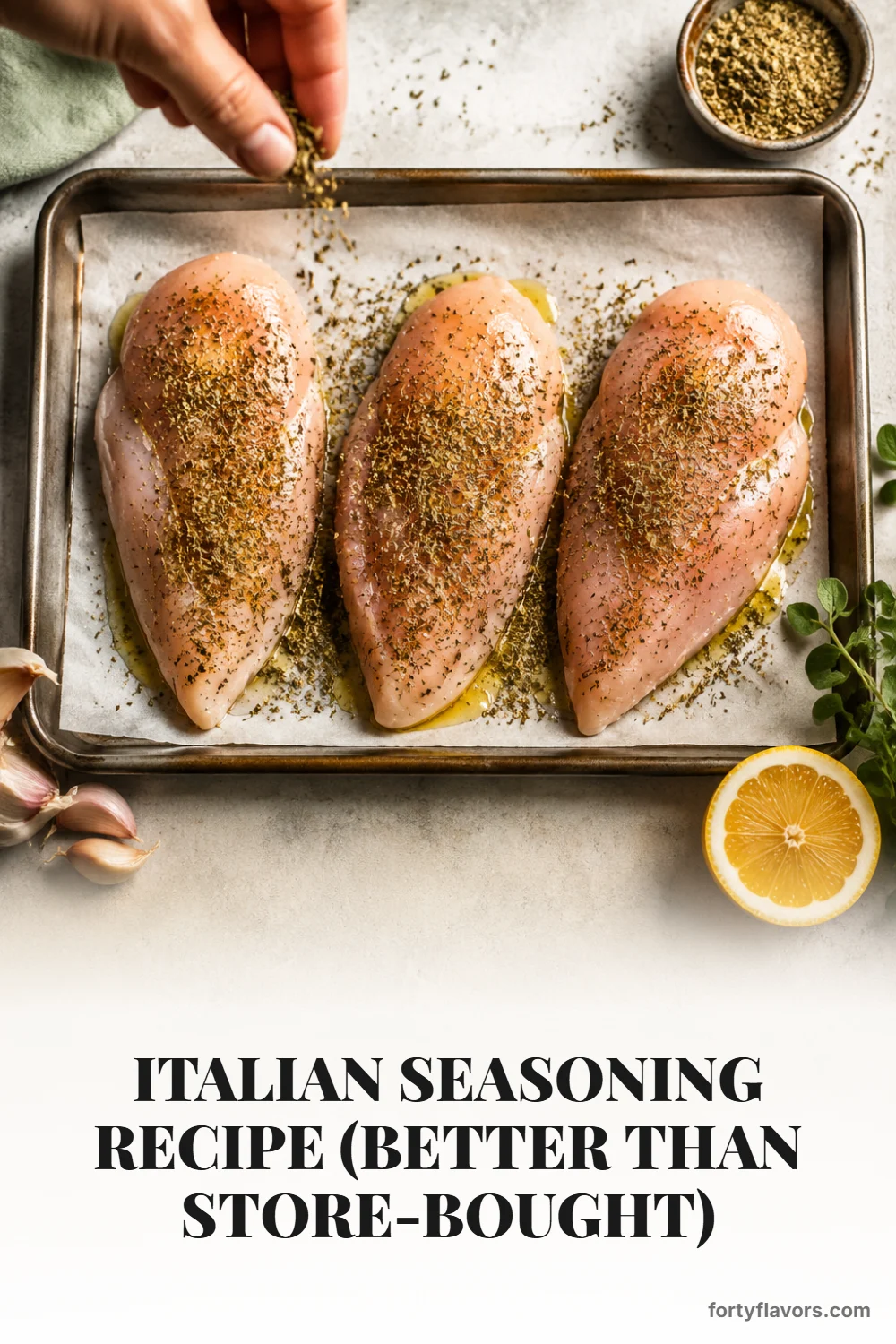
For weeknight protein, rub a heaping teaspoon onto a baked chicken breast along with olive oil, salt, and a squeeze of lemon before it goes in the oven. The same treatment works on pork chops, shrimp, salmon, and thick slabs of eggplant. Toss it with cubed potatoes, halved cherry tomatoes, or sliced zucchini before roasting at 425°F for an effortless side that tastes like you tried much harder than you did.

Sprinkling Italian seasoning on chicken breasts before roasting

In sauces and soups, stir a teaspoon into the pot during the last fifteen minutes of cooking, long enough to rehydrate, short enough to keep the herbs lively. It is brilliant in an easy marinara sauce, minestrone, white bean soup, or any tomato-based braise. Whisk it into salad dressings with red wine vinegar, olive oil, and a clove of grated garlic for an instant Italian vinaigrette. Stir a generous spoonful into softened butter to make a quick garlic herb butter for steak, warm bread, or roasted vegetables.

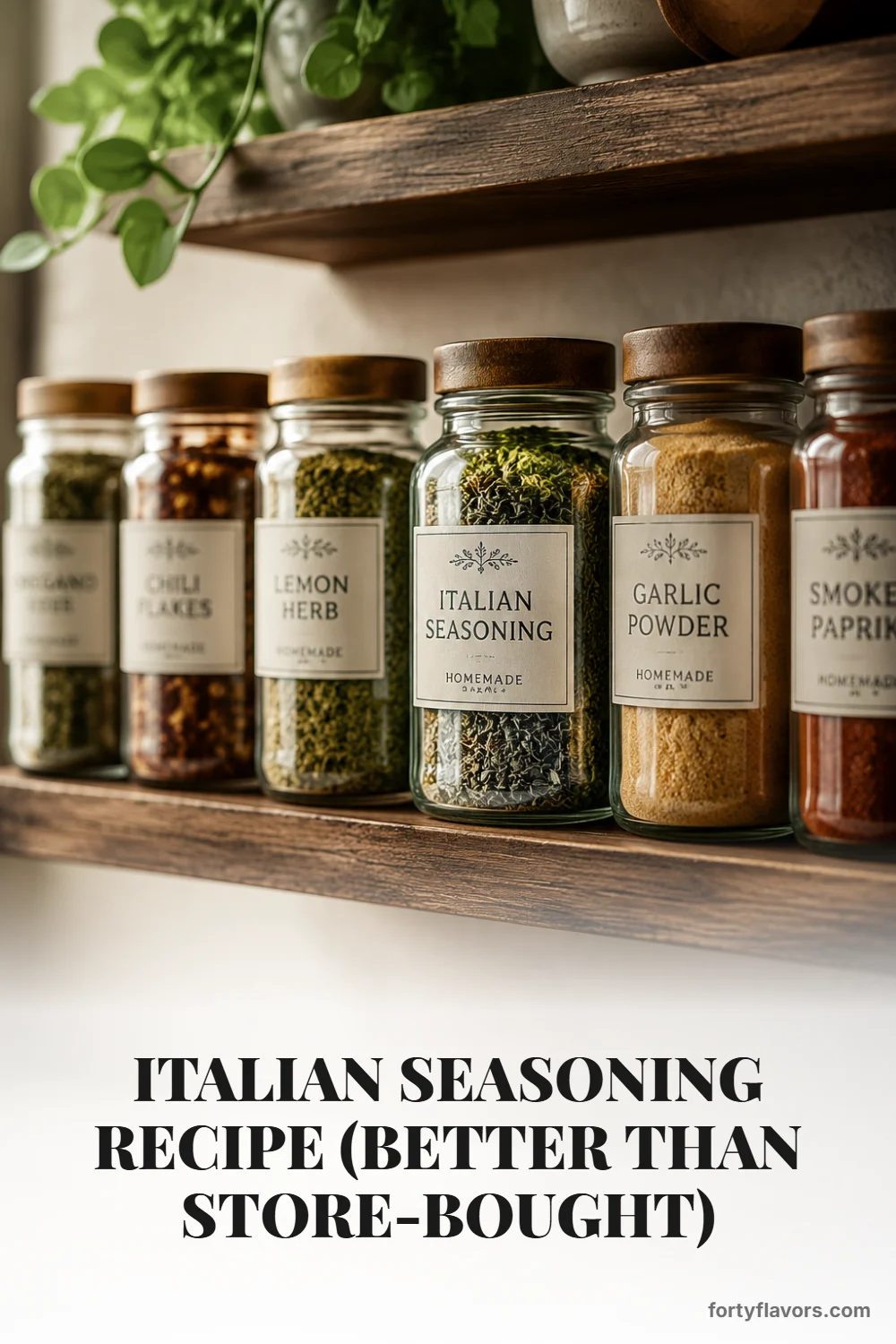
Storing homemade Italian seasoning in airtight glass spice jars

For pizza night, sprinkle it across the surface of homemade pizza dough before the cheese goes on, or stir a tablespoon into the sauce for a deeper, more layered flavor. Mix it with melted butter and brush it over warm focaccia or rolls for the fastest garlic bread of your life. It is also the answer to bland frozen ravioli, lukewarm store-bought meatballs, and the bag of gnocchi you forgot was in the pantry.

A Few Final Thoughts on Mixing Your Own Blends

If you like the satisfaction of mixing your own seasonings, this same five-minute approach works for homemade taco seasoning and a DIY ranch seasoning mix, both of which earn their spots in the spice drawer for exactly the same reasons: fresher flavor, better cost, and zero mystery ingredients. Once you start, the rest of your pantry slowly converts itself.

Italian seasoning stirred into homemade marinara sauce

I make a fresh batch of this italian seasoning recipe every couple of months, and I'll often double it so a small jar can go to a friend along with a loaf of bread or a bottle of olive oil. It is the kind of small, thoughtful gift that says "I cook, and I want you to cook too." Five minutes of measuring, six months of better dinners. That is a trade I will take every time.

💡 Expert Tips

  • Crush the rosemary first. Rub the dried needles between your palms before measuring. This breaks them into shorter pieces, releases their oils, and keeps them from feeling sharp in finished dishes.
  • Toast for extra depth. For a richer, more aromatic blend, warm the thyme and rosemary in a dry skillet over low heat for 30 seconds before mixing. Do not let them brown.
  • Date the jar. A small piece of masking tape with the mix date saves you from wondering whether the blend on the shelf is six months or two years old.
  • Use whole-leaf herbs whenever possible. They are dramatically more flavorful and longer-lived than pre-ground versions, which lose volatile oils quickly.
  • Smell-test before mixing. If any single jar of dried herbs smells faded or like cardboard, replace it. The blend is only as fresh as its weakest ingredient.

🔄 Variations & Substitutions

The base recipe is intentionally neutral so you can take it in any direction your cooking needs. Once you have made it once, treat the ratios as a starting point rather than a rule.

  • Salt-free version. The recipe is already salt-free as written, which makes it ideal for low-sodium diets. Just season the dish itself with salt to taste.
  • Spicy Italian blend. Bump the red pepper flakes up to 1 tablespoon and add 1/2 teaspoon black pepper for a punchy version that shines on pizza, sausage, and roasted potatoes.
  • Tuscan-style. Add 1 teaspoon fennel seeds (lightly crushed) and 1 teaspoon dried lemon zest to the base recipe for a brighter, more rustic blend that loves white beans, pork, and grilled fish.
  • Pizza blend. Double the oregano and add 1 tablespoon garlic powder plus 1 teaspoon onion powder for a punchier rub built specifically for pizza, calzones, and tomato sauces.
  • Mediterranean twist. Stir in 1 tablespoon dried mint and 1 teaspoon ground sumac for a blend that bridges Italian and eastern Mediterranean cooking.

🧊 Storage & Leftovers

Store the finished blend in a clean, dry airtight jar with a tight-fitting lid. Glass spice jars, small canning jars, and repurposed mustard or jam jars all work beautifully; just make sure they are completely dry before filling, since any moisture will clump the herbs and shorten their shelf life. Keep the jar in a cool, dark cabinet away from the stove, the dishwasher, and direct sunlight, all of which speed up flavor loss.

At peak quality, a homemade Italian-style mix stays vibrant for about 6 months. After that, it is still safe to eat, but the volatile oils that make it smell like a fresh herb garden begin to fade. A good test: open the jar and inhale. If the scent is faint or dusty, it is time to mix a fresh batch. Because the recipe takes five minutes, there is no real reason to limp along with a tired jar.

Frequently Asked Questions

What is Italian seasoning made of?
Classic Italian seasoning is a blend of dried Mediterranean herbs: oregano, basil, thyme, rosemary, marjoram, parsley, and sage. Oregano and basil do most of the heavy lifting, while thyme and rosemary add depth and the others round out the edges. Many homemade versions, including this one, also include optional garlic powder and red pepper flakes for a little extra savor and heat. What you will not find in a true Italian-style blend is salt, lavender, or fennel, which belong to other traditions like herbes de Provence or Tuscan sausage seasoning.
Can I substitute Italian seasoning for fresh herbs?
Yes, and it is one of the most useful substitutions to know. Use 1 teaspoon of the dried blend in place of 1 tablespoon of fresh mixed herbs, since drying concentrates the flavor by roughly three to one. Add the dried blend earlier in cooking than you would fresh herbs, ideally during the simmer stage of a sauce or at the start of roasting, so the leaves have time to rehydrate and bloom. Fresh herbs, on the other hand, are best added at the very end. If a recipe calls for finishing with fresh basil, dried Italian seasoning is not a true swap, but it works perfectly anywhere herbs cook into the dish.
How long does homemade Italian seasoning last?
Stored in an airtight jar away from heat, moisture, and direct light, a homemade blend stays at peak flavor for about 6 months. After that, it is still completely safe to eat, but the aromatic oils that give the herbs their punch begin to fade, so dishes seasoned with an older jar will taste noticeably flatter. The easiest way to check is the sniff test: open the jar and breathe in. If the scent is sharp, green, and immediately recognizable as Italian, it is good to go. If it smells faint, dusty, or like nothing in particular, mix a fresh batch.
Is Italian seasoning the same as Italian herbs or herbes de Provence?
Italian seasoning and Italian herbs are essentially the same thing, just different names used by different brands and cookbooks for the same basic Mediterranean blend. Herbes de Provence is similar in spirit but distinctly different in profile: it typically includes lavender, fennel seed, and sometimes savory, which give it a more floral, anise-tinged character that pairs beautifully with French dishes like roast chicken, ratatouille, and lamb. You can use them interchangeably in a pinch, but if a recipe calls for one specifically, the swap will shift the flavor noticeably. For pizza, marinara, and pasta dishes, stick with Italian seasoning.
Can I make Italian seasoning without rosemary or sage?
Absolutely. Skip whichever herbs you do not have or do not love, and bump up the oregano and basil to compensate, since those two are the real flavor anchors of the blend. As long as oregano and basil are present in roughly equal amounts, the result will still read clearly as Italian seasoning. People who find rosemary too piney often leave it out entirely, and sage is easy to skip if you associate it too strongly with stuffing or sausage. Treat the recipe as a flexible framework rather than a rigid formula. Your kitchen, your jar, your ratios.

Italian Seasoning Recipe (Better Than Store-Bought)

Pin Recipe
  • Prep Time5 min
  • Cook Time30 min
  • Total Time5 min
  • Yield1 servings

Ingredients

Scale

Instructions