Salads & SidesMay 19, 2026

Oven Roasted Asparagus (Crispy in 15 Minutes)

4.8 from 12 reviews
0SHARES

Now Playing

Oven Roasted Asparagus (Crispy in 15 Minutes)

0:00
0:00
Oven Roasted Asparagus (Crispy in 15 Minutes)

Oven roasted asparagus with crispy tips, tender stalks, and bright lemon-garlic flavor. Ready in 15 minutes on one sheet pan, no fuss.

Why You'll Love This Recipe
  • Crispy tips, tender centers: Roasting at high heat gives the asparagus lightly charred edges while keeping the stalks fresh and snappy.
  • One sheet pan: Everything is tossed, roasted, and finished on the same pan for easy prep and cleanup.
  • Ready fast: Most bunches cook in 8 to 15 minutes, depending on thickness.
  • Fresh lemon-garlic flavor: Olive oil, garlic, lemon, and parmesan make the spears taste bright and savory without feeling heavy.
  • Fits almost any meal: It is naturally gluten-free, low-carb, and easy to serve with seafood, chicken, steak, pasta, or brunch dishes.

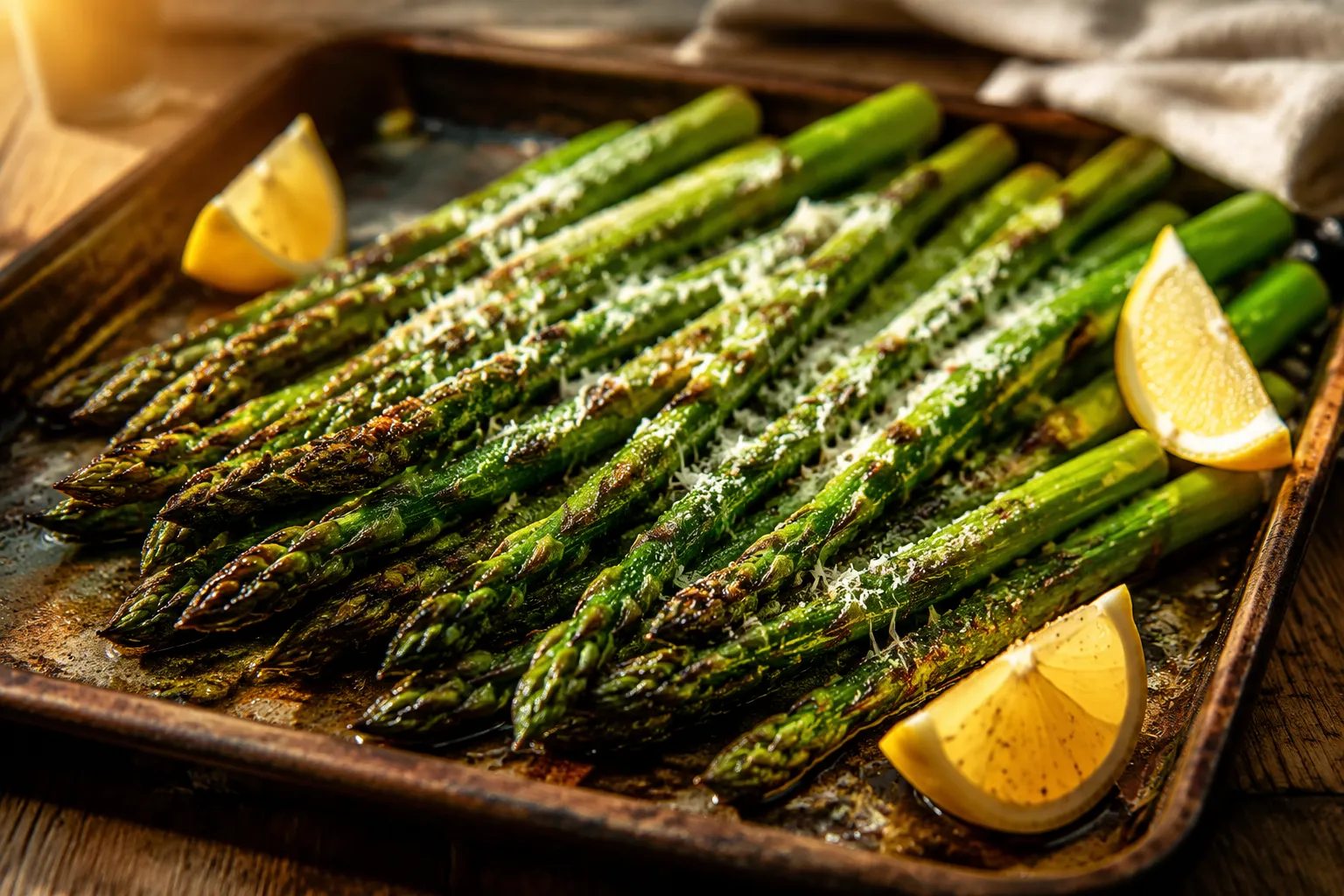
Oven roasted asparagus is the kind of 15-minute side dish that makes dinner feel fresh, bright, and a little more put-together with almost no effort. The spears roast hot and fast until the tips get crisp and caramelized, while the centers stay tender with a little snap. Add olive oil, garlic, lemon, and a snowy finish of parmesan, and you have a simple green vegetable that works next to salmon, chicken, pasta, steak, or a grain bowl.

This recipe is especially helpful on busy weeknights because everything happens on one sheet pan. There is no blanching, no babysitting a skillet, and no fussy sauce to whisk together at the last second. If you have ever wondered how long to roast asparagus so it does not turn limp or stringy, the answer comes down to thickness, oven temperature, and giving the spears enough room to breathe.

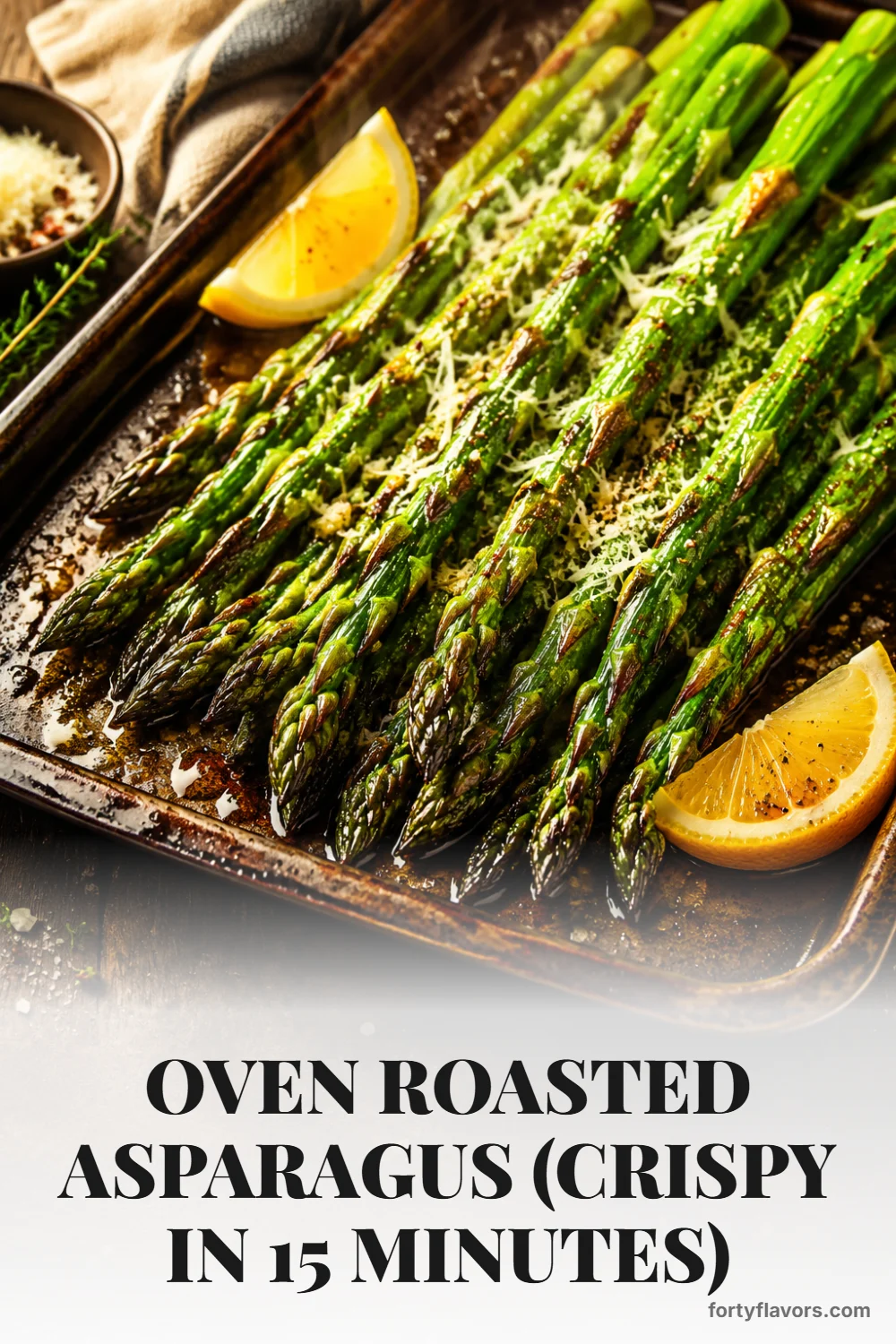
Oven roasted asparagus recipe on a sheet pan with lemon and parmesan

Think of this as your go-to method for crisp-tipped, lemony asparagus spears that taste like they came from a restaurant, but take less time than setting the table. It is one of my favorite easy spring side dishes because it is light, fast, naturally gluten-free, low-carb, and endlessly pairable.

A Fast Spring Side with Crispy Tips

The magic of roasted asparagus in the oven is the contrast: lightly charred tips, tender stalks, and bright lemony edges. A hot oven draws out moisture quickly, which helps the asparagus caramelize instead of steam. That is why this method tastes deeper and more savory than boiled or steamed asparagus, even though the ingredient list is short. Garlic adds warmth, black pepper adds a little bite, and parmesan melts into salty little pockets on the hot spears. The result is simple enough for a Tuesday dinner but polished enough for Easter, Mother’s Day, or a spring brunch spread.

Asparagus is also one of those vegetables that rewards restraint. You do not need a heavy coating or a complicated marinade; just enough oil to gloss the spears and help the seasoning cling. If you already love sides like garlic butter green beans, lemon parmesan broccoli, or roasted brussels sprouts, this will slide right into your rotation. It brings that same savory, golden-edged flavor with a lighter, fresher feel.

Ingredients for Crispy Baked Asparagus

Start with 1 pound of fresh asparagus. Look for stalks that are firm, bright green, and smooth, with compact tips that are not mushy or flowering. Thin spears cook quickly and turn delicate, while thick spears have a meatier bite and take a few extra minutes. Both work beautifully; the key is to choose a bunch with stalks that are roughly the same size so they finish at the same time.

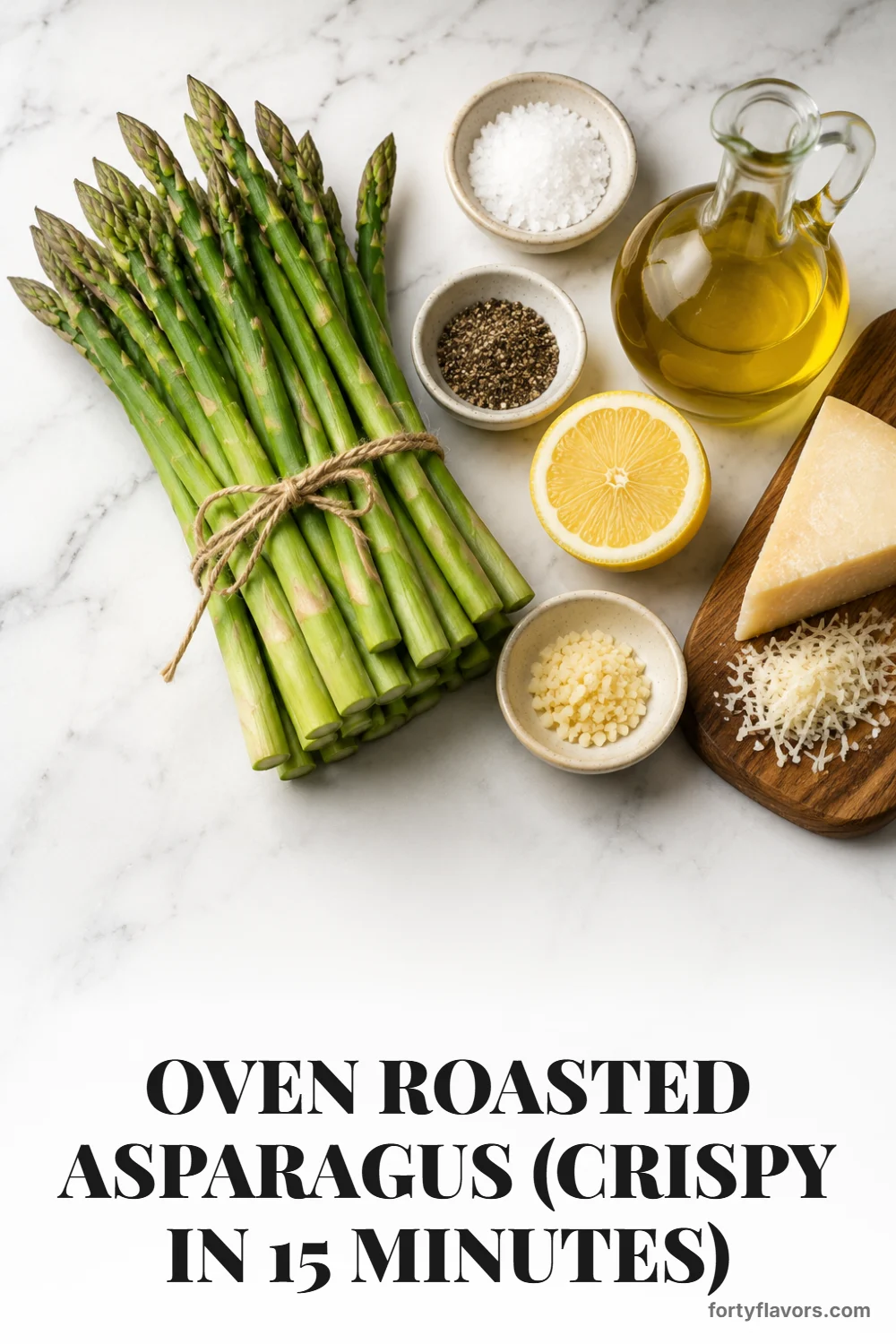
Ingredients for oven roasted asparagus including olive oil, garlic, lemon, and parmesan

Extra-virgin olive oil is the base of the seasoning and helps carry the garlic, salt, and pepper across every spear. Minced garlic gives the asparagus a savory, aromatic edge, but keep the pieces fairly small so they cling rather than burn in big chunks. Kosher salt seasons the stalks from the outside in, and black pepper adds a gentle heat that plays well with lemon. Fresh lemon is added after roasting so it stays lively instead of bitter.

Parmesan is optional, but I love it here. A small amount gives the finished dish a salty, nutty flavor without weighing it down. For a lemon parmesan finish, grate the cheese finely so it catches on the hot spears, then squeeze lemon over the top right before serving. If you prefer dairy-free asparagus, simply skip the cheese and add a little extra lemon zest or a pinch of red pepper flakes.

How Long to Roast Asparagus at 425 Degrees

The best oven temperature for this recipe is 425 degrees. That heat is high enough to brown the tips and cook the stalks quickly, but not so aggressive that the garlic scorches before the asparagus is tender. At 425 degrees, the spears keep their color and develop golden, toasty edges in about the same time it takes to finish your main dish. It is the sweet spot for weeknight cooking.

Thin asparagus spears usually need 8 to 10 minutes. Medium spears land closer to 10 to 12 minutes, which is where the recipe card timing sits. Thick spears can take 12 to 15 minutes, especially if they are extra juicy or crowded at the thicker ends. The asparagus is done when the tips are lightly browned, the stalks are tender when pierced with a fork, and the spears bend slightly without collapsing.

If your bunch includes a mix of thin and thick stalks, divide them before roasting. You can add thinner spears to the pan a few minutes later, or pull them off early while the thicker stalks finish. This tiny bit of timing makes a huge difference in the final texture. It is also why a visual check matters more than a timer alone.

How to Make Oven Roasted Asparagus Step by Step

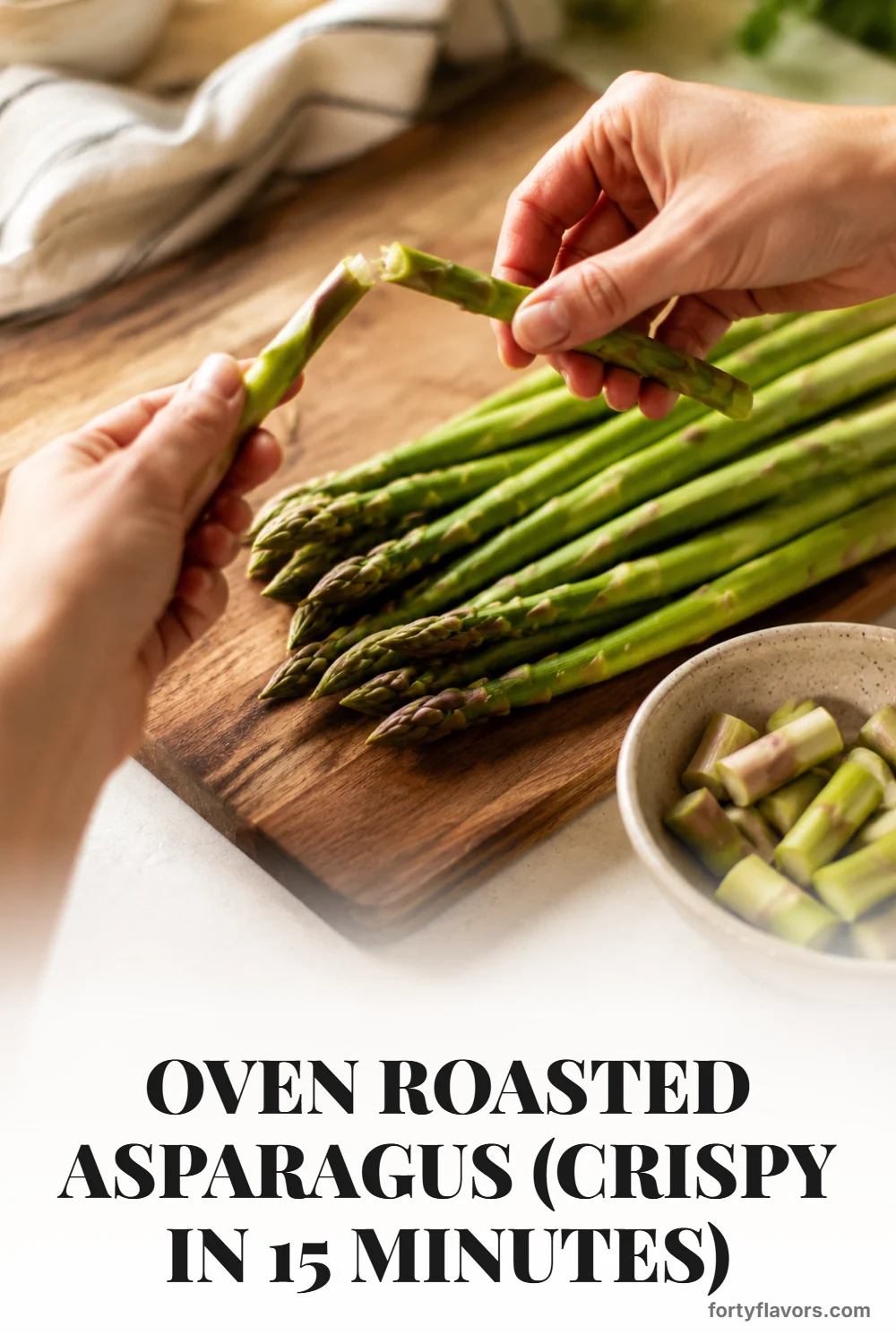
Begin by trimming the woody ends. The easiest method is to bend one spear near the base until it naturally snaps, then use that as a guide to cut the rest of the bunch. If you want a deeper tutorial, how to trim asparagus is a useful kitchen skill to learn once and use all season. After trimming, pat the spears dry with a clean towel, especially around the tips where water likes to hide.

Hands trimming the woody ends off fresh asparagus spears

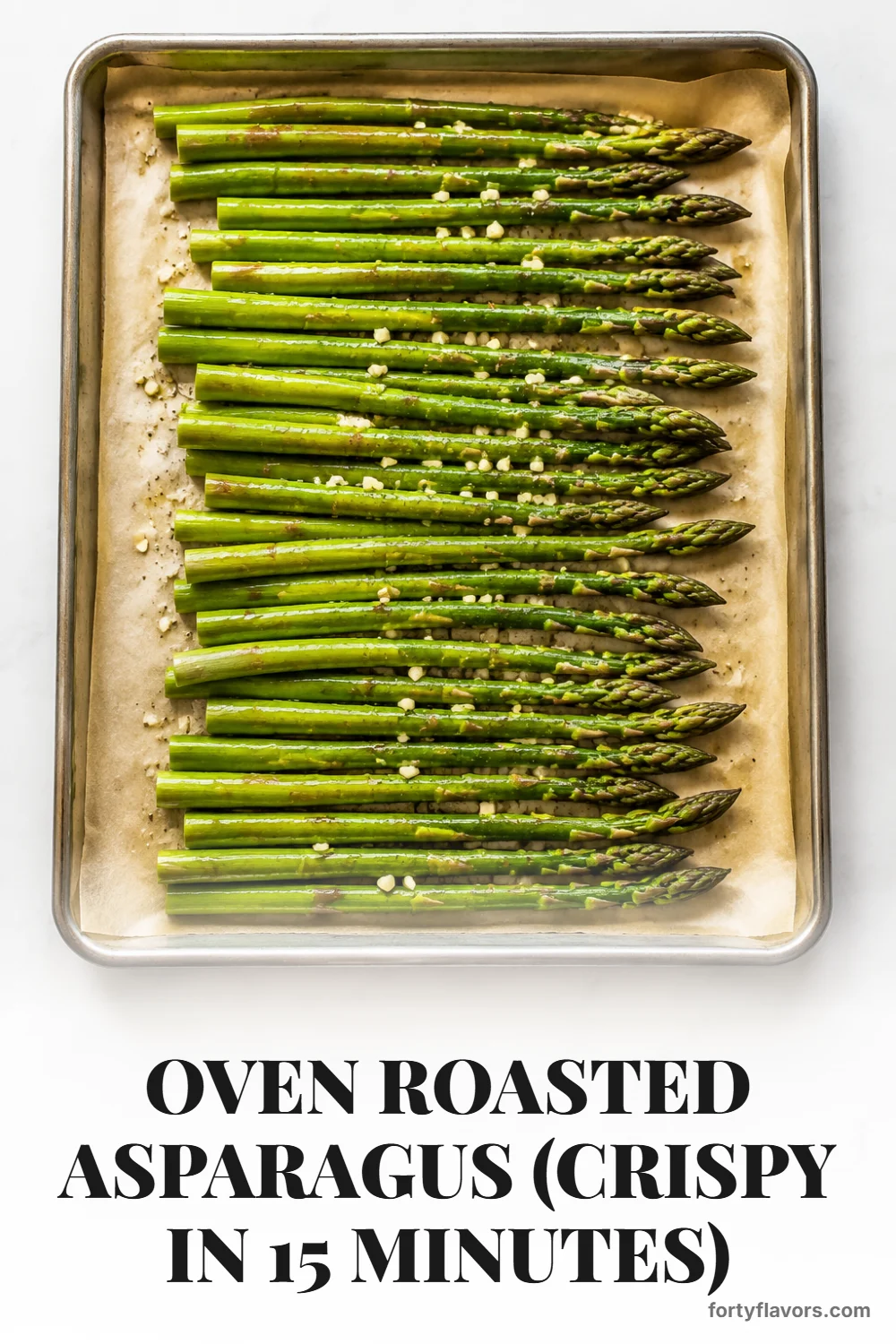
Next, place the trimmed asparagus on a parchment-lined sheet pan. Drizzle with olive oil, sprinkle with minced garlic, kosher salt, and black pepper, then toss with your hands until every spear is lightly coated. You are looking for a glossy finish, not a puddle of oil. Too much oil can make the stalks feel heavy and prevent the tips from getting that crisp roasted texture.

Asparagus spears tossed with olive oil and garlic on a sheet pan before roasting

Arrange the spears in a single layer with a little space between them. This is one of those small steps that makes the difference between crisp-tender and steamed. If the asparagus is piled up or overlapping, moisture gets trapped and the stalks soften before they brown. Use a second pan if your asparagus bunch is especially large or if you are doubling the recipe for guests.

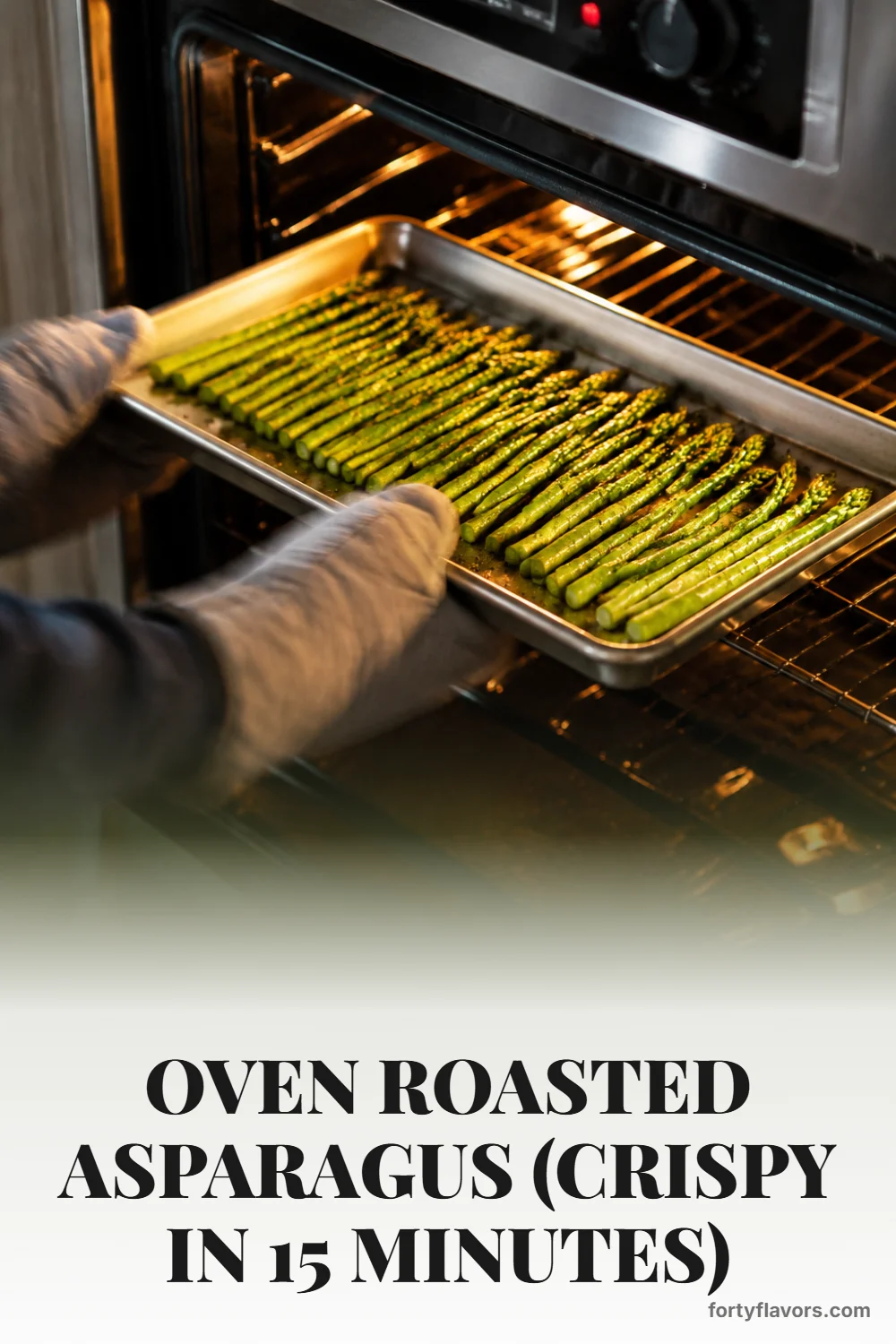
Sheet pan of asparagus going into a 425 degree oven to roast

Roast until the tips are browned and the stalks are tender, checking early if your spears are very thin. When the pan comes out of the oven, finish immediately with fresh lemon juice and parmesan if using. The heat from the asparagus gently softens the cheese and releases the lemon aroma. This final hit of acidity is what makes the whole pan taste bright instead of flat.

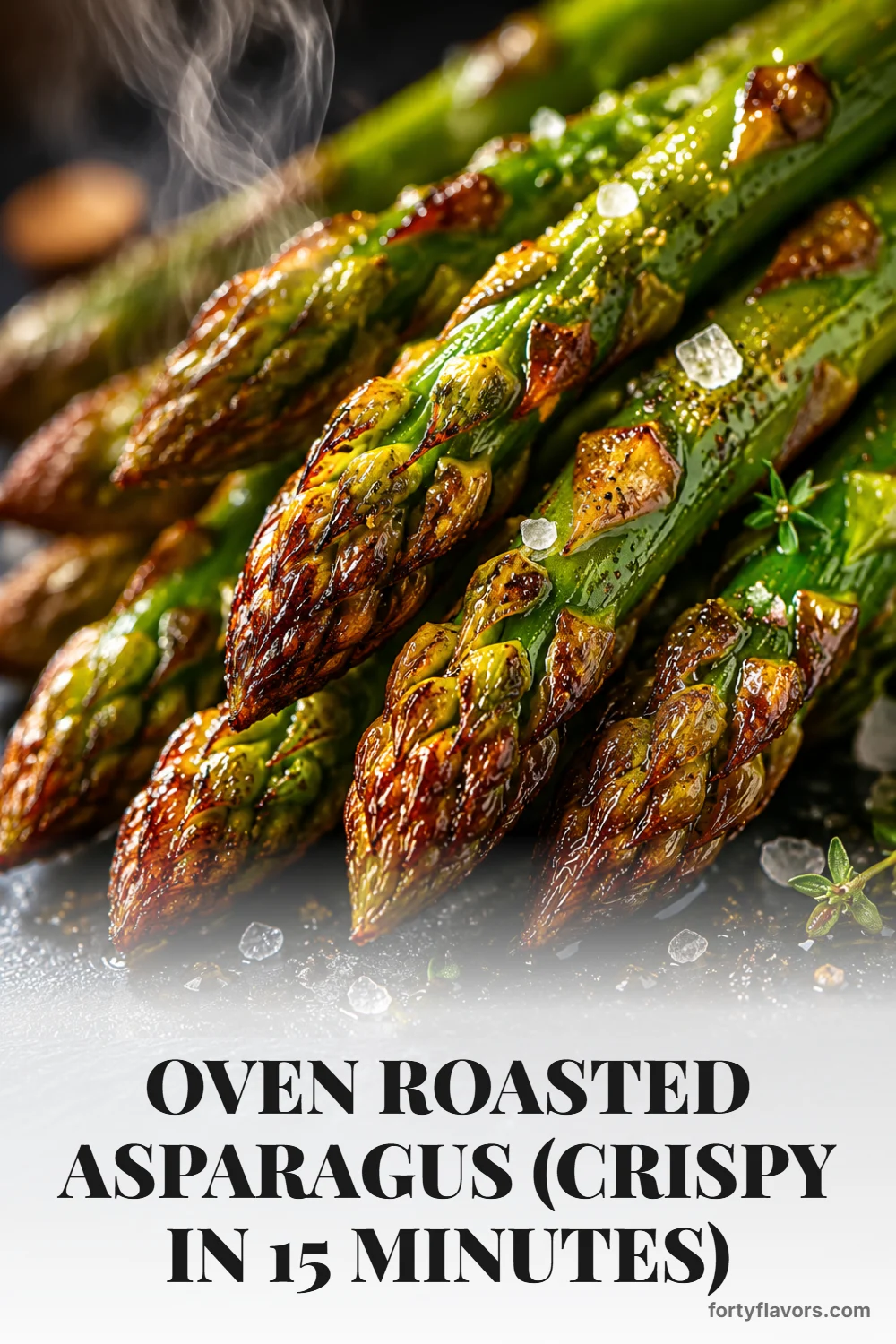
Close-up of crispy caramelized tips on oven baked asparagus

What Makes This Roasting Method Work

This recipe uses a hot-and-fast approach because asparagus has a high water content and cooks quickly. Lower heat can make the stalks soften before they get color, while a very hot oven gives you browning at the edges and keeps the centers pleasantly firm. The single layer matters because air needs to circulate around the spears. Think of the sheet pan as a roasting surface, not a holding tray.

The seasoning is also intentionally simple. Garlic, salt, pepper, lemon, and parmesan are classic because they enhance the green, grassy flavor of asparagus without covering it up. The garlic roasts just enough to become fragrant, the lemon cuts through the richness of the oil, and the parmesan adds a savory finish. If you enjoy oven roasted asparagus with extra browned bits, place the pan on the upper-middle rack for the last few minutes and keep a close eye on it.

One more detail: add lemon after roasting, not before. Lemon juice can dull the color of green vegetables and may turn slightly bitter under high heat. A fresh squeeze at the end tastes cleaner and more vibrant. It is a tiny restaurant-style move that makes the finished platter feel intentional.

Sautéed Asparagus vs. Oven Baked Asparagus

Sauteed asparagus is wonderful when you want something very fast and do not want to turn on the oven. It cooks in a skillet with direct contact, often in butter or oil, and gives you a softer, juicier bite. The stovetop method is especially handy for small portions or mornings when asparagus is going into eggs, toast, or a quick grain bowl. It can be done in minutes, but it needs more attention because the spears have to be moved around the pan.

Oven baked asparagus is better when you want deeper flavor and crispier tips. The dry heat surrounds the spears and concentrates their sweetness, creating browned edges that are hard to achieve in a crowded skillet. It is also easier for feeding four or more people because the pan does the work while you prepare the rest of dinner. For a hands-off side dish, roasting wins almost every time.

The choice really comes down to texture and timing. Sautéed spears are glossy, tender, and quick; roasted spears are caramelized, slightly smoky at the tips, and more hands-off. If your main dish is already on the stovetop, the oven method keeps the cooktop clear. If your oven is packed, a skillet is a smart backup.

Serving Ideas for a Complete Dinner

This is one of those side dishes that goes with nearly everything. Serve oven roasted asparagus beside roasted chicken, grilled steak, turkey burgers, shrimp pasta, or a simple omelet. It is also excellent with rice pilaf, creamy polenta, couscous, or a baked potato when you want a lighter plate that still feels satisfying. The lemon-garlic flavor is flexible enough to fit into weeknight dinners or holiday menus.

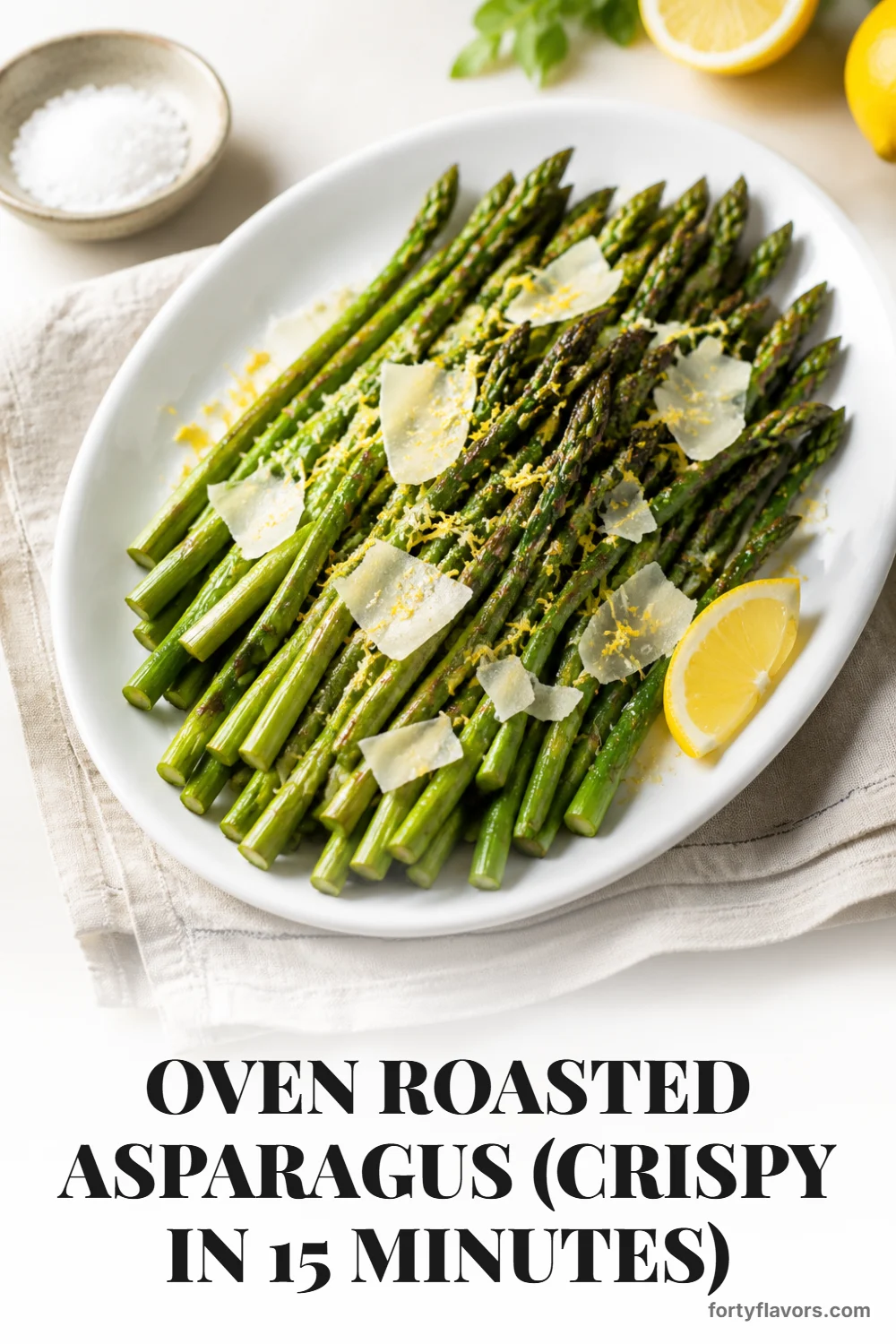
Finished oven roasted asparagus on a white platter with parmesan and lemon

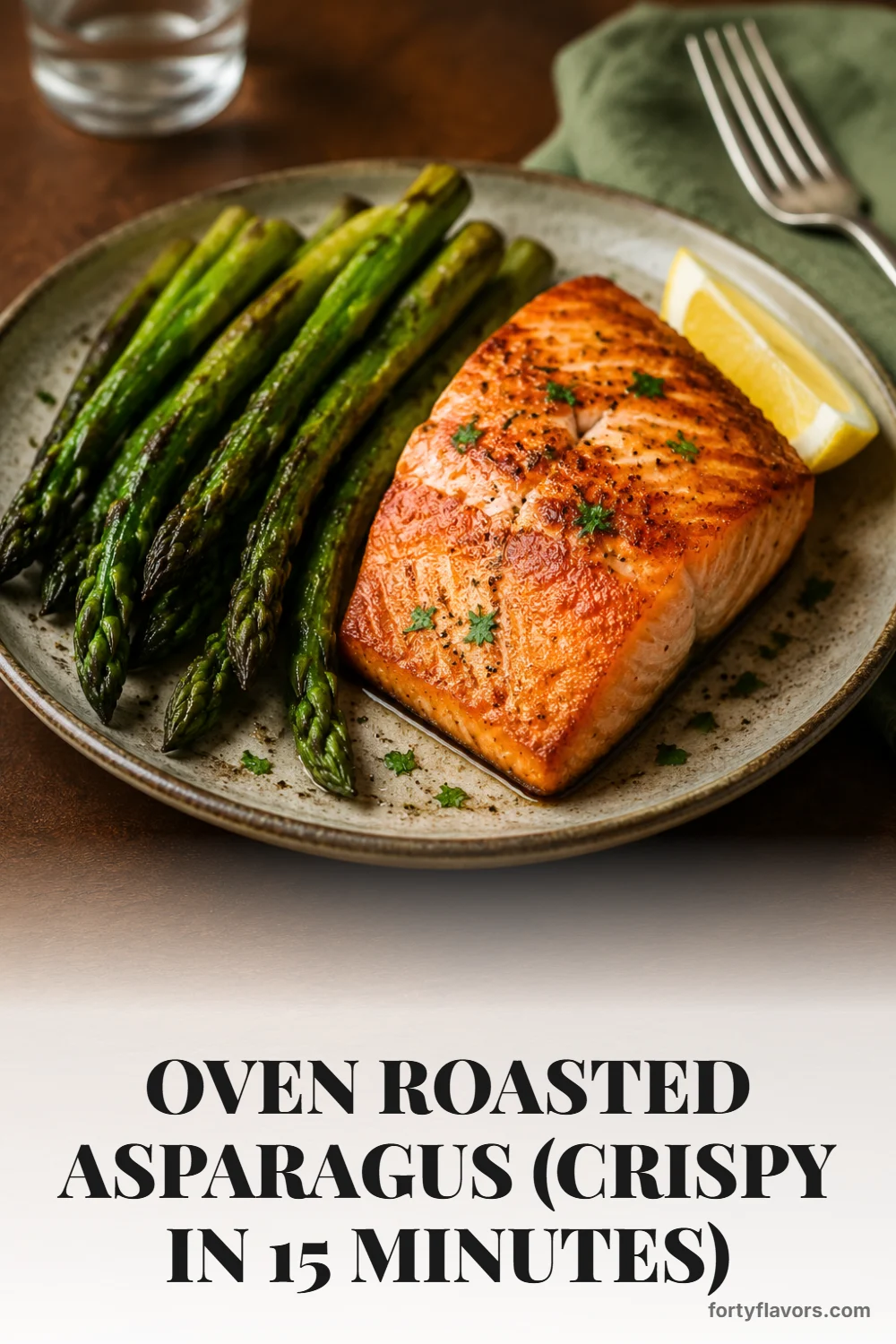
For a seafood dinner, pair the asparagus with salmon and an extra wedge of lemon. The crisp tips and bright finish balance rich fish beautifully, especially if the salmon has a buttery glaze or herb crust. It also works next to sheet pan salmon when you want everything to feel coordinated without making multiple sides. Add a salad and warm bread, and dinner is done.

Roasted asparagus served as a side dish with salmon and lemon

If you are planning a spring menu, this asparagus can sit comfortably next to ham, quiche, roast chicken, or pasta primavera. It also makes a pretty platter for brunch because the spears stay elegant and easy to serve. For contrast, add something creamy or starchy alongside it, like mashed potatoes, risotto, or a soft goat cheese salad. The vegetable brings freshness and color to the plate without competing with the main event.

Meal Prep Notes and Leftover Uses

While asparagus is at its crispest right after roasting, leftovers are still useful and delicious. Chop chilled spears into salads, fold them into scrambled eggs, add them to a lunch bowl, or tuck them into a wrap with chicken and a lemony yogurt sauce. The flavor remains bright, especially if you finish leftovers with a little extra lemon or a few shavings of parmesan. Just keep in mind that reheated asparagus will be softer than freshly roasted.

Leftover roasted asparagus in a glass meal prep container for storage

If you plan to cook asparagus for meal prep, err on the slightly underdone side. Pull the pan when the spears are just tender and the tips are beginning to brown, then let carryover heat finish the job. That gives you more wiggle room when reheating or adding the asparagus to another dish. It is a small adjustment that keeps the texture pleasant instead of mushy.

Final Thoughts for Perfect Roasted Asparagus

Once you know the timing by thickness, oven roasted asparagus becomes one of the easiest vegetables to get right. Keep the spears dry, roast them in a single layer, use 425 degrees for fast browning, and finish with lemon after the pan comes out of the oven. Those simple steps give you crisp tips, tender centers, and a fresh spring flavor that fits almost any dinner.

Whether you serve it with salmon, chicken, pasta, or eggs, this is a side dish worth memorizing. It is quick enough for weeknights, pretty enough for company, and flexible enough to season a dozen different ways. Most importantly, it turns one humble bunch of asparagus into something you will actually look forward to eating.

💡 Expert Tips

  • Dry the spears well: After rinsing, pat asparagus completely dry so it roasts instead of steams.
  • Give the pan room: Keep the spears in a single layer with a little space between them; use two pans if doubling the recipe.
  • Match the spear size: Choose asparagus stalks of similar thickness, or remove thinner pieces earlier so everything stays crisp-tender.
  • Add cheese at the end: Parmesan can go on during the last 1 to 2 minutes or right after roasting so it melts without burning.
  • Check early: Thin asparagus cooks quickly, so start checking around 8 minutes to avoid limp stalks.

🔄 Variations & Substitutions

Once you have the basic method down, you can change the flavor profile with a few simple add-ons. Keep the same roasting temperature and timing, then finish the asparagus with one of these combinations.

  • Lemon parmesan: Add lemon zest, grated parmesan, and a final squeeze of lemon juice after roasting.
  • Garlic butter and herbs: Toss hot roasted asparagus with a small pat of butter, chopped parsley, and chives.
  • Balsamic glaze: Drizzle lightly with balsamic glaze and sprinkle with toasted pine nuts just before serving.
  • Spicy red pepper: Add a pinch of red pepper flakes with the garlic for gentle heat.
  • Everything bagel asparagus: Skip the parmesan and sprinkle everything bagel seasoning over the spears after roasting.

🧊 Storage & Leftovers

Store leftover roasted asparagus in an airtight container in the refrigerator for up to 3 days. Let the spears cool before sealing the container so excess steam does not make them soggy.

For the best texture, reheat leftovers in a 400°F oven or air fryer for a few minutes until warmed through. The microwave works in a pinch, but it will make the asparagus softer, so use short bursts and avoid overheating.

Frequently Asked Questions

How long do you roast asparagus at 425°F?
At 425°F, thin asparagus spears usually roast in 8 to 10 minutes, medium spears take about 10 to 12 minutes, and thick spears need 12 to 15 minutes. The asparagus is done when the stalks are tender but not floppy and the tips are lightly browned or crisp. Start checking early if your spears are very thin, because they can go from perfect to overcooked quickly.
Should I peel asparagus before roasting?
You do not need to peel thin or medium asparagus before roasting. Simply trim off the woody ends and dry the spears well. For very thick asparagus, peeling the bottom 2 inches with a vegetable peeler can help the stalks cook more evenly and feel less fibrous. This is optional, but it gives extra-thick spears a more tender, restaurant-style texture.
Why is my oven baked asparagus soggy?
Soggy asparagus usually comes from too much moisture, crowding, or not enough heat. Pat the spears completely dry after rinsing, spread them in a single layer, and roast at 425°F or higher so moisture evaporates quickly. If the asparagus overlaps, it steams instead of browning. Also avoid using too much oil; the spears should be glossy, not sitting in a puddle.
Can I roast asparagus from frozen?
Yes, you can roast asparagus from frozen, but the texture will be softer than fresh because frozen spears release more water. Do not thaw first. Spread the frozen asparagus out on a hot sheet pan, roast at 425°F, and add 5 to 7 extra minutes as needed. For the best browning, give the spears plenty of space and avoid covering the pan.
What's the difference between sauteed asparagus and oven roasted asparagus?
Sauteed asparagus cooks quickly in a skillet and tends to have a softer, juicier bite with less caramelization. Oven roasted asparagus cooks with dry, surrounding heat, which creates deeper flavor, browned edges, and crispier tips. The stovetop is great for small portions or quick breakfasts, while the oven is better for hands-off cooking, larger batches, and a more roasted flavor.

Oven Roasted Asparagus (Crispy in 15 Minutes)

Pin Recipe
  • Prep Time5 min
  • Cook Time12 min
  • Total Time17 min
  • Yield4 servings

Ingredients

Scale

Instructions