How to Make Mashed Potatoes (Creamy, Fluffy, Foolproof)
Ingredients
Scale
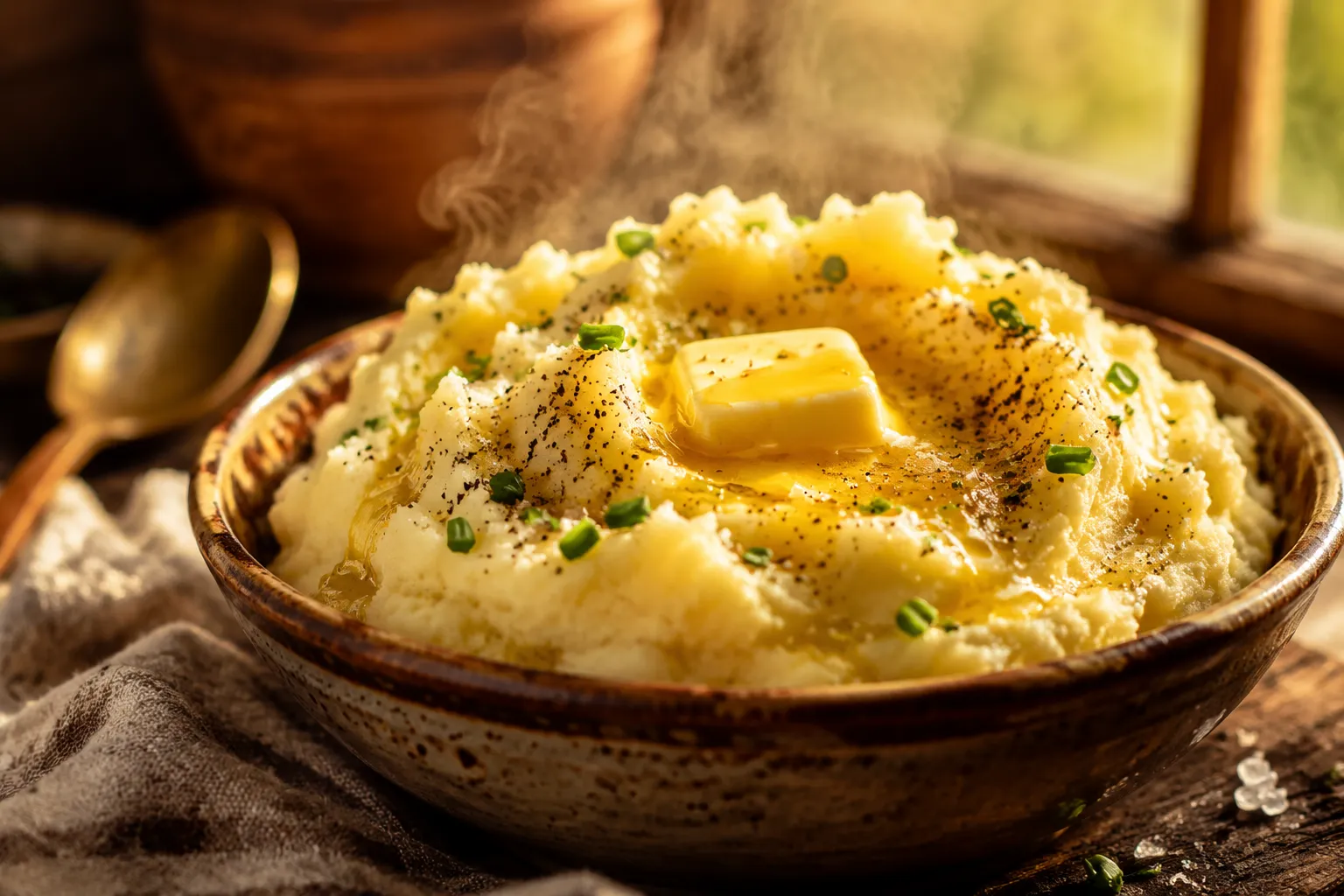
The only mashed potatoes guide you'll ever need: buttery, cloud-soft, and ready in 30 minutes with pantry staples and one secret texture trick.
If you have ever wondered how to make mashed potatoes that taste like the ones served at a cozy steakhouse or holiday dinner, this is the method I come back to every single time. These potatoes are buttery, plush, and cloud-soft, with just enough structure to hold a swoop of gravy without turning dense or pasty. The secret is not complicated: choose the right potatoes, start them in cold salted water, dry them briefly after draining, and fold in warm milk and butter instead of cold dairy.
This is the kind of easy mashed potatoes recipe that belongs in your back pocket for Sunday dinners, weeknights with roast chicken, and every single holiday table. It uses simple ingredients, but the technique makes all the difference. Once you learn the why behind each step, you can make creamy mashed potatoes without measuring every move or worrying about gluey results.
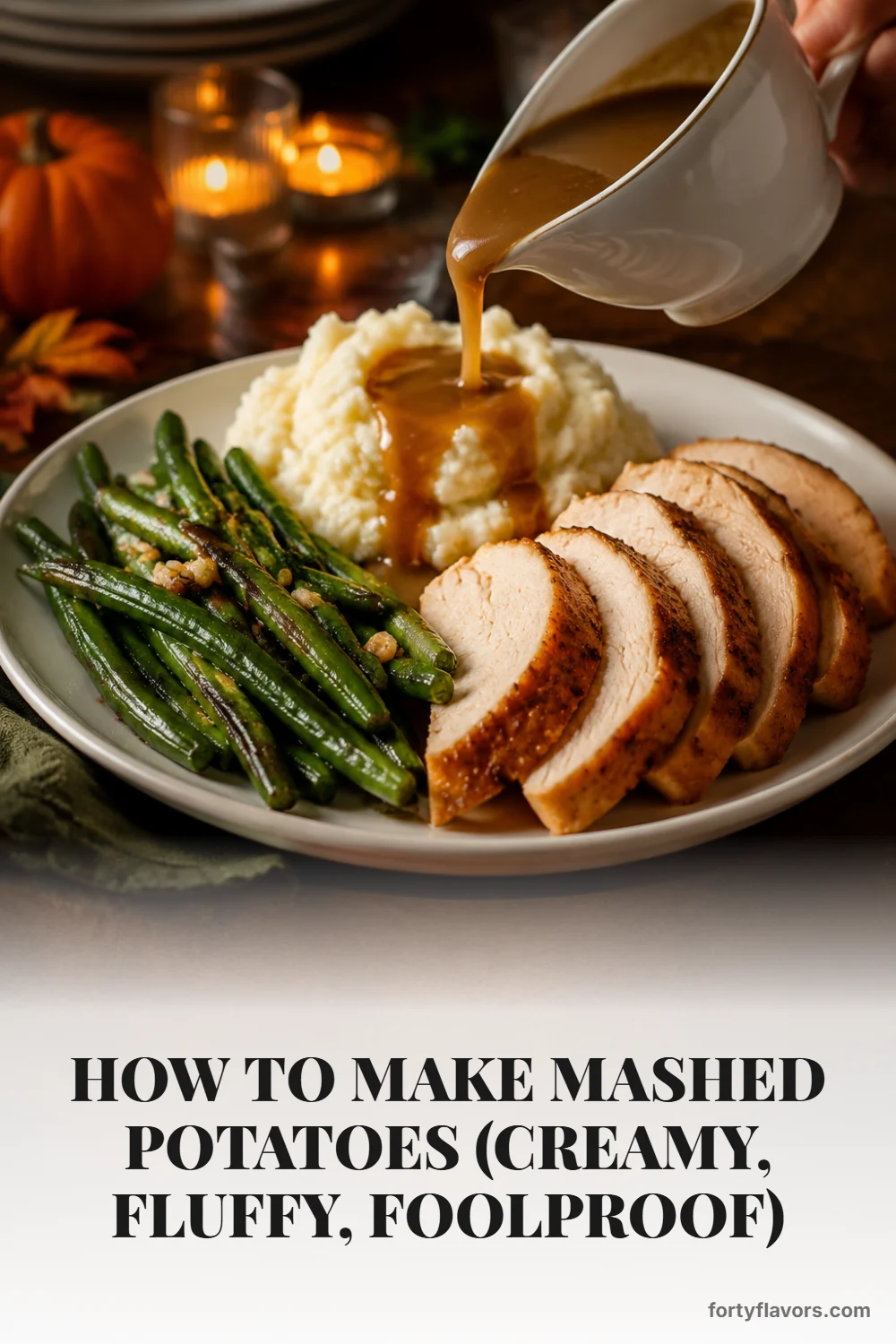
I love these with homemade gravy, a slice of roast turkey breast, and a tangle of garlic butter green beans, but honestly, I have been known to eat them straight from the bowl with a spoon. They are classic, comforting, and just a little luxurious thanks to a splash of cream and a generous amount of butter. If mashed potatoes are one of your must-have Thanksgiving side dishes, this foolproof version is the one to bookmark.
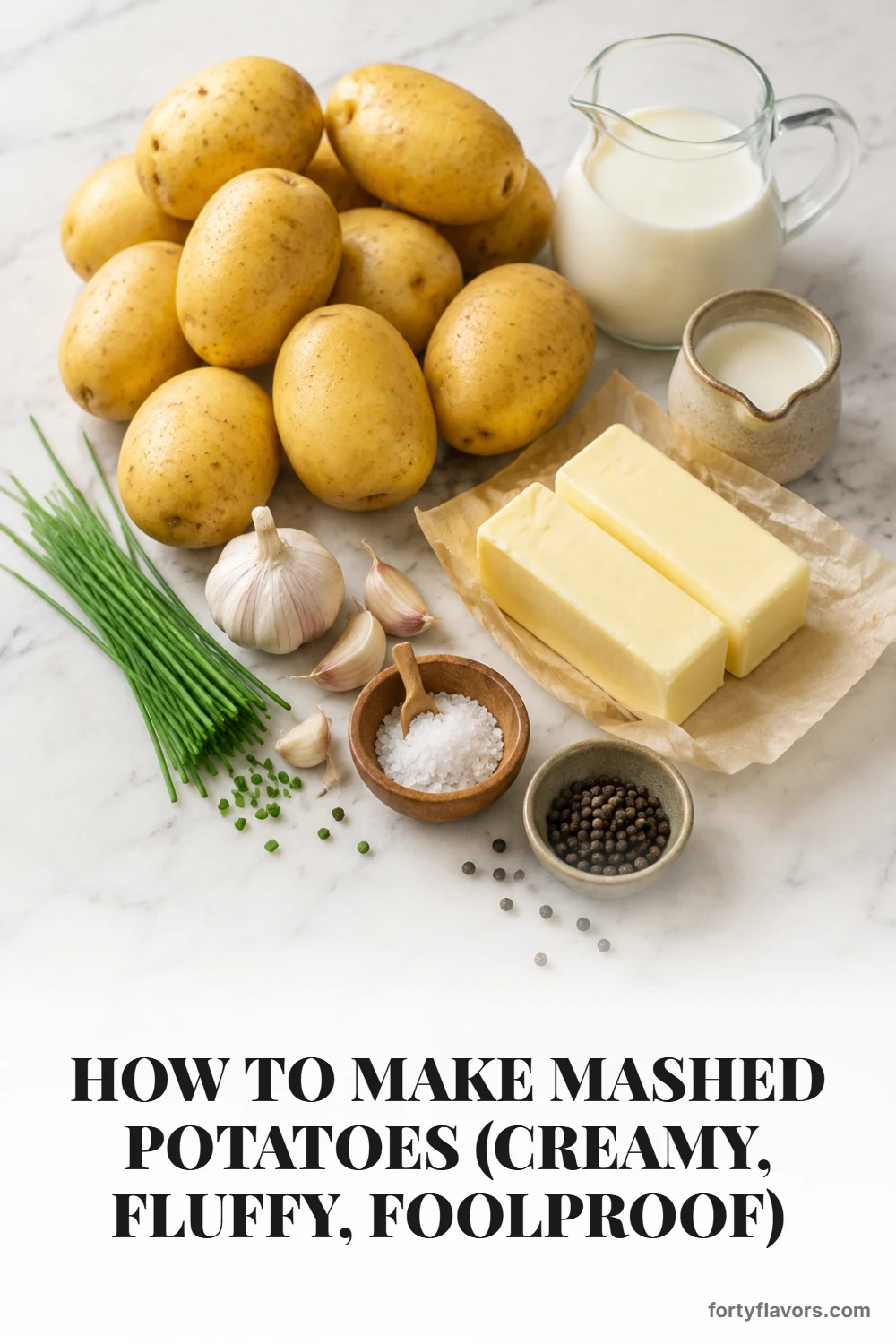
The first step in learning how to make mashed potatoes well is choosing the right potato. Yukon Gold potatoes are my favorite for this recipe because they have a naturally buttery flavor, a golden color, and a medium starch level that mashes into a creamy, velvety texture. They do not need much coaxing to taste rich, which means the finished dish feels special even with everyday pantry staples.
Russet potatoes are another excellent choice, especially if you love a lighter, fluffier mash. They are high in starch and break down easily, which gives you that airy, almost whipped texture when handled gently. For the best of both worlds, use half Yukon Gold potatoes and half Russet potatoes: the Yukons bring creaminess and flavor, while the Russets add lift.
Red potatoes are not my first pick here because they are waxier and lower in starch. They can make a rustic smashed potato, but they tend to stay firmer and can become gummy if you work them too hard. If you are researching the best potatoes for mashing, remember this simple rule: starchy or medium-starchy potatoes are your friends; waxy potatoes are better for salads and roasting.
The ingredient list is short, so each piece matters. You need three pounds of potatoes, one stick of unsalted butter, whole milk, a splash of heavy cream, kosher salt, and black pepper. The milk loosens the potatoes, the cream adds body, and the butter gives that glossy, restaurant-style richness that makes each bite feel silky.
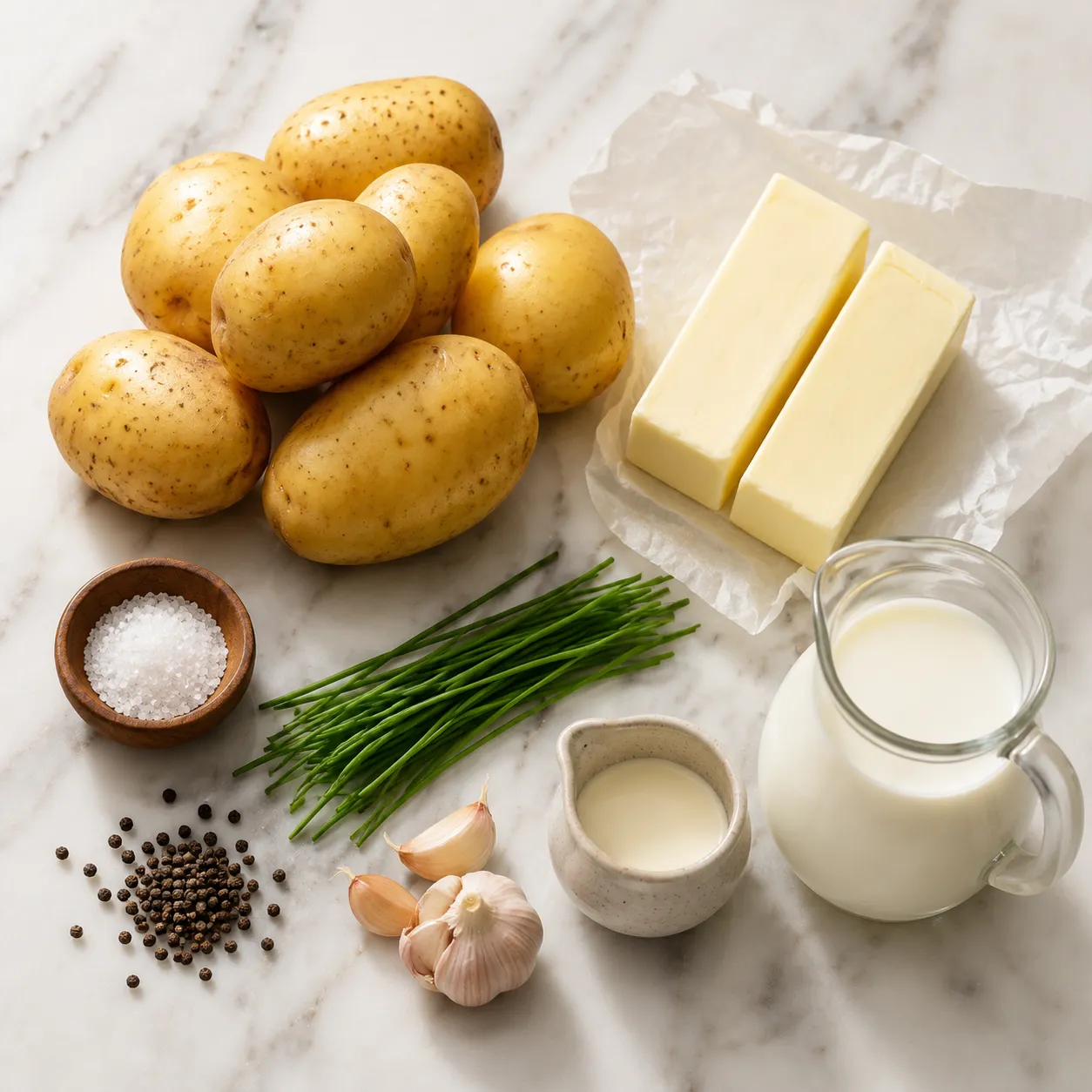
For the dairy, I like 3/4 cup whole milk plus 1/4 cup heavy cream, warmed together with the butter until everything is steamy and melted. This ratio makes the potatoes creamy without turning them soupy. If you prefer a slightly lighter version, use all whole milk; if you want them extra decadent, replace a little more milk with cream.
Salt is not just a finishing touch here. Salting the cooking water seasons the potatoes from the inside out, much like pasta water seasons noodles. You will still season at the end, but a well-salted pot gives the finished mash a fuller, rounder flavor.
Black pepper keeps things classic, while optional add-ins like roasted garlic, chives, parmesan, or sour cream can push the bowl in a more savory direction. For the base recipe, though, I keep it simple and let the potatoes, butter, and cream do the talking. That restraint is what makes these easy mashed potatoes so dependable with nearly any main dish.
One of the most important details in how to make mashed potatoes is starting the potato chunks in cold water, not dropping them into already-boiling water. When potatoes begin in cold water, the centers and edges heat at the same pace. That means they cook evenly all the way through instead of becoming waterlogged and crumbly outside while staying firm in the middle.
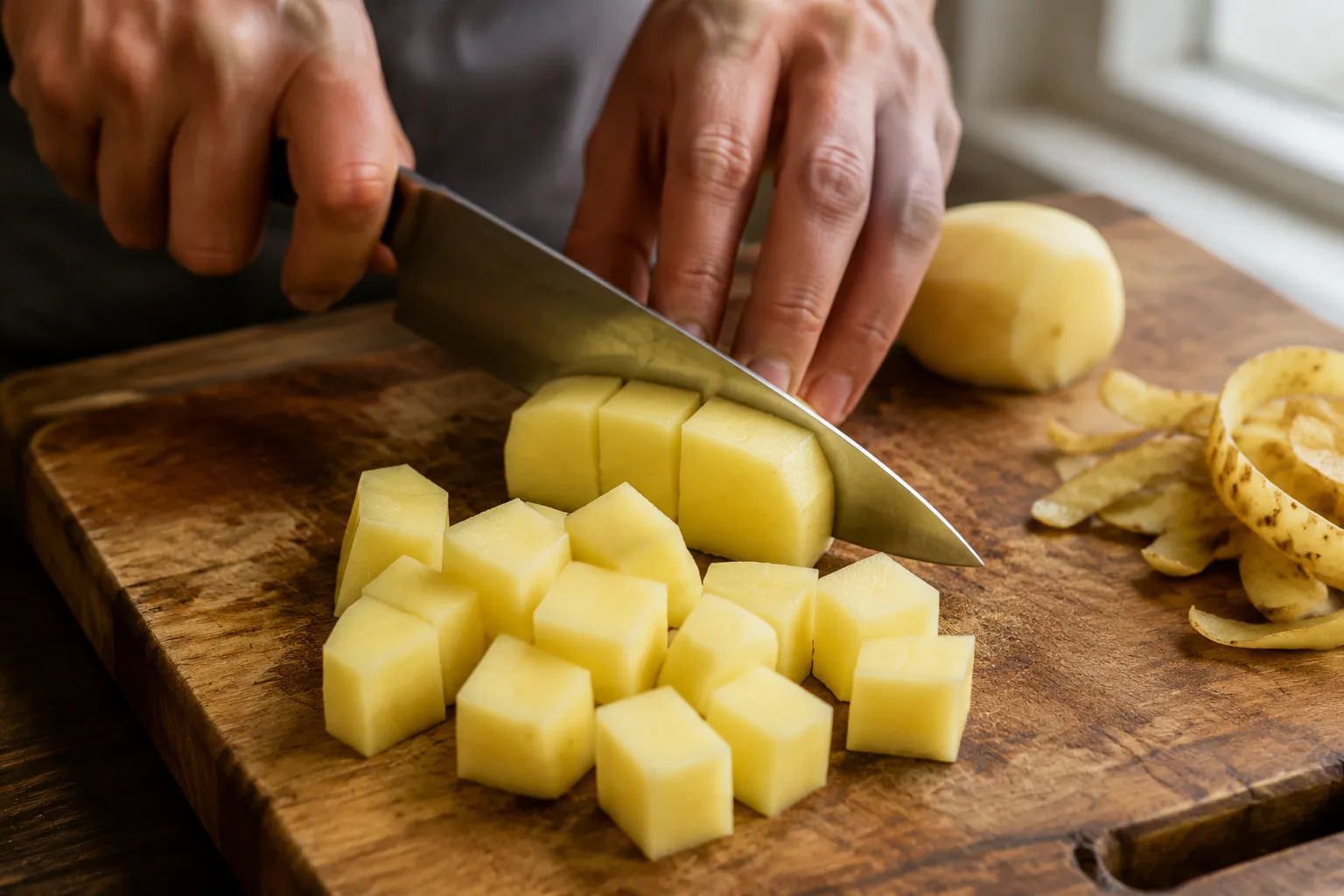
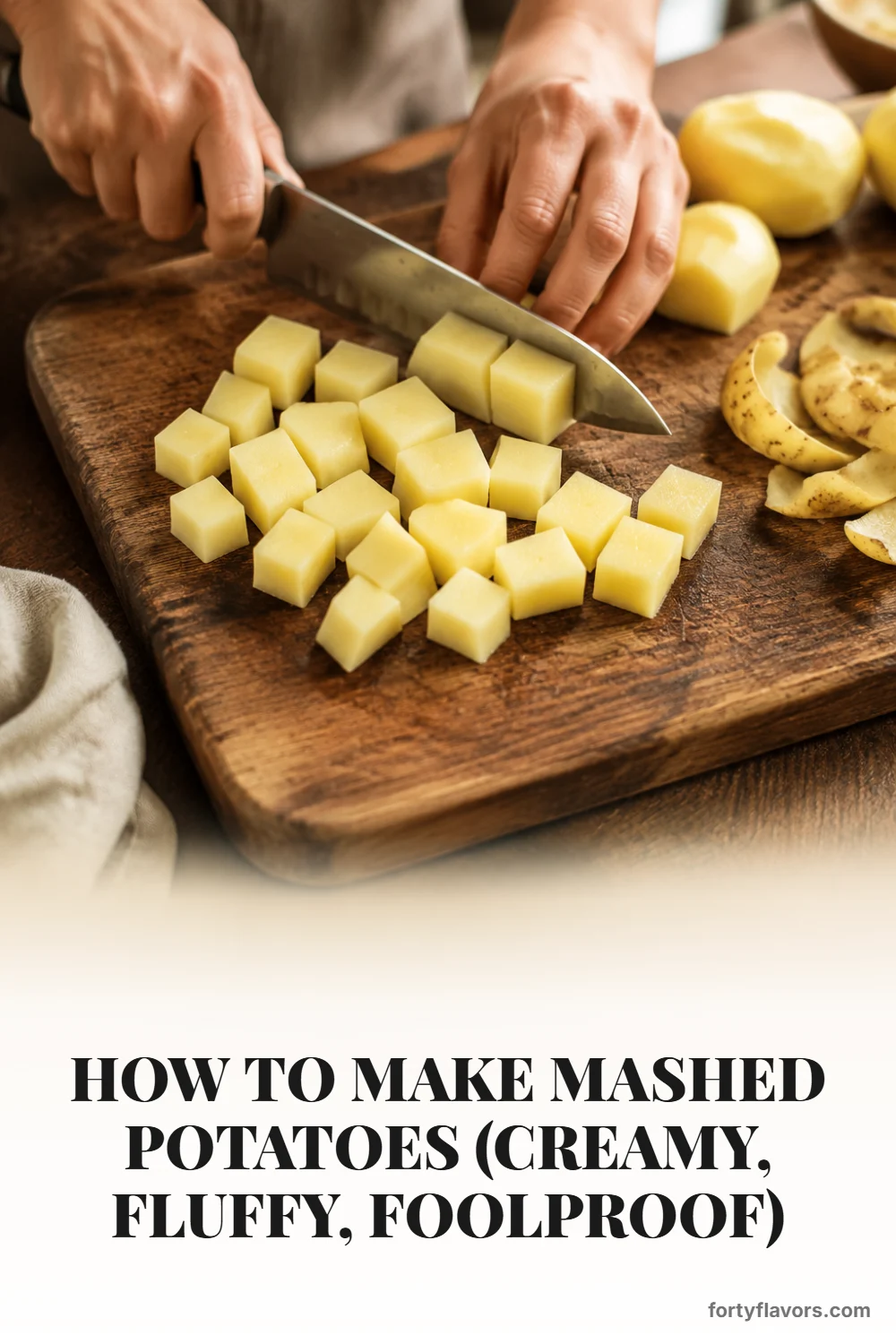
Cut the potatoes into even 1-inch chunks so they finish cooking around the same time. Too-large pieces slow everything down, while very small pieces can absorb more water and fall apart. If you like ultra-smooth potatoes, peel them first; if you enjoy a little texture and are using thin-skinned Yukon Golds, you can leave some or all of the skins on.
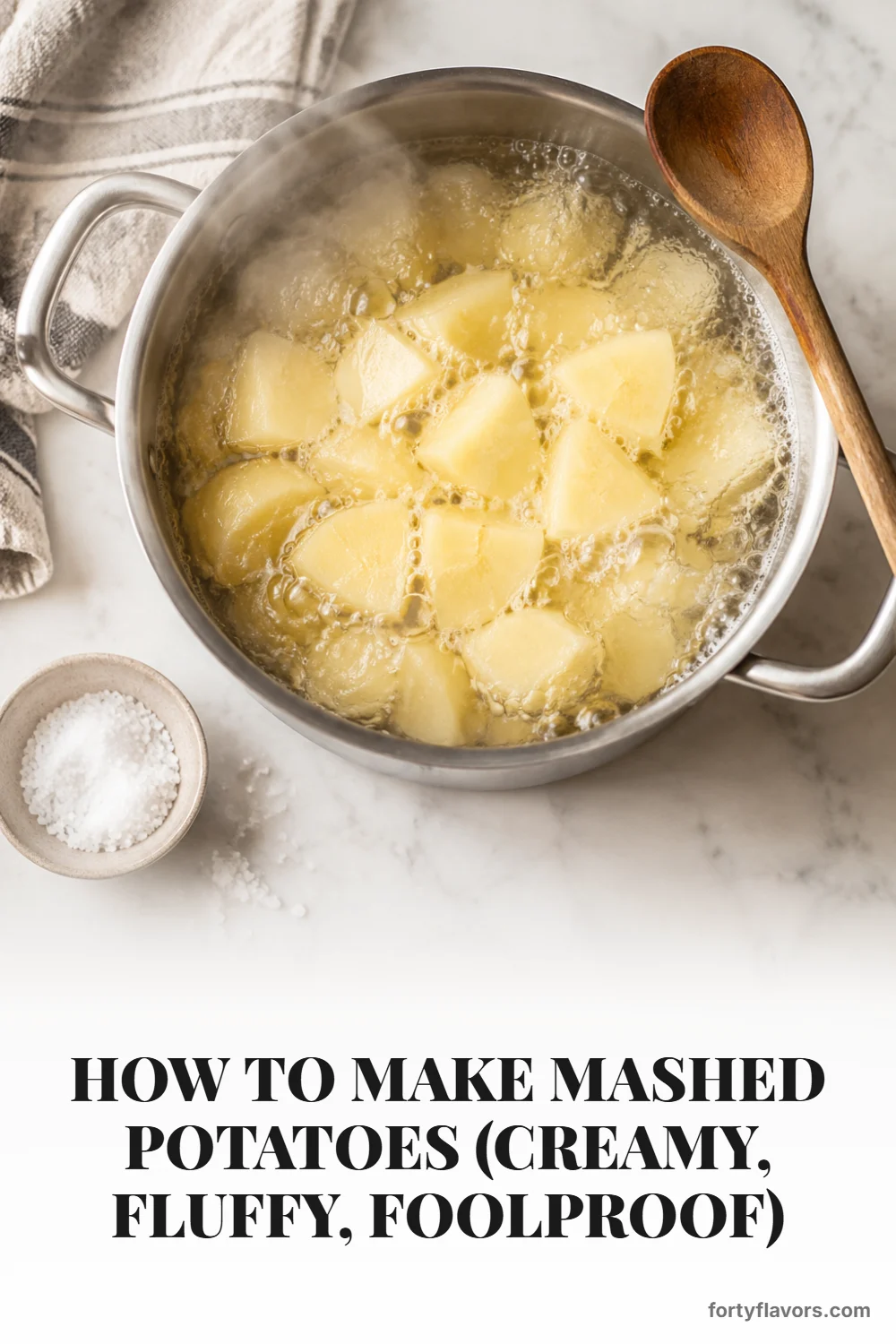
Add the cut potatoes to a large pot, cover them with cold water by about an inch, and season the water generously with kosher salt. The water should taste pleasantly salty, not harsh, because this is your best chance to season the potatoes deeply. Bring the pot to a steady boil, then reduce to a lively simmer so the pieces cook gently instead of banging around and breaking apart.
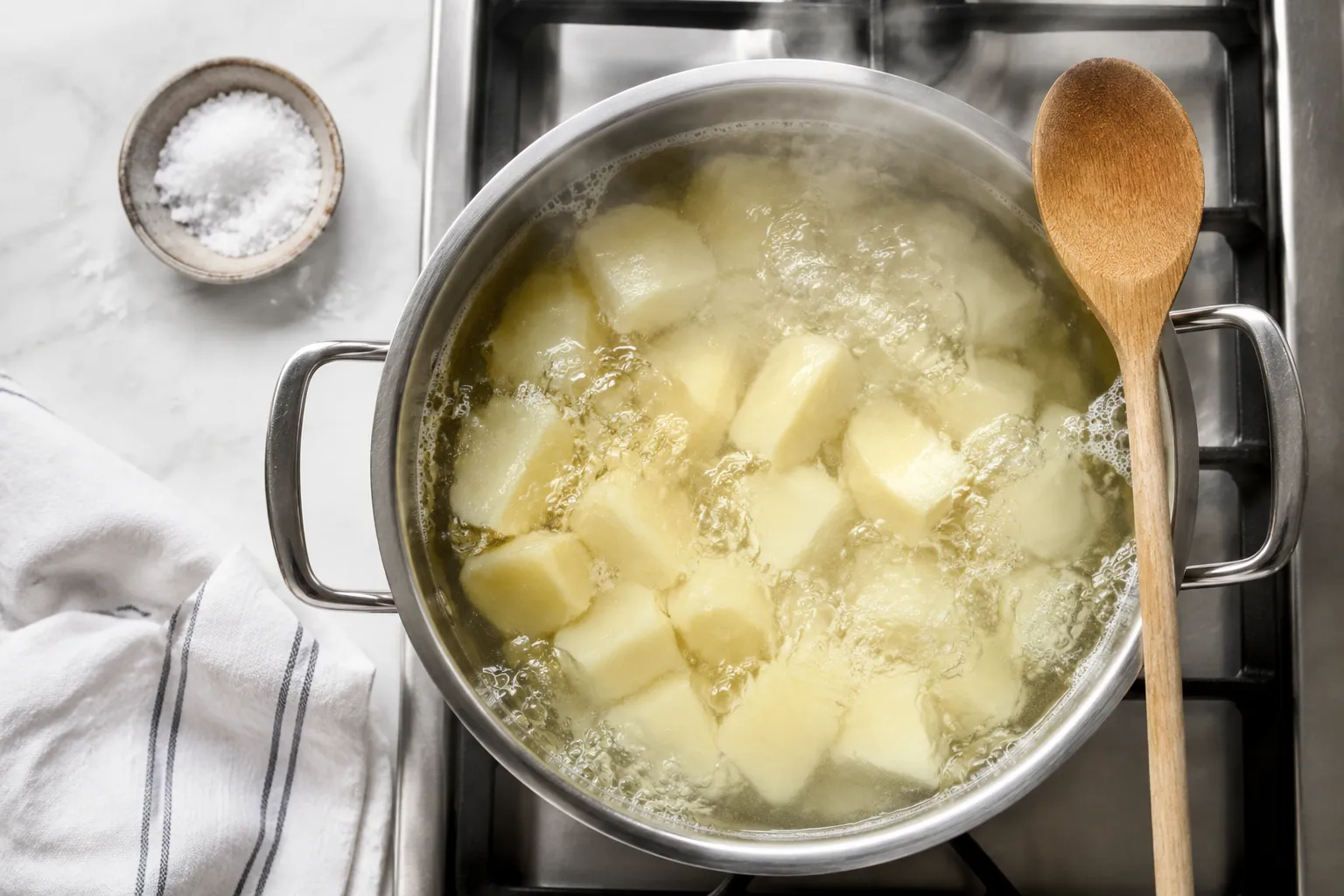
The potatoes are ready when a fork slides through the center with no resistance. Depending on the exact size of your chunks, this usually takes 15 to 20 minutes after the water comes to temperature. Do not cook them until they are disintegrating; tender is the goal, mushy is not.
Here is the little step that separates good mashed potatoes from great ones: after draining, return the potatoes to the warm pot for a minute or two. The residual heat steams off excess surface moisture, which helps the potatoes absorb the warm milk and butter instead of becoming watery. You will see the edges look slightly drier and more matte, and that is exactly what you want.
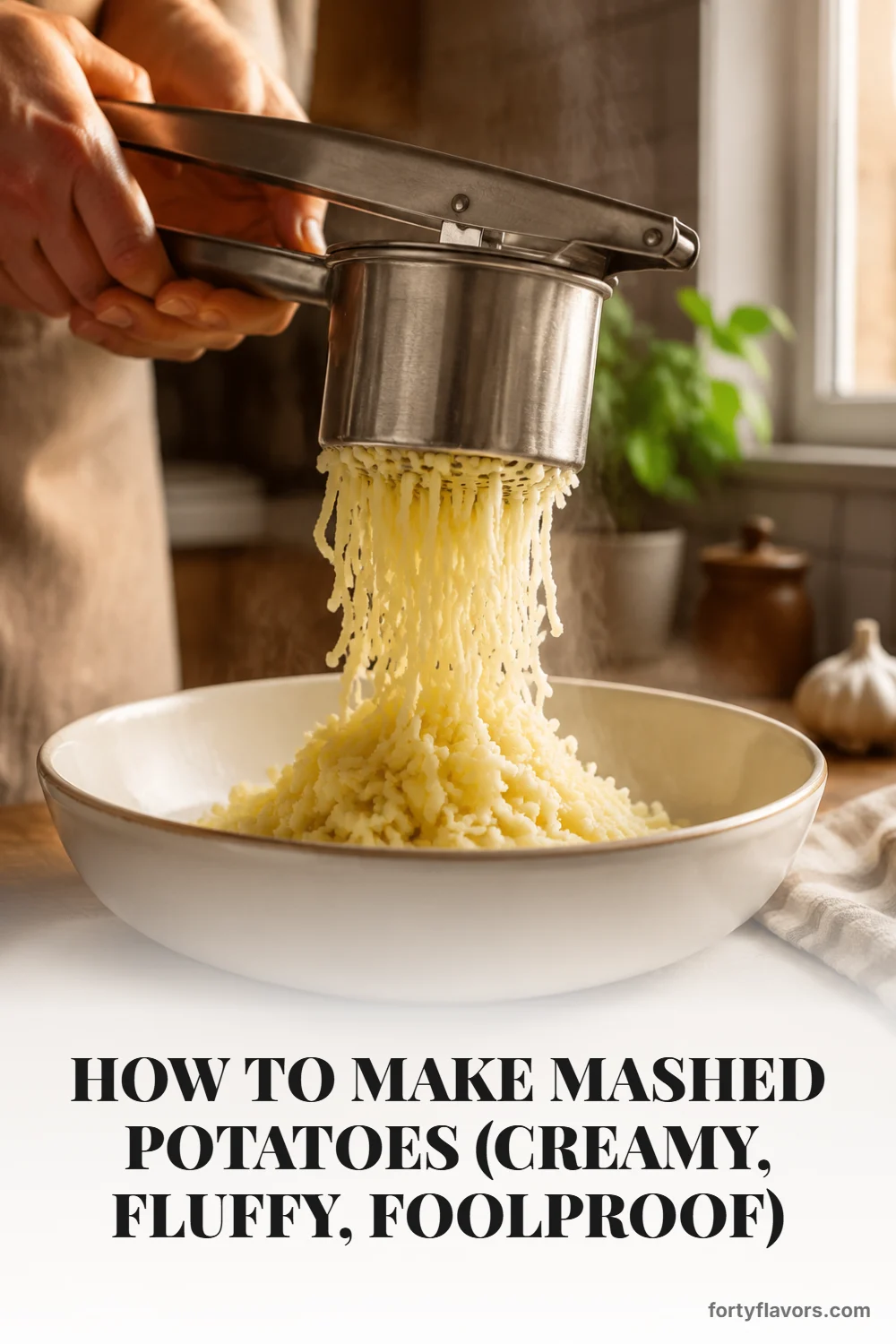
For the fluffiest texture, use a potato ricer or food mill. A ricer presses the cooked potatoes into delicate strands without crushing the starch too aggressively, so the final mash stays light and smooth. A handheld masher also works well for a slightly more rustic texture, but avoid a blender or food processor because high-speed blades can turn potatoes gluey in seconds.
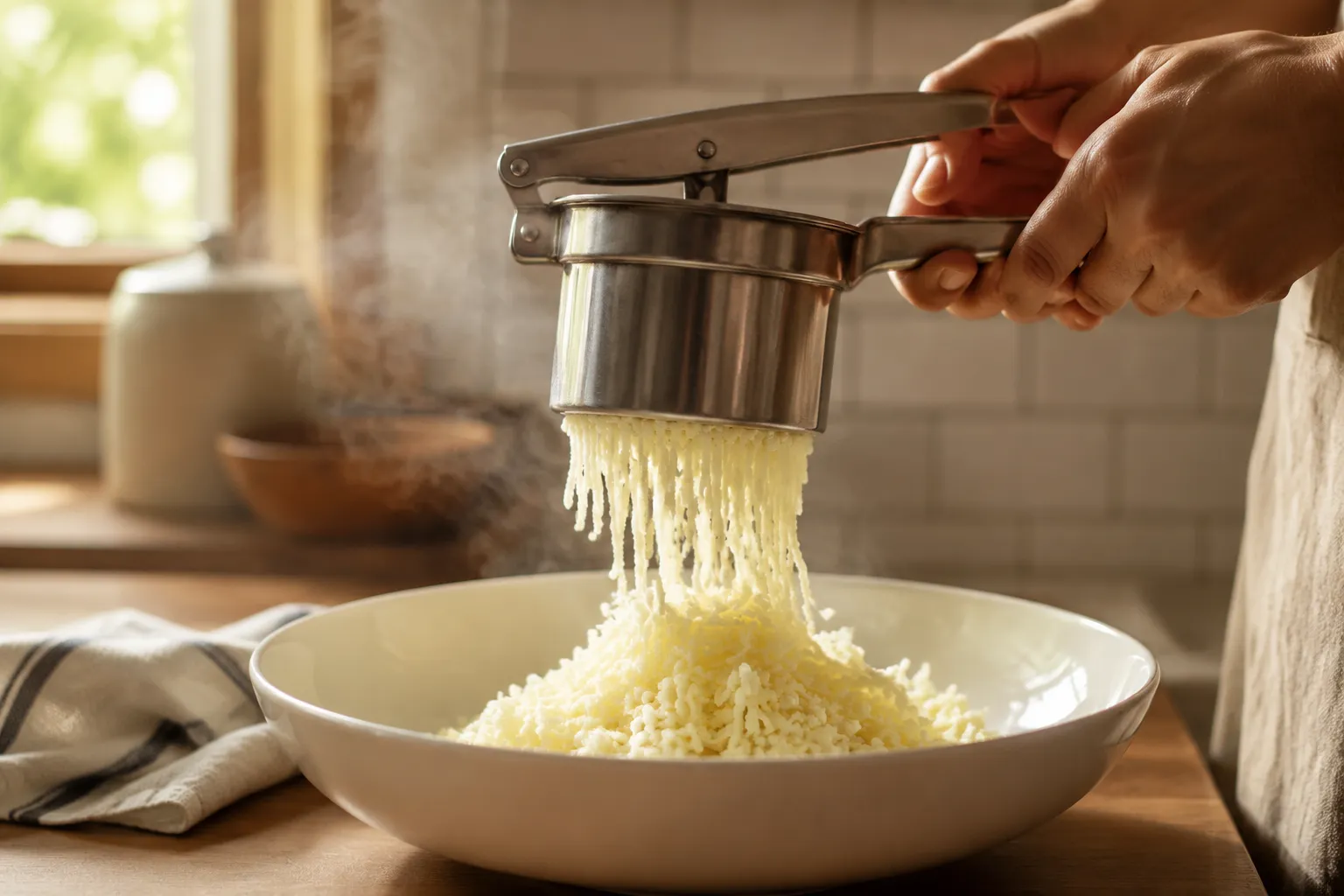
If you are making this for a crowd, rice the potatoes directly into a wide mixing bowl so you have plenty of room to fold. Wide bowls make gentle mixing easier, and gentle mixing is the name of the game. Once the potatoes are riced, resist the urge to stir and stir; every extra pass develops more starch.
This is where the method starts to feel almost effortless. The potatoes are hot, dry, and fluffy, and the dairy is waiting warm on the stove. All you are doing now is bringing the two together carefully, letting the ingredients blend without overworking the mash.
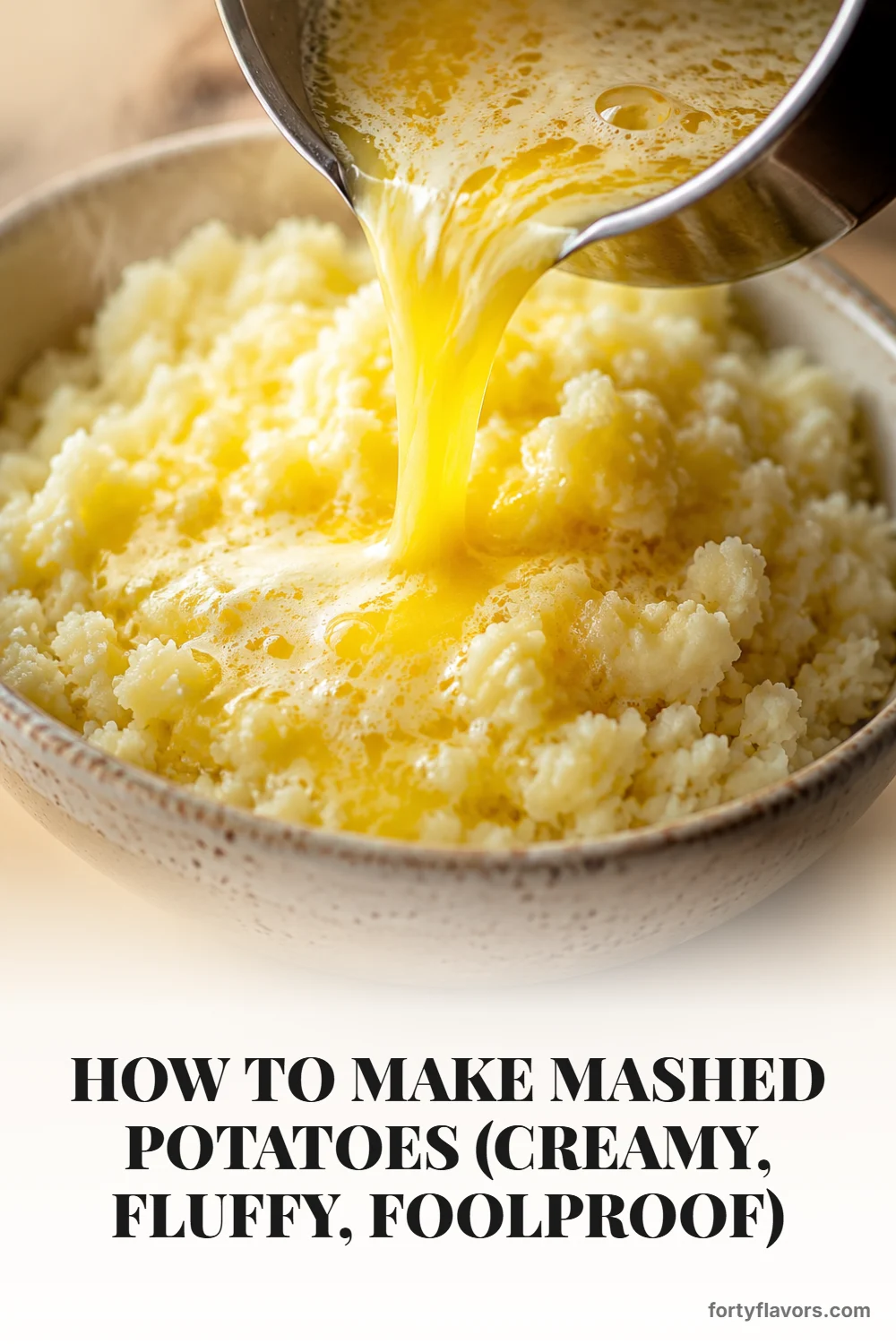
Warm milk and butter are essential because hot potatoes absorb warm dairy more smoothly than cold dairy. If you pour cold milk straight from the fridge into hot potatoes, it can seize the texture and cool the dish down before it ever reaches the table. Warming the butter with the milk and cream creates one rich mixture that folds in evenly.
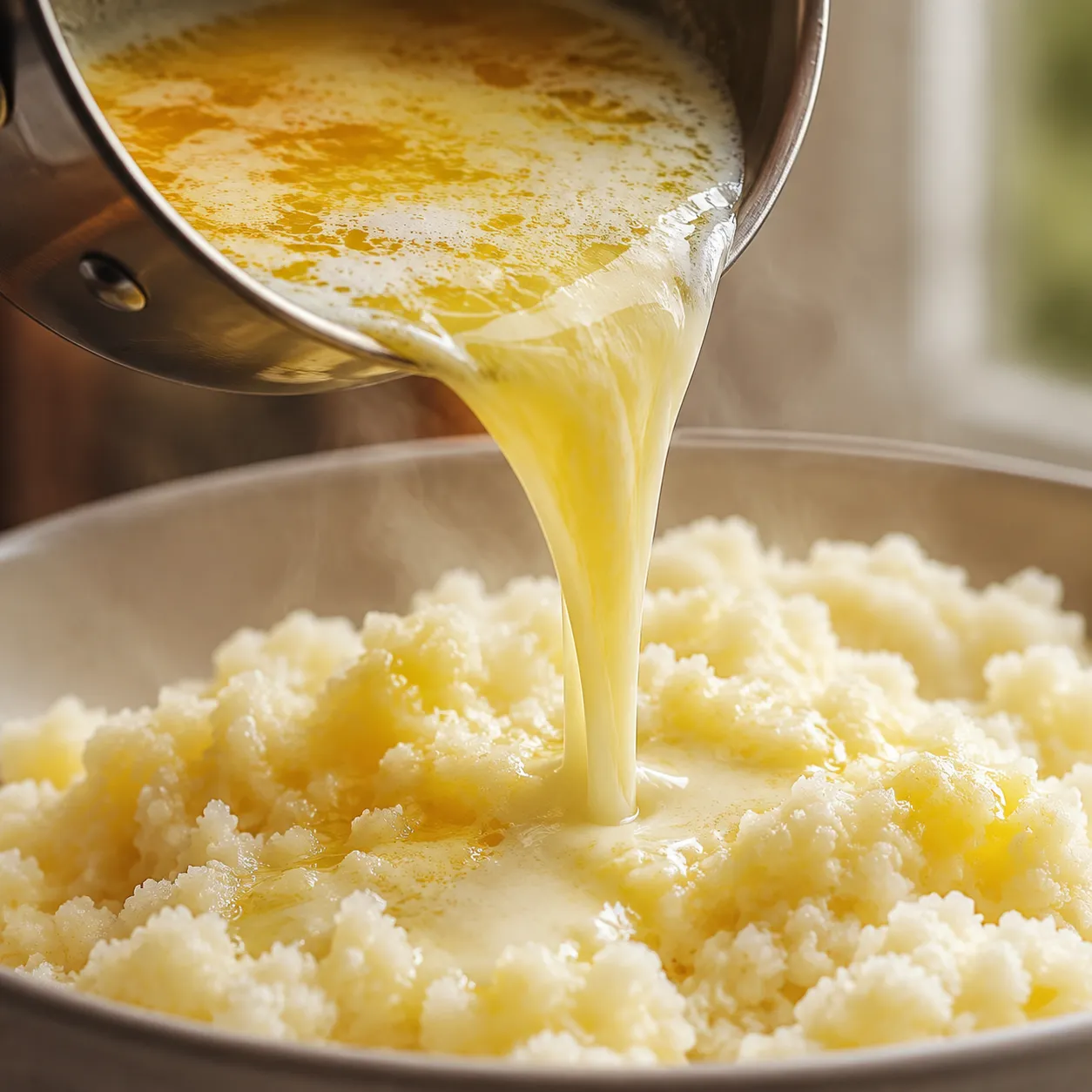
Add the warm dairy gradually, folding with a spatula or wooden spoon as you go. You may not need every last splash, depending on your potatoes and how creamy you like them. The potatoes should look soft and spoonable, with gentle folds and peaks rather than a stiff, dry mound.
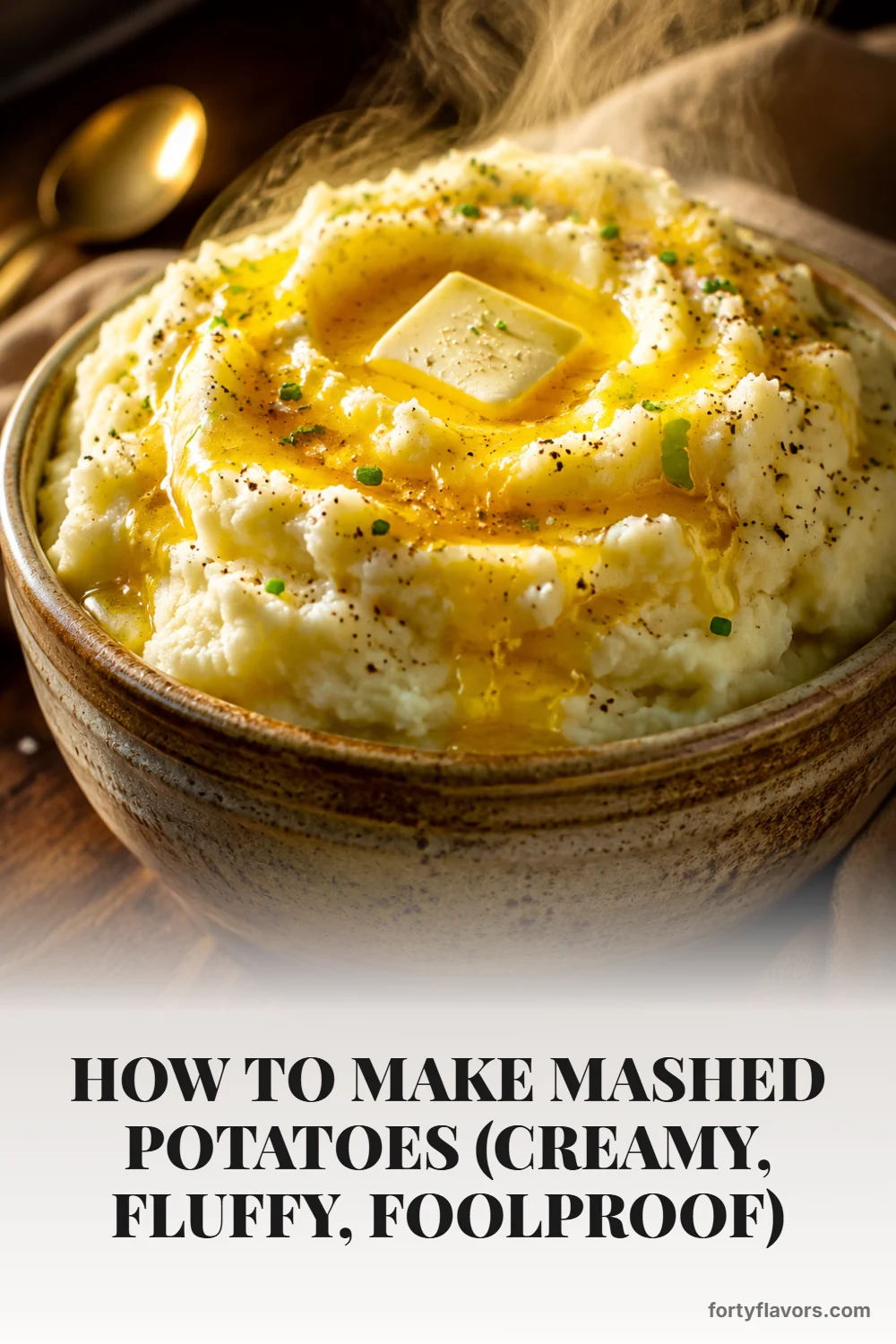
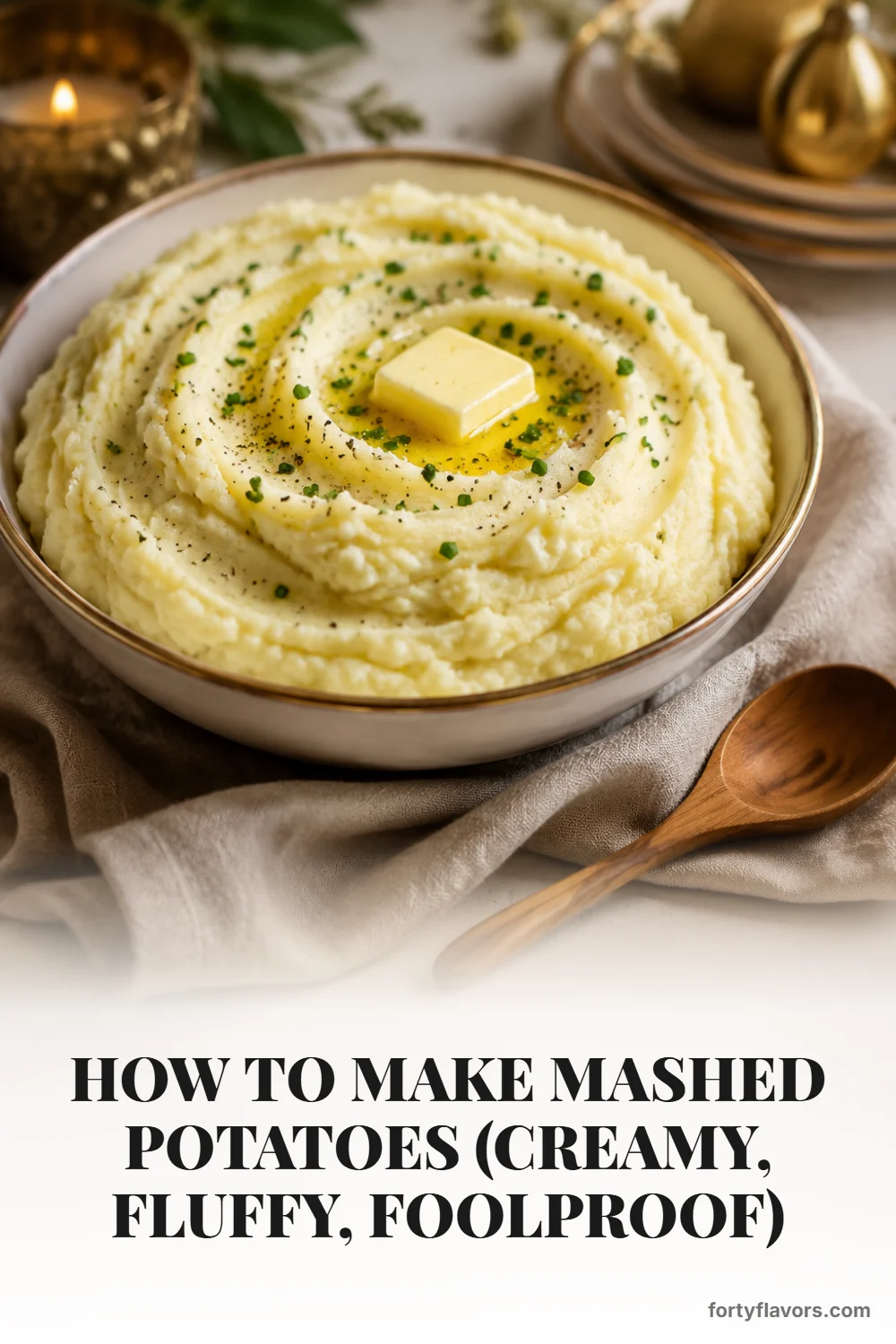
Season at the end with kosher salt and black pepper, then taste. This sounds obvious, but potatoes can take more salt than you think, especially when served beside mild meats or gravy. A final pat of butter on top melts into a golden pool and gives the bowl that irresistible holiday-table look.
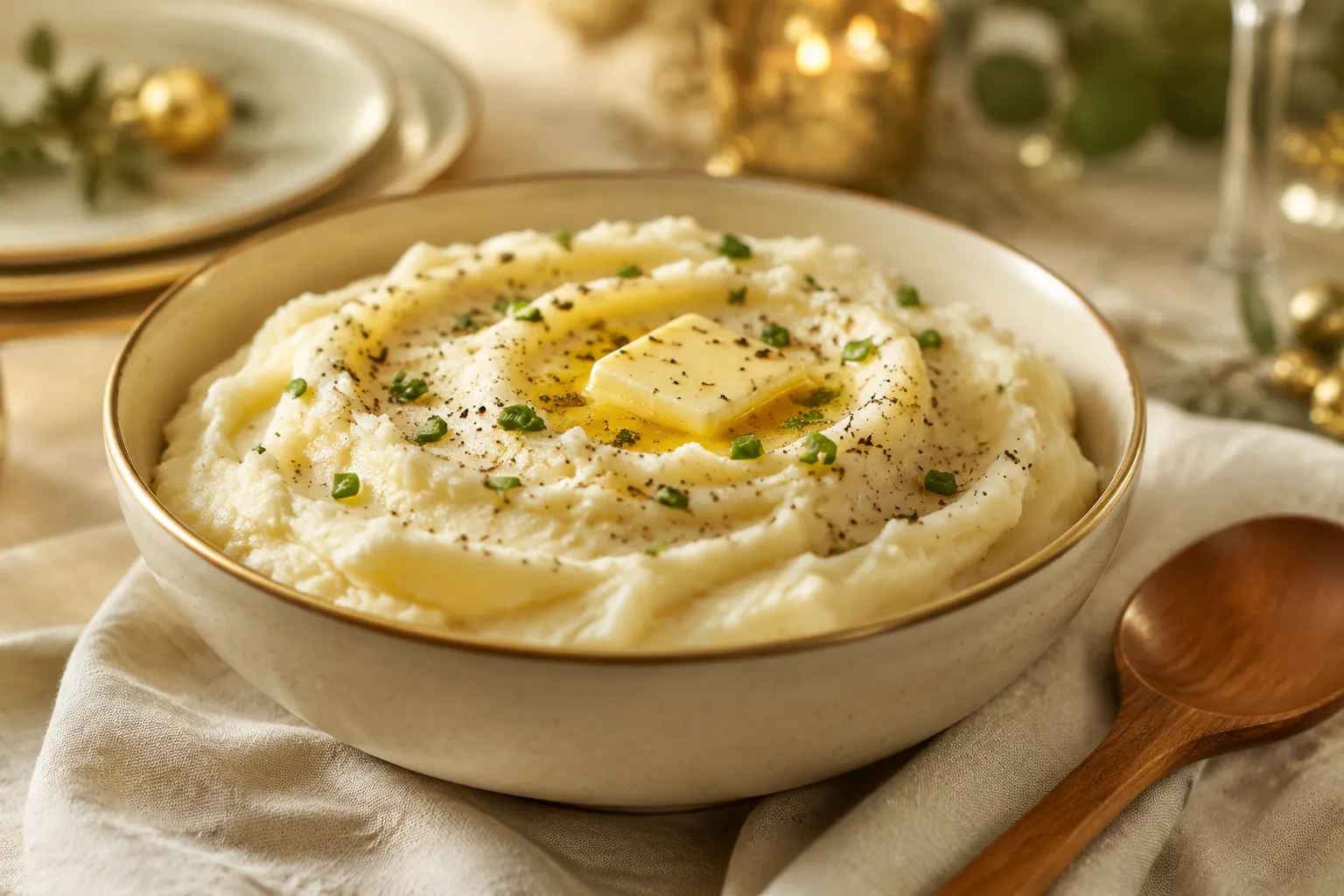
At this point, you have mastered how to make mashed potatoes that are smooth, fluffy, and balanced. The finished texture should be creamy but not runny, rich but not heavy, and soft enough to fall from a spoon in slow, buttery folds. Serve them right away while they are steaming hot, or hold them briefly in a warm spot until dinner is ready.
Think of this base as your dependable canvas. The potatoes are flavorful enough to stand alone, but they also welcome small additions when you want to match a specific menu. Roasted garlic adds deep sweetness, sour cream gives tang, and finely grated parmesan brings a salty, savory finish.
The key is to add flavor without disrupting the texture. Anything wet, like sour cream or softened cream cheese, should be folded in gently at the end. Anything strong, like garlic or herbs, should be added in small amounts first, then adjusted after tasting.
If you are serving a big holiday meal, keep the potatoes classic and let the gravy shine. For a weeknight dinner, you can make them more playful with chives, cracked pepper, or a drizzle of browned butter. Either way, the same base technique gives you reliable creamy mashed potatoes every time.
Mashed potatoes are the side dish that makes dinner feel complete. For holidays, they are perfect next to roast turkey breast, glazed ham, roast chicken, or braised beef. Add homemade gravy and you have the kind of plate everyone quietly hopes will show up at Thanksgiving, Christmas, or a cozy Sunday supper.
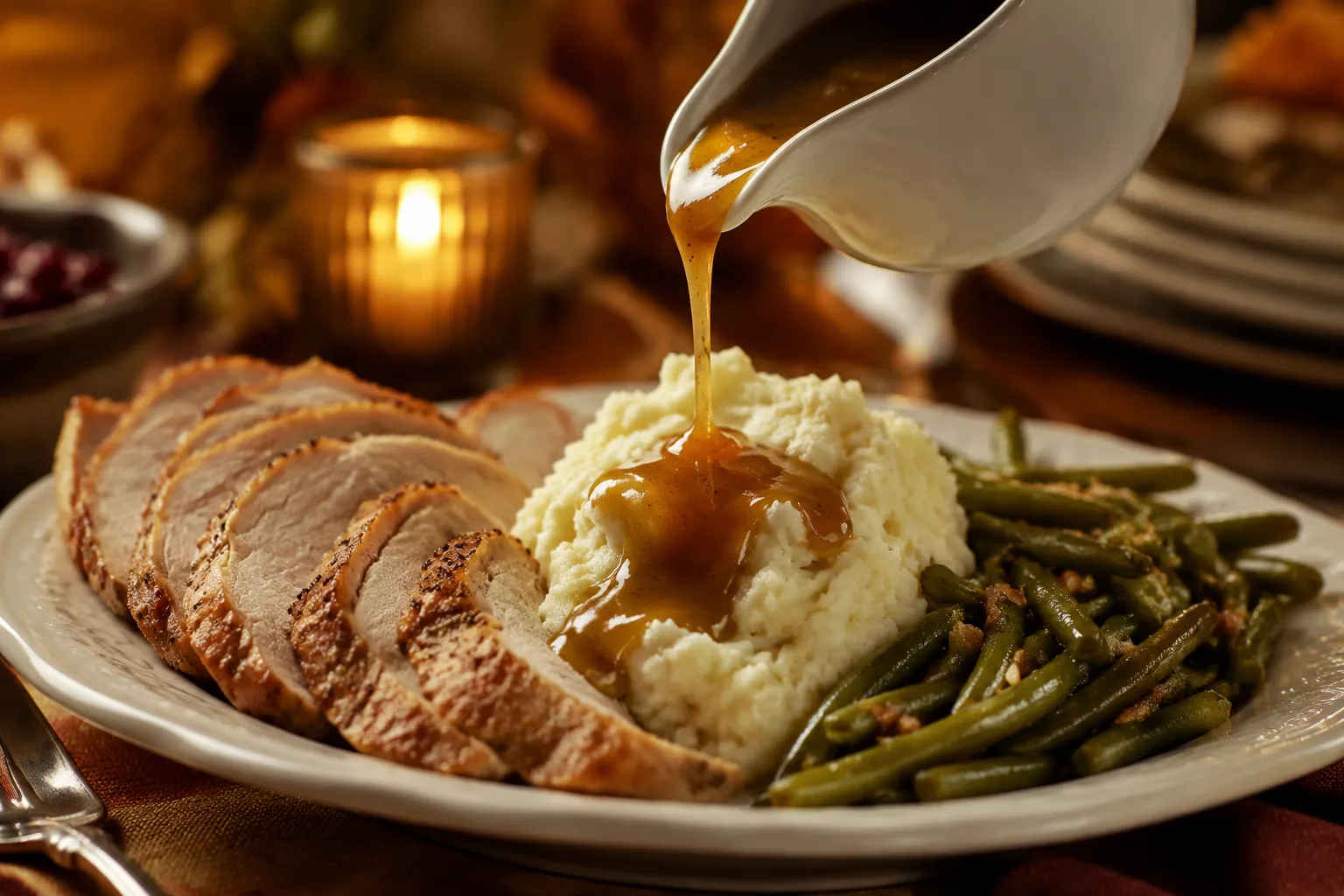
For weeknights, pair them with meatloaf, seared sausages, skillet chicken, mushroom stew, or saucy short ribs. They are also wonderful with garlic butter green beans, roasted carrots, Brussels sprouts, or a crisp green salad to balance the richness. If you are building a menu of Thanksgiving side dishes, these belong right beside stuffing, cranberry sauce, and something green and snappy.
Because this easy mashed potatoes recipe is so neutral and buttery, it plays well with almost any sauce. Pan drippings, mushroom gravy, herb butter, and even a spoonful of chicken jus all settle beautifully into the swoops. That is part of the magic: the potatoes are humble, but they make everything around them taste more comforting.
If this is your first time learning how to make mashed potatoes from scratch, give yourself a calm 30 minutes and set out the ingredients before you begin. The process moves quickly once the potatoes are tender, and having the butter, milk, cream, salt, and pepper ready keeps the texture at its best. A potato ricer is helpful, but a regular masher and a light hand can still make a beautiful bowl.
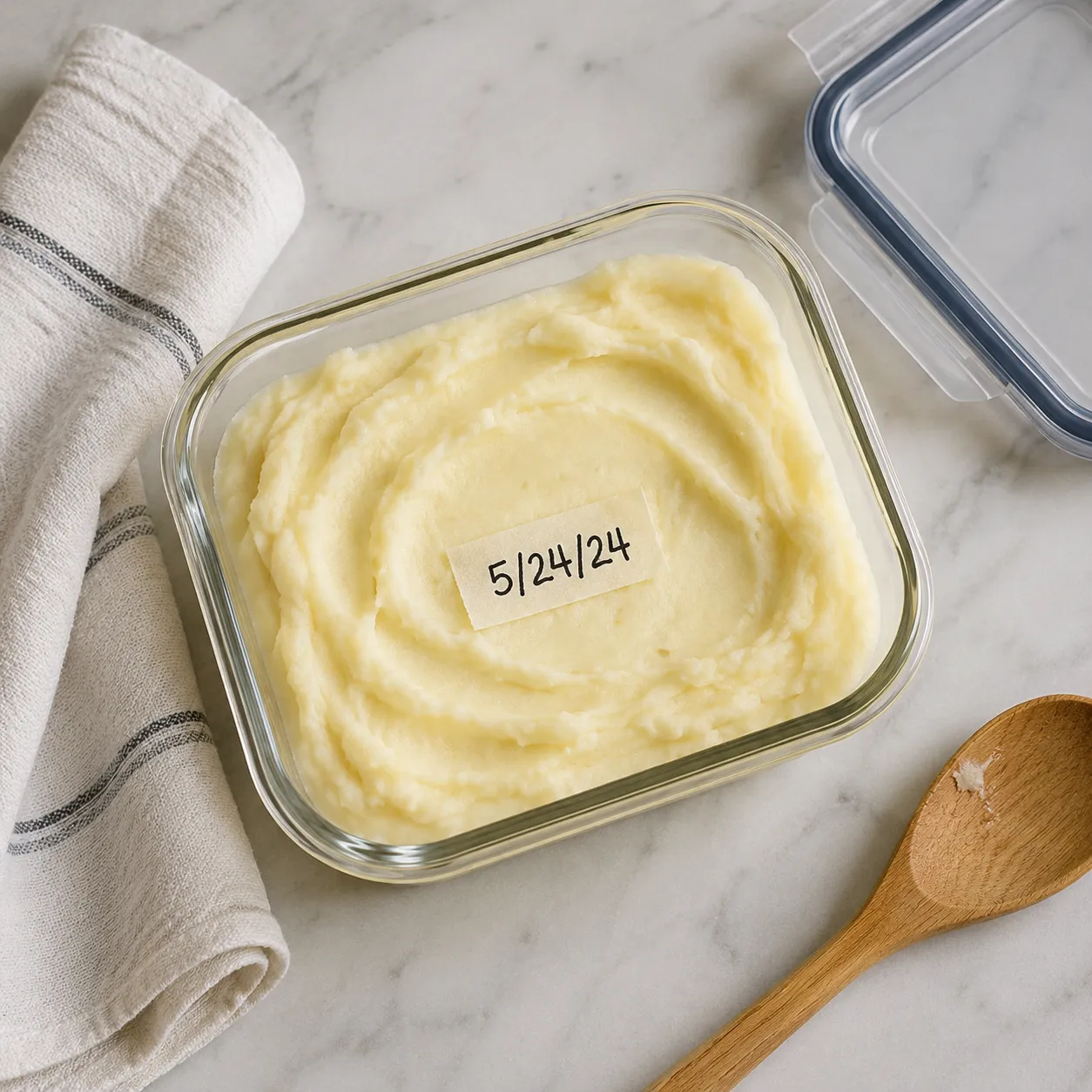
Leftovers are a gift, too. They can become potato cakes, a topping for shepherd’s pie, or a cozy side for tomorrow’s lunch. If you are tucking some away, let them cool slightly before transferring them to a container so condensation does not thin the potatoes too much.
Once you understand the rhythm—cold water, gentle simmer, thorough drain, warm dairy, light folding—you will never need to second-guess the process again. This method is simple enough for a Tuesday and special enough for the biggest meal of the year. And really, is there anything better than a warm bowl of buttery potatoes waiting on the table?
Store leftover mashed potatoes in an airtight container in the refrigerator for up to 4 days. Let them cool slightly before covering, but do not leave them at room temperature for more than 2 hours.
To reheat, warm gently on the stovetop over low heat or in the microwave in short bursts, stirring between each one. Add a splash of warm milk and a pat of butter to bring back the creamy texture. You can freeze mashed potatoes for up to 1 month, though the texture is best when refreshed with extra dairy after thawing.
Hover any image and hit “Pin it” to save it to your Pinterest boards.