Garlic Aioli Recipe: Creamy 5-Minute Homemade Sauce
Ingredients
Scale
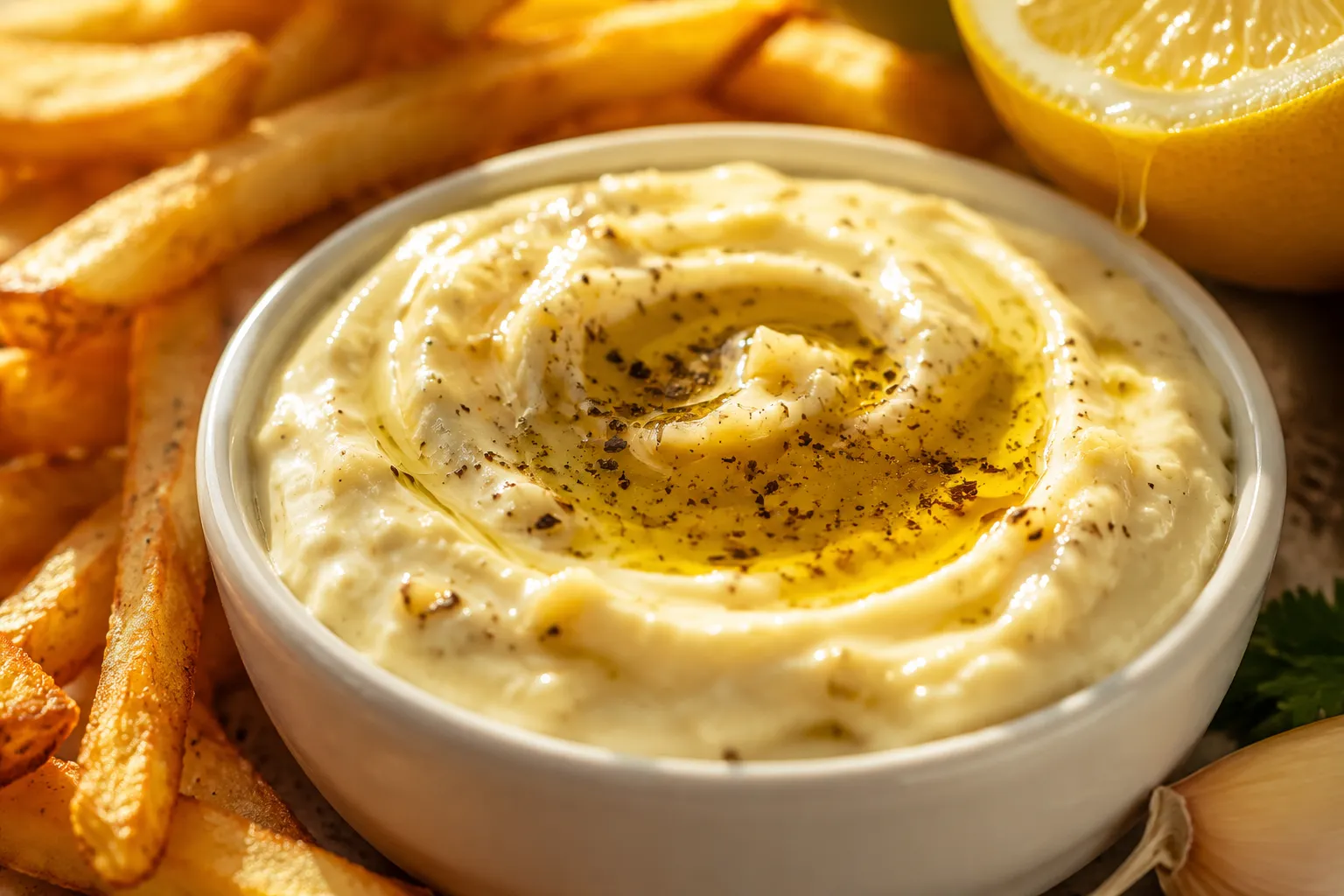
Skip the jarred stuff. This 5-minute homemade garlic aioli is creamy, punchy, and the only dipping sauce your fries, burgers, and roasted veggies will ever need.
The first time I made real garlic aioli at home, I was a little annoyed I'd been paying four bucks a tub for the grocery store version for years. This 5-minute homemade garlic aioli is creamier, brighter, and louder in all the best ways than anything sealed in plastic, and it requires zero special equipment. Just a microplane, a bowl, and a whisk.
What we're making here is the modern American shortcut version: a creamy mayo base supercharged with finely grated fresh garlic, fresh lemon juice, a glug of good olive oil, and salt. It's the dipping sauce that turns a tray of oven fries into dinner, makes a turkey sandwich feel like it cost twenty bucks at a wine bar, and disappears off a vegetable platter faster than the carrots themselves.
If you've ever had restaurant aioli that tasted bold and savory without burning your sinuses with raw garlic, the trick is mostly technique — not a secret ingredient. I'll walk you through the lemon-soak shortcut that mellows the bite, plus three flavor variations worth keeping on rotation.
Traditional aioli (from the Provençal ail for garlic and oli for oil) is exactly two ingredients: garlic and olive oil, pounded and emulsified into a thick, glossy paste in a mortar and pestle. No egg, no mayo, no lemon. It's a labor of love and, frankly, a little punishing on the palate if you're not used to it.
What most American restaurants and cookbooks call garlic aioli today is a friendlier hybrid — a creamy aioli built on a base of mayonnaise with fresh garlic, lemon juice, and a finishing drizzle of olive oil whisked in. Purists will tell you it's really just garlic mayonnaise, and they aren't wrong. But the name has stuck because the flavor profile is closer to real aioli than to plain mayo: more garlic-forward, brighter from the citrus, rounder from the olive oil.
The shortcut version has real advantages. Because it's built on store-bought (or homemade) mayo, there's no raw egg to worry about and no risk of the emulsion breaking on you mid-whisk. It comes together by hand in about five minutes. And once you taste how much better it is than the jarred stuff in the deli aisle, you won't go back.
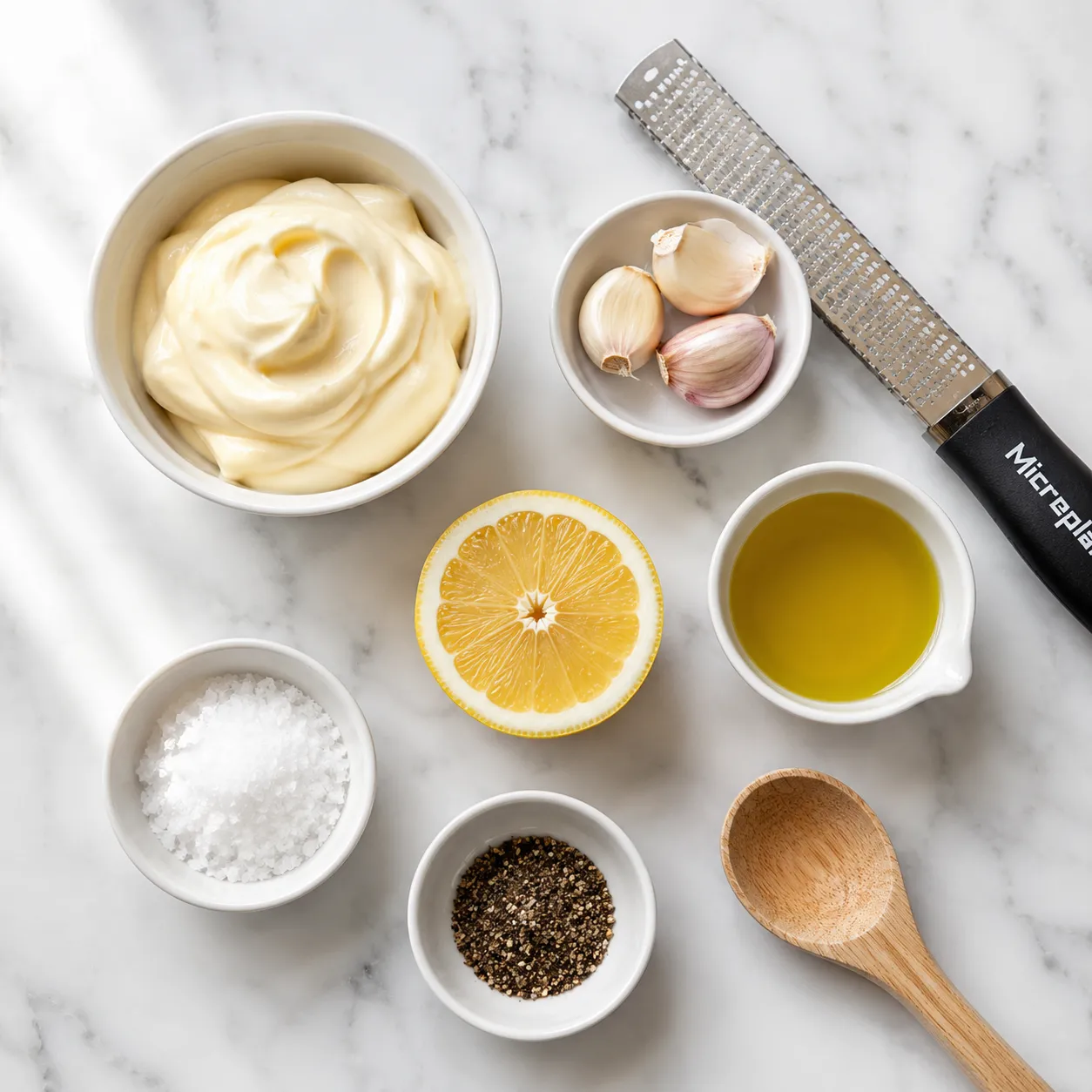
Seven ingredients, all of which you probably already have. Quality matters more than quantity here, especially with the olive oil and the garlic — this is a sauce where you can taste every component.
Mayonnaise is the backbone, so use one you actually like the taste of straight from the jar. I'm a Duke's loyalist; Hellmann's (Best Foods out west) is great too. If you're feeling ambitious, this is a perfect place to use homemade mayonnaise — the flavor difference is real, and a fresh batch turns this into something genuinely special.
Fresh garlic is non-negotiable. Pre-minced jarred garlic tastes flat and faintly chemical, and powdered garlic won't dissolve into the sauce the way fresh does. Three to four medium cloves is the sweet spot for a full cup of sauce. If raw garlic is too aggressive for your taste, swap in roasted garlic — soft, sweet, and mellow — and skip the lemon-soak step entirely.
Lemon juice has to be fresh. Bottled juice has a tinny note that fights with the garlic. The acid does double duty: it brightens the sauce and chemically tames the harshness of the raw garlic during a quick five-minute soak.
Extra-virgin olive oil rounds everything out. You don't need much — just a tablespoon whisked in at the end gives the sauce that signature peppery, fruity finish. Use a bottle you'd be happy dipping bread into.
Kosher salt, black pepper, and a pinch of cayenne finish the seasoning. The cayenne is optional but I never skip it; it adds dimension without making the sauce read as spicy.
The whole technique hinges on three small moves: grating the garlic ultra-fine, letting it sit briefly in lemon juice, and tasting as you go. None of it is hard, and the full numbered method lives in the recipe card below.
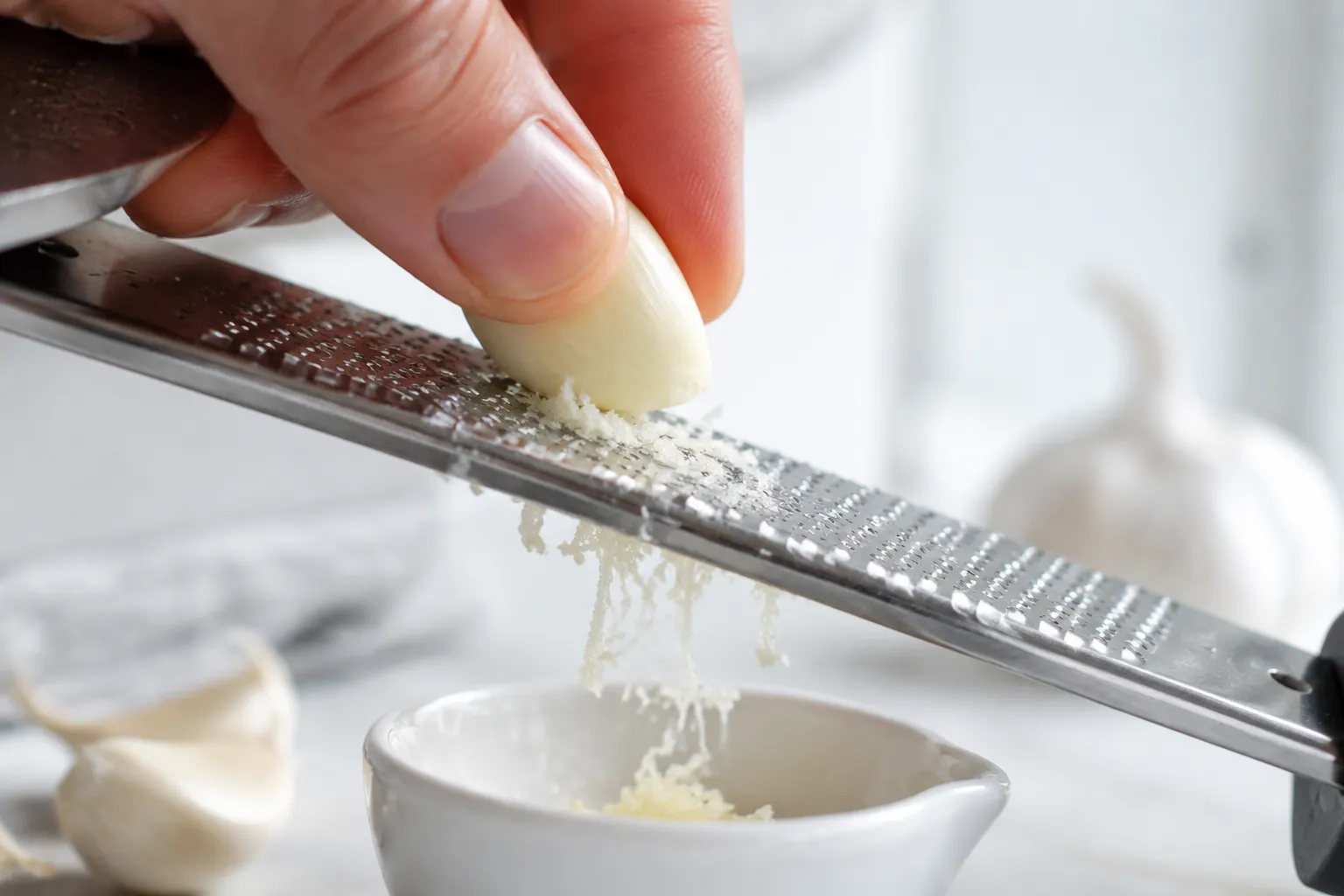
Start with the garlic. Peel three to four cloves and run them across a microplane (the same one you'd use for citrus zest) directly into your mixing bowl. The microplane breaks the garlic down into a near-paste, which means it disappears into the sauce instead of leaving you with little raw chunks. If you don't have one, use the smallest holes on a box grater or mash minced garlic with the side of your knife and a pinch of salt until it's a smooth paste.
Add the fresh lemon juice to the grated garlic and let it sit for about five minutes while you grab the rest of your ingredients. This is the single best move you can make for a balanced sauce — the citric acid takes the edge off the raw garlic and pulls out its natural sweetness.
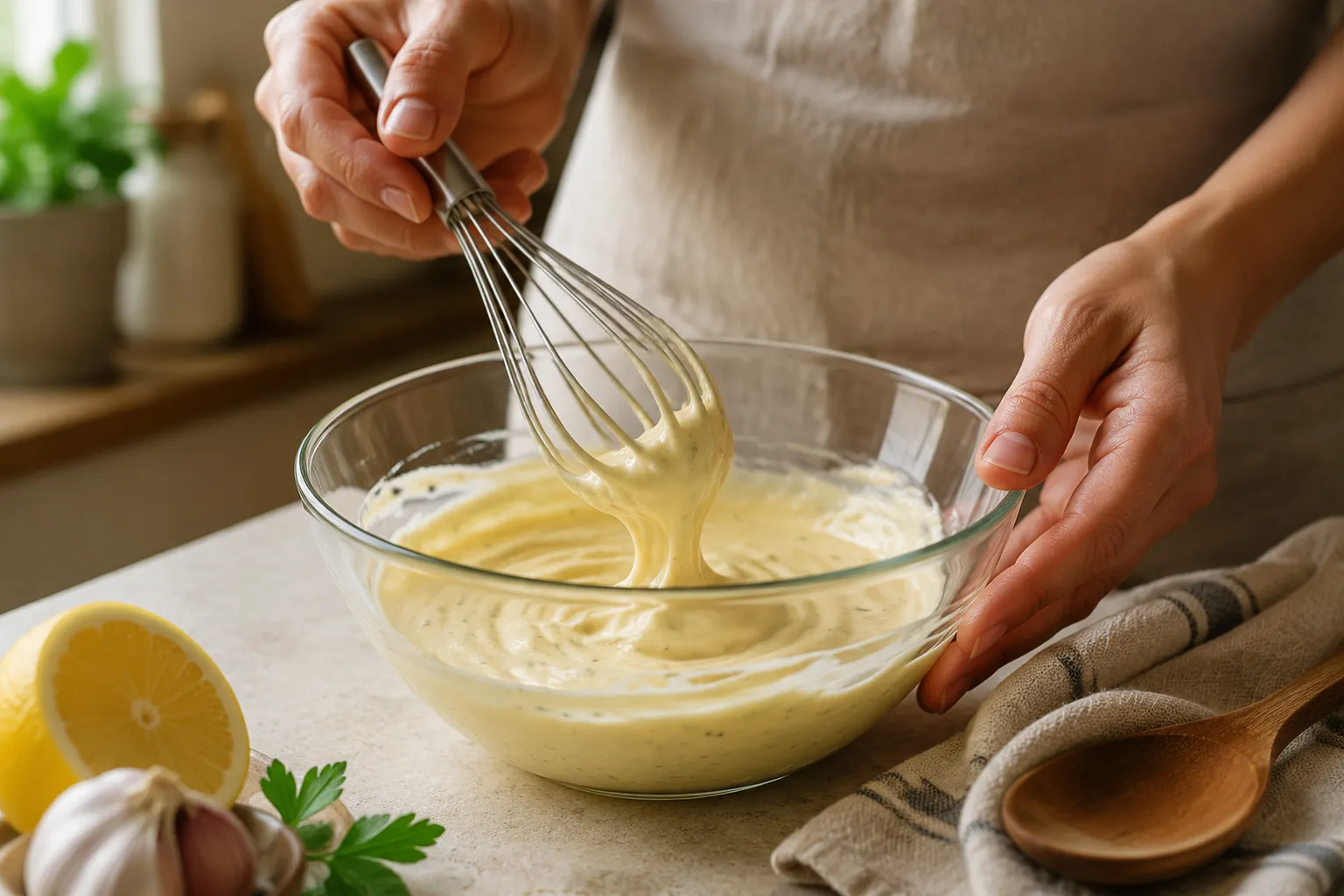
Now add the mayonnaise, salt, pepper, and cayenne if using. Whisk until the mixture is uniform and pale yellow with visible flecks of garlic throughout. It should look glossy and thick enough to hold a soft peak when you lift the whisk.
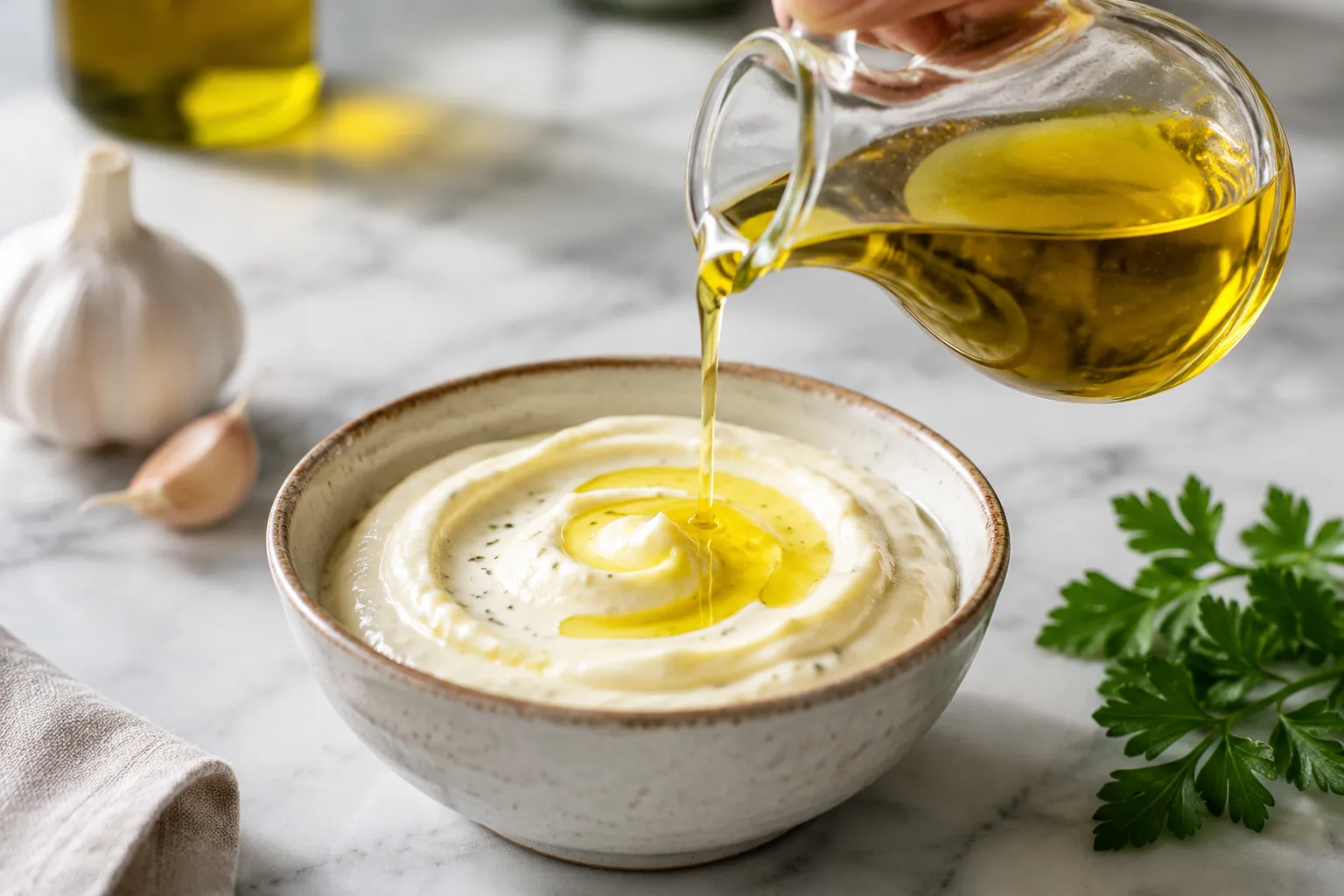
Drizzle in the olive oil last, whisking constantly. Adding it at the end (rather than dumping it in with everything else) keeps the oil from disappearing into the mayo and lets it read as a distinct top note. Whisk just until it's incorporated — over-mixing can make the sauce loose.
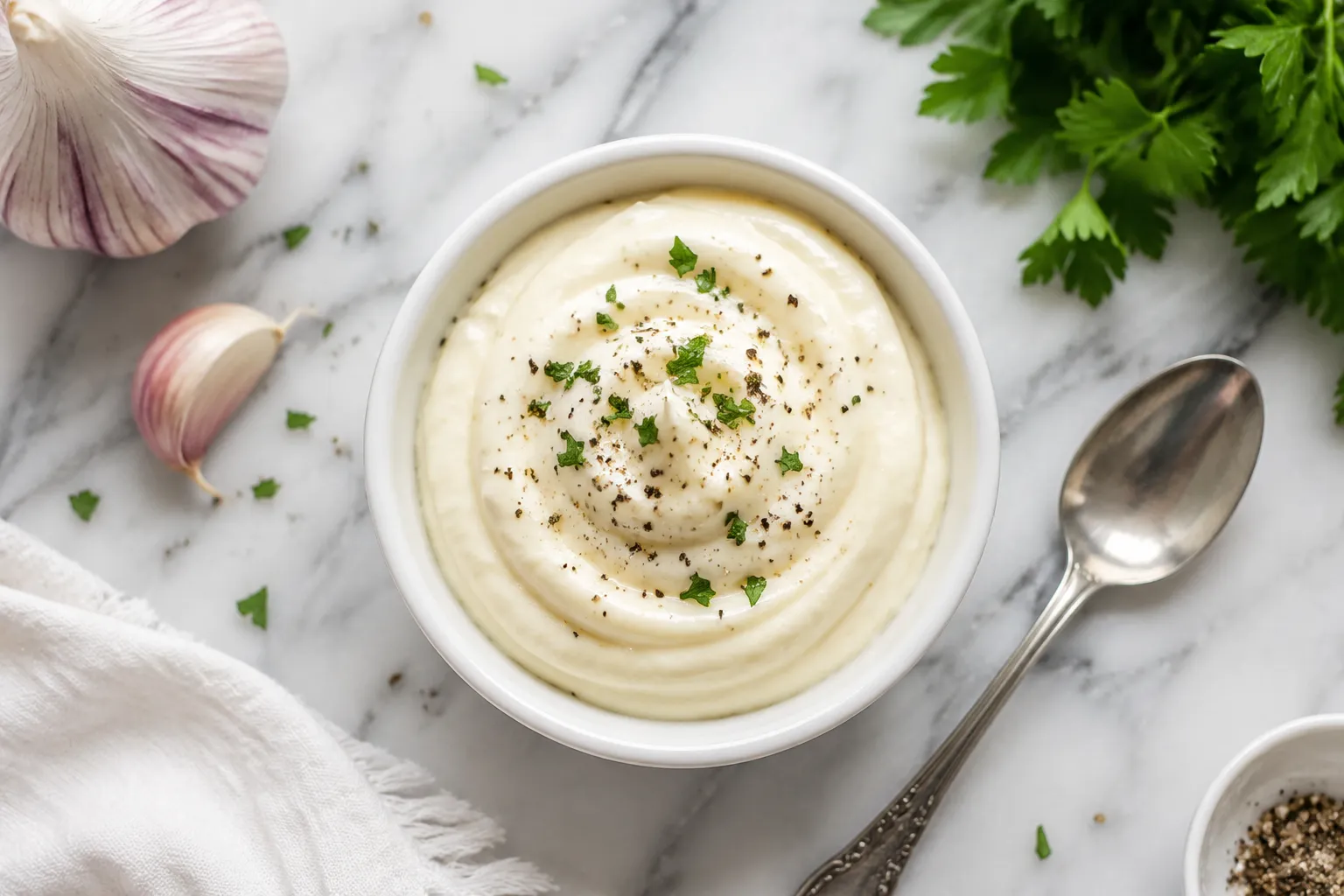
Taste and adjust. If it's too sharp, add another half-teaspoon of lemon juice or a tiny pinch of sugar. If it's flat, more salt. If you want it more garlicky, grate in another half clove. Cover and chill for at least 30 minutes before serving — the flavor genuinely transforms during that rest, going from "punchy mayo" to "yeah, that's aioli."
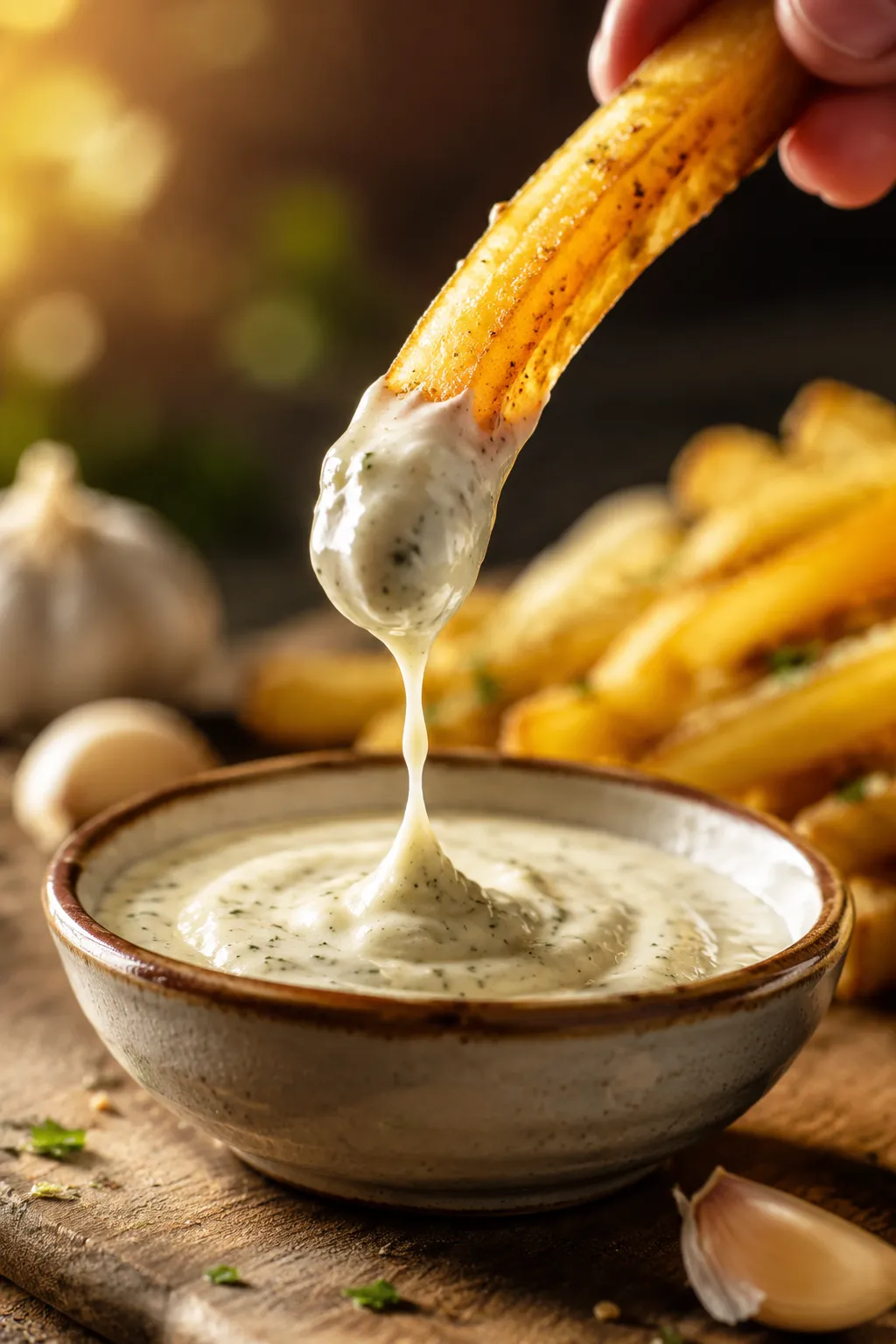
This is where garlic aioli earns its keep. It's the rare condiment that's at home next to crispy potatoes, grilled fish, raw vegetables, and a cheeseburger all in the same week.
The obvious move is fries. Any kind: shoestring, steak fries, oven-baked, air-fried. Sweet potato fries are particularly great because the natural sweetness plays against the garlicky tang. Roasted potato wedges, smashed potatoes, and tater tots all qualify too. If you've never had this sauce with crispy roasted Brussels sprouts or charred broccoli, fix that this week.
On sandwiches and burgers it's a game-changer. Spread it on a turkey club, a BLT, or a grilled veggie wrap and you've upgraded lunch by a full tier. As a burger sauce it's better than ketchup, mustard, and that "special sauce" pouch combined — especially on a smashburger or a salmon burger where you want creaminess without sweetness. It's also the dip I want next to fish tacos and shrimp po'boys.
For seafood and grilled vegetables, a thin smear on the plate under grilled shrimp, seared scallops, or roasted salmon makes a weeknight dinner feel restaurant-styled. It plays beautifully alongside crab cakes, fried calamari, and a platter of crudités. And don't sleep on it as a dip for warm crusty bread — the kind of thing that disappears off a snack board before anyone can sit down.
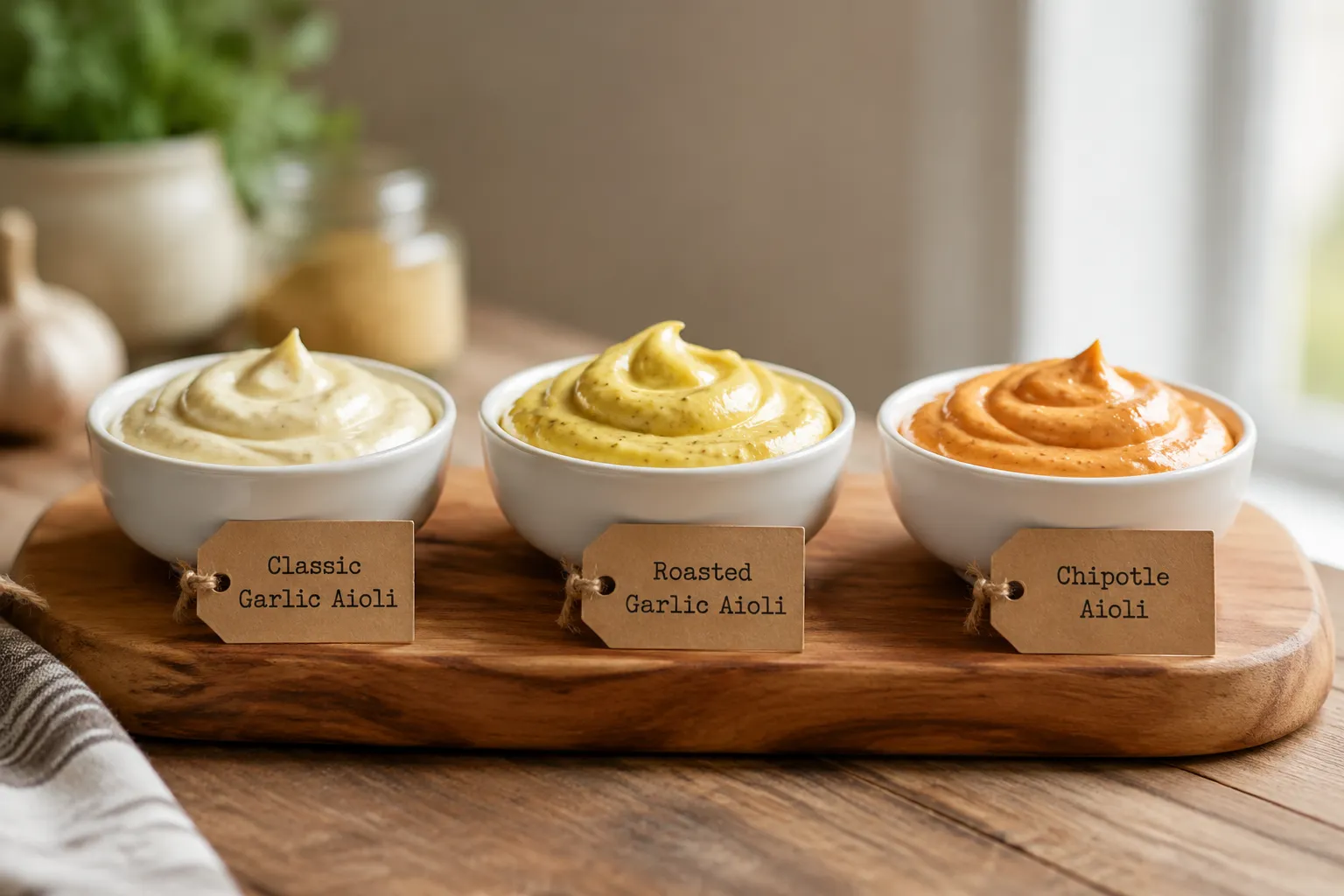
Once you've got the base down, the variations open up fast. A spoonful of adobo sauce turns this into smoky chipotle aioli; a handful of fresh herbs and extra zest gives you a bright lemon aioli that's perfect with grilled fish; and a whole head of slow-roasted garlic stirred in makes a sweet, almost caramelized version that's incredible on a steak sandwich. Full variations and storage notes are right below the recipe card.
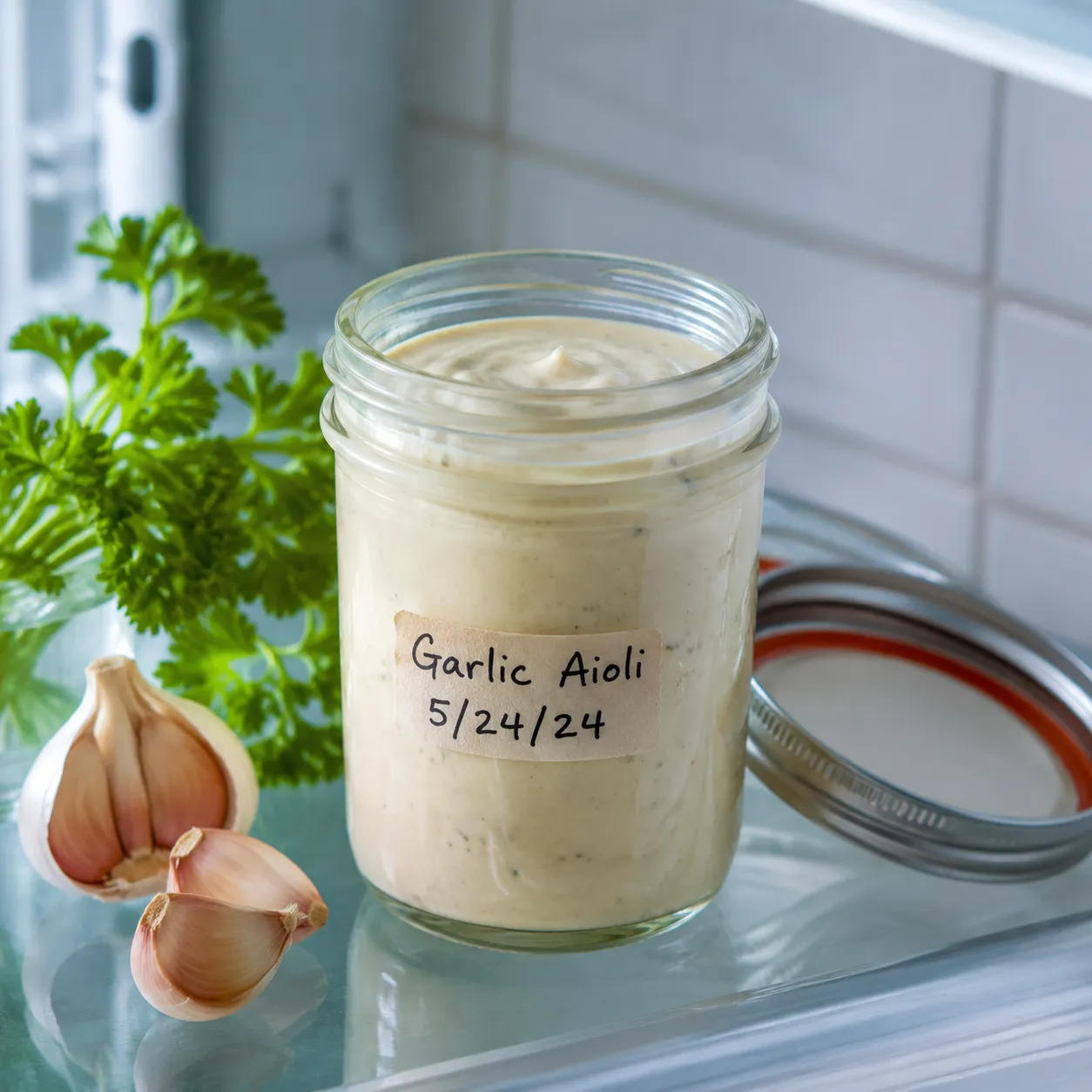
A jar of this sauce in the fridge is like a quiet weeknight cheat code. It keeps for about a week, the flavor deepens overnight, and it makes leftover roast chicken, plain rice bowls, or sad desk salads taste like you actually tried. Give it five minutes — I promise you won't go back to the deli case.
This recipe is more of a template than a fixed formula. Once you've made the classic version once, lean on these riffs:
Transfer the aioli to a clean glass jar or airtight container and refrigerate for up to 7 days. The flavor actually deepens during the first 24 hours, so a jar made on Sunday will taste even better by Tuesday lunch. Always use a clean spoon (no double-dipping with a fry-greased one) to keep it fresh longer, and give it a quick stir before serving in case any oil has separated on top.
Freezing isn't recommended. Mayo-based sauces break when frozen and thawed — the emulsion separates into a grainy, watery mess that no amount of whisking can fully bring back. Since this comes together in five minutes, it's genuinely faster to make a fresh batch than to thaw a frozen one. If you've made too much, halve the recipe next time or share a jar with a neighbor.