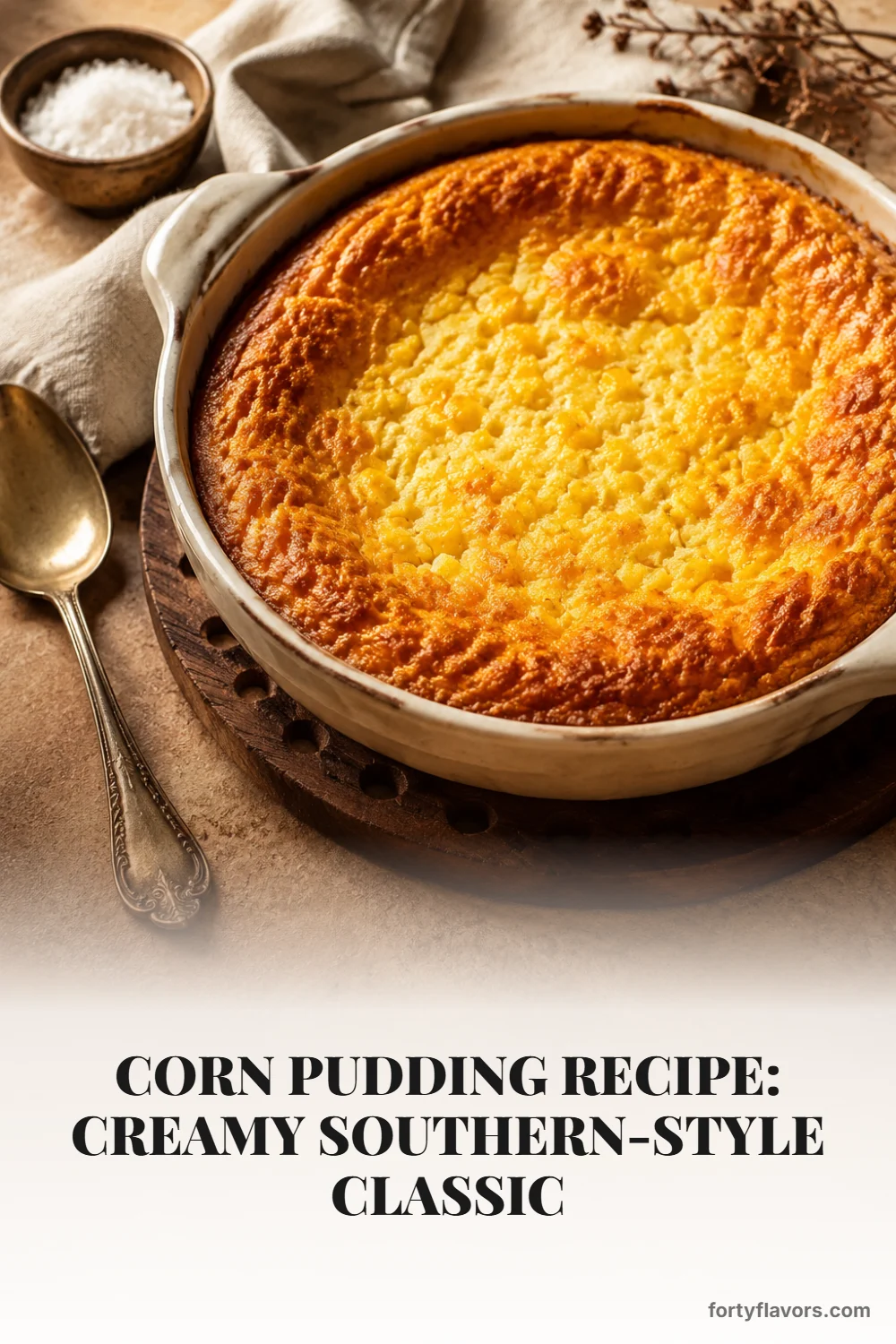
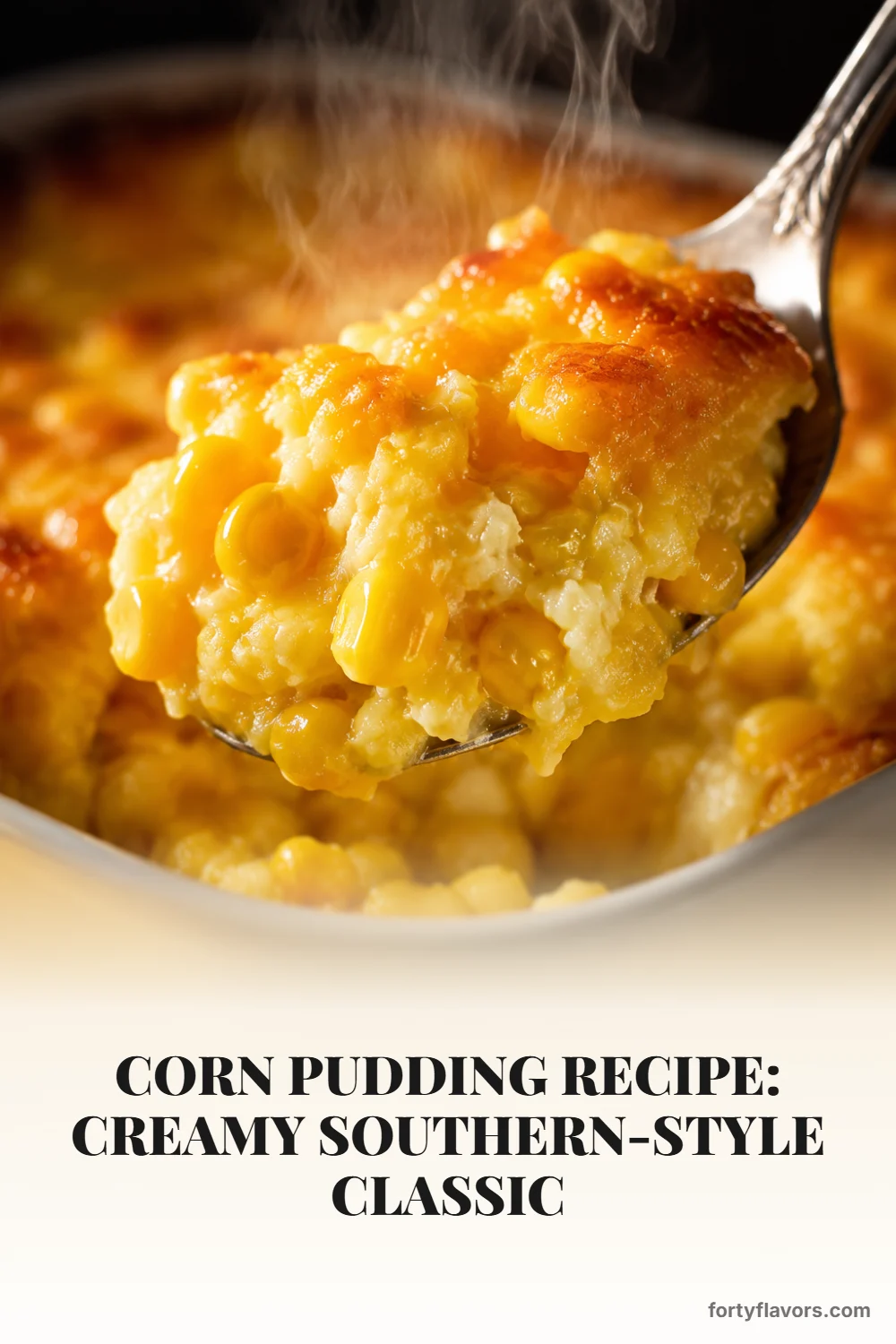
Corn Pudding Recipe: Creamy Southern-Style Classic
Ingredients
Scale
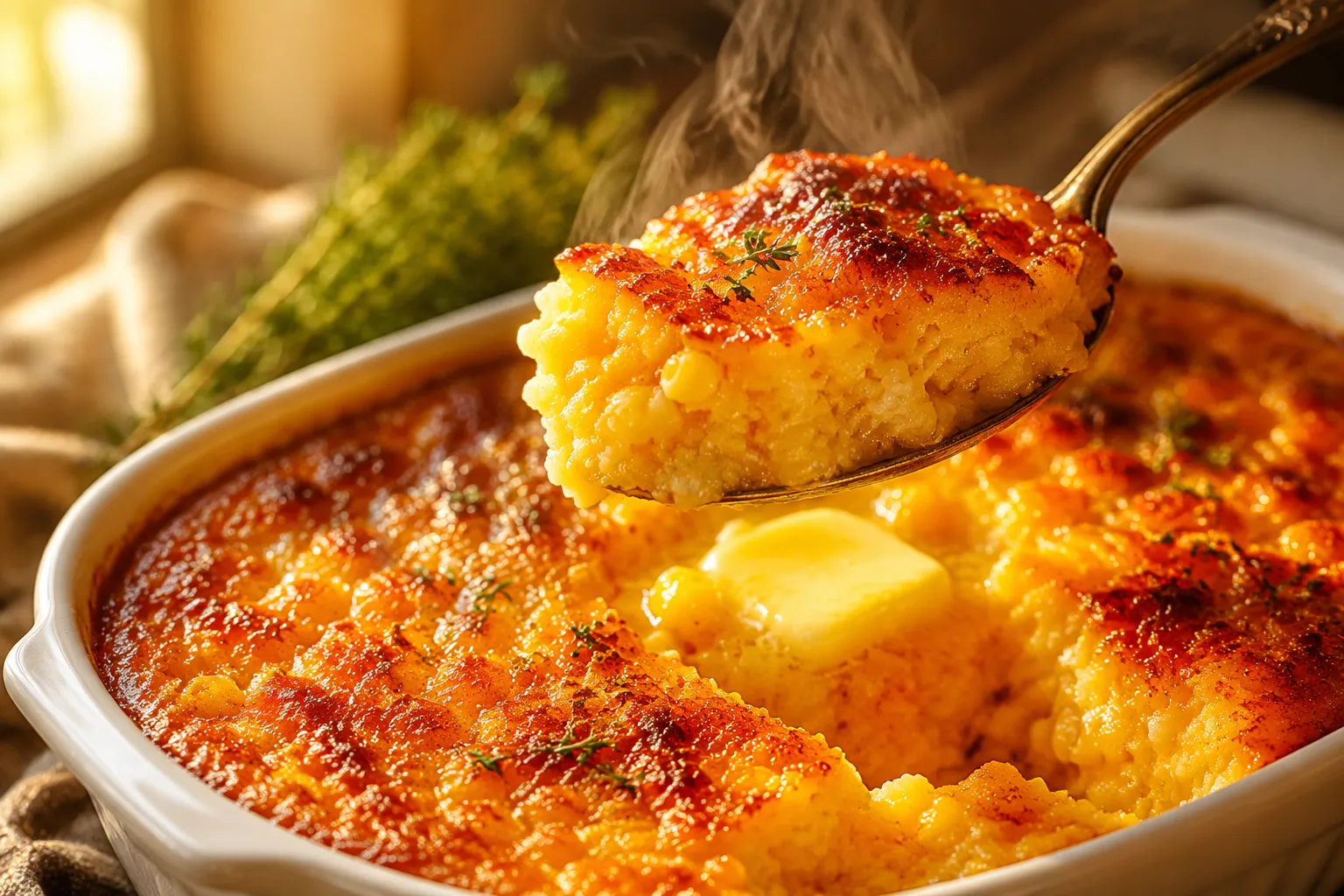
Soft, custardy, and just sweet enough, this corn pudding bakes into a golden Southern side that disappears faster than the turkey on Thanksgiving.
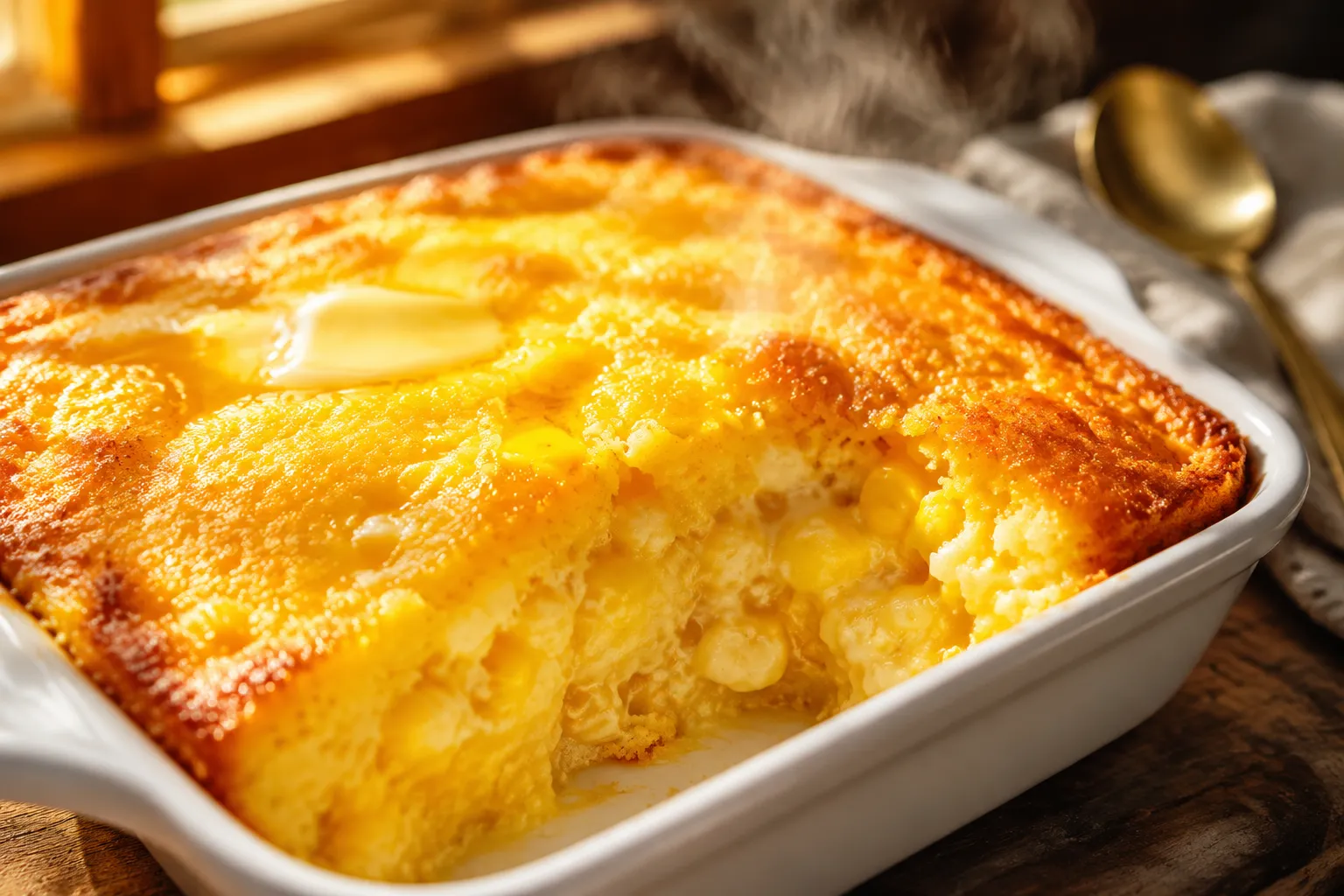
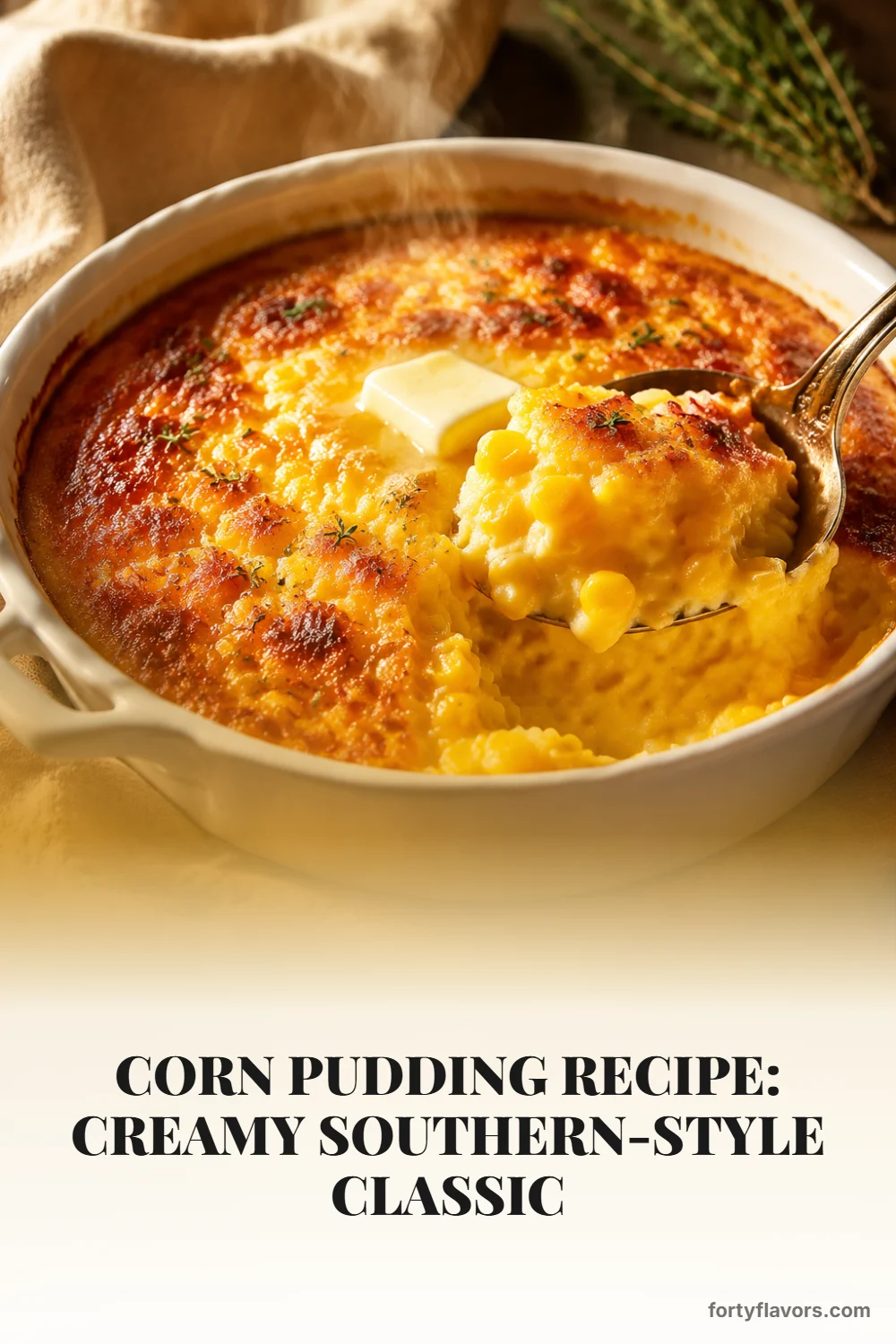
This corn pudding recipe is the kind of side dish that quietly steals the show. Soft, custardy, and just sweet enough, with a golden cap of buttery cornbread on top, it's the dish my family fights over before the turkey is even carved. If you've ever spooned into a creamy, spoonable corn casserole at a holiday potluck and wondered how to recreate it at home, this is the one to bookmark.
What makes Southern corn pudding so beloved is its split personality — half spoonbread, half corn casserole, with a custardy texture that melts into every bite. It's not quite a savory dessert and not quite a starch, which is exactly why it lands next to ham at Easter, beside the bird at Thanksgiving, and on the buffet at every church potluck across the South. The flavor is sweet corn forward, the structure is cornbread tender, and the finish is buttery and rich without ever turning heavy.
The good news: it comes together in one bowl, uses pantry staples, and bakes hands-off while you wrangle the rest of dinner. Whether you're feeding eight at a Sunday supper or contributing to a 25-person holiday spread, this baked corn casserole scales beautifully and reheats like an absolute dream.
If you've poked around online, you've probably seen corn pudding and cornbread pudding used interchangeably, and honestly, the line between them is fuzzy. The simplest way to think about it: corn pudding leans custardy and spoonable, with a high egg-and-dairy ratio that gives it that wobbly, soufflé-adjacent texture. Cornbread pudding, on the other hand, leans denser and more bread-like, often built from cubed leftover homemade cornbread soaked in a savory custard, almost like a stuffing-meets-bread-pudding hybrid you'd see at a Sunday dinner.
This recipe lands right in the middle. It uses a box of cornbread mix for structure and a real custard base for that signature jiggle, so you get cornbread flavor with pudding texture and the best of both worlds in one pan. Call it whatever you like at the table — nobody's checking ID, and everyone will be too busy going back for seconds.
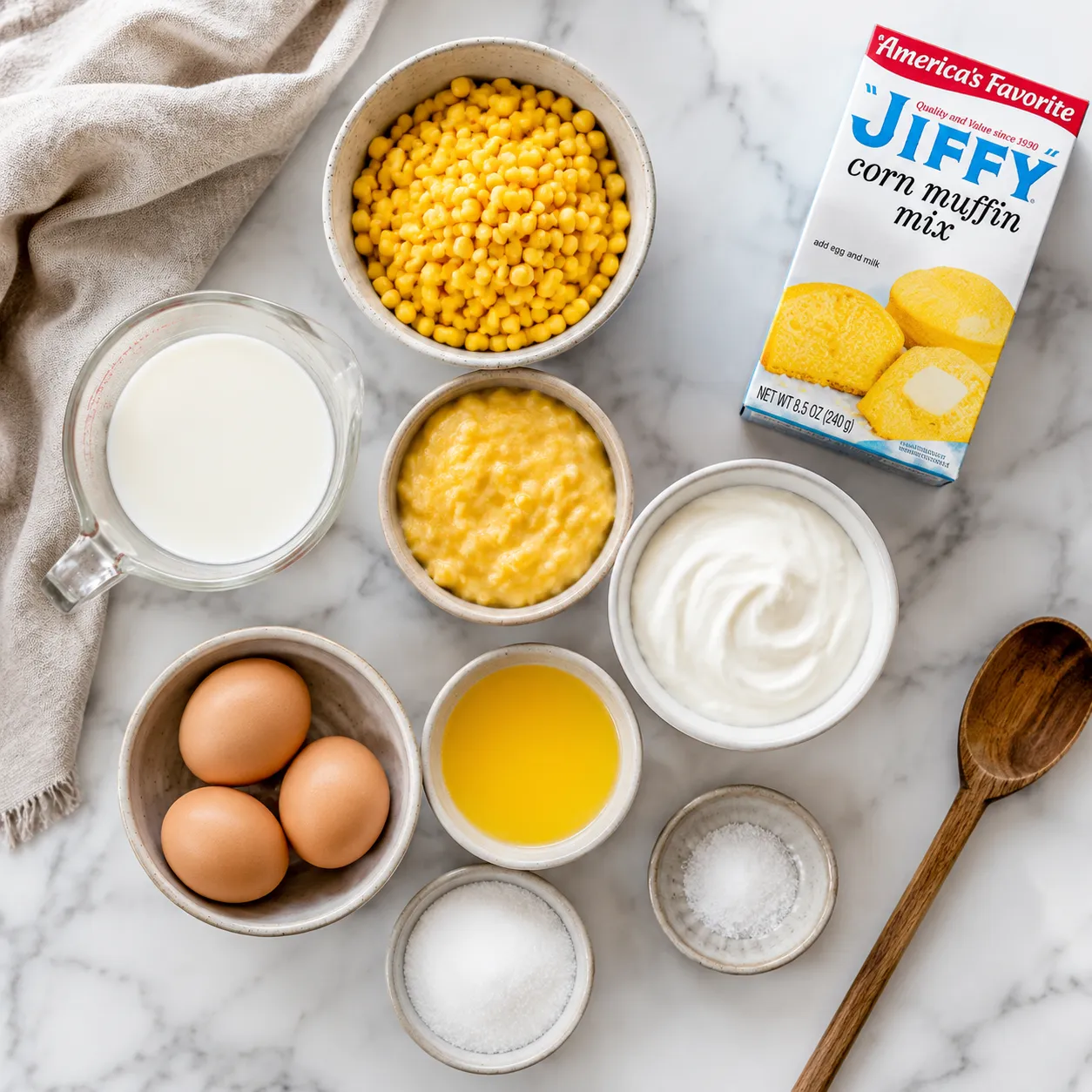
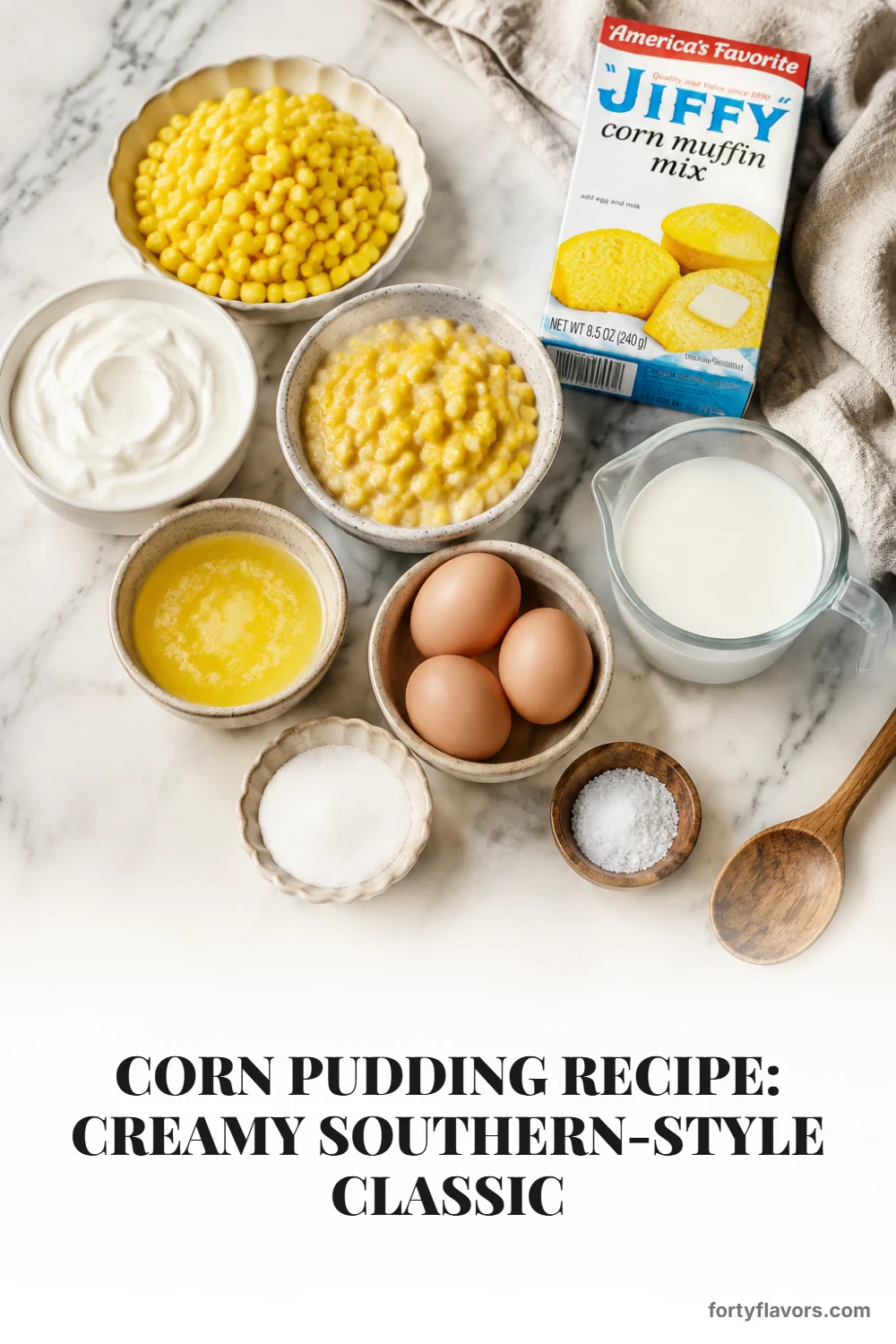
You don't need a fancy grocery run for this one. Most of it likely lives in your pantry and fridge already, which is part of why it shows up so reliably on holiday tables. Here's what each component is doing and why I wouldn't swap them carelessly.
If you want to riff, this base welcomes shredded sharp cheddar, diced pickled jalapeños, chopped scallions, or a handful of fresh thyme. I'll cover my favorite spins in the variations section below the recipe card.
The whole thing is a one-bowl operation, which is a small miracle on a busy holiday morning. The trick is mixing in the right order so the custard stays smooth and the corn distributes evenly without you having to wrestle with stiff batter.
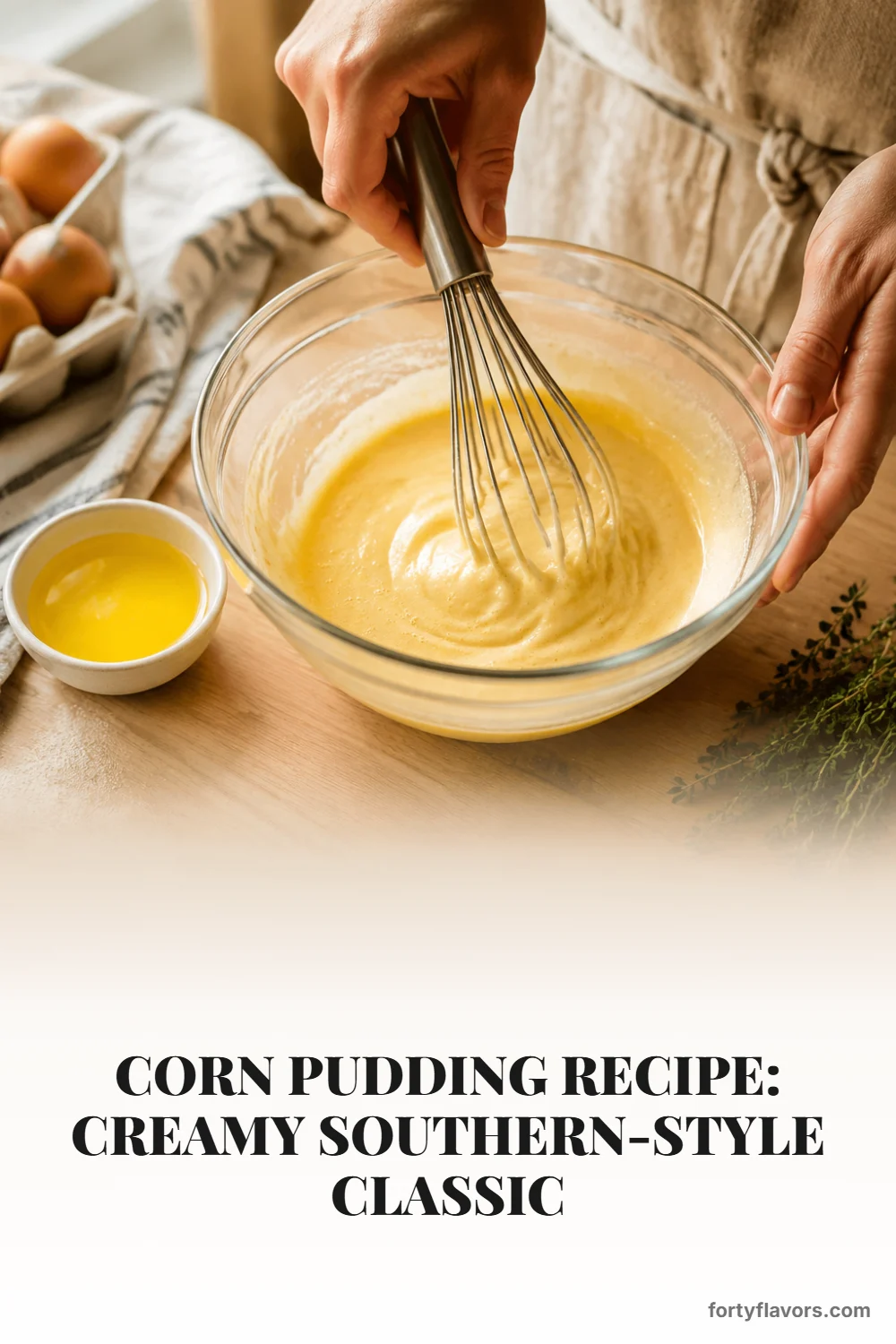
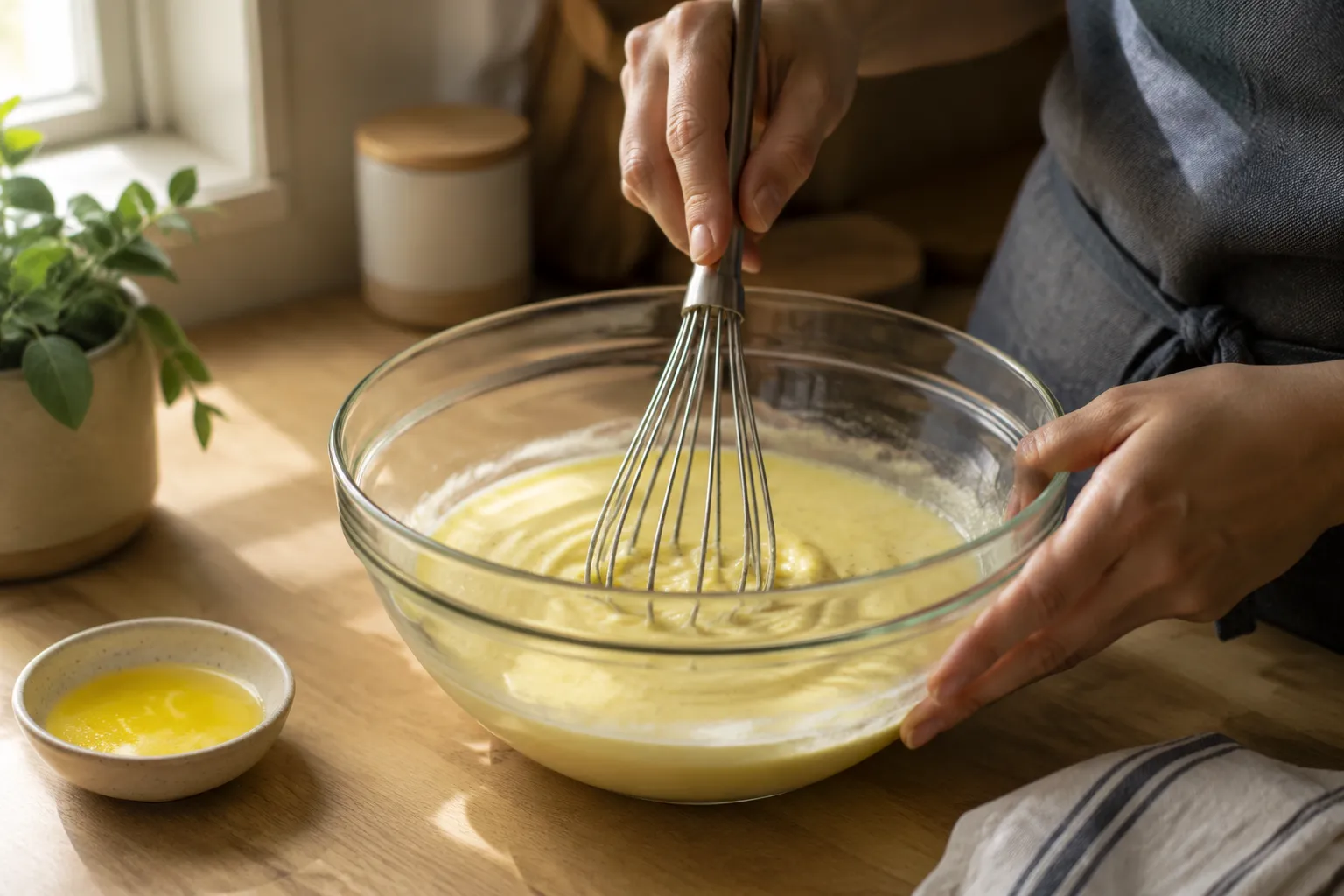
Start by whisking the wet ingredients — eggs, sour cream, milk, and melted butter — until the mixture is pale yellow and uniform. This is the custard base, and you want it fully emulsified before any dry ingredients hit the bowl. If you skip the whisk and try to dump everything in together, you'll end up with streaks of butter and undercooked egg pockets in the finished pudding.
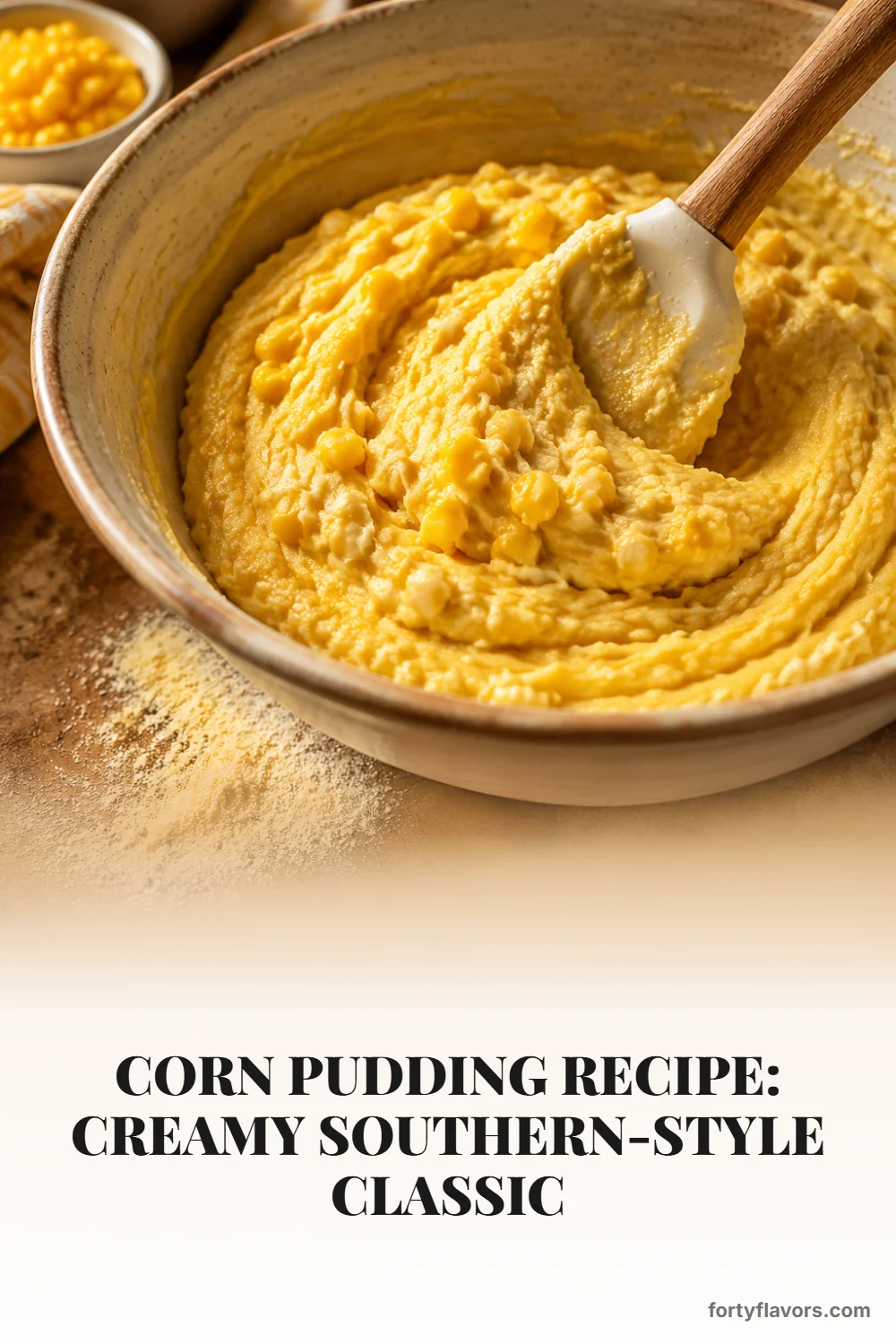
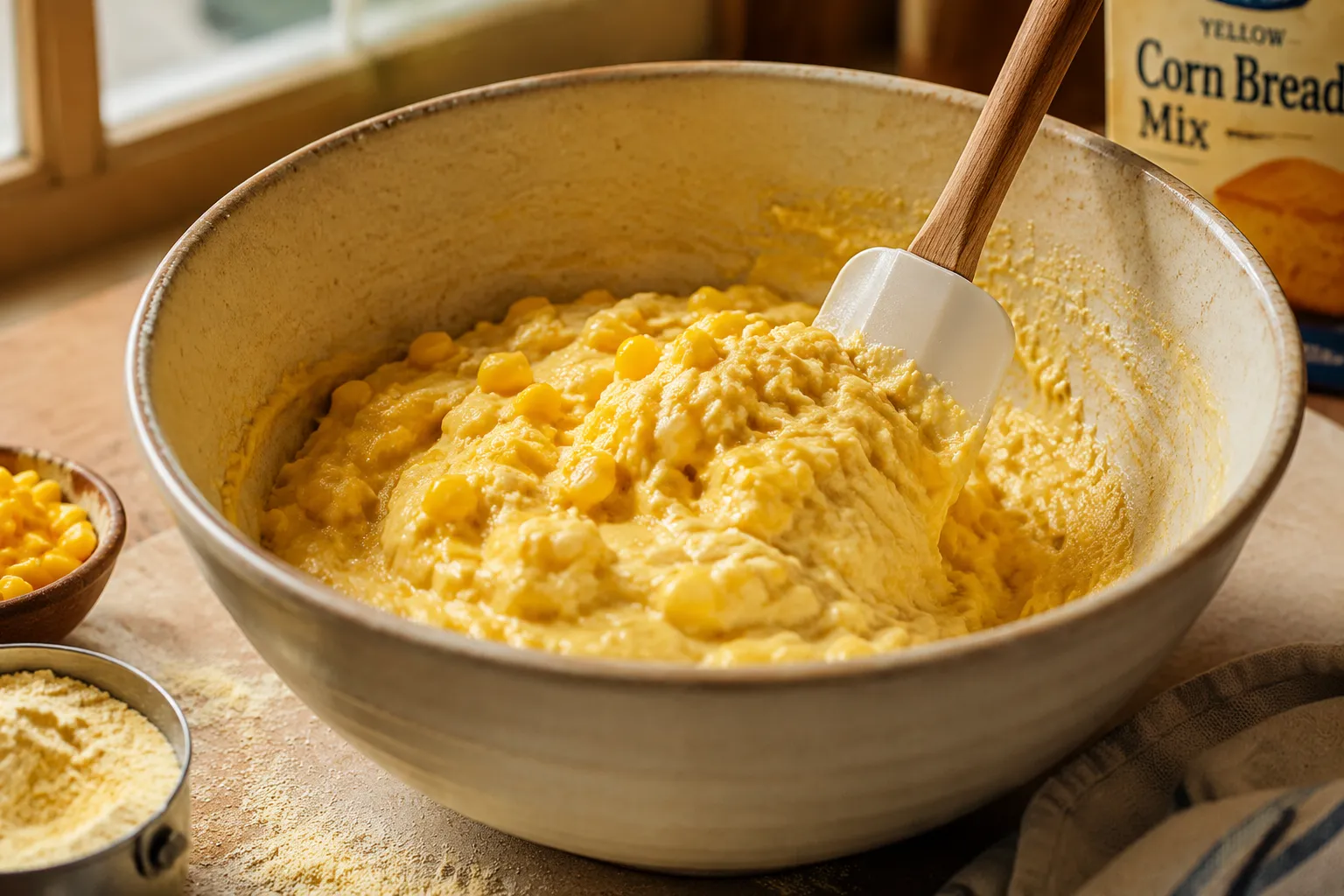
Next, add both the whole corn kernels and the creamed corn directly into the custard, then sprinkle the cornbread mix, sugar, and salt over the top. Fold gently with a silicone spatula until just combined. A few small lumps are fine — overmixing develops the cornmeal and turns the texture tough and gummy instead of tender.
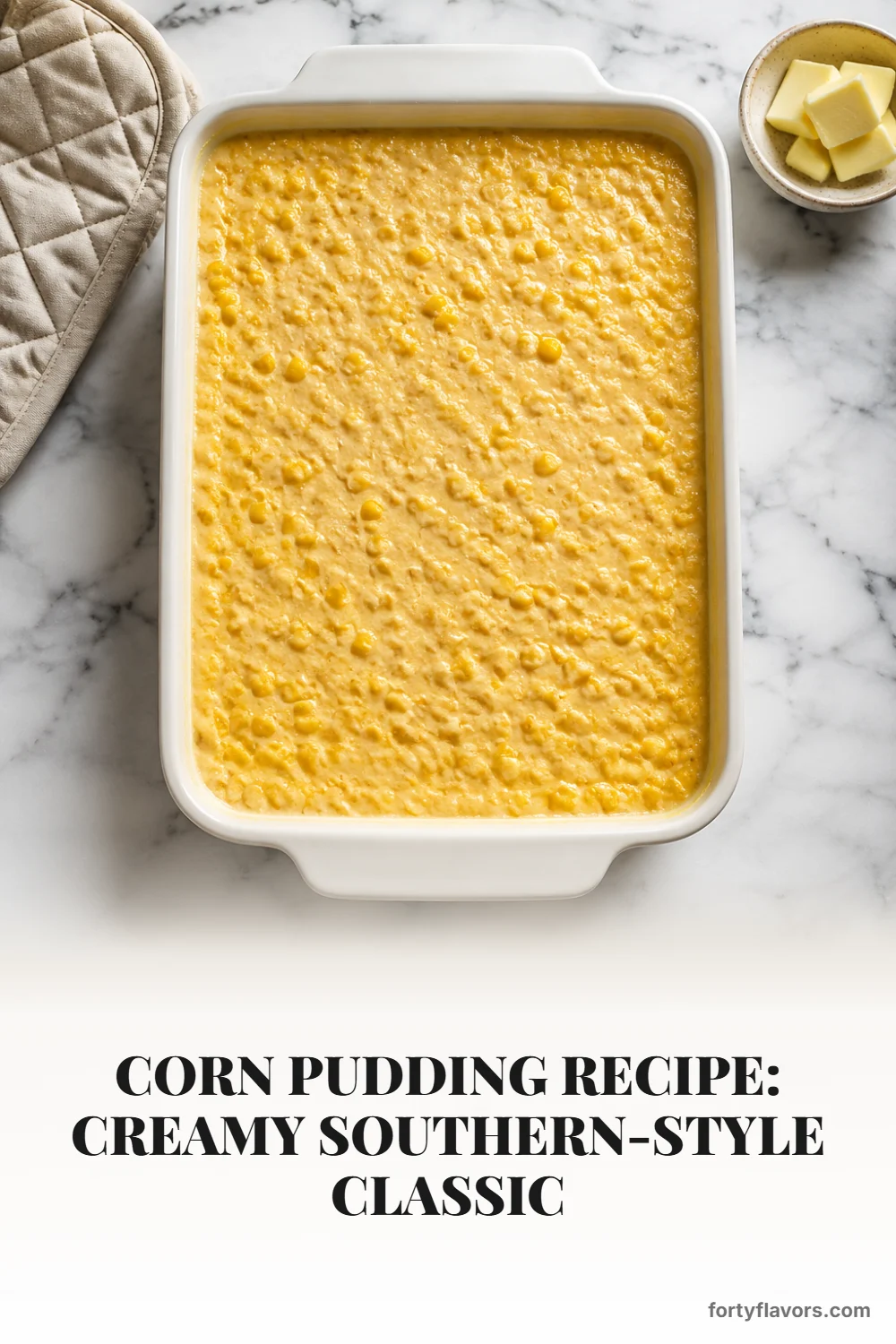
Pour the batter into a buttered 9x13-inch baking dish (or a 2.5-quart casserole), smooth the top, and slide it into a 350°F oven. Bake until the edges are deeply golden and the center has just a faint jiggle when you nudge the pan, around 50 minutes for a 9x13.
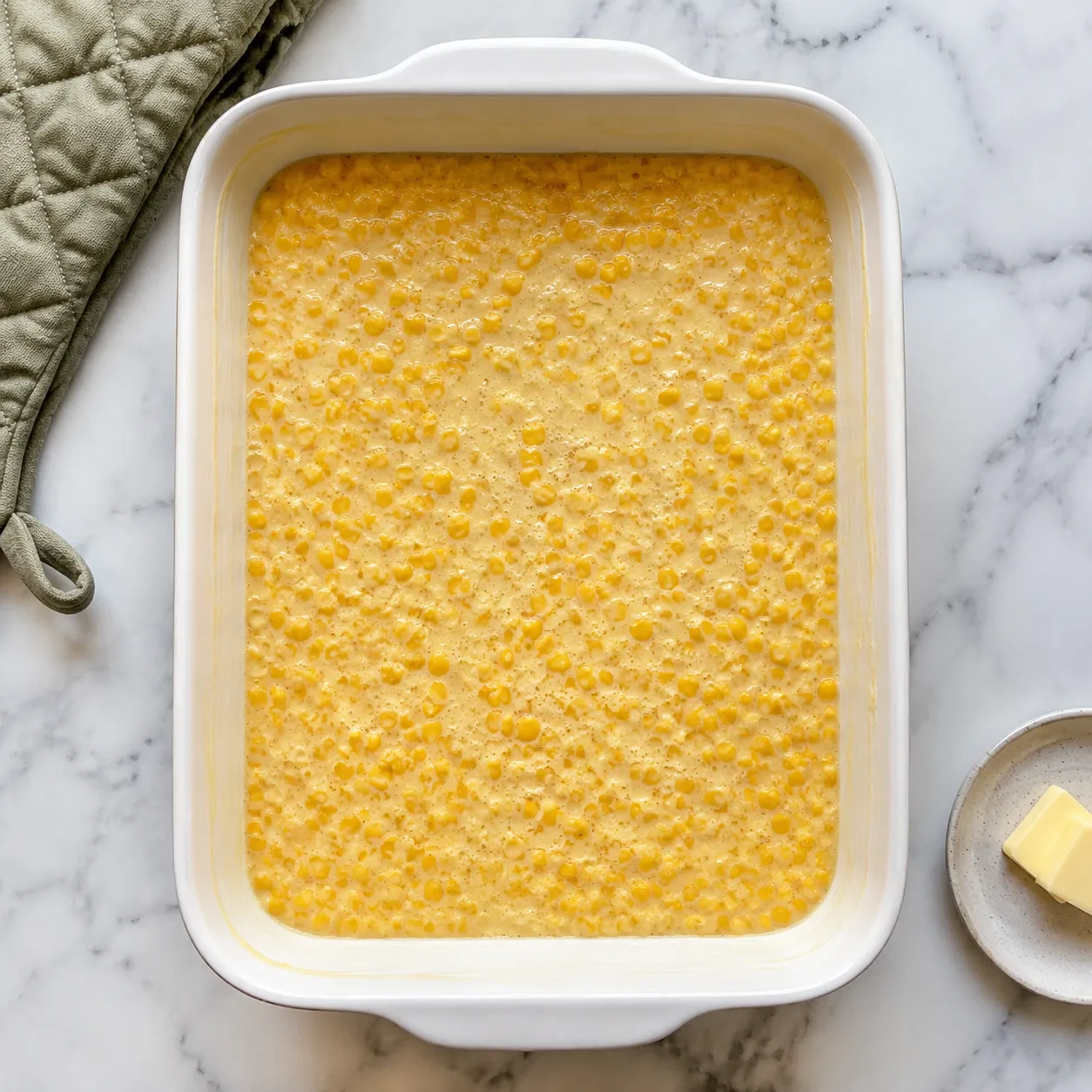
The doneness cue is everything here: pull it too early and you'll have a soupy middle, leave it too long and the custardy texture turns rubbery and dry. A thin knife inserted about an inch from the edge should come out mostly clean while the very center still looks set but soft. Trust the jiggle.
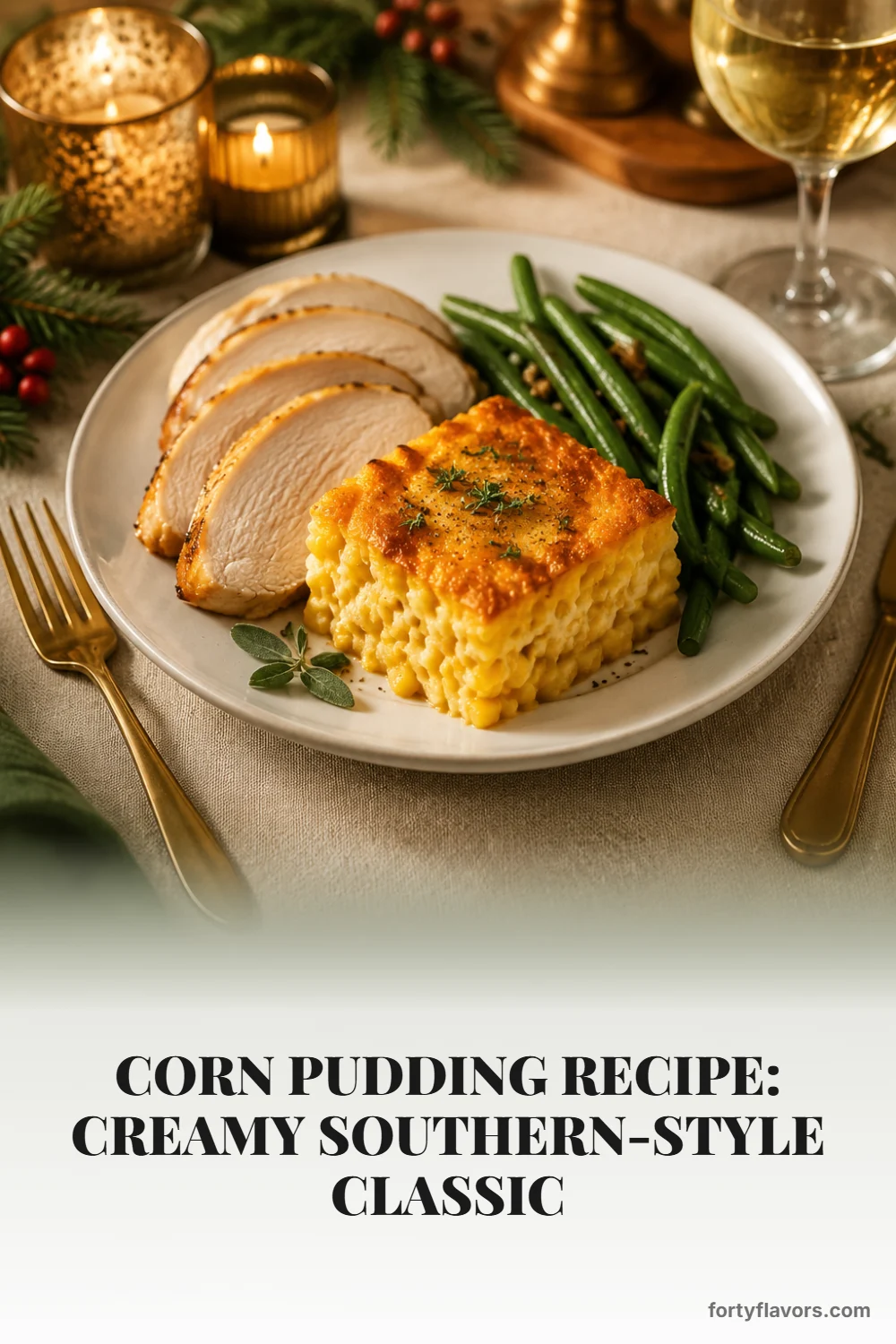
This is one of those Southern side dishes that plays well with just about any centerpiece. It's a non-negotiable at our Thanksgiving table next to roast turkey, cranberry sauce, and a heap of garlicky green beans, but it's just as at home alongside Easter ham, a Sunday roast chicken, or a smoky pulled pork plate. The flavor is gentle enough to flatter a roast and rich enough to anchor a simple weeknight meal.
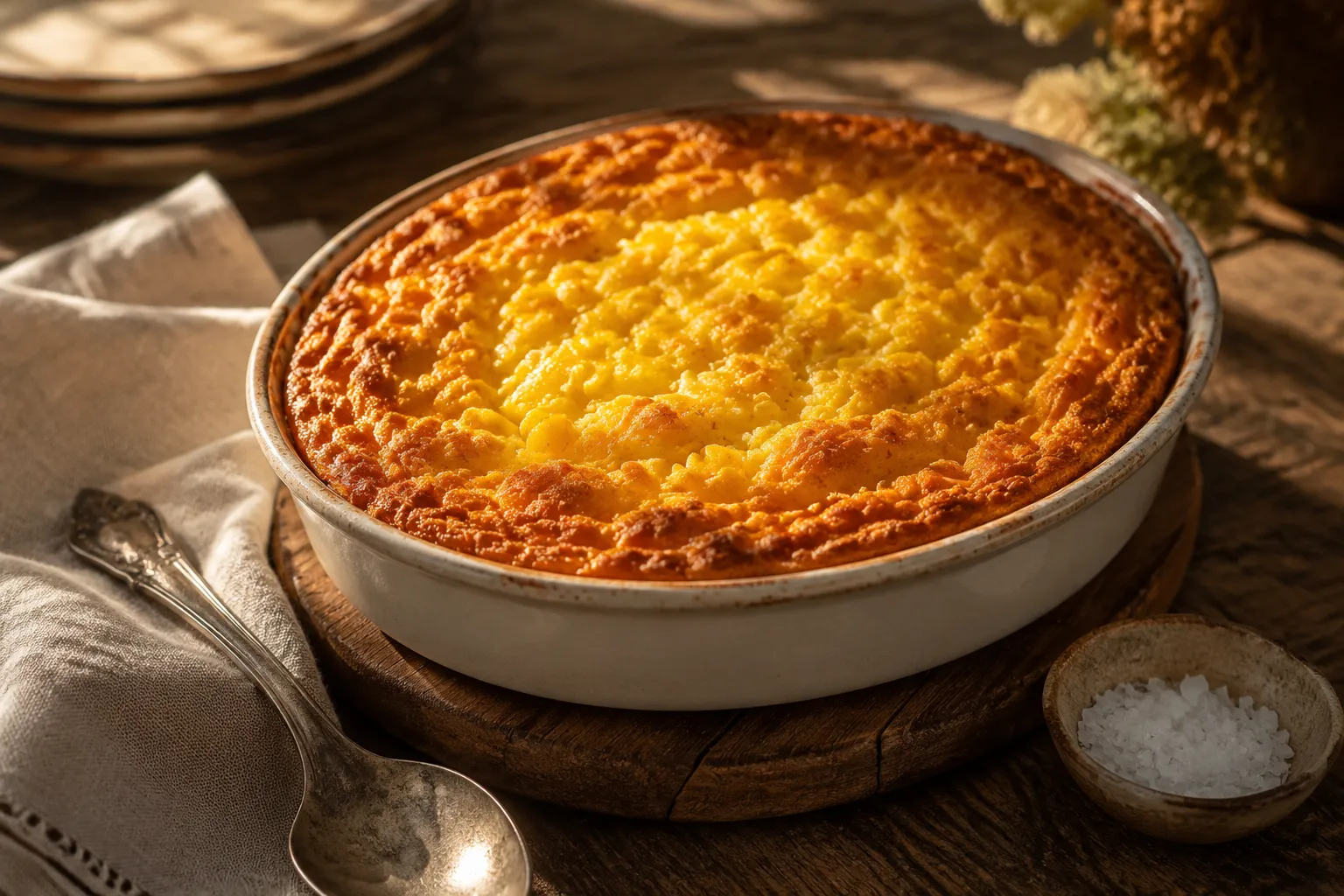
For Thanksgiving side dishes specifically, I love pairing this with something acidic and bright to cut through the richness — a vinegary slaw, quick pickled onions, or a sharp green salad with a citrus vinaigrette. The pudding itself is creamy and comforting, so it really benefits from a contrasting element on the plate.
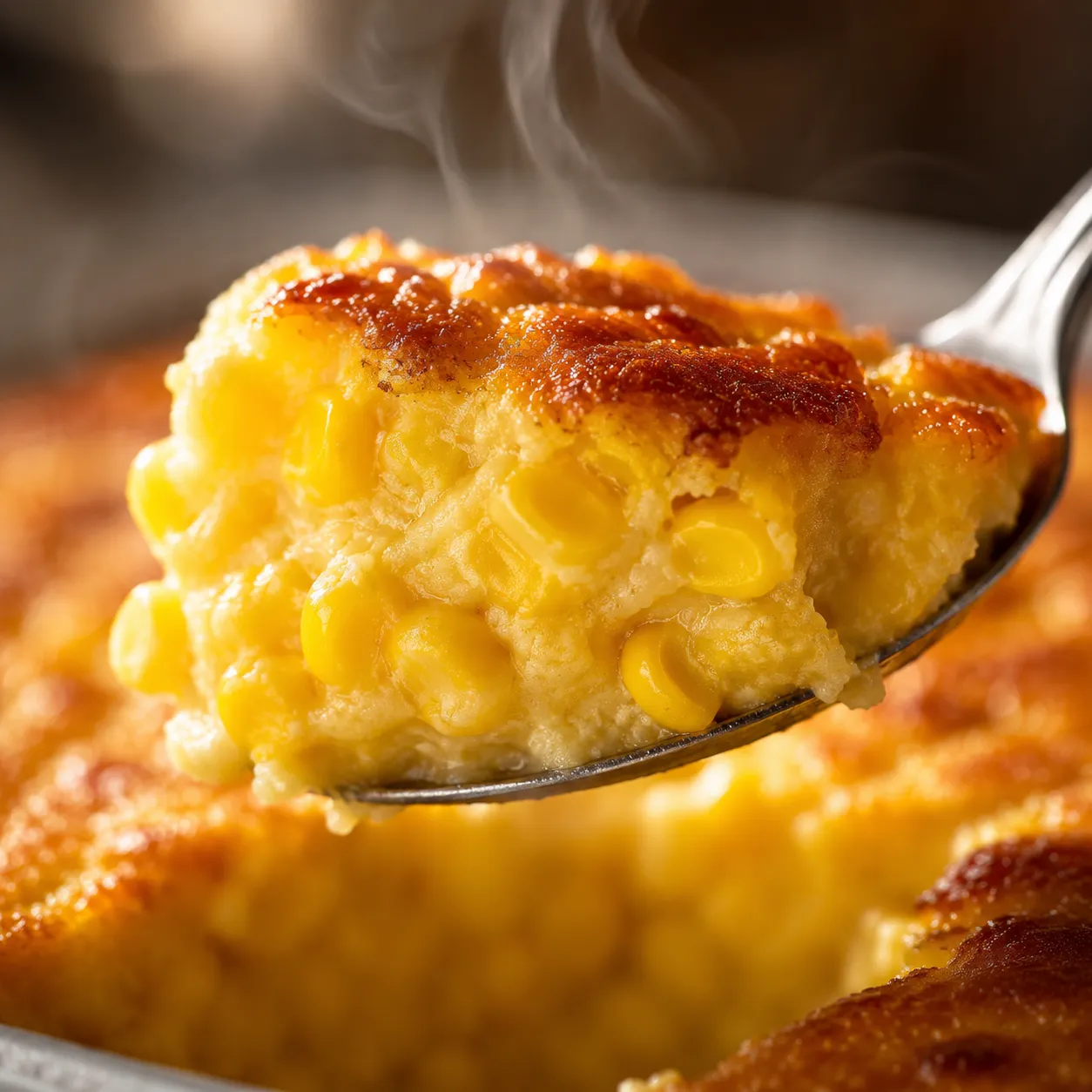
If you're building a full lineup of holiday casseroles, this slots in perfectly between sweet potato casserole and the classic green bean number. It bakes at the same 350°F temperature as most stuffings and dressings, which is a small but mighty win when oven space gets tight on the big day.
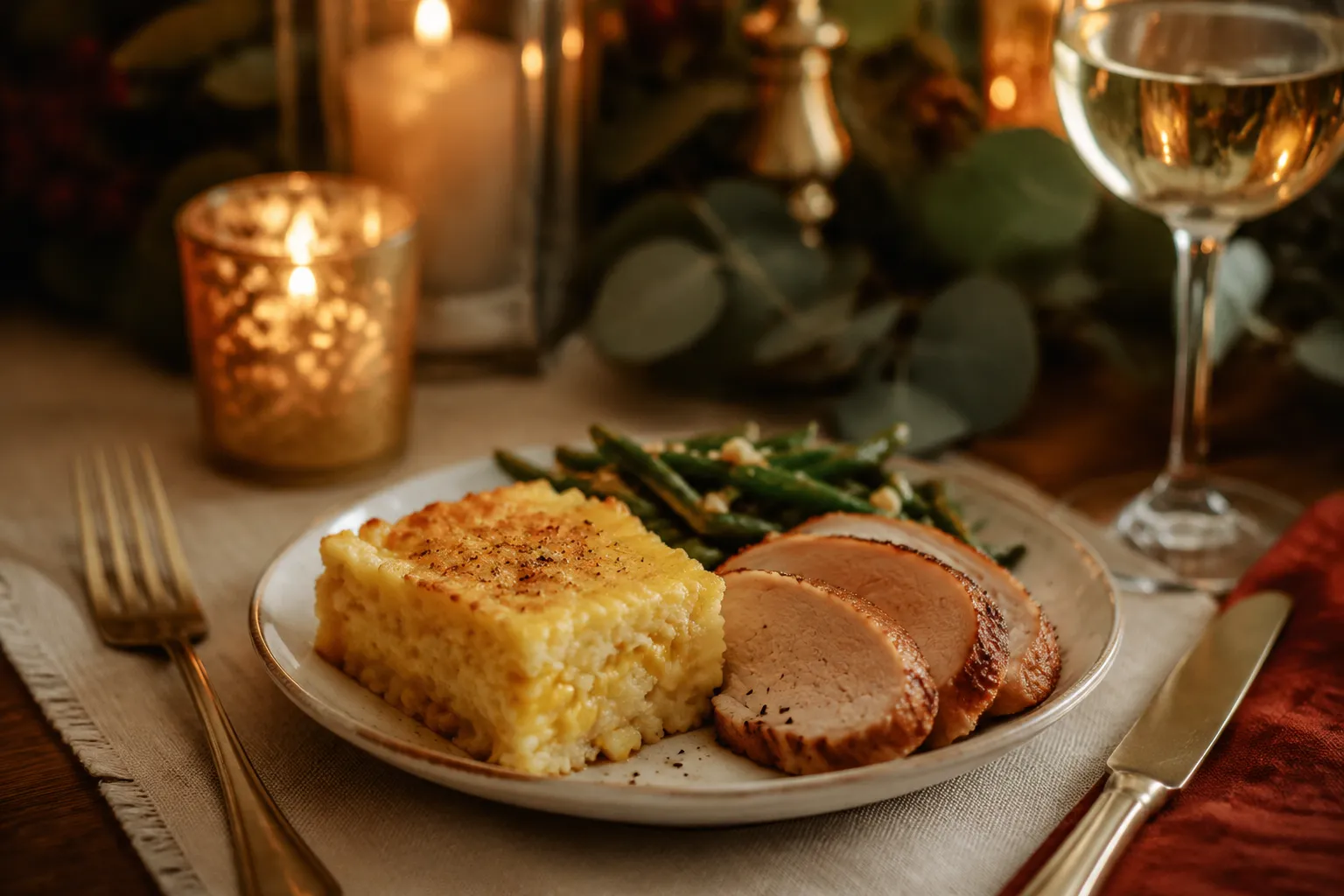
For weeknight dinners, leftovers reheat into a quick side for grilled sausage, fried chicken, or a hearty bowl of chili. Spoon it warm next to BBQ ribs or pulled pork sliders and watch it disappear before the meat even has a chance.
Once you make this Southern corn pudding once, it earns a permanent spot in your holiday rotation. It's forgiving, it's flexible, and it tastes like the kind of food that makes people slow down at the table and ask for the recipe before they've even finished their plate. Pack up any leftovers carefully — they'll be just as good tomorrow, maybe even better as the flavors settle.
Whether you serve it warm from the oven on a holiday afternoon or reheated alongside a Tuesday-night meatloaf, the texture and flavor hold beautifully. Make it once for the big day, then keep making it through the year, because comfort food this good shouldn't have to wait until November.
The base recipe is intentionally easy to riff on. Once you've nailed the custard ratio, you can take it sweet, savory, spicy, or cheesy without any other adjustments. Stir any mix-ins into the batter just before pouring it into the prepared dish.
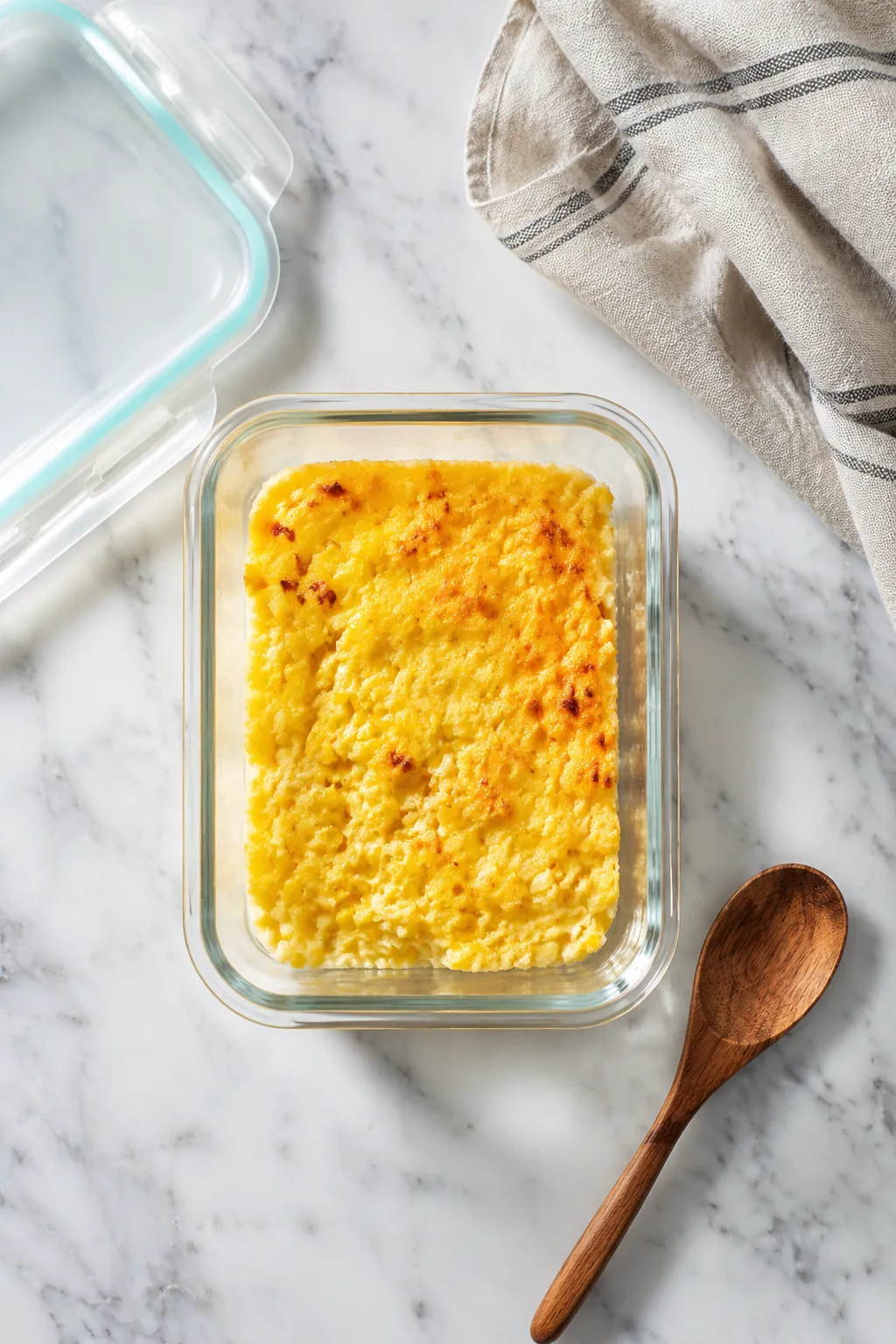
Refrigerate leftover corn pudding tightly covered for up to 4 days. The texture firms up considerably once chilled — this is normal, and a quick reheat brings the creaminess right back. To reheat individual portions, microwave on 70% power for 60 to 90 seconds, or warm a whole dish covered with foil at 325°F for 20 to 25 minutes. Adding a tablespoon or two of milk over the top before reheating helps restore moisture and keeps that custardy texture intact.
For longer storage, freeze fully baked and cooled portions in an airtight container for up to 2 months. Thaw overnight in the fridge before reheating in a 325°F oven covered with foil. The texture isn't quite as silky after freezing — there's a slight graininess from the dairy splitting and refreezing — but it's still genuinely delicious and a real lifesaver during a busy holiday week. To make ahead without freezing, mix the batter up to 24 hours in advance, refrigerate covered, and bake straight from cold, adding 5 to 10 minutes to the bake time.
Hover any image and hit “Pin it” to save it to your Pinterest boards.