How to Cook Asparagus: 5 Best Methods (Foolproof Guide)
Ingredients
Scale
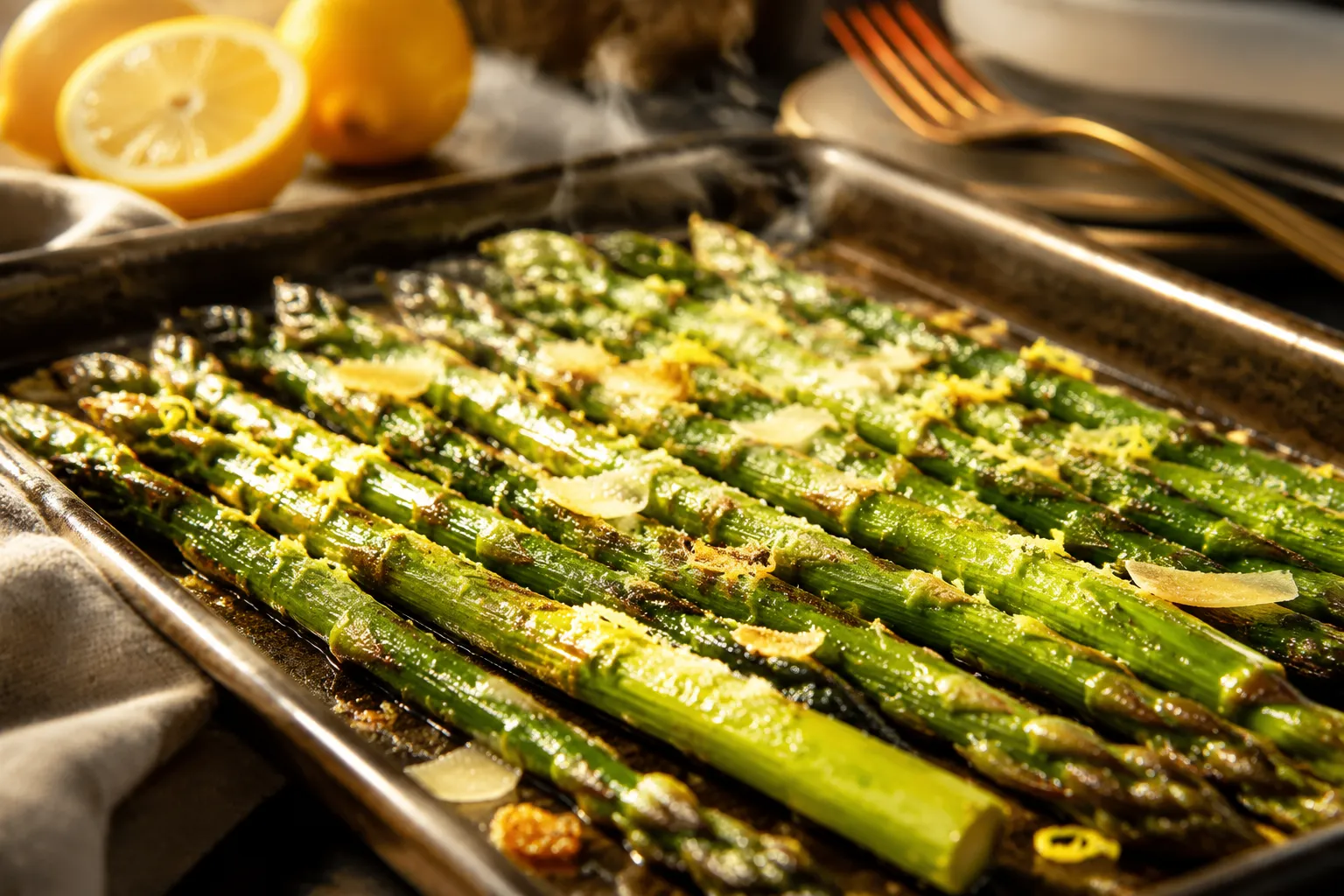
The complete guide to how to cook asparagus, with 5 foolproof methods, exact times, and the simple tricks that make every spear crisp-tender and never soggy.
Learning how to cook asparagus the right way is one of those small kitchen wins that pays off on weeknights, holiday tables, and every dinner in between. Once you understand the difference between thin and thick spears, the right pan temperature, and when to stop cooking, you'll never end up with sad, soggy, or stringy asparagus again. This guide pulls together five of the best methods in one place — oven-roasted, baked with Parmesan, pan-fried, grilled, steamed, and blanched — so you can pick whichever fits the night.
Most of the time, the best way to cook asparagus is on a sheet pan in a hot oven, which is exactly where I started when I tested every method side by side. But there are nights when the oven is busy, you want char marks from the grill, or you're prepping spears ahead for a salad. Each method below uses the same simple base — fresh asparagus, olive oil, garlic, salt, and lemon — so you can stick with what you already have and just change the heat source.
Whether you're after a quick weeknight side, polished Easter side dishes for the holiday table, or something to plate next to grilled salmon, the timing chart and step-by-step photos below will get you to crisp-tender every single time. Once these methods are in your back pocket, asparagus moves from intimidating spring produce to one of the most reliable sides in your rotation.
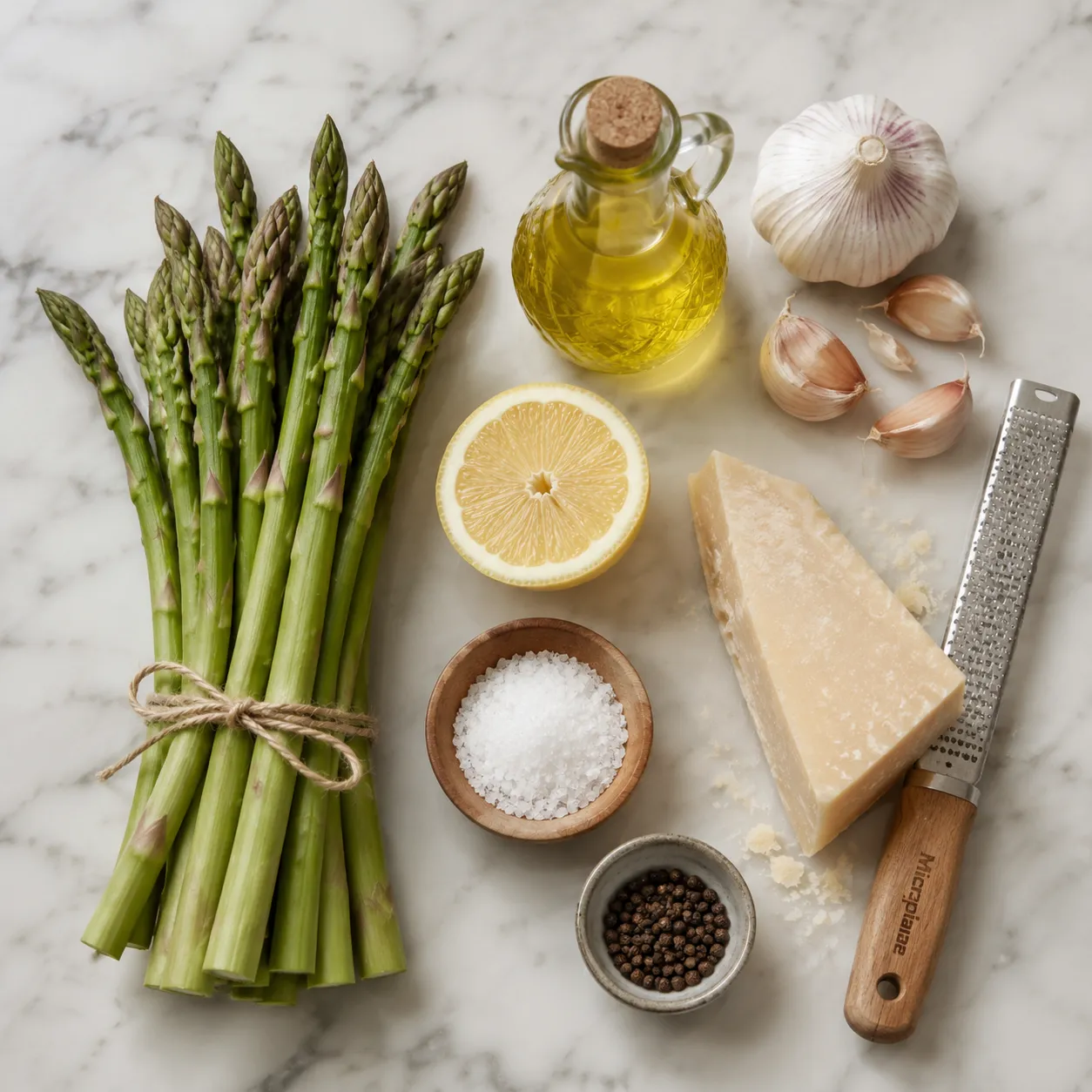
Before you can master how to cook asparagus, you need to know how to pick and prep it. Great results start at the store with a good bunch of fresh asparagus — firm, straight spears with tightly closed, compact tips and a vivid emerald-green color. Skip bunches with limp stalks, dry or splitting bottoms, or tips that look mushy and mossy. A little inspection at the grocery saves a lot of disappointment at dinner.
Thickness is a personal preference, not a quality marker: pencil-thin spears cook fast and stay tender, while thick spears (about as wide as your pinky) hold up better to grilling and roasting. Smell helps too — fresh asparagus should smell faintly grassy and clean, never sour. Once home, treat the bunch like a bouquet: trim a half-inch off the bottoms and stand them upright in an inch of water in the fridge. This is the easiest method on how to store fresh asparagus and it keeps a bunch crisp for nearly a week.
Every spear has a tough, fibrous bottom inch or two that no amount of cooking will save. The classic trick on how to trim asparagus is to hold a spear with both hands and bend gently — it will snap right where the tender part begins. For speed, line up the bunch on a cutting board and slice off the bottom inch with a sharp knife. You'll lose a little tender stalk, but it's much faster for a crowd, and the difference in tenderness is barely noticeable on the plate.
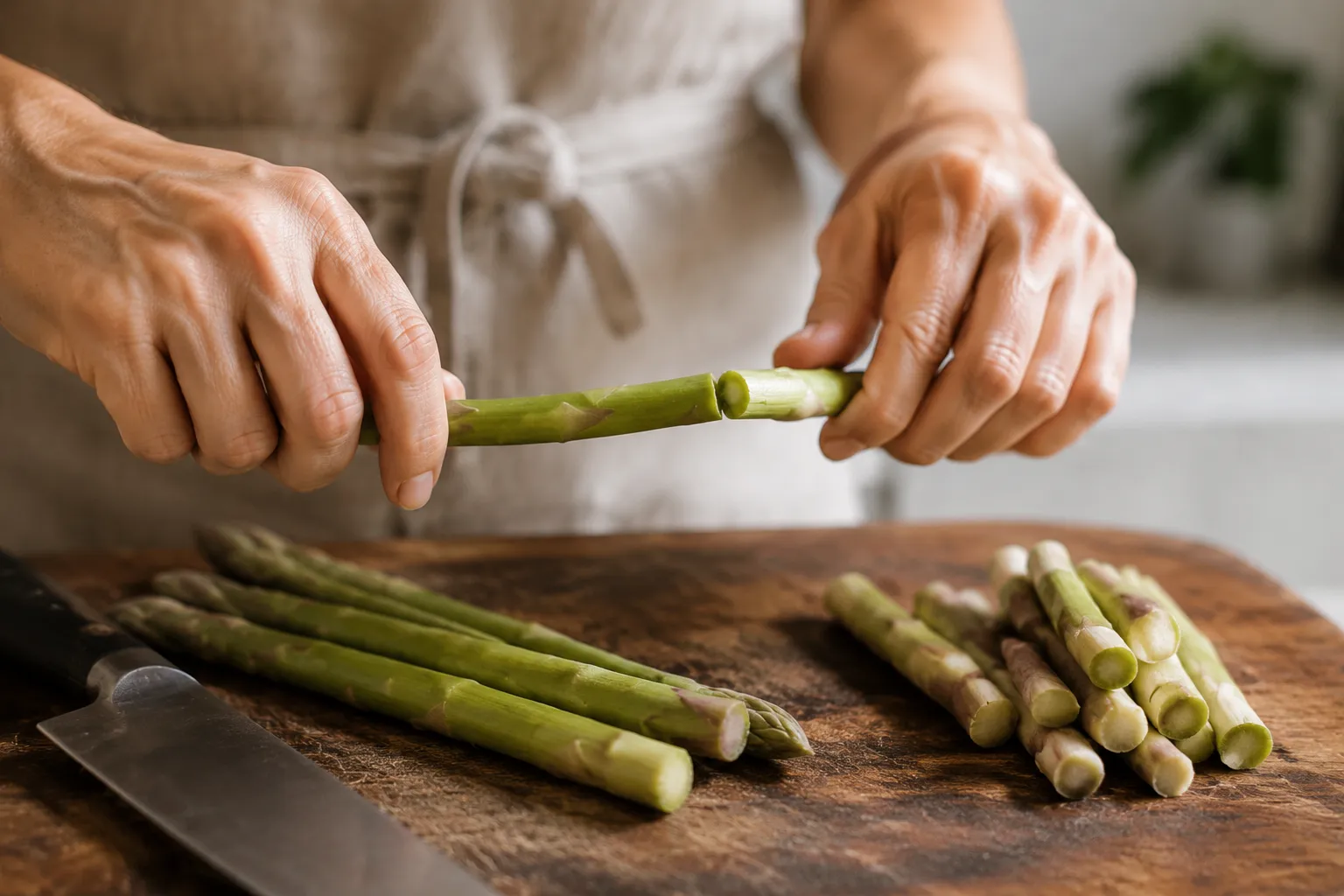
Skip it. Thin and medium spears never need peeling. Only consider a vegetable peeler on the lower third of very thick spears (over half an inch wide) if you want a more delicate, restaurant-style bite. For everything else, trim the woody ends, rinse under cool water to flush any grit from the tips, pat thoroughly dry, and you're ready to cook.
Roasting is hands-down the best way to cook asparagus when you want maximum flavor with minimum effort. High, dry heat caramelizes the tips into crispy, almost-frizzled little ribbons while the stalks stay snappy and bright green. You'll need just a sheet pan, parchment, and about 12 minutes — and the oven does almost all the work. This is the roasted asparagus recipe I make on repeat from March through June, and it never gets old.
You'll need a pound of fresh asparagus, two tablespoons of olive oil, three cloves of minced garlic, a half teaspoon of kosher salt, a quarter teaspoon of black pepper, and a lemon for zest and juice. Optional but excellent: a couple tablespoons of grated Parmesan stirred in at the end for salty, nutty contrast. This base is the heart of every variation in this guide, so once you have it down, all five methods are at your fingertips.
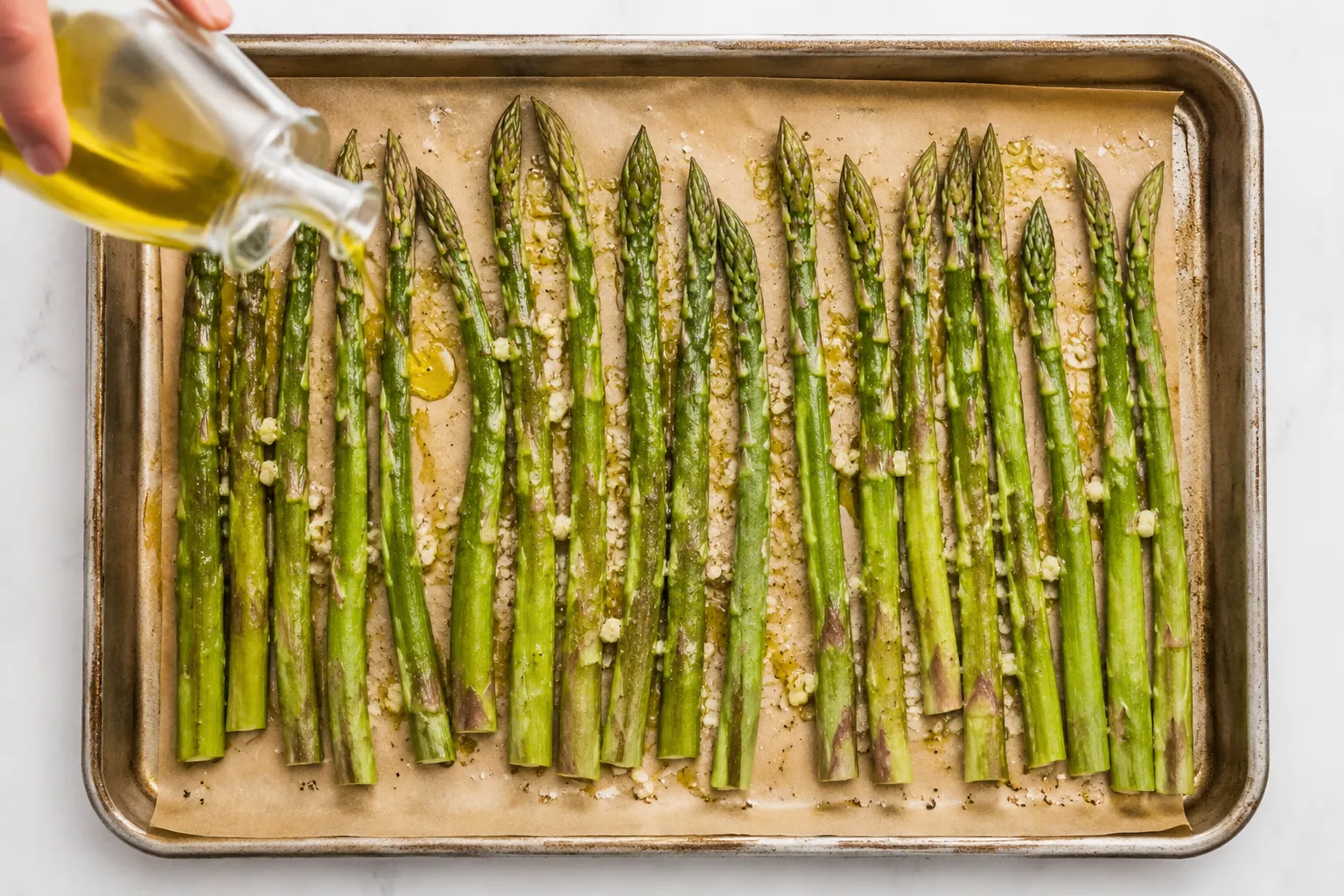
Heat the oven to 400°F. Spread the trimmed spears on a parchment-lined sheet pan in a single, uncrowded layer — don't pile them up or they'll steam instead of roast. Drizzle with olive oil, scatter the garlic, salt, and pepper across the pan, then toss with your hands until every spear is glossy. Roast on the middle rack for 10 to 12 minutes for thin or medium spears, until the tips are golden-brown and the stalks pierce easily with a knife but still snap. Finish with lemon zest, a squeeze of juice, and Parmesan if using.
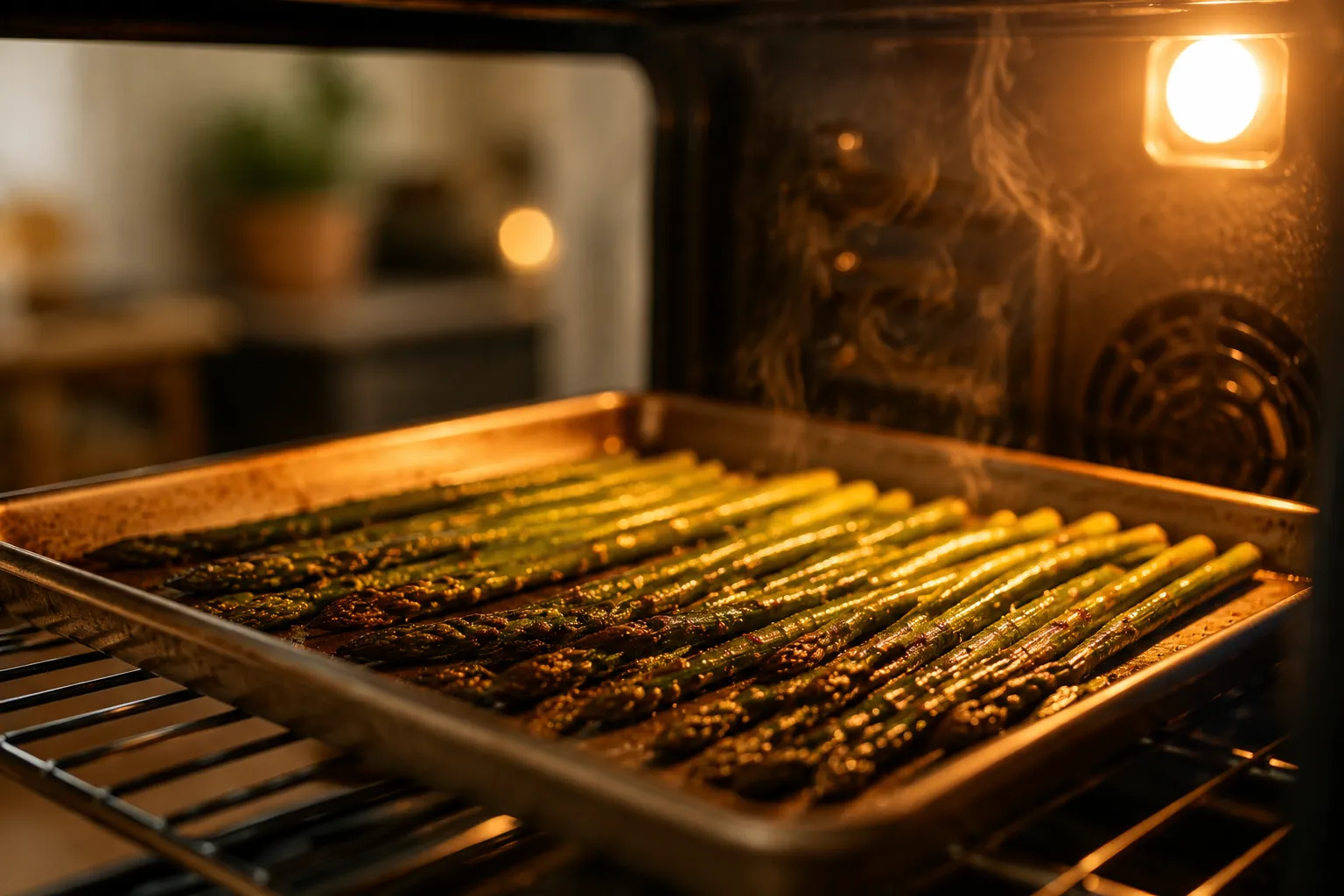
If you want a dressier version, knowing how to bake asparagus with a Parmesan crust transforms a simple sheet pan into something nearly fancy. The cheese melts into a salty, lacy crisp on top of the tips while the garlic toasts and perfumes the whole pan. It's the version I make for company and Easter dinners alike, and it disappears faster than the rolls.
Roast the asparagus exactly as above for 8 minutes at 400°F, then pull the pan and sprinkle a quarter cup of grated Parmesan and another clove of minced garlic over the spears. Return the pan to the oven for 4 to 6 more minutes, until the cheese is melted, golden, and slightly crisped at the edges. A finishing drizzle of lemon garlic butter sauce — just melted butter whisked with lemon juice and a smashed garlic clove — takes the whole thing over the top.
For thin spears, the 8 + 4 timing is perfect. For thick spears, give them a 12-minute head start before adding the Parmesan, then bake another 5 to 6 minutes until tender. This staggered approach keeps the cheese from burning before the stalks are fully cooked through, which is the most common mistake in any baked-asparagus situation.
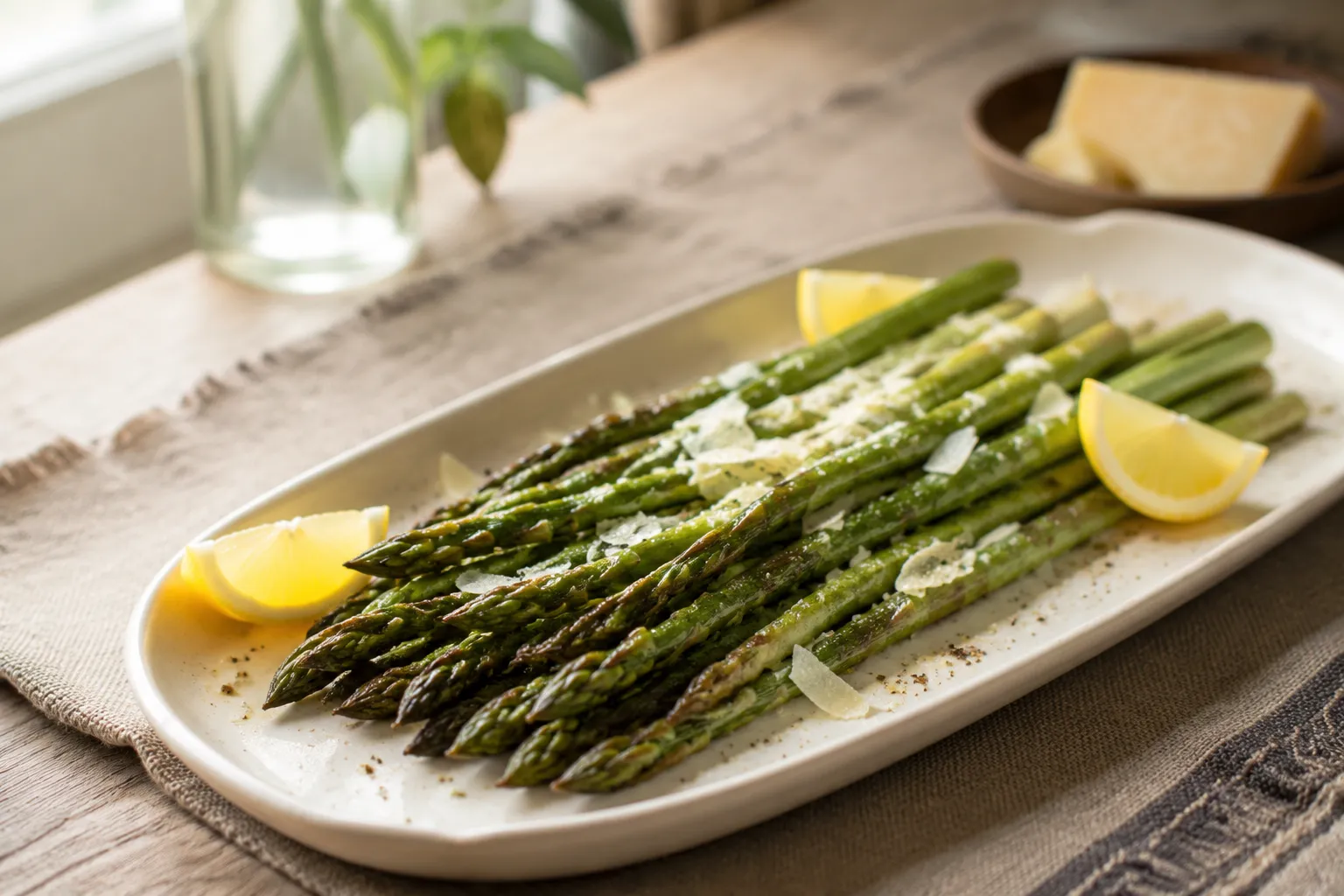
The oven is my default, but every cook should have a few backup methods in their pocket. Here's the short version of the other four techniques, all built around the same olive oil, garlic, salt, and lemon base. Once you know how to cook asparagus on the stovetop, the grill, in steam, and in boiling water, no spring produce intimidates you again.
Heat a tablespoon of olive oil in a large skillet over medium-high heat until shimmering. Add the spears in a single layer (work in batches if needed), season with salt and pepper, and let them sit untouched for 2 minutes to develop a sear. Toss or roll, cook another 3 to 5 minutes, then add minced garlic in the last 30 seconds so it doesn't burn. Total time: about 6 minutes — your fastest weeknight option.
Toss spears with olive oil, salt, and pepper, then grill over medium-high direct heat for 5 to 7 minutes total, turning every couple minutes. You want char marks but not blackened tips. Thick spears love the grill — they hold their shape and pick up that smoky flavor that makes them stand out next to other grilled vegetable sides like zucchini, peppers, and corn.
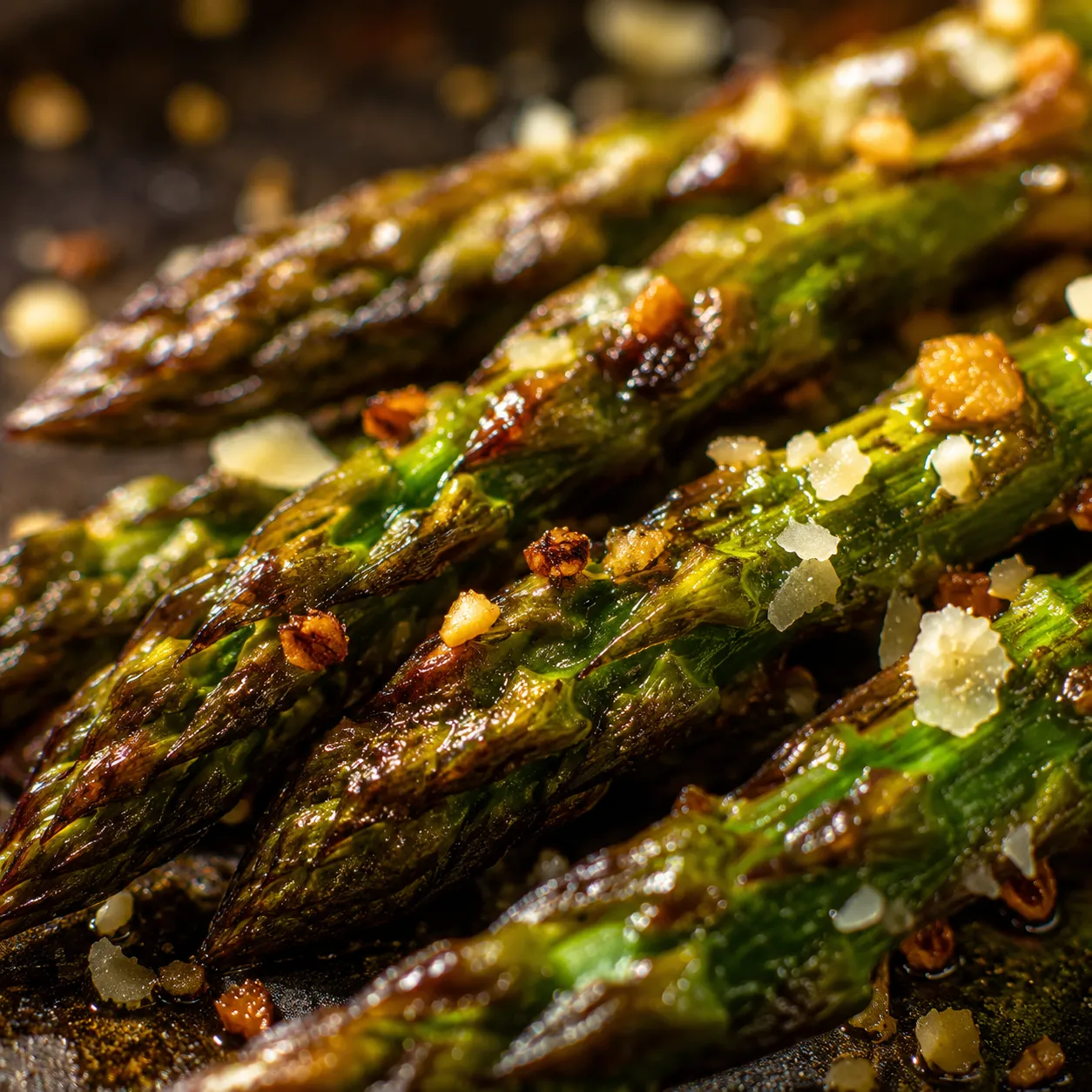
For the cleanest, brightest flavor, steam spears in a basket over an inch of simmering water for 3 to 5 minutes (thin) or 5 to 7 minutes (thick). They should be vibrant emerald and just tender at the thickest part. Steamed asparagus is gentle and lets the vegetable speak for itself, which makes it ideal for a delicate hollandaise, a soft-boiled egg, or simple melted butter.
Blanching gives you crisp-tender, fully-cooked spears that hold their snap for cold salads, grain bowls, and party platters. Drop trimmed asparagus into a pot of well-salted boiling water for 90 seconds (thin) to 3 minutes (thick), then plunge straight into ice water to stop the cooking. Drain, pat dry, and they're ready to dress.
Once you've nailed how to cook asparagus, the serving options open up. A platter of roasted spears slides right onto a weeknight dinner next to grilled chicken and rice, or pairs beautifully with seared salmon, lemony pasta, or a simple roast chicken. For brunch, lay them under a poached egg with shaved Parmesan and a grind of black pepper. For dinner parties, arrange on a long platter with lemon wedges, flaky salt, and a drizzle of good olive oil — it looks fussed-over when it really wasn't.
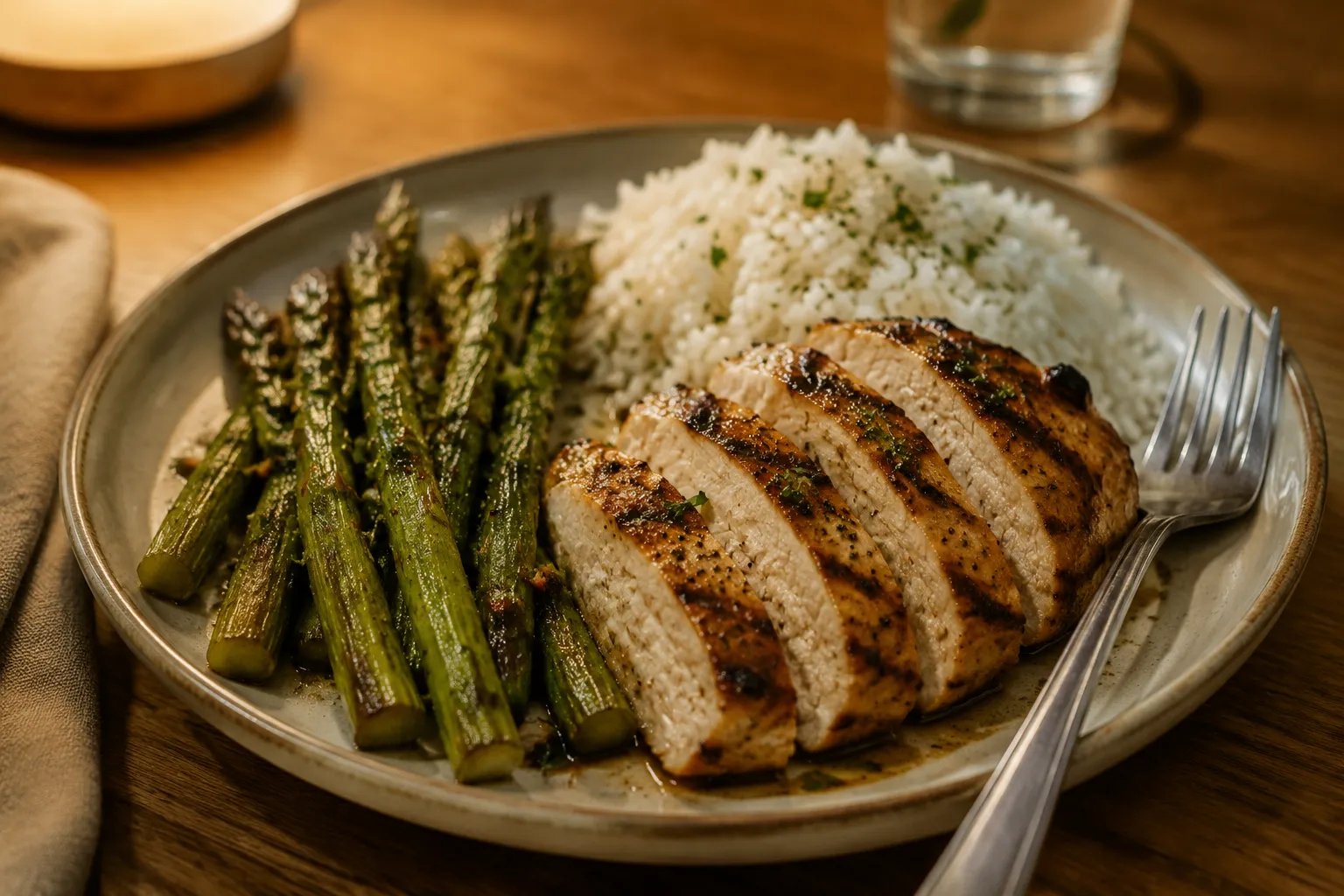
Asparagus is one of the easiest spring sides, which is why it earns a spot in every Easter side dishes lineup along with glazed carrots, scalloped potatoes, and a pile of warm rolls. It's also right at home next to grilled steak in summer or alongside roasted potatoes in fall — the season is whenever you want it to be.
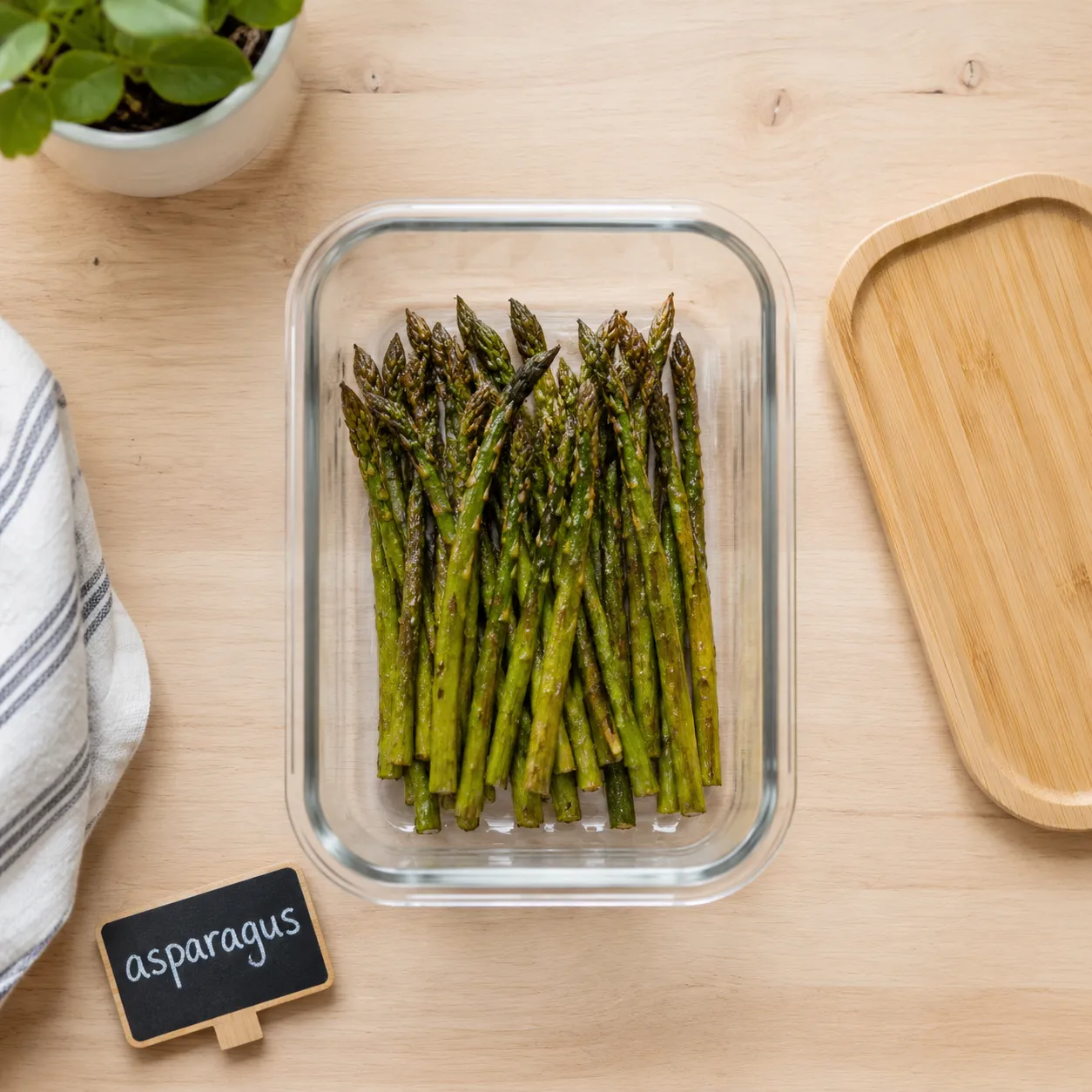
If you end up with leftovers, they're some of the best meal-prep produce going. Crisp-tender spears chopped into a frittata, tossed into pasta, or layered into a grain bowl the next day are never a sad reheat. Pick the heat source, hit the timing, finish with acid, and the rest takes care of itself.
The same base recipe takes a dozen different turns depending on what's in your pantry and what you're serving. Here are the variations I rotate through all spring and summer:
Cooled cooked asparagus keeps in an airtight container in the fridge for up to 4 days. To revive leftovers, skip the microwave (it makes them limp and watery) and instead reheat in a 400°F oven for 3 to 4 minutes, or in a hot skillet with a teaspoon of olive oil for 2 minutes until just warmed through. Cold leftover spears are also fantastic chopped straight into salads, frittatas, pasta, or grain bowls — no reheating needed at all.
Raw asparagus is best stored upright in a glass with an inch of water in the fridge, loosely covered with a plastic bag, just like fresh herbs. Change the water every couple days and the spears will stay crisp and bright for up to 5 days. Freezing cooked asparagus is not recommended — the texture turns mushy on thaw — but blanched spears freeze well for up to 3 months if you plan to use them in soups or casseroles.