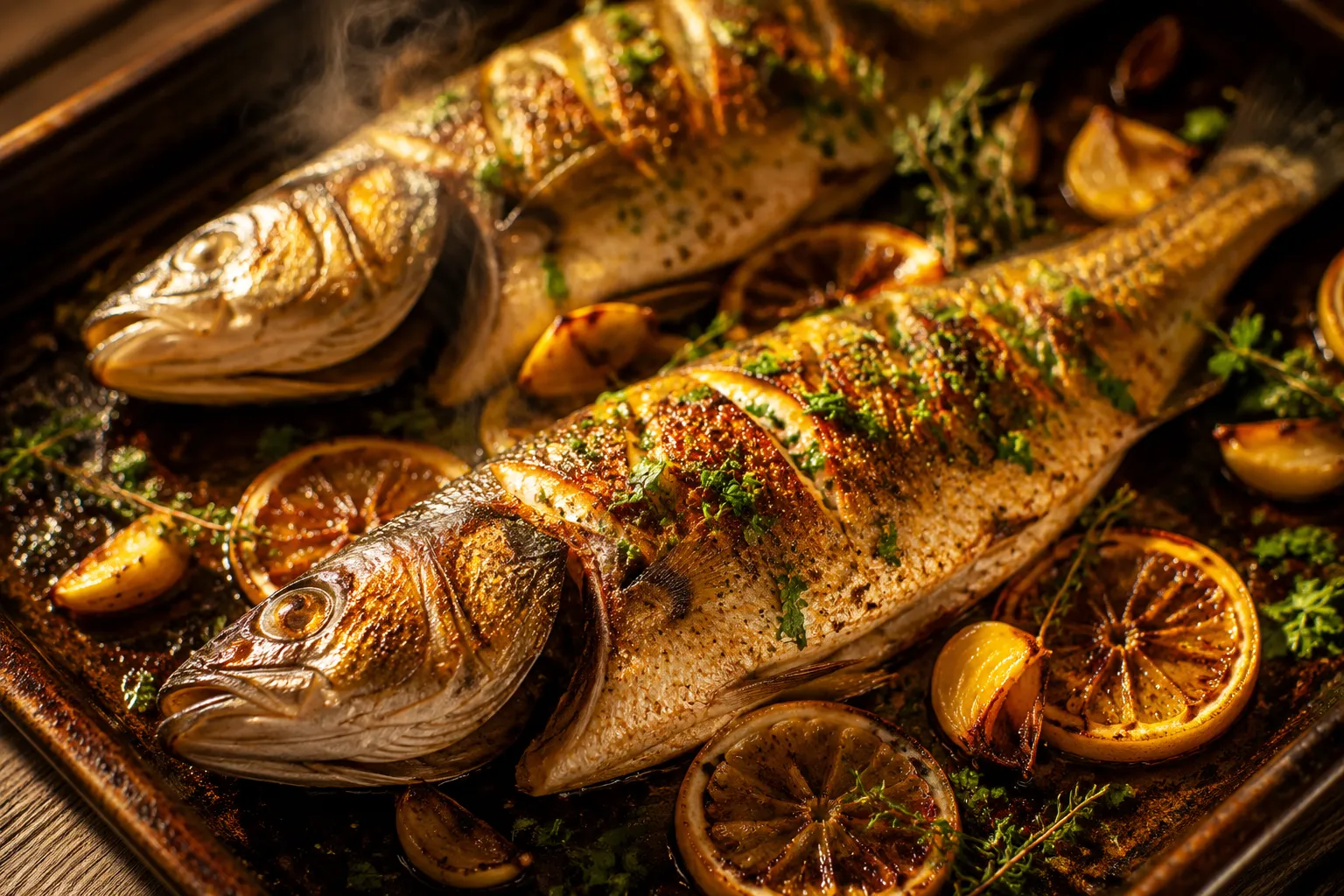
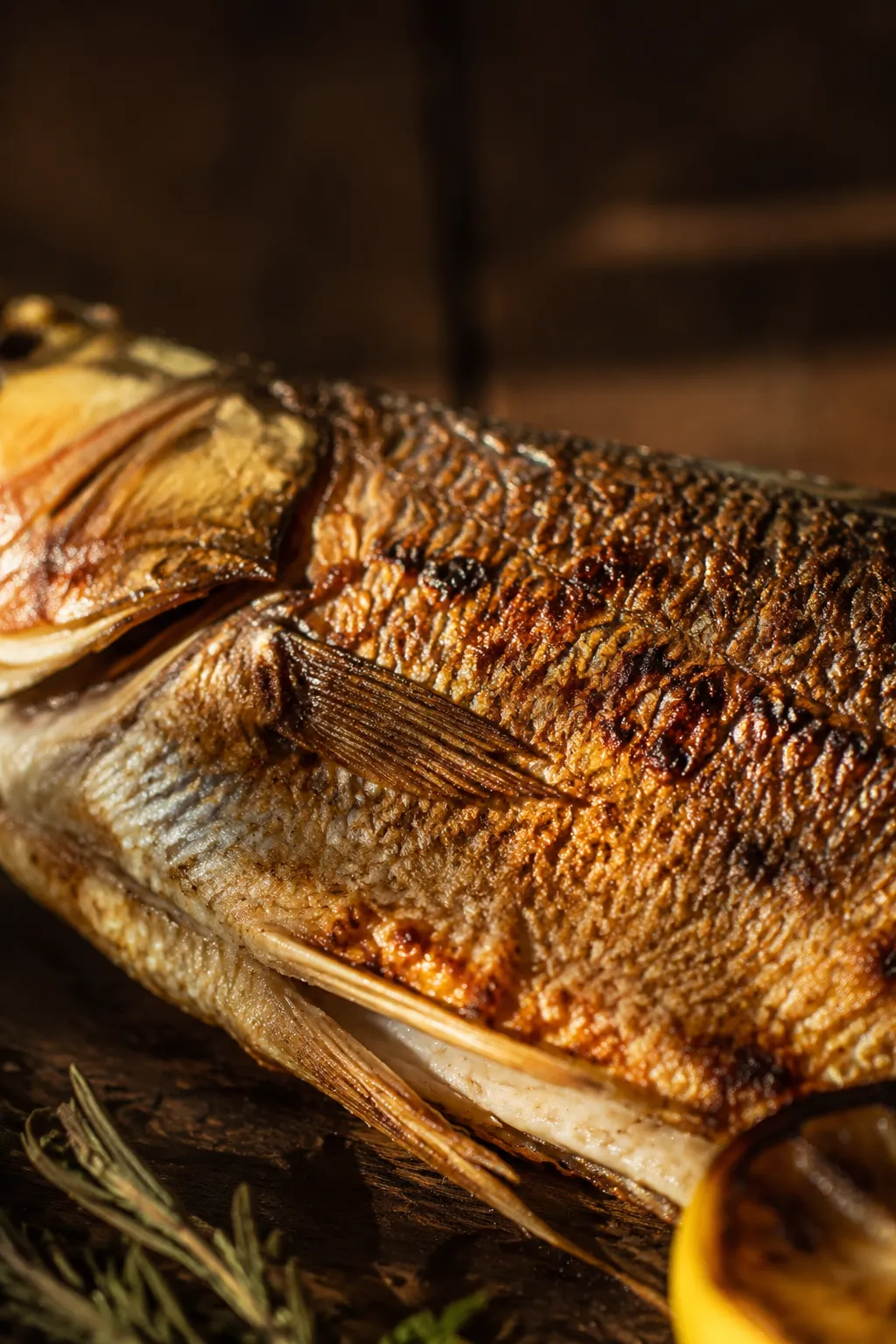
Branzino is the Mediterranean sea bass that turns any weeknight into a coastal dinner. Roasted whole with lemon, garlic, and herbs, it's elegant, flaky, and surprisingly simple.
Why You'll Love This Recipe
Restaurant-quality in 30 minutes. Truly — from cutting board to platter, this whole roasted fish takes less time than ordering takeout.
Just six core ingredients. Lemon, garlic, herbs, olive oil, salt, pepper. The fish does the talking.
Naturally gluten-free and low-carb. A lean, protein-rich main that fits Mediterranean, keto, and Whole30 styles of eating.
Show-stopping presentation. A whole fish on a platter is dinner-party theater with almost zero effort.
Forgiving technique. High heat + short cook time means it's very hard to overcook if you watch the eyes.
Branzino is the kind of dinner that makes you feel like you've slipped into a little taverna on the Amalfi Coast, even when you're just standing in your own kitchen on a Tuesday. Roasted whole on a sheet pan with thinly sliced lemons, smashed garlic, and a confetti of fresh herbs, this Mediterranean sea bass turns shatteringly crisp on the outside and stays impossibly silky and flaky within. Best of all, it's on the table in 30 minutes flat — no fancy technique, no fish poacher, no anxiety.
If you've ever ordered a whole roasted fish at a restaurant and assumed it was beyond your home-cook pay grade, this is the recipe that changes everything. The method is forgiving, the ingredient list is short, and the payoff is genuinely show-stopping. I'll walk you through what branzino actually is, how to pick a good one at the fish counter, and the small tricks that guarantee that gorgeous crackling skin every single time.
What Is Branzino?
Mediterranean Sea Bass at a Glance
Branzino is the Italian name for European sea bass — a slender, silver-skinned fish native to the coastal waters of the Mediterranean and Eastern Atlantic. Most of what you'll find at U.S. fish counters and on restaurant menus is farmed off the coasts of Greece, Spain, Turkey, or Italy, where aquaculture practices have improved dramatically over the last decade. The fish typically arrives at market at just over a pound, which happens to be the perfect single-serving size for whole roasting. It's a staple of classic Mediterranean fish recipes for very good reason.
What Branzino Tastes Like
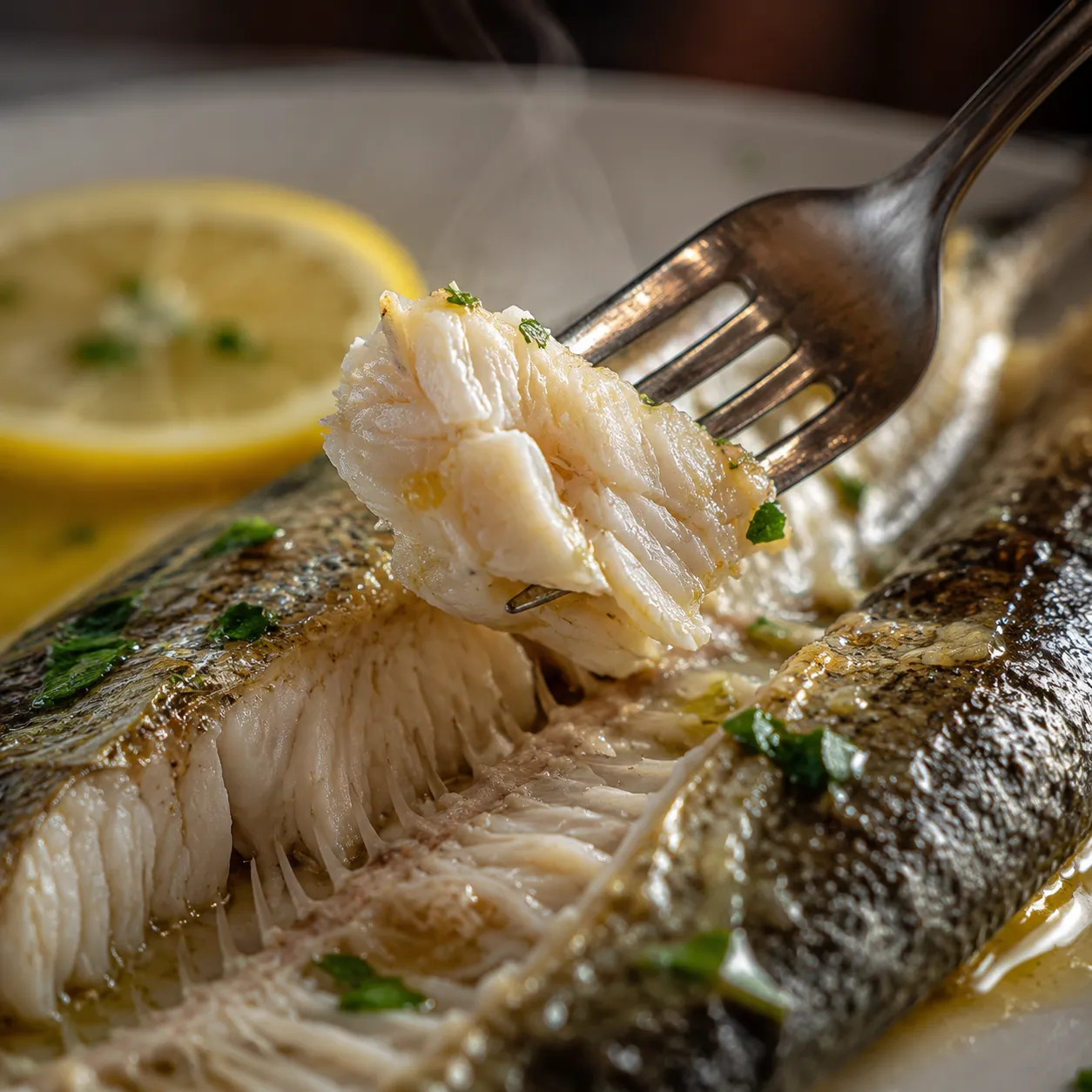
The flavor is mild, faintly sweet, and just a whisper briny — nothing like the assertive, oily punch of mackerel or sardines. The flesh is pearly white, tender, and breaks into clean, satisfying flakes when you nudge it with a fork. Even people who claim they don't like fish tend to fall for branzino on the first bite, especially when its skin has been crisped into something resembling a delicate chip.
Branzino vs. Other White Fish
Think of branzino as the more elegant, slightly sweeter cousin of red snapper or sea bream. It's leaner and more delicate than Chilean sea bass (which is actually a different species entirely — Patagonian toothfish), and it cooks faster than a thick cod fillet. If you can't find branzino, you can absolutely use this same method with porgy, dorade, or small trout.
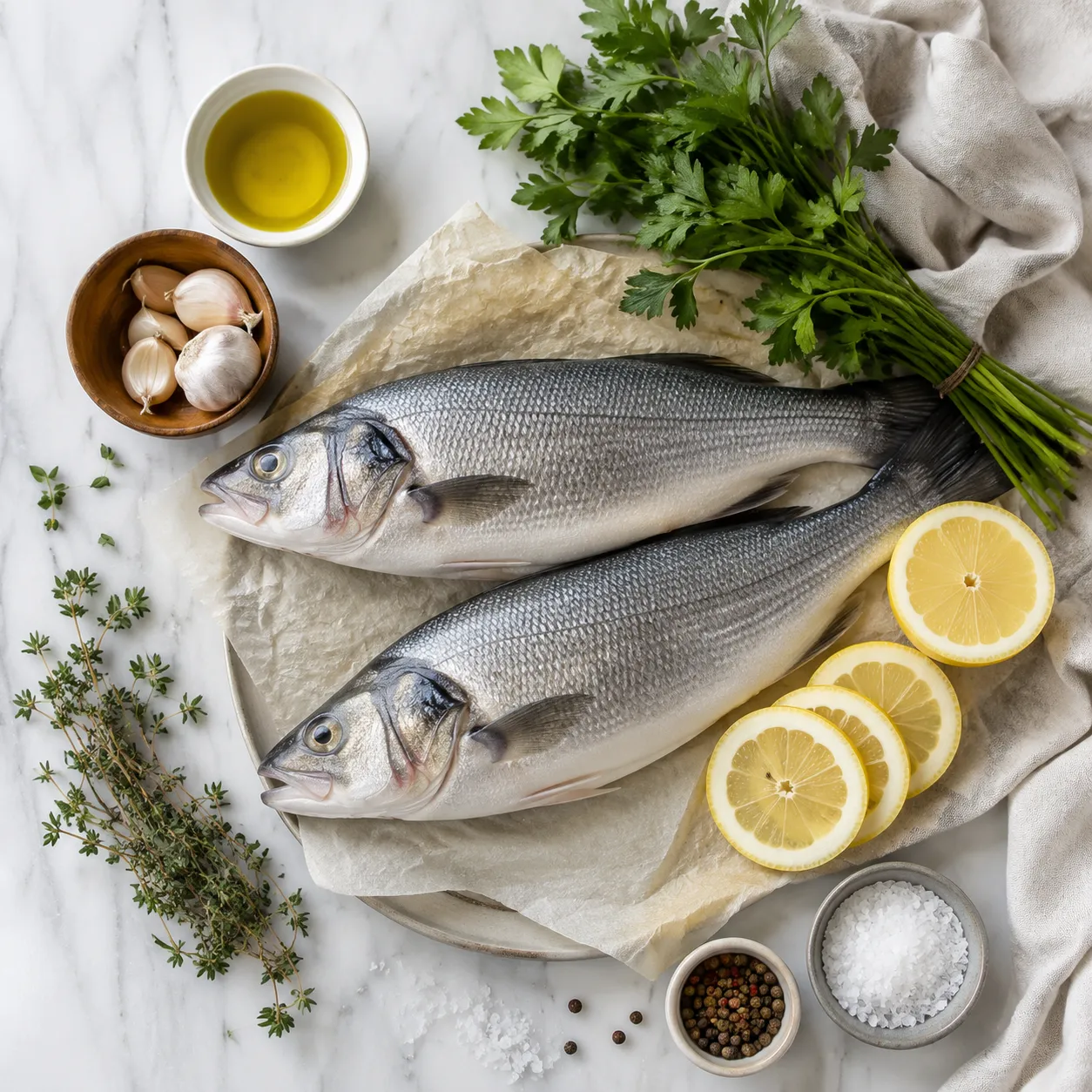
Ingredients You'll Need
Choosing a Fresh Whole Branzino
Look for fish with clear, bright eyes (not cloudy or sunken), shiny silver skin, and a clean, almost cucumber-like ocean smell. Gills should be a vivid red-pink. Ask the fishmonger to scale, gut, and gill the fish for you — it takes them ninety seconds and saves you a messy job at home. Aim for one whole branzino per person, around a pound apiece.
Aromatics: Lemon, Garlic, and Herbs
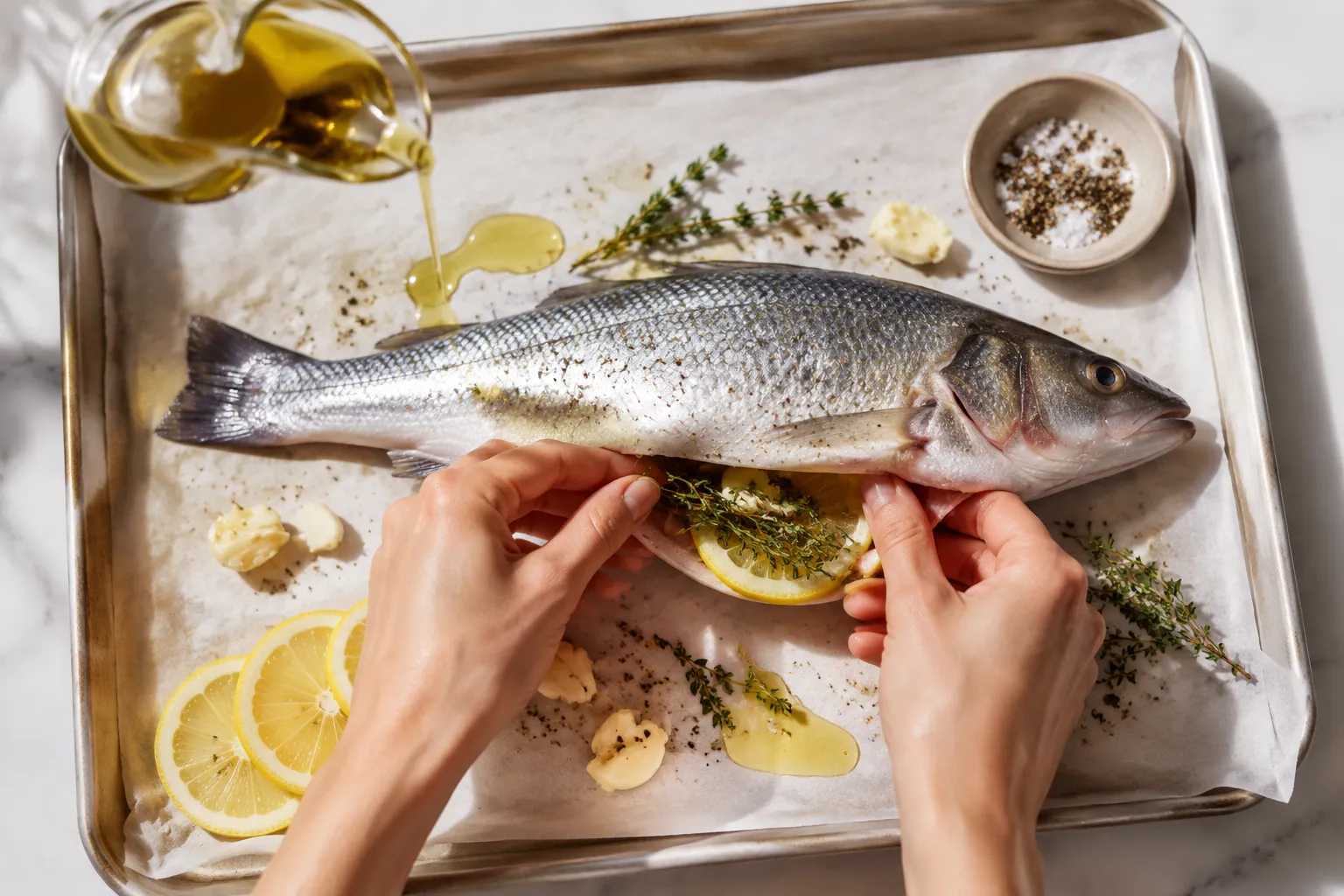
The holy trinity here is lemon, garlic, and fresh herbs. Thin lemon slices and smashed garlic cloves go straight into the cavity along with sprigs of thyme and flat-leaf parsley. The aromatics gently perfume the flesh from the inside out as the fish roasts. Good extra-virgin olive oil — the grassy, peppery kind you'd actually drink — does most of the heavy lifting on the outside.
Finishing Touches and Optional Swaps
Flaky sea salt at the table is non-negotiable. From there, feel free to riff: fennel fronds and orange slices in the cavity, a drizzle of lemon garlic butter sauce just before serving, or a spoonful of bright salsa verde recipe over each fillet. A whisper of red pepper flakes adds gentle heat.
How to Cook Branzino on a Sheet Pan
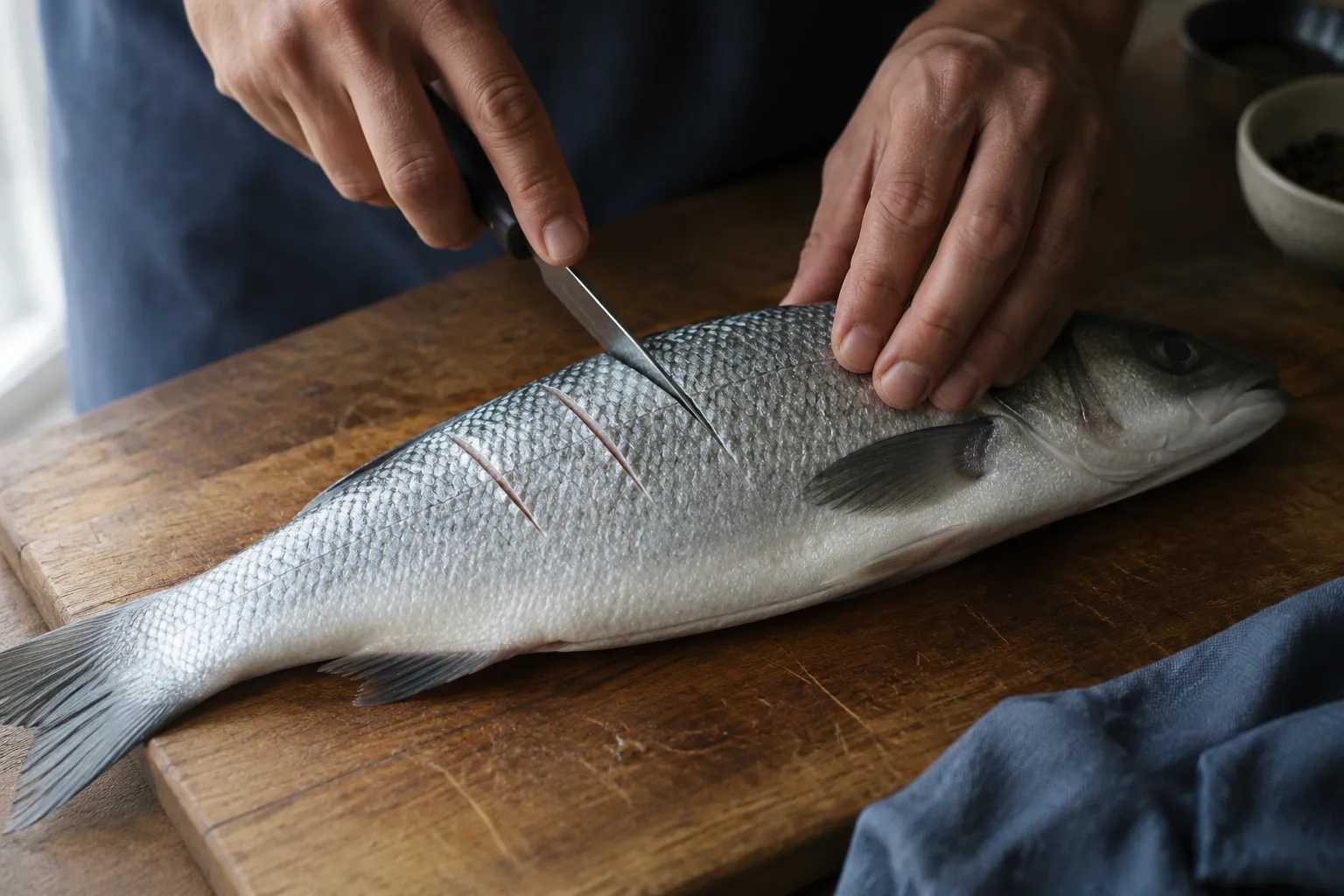
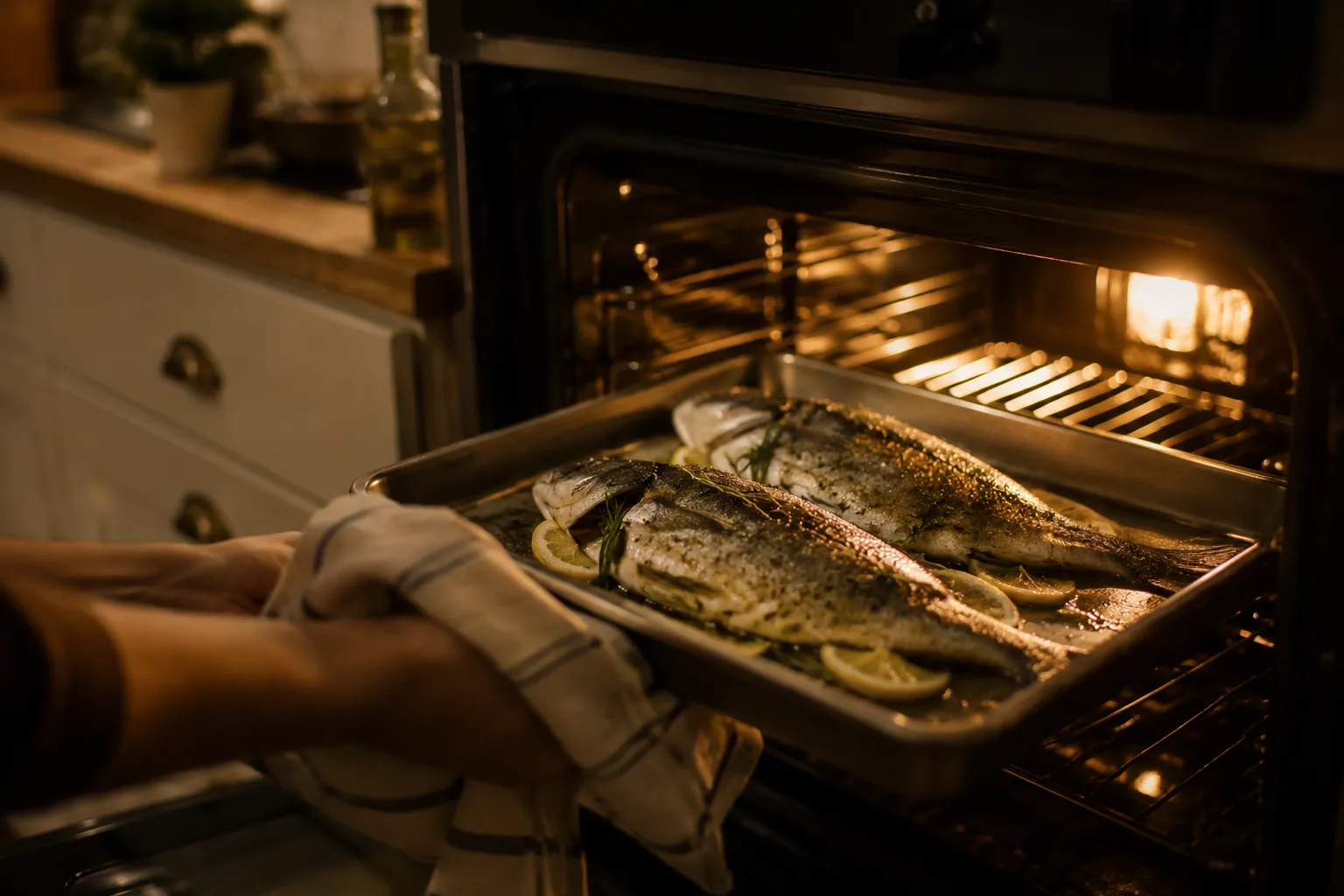
The magic of this technique is high, dry heat. You want a screaming-hot oven (450°F) and a preheated sheet pan, which gives the underside of the fish a head start and prevents that dreaded sticky, steamy skin. Pat the fish absolutely bone-dry with paper towels, inside and out — this is the single most important step for achieving truly crispy skin. Three shallow diagonal slashes through the skin on each side let heat and seasoning penetrate, and they also signal doneness as the flesh blooms open.
Season generously with kosher salt — both inside the cavity and across the skin — then stuff the belly with lemon, garlic, and herbs. Don't be shy with the olive oil; rub it everywhere like sunscreen. The whole fish should glisten before it ever sees the oven.
From there, it's a quick 18 to 20 minutes in the oven. You're looking for skin that's bronzed and blistered, eyes that have turned chalk-white, and flesh near the spine that flakes easily when you peek with a paring knife. An instant-read thermometer slid into the thickest part should register 130 to 135°F.
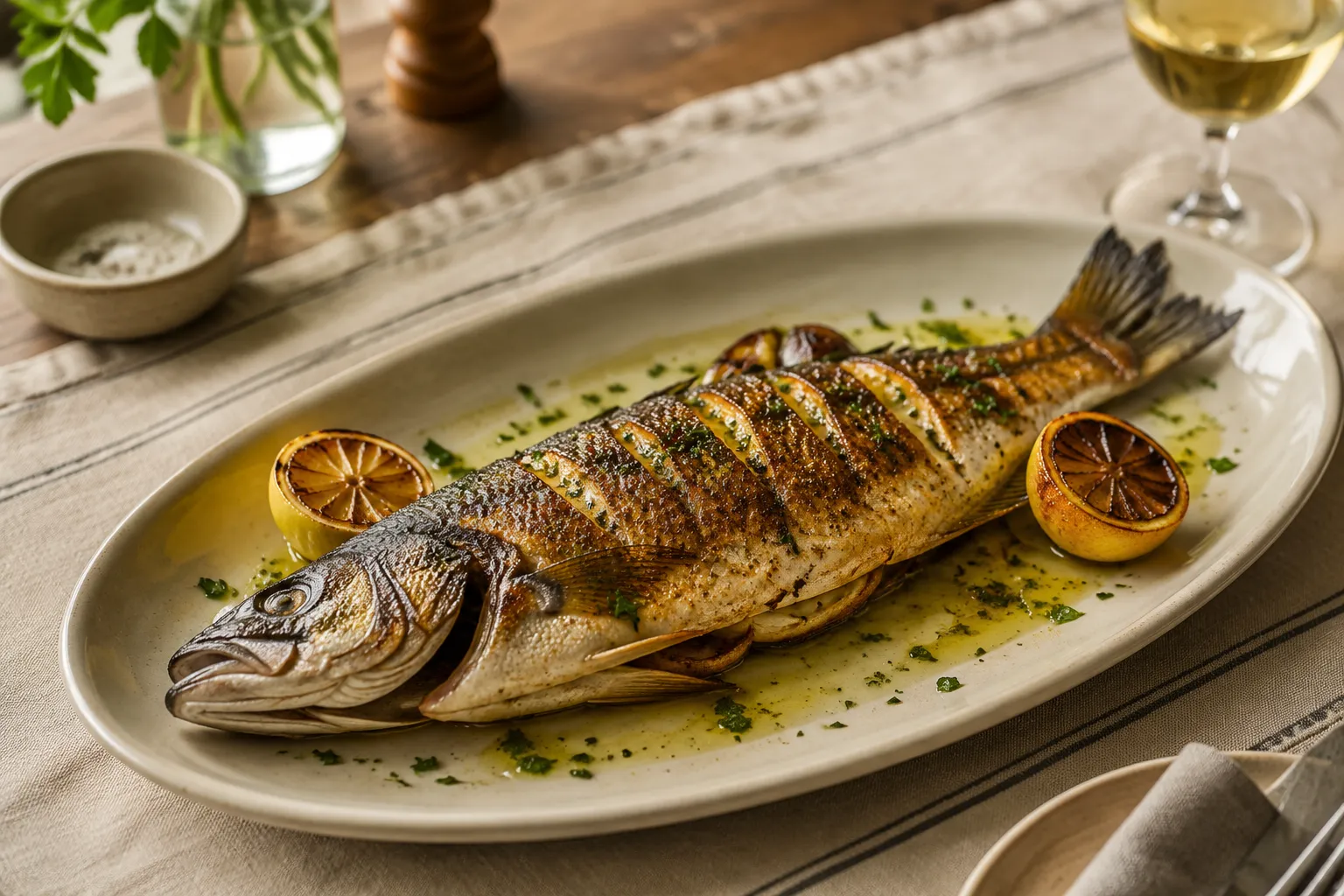
Let the fish rest for 3 to 5 minutes after pulling it from the oven — this is when carryover heat finishes the job and juices redistribute. To serve, you can either present it whole at the table for drama or fillet it in the kitchen for easier eating. If you're new to how to fillet whole fish, the rest of the recipe walks you through it gently.
How to Fillet a Whole Branzino
This sounds intimidating and is genuinely not. With the fish on a platter, run a butter knife along the top of the spine to release the upper fillet, then slide the knife under the fillet from head to tail and lift it cleanly off in one piece. Once that side is plated, grab the tail and lift — the entire skeleton will pull away from the bottom fillet in one satisfying tug, leaving you with a second clean piece of fish. Pluck any stray pin bones with tweezers.
What to Serve with Branzino
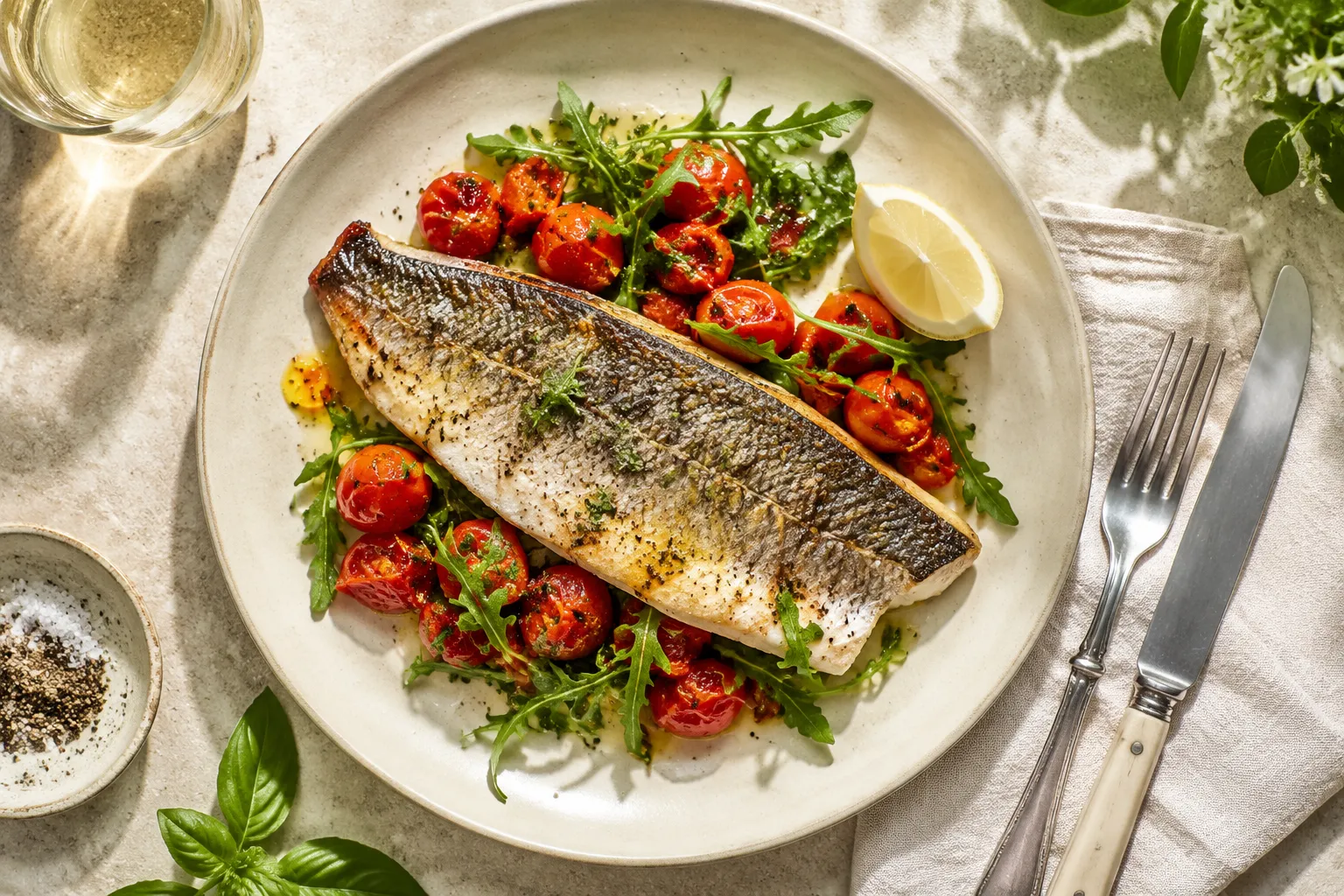
This is a fish that plays well with almost any Mediterranean side. A pile of blistered cherry tomatoes and arugula dressed in lemon and olive oil keeps things bright and feels like a complete plate. A roasted vegetables side dish — think fennel, zucchini, or baby potatoes crisped in the same hot oven — turns it into a proper feast. For something more substantial, a lemony orzo, herby couscous, or warm white bean salad with shallots all work beautifully.
For wine, pour something crisp and coastal: Vermentino, Assyrtiko, Albariño, or a dry Provençal rosé. The whole thing comes together as one of those easy seafood dinner moments that feels far more impressive than the effort actually required.
Once you've made this once, you'll understand why branzino has quietly become the darling of every Mediterranean restaurant in America. It's simple, generous, and built for sharing — exactly the kind of cooking I want to do on a slow Sunday or a quick weeknight alike.
💡 Expert Tips
Pat the fish completely dry. Inside and out, with paper towels. Moisture is the enemy of crispy skin — this single step is the difference between blistered and soggy.
Preheat the sheet pan. Slide your pan into the oven while it heats. Laying the fish on a hot surface sears the underside immediately and prevents sticking.
Salt the cavity, not just the skin. Seasoning from the inside infuses the flesh as it cooks, the way salting a chicken cavity does.
Watch the eyes. When the eyes turn opaque white and slightly bulge, the fish is done. It's the most reliable visual cue.
Rest before serving. Three to five minutes lets juices settle and makes filleting dramatically easier.
🔄 Variations & Substitutions
This recipe is a strong template — once you've nailed the basic method, the flavor directions are nearly endless.
Greek-style: Stuff with oregano, dill, and lemon; finish with a spoon of skordalia or tzatziki.
Sicilian: Add orange slices, fennel fronds, and a few olives and capers to the cavity.
Asian-inspired: Swap lemon for lime, add scallions and ginger inside, finish with soy, sesame oil, and cilantro.
Grilled: Use the same prep on a hot grill in a fish basket, 6 minutes per side.
Fillet version: Pan-sear skin-side down in olive oil for 4 minutes, flip 1–2 minutes more for a quick weeknight win.
🧊 Storage & Leftovers
Leftover branzino keeps well, though it's best eaten the day it's roasted. Remove the flesh from the bones first — it'll keep longer and reheat more evenly without the skeleton. Store in an airtight container in the refrigerator for up to 2 days, with a small drizzle of olive oil over the top to prevent drying.
To reheat, place fillets on a parchment-lined sheet pan, cover loosely with foil, and warm in a 275°F oven for 8 to 10 minutes — low and slow is the move. Avoid the microwave, which turns delicate white fish rubbery in seconds. Freezing cooked branzino isn't recommended; the texture suffers noticeably. Cold leftovers are wonderful flaked into a salad with capers, olives, and lemon vinaigrette for lunch the next day.
Frequently Asked Questions
What does branzino taste like?
Branzino has a mild, gently sweet, slightly briny flavor with tender, pearly white flesh that flakes cleanly. It's far less assertive than oily fish like salmon, mackerel, or sardines, making it a great gateway fish for people who normally find seafood too fishy. In taste and texture, it sits closest to red snapper, sea bream, or porgy — clean and oceanic without being heavy. The aromatics you stuff inside (lemon, garlic, herbs) perfume the flesh subtly without overwhelming its natural sweetness, which is why such a minimal ingredient list works so beautifully here.
Do you eat the skin on branzino?
Absolutely yes — and many people consider it the best part. When branzino is roasted at high heat on a preheated pan, the thin silver skin blisters and crisps into something almost like a potato chip, shatteringly delicate with savory, briny depth. The key is making sure the fish is patted bone-dry before it hits the oil, and that the oven is properly hot (450°F). If your skin comes out a bit soft, run the fish under the broiler for 60 to 90 seconds at the end to finish it off.
How do you know when branzino is done?
Three reliable cues: the eyes turn fully opaque white and slightly bulge, the flesh near the spine looks opaque and flakes easily when nudged with a fork or paring knife, and an instant-read thermometer inserted into the thickest part reads 130 to 135°F. At a pound per fish in a 450°F oven, that usually means 18 to 20 minutes. Branzino cooks quickly, so start checking at 15 minutes — overcooked fish loses its silky texture and becomes dry. When in doubt, pull it slightly early; carryover heat during the rest will finish the job.
Can I cook branzino as fillets instead of whole?
Yes, and it's a fantastic weeknight option. Pat skin-side dry, score lightly, and season. Heat a tablespoon of olive oil in a stainless or cast-iron skillet over medium-high until shimmering, then lay the fillets skin-side down and press gently for the first 30 seconds so they don't curl. Cook undisturbed for 4 minutes until the skin is crispy and the flesh is mostly opaque from the side, then flip and cook just 1 to 2 minutes more. Whole-roasted branzino yields juicier, more dramatic results, but fillets are quicker and easier to serve.
Is branzino the same as sea bass?
Branzino is European sea bass (Dicentrarchus labrax), farmed primarily in the Mediterranean — so yes, it's a type of sea bass, but no, it's not the same as every fish labeled 'sea bass' in the U.S. Chilean sea bass, for example, is actually Patagonian toothfish, a deep-water species with much fattier, richer flesh and a totally different flavor profile. Black sea bass from the U.S. Atlantic is yet another species. When a recipe calls for branzino specifically, look for whole fish labeled 'branzino,' 'loup de mer,' or 'European sea bass.'