Perfect Roast Chicken Recipe with Roasted Vegetables
Ingredients
Scale
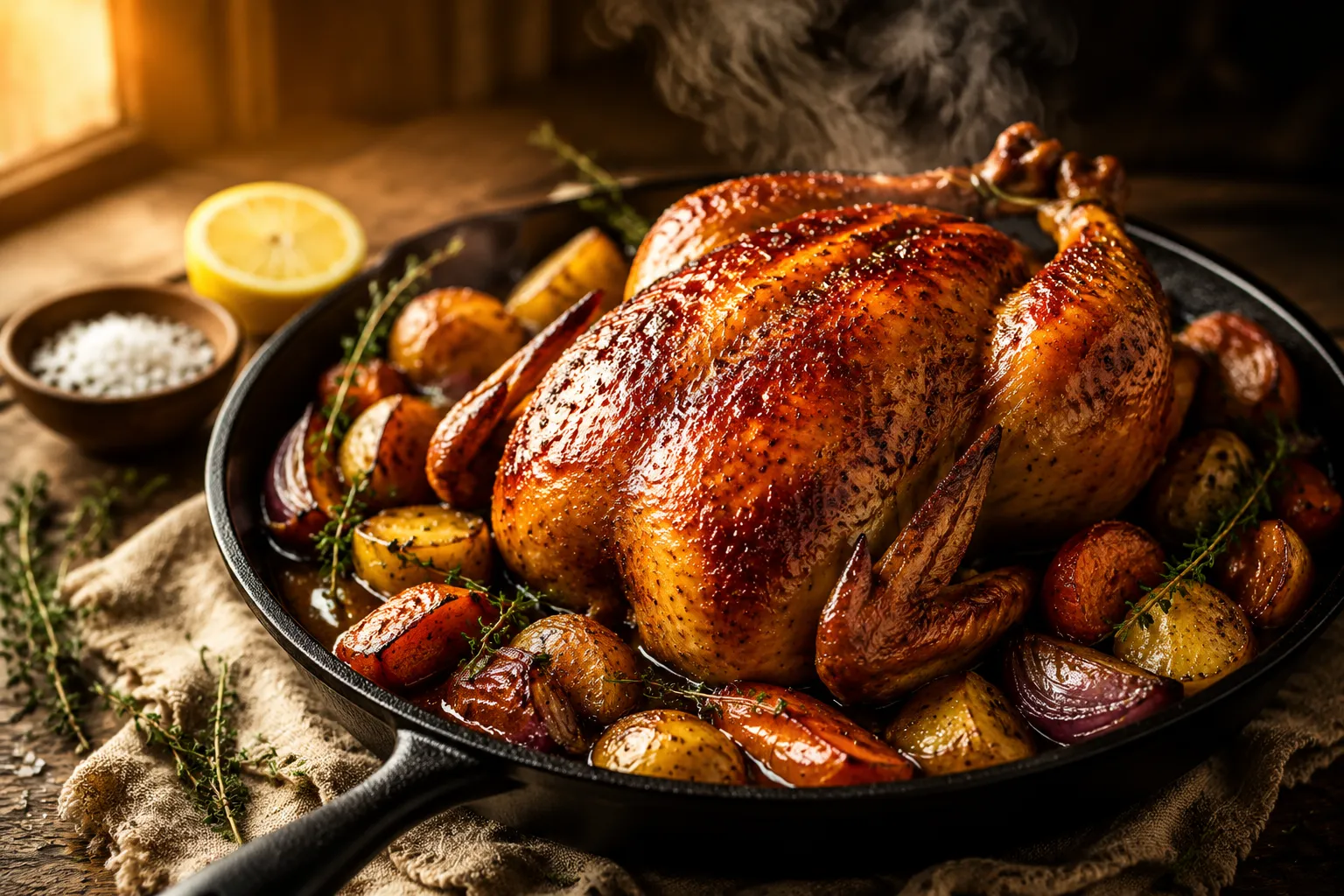
A foolproof roast chicken with shatter-crisp skin, butter-basted meat, and golden roasted vegetables, all cooked together in one pan in under 90 minutes.
A perfect roast chicken is the kind of dinner that quietly turns an ordinary night into something special. With shatter-crisp golden skin, butter-basted meat that stays juicy from the breast down to the drumsticks, and a bed of caramelized vegetables soaking up every drop of savory pan juice, this is the bird I come back to whenever I want maximum payoff for minimum fuss. No specialty equipment, no fussy techniques — just one cast iron skillet, a hot oven, and about ninety minutes of mostly hands-off cooking.
What sets this version apart from your standard whole roasted chicken is a quiet trio of tricks: a make-ahead dry brine that seasons the meat from the inside out, an herb compound butter slipped under the skin for built-in flavor and self-basting, and a vegetable bed that doubles as a complete side dish so you never have to juggle multiple pans. It's a one-pan dinner that punches well above its weight, and once you nail the rhythm of it, you'll find yourself making it on repeat.
This is the kind of easy Sunday dinner I'd serve to in-laws on a Tuesday and still feel like the most put-together cook on the block. The bird looks dramatic on the platter, the kitchen smells like a French bistro for the rest of the evening, and the leftovers practically beg to be turned into sandwiches, soups, and grain bowls all week long.
The beauty of this recipe is how unfussy the shopping list is. You won't need anything you can't find at a regular grocery store, and most of it is probably already in your pantry. Quality matters more than quantity here — a good bird, real butter, and fresh herbs do most of the heavy lifting. Treat the ingredient list as the floor, not the ceiling, and lean on what's freshest at your market.
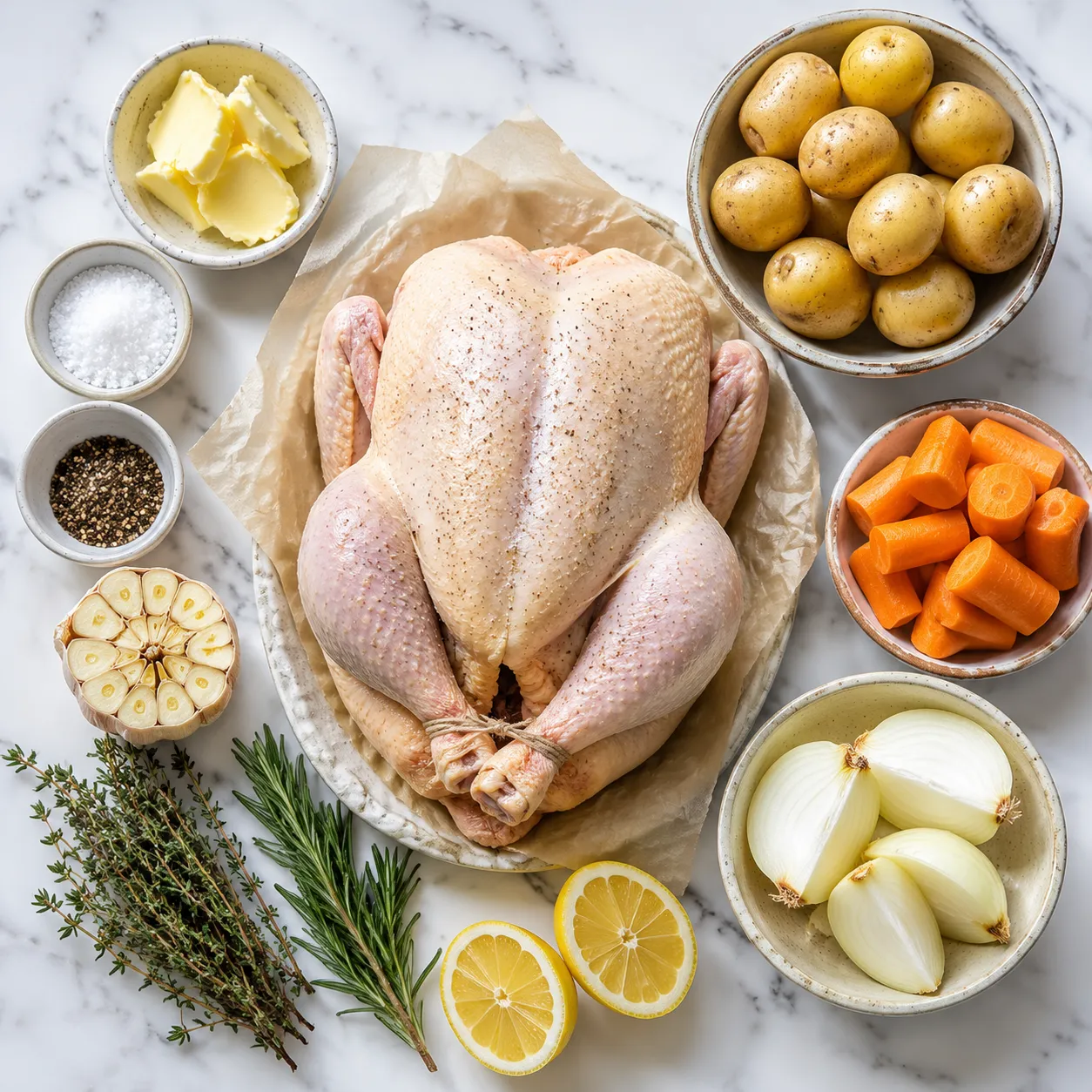
Look for a 4 to 5 pound bird — air-chilled if you can find one, since the drier surface helps the skin crisp up beautifully in the oven. Organic or pasture-raised chickens tend to have richer flavor and better fat distribution, but any fresh supermarket bird will give you a great result. Avoid anything labeled pre-brined or enhanced with broth solution, since you'll be doing your own seasoning and don't want a soggy, salty bird. Pat it thoroughly dry inside and out before doing anything else; that single step is more important than most people realize.
Softened unsalted butter is the foundation, mixed with finely minced garlic and a generous handful of chopped fresh thyme and rosemary. A grating of lemon zest brightens it up, and a pinch of flaky salt ensures every layer is seasoned. Resist the urge to use dried herbs here — fresh ones melt into the butter and perfume the meat in a way dried simply can't match. If you have soft sage or tarragon on hand, a few leaves chopped in are a lovely addition.
Sturdy vegetables are the only rule. Baby potatoes (halved), thick-cut carrots, and a quartered yellow onion form the classic trio, but I love adding fennel wedges, parsnips, or whole shallots when I want to fancy things up. These roasted root vegetables crisp at the edges, soak up the chicken's drippings, and basically season themselves as the bird cooks above them. Skip soft, watery veggies like zucchini, bell peppers, or mushrooms — they collapse into mush long before the bird is done.
The full numbered method lives in the recipe card below, but here's how a great roast chicken comes together from start to finish so you know exactly what to expect. The key idea is letting time and high heat do the work — there's no babysitting, no constant basting, no flipping. Just season smart, build the pan, and trust the oven to deliver.
The day before you plan to cook, season the chicken generously with kosher salt and slide it uncovered into the fridge. This dry brine pulls moisture to the surface, then re-absorbs it along with the salt, which means deeper seasoning all the way through and dramatically crispier skin once it hits the heat. If you're short on time, even a few hours of dry-brining helps — but overnight is where the real magic happens. Don't cover the bird; air circulation is what dries out the skin.
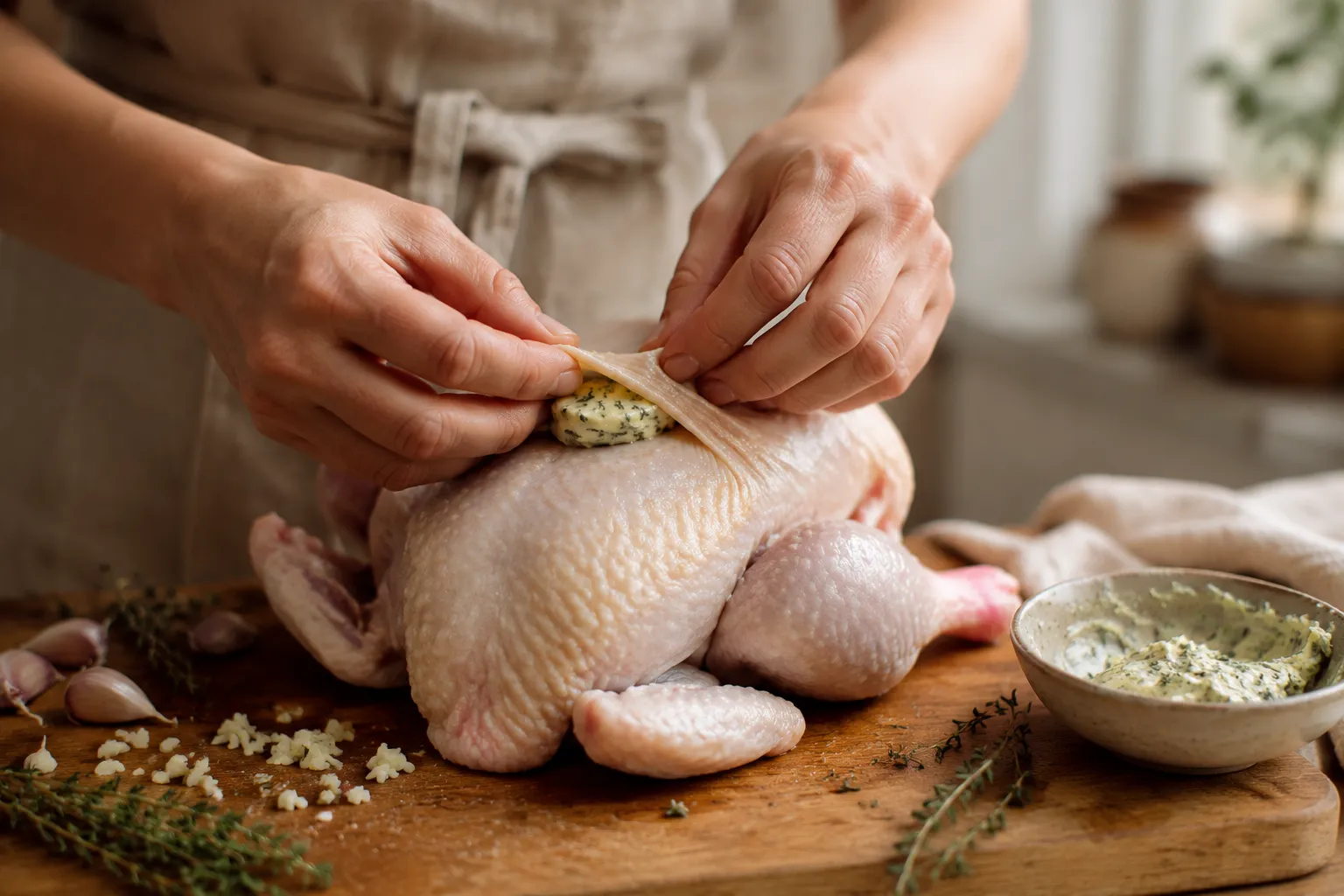
When you're ready to cook, the herb butter goes both under and over the skin. Use your fingers to gently loosen the skin over the breast and thighs, working slowly so you don't tear it, then push about two-thirds of the soft butter underneath. The remaining butter gets rubbed all over the outside, including the back. This double-layer approach is what gives you a deeply flavored bird with skin that crackles like glass when you slice into it.
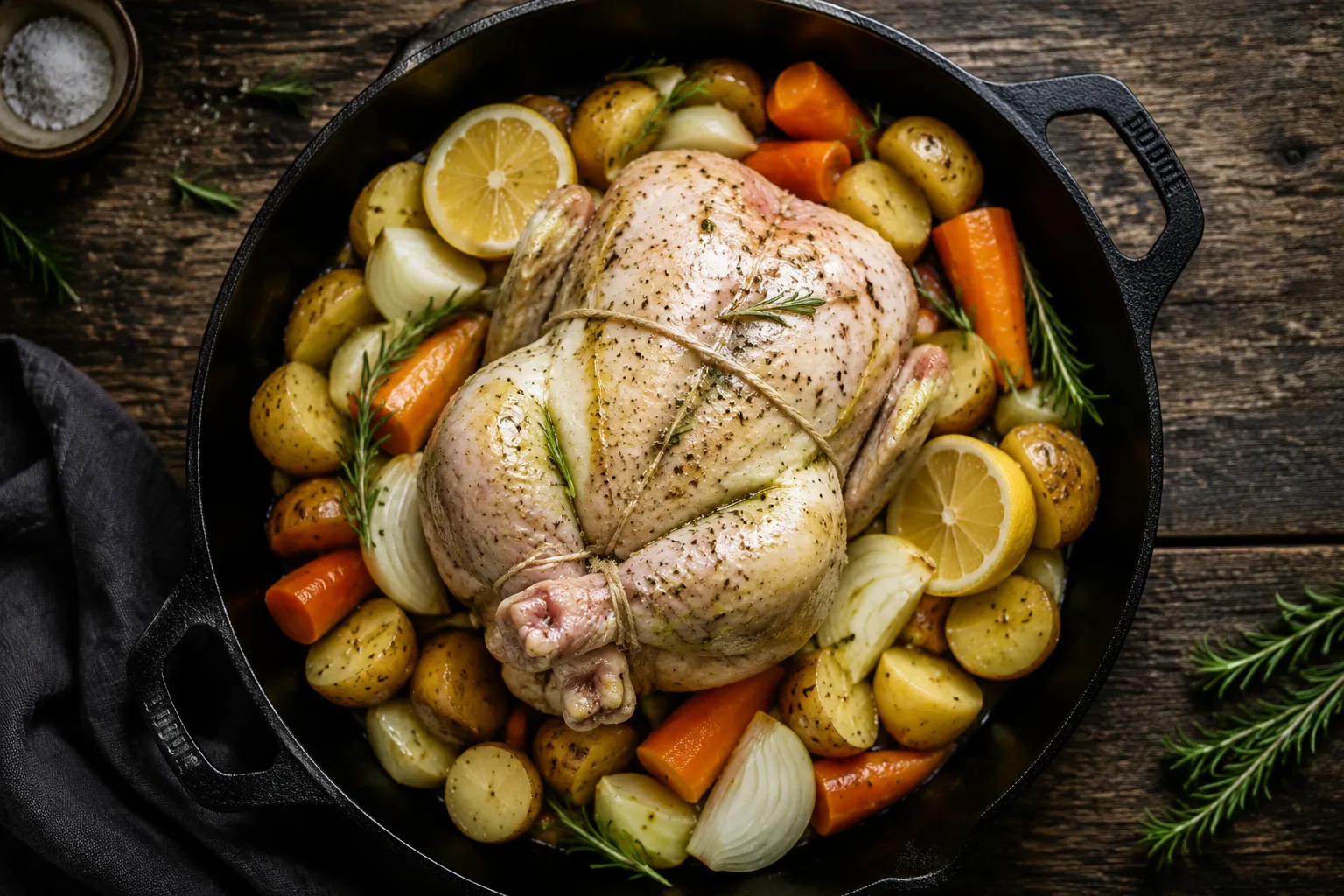
Toss the potatoes, carrots, and onion with olive oil, salt, and pepper, then spread them in your skillet or roasting pan in an even layer. Set the buttered chicken right on top, breast-side up — the vegetables become both the rack and the side dish. Tuck a couple of lemon halves and a few extra herb sprigs into the cavity, tie the legs together with kitchen twine, and slide the whole pan into a 425°F oven on the lower-middle rack.
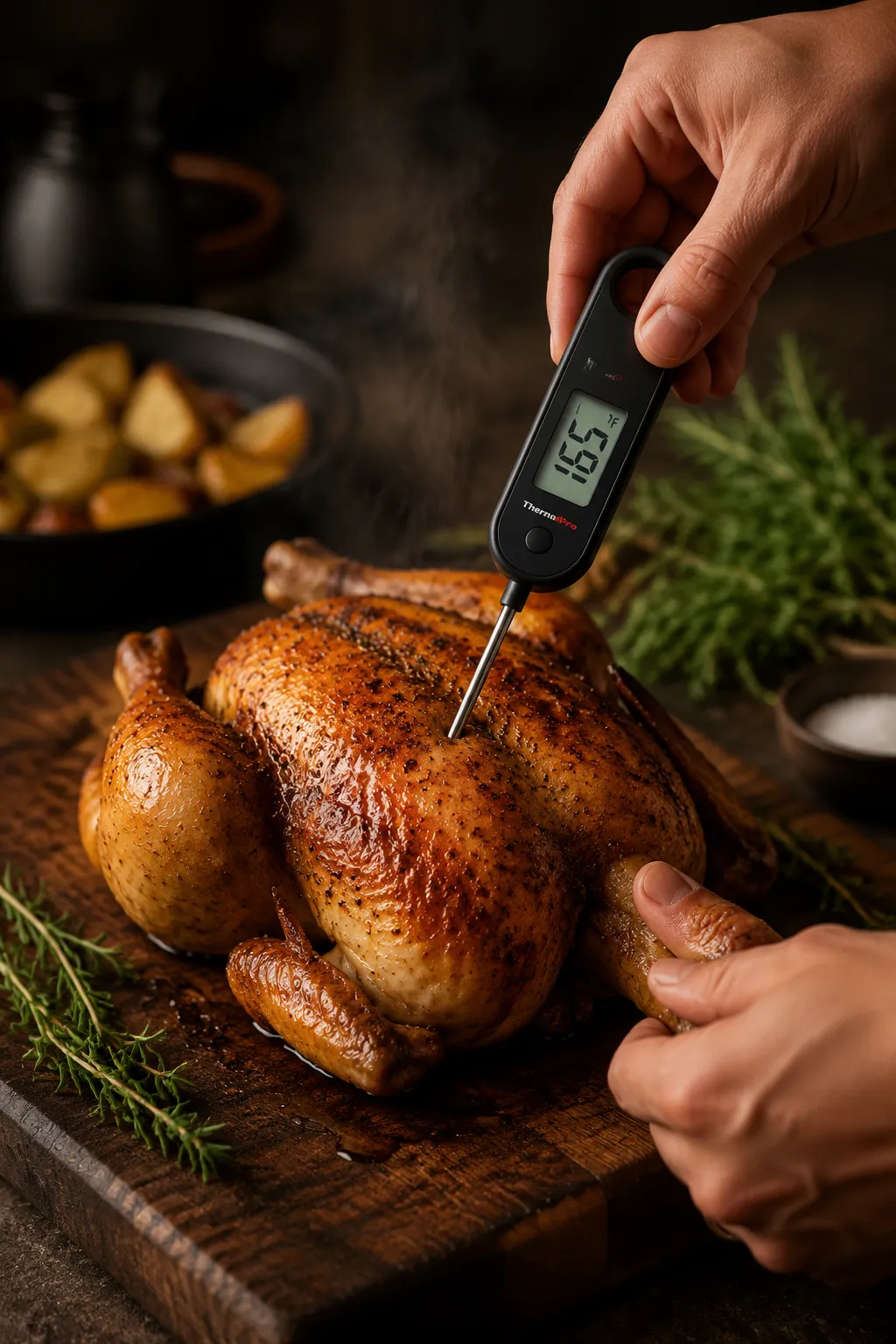
A 4 to 5 pound bird will need 1 hour 15 minutes to 1 hour 30 minutes total. The most reliable way to know it's done is to use an instant-read thermometer in the thickest part of the thigh, avoiding the bone — you're looking for 165°F. Visual cues help too: deeply bronzed skin, juices that run clear when you pierce between the leg and breast, and a leg that wiggles loosely in its socket when you nudge it.
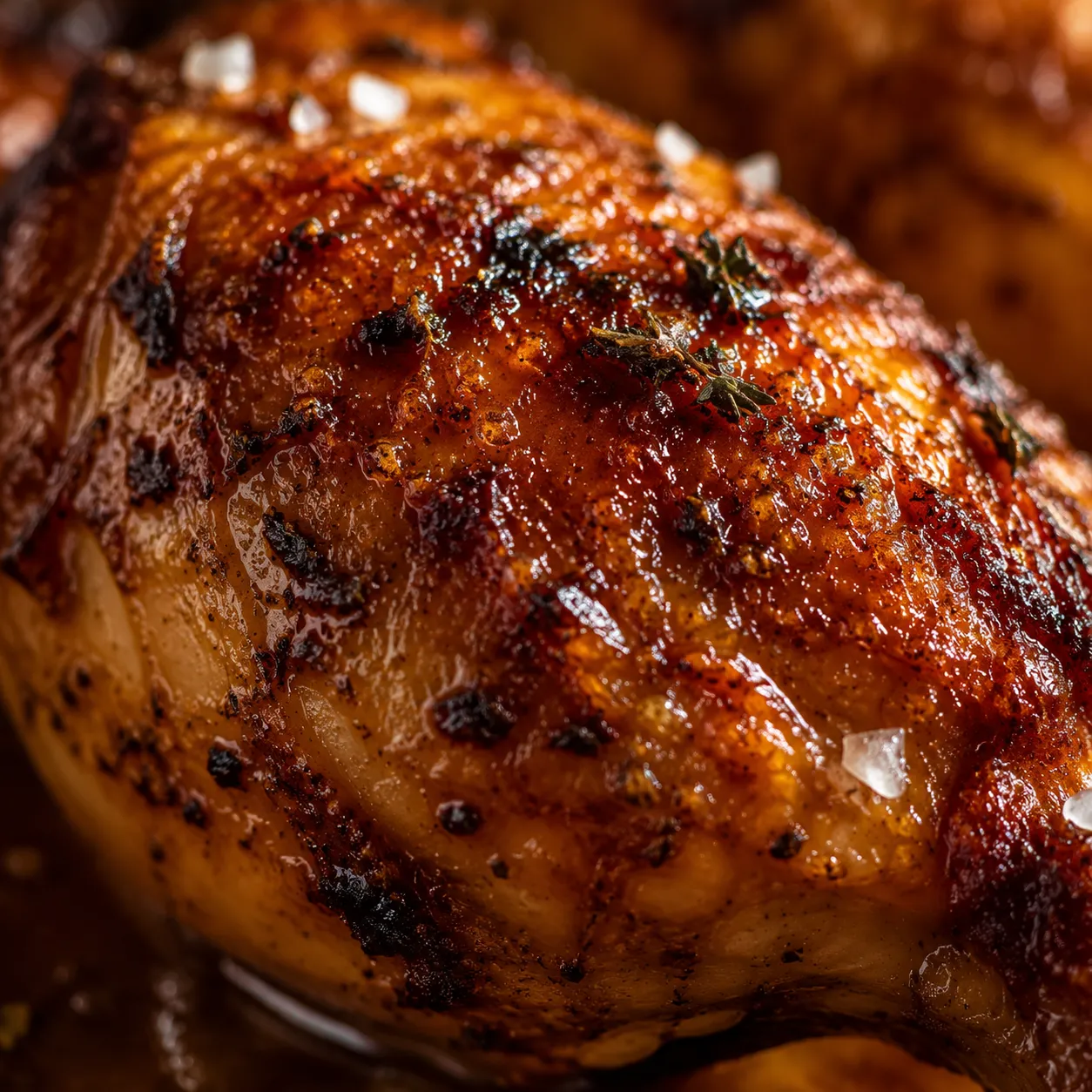
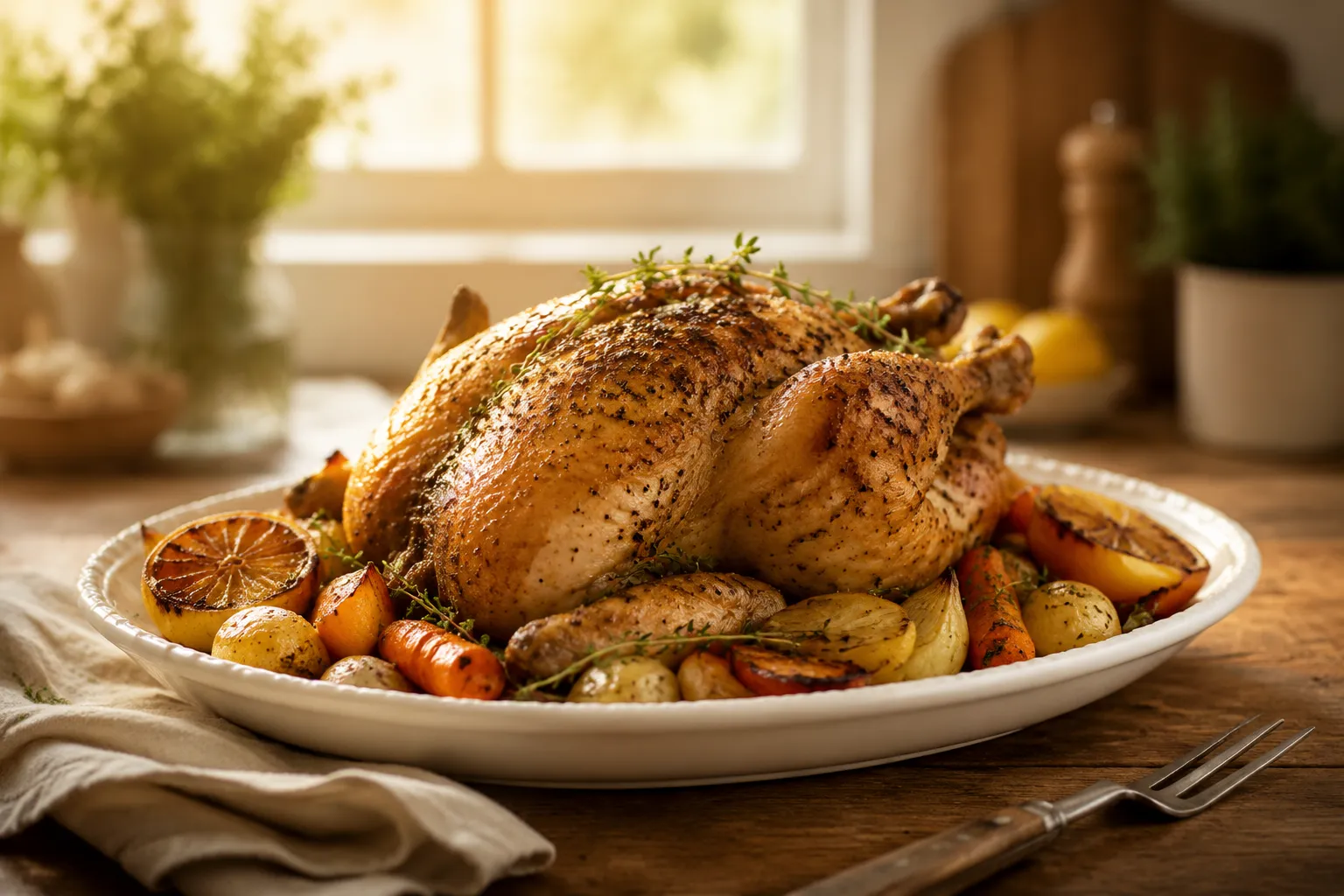
Once it's out, the resting step is non-negotiable. Transfer the bird to a cutting board and let it sit for 15 minutes, loosely tented with foil if your kitchen runs cool. The juices that would otherwise spill out the moment you carve will redistribute through the meat, leaving you with chicken that's juicy from the lightest breast slice to the darkest thigh.
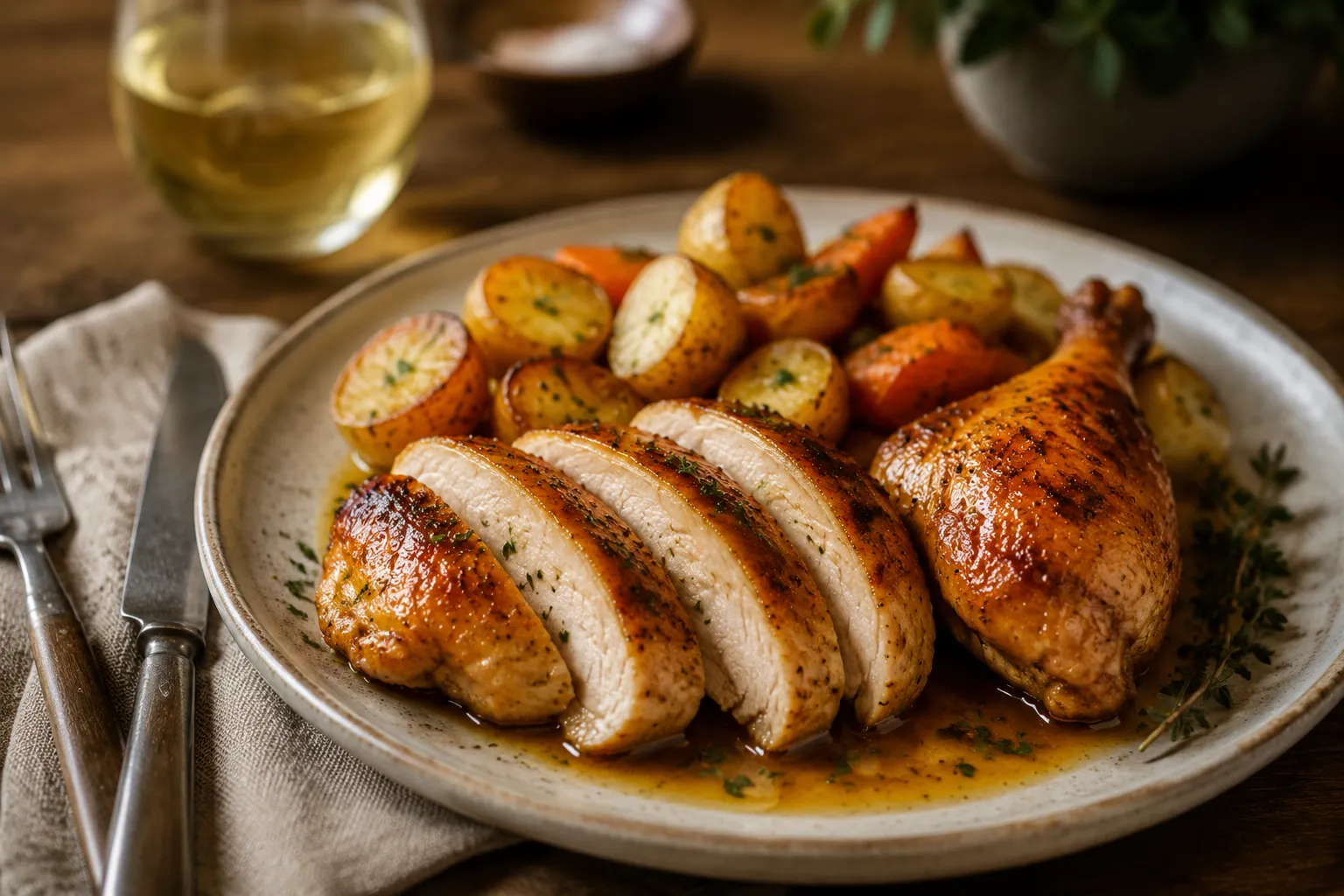
If you've never broken down a bird before, learning how to carve a chicken is easier than it looks: remove the legs at the joint where the thigh meets the body, slice the breasts off the bone in two large pieces, then cut those pieces crosswise into neat slices. Pile everything on a platter with the vegetables and a scattering of fresh herbs.
A whole roasted bird is essentially a complete meal on its own thanks to that built-in vegetable bed, but a few thoughtful additions take it from weeknight comfort to dinner-party territory. Most of these come together while the chicken rests, so timing is forgiving and you won't be running between three burners at once.
Those caramelized drippings at the bottom of your skillet are pure liquid gold, and turning them into homemade chicken gravy takes about five minutes. Pour off most of the fat (leave about 2 tablespoons in the pan), set the skillet over medium heat, sprinkle in a tablespoon of flour and whisk for a minute, then stream in a cup of chicken stock and a splash of dry white wine. Simmer until glossy and spoonable, then taste for salt.
To balance the richness of the bird and the gravy, lean on bright, fresh sides that cut through the savory depth. A simple lemony green salad with shaved fennel, a pile of garlicky sautéed greens, or a buttermilk slaw all work beautifully. If you want carbs beyond the potatoes already in the pan, a torn baguette, soft dinner rolls, or a wedge of cornbread are perfect for sopping up the juices.
For drinks, an unoaked Chardonnay, a juicy Pinot Noir, or even a dry rosé all play nicely with roast chicken. If you're going non-alcoholic, sparkling apple cider or a tall glass of iced tea with lemon both work alongside this kind of meal. A warm crusty loaf passed around the table makes the whole thing feel like a proper occasion, even on a random Wednesday.
This roast chicken recipe has become a near-weekly ritual in my kitchen, and I hope it earns the same spot in yours. The combination of crackling skin, tender meat, and savory roasted vegetables in a single skillet is genuinely hard to beat — and the fact that it scales effortlessly for company or stretches into a week of lunches is the cherry on top.
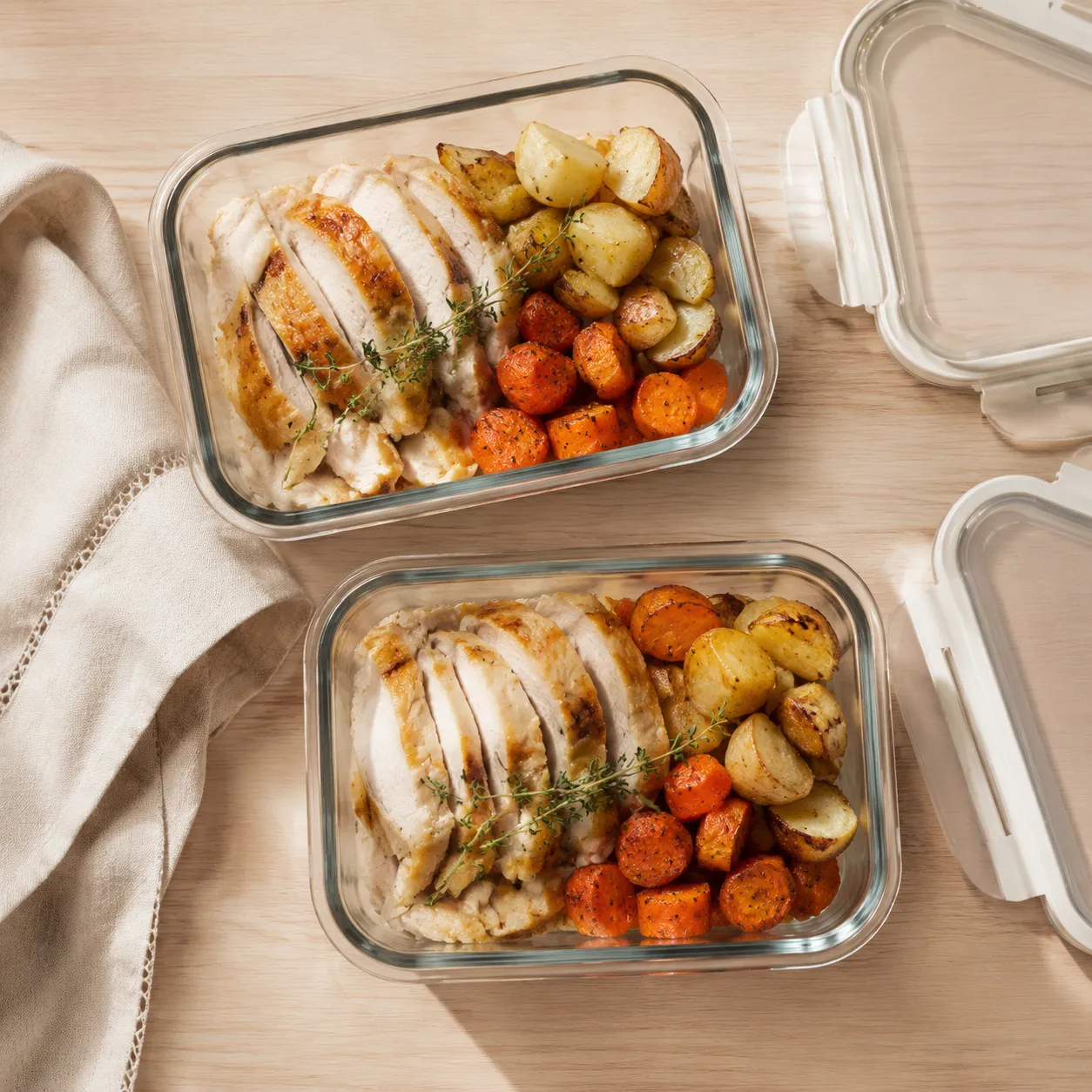
Save the carcass once you've stripped the meat — it makes incredible homemade stock, which then becomes the base for soup, risotto, or your next batch of gravy. The shredded leftovers are endlessly useful for leftover chicken recipes like tacos, grain bowls, sandwiches, and chicken salad. Few dinners give you this much delicious mileage from a single bird, a single pan, and one hour of mostly hands-off cooking.
The base recipe is endlessly adaptable, so once you've got the technique down, treat the seasoning as a blank canvas and play with whatever flavors you're craving. A few of my favorite spins:
Store leftover chicken (off the bone, if possible) in an airtight container in the fridge for up to 4 days, or freeze portioned meat for up to 3 months. The cooked vegetables keep separately for 3 to 4 days but won't hold up to freezing — their texture turns mealy and watery when thawed. Always cool the chicken to room temperature before refrigerating, and shred or slice only what you plan to eat soon so the rest stays moist on the bone.
To reheat, place chicken pieces in a baking dish with a splash of stock or water, cover with foil, and warm at 325°F for 10 to 15 minutes until heated through. The microwave works in a pinch but tends to dry out white meat fast, so use 50% power and short 30-second intervals. For salads, sandwiches, and grain bowls, room-temperature or cold chicken is honestly best — no reheating required.