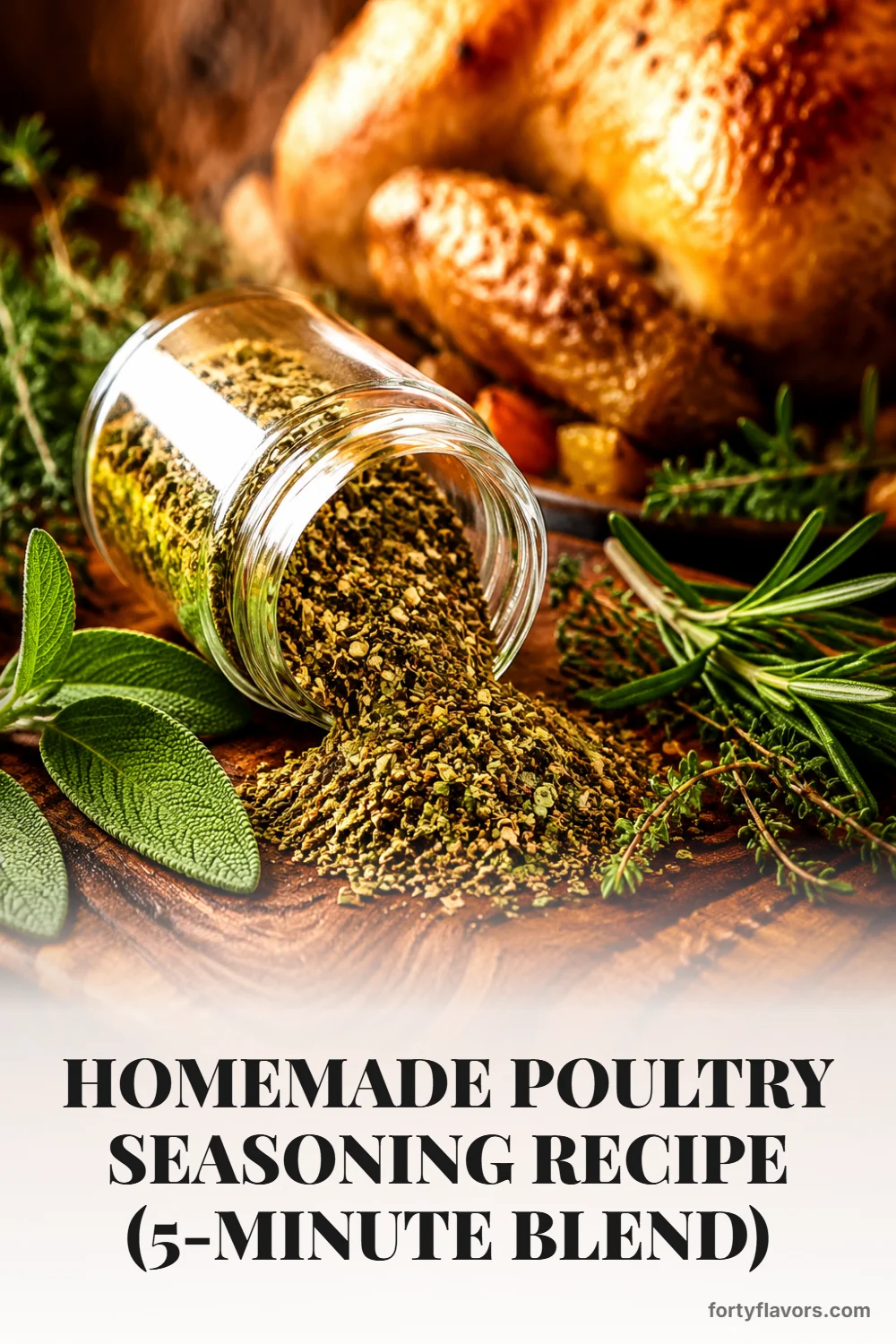
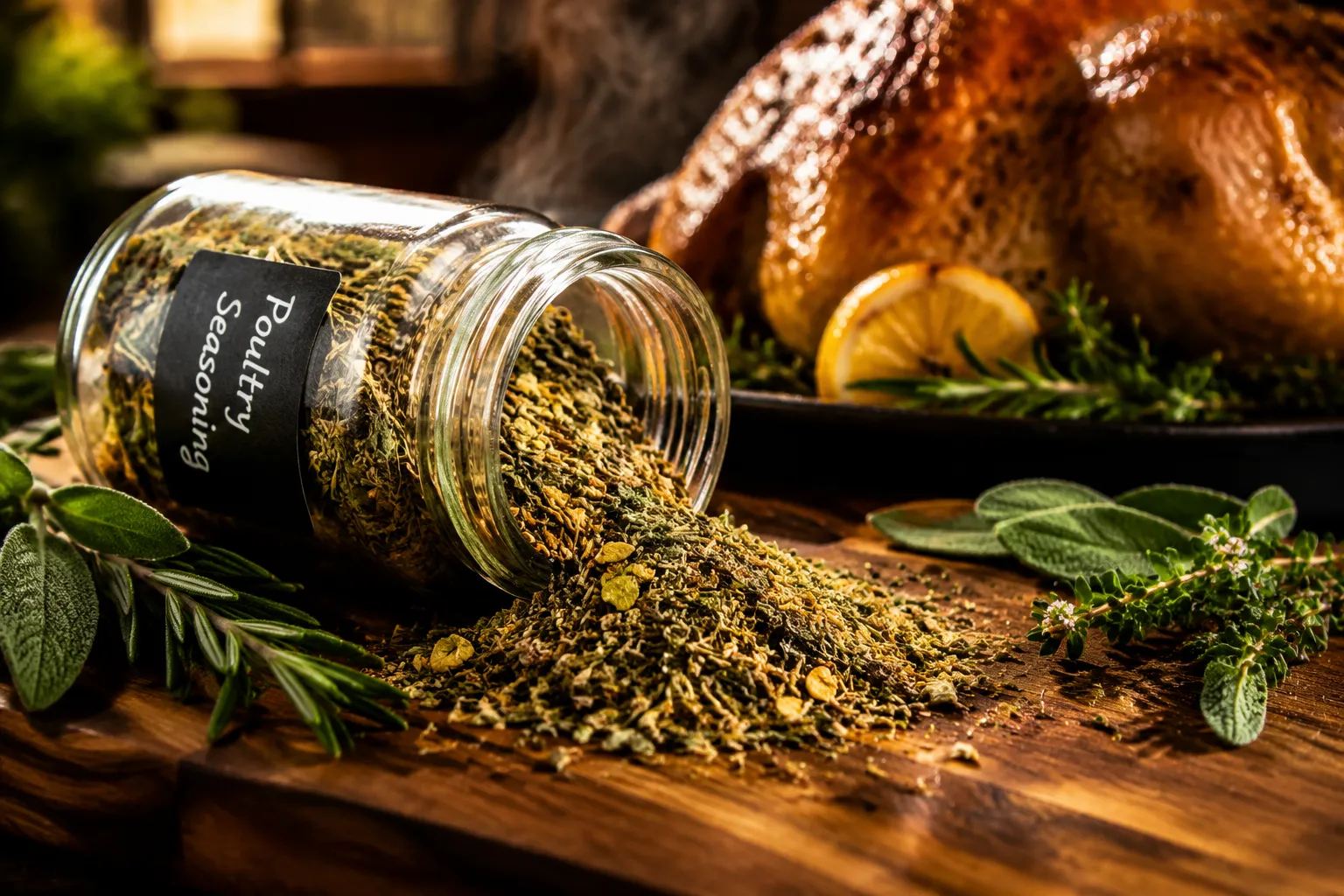
Skip the store-bought jar. This homemade poultry seasoning blends 7 pantry spices in 5 minutes for richer flavor on every chicken, turkey, and holiday roast.
Why You'll Love This Recipe
- Fresher than store-bought: Mixing dried herbs yourself gives you a brighter, more aromatic blend than a jar that may have been sitting on a shelf for months.
- Ready in 5 minutes: Measure, whisk, and jar it—no cooking, toasting, or special equipment required.
- Salt-free and flexible: You control the salt in your chicken, turkey, stuffing, and gravy instead of letting a spice blend decide for you.
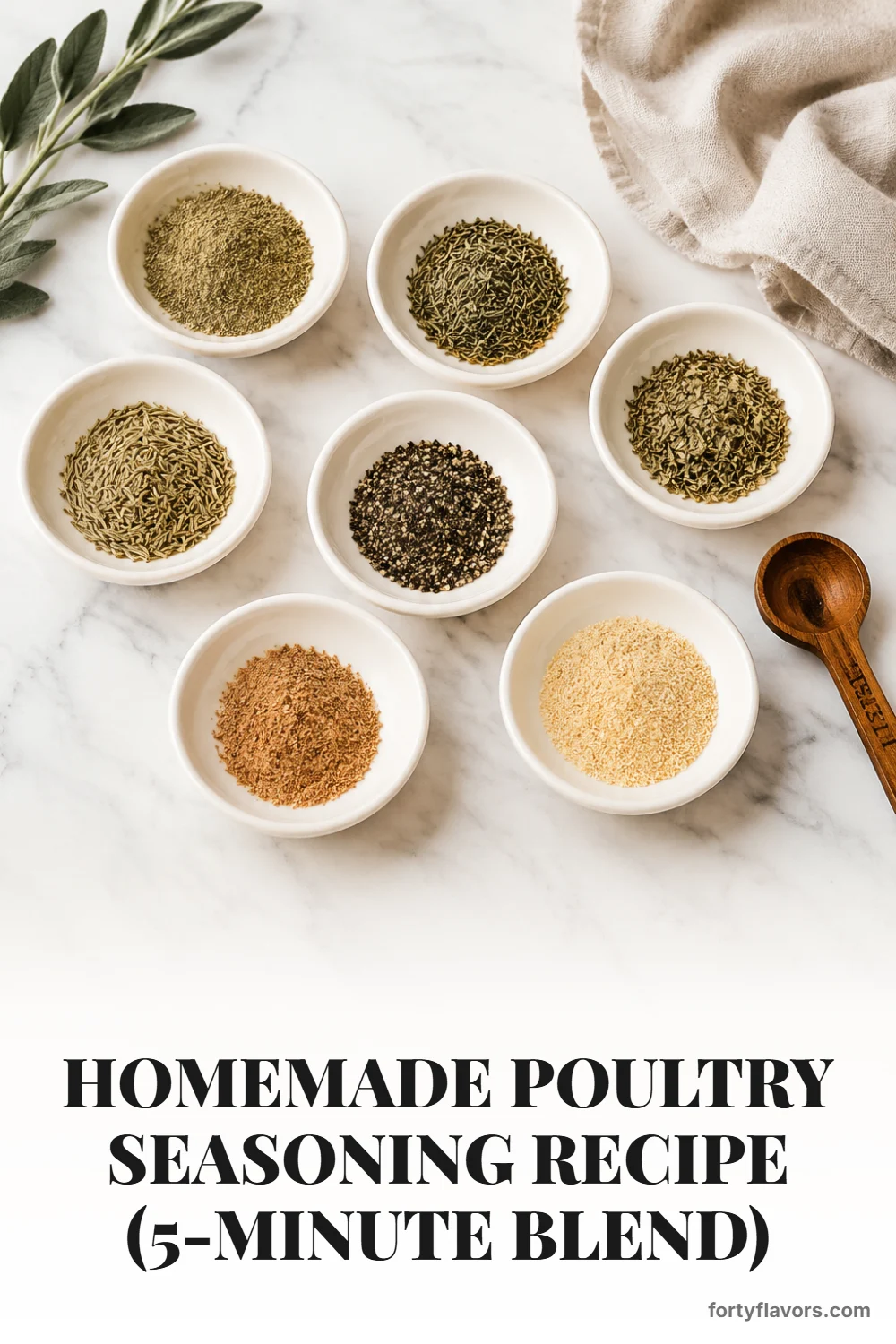
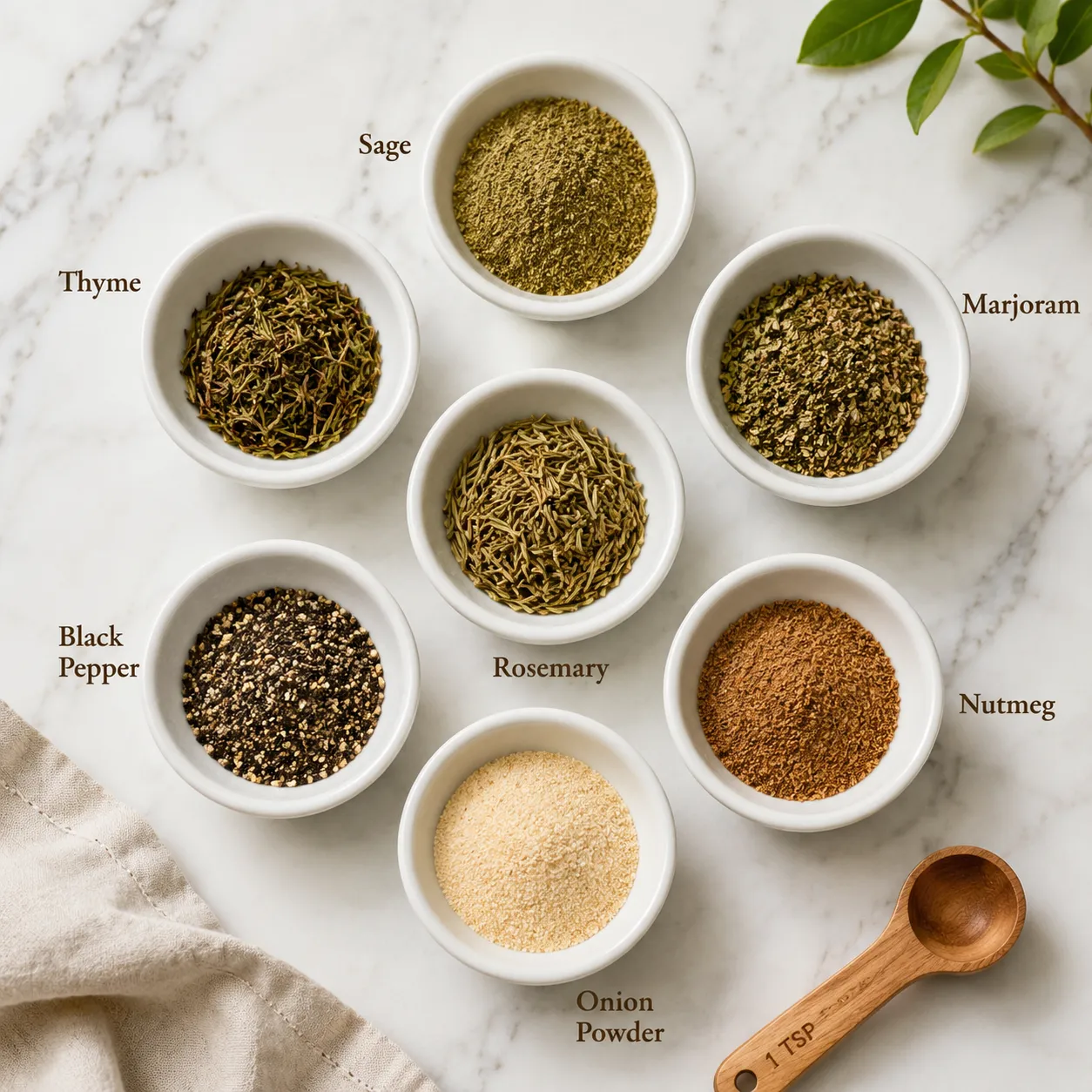
- Pantry-friendly: The recipe uses common dried herbs and spices, including sage, thyme, rosemary, marjoram, pepper, nutmeg, and onion powder.
- Perfect for holidays and weeknights: It tastes classic enough for Thanksgiving but is easy enough to use on everyday sheet-pan dinners.
Poultry seasoning is one of those tiny pantry jars that can make a whole kitchen smell like a holiday roast in about three seconds. This homemade poultry seasoning comes together in 5 minutes with dried sage, ground thyme, rosemary, marjoram, black pepper, nutmeg, and onion powder—nothing fussy, nothing hard to find, and no salt added.
If you have ever opened a store-bought blend and thought it smelled a little flat, this is your sign to mix your own. Freshly combined herbs taste brighter, woodsy, and more aromatic, especially in cozy dishes like roast turkey, gravy, chicken soup, and stuffing. It is the kind of simple homemade upgrade that makes weeknight dinners taste intentional and holiday meals taste deeply nostalgic.
Keep a jar near your everyday spices and you will reach for it constantly: a pinch in pan sauces, a spoonful rubbed onto chicken thighs, a little sprinkle stirred into rice or roasted vegetables. If you already love making staples like homemade taco seasoning or an Italian seasoning blend, this classic herb mix belongs right beside them.
What Is Poultry Seasoning?
Poultry seasoning is a classic herb-forward spice blend traditionally used with chicken, turkey, stuffing, gravy, and savory holiday sides. The signature flavor is built around sage and thyme, with rosemary and marjoram adding woodsy, floral depth. Black pepper brings warmth, nutmeg adds that quiet old-fashioned holiday aroma, and onion powder gives the blend a rounded savory base.
Unlike many all-purpose chicken seasoning blends, this one is usually salt-free and not paprika-heavy. It does not try to be smoky, spicy, or garlicky; instead, it leans earthy and aromatic, the flavor you recognize from a cozy easy stuffing recipe or a perfectly browned Thanksgiving turkey. Because there is no salt in this poultry seasoning recipe, you can season meat, vegetables, or broth separately and avoid accidentally over-salting.
Store-bought blends from familiar spice brands are convenient, but they can vary widely in freshness and texture. Some are mostly powdered, some have larger crushed herb pieces, and some include ingredients like celery seed or parsley. Making your own lets you decide whether you want a fine, rub-like texture for a roast chicken recipe or a more rustic herb blend for stuffing and soups.
The Classic Herb Blend Ingredients
The backbone of this spice blend is dried sage, which gives the mix its unmistakable savory, slightly peppery aroma. Sage is bold, so it gets the starring role here, balanced by thyme for a grassy, earthy note that makes chicken and turkey taste fuller. Rosemary is stronger and more resinous, so a little goes a long way; crush it between your fingers or pulse it briefly so it distributes evenly.
Marjoram is the gentle herb in the mix, softening the sharper edges of sage and rosemary with a slightly sweet, oregano-like flavor. Ground black pepper keeps things lively without making the blend hot, while nutmeg may sound surprising until you smell it with sage and thyme—it gives the whole jar a warm, almost buttery background note. Onion powder is not always included in the most traditional versions, but it makes the finished blend more useful for everyday cooking.
This is also a great moment to audit your spice drawer. If you are organizing a full pantry refresh, simple spice storage tips can help you keep herbs vibrant longer and avoid buying duplicates you forgot you had.
How to Make This 5-Minute Seasoning Mix
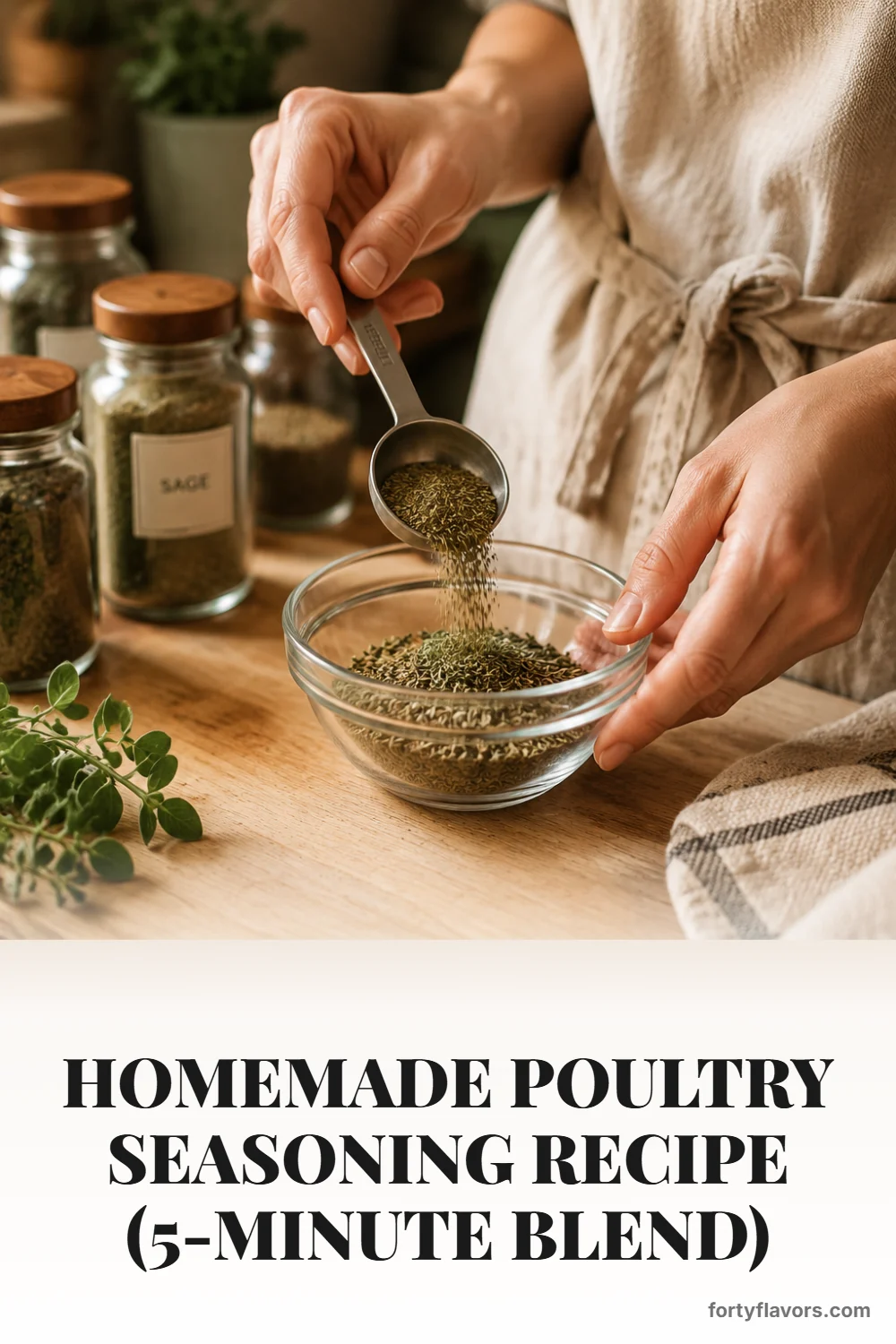
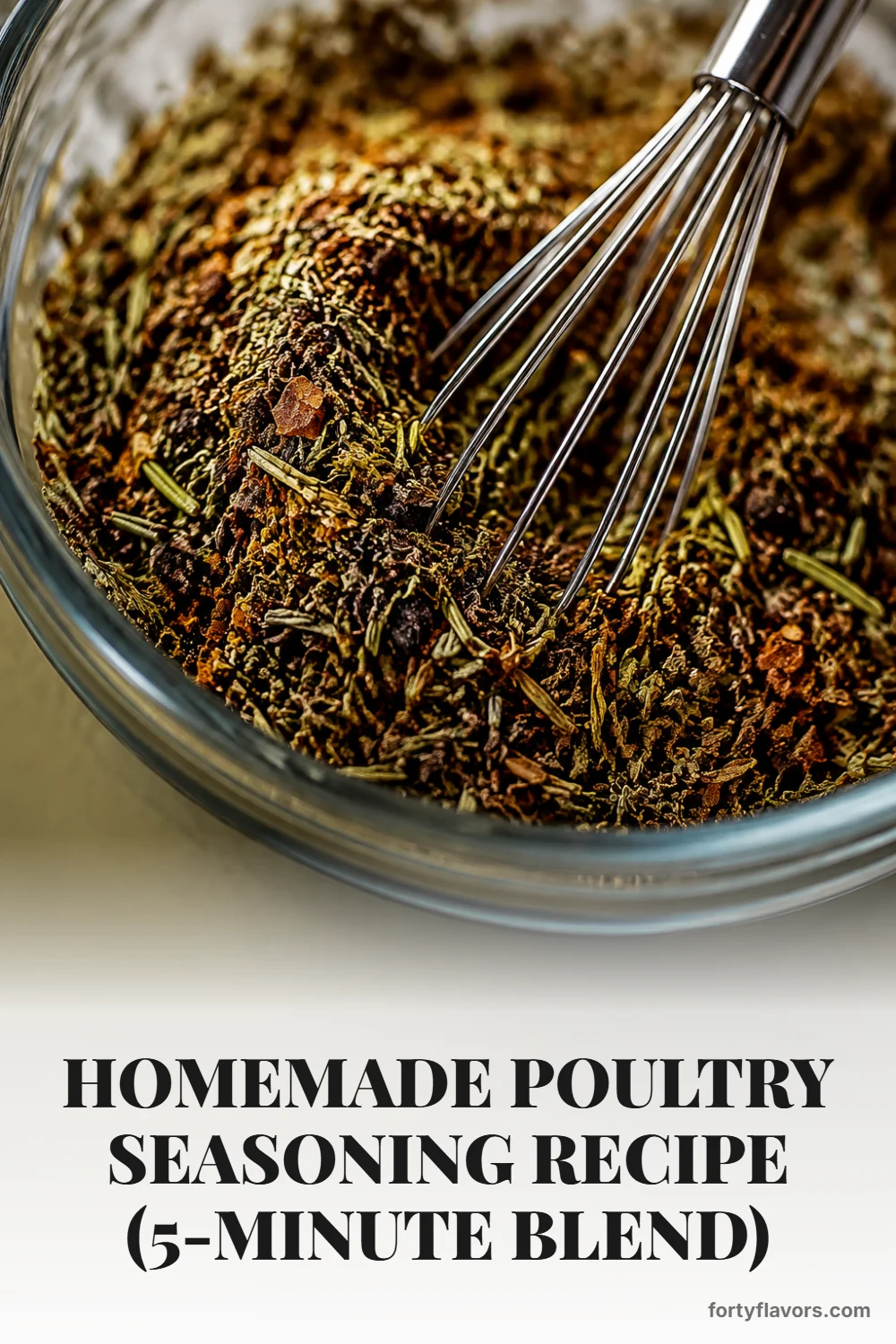
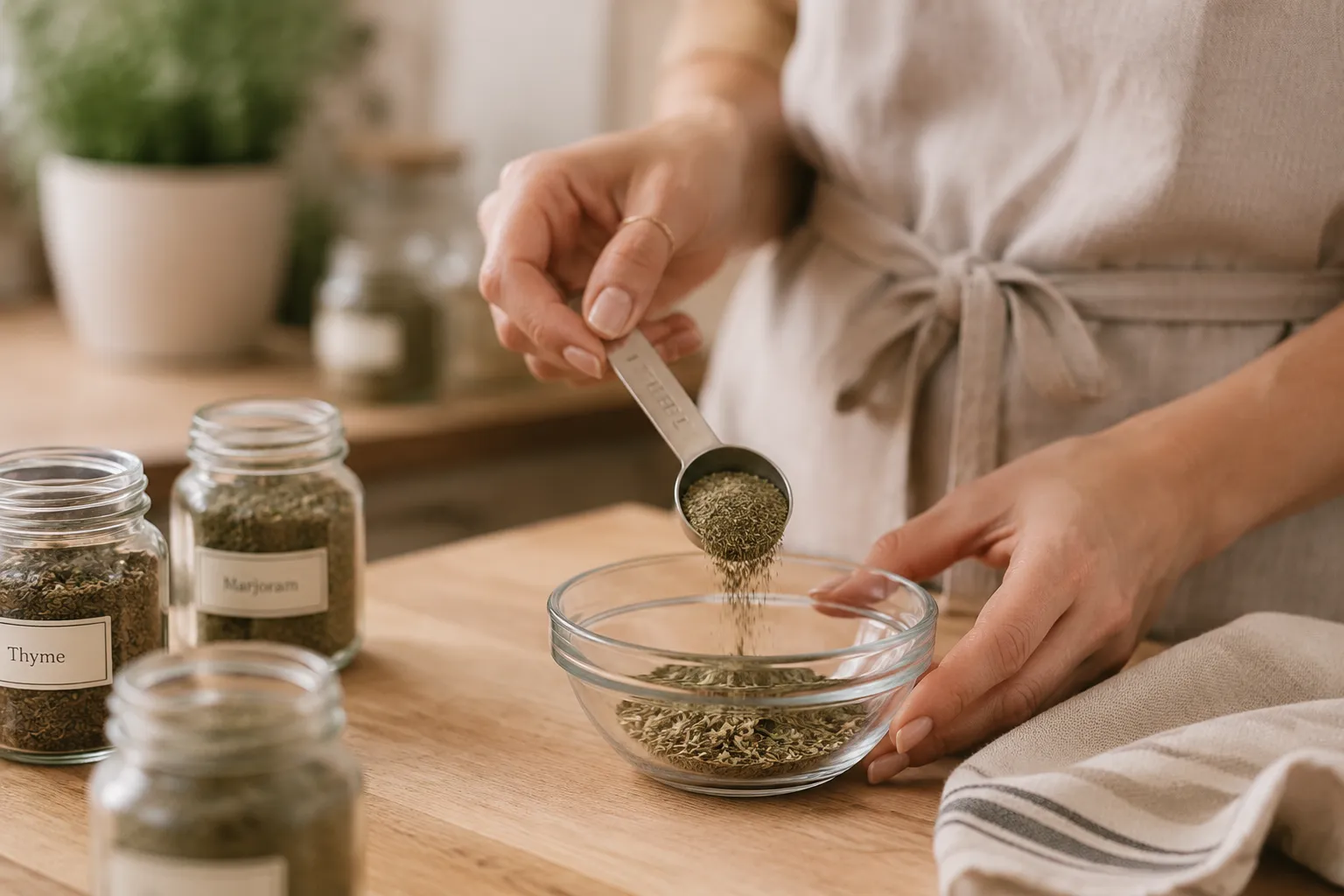
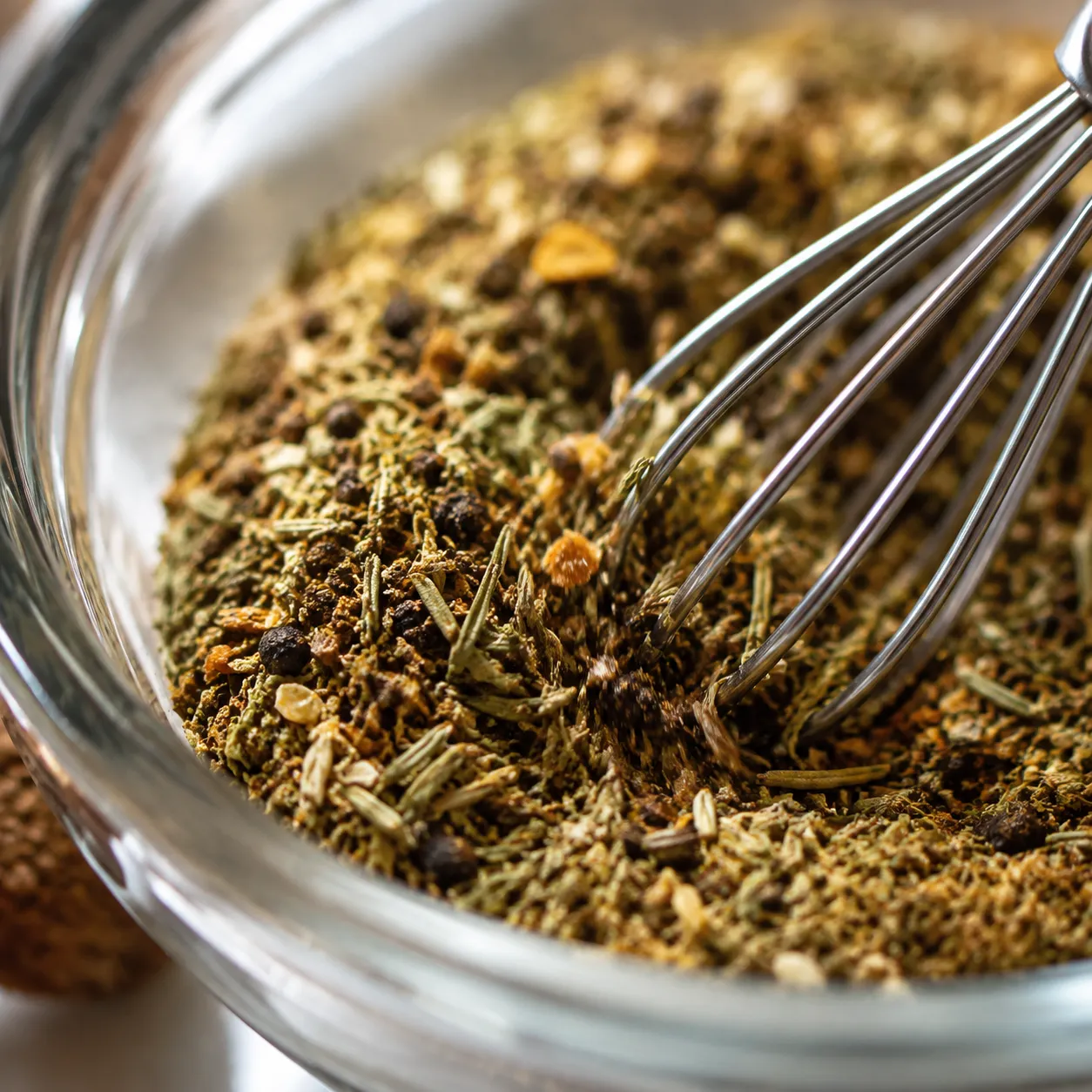
Making this blend is wonderfully low-tech: measure the herbs and spices into a small bowl, whisk until the color looks even, and transfer to a jar. The only detail that really matters is texture. If your rosemary is in long, needle-like pieces, crush it in a mortar and pestle, chop it lightly, or pulse the entire blend once or twice in a spice grinder.
You are looking for a mix that is fine enough to cling to chicken skin, turkey breast, vegetables, and bread cubes, but not so pulverized that it becomes dusty. A mini whisk works beautifully for small batches because it lifts the herbs and distributes the nutmeg and pepper evenly. If you use a food processor or grinder, pulse in short bursts so the herbs keep some texture and do not turn into a paste from over-processing.
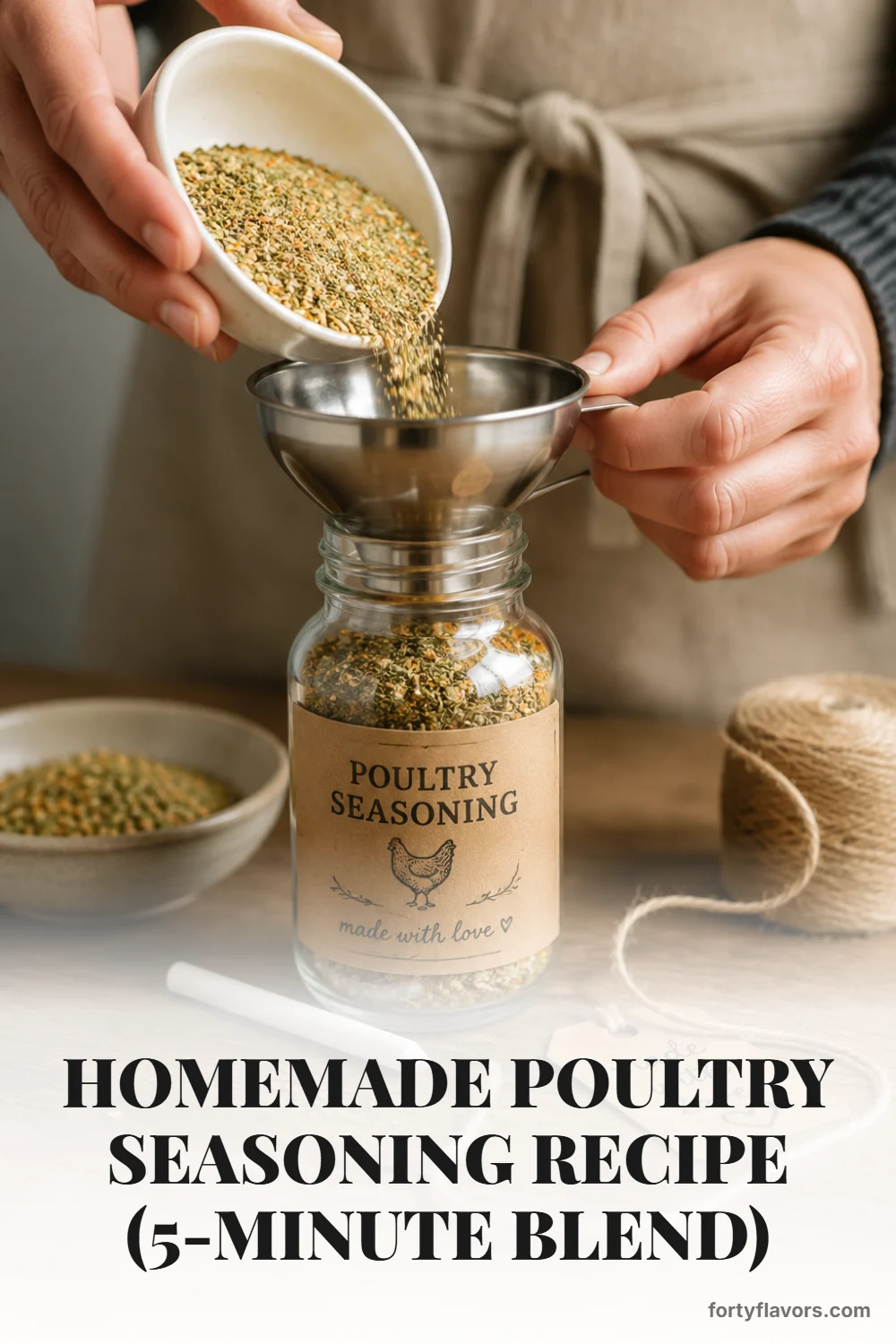
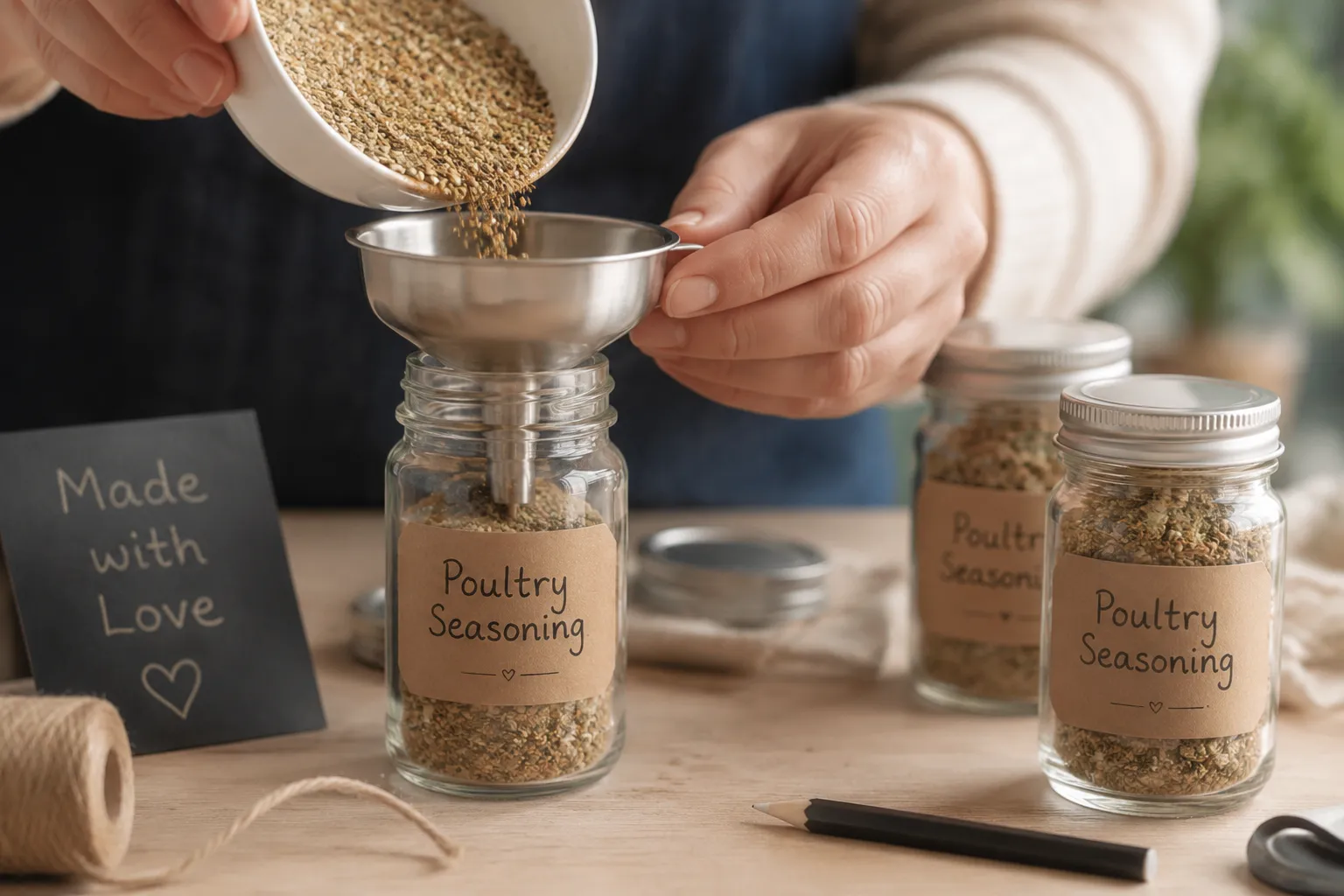
Once combined, spoon the mixture into a clean, dry spice jar. A funnel makes this easy and keeps the counter from wearing half the batch. Label the jar with the name and date, especially if you are making several homemade blends at once.
How to Cook With This Savory Chicken and Turkey Blend
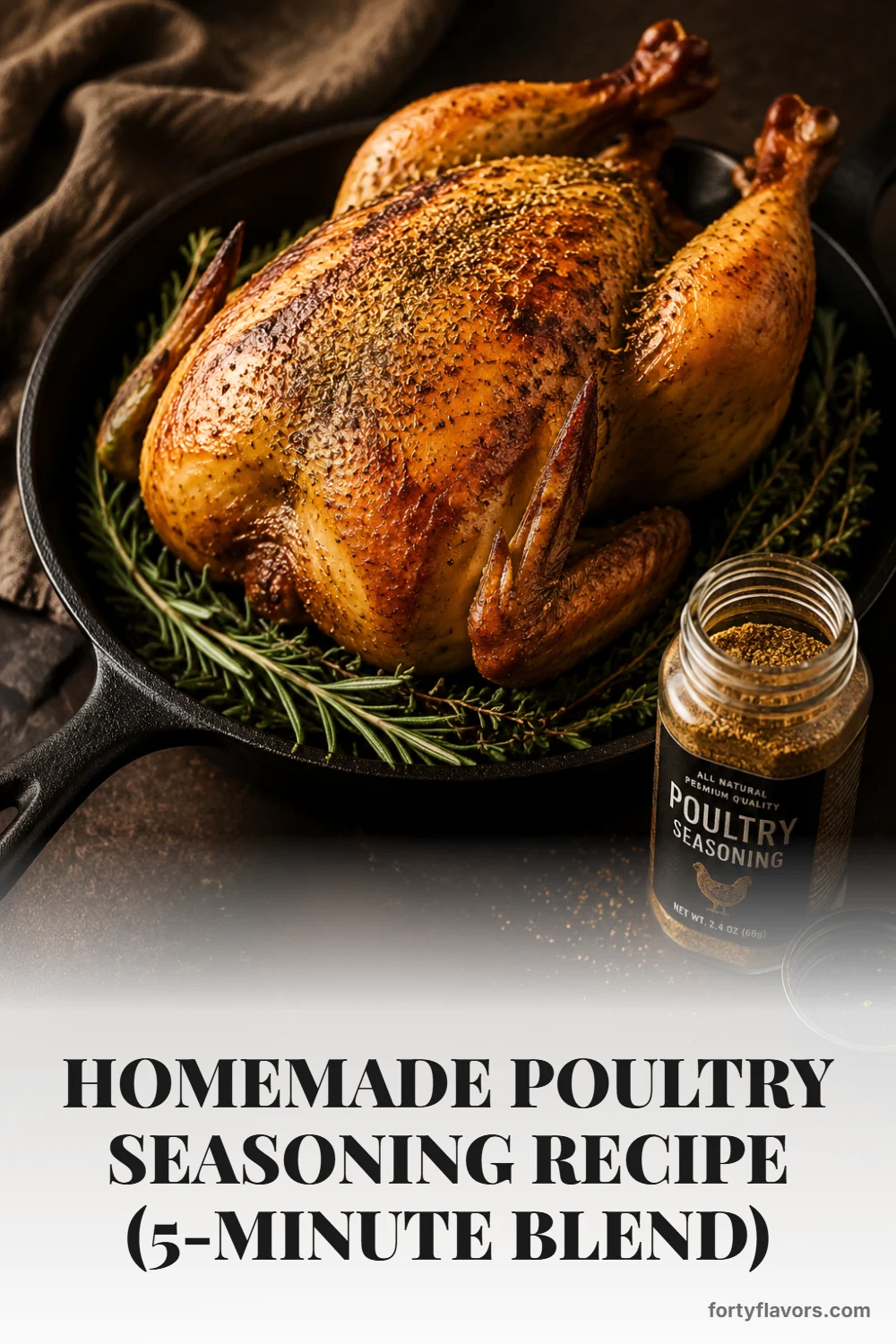
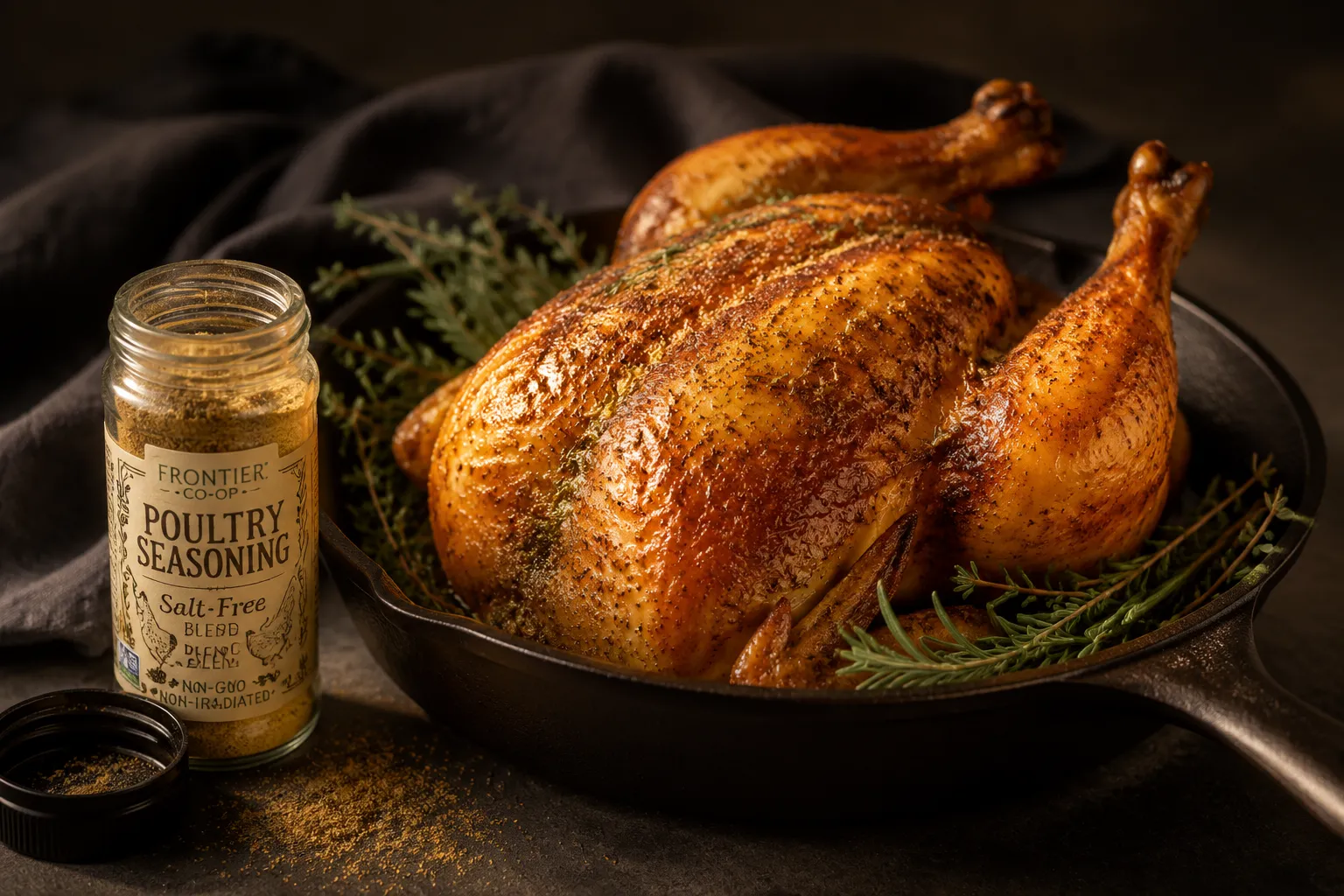
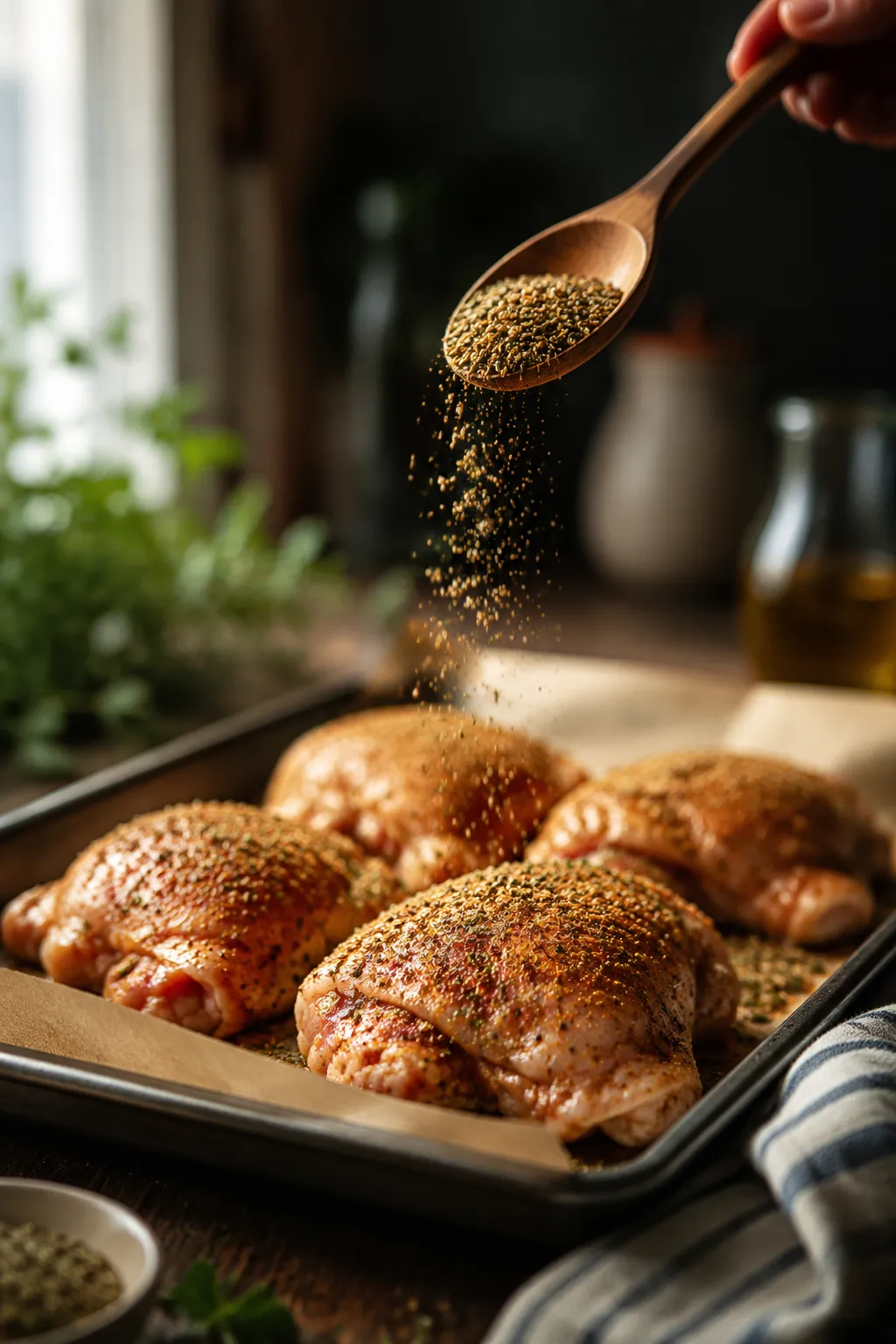
This homemade poultry seasoning is built for roasted birds, but do not save it only for special occasions. For chicken, use it as a dry rub with kosher salt and a little olive oil, then roast until the skin is crisp and golden. It is especially good on bone-in thighs, whole chickens, turkey breast, and sheet-pan dinners with potatoes, carrots, and onions.
For a classic roast, mix 1 to 2 teaspoons of the blend with softened butter, salt, and a little lemon zest, then rub it under and over the skin before cooking. That same butter is lovely tucked under the skin of a Thanksgiving turkey, where the sage, thyme, and rosemary perfume the meat as it roasts. You can also stir the blend into pan drippings for gravy or whisk it into broth before it goes into a stuffing dish.
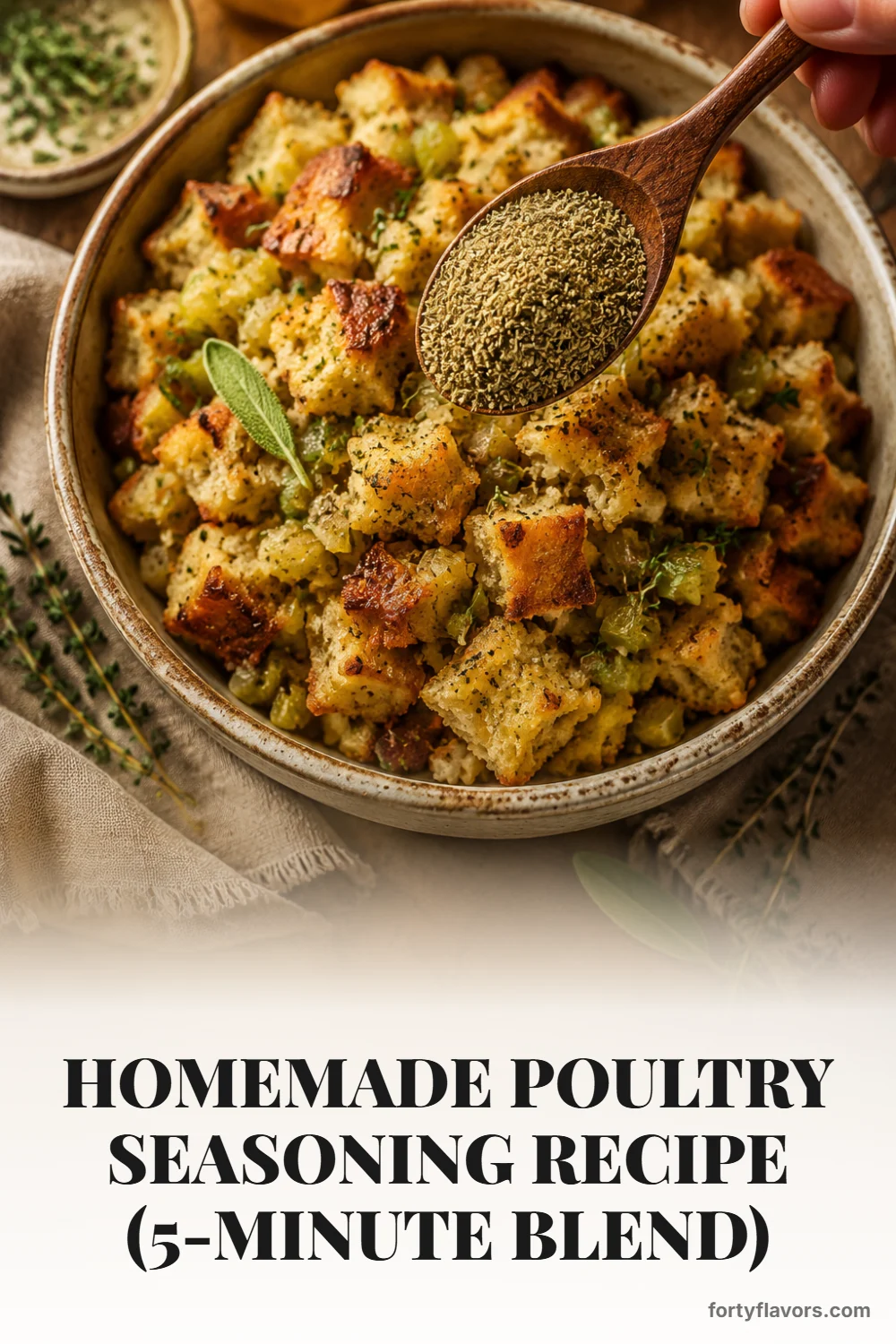
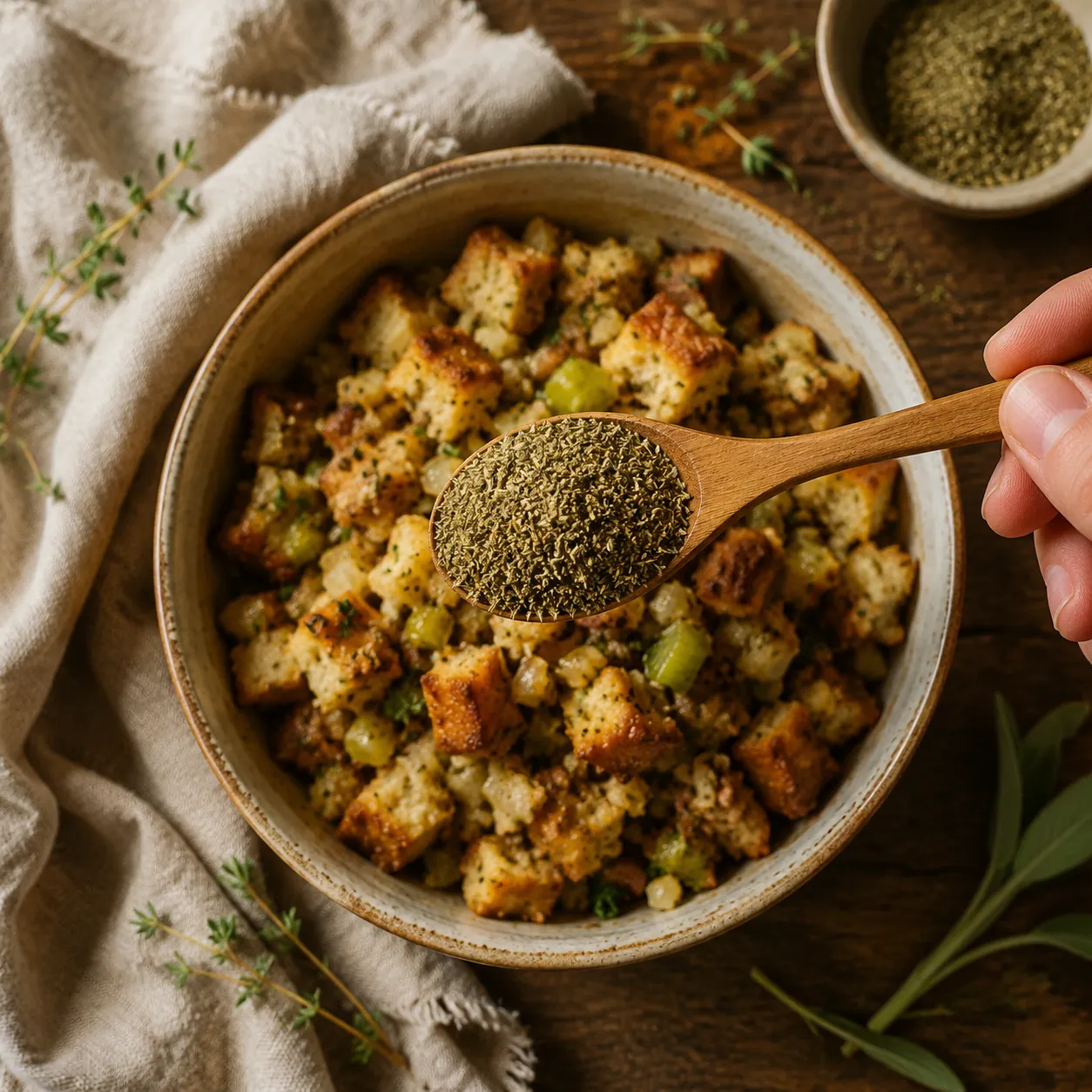
Stuffing may be the place this blend feels most at home. Toss toasted bread cubes with sautéed onion and celery, melted butter, broth, and a generous spoonful of the herbs, then bake until crisp at the edges and tender in the center. If you already have a favorite easy stuffing recipe, start with 1 teaspoon of this mix per 4 cups of bread cubes and adjust from there.
It also works beautifully in soups, casseroles, dumplings, pot pie filling, and creamy chicken-and-rice bakes. Add a pinch to white beans, savory oatmeal, roasted mushrooms, or a skillet of cabbage and onions for a cozy, Sunday-supper flavor without much effort. Because the blend is salt-free, you can add it early in cooking for aroma and then season with salt at the end.
Poultry Blend vs. Chicken Seasoning
The difference between a traditional poultry herb mix and chicken seasoning comes down to flavor direction. This blend is herbaceous and nostalgic, with dried sage, ground thyme, rosemary, and marjoram leading the way. It tastes like stuffing, gravy, roasted turkey, and the warmest corner of a holiday kitchen.
Chicken seasoning is often more savory and punchy, and it may include paprika, garlic powder, onion powder, cayenne, lemon pepper, brown sugar, or salt. That makes it great for grilled chicken, wings, kebabs, and quick skillet dinners where you want bolder color and a more assertive crust. This recipe, by contrast, is designed to be flexible and layered into dishes where herbs should shine but not overwhelm.
If you are choosing between the two, think about the final dish. Use this blend when you want cozy, herb-roasted flavor; use a paprika-forward chicken mix when you want barbecue-adjacent depth or a weeknight spice-rub vibe. Both deserve a place in the pantry, just for different moods.
Best Pairings for Roasts, Stuffing, and Soups
This seasoning loves rich, comforting foods. Rub it onto a whole bird, sprinkle it over turkey cutlets, stir it into savory bread pudding, or add it to gravy when the pan drippings need a little lift. It is also wonderful with root vegetables—especially sweet potatoes, parsnips, carrots, and butternut squash—because the sage and nutmeg echo their natural sweetness.
For soups, add the blend when the onion, celery, and carrots are softening in the pot. Blooming the herbs briefly in fat helps wake them up and spreads their flavor through the broth. In creamy soups or pot pie fillings, a small amount goes a long way, giving the dish that slow-simmered taste even if dinner comes together quickly.
You can also use it beyond poultry. Try a pinch in turkey burgers, meatballs, lentil stew, white bean soup, savory biscuits, or roasted cauliflower. A spoonful stirred into olive oil and lemon juice makes a quick marinade base, while a little mixed with softened butter becomes a fast compound butter for dinner rolls or roasted vegetables.
Batching, Gifting, and Everyday Meal Prep
A small jar of this blend makes a charming holiday host gift, especially paired with a handwritten label and a favorite menu idea. If you are making multiple jars, scale the recipe evenly and mix in a wider bowl so the lighter herbs and heavier spices distribute well. Let the finished blend sit for a few minutes after whisking, then stir again before filling jars; this helps prevent the finer spices from settling at the bottom.
For meal prep, keep a jar near your salt and pepper rather than tucked away with once-a-year holiday spices. Sprinkle it over chicken breasts before freezing, mix it into ground turkey before shaping patties, or stir it into breadcrumbs for a quick cutlet coating. It is one of those small pantry shortcuts that makes a Tuesday dinner feel like it had more planning behind it.
Once you have made this blend once, you will probably stop buying the little jar from the store. The flavor is fresher, the salt level is yours to control, and the whole thing takes less time than searching the spice aisle.
💡 Expert Tips
- Crush the rosemary: Long rosemary needles can make the blend feel uneven, so crush them with your fingers, a mortar and pestle, or a few quick pulses in a spice grinder.
- Smell before you mix: Dried herbs should smell fragrant and lively. If they smell like cardboard or dust, replace them before making the blend.
- Keep it salt-free: Adding salt to the jar limits how you can use it later. Season the food separately so you can adjust for brined turkey, salted broth, or butter.
- Bloom it when possible: For soups, gravies, and casseroles, stir the blend into warm butter or oil for 30 seconds to help the herbs release more aroma.
- Label the date: Homemade spice blends are easy to forget in the cabinet, so write the month and year on the jar.
🔄 Variations & Substitutions
This recipe is intentionally classic, but it is easy to nudge in a different direction depending on what you are cooking. Keep the sage and thyme as the foundation, then adjust the supporting spices in small amounts so the blend still tastes balanced.
- Smoky: Add 1/2 teaspoon smoked paprika for a deeper, fireside flavor that works beautifully on chicken thighs.
- Spicy: Add 1/4 teaspoon cayenne or crushed red pepper flakes for gentle heat.
- Garlic-herb: Add 1 teaspoon garlic powder if you want a more all-purpose roasted chicken blend.
- Extra savory: Add 1/2 teaspoon celery seed for a stuffing-style flavor.
- Fine rub: Pulse the finished mix in a spice grinder until it is more powdery and easy to rub onto meat.
🧊 Storage & Leftovers
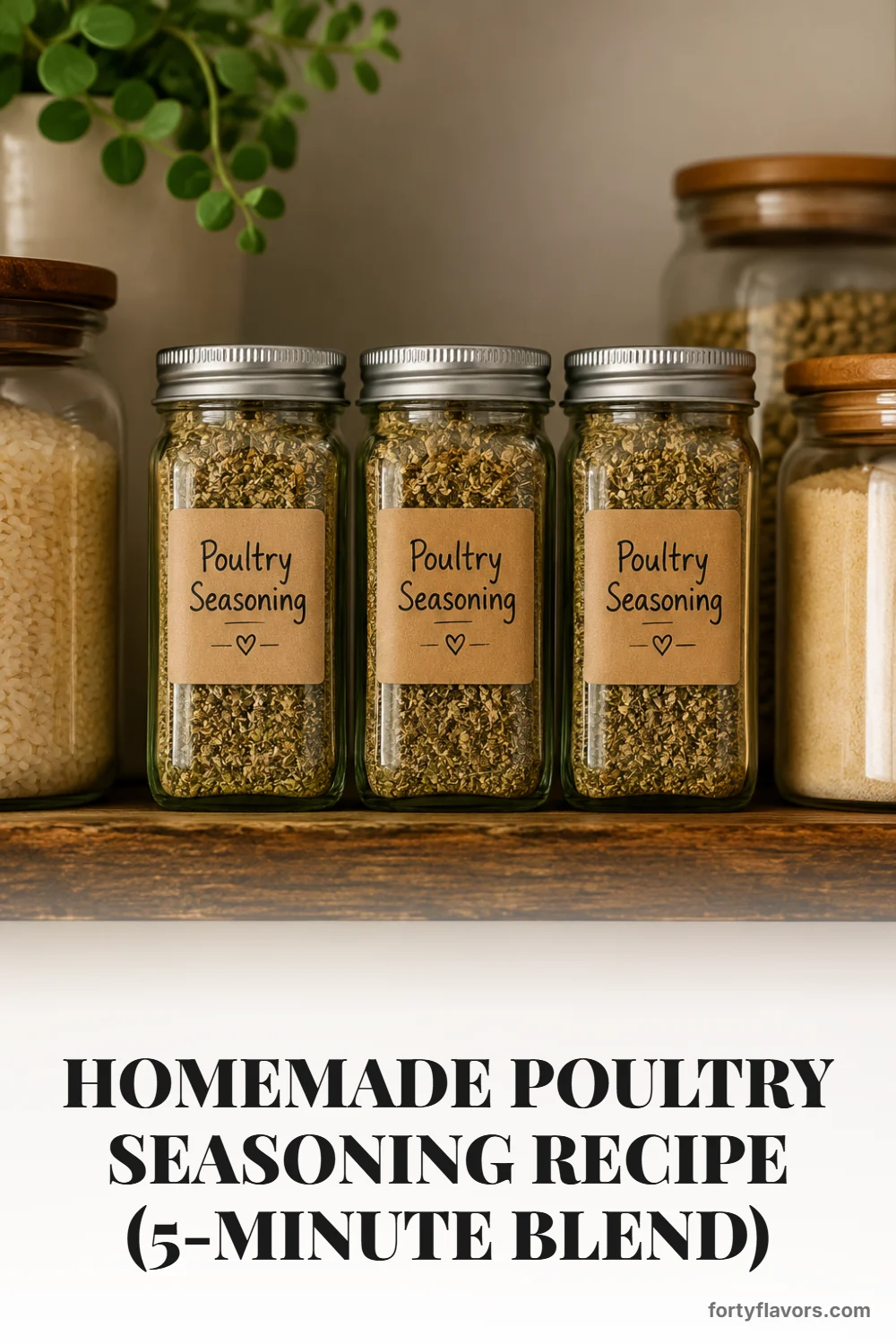
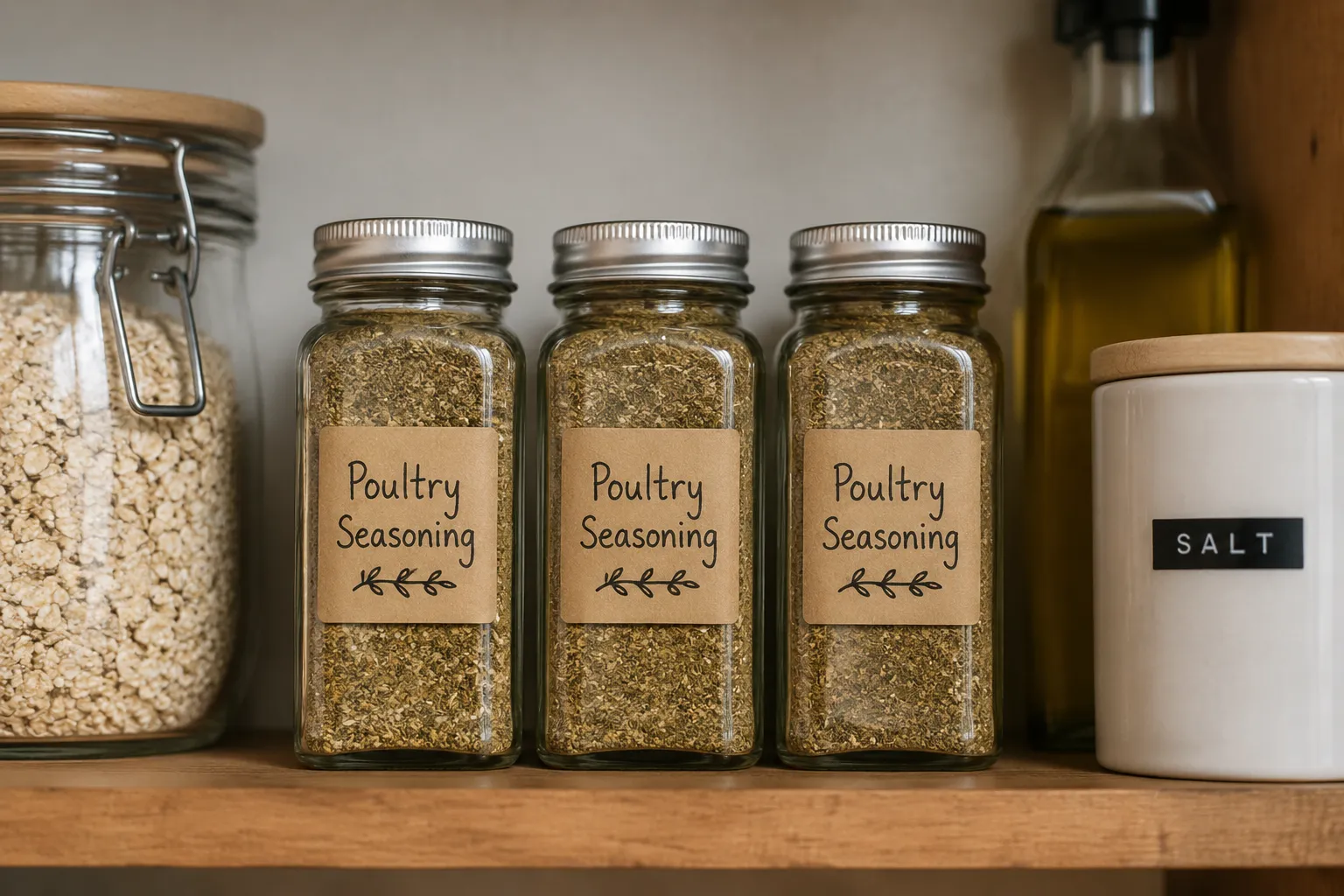
Store the finished blend in a clean, completely dry, airtight spice jar or small glass container. Keep it in a cool, dark cabinet away from the stove, dishwasher, sunny windows, or any place with heat and humidity.
For the best flavor, use it within 6 months. It will not usually spoil if kept dry, but the herbs gradually lose aroma and potency; if the blend smells faint, flat, or dusty, it is time to make a fresh batch.
Save This Recipe to Pinterest
Hover any image and hit “Pin it” to save it to your Pinterest boards.
A classic poultry seasoning blend is usually made with dried sage, thyme, marjoram, rosemary, black pepper, and nutmeg. Some versions also include onion powder, garlic powder, celery seed, or parsley. This recipe uses onion powder for extra savory depth while keeping the blend salt-free. Sage and thyme are the most important flavors, giving the mix that familiar stuffing-and-roast-turkey aroma.
Is poultry seasoning the same as chicken seasoning?
Not quite. Poultry seasoning is usually herb-forward, with sage, thyme, rosemary, and marjoram creating a cozy, classic flavor for turkey, chicken, stuffing, and gravy. Chicken seasoning often leans more savory and bold, with ingredients like paprika, garlic powder, onion powder, salt, lemon pepper, or cayenne. You can use either on chicken, but they create different results.
Can I substitute poultry seasoning with Italian seasoning?
Yes, in a pinch, but the flavor will be different. Italian seasoning usually contains basil, oregano, thyme, rosemary, and sometimes parsley, so it tastes more Mediterranean and less like classic holiday stuffing. To make it closer, add a generous pinch of rubbed sage and a tiny pinch of nutmeg. That will help mimic the warm, savory flavor profile of a traditional poultry blend.
How long does homemade poultry seasoning last?
When stored in an airtight jar in a cool, dark place, homemade poultry seasoning tastes best for about 6 months. It may remain safe beyond that if it stays dry, but the herbs will slowly lose their aroma and flavor. If you open the jar and the blend smells weak or dusty, make a fresh batch for the best results.
Does poultry seasoning contain salt?
Many homemade poultry seasoning recipes are salt-free, and plenty of store-bought versions are too, though you should always check the label. A salt-free blend is more versatile because you can control the seasoning in your final dish. This is especially helpful for brined turkey, salted butter, boxed broth, or recipes where the salt level is already partly built in.