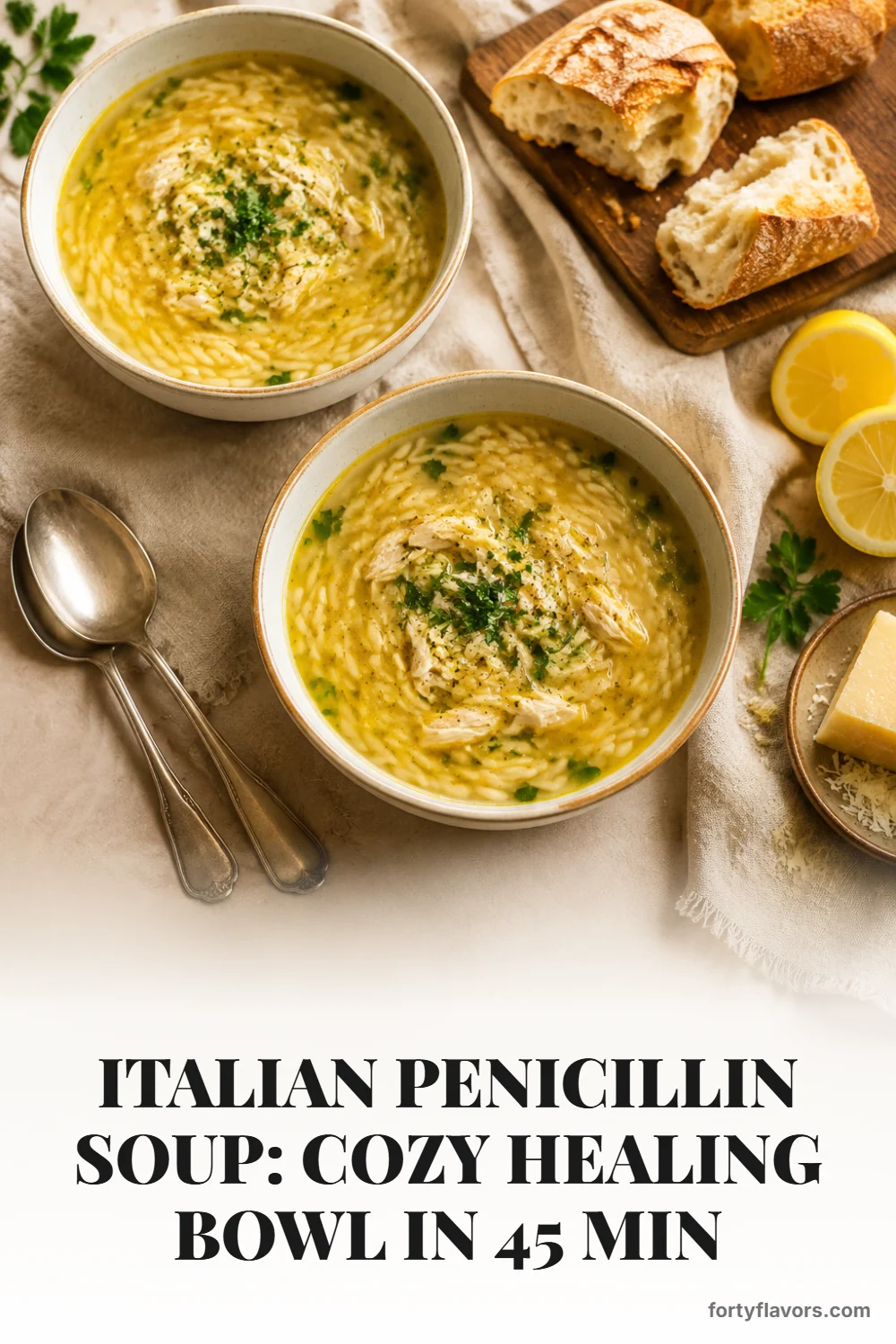
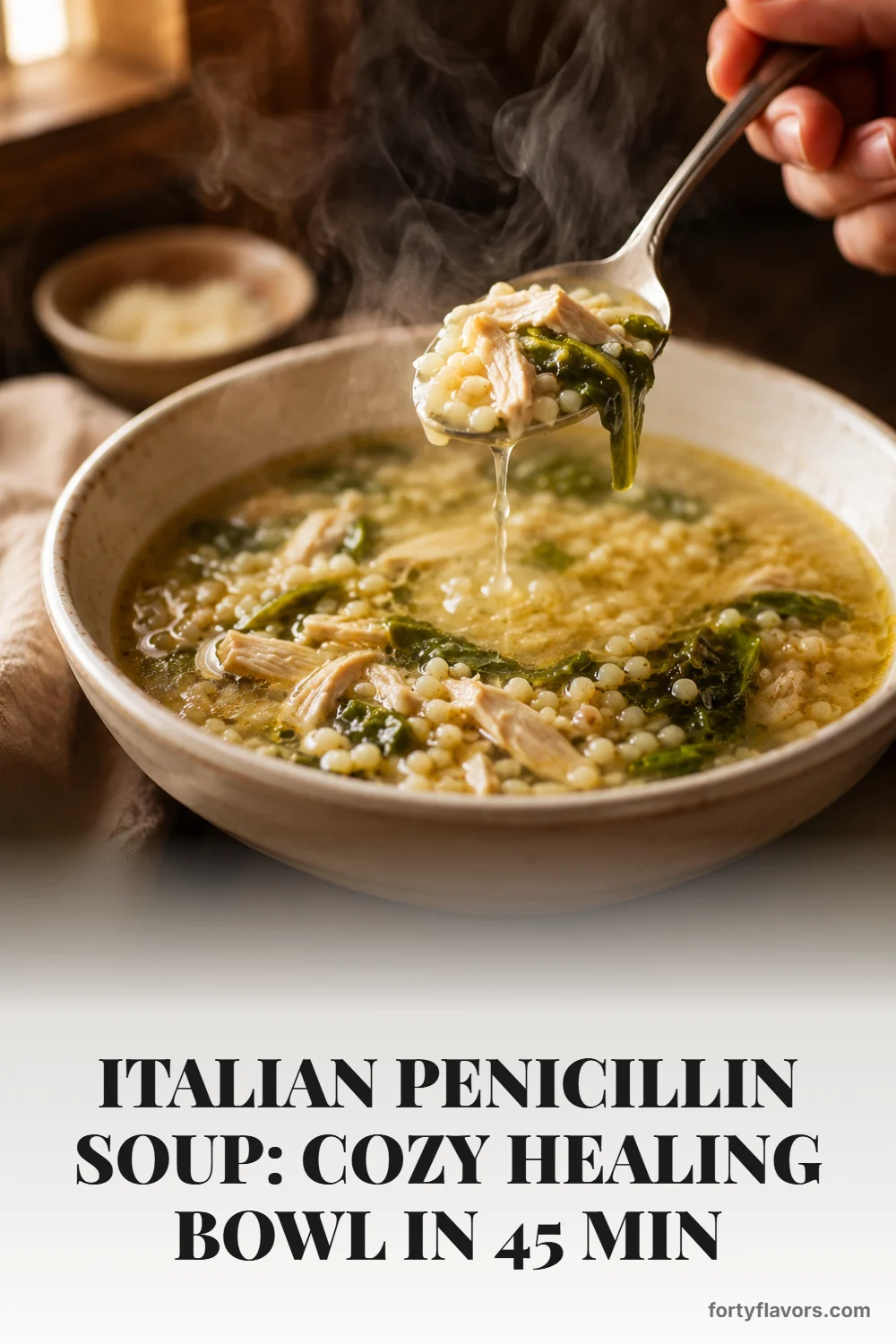
Italian Penicillin Soup: Cozy Healing Bowl in 45 Min
Ingredients
Scale
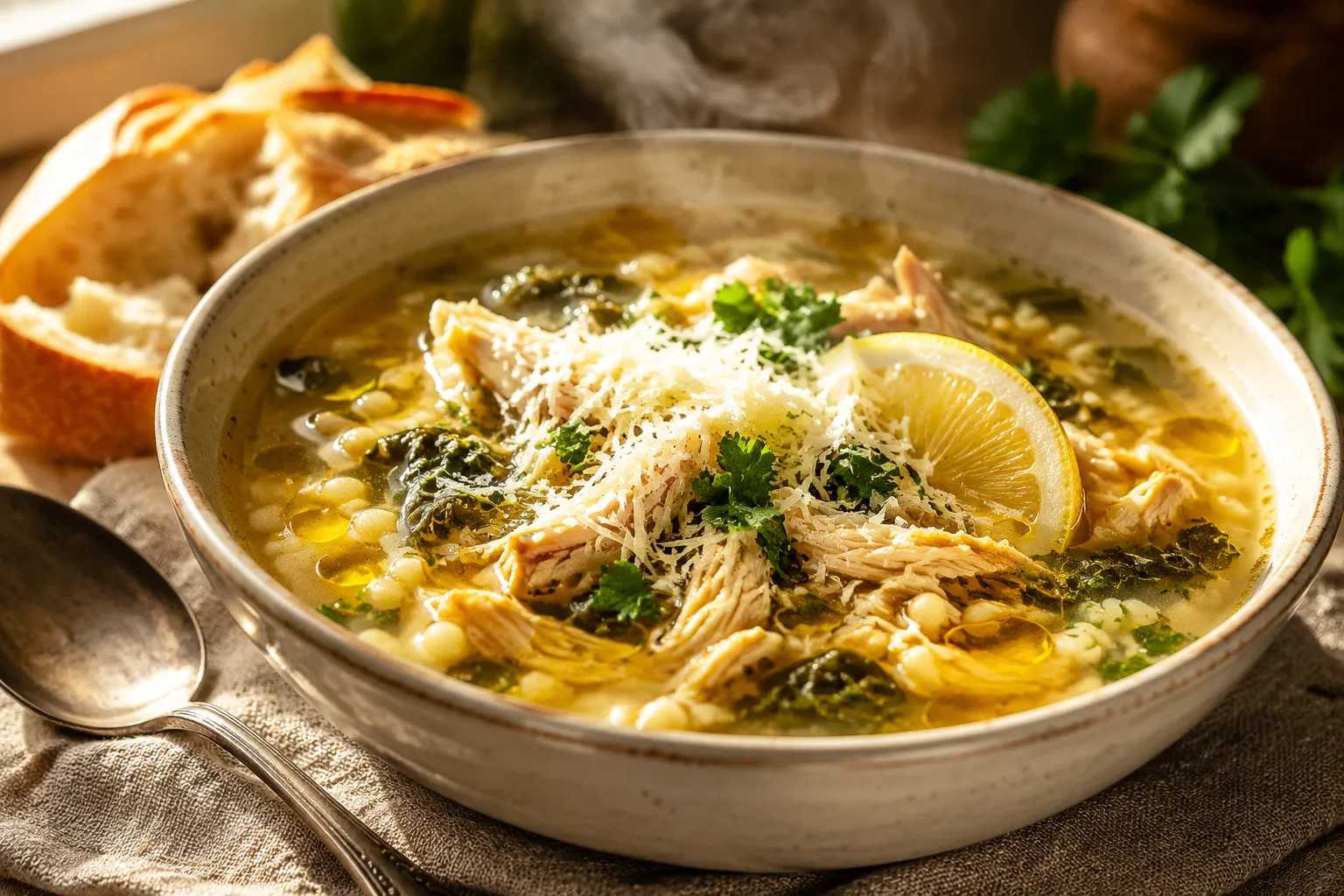
A garlicky, lemony, brothy hug in a bowl. This Italian penicillin soup is the cold-weather, sniffle-fighting cousin of classic chicken noodle, ready in under an hour.
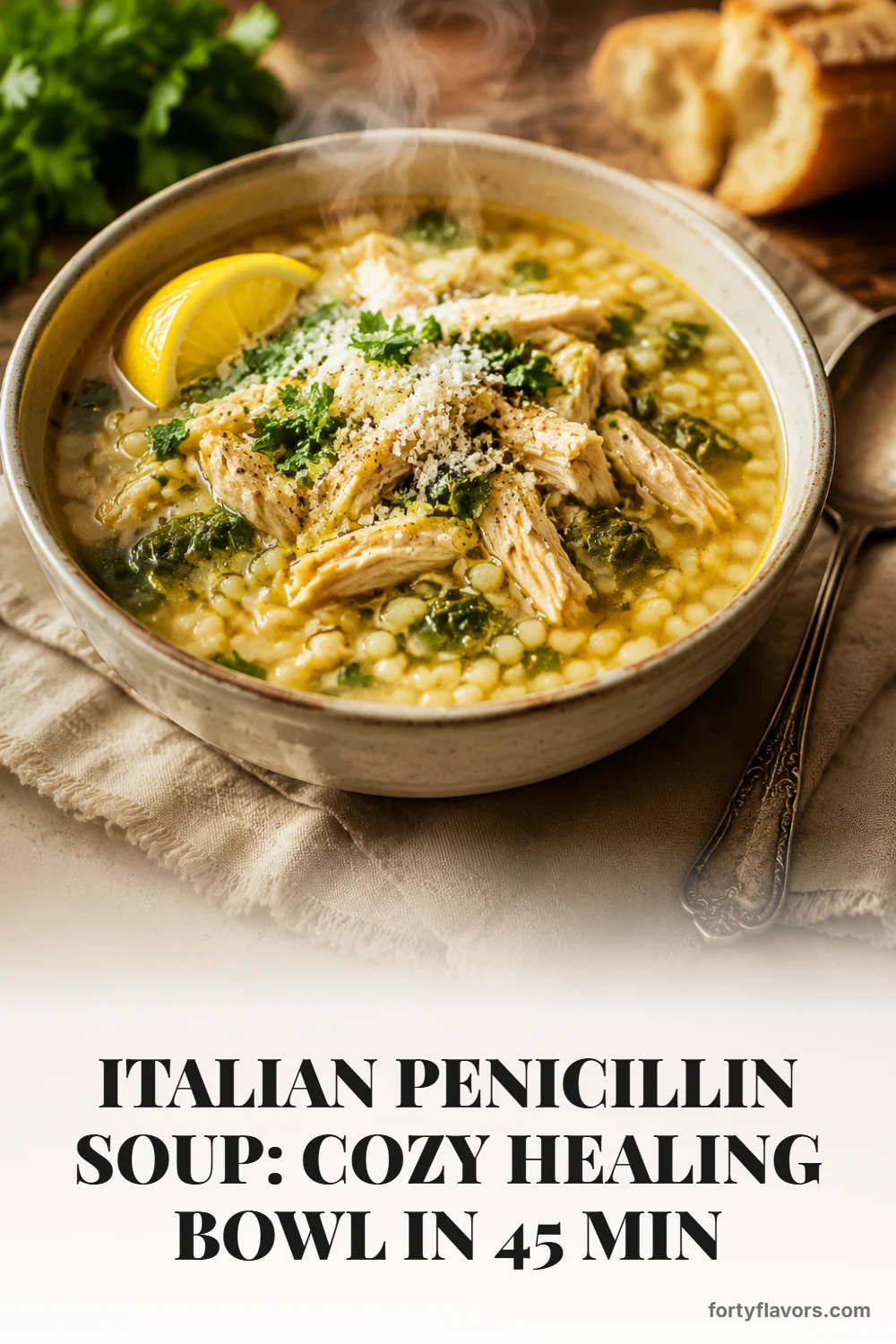
Italian penicillin soup is the bowl I want when the house feels chilly, my throat feels scratchy, or dinner simply needs to be gentle and deeply comforting. It is golden, brothy, loaded with tender shredded chicken, tiny pasta, wilted escarole, lots of garlic, and a sunny hit of lemon that wakes the whole pot up.
Think of it as the Italian cousin of classic chicken soup: familiar enough to feel like home, but layered with the little nonna-style touches that make it taste like it simmered all afternoon. A Parmesan rind melts its salty, savory magic into the broth, a whole head of smashed garlic turns mellow and sweet, and the final handful of parsley makes everything taste fresh.
The best part is that this restorative pot comes together in about 45 minutes, thanks to bone-in chicken thighs and good low-sodium broth doing most of the heavy lifting. If you keep tiny pasta, lemons, and a forgotten Parmesan rind in the fridge or freezer, you are already halfway to dinner.
At its heart, this is a brothy, garlicky chicken soup built for comfort. The nickname “penicillin soup” comes from the same affectionate idea behind grandma’s chicken noodle: when you are cold, tired, or under the weather, a steaming bowl of broth, chicken, garlic, and lemon just feels like medicine. This version leans Italian with escarole, pastina or acini di pepe, parsley, olive oil, and a Parmesan rind for extra depth.
It is not meant to replace medical care, of course, but it absolutely delivers that restorative, curl-up-on-the-couch feeling. The broth is light enough to sip, but the chicken and pasta make it satisfying enough for a real meal. If you love homemade chicken broth, this quick method gives you some of that same slow-simmered character without needing an entire afternoon.
Compared with stracciatella, this soup is chunkier and heartier because it includes shredded chicken, vegetables, and tiny pasta rather than egg ribbons stirred into broth. Compared with Italian wedding soup, it skips the meatballs and focuses on a cleaner chicken-and-garlic base. It lands somewhere between pastina soup and garlic chicken soup, with extra brightness from lemon and a leafy green finish.
The secret to a big-flavored pot in a short amount of time is building flavor in layers. Bone-in chicken thighs bring richness quickly, while onion, carrots, celery, and olive oil give the soup its sweet, savory foundation. A full head of smashed garlic might sound bold, but the cloves soften in the hot broth and become mellow, almost buttery.
The Parmesan rind is the quiet hero here. As it simmers, it releases salt, umami, and a subtle nuttiness that makes the broth taste round and restaurant-level. If you often toss rinds, start keeping them in a freezer bag; they are gold for soups, beans, and sauces.
Because this recipe starts with low-sodium chicken broth, you get a reliable base, then deepen it with chicken bones, aromatics, and cheese. It is not exactly an all-day homemade broth, but it tastes generous and layered, especially once the lemon zest and juice go in at the end. That final acidity is what keeps the soup from feeling heavy.
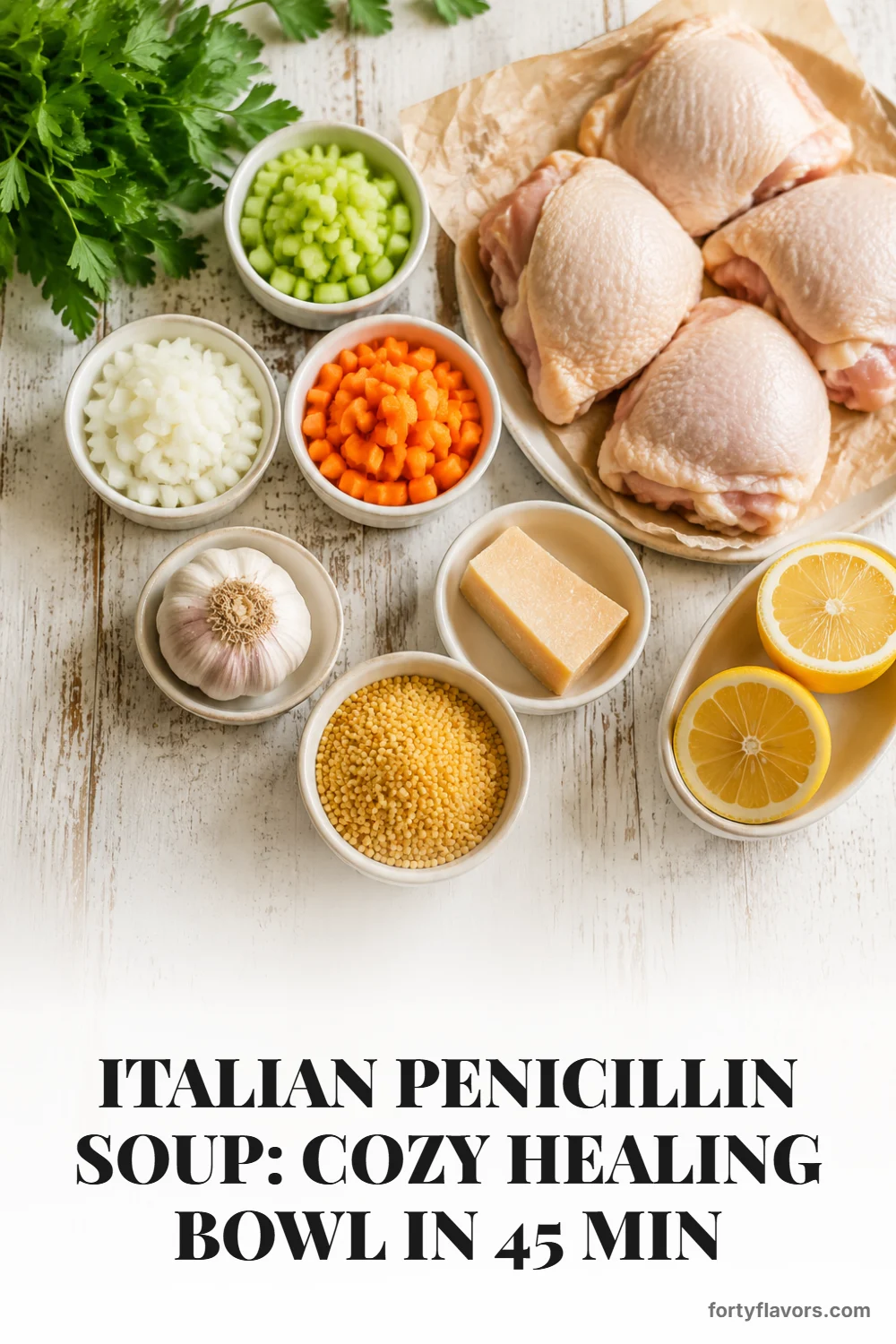
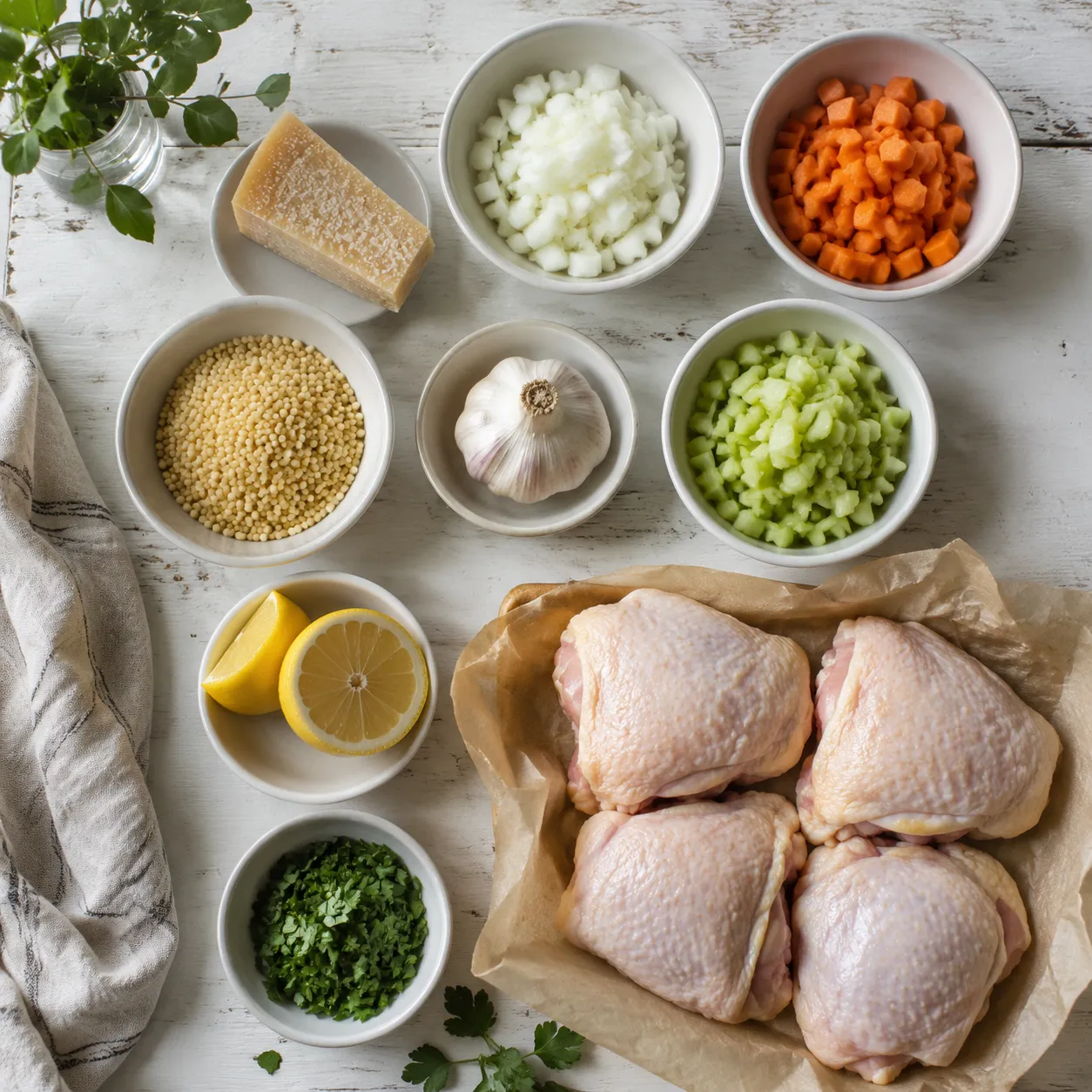
You will need bone-in, skin-on chicken thighs, which are forgiving, flavorful, and perfect for a quick soup. The bones enrich the broth while the thigh meat stays juicy, even if it simmers a few minutes longer than planned. If you only have boneless chicken, the soup will still work, but it will taste a little lighter.
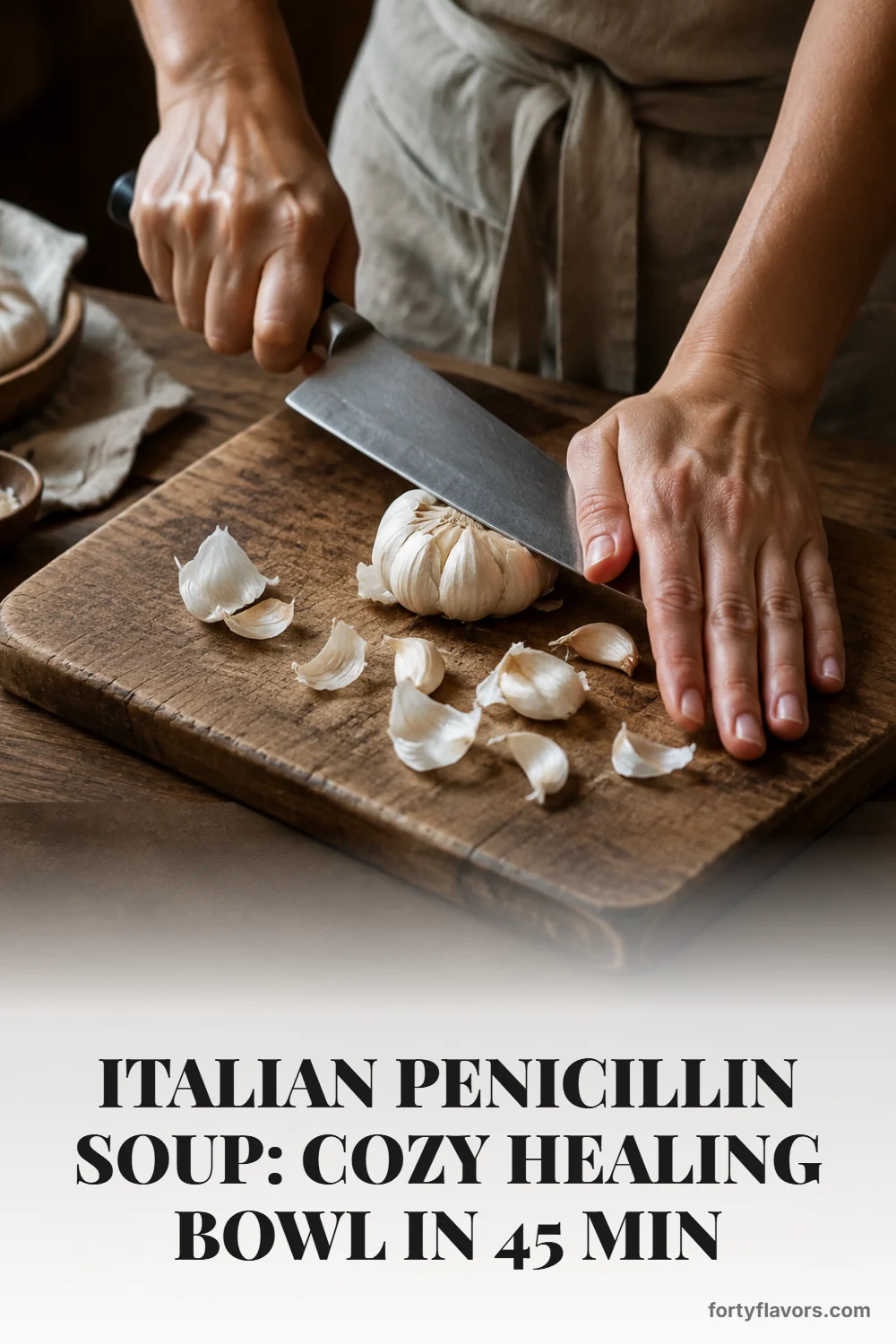
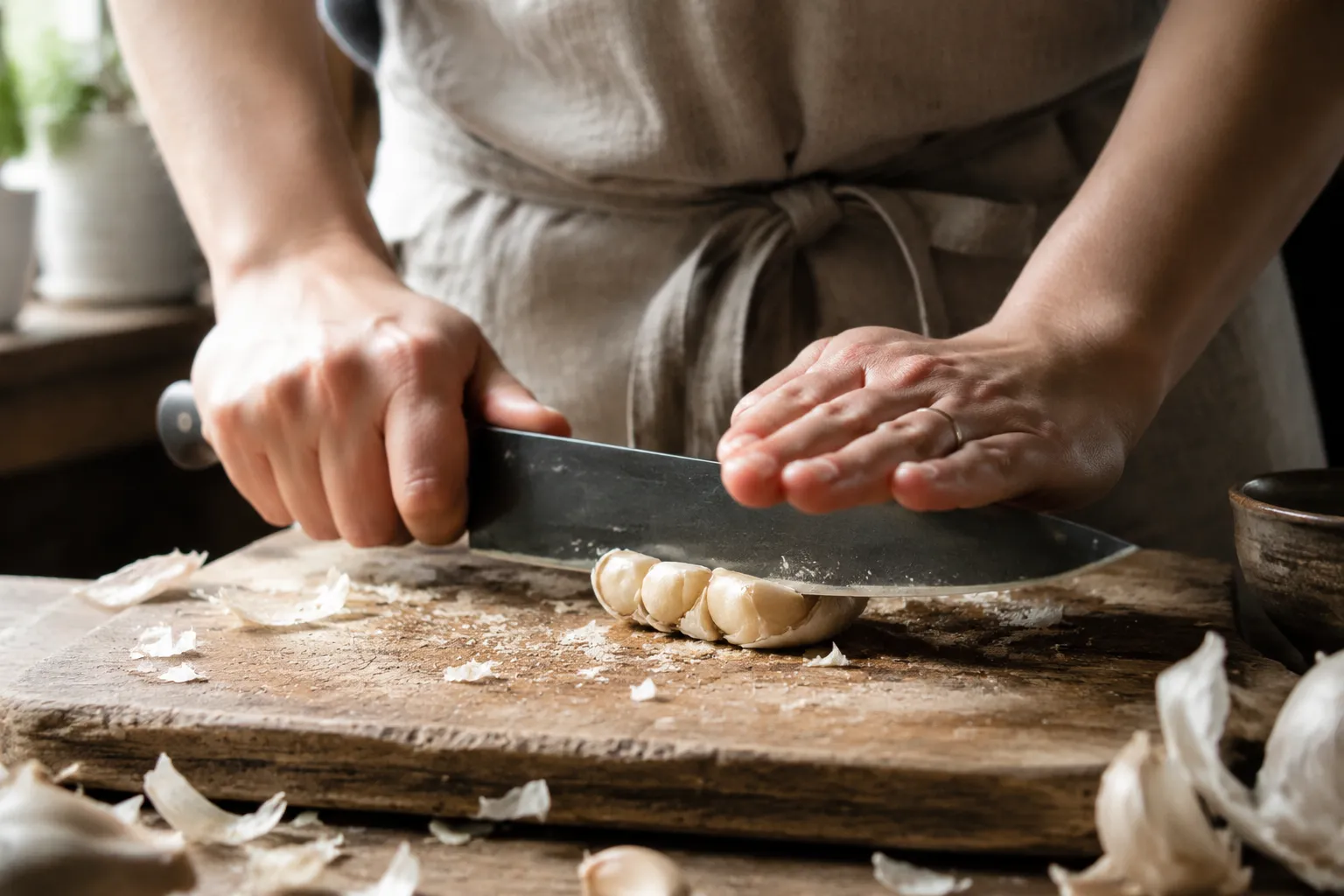
The vegetables are classic and cozy: onion, carrots, and celery. They soften into the broth and give every spoonful sweetness and body. Use a whole head of garlic, separate the cloves, smash them, and let them infuse the pot rather than mincing them finely; this keeps the flavor mellow instead of sharp.
For pasta, acini di pepe, stelline, ditalini, or pastina are all lovely. Tiny shapes are the right scale for a brothy soup because they slip onto the spoon with the chicken and vegetables. If you grew up with pastina soup, that same cozy little-pasta feeling is exactly what we are borrowing here.
Escarole adds a pleasantly tender, slightly bitter green note that balances the richness of the chicken. It is traditional in many Italian soups and also the star of escarole and beans, so it feels right at home in this pot. Baby spinach is softer and milder, while kale or Swiss chard will bring more texture.
To finish, you will add lemon zest, lemon juice, parsley, Parmesan, black pepper, and a drizzle of good olive oil if you like. The lemon is not just garnish; it lifts the garlic, sharpens the broth, and makes the whole bowl feel clean and soothing. Serve with crusty bread, or go all in with a little grated Parmesan melting into the steam.
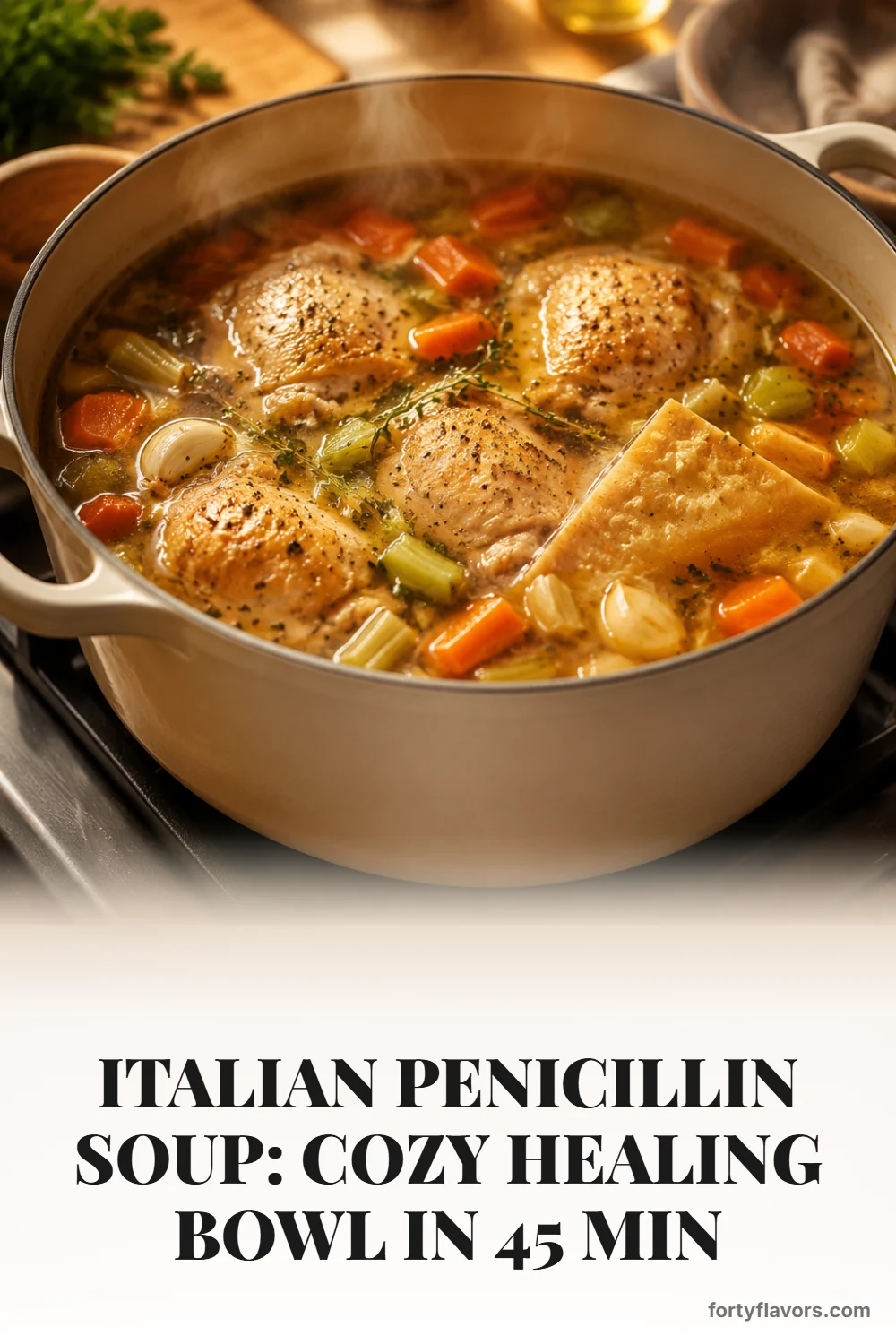
The full measured method lives in the recipe card below, but here is the rhythm of the recipe before you begin. First, soften the onion, carrots, and celery in olive oil until they smell sweet and cozy. Then add the smashed garlic, chicken, broth, Parmesan rind, and seasonings so everything can simmer together.
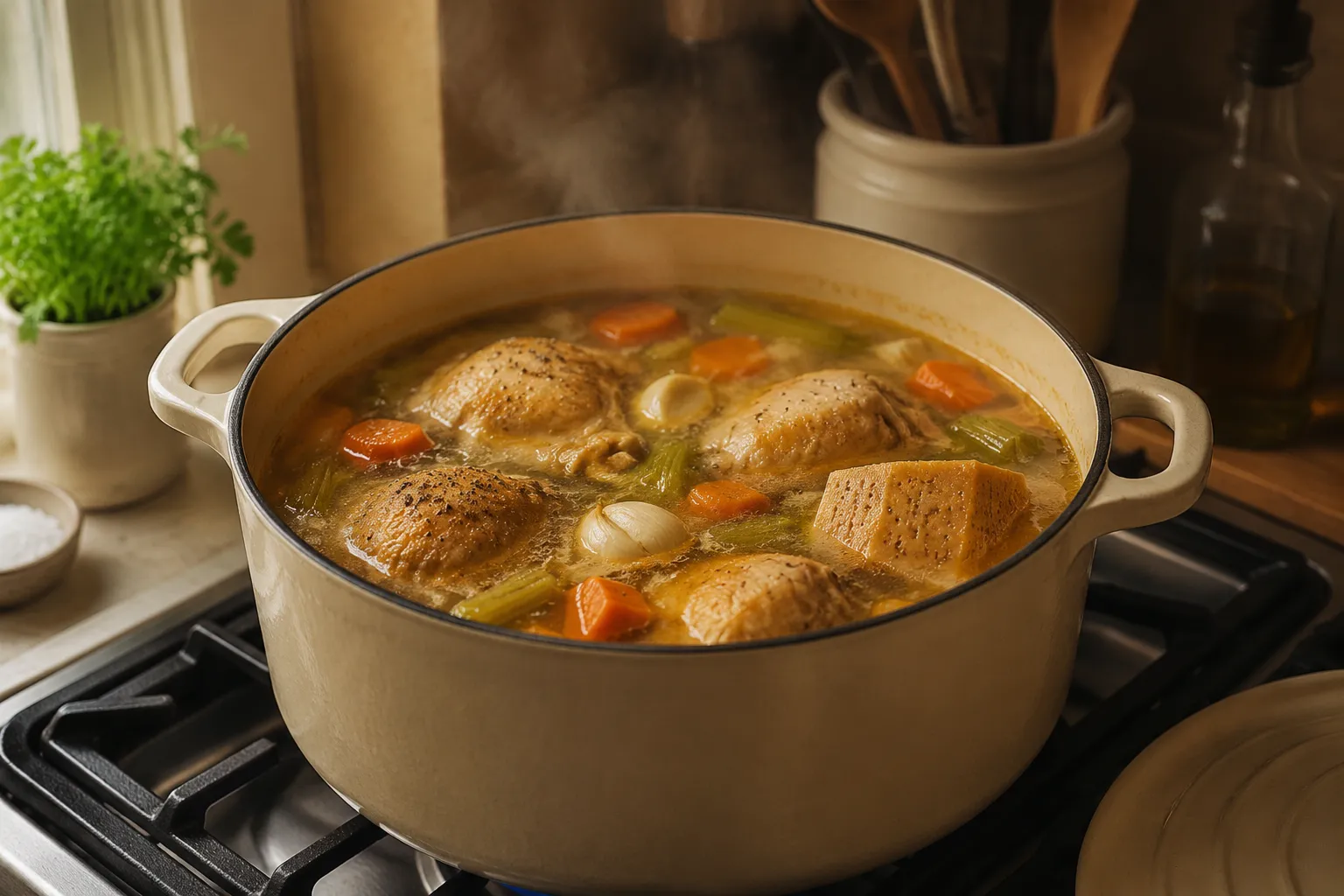
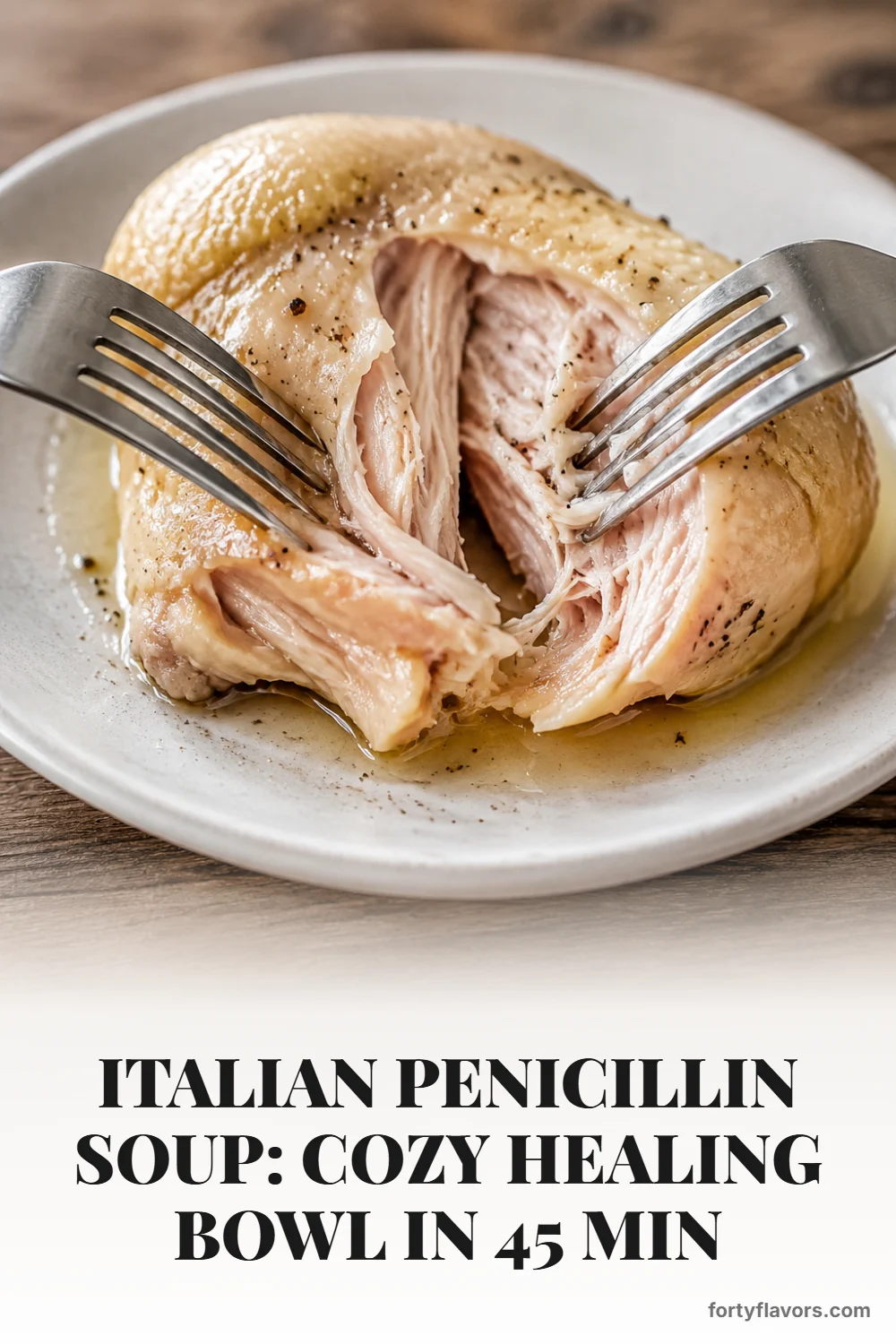
As the broth bubbles gently, the chicken cooks through and releases flavor from the bones. Keep the simmer moderate rather than aggressive; a rolling boil can make the meat tighten and the broth turn cloudy. After about 20 to 25 minutes, the thighs should be tender enough to pull from the pot and shred.
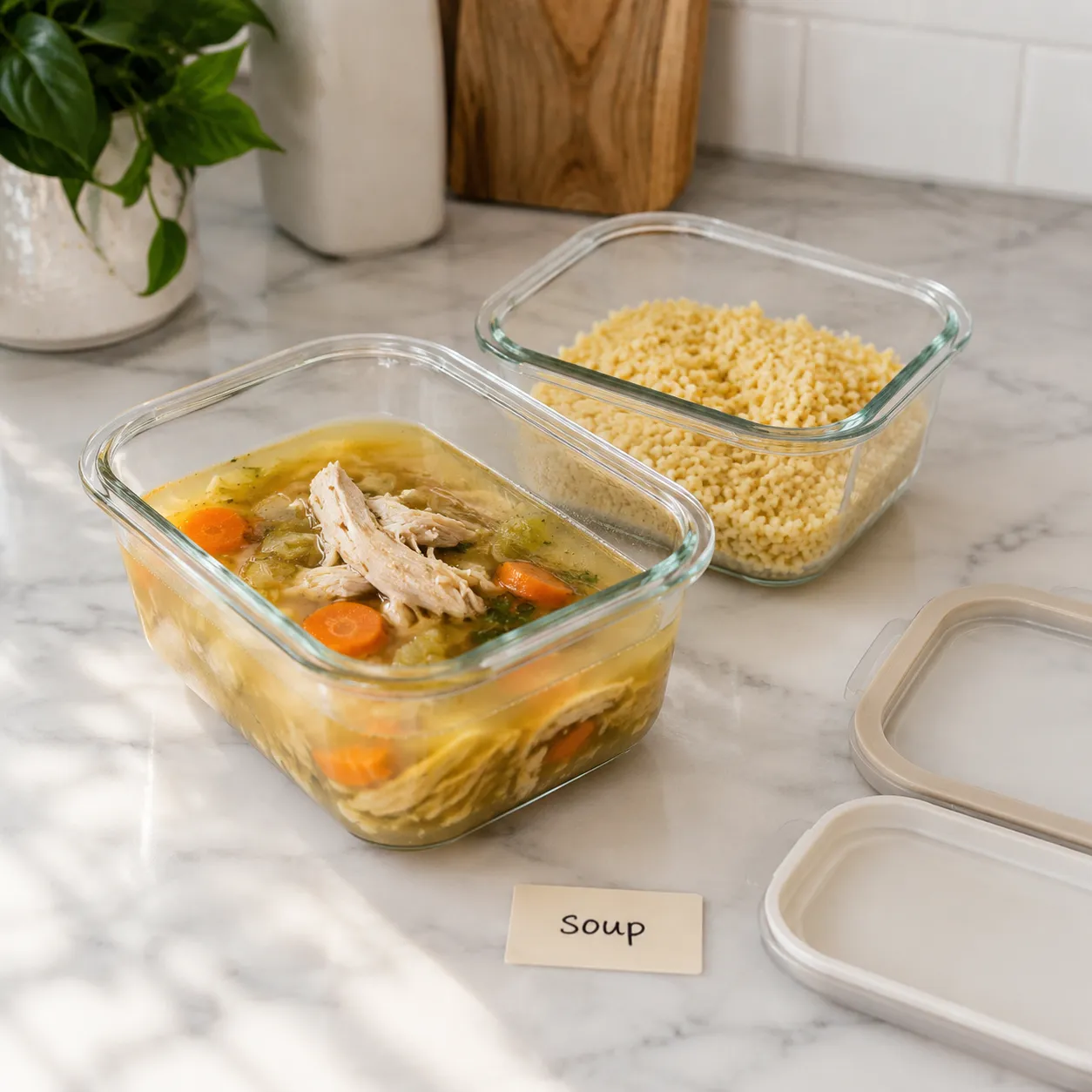
While the soup simmers, cook the tiny pasta in a separate saucepan if you plan on leftovers. This one small move keeps the noodles from absorbing all the broth in the refrigerator. If you are serving the entire pot right away, you can cook the pasta directly in the soup, but expect it to thicken as it sits.
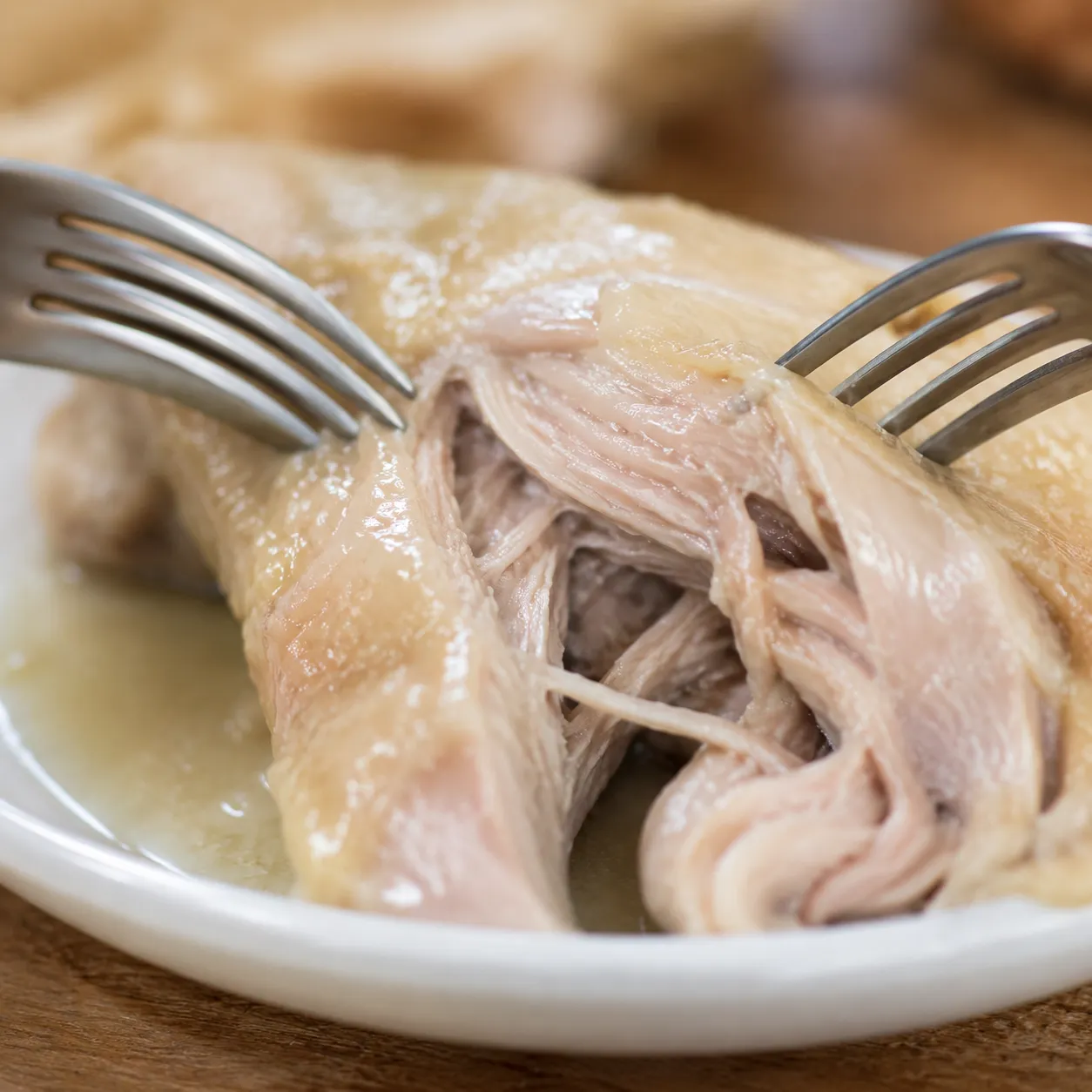
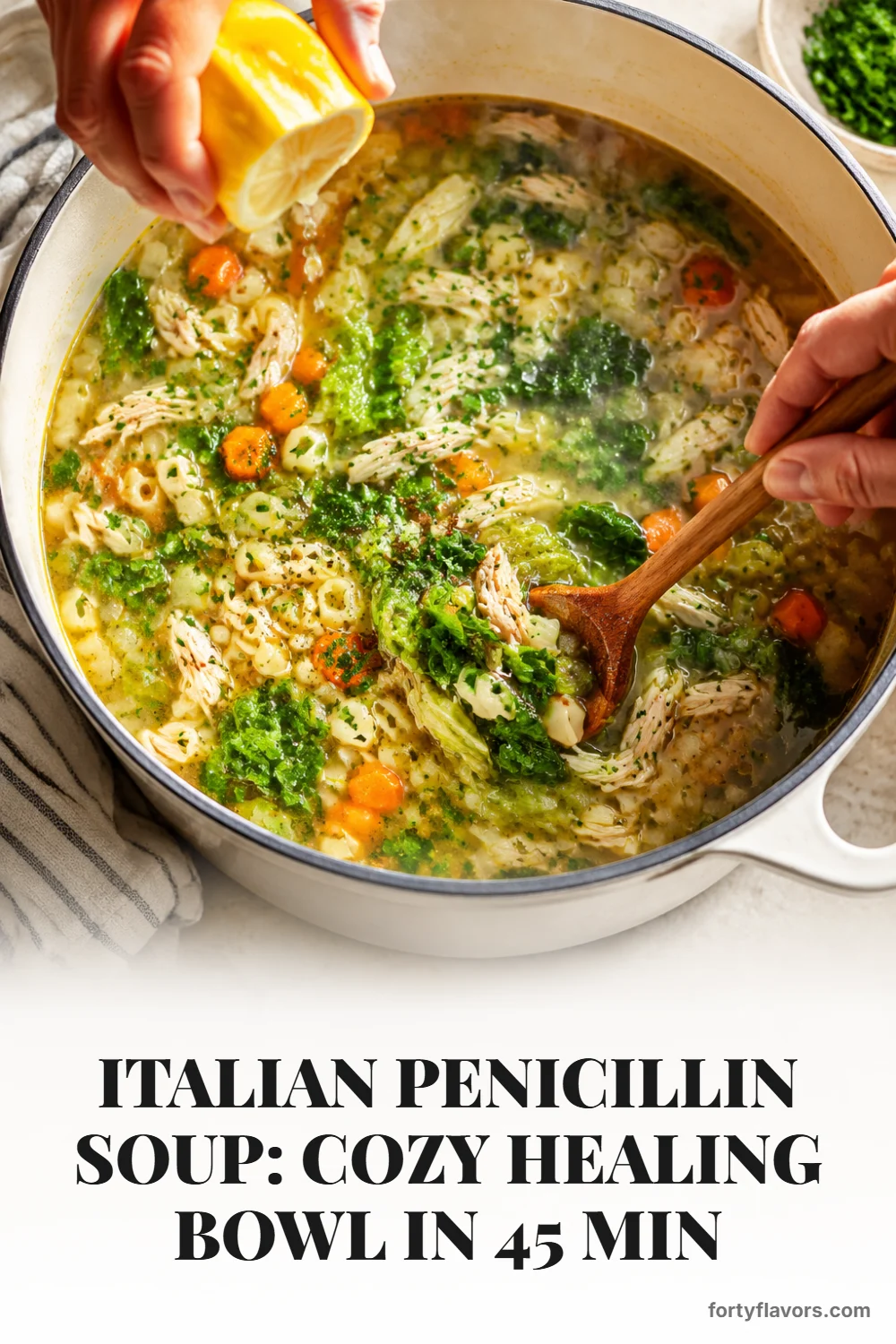
Once the chicken is shredded, return it to the pot with the escarole and let the greens wilt. The final moment is all about brightness: remove the Parmesan rind, stir in lemon zest and juice, add parsley, and taste for salt and pepper. The soup should be savory, garlicky, lightly lemony, and deeply soothing without feeling heavy.
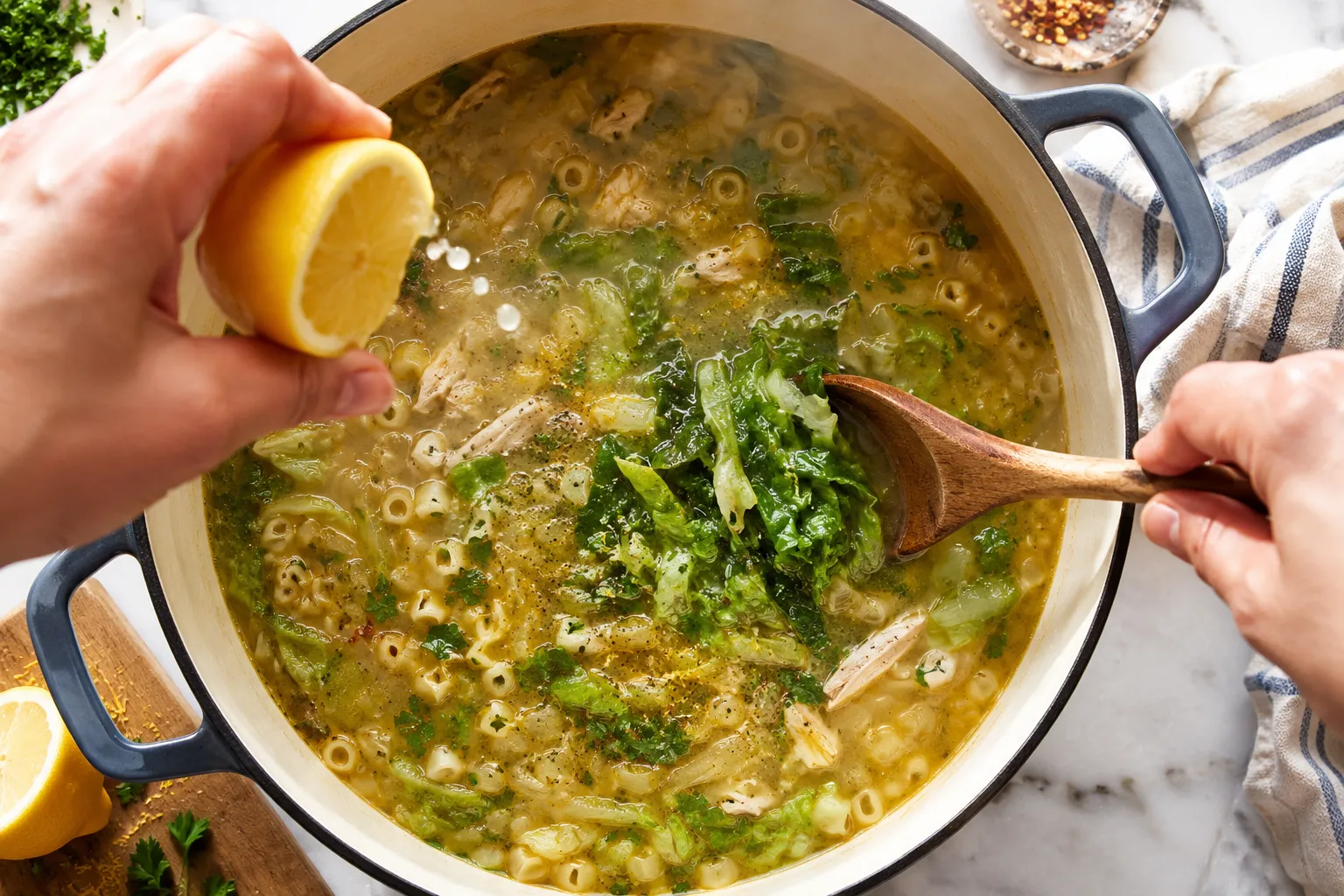
There is a reason so many cultures have a version of restorative chicken soup. Warm broth is hydrating and soothing, chicken adds protein, and aromatics make the kitchen smell like someone is taking care of you. In this recipe, the garlic and lemon give the bowl its signature lift: one cozy and savory, the other bright and clean.
Escarole also brings balance. Its gentle bitterness keeps the broth from tasting one-note, and its tender leaves add color without turning the soup into a heavy stew. The tiny pasta makes every spoonful feel familiar, especially if you grew up with little bowls of pastina when you were sick.
This is also a flexible dinner for those in-between nights when you want something nourishing but not fussy. It has the comfort of lemon chicken orzo soup, the greens-forward Italian spirit of wedding-style soups, and the simple pantry-friendly appeal of a weeknight meal. A single pot of italian penicillin soup can cover dinner, lunch the next day, and maybe a freezer stash if you are strategic with the pasta.
Serve this soup piping hot in wide, shallow bowls so the steam carries all that garlic, lemon, and Parmesan aroma. I like a shower of grated Parmesan, a little cracked black pepper, and a few extra parsley leaves over the top. A lemon wedge on the side lets each person add more brightness at the table.
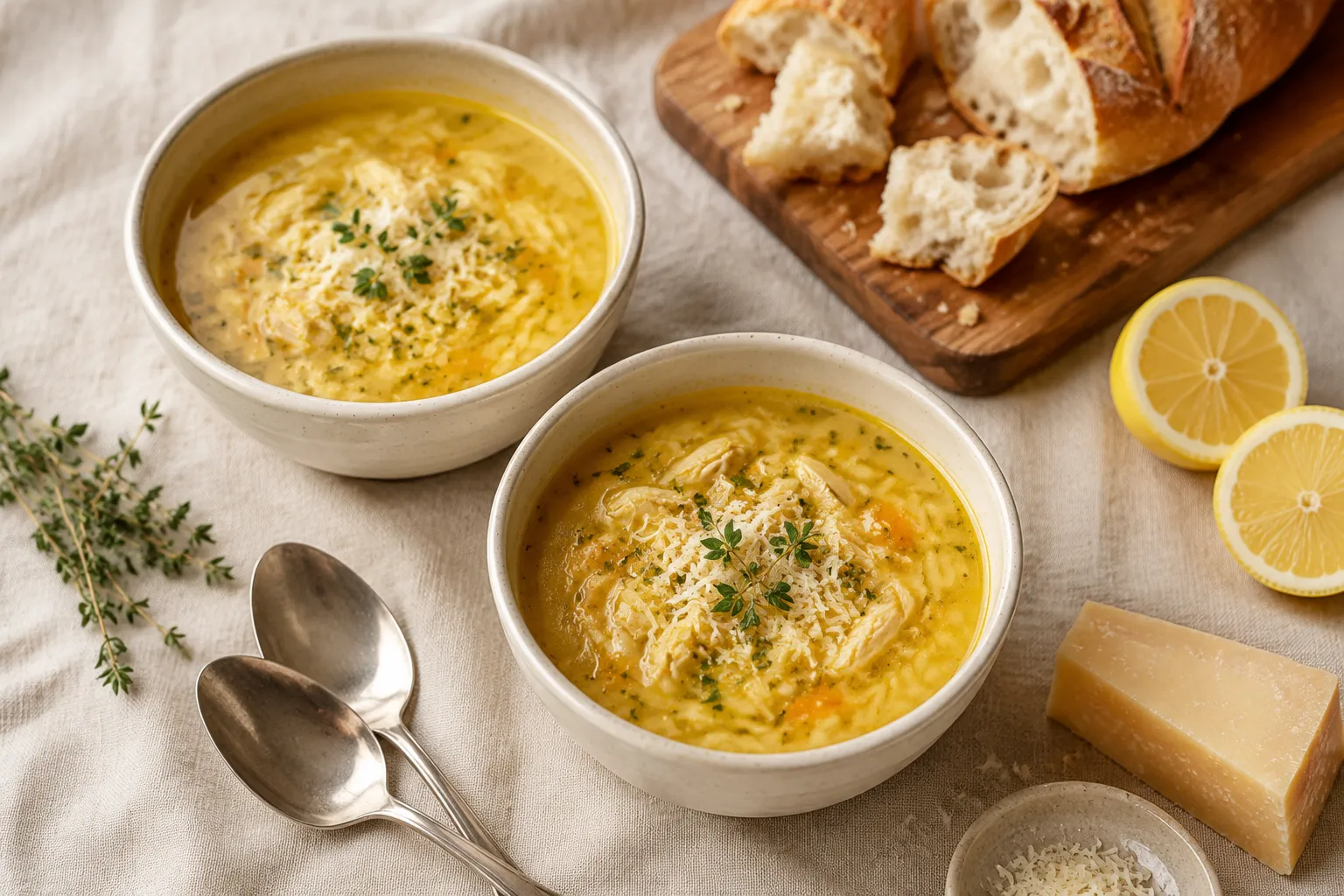
For bread, choose something crusty enough to drag through the golden broth. A toasted baguette, focaccia, or rustic sourdough all work beautifully. If you want a bigger spread, add a crisp green salad with a sharp vinaigrette to echo the lemon in the soup.
This bowl also makes a wonderful simple supper beside roasted vegetables or an antipasto plate with olives, marinated artichokes, and sliced tomatoes. Keep the sides easy and let the soup be the center. The whole point is comfort without complication.
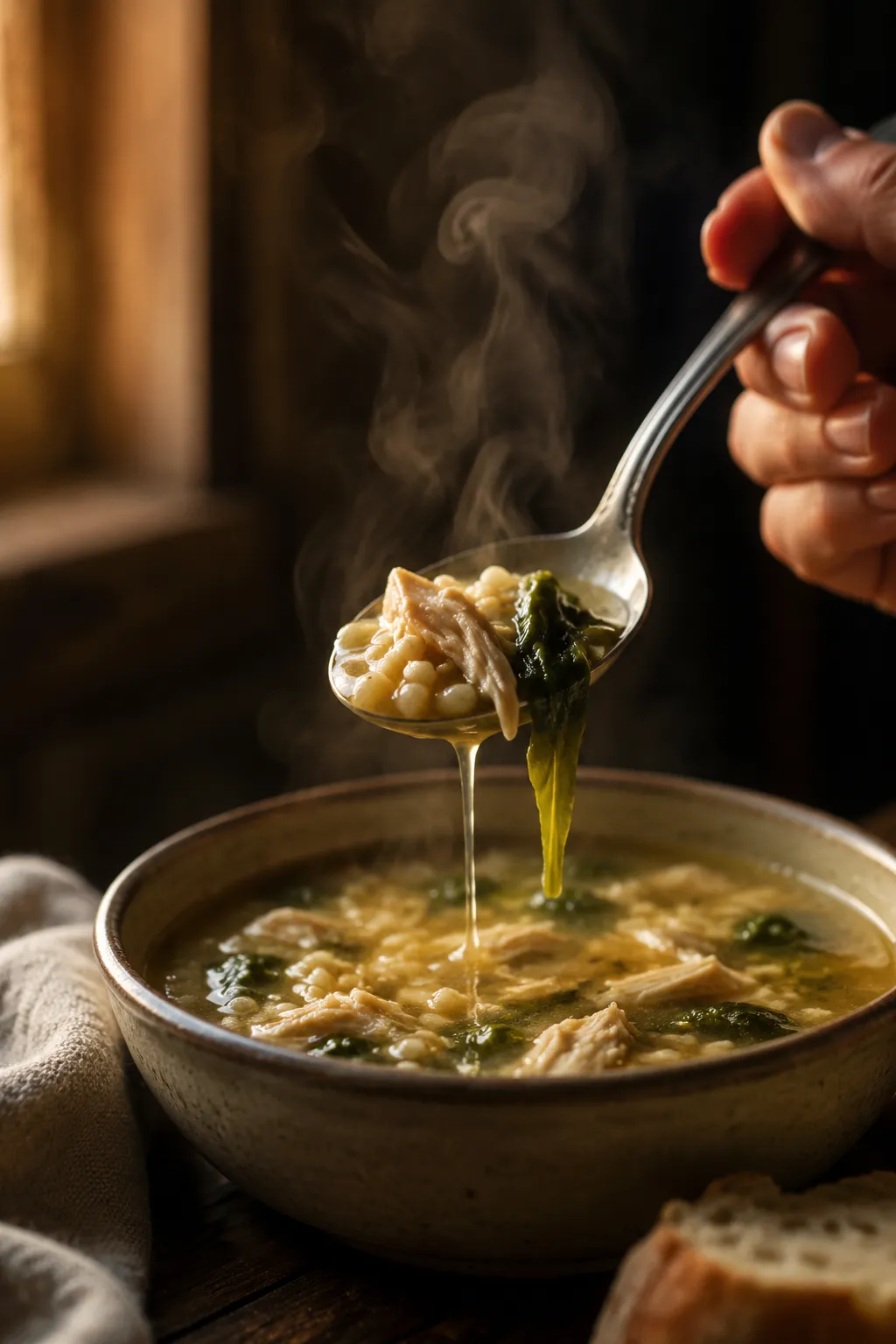
If you want to prep ahead, make the broth and shredded chicken portion first, then wait to add the greens, lemon, and pasta until just before serving. This keeps the escarole lively and the lemon flavor fresh. It also means you can reheat only what you need instead of repeatedly warming the whole pot.
For meal prep, portion the brothy chicken and vegetables into containers and keep the cooked tiny pasta separate. This is especially helpful if you like a clear, sippable broth rather than a thick, pasta-heavy soup. Add a spoonful of pasta to each bowl, ladle the hot broth over it, and finish with parsley and Parmesan.
You can also stretch leftovers by adding white beans, extra greens, or a splash more broth when reheating. The flavor becomes even more savory after a night in the fridge, though the lemon may soften a bit. A fresh squeeze before serving brings the bowl right back to life.
This is the kind of soup that asks very little of you and gives a lot back. A handful of humble ingredients turns into a golden, fragrant pot with tender chicken, silky greens, tiny pasta, and enough garlic-lemon sparkle to make dinner feel special. It is cozy enough for a sick day, but honestly good enough for any cold evening.
Keep a Parmesan rind in the freezer, a box of tiny pasta in the pantry, and a few lemons in the crisper, and you will always be close to a restorative bowl. When you need something simple, generous, and soul-warming, italian penicillin soup is exactly the kind of recipe to have in your back pocket.
This soup is wonderfully adaptable, so use what you have and adjust it to your table. Keep the garlic-lemon broth as the base, then swap the starch, greens, or finishing touches as needed.
Refrigerate leftover soup in an airtight container for up to 4 days. For the best texture, store cooked pasta separately from the broth, chicken, and vegetables; otherwise the pasta will continue to swell and soak up liquid.
To freeze, freeze the broth and shredded chicken without pasta or greens for up to 3 months. Thaw overnight in the refrigerator, reheat gently on the stovetop, then add fresh greens, cooked pasta, lemon, parsley, and Parmesan just before serving.
Hover any image and hit “Pin it” to save it to your Pinterest boards.