Sirloin Steak Recipe with Garlic Herb Butter
Ingredients
Scale
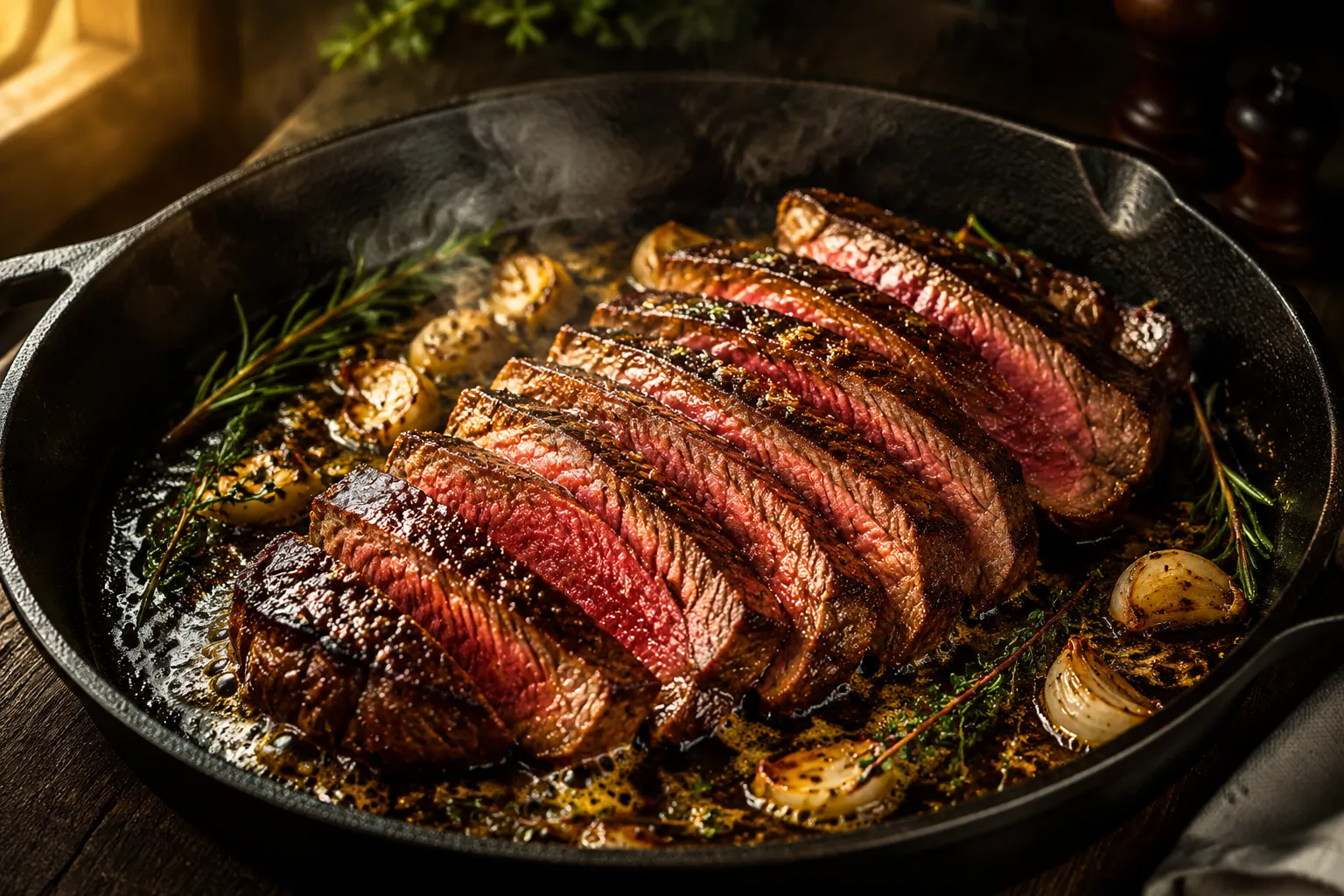
A foolproof sirloin steak recipe with a buttery garlic herb baste, deep golden crust, and juicy pink center. On the table in 20 minutes flat.
This sirloin steak recipe is the one I make when I want steakhouse energy without steakhouse prices: deeply browned, juicy in the center, and finished with a glossy spoonful of garlic herb butter that melts into every slice. It is simple enough for Tuesday night, but it feels special in that candle-on-the-table, pour-a-glass-of-red kind of way. You do not need a grill, a sous vide machine, or an expensive ribeye—just a good top sirloin, a hot cast iron skillet, and a few minutes of focused cooking.
Sirloin is leaner than ribeye, which means technique matters, but it also means you get big beefy flavor at a friendlier price. The trick is to season early, dry the surface well, sear hard, baste briefly, and pull the steak at the right internal temperature. Once you understand that rhythm, this becomes the pan-seared steak you can make on repeat all year long.
I especially love this as an easy weeknight dinner because the ingredient list is short and the payoff is huge. The butter, garlic, thyme, and rosemary create that restaurant aroma as soon as they hit the skillet, while the steak rests into a tender, rosy finish. Keep a meat thermometer nearby, and you will feel confident from the first sizzle to the final slice.
Top sirloin comes from the sirloin primal, an area toward the back of the cow that works enough to develop savory flavor but not so much that the meat becomes tough. It is different from sirloin tip, which is typically leaner and better suited to roasting, slicing thin, or marinating for kebabs. Compared with ribeye, top sirloin has less intramuscular fat, so it will not be quite as buttery on its own, but it has a clean, beef-forward flavor that takes beautifully to high-heat cooking.
At the butcher counter, look for steaks that are about 1 inch thick with an even shape from end to end. A little marbling is helpful, but you do not need heavy fat ribbons to make a great steak. Avoid very thin pieces, which can overcook before a crust forms, and skip steaks with large seams of silverskin or uneven edges that make contact with the pan difficult.
For this sirloin steak recipe, two 12-ounce steaks will comfortably serve four people when sliced and served with sides. If your steaks are closer to 1 1/2 inches thick, the method still works, but you may need to lower the heat slightly after searing and cook a little longer. If they are under 3/4 inch thick, move quickly and start checking the temperature earlier than you think.
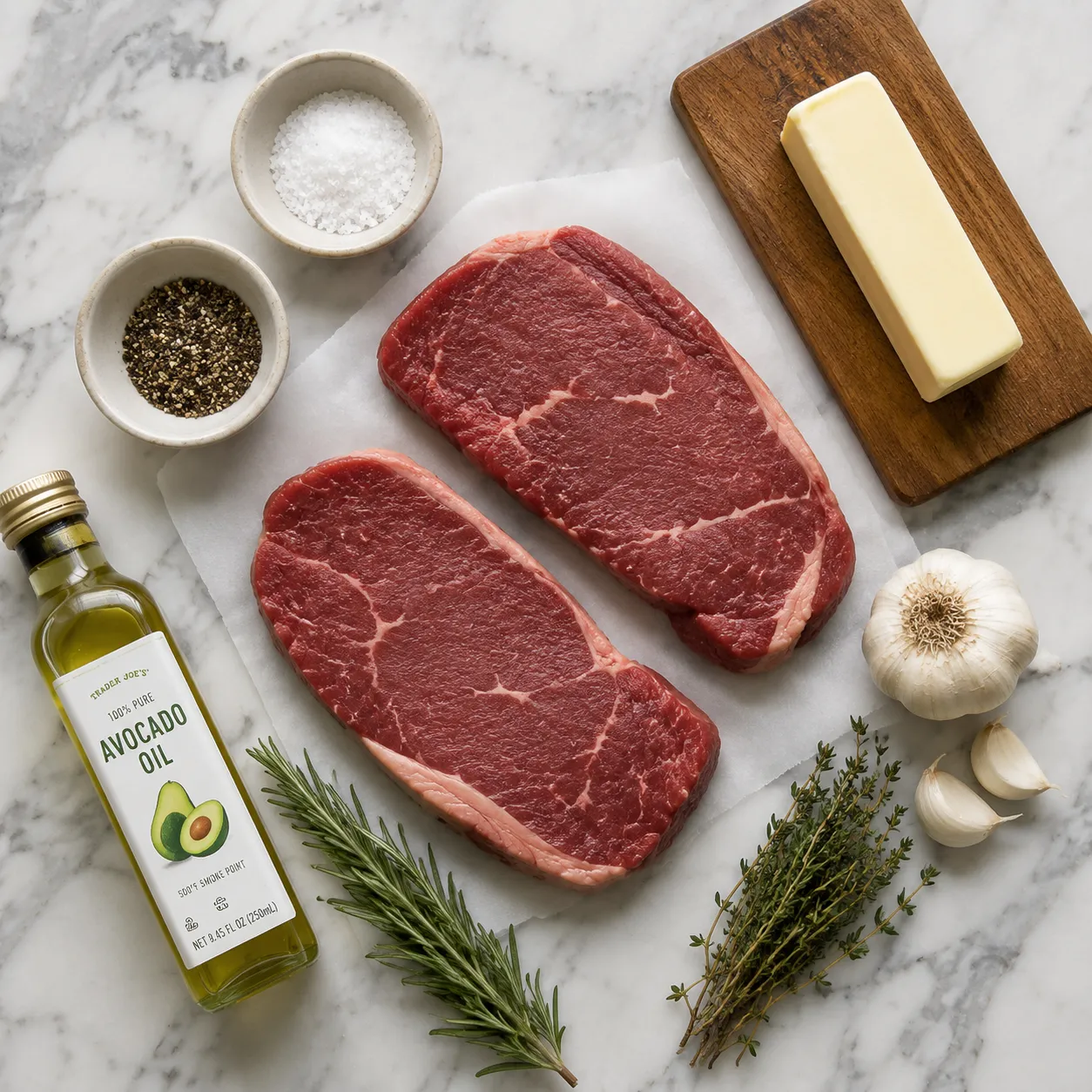
The steak itself is the star, so start with well-trimmed top sirloin and season it generously with kosher salt and freshly cracked black pepper. Kosher salt is easier to distribute evenly than fine table salt, and it helps draw out a little surface moisture before reabsorbing into the meat. That short dry-brine window seasons the interior and helps create the dry exterior you need for a proper crust.
Use a high-smoke-point oil such as avocado, canola, grapeseed, or vegetable oil for the sear. Olive oil can work in a pinch, but it smokes faster, and this recipe relies on a very hot pan. Once the crust forms, butter goes in with smashed garlic cloves, fresh thyme, and rosemary; the milk solids brown, the herbs bloom, and the whole skillet smells like a cozy steakhouse.
The garlic herb butter here is built right in the pan, but if you keep a compound butter recipe in your fridge or freezer, you can absolutely slice off a round and use it at the end. Parsley, chives, sage, or a pinch of lemon zest can all complement the beef, as long as you do not overload the pan with delicate ingredients too early. Fresh herbs are best for basting, but in a pinch, a small pinch of dried thyme or rosemary can season the butter after the heat is lowered.
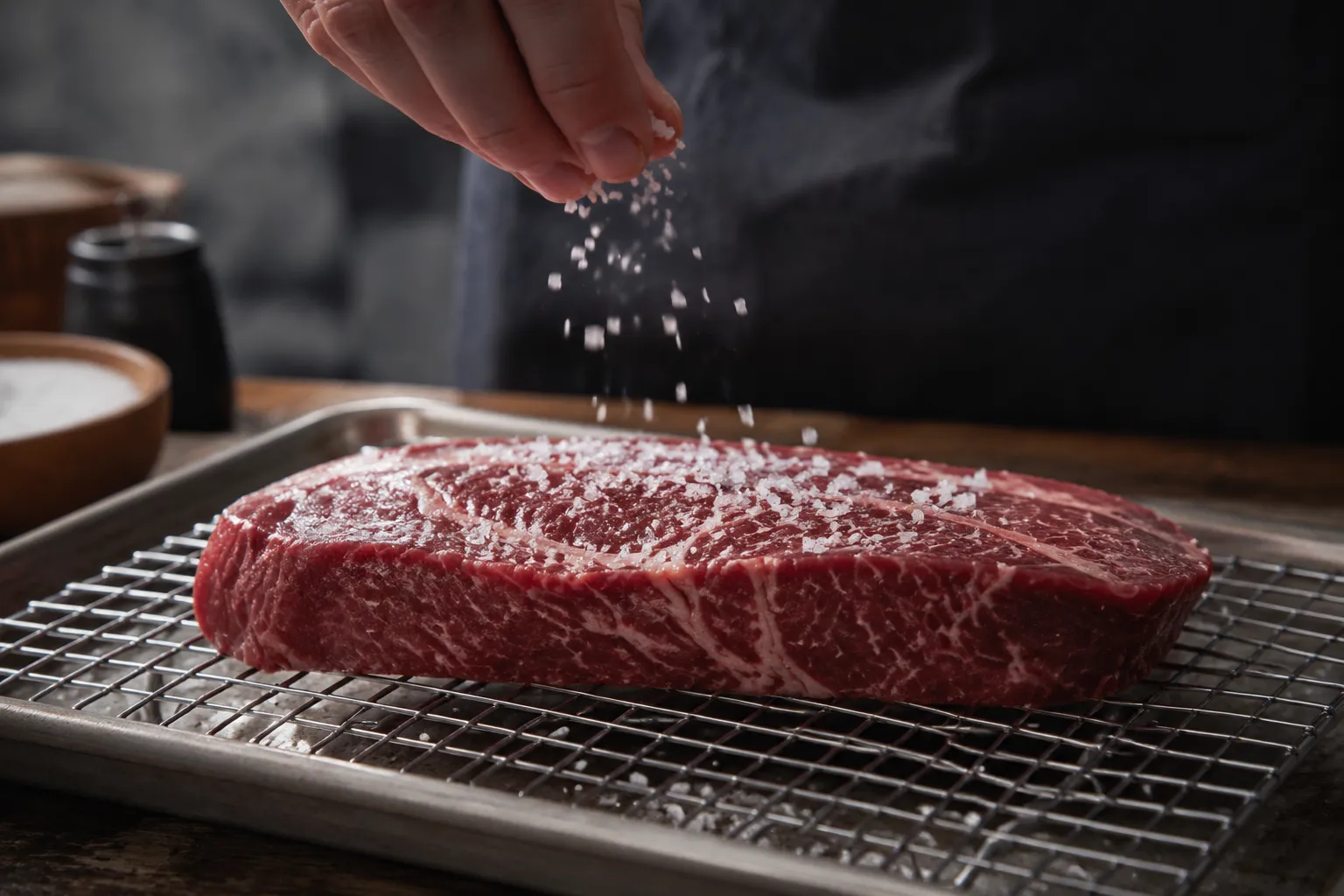
A great stovetop steak begins before the pan ever turns on. Salt the steaks ahead if you can, then let them sit uncovered on a wire rack so the seasoning can work and the surface can dry. Even 40 minutes makes a difference, though you can season right before cooking if dinner is moving fast. Before searing, pat the steaks very dry with paper towels; moisture is the enemy of browning.
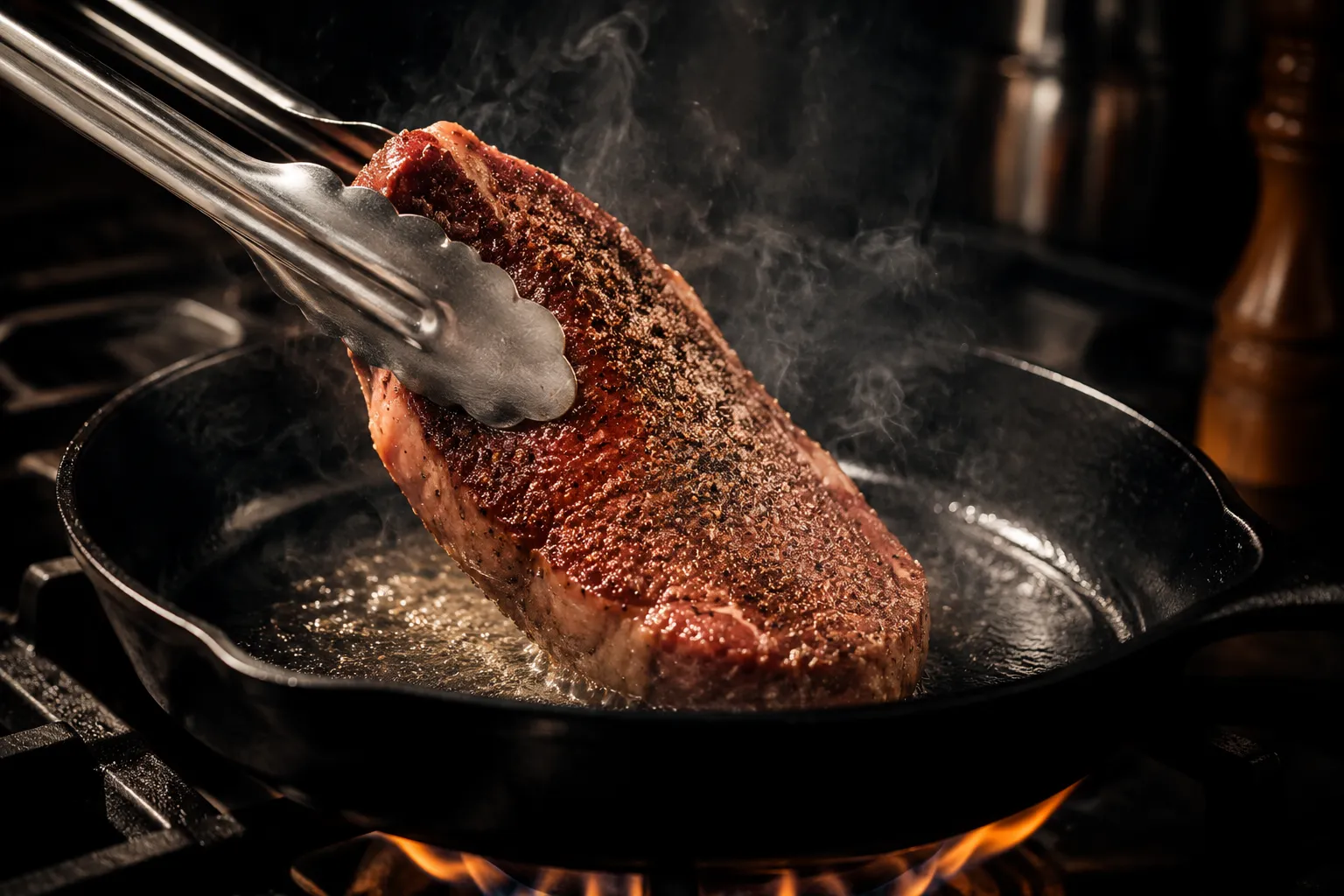
Heat a cast iron skillet until it is truly hot—not just warm, but shimmering and almost smoking once the oil is added. This is the moment that gives you that dark, savory crust and the signature flavor of a cast iron skillet steak. Lay the steak away from you with tongs so the oil does not splatter back, then leave it alone long enough for the underside to brown deeply.
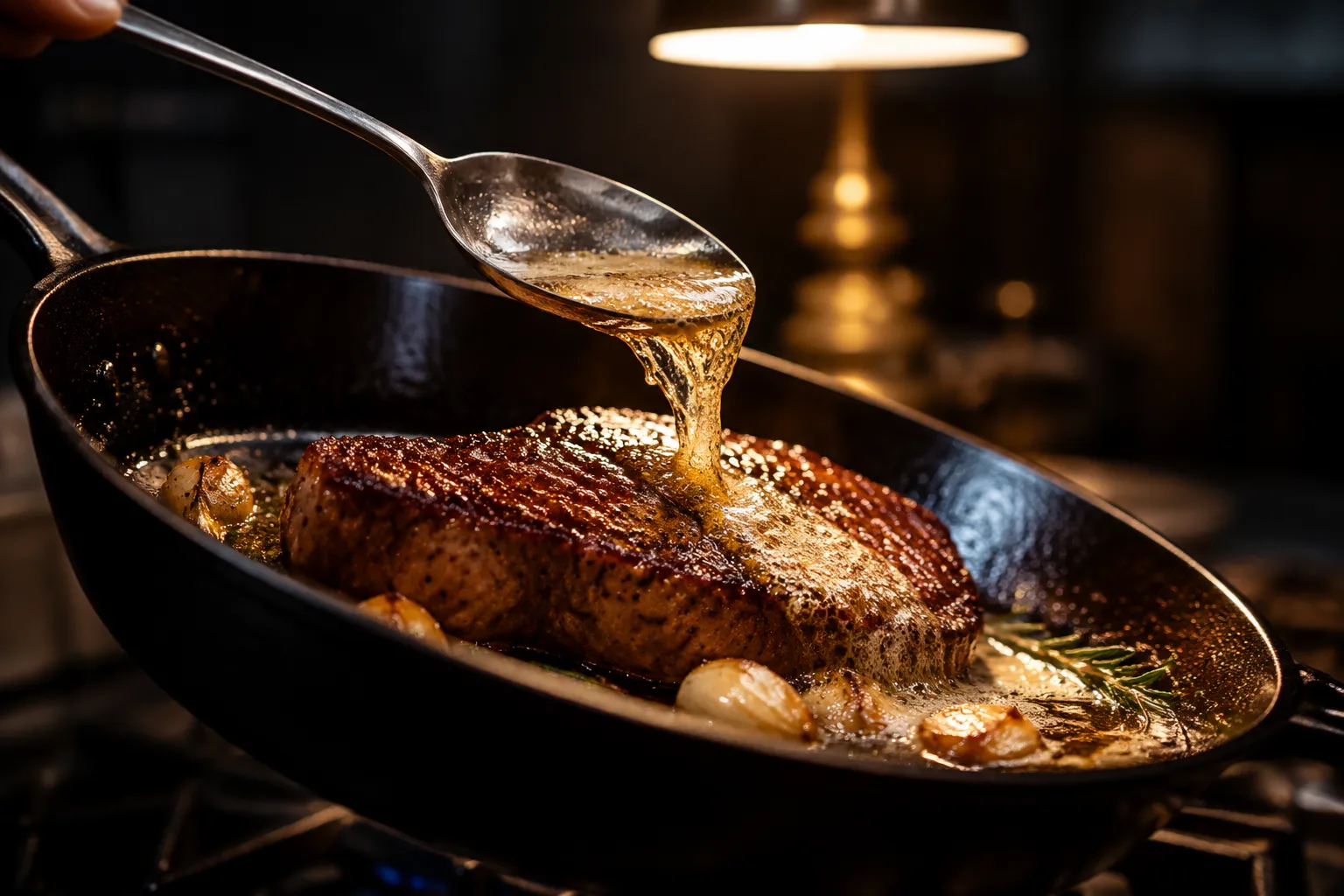
After the first side sears, flip the steak and give the second side the same attention. Then reduce the heat slightly and add butter, smashed garlic, rosemary, and thyme. As the butter foams, tilt the skillet and spoon the hot butter over the steak repeatedly, letting it wash over the crust and perfume the meat. This basting step is short, but it is what turns a basic sear into a glossy, aromatic finish.
Once the steak is close to your target temperature, transfer it to a board and let it rest. If you have ever wondered how to rest steak properly, the answer is simple: give it about 5 minutes, loosely tented if your kitchen is cool, and resist cutting too soon. Resting lets the juices redistribute so they stay in the meat rather than spilling onto the cutting board.
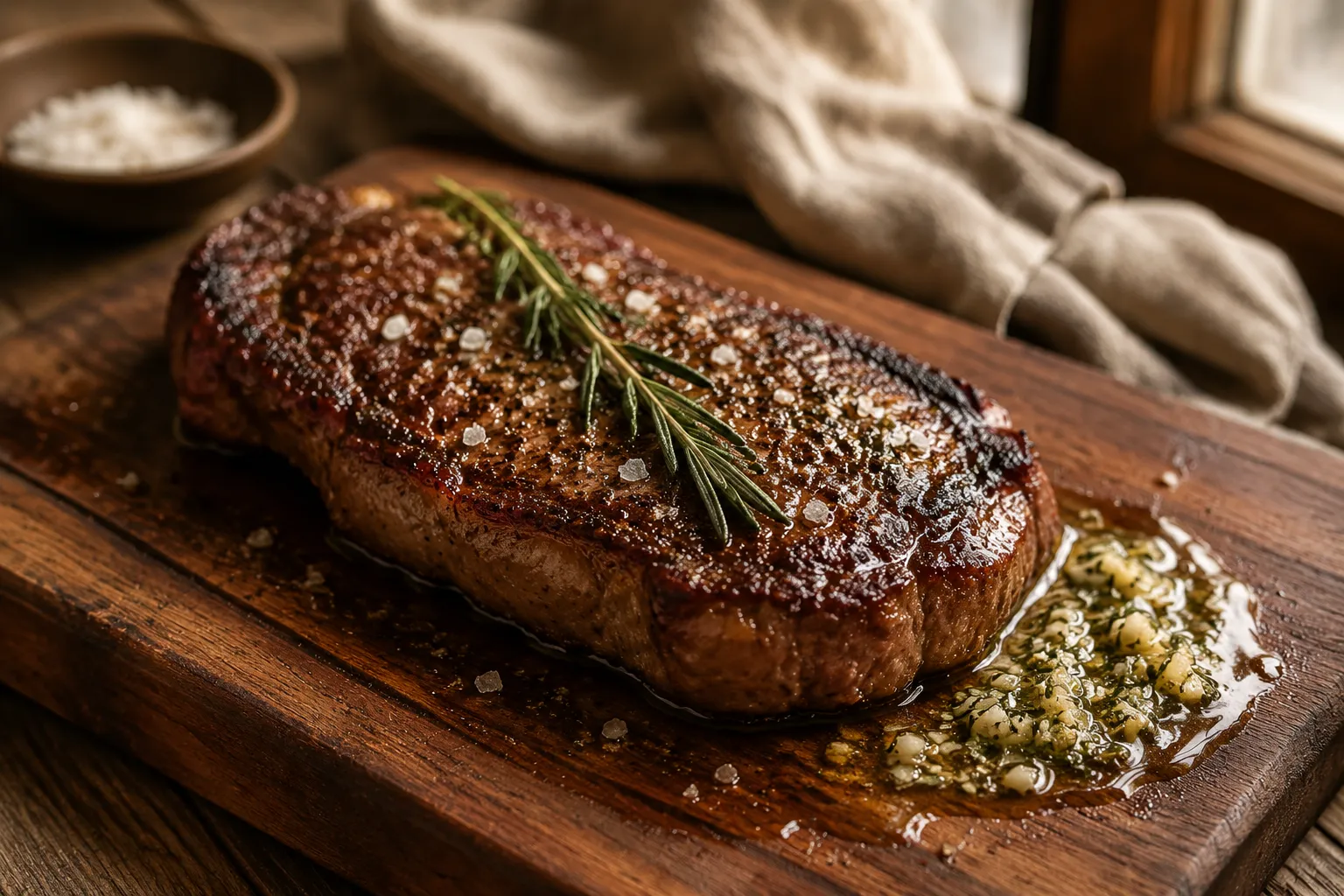
Slice the steak thinly against the grain for the most tender bite. On top sirloin, the grain is usually visible as long lines running in one direction, so turn the steak and cut across those lines. Finish with flaky salt, a spoonful of pan butter, and any browned garlic cloves you want to tuck alongside the slices. This sirloin steak recipe is at its best right after slicing, when the crust is still crisp at the edges and the center is warm and juicy.
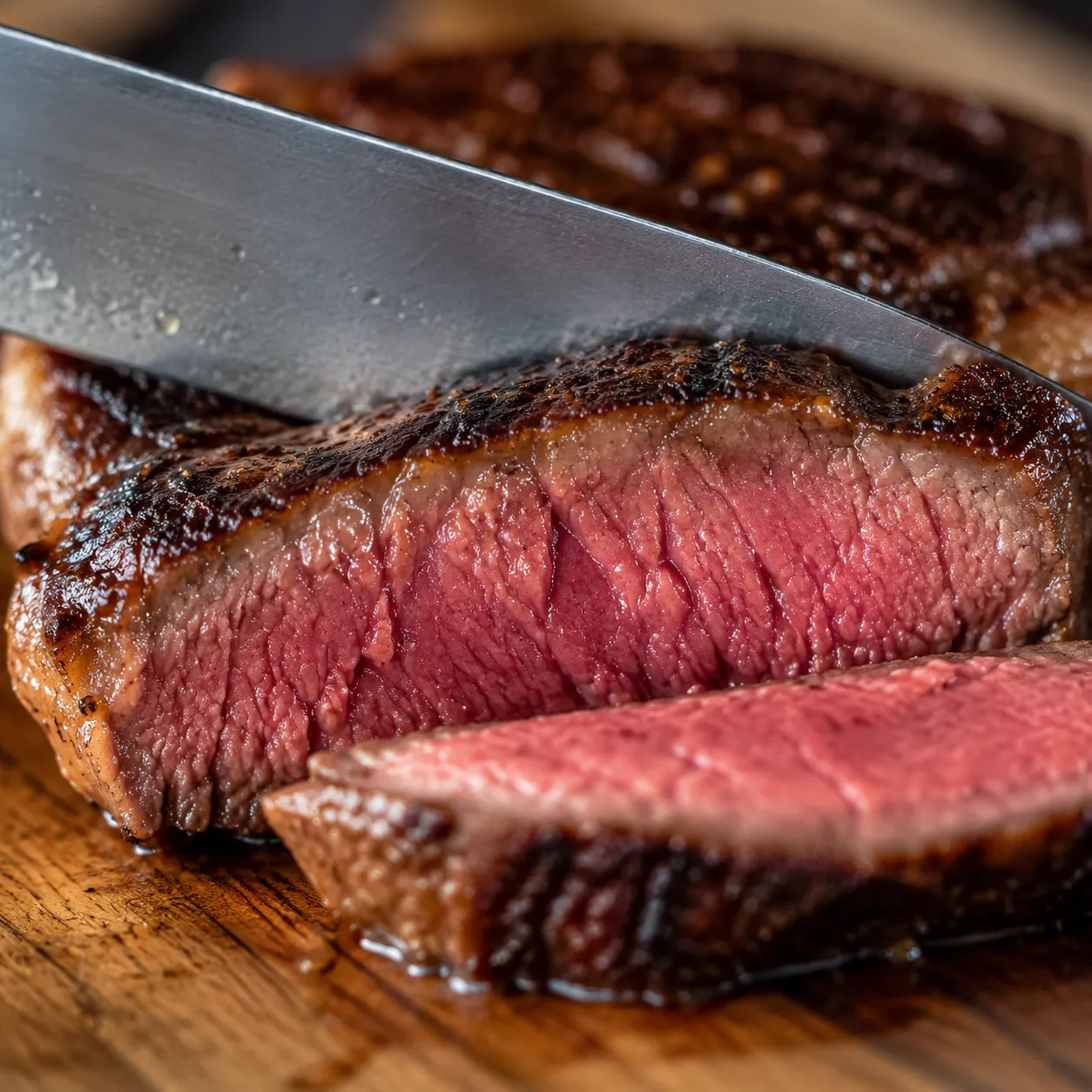
Doneness is personal, but temperature is not guesswork. A thermometer is the most reliable way to hit your ideal center without sacrificing the crust you worked so hard to build. For rare steak, pull around 120–125°F; for medium-rare, pull around 130–135°F; for medium, aim for 140–145°F; for medium-well, use 150–155°F; and for well-done, expect 160°F and above.
For lean cuts like top sirloin, I think medium-rare is the sweet spot because it keeps the steak tender and juicy without tasting undercooked. If you prefer medium, you can still get a delicious result, but watch closely because the window between just right and dry is narrower. A steak doneness chart is handy to keep nearby, especially if you cook different cuts and thicknesses throughout the year.
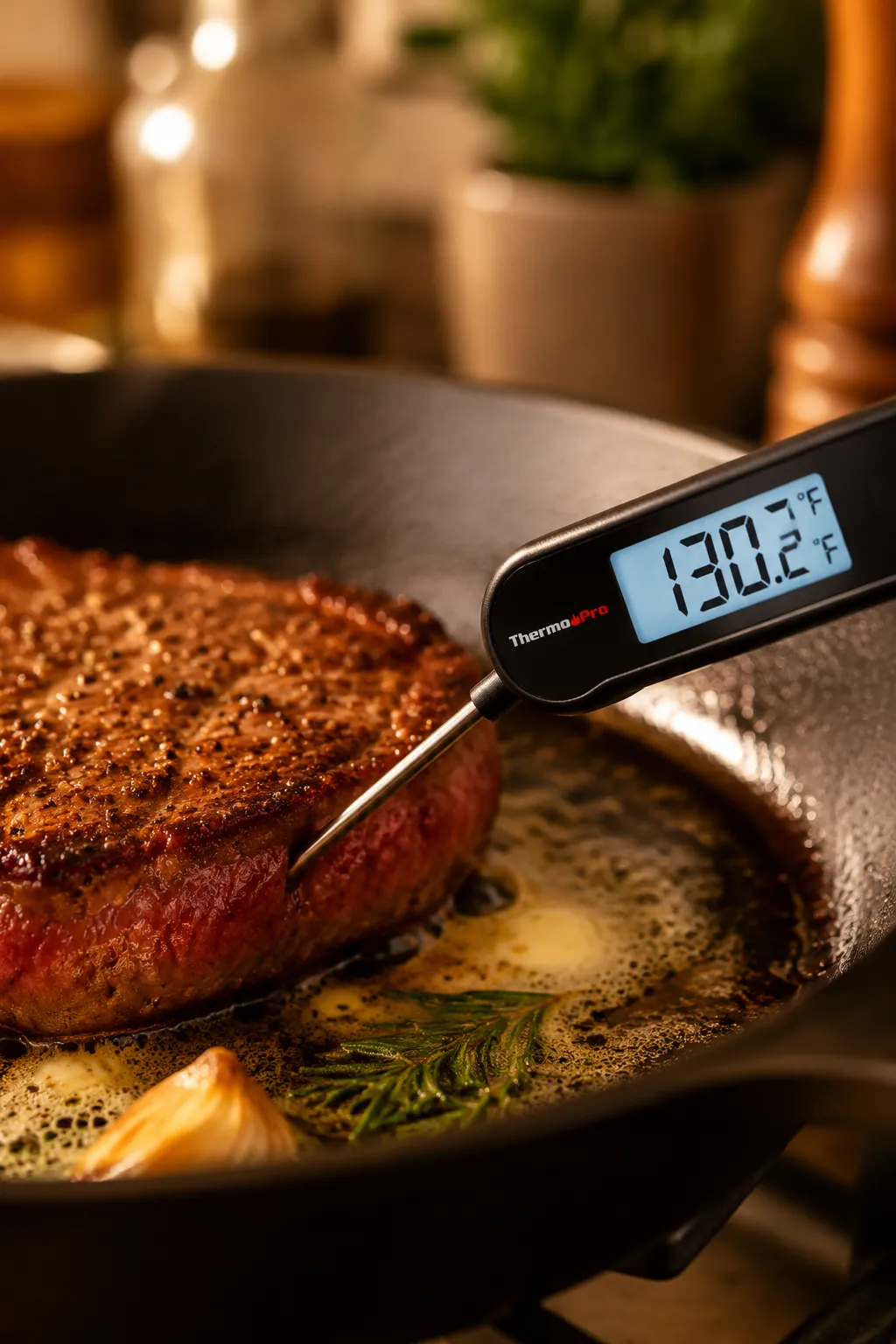
Remember that carryover cooking continues after the steak leaves the skillet. The hotter the pan and the thicker the steak, the more the internal temperature can rise during resting—often 3 to 5 degrees, sometimes a bit more. That is why pulling the steak slightly below your final target is one of the easiest ways to avoid overshooting.
Insert the thermometer through the side of the steak into the thickest part, not straight down from the top. This gives you a better read on the center rather than the hotter surface. If your two steaks are different sizes, check both; the smaller one may finish a minute or two ahead of the larger one.
The beauty of this sirloin steak recipe is that it stacks small, practical choices that add up to a better steak. Dry brining seasons the meat and prepares the surface for browning. A hot cast iron skillet delivers steady, even heat that helps the crust develop quickly. Butter basting adds flavor at the end, when the risk of burning the butter is lower.
It also works because the method respects the cut. Sirloin does not have the same fat cushion as ribeye, so it benefits from a quick, confident sear rather than a long, slow cook. You want color on the outside, a warm pink center, and enough resting time for the juices to settle. Treat it that way and you get a steak that feels generous, not fussy.
If you are cooking for guests, this recipe is easy to scale as long as you do not crowd the skillet. Cook in batches if needed, wiping out any burnt bits between rounds and adding fresh oil. The first batch can rest while the second cooks, and you can briefly spoon hot butter over everything before serving.
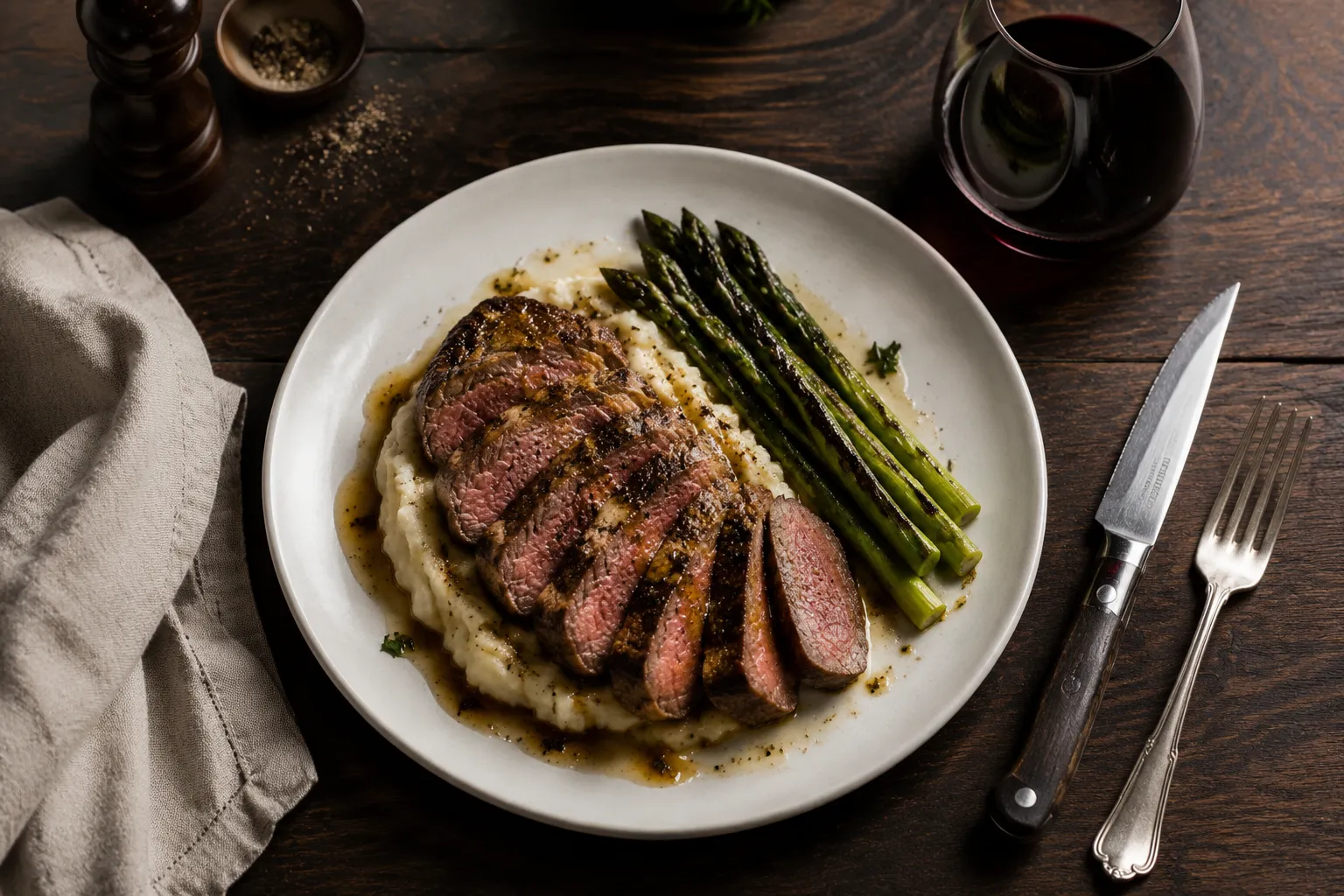
Classic steakhouse sides are always welcome here: creamy mashed potatoes, baked potatoes with sour cream and chives, crisp wedge salad, or roasted mushrooms. The buttery pan juices are also wonderful over simple rice, egg noodles, or a thick slice of toasted bread. If you want something green, asparagus, broccolini, green beans, or a peppery arugula salad all balance the richness of the steak.
For a lighter plate, pair the steak with charred vegetables and a bright sauce, such as chimichurri or a lemony herb vinaigrette. The fresh acidity cuts through the butter and keeps the meal from feeling heavy. A tomato salad in summer or roasted carrots in cooler months can make the same pan-seared steak feel seasonal.
When it comes to drinks, medium-bodied reds like Merlot, Cabernet Franc, Malbec, or a not-too-oaky Cabernet Sauvignon are natural fits. Beer lovers can go with a brown ale, porter, or crisp lager, depending on the sides. Even sparkling water with lemon works beautifully because the bubbles refresh your palate between bites.
This sirloin steak recipe is proof that a gorgeous steak dinner does not have to start with the most expensive cut in the case. With salt, heat, butter, and a little timing, top sirloin becomes juicy, savory, and completely dinner-party worthy. Keep the method close, learn the feel of your pan, and you will have one of those dependable sirloin steak recipes that makes any night feel a little more delicious.
Once you have the basic sear-and-baste method down, it is easy to change the flavor profile while keeping the same cooking technique.
Store leftover sirloin steak in an airtight container in the refrigerator for up to 3 days. If possible, keep the steak in larger pieces rather than slicing it all at once; larger pieces stay juicier when reheated.
To reheat, warm gently in a 250°F oven until just heated through, or sear briefly in a hot skillet with a small pat of butter. Avoid microwaving for too long, which can make lean sirloin tough. Leftover slices are also excellent cold over salads, grain bowls, sandwiches, or tucked into breakfast eggs.