Short Ribs and Red Wine: Fall-Off-The-Bone Braised Recipe
Ingredients
Scale
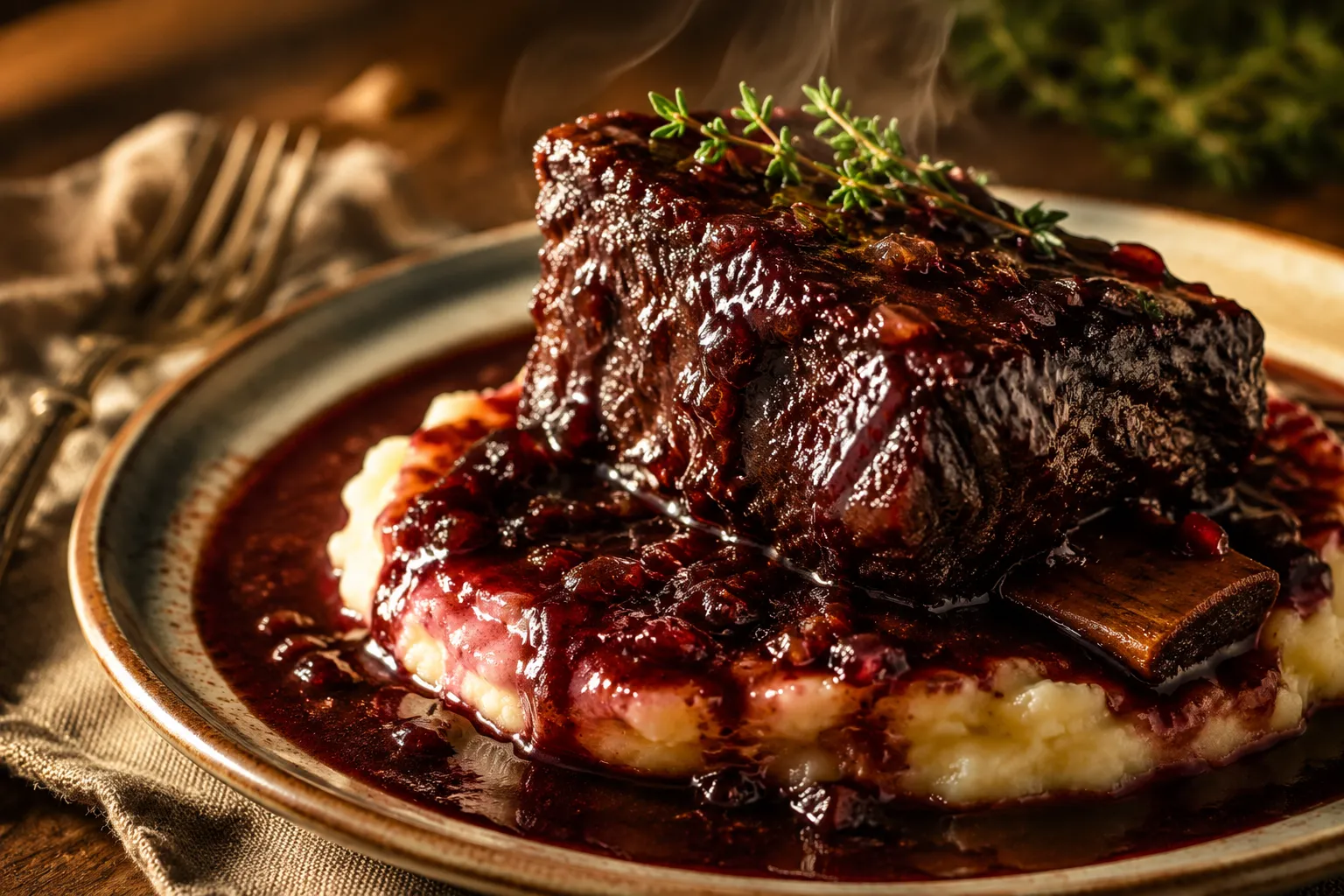
These short ribs and red wine braised together create the most tender, fall-off-the-bone beef in a glossy, deeply savory pan sauce — pure comfort food.
Some nights call for a dish that turns the whole kitchen into a candlelit restaurant, and short ribs and red wine simmered together for hours is exactly that recipe. The beef goes in tough and emerges silky, the wine transforms into a glossy mahogany glaze, and the smell alone will pull people to the table before you even call them. This is the kind of cozy, restaurant-quality dinner that feels impressive but really just asks you to sear, deglaze, and walk away while your oven does the heavy lifting.
I started making this version a few winters ago when I wanted something between a classic French daube and the kind of Sunday supper my grandmother would have made. After tinkering with the ratios over half a dozen test batches, I landed on a full bottle of dry red, a deeply caramelized mirepoix, and a low-and-slow oven braise. The result is a beef short ribs recipe with the kind of fall-off-the-bone tenderness you usually only get at a steakhouse, set in a sauce so silky you'll want to drink it straight from the spoon.
What I love most about this method is how forgiving it is. You don't need fancy cuts or fussy techniques — just a heavy pot, a good bottle of wine, and a few hours of mostly hands-off time. By the time the oven timer chimes, you have a one-pot meal that feels like an event, with no crowded sink full of pans and almost no last-minute work. Pour a glass of what's left in the bottle while the meat rests, and call it a Saturday well spent.
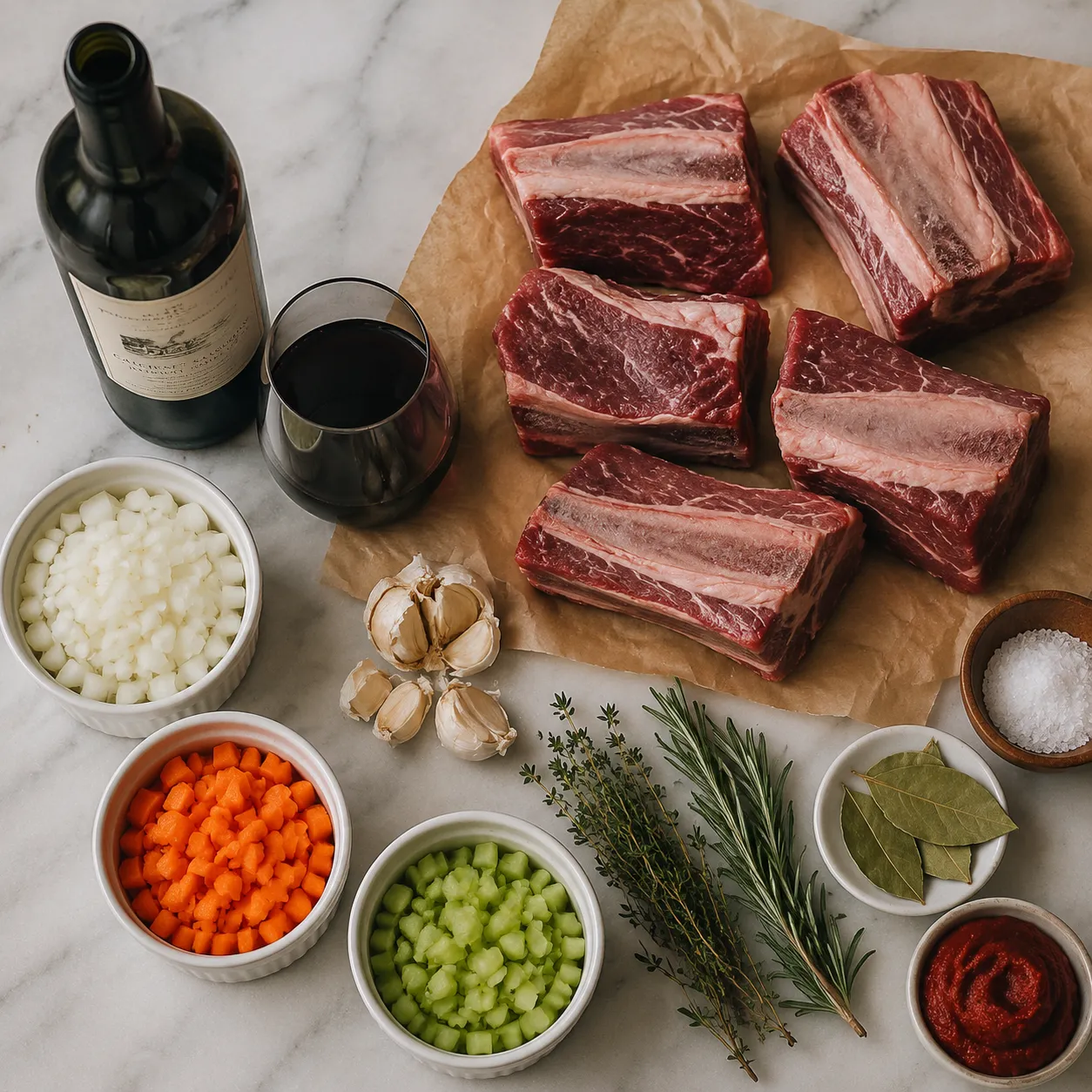
Bone-in beef short ribs are the heart of this dish. The bones add deep, beefy collagen to the sauce, which is why braised short ribs from a Dutch oven feel so luxurious compared to other beef cuts. Look for thick "English-cut" ribs roughly 2 to 3 inches long with even marbling — that fat is what bastes the meat from the inside out as it cooks low and slow. Plan on roughly two-thirds of a pound per person, since these reduce quite a bit during cooking and the bones add weight.
For the wine, choose something dry and full-bodied that you'd happily pour into a glass: Cabernet Sauvignon, Merlot, Syrah, or a southern Côtes du Rhône all work beautifully. Skip anything labeled "cooking wine," which is usually too salty and too thin to develop a proper red wine braising sauce. You'll use the whole bottle, so this is a place where flavor matters — but it doesn't need to be expensive. A $12 bottle that tastes good in a glass will taste great in the pot.
The supporting cast is classic French mirepoix — onion, carrot, celery — plus a generous amount of smashed garlic, tomato paste for body and a brick-red color, beef broth, and a small bouquet of fresh thyme, rosemary, and bay leaves. Kosher salt, plenty of cracked black pepper, and good olive oil round things out. That's it. No exotic ingredients, just pantry staples doing serious work, which is part of why this short ribs and red wine pairing has stood the test of time across French, Italian, and American kitchens.
This is one of those recipes where technique matters more than ingredients. Each step builds flavor on top of the last, so resist the urge to rush — every shortcut shows up in the final sauce. Here's the rhythm of the cook from start to finish, broken down into the five moves that turn a tough cut into something extraordinary.
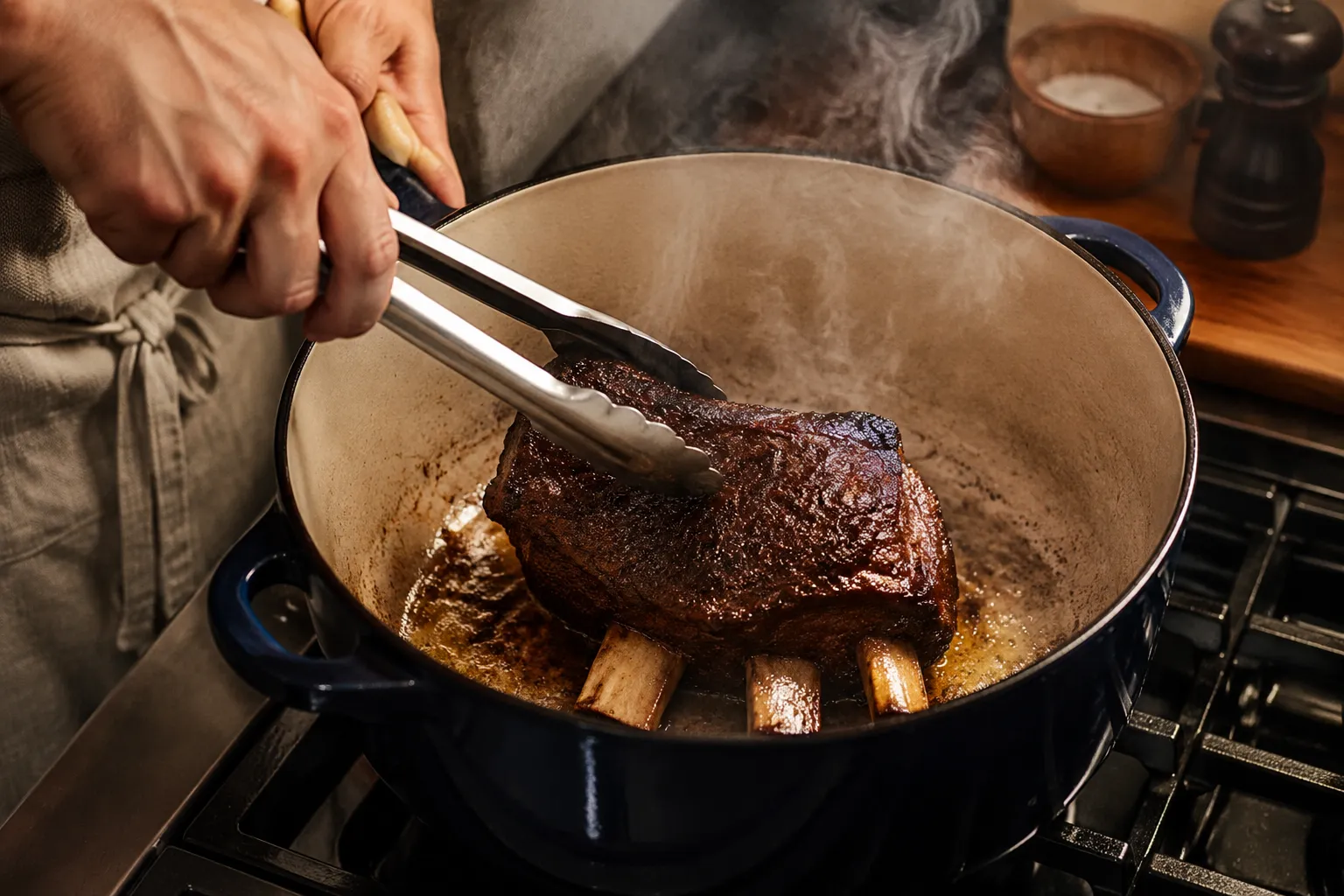
Searing comes first, and it's non-negotiable. Pat the ribs bone-dry with paper towels, season aggressively with salt and pepper, and brown them in batches in a screaming-hot Dutch oven. You want a deep mahogany crust on every side, including the ends — that's pure flavor that will dissolve into the pan sauce later. Crowding the pot drops the temperature and steams the meat instead of searing it, so give each rib room to breathe and don't rush this step. It usually takes about 12 to 15 minutes total.
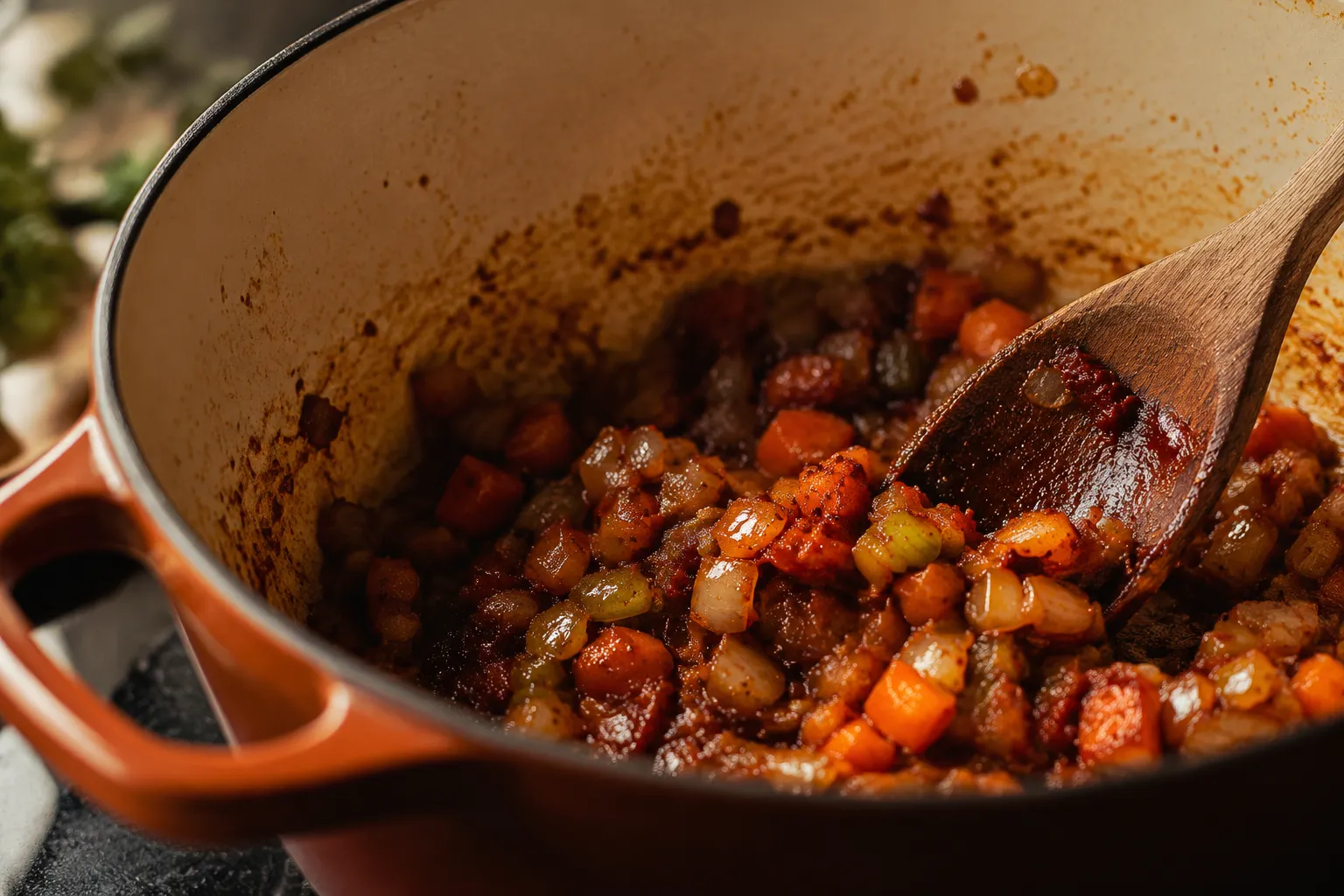
Once the ribs are out, the diced onion, carrot, and celery go straight into the same pot. They'll soak up all that beefy fond and start to caramelize in just a few minutes. After they soften, push them to the side, drop in the tomato paste, and toast it directly against the bottom of the pan until it turns brick-red and smells almost sweet. That darker color means deeper flavor, and it's what gives the finished sauce its signature glossy body. Add the smashed garlic at the very end of this step so it doesn't burn.
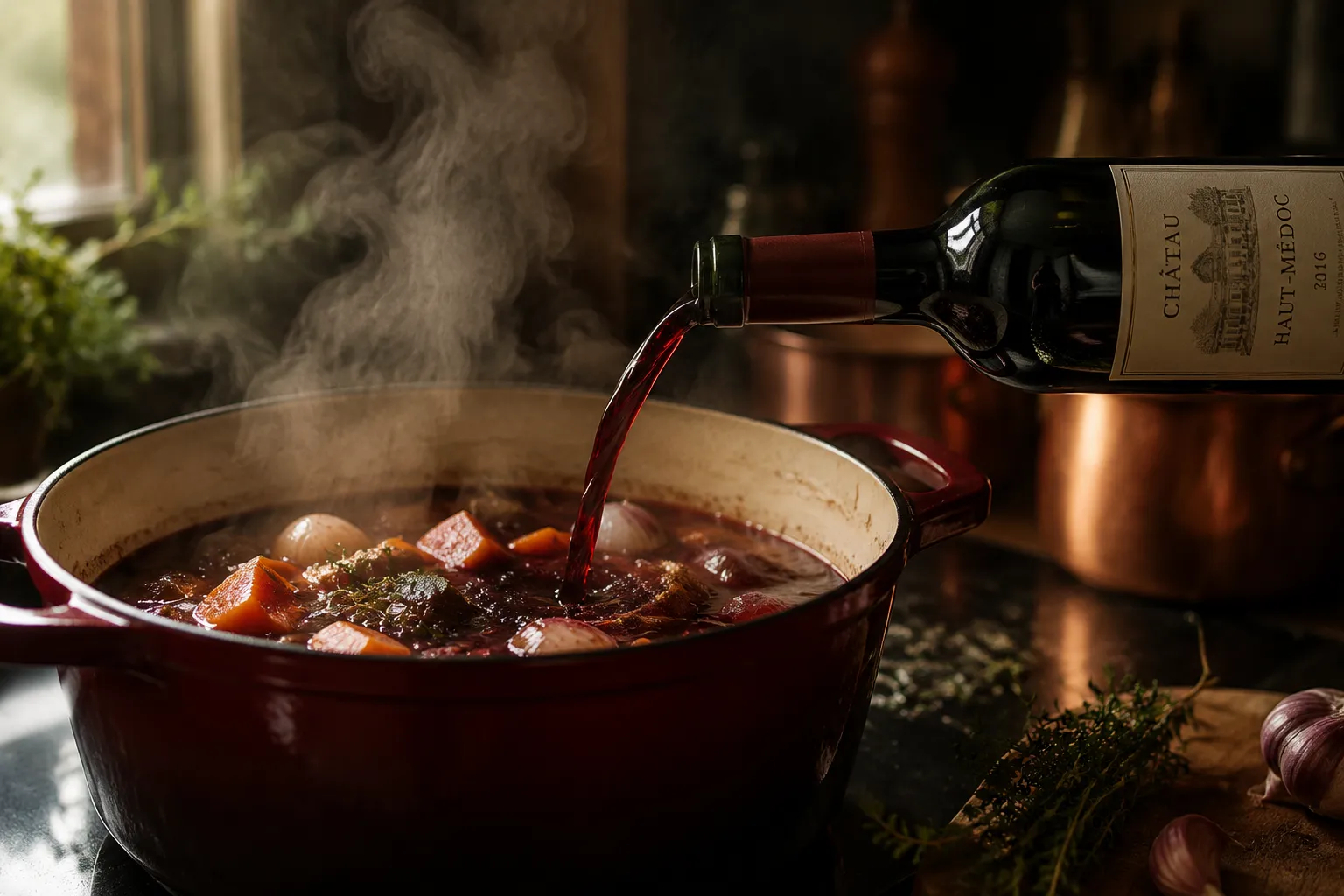
Now for the dramatic part: pour in the entire bottle of wine. It will hiss, steam, and lift every browned bit off the bottom of the pot — that's exactly what you want. Use a wooden spoon to scrape up any stuck-on fond, then let the wine bubble vigorously for 8 to 10 minutes until the alcohol cooks off and the liquid reduces by about a third. Skipping or shortening this step leaves a raw, tannic edge in the sauce, so be patient. This is where most of the wine's harshness disappears and the fruit-forward backbone develops.
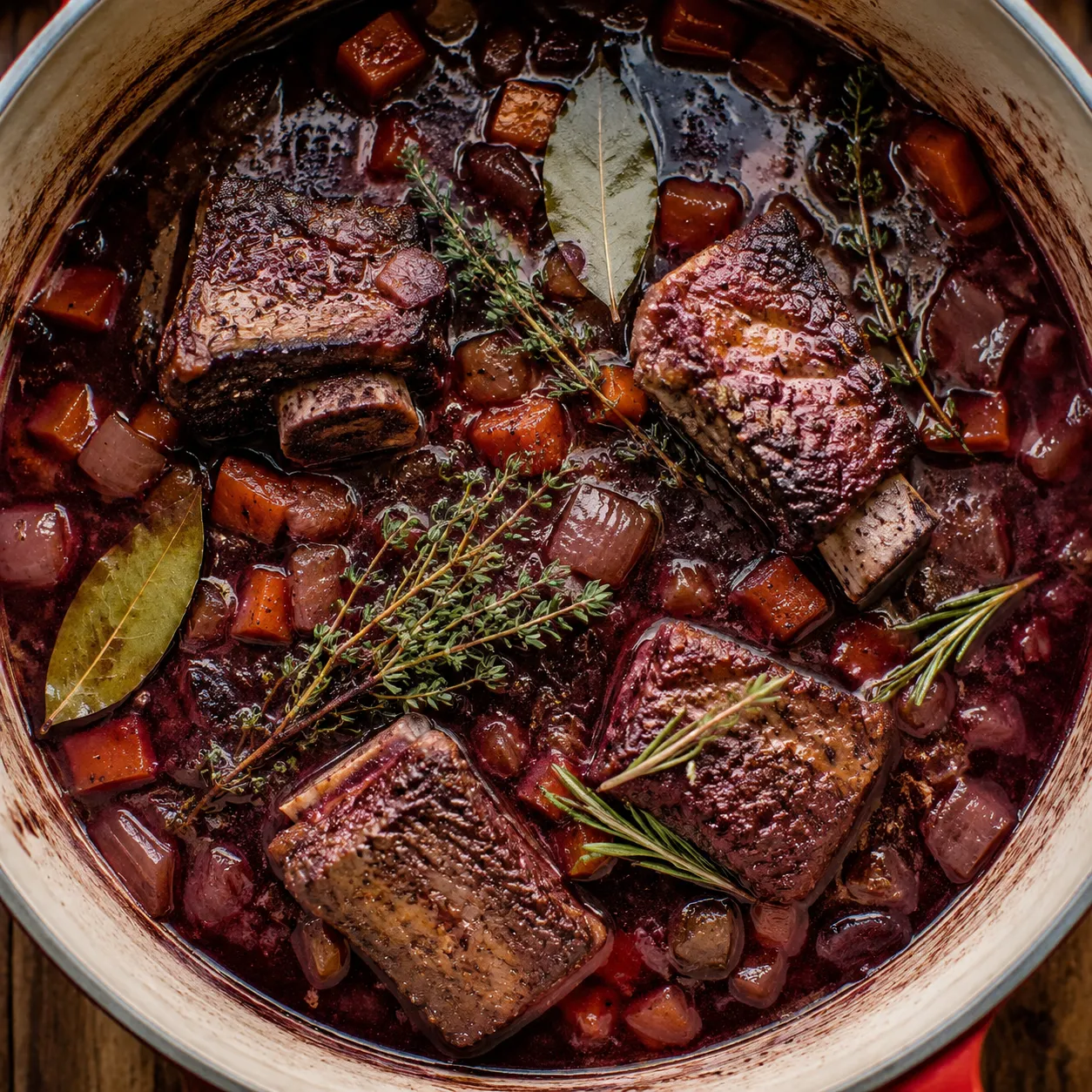
Add the beef broth, fresh herbs, and bay leaves, then nestle the seared ribs back into the pot — bones up, meat half-submerged. Bring everything to a gentle simmer, cover tightly, and slide the pot into a 325°F oven. From here, time does the work. Two and a half to three hours later the meat will be slumping off the bone and the kitchen will smell like a French bistro. Resist the urge to peek too often; every time you lift the lid you lose heat and add cooking time.
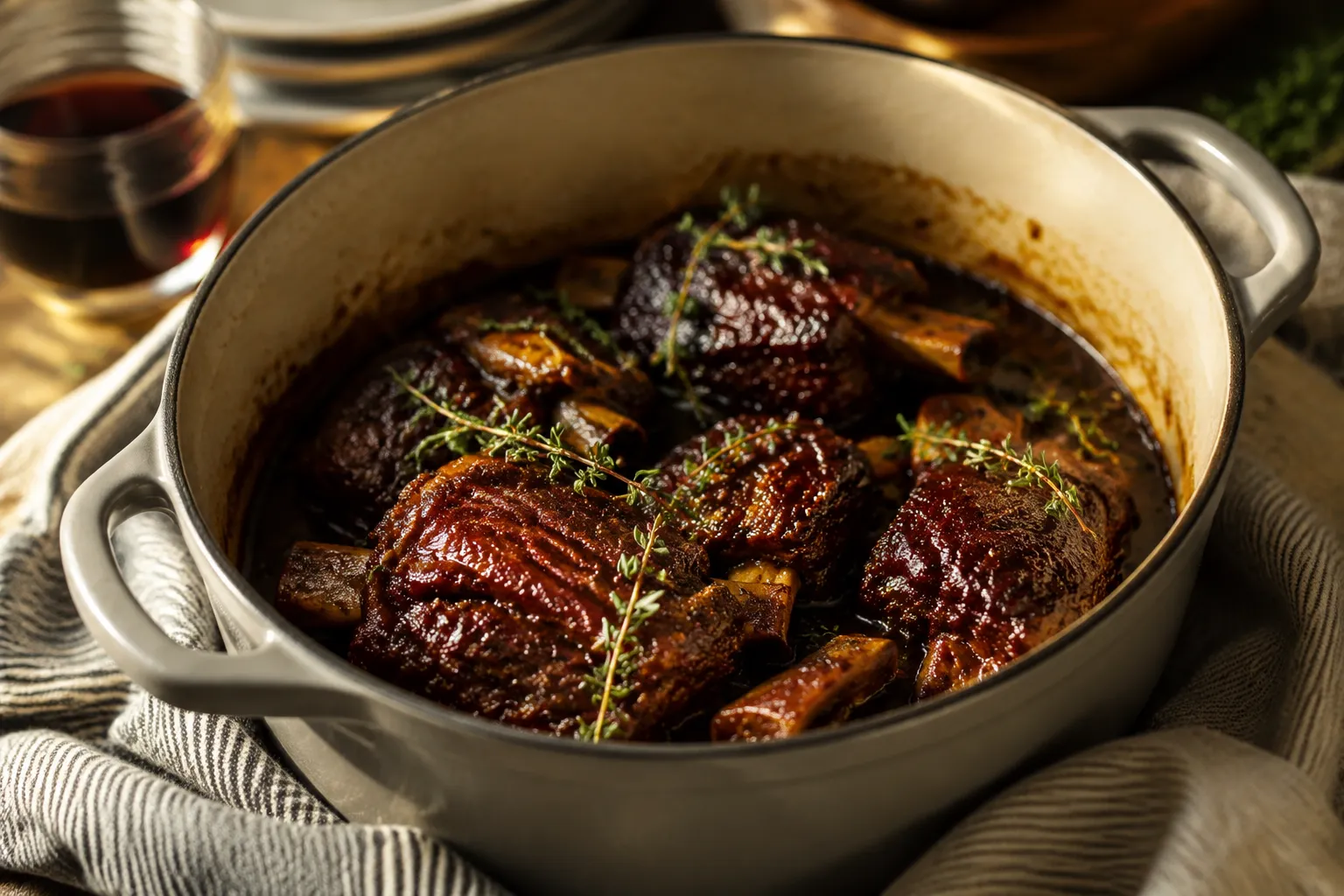
The final move is reducing the sauce. Lift the ribs onto a platter and tent loosely with foil. Skim off the layer of fat that has risen to the surface, then simmer the liquid on the stovetop for 10 to 15 minutes until it coats the back of a spoon. This concentrates everything you've built and gives you that glossy, restaurant-style finish. Taste, adjust salt, and either return the ribs to the pot to glaze in the sauce or spoon the sauce generously over the plated meat.
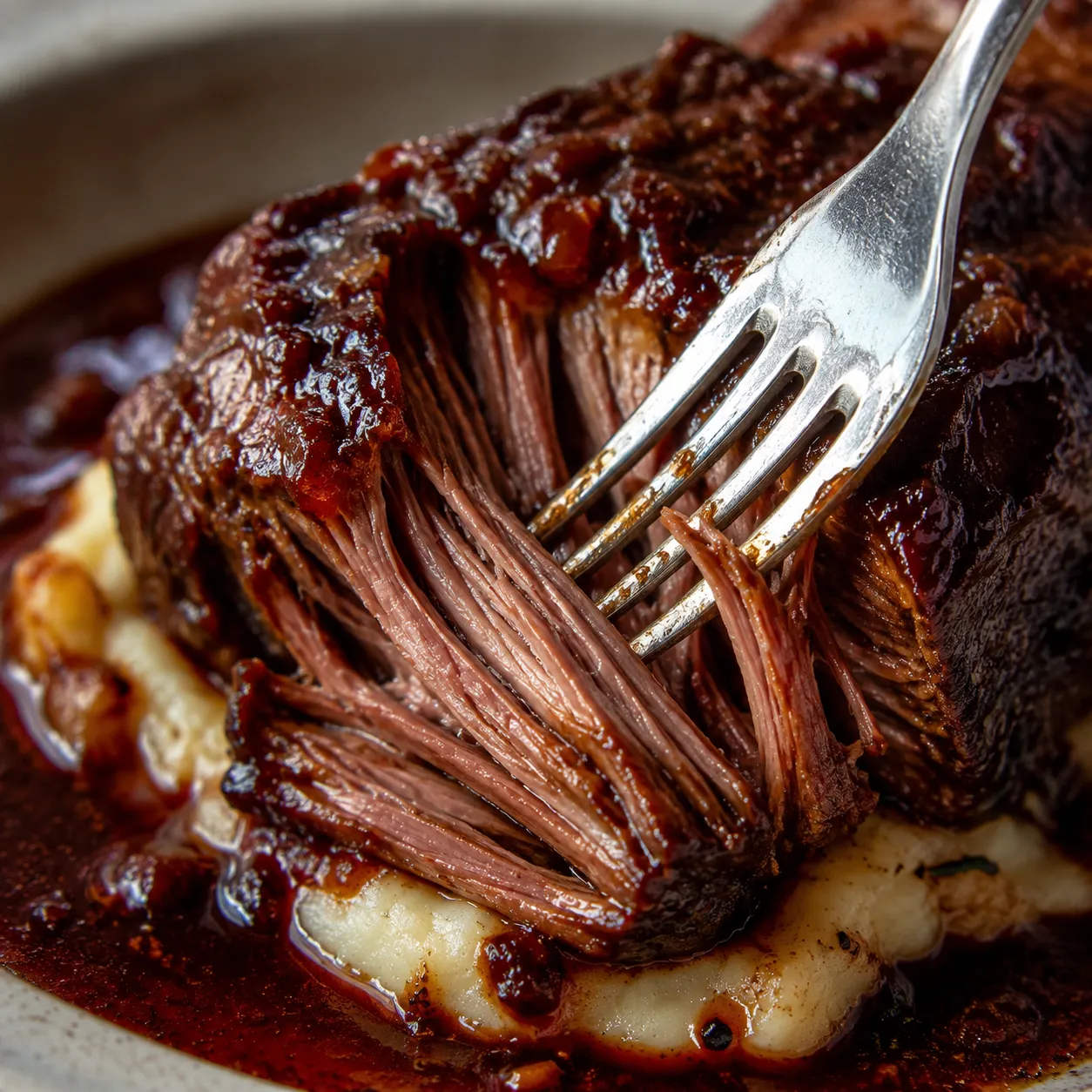
A sauce this rich begs for something soft and starchy underneath, and creamy mashed potatoes are the classic move — every bite turns into a little pile of beef, glossy sauce, and silky potato. Buttered egg noodles or soft Parmesan polenta work just as well and soak up the liquid beautifully. For something with a bit more structure, try parsnip purée, celery root mash, or a buttery saffron risotto. The goal is something neutral and creamy that lets the wine sauce do the talking.
You'll want a vegetable side that can stand up to the deep flavors without competing. Roasted broccolini, charred Brussels sprouts with balsamic, or simple haricots verts with lemon all work, and a crisp green salad with a sharp Dijon vinaigrette cuts beautifully through the richness. Don't forget a hunk of crusty sourdough or warm garlic bread for mopping up the last of the sauce — that's not optional in my house.
If you're hosting, this is one of those "wow" dinners that makes the cook look like a pro. Pour the same wine you cooked with, light a candle, and you've got a meal worth lingering over. For more ideas on what to serve with short ribs, think along the lines of buttery, simple, slightly sweet — anything that lets the beef be the unmistakable star of the plate.
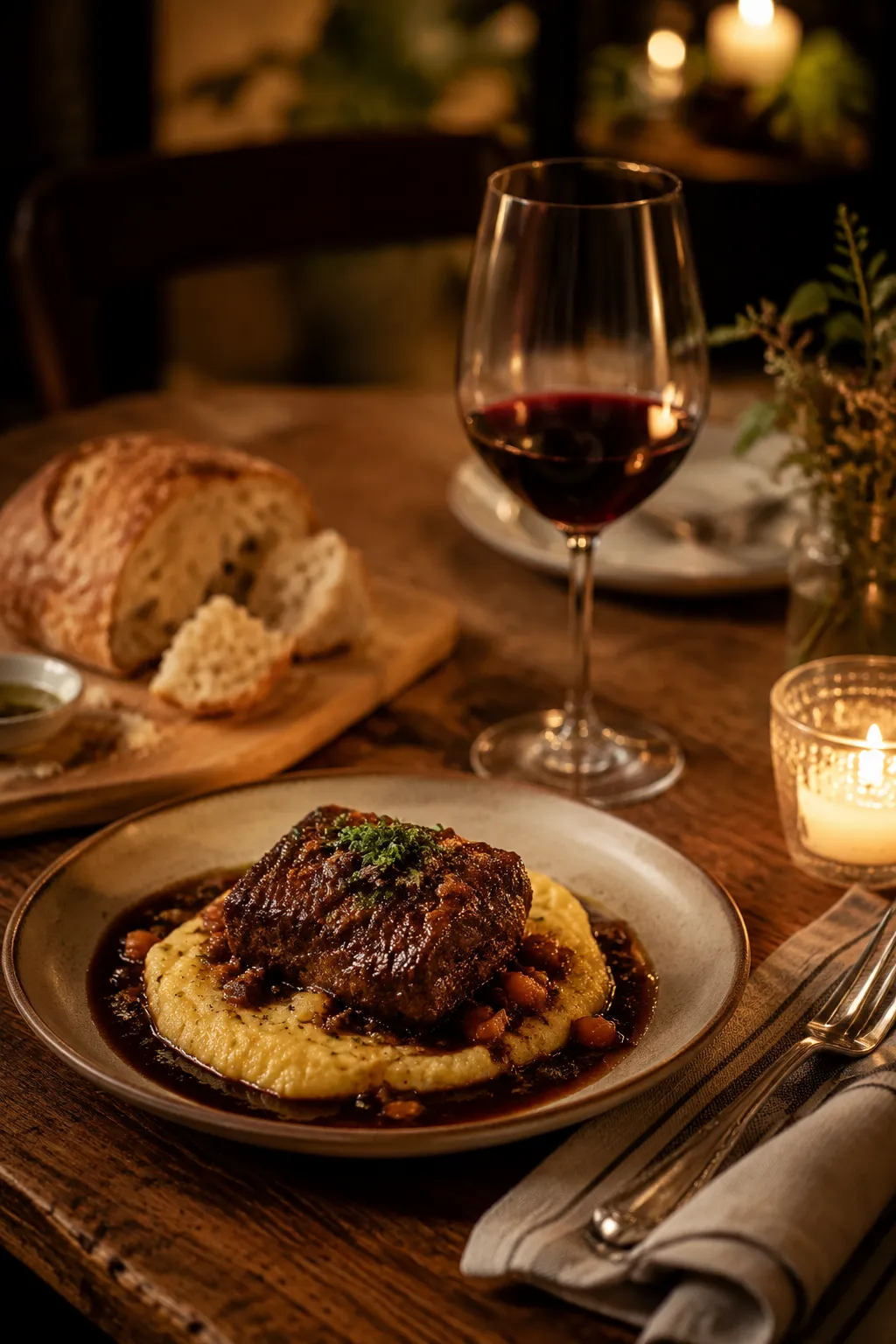
Of all the cold-weather meals I cook, this one is my desert-island dish. There's something about the smell of beef, wine, and herbs slowly mingling in the oven that turns even an ordinary Sunday into a small celebration. It's the meal I make when friends are coming over but I don't want to be tied to the stove, when the weather has turned and we want something hearty, or when I just feel like cooking something properly.
A heavy enameled Dutch oven is the right tool for the job because it sears, braises, and reduces in one pot with even, steady heat retention, which is why I lean on it for so many Dutch oven beef recipes throughout the season. If you don't have one, any oven-safe lidded pot with a heavy base will work — just adjust your liquid level slightly because wider pots evaporate faster, and check the level at the two-hour mark to make sure nothing is going dry.
Whether you're cooking for a quiet weekend at home or pulling out the good plates for company, this short ribs and red wine pairing is the kind of recipe you'll come back to every cold-weather season. Pour yourself a glass of what's left in the bottle, settle in while the oven hums, and prepare to be very, very popular at dinner.
This recipe is the classic blueprint, but it adapts easily to different equipment, dietary needs, and what you have on hand. Once you've mastered the base technique, treat the wine and aromatics as a starting point and lean into your own pantry.
Cooked short ribs keep beautifully. Cool to room temperature, then transfer the meat and sauce together to an airtight container and refrigerate for up to 4 days. The fat will solidify on top overnight, which makes it easy to lift off in one piece for a cleaner, more refined final sauce. To freeze, portion into freezer-safe containers (always with sauce to protect the meat from freezer burn) and store for up to 3 months. Thaw overnight in the fridge before warming.
For the best texture on reheating, transfer everything to a covered Dutch oven or saucepan and warm gently over low heat or in a 325°F oven until heated through, about 20 to 25 minutes. Avoid the microwave when you can — it tends to dry out the strands of beef and break the silky sauce. If the sauce thickened too much in the fridge, loosen it with a splash of broth or water as it warms, and taste for salt before serving since cold blunts seasoning.