Hamburger Steak with Onion Gravy
Ingredients
Scale
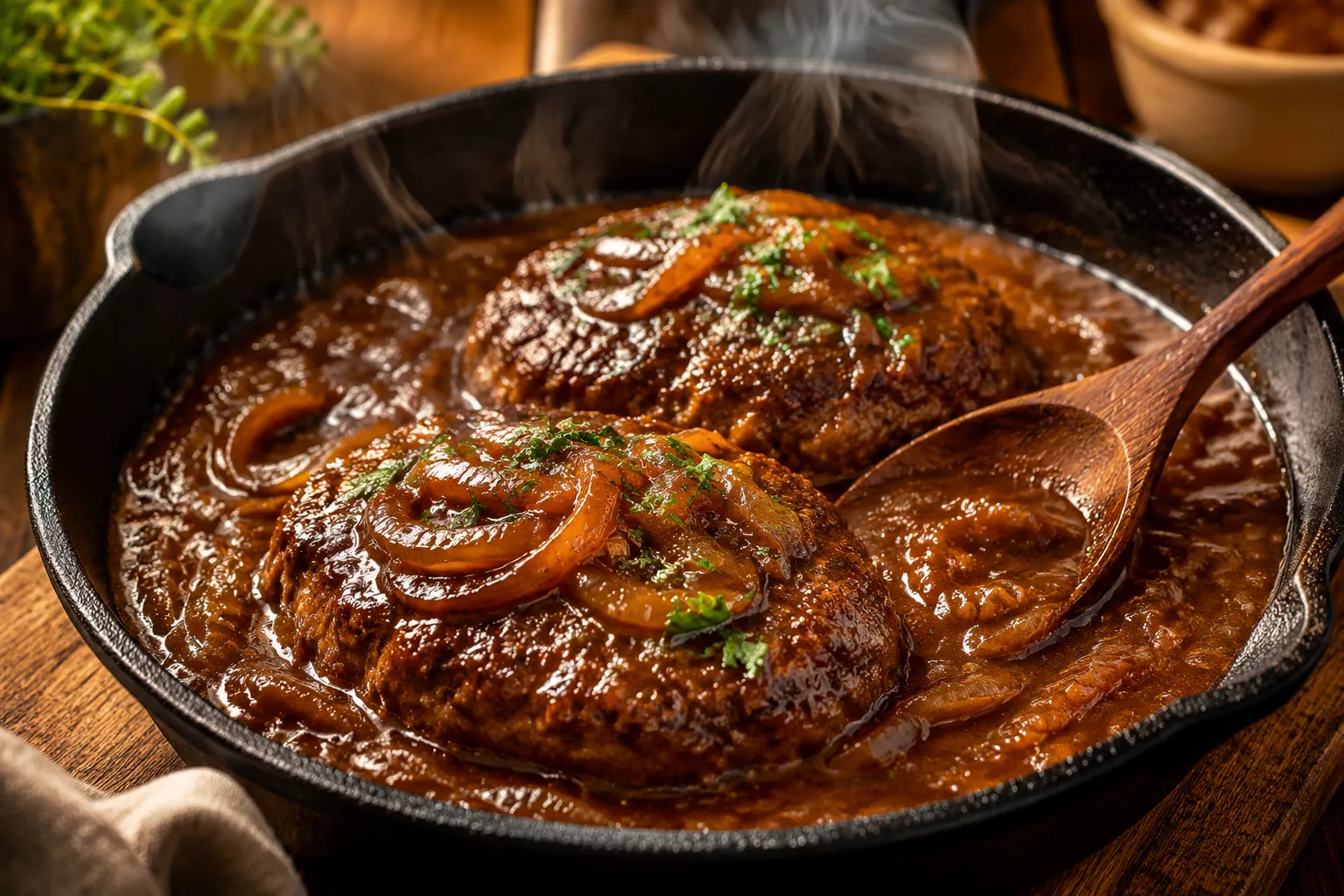
Tender, juicy hamburger steak patties smothered in a rich brown onion gravy, served over mashed potatoes. Pure diner-style comfort food in 30 minutes flat.
There's a reason hamburger steak with onion gravy has earned a permanent spot on diner menus across America: it delivers everything we crave in a weeknight meal, a deeply seared beef patty, glossy mahogany pan sauce, soft pillowy potatoes underneath, without asking for a steakhouse budget. This is the kind of dinner my grandmother could pull together after a long shift, and the kind I now lean on when the fridge is thin and the kids are hungry.
The whole thing comes together in about 30 minutes in a single skillet. You sear seasoned ground beef patties until the crust is almost too dark, then build a silky onion gravy right on top of the fond they leave behind. The patties finish cooking gently in that gravy, soaking up flavor while staying tender. It's classic comfort food engineering: high heat for color, low heat for texture.
If you've been hunting for the kind of dish that actually tastes like the diner version, deep, beefy, glossy, oniony, this is it. We'll break down what separates a true hamburger steak from a Salisbury steak, walk through the technique step by step, and cover the small details, Worcestershire sauce ratio, slicing the onions thin, deglazing properly, that turn a fine dinner into a great one.
The two dishes get used interchangeably on menus, but technically they're not the same. A traditional hamburger steak is little more than well-seasoned ground beef shaped into a thick oval patty and pan-seared, almost like a bunless burger served under sauce. The texture stays loose and beefy, the seasoning is simple (salt, pepper, maybe a little Worcestershire sauce), and the patty itself is the star.
Salisbury steak, on the other hand, is closer in spirit to mini meatloaf. It's mixed with breadcrumbs, egg, sometimes minced onion, and seasonings, then bound and shaped before searing. The texture is denser and more uniform, almost springy, and the sauce is usually mushroom-forward rather than pure caramelized onion. Any solid Salisbury steak recipe leans heavily on those binders to create that signature toothsome bite.
This recipe lives somewhere between the two camps, closer to hamburger steak, but with just enough breadcrumb and egg to keep the patties from cracking apart while they simmer in the gravy. You get the loose, beefy chew of a hamburger steak with the structural integrity to handle a long, saucy bath. Best of both worlds, if you ask me.
One of the joys of this dish is how short the shopping list is. Almost every ingredient lives in your fridge or pantry on a normal Tuesday, which is exactly why it slots into rotation alongside other ground beef dinner ideas like meatloaf, sloppy joes, and weeknight chili. Here's what's pulling weight in the pan and why each piece matters.
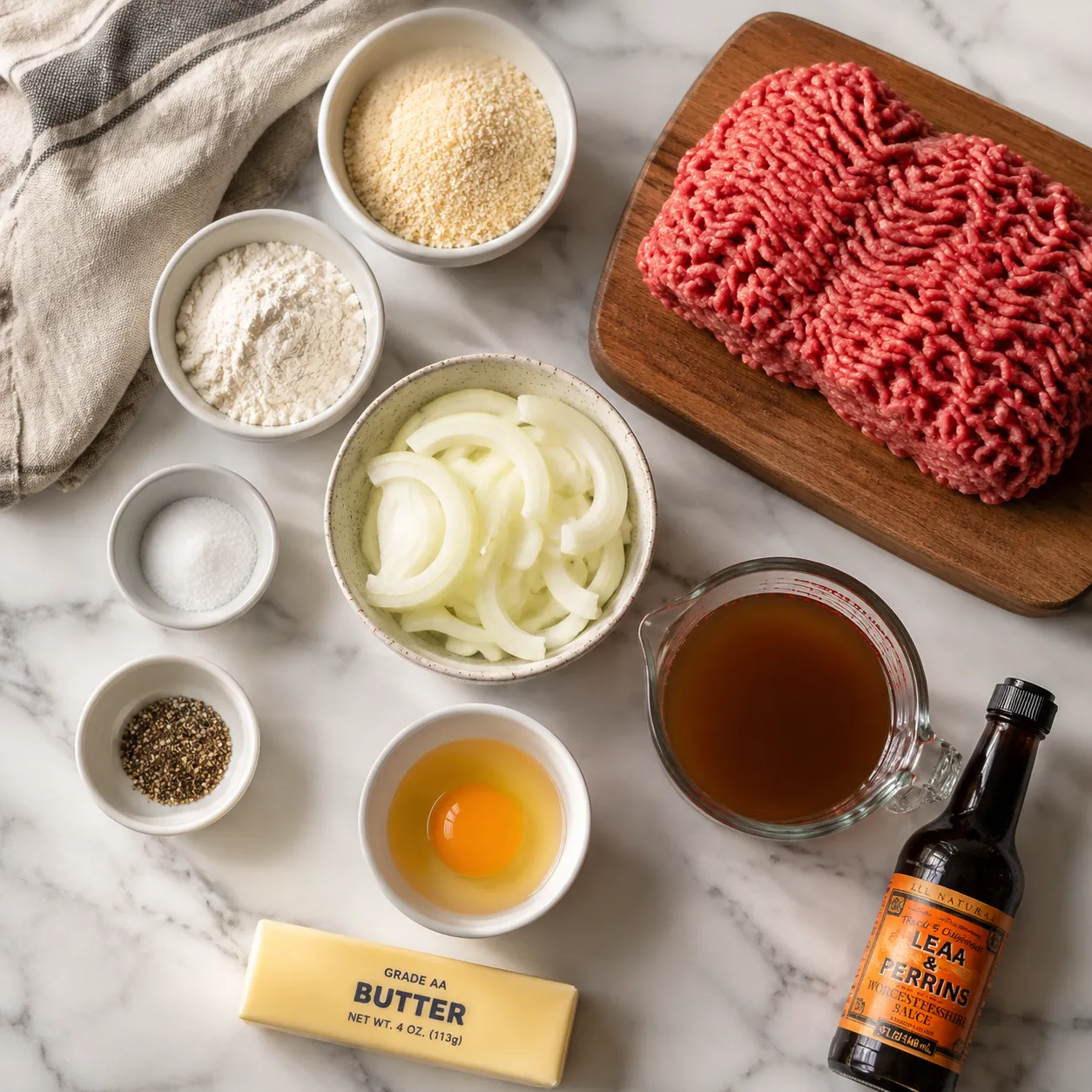
For the patties: Use 80/20 ground chuck, that 20% fat is non-negotiable for juicy, tender results. A splash of Worcestershire sauce in the meat mixture adds savory depth, while a small handful of plain breadcrumbs and one egg keep the patties cohesive without tipping them into meatloaf territory. Salt, black pepper, garlic powder, and onion powder round out the seasoning.
For the gravy: Two large yellow onions sliced thin, unsalted butter, all-purpose flour, two cups of good beef broth, another hit of Worcestershire, and a finishing pat of butter for shine. That's the entire gravy. The depth comes from technique, properly browning the onions and scraping up the seared-meat fond, not from a dozen specialty ingredients.
The full step-by-step is in the recipe card below, but here's the rhythm of the cook so you can see what's happening at each stage. The whole sequence runs about 30 minutes from cutting board to dinner plate, which puts this firmly in the category of easy weeknight dinners that still feel like real cooking.
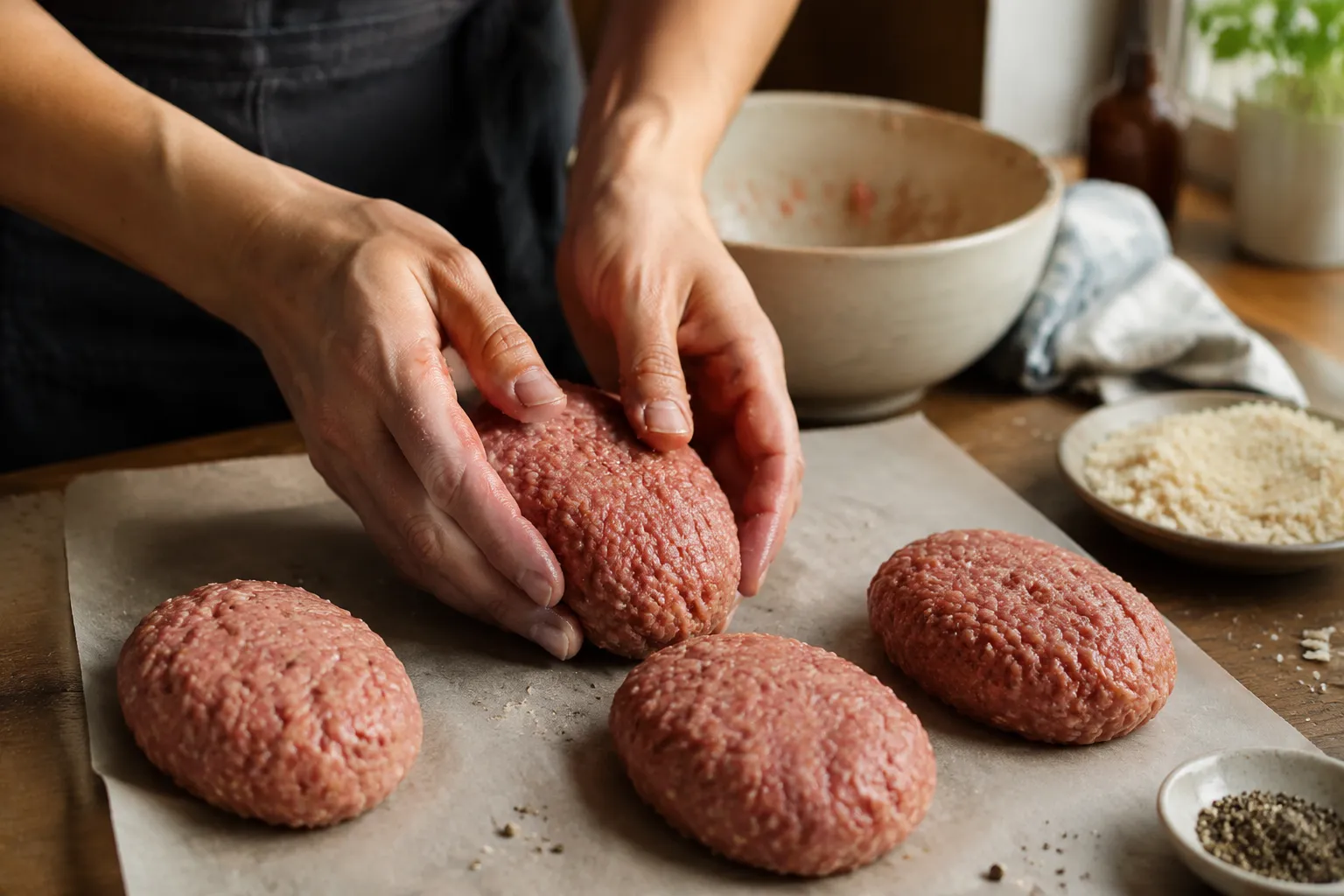
Mix and shape gently. Combine the ground beef with breadcrumbs, egg, Worcestershire, and seasonings using your hands or a fork, just until everything is incorporated. Overworking compresses the meat and gives you a rubbery patty. Shape into four ovals about three-quarters of an inch thick; ovals (rather than rounds) cook more evenly and look more diner-authentic on the plate.
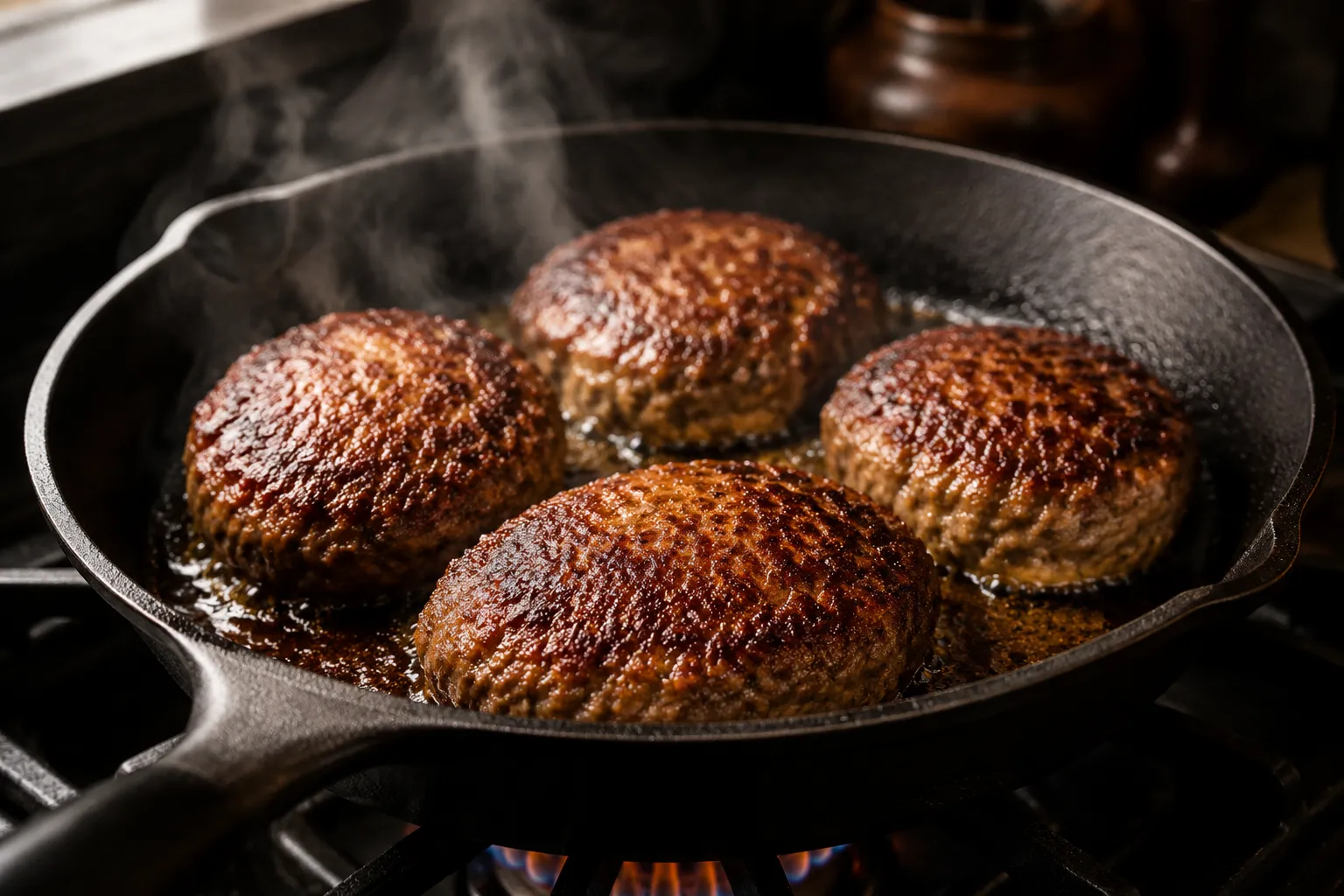
Sear hard. Heat a tablespoon of oil in a heavy skillet (cast iron is ideal) over medium-high until it shimmers. Lay the patties in and resist the urge to move them for 3 to 4 minutes, you want a deep, mahogany crust. Flip once, sear the second side, then transfer to a plate. They won't be cooked through yet; that's intentional. The fond left in the pan is gold.
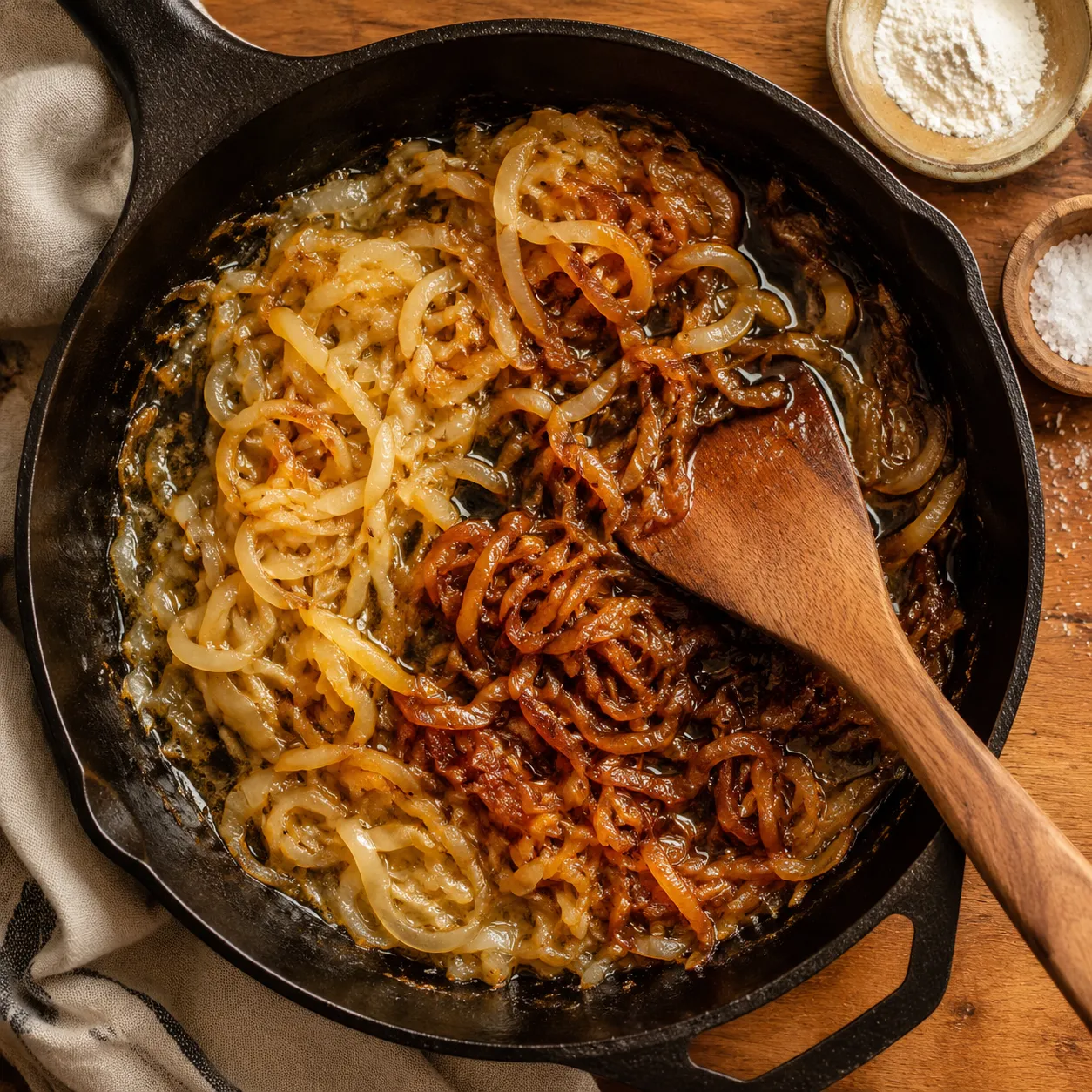
Build the onion base. Lower the heat to medium, add butter and the sliced onions to the same skillet, and cook them slowly, 8 to 10 minutes, until they collapse into glossy, deep-amber ribbons. This is where the flavor lives. Properly caramelized onions transform a basic pan sauce into something restaurant-worthy. Stir the flour in and let it cook for one full minute to toast off the raw taste.
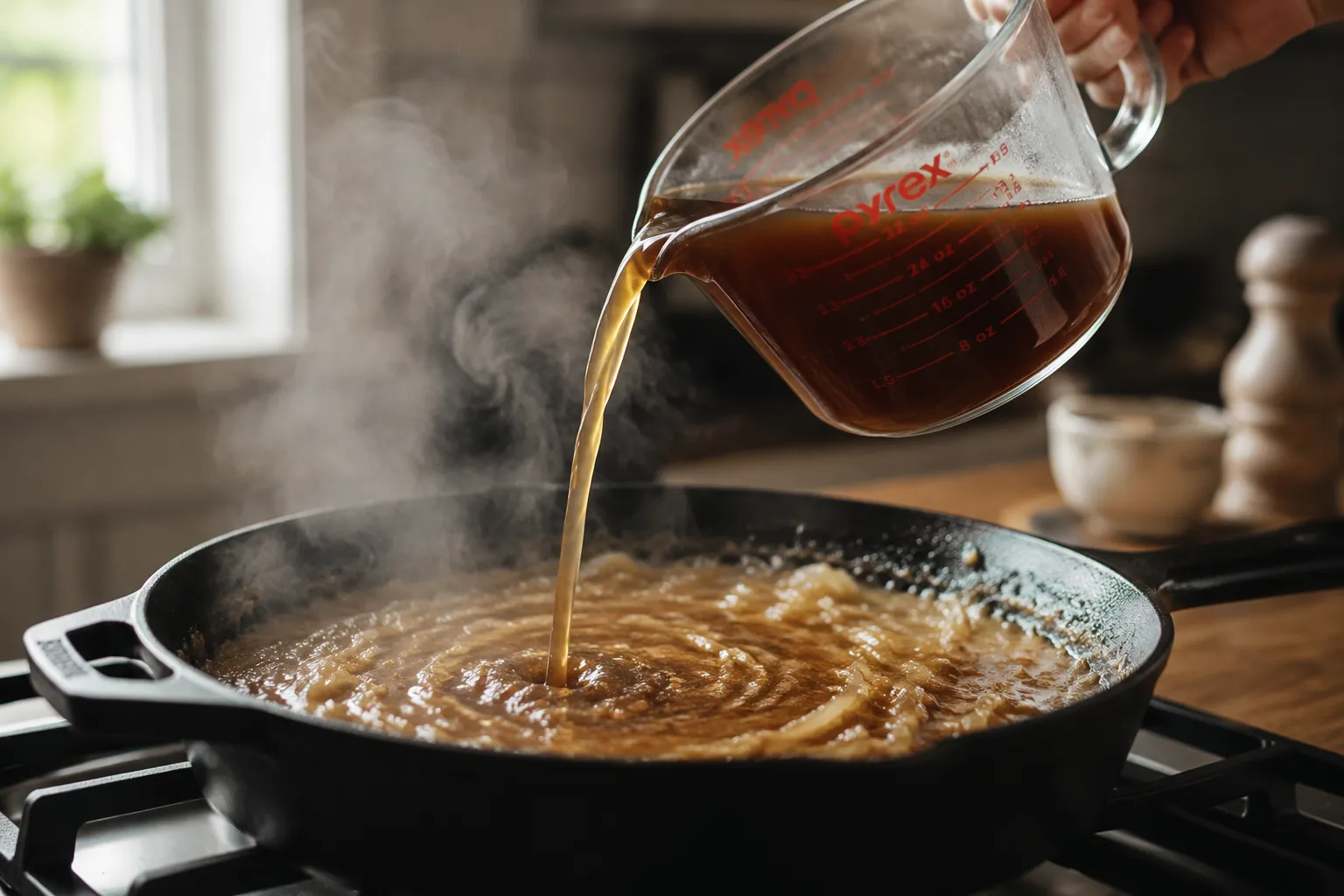
Make the gravy and finish the patties. Slowly pour in the beef broth while whisking constantly to prevent lumps. Add Worcestershire and a generous crack of black pepper, then bring to a gentle simmer. The mixture will thicken into a glossy, spoon-coating sauce in 2 to 3 minutes. Nestle the seared patties (and any resting juices) back in, cover loosely, and simmer 6 to 8 minutes until cooked through. Off heat, swirl in a final tablespoon of cold butter for shine, the move that takes homemade brown gravy from good to glossy-restaurant-good.
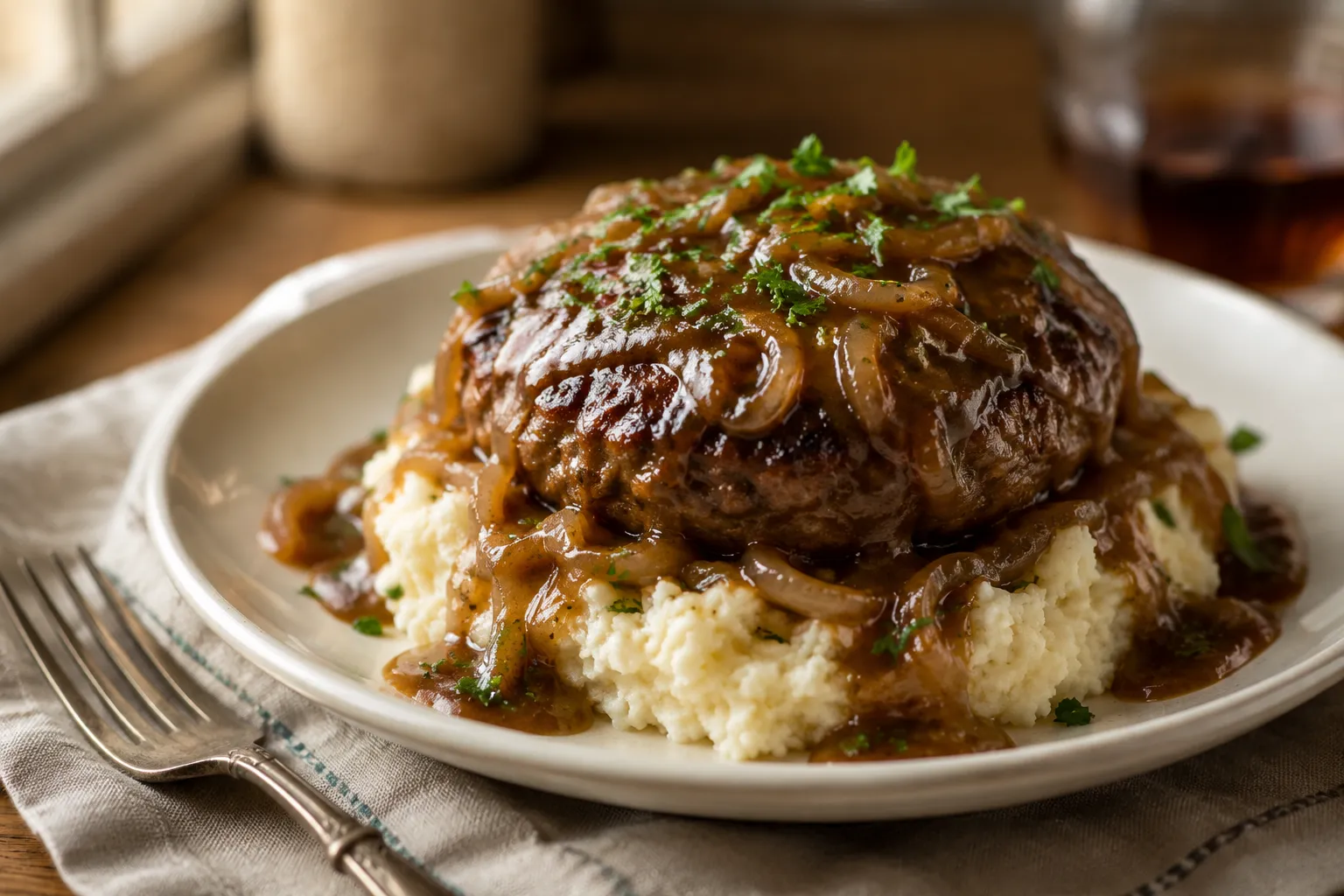
The traditional bed for a smothered patty is a generous mound of creamy mashed potatoes, they catch every drop of gravy and turn each bite into pure comfort food. Buttery egg noodles, white rice, or even toasted sourdough work beautifully too if potatoes aren't in the cards. Whatever you pick, you want something starchy and absorbent under that sauce.
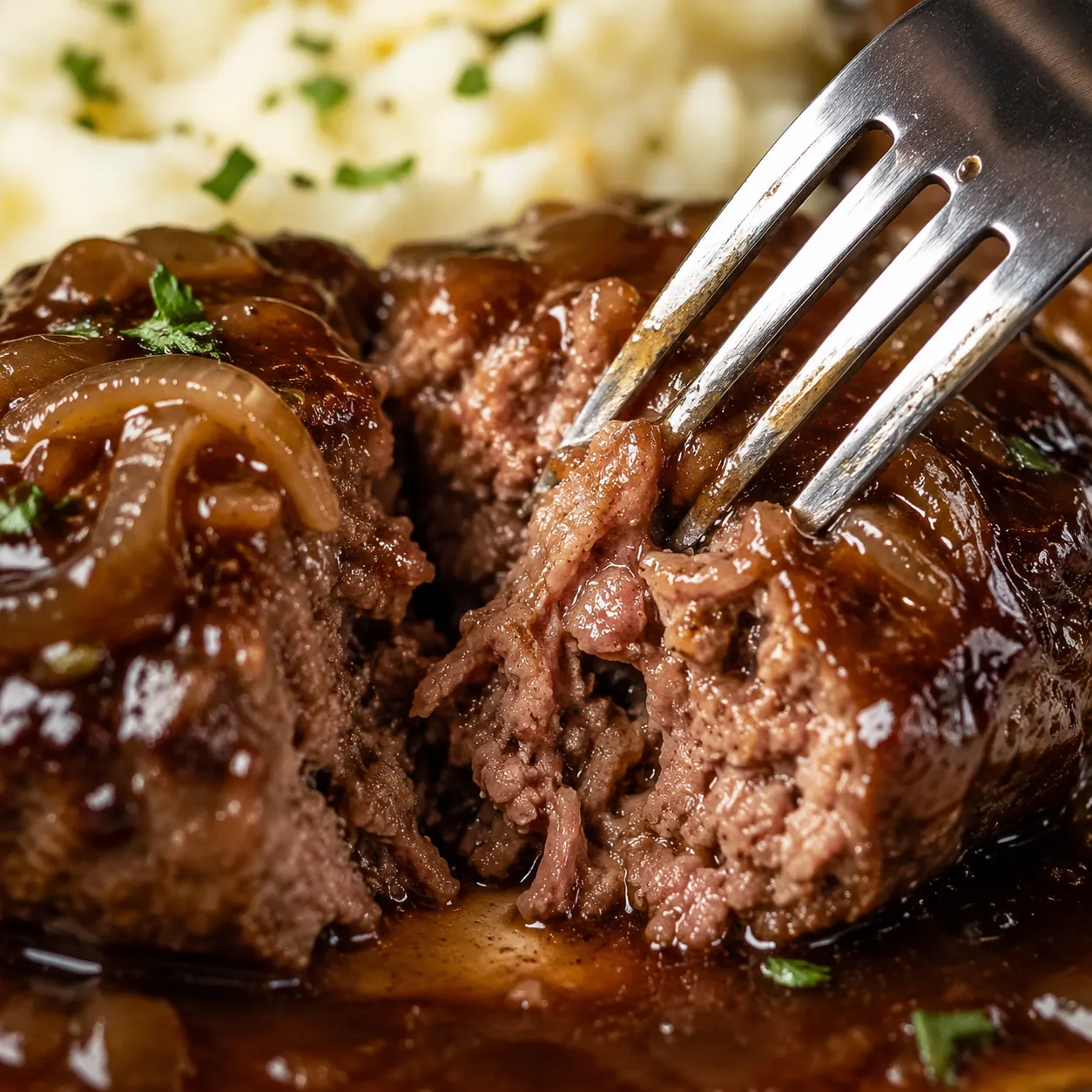
For the green side, keep it simple. Buttered green beans, roasted broccoli, glazed carrots, or a crisp wedge salad with blue cheese all balance the richness of the dish without competing for attention. A basket of warm dinner rolls or buttery biscuits at the table is never wrong, gravy demands something to sop with, and a few minutes under the broiler turns plain rolls into a proper accompaniment.
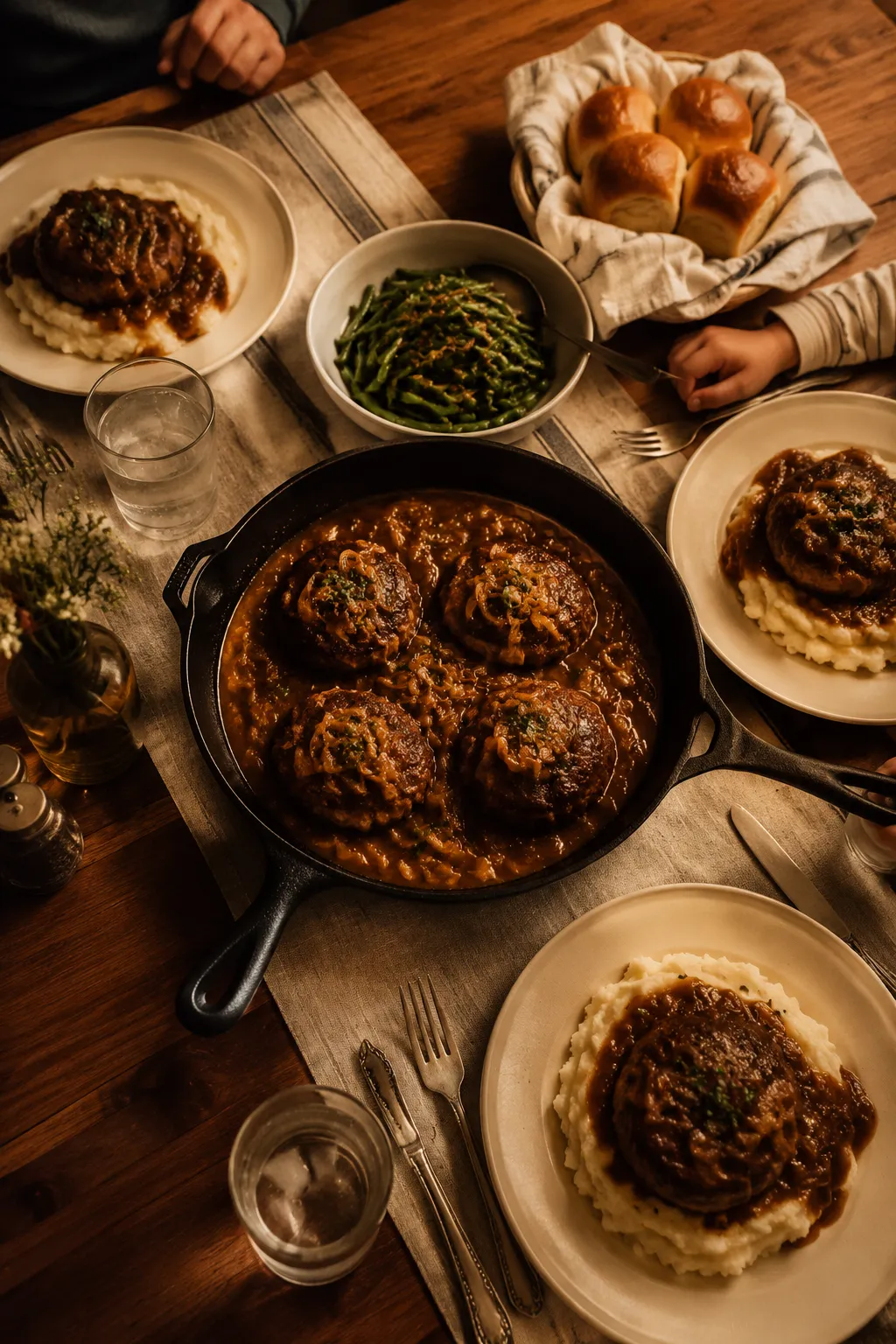
This is also a meal that loves leftovers. The patties sit in their gravy overnight and somehow taste even better the next day, which makes it ideal for meal-prep Sundays. I'll often double the batch on a weekend and stretch it into two dinners with different sides: potatoes one night, egg noodles the next, maybe rice with a fried egg on top by Wednesday.
Once you've made this once, it's the kind of meal that quietly earns a permanent spot in your rotation. It's affordable, it's fast, it uses what's already in the pantry, and it tastes like the kind of food that makes everyone at the table go quiet for the first few bites. That's a real win on a Wednesday night, and exactly why diner classics like this never go out of style.
The base recipe is forgiving and welcomes plenty of riffs depending on what's in your fridge or your mood. Once you nail the basic technique, treat it as a template rather than a rulebook.
Refrigerator: Cool the patties and gravy completely, then transfer to an airtight container, making sure the patties are submerged in gravy. They'll keep for up to 4 days, and honestly taste better on day two as the flavors meld. Reheat gently in a covered skillet over low heat with a splash of beef broth or water to loosen the gravy back up. Avoid the microwave when possible; it tends to seize the gravy and overcook the edges of the meat.
Freezer: This dish freezes exceptionally well for up to 3 months. Cool completely, then portion patties and gravy together into freezer-safe containers or heavy zip-top bags, removing as much air as possible. Thaw overnight in the refrigerator and reheat low and slow on the stovetop, adding a splash of broth if the gravy has thickened too much. For the best texture, avoid reheating directly from frozen.