Beef and Noodles Recipe: Tender, Cozy Comfort in 45 Minutes
Ingredients
Scale
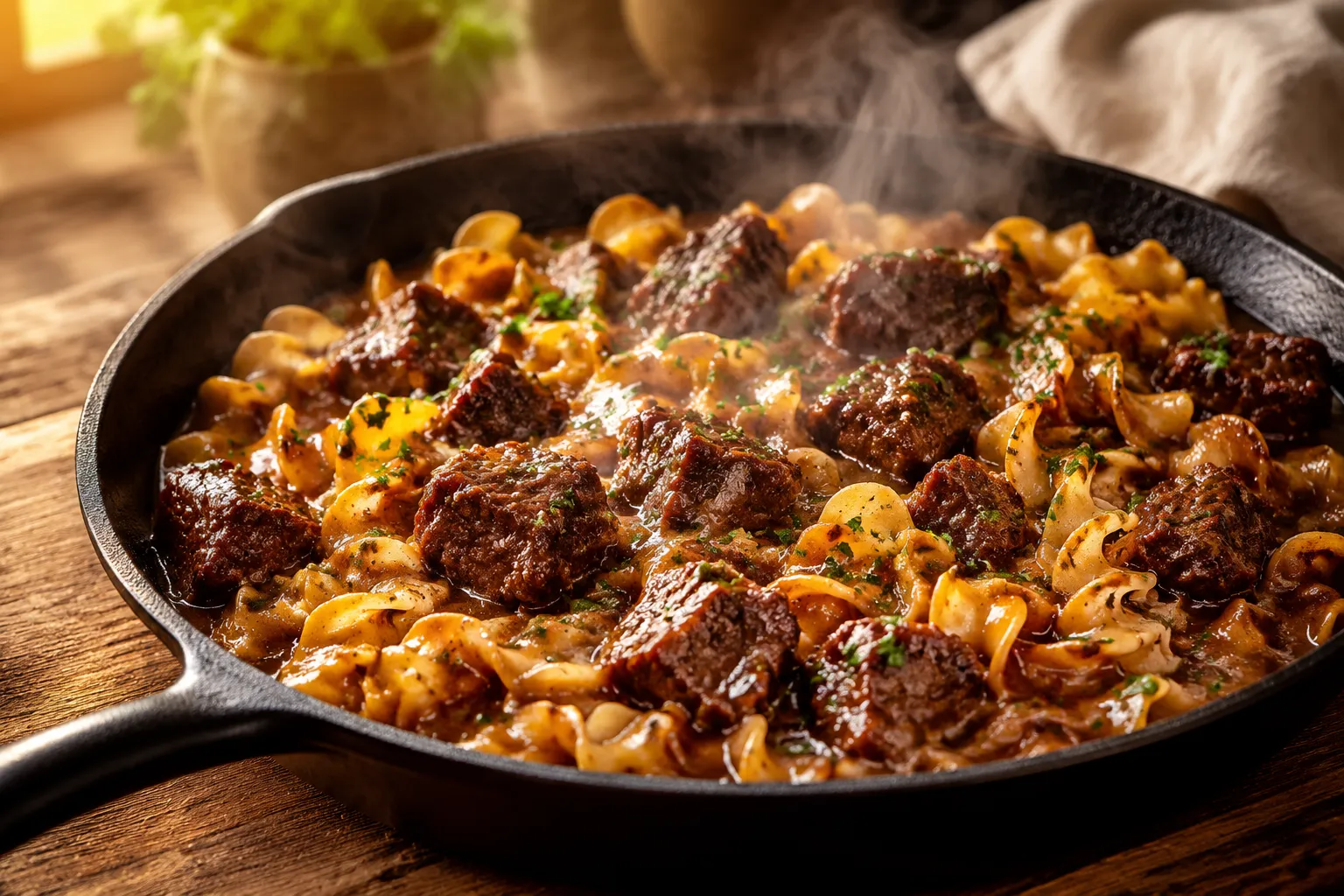
Fork-tender beef simmered in a savory brown gravy and tossed with buttery egg noodles. The kind of cozy weeknight dinner that tastes like Grandma made it.
This beef and noodles recipe is the kind of stick-to-your-ribs dinner that tastes like it simmered all afternoon, even though it lands on the table in 45 minutes flat. Fork-tender chunks of beef in a deeply savory brown gravy, ladled over wide, buttery egg noodles that soak up every drop. It's the supper my grandma made on long Sunday afternoons, and the one I now turn to on cold Tuesdays when the day has been too much.
What I love most is how unfussy this dish is. No cream-of-anything soup, no pre-made packet, no slow cooker required (although I'll walk you through that variation too). Just one hot skillet, a proper sear, and the gentle alchemy of broth and flour turning into a glossy, mahogany-colored gravy. If you've been hunting for honest Sunday comfort food that doesn't ask you to babysit a Dutch oven for three hours, this one's for you.
It lives somewhere between a Midwestern diner plate and Grandma's Sunday table, and it works just as beautifully as a quick skillet beef dinner mid-week as it does at a slow weekend lunch. It's pantry-friendly, freezer-friendly, and almost impossible to mess up — and once you taste that homemade brown gravy clinging to every noodle, you may never reach for the canned shortcut again.
Every great beef and noodles recipe starts with three core players: the meat, the noodles, and the liquid that ties them together. Once you understand each one, the rest is just seasoning. Here's a quick walk-through of what I keep on hand and why each ingredient earns its spot in the skillet.
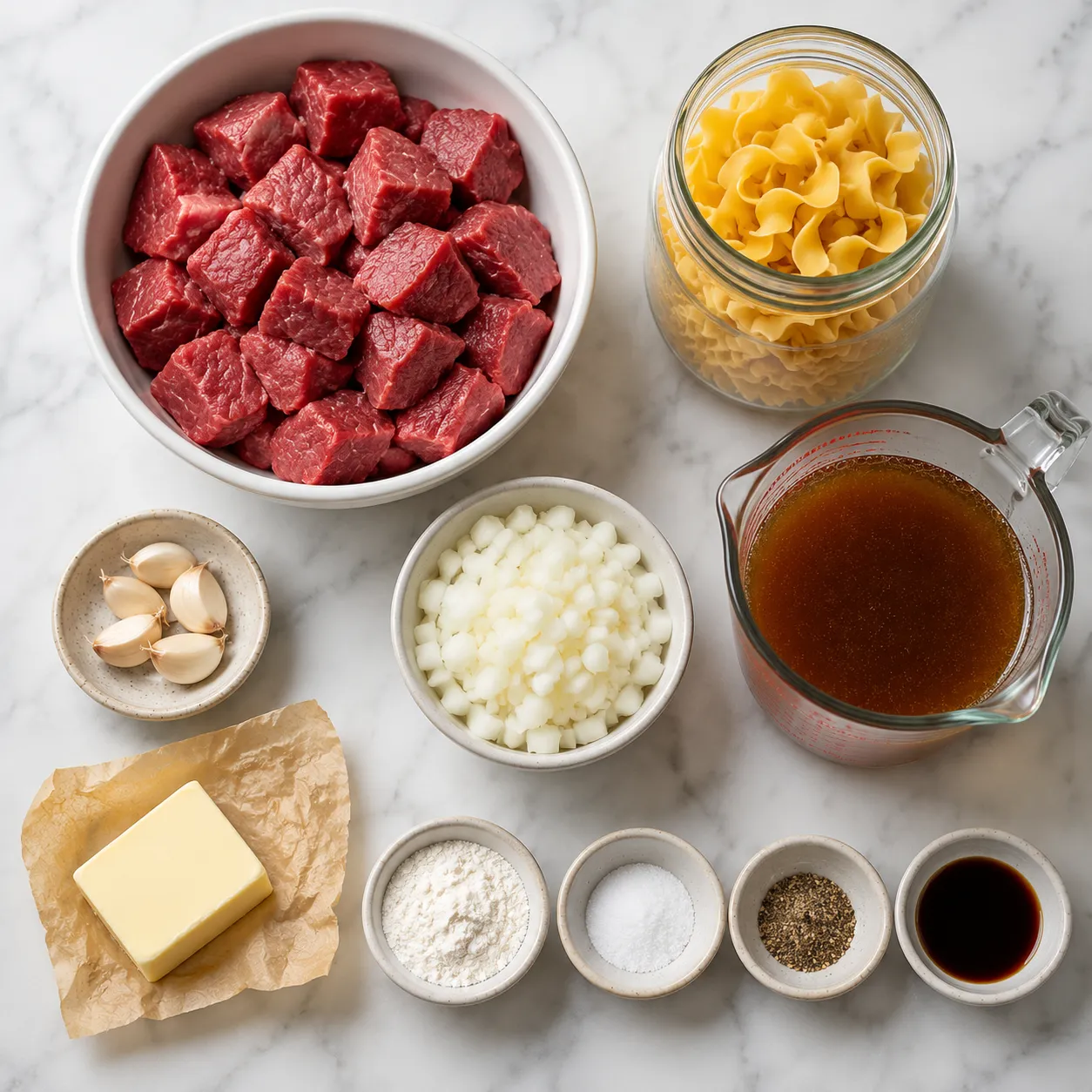
For tender, juicy bites, I reach for sirloin tips or labeled beef stew meat (which is usually chuck, cut into roughly 1-inch cubes). Both are well-marbled cuts that turn melt-in-your-mouth tender after a 25- to 30-minute simmer. Avoid lean cuts like top round or eye of round here; they'll dry out and seize up before the gravy has a chance to develop. If you've already got a freezer full of stew meat dinner ideas pulling at you, beef tips and noodles is one of the easiest, most rewarding ways to use up what you have.
Wide egg noodles are non-negotiable for this one. The frilly edges grab onto the gravy in a way that elbow macaroni or spaghetti just can't match, and the eggy flavor stands up to a rich sauce. I usually buy a 12-ounce bag of extra-wide egg noodles — Reames frozen noodles work wonderfully too if you can find them in the freezer aisle. If you've been browsing other egg noodle recipes for inspiration, you'll find this is the gold standard.
The gravy starts with the fond — those browned bits stuck to the bottom of the skillet after searing the beef — and finishes with a quick flour roux, beef broth, butter, and a generous splash of Worcestershire. That's it. No packet, no cornstarch slurry, no canned soup. The result is a homemade brown gravy that tastes the way diner gravy wishes it could: deeply beefy, glossy, and seasoned to the bone.
The full beef and noodles recipe lives in the printable card below, but here's the play-by-play with the why behind each move. Once you've made it once, you'll have it memorized.
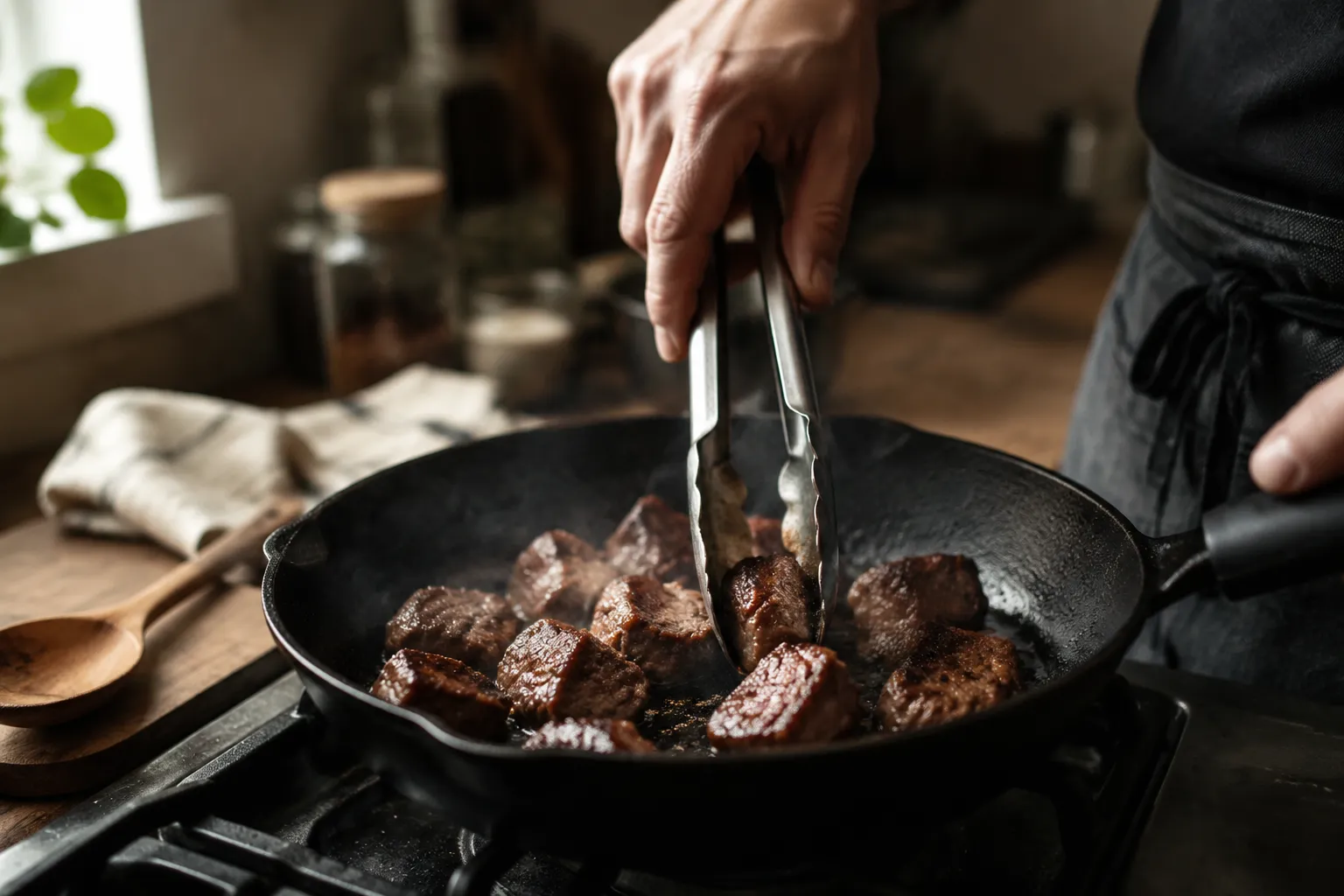
Pat the cubed stew meat very dry with paper towels — this is the single biggest factor in getting a real crust. Wet meat steams instead of browning. Heat a tablespoon of oil in a heavy skillet (cast iron is ideal) over medium-high until it shimmers, then add the beef in a single layer. Resist the urge to crowd; work in two batches if needed. Let it sit untouched for 2 to 3 minutes before turning, then sear the remaining sides until each cube is deeply browned. Transfer to a plate and don't worry about the sticky bits left behind — that fond is gold.
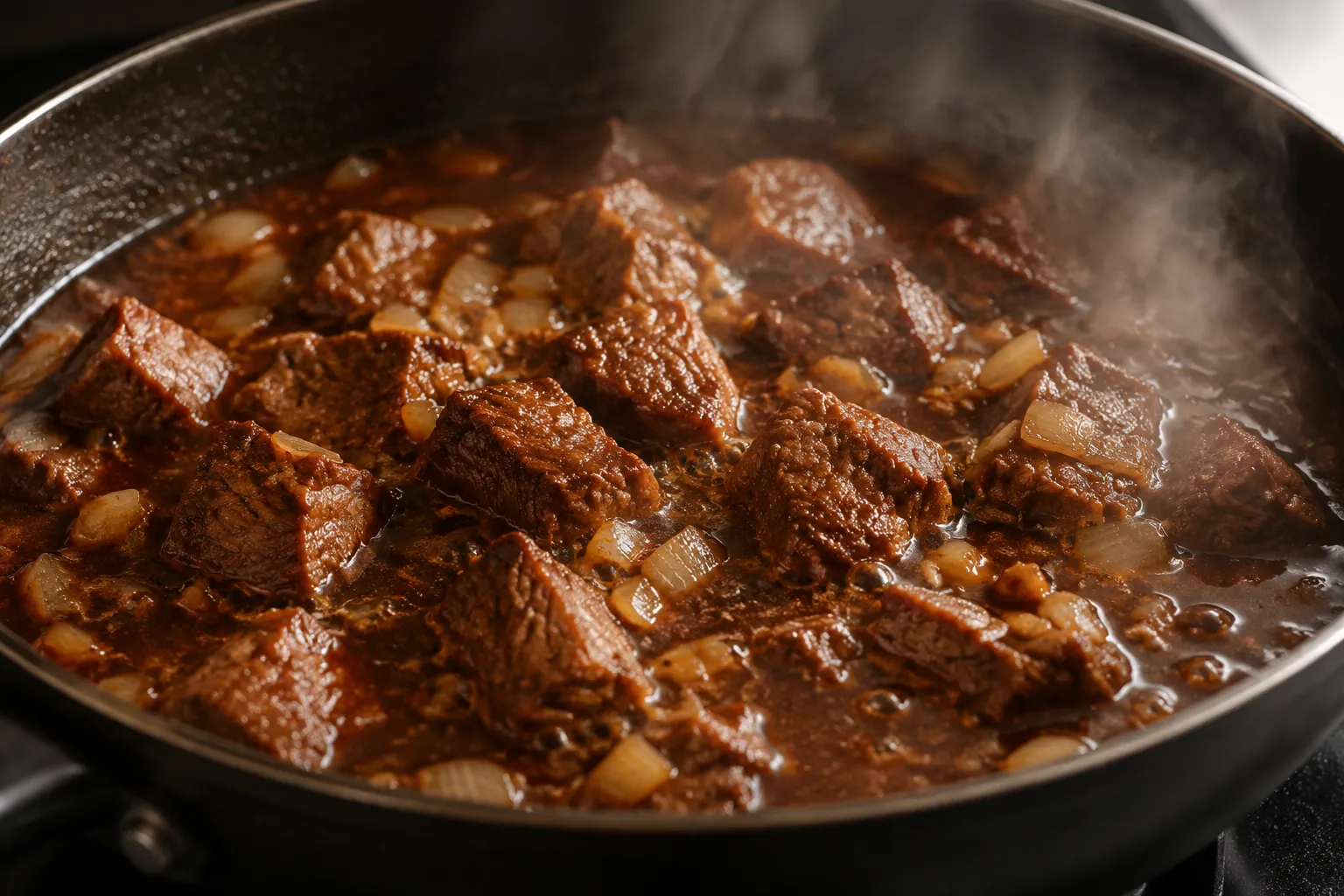
Drop the heat to medium and melt the butter into those browned bits. Add the diced onion with a pinch of salt, scraping the bottom of the pan as it cooks down for 4 to 5 minutes. Stir in the garlic for 30 seconds, then sprinkle the flour evenly over the onions and stir constantly for a full minute to cook out the raw taste. Slowly pour in the beef broth, whisking out any lumps as it thickens. Add the Worcestershire, a few cracks of pepper, and the seared beef along with any juices on the plate. Bring to a low bubble, cover, and simmer 25 to 30 minutes until the beef is fork-tender.
While the beef finishes simmering, bring a large pot of well-salted water to a boil and cook the egg noodles to just shy of al dente — they'll absorb a bit more liquid in the gravy. Drain (don't rinse) and add them straight into the skillet with the beef. Toss gently with tongs or a wooden spoon until every noodle is coated in glossy gravy. Taste, adjust salt and pepper, and pull it off the heat.
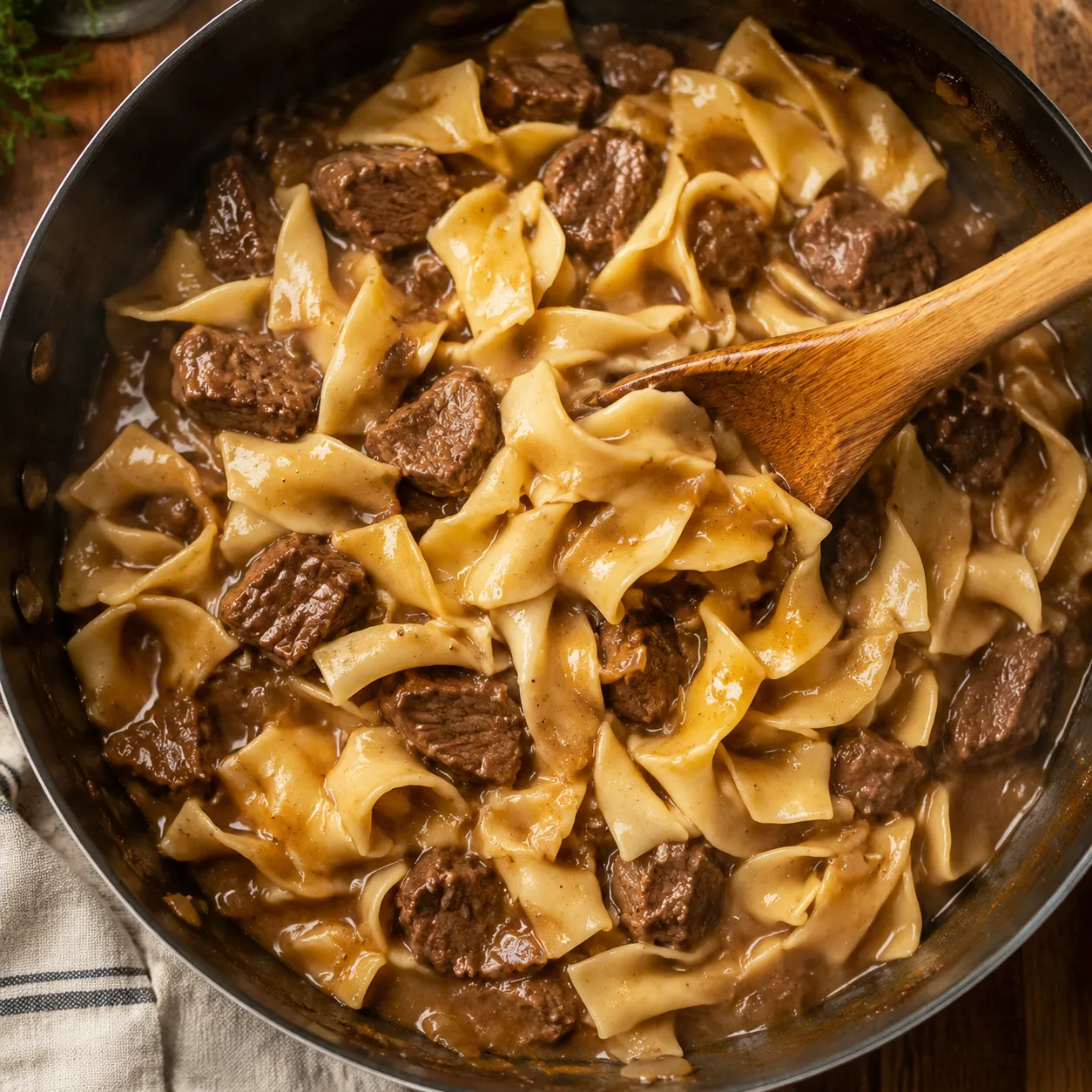
A lot of versions of this dish online lean hard on cream-of-mushroom soup or a packet of brown gravy mix. Those work in a pinch, but the from-scratch route is barely more effort and miles ahead in flavor. The fond from a properly seared piece of stew meat dissolves into the broth and gives you a depth that no boxed shortcut can replicate.
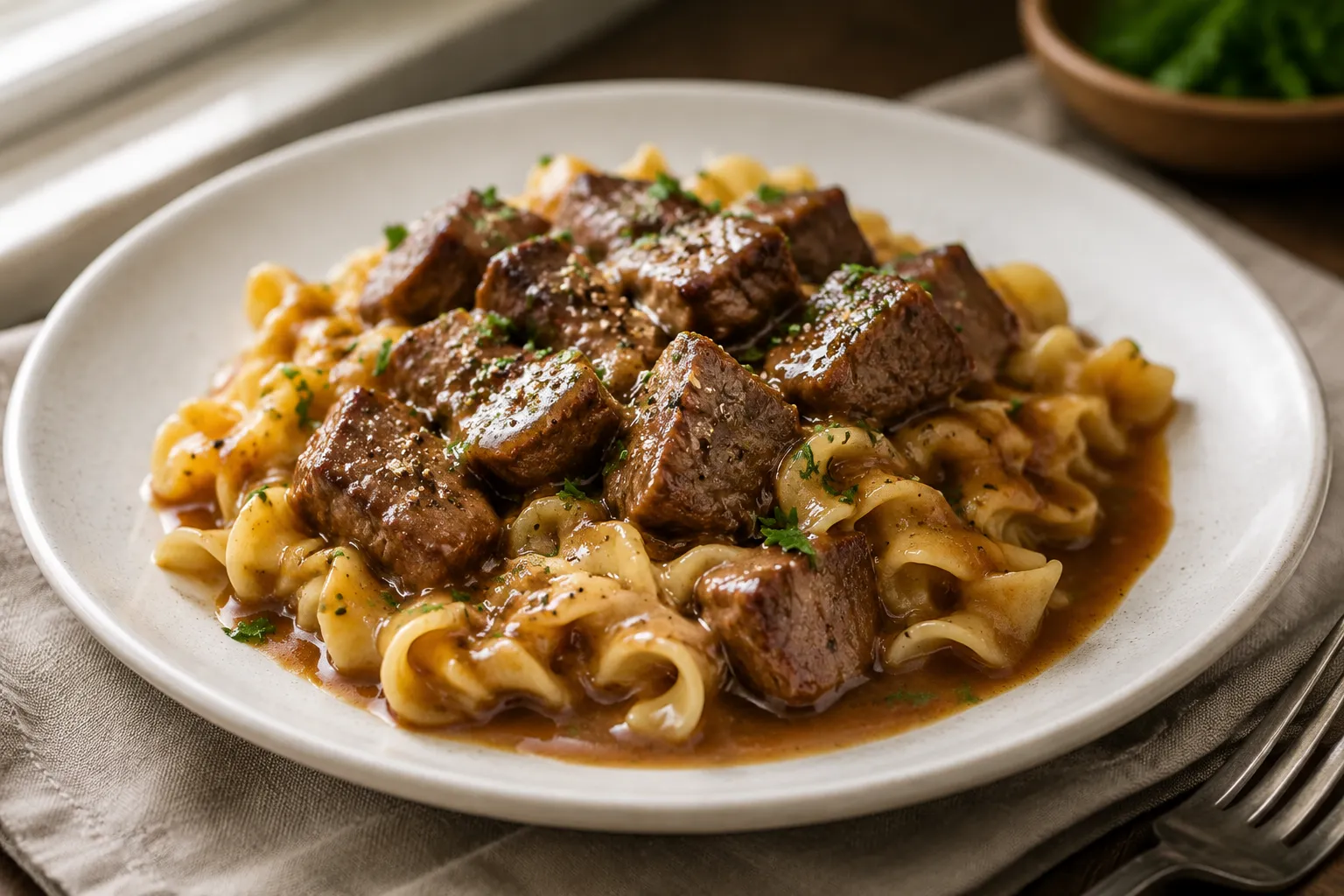
The other thing this method nails is texture. Cooking the noodles separately and folding them in at the end keeps every strand distinct, with just enough gravy to coat without turning the dish into a casserole. The beef stays in tender, identifiable chunks rather than shredding into the sauce, so you get that satisfying mix of soft, slick noodles and meaty, savory bites in every forkful.
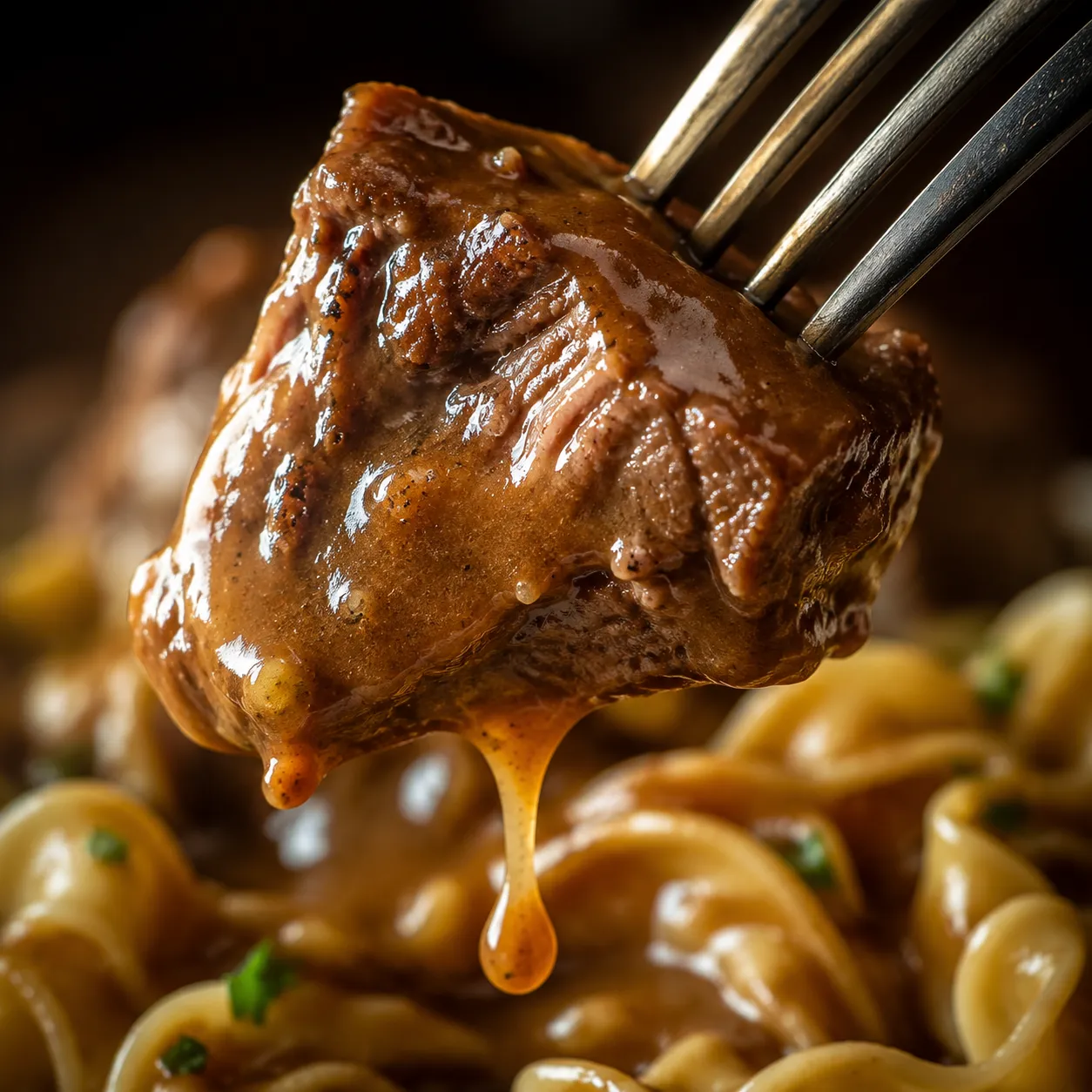
It's also infinitely flexible. You can stretch it with mushrooms, dial up the herbs with thyme and bay, or finish with a swirl of sour cream for a beef stroganoff cousin. Served this way, it's the rare comfort food that fits both a quiet weeknight and a holiday spread.
Half the joy of this kind of dinner is in the sides. Because the main is rich and savory, I like to pair it with something bright, something crunchy, or both. A simple green vegetable cuts through the gravy beautifully, and a slice of warm bread is non-negotiable for swiping up the last bits of sauce.
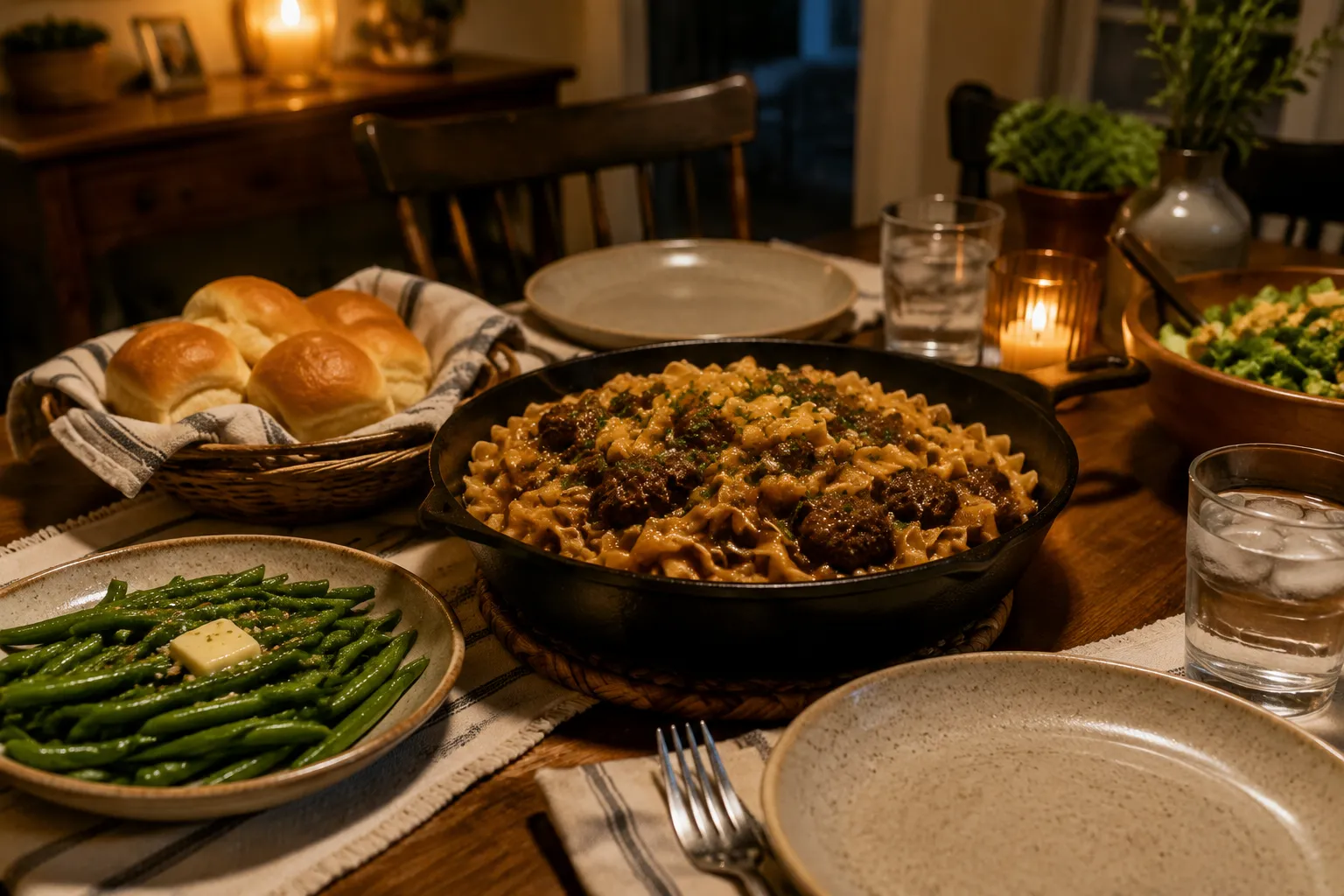
Roasted green beans, buttered peas, glazed carrots, or quick steamed broccoli all play nicely. For something cold and crisp, a shaved cabbage slaw or a wedge of iceberg with blue cheese balances the heaviness without trying too hard. And if you have the appetite, a basket of warm garlic bread or buttery dinner rolls is the move.
For a fully-loaded Sunday-style spread, add mashed potatoes alongside (yes, double-starch is allowed in this house), or pair it with a tart cucumber-and-onion salad. This is the kind of meal where leftovers are encouraged, and it's even better the next day after the gravy has time to settle in.
This beef and noodles recipe is a meal-prep dream — exactly the kind of dinner you want waiting in the fridge after a long day. The beef and gravy can be made up to two days ahead and reheated gently while you boil fresh noodles, which keeps the texture just-cooked and never gummy.
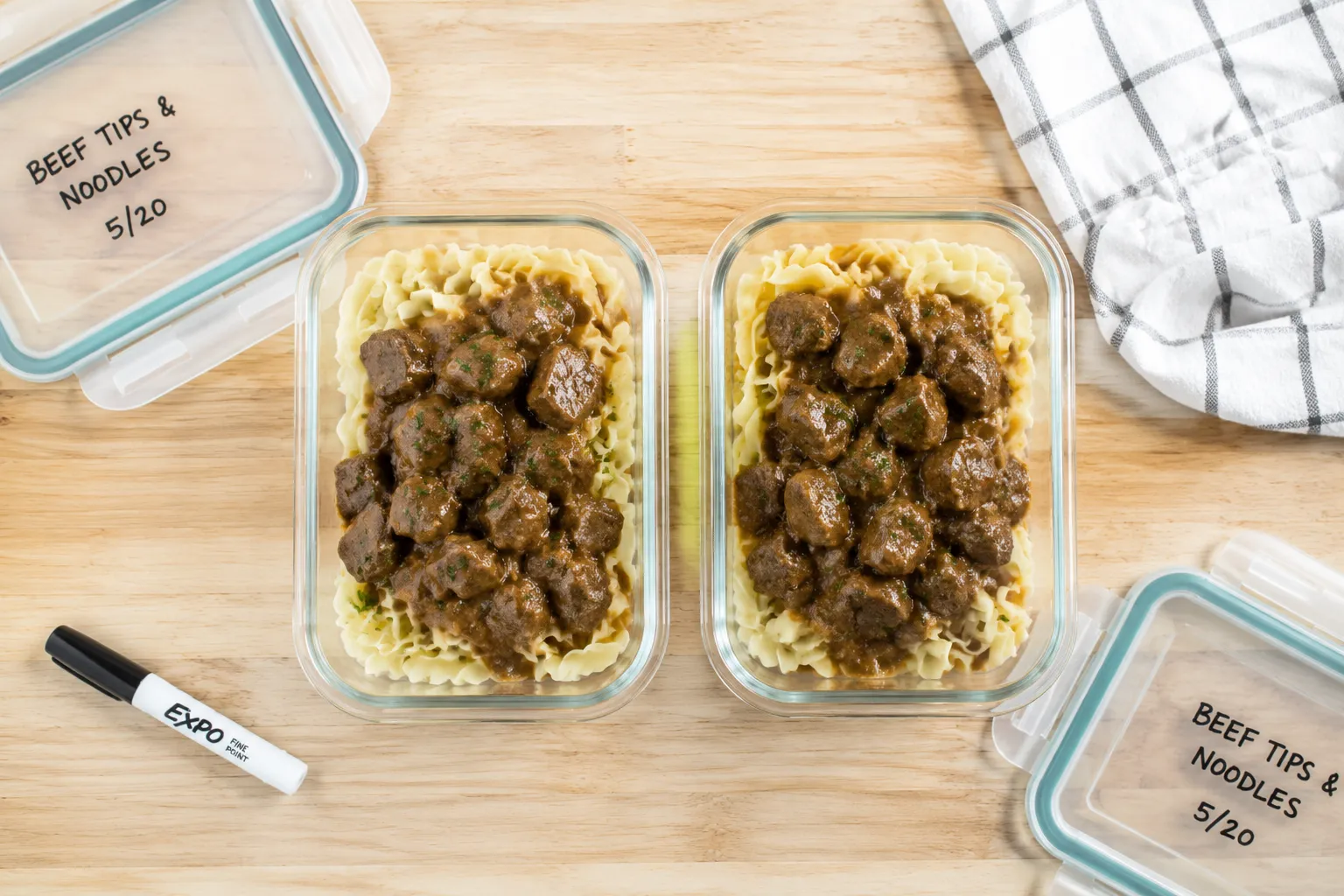
If I'm cooking for the week, I'll often double the beef and freeze half in flat freezer bags for up to three months. Defrost overnight in the fridge, warm in a saucepan with a splash of broth, and toss with hot noodles. It's the closest thing I've found to having Grandma's Sunday cooking on a Tuesday evening — comfort, on demand.
This dish is endlessly forgiving and welcomes just about any twist. Whether you're working with what's already in the freezer or chasing a particular regional style, here are the variations I rotate through most often.
Leftovers keep beautifully in an airtight container in the refrigerator for up to 4 days. The gravy thickens as it cools, so when reheating add a splash of beef broth or water and warm gently in a covered skillet over low heat, stirring often. Microwaving works too for single servings — go in 60-second bursts and stir between each to keep the noodles from going rubbery.
For longer storage, freeze the beef and gravy separately from the noodles. Cooked noodles tend to turn soft and gummy when frozen, while the beef portion holds up beautifully airtight for up to 3 months. Thaw overnight in the fridge, then reheat the beef in a skillet with a splash of broth and toss with freshly cooked egg noodles. You'd never know it was a freezer meal.