ItalianMay 27, 2026

Creamy Polenta Recipe: Perfect Every Time

4.8 from 12 reviews
0SHARES

Now Playing

Creamy Polenta Recipe: Perfect Every Time

0:00
0:00
Creamy Polenta Recipe: Perfect Every Time

Silky, buttery, and impossibly creamy, this polenta recipe turns out perfect every time with one simple stirring trick most recipes skip.

Why You'll Love This Recipe
  • Foolproof texture — The slow whisk-in method delivers silky, lump-free polenta on the first try, no nonna required.
  • Pantry-friendly — Just cornmeal, liquid, salt, butter, and cheese. Five ingredients, restaurant results.
  • Hands-off-ish — A confident start and an occasional stir is all it takes — no 45 minutes of constant stirring.
  • Endlessly versatile — Serve it soft and creamy tonight, slice and fry the leftovers tomorrow.
  • Naturally gluten-free — A welcome side dish that works for nearly any table.

This creamy polenta recipe is the kind of cozy, golden, butter-slicked side dish that makes you wonder why you ever bothered with mashed potatoes. It's silky, faintly sweet from good stone-ground cornmeal, and rich with melted Parmesan — the sort of bowl that feels like a Tuscan trattoria pulled up a chair in your kitchen.

I've made polenta dozens of ways over the years — baked, instant, dumped-and-stirred, fussed-over for an hour straight — and what I'm sharing today is the foolproof stovetop method I keep coming back to. It uses a clean 4:1 liquid-to-cornmeal ratio, a slow whisk-in technique that prevents lumps before they start, and a generous butter-and-cheese finish that turns it glossy and luxurious.

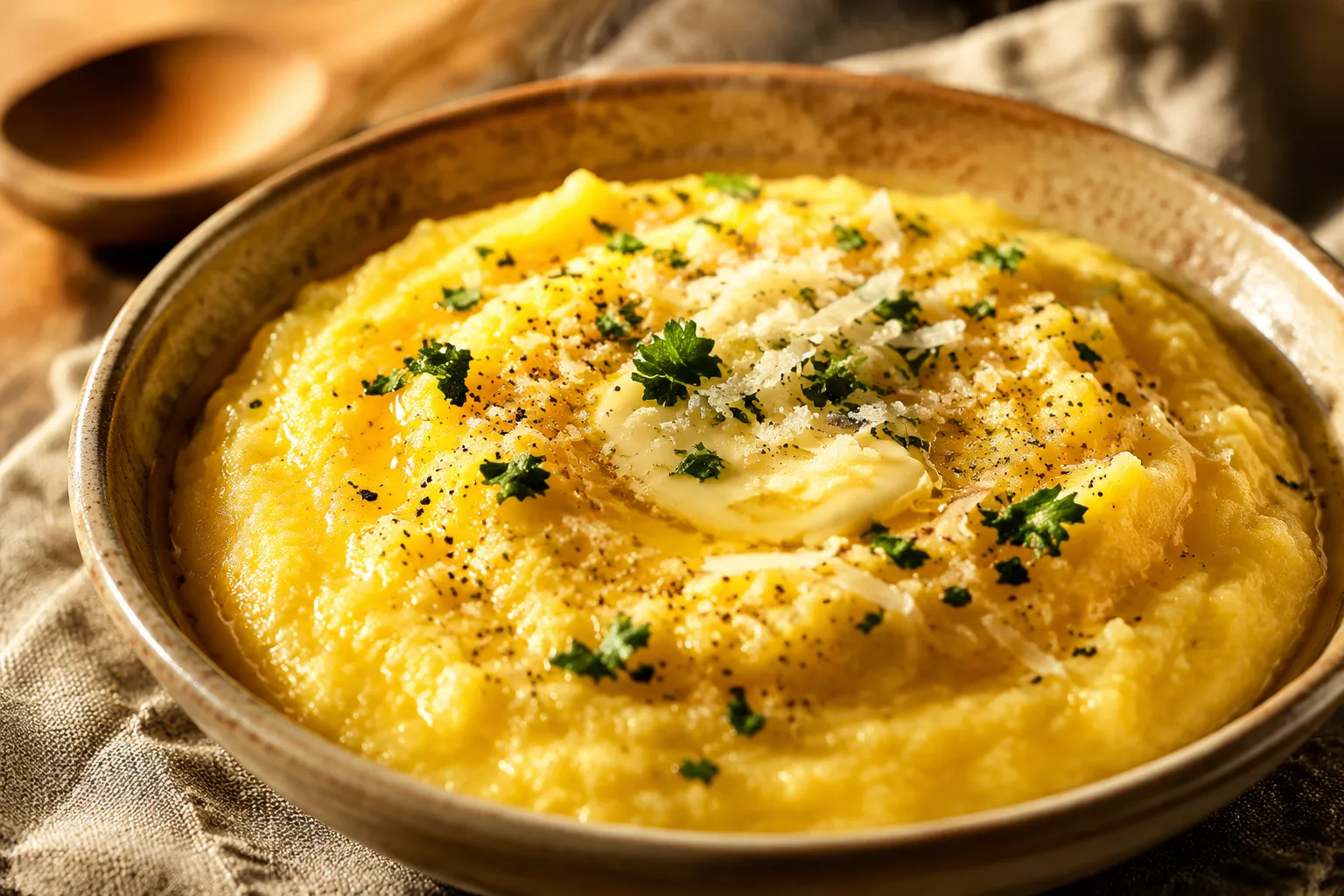
Creamy polenta recipe in a rustic bowl topped with butter and Parmesan

Best of all, you don't need to stand at the stove stirring nonstop for forty-five minutes like the old-school Italian grandmothers swore by. A confident whisk at the start, a low simmer, and an occasional stir is all it takes to get there. Let's get into it.

What Is Polenta, Exactly?

Polenta is both a dish and an ingredient, which is where a lot of the confusion starts. As an ingredient, it refers to coarsely ground yellow corn — Italian cornmeal — traditionally used in Northern Italian cooking. As a dish, polenta is what happens when you simmer that cornmeal in liquid until it transforms into a soft, porridge-like cloud or a firm, sliceable cake.

Polenta vs. Cornmeal vs. Grits

People love to argue about this, but the honest answer is they're cousins, not strangers. Polenta is typically made from a flint corn variety with a coarser grind, grits are made from dent corn (often white) and are the Southern American counterpart, and "cornmeal" is the umbrella term covering everything from fine cornbread meal to coarse polenta-style grinds. For this polenta recipe, what matters most is texture: you want medium or coarse grind, never fine.

Coarse, Medium, and Instant Polenta

Traditional coarse polenta takes 40-50 minutes and rewards you with the deepest corn flavor. Medium-grind (my pick) gets there in about 25-30 minutes with the same creaminess. Instant polenta is precooked and dried, ready in 5 minutes — convenient, but it lacks the soulful corn flavor of the real thing. Skip it if you can.
Ingredients You'll Need

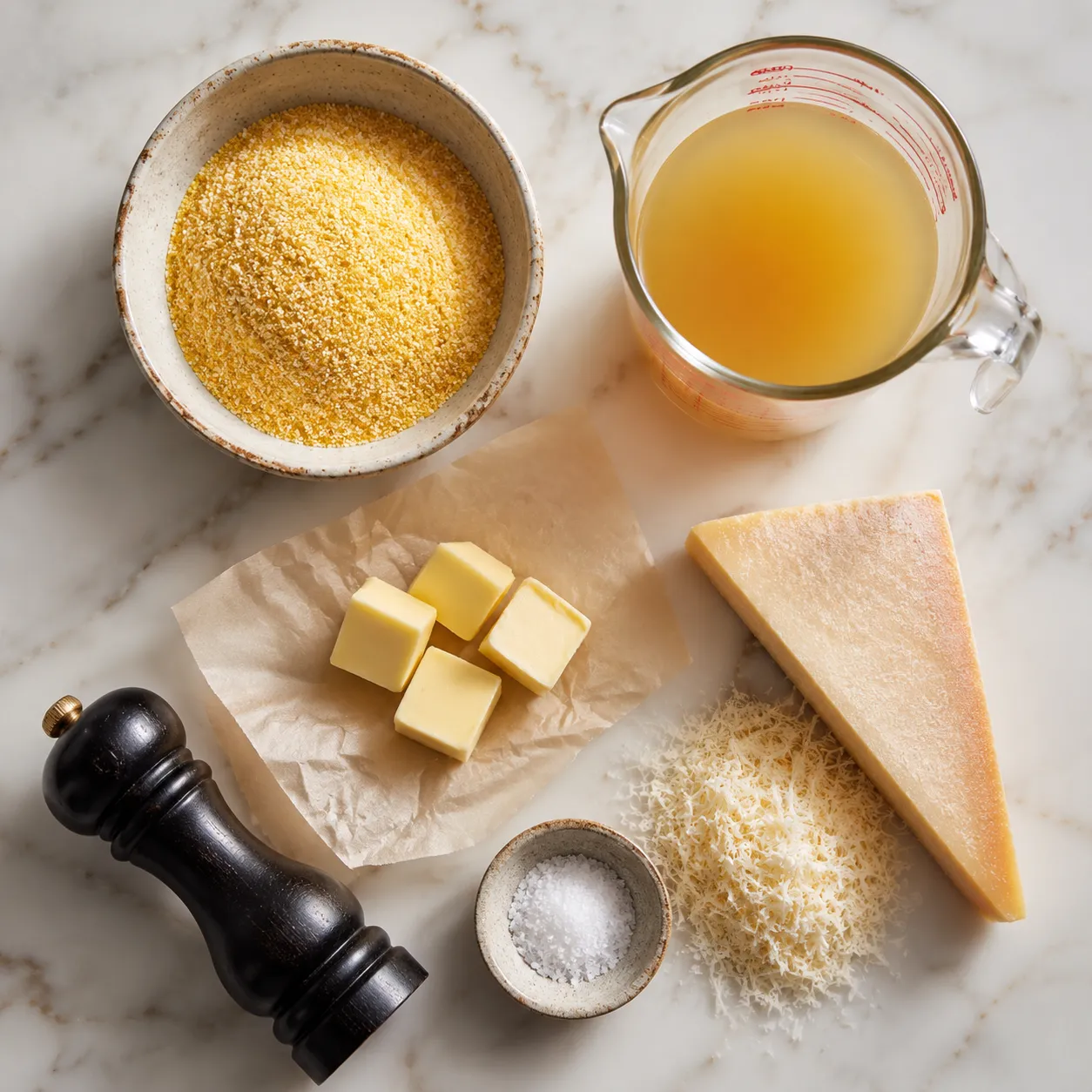
Polenta recipe ingredients flatlay with cornmeal, butter, Parmesan, and stock

The beauty of creamy polenta is that you almost certainly have most of this in your kitchen already. Each ingredient does real work, though, so let's talk about what to look for.
  • Stone-ground polenta (medium grind) — Look for "stone-ground" on the label; it retains more of the corn germ, which means more flavor and a creamier mouthfeel. Bob's Red Mill and Anson Mills are widely available favorites.
  • Liquid — Water works, but homemade chicken stock takes this from "nice" to "why-is-this-so-good?" If you want a vegetarian version, vegetable stock or half-water-half-milk does beautifully.
  • Kosher salt — Salt the liquid before the polenta goes in. Polenta absorbs seasoning as it cooks, and unsalted polenta is a sad, flat thing.
  • Unsalted butter — Three tablespoons stirred in at the end. Don't skimp.
  • Freshly grated Parmesan cheese — Real Parmigiano-Reggiano if you can. Pre-shredded won't melt as smoothly.
  • Whole milk or heavy cream — Optional, but a splash at the end takes the texture into restaurant territory.
  • Black pepper — Cracked fresh, generously.

How to Make Creamy Stovetop Polenta

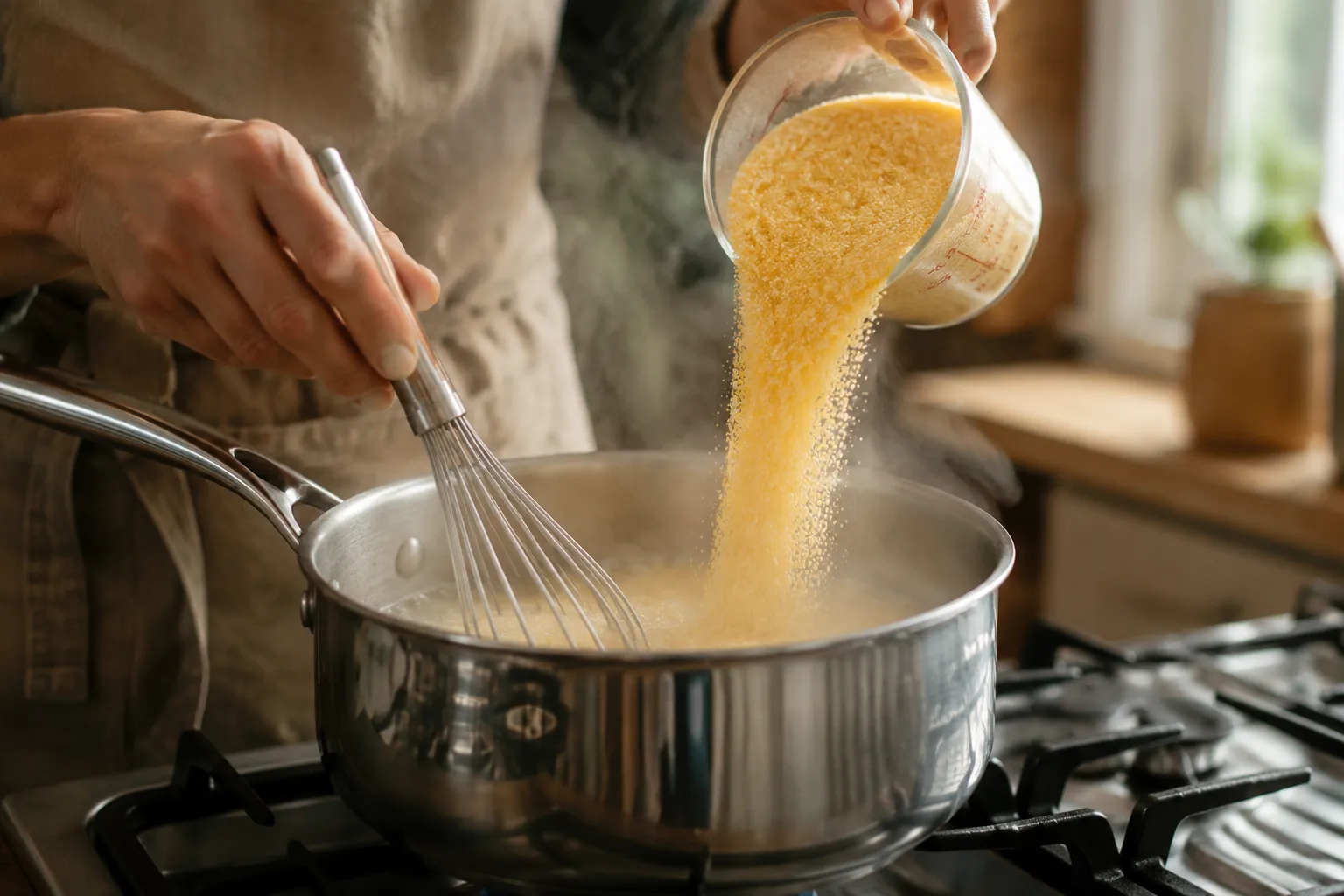
Whisking polenta into simmering stock to prevent lumps

The single biggest mistake home cooks make with polenta is dumping the cornmeal into the liquid all at once. That's how you get those gummy little knots that no amount of stirring can rescue. Instead, you'll bring your liquid to a gentle simmer (not a hard boil — too violent), then stream the polenta in slowly with one hand while whisking constantly with the other. Think of it like making polenta and a vinaigrette at the same time.

Once everything is whisked in and starting to thicken, switch to a wooden spoon and drop the heat to low. From here, it's mostly a hands-off project — you'll stir every 4-5 minutes to keep the bottom from scorching, but you don't need to stand guard.
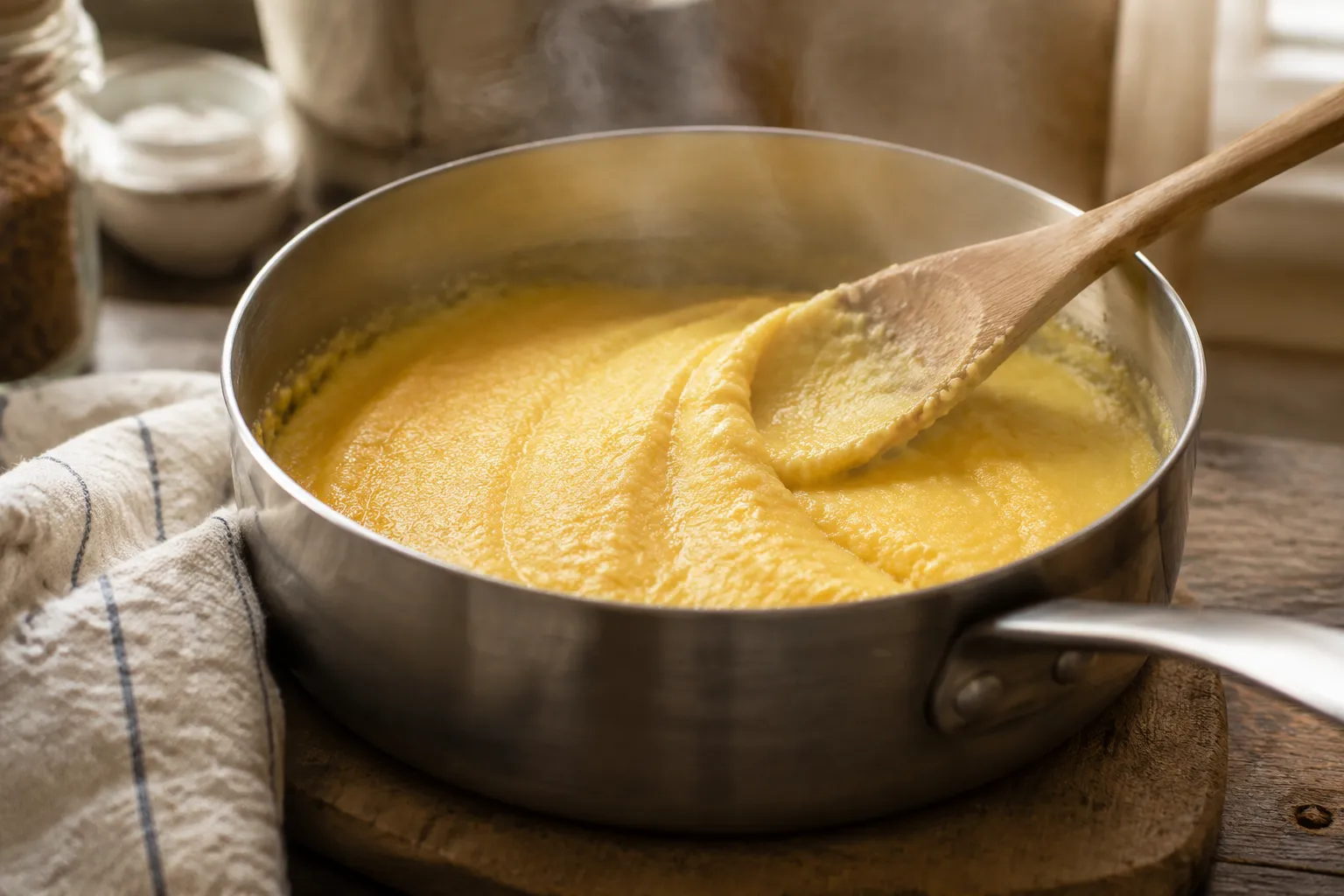
Creamy polenta simmering and thickening in a saucepan

You'll know it's done when the polenta pulls cleanly away from the sides of the pan when you stir, and a spoon dragged through the middle leaves a brief trail before the polenta closes back up. Taste a small spoonful (carefully — it's lava) — it should be tender with no chalky graininess. If it still tastes raw, give it another 5-10 minutes with a splash more liquid.
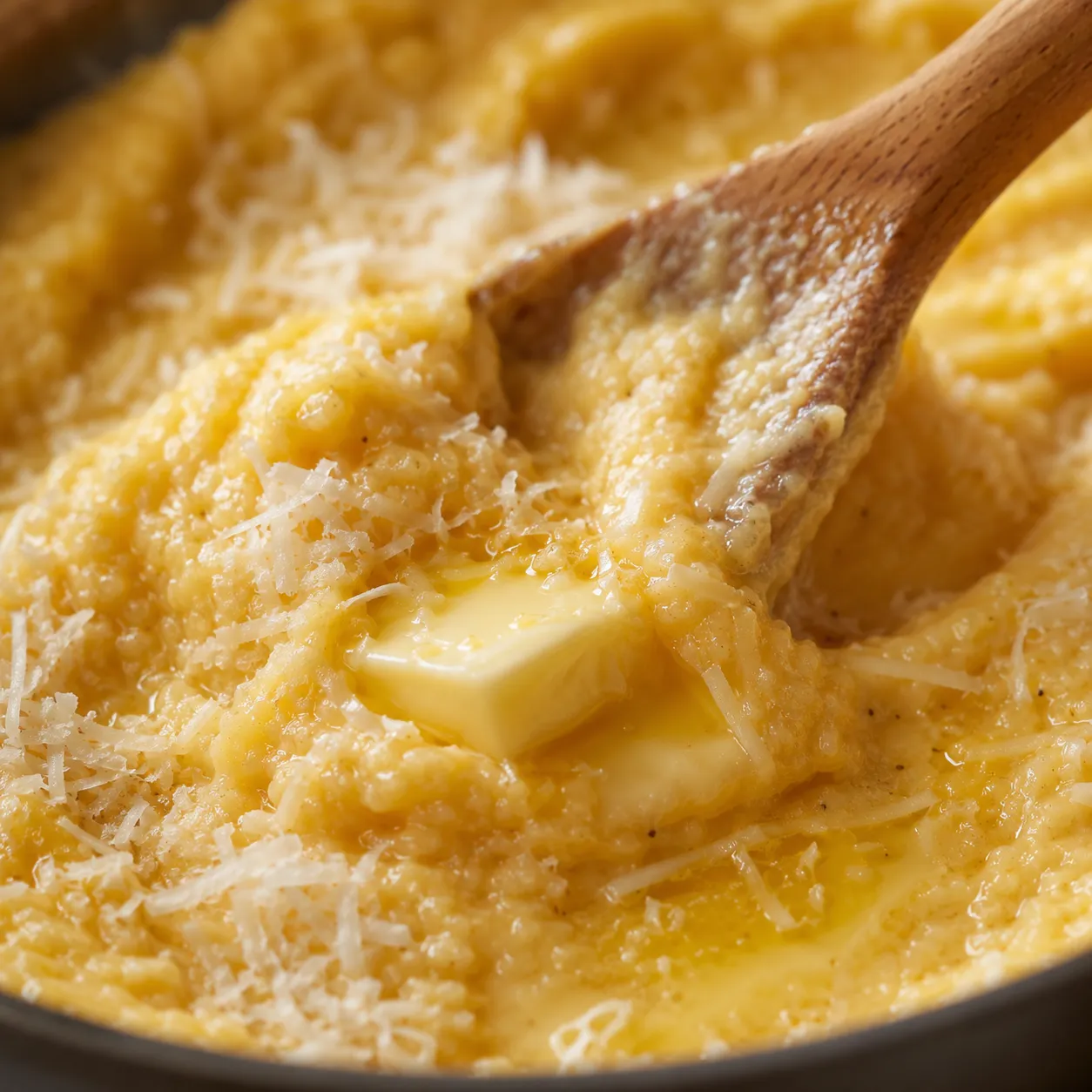
Stirring butter and Parmesan into creamy polenta for a silky finish

The finish is where the magic happens. Off the heat, fold in the cold butter cubes, the grated Parmesan, and that optional splash of cream or milk. Stir until it's glossy and silky and you can barely stand to wait another minute. Taste, adjust salt, crack on plenty of pepper, and serve immediately — polenta waits for no one.
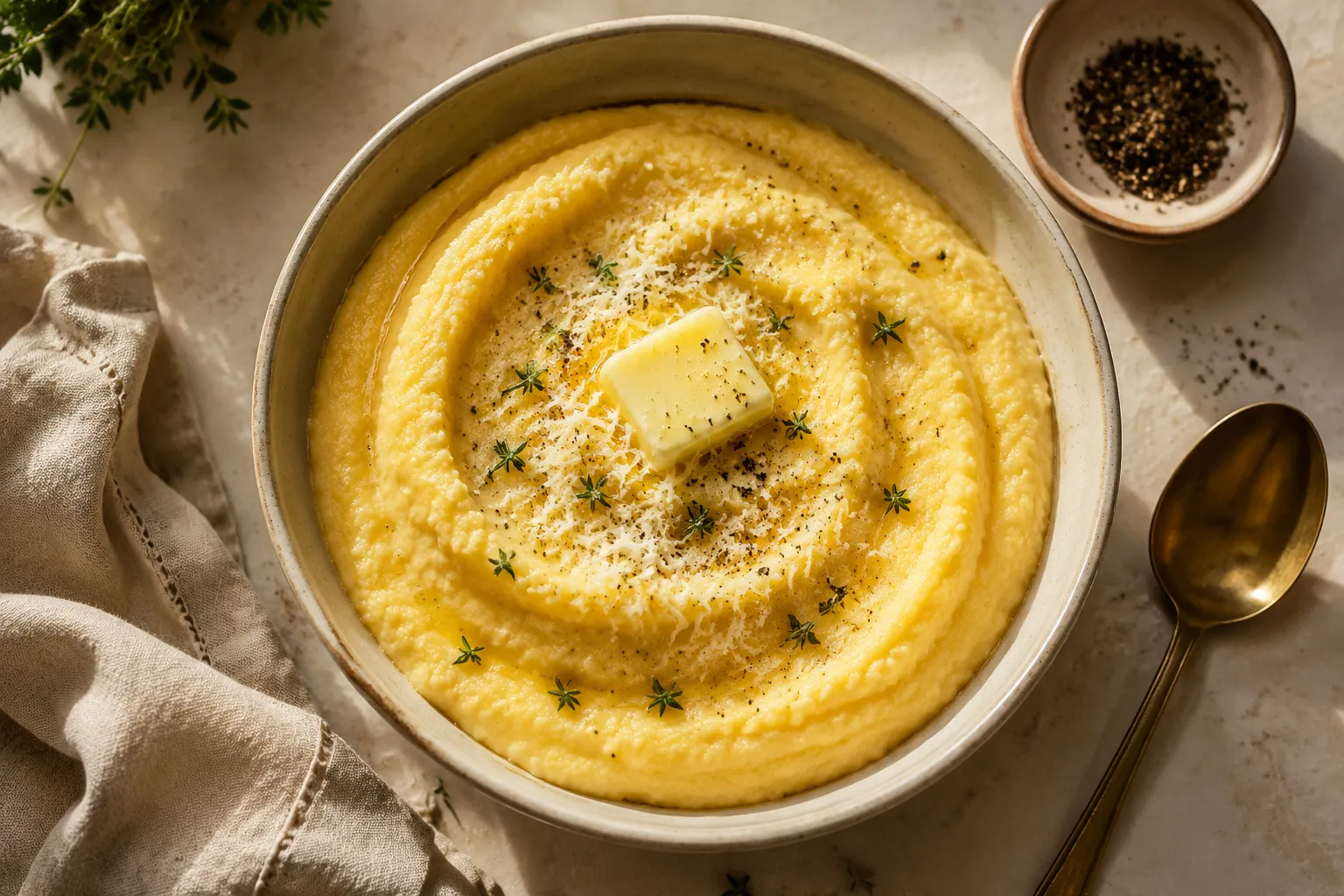
The One Trick That Guarantees Lump-Free Polenta

Finished creamy polenta recipe served in a ceramic bowl

If I could tattoo one tip on every polenta-curious cook, it would be this: warm your liquid, don't boil it, before adding the cornmeal. A rolling boil seizes the starch on the outside of each granule the second it hits the water, sealing in the dry interior — instant lumps. A gentle simmer (small bubbles breaking the surface) lets the granules hydrate evenly as you whisk them in. Combine that with a slow, steady stream of cornmeal and you'll get a lump-free pot every single time.
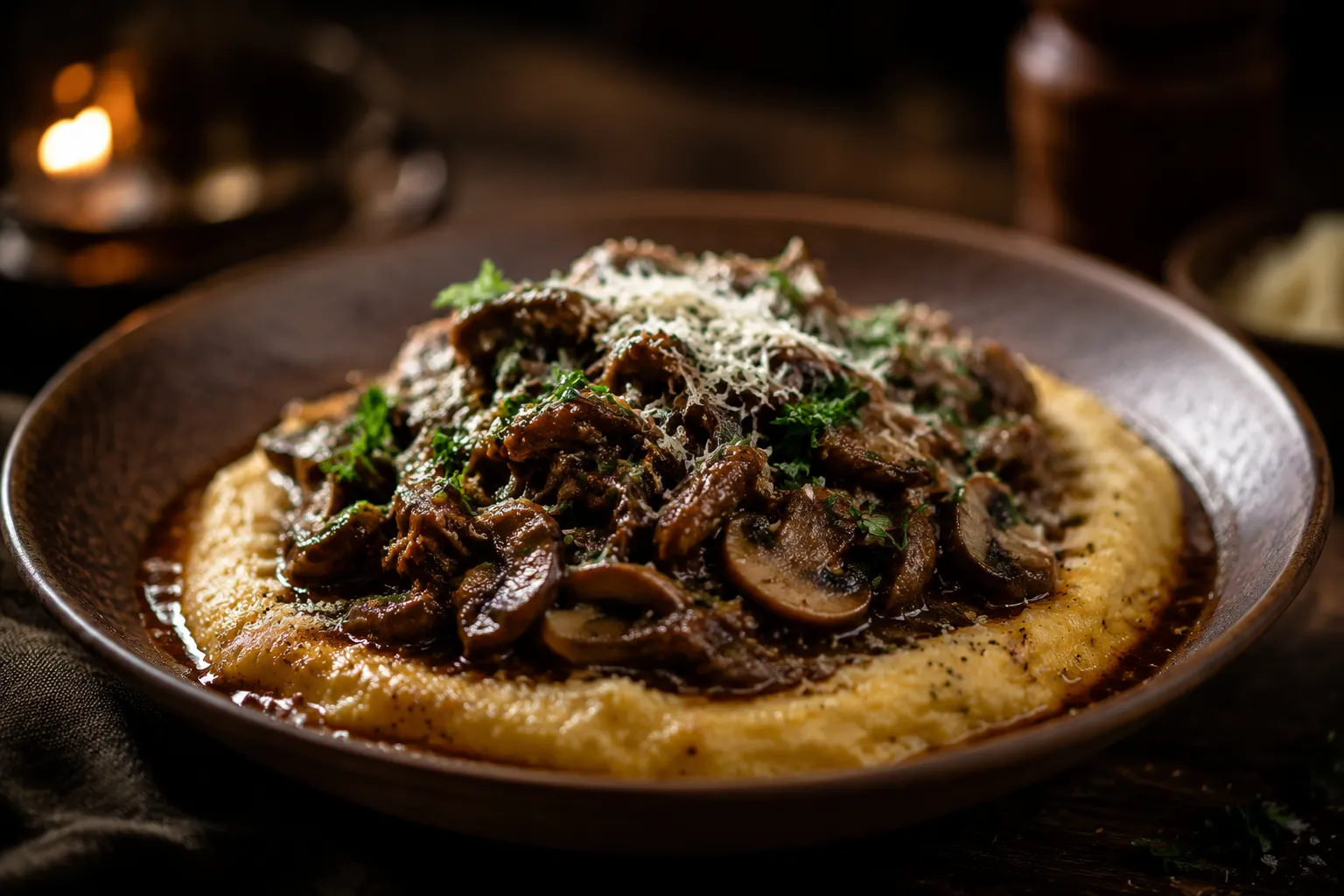
Creamy polenta served with mushroom ragu as an Italian main dish

The other quiet hero here is patience. Polenta cooked too fast on high heat will look done before it actually is — the outside thickens while the inside stays raw and gritty. Low and slow is the only way. Put on some music, pour a glass of wine, and let the pot do its thing.
What to Serve with Creamy Polenta

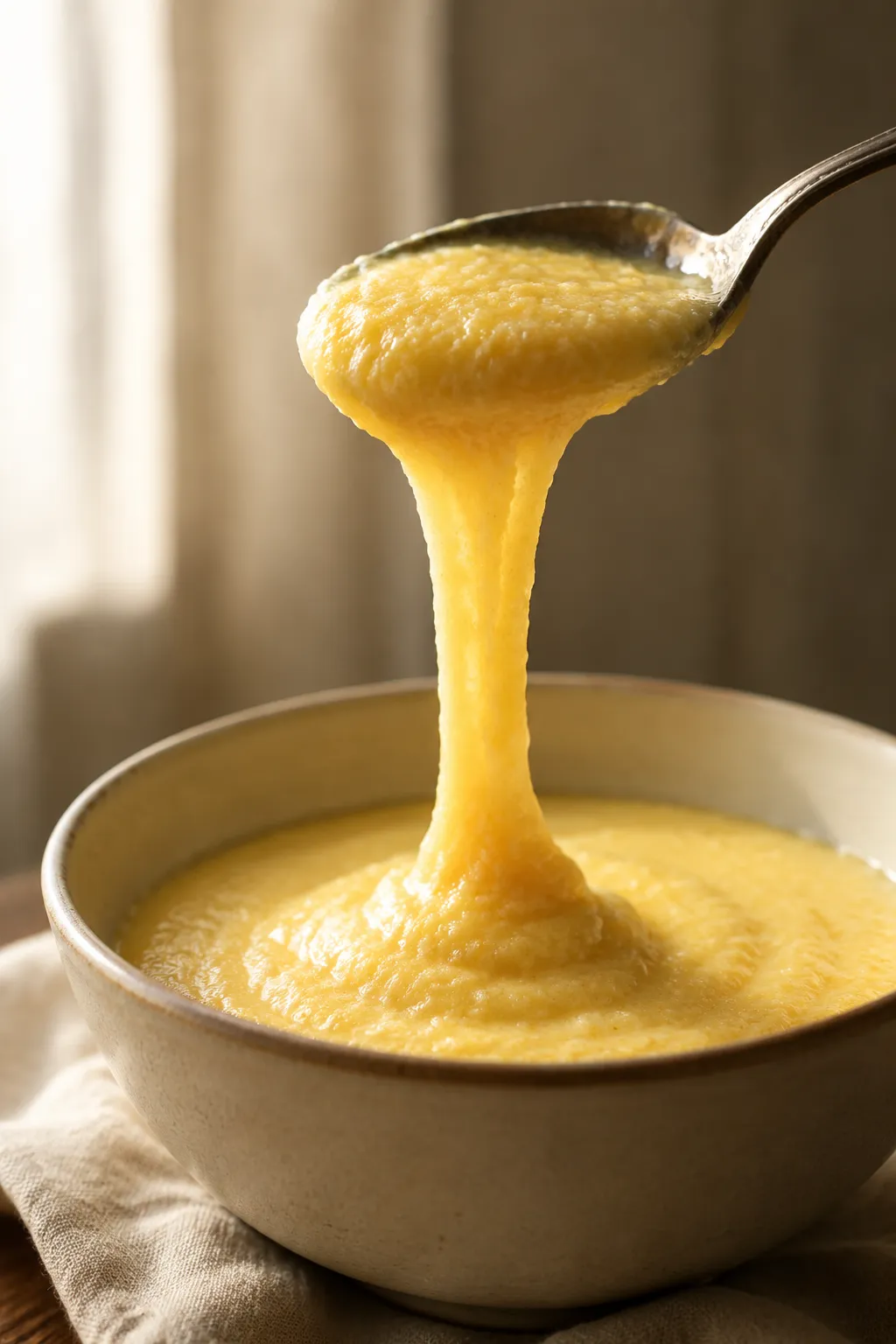
Spoon showing the silky creamy texture of perfect polenta

This is where polenta really earns its keep. As an Italian side dish, it's a blank, buttery canvas that loves anything saucy, savory, or deeply browned. My all-time favorite is a heap of creamy polenta under a tangle of mushroom ragu — earthy, rich, deeply satisfying. It's also the dream landing pad for braised short ribs, soaking up all that wine-dark gravy.

Beyond the obvious braises, try it under garlicky sautéed greens with a fried egg for a lazy weeknight dinner, or alongside roasted sausages and peppers. Leftovers chilled overnight set up firm enough to slice and pan-fry into crispy polenta cakes, which makes this one of the most efficient polenta recipes in your rotation.
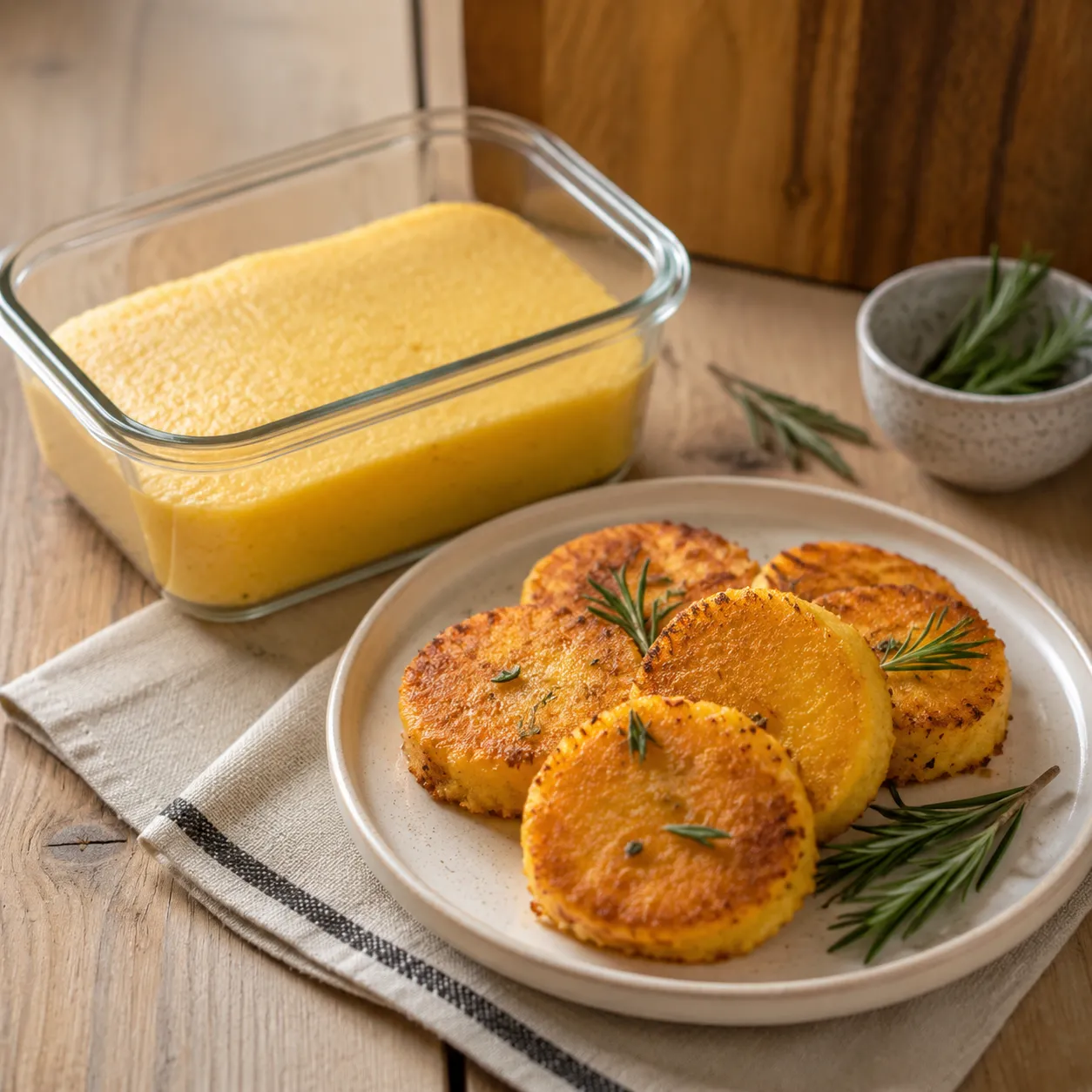
Leftover polenta stored and pan-fried into crispy polenta cakes

However you serve it, this stovetop polenta is the kind of recipe that quietly becomes a kitchen staple. It's humble, fast, deeply nourishing, and infinitely adaptable — the very best kind of cooking.

💡 Expert Tips

  • Warm, don't boil, your liquid before adding the cornmeal. A gentle simmer prevents the starches from seizing and lumping the second the polenta hits.
  • Whisk while you stream. Pour the polenta in a thin, steady ribbon with one hand while whisking nonstop with the other — this is the single most important step.
  • Salt the water early. Polenta absorbs seasoning as it hydrates; salting at the end never tastes the same.
  • Use cold butter at the finish. Cold butter emulsifies into the hot polenta more luxuriously than melted, giving you that glossy sheen.
  • If it gets too thick, loosen with hot liquid. A splash of stock, milk, or even pasta water revives polenta beautifully — never add cold liquid, which will seize it.

🔄 Variations & Substitutions

Once you've mastered the base, polenta becomes one of the most riffable recipes in your kitchen. Here are four favorites worth bookmarking:

  • Cheesy Baked Polenta — Pour finished polenta into a buttered baking dish, top with mozzarella and Parmesan, and broil until bubbly and golden.
  • Creamy Mushroom Polenta — Stir sautéed cremini and shiitake mushrooms with thyme and a splash of cream right into the finished polenta.
  • Crispy Fried Polenta Cakes — Spread leftovers in a sheet pan, chill until firm, slice into squares, and pan-fry in olive oil until golden and crackling.
  • Vegan Dairy-Free Polenta — Swap butter for good olive oil and Parmesan for nutritional yeast plus a spoonful of white miso for depth.

🧊 Storage & Leftovers

Leftover polenta keeps beautifully in an airtight container in the refrigerator for up to 4 days. It will firm up dramatically as it cools — that's not a flaw, it's a feature.

To reheat as creamy polenta, scoop into a saucepan with a splash of water, stock, or milk and warm over low heat, whisking gently until silky again. Alternatively, lean into the firm-set texture: slice the chilled polenta into squares or rounds and pan-fry in butter or olive oil until the edges turn deeply golden and crisp. Polenta does not freeze well in its creamy form (the texture turns grainy), but firm-set slabs freeze just fine for later frying.
Frequently Asked Questions

What is the ratio of liquid to polenta?
The sweet spot for creamy stovetop polenta is 4 cups of liquid to 1 cup of stone-ground polenta. That gives you a luxurious, spoonable texture that holds soft peaks but still flows. If you want looser, more porridge-like polenta — great under saucy braises — bump it to 5:1. For firm polenta you can chill, slice, and pan-fry into cakes, drop down to 3:1. The ratio is forgiving, and you can always loosen too-thick polenta at the end with a splash of hot stock or milk.
Can I use cornmeal instead of polenta?
Yes — with caveats. Medium or coarse stone-ground yellow cornmeal will give you nearly identical results to bagged polenta, since they're essentially the same product under different names. What you want to avoid is fine cornmeal (the kind labeled for cornbread) or instant grits, which produce a gummy, pasty texture and a much weaker corn flavor. Look for the words "stone-ground" and "medium" or "coarse" grind on the package, and you're set for any polenta recipe.
How do I stop polenta from getting lumpy?
Lumps are almost always caused by two mistakes: dumping the polenta in all at once, and adding it to liquid that's at a hard boil. Instead, bring your liquid to a gentle simmer with small bubbles, then stream the polenta in a thin, steady ribbon with one hand while whisking constantly with the other. Keep the heat low throughout cooking and stir every few minutes. If lumps do form, pass the cooked polenta through a fine-mesh sieve or hit it with an immersion blender for 5 seconds — instant rescue.
How do I store and reheat leftover polenta?
Refrigerate leftover polenta in an airtight container for up to 4 days. To bring it back to creamy life, transfer to a saucepan with a generous splash of water, stock, or milk and warm over low heat, whisking until silky and pourable again. You may need to add liquid twice — polenta drinks it up. Alternatively, embrace the firm set: chilled polenta slices beautifully into cakes that pan-fry to golden, crispy-edged perfection in butter or olive oil. Leftovers, in other words, are a feature, not a bug.
Is polenta gluten-free?
Yes — plain polenta is naturally gluten-free, since it's made entirely from ground corn. That makes it a fantastic side dish for anyone avoiding wheat. The one thing to watch for is cross-contamination during processing, especially with bulk-bin cornmeal or store-brand products that share equipment with wheat. If you're highly gluten-sensitive or cooking for someone with celiac disease, look for a package specifically labeled "certified gluten-free." Bob's Red Mill and Anson Mills both offer certified gluten-free polenta options that are widely available.

Creamy Polenta Recipe: Perfect Every Time

Pin Recipe
  • Prep Time5 min
  • Cook Time30 min
  • Total Time35 min
  • Yield4 servings

Ingredients

Scale

Instructions