Swedish Pancakes: Thin, Buttery & Easy Recipe
Ingredients
Scale
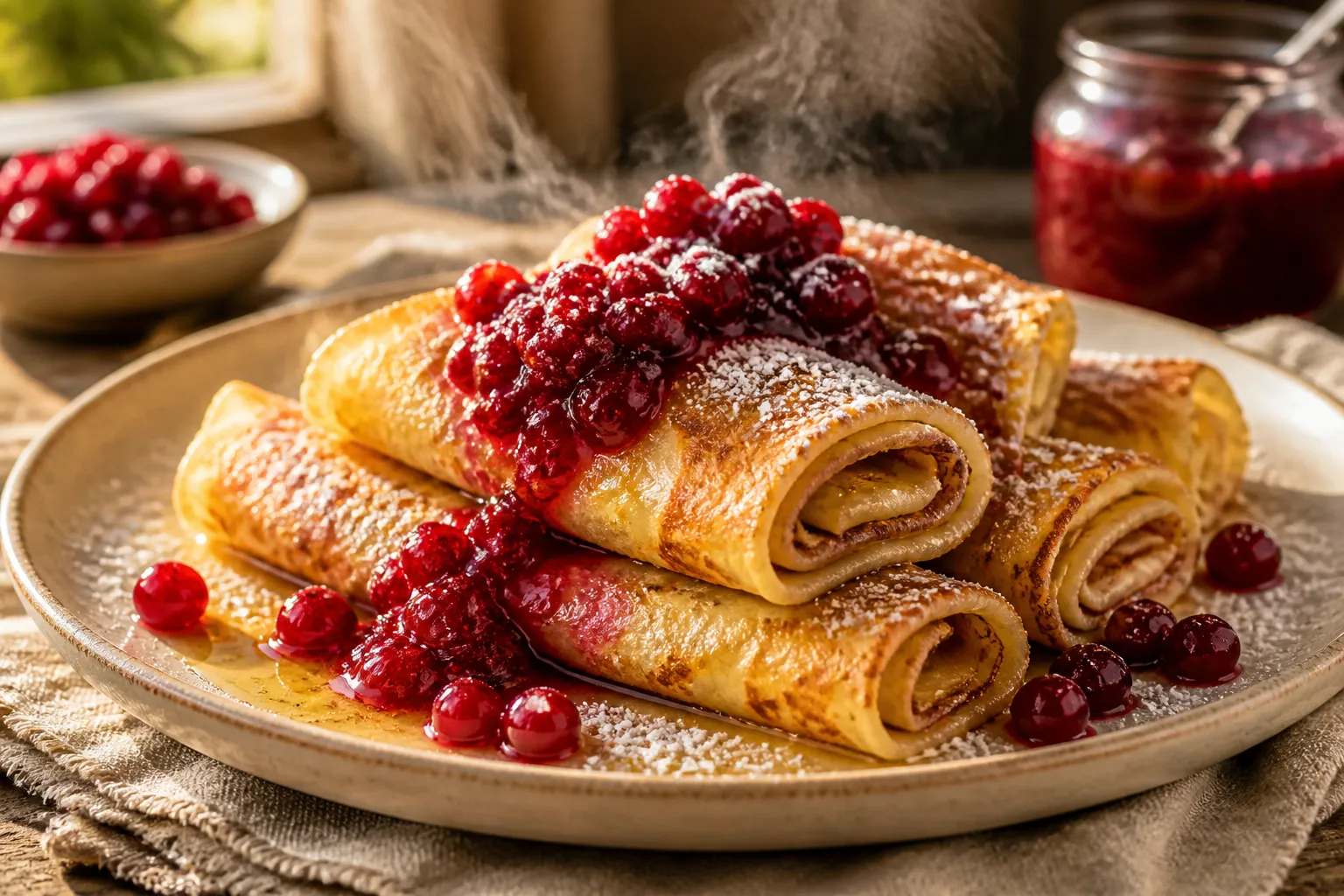
Thin, buttery, and lacy at the edges, these Swedish pancakes are the cozy weekend breakfast you'll make on repeat, ready in 30 minutes flat.
These swedish pancakes are thin, buttery, golden at the edges, and exactly the kind of cozy breakfast that makes a slow morning feel special without asking much from you. The batter comes together with simple staples, rests just long enough to hydrate, then cooks quickly in a hot buttered skillet until each pancake is soft in the center with delicate, lacy edges.
If you love the tenderness of buttery crepes but want something a little richer and more breakfast-table friendly, this is the Scandinavian classic to keep in your back pocket. Serve the pancakes rolled with lingonberry jam, folded with berries and homemade whipped cream, or stacked with a dusting of powdered sugar and a pat of butter melting into the warm layers.
This recipe is written for real home kitchens: no specialty pan required, no fussy flipping tricks, and no long ingredient list. A nonstick skillet, a whisk, and a little patience with the first pancake are all you need for a stack that feels straight from a sunny Swedish kitchen.
Pannkakor are tender, egg-rich thin pancakes traditionally cooked one at a time in a buttered skillet and served warm, often with lingonberry jam and a little sugar. They sit somewhere between French crepes and American flapjacks, but they have their own personality: soft, custardy, lightly sweet, and wonderfully flexible for rolling or folding. The batter is looser than a standard pancake batter, which lets it spread across the pan in a whisper-thin layer. As the edges meet the hot butter, they turn lightly crisp and golden while the middle stays delicate and pliable.
Compared with crepes, pannkakor usually include a higher proportion of eggs and a touch more sweetness, giving them a richer flavor and sunny yellow color. Compared with American pancakes, they do not use baking powder or baking soda, so they are not fluffy or cakey. Instead of rising, they spread, creating a tender sheet that can be rolled around jam or folded into quarters for brunch. If your family usually reaches for classic blueberry pancakes, this is a lovely way to keep the same comforting breakfast mood while changing the texture entirely.
In Sweden, pancakes are often associated with Thursday meals, family lunches, and simple treats after soup, though they are just as welcome at breakfast or weekend brunch. They are humble, pantry-driven, and endlessly adaptable, which is part of their charm. Once you understand the batter and pan technique, you can make authentic swedish pancakes any time the craving hits.
The ingredient list is beautifully short: flour, milk, eggs, sugar, melted butter, and salt, with vanilla added if you like a soft bakery-style aroma. All-purpose flour gives the batter enough structure to flip without making the pancakes tough. Whole milk creates a richer, smoother texture, though 2% milk also works if that is what you keep on hand. The eggs are key here; they bring color, flavor, and the custardy tenderness that makes this swedish pancake recipe different from a standard breakfast pancake.
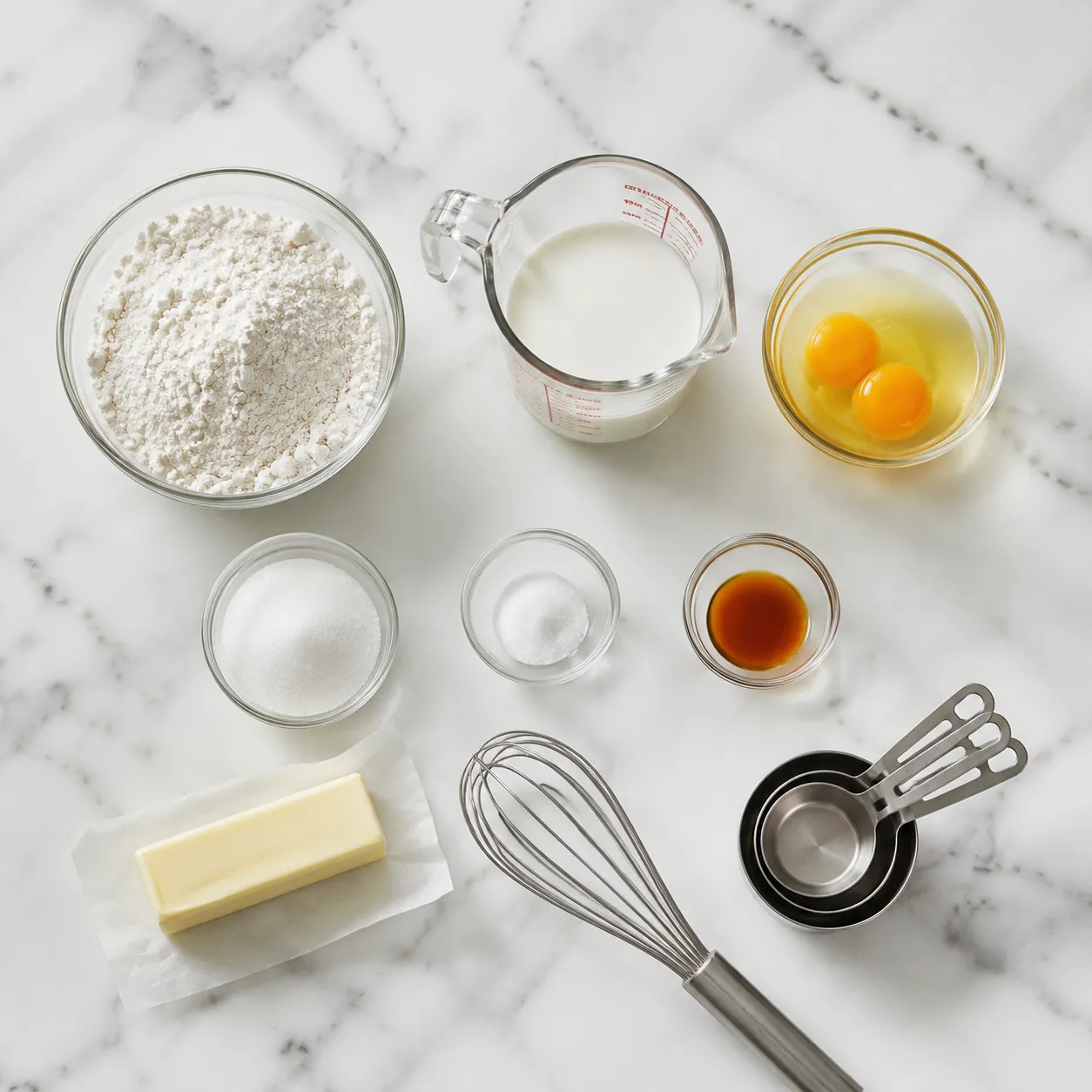
A small amount of granulated sugar seasons the batter without pushing it into dessert territory. Melted unsalted butter adds flavor from the inside out, while extra butter in the skillet helps create those golden, lightly crisp edges. Fine salt may seem minor, but it keeps the pancakes from tasting flat and balances the sweet toppings you will likely add later. Vanilla is optional, but I love it when serving these with fruit, cream, or a dusting of powdered sugar.
If you need to make a few smart swaps, keep the batter consistency in mind above all else. You can use lactose-free milk, a neutral plant milk, or even a mix of milk and water for a lighter result, though whole dairy milk gives the most classic flavor. For a slightly cozier version, add a pinch of cardamom, lemon zest, or a tiny splash of almond extract. Just avoid adding heavy mix-ins to the batter itself; delicate thin pancakes cook best when the batter stays smooth and pourable.
Start by whisking the eggs, milk, sugar, salt, and vanilla until smooth, then add the flour gradually so it incorporates without clumping. Once the flour is mostly hydrated, whisk in the melted butter until the batter looks pale yellow and fluid, more like heavy cream than American pancake batter. A few tiny bubbles are fine, but large pockets of flour will show up in the pan, so give the bowl a careful scrape around the sides and bottom. If you want the silkiest texture, you can also blend the batter for a few seconds in a blender.
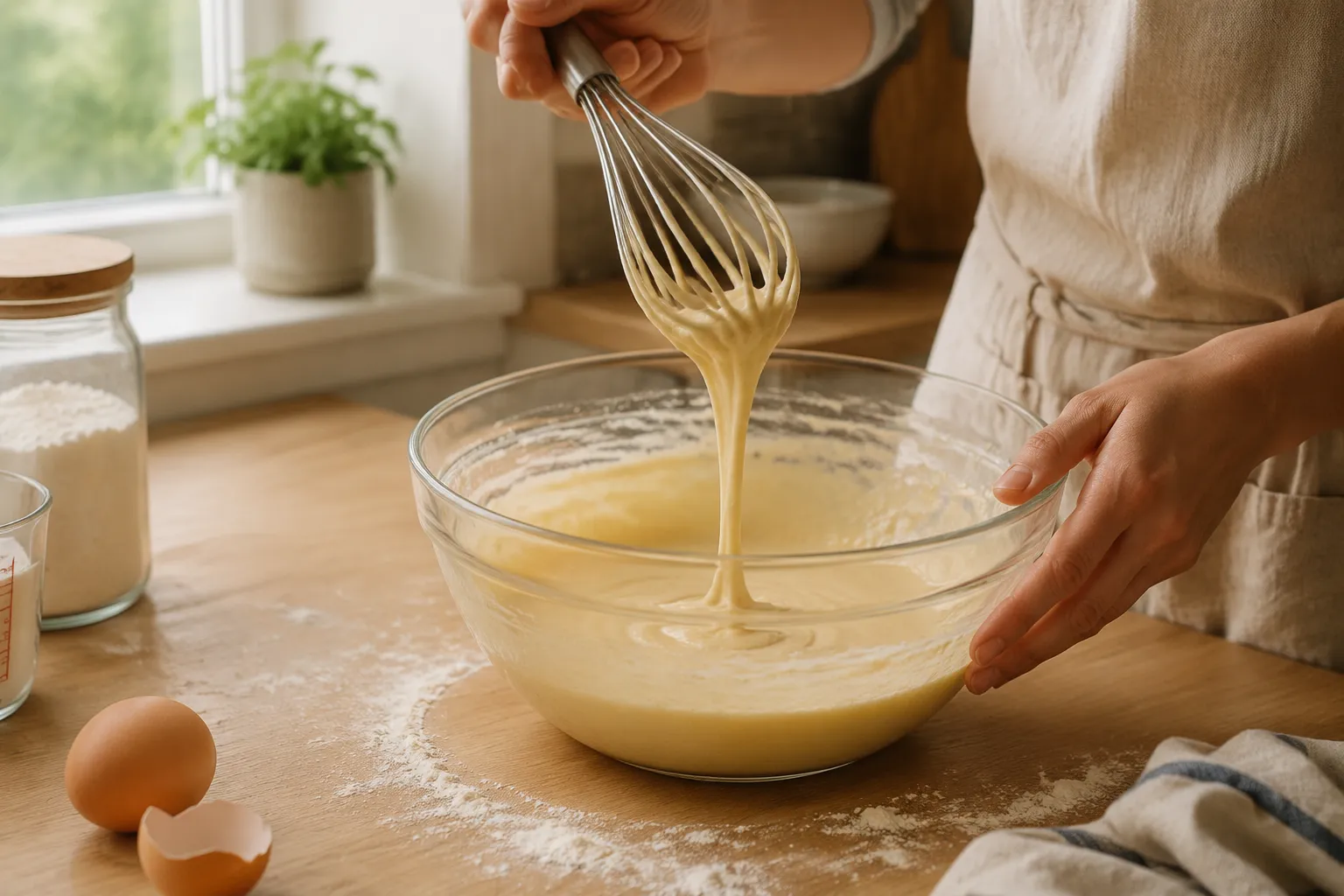
Letting the batter rest is a small step that makes a noticeable difference. During the rest, the flour hydrates, the bubbles settle, and the texture becomes smoother and less prone to tearing. Ten minutes is enough for a quick breakfast, though you can rest it a little longer while you make coffee, set out toppings, or warm plates. The rested batter should still be pourable; if it thickens too much, whisk in a tablespoon or two of milk.
Heat a nonstick or well-seasoned skillet over medium heat, then add a small knob of butter and let it foam. Pour in just enough batter to coat the bottom of the pan, immediately tilting and swirling so it spreads into a thin, even layer. This is the moment that defines the finished texture: too much batter makes the pancake heavy, while a light hand gives you those beautiful lacy edges. The first one is often the cook's snack, so do not worry if it looks a little rustic while you dial in the heat.
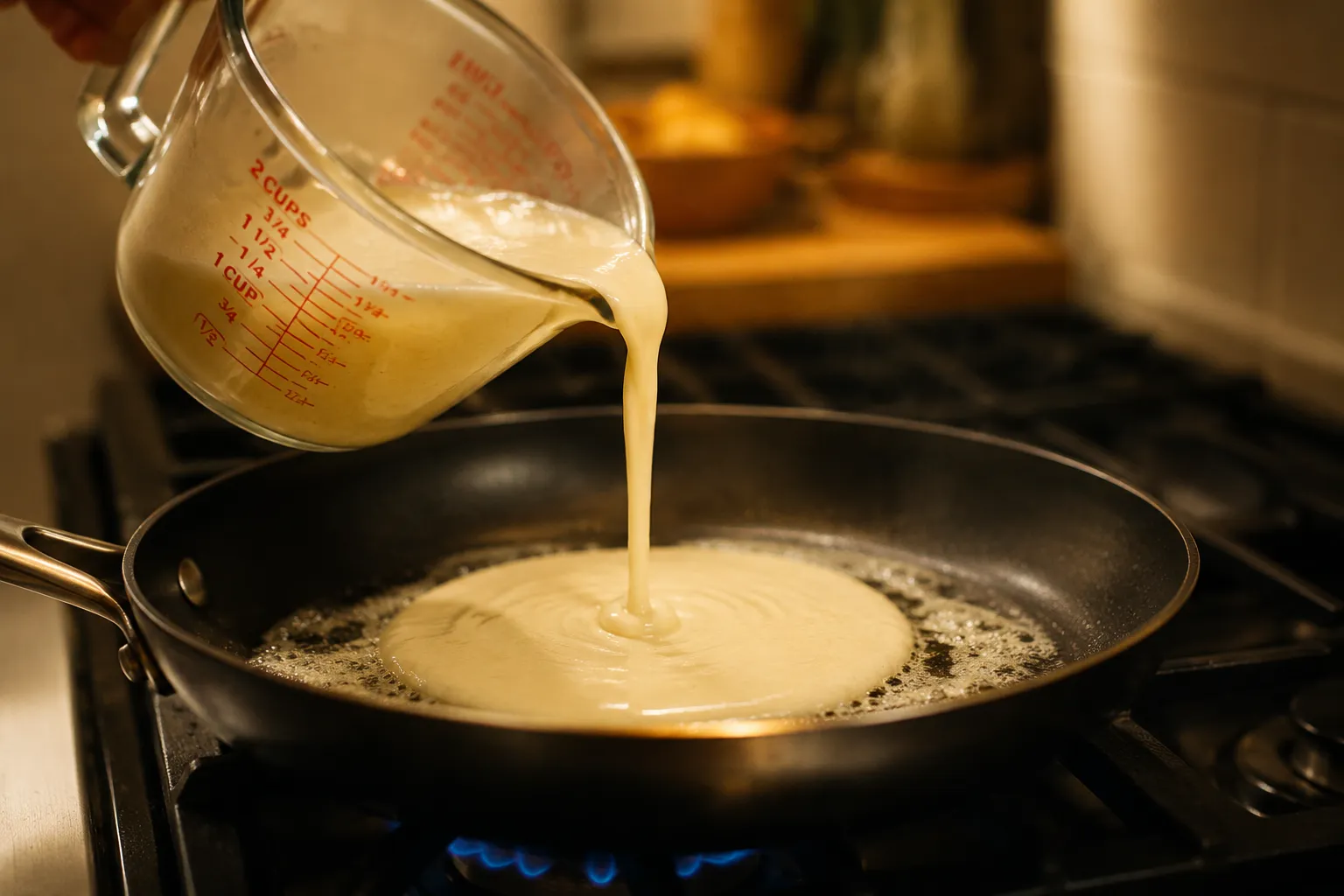
Cook until the surface looks set, the edges are dry, and the underside is lightly golden. Slide a thin spatula around the edge, lift gently, and flip with confidence. The second side needs less time, just enough to take on a few golden freckles and finish cooking through. Transfer each pancake to a plate and repeat, adding a little more butter as needed so every round gets that signature tender, buttery finish.
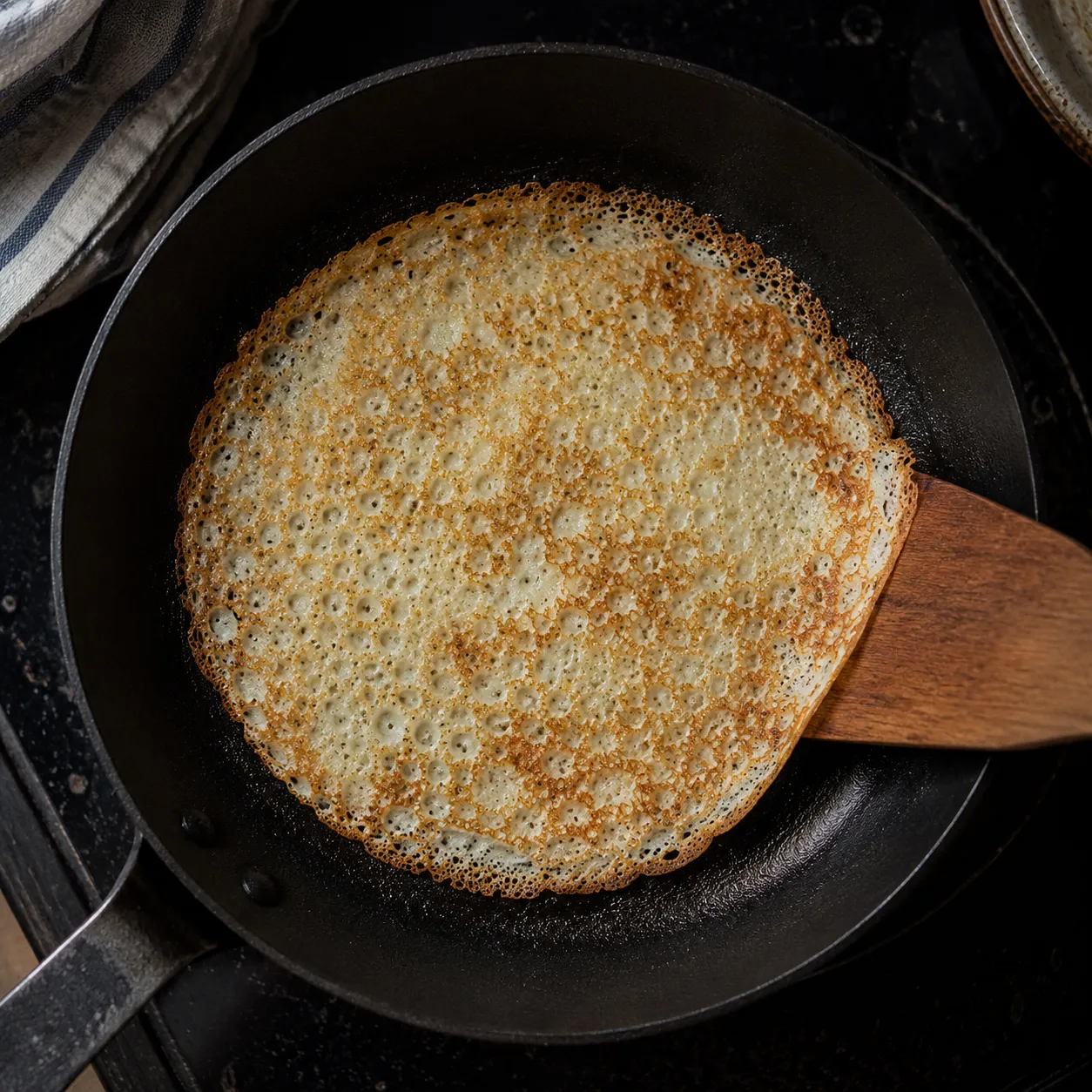
The ideal pancake is thin enough to fold softly but sturdy enough to roll without falling apart. Look for a pale golden surface with deeper brown spots and edges that are slightly crisp when they first leave the pan. As the pancakes stack, steam softens the edges a bit, creating that lovely mix of tender centers and buttery rims. This is why they are so good served immediately, while the stack is warm and fragrant.
The batter should flow quickly when poured, but it should not be watery. If it races across the pan and leaves bare spots, whisk in a teaspoon or two of flour and let it sit briefly. If it sits in a thick puddle and refuses to swirl, loosen it with milk until it moves easily. Think of the consistency as somewhere between half-and-half and melted ice cream, smooth enough to coat the pan without creating a thick layer.
Heat control is equally important. Medium heat is usually the sweet spot because it gives the batter time to set while still browning the butter-kissed edges. If the pancake browns before the top sets, lower the heat slightly. If it takes forever to color or turns rubbery, increase the heat a notch and make sure the skillet is properly preheated.
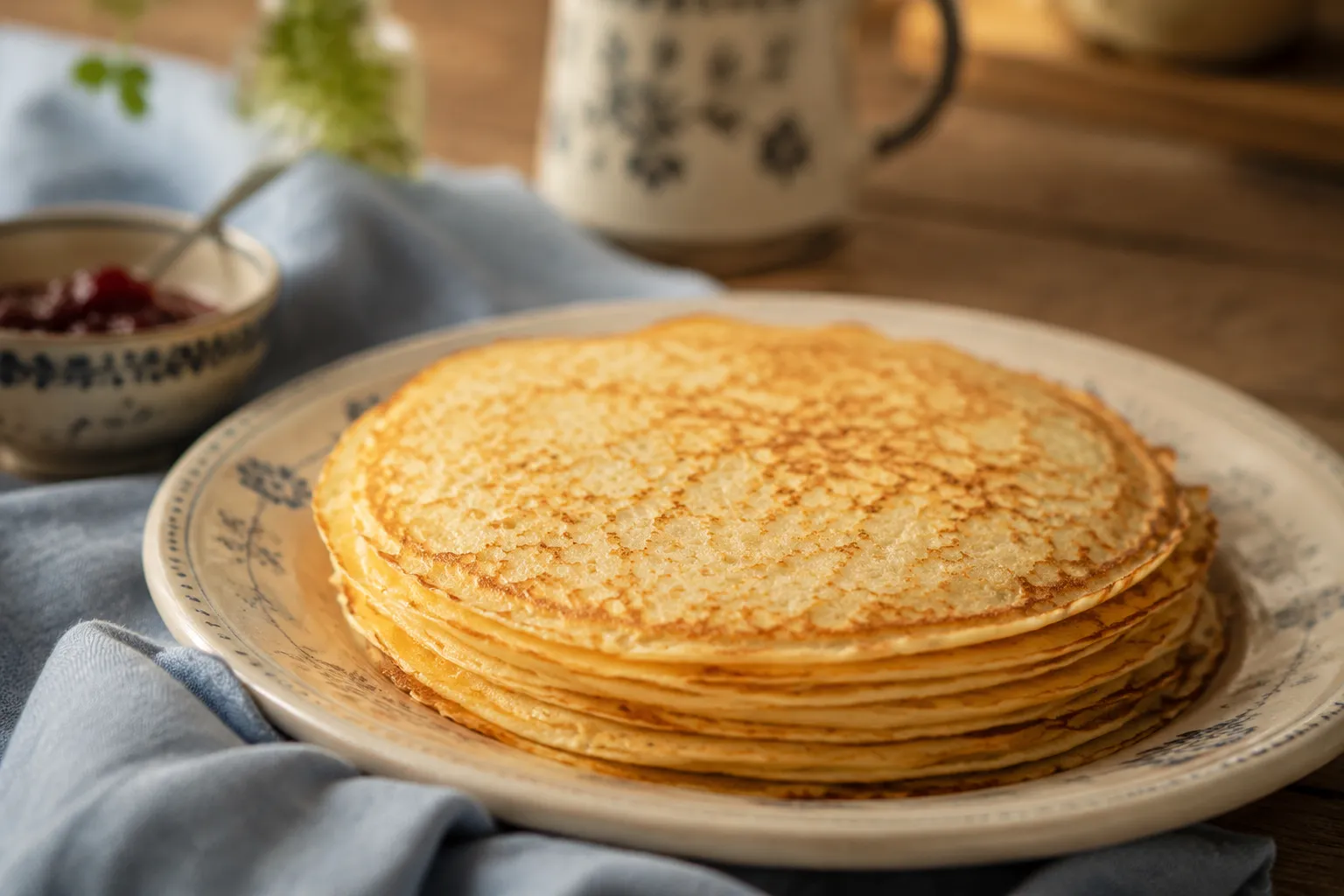
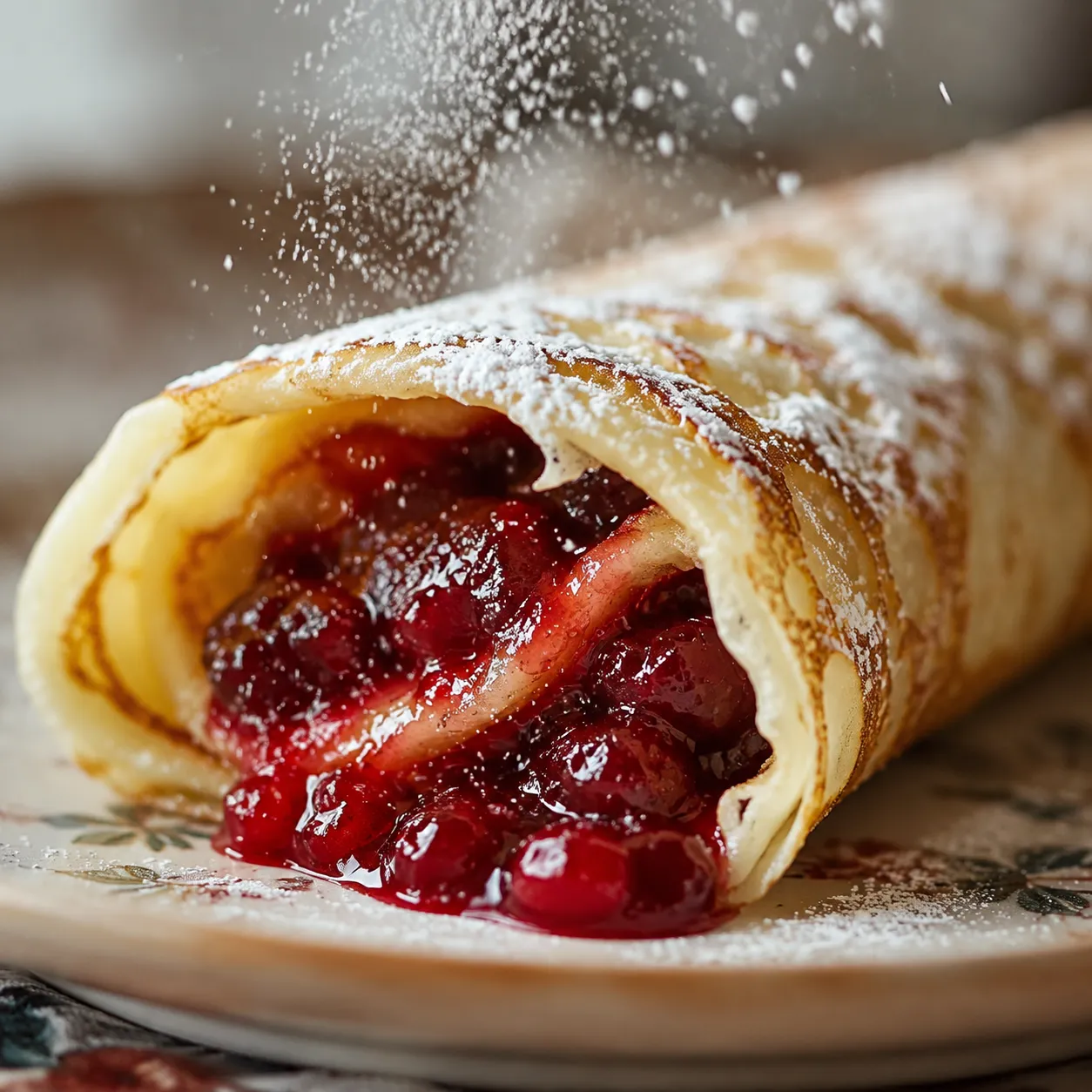
The most traditional topping is lingonberry jam, whose tart ruby brightness cuts beautifully through the richness of the pancakes. A spoonful in the center, a quick roll, and a snowfall of powdered sugar is simple, classic, and hard to beat. If you want to lean into that flavor even more, homemade lingonberry sauce makes the plate feel extra special and gives you control over the sweetness. The contrast of tangy berries, warm butter, and soft pancake is the reason this combination has lasted for generations.
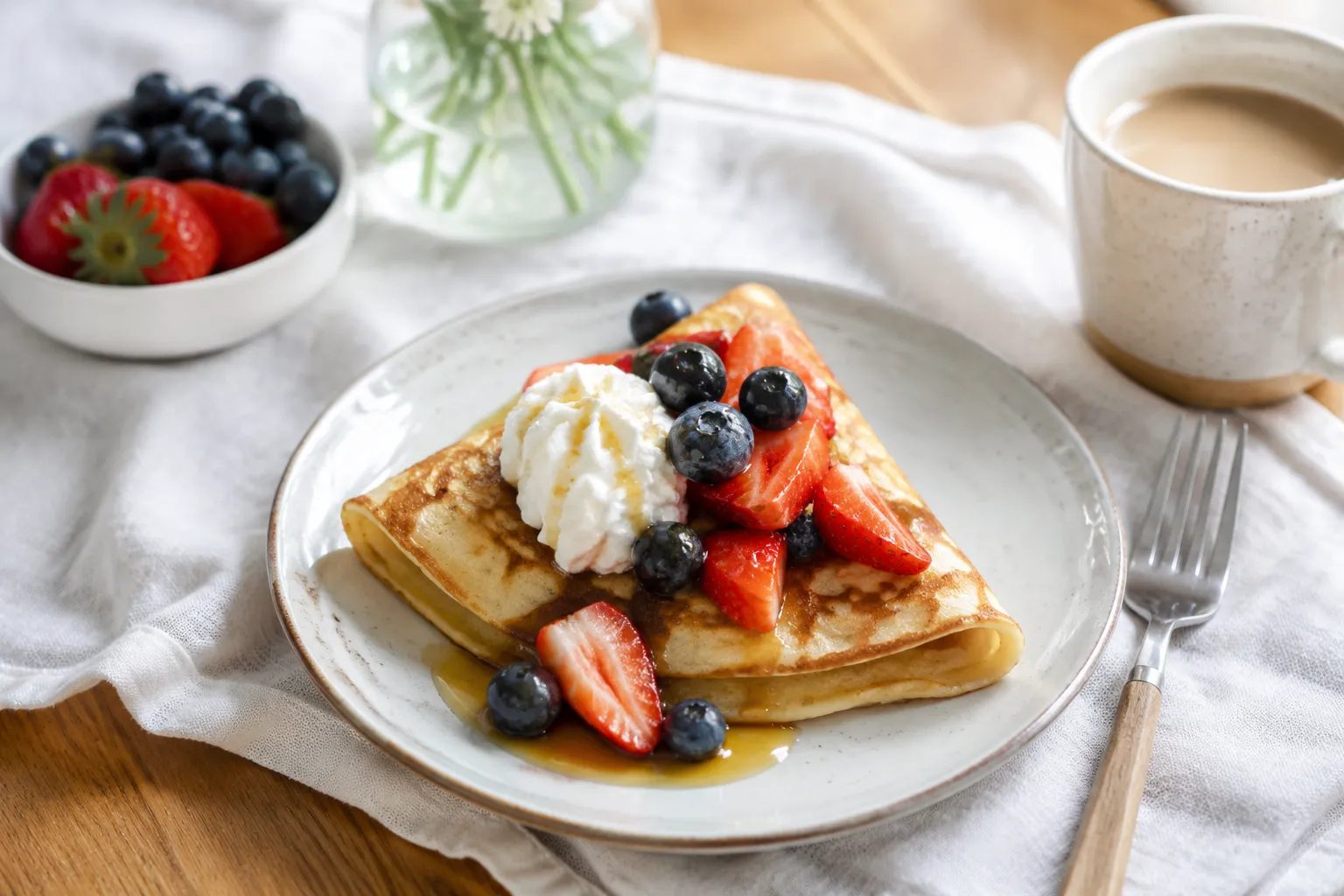
For a more modern brunch spread, set out bowls of fresh strawberries, blueberries, sliced bananas, lemon wedges, and softly whipped cream. The pancakes can be rolled, folded into triangles, or layered in small stacks so everyone can build their own plate. They also pair beautifully with buttermilk crepes if you are hosting a bigger breakfast and want a mix of thin pancake styles. Add strong coffee, orange juice, and crisp bacon or breakfast sausage, and you have one of those easy brunch recipes that feels generous without being complicated.
These pancakes also take well to savory fillings when you keep the sugar in the batter modest. Try smoked salmon with crème fraîche and dill, sautéed mushrooms with gruyère, or soft scrambled eggs with chives. Because the texture is flexible, they wrap around fillings neatly while still tasting rich and buttery. If you are serving both sweet and savory options, keep the pancakes warm on a covered plate and let guests choose their own direction.
Thin pancakes are at their best when served warm, so think in terms of a relaxed rhythm rather than a formal plated breakfast. You can stack them on a plate as they come off the skillet and cover loosely with a clean towel, or keep them in a low oven for a short time while you finish the batch. A little melted butter between the layers adds extra richness and helps keep the stack supple. When ready to serve, bring the whole plate to the table and let the toppings do the decorating.
For a classic presentation, roll each pancake into a loose tube and arrange several on a plate with jam spooned over the top. For a café-style look, fold them into quarters and fan them slightly, then add berries, cream, or a lemon-sugar sprinkle. Children often love them simply buttered and sugared, while adults may go for tart jam or a savory filling. However you serve them, the charm is in the contrast: delicate batter, golden edges, and toppings that make each bite a little different.
If you are planning a larger breakfast, this recipe scales well as long as you use a wide mixing bowl and keep the batter thin. Double the ingredients and cook in two skillets if you have a helper nearby. Because each pancake cooks quickly, the batch moves faster than you might expect once the pan is hot. The result is a beautiful platter of buttery, tender pancakes that works for holidays, birthdays, or slow Saturdays when breakfast deserves a little ceremony.
What I love most about this recipe is how a few everyday ingredients become something that feels both elegant and deeply comforting. There is no leavening to measure, no thick batter to fuss over, and no complicated technique beyond swirl, cook, flip, and repeat. After one batch, you will know exactly how much batter your pan needs and how golden you like the edges. It is the kind of recipe that quickly becomes muscle memory.
Make them for a quiet morning, a family brunch, or a breakfast-for-dinner night with jam and cream on the table. Keep the first pancake for yourself, serve the prettiest ones warm, and do not be surprised when the stack disappears faster than expected. With a hot skillet, a little butter, and a bowl of silky batter, pannkakor bring a bit of Scandinavian comfort right into your kitchen.
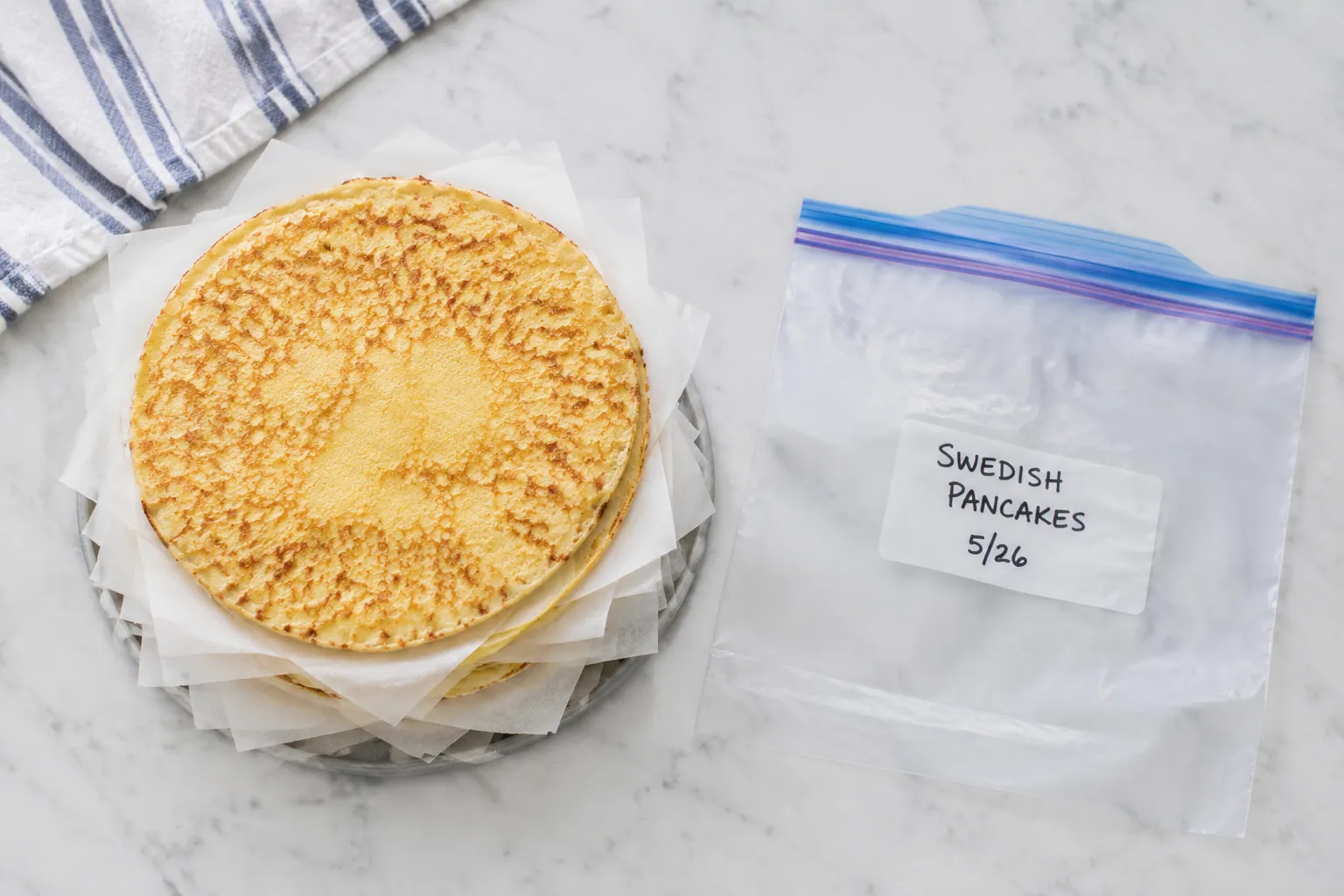
Let leftover pancakes cool completely, then stack them with parchment or wax paper between layers. Refrigerate in an airtight container for up to 3 days, or freeze in a freezer-safe bag for up to 2 months.
To reheat, warm them gently in a nonstick skillet over low to medium-low heat, or place a covered stack in a 300°F oven until heated through. Avoid overheating, which can dry out the delicate centers and make the edges brittle.