Gluten Free Pancake Recipe (Fluffy & Foolproof)
Ingredients
Scale
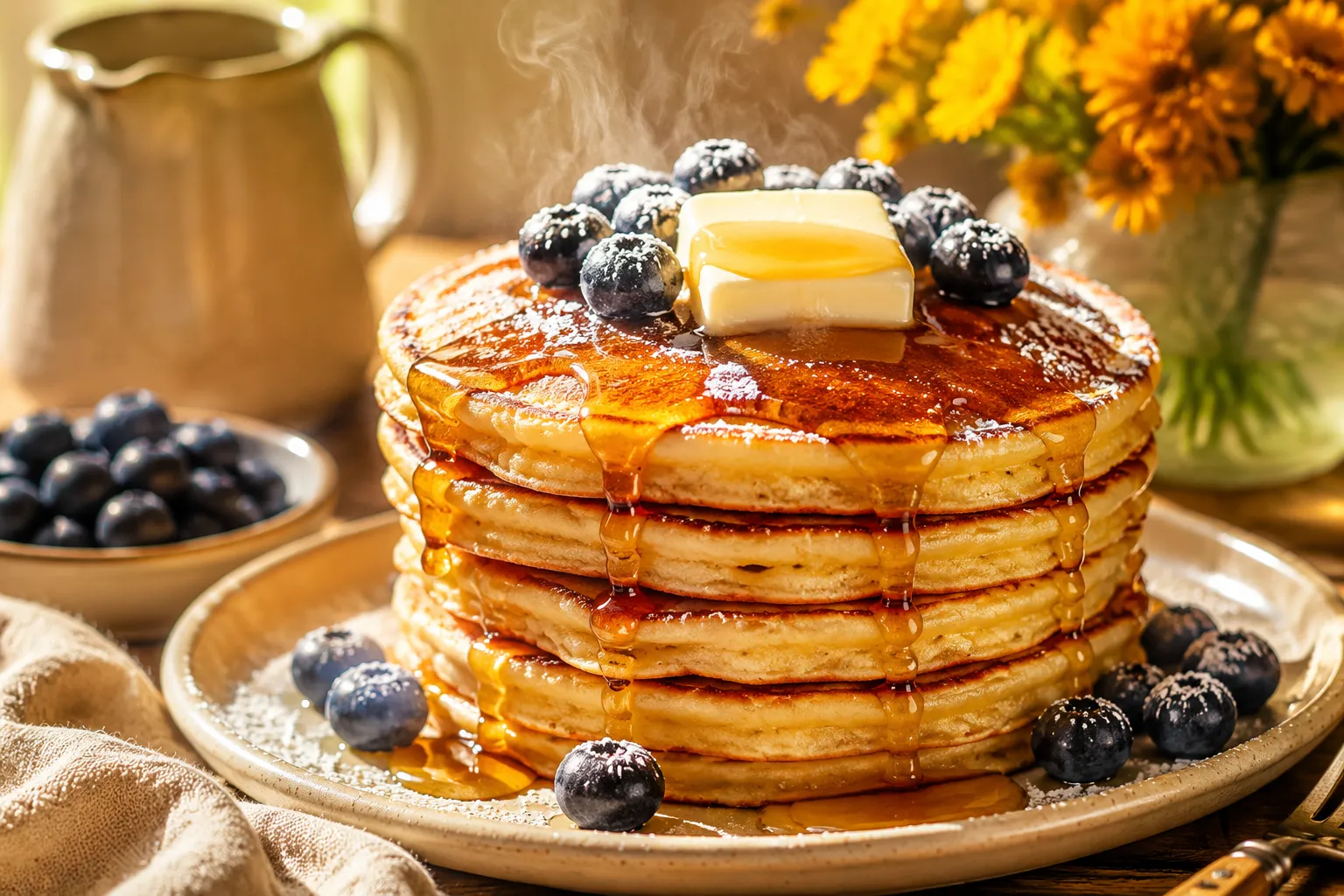
Light, fluffy, and golden — this gluten free pancake recipe tastes just like the classic diner stack, with a make-ahead mix option for fast weekday breakfasts.
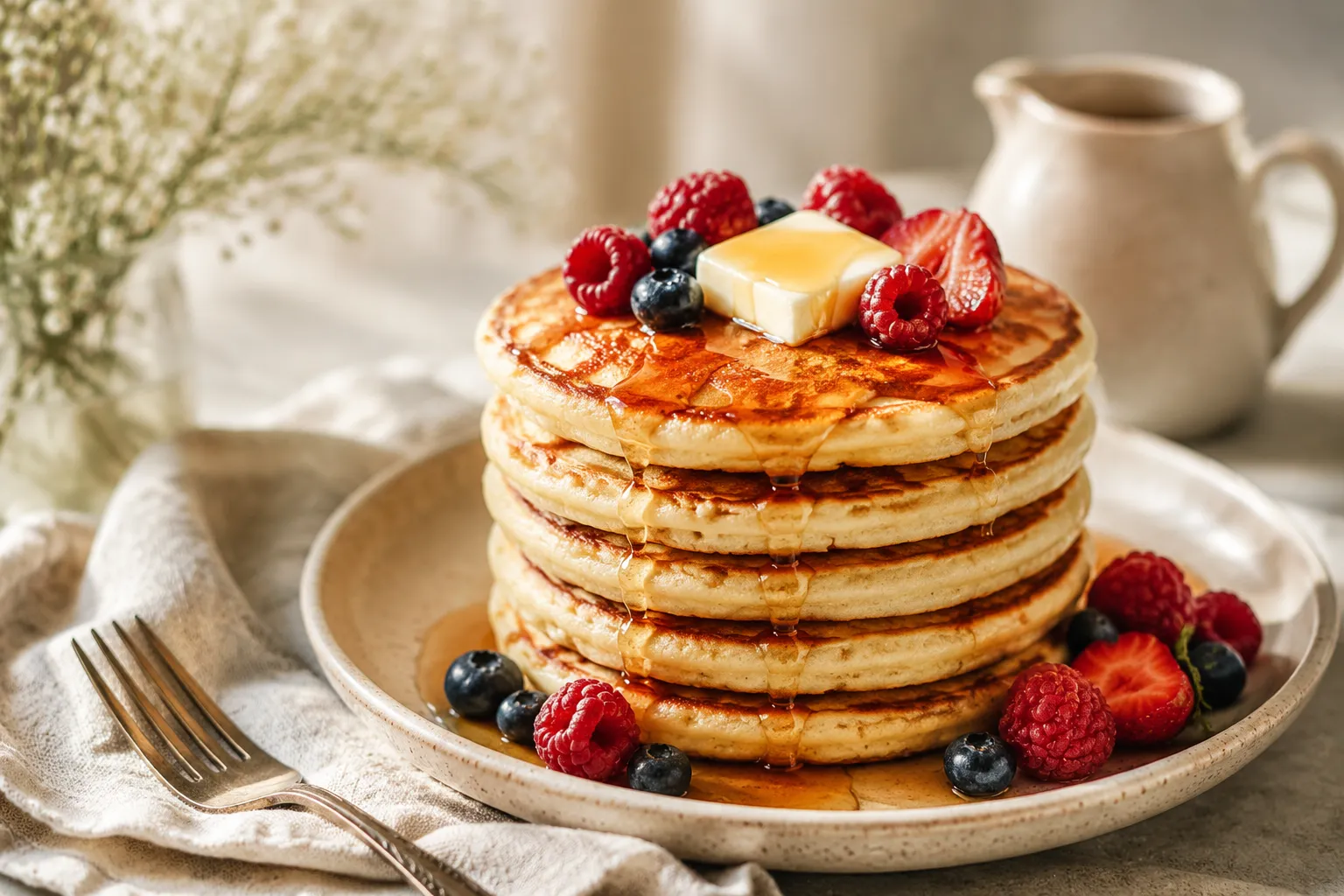
This gluten free pancake recipe gives you everything you actually want in a Sunday stack: tall, tender, golden-edged pancakes that taste like the classic diner version, never like a sad gluten free compromise. After years of testing recipes with celiac family members and gluten sensitive friends in my kitchen, I've landed on a formula that turns out fluffy gluten free pancakes every single time, even when you're half awake and the coffee hasn't fully kicked in.
If you've been burned before by gummy, dense, weirdly grainy gluten free pancakes — the kind that sit in your stomach like a brick — I get it. That's where most online recipes still fall short. The good news is the fix is mechanical, not magical: it comes down to the flour you choose, the leaveners you trust, and how patient you are with the heat under the pan.
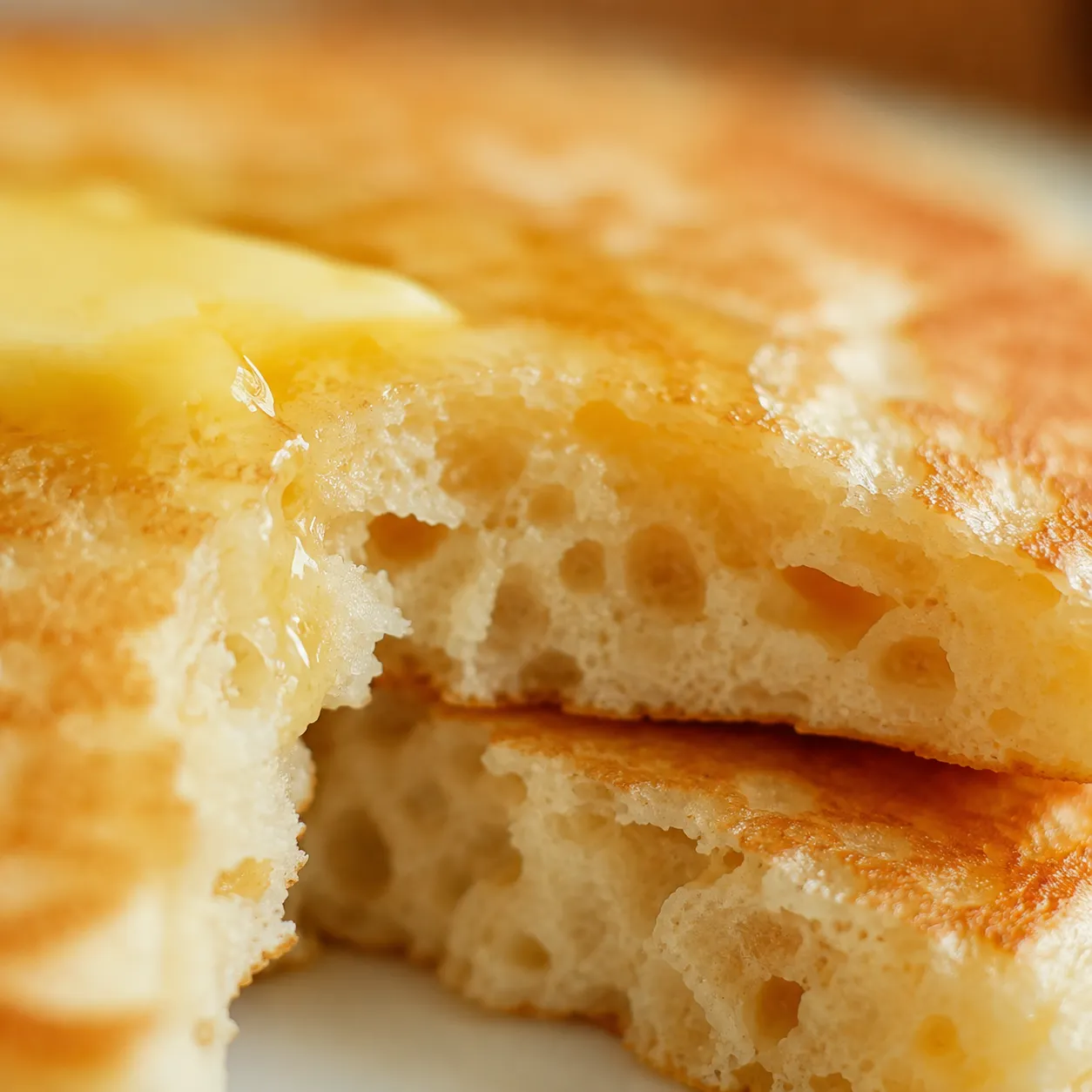
The trick really does come down to three things: a reliable gluten free flour blend, a short batter rest that lets the starches hydrate, and a low-and-slow griddle that gives the centers time to cook through before the outsides over-brown. Get those right and you'll never deal with a gummy middle or a gritty bite again.
I'll also walk you through a make-ahead pancake mix you can keep in a jar on the counter so weekday breakfasts come together in about ten minutes. It's the same dry blend, just pre-portioned and ready to go when you are.
Most of what makes a gluten free pancake recipe actually succeed comes down to ingredient choice. With pancakes there's very little structure to hide behind, so each component is doing real work. The full quantities live in the recipe card below, but the why behind each one is worth a closer look — here's where you have room to swap and where you don't.
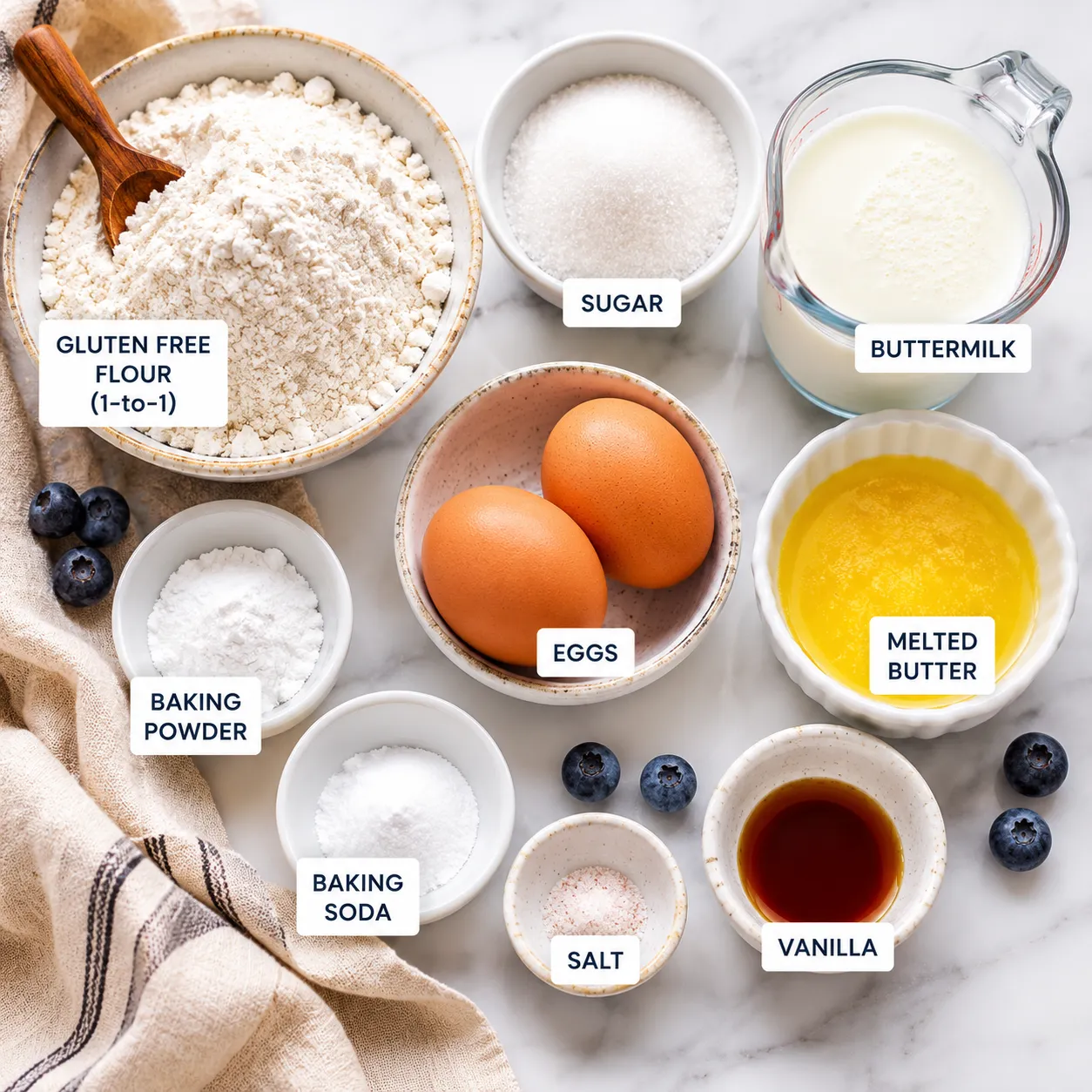
Reach for a 1-to-1 style gluten free flour blend that already has xanthan gum or guar gum built in. Bob's Red Mill 1-to-1 Baking Flour (blue bag) and King Arthur Measure for Measure are my two go-tos because they have a balanced rice-and-starch ratio that doesn't read chalky on the palate. Single-flour bags like straight rice flour, oat flour, or almond flour won't give you the same fluff and tend to fall apart, so I don't recommend them here. If your blend doesn't list a gum on the label, whisk in 1/2 teaspoon of xanthan gum along with the dry ingredients.
This batter leans on both baking powder and baking soda. The powder gives an immediate puff when it hits the heat, while the soda reacts with the buttermilk to add a second wave of bubbles. Make sure both are fresh — anything older than six months has lost most of its power and is the number-one reason a so-called fluffy pancake shows up flat. To test, drop a pinch of baking soda into vinegar; it should fizz aggressively. If it just sits there, replace it.
Real cultured buttermilk gives classic buttermilk pancakes their signature tang and tenderizes the crumb thanks to its acidity. If you want to keep this an easy gluten free breakfast the whole family can eat, no problem — make a quick dairy free buttermilk substitute by stirring 1 tablespoon of lemon juice or white vinegar into 1 1/4 cups of unsweetened almond, oat, or soy milk and letting it sit for 5 minutes until lightly thickened and curdled. Pair it with melted coconut oil in place of butter for a complete dairy free option that doesn't sacrifice tenderness.
Once your ingredients are measured, the whole process is genuinely 20 minutes door-to-door. Mise en place pays off here, because gluten free batter doesn't love sitting around mixed for too long. Here's how I think about each stage so you can troubleshoot in real time.
Start by whisking the flour, sugar, baking powder, baking soda, and salt together in a large bowl for a solid 30 seconds. This isn't busywork — it distributes the leaveners evenly so you don't bite into a sour pocket of baking soda later. If your flour blend looks at all clumpy, sift it first. A wide bowl makes the next step easier because you'll be folding wet into dry without splashing.
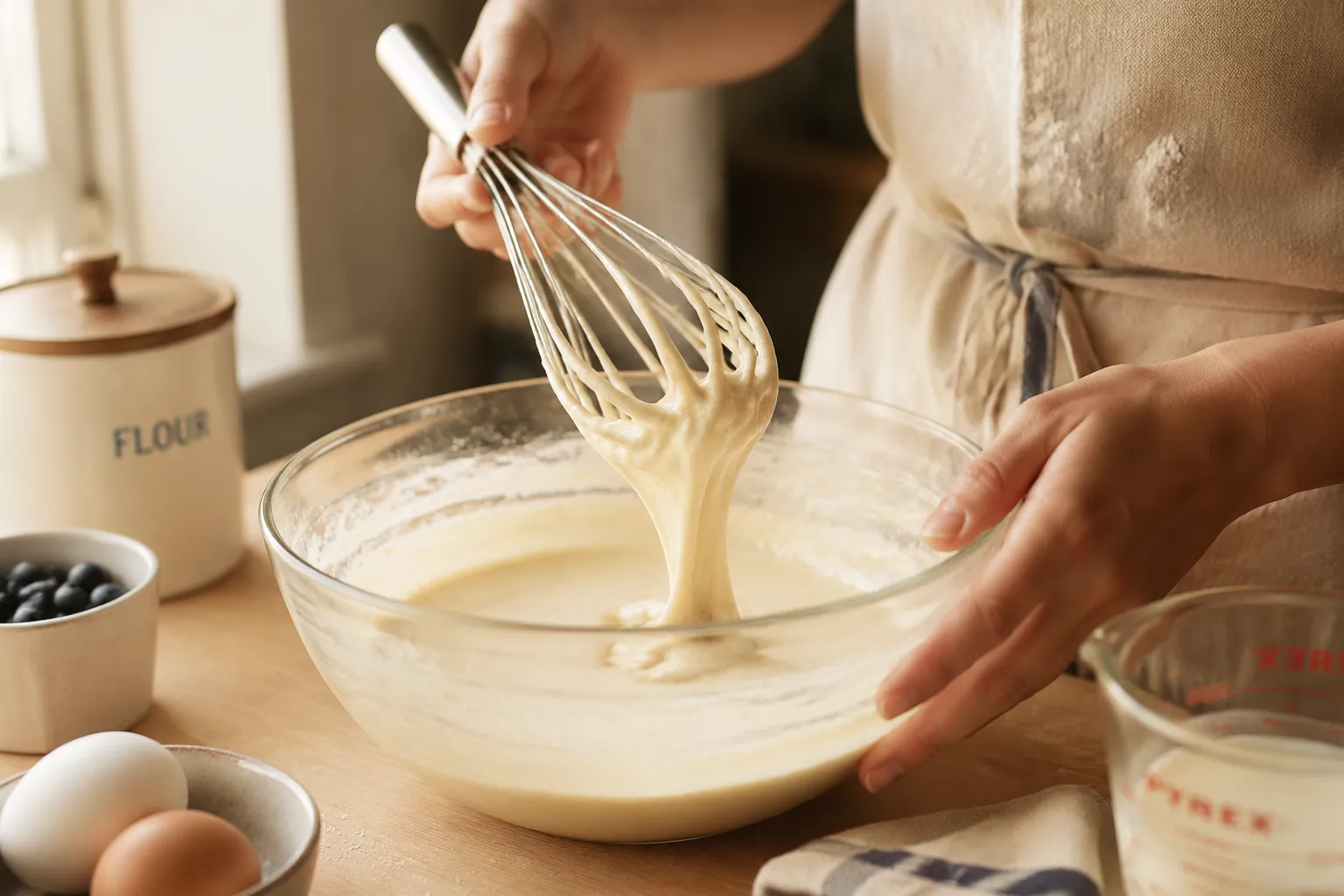
Whisk the buttermilk, eggs, melted butter, and vanilla together in a separate bowl until smooth, then pour the wet into the dry and stir gently with a flexible spatula just until you no longer see streaks of flour. A few small lumps are fine — overmixing is the bigger crime here, even without gluten in the picture. Now walk away for 10 minutes. This rest is the single biggest upgrade I made over my old recipe; gluten free flours need time to fully absorb liquid, and a rested batter cooks up dramatically taller and more tender than one you scoop straight away. Use the time to heat the pan and pour yourself coffee.
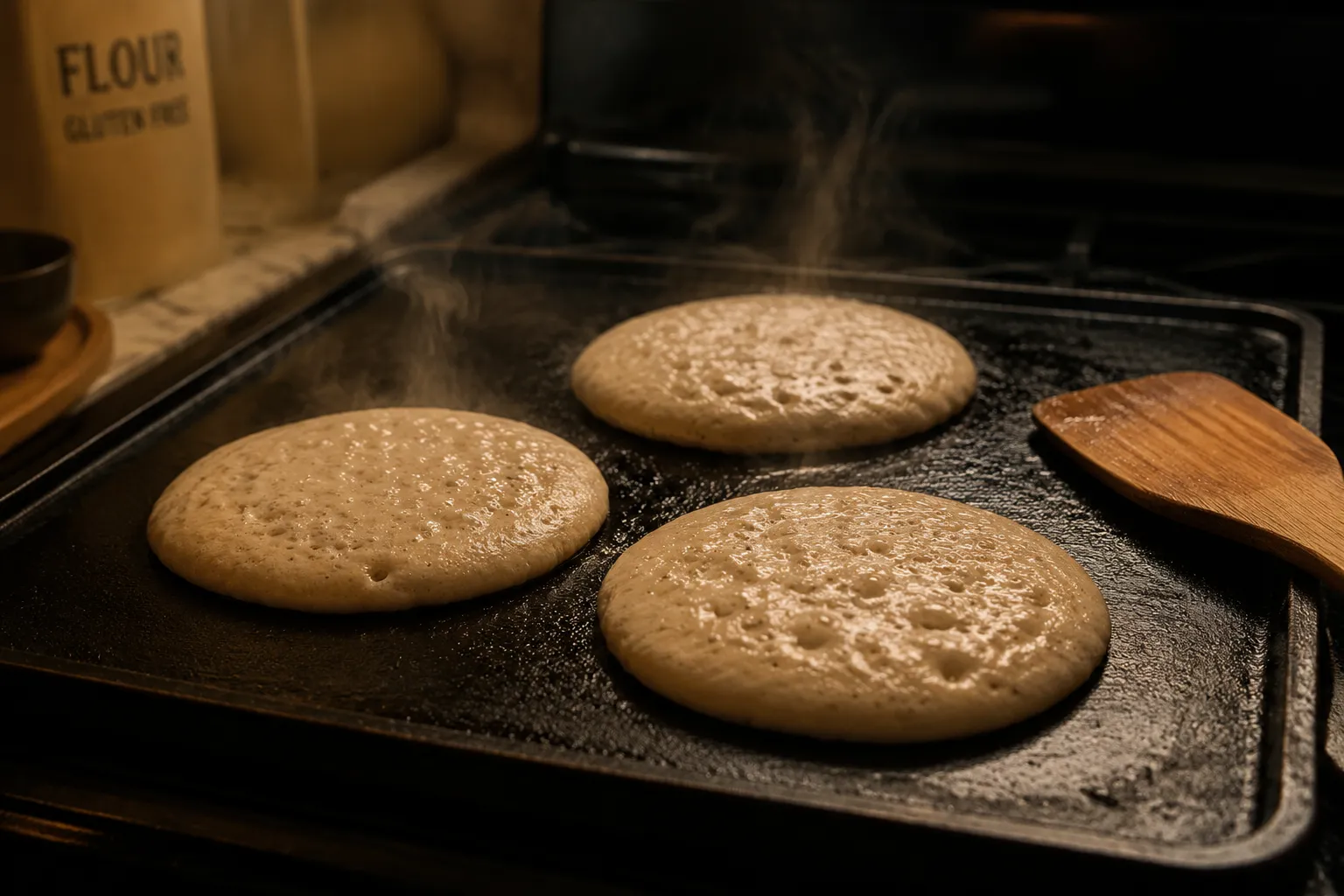
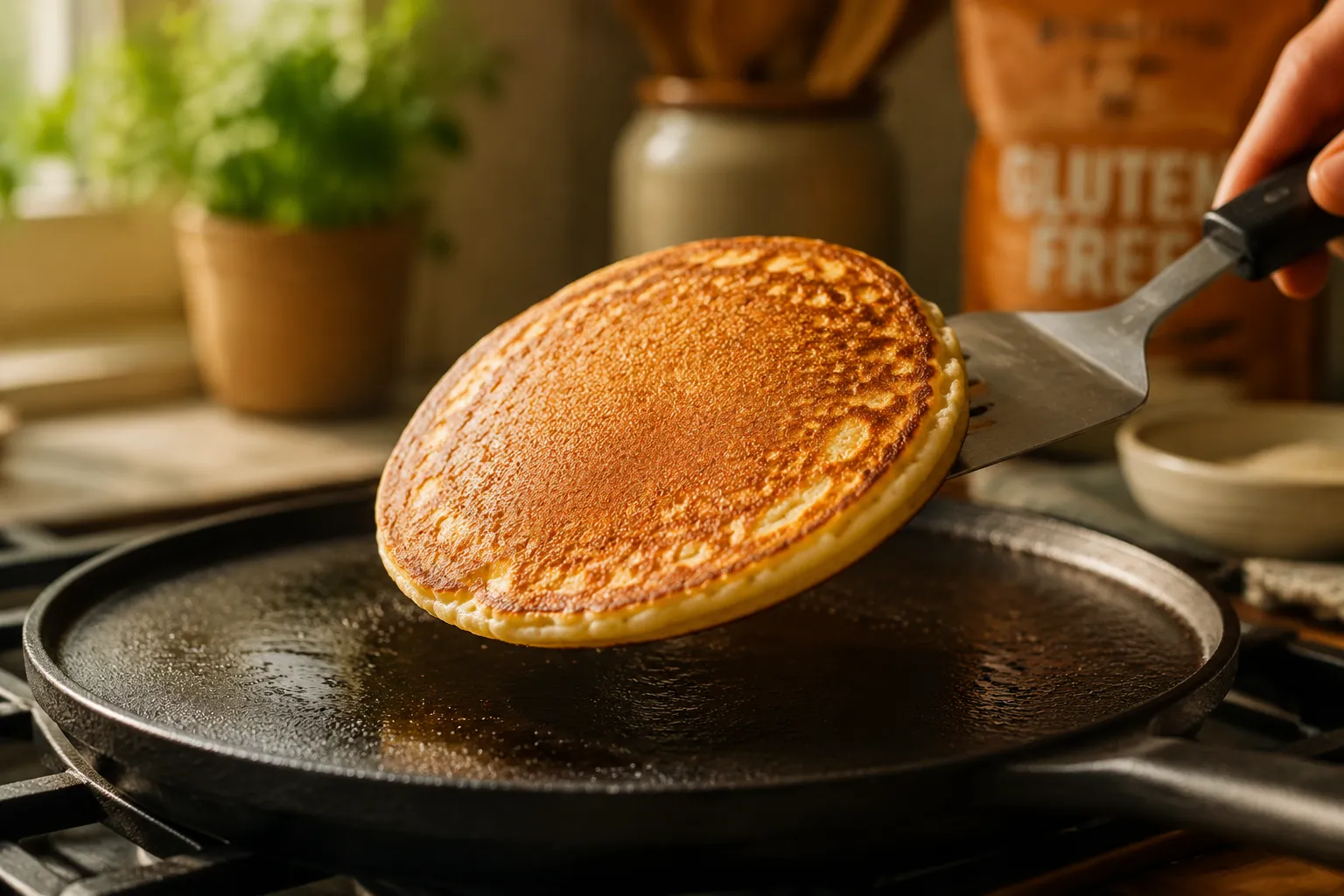
Heat a cast iron griddle or nonstick skillet over medium-low. This is lower than you'd cook a wheat pancake — gluten free batter benefits from extra time on the heat to set the interior before the outside takes too much color. Brush the surface with a thin film of butter, scoop a generous 1/4 cup of batter per pancake, and wait until you see bubbles popping across the entire surface and the edges look matte before flipping. That usually takes 2 to 3 minutes. The second side cooks faster, around 1 to 2 minutes, and should land deep golden brown.
Transfer finished pancakes to a wire rack set inside a sheet pan in a 200°F oven so they stay warm and crisp at the edges while you cook the rest of the batter. Resist the urge to stack them straight on a plate — trapped steam is what turns a beautiful pancake soggy in the middle.
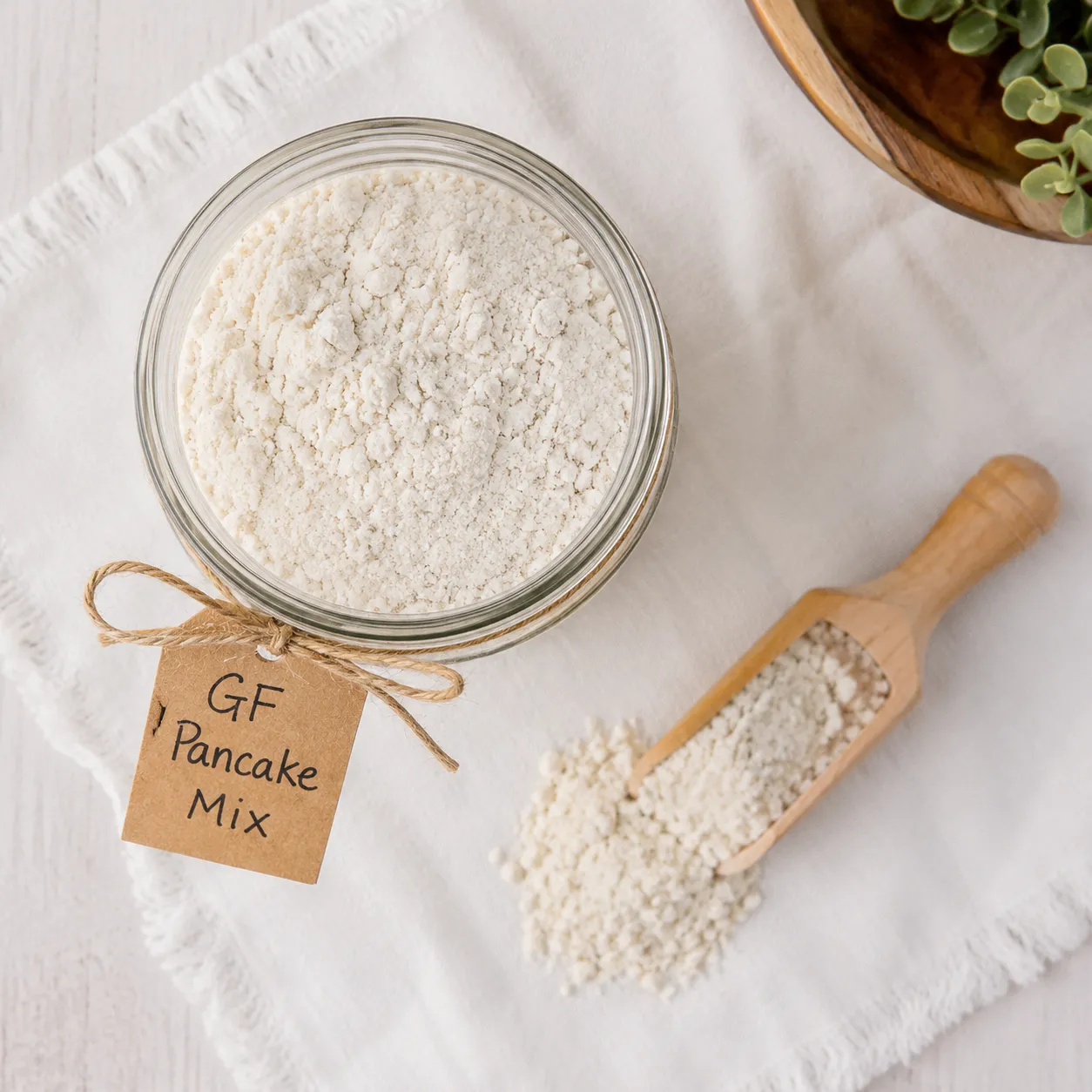
Once you've made this gluten free pancake recipe a couple of times and confirmed you love it, batching the dry ingredients into a jar takes the weekday math out of breakfast. You measure once, store the gluten free pancake mix on a shelf, and just add wet ingredients in the morning. It's the move that turned this from a weekend recipe into something my kids can pull together on a school day.
For a quart-size jar that yields four batches, multiply the dry ingredients by four: 6 cups gluten free 1-to-1 flour, 1/2 cup granulated sugar, 8 teaspoons baking powder, 2 teaspoons baking soda, and 2 teaspoons fine sea salt. Whisk everything in a big bowl until completely uniform — really, give it a full minute — then funnel it into a clean glass jar with a tight-fitting lid.
Cap the jar tightly, label it with the date and the per-batch instructions (1 1/2 cups mix + 1 1/4 cups buttermilk + 2 eggs + 3 tablespoons melted butter + 1 teaspoon vanilla), and tuck it into a cool, dry pantry away from the stove. This make-ahead pancake mix keeps about 3 months at room temperature, or up to 6 months in the fridge or freezer. If you live somewhere humid, the fridge is your friend.
On pancake morning, scoop 1 1/2 cups of mix into a bowl, whisk in the wet ingredients, rest 5 minutes, and cook. The shorter rest is fine because the dry mix has already had time to settle and hydrate evenly. The same blend doubles as the base for gluten free waffles whenever I pull the waffle iron out instead — just add an extra tablespoon of melted butter for crispness and a splash more milk to thin the batter.
A great stack deserves great toppings. The classic move is salted butter and warm pure maple syrup, and if you're feeling one extra step, a quick homemade maple syrup infused with vanilla bean and a strip of orange peel is a Sunday-only kind of upgrade you'll think about all week. From there, fresh berries, sliced bananas with toasted pecans, a swirl of lemon curd, or barely-sweetened whipped cream all earn their keep on top.
For a full brunch spread these slot in beautifully alongside crispy bacon, soft scrambled eggs, and a quick fruit salad. They also play well with other gluten free breakfast recipes when I'm hosting a crowd — think a tomato-and-herb frittata, a sweet potato sausage hash, or a build-your-own yogurt parfait bar. Coffee, obviously. Mimosas, optionally. The leftovers are just as good cold from the fridge with a smear of almond butter, which is the move my kids have on rotation for school-week mornings.
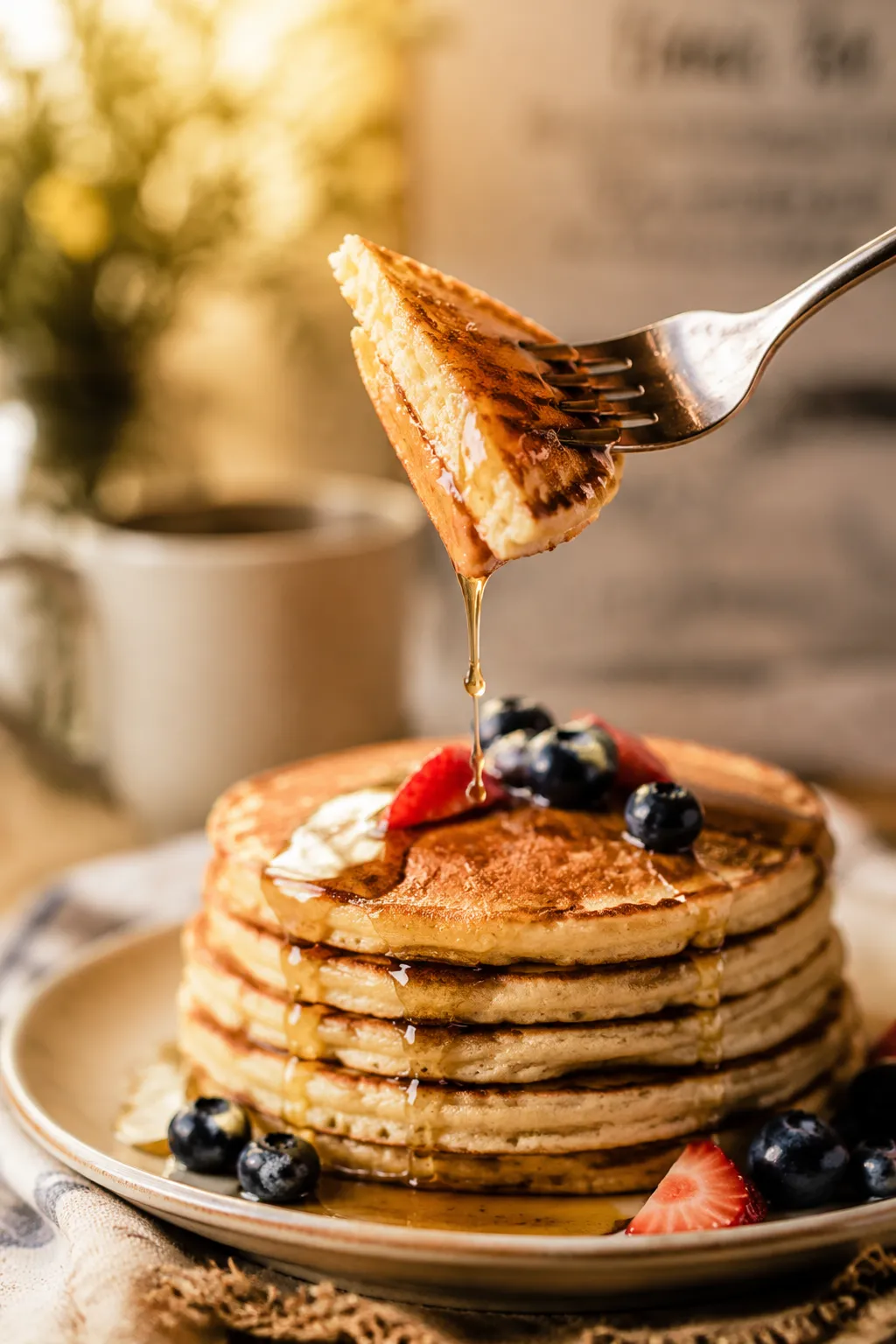
This gluten free pancake recipe has earned its permanent spot in my weekend rotation, and once a jar of the dry mix lives on your counter, I'm confident it'll earn its spot in yours too. Tag me when you make a stack — I love seeing yours.
Once the base recipe is dialed in, this batter is a blank canvas. Stir add-ins directly into the rested batter, or sprinkle them onto the wet side of each pancake right after you portion it onto the griddle (my preferred method, because it keeps berries from bleeding color through the whole stack).
Cool leftover pancakes completely on a wire rack so they don't trap steam, then layer them in an airtight container with squares of parchment paper between each pancake to prevent sticking. Refrigerate up to 4 days or freeze up to 2 months in a labeled zip-top freezer bag with the air pressed out.
To reheat, drop pancakes straight from the fridge or freezer into a toaster on a medium setting for 1 to 2 cycles — the edges crisp up beautifully. For larger batches, spread them in a single layer on a sheet pan and warm in a 350°F oven for 6 to 8 minutes. Avoid the microwave when you can; it works in a pinch but tends to make gluten free pancakes rubbery. The dry pancake mix in a jar keeps for 3 months at room temperature, or up to 6 months in the fridge or freezer.