German Pancakes: Puffy, Buttery Dutch Baby Recipe
Ingredients
Scale
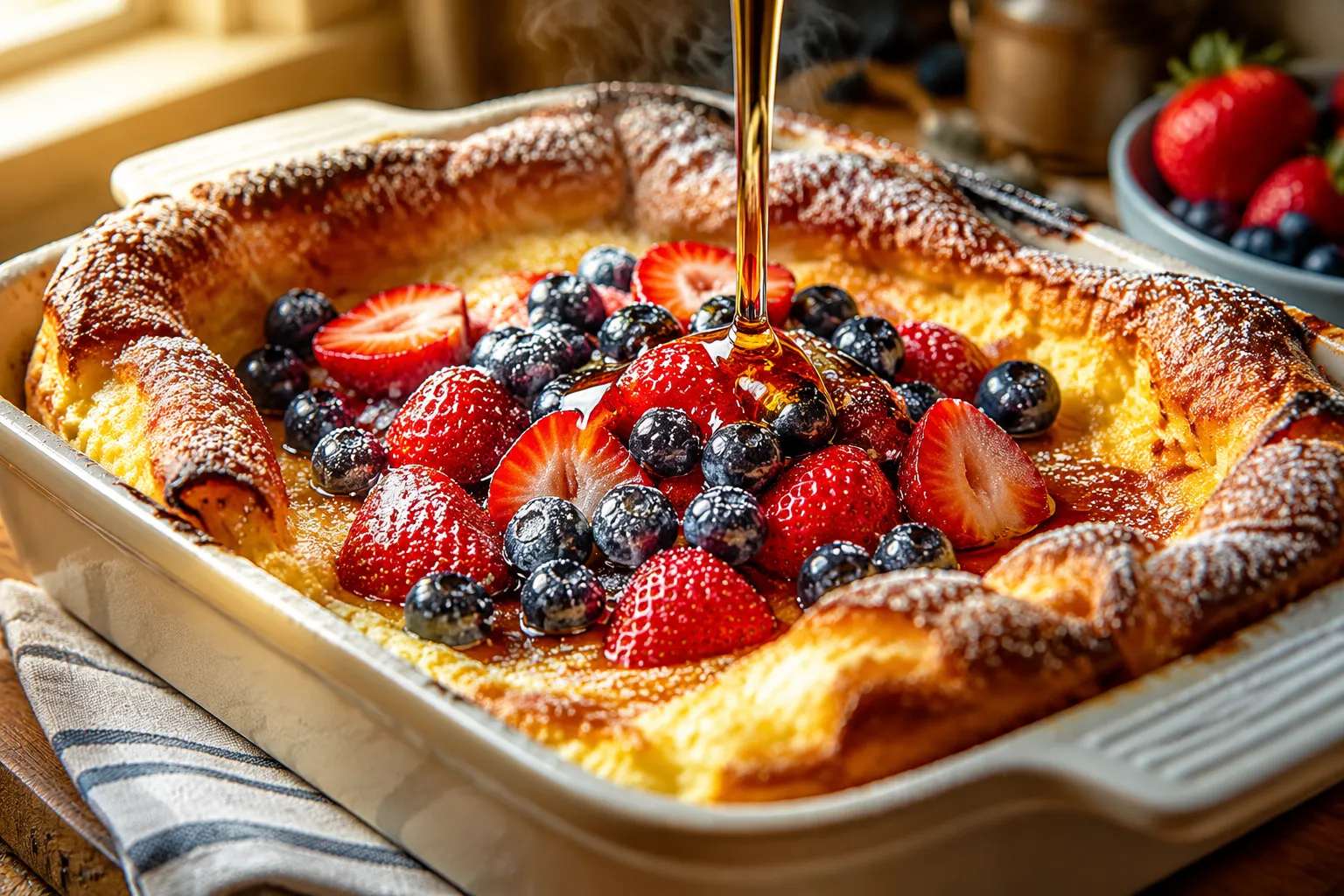
Tall, golden, buttery German pancakes that puff up dramatically in the oven and come together with five pantry staples in under 30 minutes.
If you've never watched german pancakes rise into a buttery, crackly, cloud-tall masterpiece in your oven, you're in for a treat. This is the breakfast that gets quiet gasps when it comes out of the oven — golden edges climbing the sides of the pan, custardy middle still wobbling, the whole thing smelling like vanilla and browned butter. And the best part? It comes together with five pantry staples and absolutely zero pancake-flipping.
I started making this Dutch baby on lazy Sunday mornings when I wanted something that felt special without any actual effort. You blend the batter, pour it into a sizzling pan of butter, and let the oven do the dramatic work. Twenty minutes later you're pulling out the kind of puffy oven pancake that looks like it belongs on a bakery menu. Dust it with powdered sugar, drown it in maple syrup, pile on berries — it's a brunch recipe that delivers serious wow factor for almost no work.
This is one of those easy breakfast recipes I keep on heavy rotation, especially when I have weekend houseguests or hungry kids who want something more exciting than cereal. Even better, it's endlessly customizable, which means it works for sweet brunch tables and savory ones alike — and yes, even picky eaters tend to come around once they see the dramatic puff happen in real time through the oven window.
German pancakes are an oven-baked, eggy, custardy pancake closely related to popovers and Yorkshire pudding. The batter — heavy on eggs and milk — is poured into a screaming-hot, butter-coated pan, and the high heat causes it to climb the sides of the dish in spectacular fashion. The center stays soft and slightly custardy while the edges turn deeply golden, shatter-thin, and almost crisp. They go by many names depending on where you grew up: German pancake, Dutch puff, Bismarck, or simply that puffy oven pancake your grandma used to make on Saturday mornings.
The naming confusion is real. A Dutch baby pancake is traditionally baked in a single cast iron skillet, while German pancakes are usually made in a 9x13 dish to feed a whole family. The batter is essentially identical — same ratios, same method, just a different vessel and a different rise pattern. Crepes share similar ingredients but are cooked thin on a stovetop, one at a time, and end up flat and pliable rather than puffed and custardy. And if you've made fluffy buttermilk pancakes before, this is a completely different beast: no leavener, no flipping, all oven steam.
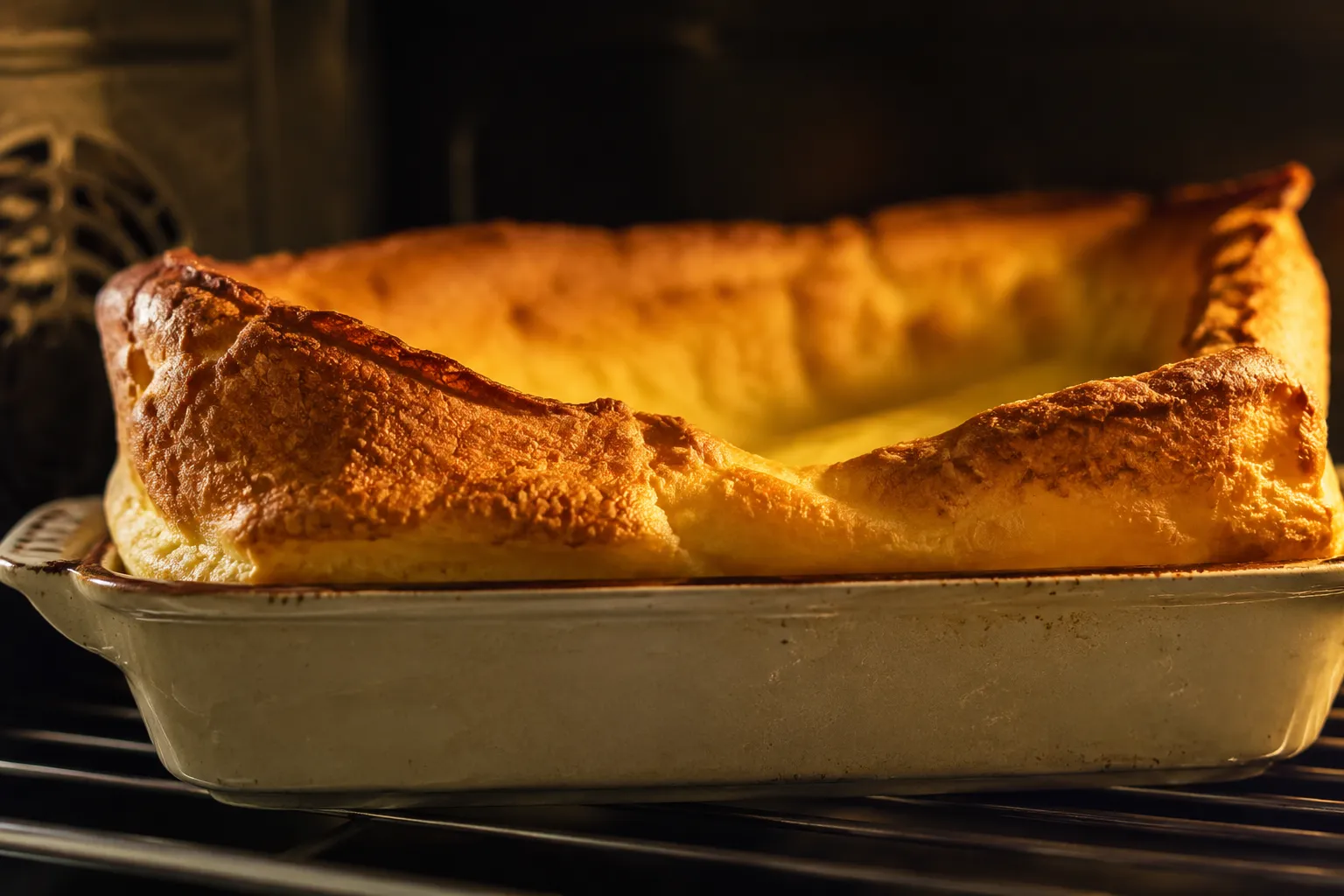
The puff is pure egg magic. There's no baking powder or yeast in this batter; the rise comes from steam alone. When the room-temperature batter hits the hot, buttery pan and goes into a 425°F oven, the water in the eggs and milk turns to steam and expands rapidly, inflating the gluten and egg-protein structure into those tall, dramatic walls. The same physics powers popovers and Yorkshire pudding. As the baked pancake cools, it deflates somewhat — that's completely normal and even expected, so plan to slice and serve right away to get the full visual effect.
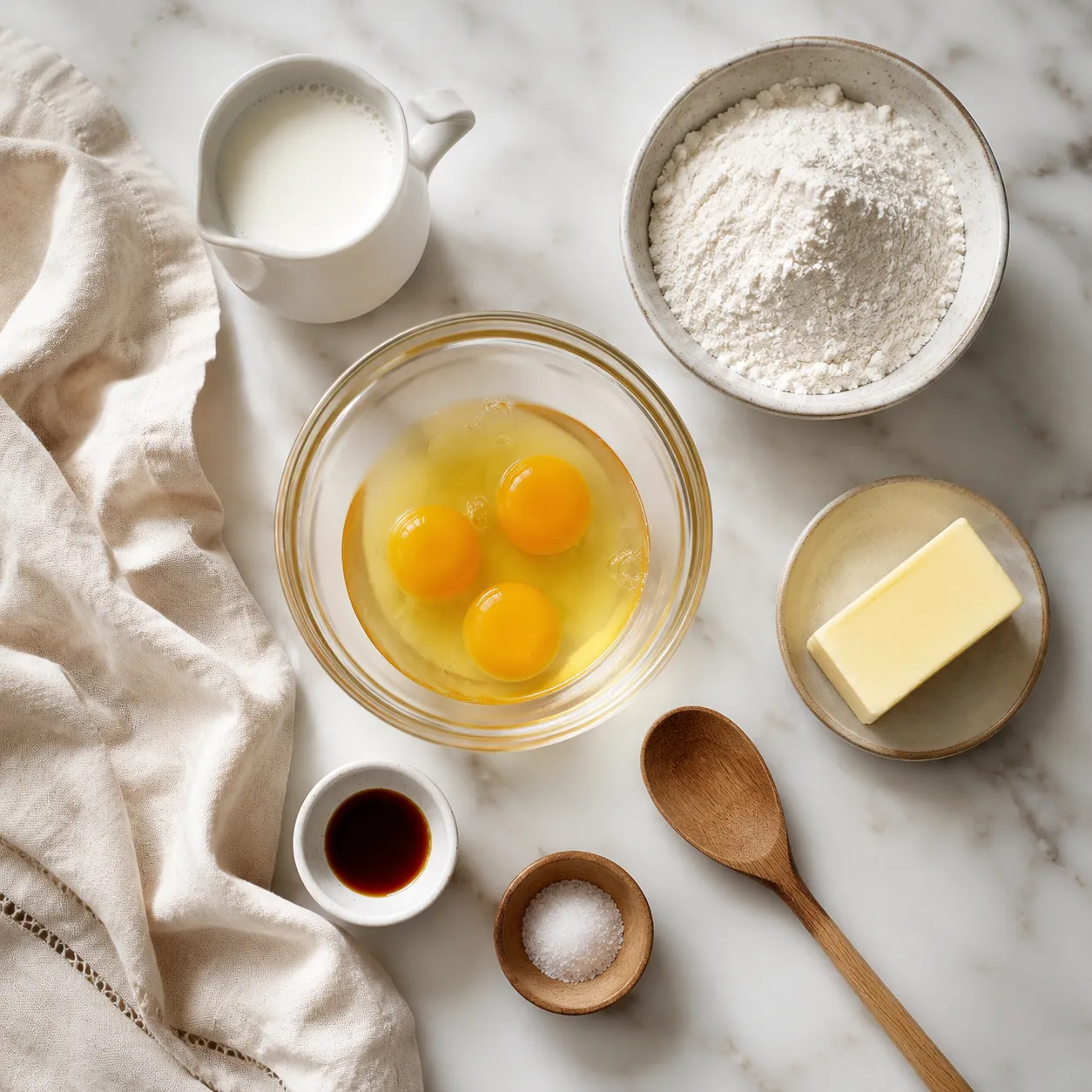
The base of any good german pancake recipe is just three things — eggs, milk, and flour — held together by a pinch of salt and a splash of vanilla. You'll need 6 large eggs, 1 cup of whole milk, and 1 cup of all-purpose flour. The high egg-to-flour ratio is what gives a baked pancake its signature custardy interior and dramatic rise. Whole milk adds richness; 2% works in a pinch but the texture suffers slightly. Skip the skim entirely — there isn't enough fat to support the puff or develop those golden edges.
Butter is non-negotiable. You'll melt 1/3 cup of unsalted butter directly in the baking dish in the oven, which serves two purposes: it greases the pan and infuses the batter with toasty, browned-butter flavor as it pours up the sides. Don't skimp here. Those crackly, lacy, deeply golden edges everyone fights over at the table? That's the butter doing its job. Use unsalted so you control the seasoning, and make sure it's fully melted and shimmering before the batter goes in.
A teaspoon of vanilla extract is my standard, but a half-teaspoon of almond extract, the zest of a lemon, or a generous shake of cinnamon all bring something special to the batter. Some folks add a tablespoon of sugar for a sweeter pancake; I prefer to keep the batter neutral and let the powdered sugar and maple syrup on top do the talking. A pinch of fresh nutmeg is my secret weapon when I want a slightly old-fashioned, custardy flavor that pairs beautifully with sautéed apples or pears.
The full step-by-step quantities and timing live in the recipe card below — what follows is the why behind each move so you understand what you're doing and why it works. Once you internalize the logic, you'll never look at a recipe card again.
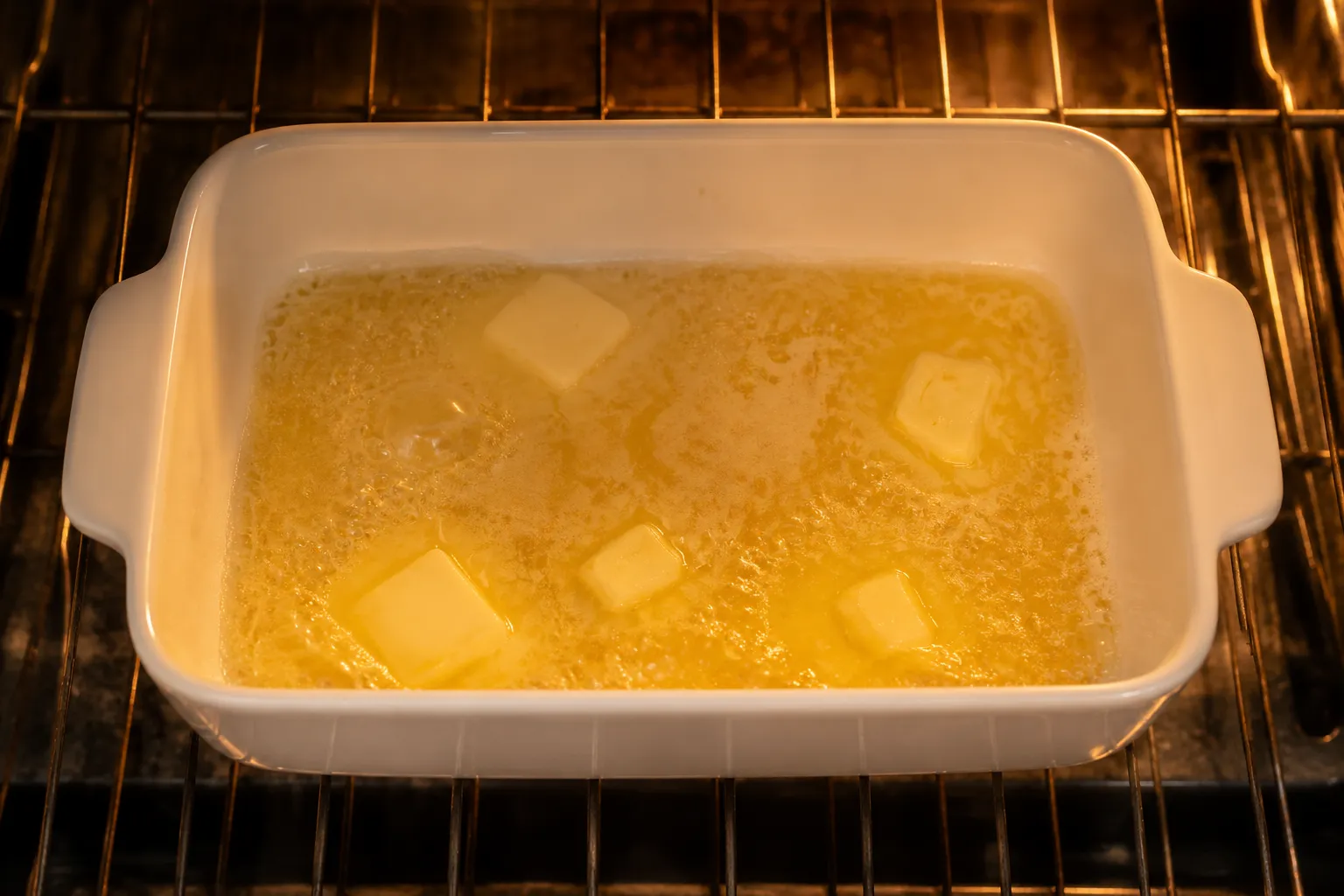
Place your butter directly in the 9x13 baking dish and slide it into a 425°F oven while it preheats. You want the butter fully melted and gently sizzling — not browned to nutty bits — by the time the batter is ready. This screaming-hot start is what gives the pancake its dramatic lift, so don't skip it. Cold pan equals flat pancake, every single time.
A blender is your best friend here. Add the eggs, milk, vanilla, and salt and blend for about 30 seconds until pale, frothy, and aerated. Then add the flour and pulse just until smooth — overworking the batter creates tough, rubbery pancakes. The batter should be the consistency of heavy cream and pour easily off a spoon. If you don't have a blender, a whisk works fine; just be patient and aim for no flour streaks.
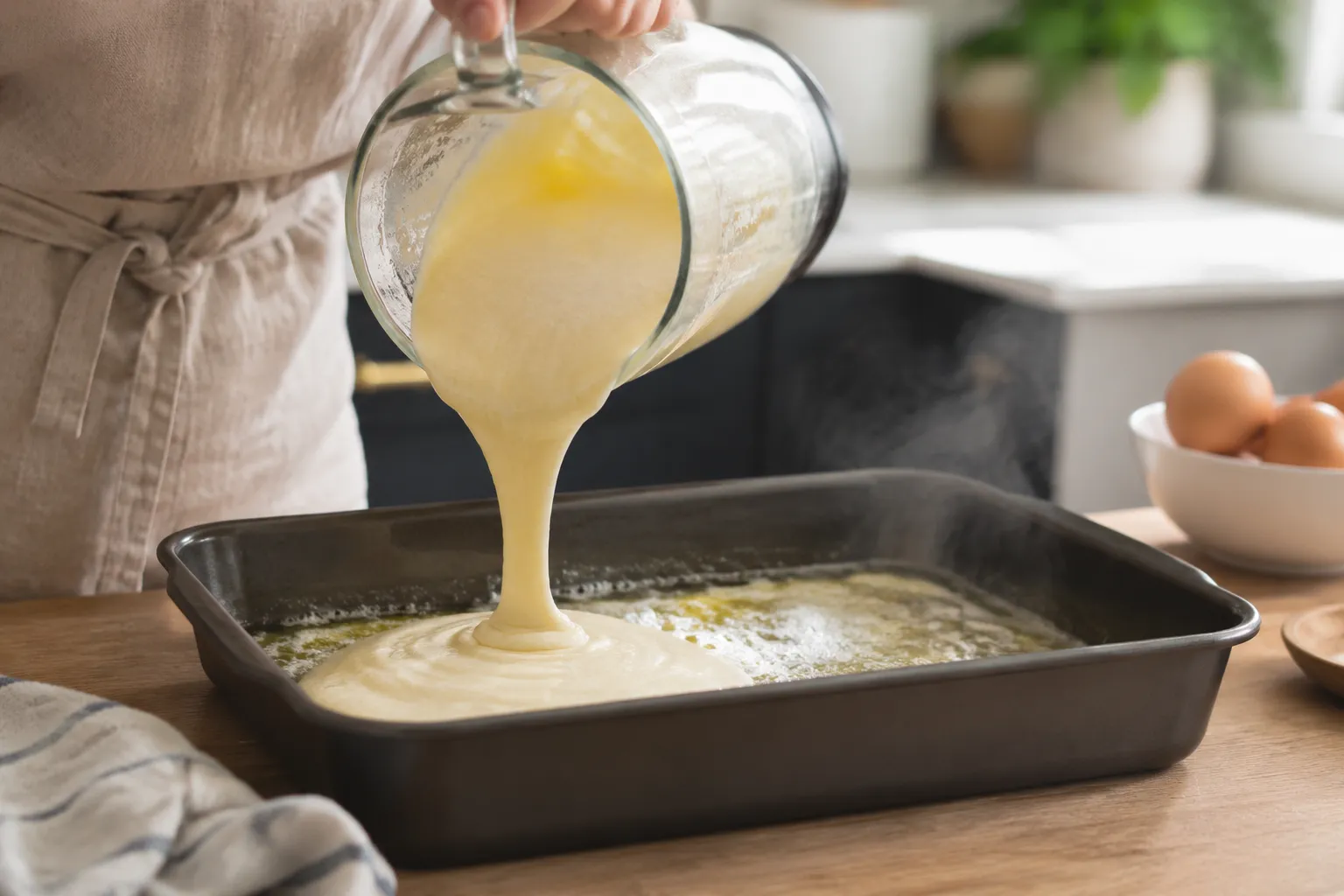
Pour the batter directly into the hot, butter-pooled pan. You'll hear it sizzle on contact, which is exactly what you want. Slide the dish back into the oven and bake for 18 to 22 minutes. Around the 12-minute mark, you'll see the edges start crawling up the sides of the pan in dramatic, wavy walls — peek through the oven window, but do not open the door. A blast of cold air will cause your german pancakes to collapse before they finish setting in the center.
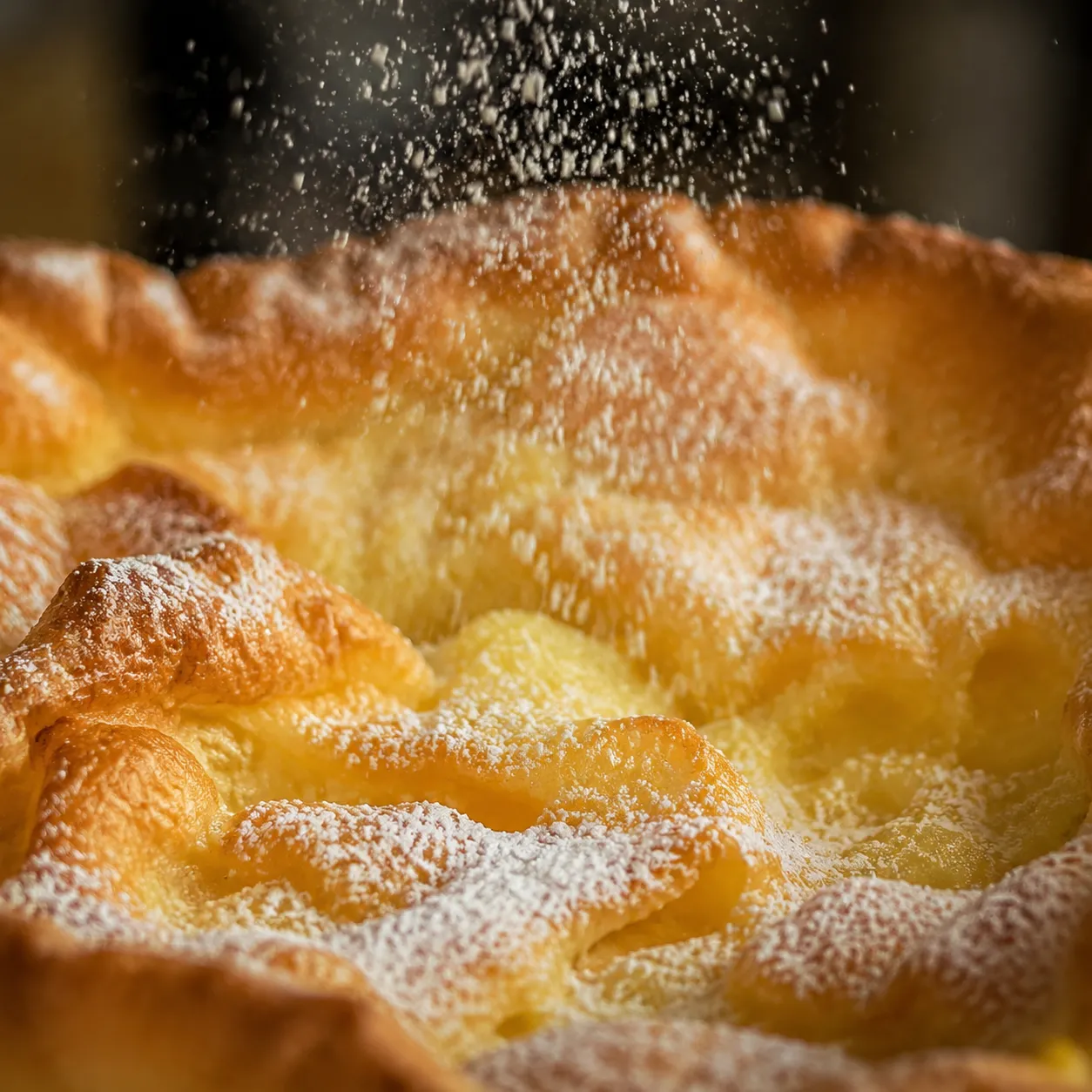
The moment the pancake comes out of the oven, dust it generously with powdered sugar while it's still hot — it'll cling beautifully to the steam and melt slightly into the surface. Cut into squares or wedges and serve right away with whatever toppings your crew loves. The puff deflates within a few minutes, but the flavor and tenderness stay perfect for as long as it lasts on the table, which in my house is approximately ninety seconds.
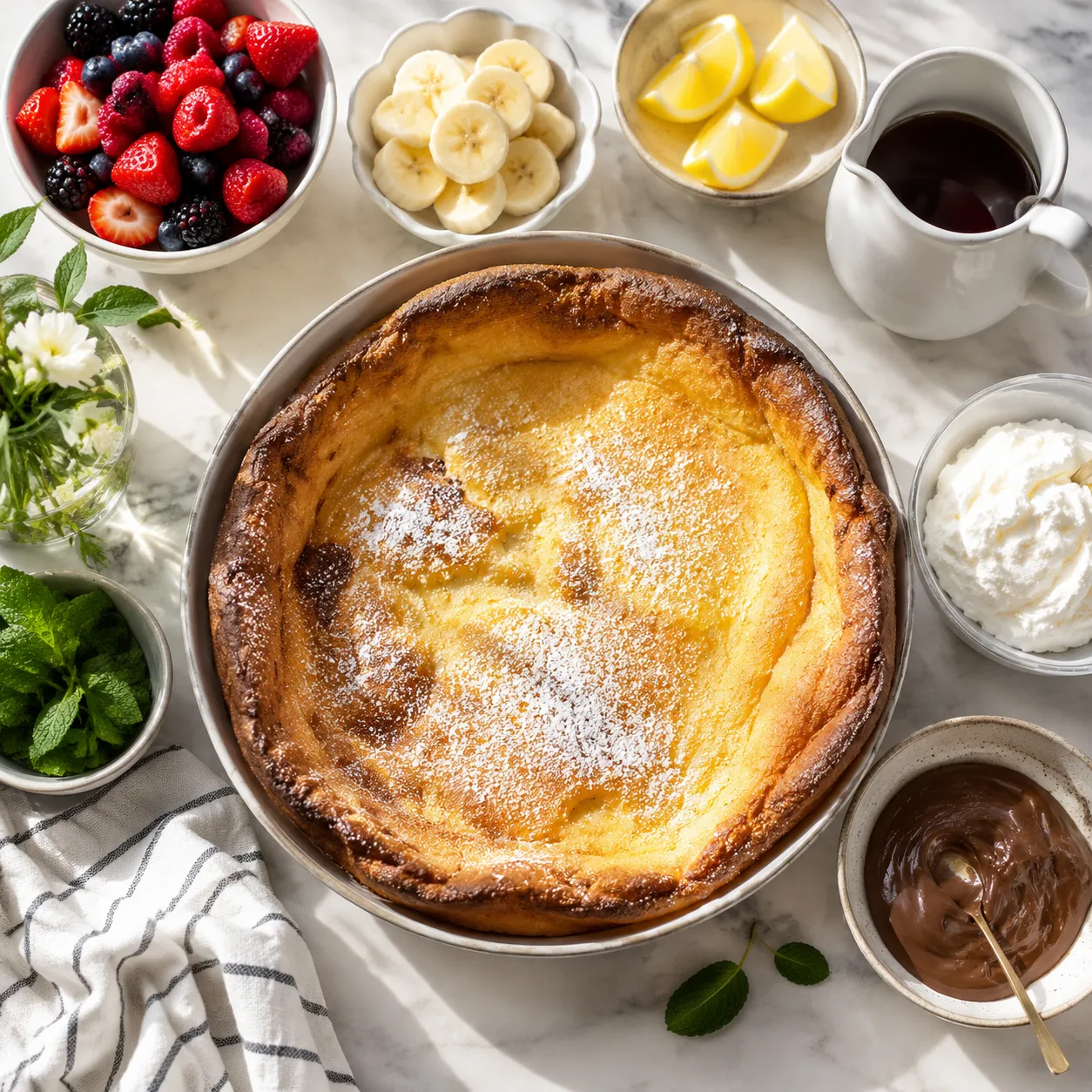
A plain baked pancake is a blank canvas, which is exactly why I love this dish for entertaining. Set it in the middle of the table with a few small bowls and let everyone build their own slice. It's one of those baked breakfast recipes that practically begs for a topping bar — and watching kids and adults customize their own portion always feels like a small win on a busy weekend morning.
The most traditional finish is the simplest: a hard squeeze of fresh lemon juice and a heavy dusting of powdered sugar. The acidity cuts through the richness of all that butter and egg, and the sugar melts into a quick, sweet-tart glaze that's somewhere between syrup and frosting. If you only try one topping, make it this one. It's the way my Bavarian neighbor served them when I was a kid and it's still the version I crave most often.
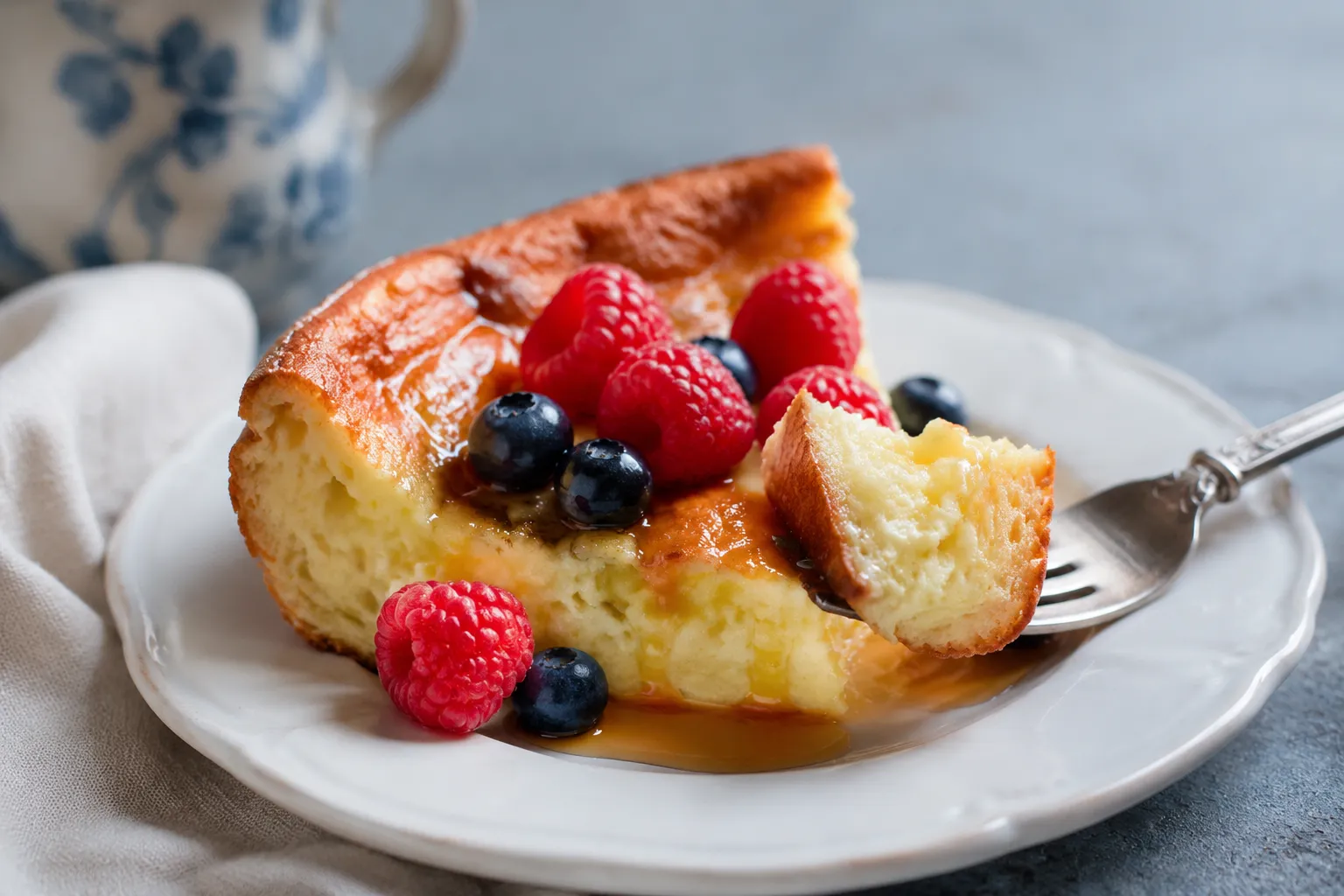
For a more substantial breakfast, pile on fresh strawberries, raspberries, blueberries, or sliced bananas and finish with a generous pour of warm maple syrup. If you've ever made homemade maple syrup or have a bottle of the dark amber stuff stashed in the fridge, this is its moment to shine — the deeper the maple flavor, the better. A dollop of softly whipped cream or a spoon of mascarpone takes things firmly into brunch ideas territory for a holiday morning or birthday breakfast.
Skip the vanilla and sugar entirely and you've got a savory canvas. Top with crispy bacon, a fried egg, and sharp cheddar; or go the herbed route with fresh dill, smoked salmon, and a smear of cream cheese. Sautéed mushrooms with thyme and gruyère work beautifully, as does prosciutto with arugula and a drizzle of good olive oil. Same batter, completely different meal — and it's a great reminder that german pancakes are not just a sweet breakfast.
Once you've made these german pancakes a single time, you'll understand why the Dutch baby has such a cult following. It's the rare breakfast that's simultaneously impressive enough for visiting in-laws and easy enough for a Tuesday morning in pajamas. Make it, dust it with powdered sugar, watch how quickly it disappears — then plan to make it again next weekend, probably with a different topping spread.
The base recipe is endlessly adaptable. Once you have the puff dialed in, treat the batter as a starting point and play with flavor:
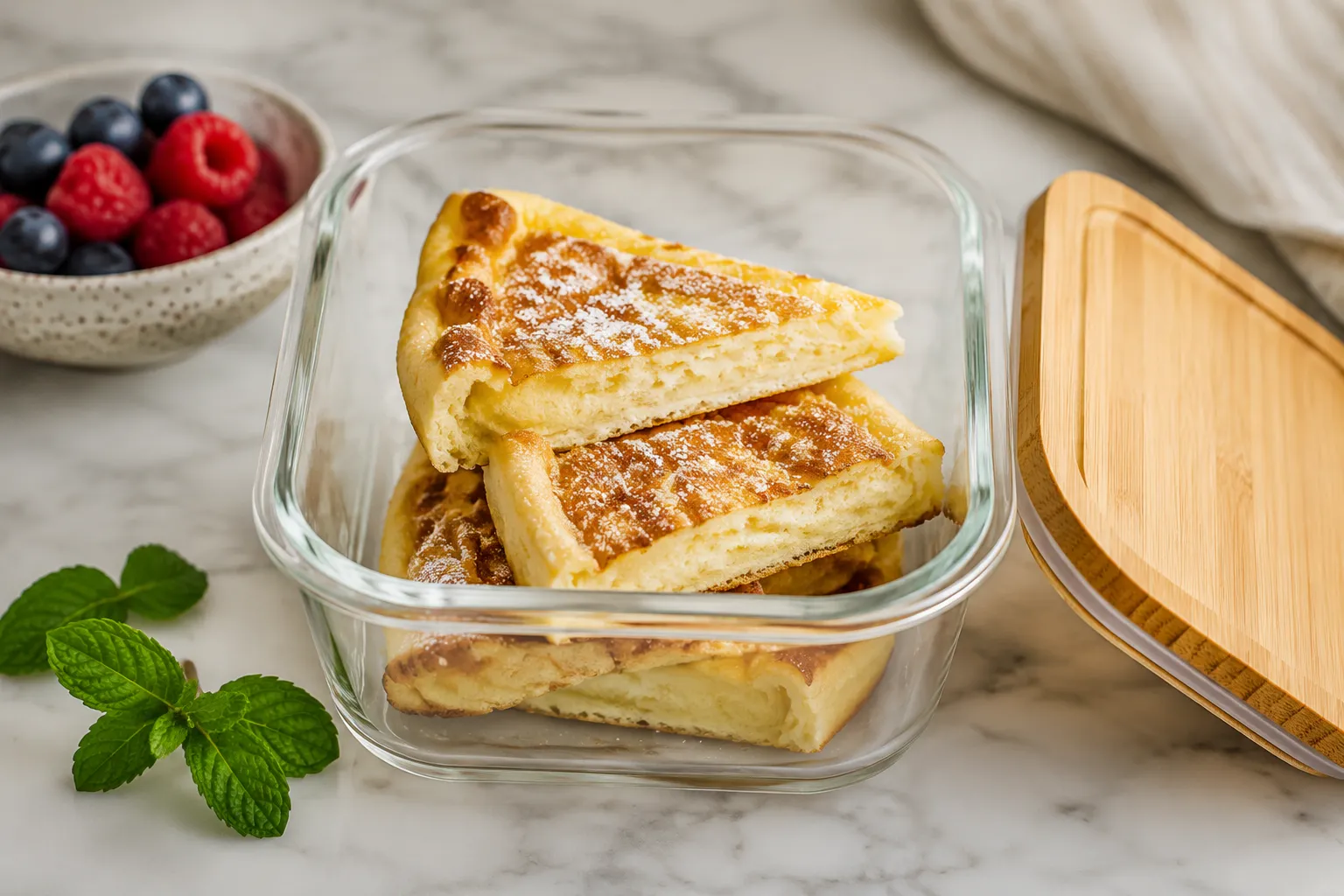
German pancakes are unquestionably best fresh from the oven, but leftovers will keep in an airtight container in the refrigerator for up to 3 days. The texture changes — the puff is gone and the interior tightens into something more like a baked custard — but the flavor is still excellent. For longer storage, slice into individual portions, wrap each in plastic, and freeze in a zip-top bag for up to 2 months.
To reheat, place slices on a baking sheet in a 350°F oven for 5 to 7 minutes until warmed through and the edges crisp up again. The microwave works for a quick fix but turns the texture rubbery, so I save it for desperate weekday mornings only. You can also mix the batter the night before, refrigerate it covered, and let it come to room temperature for 30 minutes before pouring into the hot pan — a real make-ahead win for holiday brunches.