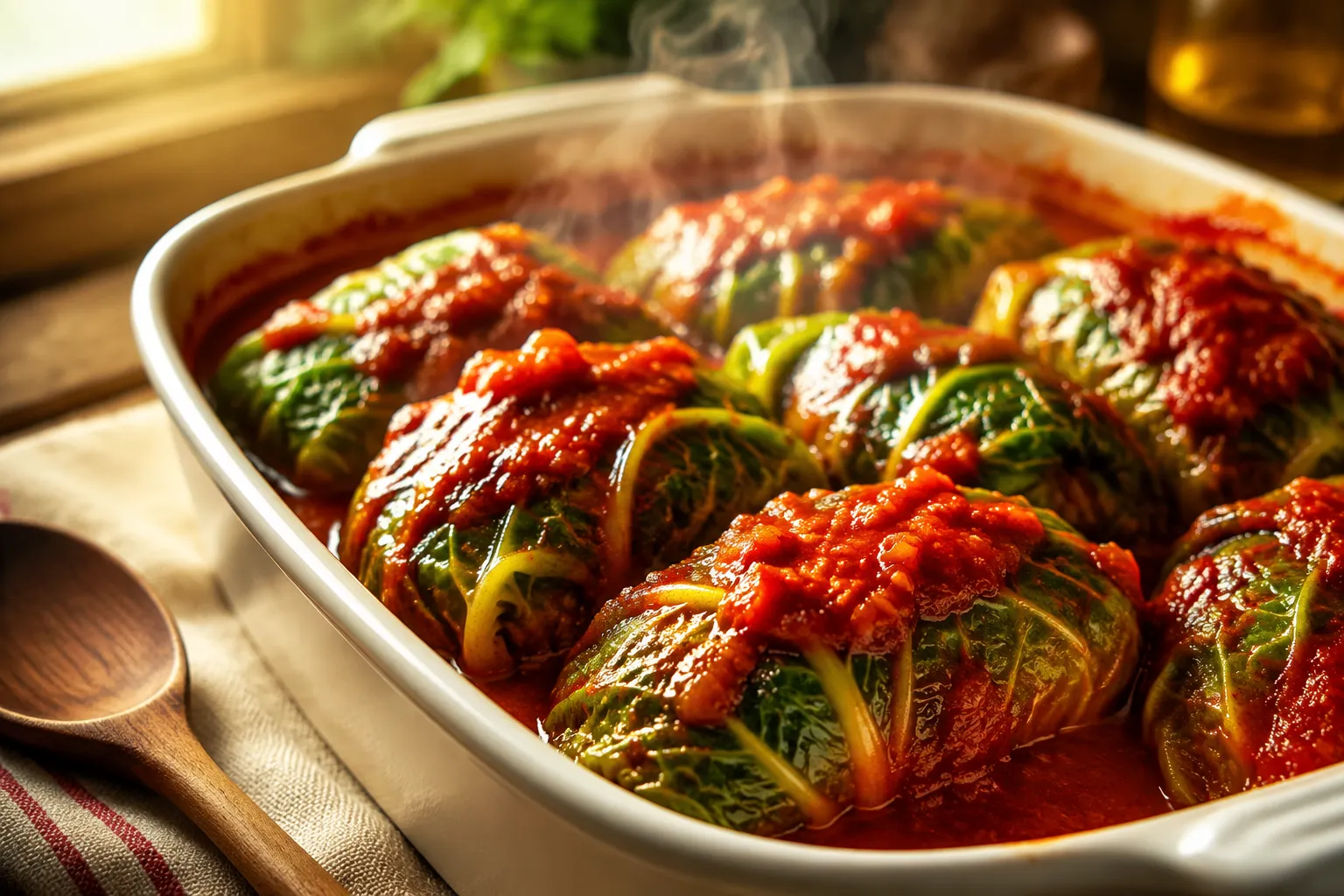
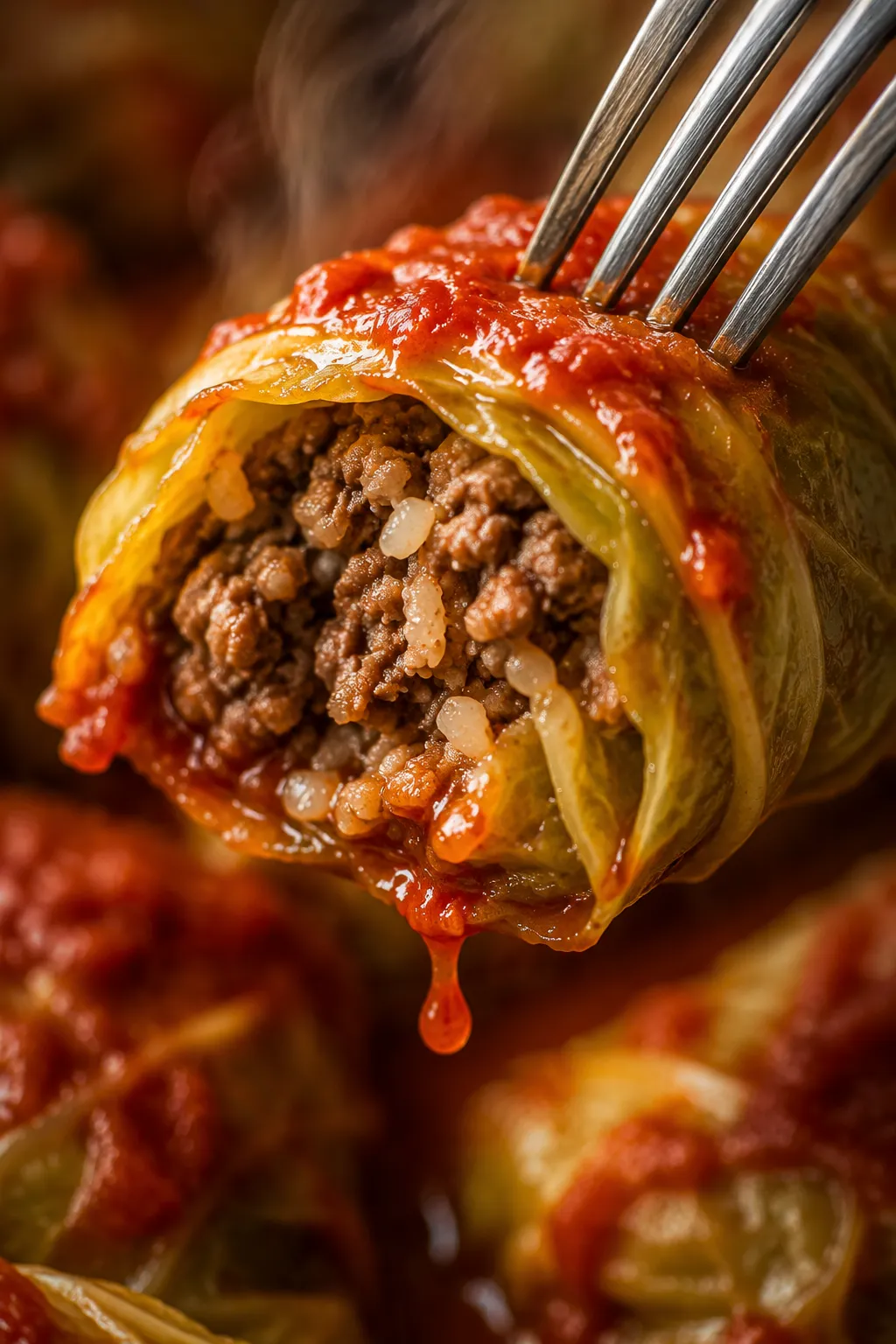
Tender cabbage leaves hugging a savory beef-and-rice filling, simmered in tangy tomato sauce. This is the cabbage rolls recipe your grandma would approve of.
Why You'll Love This Recipe
- **Classic comfort, simplified.** Old-fashioned flavor without grandma-level technique. The freezer trick alone makes leaf-softening foolproof for first-timers.
- **Slightly sweet, tangy sauce.** Brown sugar and apple cider vinegar give the tomato sauce that signature balance that bakes right into the bundles.
- **Make-ahead and freezer-friendly.** Assemble up to 24 hours ahead, or freeze unbaked for up to 3 months — perfect for busy weeks and Sunday meal prep.
- **Budget-stretching ingredients.** A pound and a half of beef and a single head of cabbage feed eight people generously, with leftovers that taste even better day two.
- **Three formats in one recipe.** Classic rolled, casserole-layered, or unstuffed skillet — same flavors, different time commitments to fit any night.
This cabbage rolls recipe is the kind of dinner that perfumes the whole house with garlic, onion, and slow-simmered tomato — the smell of someone who loves you cooking in the next room. Tender cabbage leaves wrap around a savory mix of beef and rice, then bake low and slow under a blanket of tangy tomato sauce until the leaves turn silky and the sauce caramelizes into something jammy at the edges of the dish. It is the definition of old-school, sit-down-and-stay-a-while comfort food.
I grew up watching my grandmother roll these by the dozen at the kitchen counter, smoothing each leaf flat, tucking, rolling, lining them up in the dish like little green soldiers. There is a reason this dish shows up across so many kitchens — Polish gołąbki, Ukrainian holubtsi, Hungarian töltött káposzta, Lebanese malfouf — every culture with a head of cabbage and a pot of tomatoes seems to land on some version of these tender bundles. Humble, frugal, and deeply satisfying, this is Eastern European comfort food at its very best, even when the recipe takes a global tour.
What you will find below is the full playbook: the freezer trick that makes leaf-softening painless, a slightly sweet-tangy sauce that bakes right into the rolls, and shortcut spinoffs (think one-pan and casserole) for nights when you want the flavors without the folding. Whether you are chasing a Sunday-supper showstopper or a make-ahead meal you can pull from the freezer, there is a version here for you. Grab a head of cabbage, put on something cozy, and let's roll.
## Ingredients You'll Need
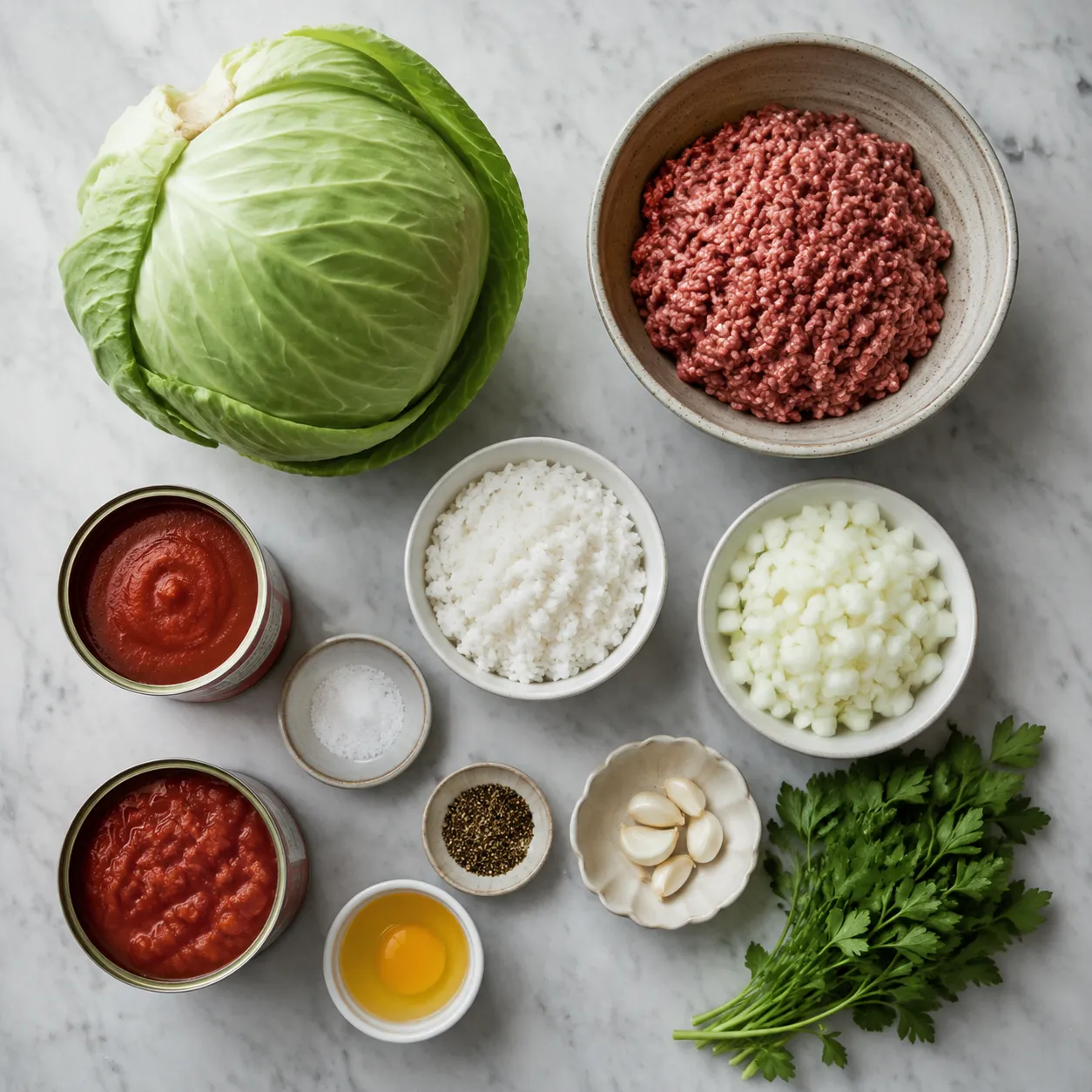
The beauty of stuffed cabbage rolls is how few ingredients it takes to make something this layered and homey. Most of what you need is probably already in the pantry, and the produce list is short and forgiving on the wallet.
For the bundles, you will want one large head of green cabbage — the everyday leafy variety with broad, pliable leaves that wrap easily without tearing. Savoy will work in a pinch (its crinkly leaves are even more flexible), but skip red cabbage for this one; the color bleeds into the sauce and the leaves are stiffer than they look. The filling is built on 80/20 ground beef for richness, cooked long-grain white rice (more on why cooked, not raw, in a moment), finely diced yellow onion, garlic, an egg as a binder, and a generous hand with salt and pepper. Some cooks add a splash of Worcestershire or a pinch of smoked paprika for depth — both are quietly excellent moves.
The sauce is where this dish earns its glossy, finger-licking reputation. A blend of canned tomato sauce and crushed tomatoes gives body without thinning out, while a tablespoon of brown sugar and a splash of apple cider vinegar do the sweet-and-sour balancing act this classic is known for. If you have time and a bin of late-summer tomatoes, a homemade tomato sauce slips in beautifully here — but the canned route is shockingly good and weeknight-friendly. Don't sleep on the brown sugar; it's the secret bridge between the acid of the tomatoes and the savory beef.
## How to Soften Cabbage Leaves (3 Easy Methods)
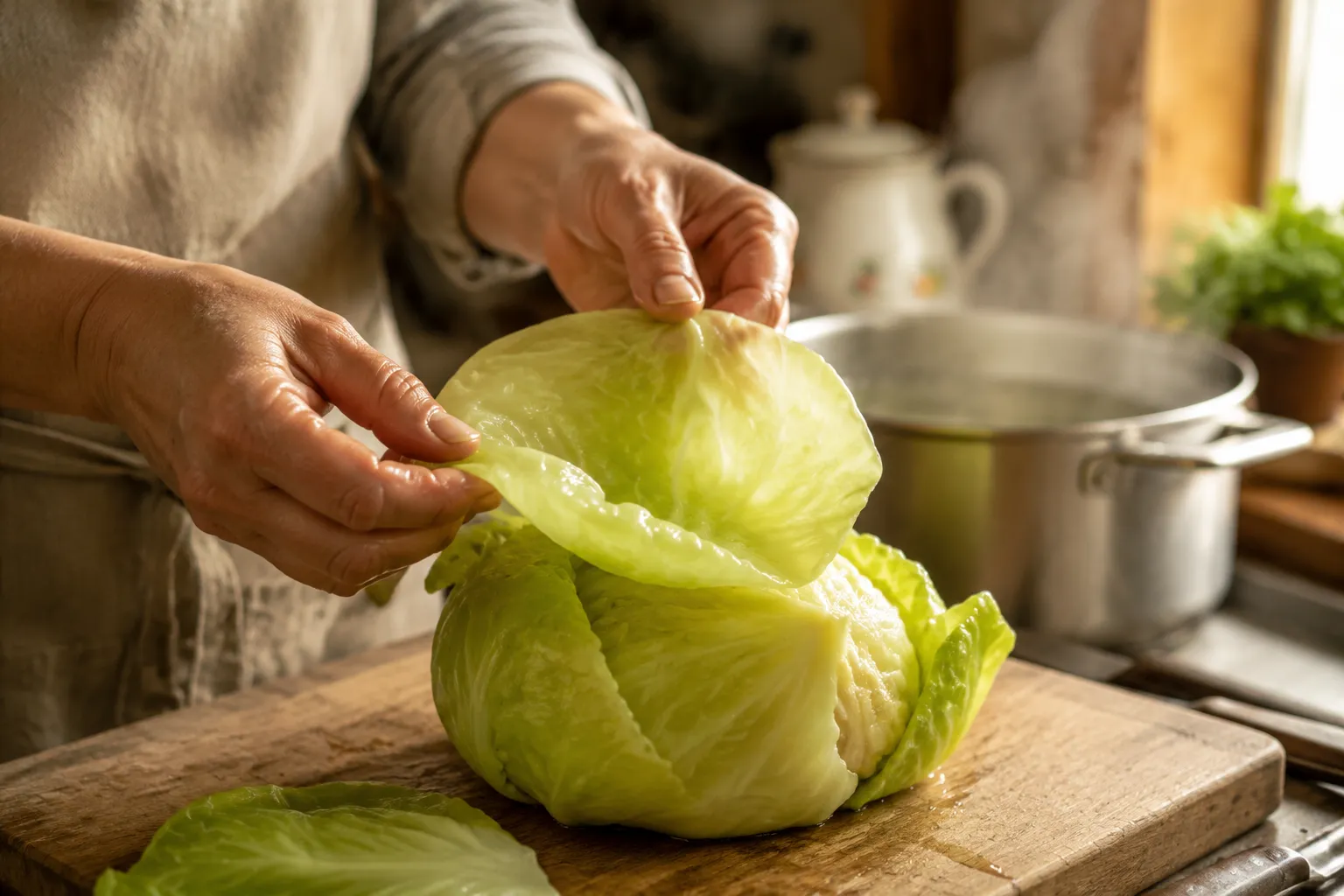
The single biggest hurdle for first-time roll makers is getting those leaves off the head without tearing them to ribbons. Raw cabbage leaves are stiff and want to crack at the spine the moment you bend them. The fix is softening, and you have three easy methods depending on how much time and patience you've got that day.
The **boiling method** is fastest and most traditional. Core the cabbage with a paring knife, then lower the whole head, cored-side-down, into a big pot of simmering salted water. As the outer leaves soften (about 2 minutes each), peel them off with tongs and set them on a towel-lined sheet pan to drain. Continue working your way in until you have 14 to 16 large, intact leaves.
The **freezing method** is my personal favorite — zero splashing, zero burned knuckles. The night before, core the cabbage, wrap the whole head in plastic, and stash it in the freezer. Pull it out to thaw on the counter for a few hours or overnight in the fridge, and the leaves slip away from the head limp, pliable, and ready to roll. The freeze-thaw cycle breaks down the cell walls, doing all the softening work for you while you sleep.
The **microwave method** is great when you only need a small batch or are short on time. Core the cabbage, set it cored-side-up in a microwave-safe dish with half a cup of water, cover loosely, and microwave on high in 3-minute bursts. After each round, peel off the outer softened leaves with tongs and return the head for another go.
Whichever method you choose, finish by shaving down the thick rib at the base of each leaf with a paring knife, slicing it flush with the rest of the leaf. This one move keeps the bundles tight and tear-free during rolling.
## How to Make the Rolls Step by Step
Once your leaves are pliable, the rest of this cabbage rolls recipe comes together fast. The full numbered method lives in the recipe card below, but here is the rhythm of the bake so you know what to expect at the counter.
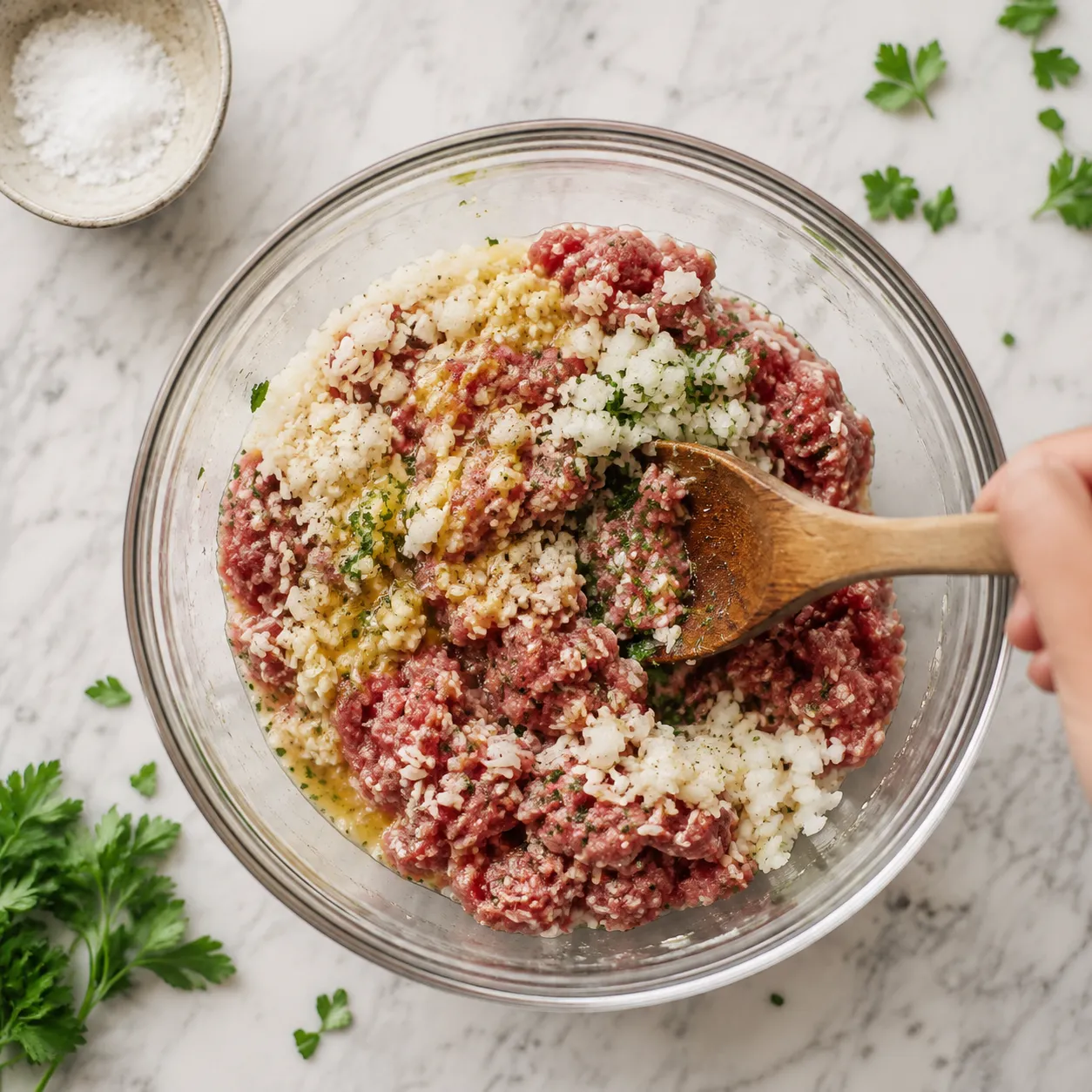
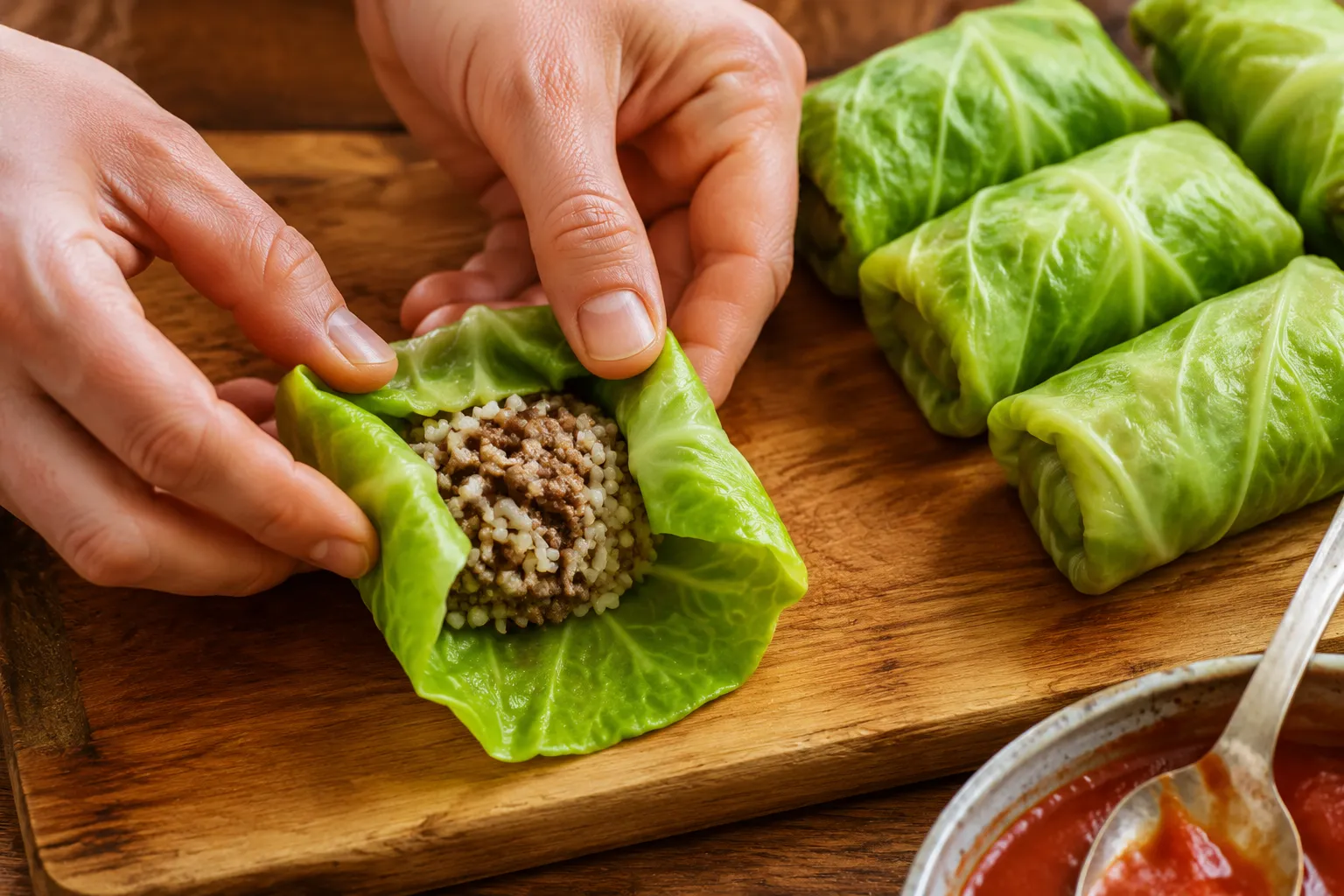
Start with the filling. In a large bowl, combine the ground beef with cooled cooked rice, sautéed onion and garlic (raw onion has a sharp bite that can overpower the bake), the egg, and your seasonings. Mix with your hands just until combined — overworking the meat makes the filling dense and rubbery instead of tender.
To roll, lay a softened leaf flat with the trimmed rib end nearest you. Scoop about one-third cup of filling onto the leaf near the base, fold the bottom edge up and over the filling, fold both sides in like a burrito, then roll away from you into a tidy bundle. Set each one seam-side down on a sheet pan as you go so they hold their shape during the bake.
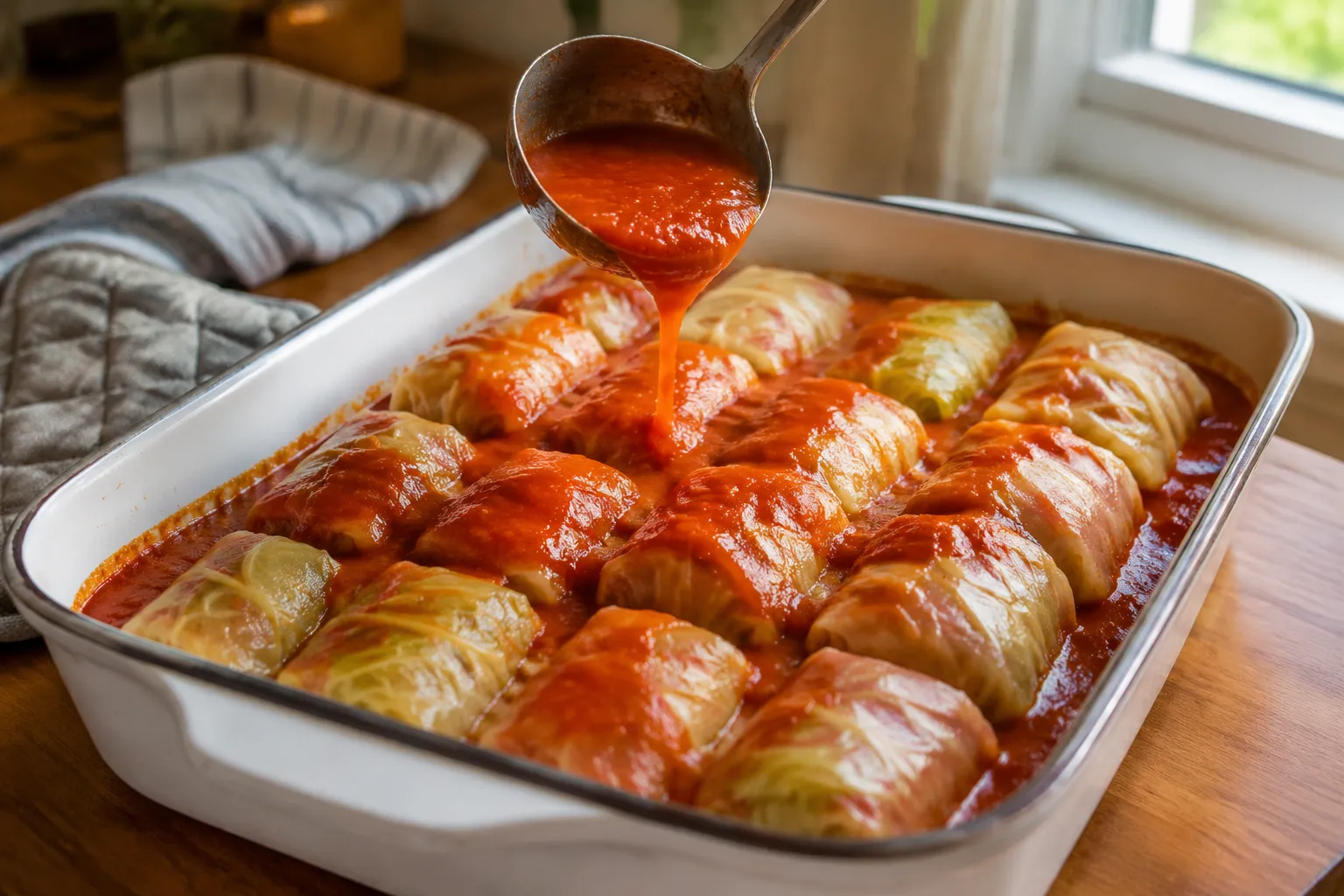
For the sauce, whisk together tomato sauce, crushed tomatoes, brown sugar, apple cider vinegar, a pinch of salt, and a few cracks of pepper. Spread a thin layer on the bottom of a 9x13 baking dish (this insurance keeps the rolls from sticking), nestle the rolls in snug rows, then ladle the remaining sauce over the top, making sure every bundle is fully blanketed. A piece of parchment pressed onto the surface followed by a tight foil cover traps steam and keeps everything pillowy.
Bake covered at 350°F for about 75 minutes, then uncover for the last 15 minutes to let the sauce reduce into something thick and almost glazey. You will know they are done when a fork slides through a roll like soft butter and the sauce smells deep and slightly caramelized.
## What to Serve Alongside
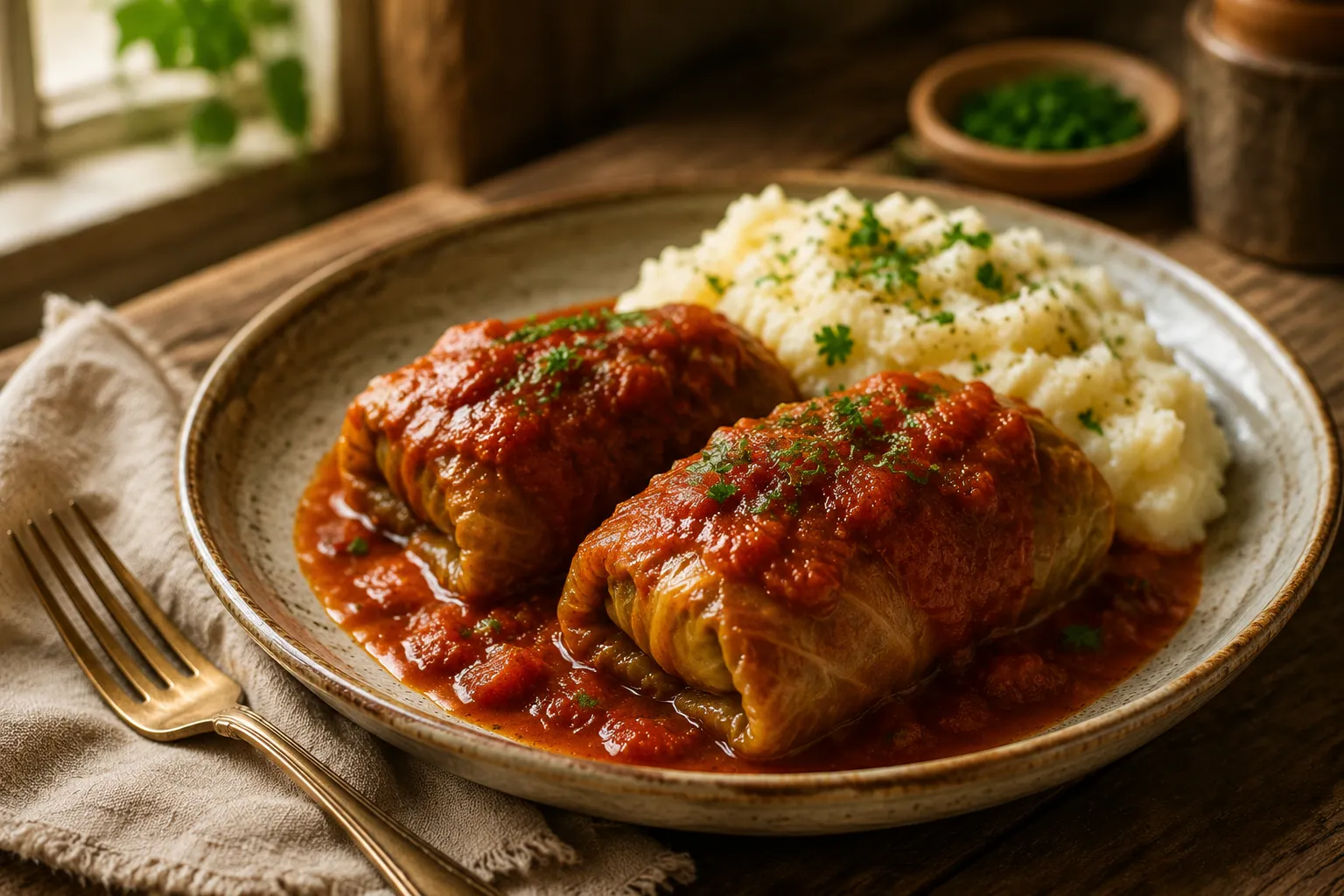
These bundles are hearty enough to stand alone, but a few classic sides turn dinner into a proper feast. Creamy mashed potatoes are the traditional pairing — they soak up the tomato sauce gloriously and balance the savory filling. Buttered egg noodles are another old-country favorite, as is rye bread or thick slices of crusty sourdough for sopping up every last drop. For something brighter on the plate, a simple cucumber-dill salad or a tangy slaw cuts through the richness beautifully.
If you are rounding out a bigger Sunday spread, a plate of garlicky green beans or roasted carrots dusted with dill brings color and freshness to the table. And for cozy weeknight ground beef dinner ideas, leftover rolls reheat into a one-bowl meal with nothing more than a pat of butter on the potatoes alongside. A spoonful of sour cream on top is non-negotiable in some households (mine), and a few cracks of black pepper finish the plate.
## One Recipe, Three Formats
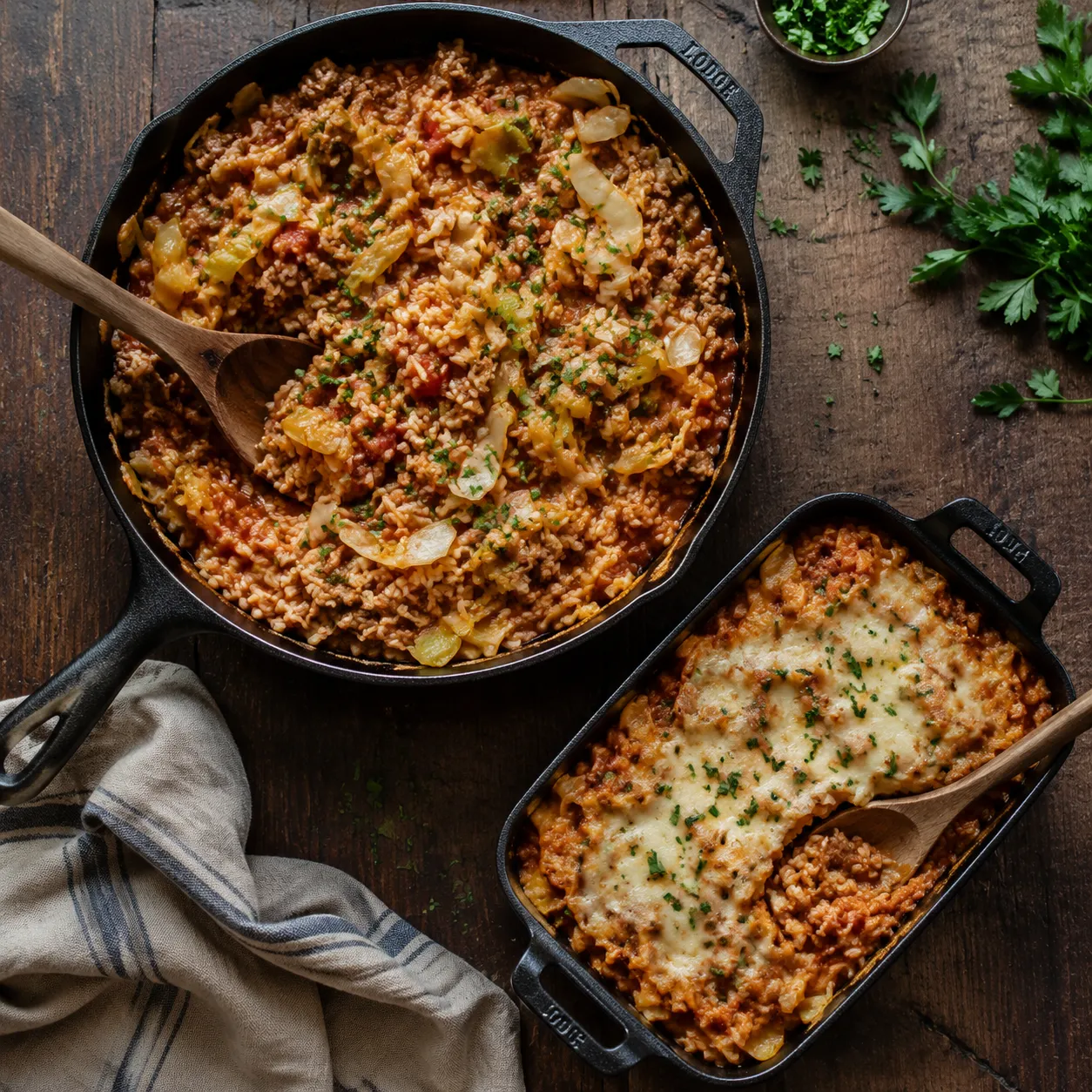
If rolling 14 individual bundles isn't in the cards on a busy Tuesday, the exact same flavors translate beautifully into a layered cabbage roll casserole or a one-pan unstuffed cabbage rolls skillet — both detailed in the variations section just below. They use the same filling, the same sauce, and the same seasonings, just rearranged for far less hands-on time. The casserole layers chopped cabbage between the meat and rice; the skillet version simmers it all together stovetop in 30 minutes flat.
The classic rolled version also freezes like a dream. Assemble the rolls fully (sauce and all) in a freezer-safe dish, cover tightly, and freeze unbaked for up to three months. Thaw overnight in the fridge and bake as usual, adding 15 to 20 minutes to the cook time. Few weeknight meals feel as luxurious as pulling a fully assembled tray from the freezer at 5 p.m. and serving something bubbling and golden by 7.
There is something about this cabbage rolls recipe — the slow build of flavor, the way the sauce darkens and deepens in the oven, the soft yielding bite of leaf around savory beef and rice — that turns an ordinary weeknight into something worth gathering around. Make a double batch. Freeze half. Future you will send a thank-you note.
💡 Expert Tips
- **Choose the right cabbage head.** Look for a large, loose-leafed green cabbage. Heavy heads with very tightly packed leaves are harder to peel without tearing. Savoy is a great backup if your store is out.
- **Don't overstuff the leaves.** About 1/3 cup of filling per leaf is the sweet spot. Too much and the rolls split open or won't cook through evenly in the oven.
- **Cook the rice first.** Raw rice steals moisture from the sauce and stays crunchy. Use cooked, slightly cooled long-grain white rice for the most tender filling.
- **Build flavor in the sauce.** Sauté the onion and garlic before adding to the filling, and don't skip the brown sugar and vinegar in the sauce. They are the secret to that signature sweet-tangy bake.
- **Cover, cover, cover.** A tight foil seal is what makes the leaves silky. Trapped steam does the work; an uncovered bake is the fastest path to tough cabbage.
🔄 Variations & Substitutions
The same filling-and-sauce combo plays nicely in a few different formats, depending on how much time you have and how patient you're feeling. Each one delivers the comforting flavor of the classic dish with less rolling.
- **Cabbage roll casserole:** Layer chopped green cabbage with the beef-and-rice filling and tomato sauce in a 9x13 dish. Bake covered at 350°F for 60 to 70 minutes, then top with shredded mozzarella for the last 10 minutes if you like.
- **Unstuffed skillet version:** Brown the beef with onion and garlic in a Dutch oven, stir in shredded cabbage, cooked rice, and the sauce, then simmer covered for about 30 minutes until the cabbage is tender. A 30-minute weeknight win.
- **Slow cooker:** Layer assembled rolls in a slow cooker with sauce, cook on LOW for 6 to 7 hours or HIGH for 3 to 4. Don't stack more than two layers high or the bottom rolls will overcook.
- **Instant Pot:** Layer rolls with sauce in the inner pot, pressure cook on HIGH for 15 minutes, then natural release for 10. Great for small batches.
- **Vegetarian:** Swap the beef for cooked lentils or a 50/50 mix of mushrooms and walnuts pulsed fine in a food processor. Add a splash of soy sauce for umami depth.
🧊 Storage & Leftovers
Leftover cabbage rolls keep beautifully in the fridge for up to 4 days in an airtight container, sauce and all. Reheat gently in a 325°F oven, covered with foil, for 20 to 25 minutes, or microwave individual rolls in 60-second bursts with a splash of extra sauce or water on top to keep them from drying out. Avoid blasting them at high heat — the leaves go from tender to rubbery quickly when reheated too aggressively.
For the freezer, you have two great options. Freeze unbaked rolls fully assembled with sauce in a freezer-safe baking dish, wrapped first in plastic and then foil, for up to 3 months. Thaw overnight in the fridge and bake as directed, adding 15 to 20 minutes to the total time. Already-baked rolls freeze just as well in single portions for easy lunches — let them cool completely, freeze in airtight containers for up to 2 months, and reheat in the oven or microwave with a splash of extra sauce.
Frequently Asked Questions
Do you cook the rice before stuffing cabbage rolls?
Yes, partially cooked or fully cooked rice is the right move for stuffed cabbage rolls. Raw rice has a tricky habit of soaking up too much liquid as the bundles bake, which leaves the centers crunchy and the sauce dry. Long-grain white rice cooked just shy of done — about 80 percent — is ideal because it finishes absorbing flavor in the oven without going mushy. If you are using fully cooked rice (perfect for using up leftovers), the rolls will still bake beautifully; just check that your sauce stays loose enough to keep the leaves tender all the way through the cook time.
What's the easiest way to soften cabbage leaves?
Hands down, the freezer method. Core a whole head of green cabbage, wrap it tightly in plastic, and freeze it overnight. The next day, thaw the head on the counter for a few hours or in the fridge overnight — the leaves come away from the core soft, pliable, and ready to roll with no boiling, no splattering hot water, and no burned fingers. The freeze-thaw cycle breaks down the cell walls in the leaves, doing all the work for you. It's a game changer for first-timers and saves a sink full of dishes compared to the boiling method.
What's the difference between cabbage rolls and cabbage roll casserole?
Same flavors, way less work. A cabbage roll casserole uses every ingredient from a classic stuffed roll — ground beef, rice, onion, garlic, tomato sauce, and cabbage — but layers them into a baking dish instead of wrapping each one individually. You skip the leaf-softening, skip the rolling, and skip the careful nesting in the dish. The casserole bakes covered until the cabbage is tender and the sauce is bubbling, usually in under an hour. Some versions even add melted cheese on top for a more American twist. It's the answer for nights when you want all the comfort with a fraction of the effort.
Can I make cabbage rolls ahead of time?
Absolutely, and they may even taste better the next day. Assemble the rolls completely (sauce and all) in a baking dish, cover tightly with foil, and refrigerate up to 24 hours before baking; just add 10 minutes to the bake time when going straight from the fridge. For longer storage, you can freeze the unbaked dish wrapped well for up to three months — thaw overnight in the fridge, then bake as directed, adding 15 to 20 minutes to the total time. Already-baked rolls also reheat beautifully, so doubling the recipe for two meals is a smart move on a Sunday afternoon.
Why are my cabbage rolls tough?
Two usual suspects: under-softened leaves or under-sauced rolls. Cabbage leaves need to be genuinely pliable before rolling. If they still snap when bent, give them more time in boiling water or another pass through the freeze-thaw method. The second issue is moisture. Rolls baked uncovered or with too little sauce dry out quickly, and the leaves go from tender to leathery. Always cover the dish tightly with foil for the first hour, ladle plenty of sauce over every bundle, and bake at a moderate 350°F. Low and slow with steam trapped inside is the secret to silky, fork-tender results.