Mei Fun Recipe: Easy 30-Minute Stir-Fried Rice Noodles
Ingredients
Scale
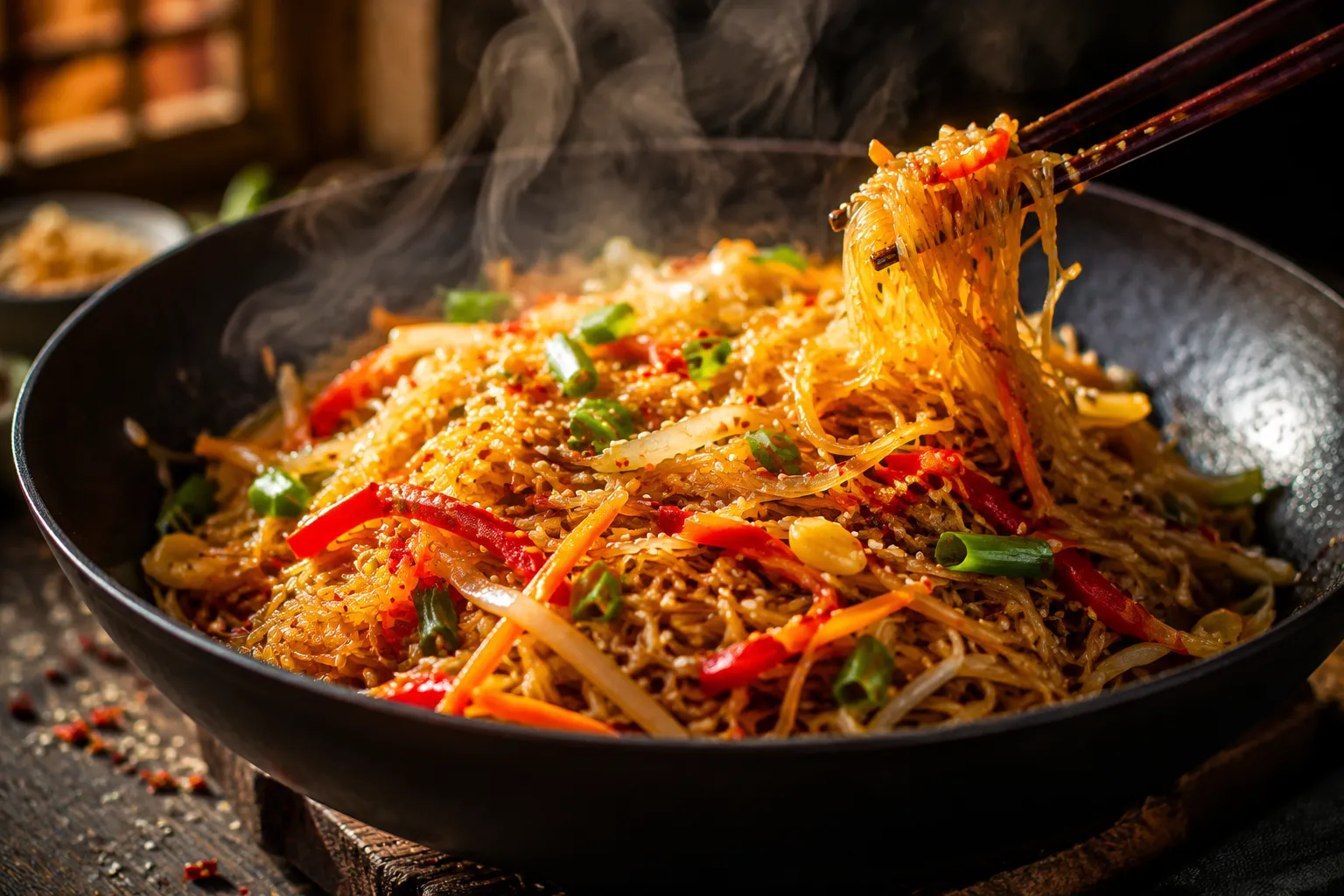
Skip the takeout box. This homemade mei fun is ready in 30 minutes with springy rice noodles, crisp veggies, and a savory soy-sesame sauce that beats your local spot.
This mei fun recipe is the kind of fast, slurpable, vegetable-flecked noodle dinner I lean on whenever I'm tempted to call for takeout but would rather not leave the couch. Springy strands of rice vermicelli, a glossy soy-sesame glaze, and a tangle of crisp cabbage, carrots, and red bell pepper come together in one screaming-hot wok in under 30 minutes — and the whole thing tastes brighter and fresher than anything that arrives in a paper carton.
If you've ever stood in front of the noodle aisle at the Asian grocery wondering which package is which, this is the post for you. We'll cover what mei fun actually is, how it differs from chow mein and lo mein, and exactly how to coax those delicate strands into perfectly springy (never gummy) noodles. Consider this your last stop before becoming the household's noodle whisperer.
Mei fun (米粉) literally translates to "rice flour," and the noodles are exactly that: thin, wiry strands made from rice flour and water, dried into nests, and sold in nearly every Asian market on the planet. They cook in minutes, take on flavor like a sponge, and have a delicate springiness that wheat noodles simply can't replicate.
What sets mei fun apart from other Chinese rice noodles is its hair-thin profile. Unlike fat rice sticks for pad see ew or wide ho fun for beef chow fun, these strands are pencil-lead thin, which is why they soften so quickly in warm water and twirl beautifully around chopsticks.
Here's the cheat sheet: mei fun = thin rice noodles, stir-fried dry and springy. Chow mein = wheat-and-egg noodles, stir-fried often until crisp at the edges. Lo mein = the same wheat noodles, but tossed with sauce rather than fried, so they stay soft and slick. All three are fantastic; only one is naturally gluten-free at the noodle level.
You'll see plenty of regional spins. Singapore mei fun is goldenrod-yellow from curry powder, often loaded with shrimp and BBQ pork. Xiamen-style leans seafood-forward with dried shrimp and shiitake. The home-kitchen vegetable version we're making here is the workhorse — a clean, sauce-glossed canvas you can dress up however you like.
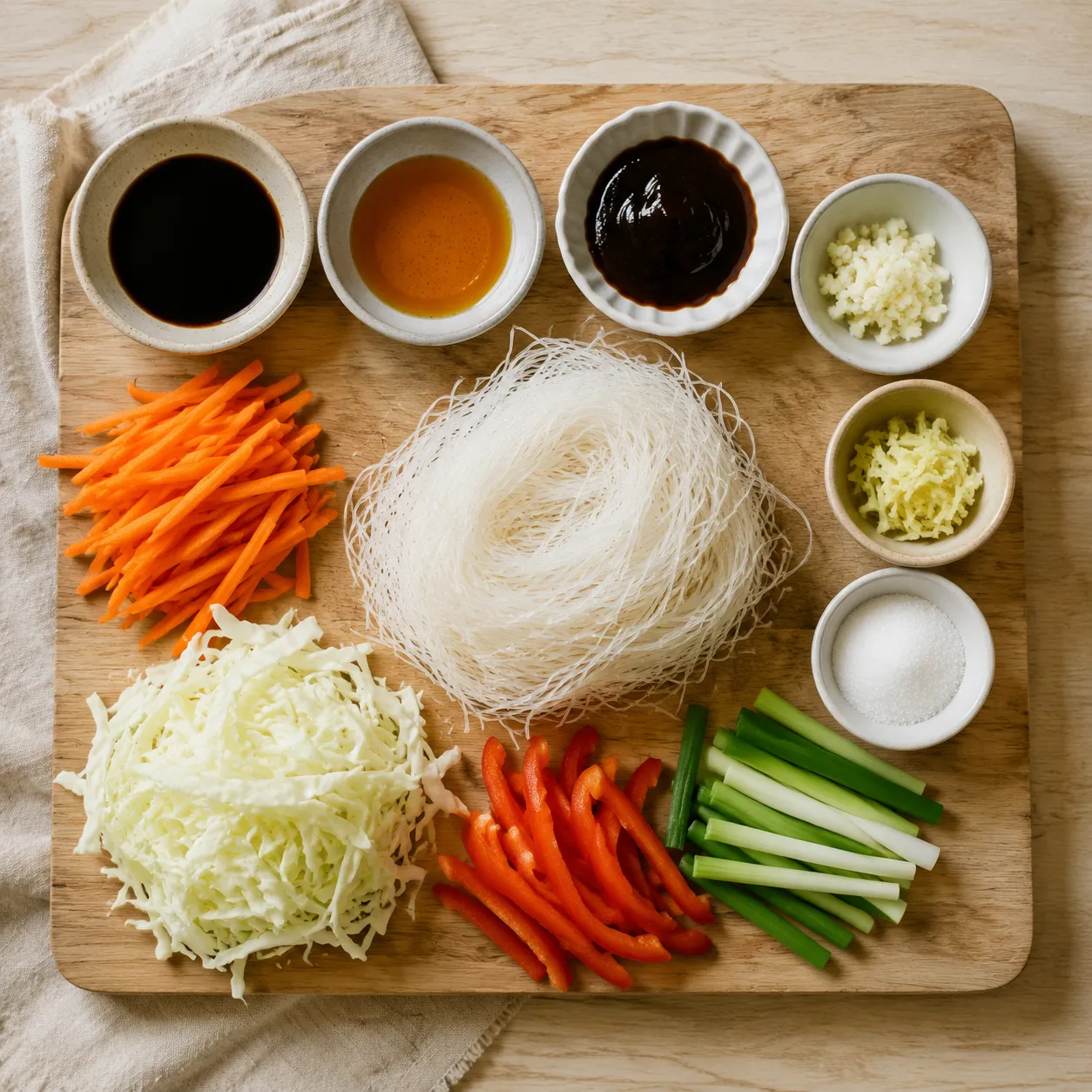
The beauty of stir-fried rice noodles is the short, pantry-friendly grocery list. Most of this is probably already in your fridge if you cook any kind of Asian noodle recipes on the regular.
Look for packages labeled "rice vermicelli," "mei fun," or "米粉." The strands should be hair-thin and snowy white. Avoid bean thread (cellophane) noodles, which are made from mung bean starch and behave very differently in the wok.
Our easy stir fry sauce is just five things: soy sauce, oyster sauce, toasted sesame oil, sugar, and a splash of water to loosen. That ratio is balanced — salty, slightly sweet, deeply savory — and it clings to every strand without drowning the noodles.
Shredded cabbage, julienned carrot, sliced red bell pepper, scallions, garlic, and ginger build the base. From there, add shrimp, sliced chicken thigh, char siu pork, tofu, or just keep it as a Chinese vegetable stir fry. The wok doesn't care.
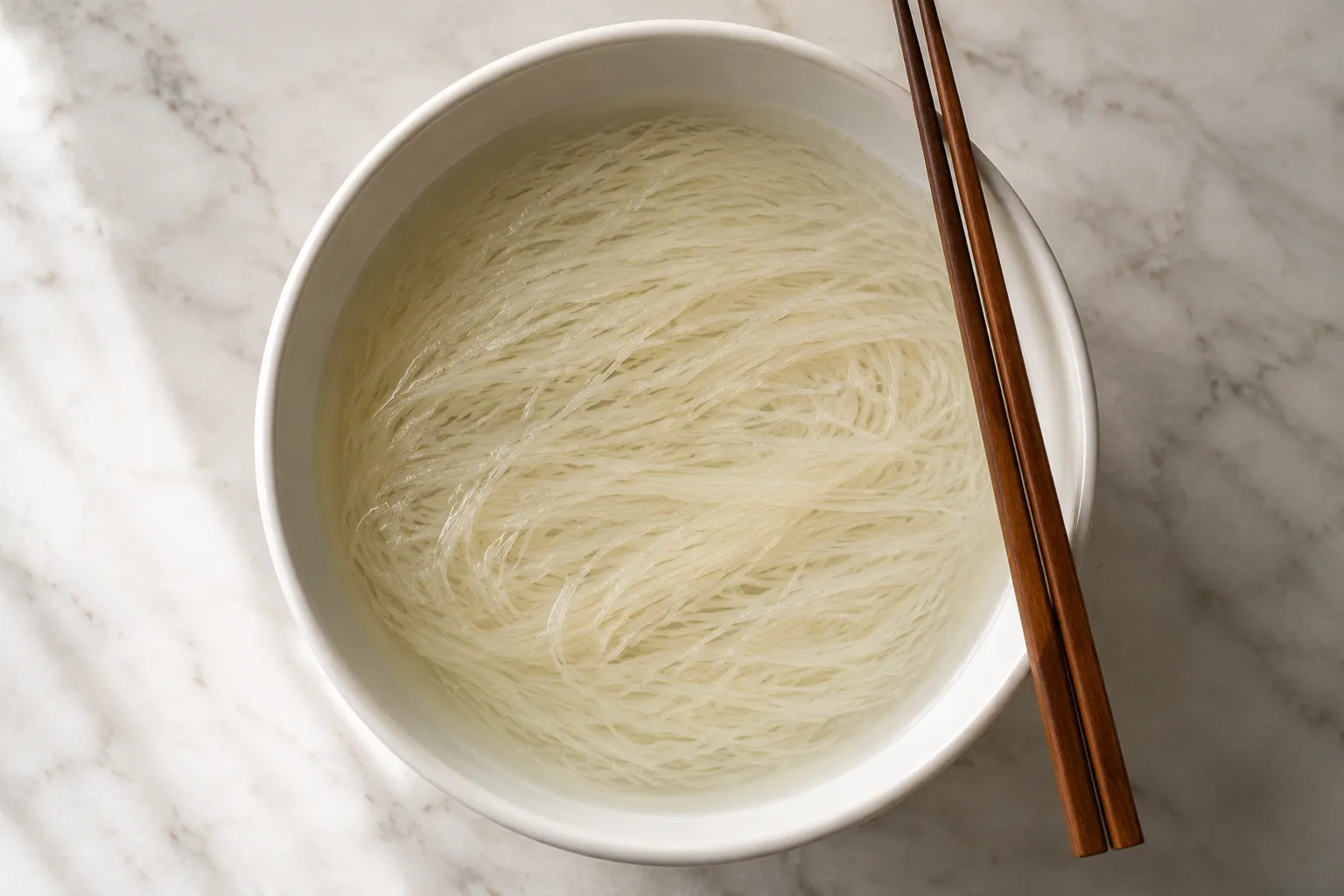
The full numbered method lives in the recipe card below, but here's the rhythm so you know what you're walking into. The whole sequence — soak, sauce, sear, toss — takes about 25 minutes start to finish, which makes this an ideal weeknight noodle dinner.
Drop the dried noodles into a wide bowl of warm (not boiling) tap water and let them sit for 6 to 8 minutes, just until pliable. They should bend easily but still have a slight bite — they'll finish cooking in the wok.
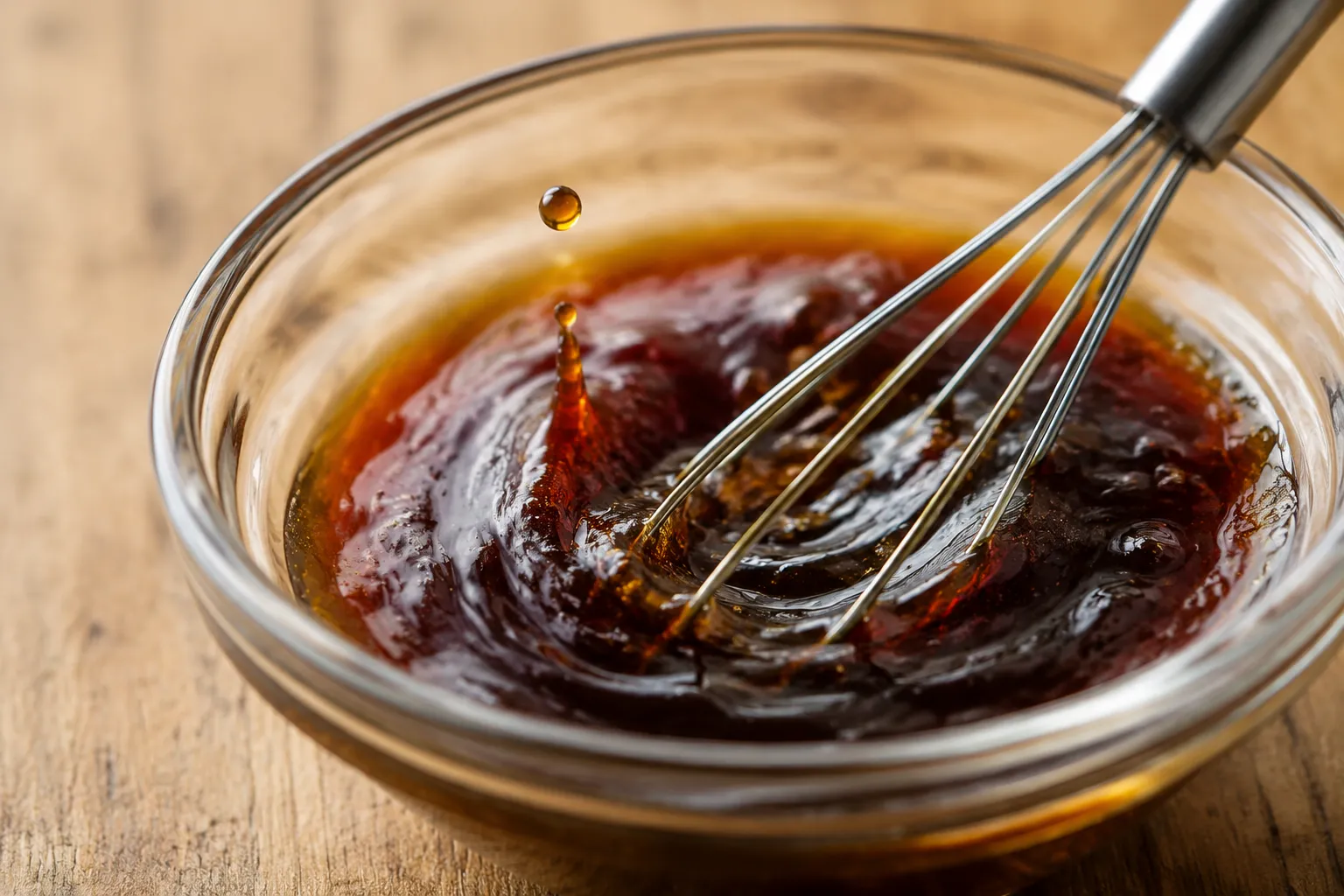
Whisk soy sauce, oyster sauce, sesame oil, sugar, and a tablespoon of water in a small bowl. Mix it before you turn on the burner — once the wok is hot, things move fast and you do not want to be measuring oyster sauce one-handed.
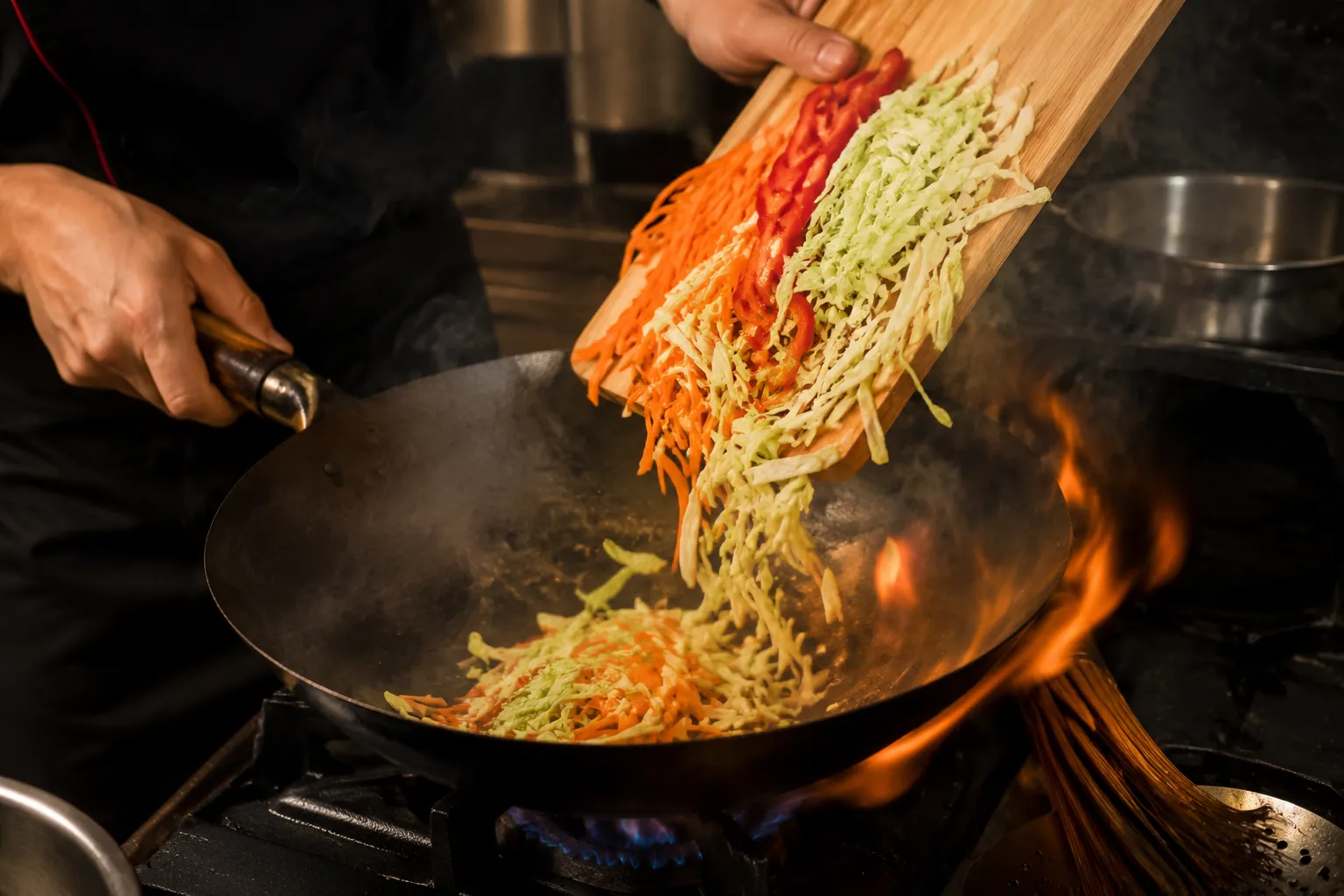
Crank your burner to high, get the wok smoking, then add neutral oil, garlic, and ginger. Thirty seconds later, the cabbage, carrot, and bell pepper go in. You want the vegetables blistered at the edges but still crunchy in the middle — about 2 minutes of constant tossing.
Drained noodles in, sauce poured around the edge of the wok, scallions on top. Use long chopsticks or tongs to lift and fold the noodles through the vegetables until every strand is glossy and the color is even. If things stick, splash in another tablespoon of water.
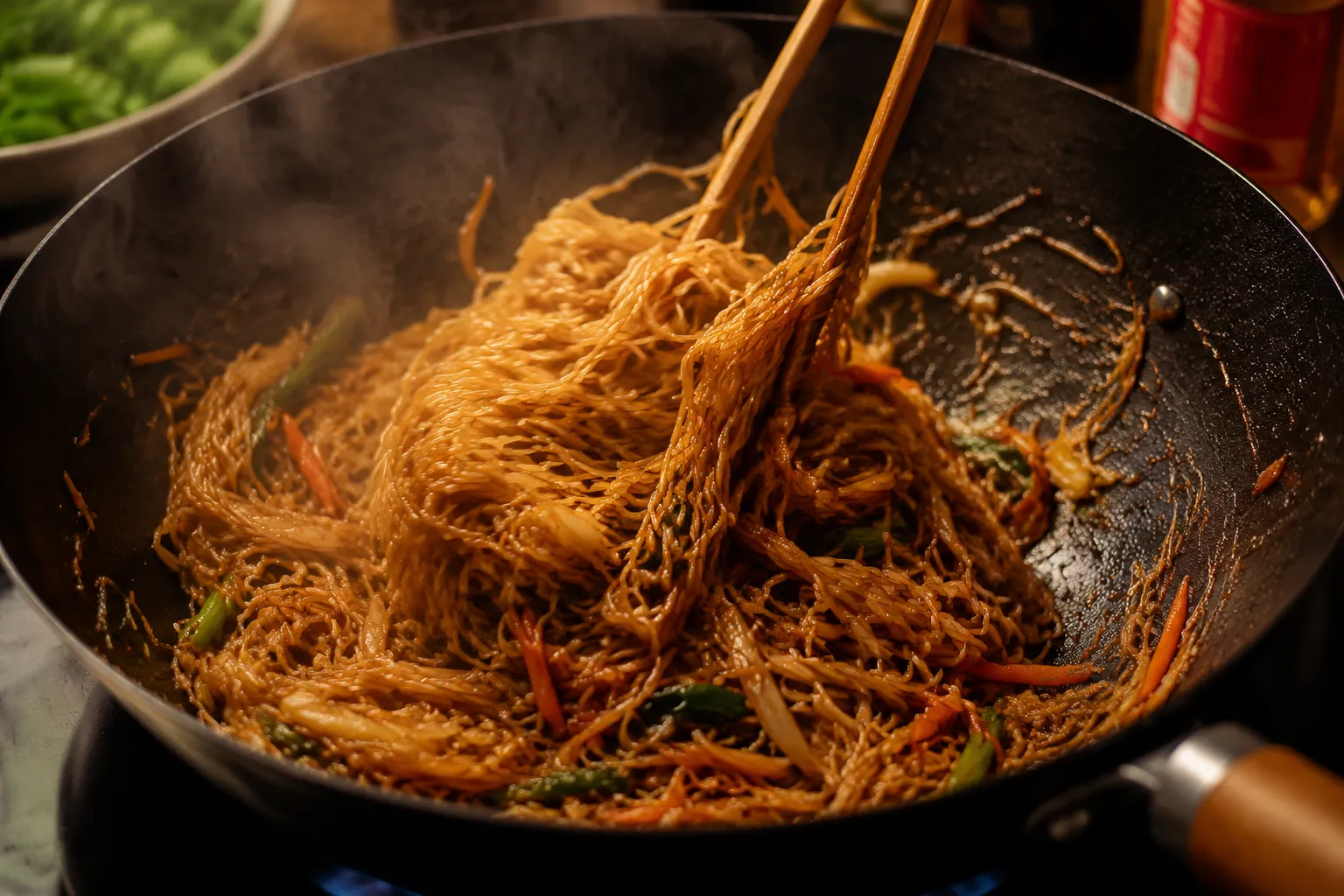
The single biggest difference between homemade chow mei fun and the takeout version is heat. Restaurant woks roar at 100,000+ BTUs; your home stove tops out around 15,000. To compensate, get your wok properly screaming before anything goes in — when a drop of water evaporates instantly on contact, you're ready.
Use a carbon steel wok if you have one (cast iron works too) and resist the urge to crowd the pan. Cooking in two batches beats steaming a single mountain of vegetables. And when you toss the noodles, lift from underneath with chopsticks rather than dragging a spatula through them — rice vermicelli is delicate and breaks if you stir it like pasta.
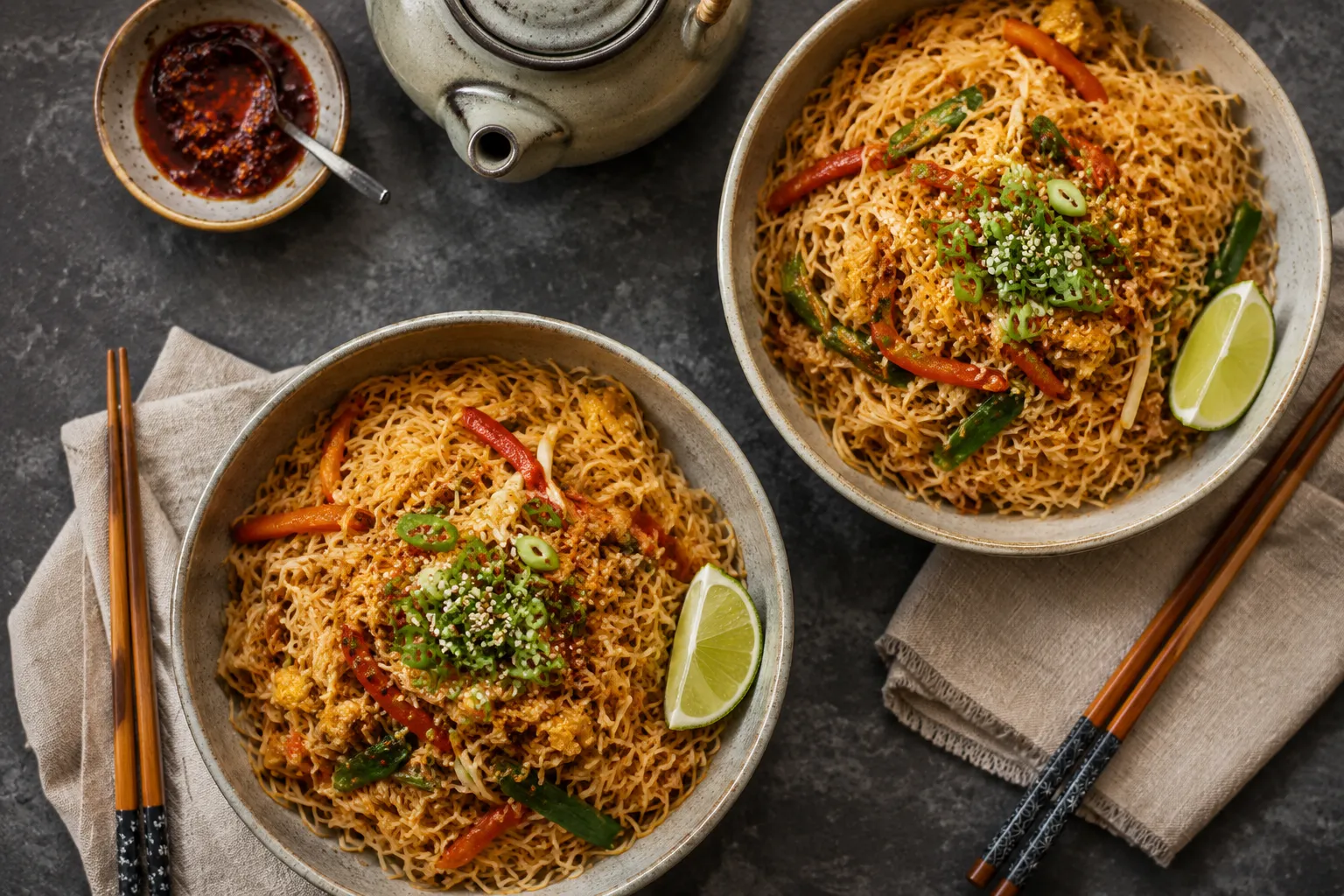
Mei fun is a complete one-bowl meal, but it plays beautifully with a simple side. Pile it into shallow bowls and top with extra scallion, toasted sesame seeds, a spoonful of chili crisp, and a wedge of lime for brightness. A side of smashed cucumber salad or quick-pickled radishes cuts the richness, and a pot of jasmine tea ties the whole table together.
If you're feeding a crowd, this dish stretches easily — double the recipe and stir-fry in two batches so the wok stays hot. It's the kind of recipe that earns a permanent spot in the rotation once you make it twice.
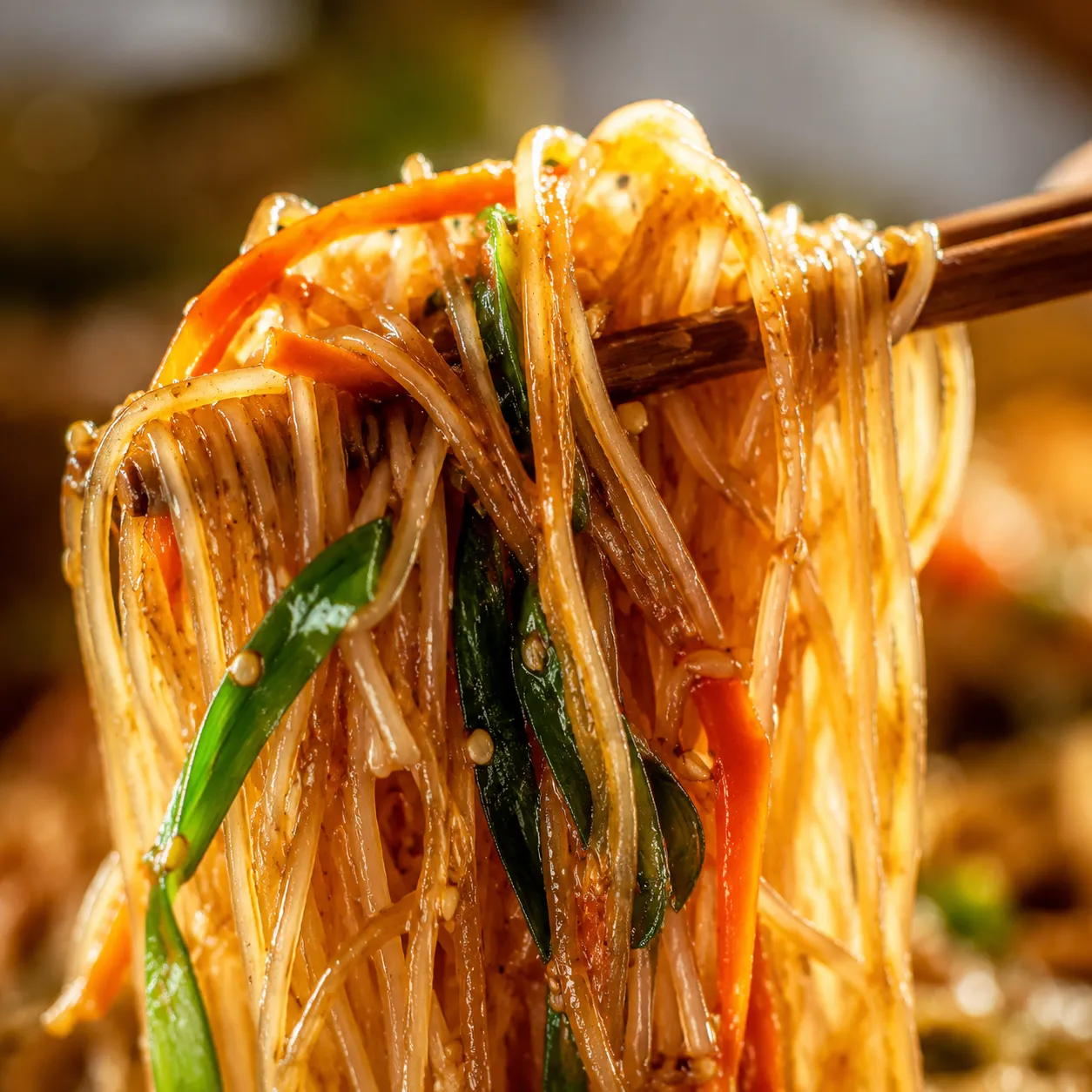
For a full takeout-at-home spread, lean into other Asian noodle recipes and small plates: crispy potstickers, scallion pancakes, or a bowl of hot-and-sour soup. A simple stir-fried bok choy with garlic on the side keeps the meal balanced if your mei fun is heavy on noodles and light on greens.
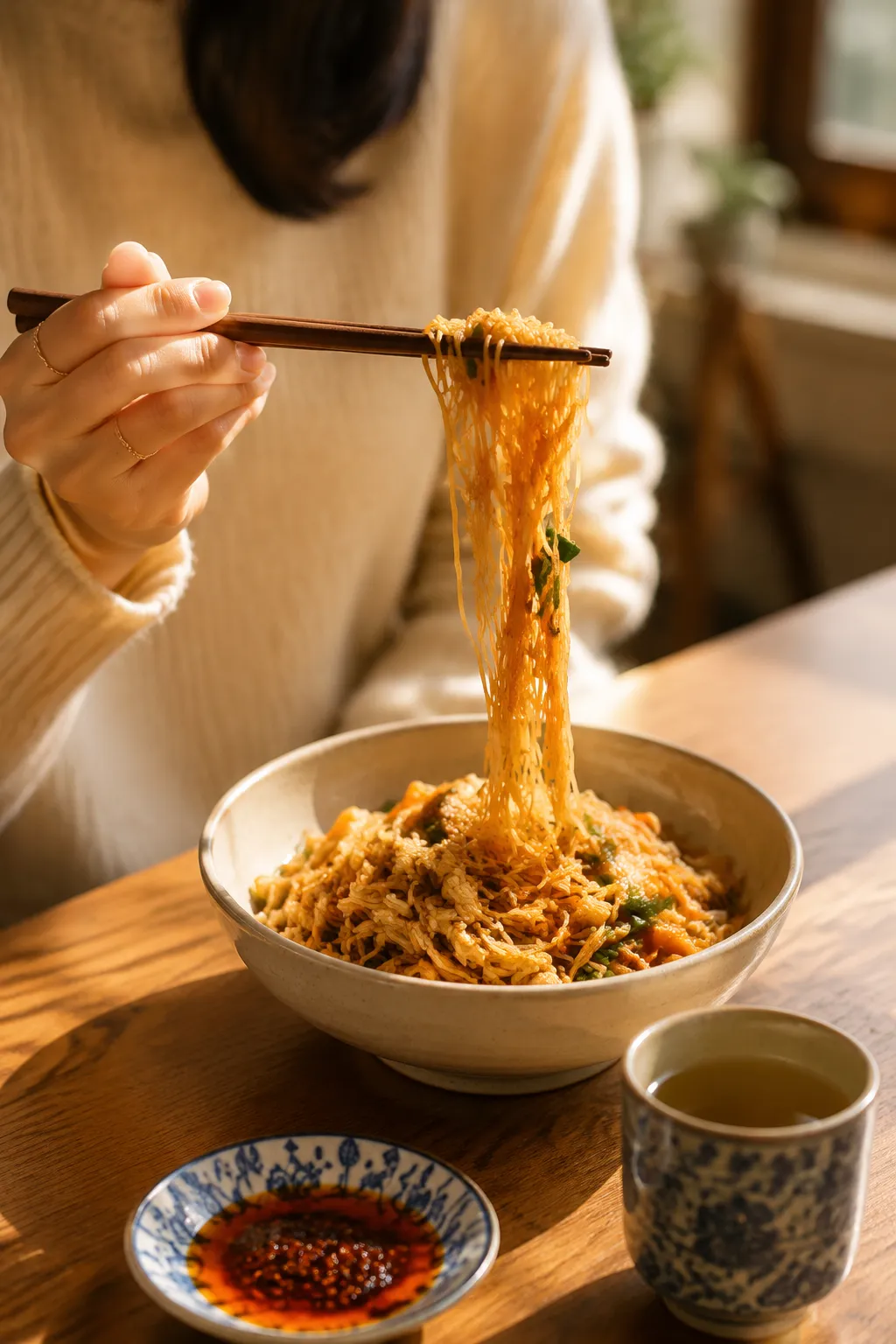
Once you've nailed this base recipe, the door swings wide open. Singapore-style with curry powder is a 5-minute pivot. Add shrimp and char siu and you've got a takeout-counter classic. Whatever direction you take it, the technique stays the same: hot wok, fast hands, springy noodles.
This recipe is a sturdy template. Once you've got the base technique down, swap freely based on what's in the fridge or what mood you're in.
Store leftover mei fun in an airtight container in the refrigerator for up to 4 days. The noodles will firm up and absorb the sauce as they sit, which is honestly delicious — day-two mei fun has a deeper, more concentrated flavor than fresh.
To reheat, skip the microwave (it makes the noodles rubbery) and use a hot skillet or wok instead. Add a splash of water or broth, toss over medium-high heat for 2–3 minutes until heated through, and finish with a drizzle of fresh sesame oil to revive the aroma. Freezing isn't recommended — rice noodles get grainy and brittle when thawed.