Spam Musubi Recipe: Authentic Hawaiian Snack in 30 Minutes
Ingredients
Scale
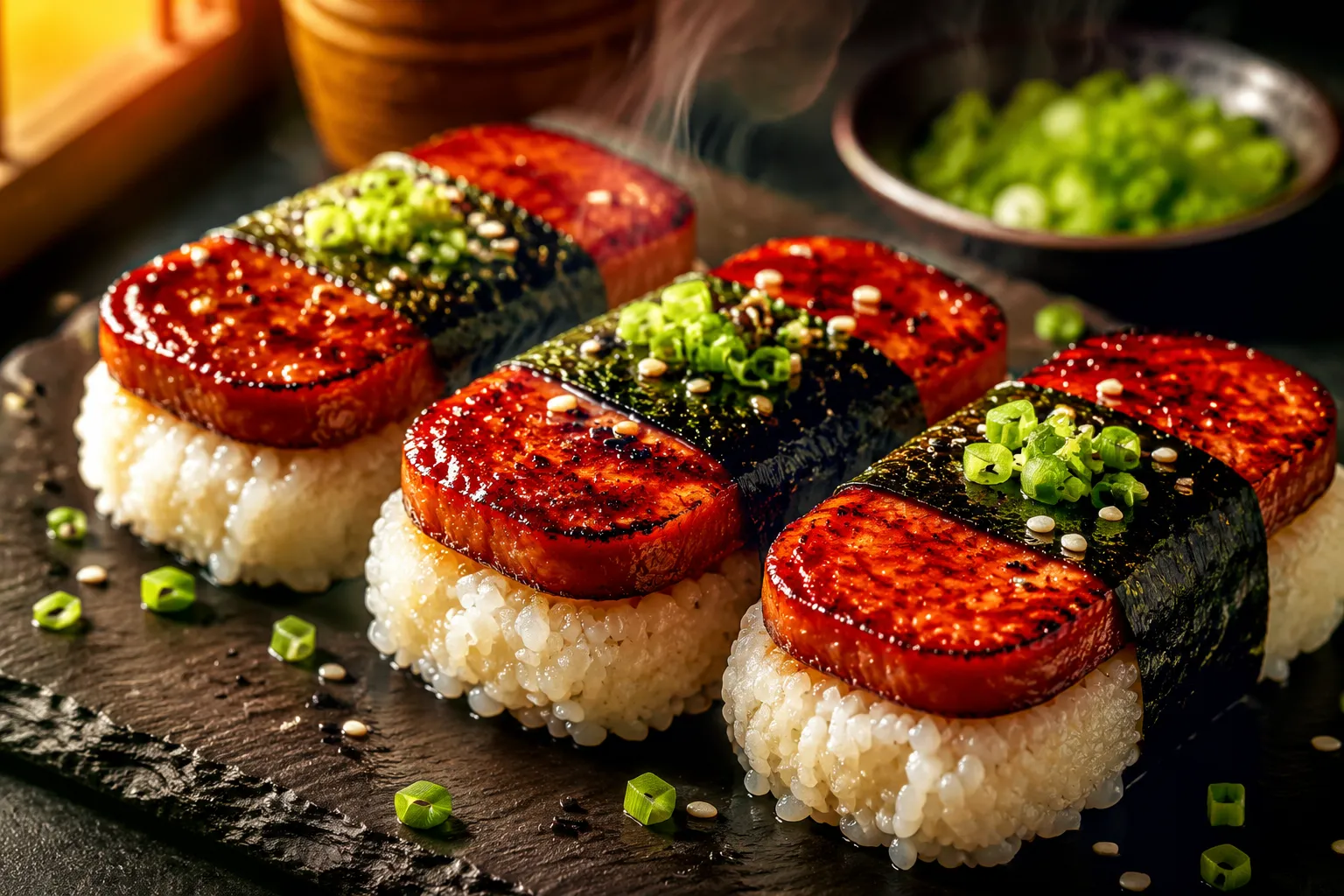
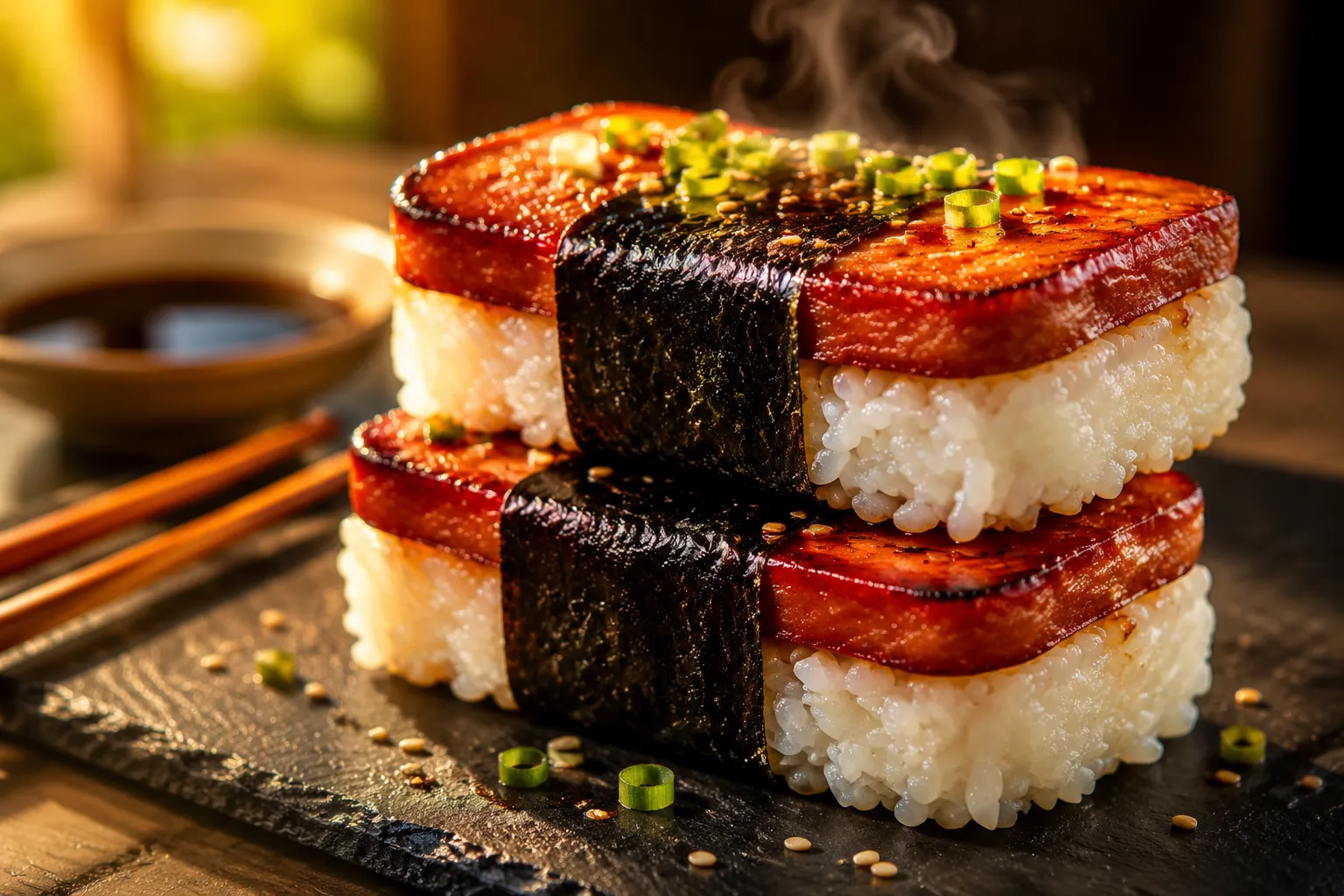
This spam musubi recipe stacks sweet-savory teriyaki-glazed Spam on warm sushi rice and wraps it in crisp nori for the ultimate Hawaiian handheld snack.
This spam musubi recipe is the kind of handheld snack that turns a single can of pantry meat into a sweet-savory souvenir from Hawaii. If you've ever grabbed one wrapped in plastic at a 7-Eleven in Honolulu and wondered why something so simple tastes so addictive, the answer is in the layering — warm sticky rice, caramelized teriyaki-glazed Spam, and a tight band of crisp seaweed that holds it all together. It's beach food, road-trip food, lunchbox food, and late-night-craving food in one tidy rectangle.
I learned to make these the way most home cooks on the islands do: with the empty Spam can as a makeshift mold, a wooden spoon to press the rice, and a homemade glaze whisked together from soy sauce, brown sugar, and a splash of mirin. Once you do it twice, you stop measuring and start eyeballing. The whole process takes about 30 minutes, the ingredients cost less than a deli sandwich, and the result feeds a hungry crowd or a full week of easy lunch box ideas.
Below you'll find the exact ratios I rely on, a foolproof glaze that beats anything from a bottle, and the small details — rice temperature, sealing trick, slice thickness — that separate decent musubi from the kind people text you about for the recipe.
Spam musubi is the unofficial state snack of Hawaii: a slab of pan-fried Spam glazed in teriyaki, pressed onto a brick of warm sushi rice, and wrapped with a strip of seaweed like a savory little gift. It traces back to the islands' deep Japanese-American heritage, where onigiri (Japanese rice balls) met the abundance of canned meat brought in during World War II. Local cooks reshaped the rice ball into a rectangle to match the dimensions of a Spam can, and the modern Hawaiian spam musubi was born.
Today it's everywhere — convenience stores, bento shops, school lunches, beach picnics. It's not technically sushi (no raw fish, no rolled techniques) and it's not exactly onigiri either. It's its own thing, and that third-category status is part of why this Hawaiian snack has crossed over so successfully into mainland kitchens. If you love Asian-inspired snacks that travel well and reheat without a microwave meltdown, this one is the gateway.
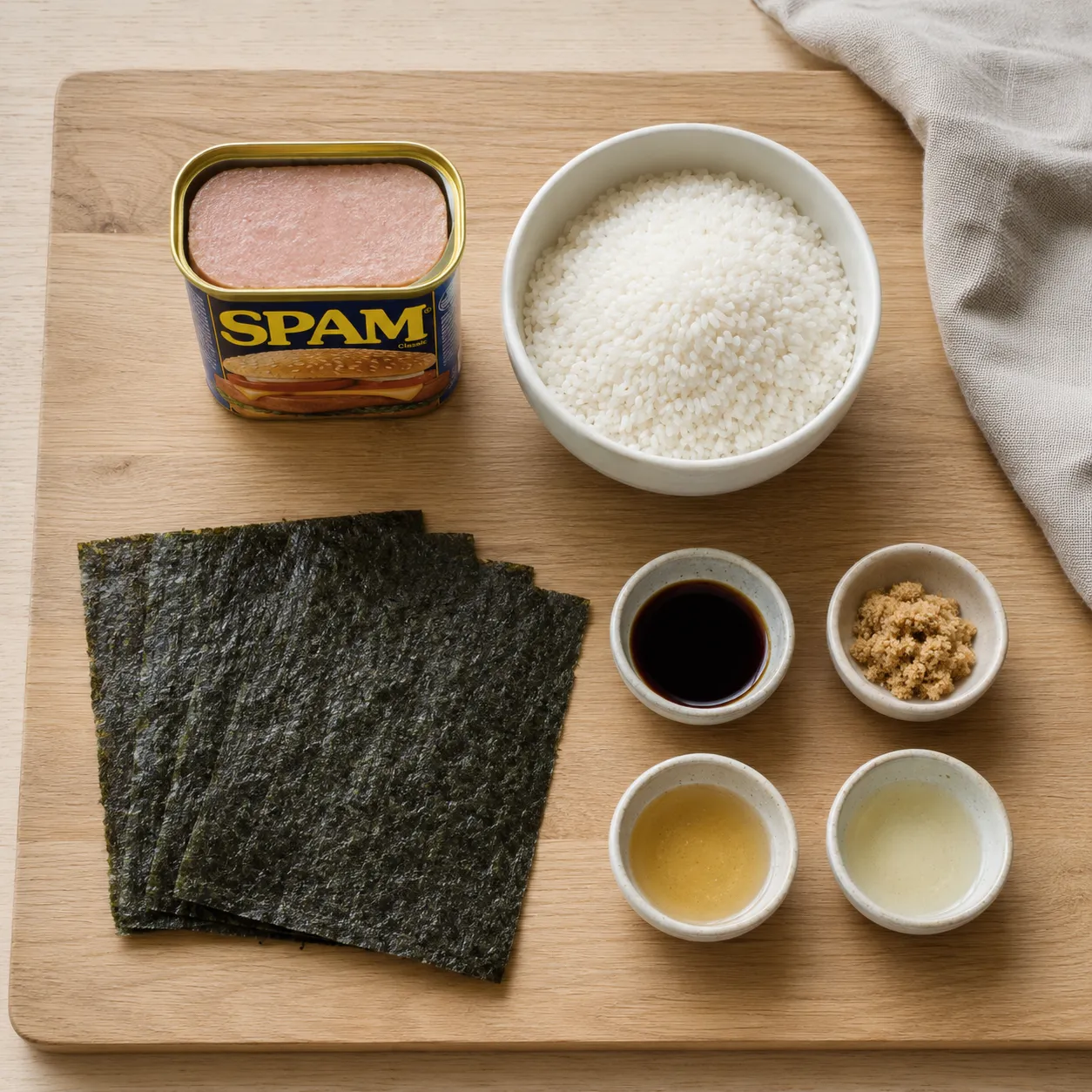
The list is short, but each component pulls real weight, so it's worth knowing what to grab.
A note on rice ratios: I use 2 cups of dry sushi rice to roughly 2 1/4 cups water, then season the cooked rice with a tablespoon of rice vinegar, a teaspoon of sugar, and a pinch of salt. Some traditional cooks skip the vinegar entirely, but a light seasoning keeps the rice from tasting flat against the rich Spam.
You don't need a specialty kitchen to pull this off, but a few tools make the process noticeably faster.
A musubi mold — a hollow rectangle of wood or food-grade plastic with a pressing piece — is the easiest way to get clean, uniform musubi. They're cheap online, usually under ten dollars, and worth it if you plan to make these often. If you don't have one, the rinsed-out empty Spam can lined with plastic wrap is the original DIY hack, and honestly works almost as well. Just press the rice in firmly with a wet spoon.
You'll also want a non-stick or cast iron skillet for searing the Spam, a small saucepan or the same skillet for reducing the glaze, a rice cooker or a heavy-bottomed pot for the rice, and a small bowl of water nearby to keep your hands and the mold from sticking. Plastic wrap is non-negotiable for storage and for shaping if you're going can-method.
The whole process moves in a logical chain — rice cooking, Spam searing, glaze reducing, then assembly. Once you've made this spam musubi recipe a couple of times, you'll find yourself running all three at once.
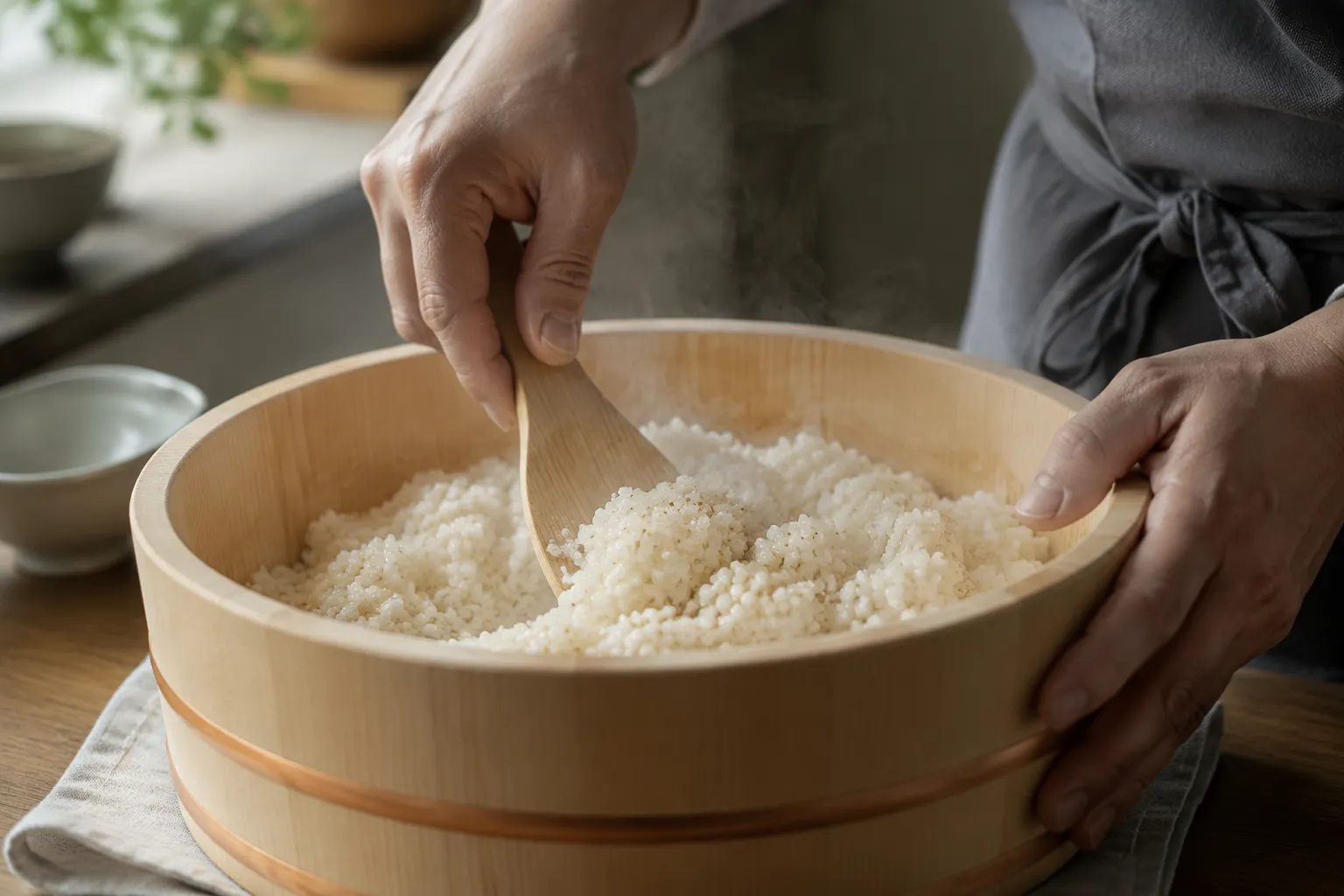
Rinse 2 cups of short-grain rice in cold water until the water runs nearly clear — this removes excess starch and prevents gumminess. Cook according to package directions or in a rice cooker. Once it's done, transfer it to a wide bowl, drizzle in a tablespoon of rice vinegar mixed with a teaspoon of sugar and a pinch of salt, and fold gently with a paddle or wooden spoon. You want the grains shiny and seasoned, not mashed. Cover with a damp towel and keep it warm — cold rice will not press cleanly.
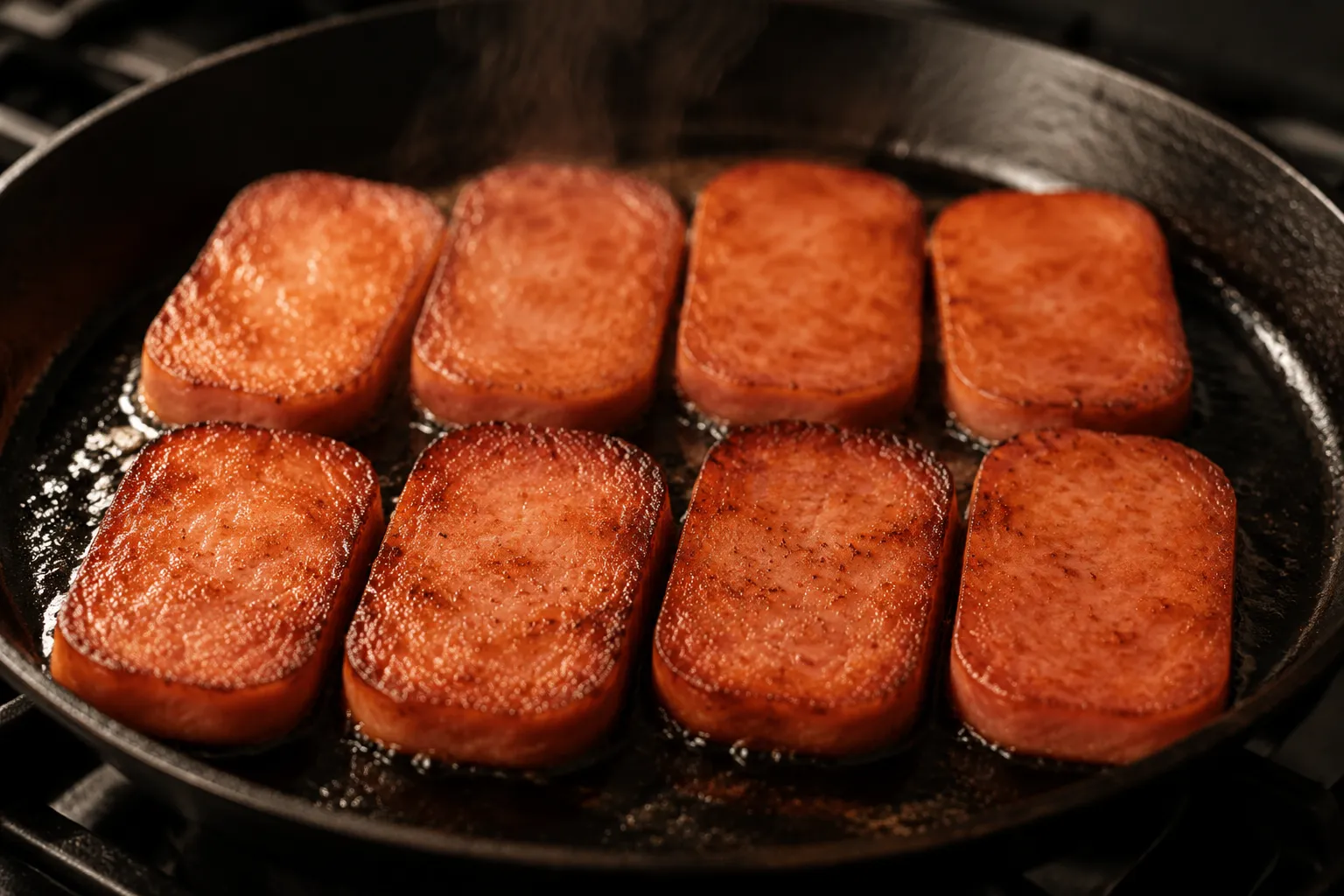
Open the can and slice the Spam into 8 even pieces, about 1/3 inch thick. Heat a skillet over medium-high — no oil needed, since Spam renders plenty of its own fat — and lay the slices in a single layer. Sear for about 2 minutes per side, until the edges are deep golden brown and slightly crisp. Don't crowd the pan; work in batches if you need to. The Maillard browning here is what gives the finished musubi its meaty depth.
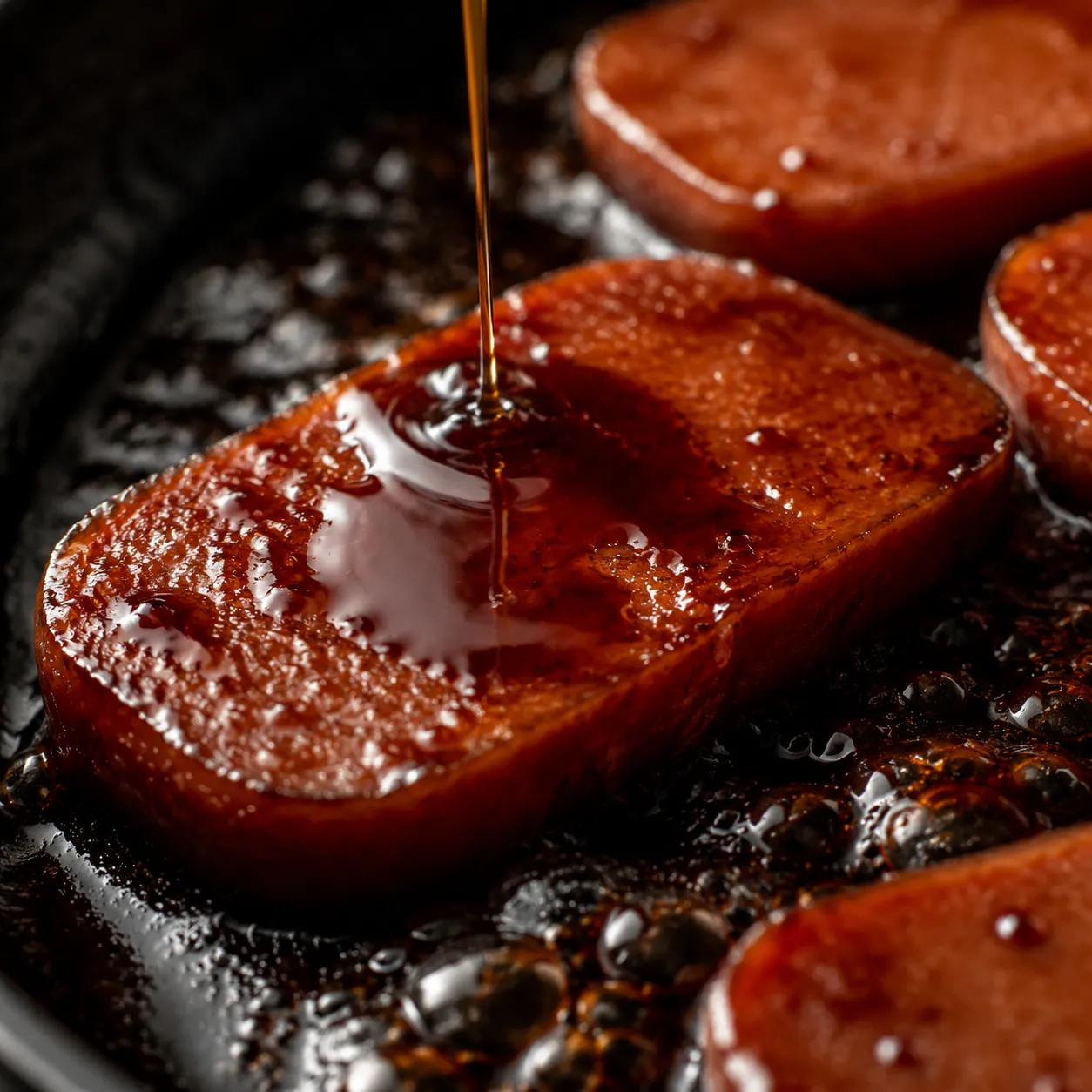
Whisk together 1/4 cup soy sauce, 3 tablespoons brown sugar, and 2 tablespoons mirin in a small bowl. Pour the mixture into the hot skillet with the Spam still inside, then immediately reduce the heat to medium-low. The teriyaki sauce will hiss, bubble, and reduce into a glossy mahogany glaze in about 2 to 3 minutes. Flip the slices once or twice to coat both sides, then pull the pan off the heat the moment the sauce coats the back of a spoon. Overreduce it and you'll get sticky candy instead of glaze.
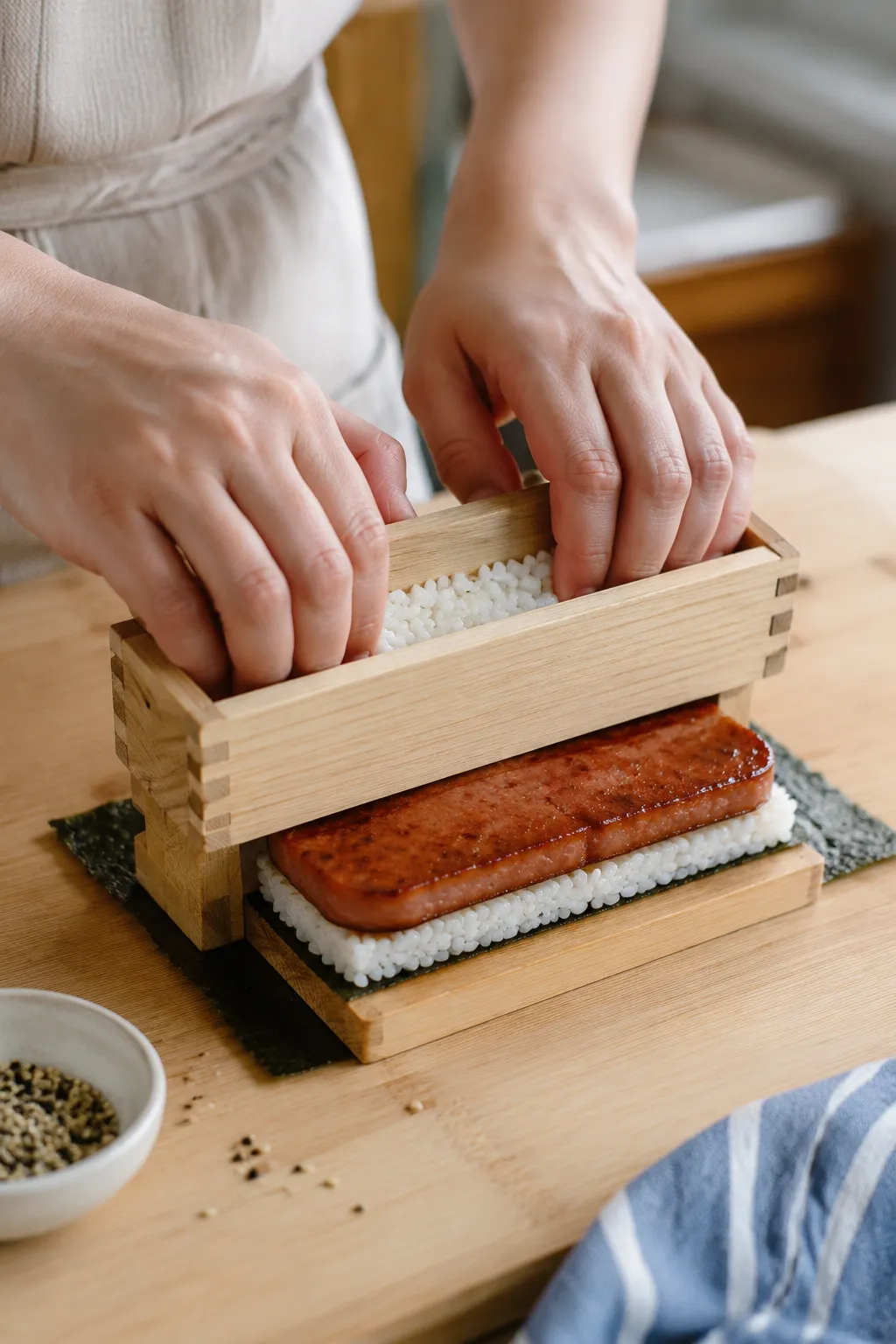
Cut your nori sheets in half lengthwise so you have 8 long strips. Lay one strip shiny-side-down on a cutting board, set the musubi mold on top in the center, and press a layer of warm rice (about 1/2 cup) firmly into the mold. Lay a glazed Spam slice on top of the rice, then lift the mold straight up. Wrap the nori snugly around the bundle, sealing the seam with a few grains of rice or a dab of water. The seaweed softens slightly within minutes, hugging the rice into one cohesive bite.
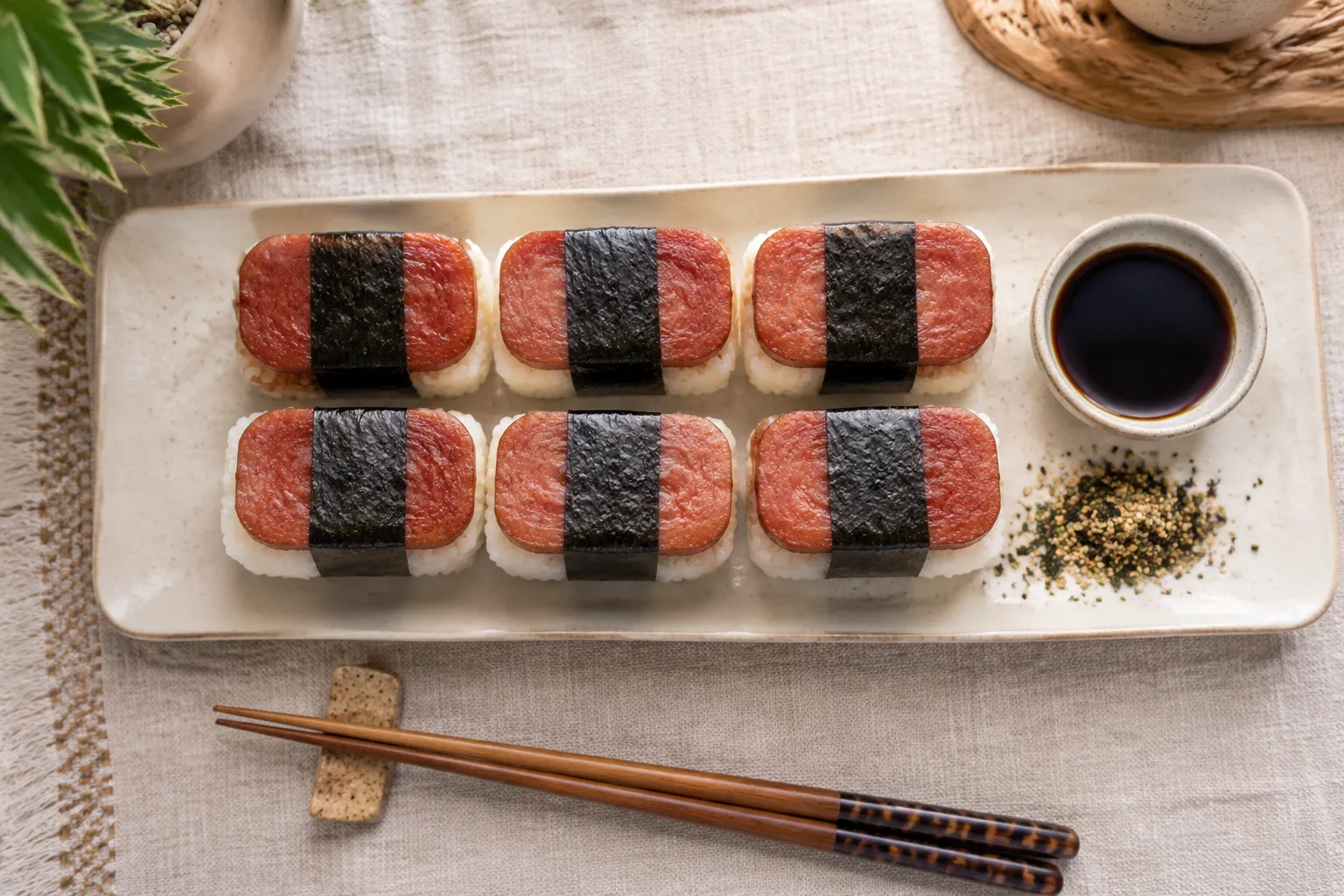
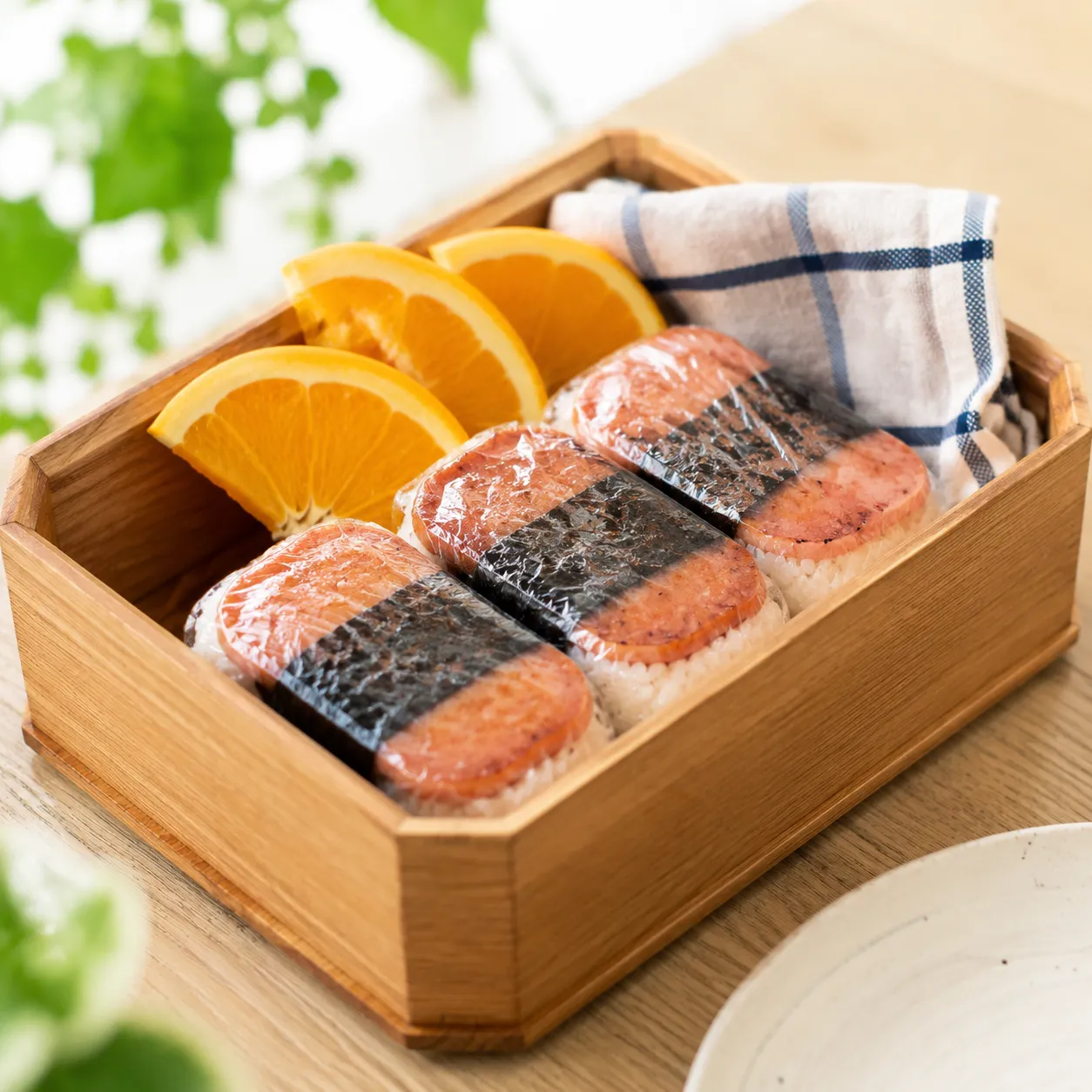
Spam musubi is traditionally eaten at room temperature, which makes it perfect for picnics, beach days, and packed lunches. On the islands, you'll find them sold individually wrapped in plastic at every gas station and corner store, often paired with a hard-boiled egg, a few orange wedges, or a small side of mac salad. At home, I like to set them out on a long platter with a small bowl of extra soy sauce and a sprinkle of furikake on top.
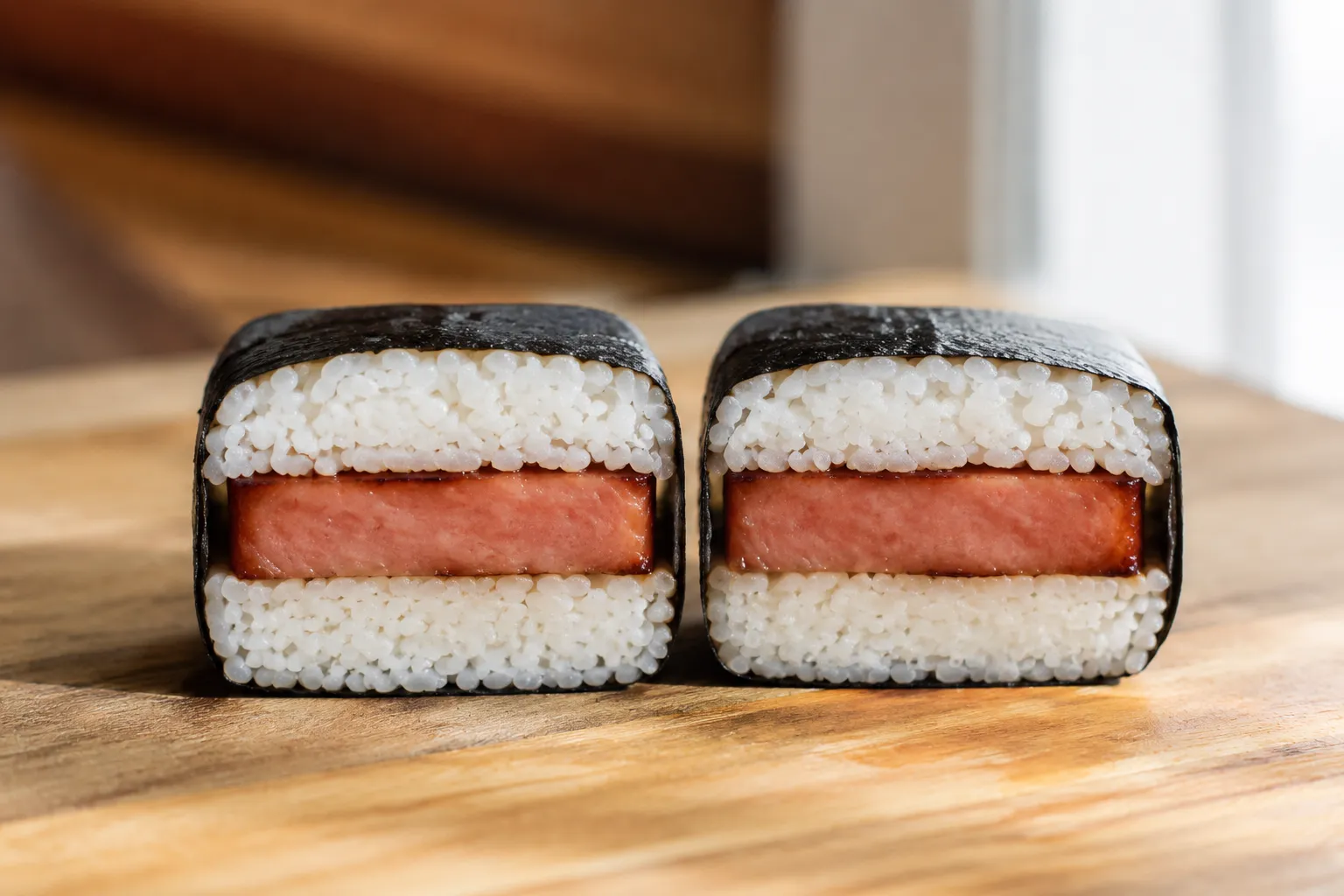
For a fuller meal, pair them with miso soup, a simple cucumber salad dressed in rice vinegar, or pineapple chunks for a sweet contrast. They also slot perfectly into a casual spread alongside other Hawaiian recipes like poke bowls, kalua pork sliders, or huli huli chicken. If you're packing for the office, two musubi from this spam musubi recipe plus a piece of fruit makes a genuinely satisfying lunch that holds up without refrigeration for a few hours.
Once the basic technique is in your hands, this becomes a canvas — a forgiving, foolproof base for whatever flavors and fillings you want to layer in. Make a batch on a Sunday, wrap each one tight in plastic, and you've got the most quietly satisfying packed lunch of the week. The first one you build will probably look a little uneven; the third will look like it came from a Honolulu deli. That's the magic of this spam musubi recipe: it rewards practice, but it never punishes mistakes.
Once you have the basic technique down, this Hawaiian classic practically begs for riffs. The structure stays the same — sticky rice base, savory protein middle, seaweed band — but you can swap and stack components to suit whatever's in the fridge or pantry.
Spam musubi is at its absolute best within 2 to 4 hours of being made, eaten at room temperature. Wrap each one tightly in plastic wrap as soon as it's assembled — this softens the nori slightly, locks in moisture, and keeps the rice from drying out. Stored this way on the counter, they'll stay perfect for a half-day picnic, a packed lunch, or an afternoon of errands.
Refrigeration is the enemy of good musubi: cold air firms the rice into hard pebbles and dulls the glossy glaze. If you absolutely have to refrigerate (food safety after 4 hours), let the musubi come back to room temperature for 20 minutes before eating, or microwave it in its plastic wrap for 20 to 30 seconds to loosen the rice. Don't freeze them. For the best texture, make only as many as you'll eat that day.