Crispy Shrimp Tempura Recipe (Light & Crunchy)
Ingredients
Scale
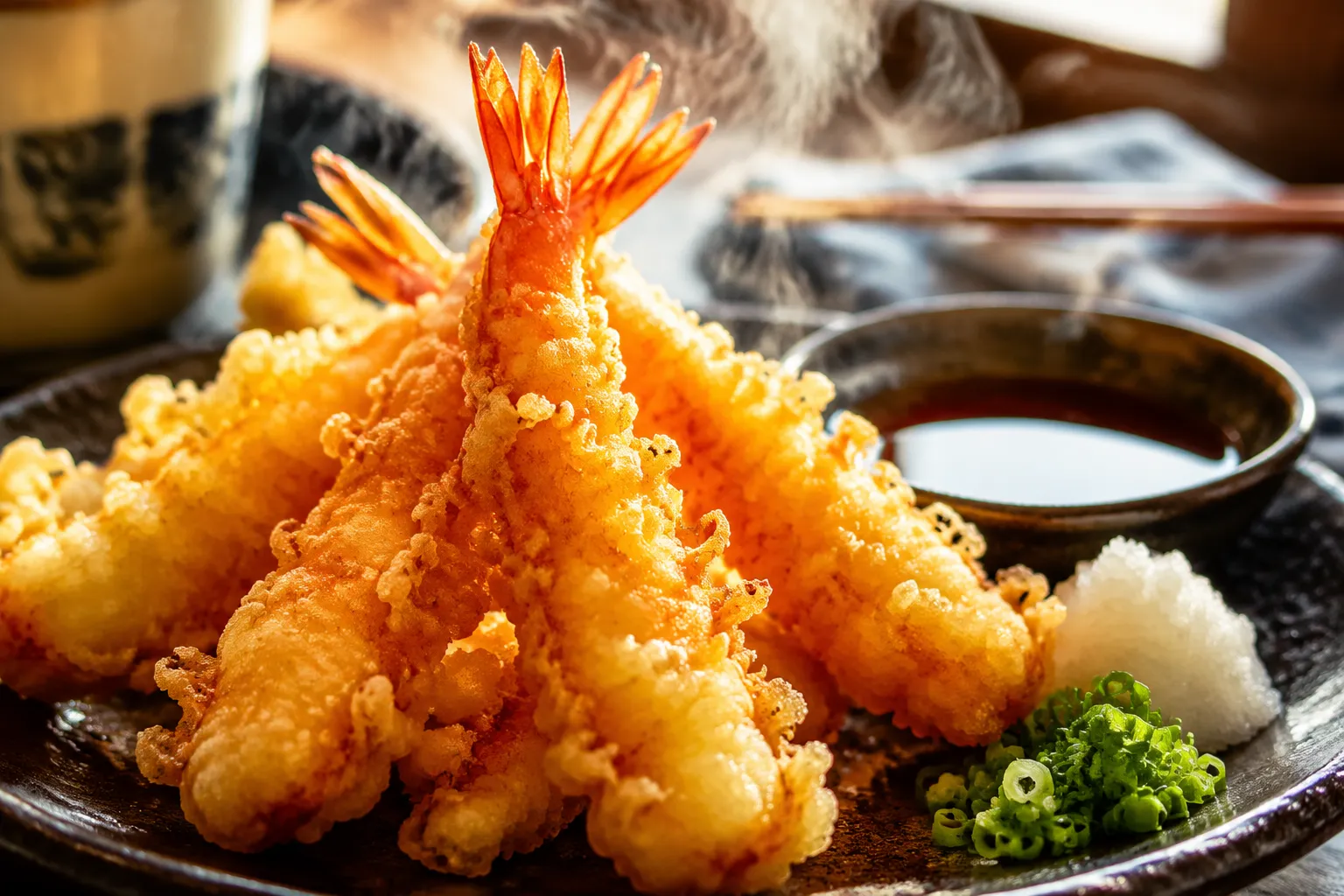
Light, lacy, and shatter-crisp shrimp tempura you can make at home in 30 minutes — straighter shrimp, no soggy batter, served with classic tentsuyu sauce.
Crispy shrimp tempura is one of those Japanese restaurant dishes that looks intimidating from the outside and turns out to be surprisingly approachable once you understand the handful of tricks behind it. The shrimp come out of the oil standing tall and straight, encased in a pale-gold coating so airy it almost looks like spun sugar. You break through with your chopsticks and hear that unmistakable shatter before getting to the sweet, just-cooked shrimp underneath. The whole thing tastes like something that should require formal chef training, and yet you can absolutely pull it off in your own kitchen in about thirty minutes flat.
What separates great tempura from the soggy, doughy fried shrimp you sometimes get is mostly chemistry, not skill. Cold liquid hitting hot oil, a barely-mixed batter full of lumps, gluten kept firmly in check, and shrimp prepped so they don't curl into tight little commas the second they hit the fryer. Once you see the pattern, you can repeat it any night of the week. This is the version I make when I want something that feels celebratory without spending an hour at the stove.
The recipe below walks you through every choice that matters: which shrimp to buy, why the water has to be cold enough to make your fingers ache, and how to build a quick tentsuyu dipping sauce that genuinely tastes like the one at your favorite izakaya. I'll also share serving ideas and what to do with leftovers, even though I'd be impressed if you have any left to store.
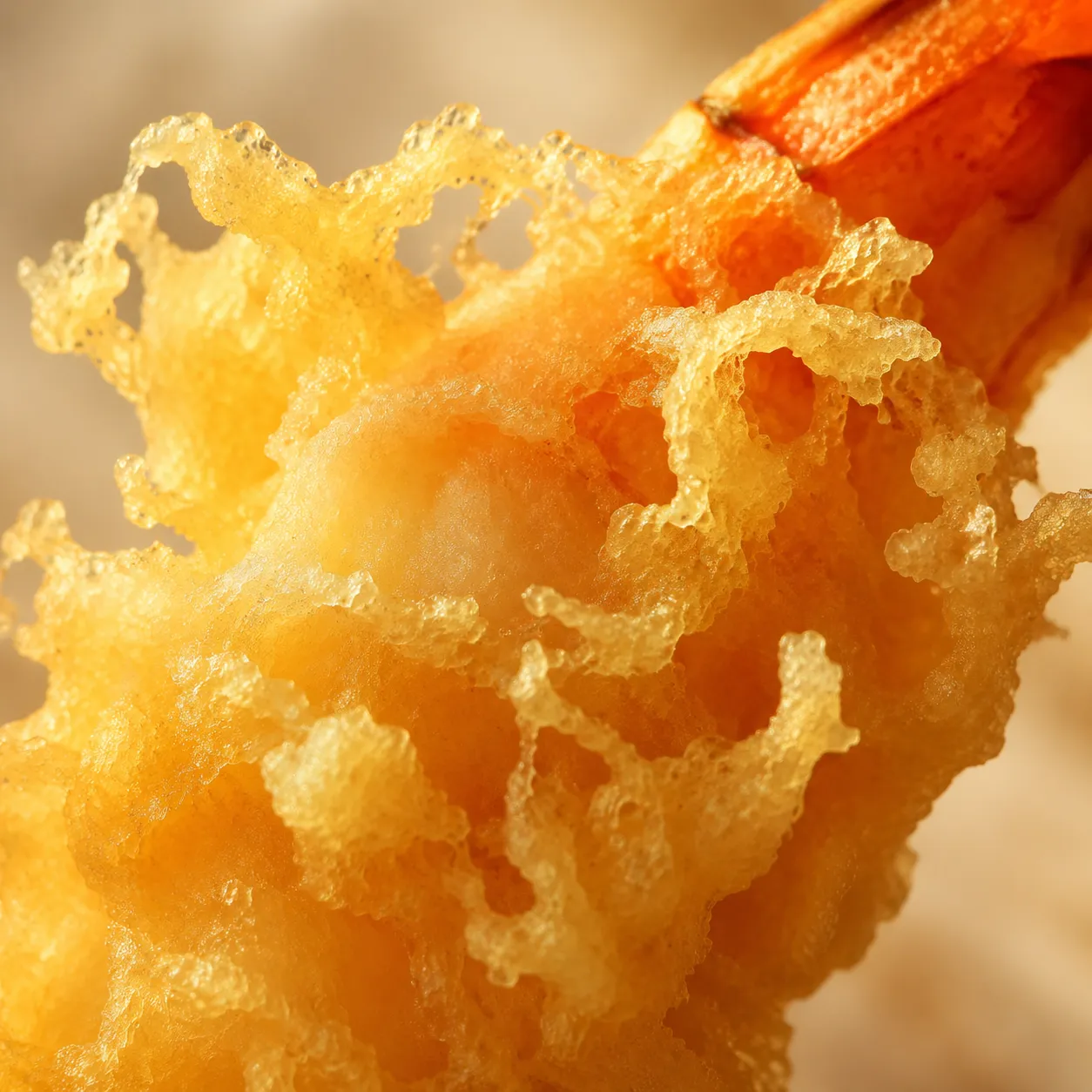
Tempura is a style of Japanese deep-frying built around a thin, almost watery coating that fries up into a delicate, lacy crust. It is not breading in the American sense — no breadcrumbs, no double dredge, no thick layer of flour. The whole idea is a coating so light you can still see the pink curve of the shrimp through it. Traditional Japanese tempura uses cold water, soft wheat flour, and very gentle mixing to keep gluten development low, which is exactly what produces that crackly, almost glassy finish.
The technique arrived in Japan with Portuguese missionaries in the 16th century and has been refined into something distinctly Japanese in the centuries since. At a tempura counter in Tokyo, you'll watch a chef fry one piece at a time, nudging the oil temperature up or down for shrimp versus eggplant versus a single shiso leaf. We don't need to be quite that meticulous at home, but borrowing a few of those habits puts a noticeable gap between this and any generic deep-fried shrimp. Compared to homemade panko shrimp, which leans heavier and crunchier, this is the lighter cousin — airy, brittle, almost weightless in the mouth. Done right, shrimp tempura tastes like an entirely different category of fried food, where every bite is more crackle than coating.
Tempura comes together with a short, mostly pantry-friendly list, but every item earns its place. Buying the right shrimp and getting the batter ratio right will do more for the final result than any flashy add-in. Here is what to look for at the store and why each piece matters.
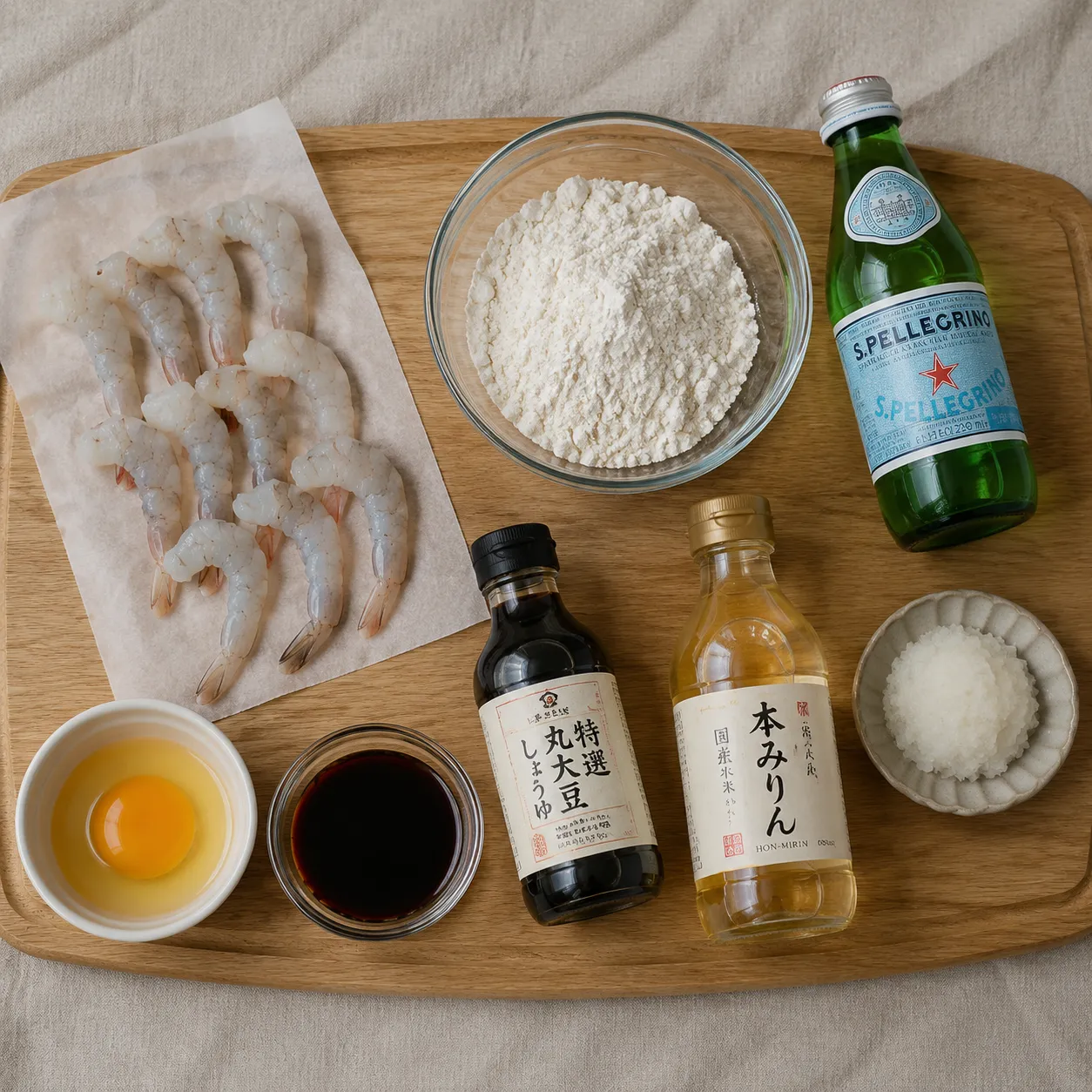
Look for large or jumbo shrimp in the 16/20 count range, peeled but with the tails left on for that classic look (and a built-in handle for dipping). Wild-caught Gulf or Pacific shrimp tend to have the cleanest flavor; if you're using frozen, thaw them overnight in the fridge and pat them very dry before battering. If you have never broken down raw shellfish before, a quick refresher on how to devein shrimp will save you a lot of grit — you want the dark vein along the back removed and the underside scored for straightening.
For the tempura batter, you only need three things: all-purpose flour, one cold egg, and ice-cold sparkling water. The bubbles in the carbonated water help create extra lift and lacy texture, while a pinch of baking soda gives a little insurance. I keep an extra bowl of plain flour beside the batter for dredging the shrimp first, which gives the wet coating something to grip and prevents the dreaded slide-off.
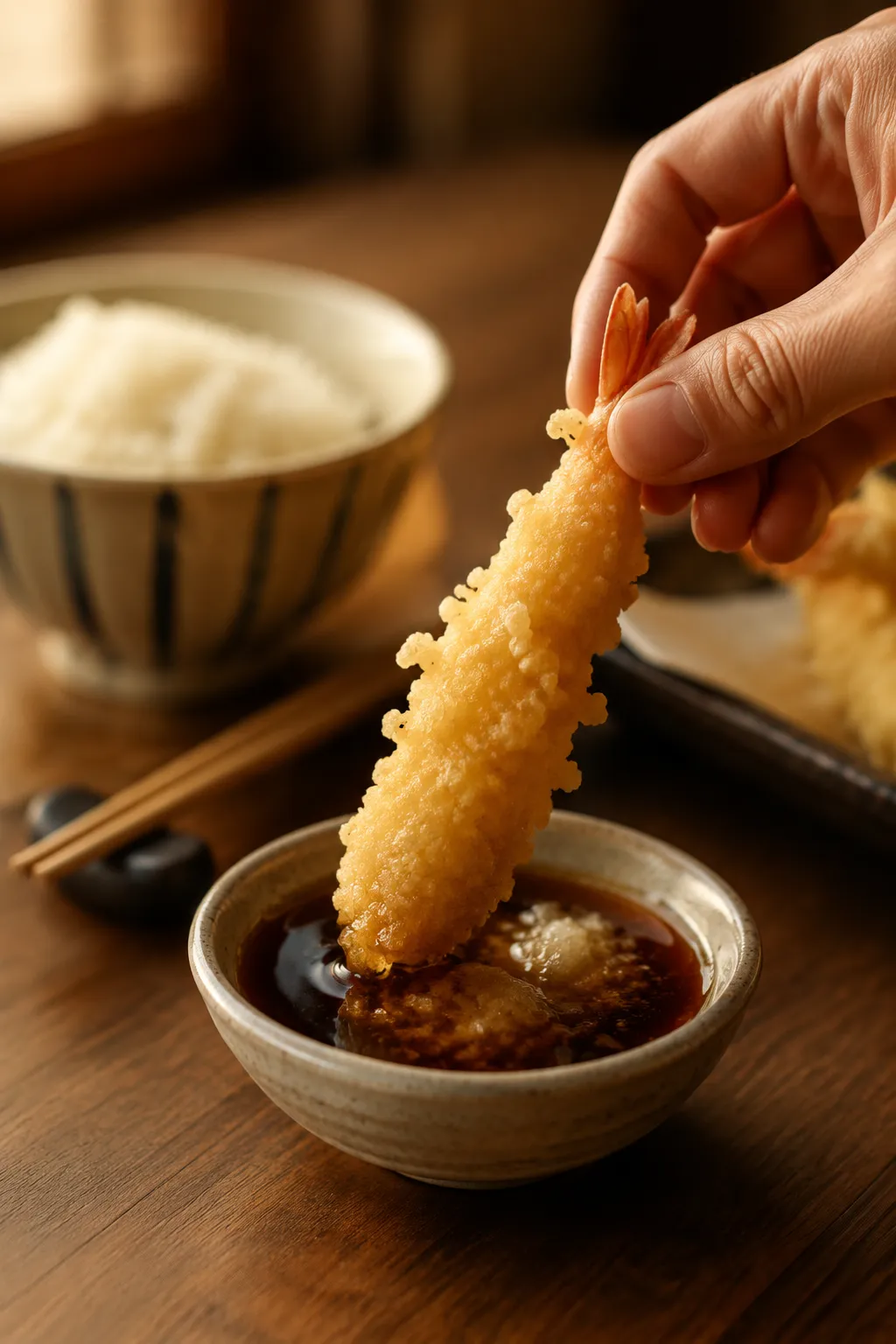
For the tentsuyu dipping sauce, you need dashi (instant works fine), soy sauce, mirin, and freshly grated daikon. Tentsuyu is the warm, savory-sweet broth that turns each piece of shrimp into a two-bite experience. If you'd rather skip the daikon, a squeeze of fresh lemon and a sprinkle of flaky salt is also classic. Vegetable oil is the standard fryer choice — it's neutral, has a high smoke point, and won't compete with the delicate flavor of the shrimp. Canola or refined peanut oil work just as well.
Once your mise en place is sorted, the actual frying goes fast. The most important rule is to do everything in order: shrimp first, sauce next, batter absolutely last, oil already hot and waiting. Tempura is a hot-and-fast technique, and a batter that sits around even five minutes loses its magic.
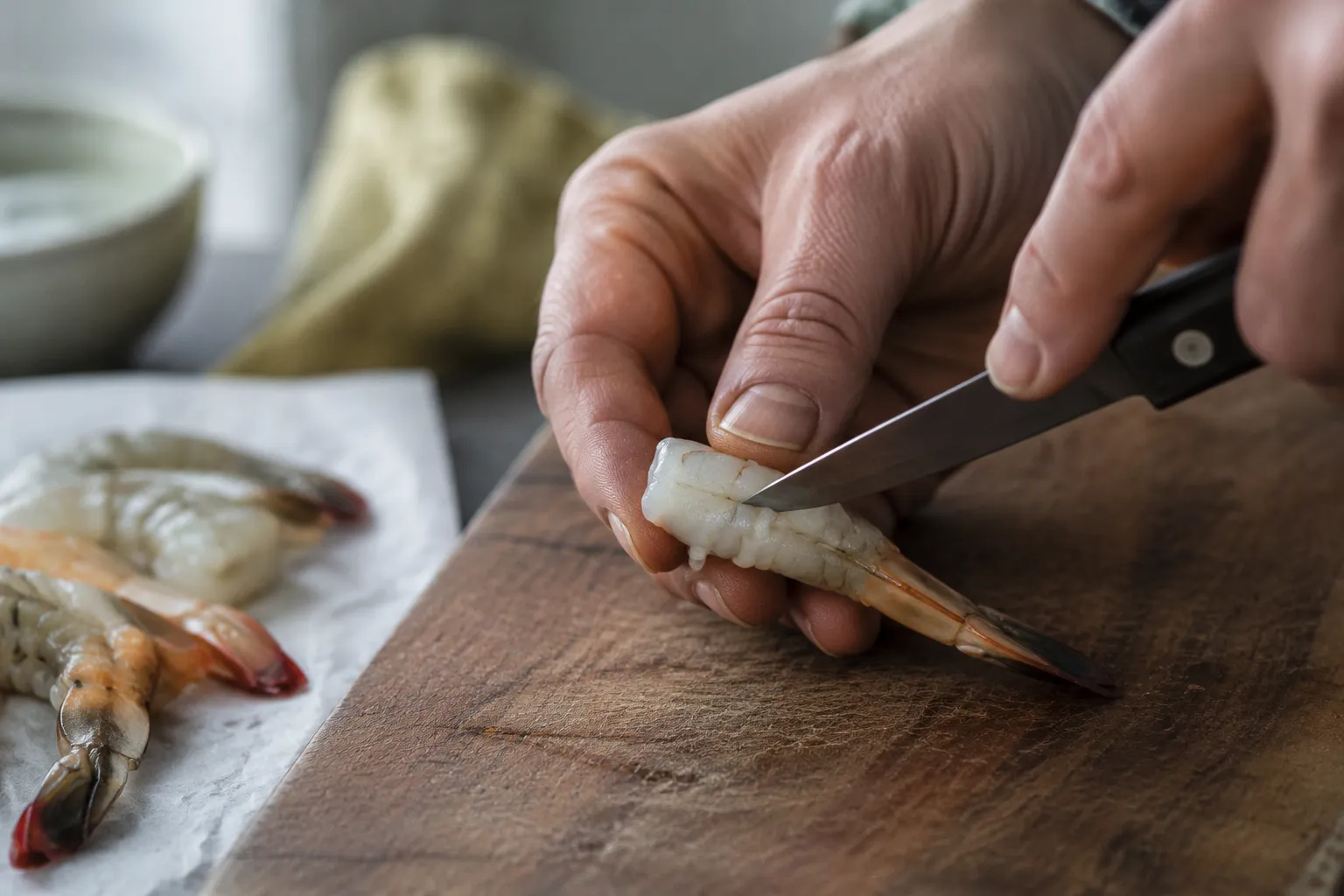
Start by prepping the deveined shrimp so they fry up straight rather than curling into a tight C. Lay each shrimp belly-up on a cutting board and make three or four shallow cuts crosswise along the underside, just deep enough to nick the muscle fibers. Then gently press down on the shrimp with the heel of your hand until you hear a soft snap and the shrimp lies flat. This single step is what separates restaurant-style results from the curled-up, awkward kind. Pat the shrimp completely dry — moisture is the enemy of crisp coating.
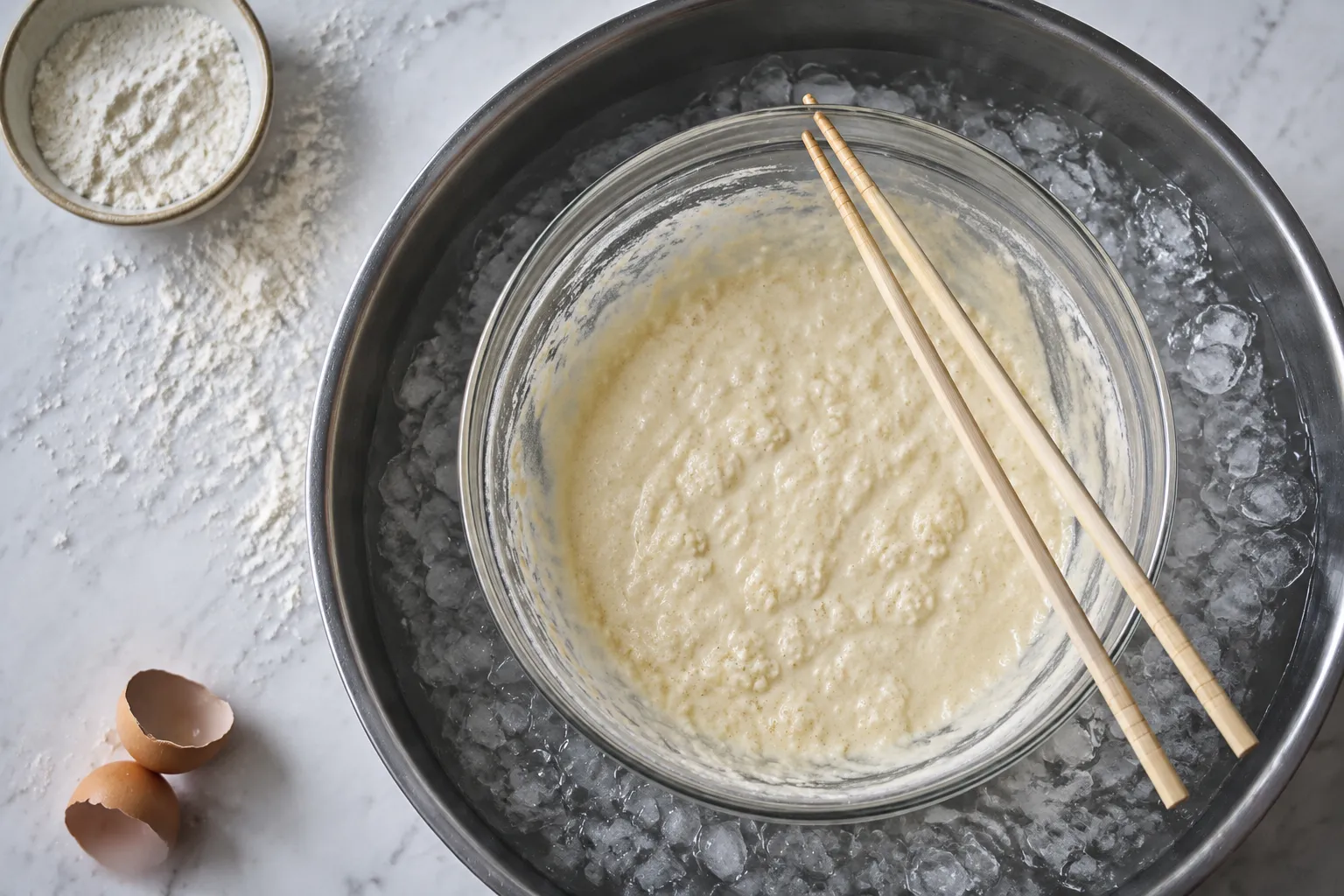
Next, mix the batter at the absolute last minute. Crack a cold egg into a bowl of ice-cold sparkling water and whisk briefly to combine, then add the flour and baking soda all at once. Stir with chopsticks (or the handle of a wooden spoon) just until the dry pockets disappear — the batter should look lumpy, streaky, and a little undermixed. That is exactly what you want. Overmixing develops gluten and the coating turns chewy instead of crisp. To keep it cold while you fry, set the bowl inside a larger bowl of ice.
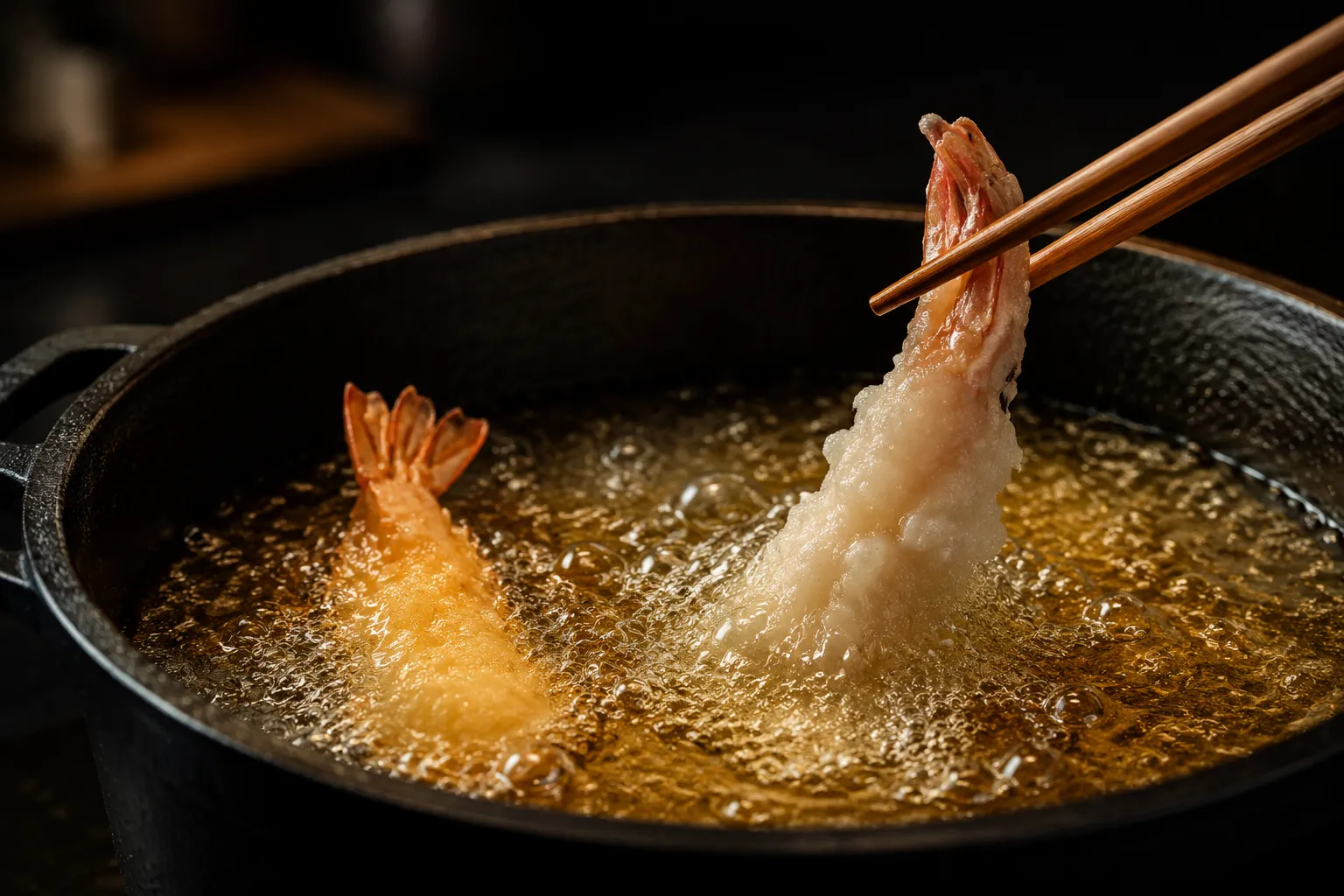
Heat about three inches of vegetable oil in a heavy pot or Dutch oven to 350°F. Dredge each shrimp lightly in plain flour, shake off the excess, then dip it into the cold batter, holding it by the tail. Lower it gently into the oil and let it fry for two to three minutes, flipping once, until the coating is pale gold and crackly. Don't crowd the pot — three or four shrimp at a time keeps the oil temperature stable and prevents pieces from sticking to each other.
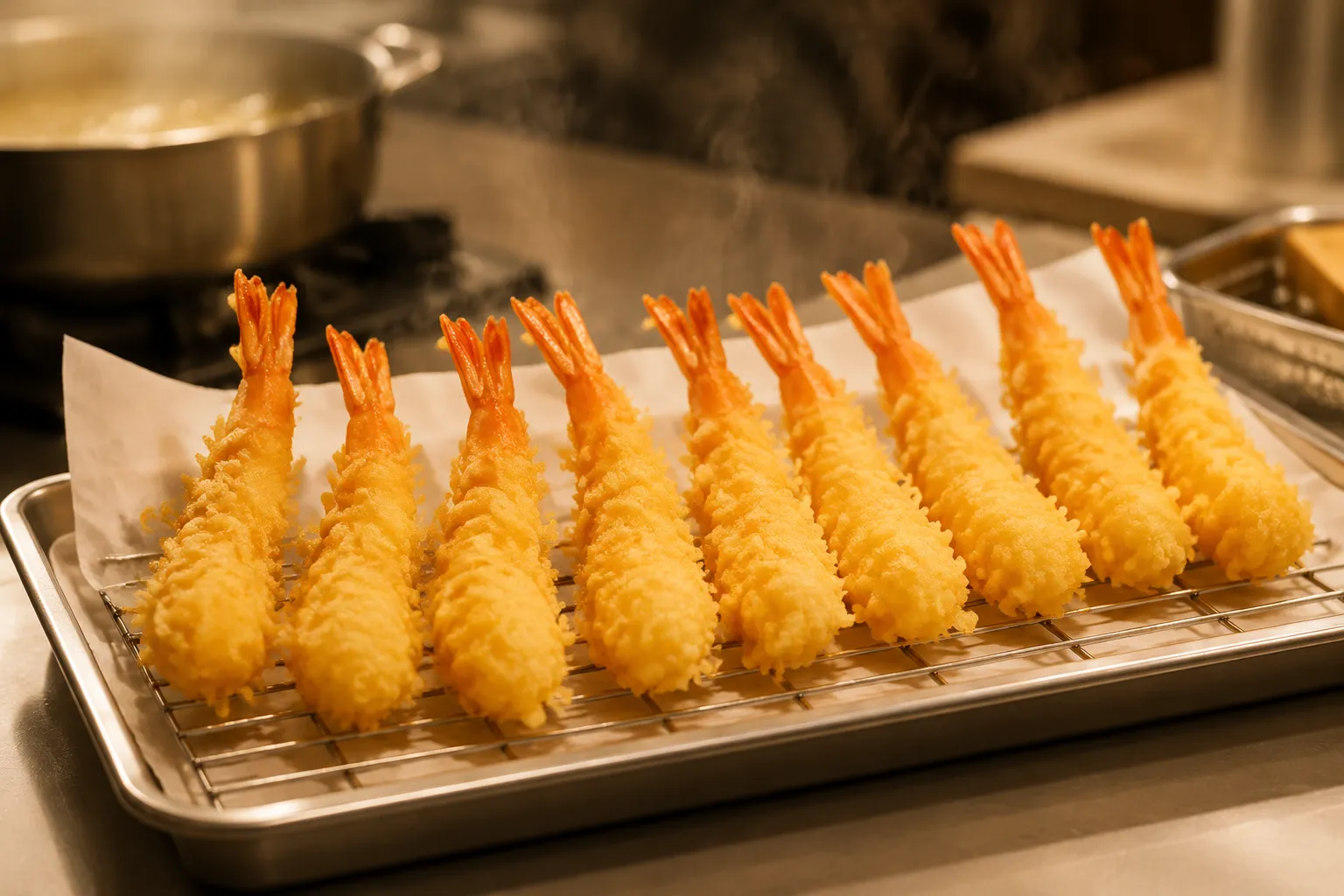
Lift the finished shrimp out with a spider or slotted spoon and let them drain on a wire rack rather than paper towels — paper traps steam and softens the bottoms within minutes. Season with a tiny pinch of fine salt while they're still hot. Repeat with the rest of the shrimp, skimming any loose batter bits between batches so the oil stays clean and the next round comes out just as golden.
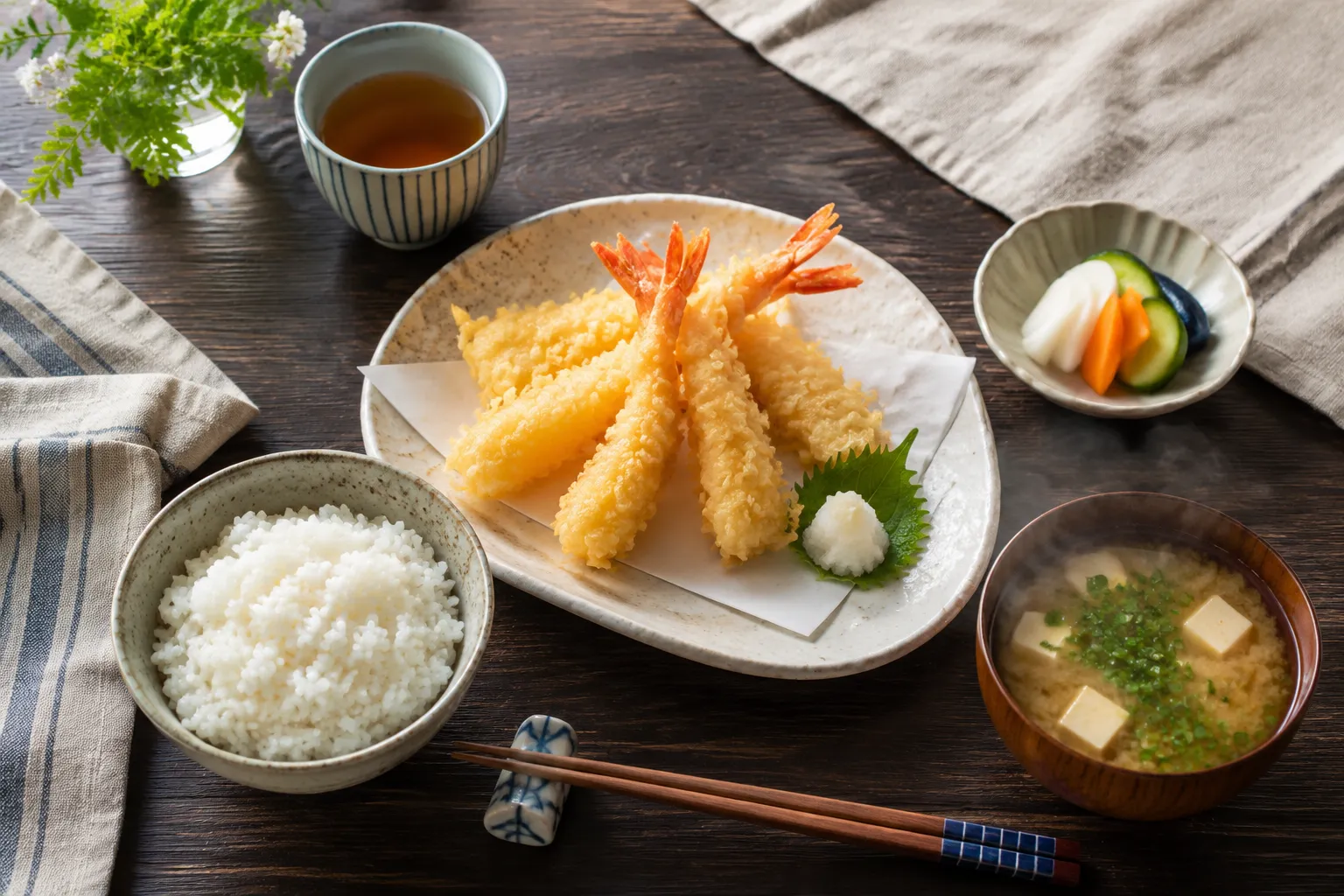
Tempura is rich enough that it begs for clean, slightly sharp companions. The classic move is a small bowl of warm tentsuyu dipping sauce with a heap of grated daikon stirred in — the daikon lightens everything and the salty-sweet broth balances the rich, fried coating. A wedge of lemon and a small dish of flaky salt on the side gives anyone at the table options.
A bowl of plain steamed short-grain rice is non-negotiable in my house, but if you want something a little more involved, fluffy Japanese fried rice with peas and scallions is a great pairing — the toasty rice plays beautifully off the airy coating. For a full restaurant experience, add a simple miso soup recipe with cubed tofu and wakame to the table; the warm, savory broth between bites resets your palate and makes the meal feel complete. Quick-pickled cucumbers (sunomono) or shredded cabbage with a sesame dressing round things out without much extra work.
If you're feeding a crowd or just want to stretch the shrimp further, turn it into tendon (tempura donburi) by piling a few pieces over a bowl of hot rice and drizzling with extra tentsuyu. A thicker tare — basically reduced soy, mirin, and dashi — is more traditional here and clings to the rice the way a glaze should. For tempura udon, slip two or three shrimp into a bowl of hot dashi broth with thick udon noodles right before serving so the coating still has some snap when it hits the table.
Once you've made shrimp tempura at home a couple of times, the rhythm clicks: cold batter, hot oil, dry shrimp, no overmixing. After that you can start playing with vegetables — sweet potato rounds, green beans, mushrooms, even a single shiso leaf — using the same batter and the same oil. The first time you set a pile of golden, lacy shrimp on the table for friends and watch the bowl empty in three minutes flat, you'll understand why this is one of those recipes worth keeping in regular rotation. It's a small skill that pays back every single time you use it.
The same batter works for almost any vegetable or seafood, which is what makes tempura such a flexible weeknight technique. Once you've fried the shrimp, keep the oil hot and use what's in the fridge — most vegetables only need 1-2 minutes to cook through.
Tempura is at its absolute best within minutes of leaving the fryer, but leftovers do keep. Cool the shrimp completely, then store in a single layer in an airtight container with paper towels between layers to absorb moisture. They'll hold in the fridge for up to 2 days. The tentsuyu sauce keeps separately in a sealed jar for up to 5 days and actually tastes better on day two as the flavors settle.
To re-crisp leftovers, skip the microwave — it turns the coating gummy. Instead, arrange the shrimp on a wire rack set over a baking sheet and reheat in a 400°F oven for 4-5 minutes, or pop them into an air fryer at 380°F for 3-4 minutes until the crust crackles back to life. They won't be quite as ethereal as fresh, but they'll have a respectable crunch. Freezing isn't recommended; the batter loses its texture entirely on thaw.