Sourdough English Muffins: Easy Skillet Recipe
Ingredients
Scale
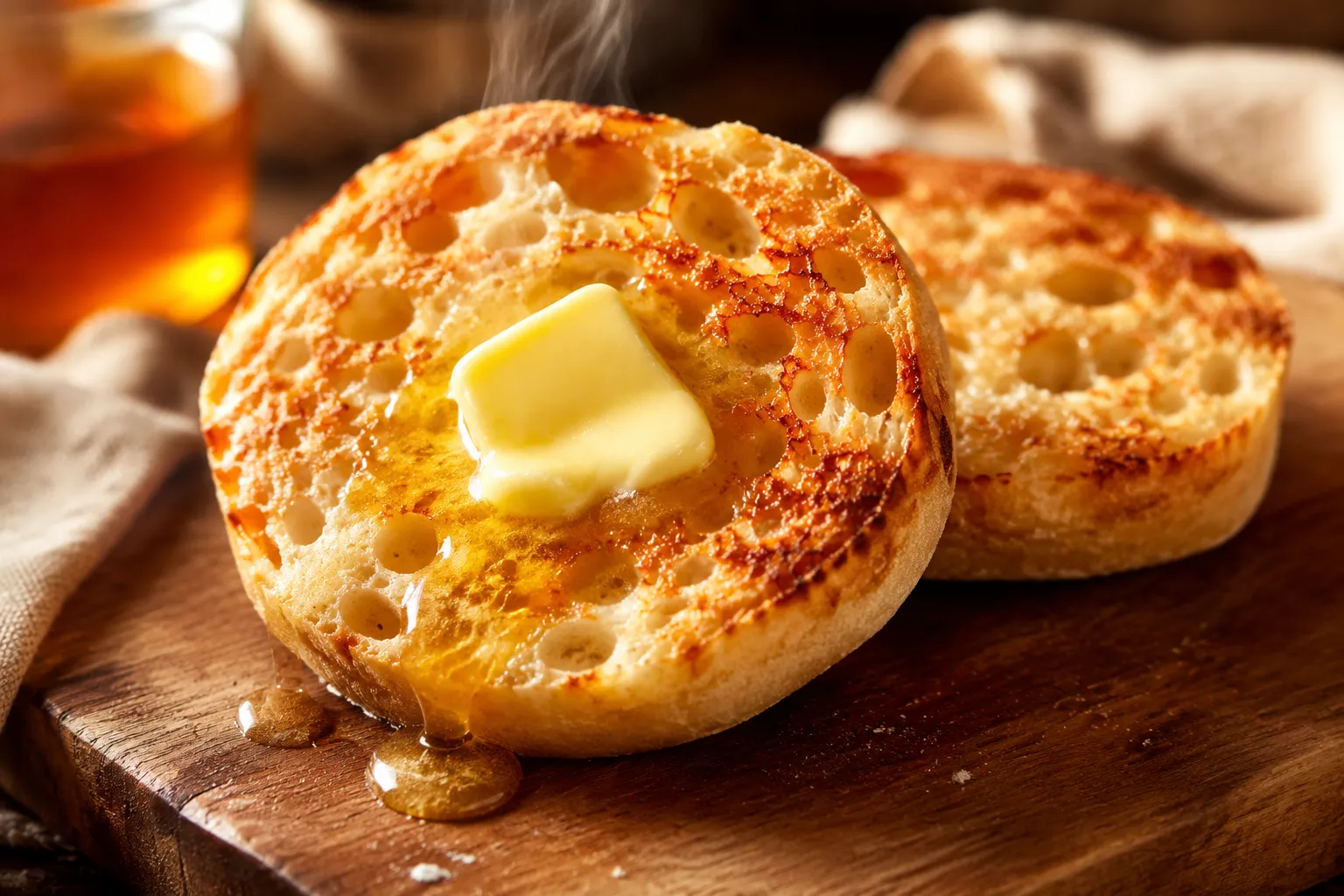
These sourdough english muffins are skillet-cooked to golden perfection with a chewy crumb and the iconic nooks and crannies that hold every drop of butter.
These sourdough english muffins are everything I want in a weekend bread project: a slow, low-effort dough that lives on the counter while I sleep, then cooks up in twenty minutes on a hot skillet the next morning. No oven, no stand mixer, no fussy shaping. Just a soft, chewy crumb riddled with the kind of deep nooks and crannies that hold a puddle of butter hostage.
If you've been collecting sourdough discard recipes and you're ready to graduate to something with a real bakery vibe, these muffins are the move. They lean on an active sourdough starter for lift and that gentle tang, but the recipe is forgiving enough for anyone who's gotten the hang of feeding their jar. The dough comes together in about ten minutes, ferments overnight, and finishes on a hot cast iron skillet with a pretty cornmeal crust.
What sets these apart from most homemade english muffins recipes you'll find online is the slow build of flavor. We're not relying on commercial yeast or a one-and-done rise. The long bulk fermentation does the heavy lifting, developing a tender crumb and a complex, faintly sour flavor that store-bought versions simply can't touch. Once you've made them, the freezer-aisle cardboard rounds are dead to you.
Real english muffins are not baked, they're griddled. That's why the crust stays matte and the inside turns custardy and chewy rather than dry. The skillet method gives you that signature golden crust on top and bottom without ever turning on the oven, which is a quiet little gift in summer and a small thrill any time of year. You're cooking the dough almost like a thick pancake, watching the sides puff and the cornmeal toast into something that smells faintly like popcorn.
The other thing that makes this version sing is the dough itself. We're using bread flour for structure, a splash of whole milk and butter for tenderness, and just two tablespoons of honey to feed the wild yeast and round out the flavor. It's a hydrated, slightly slack dough on purpose. That extra moisture is exactly what creates the irregular crumb and those signature nooks and crannies once the muffins meet the heat.
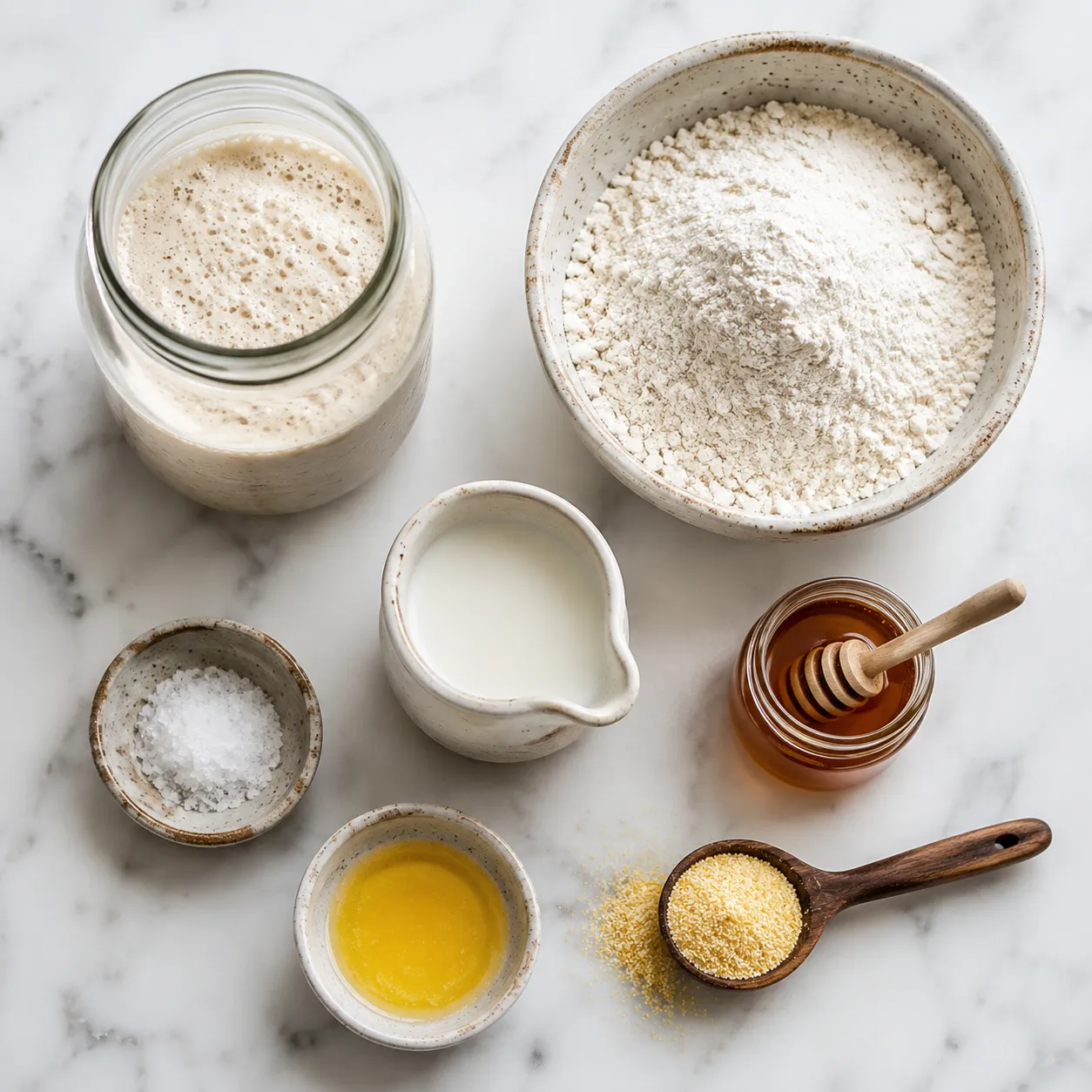
Eight pantry ingredients, that's it. Nothing exotic and no specialty equipment, but a couple of small choices will make or break the final muffin.
Active sourdough starter is the engine of this recipe. You want it bubbly, doubled, and floating in water before you mix the dough. If you're new to maintaining your jar, take a peek at how to feed sourdough starter the night before you plan to bake so it peaks on schedule. Sourdough discard works in a pinch, but you'll want to add a quarter teaspoon of instant yeast as backup since unfed starter doesn't have the same lift.
Bread flour is non-negotiable for me here. The higher protein content gives the dough enough strength to trap air during bulk fermentation, which translates to taller muffins and a chewier bite. All-purpose works in a real flour emergency, but the muffins come out softer and less open. A 50/50 blend is a reasonable compromise.
Whole milk, honey, and butter are the trio that makes these feel rich rather than austere. The milk softens the crumb, the honey gives the wild yeast something to munch on and adds a faint floral sweetness, and the melted butter lubricates the gluten just enough to keep the muffins tender. Skim milk technically works but the texture suffers.
Cornmeal is the finishing touch. A generous dusting on the proofing parchment and the tops of the dough rounds keeps everything from sticking and gives you that classic gritty, golden crust on the skillet. Fine or medium grind both work beautifully.
The full step-by-step measurements live in the recipe card below, but here's the rhythm so you can plan your bake around real life.
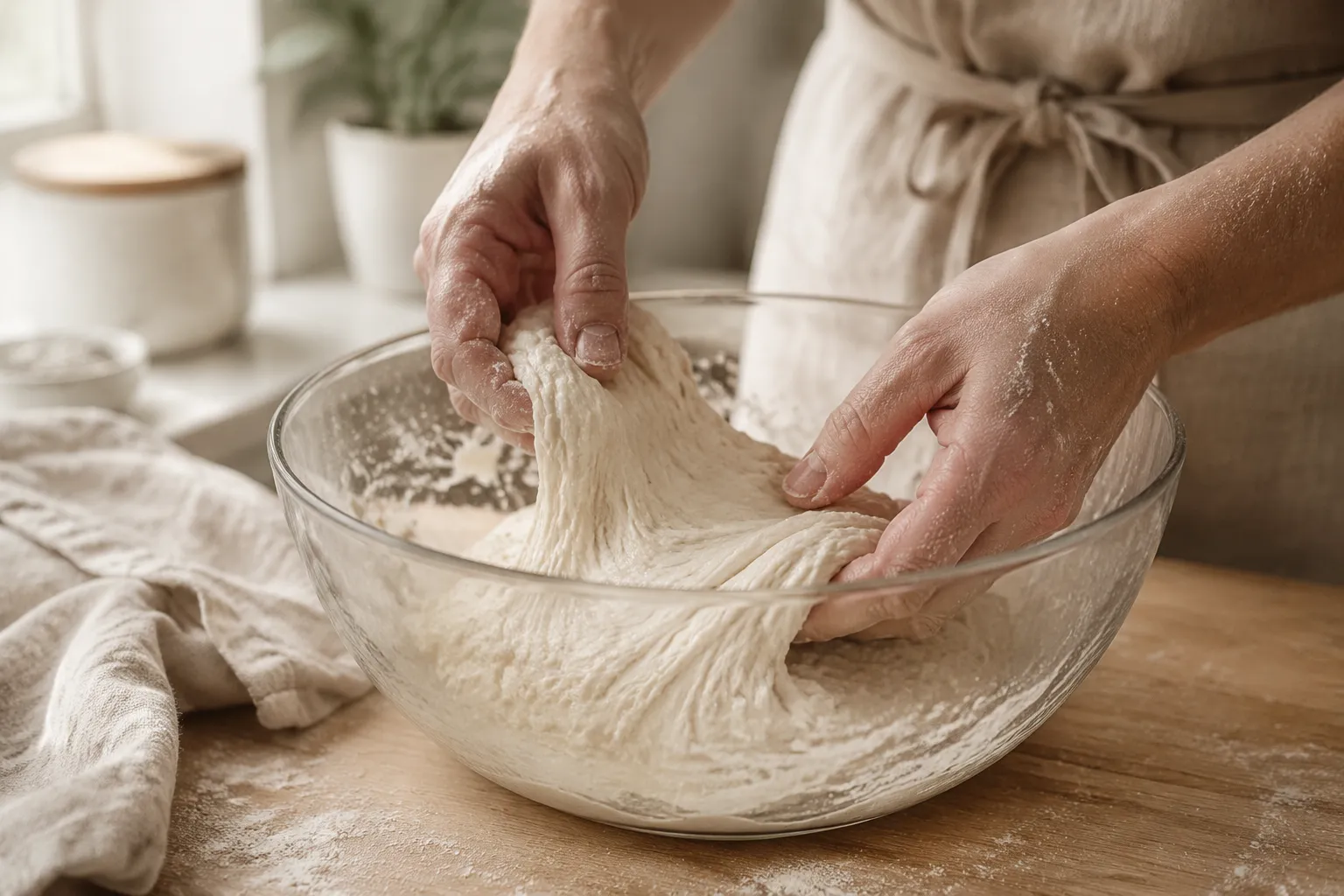
In a large bowl, whisk together your starter, warmed milk, honey, and melted butter until smooth. Add the bread flour and salt and mix with a sturdy spatula or your hands until you have a shaggy, sticky dough. Cover and rest for thirty minutes, then do a single round of stretch and folds right in the bowl. Cover again and let the dough bulk ferment at room temperature for eight to twelve hours, or until it's puffy, jiggly, and roughly doubled. This is the heart of any overnight sourdough dough recipe, the slow rise where flavor actually develops.
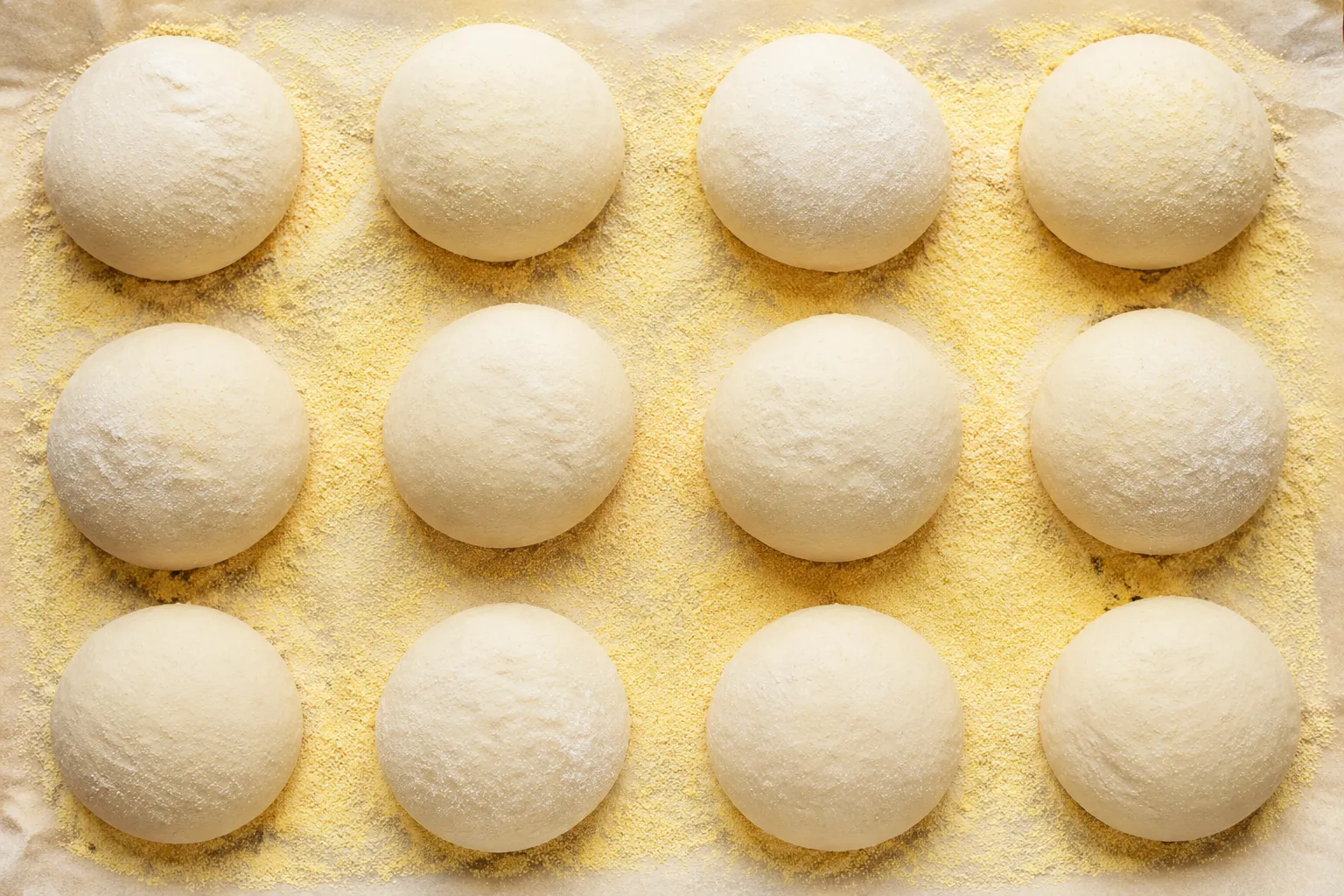
Turn the risen dough out onto a lightly floured surface and divide it into ten roughly equal pieces, around 90 grams each if you want to be precise. Shape each piece into a tight ball by tucking the edges underneath, then flatten gently into a thick disc about three-quarters of an inch tall. Place the rounds on a parchment sheet that's been generously dusted with cornmeal, sprinkle more cornmeal on top, and cover loosely with a clean towel. Let them proof at room temperature for one to two hours, until they look pillowy and a gentle poke springs back slowly.
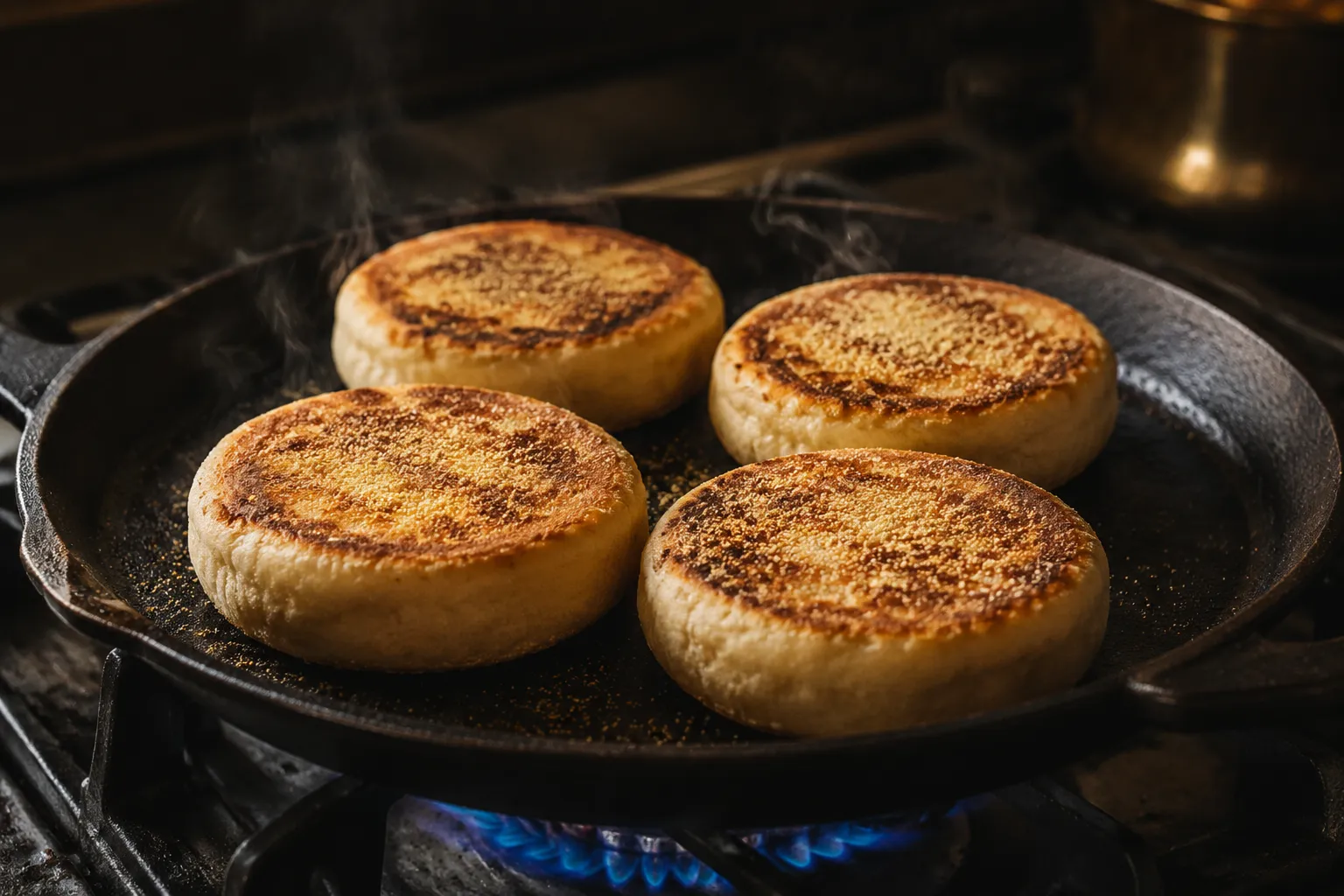
Heat a cast iron skillet over medium-low for a few minutes until it's evenly hot but not smoking. The biggest mistake home bakers make here is cranking the heat. You want the muffins to cook through to the center before the outside burns, which means patience. Cook in batches of four or five at a time, six to eight minutes per side, until deeply golden on the bottom, slightly puffed, and hollow-sounding when you tap them.
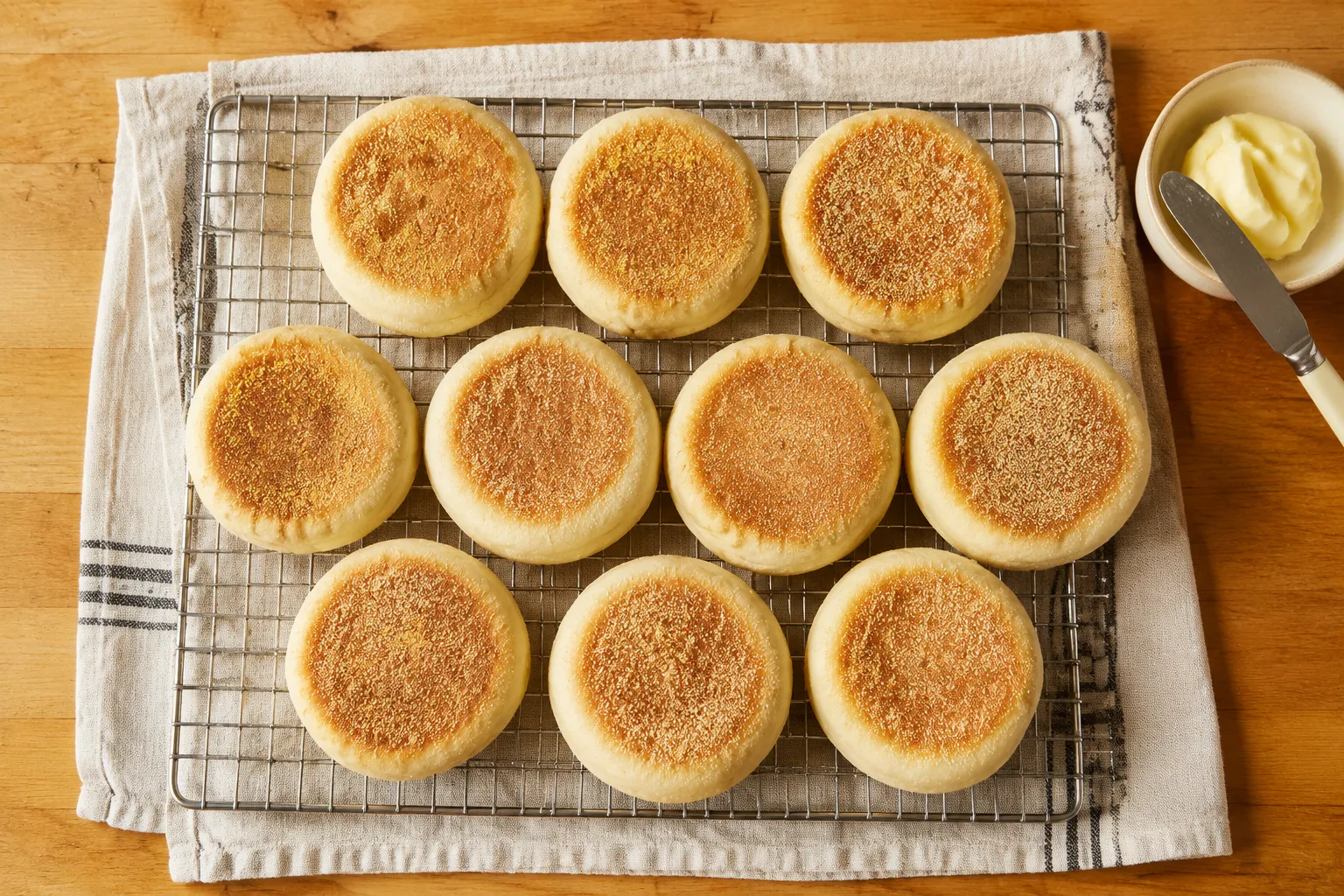
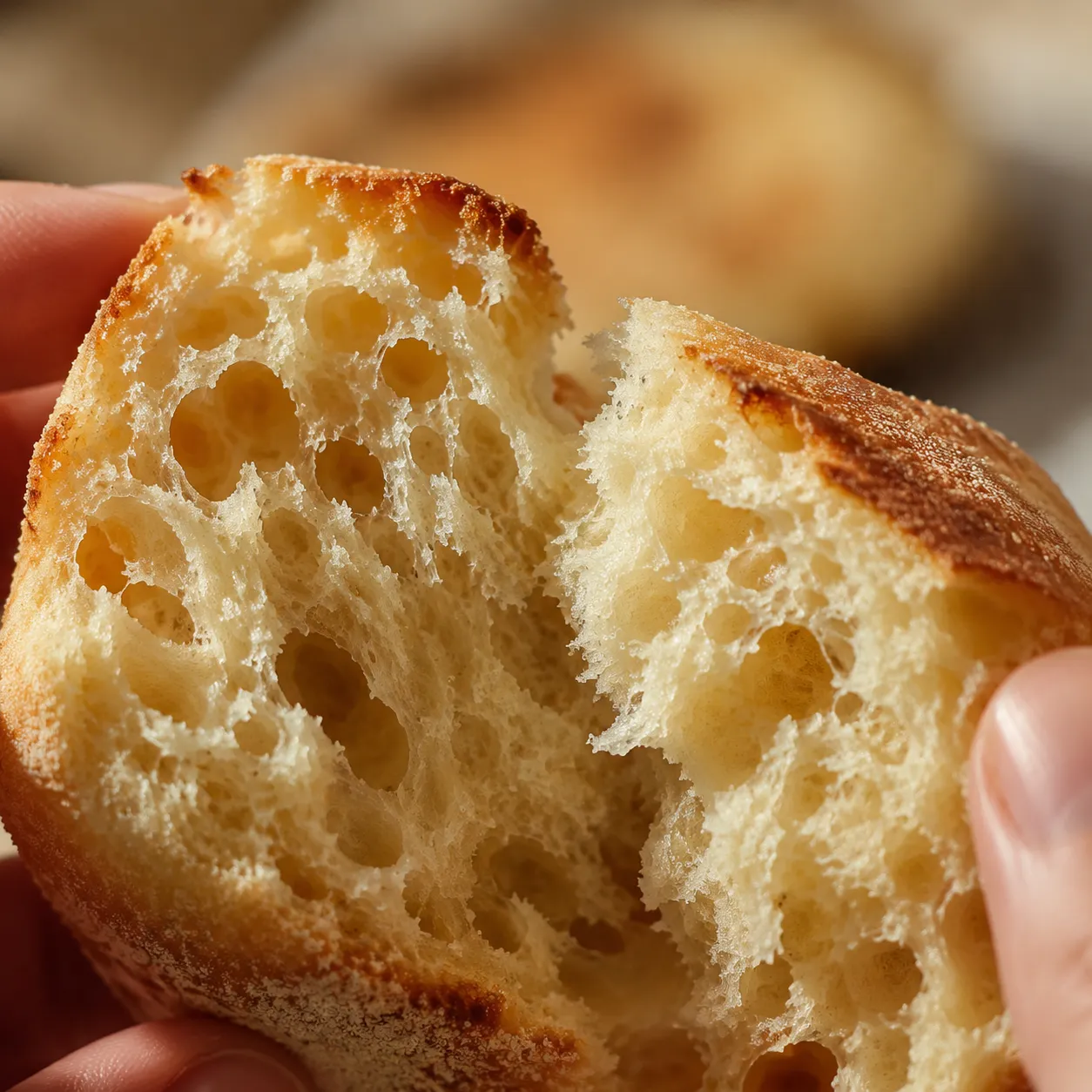
One of the things I love about this dough is how flexibly it slots into a weekend. You can start it the night before for breakfast, or first thing in the morning for an afternoon bake.
For a same-day bake, mix the dough around 8 a.m. and let it bulk ferment on the counter until early afternoon, roughly six to eight hours depending on your kitchen temperature. Shape, proof for an hour, and cook by dinnertime. The flavor will be milder, more bready than tangy, and still excellent.
For deeper, more pronounced sourdough flavor, mix the dough at night and let it bulk ferment on the counter for two hours, then transfer the bowl to the fridge for ten to twelve hours. Pull it out in the morning, let it warm up for thirty minutes, then shape and proof. The cold ferment slows the yeast and lets the lactic acid bacteria do their work, which is where that pleasant tang comes from.
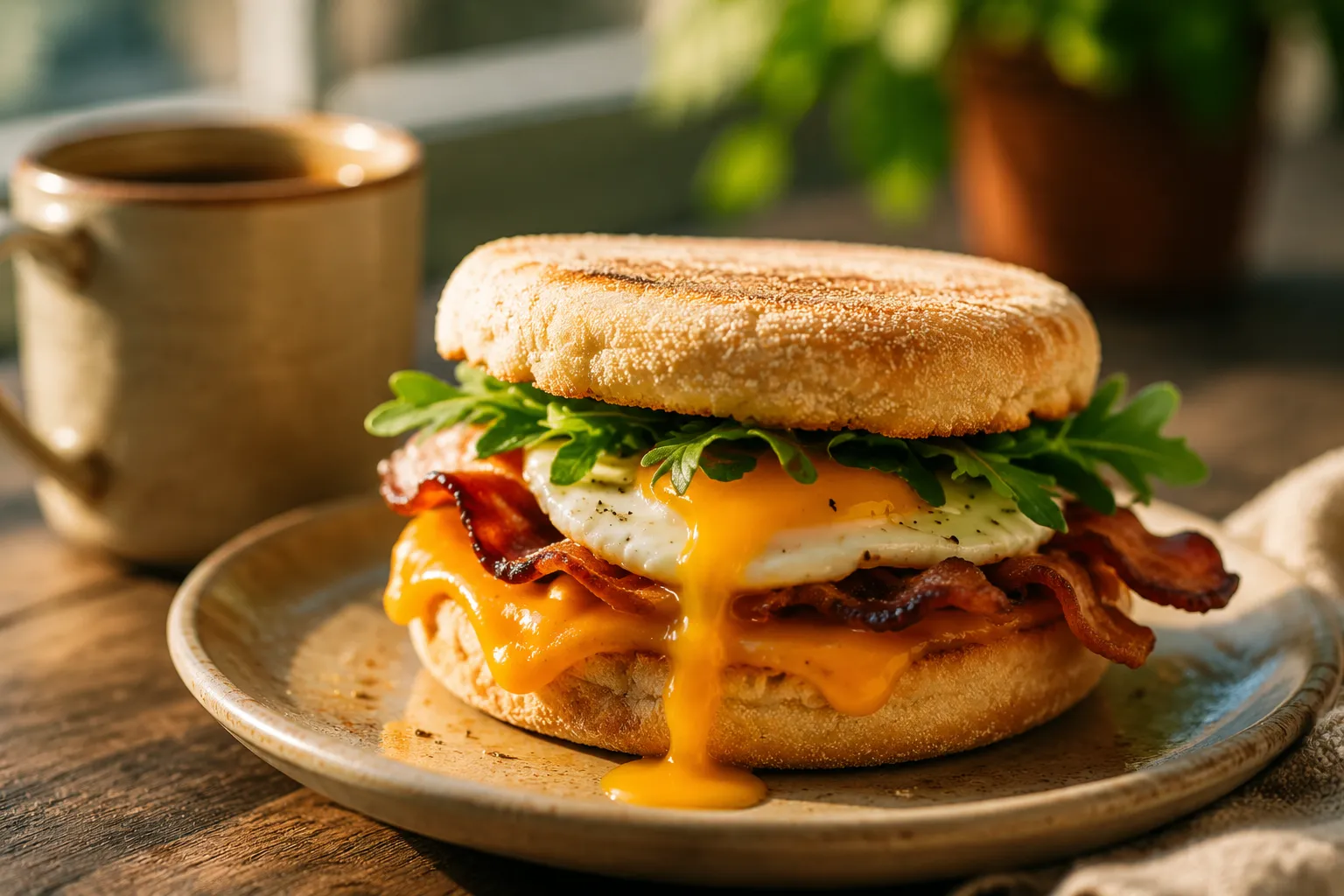
The classic move is also the best one: a hot muffin, a fork split down the equator, salted butter that melts straight into the crumb, and a smear of jam. Strawberry, raspberry, fig, marmalade, all great. If you're hunting for new sourdough breakfast ideas to break out of the cereal-and-toast loop, this is your foundation.
Beyond breakfast jam toast, these are unbeatable as the base for eggs Benedict. The chewy structure stands up to hollandaise without going soggy. They make a serious breakfast sandwich too, layered with a runny fried egg, sharp cheddar, and crispy bacon or sausage. Toast them dark, butter them while warm, and you're set for the rest of the morning.
For dinner, I'll sometimes split a muffin and use it as the bun for a sloppy joe or a smashed turkey burger. They make excellent mini pizza bases for picky kids. Sweet move: top a toasted half with mascarpone, sliced peaches, and a drizzle of honey for a five-minute summer dessert.
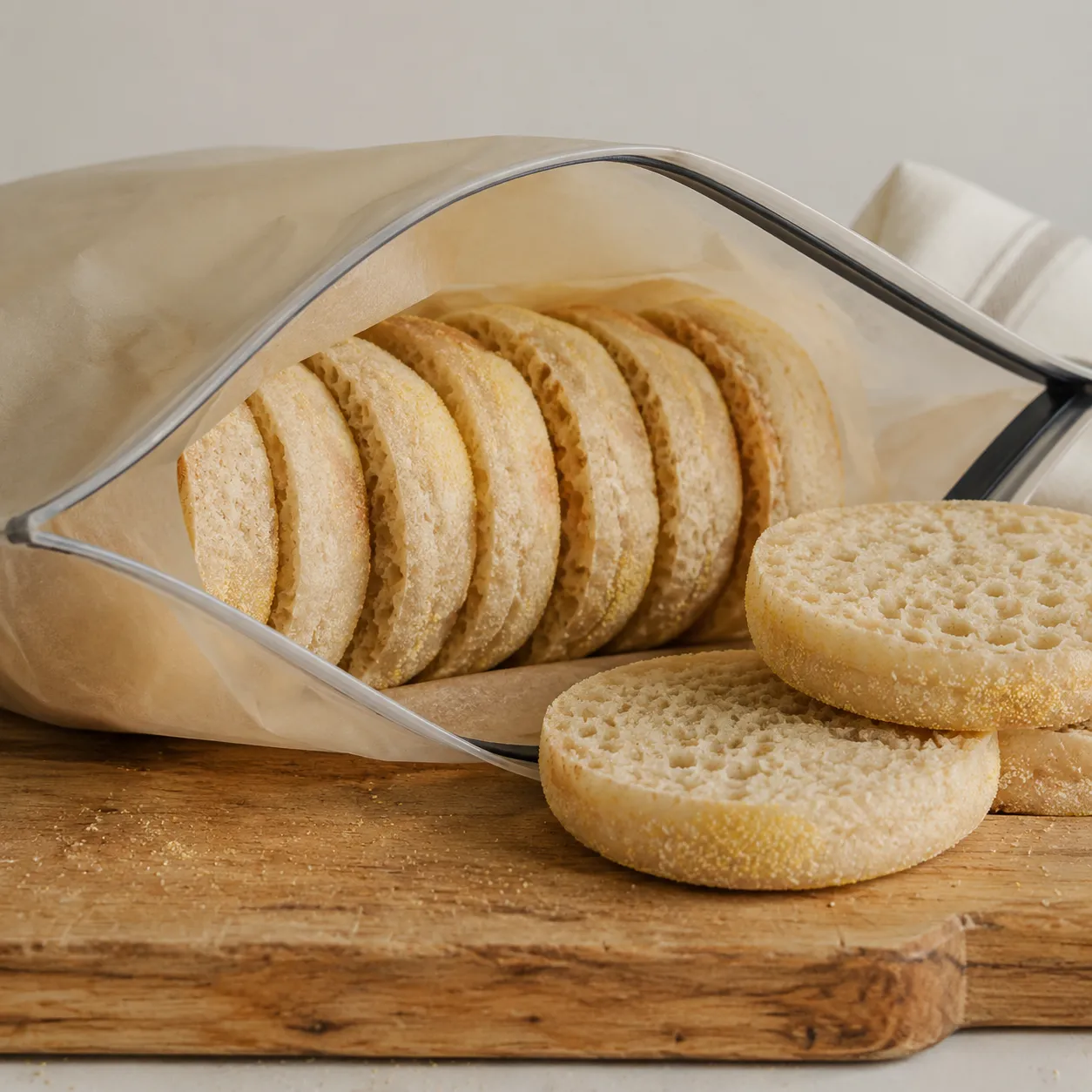
Once you've made a batch of these sourdough english muffins, you'll find yourself doubling the recipe and stashing half in the freezer for weekday breakfasts. They thaw beautifully in the toaster and, if anything, taste even better with a few days of cold storage to mellow the tang. Welcome to the small but obsessive club of people who don't buy english muffins anymore.
This dough is a workhorse and welcomes plenty of riffs once you've nailed the base recipe. Try one of these spins on your next batch.
Cooled muffins keep at room temperature for up to 3 days in an airtight bag or beeswax-wrapped bundle. For longer storage, refrigerate them in a zip-top bag for up to 1 week — the cold dries them out slightly, but a quick toast revives the texture beautifully.
For freezing, fork-split each muffin first, then layer the halves in a parchment-lined freezer bag. They'll keep for up to 3 months. To reheat, drop the frozen halves directly into the toaster on a medium-dark setting, no thawing required. Splitting before freezing is the move that lets you go from freezer to butter in two minutes flat on a Tuesday morning.