White Cake Recipe: Soft, Fluffy & Bakery-Style from Scratch
Ingredients
Scale
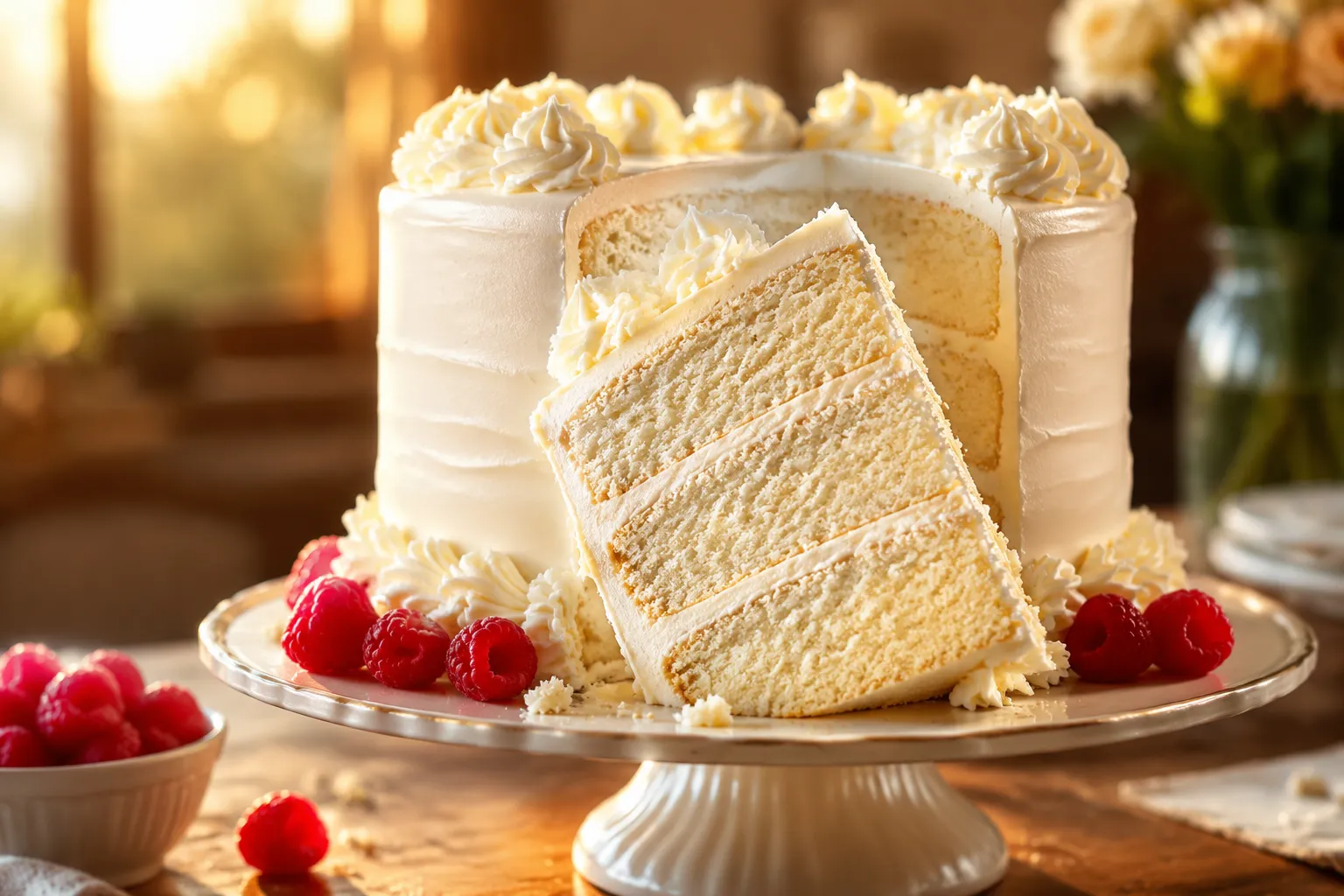
A bakery-style white cake recipe with a tender, snow-white crumb, pure vanilla flavor, and the kind of fluffy texture that holds up beautifully under buttercream.
This white cake recipe is the one I reach for whenever a celebration calls for something tender, snow-white, and a little bit dressed up. The crumb is fine and fluffy in the way only a from-scratch cake can be, and the flavor leans into pure vanilla without any of the boxed-mix aftertaste. Whether you are stacking it three layers tall for a birthday or splitting the batter into cupcake liners for a baby shower, this is a workhorse formula that holds its shape under buttercream and stays moist on the counter for days.
What sets this version apart is the hybrid butter-and-oil method paired with whipped egg whites and cake flour. Butter brings the rich flavor and structure you expect from a classic layer cake, the oil keeps the crumb tender past day one, and the egg whites are what give it that pristine ivory color you cannot get from whole eggs. If you have ever made a yellow cake recipe and wondered why your white cake came out cream-colored, the answer is almost always the yolks. I have baked this cake for weddings, July 4th sheet pans, and more friends' birthdays than I can count, and I have yet to see it fail.
Read the tips before you start, weigh your flour if you can, and you will end up with a fluffy white cake that looks and tastes like it came from a glass case downtown.
There is a quiet debate in baking circles over what actually counts as a true white cake, and the answer comes down to three things: the eggs, the fat, and the flour. A white cake uses only egg whites, which is why the crumb stays so pale, and traditionally leans on shortening or butter rather than yolks for richness. A yellow cake uses whole eggs (yolks included), which is what gives it that golden, custardy color and a more pronounced eggy flavor. Vanilla cake is a looser term that can describe either style, but most modern vanilla cakes are closer to a yellow cake in composition.
The flavor difference matters too. White cakes taste cleaner and more vanilla-forward because there are no yolks competing for the palate, which is why pastry shops use them as the canvas for fruit fillings, almond extract, and lemon curd. Yellow cakes have a built-in buttery depth that pairs beautifully with chocolate frosting, which is why they have always been the classic American birthday cake. If you are trying to decide between them, ask yourself what you are frosting it with: pristine white buttercream and fresh berries call for white, while a thick chocolate ganache calls for yellow.
For texture, this bakery-style white cake lands in the middle: lighter than a pound cake, sturdier than a chiffon, and tender enough to slice cleanly without crumbling under a piping bag. It is the kind of cake that handles travel, holds decorations, and still feels delicate on the fork.
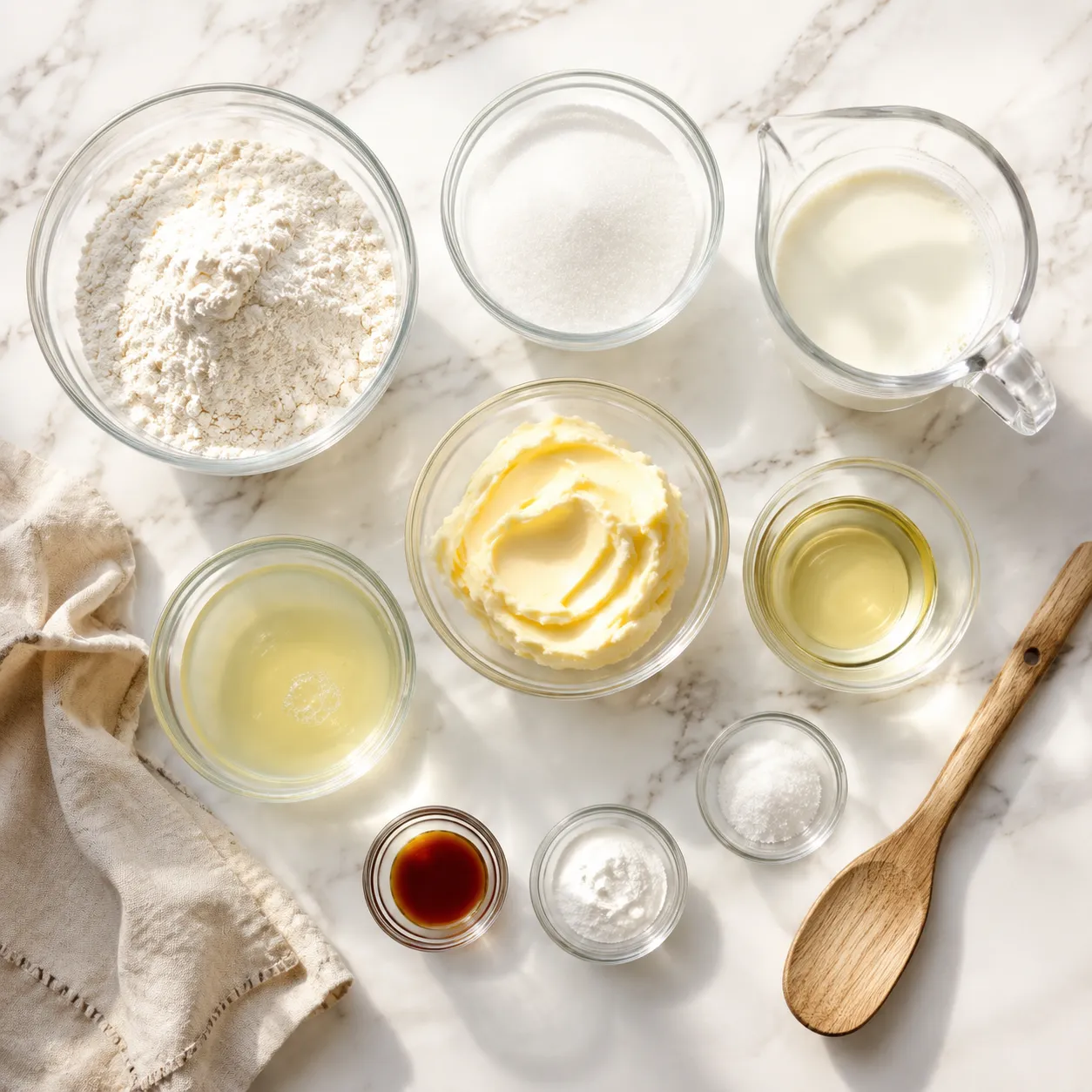
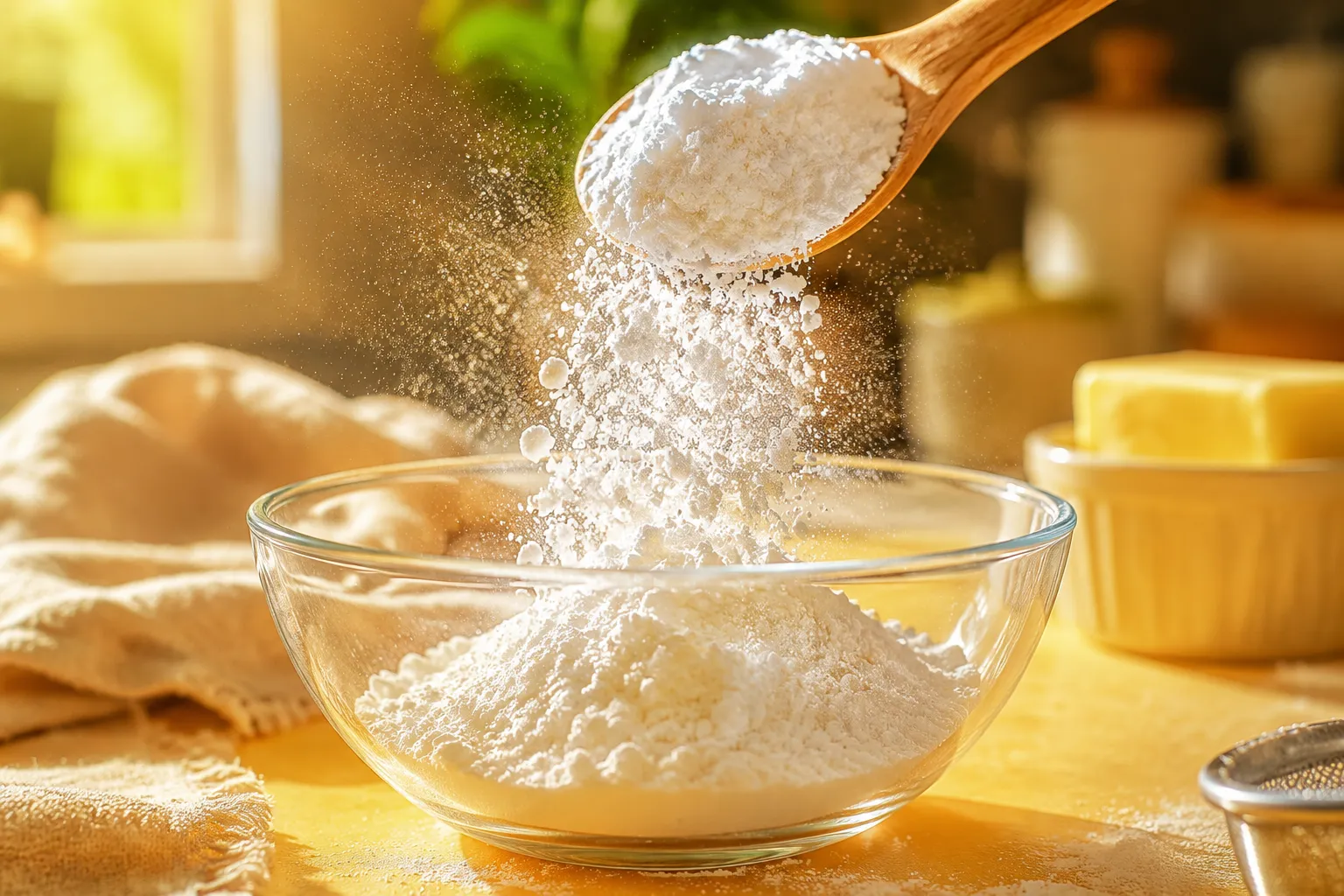
Every ingredient in this white cake recipe earns its place. Cake flour is non-negotiable for that fluffy, fine crumb because it has less protein (around 8%) than all-purpose flour, which means less gluten development and a softer bite. If your grocery store does not carry it, you can mix up homemade cake flour by removing two tablespoons of all-purpose flour from each cup and replacing them with two tablespoons of cornstarch, then sifting the mixture three times to aerate it.
Egg whites only, five large ones, are what give the cake its trademark color. Save the yolks for a batch of pastry cream or hollandaise. Use them at room temperature so they whip into the batter without seizing the butter back into clumps. Buttermilk is the other quiet hero: its acidity tenderizes the gluten and reacts with the baking powder for extra lift, plus it adds a faint tang that keeps the cake from tasting flat.
Pure vanilla extract is worth the splurge here because there is nowhere for imitation flavor to hide. A full tablespoon may sound like a lot, but in a cake this neutral, it tastes balanced rather than overpowering. Round things out with granulated sugar, unsalted butter, a splash of neutral oil, baking powder, and fine sea salt. That is the whole list, no buttermilk powder, no pudding mix, no shortcuts needed.
Once your ingredients are measured and at room temperature, this white cake recipe comes together quickly. The order of operations is what matters most: cream the fats and sugar long enough to aerate them, add the egg whites slowly so the emulsion stays smooth, and alternate the dry ingredients with the buttermilk to keep the batter from curdling.
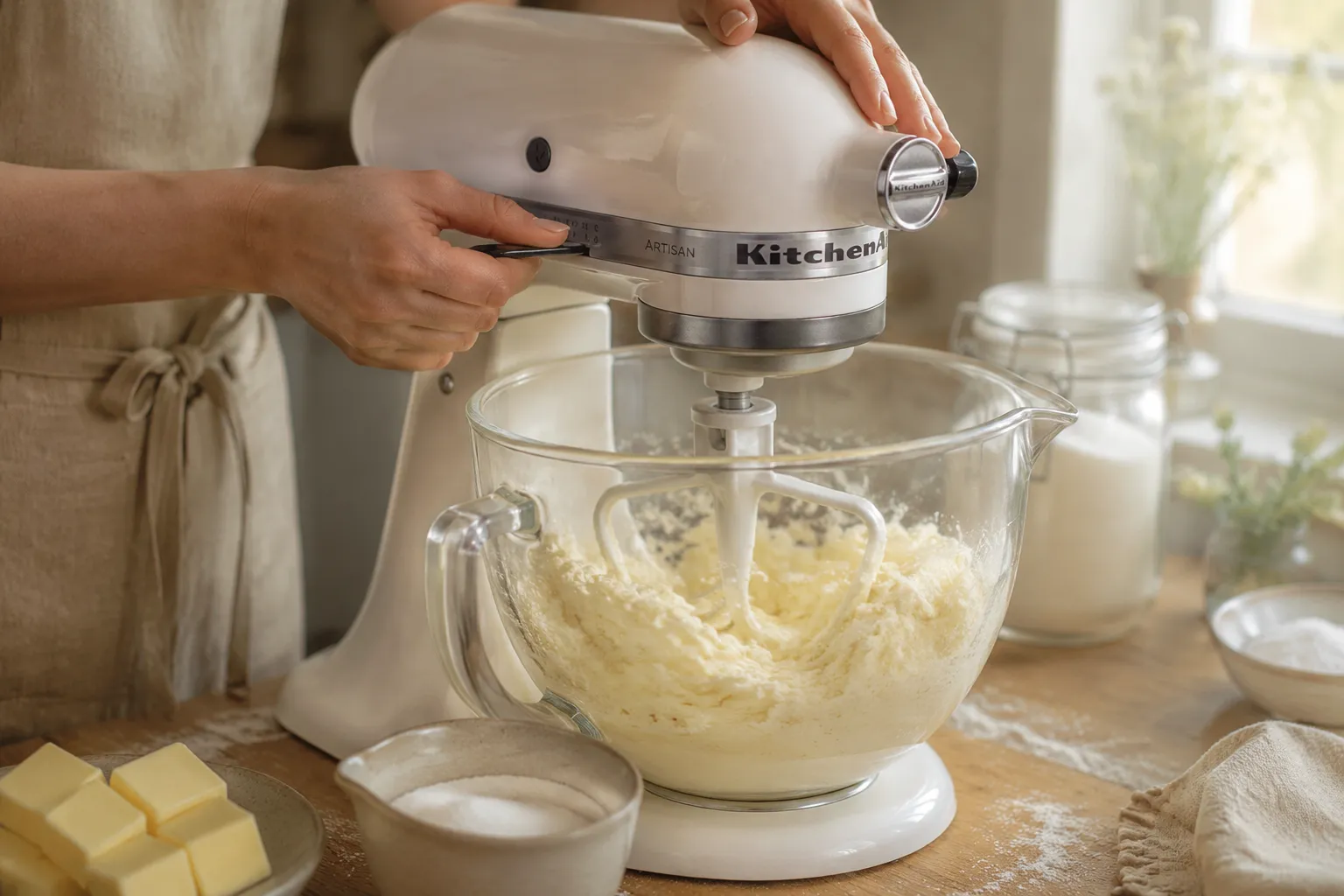
Start by beating the softened butter and oil together until smooth, then add the sugar and let the mixer run for a full three to four minutes on medium-high. This is not the step to rush. You want the mixture noticeably paler and fluffier, almost like whipped frosting, because every air bubble you build now is part of what makes the final cake light. Knowing how to measure flour properly comes into play in the next bowl over: spoon the cake flour into your measuring cup and level it off with a knife, or better, use a kitchen scale at 120 grams per cup.
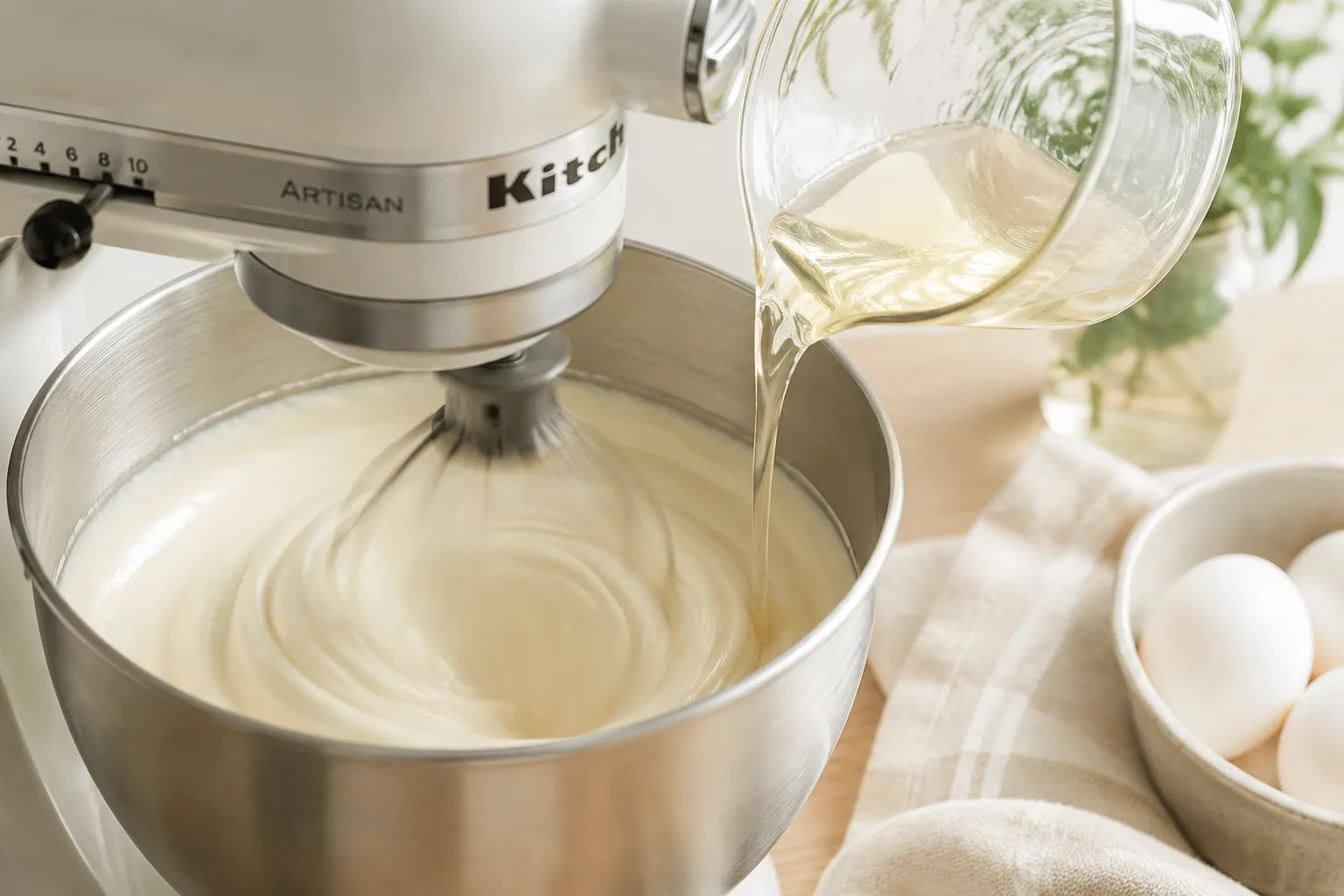
Add the egg whites two at a time, beating well between additions, then pour in the vanilla. The batter may look slightly broken at this stage and that is fine, it will smooth out once the flour goes in. With the mixer on low, add the dry ingredients in three additions, alternating with the buttermilk in two. Begin and end with the dry. Stop the mixer the second the last streak of flour disappears, then finish with a quick fold by hand to catch any stray pockets at the bottom of the bowl.
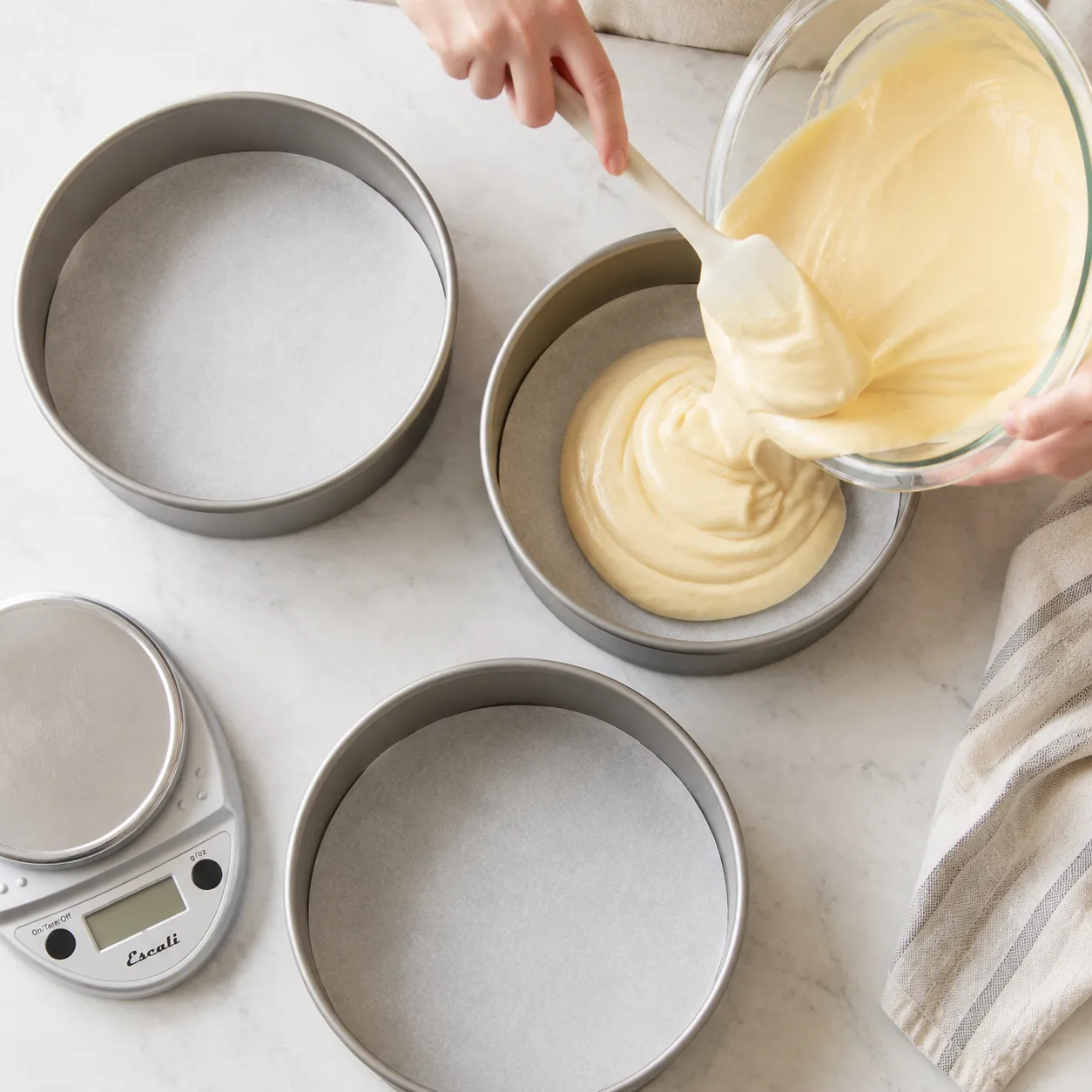
Divide the batter evenly between three parchment-lined 8-inch pans. A kitchen scale helps here too, since uneven layers are the number one reason home cakes look lopsided. Bake at 350°F for 28 to 32 minutes, until the tops spring back when lightly pressed and a toothpick comes out with just a few moist crumbs. Cool in the pans for ten minutes, then turn the layers out onto a wire rack to finish cooling completely before frosting.
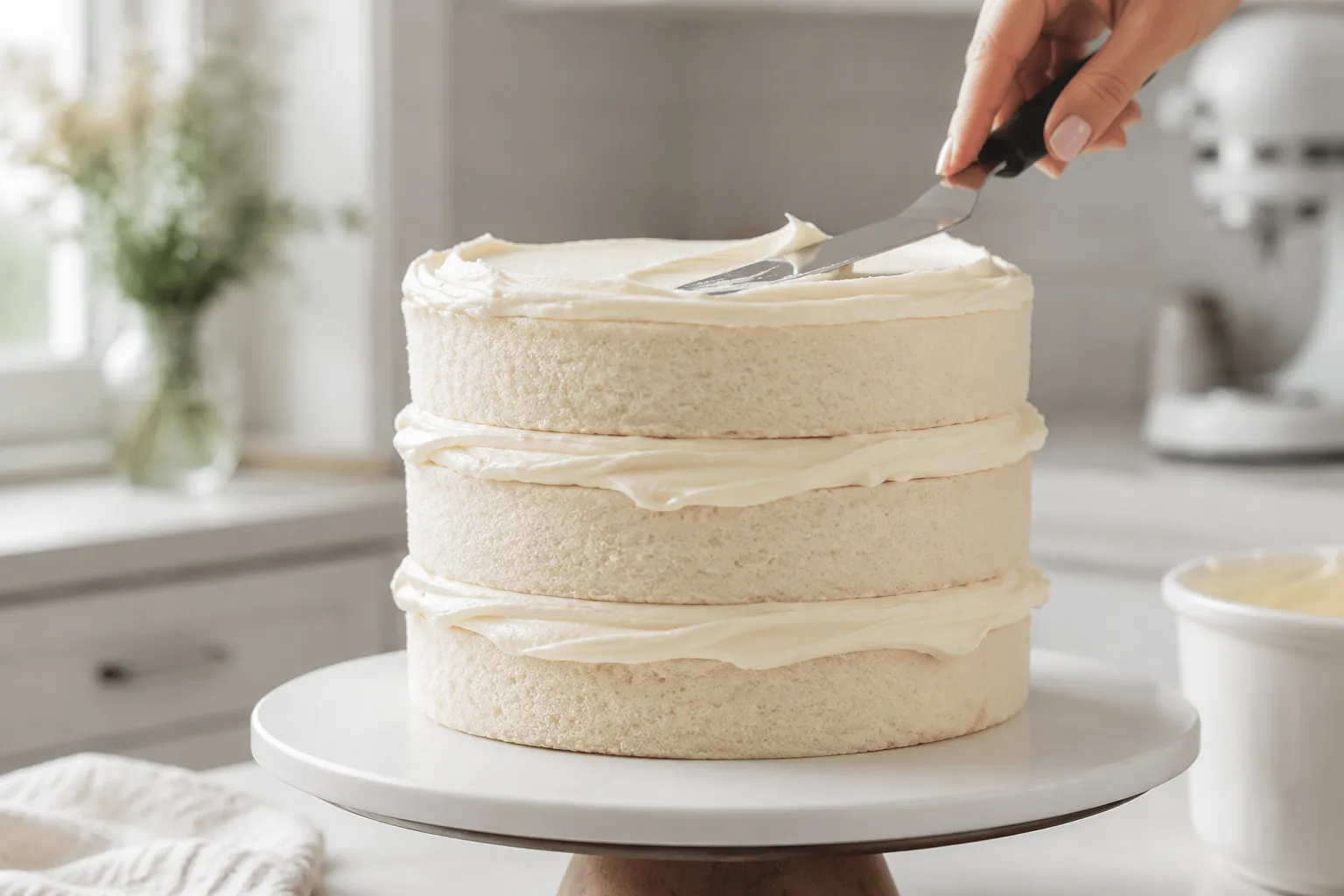
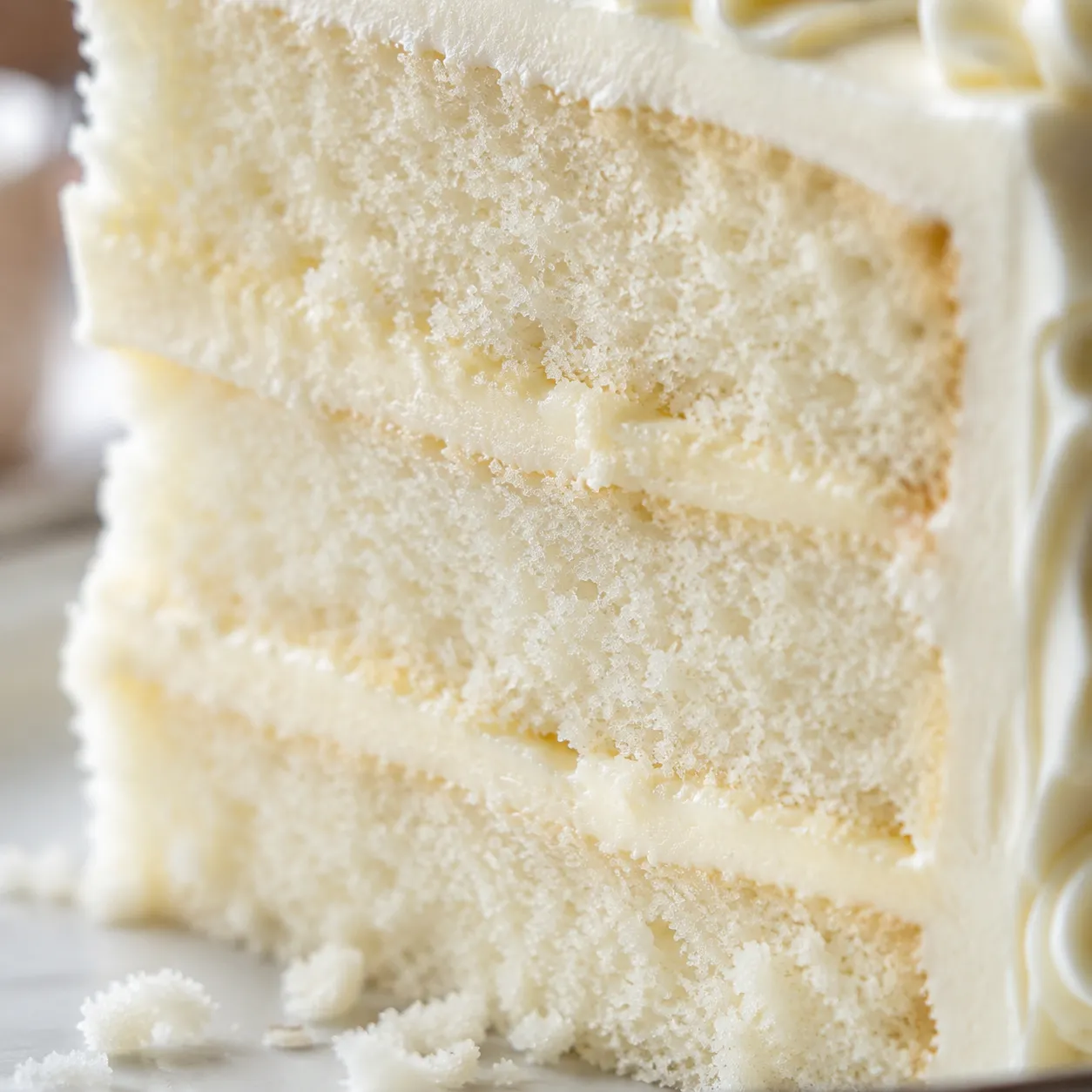
A from-scratch white cake recipe deserves a frosting that lets the crumb shine through. My default is a classic American vanilla buttercream frosting, butter, powdered sugar, a splash of cream, and real vanilla, because it pipes beautifully and stays soft at room temperature. For something less sweet and more silky, swiss meringue buttercream is the move. It uses cooked egg whites whipped with sugar and butter, and the texture is closer to mousse than to traditional frosting. It takes longer to make, but the flavor is more sophisticated and it never feels gritty on the tongue.
For a fresh, summery finish, fold a tablespoon of lemon or orange zest into your buttercream and pile fresh raspberries, strawberries, or blueberries on top of the finished cake. The acidity cuts the sweetness and the color contrast against the snow-white frosting is genuinely stunning. You can also brush each layer with a simple syrup spiked with almond extract for an old-school wedding-cake flavor, or tuck a thin layer of lemon curd or raspberry jam between the tiers for a hidden surprise.
If you want to make this same batter into individual portions, scoop it into lined cupcake tins and you will end up with moist vanilla cupcakes that bake in about 18 to 20 minutes. The same finishing options apply, just scaled down to fit on top of each cup.
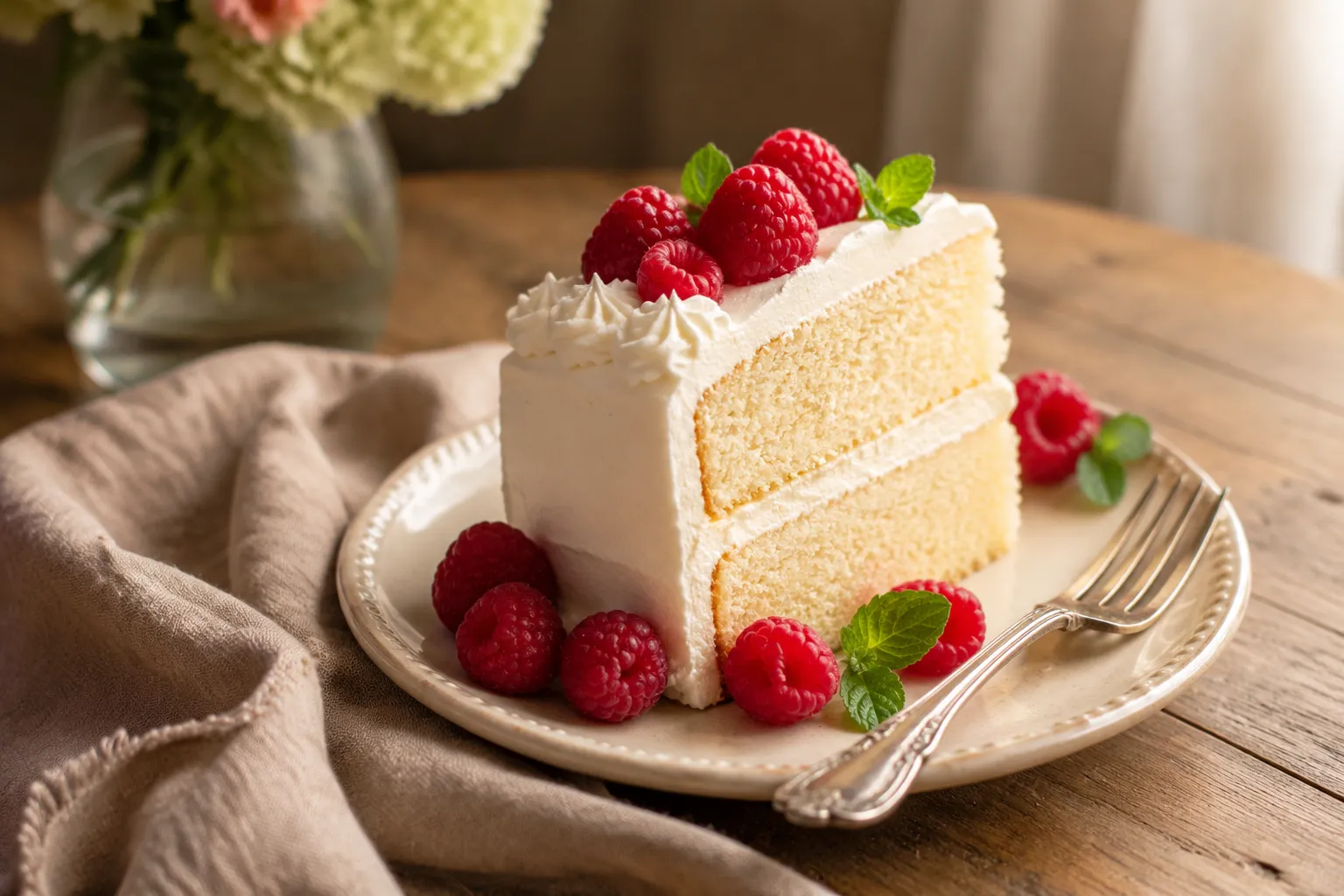
Slice this cake with a long, thin serrated knife dipped in hot water and wiped clean between cuts, that is how bakeries get those crisp, crumb-free edges. Serve at room temperature for the softest texture; cold cake straight from the fridge tastes denser and less flavorful. A small scoop of vanilla ice cream or a spoonful of softly whipped cream alongside is never the wrong call, and a handful of macerated berries on the plate dresses each slice up without any extra work.
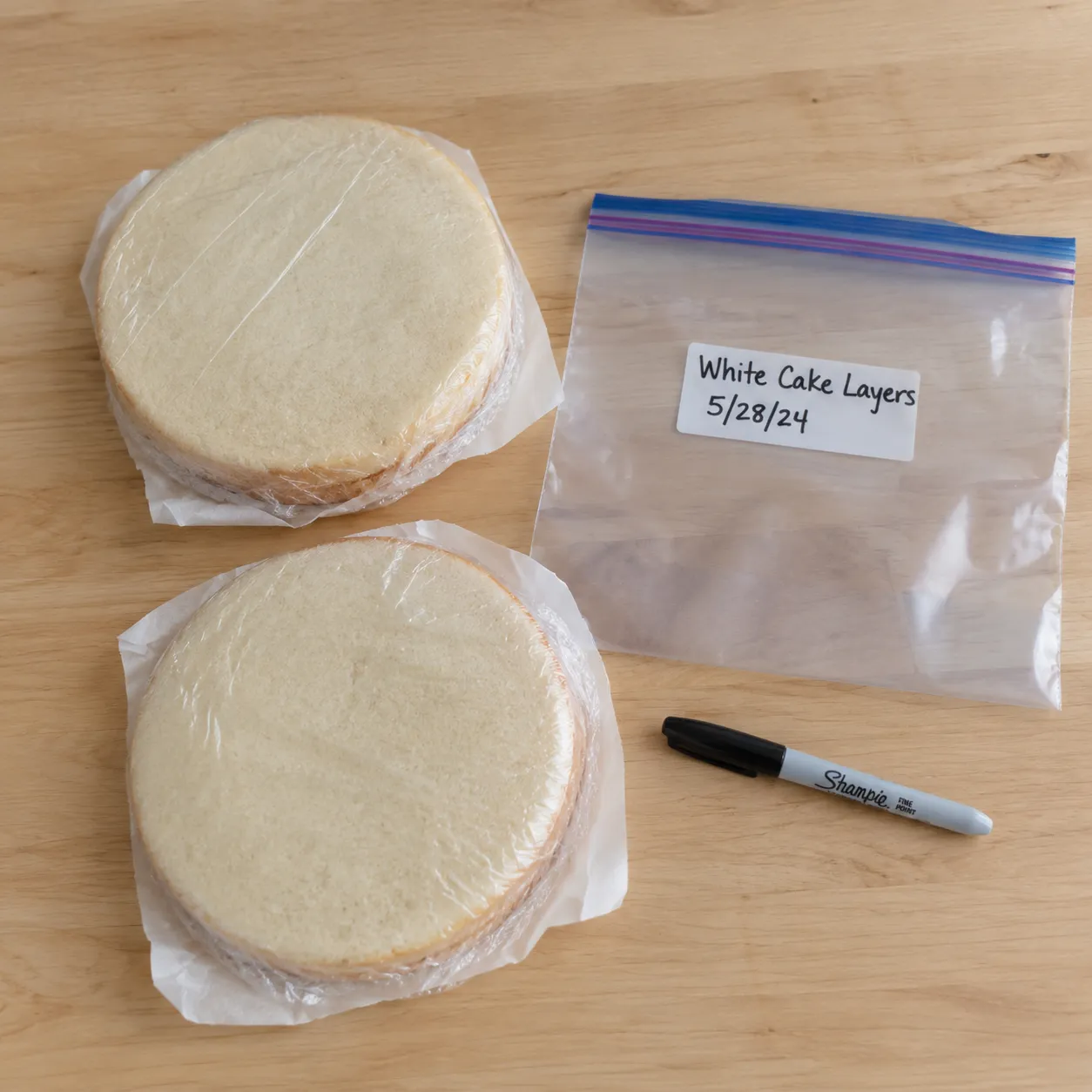
For events, I almost always bake the layers a day or two in advance, wrap them tightly while still slightly warm to lock in moisture, and assemble the day of. The full white cake recipe can also be doubled for a half-sheet pan or a tiered cake, just keep the bake temperature the same and add five to ten minutes for thicker pans. Whether you are making a Tuesday afternoon snack cake or a full three-tier centerpiece, this is the foundation that will get you there.
This batter is endlessly adaptable. Once you nail the base, you can flavor it for the season or scale it for any pan size. Some of the most-loved riffs from my kitchen:
Store frosted cake at room temperature under a cake dome for up to 2 days, or in the refrigerator for up to 5 days. If refrigerating, let slices come back to room temperature for at least 30 minutes before serving, since cold buttercream tastes waxy and the crumb feels denser straight from the fridge.
Unfrosted layers are even more flexible. Wrap each cooled layer tightly in plastic wrap, then again in foil, and freeze flat for up to 2 months. Thaw on the counter still wrapped, which prevents condensation from making the surface sticky, for about 2 hours before frosting. You can also bake the layers up to 2 days ahead and store them wrapped at room temperature, which actually improves the texture as the crumb settles overnight.