Spam Musubi Recipe: Authentic Hawaiian Snack at Home
4.8 from 12 reviews
0SHARES
Now Playing
Spam Musubi Recipe: Authentic Hawaiian Snack at Home
0:00
0:00
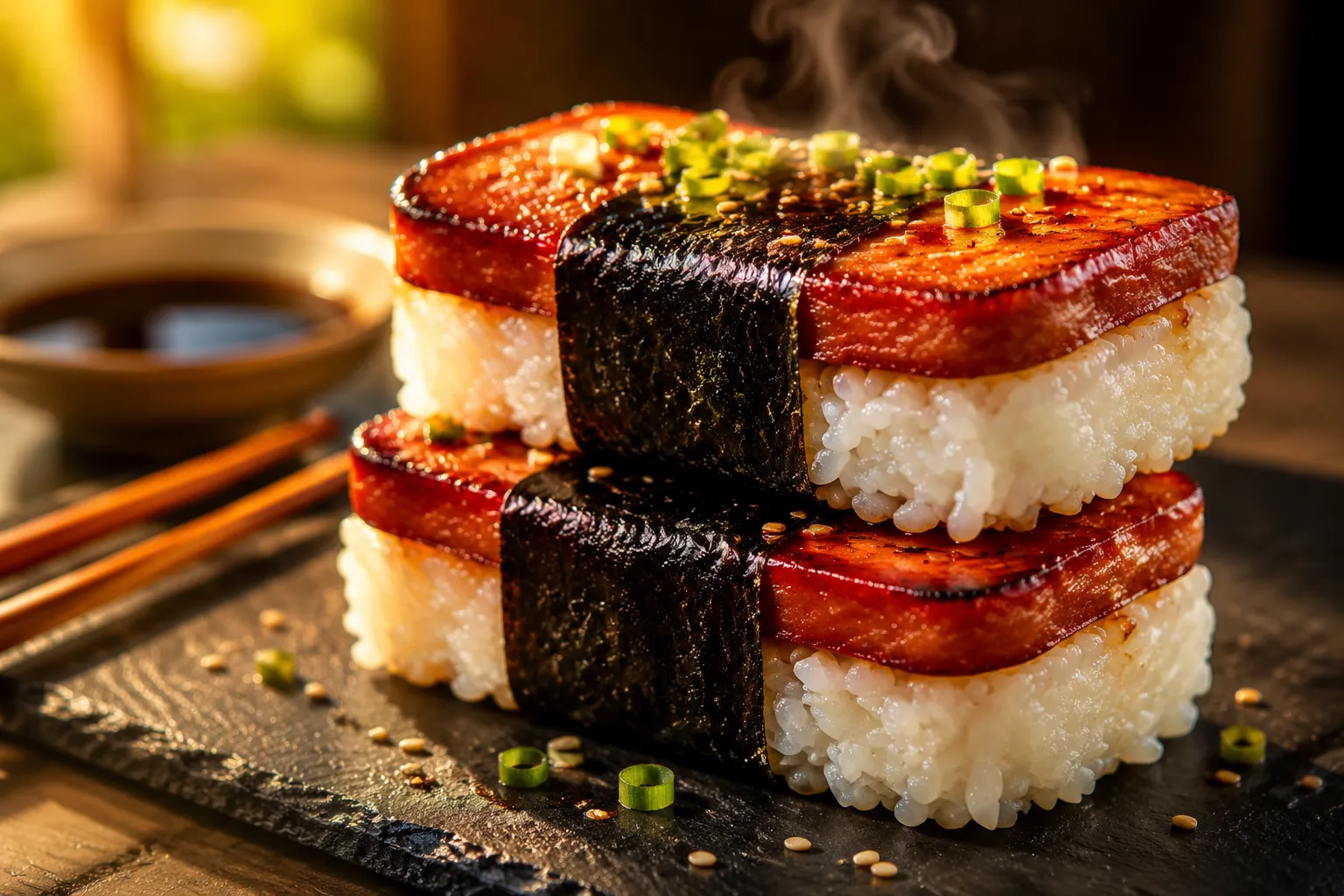
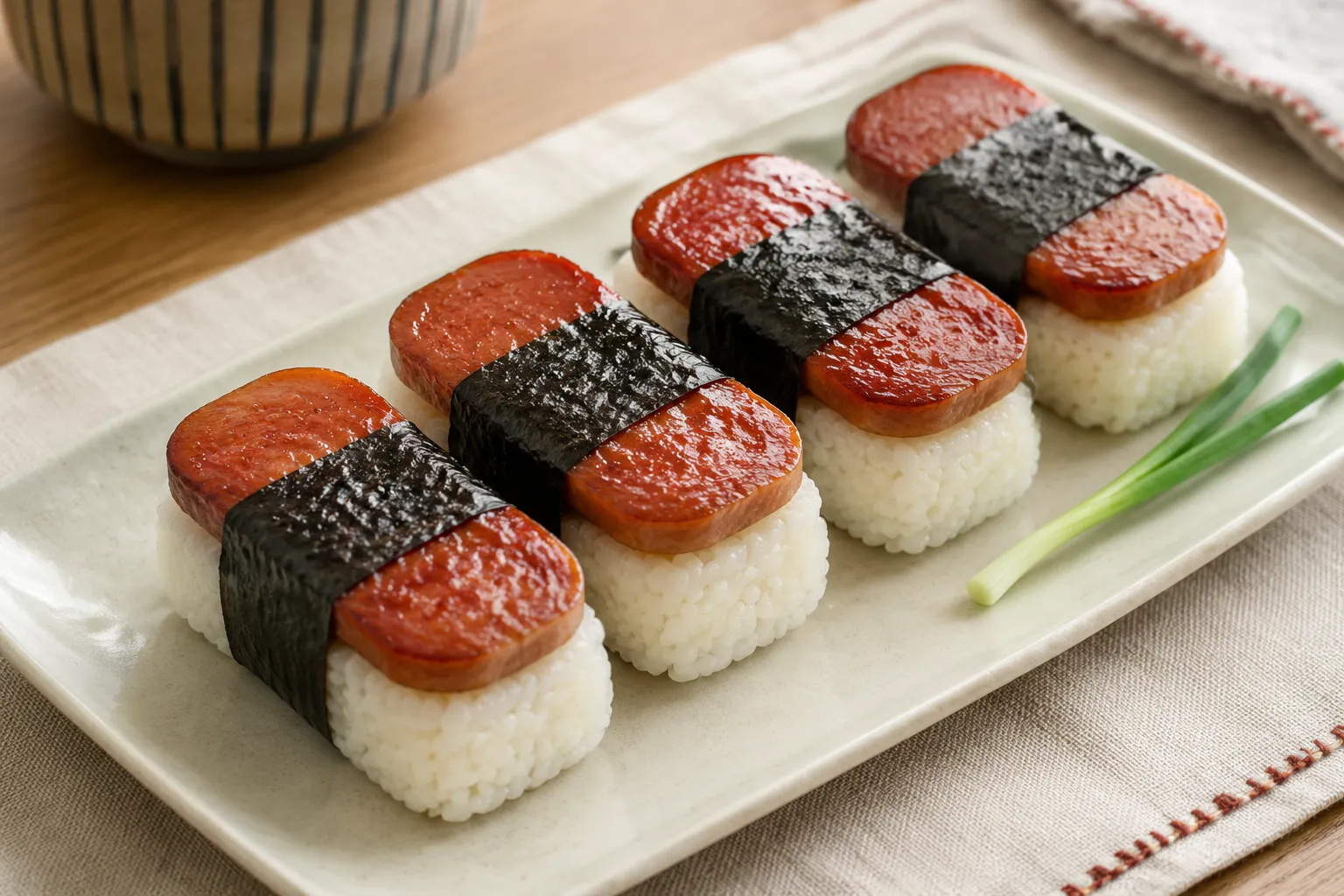
Spam musubi is Hawaii's beloved handheld snack: caramelized teriyaki-glazed Spam pressed onto warm sushi rice and wrapped in crisp nori. Here's how to make it perfectly at home.
Why You'll Love This Recipe
- Sweet, salty, and deeply savory: The homemade teriyaki glaze caramelizes onto crisp-edged Spam for that classic island-style flavor.
- Perfectly portable: Each piece is sturdy, handheld, and easy to pack for lunchboxes, picnics, road trips, or beach days.
- Beginner-friendly: You only need a skillet, rice, nori, and a simple press—or the cleaned Spam can as a no-mold hack.
- Budget-friendly comfort food: A handful of pantry staples turns into eight satisfying portions.
- Easy to customize: Add egg, furikake, avocado, or a spicy mayo drizzle to make it your own.
Musubi is the kind of humble, perfect snack that makes you understand why some foods become classics: warm rice, glossy sweet-savory Spam, and a crisp band of seaweed all tucked into one tidy handheld bite. In Hawaii, spam musubi is everywhere for good reason—convenience stores, beach coolers, lunchboxes, potlucks, road trips—and it has that magical balance of salty, smoky, sticky, and tender that keeps you reaching for just one more.
This version keeps the spirit of the island favorite intact, but makes it friendly for a home kitchen. We’ll use short-grain sushi rice, a quick homemade teriyaki sauce that reduces into a shiny teriyaki glaze, and either a classic press or a simple no-fuss workaround using the empty Spam can. The result is compact, flavorful, and surprisingly fun to assemble, especially once you get into the rhythm of rice, glaze, wrap, repeat.
What Is Musubi?
At its heart, this snack is a Japanese-Hawaiian rice parcel: a block of seasoned short-grain rice topped with pan-fried Spam and wrapped in nori. The rectangular shape is part of its charm, because it fits neatly in your hand and travels beautifully without utensils. The flavor is simple but layered: tender rice softens the savory richness of the meat, while toasted seaweed adds briny depth and structure. If you love Hawaiian recipes that blend pantry staples with big comfort-food energy, this one belongs at the top of your list.
Origins of Hawaiian Musubi
The story of Hawaiian musubi is rooted in migration, local adaptation, and the practical cooking traditions that grew in plantation communities across the islands. Japanese immigrants brought rice-and-seaweed snacks with them, while Spam became widely popular in Hawaii during and after World War II because it was shelf-stable, affordable, and flavorful. Over time, the two ideas met in the most delicious way: a slice of fried canned luncheon meat, lacquered in a sweet soy glaze, pressed onto rice and wrapped like a tidy little package. Today it is a beloved local staple, as familiar and nostalgic as a sandwich might be on the mainland.
Musubi vs. Onigiri: What’s the Difference?
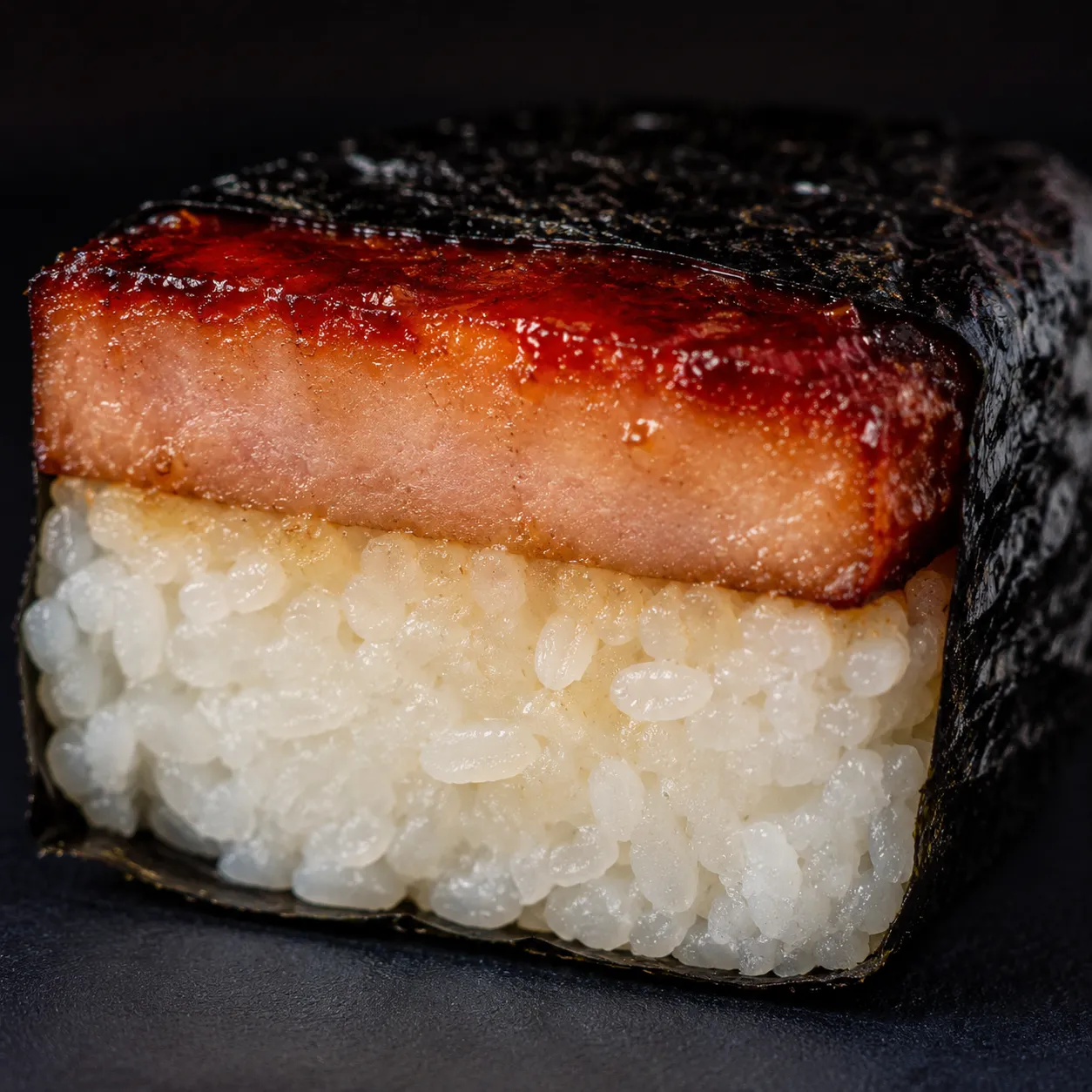
Musubi vs. onigiri can be a little confusing because both are rice snacks wrapped with seaweed, but they are not quite the same. Onigiri are Japanese rice balls, often triangular or round, and they may be filled with salmon, umeboshi, tuna mayo, kombu, or other savory ingredients. Hawaii’s rectangular version is more direct: rice on the bottom, glazed Spam on top, and a strip of nori holding everything together. Think of onigiri as a filled rice ball and this island favorite as a pressed, layered rice bar with a caramelized topping.
Essential Ingredients for the Hawaiian Rice Snack
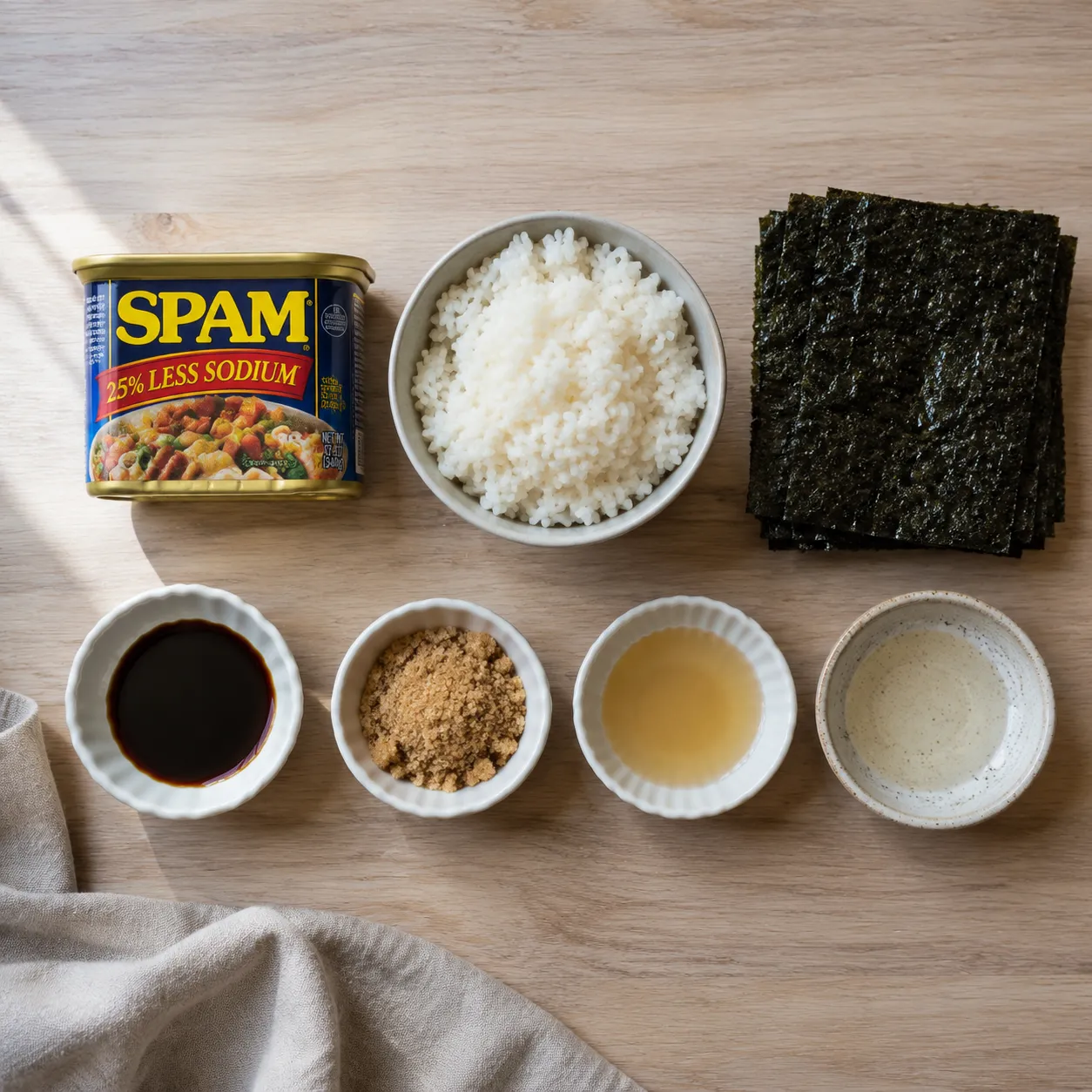
The ingredient list is short, which means each piece matters. Start with a 12-ounce can of Spam, short-grain rice, nori sheets, soy sauce, brown sugar, mirin, and a touch of rice vinegar. The sauce ingredients cook down into a sticky-salty glaze that gives the Spam its signature shine and deep amber edges. You do not need specialty equipment beyond a skillet and a rice cooker or saucepan, though a press does make assembly cleaner.
The Best Rice for Pressed Rice Snacks
Short-grain Japanese rice is the move here because it has the right balance of tenderness and stickiness. Calrose is widely available in US grocery stores and works beautifully, especially if you rinse it well before cooking to remove excess surface starch. Long-grain rice will not hold its shape the same way, and jasmine rice, while fragrant, tends to be too loose and aromatic for this style. After cooking, let the rice steam briefly off the heat so the grains settle into a fluffy but cohesive texture.
For flavor, you can keep the rice plain or lightly season it with a small splash of rice vinegar and a pinch of sugar or salt. This recipe uses a very gentle seasoning so the rice tastes rounded without becoming sushi-bar sweet. The goal is for the rice to support the caramelized Spam, not compete with it. If your rice feels too wet, give it a few minutes uncovered to release steam before pressing.
Choosing Spam, Seaweed, and Glaze Ingredients
Classic Spam is traditional and delivers the richest flavor, but low-sodium Spam is a smart choice if you prefer a less salty bite. Turkey Spam or Lite Spam can also work, though they brown a little differently and may need an extra minute in the pan to develop crisp edges. For the wrap, look for full-size nori sheets and cut them lengthwise into strips; the seaweed should feel dry, crisp, and fragrant when you open the package. If it has gone soft, warm it briefly in a dry skillet to revive its snap.
The glaze is made from soy sauce, brown sugar, mirin, and rice vinegar, which together create that sticky, sweet-savory finish. Mirin gives a gentle sweetness and glossy texture, while vinegar keeps the sauce from tasting flat. If you already have bottled teriyaki sauce, you can use it in a pinch, but the homemade version gives you better control over saltiness and thickness. It should bubble in the skillet until it coats the Spam like lacquer rather than running off in a thin layer.
How to Build the Sweet-Savory Rice Bars
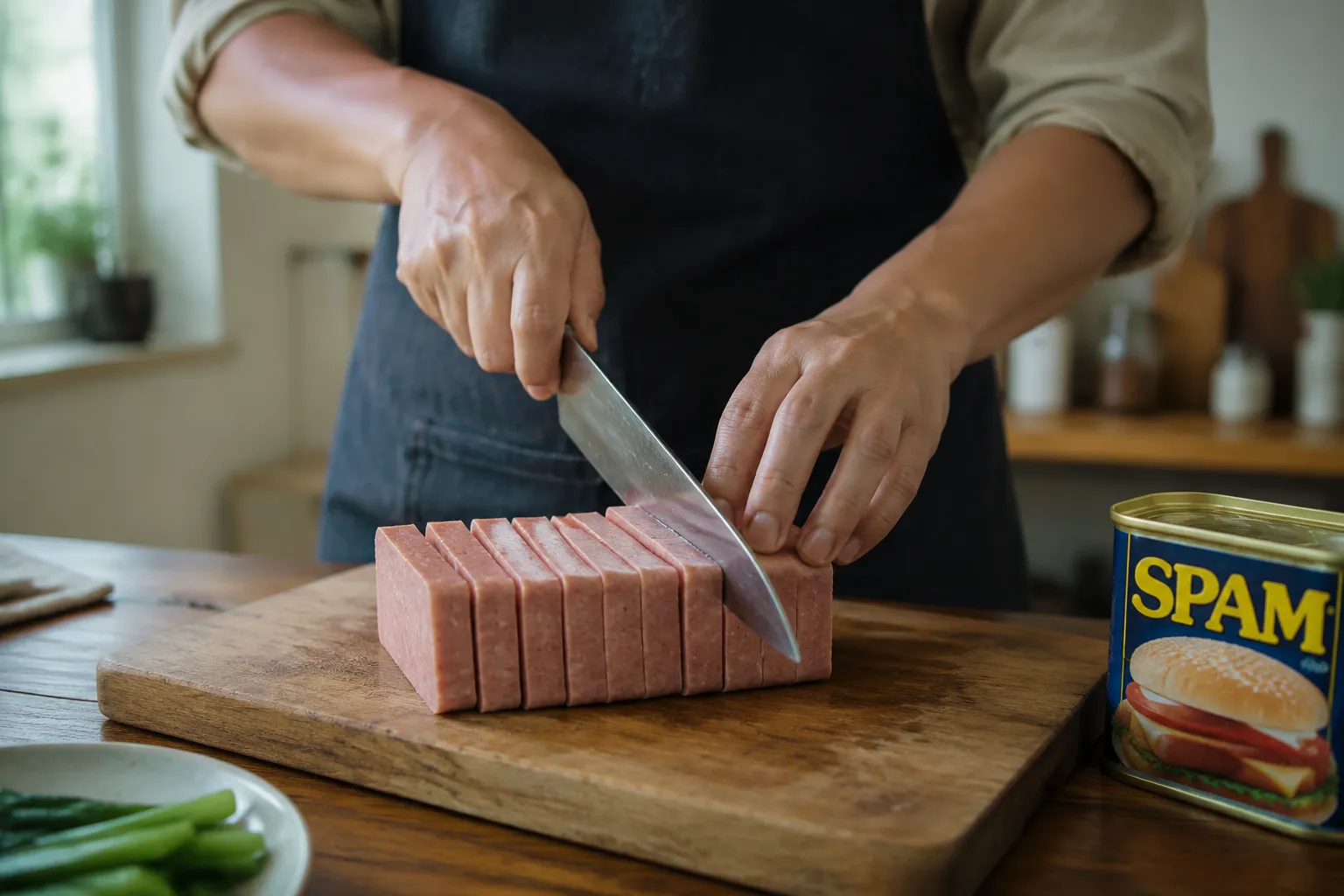
The process is easiest when you set up an assembly line: cooked rice, cut seaweed strips, glazed Spam, and a small bowl of water for your hands. Slice the Spam into eight even slabs so every piece cooks at the same pace and fits neatly over the rice. While the rice cooks, mix the glaze ingredients so they are ready to pour into the hot skillet once the meat has browned. A little organization up front makes the wrapping feel relaxed instead of sticky and chaotic.
Cook and Season the Rice
Rinse the rice until the water runs mostly clear, then cook it according to your rice cooker or stovetop method. Once cooked, let it rest covered for about 10 minutes; this little pause matters because it allows moisture to distribute evenly through the grains. Fold in the light vinegar seasoning while the rice is warm, using a paddle or spatula so you do not mash the grains. Keep the rice covered with a clean towel or lid while you finish the Spam, because dry rice is harder to press and more likely to crumble.
Slice, Sear, and Glaze the Spam
Cut the Spam into eight slabs, then sear them in a skillet until browned on both sides. You want the edges to take on a little crispness before the glaze goes in, because that contrast is what makes each bite so satisfying. Pour in the soy-mirin mixture and let it simmer around the slices, turning them once or twice until they are glossy and coated. Watch the heat here: sugar can go from caramelized to scorched quickly, so reduce the burner if the pan starts smoking.
Assemble With a Press or a No-Mold Hack
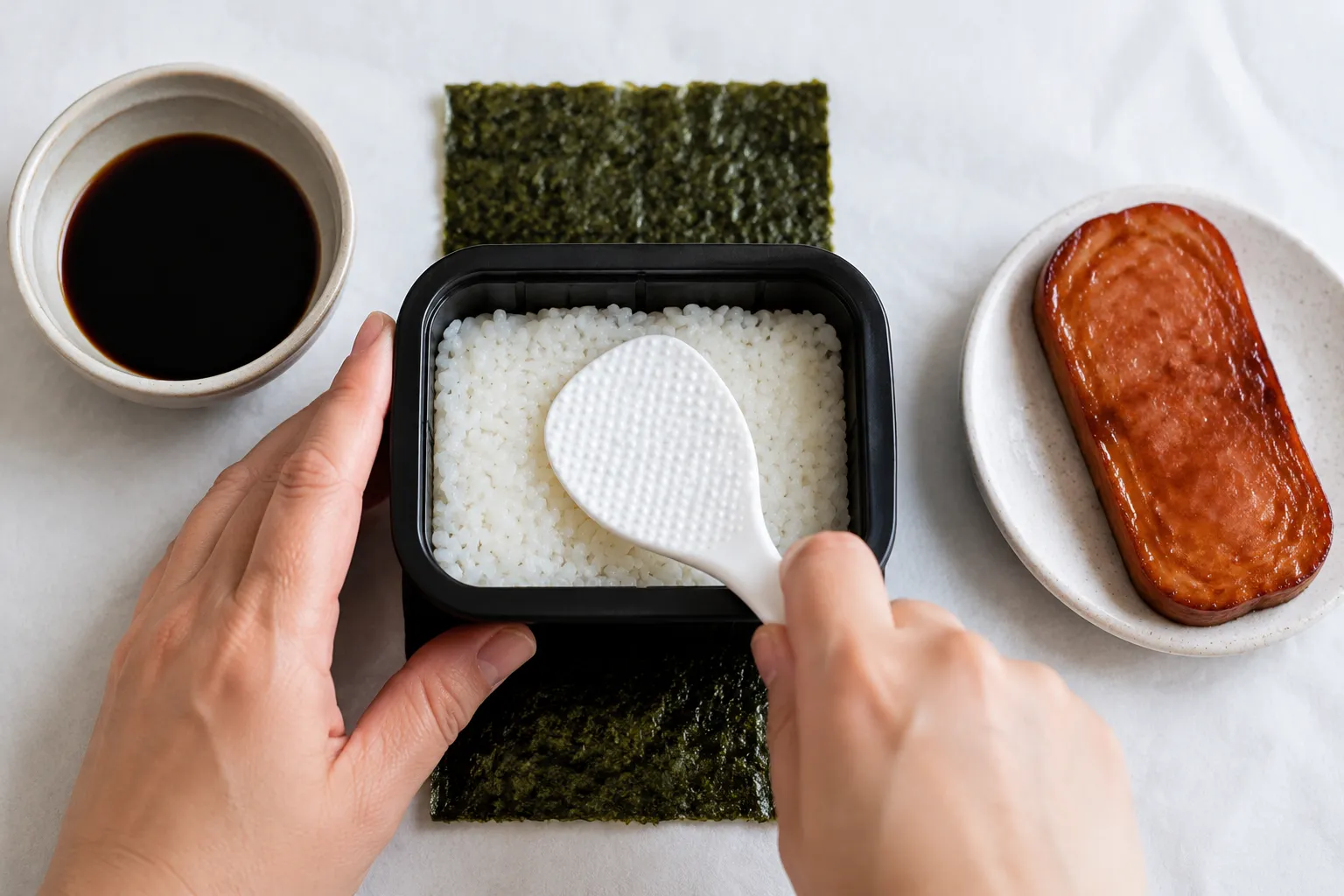
Place a strip of seaweed shiny-side down on a clean board, set the press in the center, and add a scoop of warm rice. Press firmly enough to compact the grains, but not so hard that the rice turns dense or gummy. Add one glazed Spam slice, lift away the frame, and fold the seaweed up and around the rice parcel, using a grain of rice or a dab of water to seal the edge. If you do not own a musubi mold, wash the empty Spam can well, line it with plastic wrap, and use it as a perfectly sized press.
What Makes This Homemade Version So Good
The best part of making these at home is controlling the balance. You can brown the meat more deeply, make the glaze a little stickier, and season the rice just enough to keep it plush and flavorful. Many quick versions skip the sauce reduction, but that glossy coating is what turns a simple pantry snack into something that tastes fresh from a local plate-lunch counter. The homemade method also lets you decide how thick the rice layer should be, which matters if you like a hearty snack versus a lighter bite.
Texture is the other secret. The rice should be soft and slightly clingy, the Spam should have crisped edges under the glaze, and the nori should wrap snugly without becoming soggy too quickly. That combination gives you a clean bite instead of a slippery stack of ingredients. When everything is still slightly warm, the seaweed softens just enough to bend and seal, while the outside keeps a pleasant chew.
Serving the Island-Style Snack
Serve these warm or at room temperature, either whole or sliced in half to show off the layers. They are wonderful for lunchboxes, beach days, road trips, after-school snacks, or a casual dinner with cucumber salad and pineapple on the side. A sprinkle of furikake between the rice and Spam adds sesame, seaweed, and bonito flavor, while a thin omelet layer makes the snack feel more like a full meal. For a simple spread, pair them with edamame, quick pickled cucumbers, miso soup, or a crisp cabbage slaw.
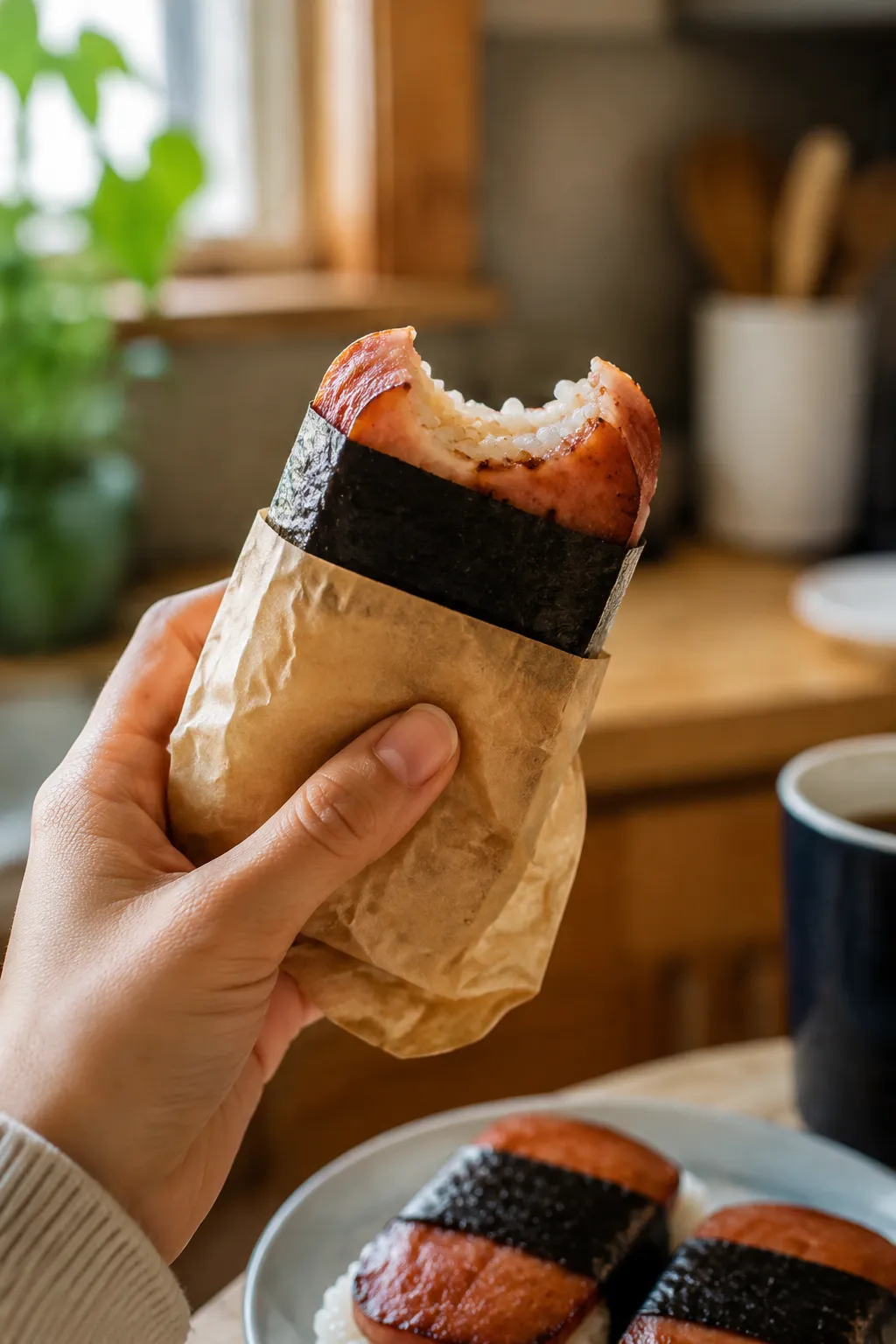
If you are serving a crowd, arrange the finished pieces on a platter and cover them loosely so the rice stays tender. They are sturdy enough to pick up by hand, which is part of the fun, but you can also wrap each one halfway in parchment for a convenience-store feel. Kids tend to love the sweet-salty profile, and adults appreciate how satisfying the snack is without much fuss. Add a small dish of extra glaze on the side only if you like things saucy; the rice will absorb it quickly.
Make-Ahead Notes for Better Texture
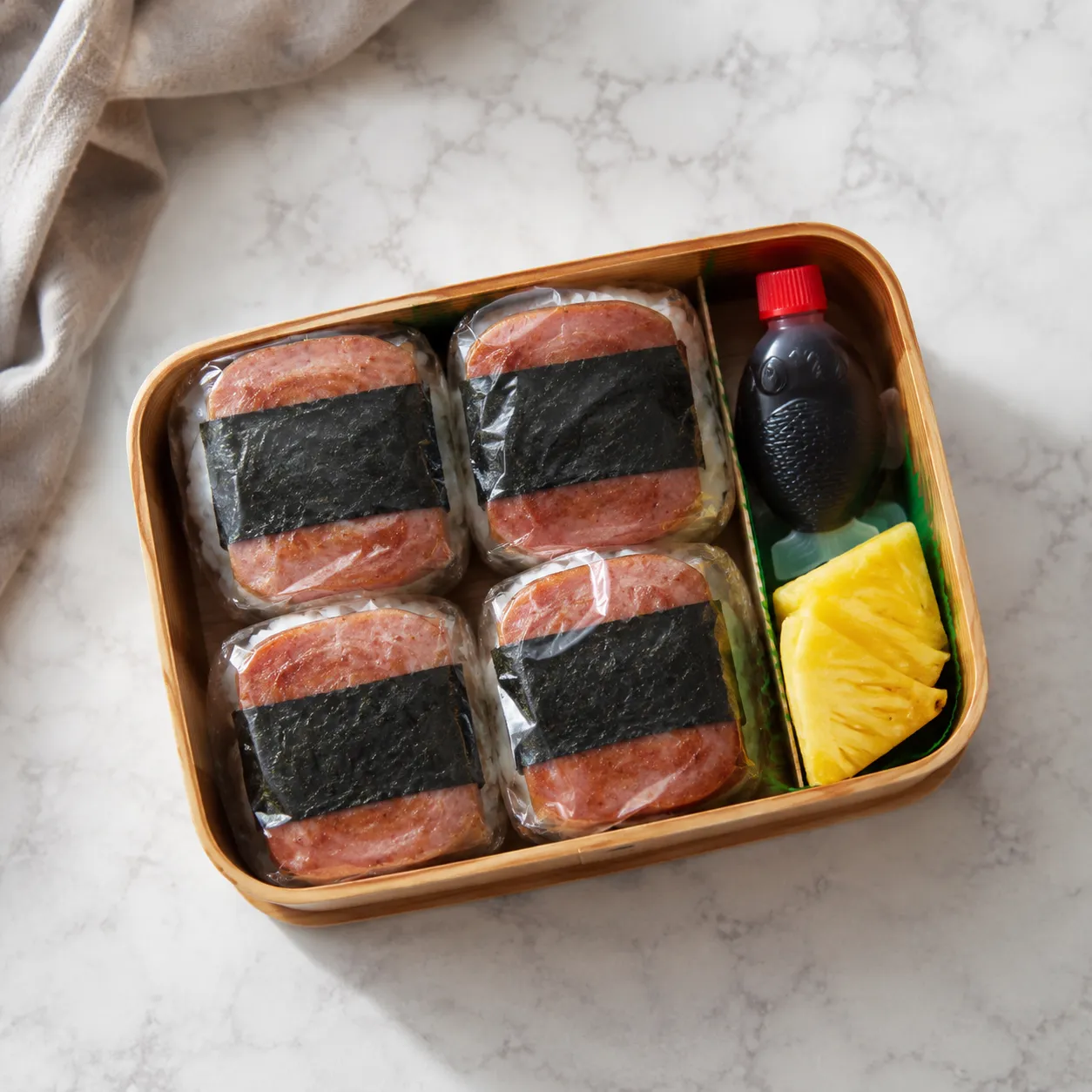
These rice bars are best the day they are made, especially within the first few hours when the rice is tender and the seaweed still has some structure. If you need to prepare them ahead, wrap each piece tightly in plastic wrap once it has cooled slightly, then keep them at room temperature for short-term serving. Refrigeration is safe for longer storage, but cold temperatures firm up the rice starches, which is why chilled rice can taste dry or hard. A gentle rewarm with steam brings back a much better texture than microwaving uncovered.
For lunch packing, individual wrapping is your best friend. It keeps the seaweed in place, protects the rice from drying out, and makes each portion easy to grab. If you are adding them to a bento, tuck in bright, juicy sides like pineapple, orange wedges, pickled vegetables, or cucumber slices to balance the savory richness. That contrast—salty glaze, soft rice, crisp-tender vegetables, and sweet fruit—is exactly why this snack has such staying power.
💡 Expert Tips
- Rinse the rice well: Clearer rinse water means cleaner-tasting grains that stick together without becoming gluey.
- Keep the rice warm while assembling: Slightly warm rice presses more neatly and helps the nori seal around the edges.
- Brown before glazing: Let the Spam develop golden edges first, then add the sauce so it thickens into a shiny coating instead of steaming the meat.
- Use light pressure: Compact the rice enough to hold its shape, but avoid smashing it into a dense block.
- Seal with rice, not too much water: A single sticky grain or tiny dab of water is enough to close the nori seam.
🔄 Variations & Substitutions
Once you have the classic version down, it is easy to riff on the format while keeping the same sweet-savory balance. Try one of these ideas for lunchboxes, party platters, or a more filling meal.
- Egg version: Add a thin folded omelet between the rice and Spam.
- Furikake layer: Sprinkle furikake over the rice before adding the glazed meat.
- Spicy mayo: Drizzle a little sriracha mayo under the Spam for creamy heat.
- Vegetarian swap: Use thick slices of teriyaki-glazed tofu, king oyster mushroom, or roasted sweet potato.
- Extra fresh: Add thin cucumber or avocado slices, keeping them dry so the wrap holds.
🧊 Storage & Leftovers
For the best texture, enjoy freshly made pieces within 4 hours and keep them individually wrapped at room temperature if your kitchen is cool. For longer storage, wrap tightly and refrigerate for up to 2 days; the rice will firm up, but it can be revived.
To reheat, remove any plastic wrap, cover with a damp paper towel, and microwave in short 15- to 20-second bursts until just warm. For the softest rice, steam gently for a few minutes instead. Avoid overheating, which can make the nori tough and the Spam rubbery.
Frequently Asked Questions
What does musubi taste like?
It tastes like the perfect balance of salty, smoky, sweet, and savory. The Spam is browned until the edges crisp, then coated in a glossy teriyaki glaze that adds caramelized sweetness and umami. The rice is soft and comforting, while the nori brings a toasty, briny note that keeps everything balanced. It is simple food, but every layer has a job, which is why it is so craveable.
Do I need a musubi mold to make it?
No, you do not need a special mold. A dedicated press makes the process tidy and consistent, but the empty Spam can works beautifully if you wash it well and remove both ends safely. Line the can with plastic wrap, add rice, press gently, then lift the rice block out. You can also shape the rice with damp hands, though the sides will look a little more rustic.
Can I make musubi ahead of time?
Yes, you can make it ahead, especially if you plan to eat it the same day. Wrap each piece individually in plastic wrap and keep it at room temperature for up to 4 hours. For longer storage, refrigerate it, but know that the rice will firm as it chills. To bring back tenderness, reheat gently with steam or a damp paper towel rather than microwaving it uncovered.
What’s the best rice for musubi?
Short-grain Japanese-style rice is best because it is sticky enough to hold its shape while staying tender when cooled. Calrose rice is a great supermarket option in the US and works reliably for this recipe. Avoid long-grain rice, which tends to fall apart, and avoid overly wet rice, which can become mushy when pressed. Rinse thoroughly, cook properly, and let it rest before shaping.
Is musubi the same as onigiri?
Not exactly. Onigiri are Japanese rice balls, usually triangular or round, and they often have fillings tucked inside, such as salmon, umeboshi, or tuna mayo. Hawaii’s Spam-topped version is typically rectangular, layered rather than filled, and wrapped with a strip of nori. They are related in spirit because both are portable rice snacks, but the shape, toppings, and cultural context are different.
Spam Musubi Recipe: Authentic Hawaiian Snack at Home