Recipes for Brown Beans: Easy Stovetop Southern Style
4.8 from 12 reviews
0SHARES
Now Playing
Recipes for Brown Beans: Easy Stovetop Southern Style
0:00
0:00
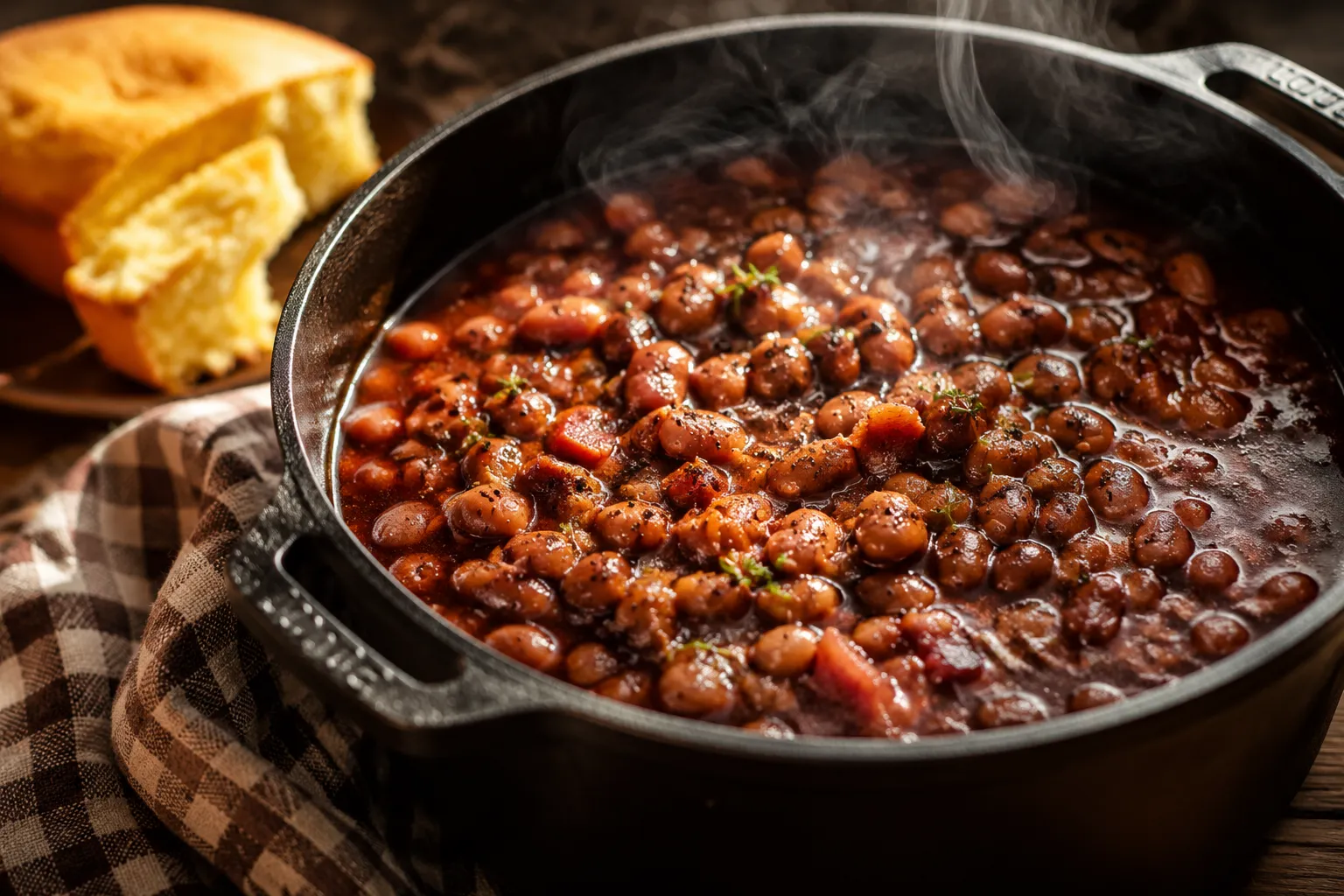
These tender, smoky brown beans simmer low and slow into the kind of pot-licking comfort food that feeds a crowd for pennies a serving.
Why You'll Love This Recipe
- **Pure pantry comfort food** — a bag of dried beans, an onion, and a smoky scrap of pork is all it takes to feed eight people generously.
- **Stretches a dollar like nothing else** — under five bucks per pot, with leftovers that turn into soup, refried beans, or burrito filling.
- **Mostly hands-off** — about fifteen minutes of active work, then the stove does the patient cooking for you.
- **Freezer-friendly** — portions reheat beautifully in their own broth for fast weeknight dinners weeks later.
- **Naturally gluten-free and protein-packed** — a deeply nourishing main that happens to be high in fiber and plant protein.
- **Tastes even better on day two** — the broth deepens, the beans get creamier, and the flavor settles into something memorable.
The best recipes for brown beans don't ask much of you — just a bag of dried pintos, a smoky scrap of pork, and the patience to let a pot bubble away on the back burner for an afternoon. This is the kind of cooking my grandmother did on Sundays, the kind that fills a kitchen with the deep, savory aroma of slow-simmered beans and turns plain pantry staples into supper for a crowd. If you've ever wondered why a humble pot of pintos at a meat-and-three diner tastes so much richer than the can you opened at home, the answer is time, salt timing, and a good ham hock.
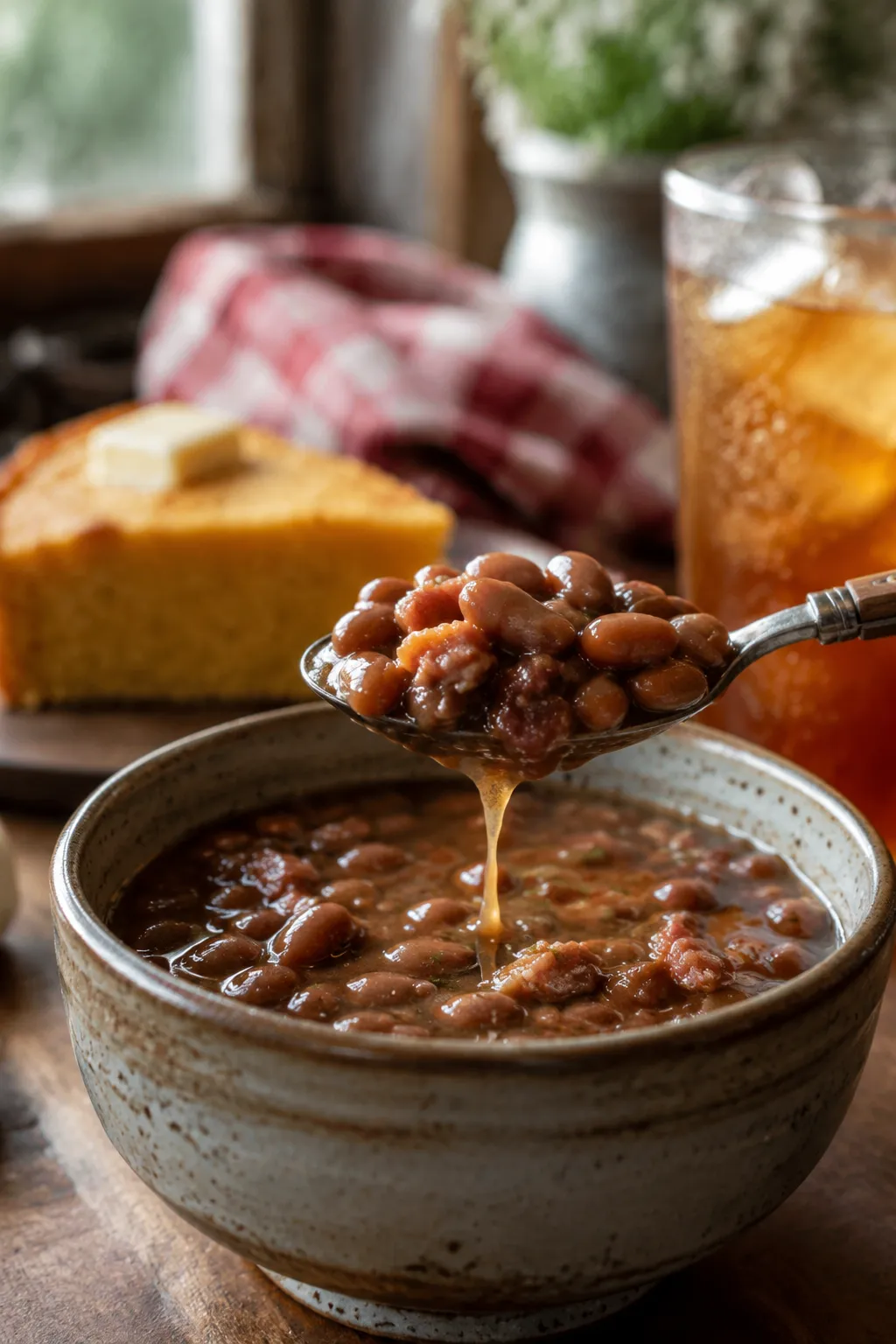
I grew up on this exact pot, ladled over a wedge of buttery cornbread with raw onion on top and a glass of sweet tea sweating on the table. It's pure Southern brown beans tradition — dirt cheap, deeply nourishing, and somehow more flavorful on day two. Whether you're feeding a houseful or stocking the freezer with weeknight dinners, this stovetop method gives you tender, creamy beans in a glossy mahogany broth every single time.
Below you'll find the classic Sunday-supper version of these recipes for brown beans, plus pressure cooker and slow cooker conversions, a quick primer on how to cook beans from scratch, and answers to every "why are mine still hard?" question you've ever had.
## What Are Brown Beans, Exactly?
"Brown beans" is one of those friendly catch-all kitchen terms that means slightly different things depending on which side of the Mason-Dixon line you grew up on. In most American homes, especially across the South and the Appalachian foothills, brown beans simply means a pot of pintos simmered low and slow until the cooking liquid turns into a rich, mahogany-brown broth. The beans themselves start out as speckled pinks and tans, but as they cook they release starch into the water, the smoked pork breaks down, and the whole pot deepens into the color the dish is named for.
Some Midwestern cooks use the same name for soup beans, while in parts of Indiana and Kentucky you'll hear "ham and beans" used interchangeably. A few old-school cooks lean on small red beans or even great northerns, but pintos are the workhorse, and they're what most modern recipes for brown beans call for. The flavor sits somewhere between beans and broth — savory, smoky, lightly peppery, with just enough body to coat a spoon and turn a piece of cornbread into supper.
## Ingredients You'll Need
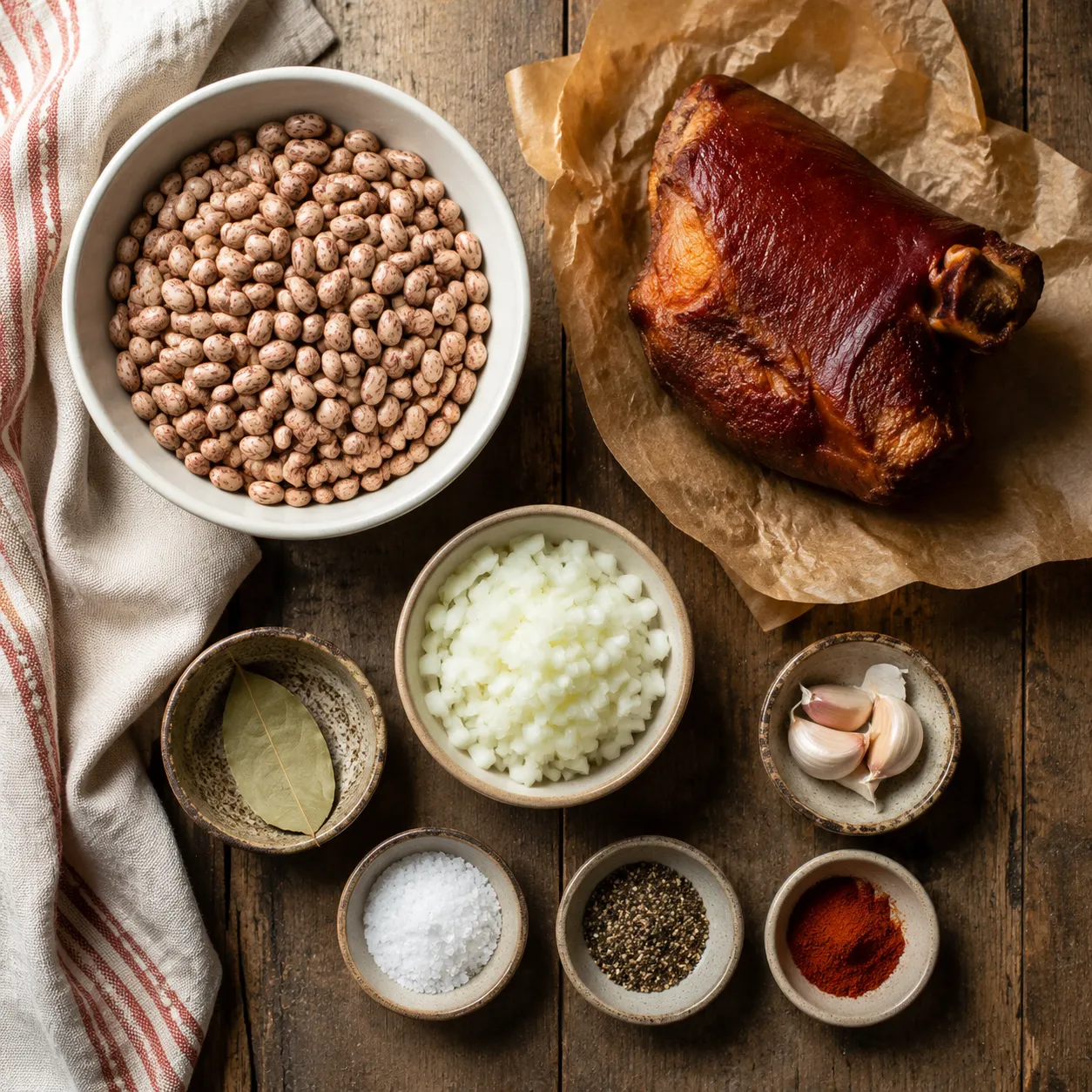
The shopping list is short, which is half the appeal. A one-pound bag of dried pinto beans is the foundation — look for a bag with a recent sell-by date, because old beans (anything past about a year) are the number one reason a pot won't turn tender no matter how long you cook it. From there you need something smoky and porky to flavor the broth: a smoked ham hock is traditional and gives you the deepest flavor, but four ounces of bacon, salt pork, or a leftover ham bone all do beautiful work.
Round things out with a diced yellow onion, a few cloves of garlic, kosher salt, black pepper, smoked paprika, and a single bay leaf. Some cooks add a pinch of brown sugar or a splash of cider vinegar at the very end, and I'm a fan of both. Use water if that's what you have, or low-sodium chicken broth for an extra layer of savory depth. That's it — no fancy beans recipe required, just good ham hock beans built from pantry staples.
## How to Cook Brown Beans Step-by-Step
Once you understand the rhythm, learning how to cook beans from a dried bag is genuinely simple. The work happens in two places: a careful start (sorting, soaking, building a flavor base) and a patient finish (low simmer, late seasoning). Skip steps and you'll get hard beans; respect them and you'll get the creamy, brothy pot you're after.
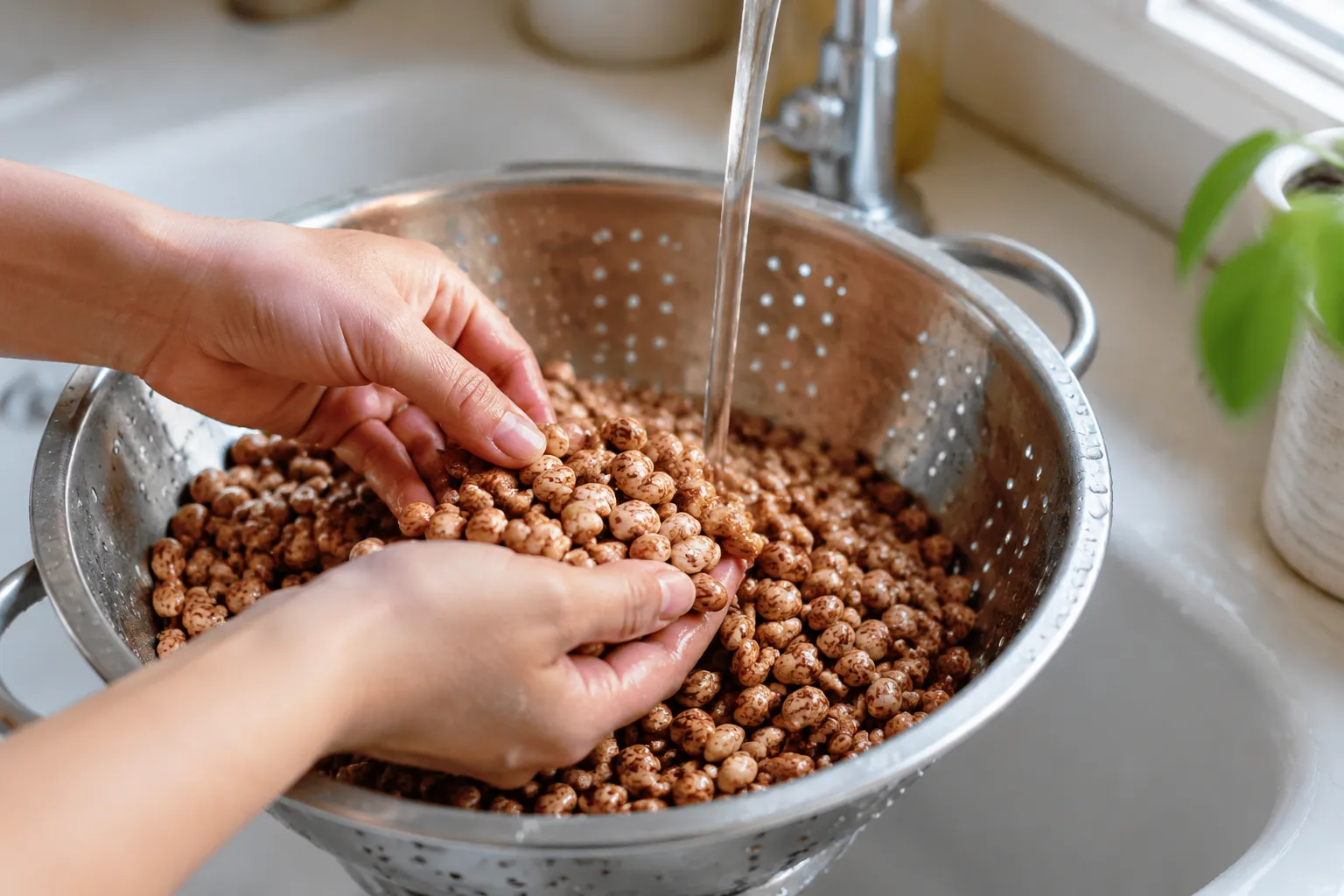
Start by pouring the beans onto a sheet pan or into a colander and picking through them. You're looking for pebbles, clumps of dirt, shriveled beans, and the occasional misfit lentil that snuck into the bag at the packing plant. Give them a good rinse under cool water and shake off the excess.
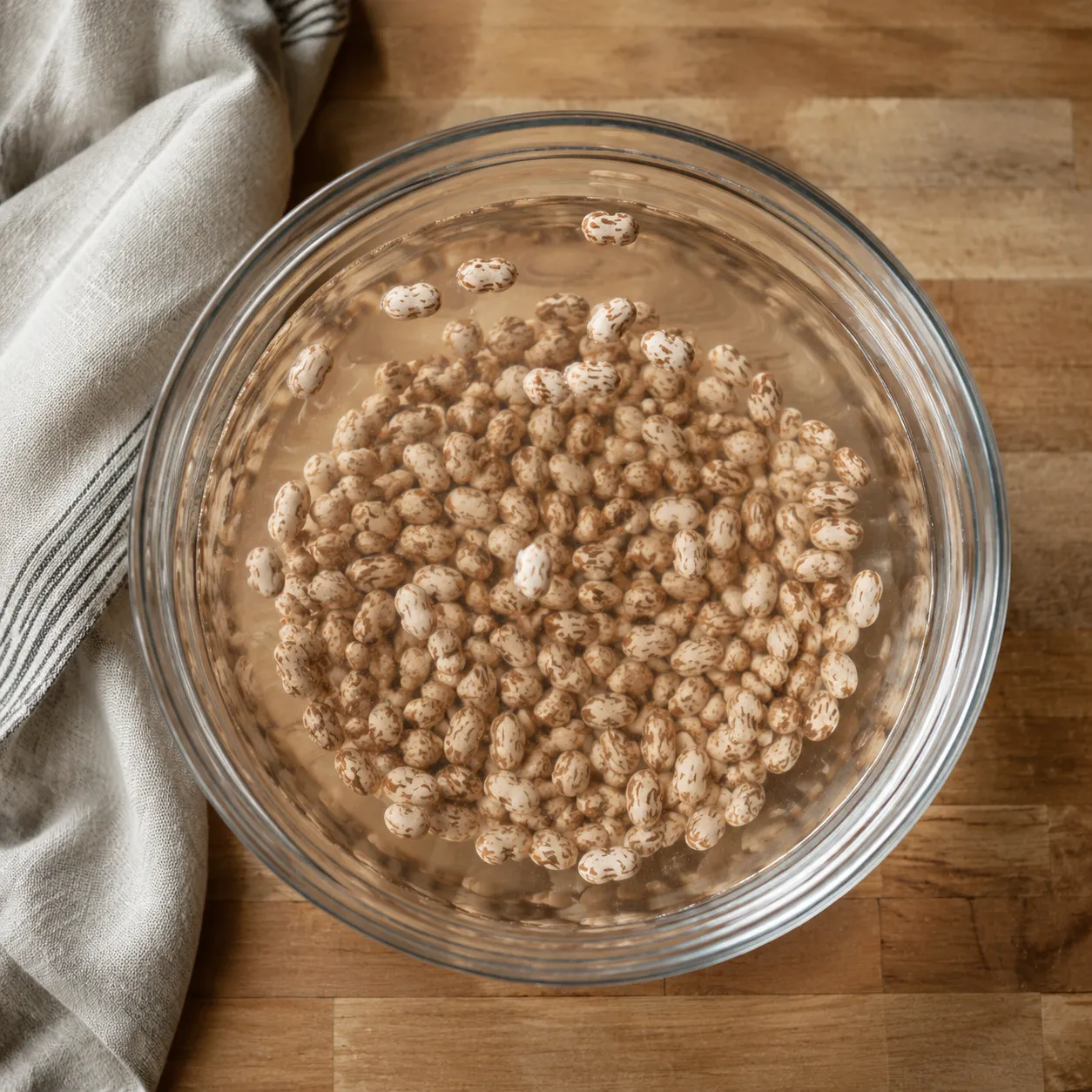
Next comes the soak. Soaking dried beans isn't strictly required, but it shortens cook time by about thirty minutes, helps the beans cook evenly, and makes them easier to digest. Cover the rinsed beans by three inches of cool water and leave them on the counter overnight, eight to twelve hours total. Short on time? Bring the beans and water to a boil for two minutes, cut the heat, and let them sit covered for one hour for a quick soak.
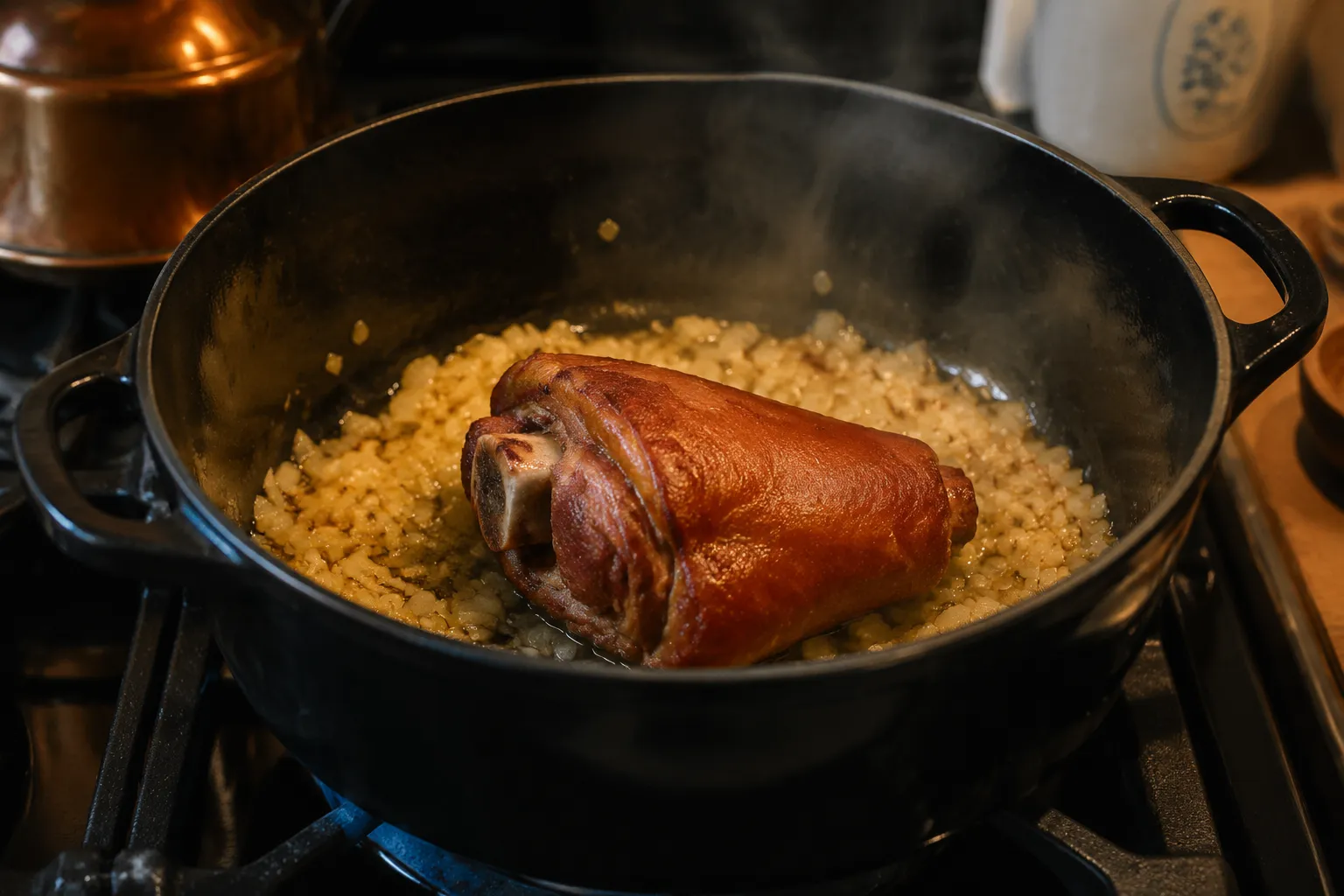
While the soaked beans drain, warm a glug of oil in a heavy Dutch oven and sweat the diced onion until it's soft and translucent, about six minutes. Stir in the garlic for the last thirty seconds, then nestle in the ham hock and let it sizzle for a minute or two on each side to wake up the smoke. This little flavor base does serious heavy lifting and is the difference between a pot that tastes flat and one that tastes like Sunday dinner.
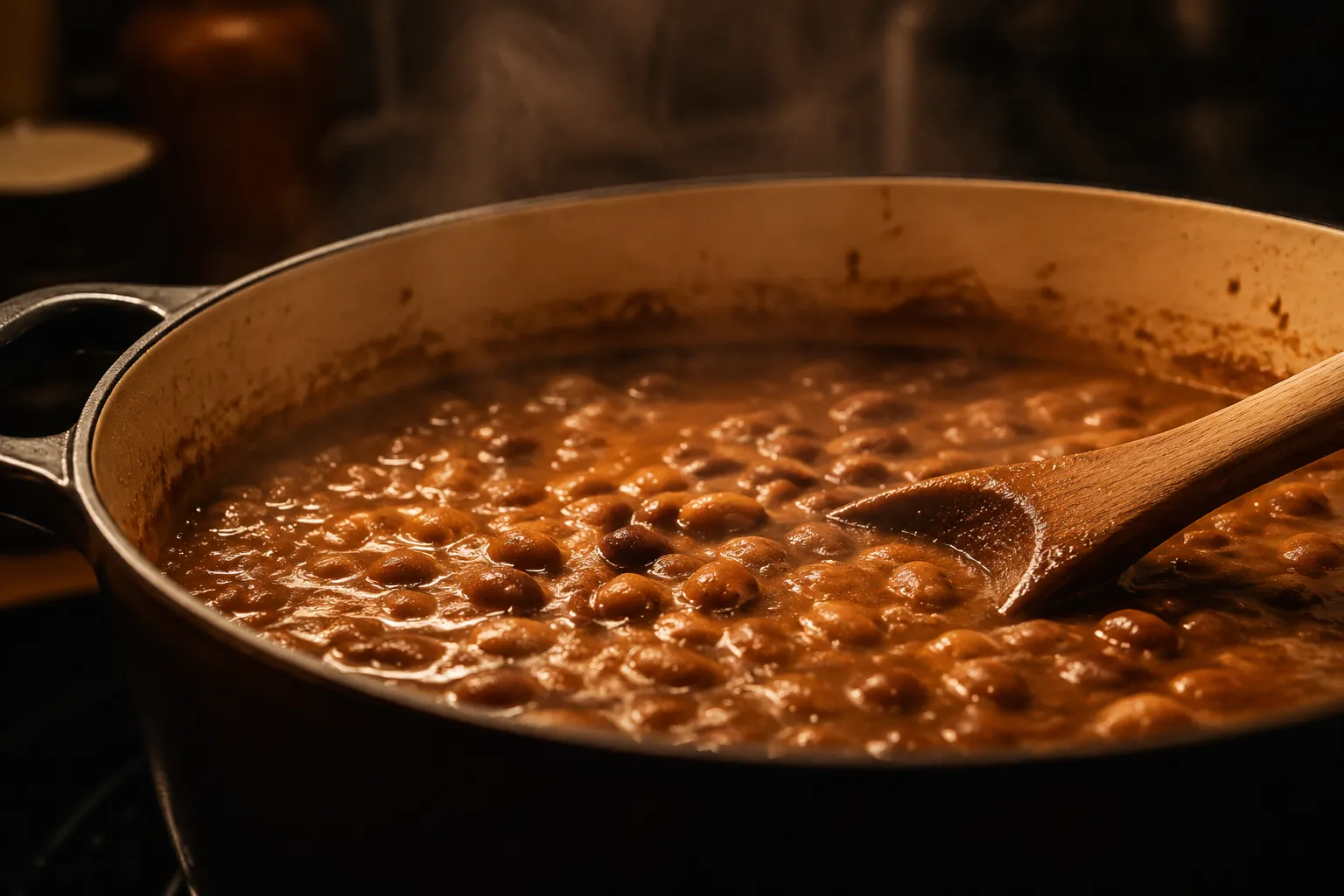
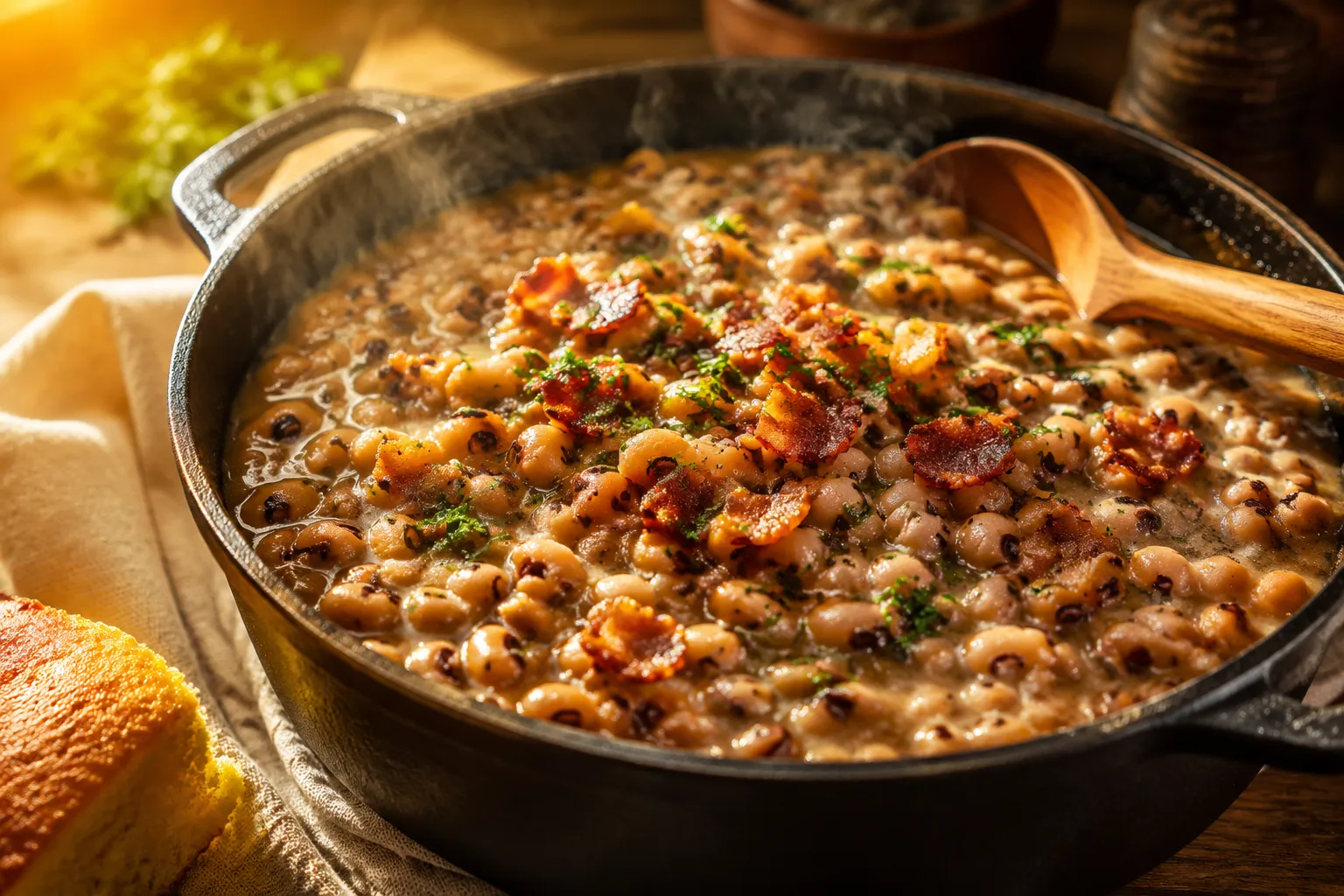
Pour in eight cups of water or broth, add the bay leaf, smoked paprika, and black pepper, and bring everything to a boil. Drop the heat to the lowest simmer your stove can hold — you want lazy bubbles, not a rolling boil, which would shred the bean skins. Partially cover and let the pot work for two to two and a half hours, stirring gently every thirty minutes and topping up with hot water any time the beans look dry.
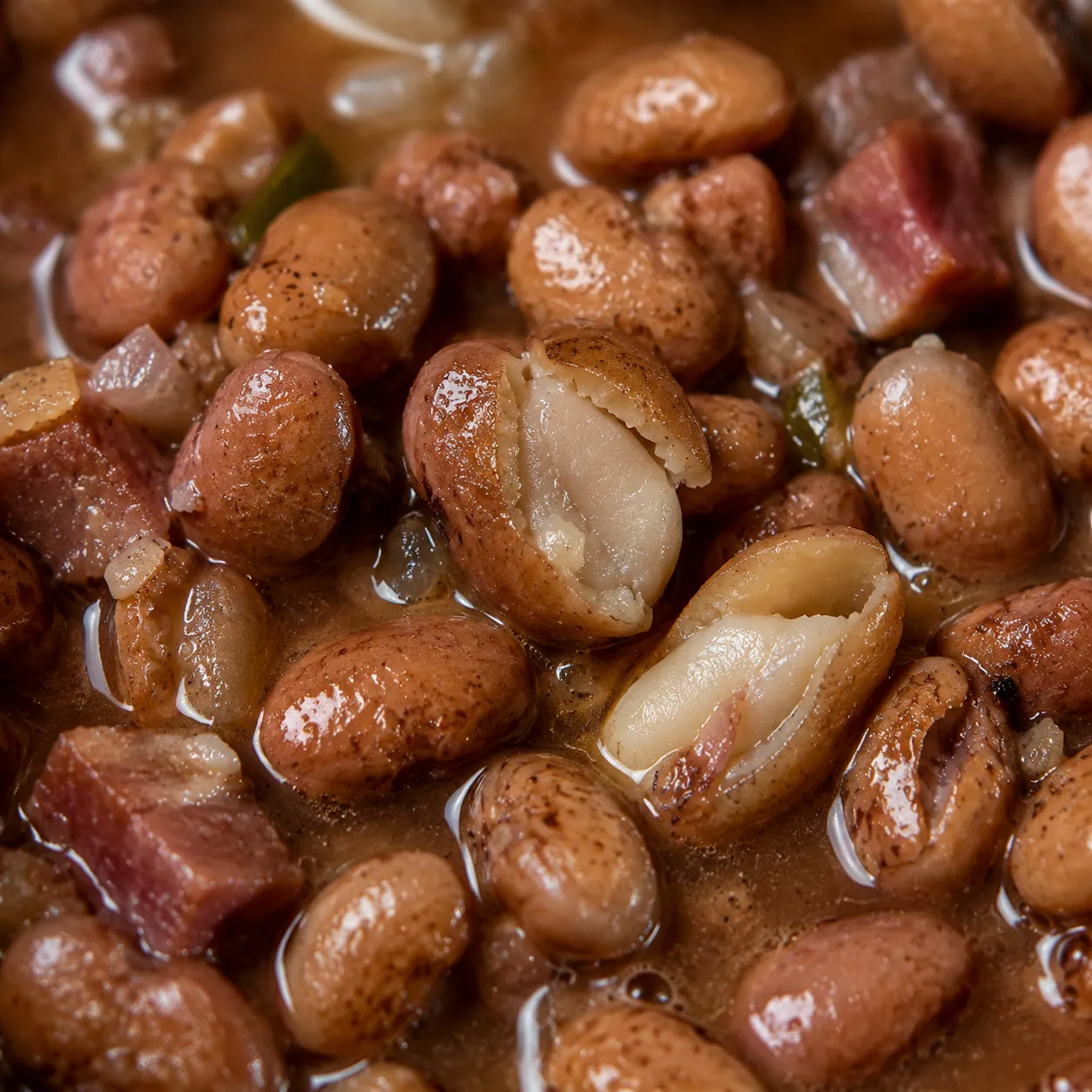
Here's the most important rule in any pot of stovetop beans: salt at the end. Adding salt or anything acidic (tomatoes, vinegar, citrus) too early can keep the bean skins firm and tough. Once the beans are creamy when you crush one against the side of the pot, stir in two teaspoons of kosher salt, taste, and adjust. Pull out the ham hock, shred the meat off the bone, and stir it back into the broth.
## Instant Pot and Slow Cooker Methods
Stovetop is the soul of this dish, but real life calls for shortcuts, and most weeknight recipes for brown beans benefit from a little electric help. Instant Pot beans are wildly forgiving once you nail the timing. For a one-pound bag of unsoaked pintos, pressure cook on high for 45 minutes with a 20-minute natural release. If you soaked the beans overnight, drop the time to 25 minutes high pressure with a 15-minute natural release. Build your flavor base on the sauté setting first, then add the beans, ham hock, broth, and seasonings (still no salt yet) and lock the lid.
The slow cooker is even more hands-off. Add soaked beans, the ham hock, aromatics, and broth to a 6-quart slow cooker and cook on low for 7 to 8 hours or high for 4 to 5, salting in the final thirty minutes. The texture is a touch softer than the stovetop version and the broth a little thinner, but the flavor is honest and deep. Whichever method you choose, the seasoning rules don't change: salt late, taste often, and pull the meat apart before serving.
## Serving Suggestions and Pairings
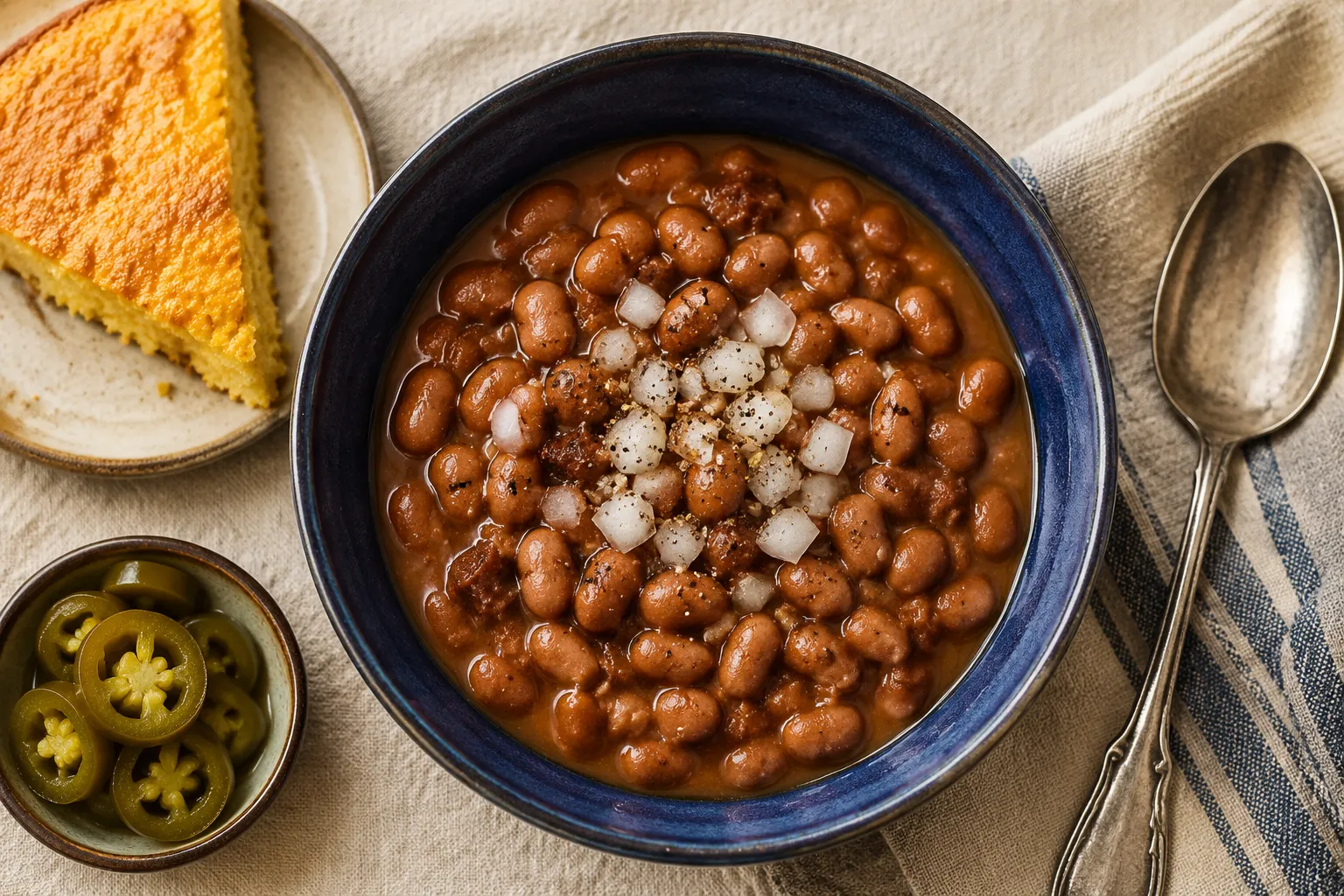
A bowl of beans is a complete meal in its own right, but the classic pairings turn it into the kind of supper people remember. Ladle the beans over a wedge of buttery cornbread or a scoop of fluffy white rice, then top with raw diced onion, a shake of hot sauce, and a few rounds of pickled jalapeño. A simple side of stewed greens or a sliced tomato salad rounds out the plate without competing for attention.
Leftovers might actually be the main event. Day-two beans are creamier, smokier, and just better, and they morph effortlessly into other dinners. Blend them with a splash of broth for an instant bean soup, mash and refry them with a little bacon fat for the easiest burrito filling on the planet, or pile them onto a baked potato with sharp cheddar and scallions. A few thick slices of garlic bread on the side never hurt anyone, especially when there's pot liquor to mop up.
This is comfort food that earns its keep — affordable, freezer-friendly, and somehow more soul-satisfying every time you make it. Once you've kept a bag of pintos and a smoked hock in your pantry on standby, you'll find yourself reaching for these recipes for brown beans any week the budget gets tight or the weather turns mean.
💡 Expert Tips
- **Use fresh beans.** Dried beans are shelf-stable but not immortal — anything older than a year will fight you no matter how long it cooks. Buy from a store with high turnover and check the package date.
- **Salt at the end, never the beginning.** Salting early can keep bean skins firm and tough. Wait until the beans are tender all the way through, then season aggressively at the finish.
- **Keep the simmer lazy.** A hard, rolling boil shreds the skins and turns the pot into mush. You want quiet bubbles barely breaking the surface for the full simmer time.
- **Don't drain the pot liquor.** That smoky, starchy broth is the soul of the dish. Store and reheat the beans in it, and don't be tempted to pour it off when serving.
- **Build flavor before you add water.** Sweating the onion and garlic and searing the ham hock for a minute on each side is what separates a great pot from a flat one.
🔄 Variations & Substitutions
This recipe is the classic baseline, but it bends in plenty of directions once you know it. Swap the protein, push the heat, change the bean — the technique stays the same.
- **Vegetarian Brown Beans** — Skip the pork and add a tablespoon of soy sauce, a teaspoon of liquid smoke, and a chipotle in adobo for that smoky-savory backbone.
- **Bacon and Brown Sugar** — Render four ounces of thick-cut bacon as your fat, then stir in two tablespoons of brown sugar with the salt at the end for a sweet-savory pot.
- **Spicy Cowboy Style** — Add a diced jalapeño with the onion and a teaspoon of cumin. Finish with cilantro and lime for a Tex-Mex spin.
- **Great Northern Swap** — Sub great northern or navy beans for the pintos to make a paler, more delicate ham-and-bean pot.
- **Smoky Tomato** — Stir in a 14-ounce can of fire-roasted tomatoes during the last 30 minutes of simmering for a richer, redder broth.
🧊 Storage & Leftovers
Cooled brown beans keep beautifully in an airtight container in the refrigerator for up to 5 days. Always store the beans submerged in their cooking liquid — if you pour off the broth, the beans dry out and turn pasty within a day. For longer storage, freeze beans and broth together in quart-sized freezer bags or rigid containers for up to 3 months, leaving about an inch of headspace for expansion.
Thaw overnight in the fridge before reheating, then warm gently on the stovetop over medium-low heat with a splash of water or broth to loosen things up. Stir carefully and infrequently so you don't break the tender beans, and re-taste for salt before serving — frozen beans often need a small pinch to wake them back up. Microwave reheating works in a pinch, but go in 90-second bursts and stir between each so the bottom doesn't scorch.
Frequently Asked Questions
What kind of beans are brown beans?
In most American kitchens, brown beans are simply pinto beans simmered until the cooking liquid turns rich and brown. The pintos themselves are pinkish-tan with darker speckles when dry, but as they cook they release starch into the broth and absorb the smoky flavor of pork, deepening the whole pot to a glossy mahogany color. Some Midwestern cooks use the same name for great northern or small red beans, and a few Appalachian cooks lean on October beans or cranberry beans, but pintos are the universal default. If a recipe simply says "brown beans" without further explanation, reach for a bag of dried pintos.
Do I have to soak dried beans before cooking?
Soaking is not required, but an overnight or 1-hour quick soak shortens cook time and helps beans cook more evenly. Unsoaked beans take roughly 30 to 45 minutes longer on the stovetop and tend to split unevenly, leaving you with a mix of mushy and underdone beans in the same pot. A long overnight soak in cool water (8 to 12 hours) gives you the most consistent texture, while a hot quick-soak — boil for 2 minutes, then rest covered for 1 hour — works in a pinch. Always discard the soaking water and start the cook with fresh liquid.
Why are my brown beans still hard after hours of cooking?
Old beans, hard water, or adding salt and acid too early are the usual culprits. Use fresh dried beans (less than a year old) and salt only at the end of cooking, never at the beginning. Acidic ingredients like tomatoes, vinegar, citrus, or wine can also keep bean skins firm, so add them after the beans are tender. Very mineral-heavy tap water can fight against softening as well — try filtered water if you live somewhere with notably hard water. Finally, make sure your simmer is gentle and the pot stays partially covered so the beans cook in liquid the entire time.
Can I make brown beans without meat?
Yes. Swap the ham hock for a teaspoon of smoked paprika, a tablespoon of soy sauce or tamari, and a generous drizzle of olive oil to give the pot the savory, fatty depth pork normally provides. A few drops of liquid smoke or a smoked dried chile (like a chipotle or ancho) tossed into the simmer also work beautifully. Use vegetable broth in place of chicken broth, and finish the pot with a knob of butter or a glug of good olive oil for richness. The texture and color will still be classic brown beans — savory, smoky, and full of body.
How long do cooked brown beans keep?
Refrigerate up to 5 days or freeze up to 3 months in their cooking liquid so they stay creamy when reheated. Always store the beans submerged in their pot liquor, since exposed beans dry out and turn pasty in the fridge. For the freezer, let the pot cool fully, then portion beans and broth into quart freezer bags or airtight containers, leaving an inch of headspace for expansion. Thaw overnight in the fridge and reheat gently on the stovetop with a splash of broth or water, stirring carefully so you don't break the tender beans.
Recipes for Brown Beans: Easy Stovetop Southern Style