Southern Black Eyed Peas Recipe (Lucky New Year's Dish)
Ingredients
Scale
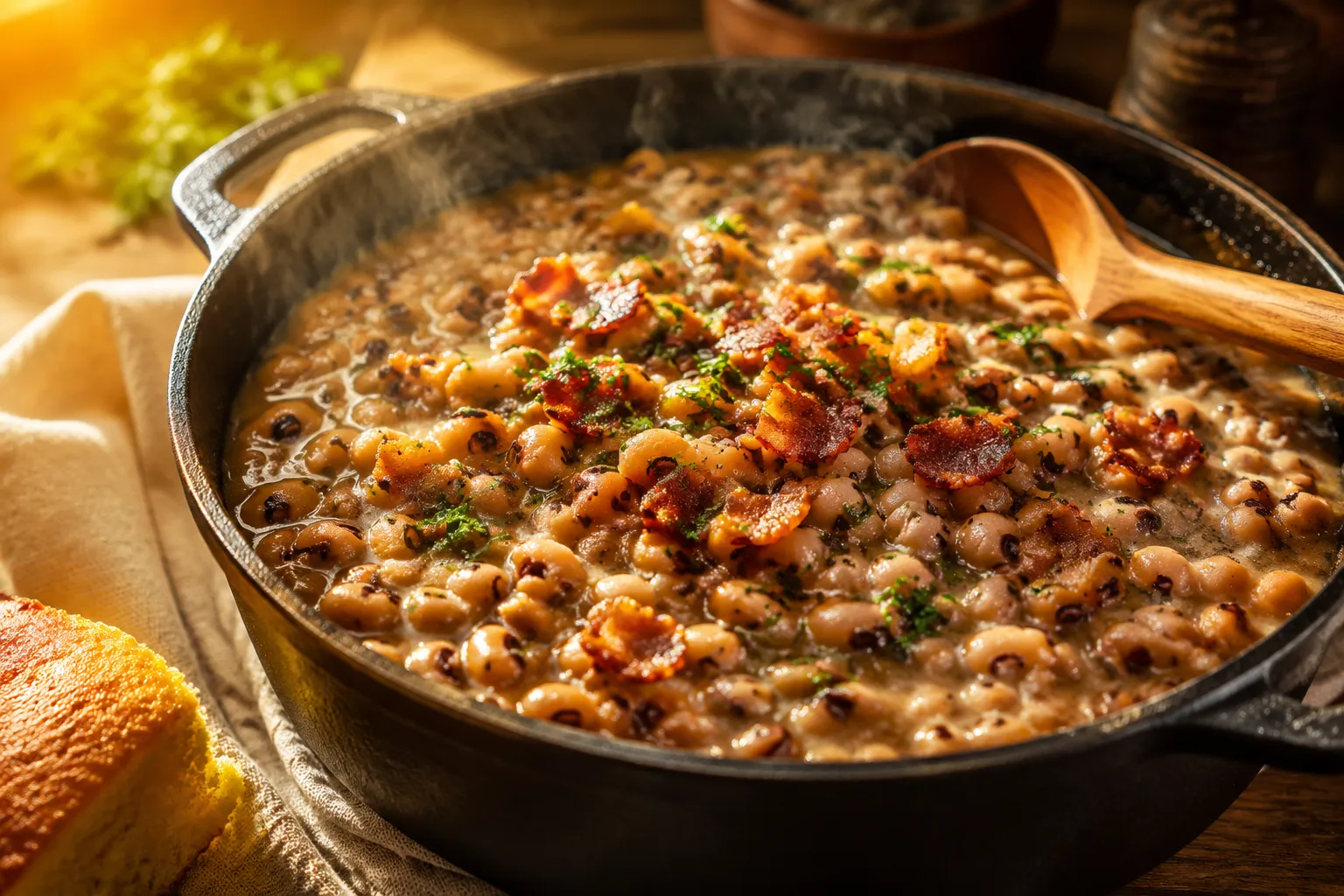
A classic Southern black eyed peas recipe simmered with smoky bacon, sweet onion, and garlic until creamy, rich, and packed with down-home flavor.
This Southern black eyed peas recipe is the kind of pot that makes a kitchen smell like family — smoky bacon hitting hot fat, sweet onion melting into garlic, and a slow bubble of broth that tugs at every belly in the house. It's the dish my grandmother kept simmering on the back burner every January 1st, and the one I crave on a Tuesday in November when nothing else will do. One bite of those creamy beans in their glossy pot liquor, and you understand why the South has been making this for generations.
The thing I love about a proper pot of these humble beans is how unfussy it is. You don't need a culinary degree or a specialty grocery run — just a pound of dried legumes, a hunk of smoked pork, and a little patience. Low and slow does the heavy lifting, transforming pantry staples into something that tastes like it took all day (and, honestly, mostly did — but most of that time is hands-off).
Whether you're cooking up a New Year's Day dinner for good luck or just need a soul-warming side that stretches the grocery budget, this version layers smoky bacon, a meaty ham hock, and just enough warmth from paprika and red pepper to keep things lively. Pull up a chair — let's get a pot going.
In the South, black eyed peas aren't just dinner — they're a small act of faith. The tradition of eating them on January 1st traces back generations, with most folklore pointing to the Civil War era, when these humble beans (often dismissed as livestock feed by Union troops) became one of the few crops left for Southern families to eat. Survival turned into superstition, and by the early 1900s a bowl on New Year's Day was thought to bring good luck and prosperity for the year ahead.
The symbolism is part of the charm. The peas represent coins, the greens beside them stand in for paper money, and a wedge of golden cornbread is meant to call in gold. It's the kind of edible folklore that makes a meal feel weighted with intention, even if you're skeptical about the whole luck angle. Either way, you end up with a stick-to-your-ribs dinner that costs almost nothing to put together.
You'll often hear this dish called Hoppin' John, but the two aren't quite identical. Classic Hoppin' John folds rice directly into the pot or serves the seasoned beans spooned over a mound of it, making it a complete one-bowl meal. A pure pot of stewed beans like this one is more of a side — looser, brothier, and meant to be ladled next to fried chicken, baked ham, or a smoky rack of ribs. Cook this batch with rice on the side and you've basically got both options on the table.
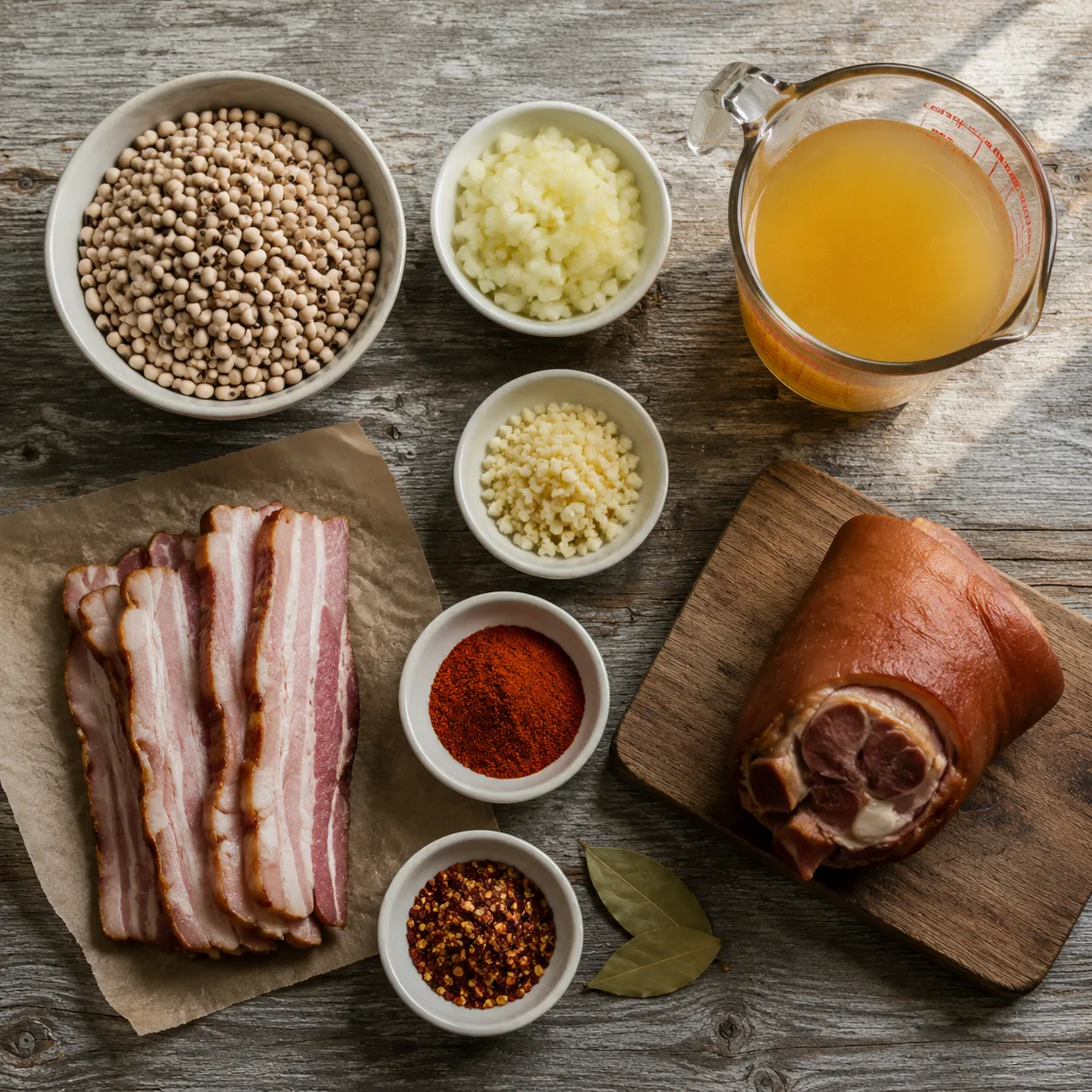
A great pot of Southern black eyed peas is built on a short list of honest ingredients, each pulling its weight. You don't need fancy stuff — you need the right stuff. Here's what to pull out before you start chopping.
Dried black eyed peas vs. canned. Dried is the way to go for the best texture and that signature creamy pot liquor. They drink up flavor as they simmer in a way canned beans simply can't replicate. That said, three 15-ounce cans will get you to dinner faster on a busy weeknight — I've included that swap in the variations below.
The smoky meat. This is where the soul lives. Thick-cut bacon gives you rendered fat to sauté in plus crispy bits to garnish, while a smoked ham hock deepens the broth into something rich and almost porky-sweet. Smoked turkey wings work beautifully if you don't eat pork. Use one, or layer both for maximum flavor.
Aromatics and seasoning. A diced yellow onion, four fat cloves of garlic, a couple of bay leaves, smoked paprika, and a pinch of red pepper flakes form the backbone. Salt comes at the end — once the ham hock has done its salty work, you don't want to over-season early.
The liquid. Low-sodium chicken broth gives you control over the final seasoning. Water works in a pinch, especially with a generous hock in the pot, but broth gives the beans a flavor head start.
The full printable recipe lives in the card below, but here's the rhythm of the cook so you know what to expect at the stove. Plan ahead — a quick overnight soak makes a real difference in cooking time and final texture.
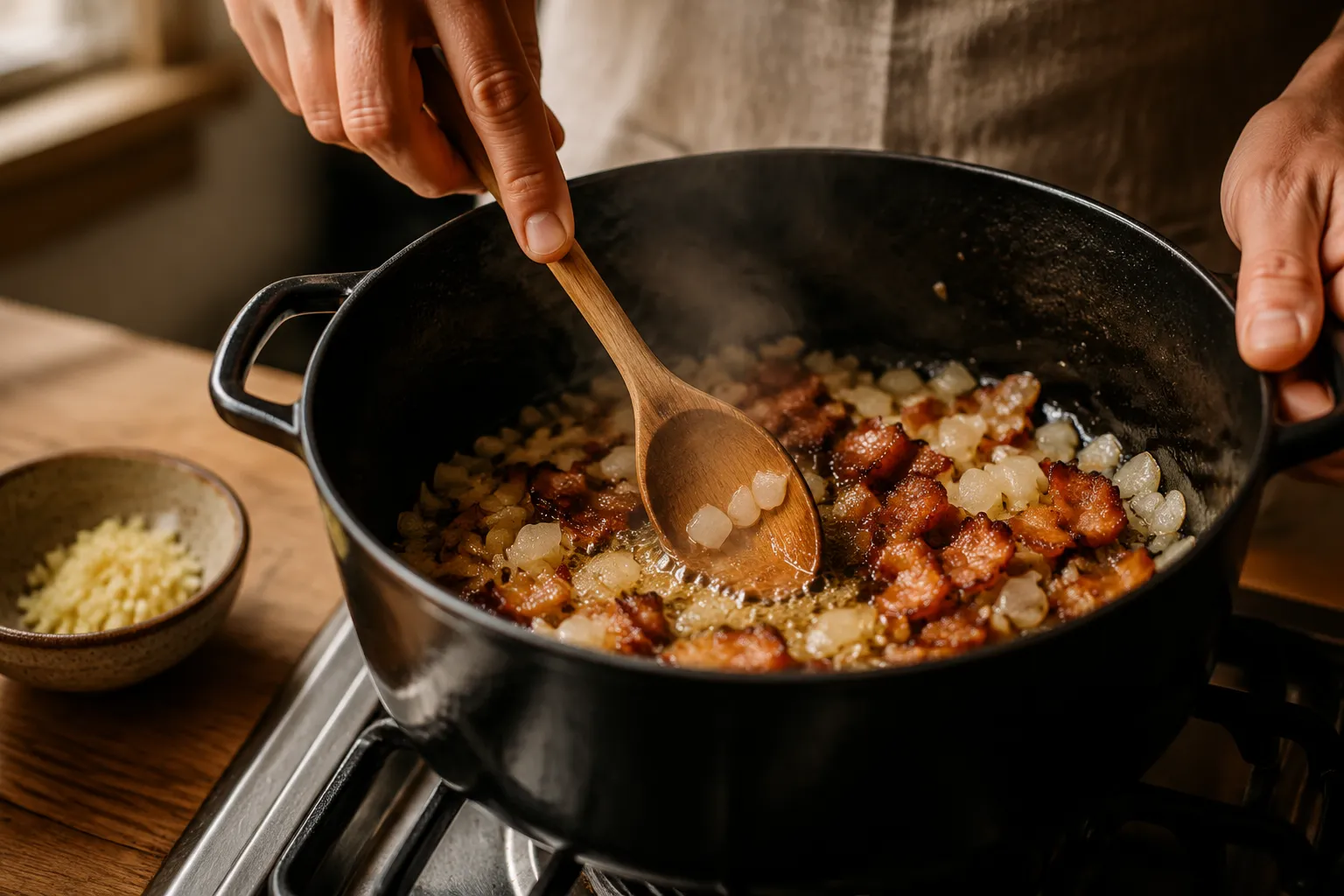
You start by rendering chopped bacon until it's crisp and the bottom of the pot is slick with golden fat. Pull the bacon out, leaving the rendered drippings behind, then drop in the diced onion. It'll sizzle and turn translucent in about five minutes. Garlic goes in last — it scorches fast, so thirty seconds is plenty.
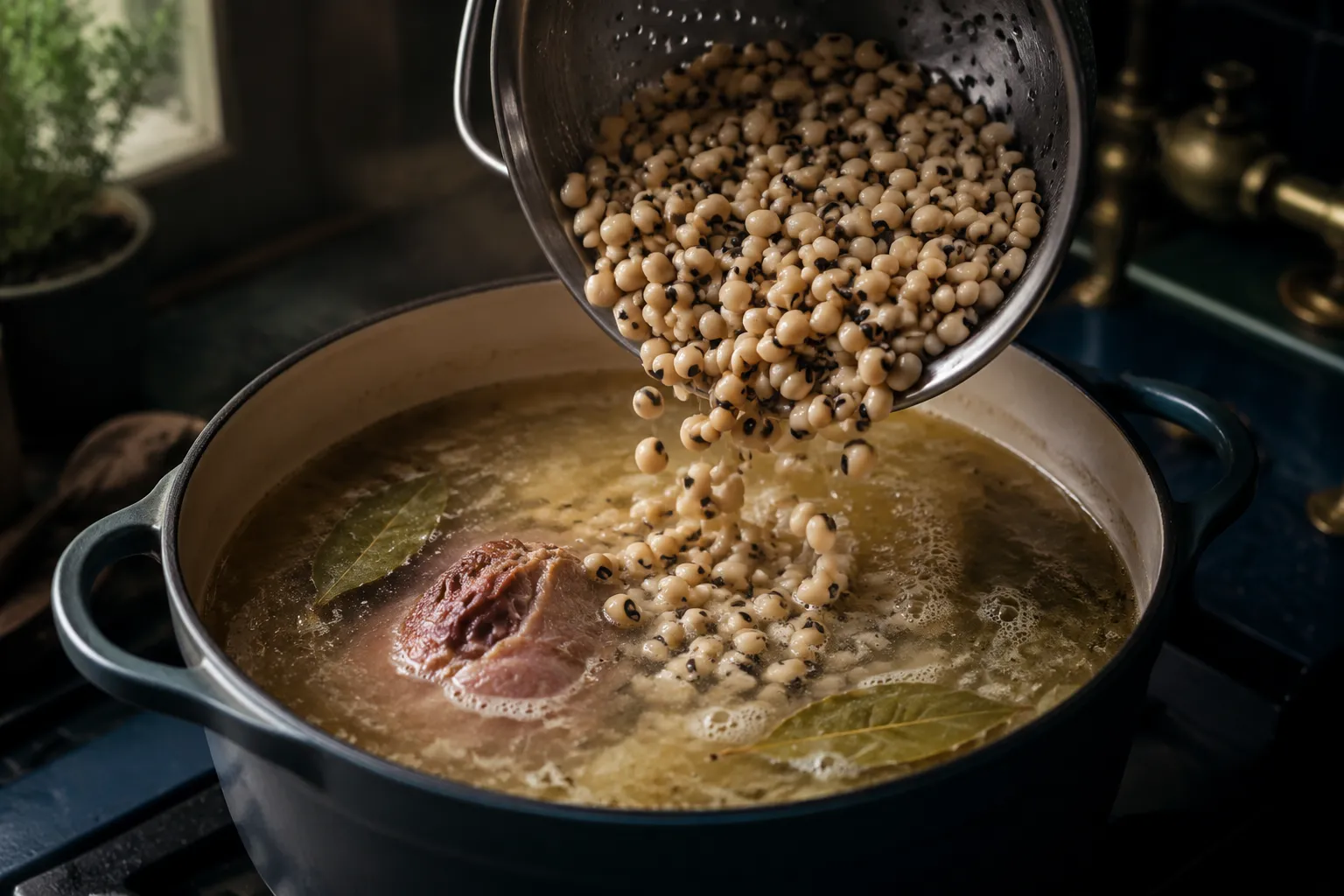
Next come your drained dried black eyed peas, the ham hock, broth, bay leaves, smoked paprika, and red pepper flakes. Bring it all up to a rolling boil, then knock the heat down to a bare simmer. This is where patience earns its keep — covered (with the lid slightly cracked), the pot needs about an hour to an hour and a half to coax the beans into tender, creamy submission without breaking them apart.
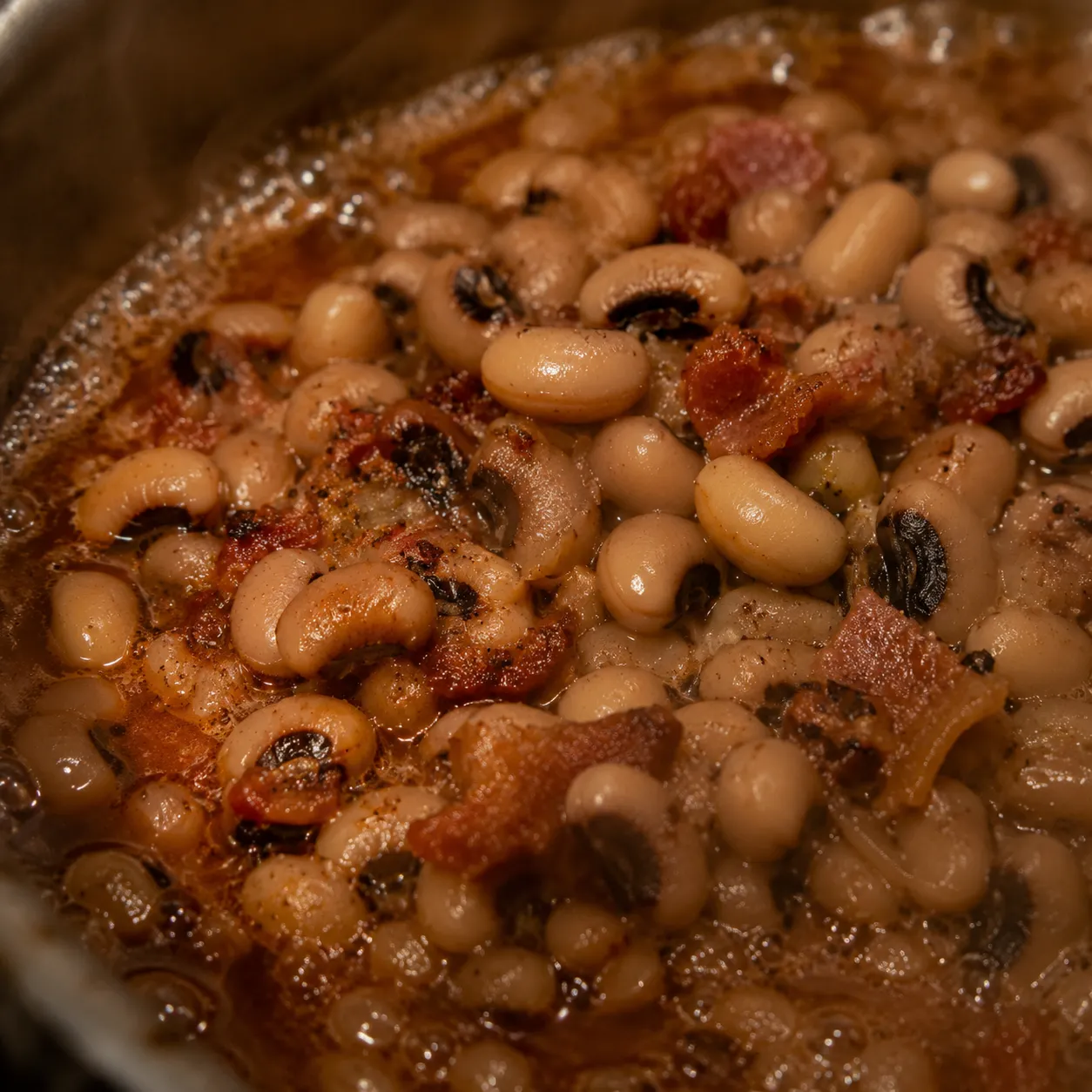
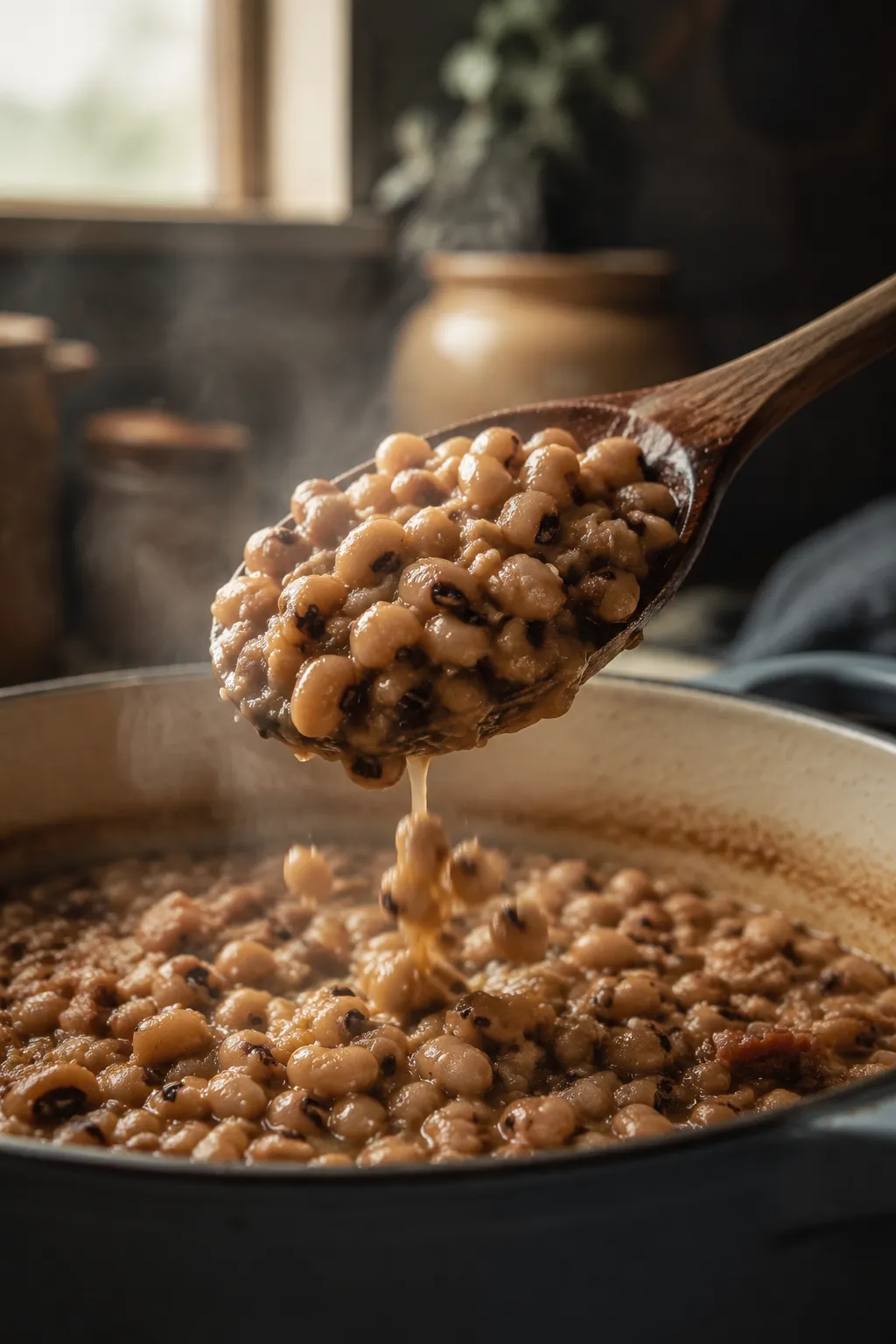
Around the 45-minute mark, things start to look like a real pot of beans. The liquid thickens, the peas plump up, and the broth turns a glossy mahogany from the rendered ham. Stir gently every 15 or 20 minutes so nothing sticks, but resist the urge to crank the heat — an aggressive boil will turn your beans into mush.
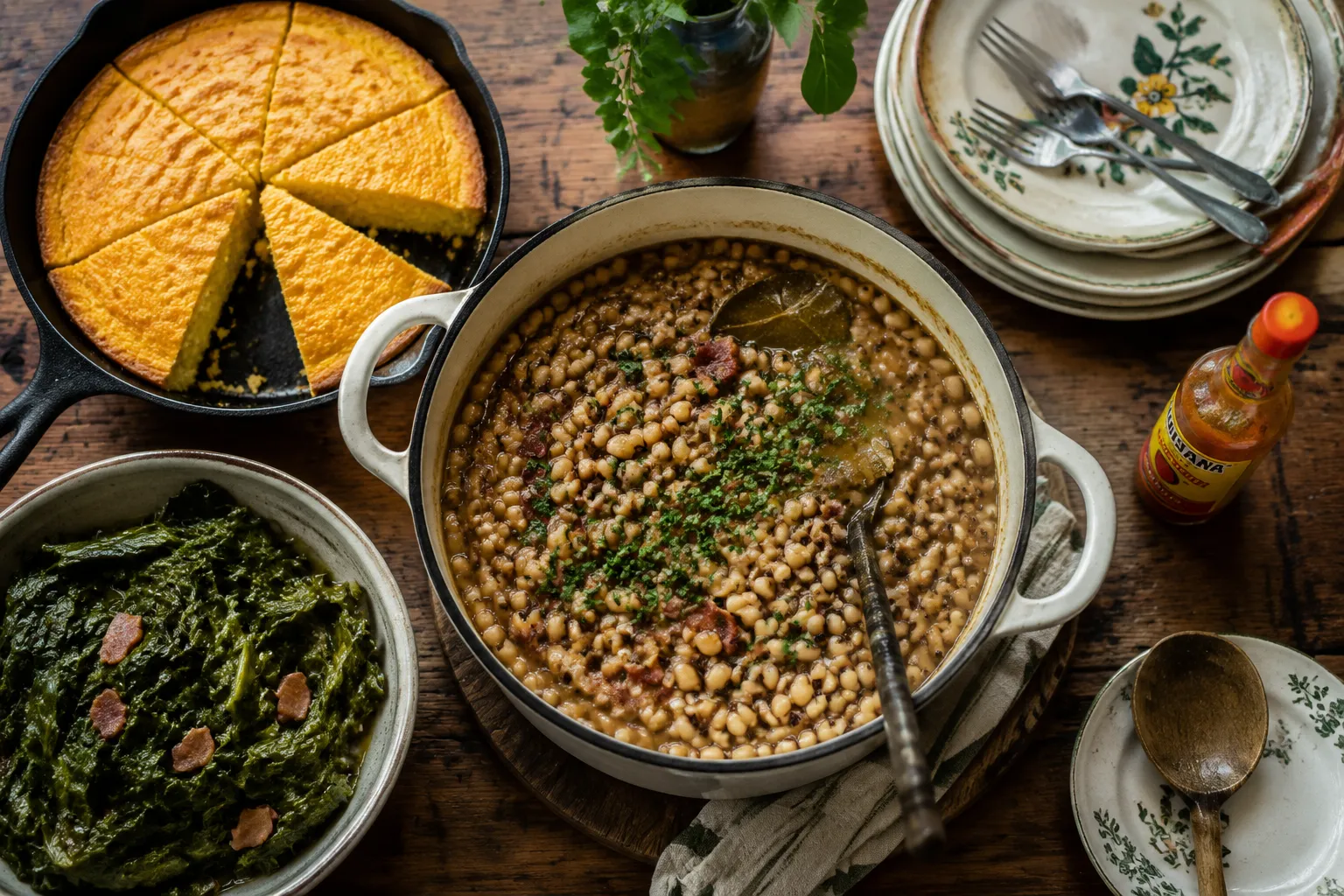
Once the beans are tender, fish out the ham hock, shred the meat off the bone, and stir those tender shreds back into the pot. Discard the bay leaves, taste the broth, and finish with salt and plenty of black pepper. A pinch of Cajun seasoning at this stage is a beautiful liberty if you want more backbone — go light, since the peas are already well-seasoned. Let the pot rest off the heat for about ten minutes before serving. The beans drink up flavor as they cool, and the broth thickens to that classic creamy consistency.
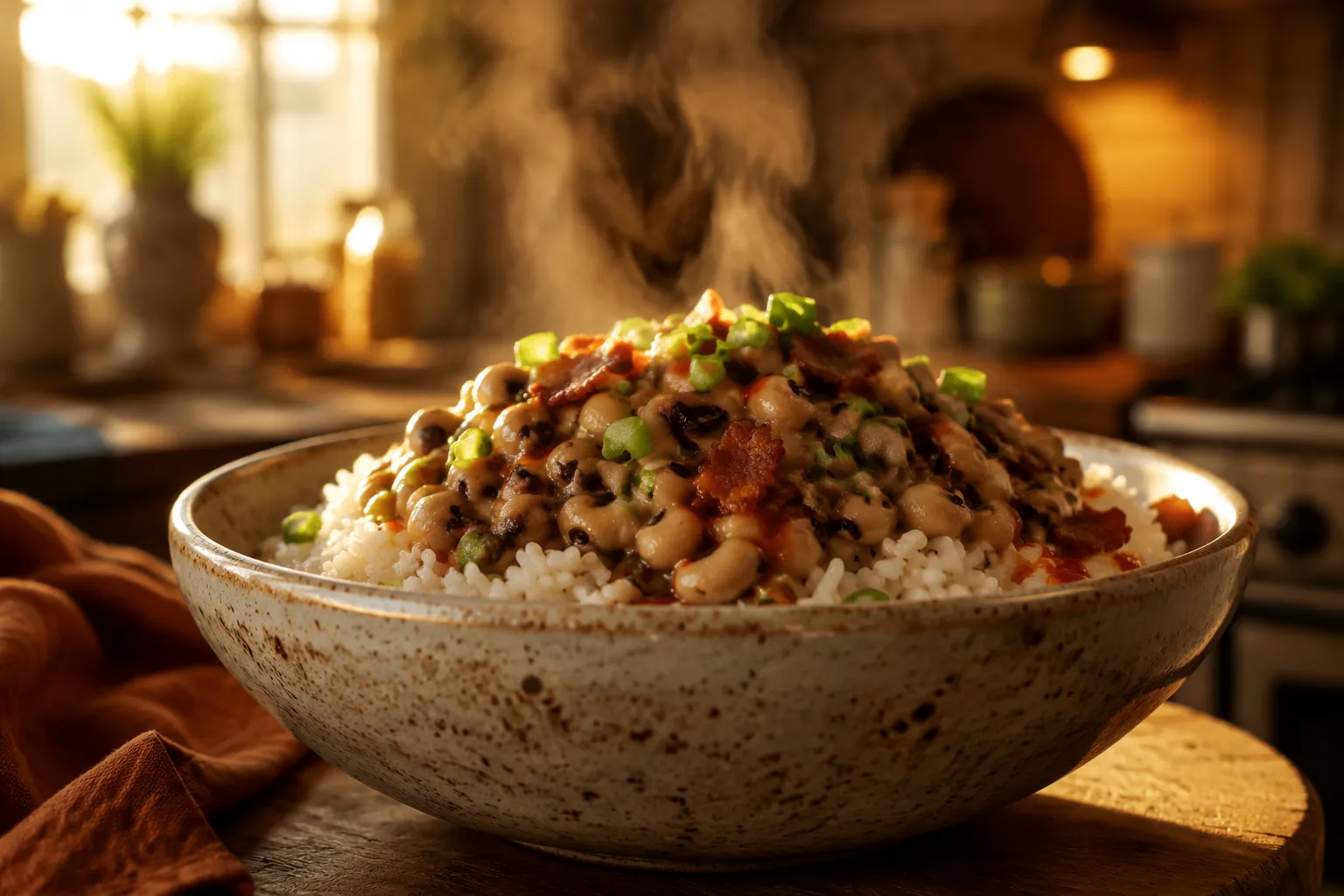
A bowl of these beans is plenty satisfying on its own, but the full Southern spread is where the magic happens. Three sides turn this from a pot of beans into a full-on meal worth lighting candles for.
First and most importantly: a wedge of warm buttermilk cornbread, the kind with a crackly crusted bottom and a tender, just-sweet-enough crumb. You'll want it for sopping up pot liquor — that's a non-negotiable Southern law. Crumble some right into your bowl if you're a heretic like me.
Second: a heap of Southern collard greens, slow-cooked with their own little smoked turkey or ham hock until silky. The peas symbolize coins and the greens stand in for folding money — together they're a New Year's power couple, but they belong on the table any night of the week.
If you want to take the meal in a Hoppin' John direction, ladle the seasoned beans over a mound of fluffy white rice and call it dinner. Add a roasted chicken thigh or a slice of baked ham, splash a little hot sauce on top, and you've got a plate that punches well above its grocery weight.
This is the kind of recipe that rewards a little planning. The flavors deepen overnight, leftovers reheat beautifully with a splash of broth to loosen the pot liquor, and a single pound of beans stretches across multiple meals without ever feeling like leftovers. I make a double batch every January and tuck portions into the freezer so a steaming bowl is never more than a few minutes away.
Whether this becomes your annual tradition or just your favorite Tuesday-night side, I hope it earns a permanent spot in your rotation. Grab a wooden spoon and start a pot — your kitchen is about to smell incredible.
This pot is forgiving and genuinely easy to make your own. A few of my favorite spins:
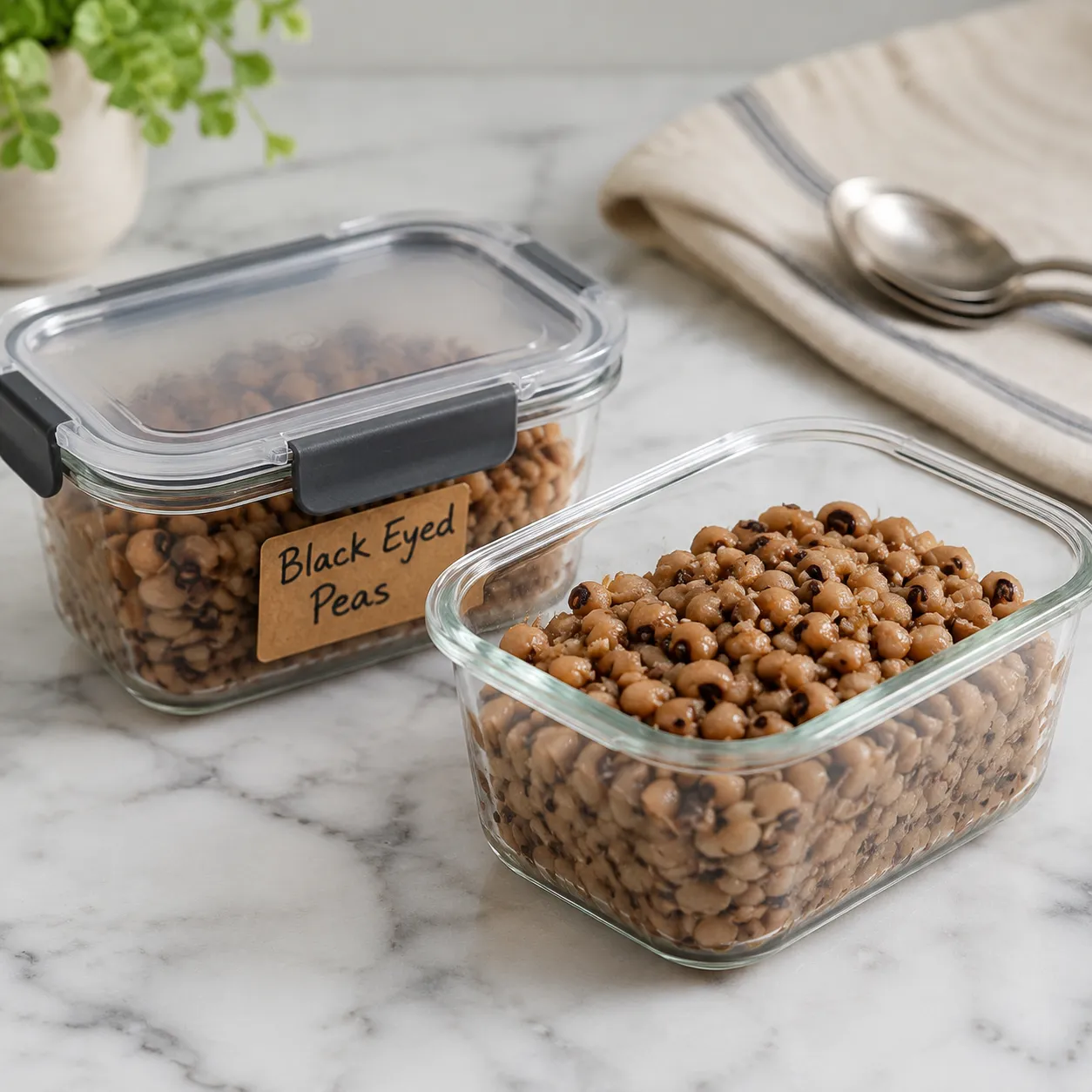
Cooked black eyed peas store like a dream and arguably taste even better the next day, once the smoky flavors have had time to meld. Cool the pot to room temperature, then transfer the beans and their broth to airtight containers and refrigerate for up to 4 days. The broth will thicken as it sits — that's a feature, not a bug. Reheat gently on the stovetop over medium-low heat with a splash of broth or water to loosen, stirring occasionally until warmed through.
For longer storage, portion the cooled beans into freezer-safe containers or zip-top bags (lay them flat to save space) and freeze for up to 3 months. Thaw overnight in the fridge before reheating, or warm directly from frozen in a covered pot over low heat, stirring often. Avoid reheating in the microwave at high power — it can split the beans and dry out the broth.