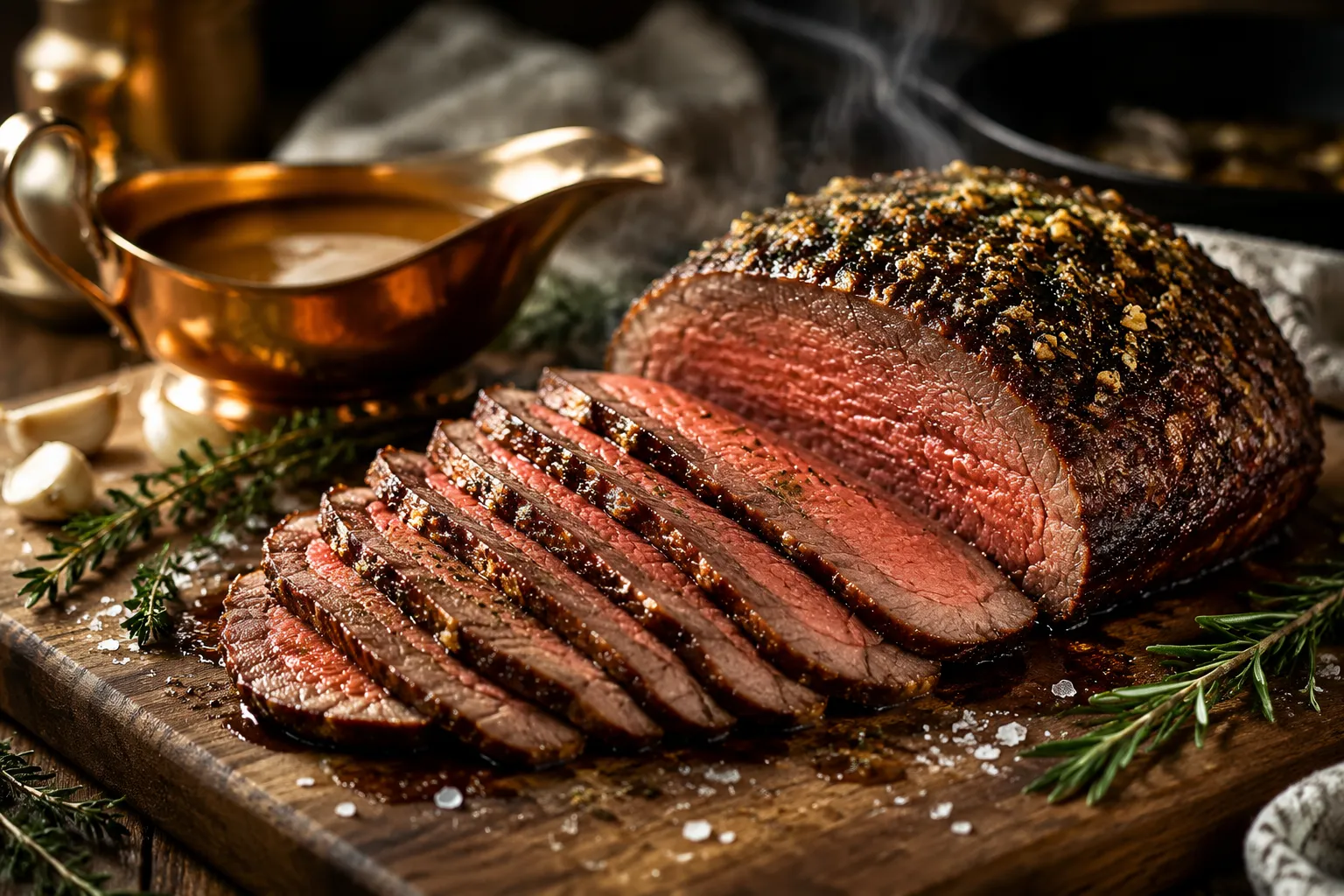
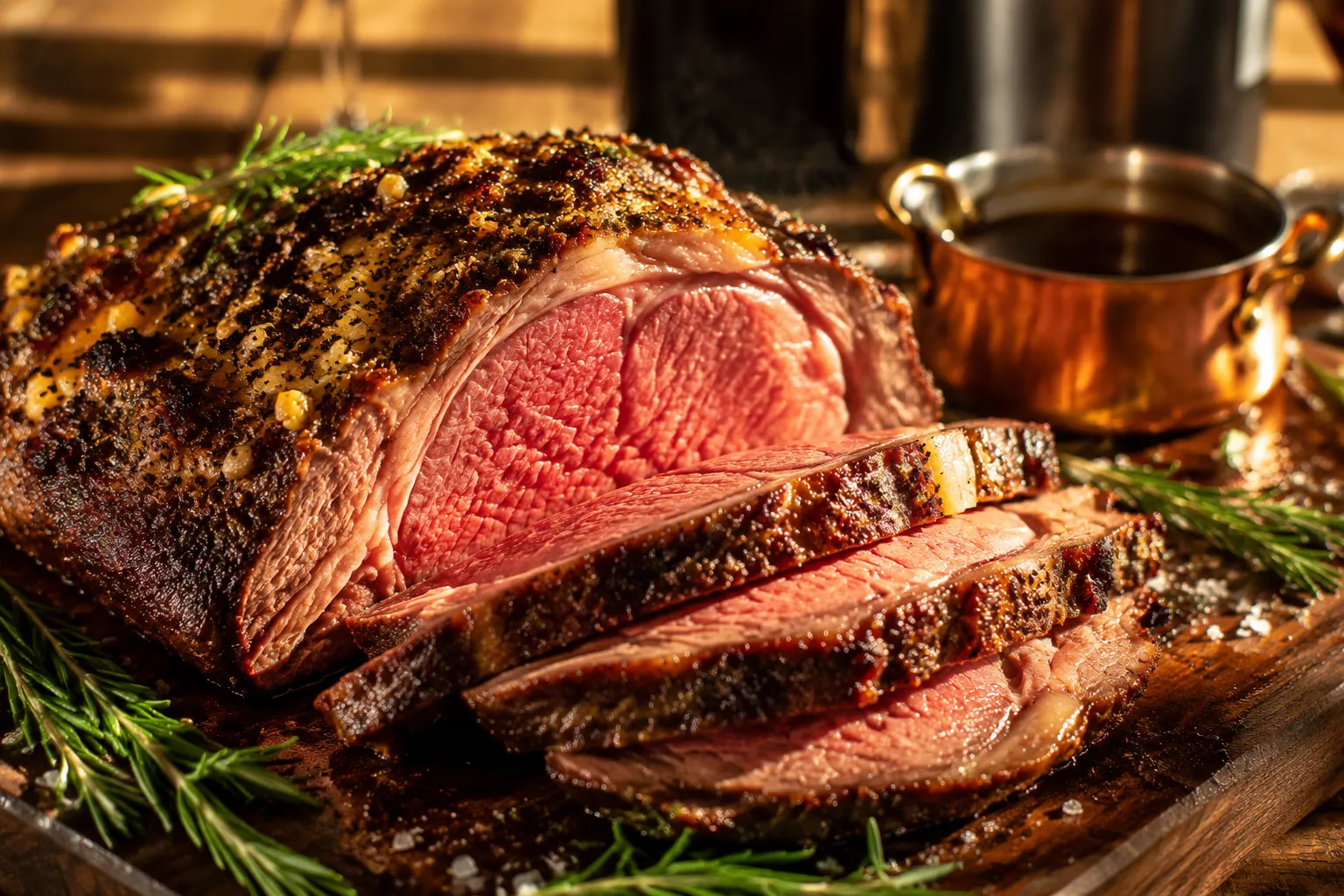
A foolproof sirloin tip roast with a garlic-herb crust, reverse-seared for edge-to-edge pink and a rich pan gravy that rivals any Sunday roast.
Why You'll Love This Recipe
- **Budget-friendly, impressive results:** This lean beef cut costs less than many traditional roasts but still feels special enough for Sunday dinner or a holiday table.
- **Reverse sear for juicier slices:** Low, slow roasting followed by a hot finish helps create an evenly rosy center and a browned, savory crust.
- **Big flavor from simple ingredients:** Garlic, rosemary, thyme, olive oil, butter, and beef broth do all the work without a complicated shopping list.
- **Built-in pan gravy:** The drippings turn into a rich gravy right while the roast rests.
- **Excellent leftovers:** Thin slices are perfect for sandwiches, French dips, salads, and quick weeknight dinners.
sirloin tip roast is one of those quietly brilliant beef cuts that can feel like a Sunday dinner splurge without the rib roast price tag. It is lean, flavorful, and wonderfully sliceable when you treat it gently: a good salt rest, a low oven, a hot finish, and a long enough pause before carving. The result is rosy in the center, deeply browned at the edges, and exactly the kind of roast that makes everyone hover near the cutting board.
This recipe uses a reverse sear method, which is my favorite way to cook lean beef evenly. Instead of blasting the meat with high heat from the start, we slow-roast it first, then finish hot to build a savory garlic herb crust. That means less gray overcooked meat around the outside and more tender, juicy slices from edge to edge.
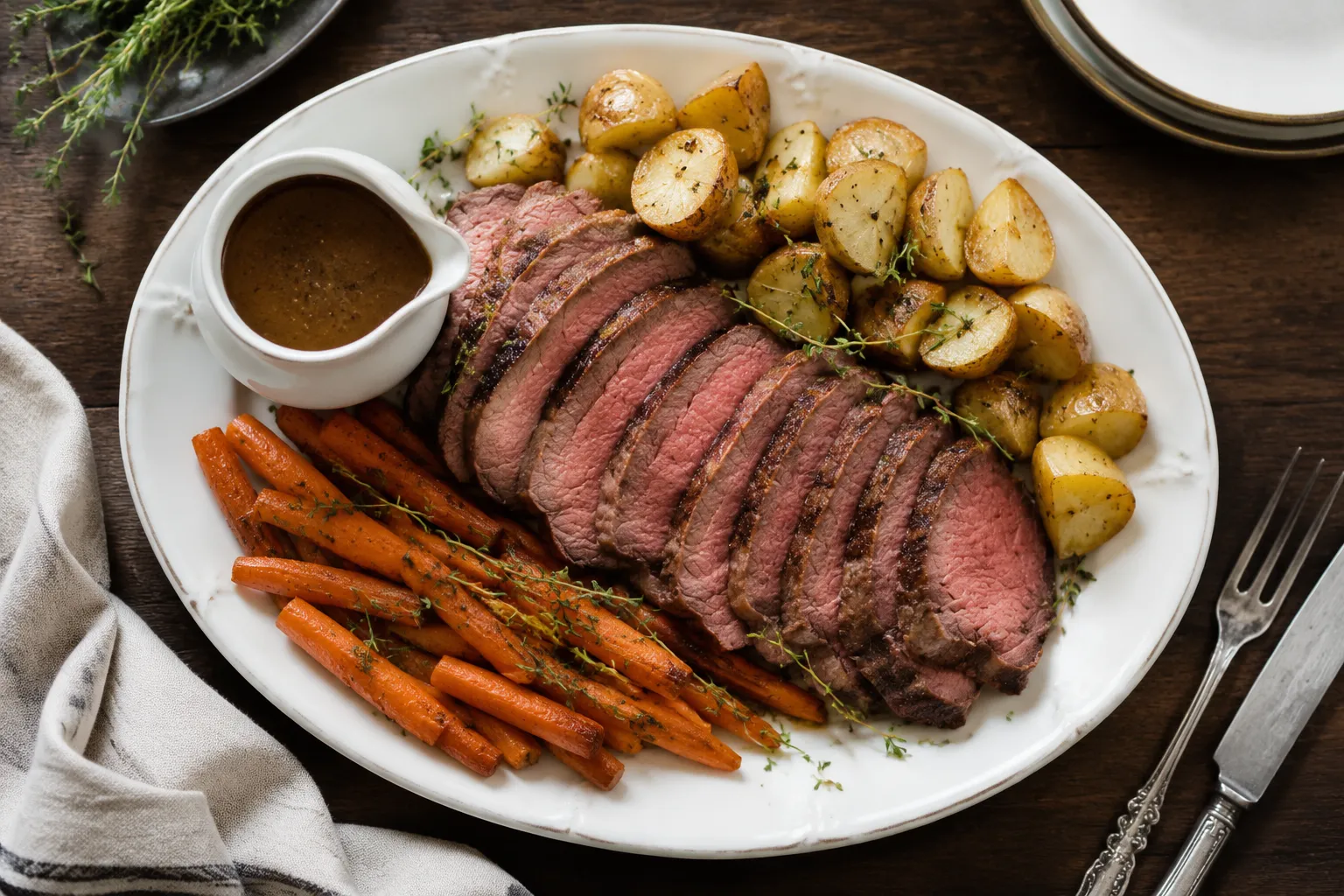
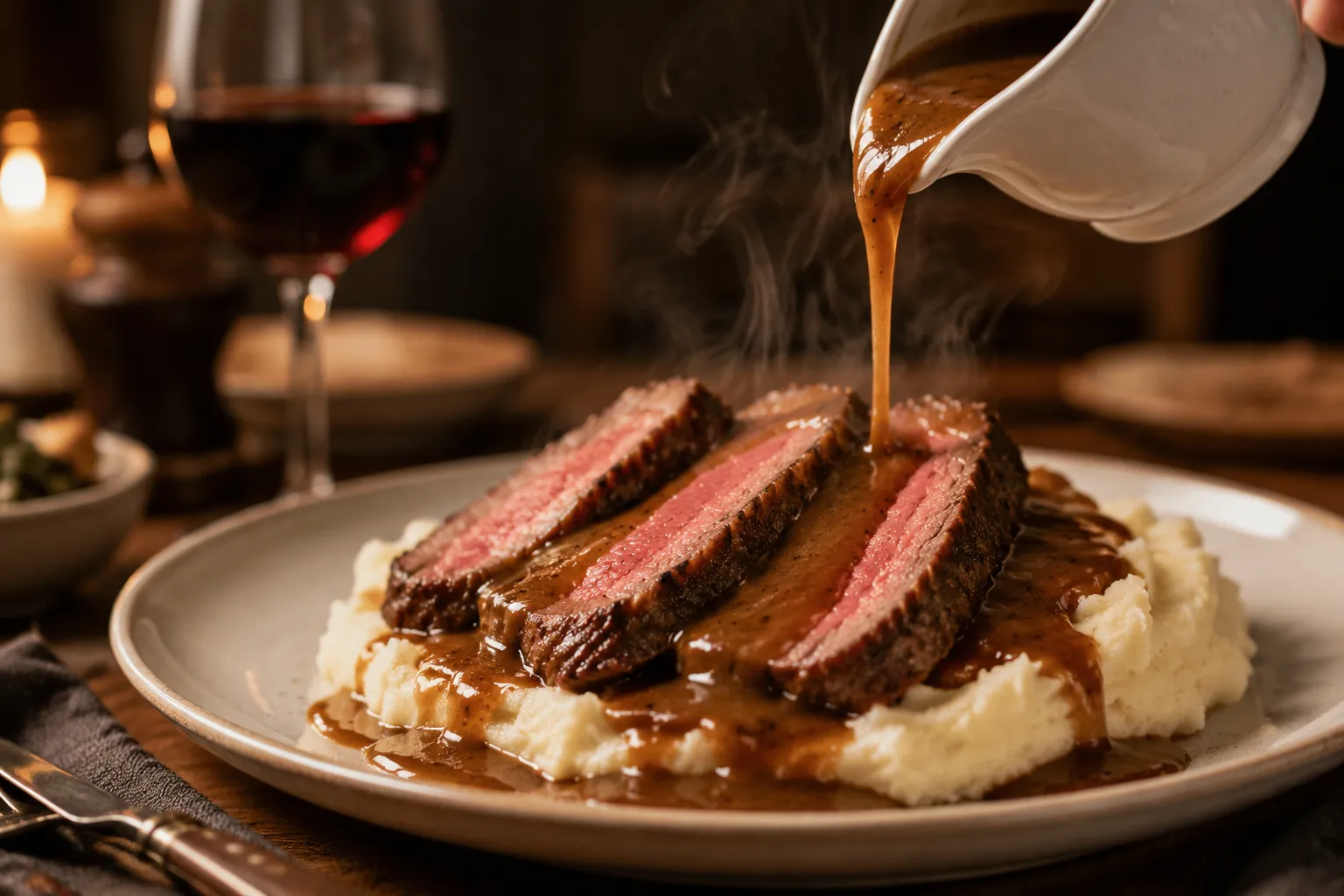
The pan drippings become a simple, glossy gravy with beef broth and butter, the kind you want spooned over mashed potatoes or tucked beside roasted potatoes and carrots. If you like a little bite with your beef, a dollop of horseradish sauce is classic, bright, and just sharp enough to balance the richness.
What Is a Sirloin Tip Roast?
A Sirloin Tip Roast comes from the round, near the hind leg of the cow, not from the tenderloin or the top sirloin. Because this muscle gets more exercise, it is naturally leaner and a little firmer than premium roasting cuts, but that does not mean it has to be tough. The secret is to avoid overcooking it and to slice it thinly against the grain so each bite feels tender rather than chewy. Think of it as a budget-friendly roast beef cut that rewards a little care.
It is easy to confuse this cut with top sirloin or tri-tip, but they cook a bit differently. Top sirloin comes from the loin and is generally more tender, while tri-tip is a triangular cut with more marbling and a looser grain. The sirloin tip is best cooked like classic roast beef: seasoned well, brought up slowly to the right internal temperature, rested, and carved thin. If you have ever wondered how to slice roast beef for those deli-style slices, this is the kind of cut where the technique really matters.
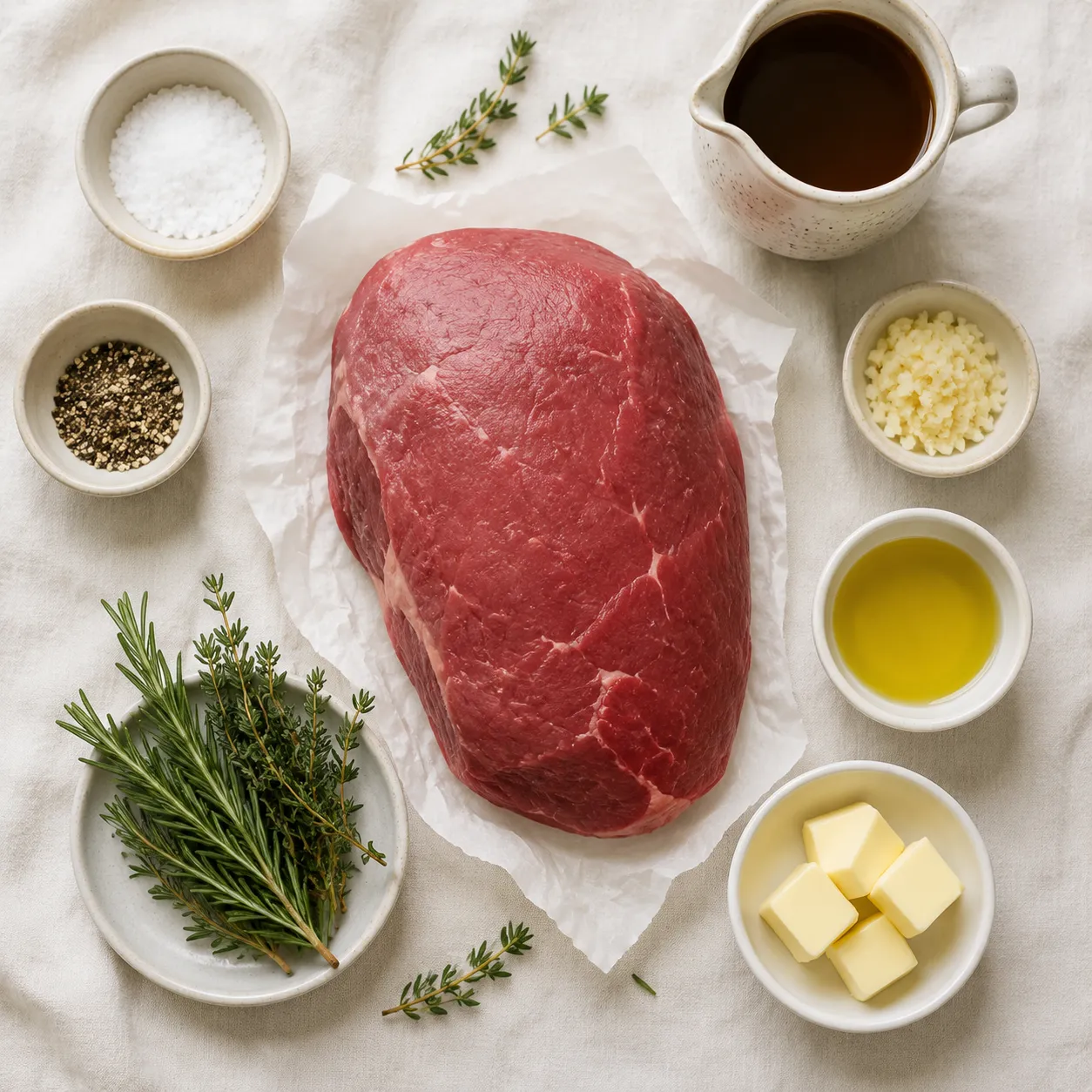
When shopping, look for a roast that is evenly shaped, ideally around 3 pounds, with a deep red color and a small fat cap if possible. Avoid pieces that are wildly tapered on one end, since the thin side can overcook before the center is ready. A butcher can tie the roast for you, or you can use kitchen twine at home to help it hold a neat, compact shape. A uniform roast cooks more predictably and looks beautiful once sliced.
Ingredients for a Garlic-Herb Beef Roast
The ingredient list is intentionally simple because the cooking method does the heavy lifting. You will need the roast, kosher salt, black pepper, garlic, olive oil, fresh rosemary, fresh thyme, butter, and beef broth. The salt starts the dry brine, drawing seasoning into the meat while helping the surface dry out so it browns more effectively. Fresh herbs give the crust that steakhouse aroma, but dried herbs can work in a pinch if that is what you have.
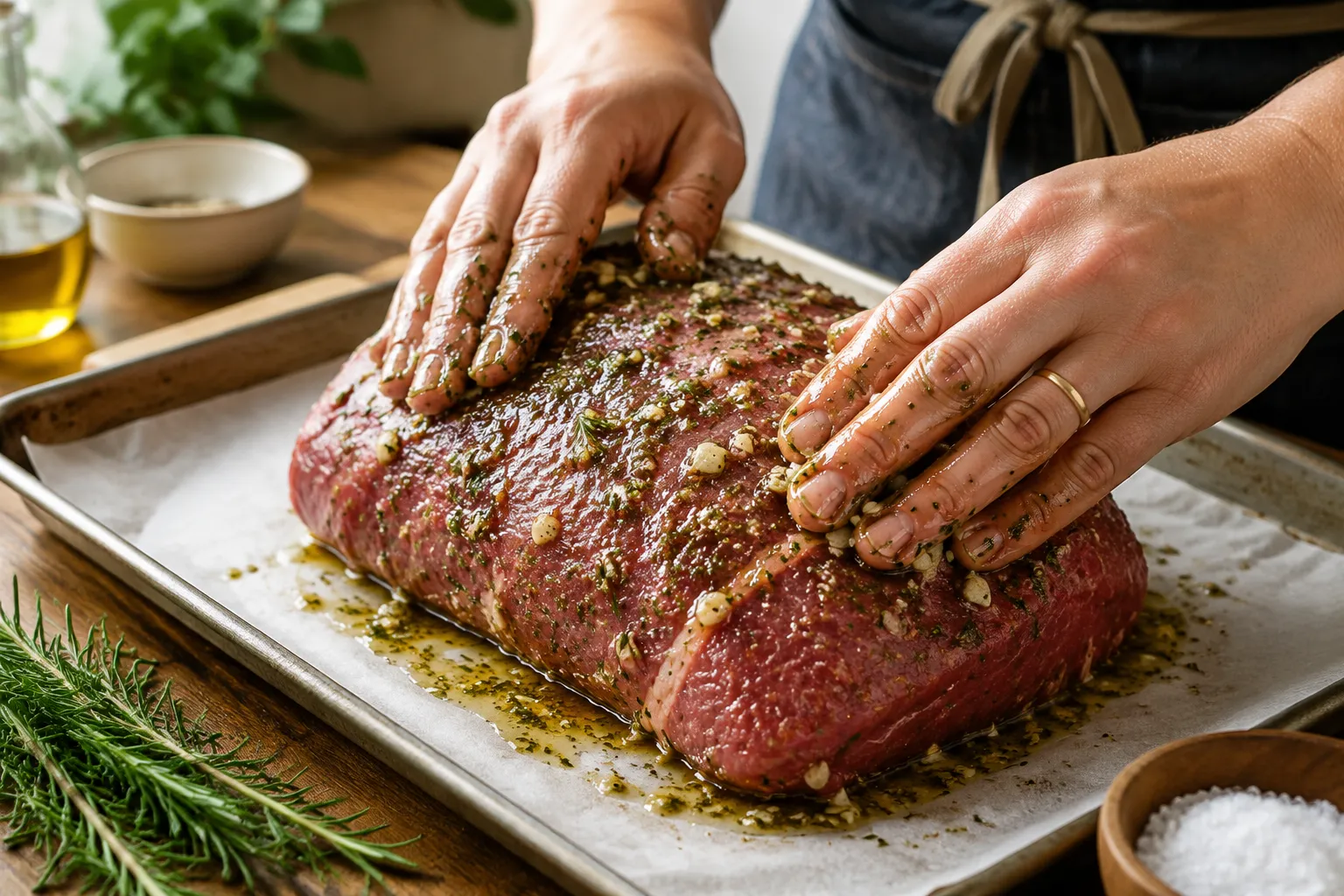
The garlic herb crust is a quick paste of minced garlic, olive oil, rosemary, thyme, and pepper. It clings to the outside of the beef and turns savory, fragrant, and deeply bronzed during the final high-heat sear. If you already have garlic herb butter in the fridge, you can use a spoonful to finish the gravy or melt a little over the carved slices. Just be mindful of salt, especially if your butter is seasoned.
For the pan gravy, beef broth loosens all the browned bits from the pan and turns them into something silky. A little butter adds body and shine, while an optional splash of Worcestershire or red wine can bring more depth. If you love a more traditional beef pan gravy, whisk in a teaspoon or two of flour with the butter before adding the broth. Keep it simple and taste as you go—the roast itself brings plenty of flavor.
How to Cook a Tender Oven Roast
The most important step happens before the oven ever turns on: salt the beef ahead of time. A dry brine, even for a few hours, seasons the meat more deeply and helps create a better crust. Overnight is ideal, but if you are cooking the same day, give it at least one hour uncovered in the refrigerator. Before roasting, let the beef sit at room temperature for 45 to 60 minutes so it does not go into the oven ice-cold.
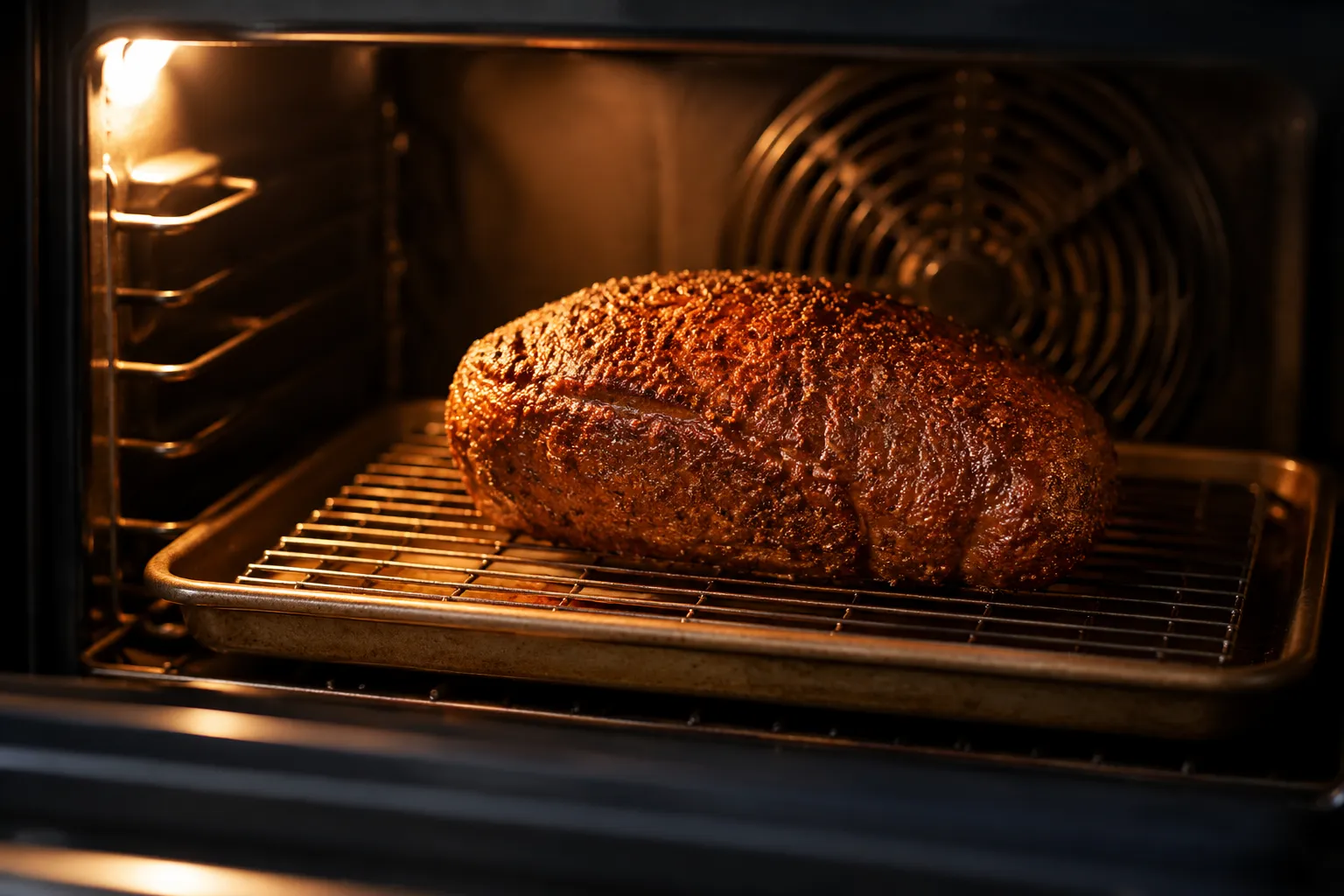
Once seasoned, place the roast on a rack set inside a sheet pan or roasting pan. The rack lets hot air circulate around the meat, which encourages even cooking and keeps the bottom from steaming. A low oven gently brings the center up to temperature while preserving moisture in this lean cut. This is where patience pays off: rushing with too much heat can make the exterior dry before the middle is ready.
After the slow roast, the oven gets cranked up hot for the final sear. That short burst of heat darkens the exterior, wakes up the herbs, and gives you a roast that looks as good as it tastes. Because the meat is already close to finished, the sear should be brief and controlled. Watch it closely and use your thermometer rather than relying on the clock alone.
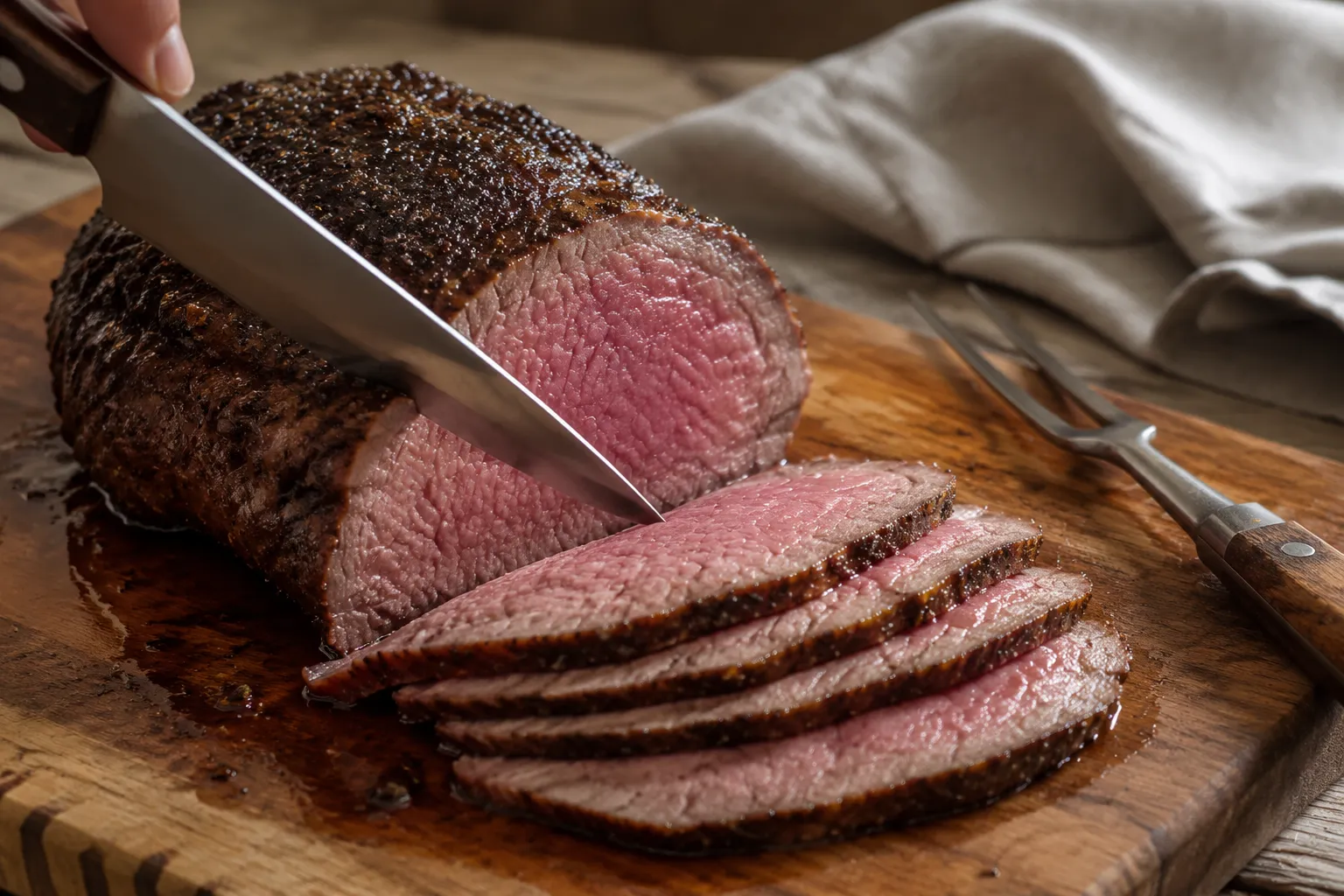
When the roast reaches your target temperature, transfer it to a cutting board and rest it before slicing. Resting allows the juices to redistribute so they stay in the meat instead of running all over the board. Then carve in thin slices against the grain, using a sharp slicing knife and steady, even strokes. Thin slices are the difference between pleasantly tender roast beef and a chew that feels tougher than it should.
Internal Temperature Guide for Roast Beef
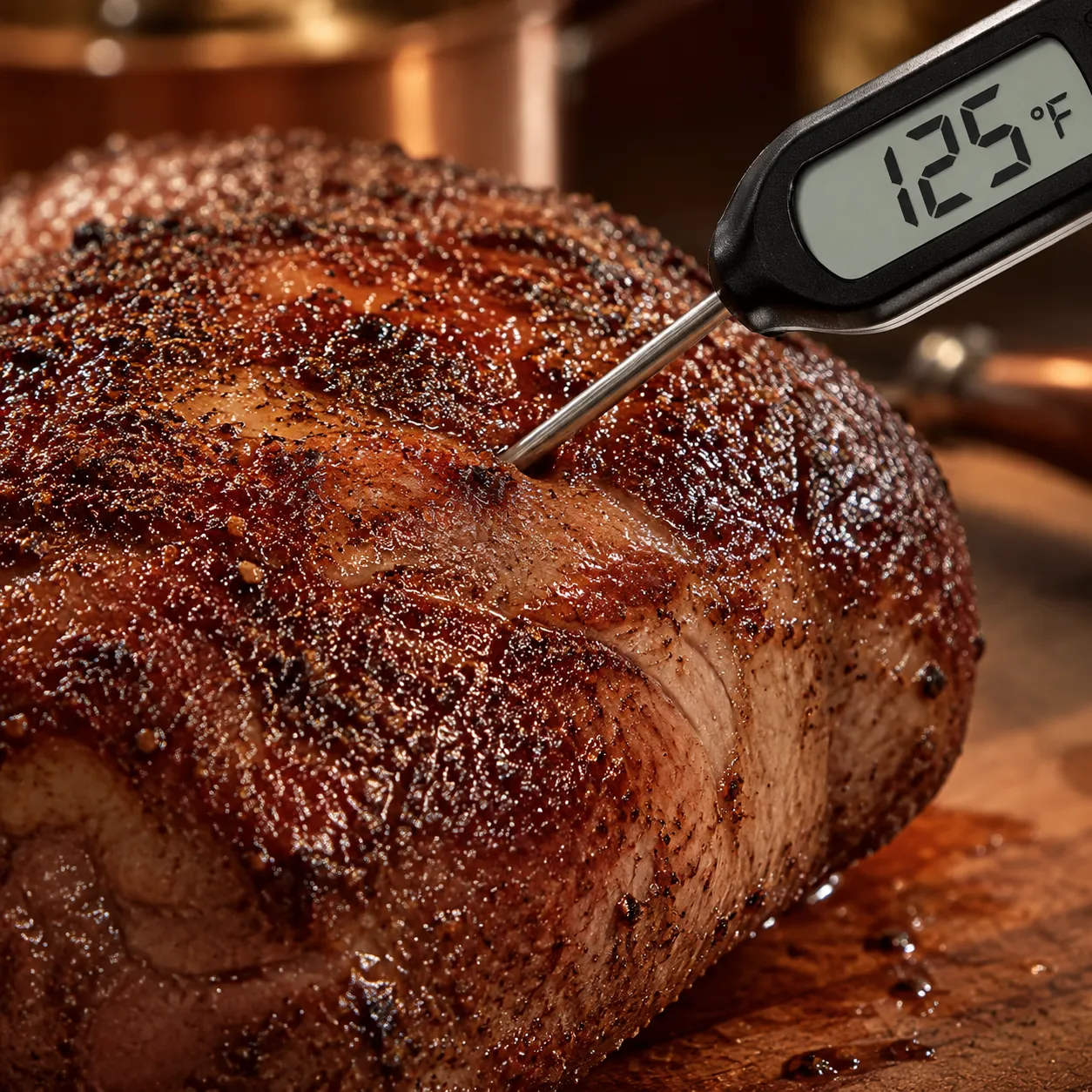
A meat thermometer is non-negotiable for this recipe because timing varies with the roast shape, your oven, and how cold the meat is when it starts. For medium rare, pull the roast at about 125°F, then let carryover cooking raise it another 5 to 10 degrees while it rests. Rare is usually pulled around 120°F, medium around 135°F, and medium-well around 145°F. For this lean cut, I do not recommend going much past medium if tenderness is your goal.
Carryover cooking simply means the heat already stored in the outside of the meat keeps moving inward after the roast leaves the oven. This is why pulling it at the finished temperature can accidentally push it too far during the rest. A probe thermometer or an instant-read thermometer takes out the guesswork and gives you confidence. Check in the thickest part of the roast and avoid touching the pan or any large seam of fat.
Here is a practical doneness guide: pull at 120°F for rare, 125°F for medium rare, 135°F for medium, 145°F for medium-well, and 155°F or higher for well-done. The USDA recommends 145°F with a rest for whole cuts of beef, so choose the doneness level that fits your comfort and preferences. If serving guests, medium rare to medium is the sweet spot for flavor and texture. The slices should be juicy, rosy, and easy to cut with a fork.
Resting and Carving the Roast
Carving is not an afterthought—it is part of the recipe. After the roast rests for at least 15 minutes, place it on a sturdy board and take a moment to identify the grain. You will see long lines running through the meat; those are the muscle fibers. Cutting across them shortens the fibers, making every slice noticeably more tender.
Use a long, sharp carving knife rather than a serrated bread knife, which can tear the crust and shred the meat. Slice as thin as you reasonably can, especially if you plan to serve it on sandwiches later. If you tied the roast, remove the twine right before carving so it keeps its shape during the rest. A little sprinkle of flaky salt over the sliced beef just before serving makes the flavors pop.
Pan Gravy and Sauce Pairings
While the beef rests, use the pan drippings to make gravy. Set the roasting pan over medium heat if it is stovetop-safe, or scrape the drippings into a small saucepan. Add butter, whisk in a little flour if you want a thicker texture, then slowly pour in beef broth while scraping up the browned bits. Simmer until glossy and season to taste with salt and pepper.
This gravy is rich enough for a holiday table but simple enough for a regular Sunday meal. A splash of red wine adds a deeper, restaurant-style flavor, while a few drops of Worcestershire make it savory and round. If you prefer something cooler and sharper, horseradish sauce alongside the roast is a perfect contrast. I like serving both so guests can choose cozy and classic or bright and punchy.
What to Serve with a Sunday Beef Dinner
This roast loves the classic sides: creamy mashed potatoes, roasted potatoes and carrots, green beans, Yorkshire pudding, or a crisp wedge salad. The pan gravy ties everything together, especially anything starchy enough to catch it. For a fresher plate, add roasted asparagus, a lemony arugula salad, or garlicky sautéed mushrooms. The beef is savory and lean, so buttery sides and bright vegetables both work beautifully.
For a holiday meal, build the menu around texture and temperature. Serve the roast warm, the salad crisp and cold, and the potatoes creamy or crunchy depending on your mood. Dinner rolls are never a bad idea, especially if there is gravy left on the plate. If you are planning ahead, slice just what you need for dinner and keep the rest unsliced for juicier leftovers.
Leftover Roast Beef Ideas
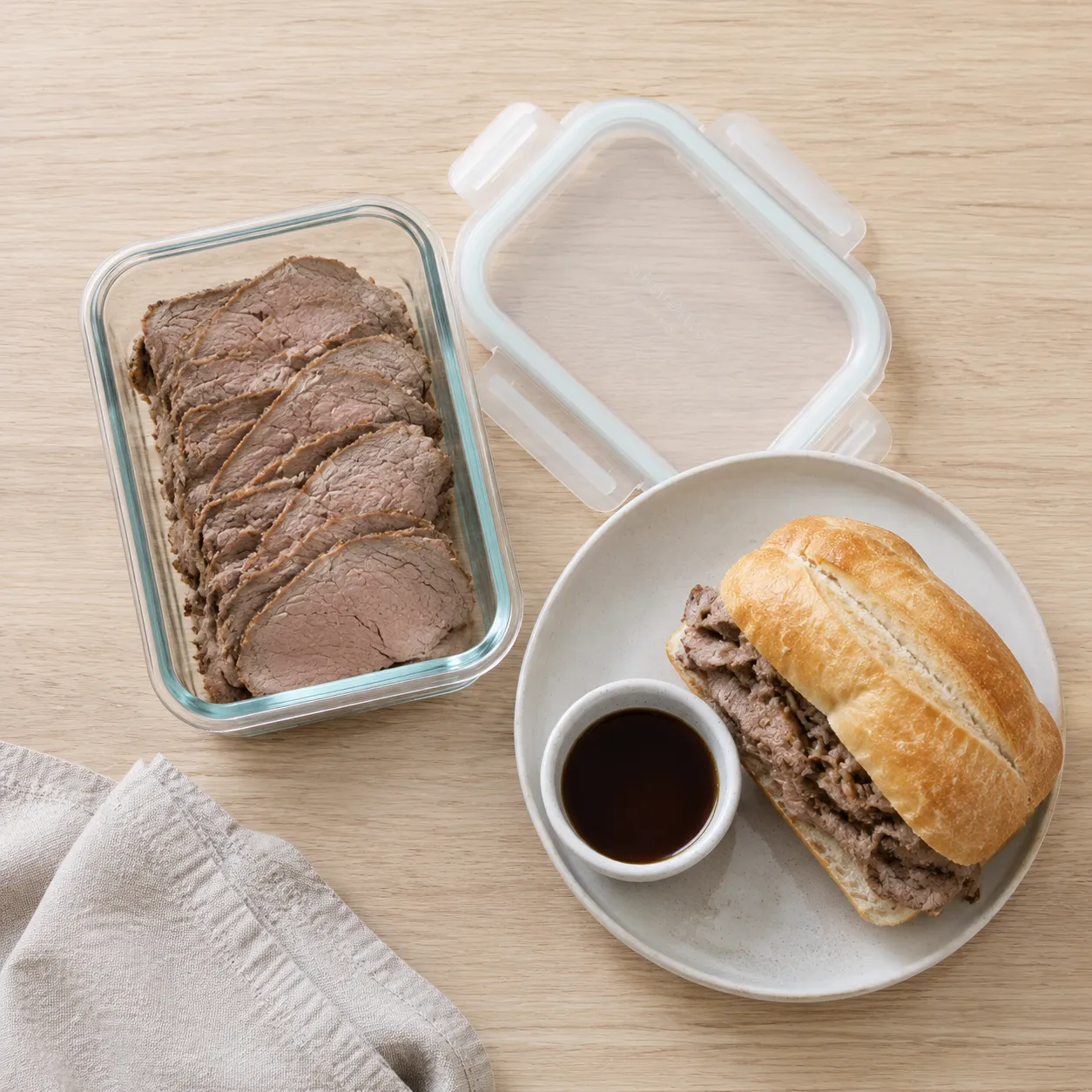
Leftover beef is one of the best reasons to make a larger roast than you need. Thin slices are perfect for leftover roast beef sandwiches with mustard, horseradish, caramelized onions, or melted provolone. You can also tuck the beef into French dip sandwiches, stir it into a quick stroganoff, or layer it over a big steakhouse salad with blue cheese and tomatoes. Keep the reheating gentle so the meat stays tender.
For lunches, slice the beef cold and pack it with rolls, pickles, greens, and a little container of sauce. If you want a hot meal, warm the slices briefly in gravy or au jus rather than microwaving them dry. This is also a great roast for meal prep because it can move from elegant dinner to sandwiches, salads, and bowls without feeling repetitive. Once you master the method, it becomes a dependable anchor for both special meals and practical weekday cooking.
💡 Expert Tips
- **Do not skip the dry brine.** Salting ahead seasons the beef more deeply and dries the surface, which helps the crust brown instead of steam.
- **Use a thermometer, not a timer alone.** A lean roast can go from juicy to dry quickly, so check the internal temperature in the thickest part.
- **Rest before slicing.** Give the roast at least 15 minutes so the juices settle back into the meat.
- **Slice thinly against the grain.** This is the biggest tenderness trick for lean roast beef.
- **Avoid overcooking.** Medium rare to medium gives the best texture; well-done sirloin tip can become chewy.
🔄 Variations & Substitutions
Once you have the basic method down, you can change the flavor profile without changing the cooking technique. Keep the same dry brine, low roast, hot sear, and rest, then adjust the seasonings to match your menu.
- **Steakhouse-style:** Add cracked pepper, Worcestershire, and a little Dijon to the herb paste.
- **Red wine gravy:** Deglaze the pan with 1/2 cup red wine before adding beef broth.
- **Peppercorn crust:** Press extra coarsely cracked black pepper onto the outside before roasting.
- **Herb butter finish:** Melt garlic herb butter over the sliced roast just before serving.
- **Holiday version:** Add rosemary, thyme, shallots, and a splash of brandy to the gravy.
🧊 Storage & Leftovers
Store leftover roast beef in an airtight container in the refrigerator for 3 to 4 days. For the juiciest leftovers, keep the roast in a larger piece if possible and slice only what you need; sliced meat dries out faster than an unsliced portion.
To reheat, place thin slices in warm gravy, au jus, or a covered skillet over low heat just until warmed through. Avoid aggressive microwaving, which can push the meat past medium and make it tough. Leftovers may also be frozen for up to 2 months, tightly wrapped, though the texture is best when enjoyed fresh from the fridge within a few days.
Frequently Asked Questions
Is sirloin tip roast tender?
Sirloin tip roast can be tender, but it needs the right cooking method because it is a leaner cut from the round. It does not have the same marbling as rib roast or top sirloin, so low, gentle heat is key. Cook it to medium-rare or medium, rest it well, and slice it thinly against the grain. Those three choices make the biggest difference between a roast that is juicy and sliceable and one that feels tough.
What's the difference between sirloin tip roast and top sirloin?
Sirloin tip roast and top sirloin sound similar, but they come from different areas of the cow. Sirloin tip comes from the round, which is part of the hind leg, so it is leaner and a bit tougher. Top sirloin comes from the loin and is naturally more tender. Sirloin tip is usually more affordable and works beautifully as roast beef when cooked low and slow, while top sirloin is often used for steaks or quicker roasting.
What temperature should I cook a sirloin tip roast to?
For the best texture, pull the roast from the oven at 125°F for medium-rare. It will continue to rise about 5 to 10 degrees as it rests, finishing around 130°F to 135°F. If you prefer medium, pull it closer to 135°F. Try not to cook this lean cut much past 140°F if tenderness is your priority, because it can become dry and chewy as it approaches medium-well or well-done.
Should I sear before or after roasting?
Searing after roasting, also called reverse searing, is the best method for this cut. Starting low and slow allows the inside to cook evenly, then a short blast of high heat creates a browned crust at the end. The traditional sear-first method can work for fattier roasts, but with lean sirloin tip it often creates a thicker gray band around the outside. Reverse sear gives you more edge-to-edge pink and better control.
How long does sirloin tip roast take per pound?
Plan on about 25 to 30 minutes per pound at 275°F for medium-rare, plus a short high-heat sear at the end. That said, the exact timing depends on the roast’s shape, starting temperature, and your oven, so use time as a guide rather than a rule. A 3-pound roast usually takes around 1 hour 15 minutes to 1 hour 30 minutes total before resting. Always confirm doneness with a meat thermometer.