Ribeye Roast Recipe: Juicy, Garlic-Herb Crusted Perfection
Ingredients
Scale
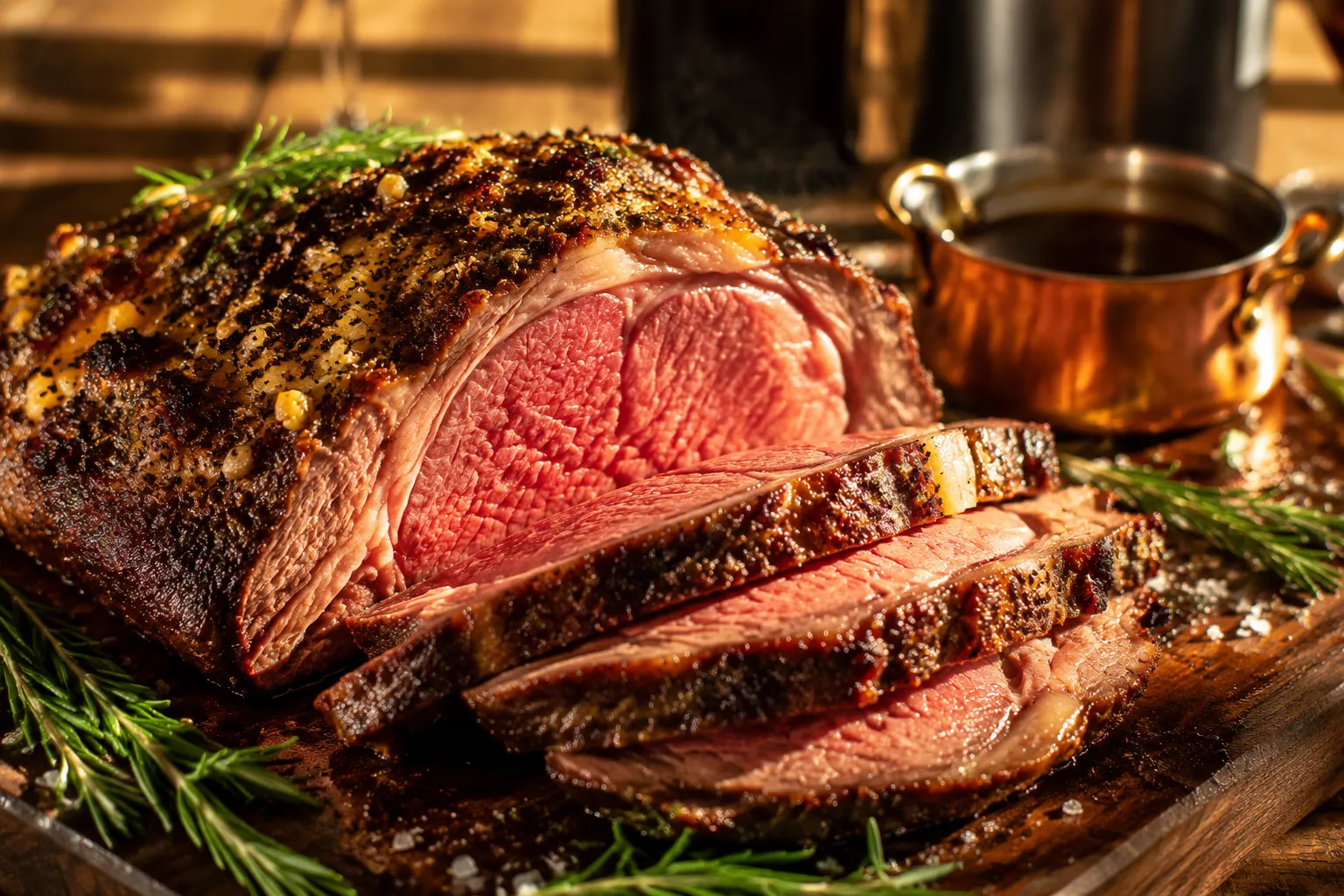
A bone-deep crust, blush-pink center, and zero guesswork. This ribeye roast recipe nails restaurant-quality results in your home oven.
There is something undeniably magical about pulling a perfectly cooked ribeye roast out of the oven. The kitchen fills with the savory aroma of browned butter, roasted garlic, and toasted herbs, signaling that a truly special meal is about to begin. Whether you are hosting a festive holiday gathering or a comforting Sunday dinner, a large cut of beef always commands the center of the table. However, the pressure of cooking such an expensive piece of meat can be intimidating for even seasoned home cooks.
This foolproof ribeye roast recipe nails restaurant-quality results in your own kitchen by eliminating all the guesswork. Instead of crossing your fingers and hoping for the best, we are relying on a simple, science-backed approach: the reverse sear. By starting the meat in a low-temperature oven and finishing it with a screaming-hot blast of heat, you guarantee an edge-to-edge rosy interior and a spectacularly crispy exterior. Say goodbye to the dreaded gray ring of overcooked meat and hello to melt-in-your-mouth perfection.
When planning your menu, you might find yourself confused at the butcher counter. Understanding the difference between prime rib vs ribeye roast is the first step to a successful dinner. Both cuts come from the exact same primal section of the cow, known for its rich marbling, deep beefy flavor, and tender texture. The distinction simply comes down to how the meat is fabricated and presented.
A traditional prime rib is usually left bone-in, creating a dramatic presentation but requiring a bit more maneuvering when it comes time to carve. On the other hand, the boneless alternative offers the exact same luxurious eating experience with significantly less hassle. It cooks slightly faster, slices cleanly, and ensures that every single guest gets a perfect ratio of meat to crust without having to navigate around heavy bones.
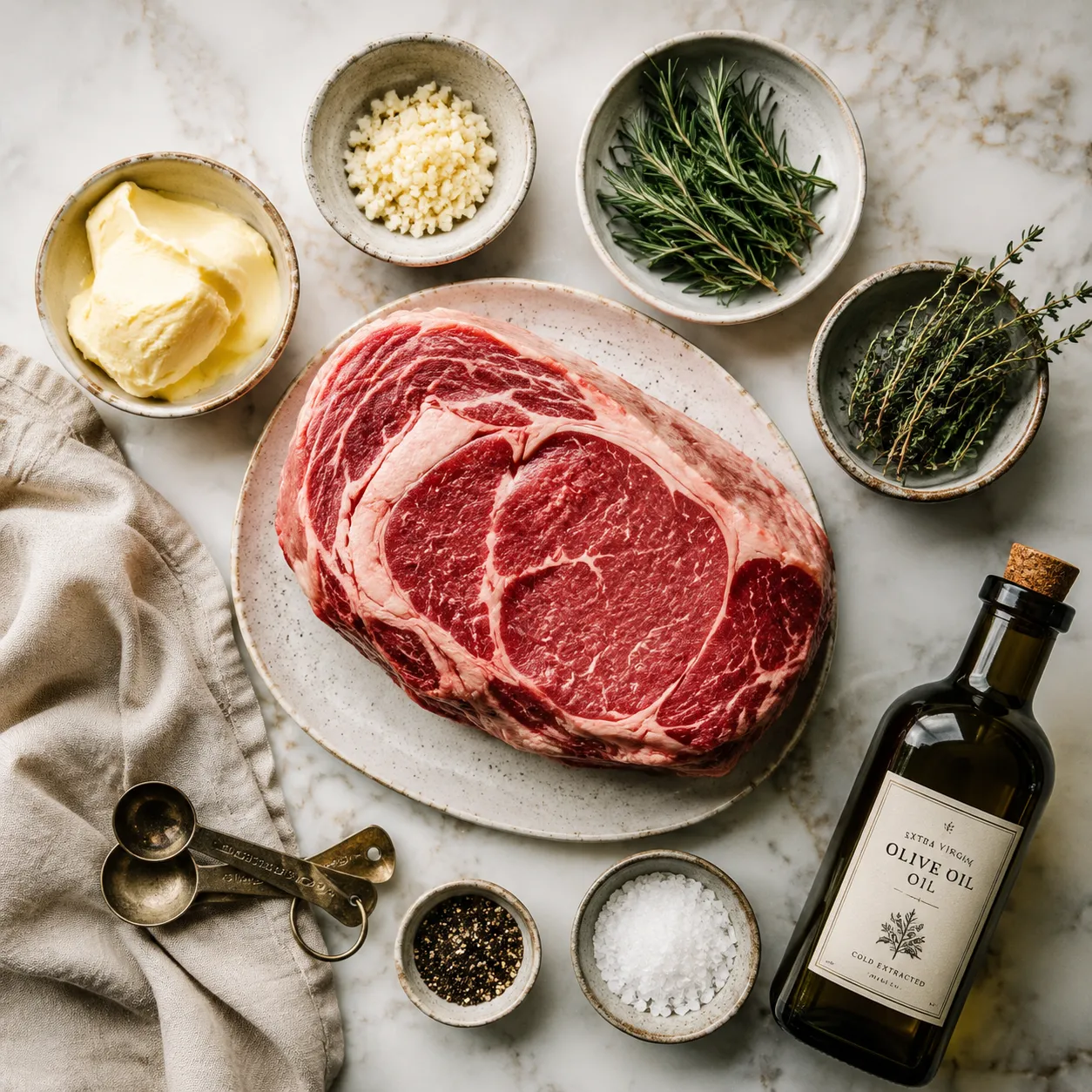
For the best results, ask your butcher for a well-marbled boneless ribeye roast. Look for a piece with distinct, thin webbing of white fat throughout the red muscle—this intramuscular fat is what melts during cooking to baste the meat from the inside out, providing that signature juiciness. A four-pound cut is generally perfect for feeding a crowd of eight, leaving just enough for a coveted leftover sandwich the next day.
The secret weapon of this dish, however, is the garlic herb butter. We are creating a rich compound butter heavily seasoned with minced fresh garlic, chopped rosemary, thyme, kosher salt, and cracked black pepper. Softened unsalted butter acts as the perfect carrier for these aromatics, clinging to the cold meat and slowly melting over the surface as it roasts. This fat-on-fat application not only flavors the beef deeply but also encourages the exterior to fry and crisp up during the final high-heat sear.
Great flavor starts long before the meat hits the heat. If time allows, unwrap your beef the night before, pat it completely dry with paper towels, and season it generously with kosher salt. Leave it uncovered in the refrigerator overnight. This dry-brining process draws moisture out, dissolves the salt, and pulls it deep into the muscle fibers, seasoning the meat from within while simultaneously drying out the surface for a better crust. Pull the meat from the fridge about two hours before cooking to take the chill off.
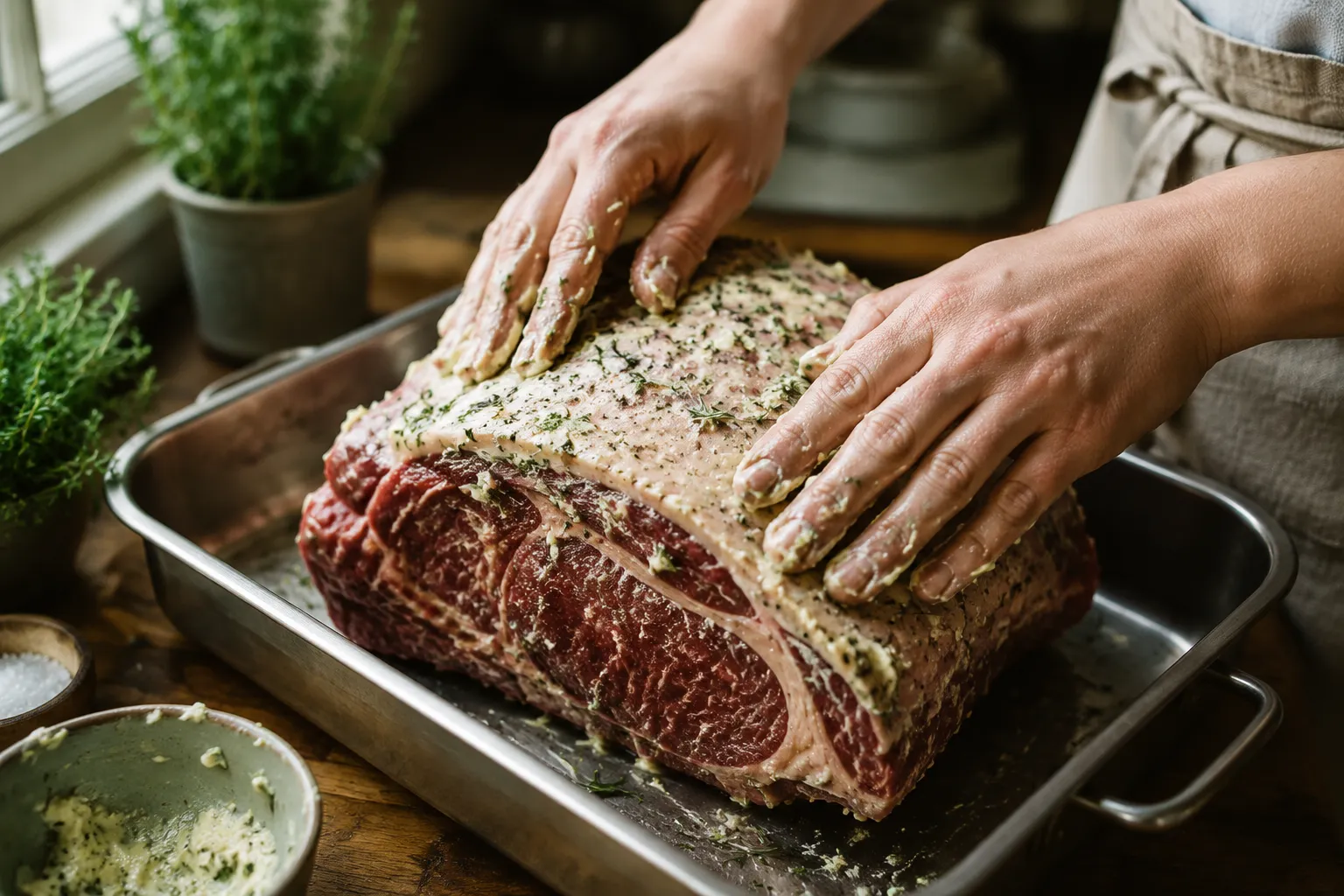
Once your meat has tempered, it is time to build the flavor profile. In a small bowl, mash together your softened butter, minced garlic, fresh rosemary, fresh thyme, and coarse black pepper. Using your hands, massage this thick, fragrant paste all over the top and sides of the beef. Don't be afraid to lay it on thick; this layer is going to transform into a deeply caramelized, savory shell.
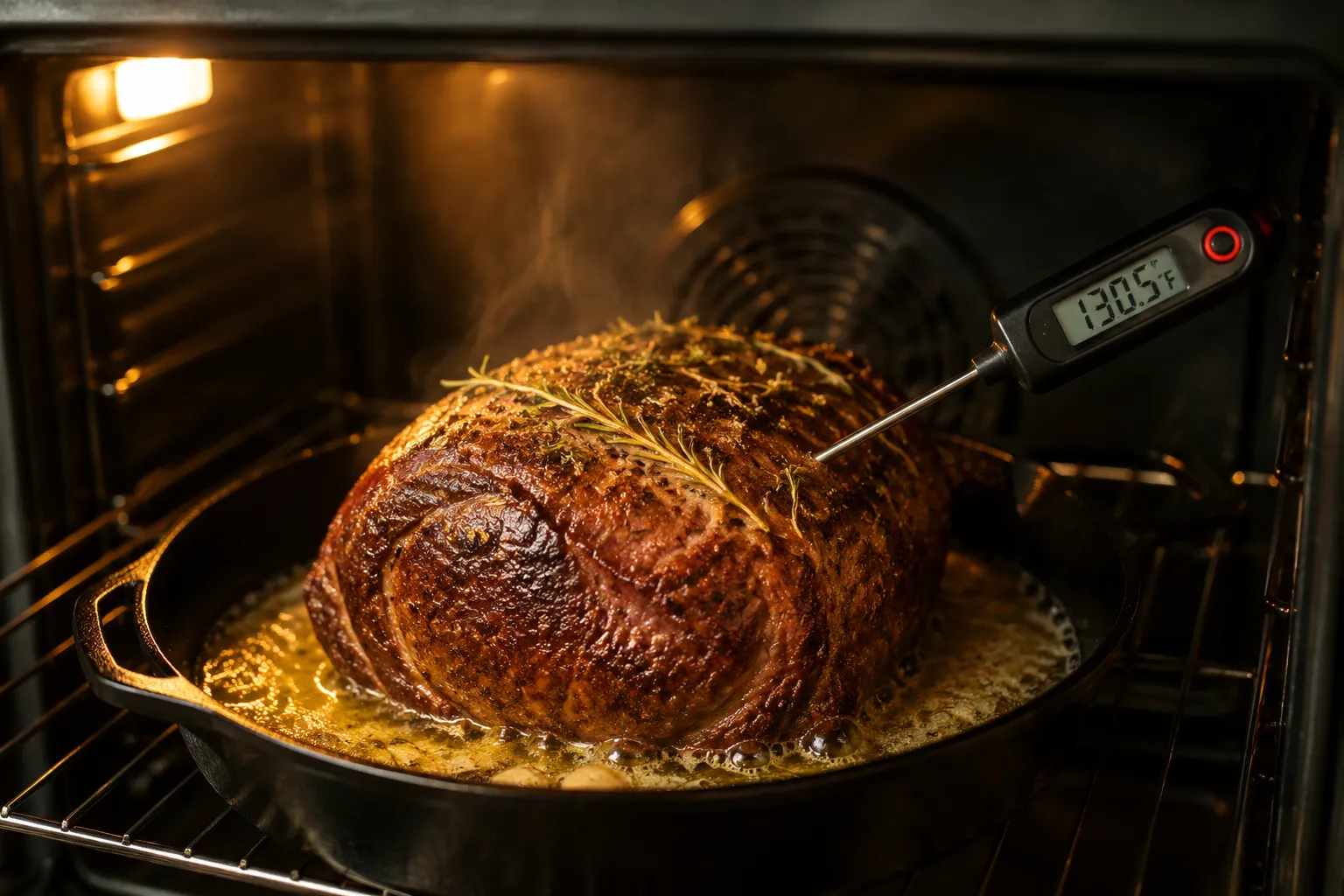
Place the butter-rubbed meat on a wire rack set inside a roasting pan and transfer it to a preheated 250°F oven. This gentle heat is the cornerstone of the reverse sear method. It allows the enzymes in the beef to break down slowly, maximizing tenderness, while ensuring the internal temperature rises evenly from edge to center. To track this accurately, insert the best meat thermometer you have right into the thickest part of the muscle.
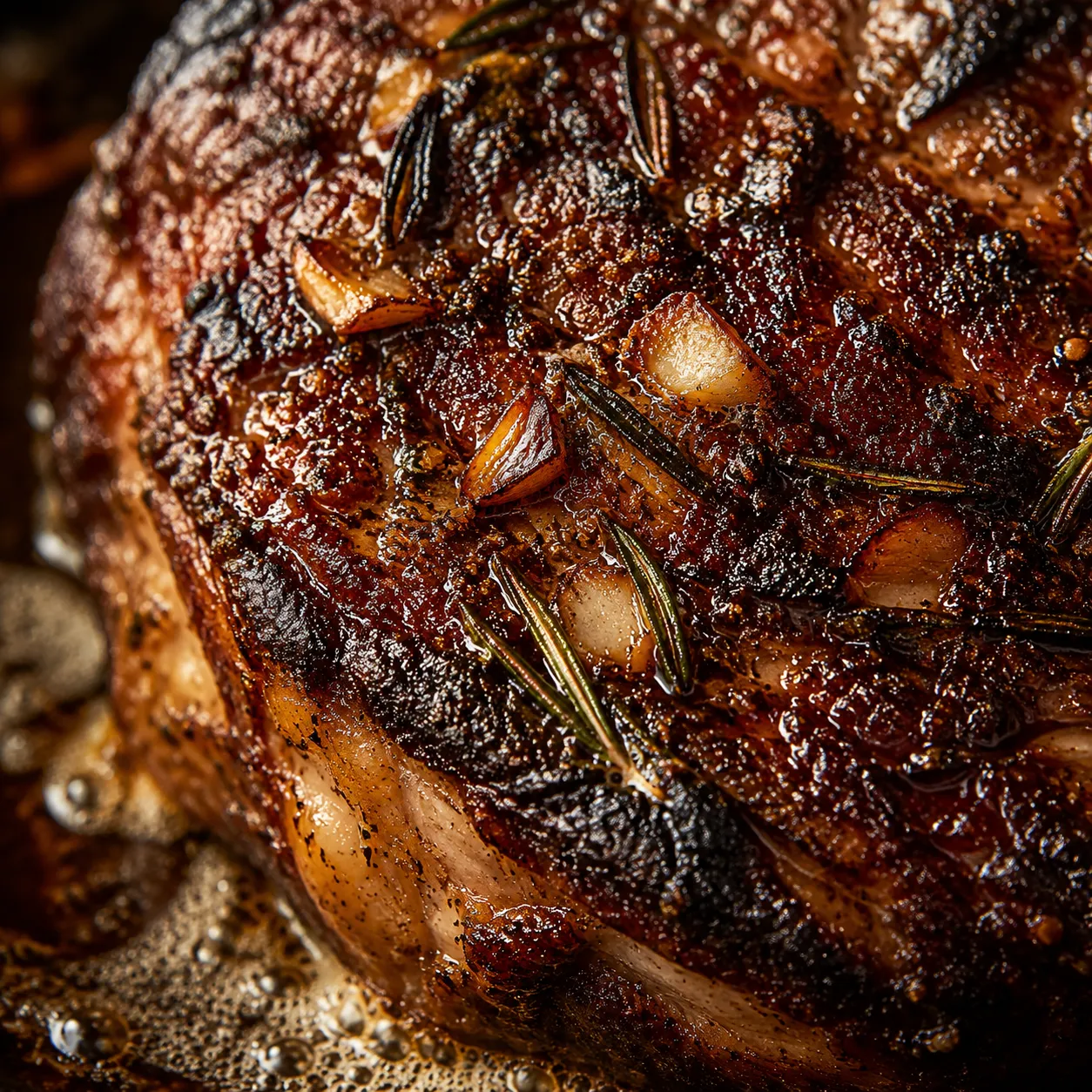
A beautifully roasted ribeye roast requires patience, but the final step is fast and furious. Once the meat reaches your target pull temperature (more on that below), carefully remove it from the oven and tent it loosely with foil. Crank your oven temperature up to 500°F (or as high as it will go). Once the oven is screaming hot, return the pan to the oven for about 10 to 15 minutes. Watch it closely—you are looking for the butter to bubble, the garlic to turn golden brown, and the exterior to develop a blistered, mahogany crust.
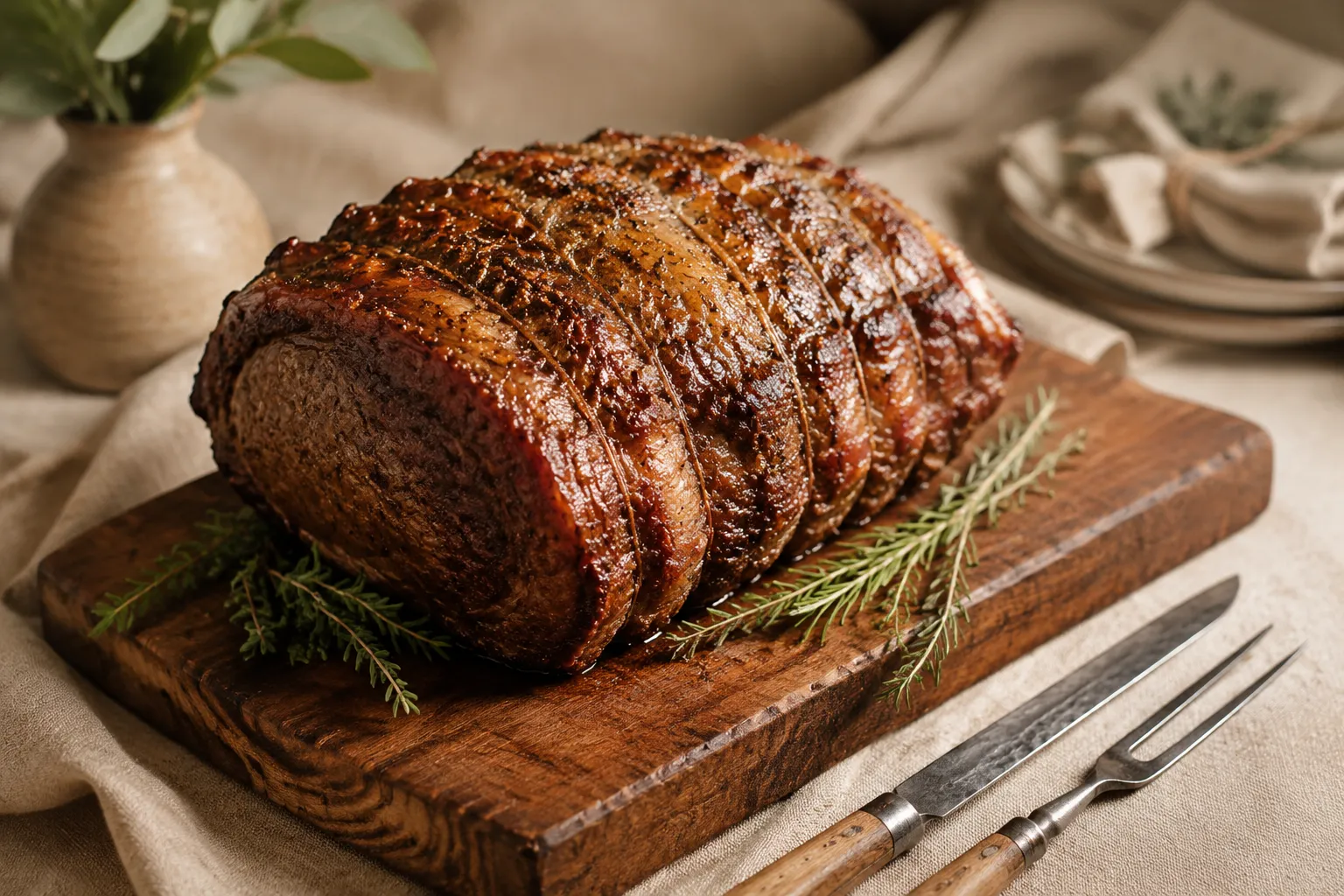
Do not skip the final resting period. Pull the pan from the oven and transfer the meat to a cutting board. Tent it loosely with foil again and let it rest for at least 20 to 30 minutes. This allows the violently bubbling juices to calm down and redistribute throughout the muscle fibers. If you slice in immediately, those precious juices will flood your cutting board, leaving the meat dry.
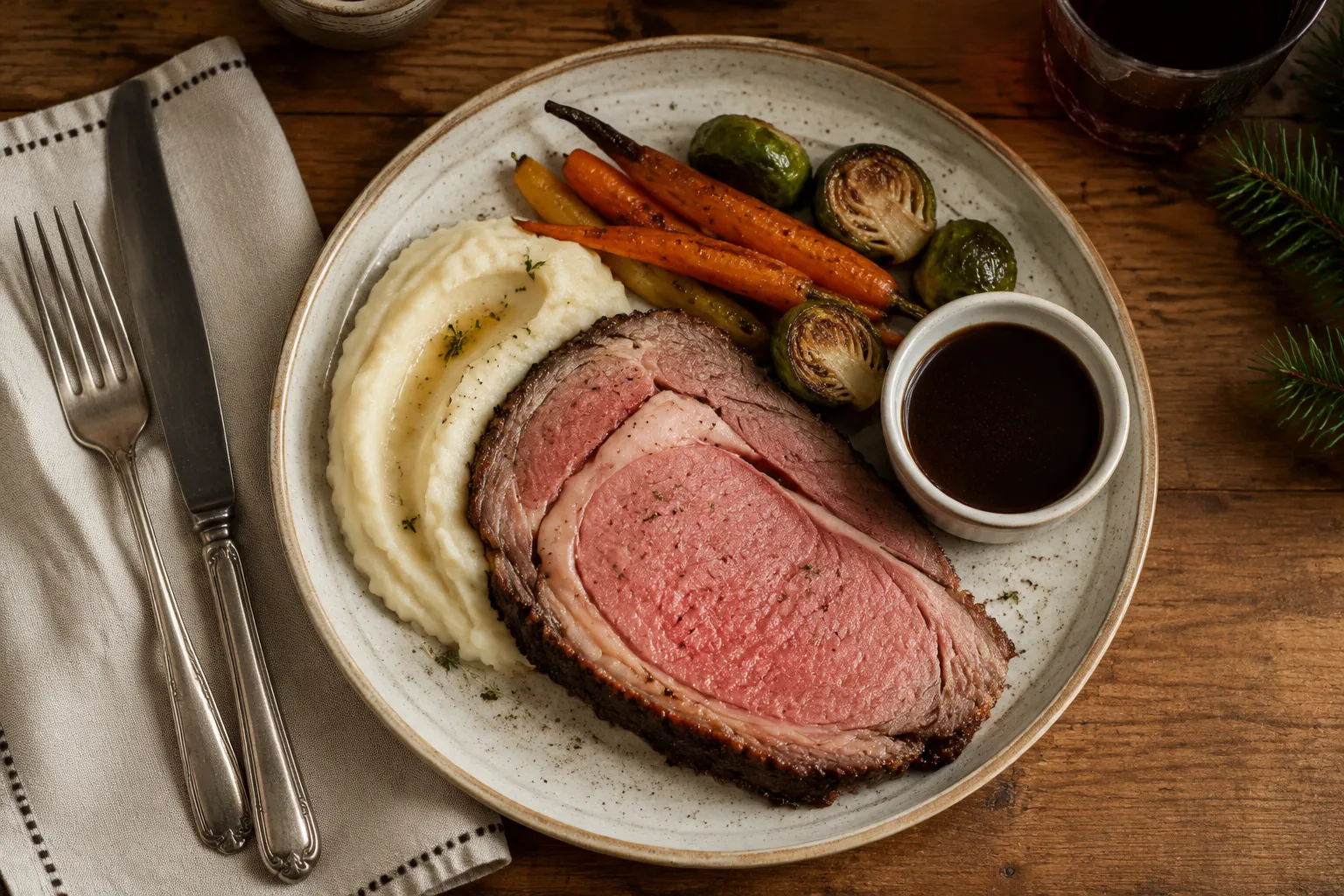
A centerpiece this spectacular deserves side dishes that can hold their own. Nothing complements rich beef quite like a towering mound of creamy, buttery garlic mashed potatoes. The starchy potatoes act as the perfect canvas to soak up any savory juices that escape onto the plate. Roasted root vegetables, blistered green beans, or a bright, acidic winter salad also provide a wonderful textural contrast to the tender meat.
When it comes to sauces, you have two classic routes that are practically mandatory. First, use the pan drippings to create a savory au jus recipe, scraping up all those browned, buttery bits from the bottom of the roasting pan. Second, offer a sharp, tangy horseradish cream sauce on the side. The sinus-clearing bite of the horseradish cuts right through the richness of the beef and the buttery crust, creating a perfectly balanced bite every single time.
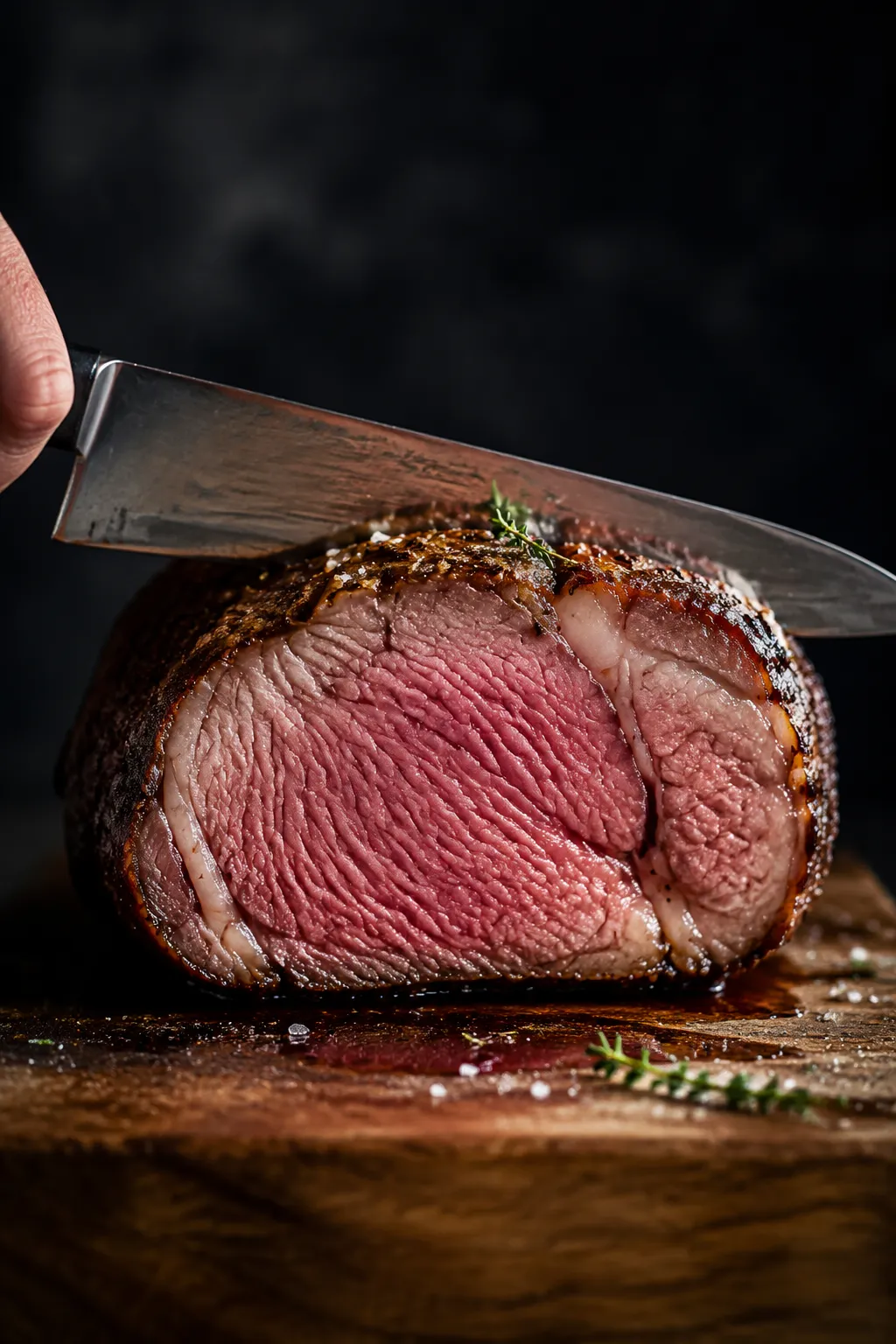
Because this is a thick, dense cut of meat, carryover cooking plays a massive role in your final results. The internal temperature will continue to rise by about 5 to 10 degrees after you remove it from the oven. To achieve a perfect medium rare, which offers the best balance of warm, juicy texture and rendered fat, you should pull the meat from the low-temp oven when the thermometer reads 120°F to 125°F.
If your family prefers a different level of doneness, adjust your initial pull temperature accordingly. For a rare center, pull the meat at 115°F. If you prefer medium, wait until the thermometer hits 135°F. Keep in mind that the final high-heat sear will also add a few degrees, so it is always safer to pull the meat slightly early rather than risk overcooking an expensive cut.
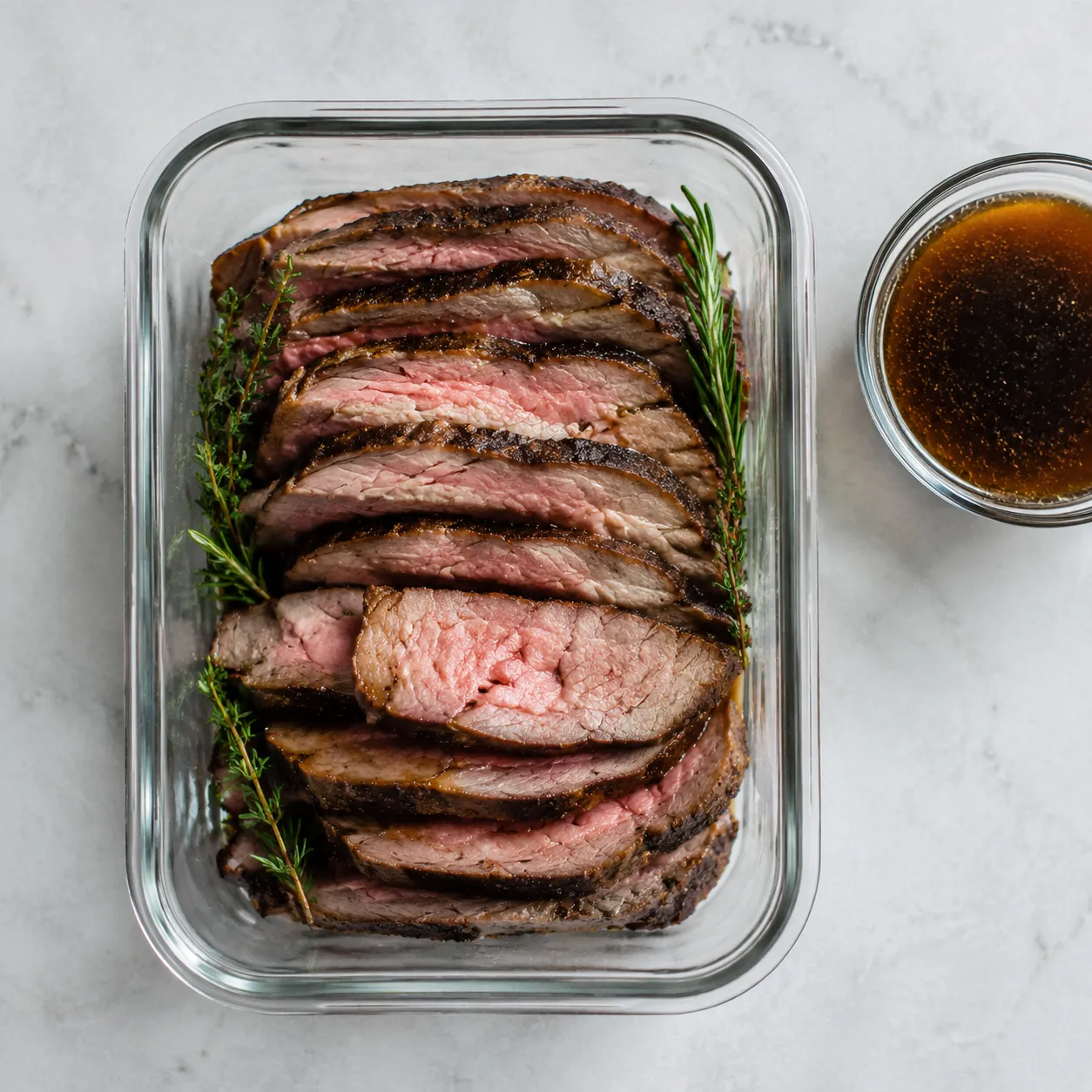
If you are lucky enough to have leftovers, you are in for a treat over the next few days. Thinly sliced cold beef makes arguably the greatest sandwich on earth, especially when piled high on crusty bread with a smear of leftover horseradish cream and a handful of peppery arugula. Proper storage will ensure the meat stays fresh and retains its incredible flavor for your next meal.
While the classic garlic and herb profile is a timeless favorite, this method is highly adaptable to your favorite flavor combinations. Feel free to tweak the compound butter to suit your menu.
Store any leftover meat in an airtight container in the refrigerator for up to 4 days. For the best quality, keep the meat whole if possible and only slice what you plan to eat, which helps prevent the interior from drying out. If you have extra au jus, store it in a separate jar to use for reheating.
To reheat without overcooking, place the slices in a skillet with a splash of beef broth or au jus over medium-low heat just until warmed through. Alternatively, wrap the meat tightly in foil with a little broth and warm it in a 250°F oven. You can also freeze cooked slices in heavy-duty freezer bags for up to 3 months; thaw overnight in the fridge before gently reheating.