Prime Rib Recipe: Perfect Juicy Roast Every Time
Ingredients
Scale
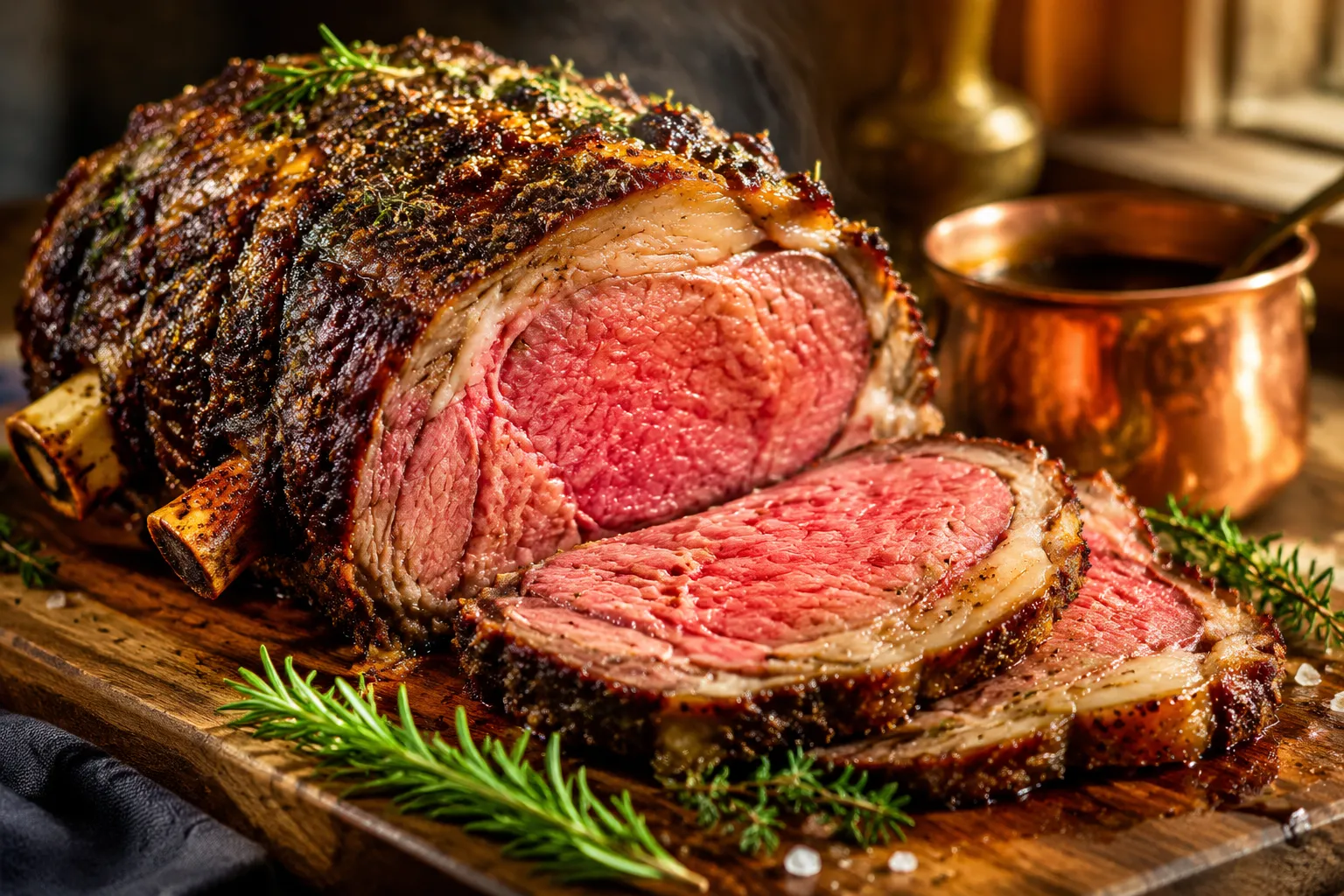
A foolproof prime rib recipe with a garlic-herb butter crust, juicy pink center, and a reverse-sear method that takes the guesswork out of holiday roasting.
This prime rib recipe is the one I pull out when the table is full, the candles are lit, and there is zero room on the calendar for a sad, gray roast. It delivers a deeply browned, herb-pepper crust on the outside and a buttery, evenly rosy interior from edge to edge — the kind of slice that makes a dining room go quiet for a beat. If you have ever stressed about carving into an expensive roast and finding the dreaded overcooked band around a small pink core, this method is your new best friend.
The trick is a 24-hour dry brine plus a reverse sear: a long, low roast at 250°F until the meat hits 120°F internal, followed by a quick blast at 500°F for that crackly, caramelized crust. Low and slow gives you wall-to-wall medium-rare. The hot finish builds the crust without overshooting the center. Once you cook a roast this way, single-temperature methods start to feel like a gamble.
Below, I will walk you through exact cooking times by weight, the internal temperature targets I trust, and the small choices — bone-in vs. boneless, USDA Prime vs. Choice, when to salt — that make this prime rib recipe foolproof. Pour yourself a glass of something nice and settle in.
"Prime rib" is the cut, not the grade — confusing, I know. A prime rib, also called a standing rib roast, comes from the primal rib section of the cow, between the chuck and the short loin. It is the same muscle that gives us ribeye steaks, just left in one glorious piece instead of being sliced into individuals. The name "standing" refers to the traditional roasting position: bones down, meat up, so the rib bones act as a built-in roasting rack.
A full rib roast is seven bones, but butchers usually sell it in 2- to 4-rib portions. Plan on about one rib (roughly a pound) per person if you want generous portions and leftovers, which you absolutely will. The fat cap on top is non-negotiable — it bastes the meat as it renders and helps create that mahogany crust we are after.
Bone-in cooks more evenly because the bones insulate the meat and slow heat transfer near the center. The roast also stays juicier and looks gorgeous on a platter. Boneless is simpler to slice, but you give up a little forgiveness on timing, so I always recommend bone-in for an event this size. On grade, look for USDA Prime if you can find it — it has the most marbling, which translates to maximum flavor and juiciness. USDA Choice is more available and still excellent if you choose a roast with visible white flecks running through the meat. Skip Select; it does not have enough fat to justify the price tag.
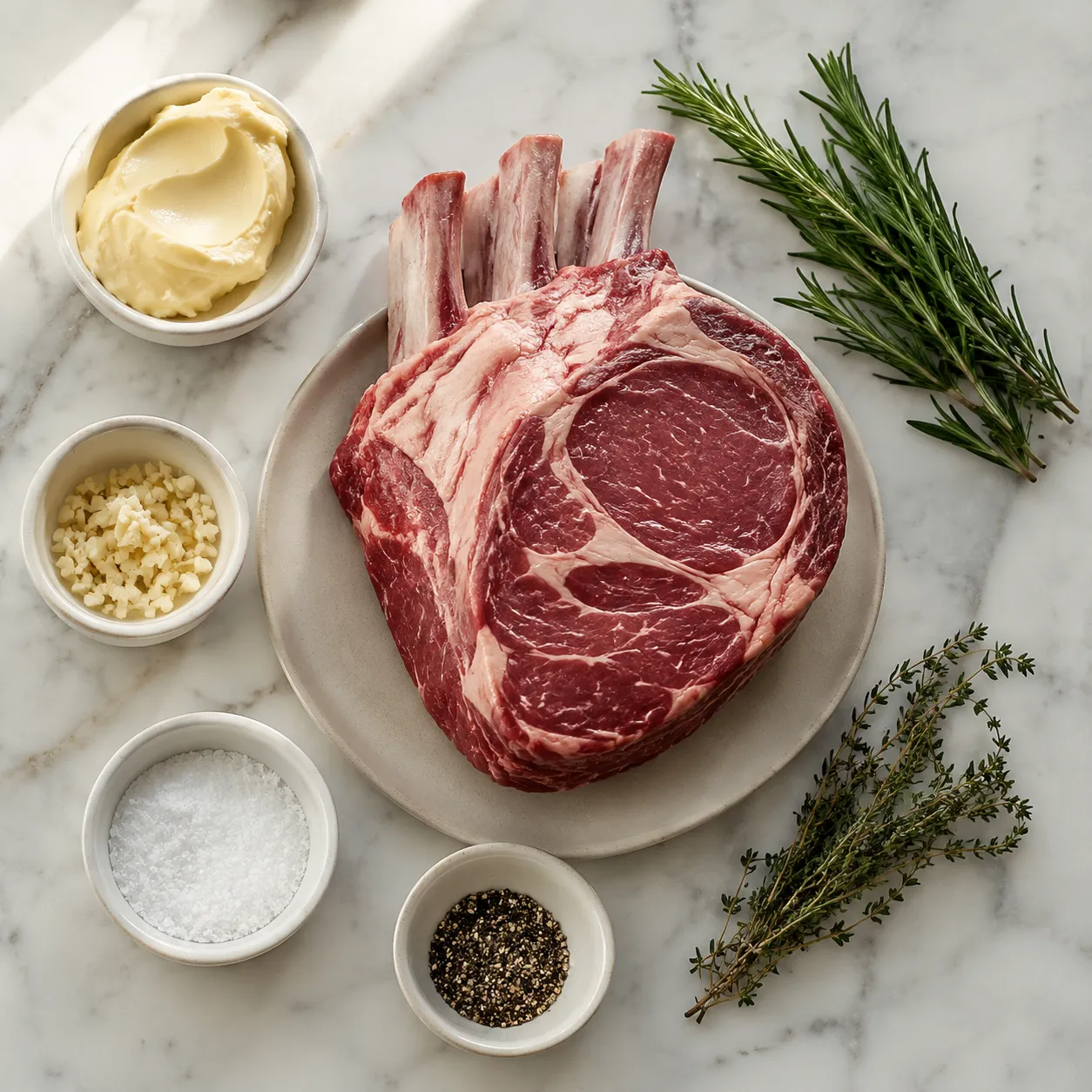
The ingredient list for this prime rib recipe is short on purpose. When you start with a great cut of beef, the seasonings should support, not compete. You will need a 6-pound bone-in roast (about 3 ribs, serving 8), kosher salt, coarsely ground black pepper, and a garlic herb butter built from softened unsalted butter, six fat cloves of minced garlic, and a heap of fresh rosemary and thyme.
That herby compound butter is the magic. It melts into the salt-cured surface, the herbs toast against the heat, and you end up with a crust that tastes like the best steakhouse you have ever been to. Fresh herbs really matter here — dried rosemary and thyme will burn and turn bitter under the high-heat sear. If dried is all you can find, halve the amount and stir it directly into the butter so it stays insulated.
The single most asked question I get about this cut is prime rib cooking time, and the honest answer is that weight is a starting point but internal temperature is the truth. Use the numbers below as a planning estimate, then trust your thermometer over the clock. Times assume the roast comes out of the fridge two hours before cooking and goes into a 250°F oven.
Plan on roughly 25 to 30 minutes per pound at 250°F to reach 120°F internal, then a 30-minute rest, then an 8 to 10-minute sear at 500°F. For a 4-pound roast, that is about 1 hour 45 minutes of total cook time. For a 6-pound roast, around 2 hours 30 minutes. For an 8-pound roast, roughly 3 hours 15 minutes. Add 10 to 15 minutes if your roast is unusually thick.
Pull temperatures by doneness:
The internal temperature will rise 5 to 10°F during the rest and final sear, which is why you always pull the roast before it hits your target. A leave-in probe thermometer is the difference between a roast that nails medium-rare and one that misses by 15 minutes.
Below is the high-level walkthrough; exact measurements and timing live in the recipe card at the bottom of the post. The heart of this prime rib recipe is the reverse sear method, and once you understand the rhythm — long, low roast first, blistering sear last — the whole thing becomes genuinely forgiving.
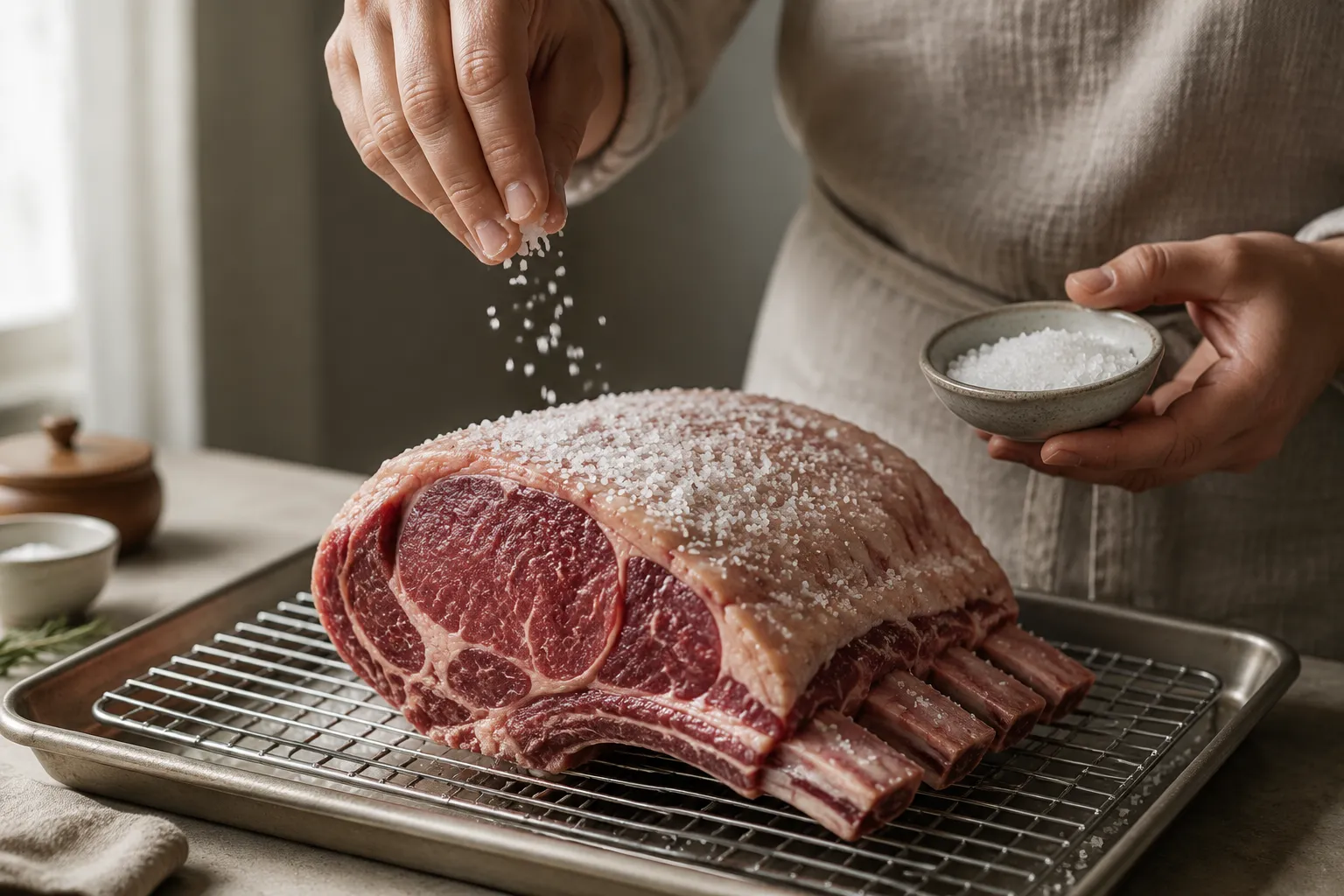
Start with the dry brine. Pat the roast dry, set it on a wire rack over a sheet pan, and season every surface generously with kosher salt. Park it uncovered in the fridge for 24 to 48 hours. The salt pulls moisture out, then re-absorbs it as a seasoned brine, going deep into the meat and drying the surface so it can crisp later. Skip this step and you will still get a good roast — but the salted version lives in a different league.
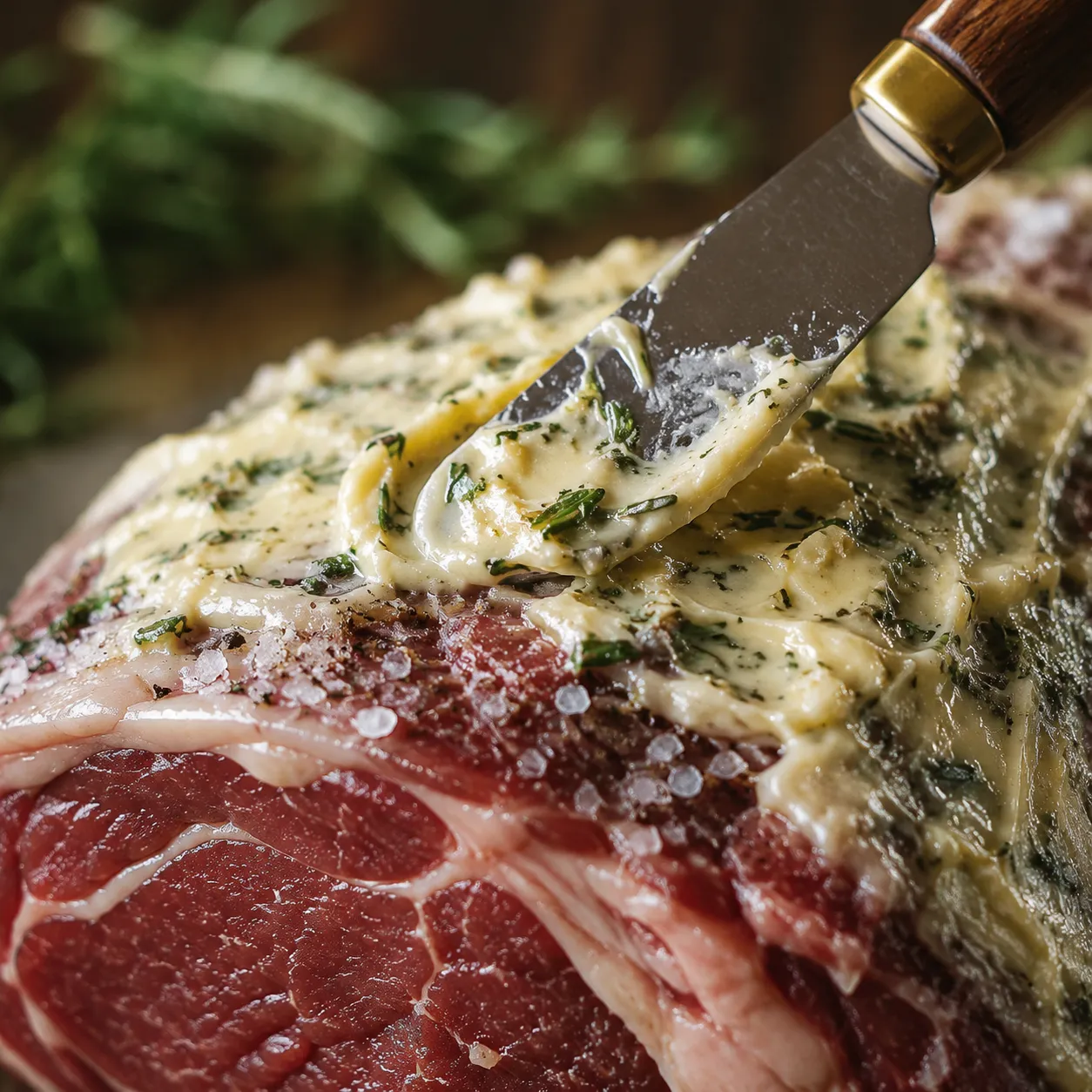
Two hours before cooking, pull the roast from the fridge to take the chill off. Mash softened butter with minced garlic, rosemary, thyme, and plenty of cracked pepper. Smear that herby butter over every inch of the roast, getting into the seams around the bones. The butter both seasons and seals, and the dairy solids help the crust go deeply mahogany when the heat finally cranks up.
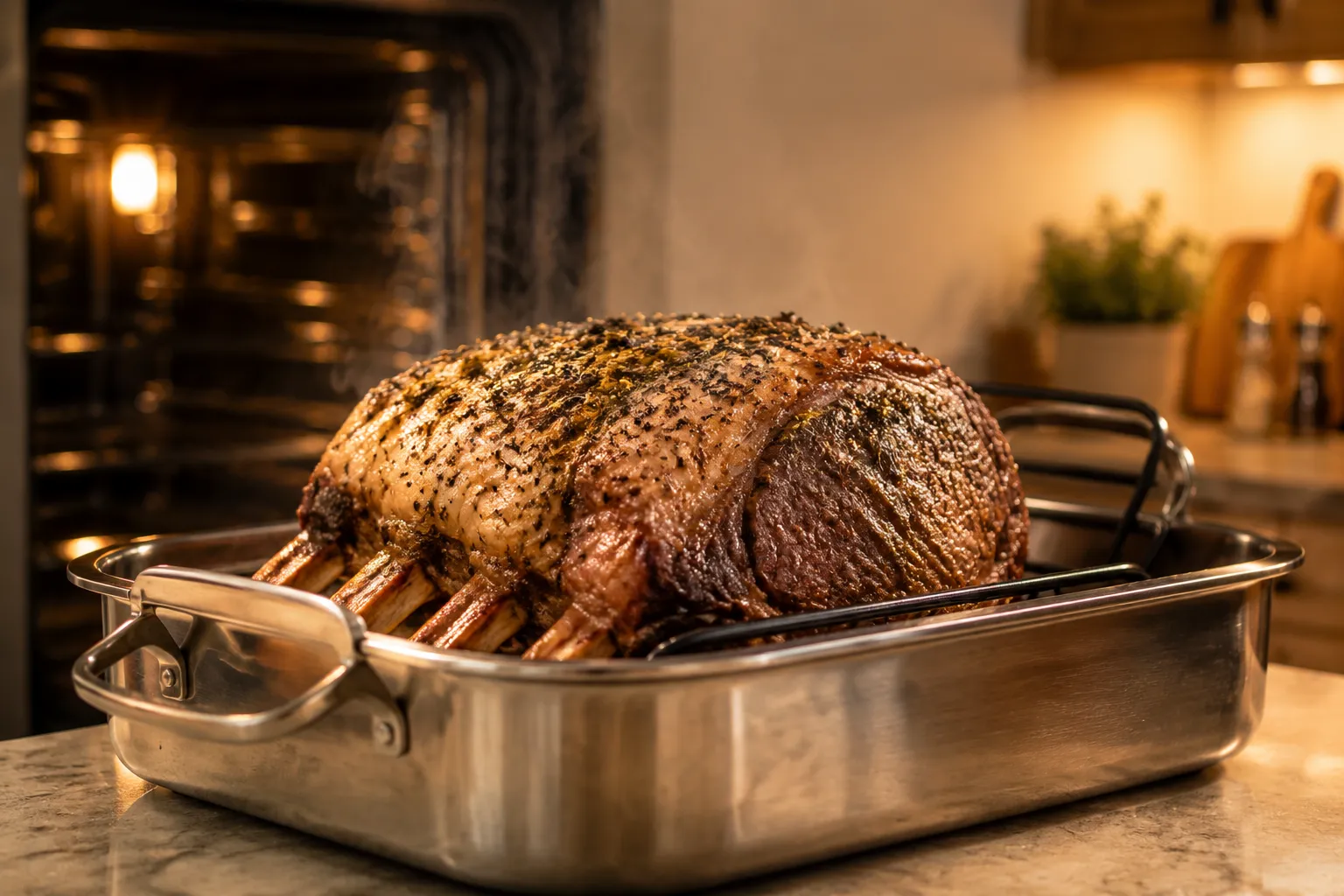
Slide the buttered roast onto a rack in a roasting pan and into a 250°F oven. Insert a probe thermometer into the thickest part of the meat, well away from any bone (bones run hotter and will give you a misleading read). Now resist the urge to peek. The oven door stays closed until the probe reads 115°F for rare, 120°F for medium-rare, or 130°F for medium.
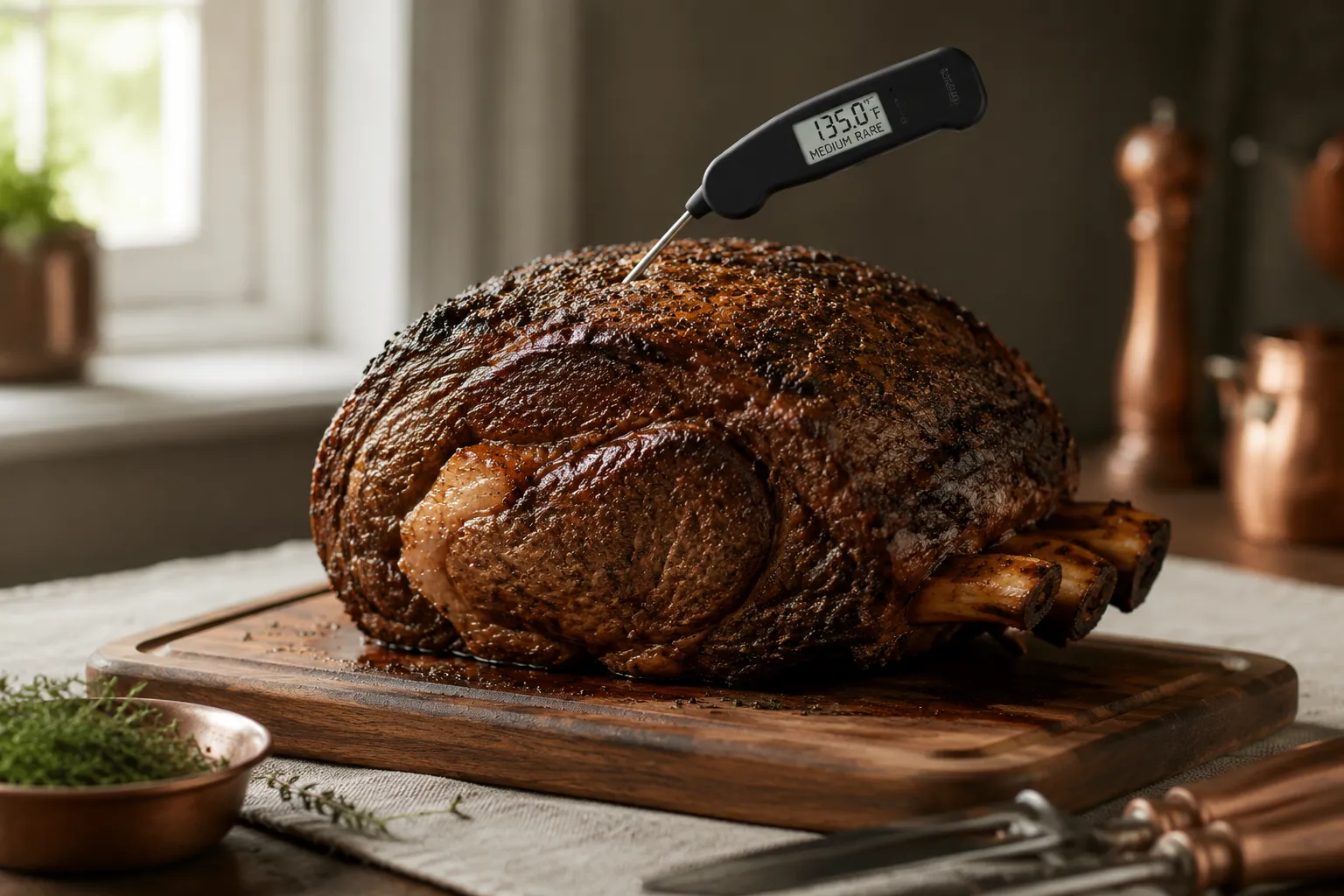
Pull the roast, tent loosely with foil, and rest for a full 30 minutes while you crank the oven to 500°F. Yes, the full 30 — a roast this size needs the time for juices to redistribute and the surface to dry. Then return the roast, uncovered, to the screaming-hot oven for 8 to 10 minutes, until the crust is deeply browned and audibly crackly.
Move the roast to a cutting board, run a long carving knife along the curve of the bones to free them, then slice against the grain into ½-inch thick pieces. Serve immediately with the pan drippings turned into a quick au jus.
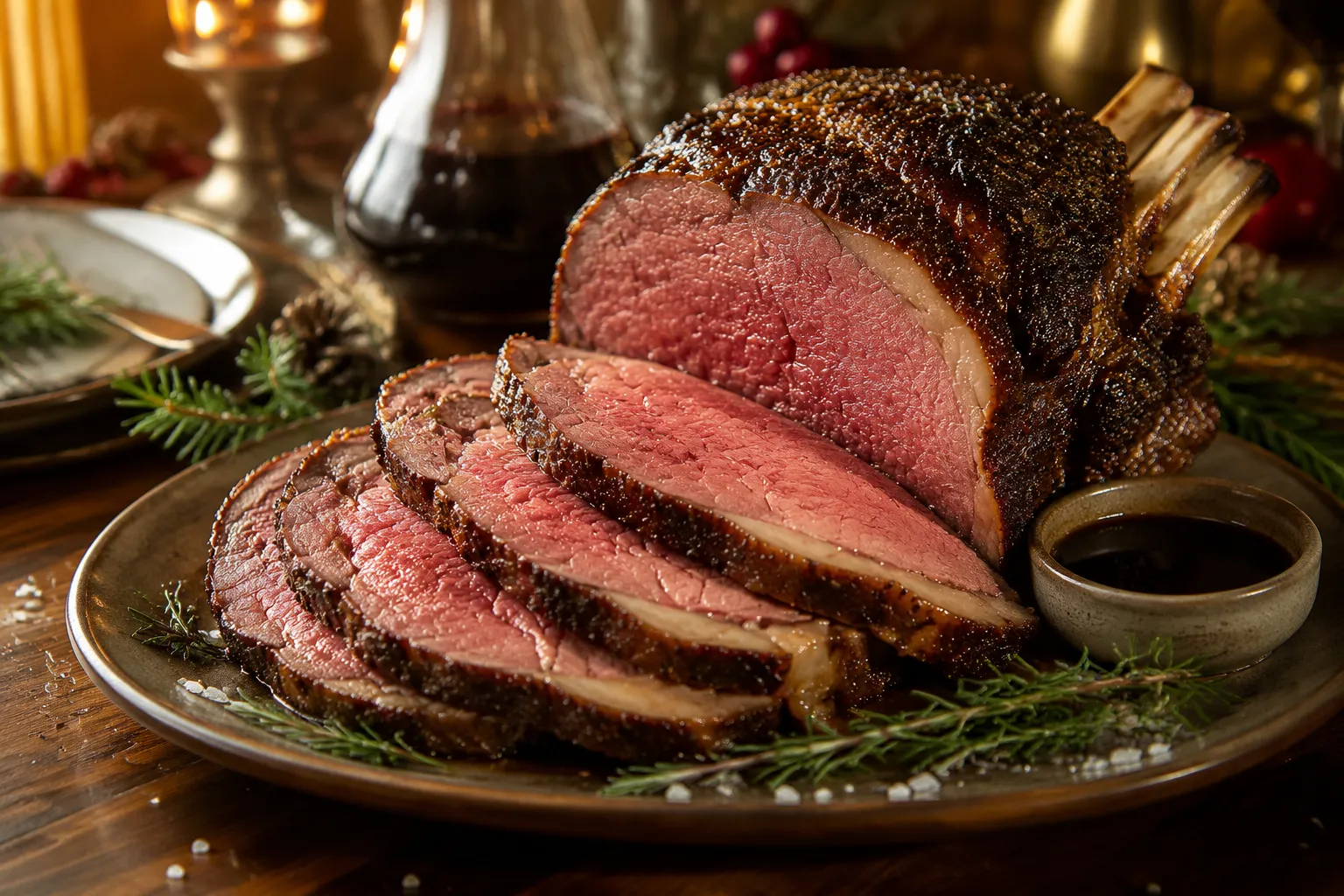
A roast like this deserves the classics, and I do not mess with the formula. The non-negotiable trio: a glossy au jus made from the pan drippings, a sharp horseradish cream sauce, and a starchy something to mop it all up. My go-to au jus recipe is genuinely a 10-minute job — deglaze the roasting pan with beef stock and a splash of dry red wine, simmer until lightly thickened, and finish with a knob of cold butter. For the horseradish cream sauce, whisk together ¾ cup sour cream, 3 tablespoons prepared horseradish, a squeeze of lemon, salt, and pepper. Done, and shockingly good.
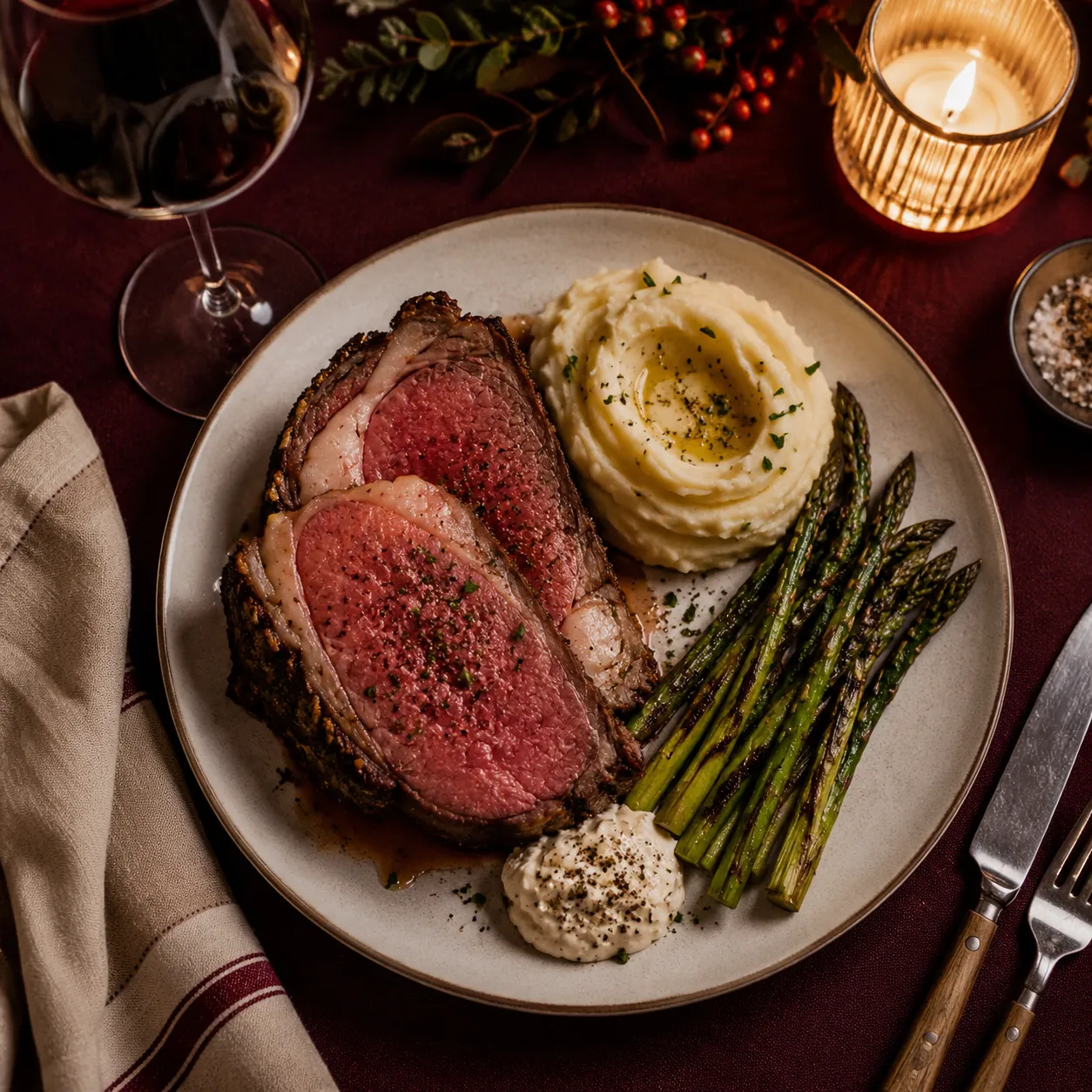
For sides, lean rich and seasonal. Buttery mashed potatoes, creamed spinach, roasted asparagus or charred Brussels sprouts, and a simple green salad with a sharp vinaigrette to cut through the richness all belong on the table. A crusty piece of garlic bread is never a bad idea for catching jus on the plate, and a wedge of yorkshire pudding takes things over the top if you have the bandwidth. Pour a big-bodied red — Cabernet, Zinfandel, or Syrah — and you have a holiday roast dinner that feels like a real occasion.
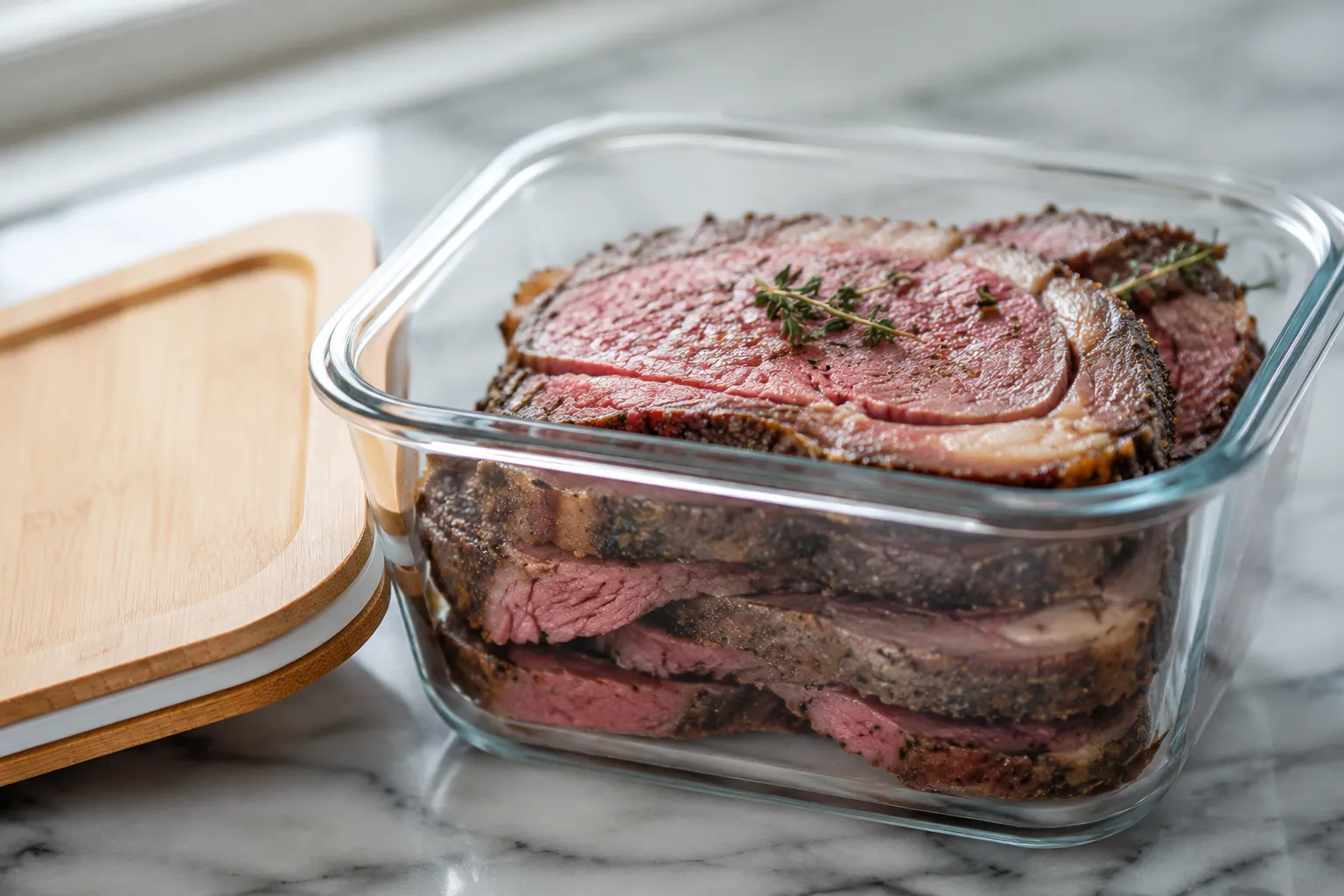
If by some miracle there are leftovers, consider it a gift. Cold slices on a sandwich the next day, piled with horseradish mayo and a few peppery greens, may quietly be my favorite part of the whole tradition. Make this once, and this prime rib recipe becomes the centerpiece your table will ask for every December.
The base method is rock solid, but the herb crust is a great place to flex. Try one of these directions if you want to put your own spin on it:
Wrap leftover prime rib tightly in plastic, or store sliced pieces in an airtight container with a few spoonfuls of any leftover au jus to keep them moist. It will keep in the refrigerator for up to 4 days, or in the freezer for up to 2 months — wrap freezer portions in plastic, then foil, and slip into a zip-top freezer bag with the air pressed out.
To reheat without overcooking, preheat the oven to 250°F, place slices in a baking dish with a splash of beef broth, cover with foil, and warm for 10 to 15 minutes until just heated through. Avoid the microwave for whole slices — it will dry the meat and turn that beautiful pink center gray. For sandwiches, slice cold prime rib paper-thin and pile it onto a buttered toasted roll with horseradish cream; no reheating required, and arguably the highlight of the whole long weekend.