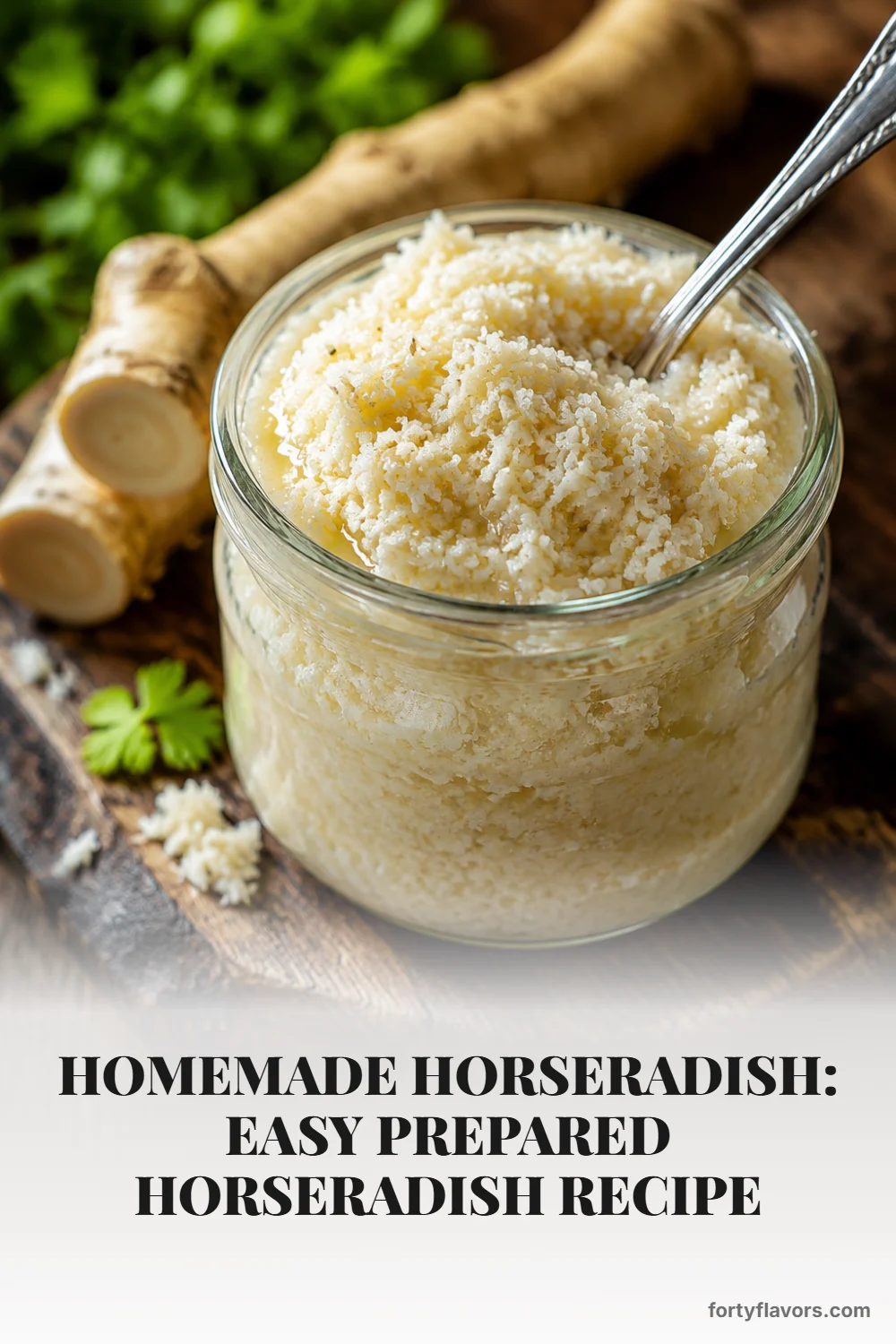
Homemade Horseradish: Easy Prepared Horseradish Recipe
Ingredients
Scale
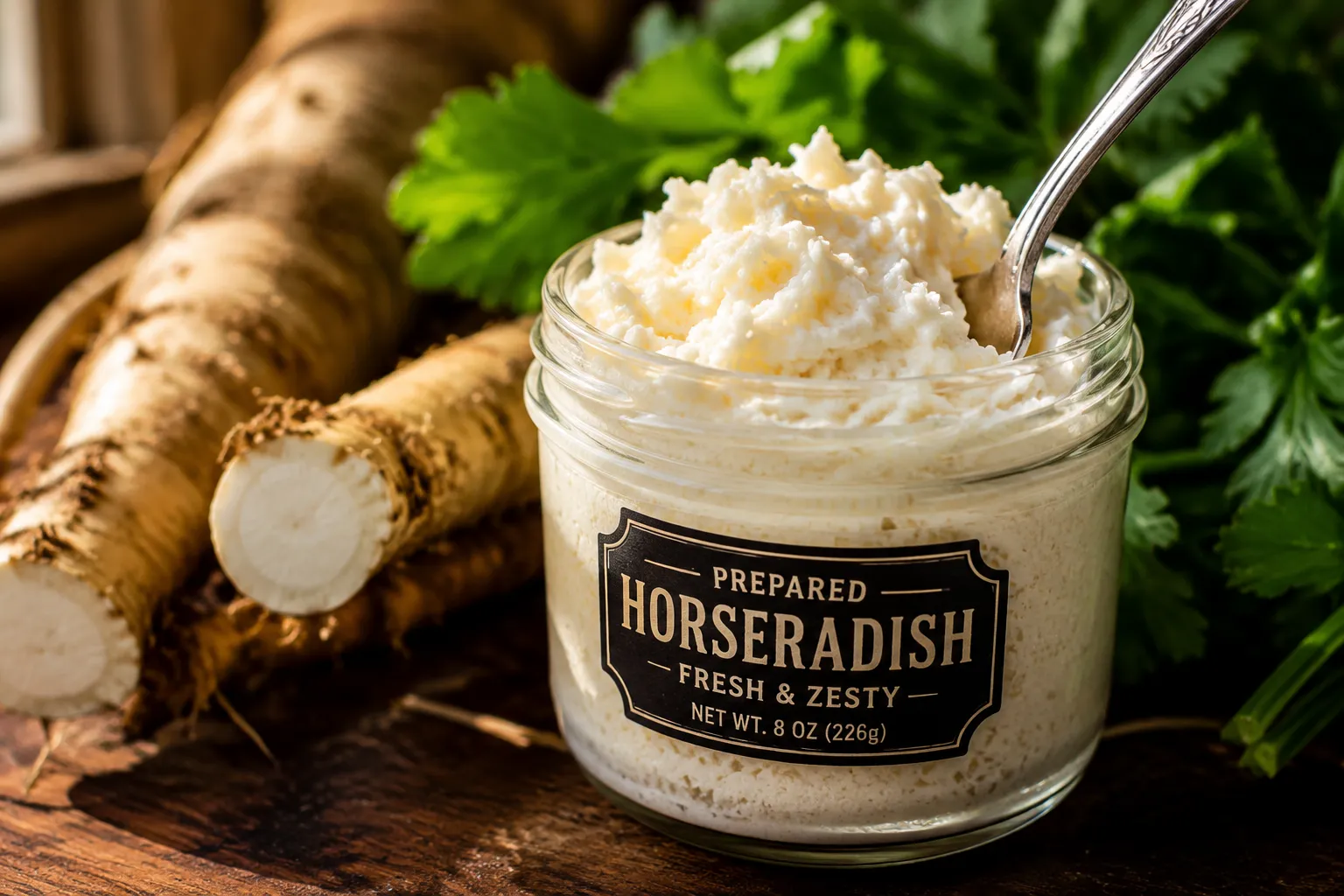
Skip the jarred stuff. This homemade prepared horseradish is sharper, fresher, and ready in 10 minutes with a single root and a food processor.
Once you make homemade horseradish horseradish once — yes, I'm saying it twice because the difference between the jarred stuff and the fresh stuff is that dramatic — you'll never go back to the dusty refrigerated tub at the grocery store. Freshly grated horseradish is bright, snowy white, and so aggressively sharp it'll clear your sinuses from across the kitchen. It's the kind of condiment that makes a slab of medium-rare beef taste like a special occasion and turns an ordinary cocktail hour into something with an actual pulse.
The good news? You need exactly four ingredients, a food processor, and about ten minutes. The slightly intimidating news is that fresh horseradish is genuinely powerful — we're talking onion-cutting tears multiplied by ten — so I'll walk you through the heat-control timeline that lets you decide whether you want a mellow, sandwich-friendly version or a nose-clearing nuclear option that belongs next to a standing rib roast.
This is the recipe I make every December for prime rib, every spring for Easter ham, and pretty much any weekend I'm putting together a Bloody Mary mix on a Saturday morning. One root yields about a cup of finished condiment, which keeps in the fridge for over a month. That's a lot of mileage from one knobby, unassuming little root.
Prepared horseradish is the simplest condiment in the world: freshly grated horseradish root suspended in white vinegar with a pinch of salt. That's it. It's not creamy, it's not pink, it's not mixed with beets (that's a separate Eastern European preparation called chrain). What you buy in jars at the supermarket is technically the same thing, but it's usually been sitting on a shelf for months, and horseradish loses its punch quickly once it's been processed.
Horseradish sauce, on the other hand, is prepared horseradish blended with dairy — sour cream, mayo, or crème fraîche — to create a smoother, milder spread. Both have their place, and once you have a jar of the prepared version in your fridge, you can make sauce in thirty seconds whenever you want it.
Here's the wild part: a whole horseradish root, sitting on your cutting board, smells like almost nothing. The heat — those volatile mustard oils called isothiocyanates — only develops when you break the cells open by grating, grinding, or crushing. From that moment, you have a window of about three minutes before the heat peaks. Add vinegar early and you lock in mild flavor. Wait longer and you get something approaching weapons-grade.
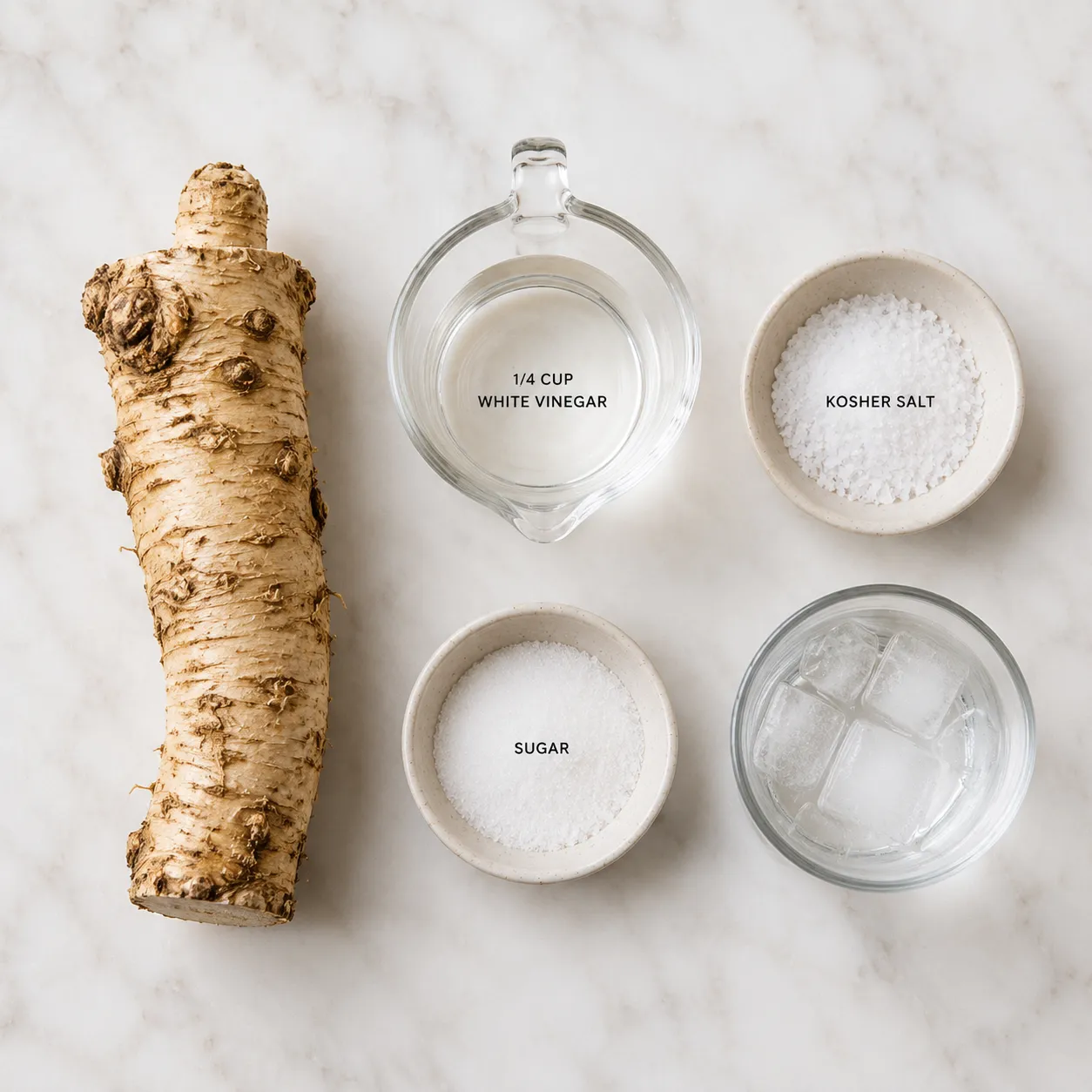
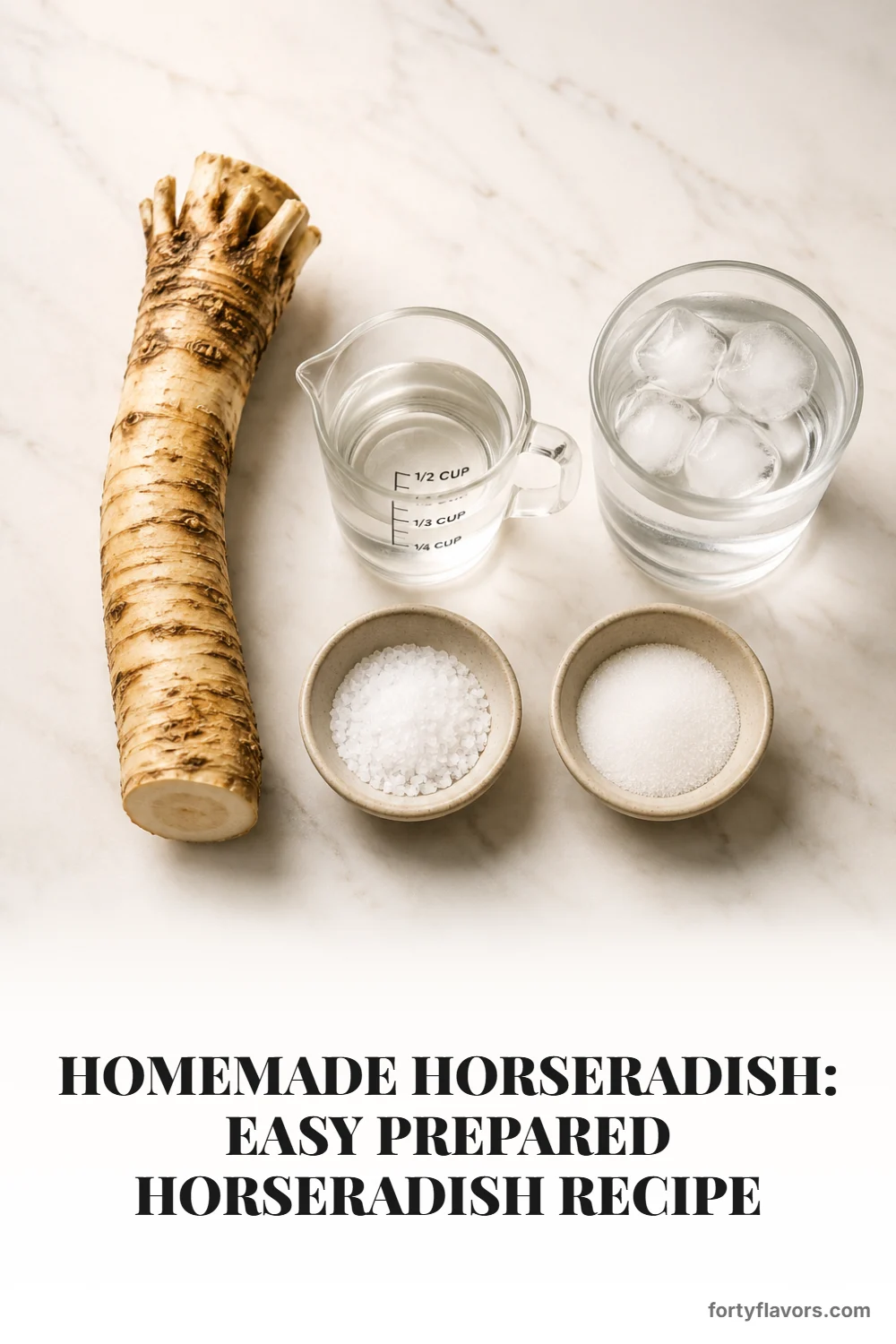
The ingredient list is almost insultingly short, but each one matters. Here's what to look for when you're shopping and prepping.
Fresh horseradish root is the whole game. Look for it in the produce section near the ginger, especially in fall and winter (peak season is October through March). Pick a root that feels firm and heavy, with smooth tan skin and no soft spots, mold, or sprouting green tips. A root that's gone soft or rubbery has already lost most of its punch. One eight-ounce root makes about a cup of finished condiment.
White vinegar is the traditional choice because its clean, neutral acidity lets the horseradish flavor stay front and center. Plain distilled white vinegar works perfectly — save the fancy wine vinegars for vinaigrettes. You want 5% acidity, which is standard for almost any supermarket bottle.
Kosher salt sharpens the flavor and helps the condiment keep longer. A tiny pinch of sugar (totally optional) rounds out the harshness without making it sweet. Some cooks add a splash of lemon juice for brightness, but I find pure vinegar gives the cleanest, most traditional result.
The method is straightforward, but the timing of your vinegar is everything. I'll lay out the full step-by-step in the recipe card below, but here's the big-picture walkthrough so you know what to expect.
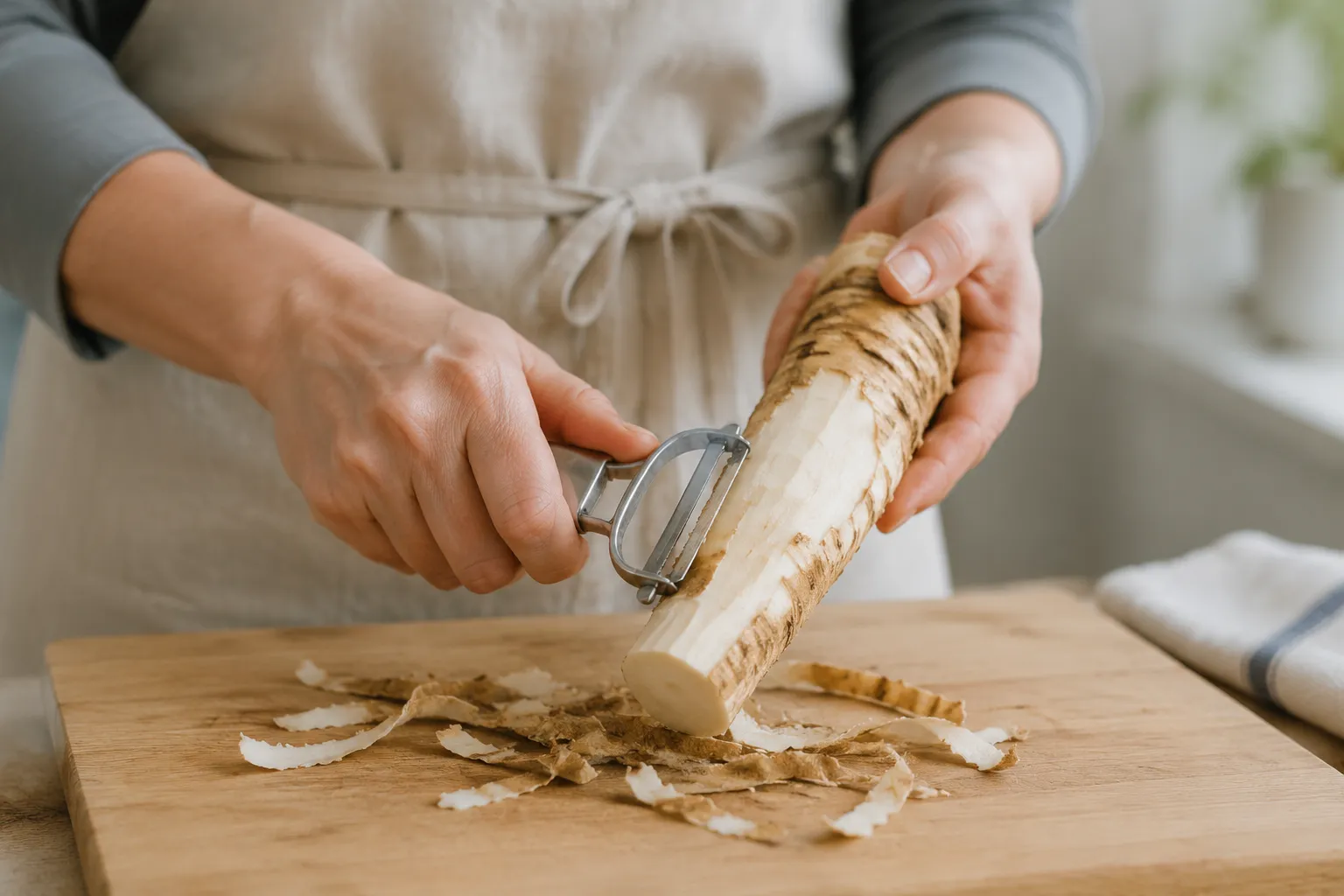
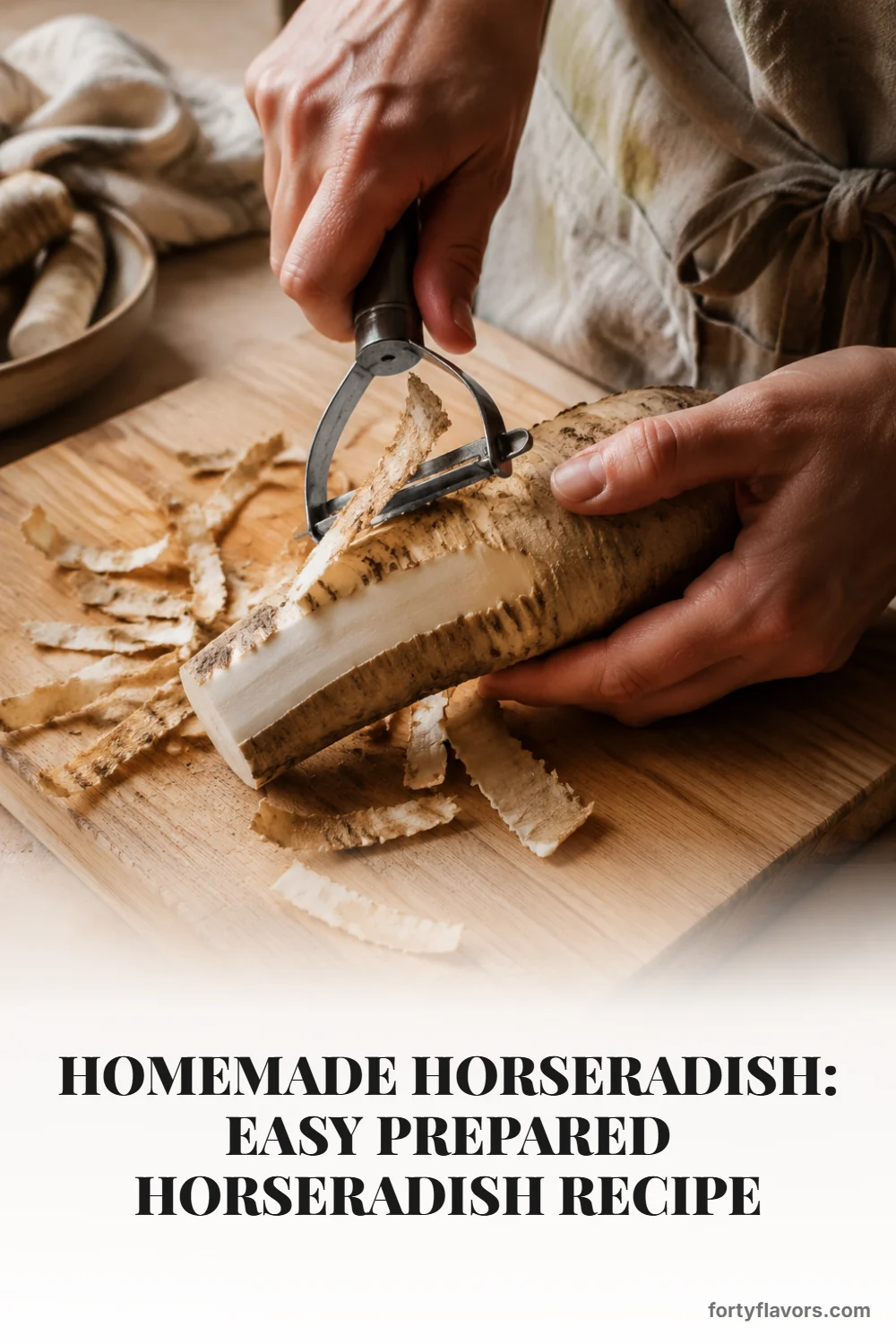
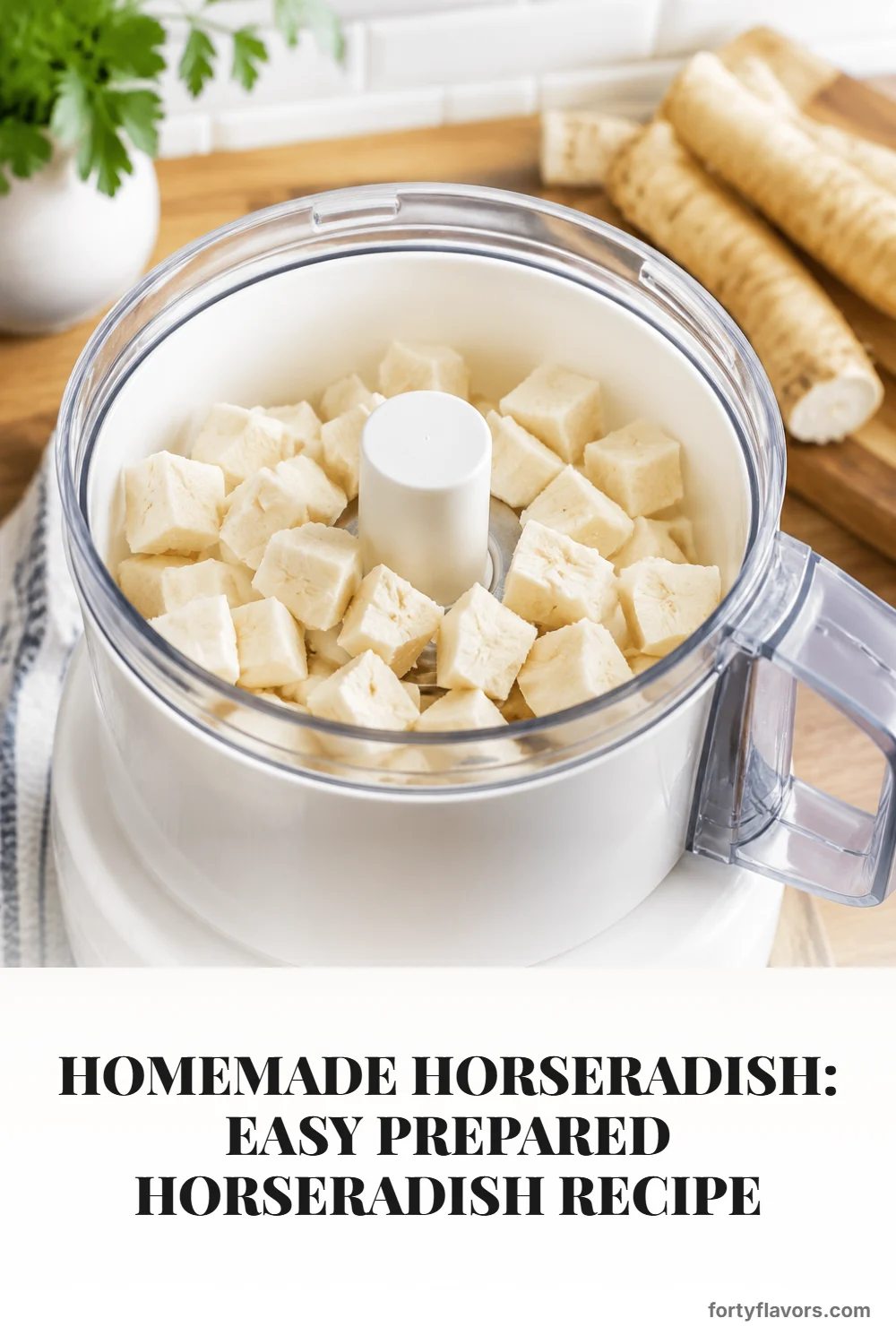
Start by trimming the ends and peeling the root with a Y-peeler or paring knife. The skin is tough and bitter, so don't be shy — go down to the creamy ivory flesh underneath. Cut the peeled root into rough one-inch cubes so your food processor can handle it without bogging down. If your root is especially fibrous (older roots get woody), slice the cubes thinner.
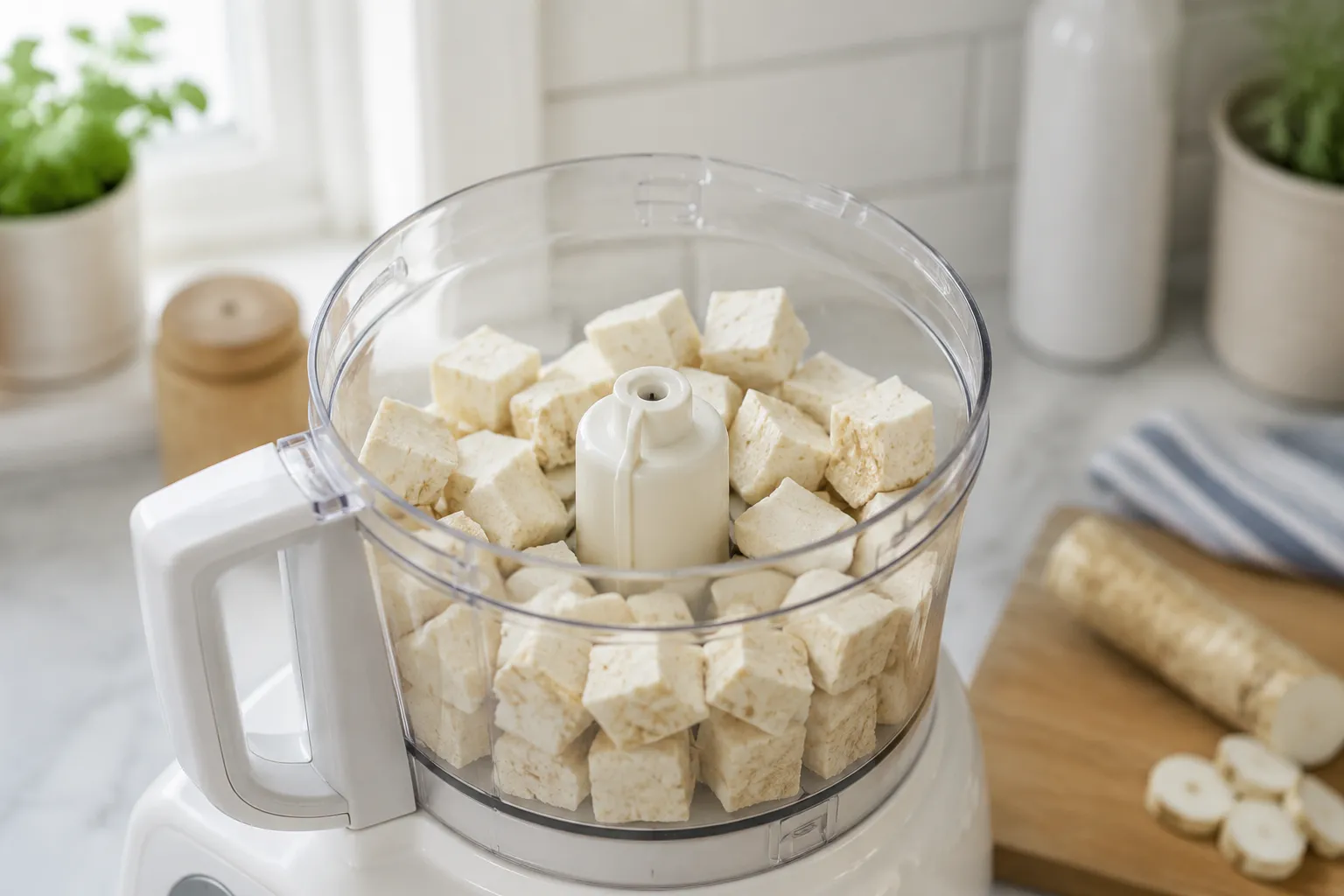
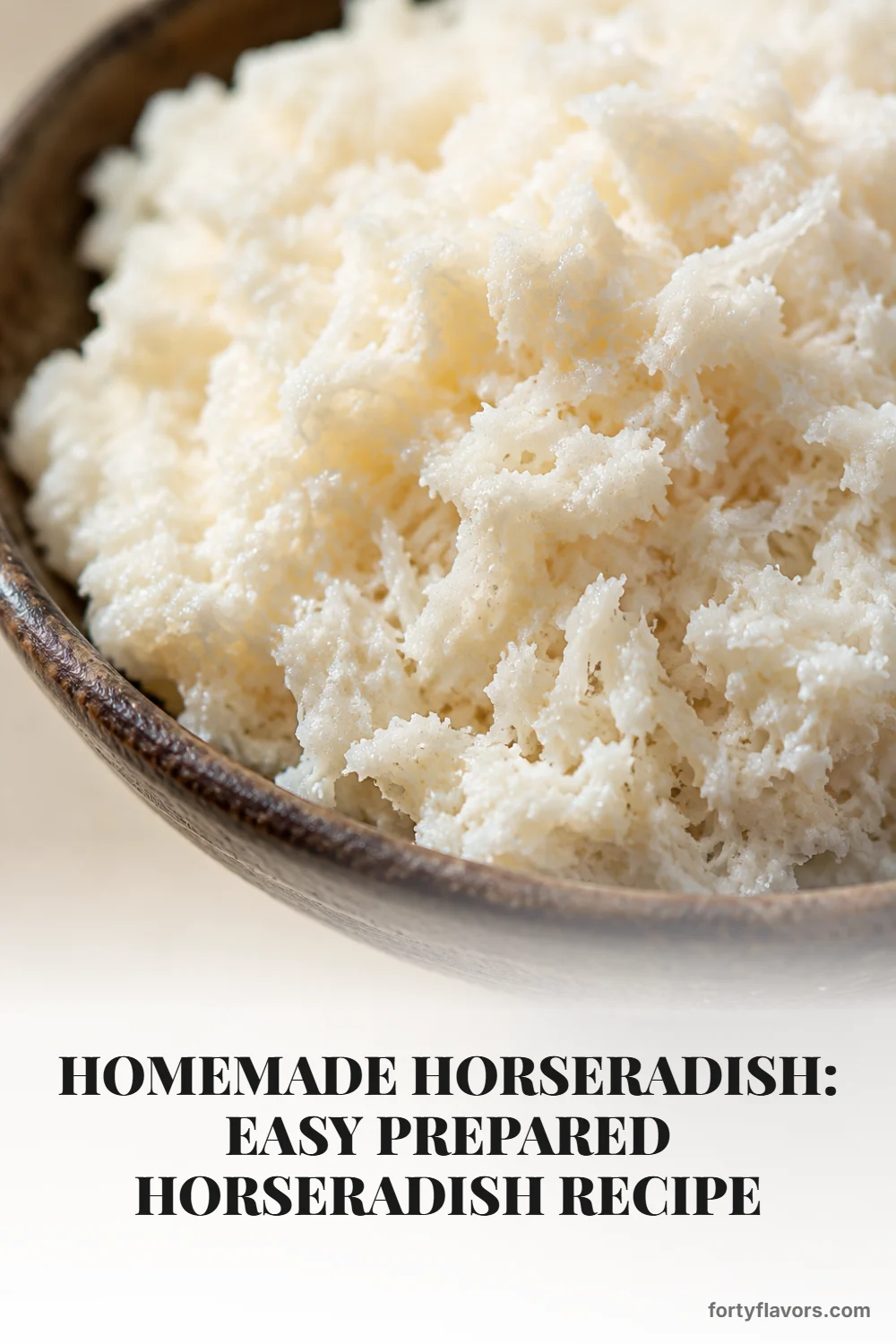
Drop the cubes into a food processor fitted with the standard S-blade. Pulse first to break things down, then run continuously for about 30 seconds, scraping the sides as needed, until you have a fine, fluffy, snow-white grate. This is the moment your kitchen starts smelling intense. Open a window. Turn on the vent. I'm not joking — the fumes are no joke, and they hit harder than chopping a pile of onions.
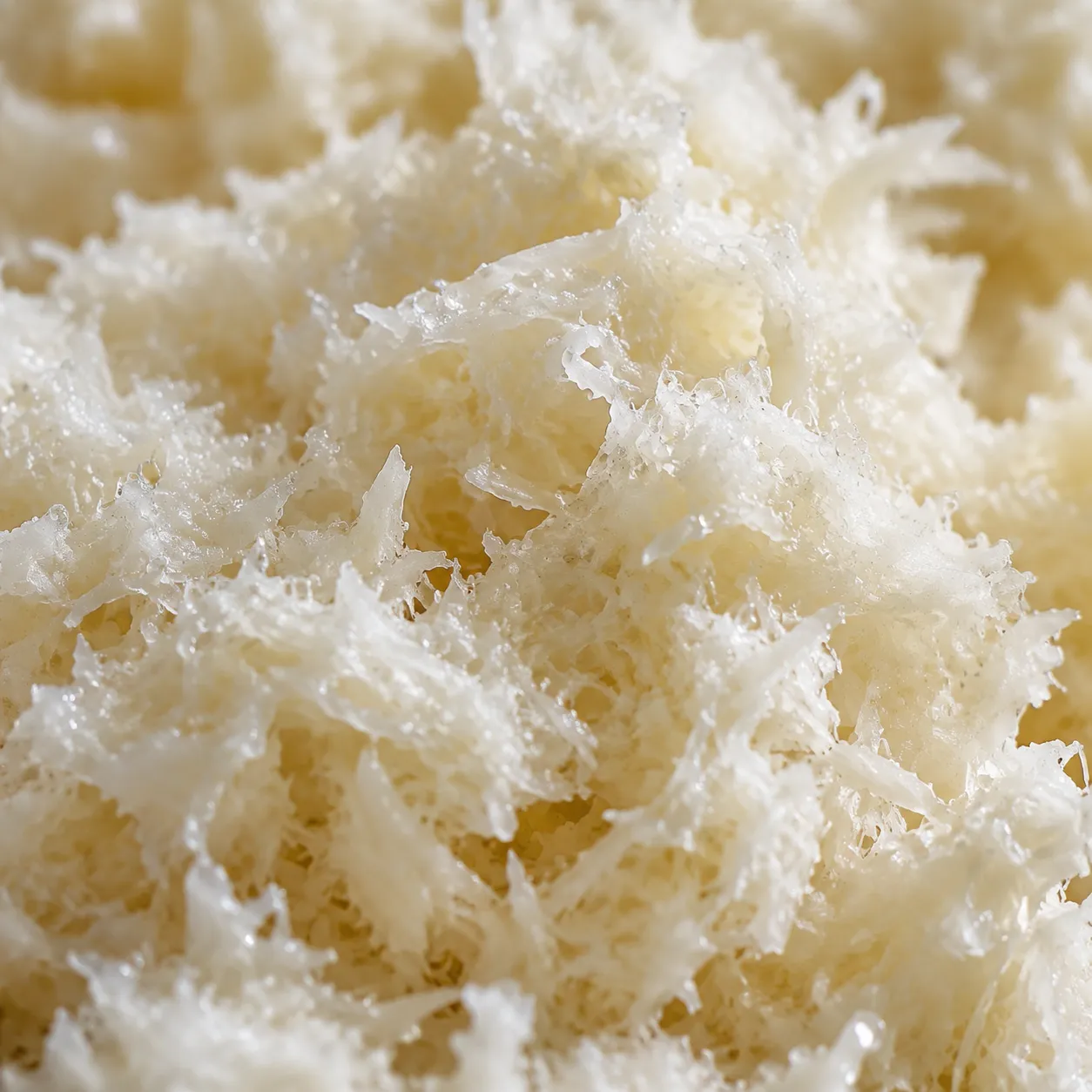
Now the critical part: deciding how hot you want it. The longer you wait between grating and adding vinegar, the hotter the finished condiment will be. For mild, add the vinegar, water, and salt immediately. For medium, wait one minute. For full nuclear, let it sit a full three minutes before adding the vinegar to stop the heat reaction in its tracks. Pulse a few more times to combine, and you're done.
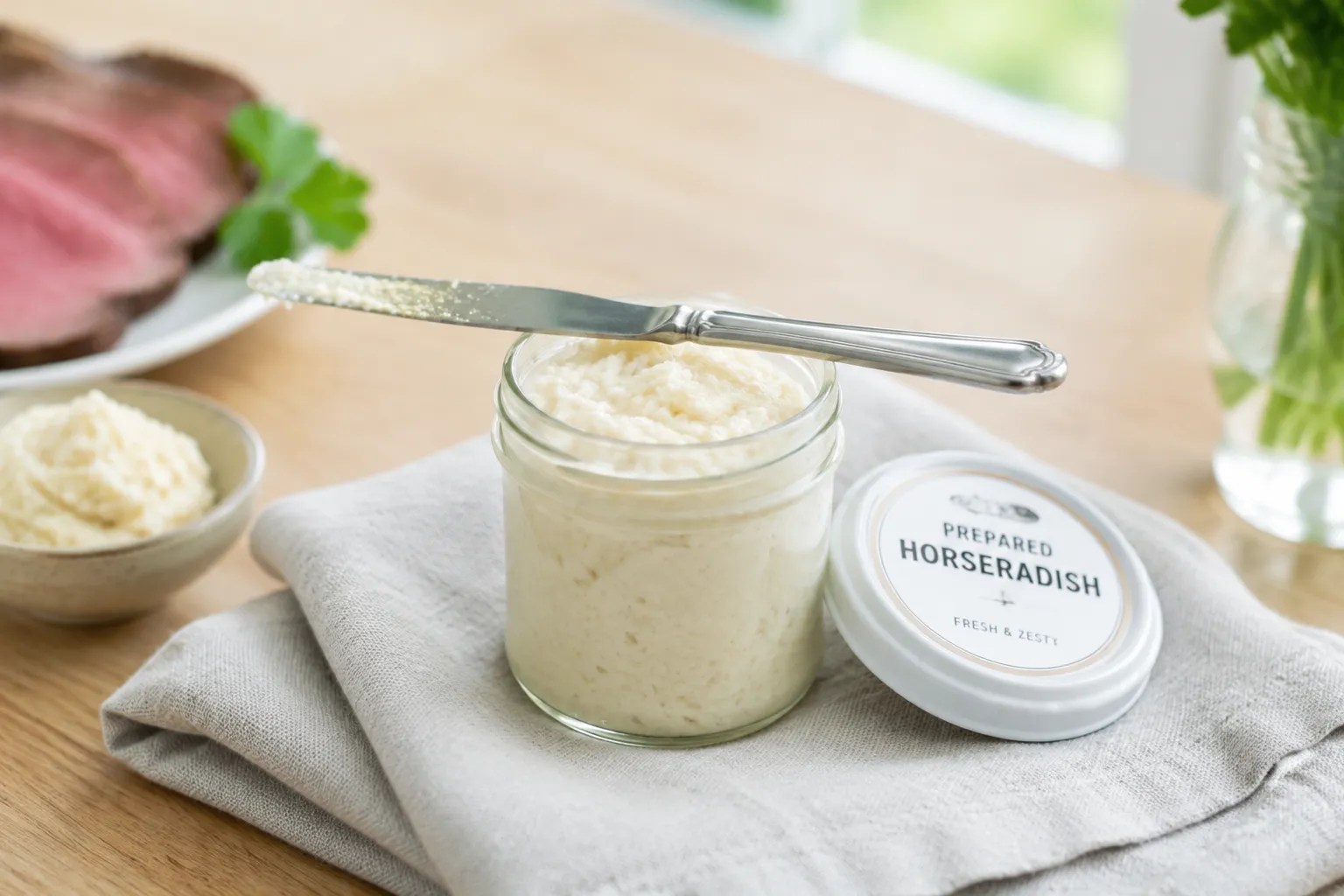
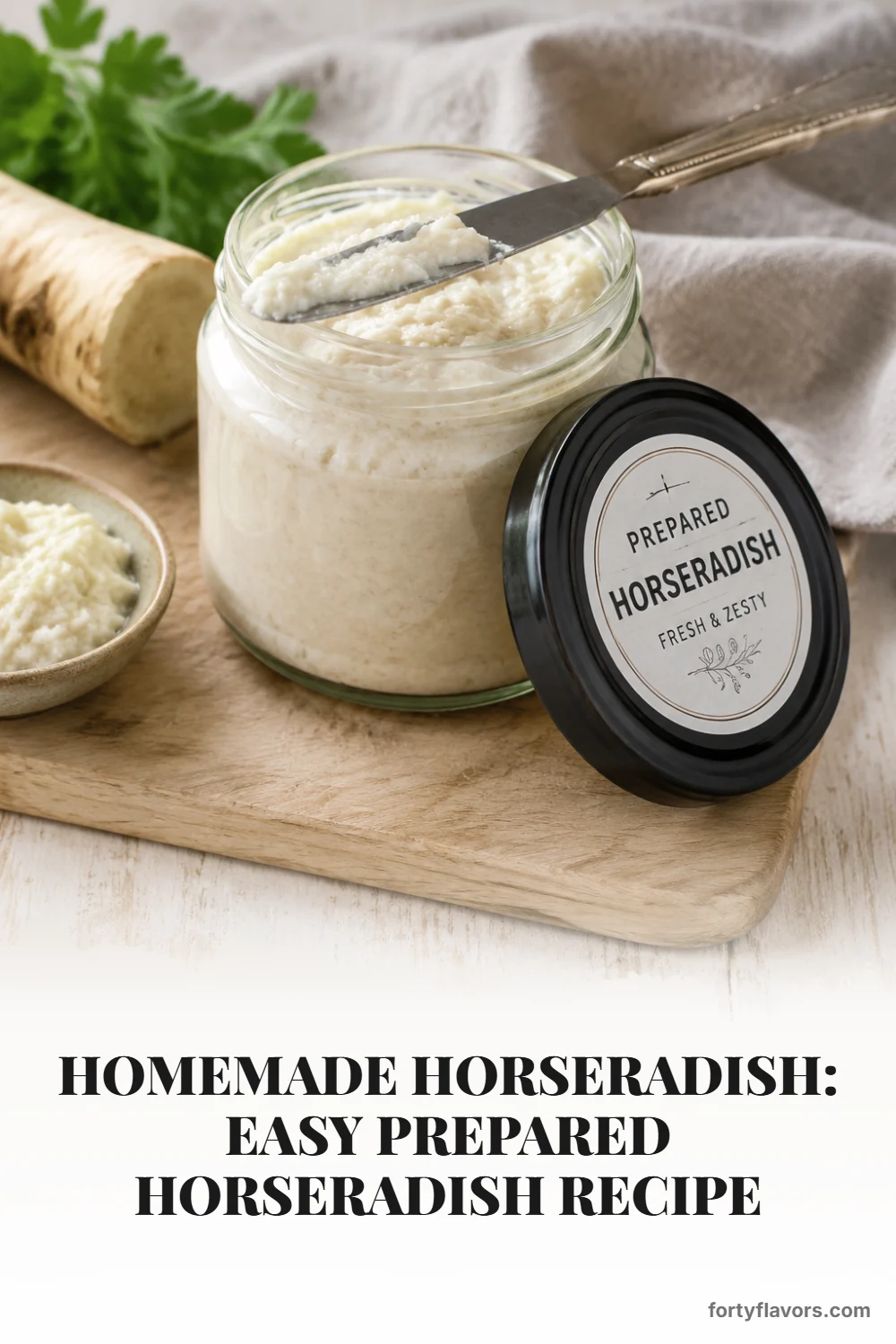
Pack the finished horseradish into a clean glass jar, press it down to eliminate air pockets, and screw on the lid. Let it rest in the fridge for at least an hour before serving — the flavors round out beautifully overnight. When you open the lid, lean back. Always lean back.
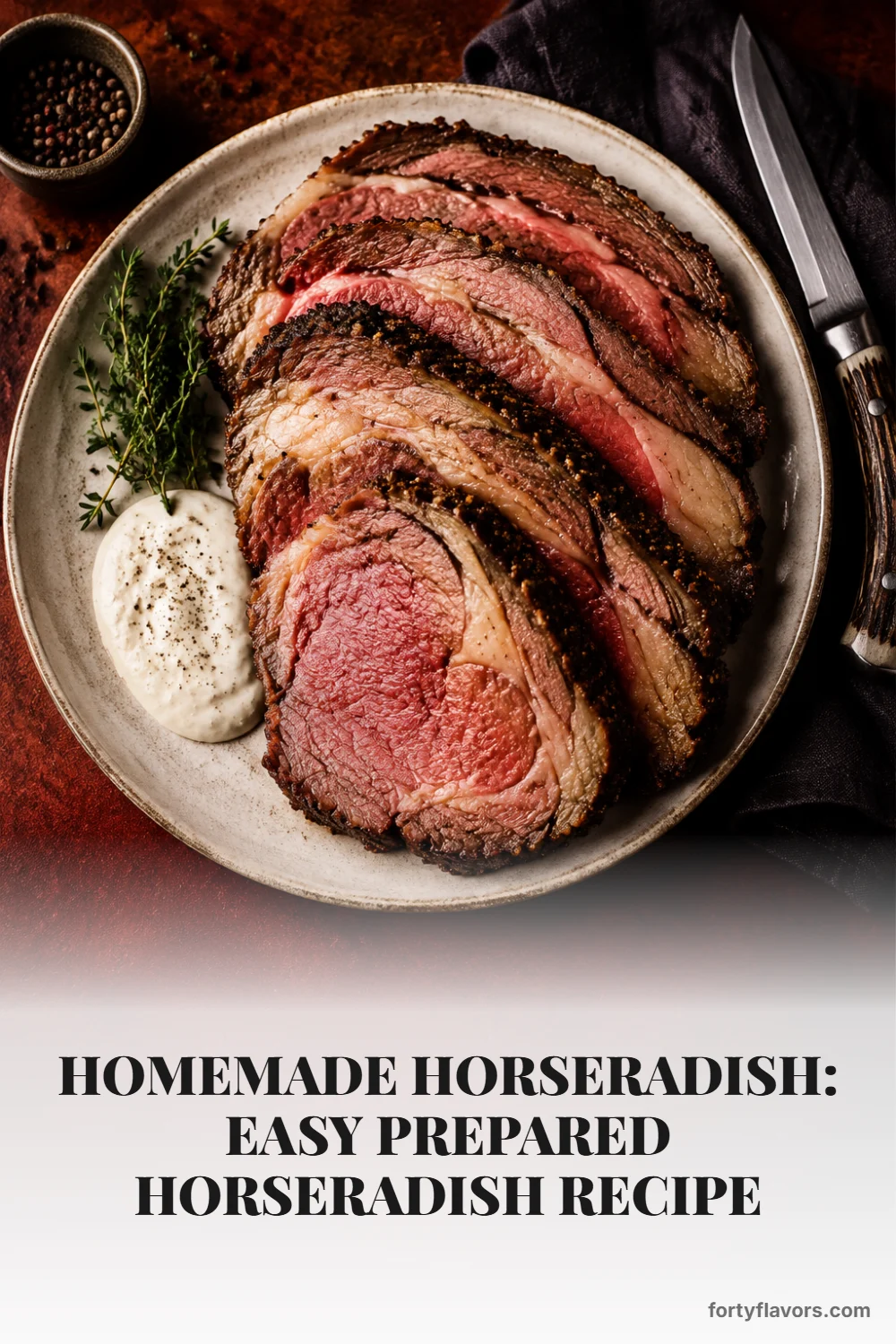
This is where one little jar earns its keep. The most classic application is a creamy horseradish dip for prime rib — just fold 3 tablespoons of prepared horseradish into 1/2 cup sour cream with a squeeze of lemon, a pinch of salt, and a few cracks of black pepper. That's your prime rib sauce for any holiday roast, and it's better than anything you'd be served at a steakhouse.
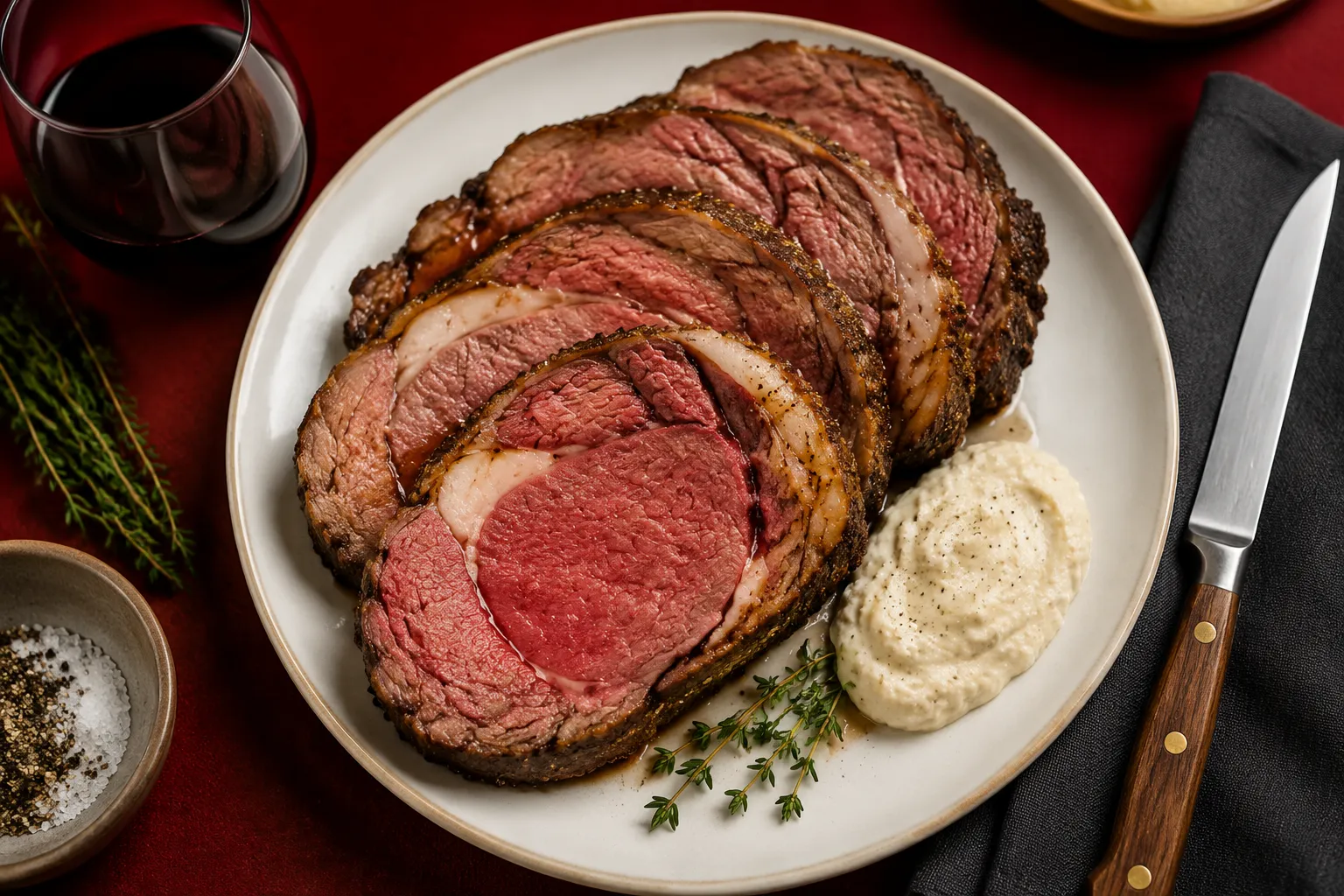
For homemade cocktail sauce, stir 2 tablespoons of prepared horseradish into 1/2 cup ketchup with a squeeze of lemon and a few dashes of Worcestershire. Done. Chill it, then serve with a tower of peel-and-eat shrimp. It's miles better than the bottled stuff, and it costs about fifty cents to make.

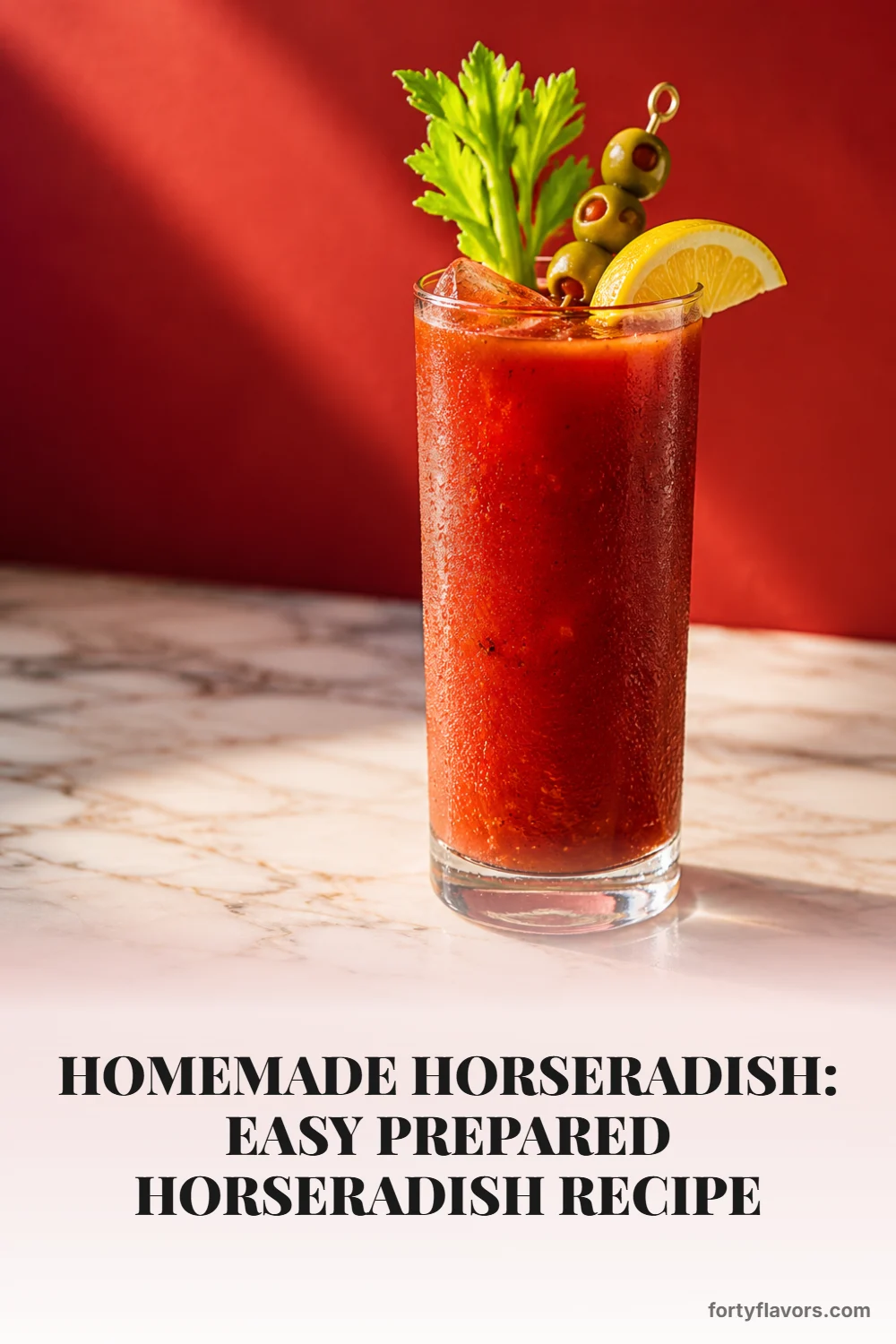
A spoonful of prepared horseradish is also the secret to a serious Bloody Mary mix — it adds dimension that hot sauce alone can't touch. Beyond drinks, stir it into deviled egg filling, mash it into potato salad, smear it on roast beef sandwiches, fold it into mashed potatoes, or whisk it into a vinaigrette for a peppery kick on a winter steak salad. Once you have it on hand, you'll find a reason to use it almost every week.
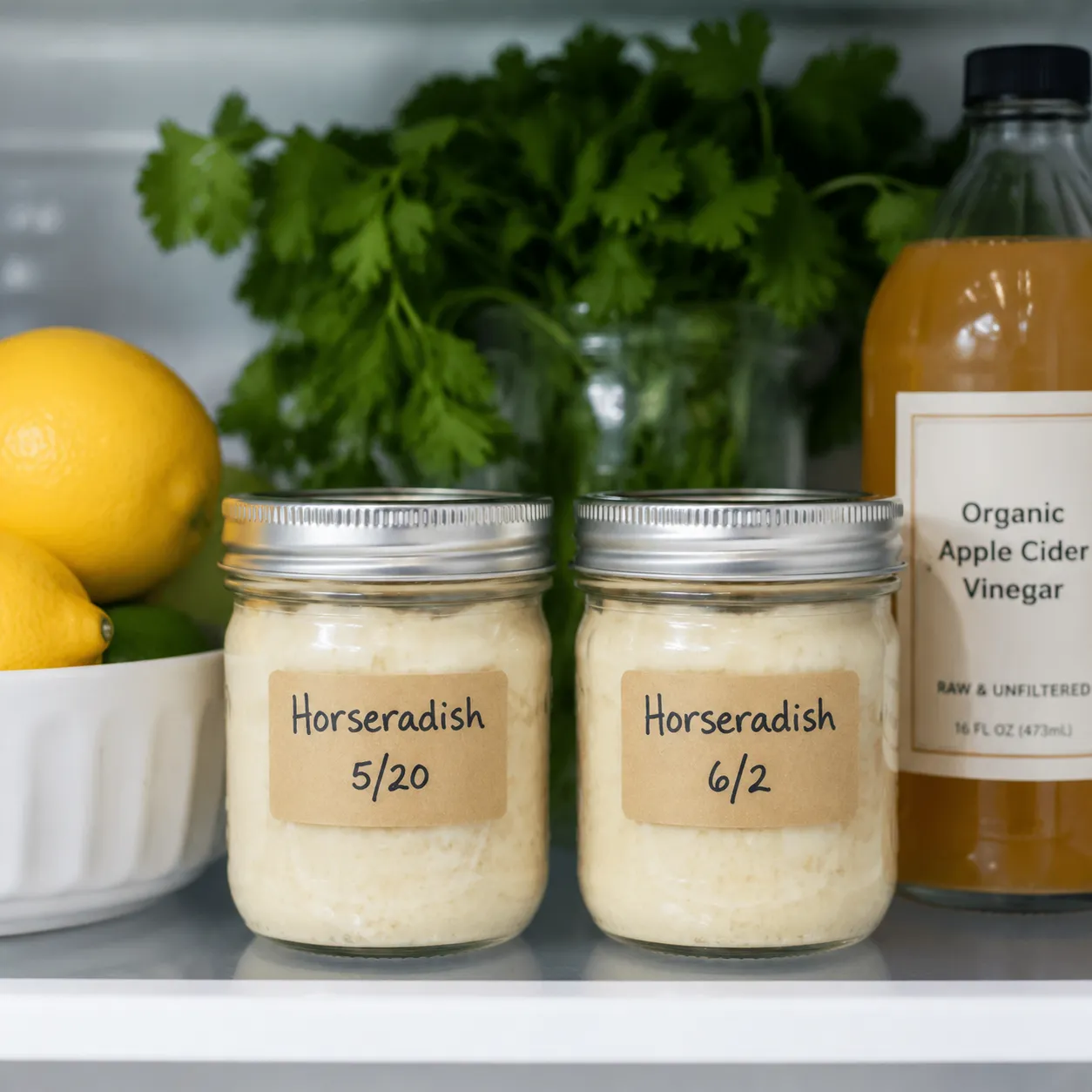
One jar of homemade horseradish is one of those quiet kitchen upgrades that pays you back forever. It costs less than the jarred version, tastes ten times better, and takes the same amount of time as making a cup of coffee. Make a batch this weekend, and your next steak dinner is going to be on a completely different level.
Once you have the base recipe down, it's easy to spin off in new directions depending on what you're serving.
Store homemade prepared horseradish in an airtight glass jar in the refrigerator. It stays sharp and bright for about 4 to 6 weeks, though the heat fades gradually over time, so it's best enjoyed within the first month. Always use a clean spoon to scoop — introducing crumbs or moisture from a used utensil shortens shelf life.
You can freeze prepared horseradish for up to 6 months in small portions (an ice cube tray works great), but expect some loss of pungency after thawing. Signs it's past its prime: a yellowed or brownish color, a sour off-smell beyond the normal vinegar tang, or any visible mold. When in doubt, toss it and make a fresh batch — it only takes 10 minutes.
Hover any image and hit “Pin it” to save it to your Pinterest boards.