Juicy Pork Roast Recipe (Tender, Garlic-Herb Crust)
Ingredients
Scale
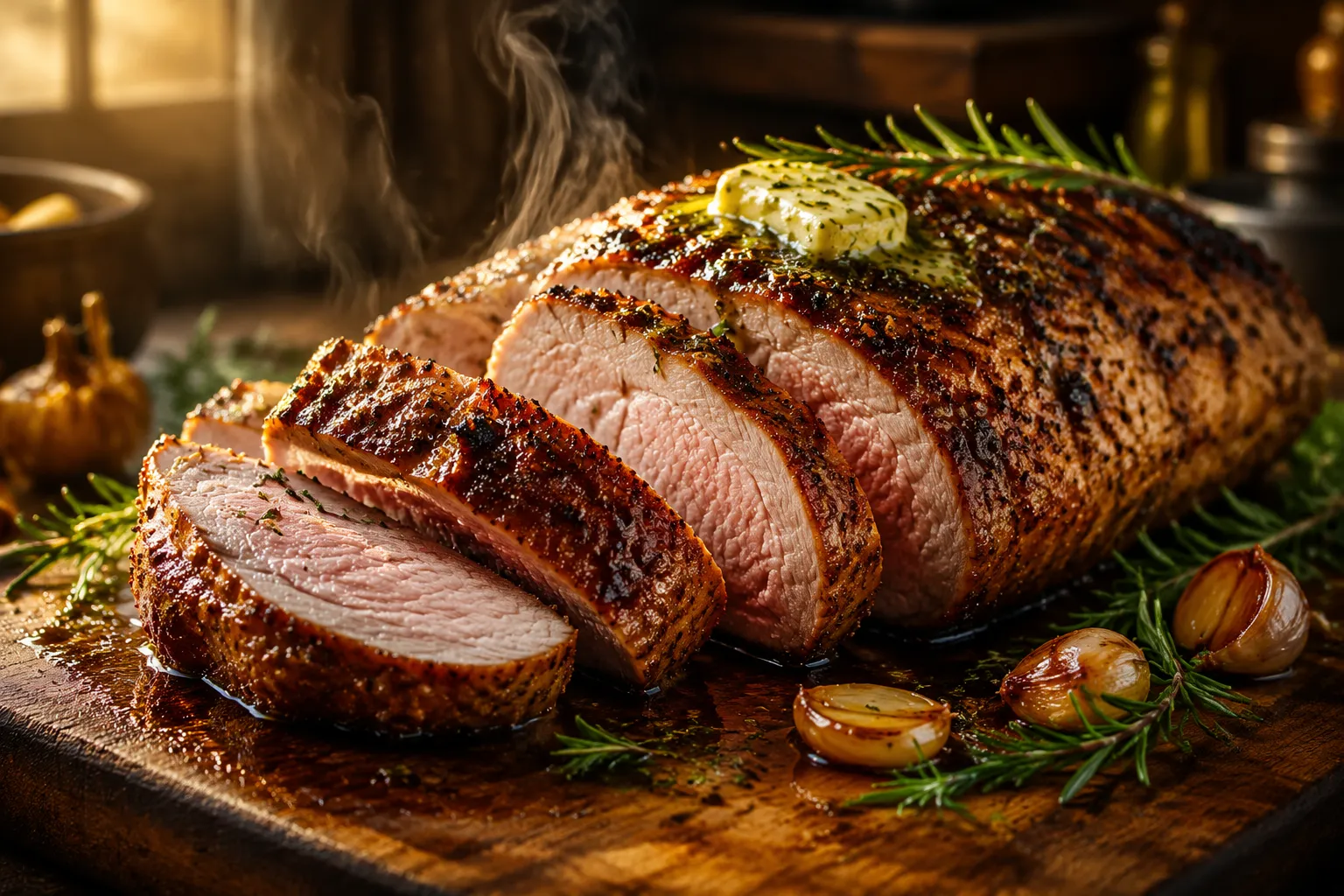
A foolproof pork roast recipe with a garlicky herb crust, juicy center, and rich pan gravy. Two methods (oven and slow cooker) for any weeknight or Sunday dinner.
This pork roast recipe is the kind of Sunday-dinner centerpiece you'll come back to again and again — a fork-tender, juicy roast with a deep mahogany crust, fragrant garlic and fresh herbs in every bite, and a silky pan sauce spooned right over the slices. Whether you're feeding family on a quiet weeknight or setting a holiday table, this is the dependable, no-drama method that turns a humble cut of pork into something a little bit special.
I tested this with both an oven roast and a slow cooker version, and I'm including both in this post so you can pick the one that fits your day. The oven method gives you that crackling, herb-flecked crust and a quick gravy made right in the pan from the drippings. The slow cooker version is for those mornings when you want dinner to handle itself while you live your life. Either way, you end up with tender pork and a kitchen that smells unreasonably good.
If you've ever pulled a roast from the oven that tasted more like a sad pot roast than the juicy showstopper you wanted, you're in the right place. The trick is a high-heat sear, a moderate oven, and a meat thermometer — that's it. No brining required, no fancy equipment, just pantry staples and a well-marbled cut of pork that punches well above its weight.
The cut you choose makes or breaks this dish, so it's worth a minute at the meat counter. My top pick for a weeknight or Sunday roast is a boneless pork sirloin roast — it has more fat marbling than pork tenderloin, more even shape than pork shoulder, and it slices beautifully against the grain. Pork loin works in a pinch, but it leans a little drier and benefits from extra basting with garlic herb butter to keep things juicy.
Pork shoulder (also called Boston butt) is the king of low-and-slow shredded pork, but it has too much connective tissue for clean slicing and isn't ideal here. For an even carve, stick with sirloin or loin. Look for a roast that's evenly shaped, weighs between 2.5 and 3.5 pounds, and has a thin cap of fat on top — that fat melts into the meat as it cooks and is your best friend at dinnertime.
Plan on about 6 to 8 ounces of raw weight per person. A 3-pound roast feeds six comfortably with leftovers, which you absolutely want for sandwiches and tacos later in the week. If you're feeding a crowd, two smaller roasts cook more evenly than one giant one, and they fit better in the oven without crowding.
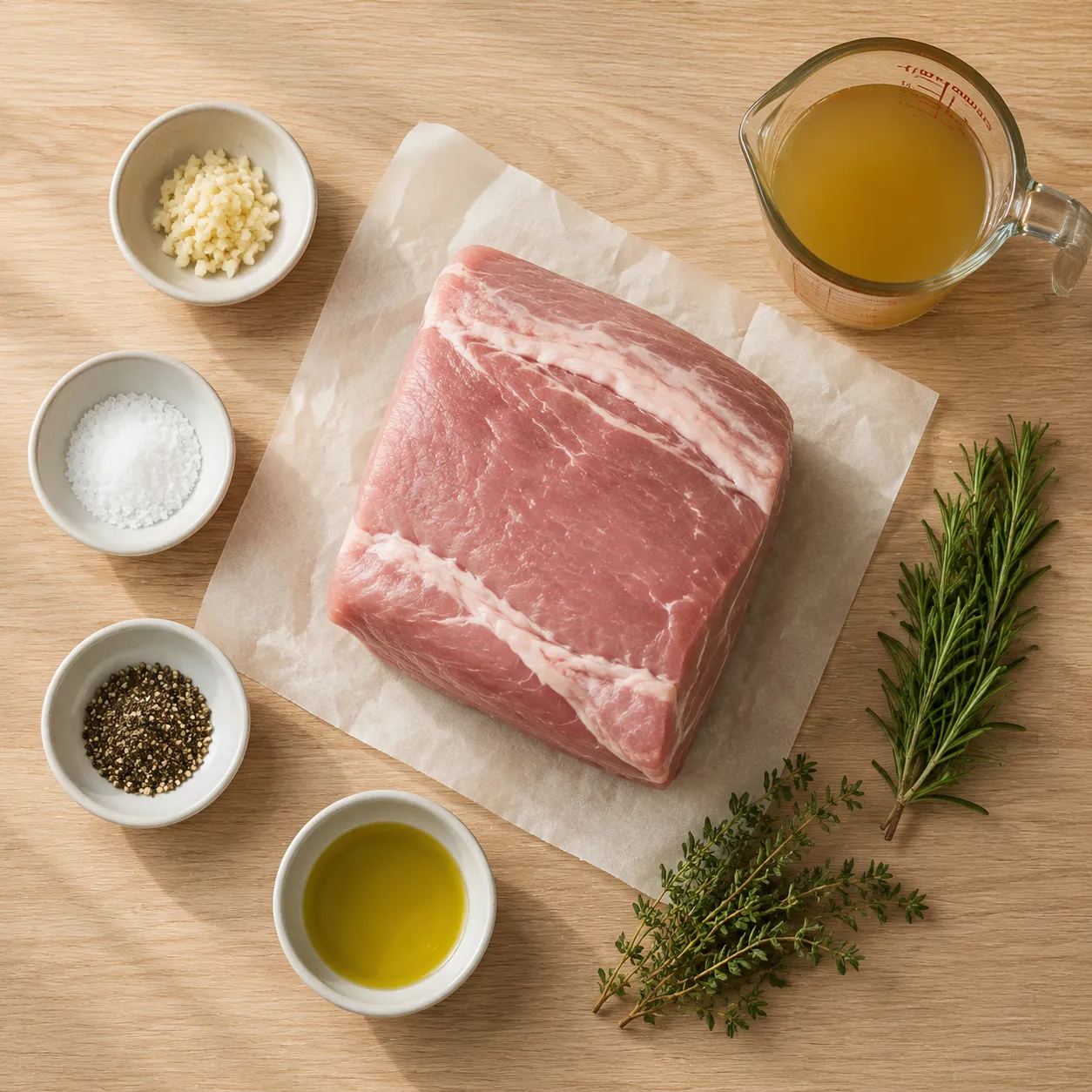
The ingredient list reads like a Sunday pantry inventory, which is exactly the point. The only thing you might not have on hand is fresh rosemary and thyme, but a quick stop at the produce aisle is worth it for the way they perfume the kitchen as the roast cooks. Buy small bundles — you only need a few sprigs, and the rest will last a week wrapped in damp paper towels.
For the rub, you'll combine minced garlic, chopped fresh rosemary, fresh thyme leaves, kosher salt, black pepper, smoked paprika, and good olive oil into a fragrant paste. That paste is what builds the crust as it sears in a hot pan. Smoked paprika is the secret weapon — it brings a faint barbecue warmth without overpowering the herbs, and it deepens the color of the finished crust.
For the pan, you'll need a quartered yellow onion and a cup of low-sodium chicken broth. The onion melts into sweet jammy wedges by the time the roast is done, and the broth is the foundation of your pan sauce. If you keep dried herbs in the cabinet but not fresh, you can swap a teaspoon dried for each tablespoon fresh — start light and adjust to taste.
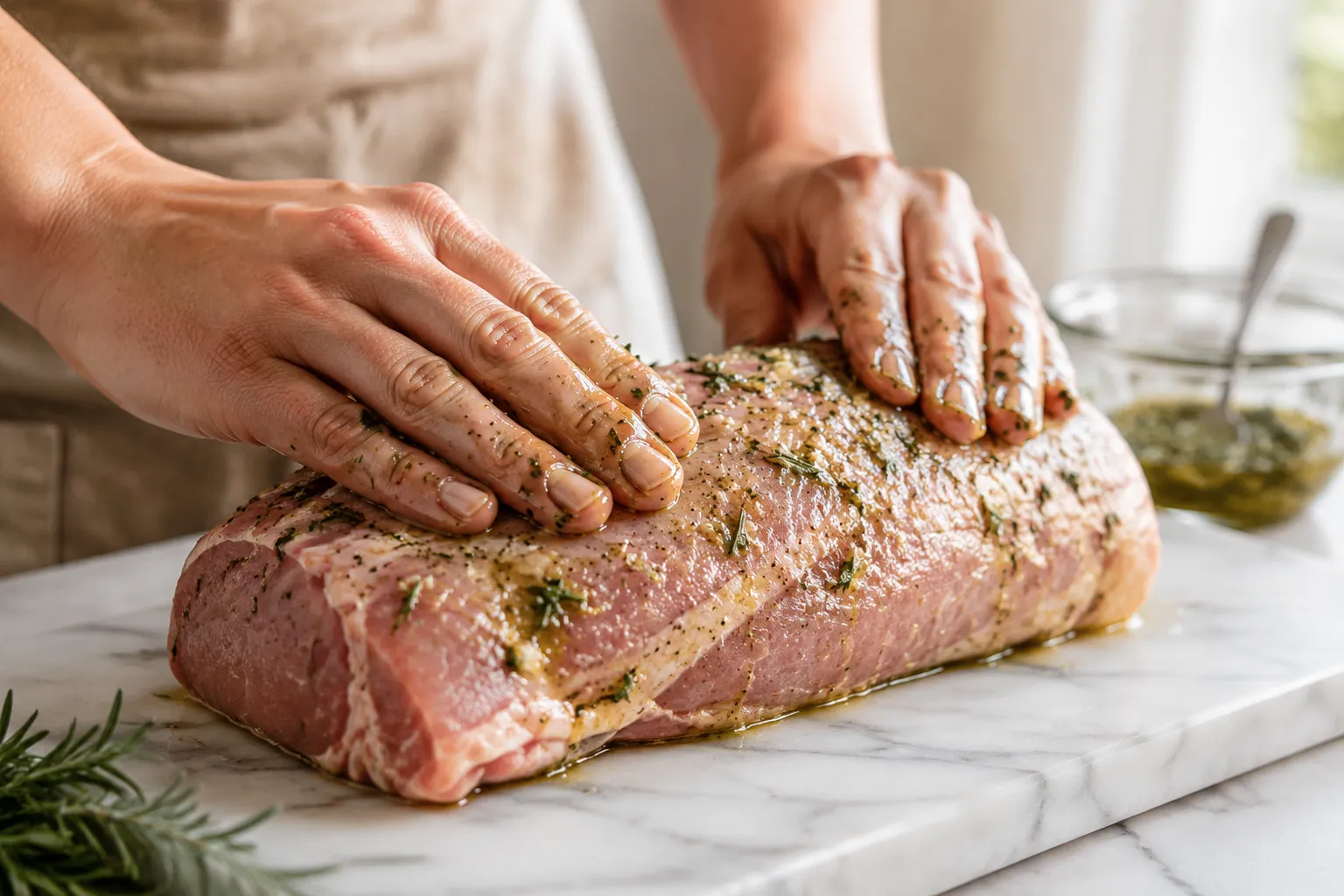
Pull the pork out of the fridge 30 to 45 minutes before you plan to cook. Cold meat hitting a hot pan steams instead of sears, and that even-temperature start is the difference between a rosy, juicy center and a gray, overdone one. While it's resting on the counter, mix the garlic-herb paste in a small bowl and pat the roast dry with paper towels — moisture is the enemy of a deep crust.
Rub the paste all over the meat, pressing it into the surface so it adheres. Don't be shy — every bit that sticks becomes flavor. Heat a heavy skillet, cast iron if you have it, over medium-high until it's properly hot. A drop of water flicked into the pan should sizzle and dance away immediately. If it just sits there, give the pan another minute.
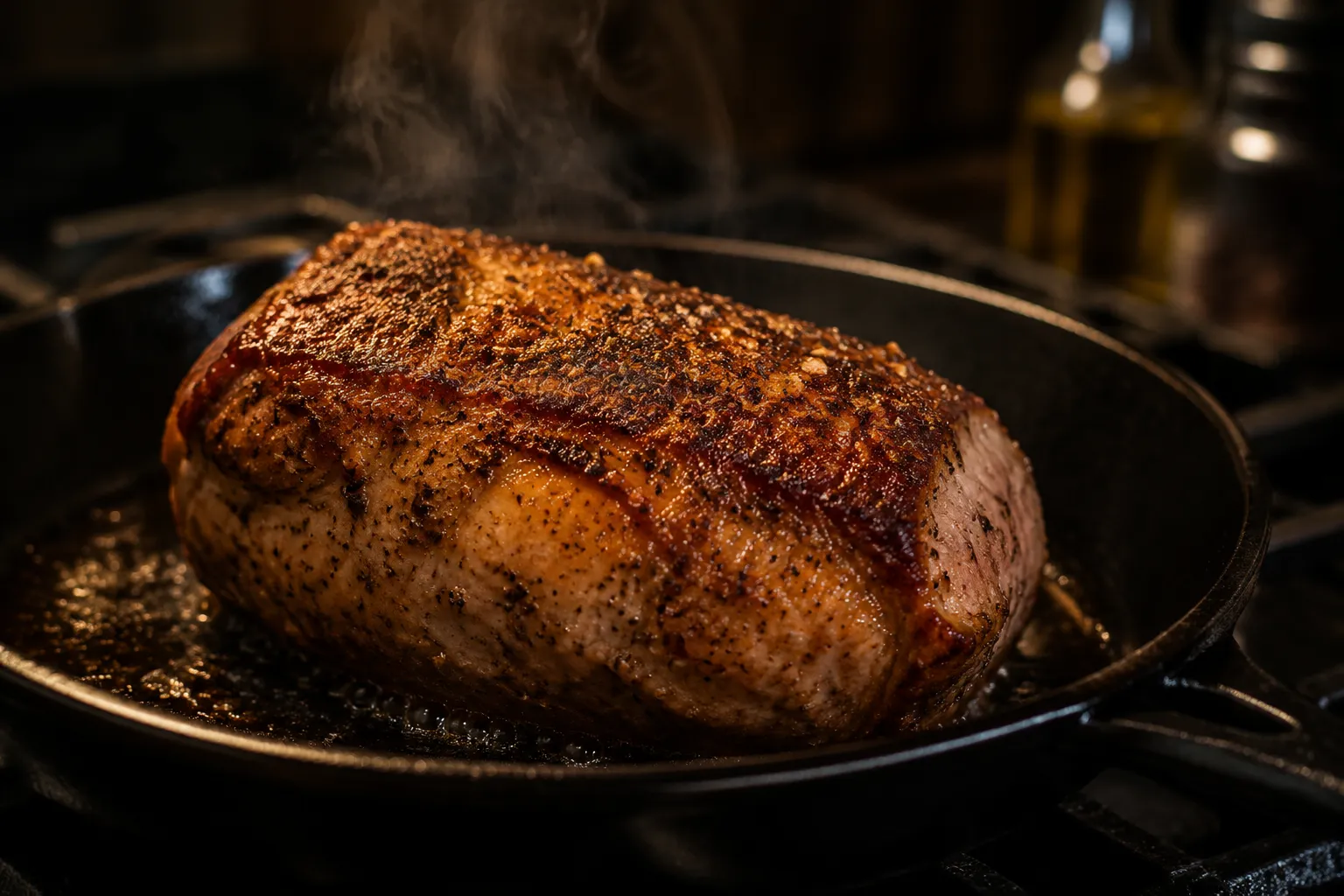
Sear the roast on all sides, about 2 to 3 minutes per side, until it's deeply browned. This is not the time to crowd the pan or rush — golden color equals flavor, and you want that mahogany crust on every face of the roast. Use tongs to lift and turn it carefully so you don't tear off the rub. Transfer the seared roast to a roasting pan or oven-safe baking dish.
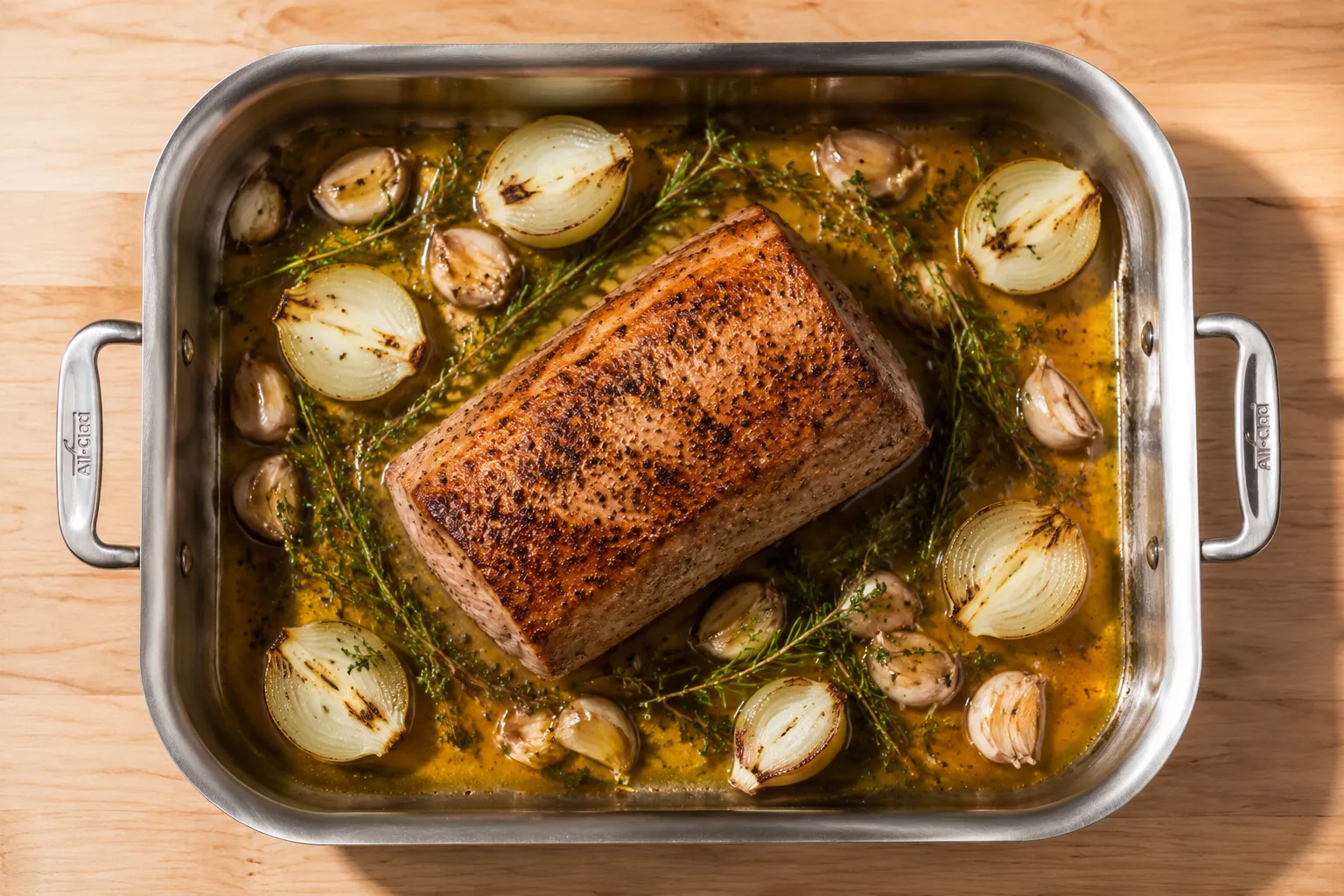
Tuck the quartered onion around the roast, pour the chicken broth into the pan (not over the meat — you don't want to wash off the rub), and slide the whole thing into a 350°F oven. Roast uncovered for about 20 to 25 minutes per pound, basting once or twice with the pan juices for a glossy finish.
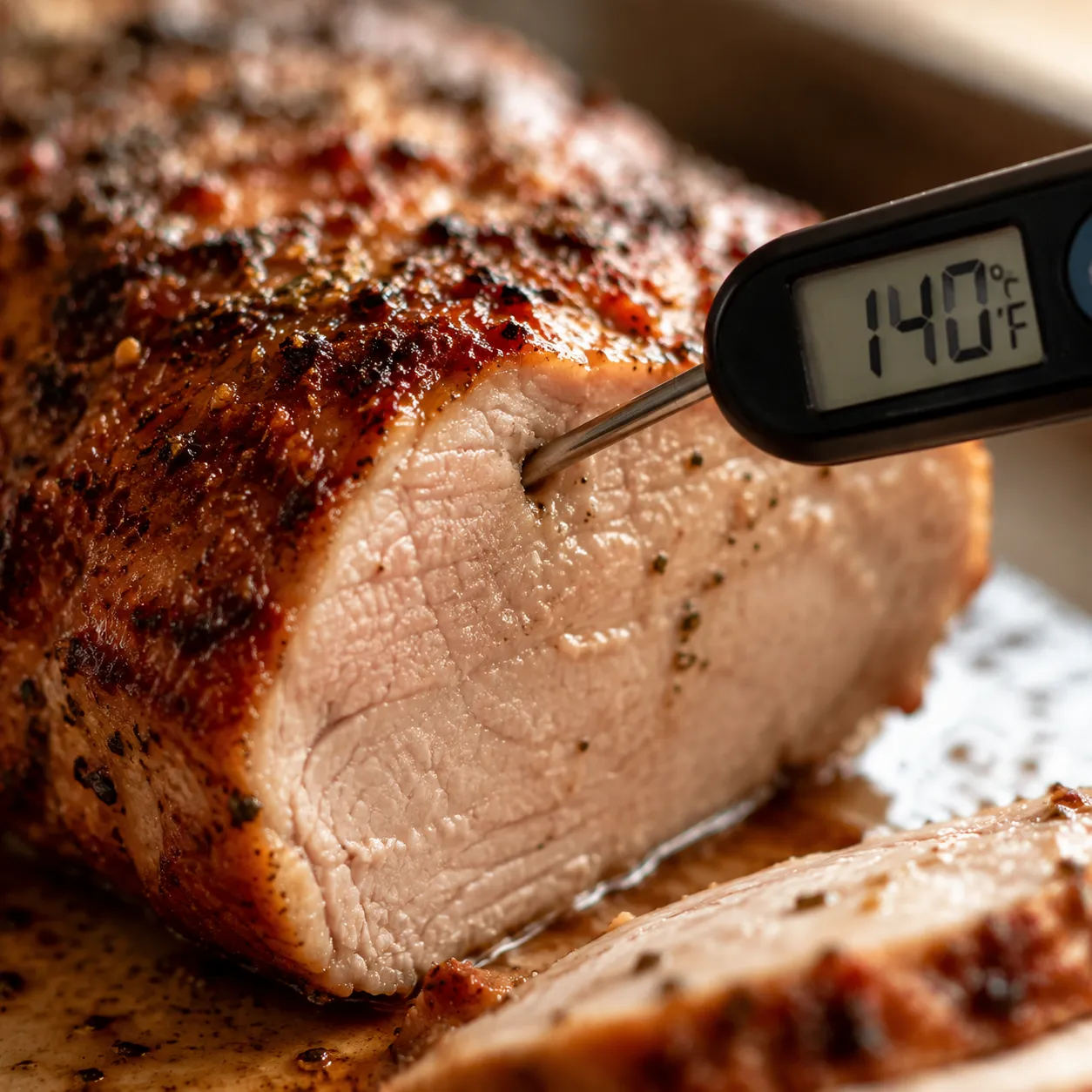
Start checking the temperature about 45 minutes in. You're aiming for an internal temperature 145°F at the thickest part, but I pull mine at 140°F and let carryover heat finish the job. Tent loosely with foil and rest for 10 full minutes — this step is non-negotiable if you want juices in the meat instead of all over the cutting board.
For a hands-off pork roast slow cooker version of this pork roast recipe, follow the rub and sear steps exactly as written, then nestle the seared roast into your crock pot with the onion, garlic cloves, fresh herbs, and broth. Cook on LOW for 6 to 8 hours or HIGH for 3 to 4 hours, until a thermometer reads 145°F at the center. Slow cooker times vary wildly by brand, so use temperature, not the clock, as your guide.
If you genuinely don't have time to sear, you can skip it — but make up the lost flavor by stirring a tablespoon of tomato paste and a splash of soy sauce into the broth, which adds the savory depth a sear would have built. The texture will be slightly more pot-roasty and less crusty, but still beautifully tender and worth every minute it spends in the cooker.
When the roast is done, transfer it to a board to rest, strain the cooking liquid into a saucepan, and reduce it by half over medium-high heat. Whisk in a slurry of one tablespoon cornstarch mixed with two tablespoons cold water and simmer until it coats the back of a spoon. That's your homemade pan gravy, slow-cooker style — silky, deeply seasoned, and ready to spoon over slices.
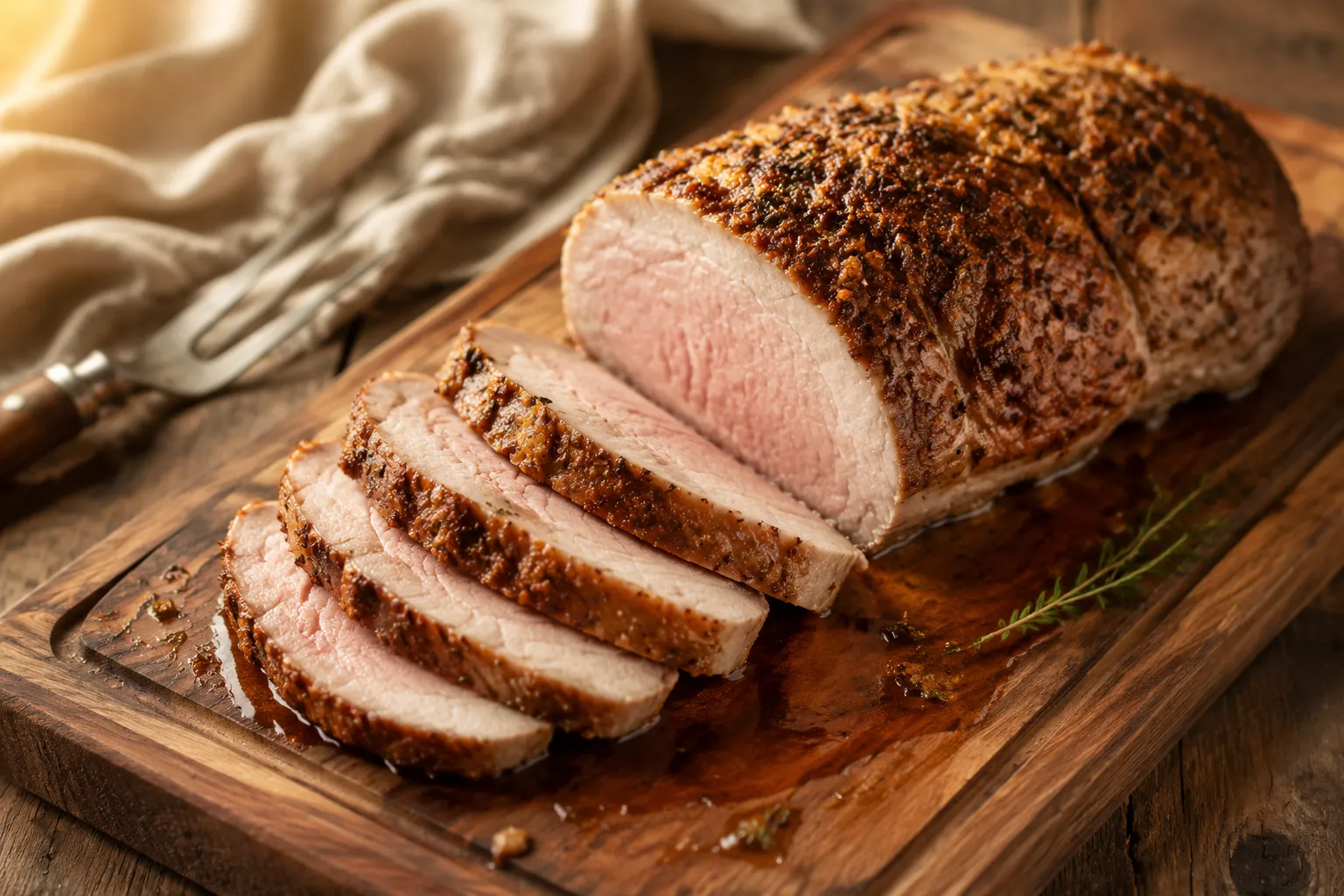
The classic move here is buttery mashed potatoes, roasted carrots, and a green vegetable like garlicky green beans or roasted Brussels sprouts. The gravy is so good you'll want plenty of starch on the plate to soak it up. A simple Caesar or apple-fennel slaw cuts the richness if you want something brighter on the side, and a hunk of crusty bread is never the wrong call.
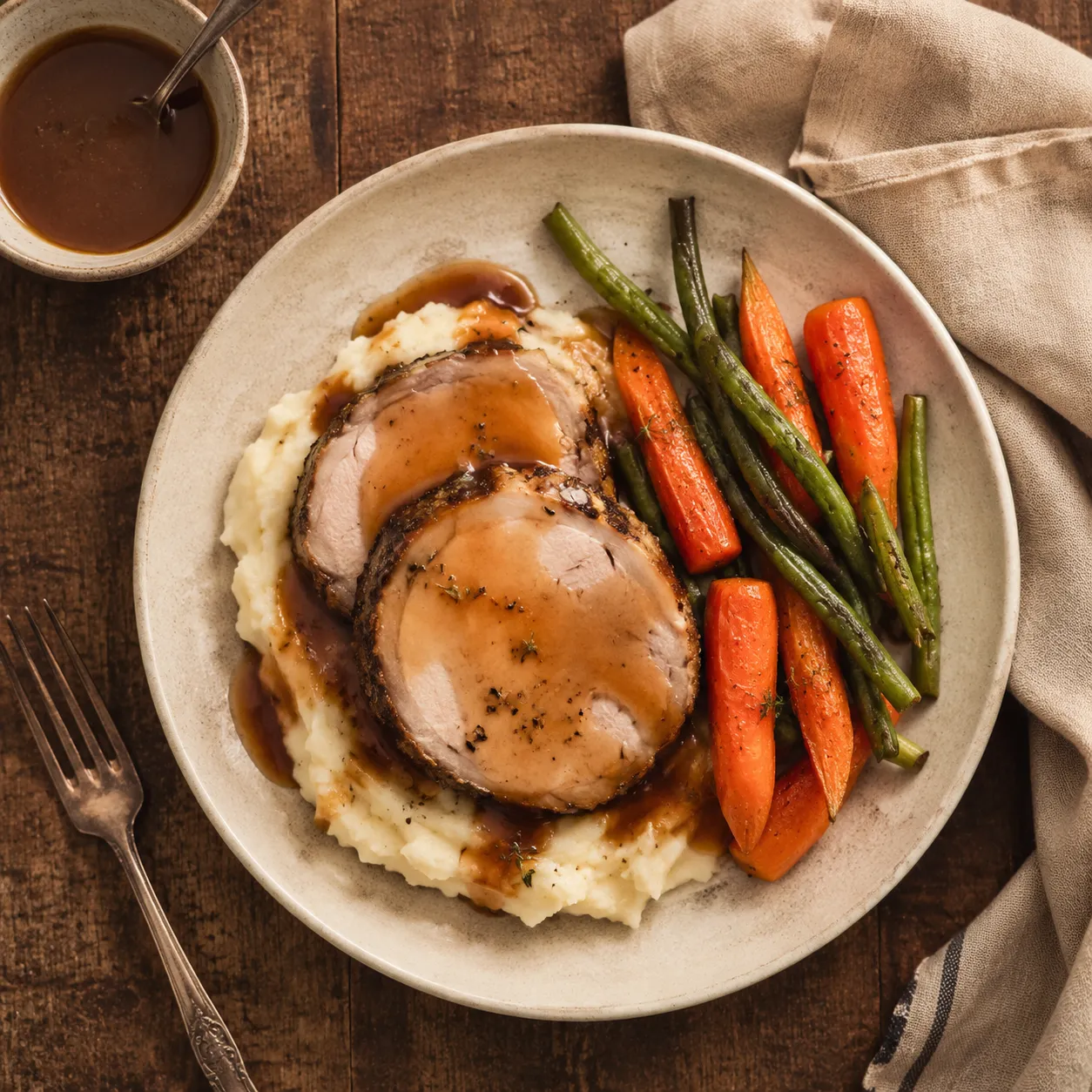
For Sunday dinner ideas with a slightly fancier feel, add a warm dinner roll, a glass of dry Riesling or Pinot Noir, and a quick pan sauce drizzle right at the table. If you're already in the oven-roasting mood, this pairs nicely on a bigger menu — same low-and-slow approach you'd use for an easy pork ribs recipe, just on a different cut. You can even prep both in the same afternoon if you're feeding a crowd.
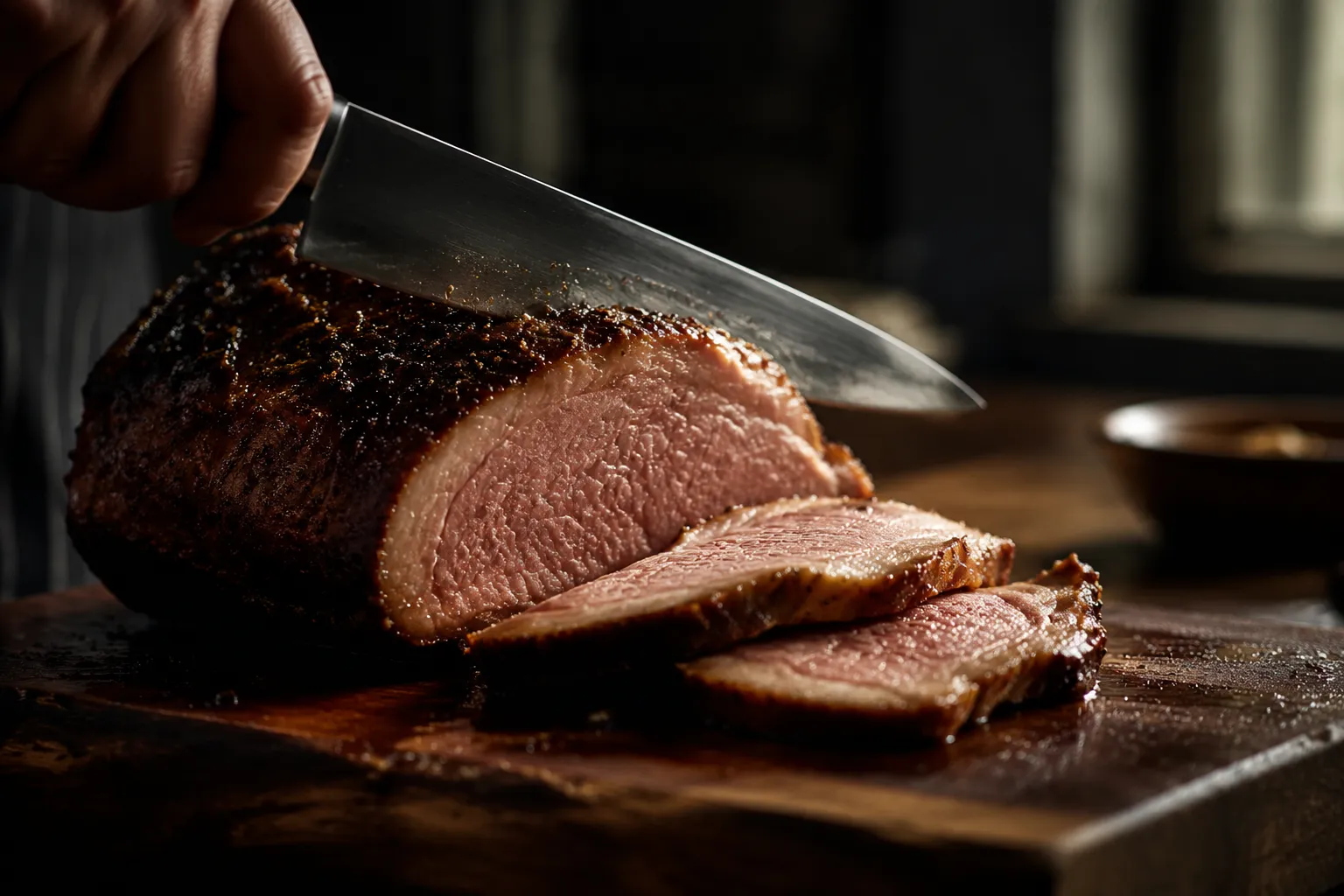
Leftovers are honestly half the reason I make this. Slice cold pork thin for sandwiches with sharp cheddar and apple butter, dice it for fried rice with scallions and soy, or warm slices in broth and pile them into corn tortillas with pickled onions and cilantro. Three nights of dinner from one roast is the kind of math I can get behind, and it makes the time investment of a Sunday cook feel doubly worth it.
Once you've made this pork roast recipe a couple of times, you'll start riffing — maple-mustard glaze in fall, chimichurri in summer, a brown sugar and Dijon crust for the holidays. The method is the same, the technique is forgiving, and the result is always a juicy, herb-crusted roast that makes the table feel a little more like a celebration. Grab a thermometer, give the rub a generous press into the meat, and trust the rest of the process.
The garlic-herb crust is the workhorse, but this same method takes a glaze, a different rub, or a global flavor profile without complaint. Just keep the sear-and-roast structure intact and adjust the seasoning to match the mood.
Refrigerate sliced pork in its juices or with a splash of broth in an airtight container for up to 4 days. The juices keep the slices from drying out, which is the only thing that ruins leftover pork. For longer storage, freeze in portions for up to 3 months — wrap tightly in plastic and then foil, or use a vacuum sealer if you have one, to avoid freezer burn.
To reheat without sacrificing the texture, place slices in a skillet with a couple tablespoons of broth or pan juices over medium-low until just warmed through, or cover and warm in a 300°F oven for about 10 minutes. Skip the microwave on full blast unless you really like rubbery pork — short pulses with a damp paper towel on top is a passable shortcut. Cold leftovers, by the way, make excellent sandwiches and don't need reheating at all.