Flat Iron Steak: Pan-Seared with Garlic Butter
Ingredients
Scale
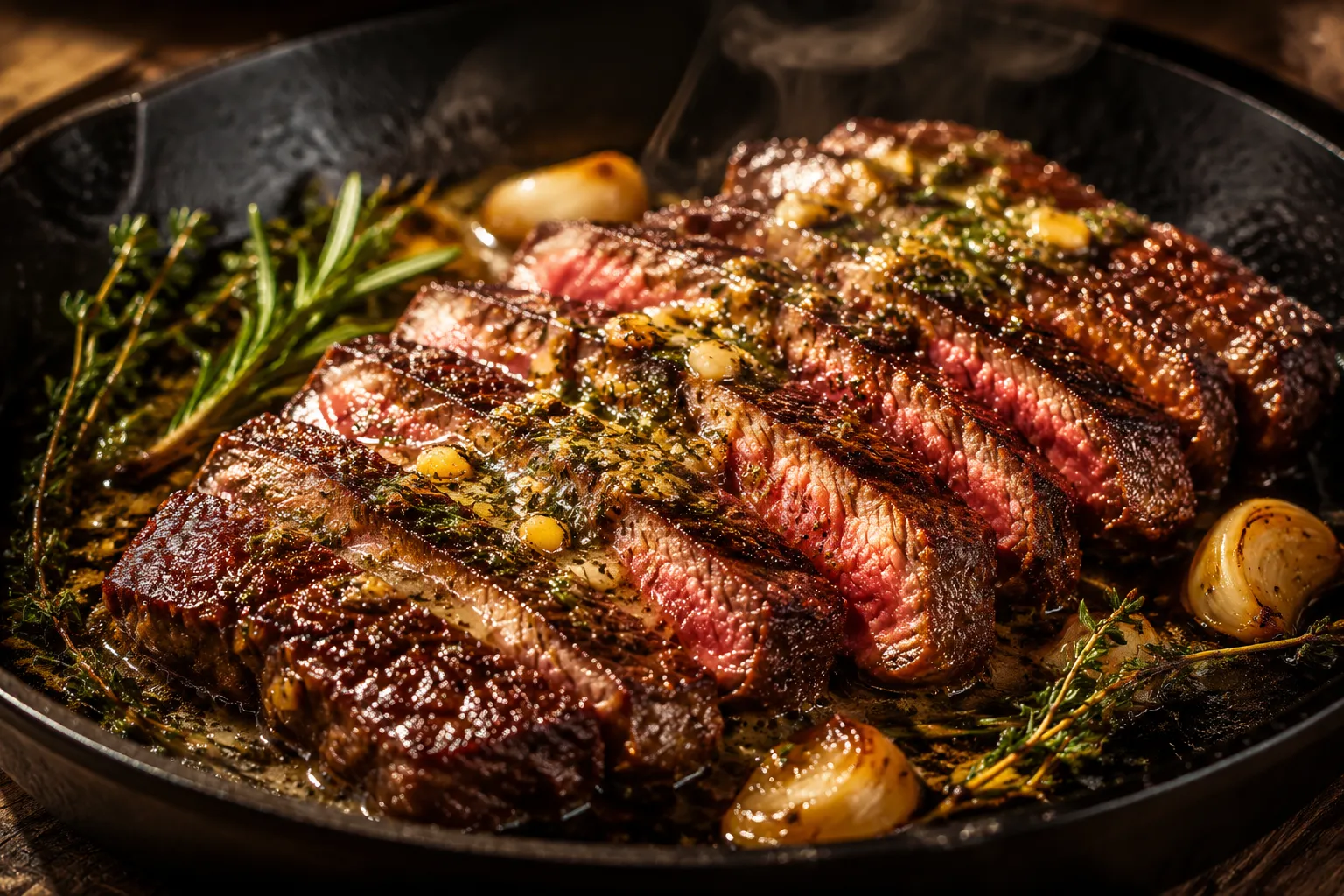
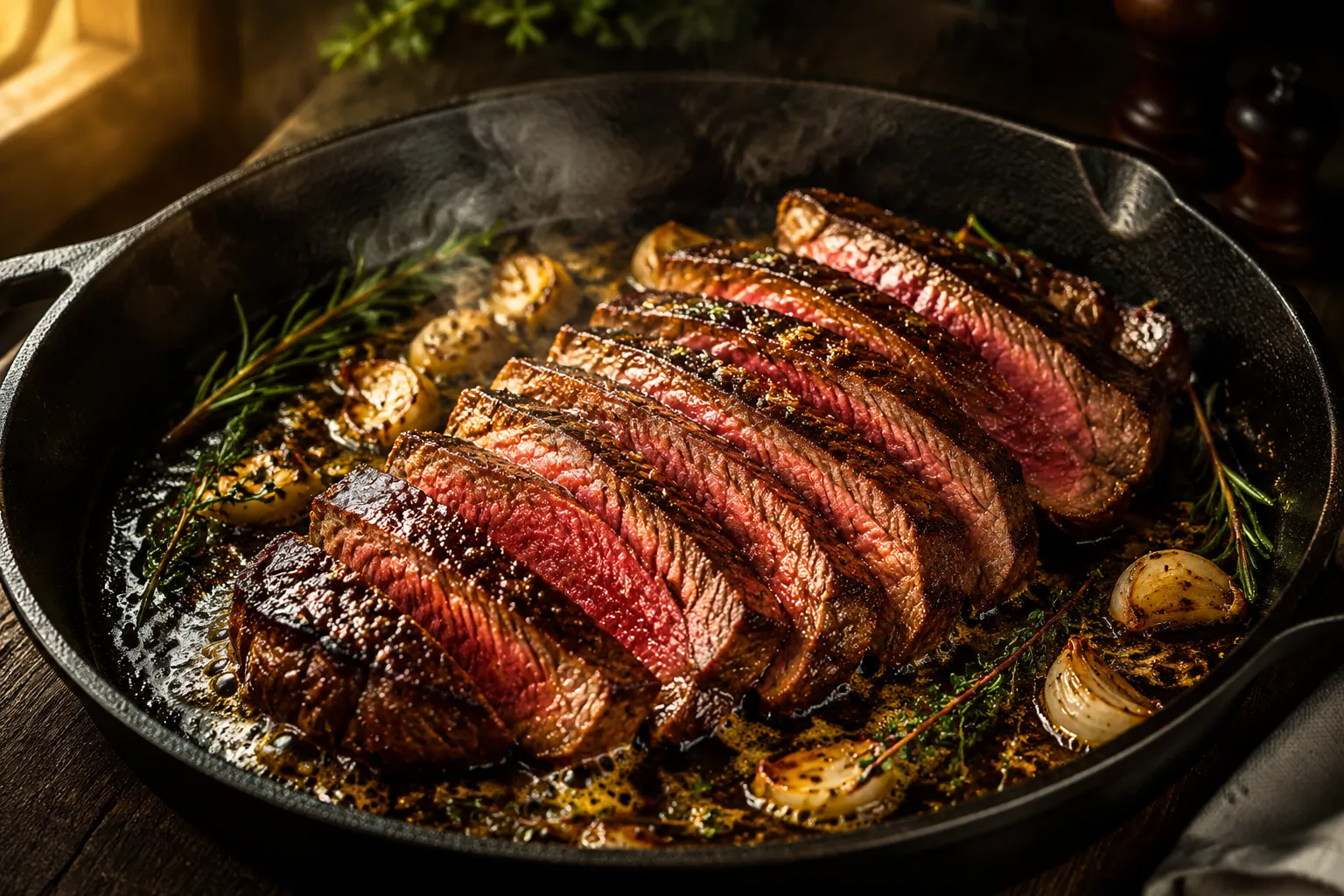
Meet your new favorite weeknight steak: flat iron steak, pan-seared to a deep brown crust and finished with garlic herb butter. Tender, juicy, ready in 20 minutes.
There's a reason flat iron steak has quietly become my favorite cut for weeknight dinner. It's deeply marbled, almost as tender as a ribeye, and costs about half as much per pound. Twenty minutes from fridge to plate, one hot pan, and a generous pour of garlic herb butter is all it takes to put a steakhouse-worthy dinner on the table.
If you've been intimidated by cooking steak at home, this is the recipe that will change your mind. The technique is simple — dry brine, screaming-hot cast iron, butter baste, rest, slice — but the payoff is a rosy medium-rare interior with a deep mahogany crust that crackles the moment you cut into it. We'll cover what makes this cut special, how to pick a good one at the butcher, and the internal temperature targets that guarantee the right doneness every single time.
This is the kind of meal that feels celebratory but doesn't blow your grocery budget. Pour a glass of red, queue up your favorite playlist, and let's cook.
Flat iron steak comes from the shoulder top blade of the cow, specifically the infraspinatus muscle that sits just above the chuck. Until about twenty years ago, this muscle was almost always ground into hamburger because of a tough connective seam running through its center. Then meat scientists at the University of Nebraska figured out how to slice around that seam, and the modern flat iron was born — a long, rectangular cut with rich marbling and a tenderness ranking second only to the tenderloin. That's pretty wild for a cut that often costs $10 to $14 per pound.
Compared to its working-muscle cousins, the flat iron lands in a sweet spot. Flank steak, from the belly, is leaner and chewier and really wants a marinade. Skirt steak, from the diaphragm, has incredible beefy flavor but a coarse grain and cooks in under three minutes. Hanger steak shares flat iron's rich character but is harder to find at most grocery stores. If you're ranking the best cuts of beef for everyday cooking, flat iron earns a top-three spot for the combination of tenderness, flavor, and price.
When you're shopping, look for steaks that are a uniform inch to inch-and-a-quarter thick with white marbling threaded through deep red meat. Avoid pieces with a thick gristly seam still running down the middle — that's a sign the butcher cut corners. USDA Choice is plenty good here, though Prime is a treat if you find it on sale.
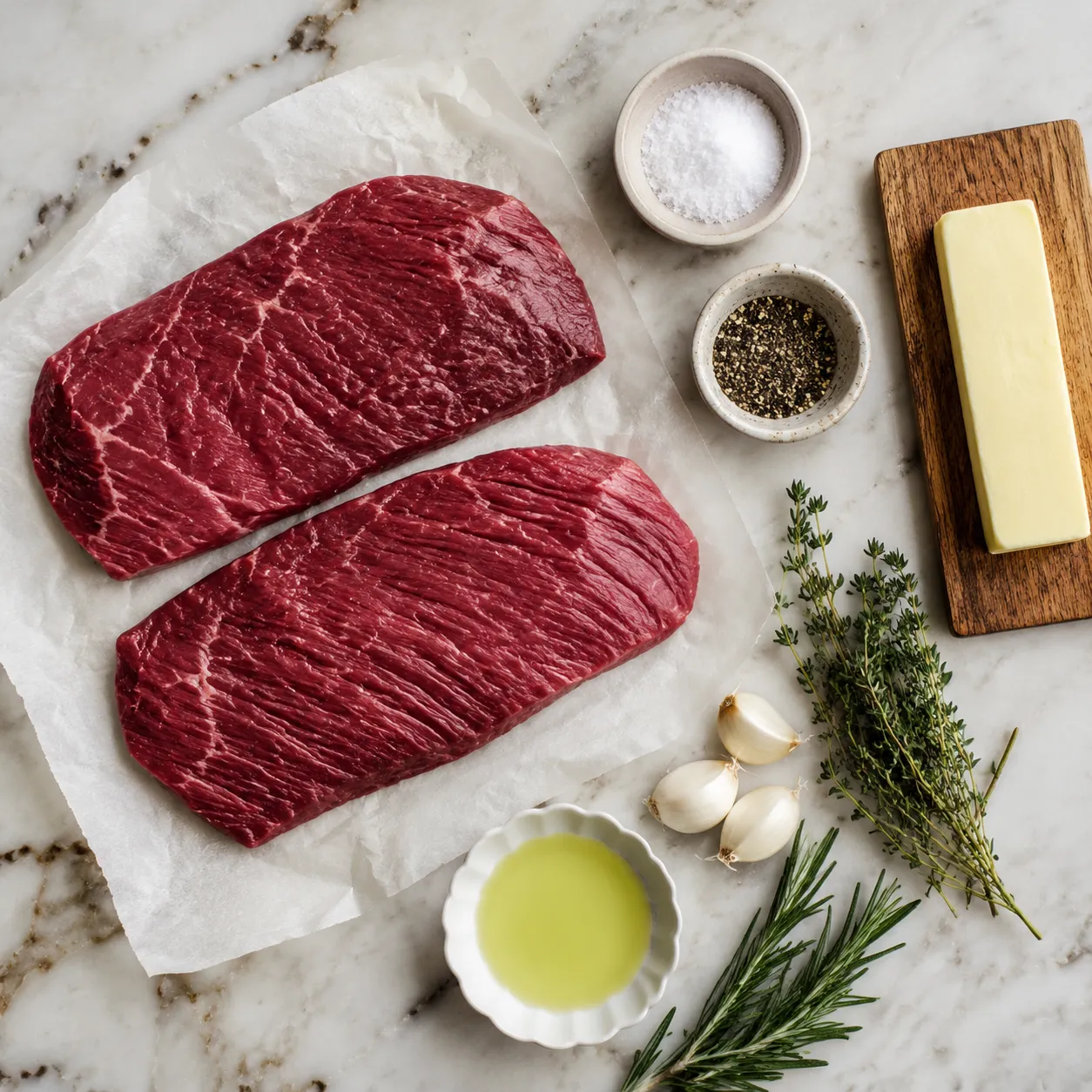
The ingredient list is short on purpose. With a cut this flavorful, your job is to season it well and stay out of its way.
For the steak: two flat iron steaks (about one pound each), kosher salt, freshly cracked black pepper, a touch of garlic powder, and avocado oil for searing. Avocado oil has a smoke point above 500°F, which matters when you're working with a cast iron skillet that's nearly glowing. If you'd rather build something more layered, swap in a homemade steak rub with smoked paprika, brown sugar, and onion powder — it caramelizes into the crust beautifully.
For the baste: unsalted butter, a few smashed garlic cloves, and big sprigs of fresh thyme and rosemary. This is the garlic herb butter that turns a good sear into a great one. The smashed garlic perfumes the foaming butter while the herbs release their oils, and you spoon all of it back over the meat in the final minute of cooking.
A few easy swaps: dried herbs work in a pinch (use about a third of the amount), shallot can stand in for garlic if that's what you have, and ghee or clarified butter is a fine substitute when you want even higher heat tolerance.
The whole sequence takes about twenty minutes of active time, plus forty minutes of mostly hands-off salting. Think of it less as a recipe and more as four small techniques stacked on top of each other.
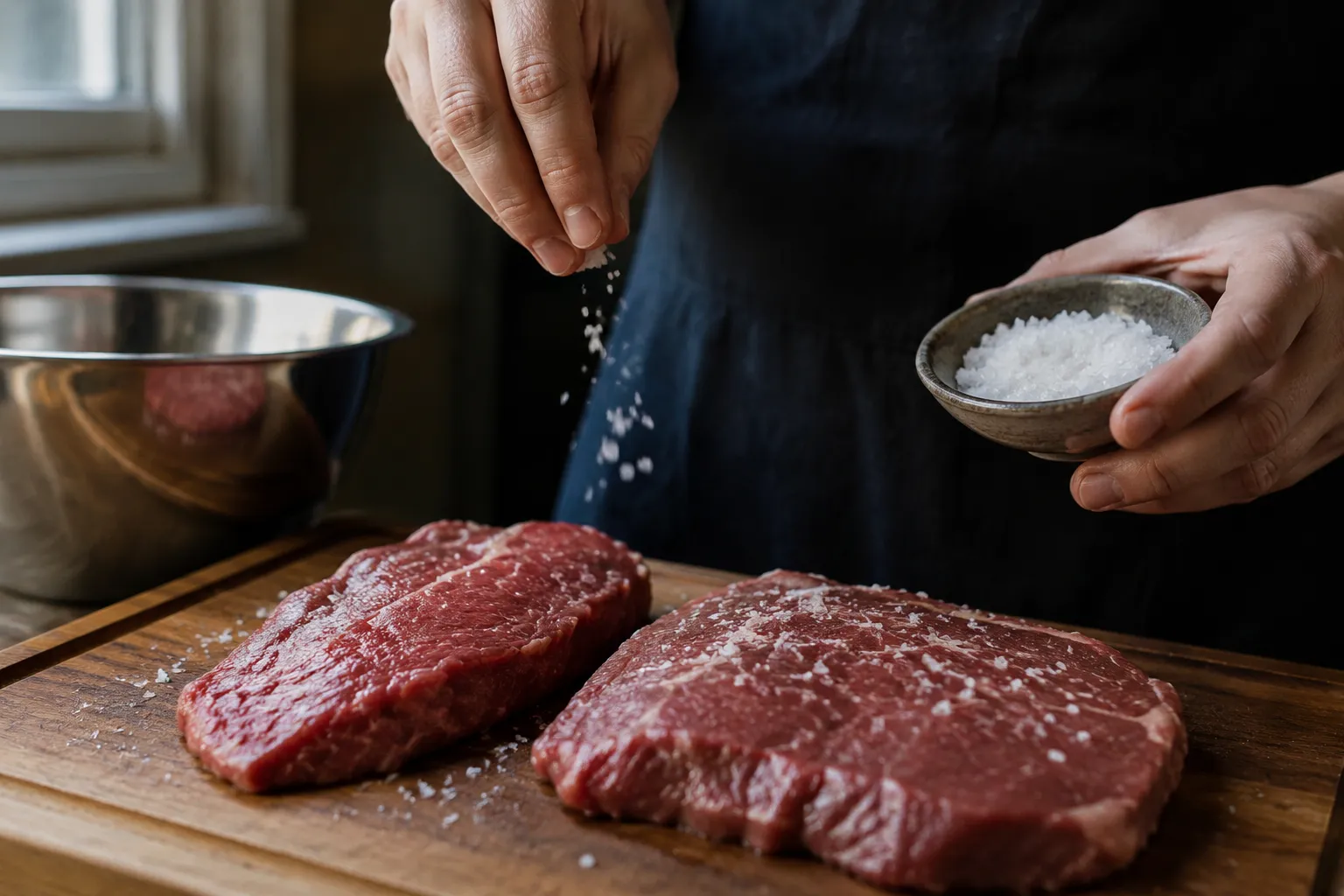
Start by patting the steaks bone-dry with paper towels and seasoning them generously with kosher salt — about a teaspoon per steak. Set them on a rack over a sheet pan and let them sit at room temperature for at least 40 minutes, or up to an hour. This is a quick dry brine: the salt pulls moisture to the surface, then the meat reabsorbs it along with the seasoning, giving you deeper interior flavor and a drier surface that browns better.
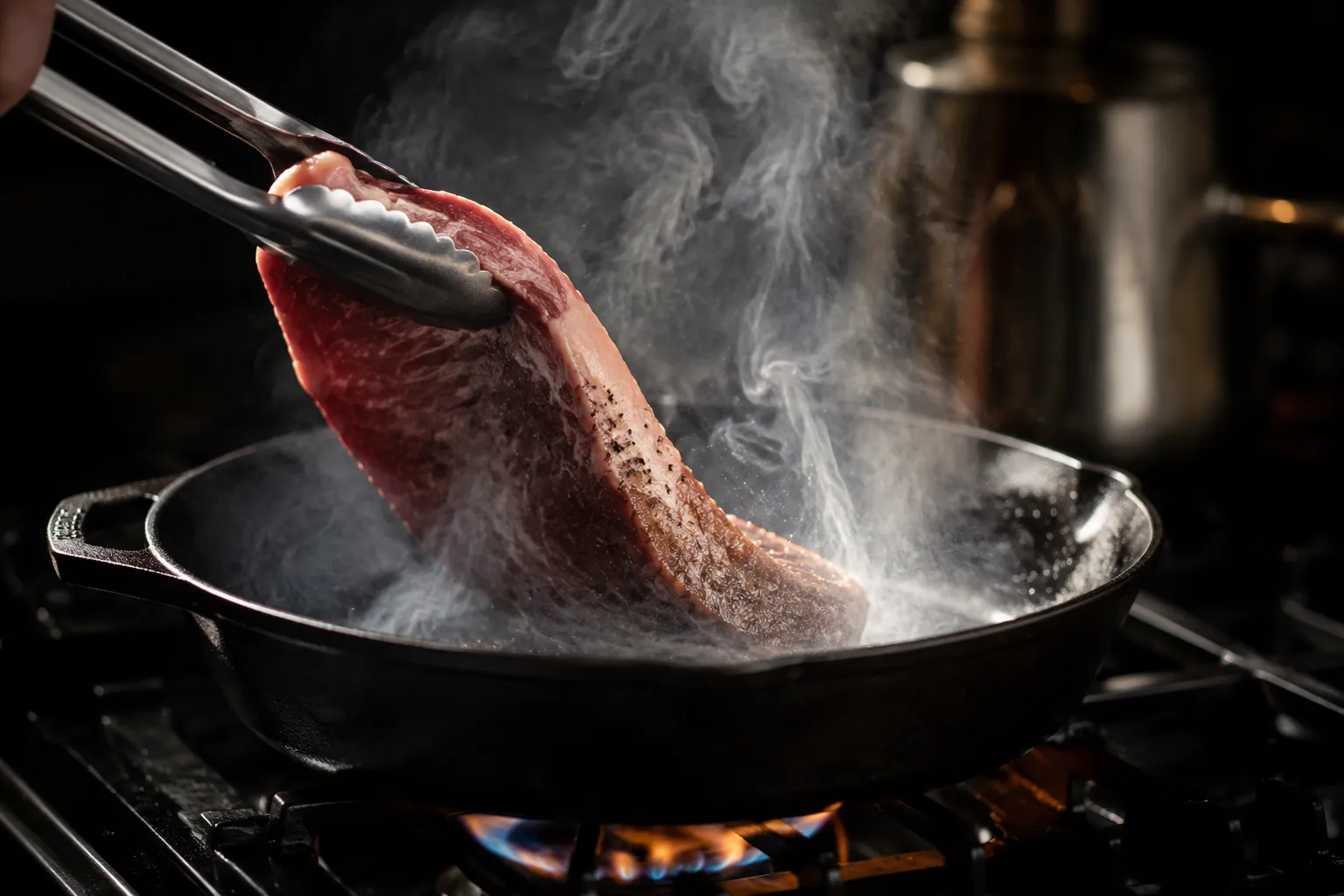
While the steaks rest, heat your cast iron skillet over medium-high until a drop of water vaporizes on contact — usually six to eight minutes. Add the avocado oil, swirl, and lay the steaks in the pan away from you. Don't move them. You want a hard, crackly crust to form, which takes three to four minutes on the first side. If your kitchen fills with smoke, that's the signal you've done it right (crack a window).
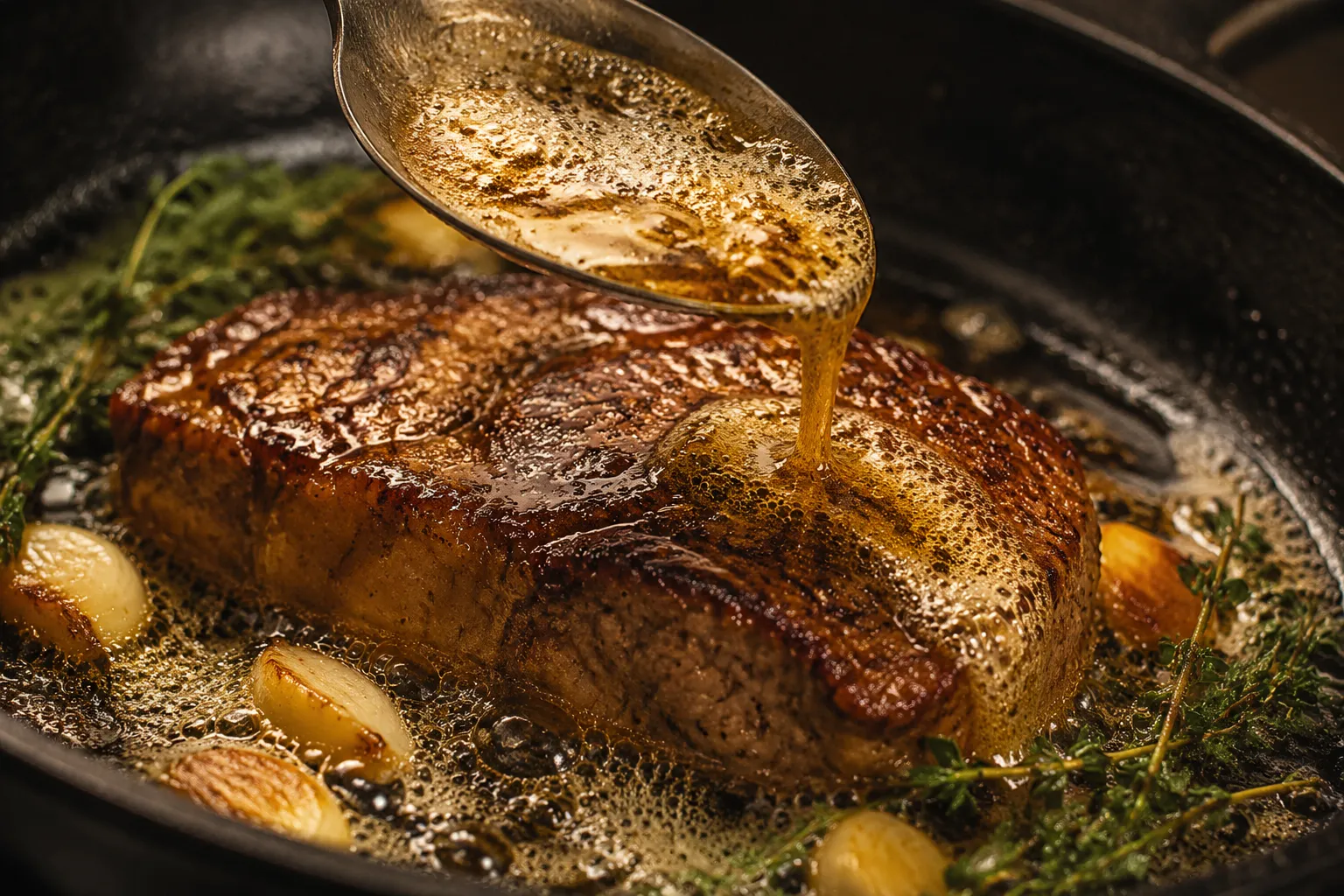
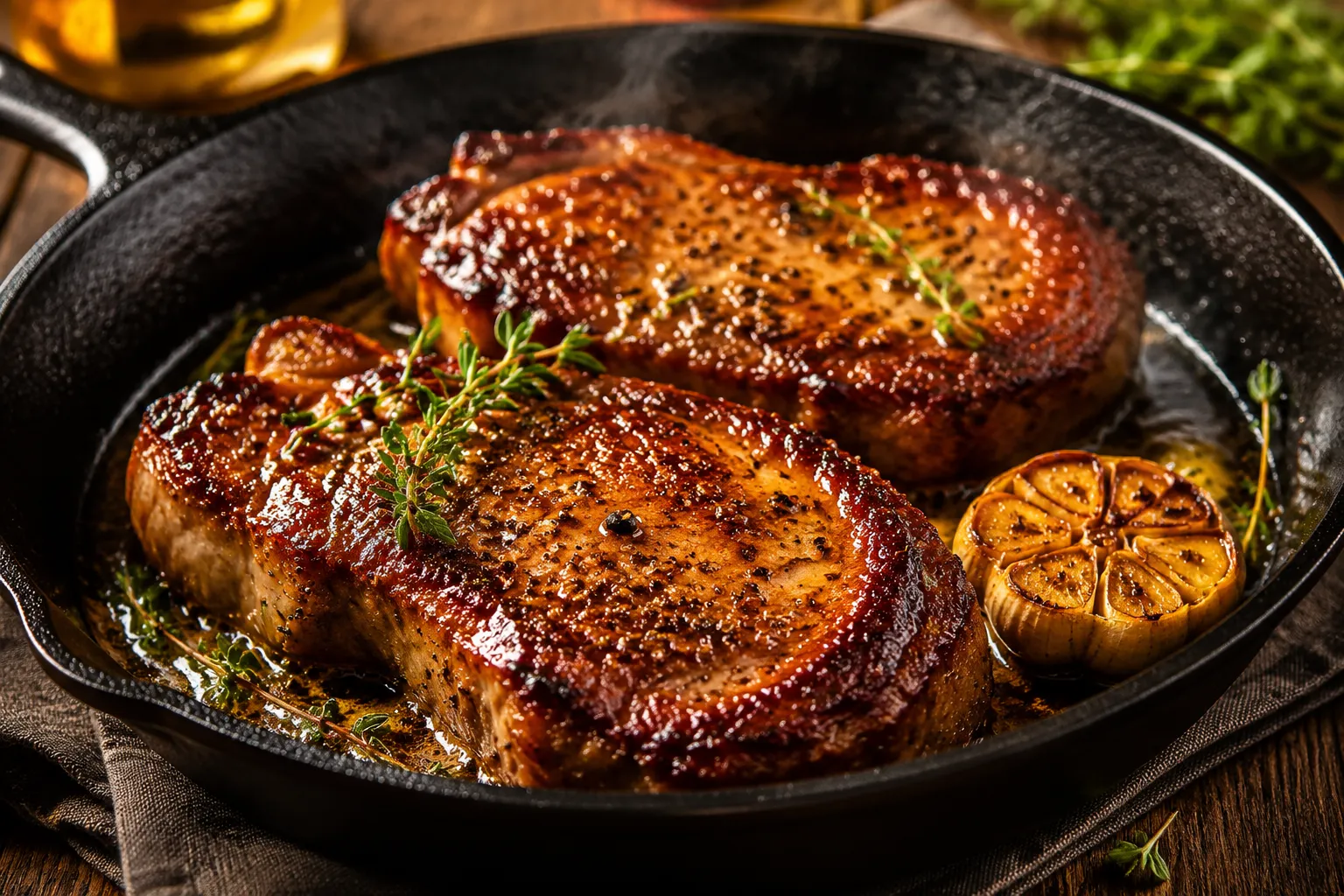
Flip the steaks, drop in the butter, smashed garlic, thyme, and rosemary, and tilt the pan toward you so the butter pools on the lower edge. Spoon that foaming, herb-scented butter back over the top of the meat for two to three minutes — this is the baste. The butter solids brown, the garlic perfumes, and the steak picks up incredible savory depth. A pan-seared flat iron without this step is good; with it, it's restaurant-grade.
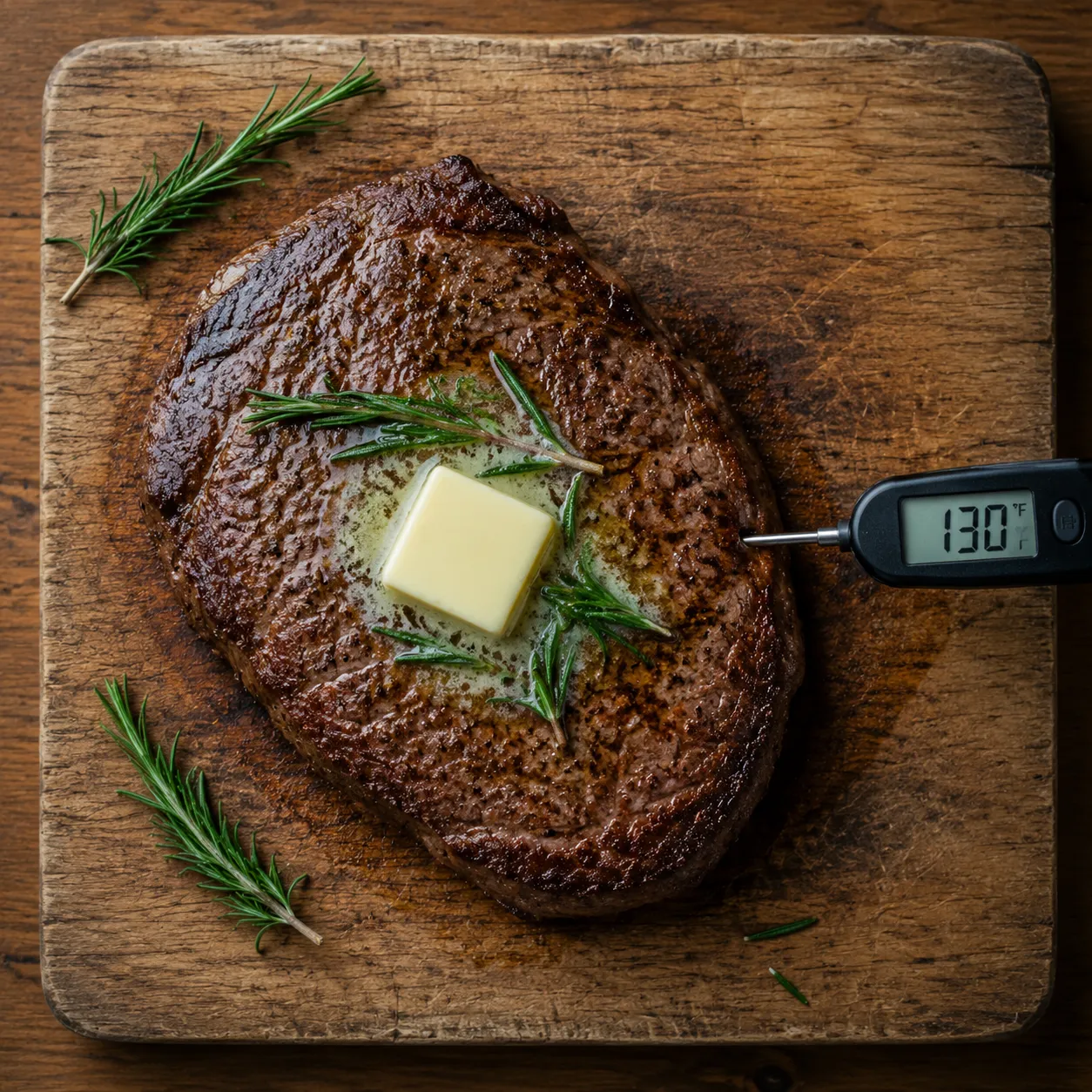
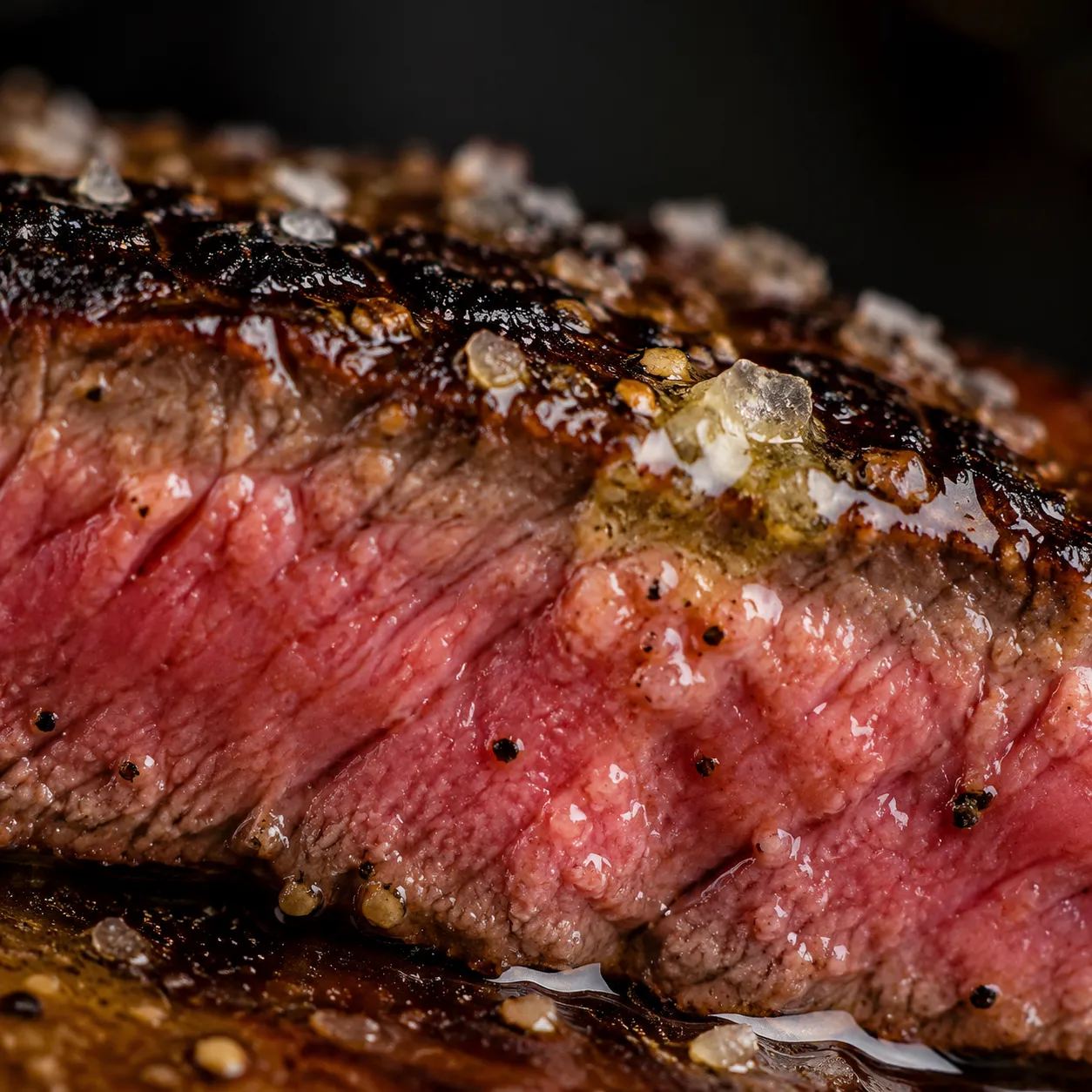
Pull the steaks at 125°F to 130°F for medium-rare and transfer them to a cutting board. Tent loosely with foil and rest for a full eight to ten minutes. Resting is non-negotiable here — the residual heat carries the temperature up another five degrees, and the juices that rushed to the center during cooking redistribute through the meat. Slice thinly against the grain (the muscle fibers run lengthwise, so cut crosswise into half-inch slices) and fan the pieces onto a board or plate. Spoon the pan butter over the top and finish with flaky salt.
If you're working with a thicker piece — say, a chunky hanger or a tri-tip you bought by mistake — the same principles apply, but you'll want to learn how to reverse sear steak instead, finishing it in a low oven before searing in the pan to lock in the crust.
An instant-read thermometer is the difference between guessing and knowing. Here's the chart I keep taped to the inside of a cabinet:
Insert the probe into the thickest part of the steak from the side, not the top, and check both ends — flat irons can taper in thickness, and one end may be five degrees ahead of the other. If you only own one tool for cooking steak, make it a fast-reading digital thermometer. It pays for itself the first cook.
The sliced meat plays well with almost any side, but a few combinations sing. For classic steakhouse vibes, go with creamy mashed potatoes, a loaded baked potato, or crispy smashed fingerlings. A wedge salad with blue cheese dressing brings the chill and the crunch. If you want lighter, charred broccolini, blistered cherry tomatoes, or a bright arugula salad with lemon and shaved parmesan all balance the richness of the butter baste.
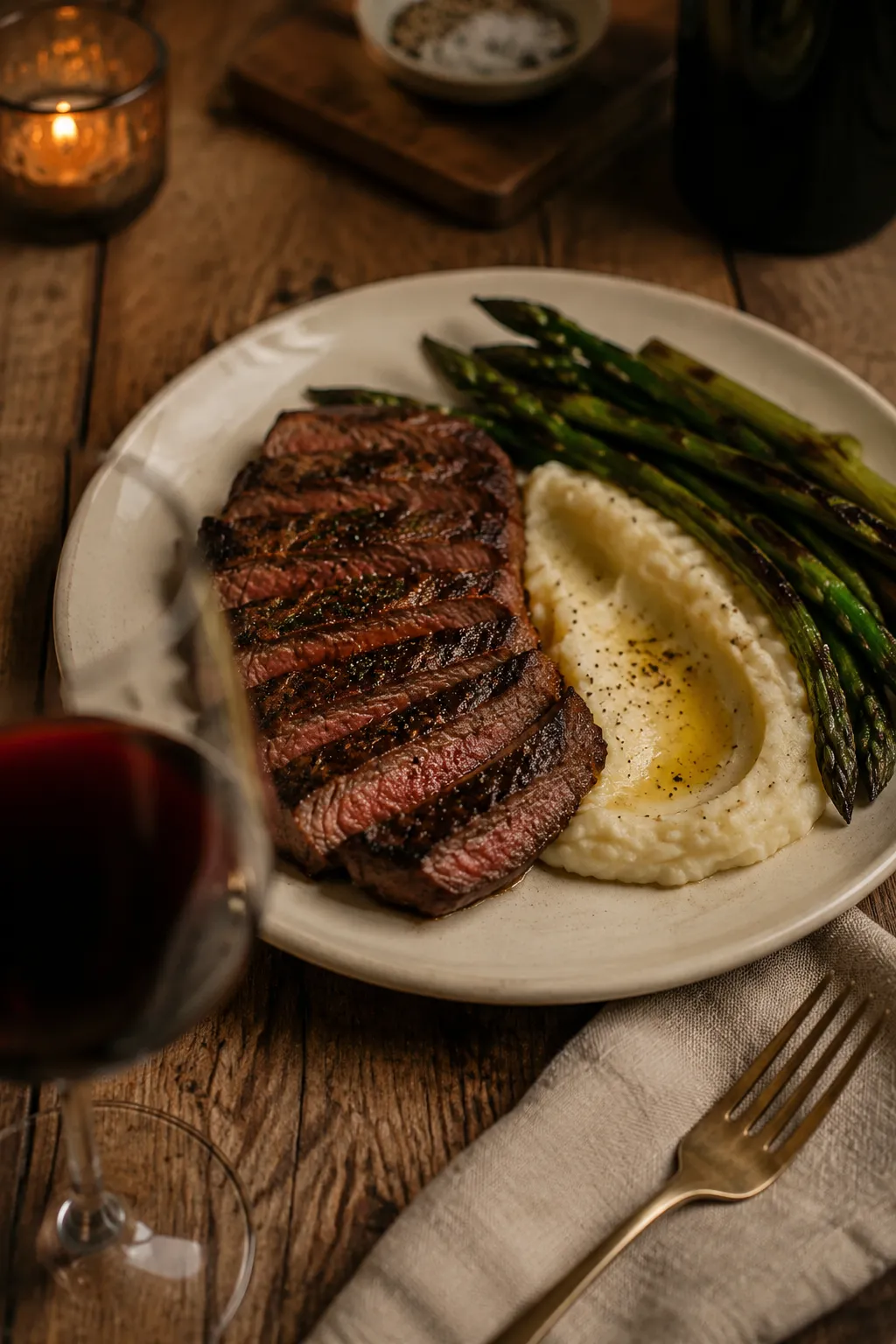
Looking for more easy steak side dishes? Garlicky green beans, roasted carrots with honey and harissa, and creamed spinach all come together while the steak rests. And don't forget bread — a torn baguette is the right tool for mopping up that herby pan butter.
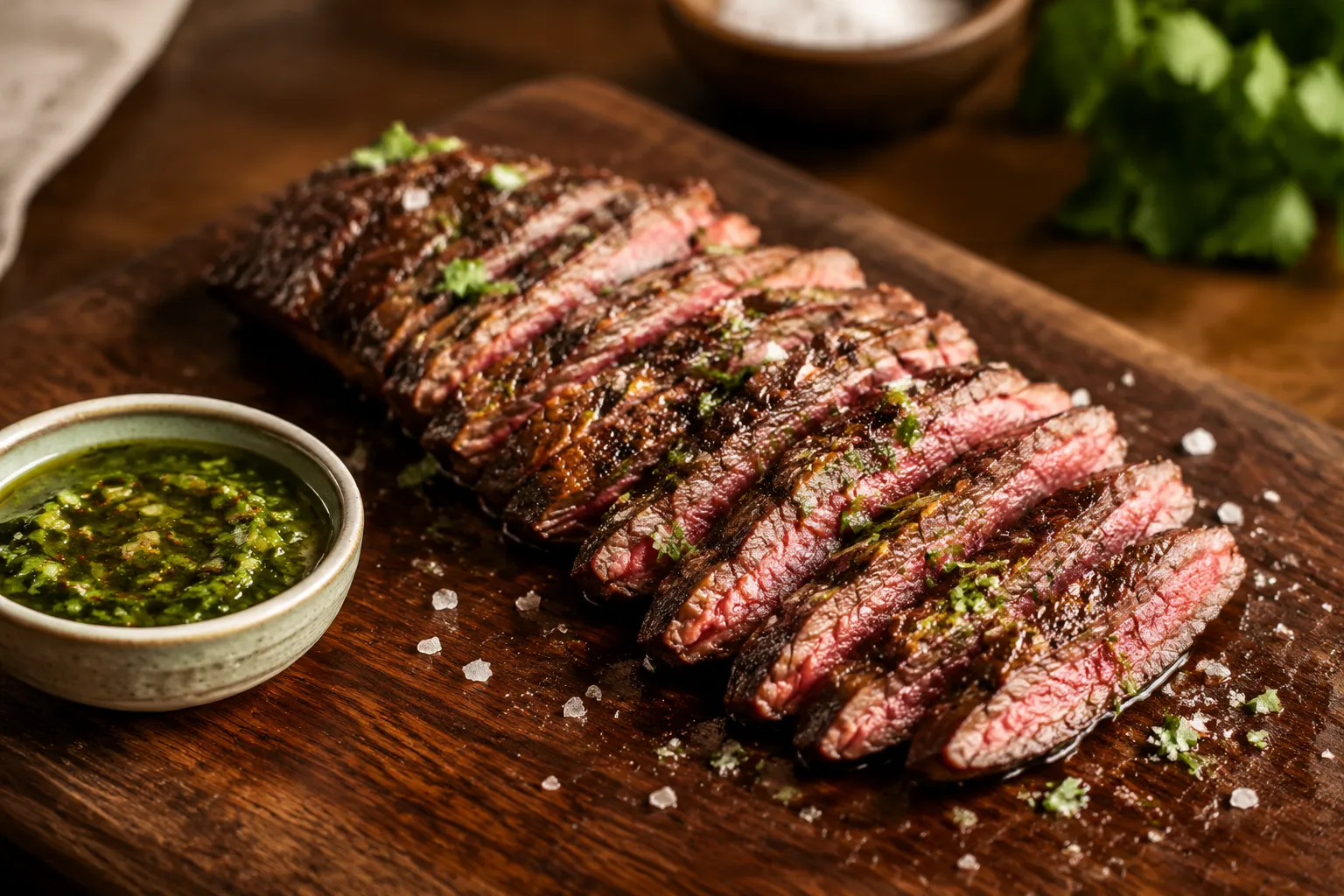
For sauces beyond the pan drippings, a punchy chimichurri sauce is my desert-island pick: parsley, oregano, garlic, red wine vinegar, olive oil, and a pinch of red pepper flakes whisked together while the steak rests. Horseradish cream, blue cheese butter, and a quick red wine pan sauce are all worthy alternatives. Whatever you choose, plate the steak first, sauce after, so that gorgeous crust stays visible right up until the first bite.
Once you've nailed the base recipe, the cut is forgiving enough to take a number of flavor directions without losing its essential character. Keep the technique the same and swap in different rubs, fats, and finishing sauces.
Refrigerator: store sliced or whole leftovers in an airtight container with a spoonful of the pan butter for up to 3 days. The butter will solidify in the fridge and re-melt beautifully when reheated. For longer storage, freeze cooked, sliced steak in a zip-top bag with the air pressed out for up to 2 months. Thaw overnight in the refrigerator before reheating.
The trick to reheating without overcooking is gentle, low heat. My go-to method: warm a skillet over low, add a tablespoon of butter or beef stock, and toss the slices for 60 to 90 seconds — just until heated through. Avoid the microwave, which turns juicy steak into rubber. Even better, use cold leftovers in steak salads, banh mi, or grain bowls; the meat is so tender straight from the fridge that you may not need to reheat at all.