Fruit Salad Recipe: The Best Fresh Fruit Salad Ever
Ingredients
Scale
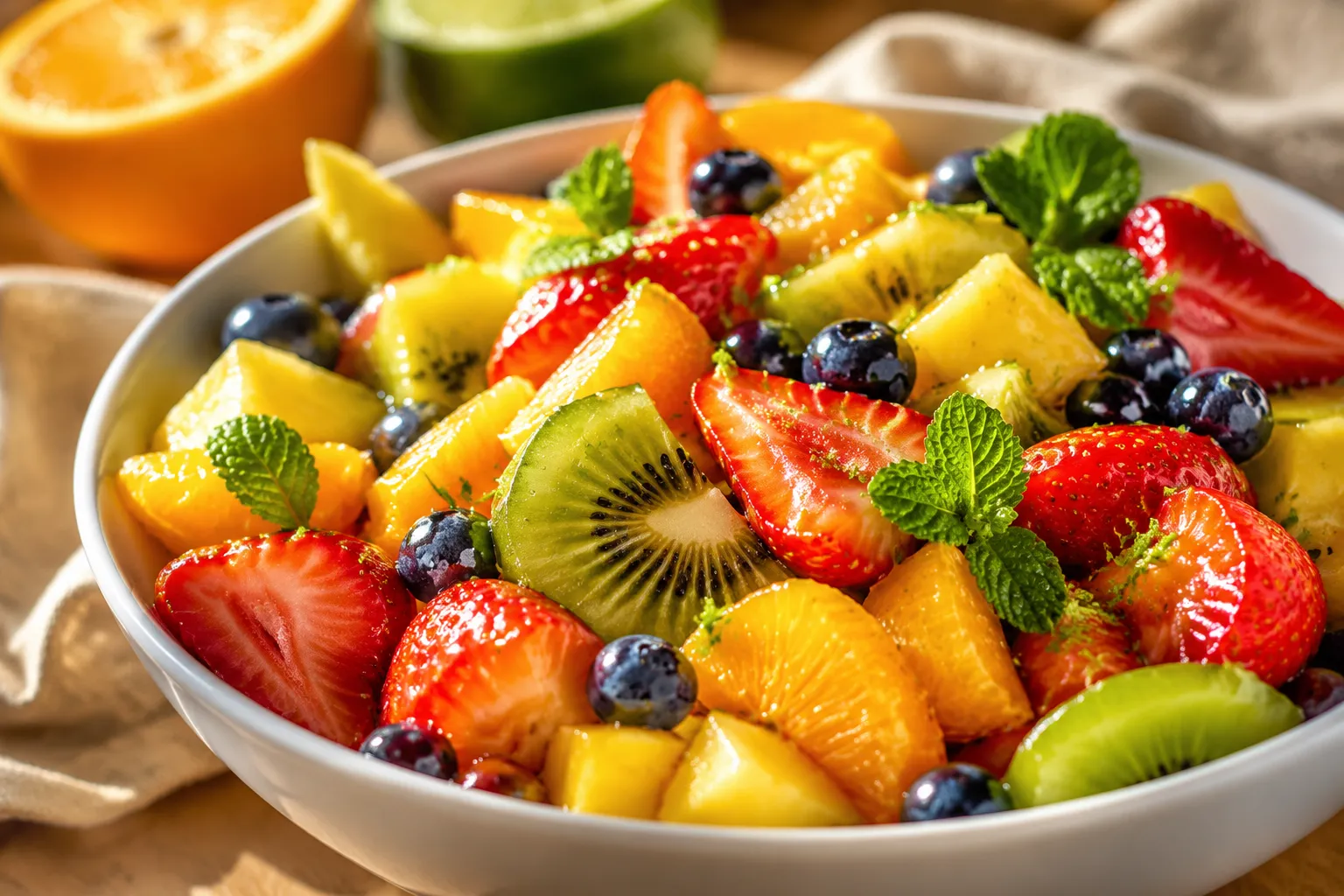
A bright, juicy fruit salad tossed in a 2-ingredient honey-citrus dressing. Works year-round with summer berries or a cozy winter fruit salad mix.
This fruit with salad recipe is the kind of bright, juicy side dish that disappears first at every brunch, potluck, and holiday table. With six glossy, dressing-kissed fruits and a two-ingredient honey-lime drizzle, it tastes like the best of summer and winter rolled into one bowl. No refined sugar, no soggy fruit, no fuss — just fifteen minutes of slicing and you are done.
I have made versions of this fresh fruit salad for years — for baby showers, lazy Sundays, school lunches, Christmas morning. Over time I figured out the small things that take a fruit bowl from fine to second-helping good: cutting everything to the same bite-size, using a wide shallow bowl so nothing gets crushed, and treating the dressing more like a glaze than a syrup. The honey-citrus dressing here is the secret weapon. Two ingredients, thirty seconds of whisking, and the whole bowl wakes up like it has been hit with sunshine.
The other thing I love is how easily it bends with the seasons. In July it leans into a summer berry salad heavy on strawberries and blueberries. In December it becomes a winter fruit salad with citrus segments and ruby pomegranate. Same technique, same bright dressing, totally different vibe. Below you will find both versions plus my no-mush method, make-ahead strategy, and what to serve alongside.
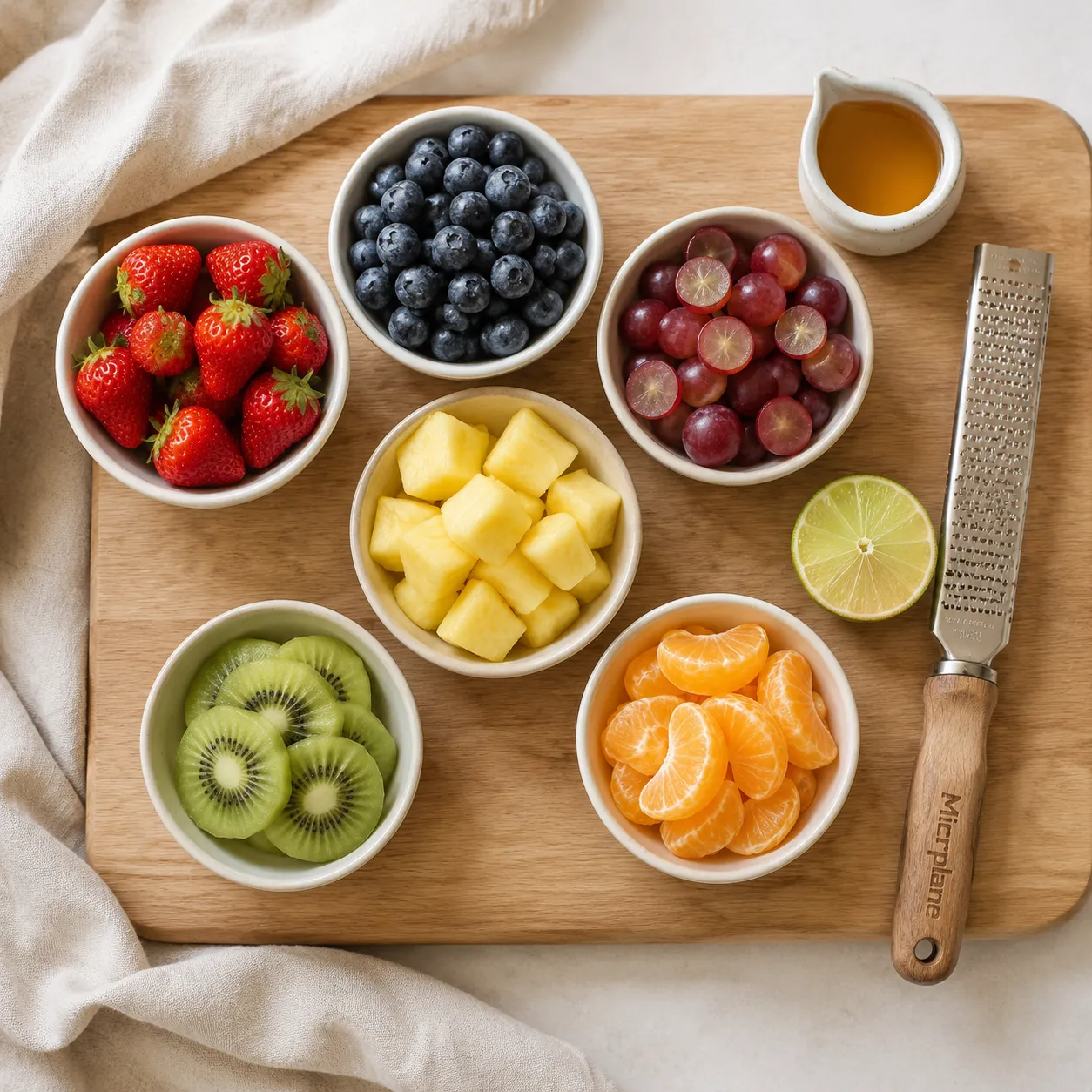
The base of this fruit with salad leans on six fruits that hit every note: ripe strawberries for sweetness, green grapes for crunch, blueberries for color, navel oranges for juicy citrus, kiwi for tang, and pineapple for tropical brightness. Aim for four to six fruits total — any more and the flavors muddy together, any fewer and it can taste flat. Pick the ripest, prettiest specimens you can find, since this is a raw recipe and there is nowhere for so-so fruit to hide. A quick squeeze of strawberry between your fingers tells you everything: it should yield slightly and smell sweet from a foot away.
A quick word on quality matters here. This dish lives or dies by the produce, so shop at a farmers market in summer, hit the citrus section hard in winter, and do not be afraid to taste a grape or two before you commit. Color matters too: aim for at least three distinct colors on the cutting board — say red strawberries, orange citrus, and green kiwi — so the finished bowl looks like a stained-glass window. For a summer fruit salad, swap in raspberries, blackberries, peaches, just-cut watermelon, or sliced plums. For a winter fruit salad, lean on grapefruit, blood oranges, mandarins, ripe Bartlett pears, crisp Honeycrisp apples, and a generous handful of pomegranate seeds.
The dressing is where this fruit salad dressing really earns its keep — just two tablespoons of honey, one tablespoon of fresh lime juice, and a teaspoon of orange zest stirred together until smooth. The honey gets thinned by the acid so it coats every piece without weighing the bowl down. What makes this different from a heavy syrup is restraint: just enough honey to amplify the natural sweetness of the fruit and just enough citrus to keep things from getting cloying. If you want a riff, swap lime for lemon for a sharper edge, or stir in a pinch of vanilla bean paste for cozy winter notes. A whisper of flaky salt at the end is unexpected and delicious.
One last note on tools: a microplane is your best friend here. The fluffy zest it creates dissolves into the dressing in a way coarsely grated zest never will, releasing every drop of citrus oil into the bowl. If you do not have one, a sharp vegetable peeler followed by a few quick chops with a knife gets you close enough.
The full step-by-step lives in the recipe card below, but here is the rhythm to keep in mind as you work. Start by rinsing every fruit under cold water, then dry the berries gently on a clean kitchen towel — extra moisture is the number-one cause of a watery bowl, and thirty seconds with a towel saves you from a soupy salad later. A salad spinner works well for grapes and berries if you have one in the cupboard.
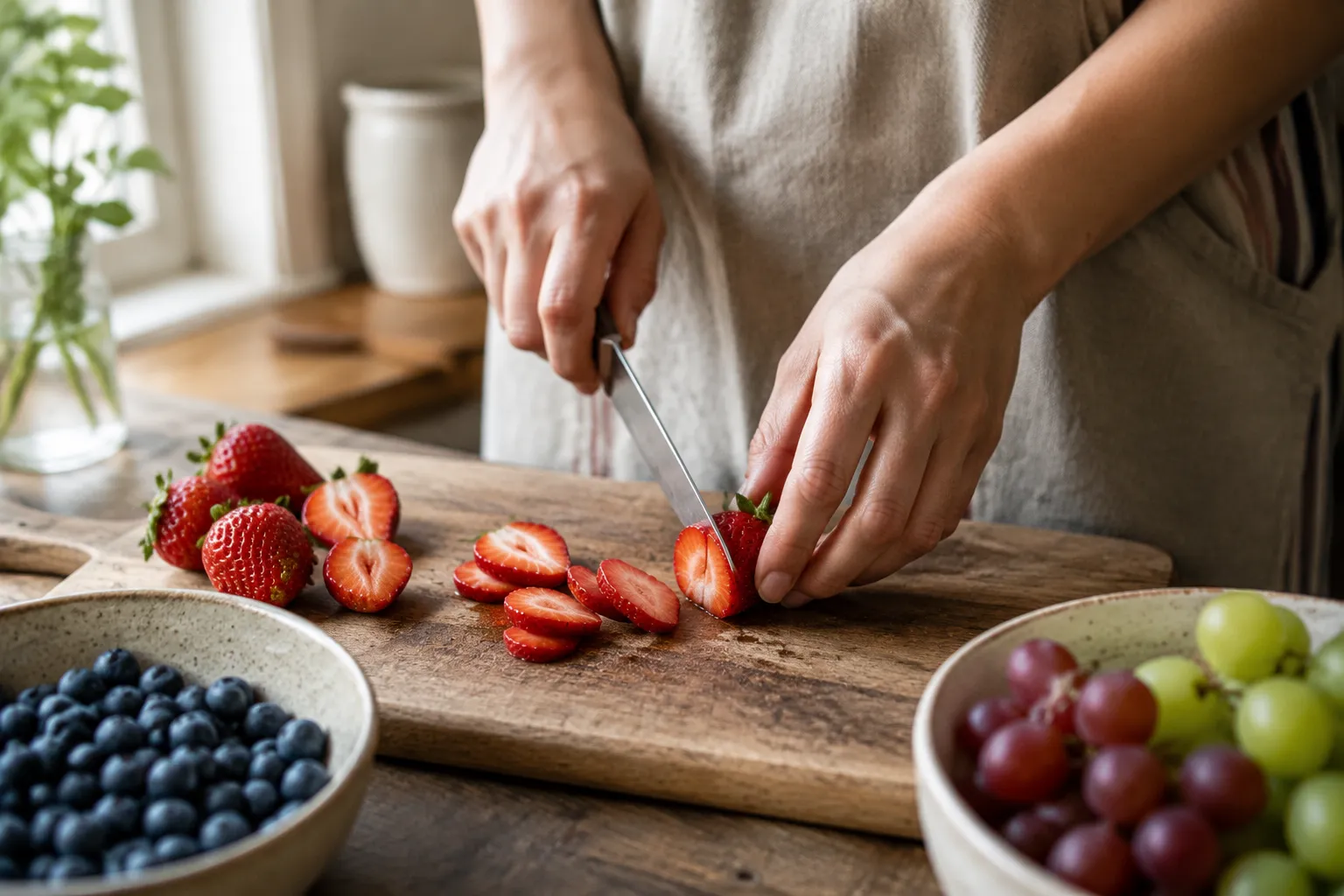
Cut everything to roughly the same bite-size, about the size of a blueberry, so each spoonful delivers a little of everything. Hull and quarter strawberries, halve the grapes, segment the oranges with the peel and pith removed, and slice kiwi into half-moons. Pineapple goes in as small chunks. A sharp paring knife makes a real difference here — a dull knife crushes berries instead of slicing them cleanly, which means cloudy juice on your cutting board instead of clean, glossy fruit in your bowl.
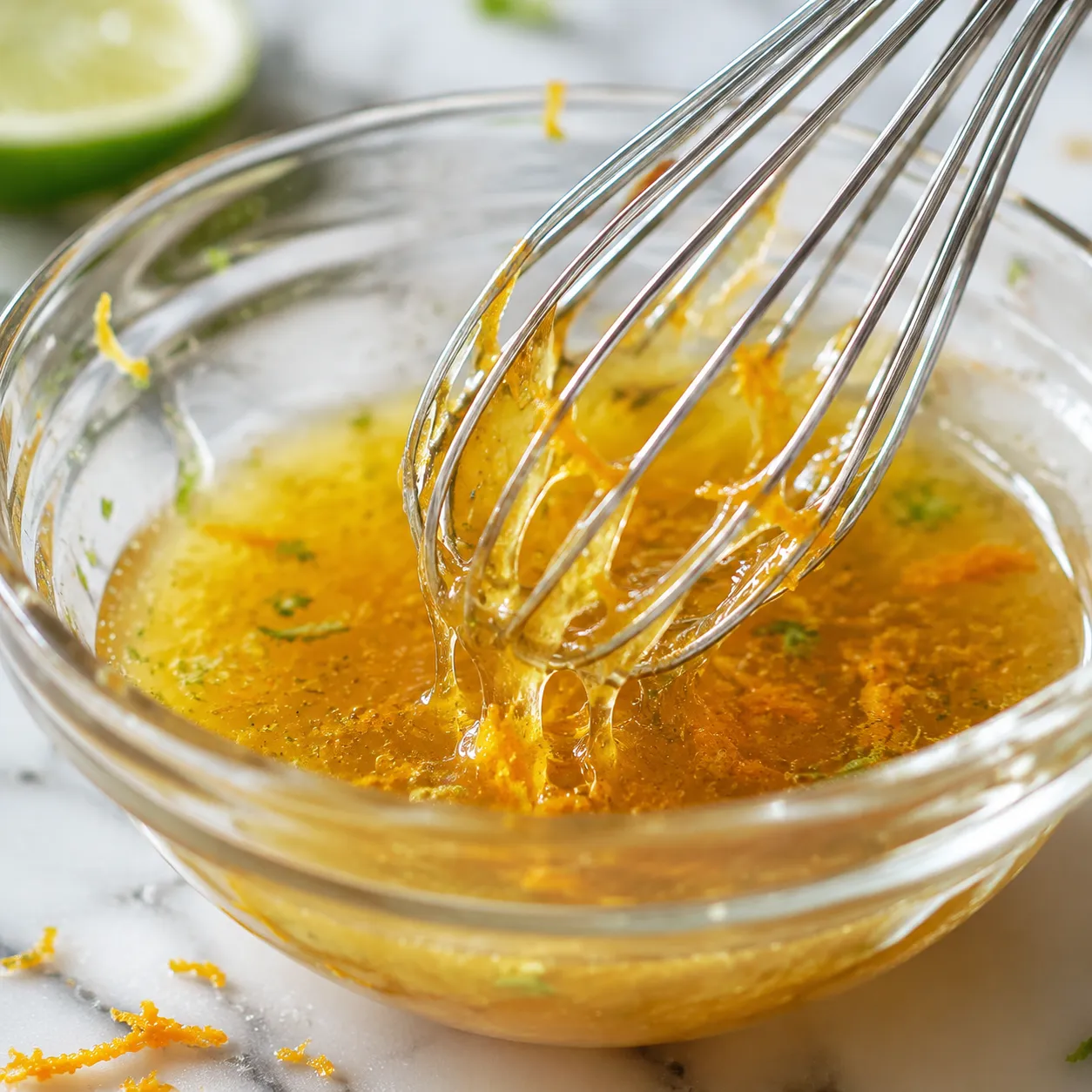
Whisk the honey lime dressing right in the serving bowl: honey, fresh lime juice, and orange zest stirred until the honey loosens and the mixture turns glossy. Doing this directly in the bowl saves a dish and means every piece of fruit hits dressing on the way in. Add the cut fruit on top, save the blueberries for last so they stay whole, and fold gently with a silicone spatula or wooden spoon.
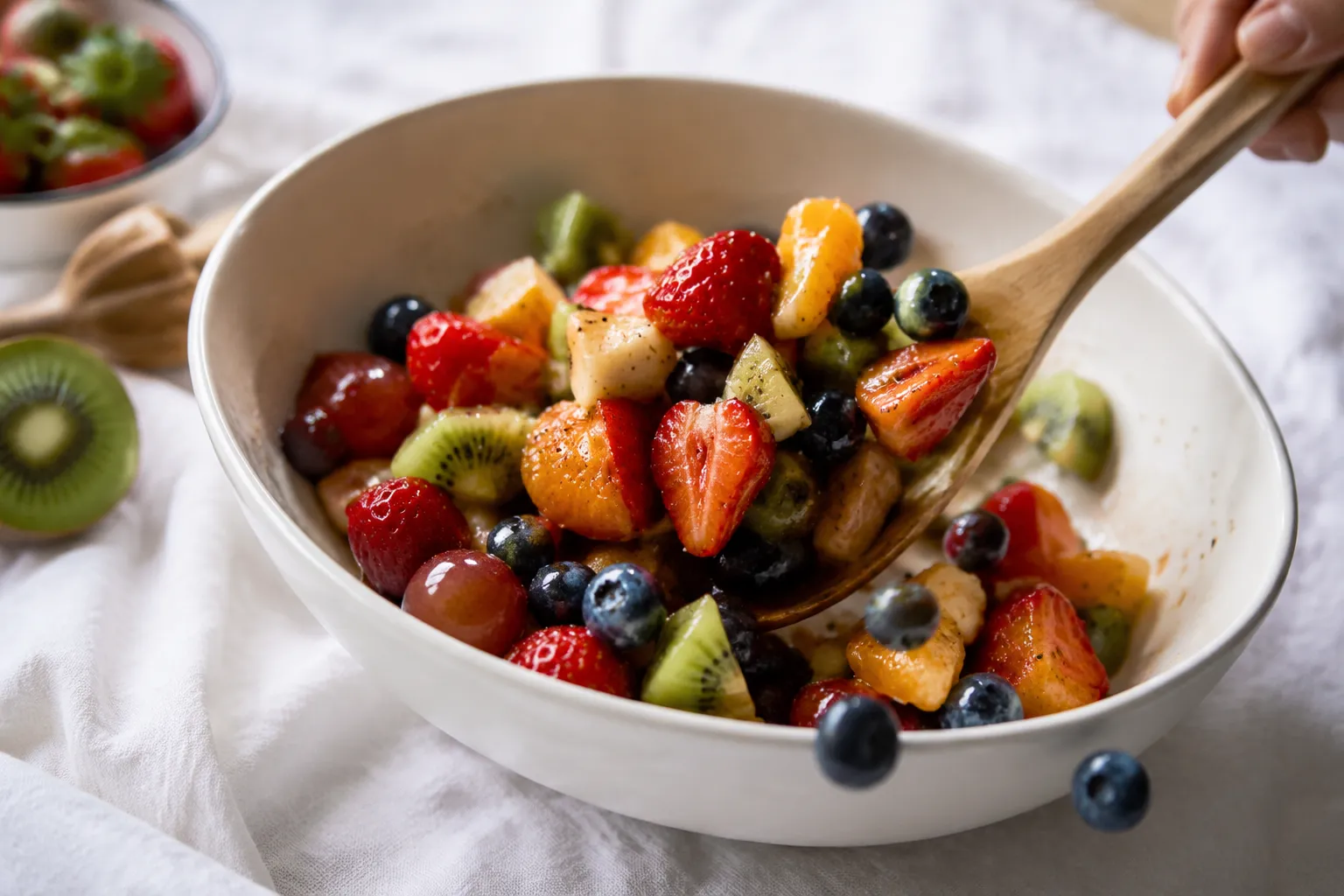
No aggressive tossing or you will bruise the berries. Two or three slow turns from the bottom up is plenty, just enough to coat without crushing. The order matters more than people realize: hard fruit like pineapple and apple goes in first, soft fruit like berries goes in last, and folding always beats tossing. This single trick keeps berries intact and the bowl looking pretty for hours instead of minutes.
Cover and chill for at least 20 minutes before serving so the dressing can mingle with the fruit's natural juices. The salad will look glossier and taste brighter after that short rest, and the few extra minutes of patience are absolutely worth it. If you are serving on a hot day, set the bowl on a tray of crushed ice to keep things cold without diluting the dressing.
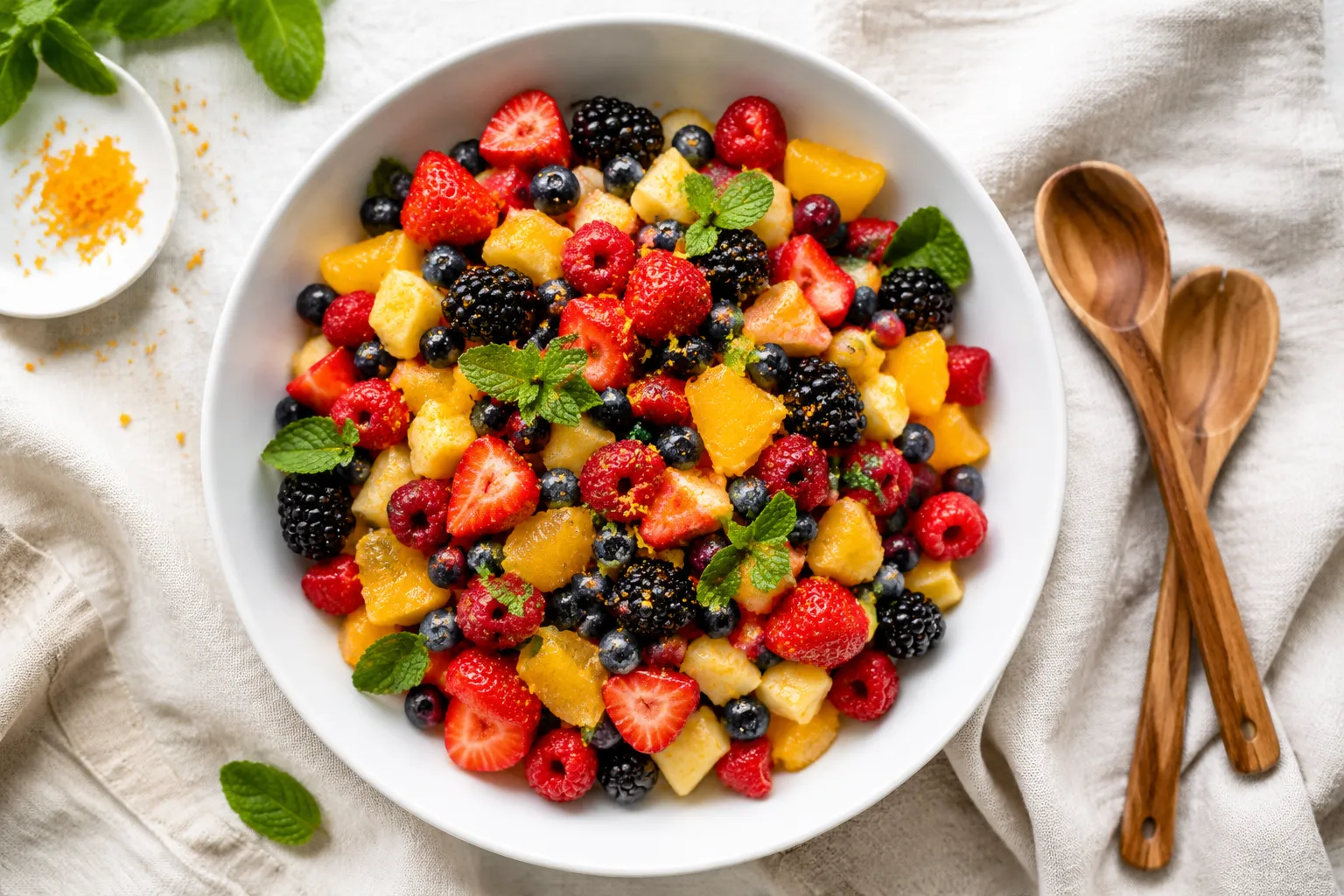
This is the kind of fruit with salad that fits anywhere on the table. For brunch, pair it with fluffy pancakes, baked French toast, or a savory egg casserole — the cool, juicy fruit cuts through the richness beautifully. It is one of my go-to brunch side dishes when I am hosting and want something that feels celebratory but takes no real effort. A bowl on the table also tells everyone, without saying a word, that they are welcome to take their time.
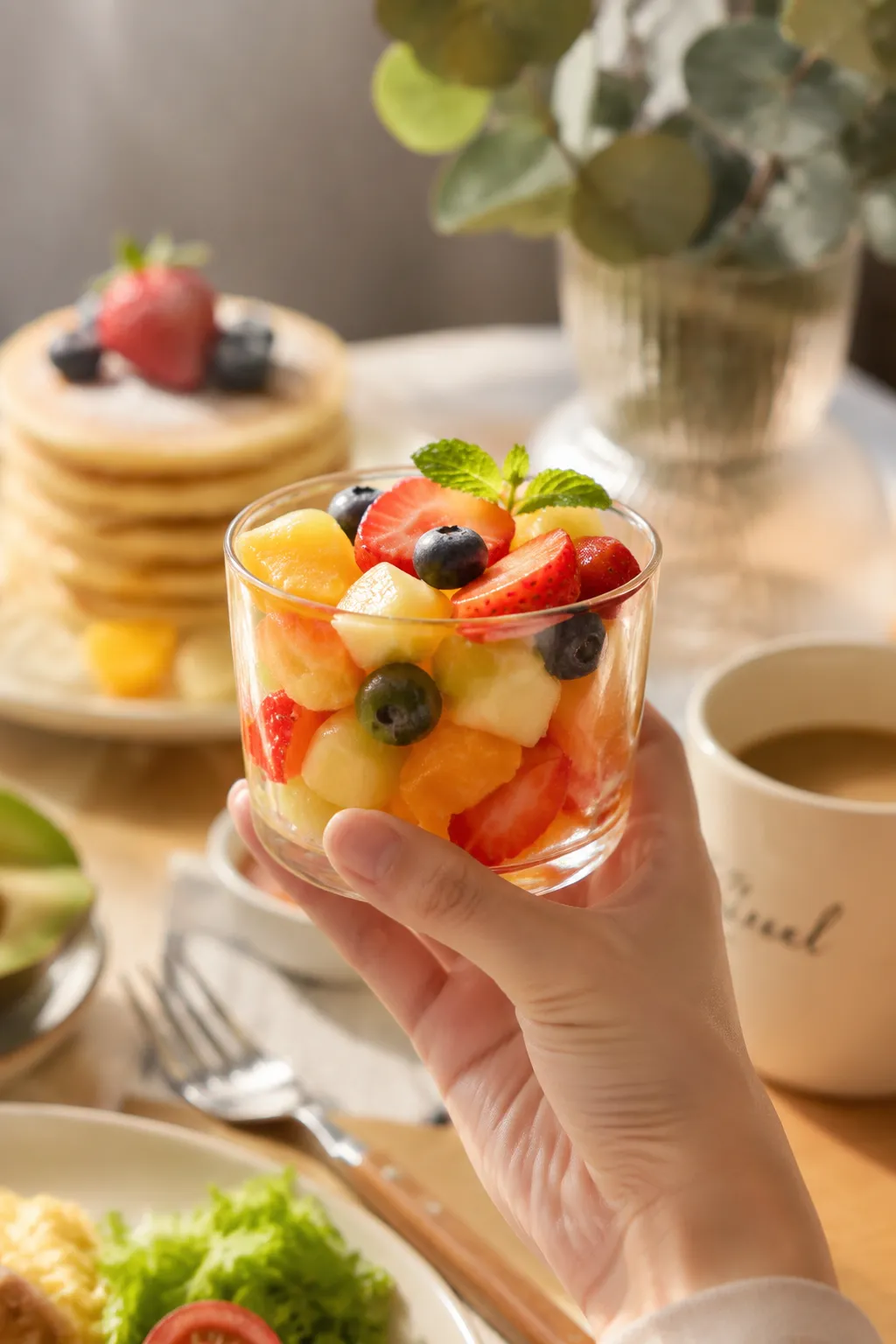
For holiday tables, serve it next to a glazed ham, roast turkey, or a cheese board. The bright acidity is a welcome counterpoint to heavier mains, and the rainbow of color is a centerpiece in itself. It also slots right into summer cookouts alongside burgers, grilled chicken, or a chunky pasta salad — anywhere you would want a fresh, palate-cleansing bite between richer foods.
For lunchboxes and meal prep, scoop individual portions into glass jars or small containers. Kids love it, adults love it, and it is one of the few make-ahead salads that genuinely gets better after a few hours in the fridge instead of worse. I keep a quart container in my fridge most weeks and treat it as the easiest snack in the house. It also turns into instant fruit parfaits with a spoonful of yogurt and granola, or you can pile it onto waffles, pancakes, or oatmeal for a no-effort topping.
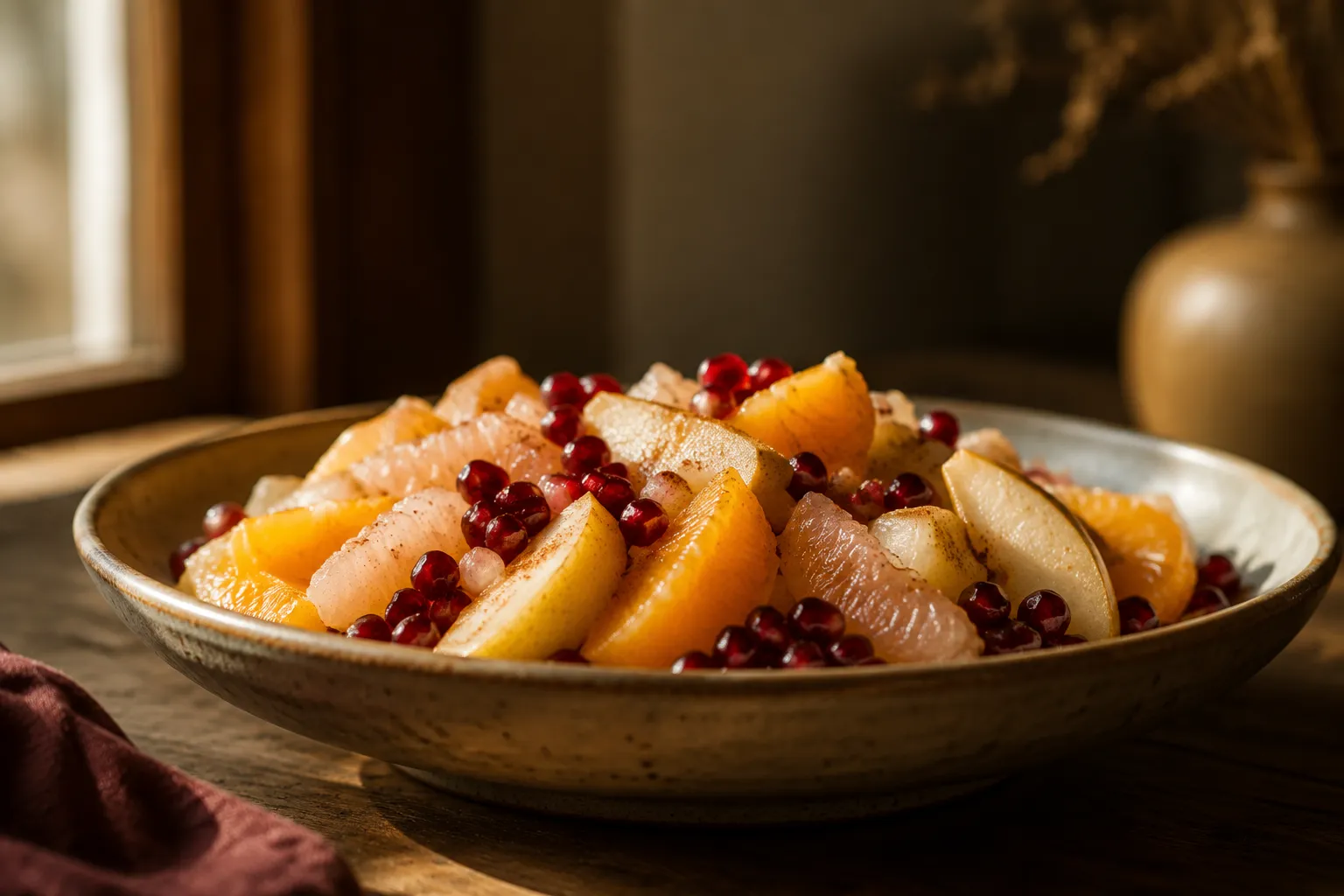
When berries are out of season and you still want something fresh, the winter version is a stunner. Swap the summer base for navel oranges, blood oranges, mandarins, ripe Bartlett pears, crisp Honeycrisp apples, and a generous handful of pomegranate seeds. The dressing stays the same, though I sometimes add a pinch of cinnamon or a drop of vanilla extract for warmth, and I trade the lime for fresh orange juice to lean further into the citrus theme.
This is also where you can really lean into texture: pears and apples bring soft crunch, pomegranate adds bright pop, and citrus segments give that juicy finish you usually miss in cold months. It is the holiday-table version of fruit with salad I make every Christmas morning, and it never lasts long. Serve it in glass coupes for a fancier presentation, or pile it into a wooden bowl for casual brunches with friends.
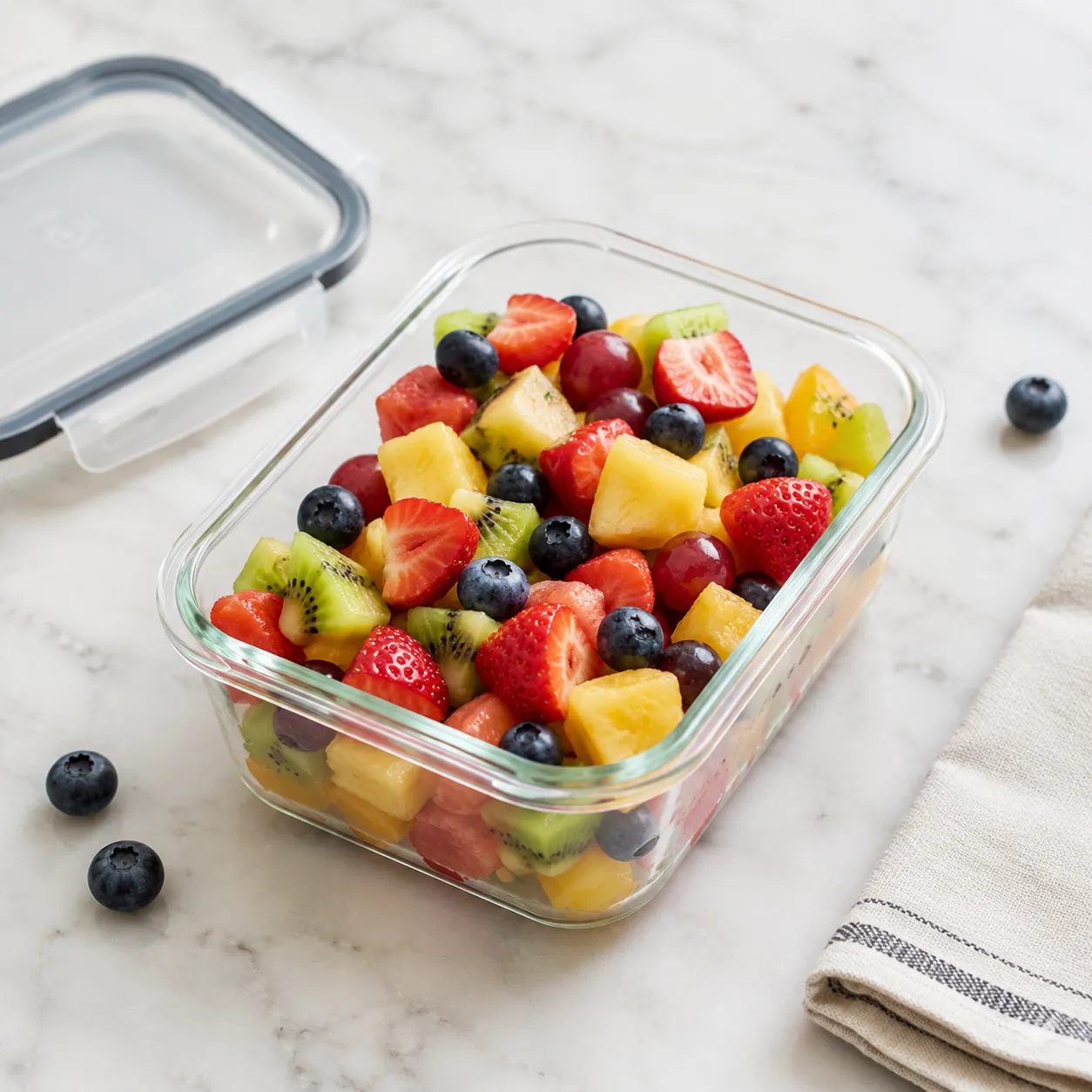
Whether you are staring at a flat of summer strawberries or a winter haul of citrus, this is the fresh fruit salad to keep on permanent rotation. It is quick, forgiving, naturally sweet, and built for a crowd — and once you nail the technique, you will find yourself reaching for it every week. If you want to riff, please do — this recipe is more of a framework than a strict rulebook. The technique is what matters: dry your fruit, cut it small, dress it light, and fold it gently. Save it, share it, double it for the holidays, and come back to tell me what fruit combo you tried.
Once you nail the base recipe, treat it like a template. Swap the fruit to match the season, your fridge, or the meal you are serving. The dressing stays the same; just the supporting cast changes.
Store leftovers in an airtight container in the refrigerator for up to 3 days. The fruit will release more juice over time, which is fine — just give it a quick stir before serving and either drain the excess or spoon it over yogurt, oatmeal, or pancakes. Avoid metal containers, which can react with the citrus and dull both the colors and the flavor.
For make-ahead prep, cut and combine all the firm fruit (berries, grapes, citrus segments, pineapple, kiwi) up to 24 hours in advance and refrigerate covered, with the dressing whisked separately in a small jar. Add bananas, apples, pears, and any soft fruits within an hour of serving so they do not brown or go soft. Freezing the assembled salad is not recommended since most fruit turns mushy on thaw, but you can absolutely freeze leftovers in a bag for smoothies later in the week.