Picnic Basket Essentials: What to Pack for the Perfect Outing
Ingredients
Scale
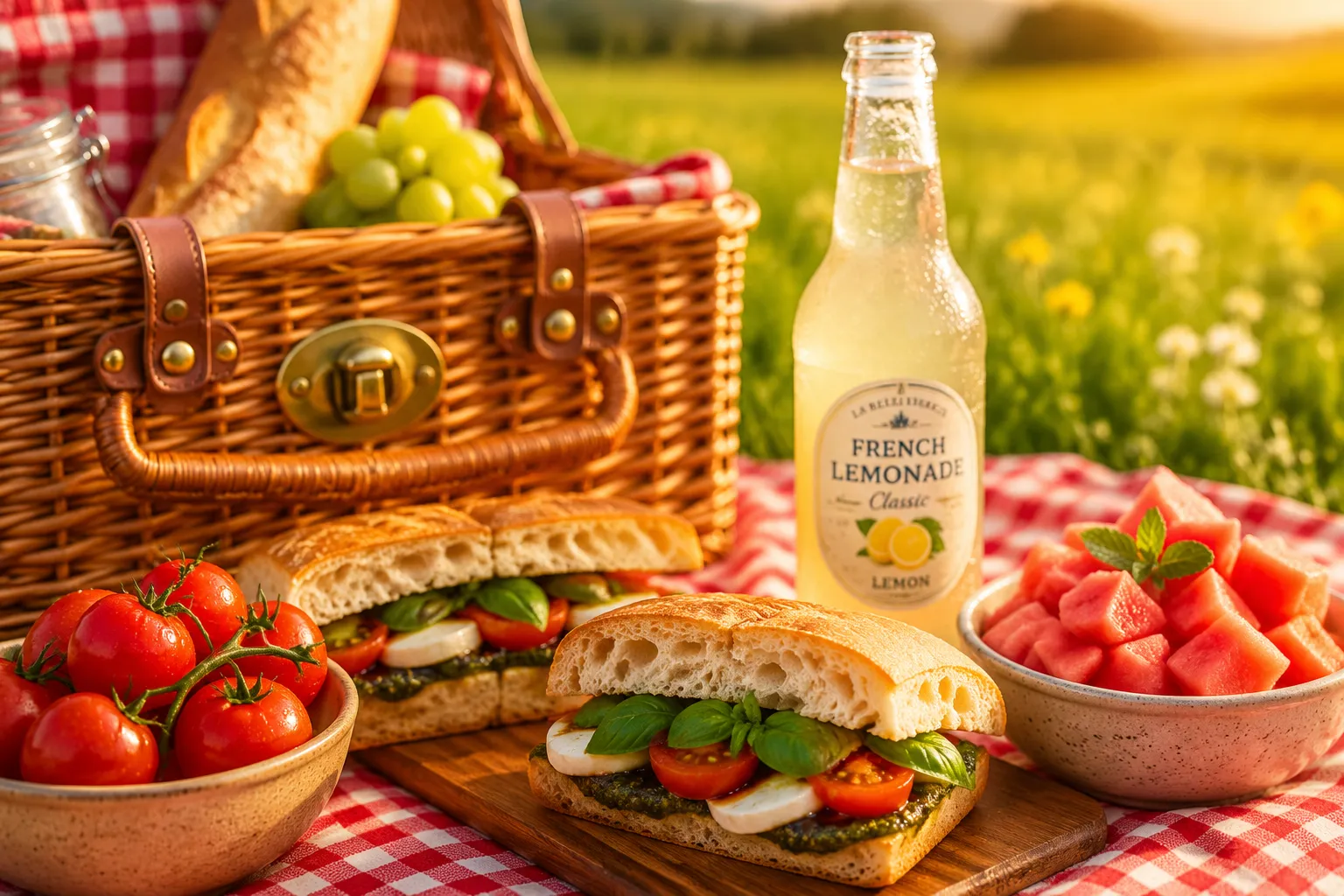
A great picnic basket is half packing strategy, half crave-worthy menu. Here's exactly what to bring, how to keep it cold, and the recipes that travel best.
Building the perfect picnic basket isn't about Pinterest aesthetics or heirloom wicker — it's about food that tastes just as good on a blanket two hours from your kitchen as it did the moment you packed it. The difference between a memorable summer afternoon and a sad cooler full of soggy bread comes down to a handful of decisions you make before you ever leave the house: what travels well, what holds up at room temperature, and how to keep cold things genuinely cold.
This guide is the one I wish I'd had a few summers ago, when I packed a beautiful caprese-style salad on a 92-degree day and ended up with warm tomato soup by the time we found parking. We're going to walk through a complete picnic checklist, a four-recipe menu engineered for the cooler, and the food-stylist tricks that make everything look intentional once you spread it out on the grass.
By the end, you'll have a packing strategy you can repeat all season long, plus a small arsenal of picnic recipes that quietly improve while they sit. Let's pack the basket properly.
Most picnic guides start with the gear — the wicker, the blankets, the matching enamelware — but the food is what people actually remember. Plan the menu first, then pack around it: sturdy containers for the things that need protecting, cold zones for items that need to stay below 40°F, and easy-grab spots for napkins and utensils you'll reach for first. When the food drives the decisions, the rest of the kit falls into place quickly. You stop overpacking, and you stop forgetting the things that matter.
The difference is engineering, not luck. A vinaigrette-dressed pasta salad gets better as it sits; a creamy potato salad gets dangerous. Bread held separately from fillings stays crisp; sandwiches assembled at dawn turn to mush by lunch. Once you start thinking about texture and temperature as design problems, the whole outing levels up. A great summer picnic should taste like the season — bright, herby, juicy — not like leftovers that have been riding around in a hot trunk.
Here's the part most people get wrong: they obsess over the basket and forget the trash bag. A useful picnic checklist breaks down into four buckets — the carrier, the table setup, the comfort items, and the tiny stuff that ruins your day if you skip it. Print this out the first time, then commit it to muscle memory.
Wicker looks gorgeous, but for anything over an hour in transit you'll want an insulated cooler bag tucked inside, or a soft-sided cooler as your primary carrier. Pre-chill it in the fridge or with a sacrificial ice pack for 30 minutes before loading. Hard-sided coolers hold cold longer; soft-sided ones are easier to lug across a parking lot. Pick based on your walk.
Bamboo or melamine plates beat paper for stability on uneven grass. Pack real flatware wrapped in cloth napkins — it weighs almost nothing and feels infinitely better than plastic. Bring a small wooden cutting board that doubles as a serving surface and a stable spot for slicing on-site.
A waterproof-backed blanket is the single best upgrade you can make. Then: two trash bags (one for trash, one for dirty dishes), a bottle opener, a small sharp knife, hand wipes, sunscreen, bug spray, and a roll of paper towels. I keep all of this in a zip pouch that lives in the basket year-round, so I never have to rebuild the kit from scratch.
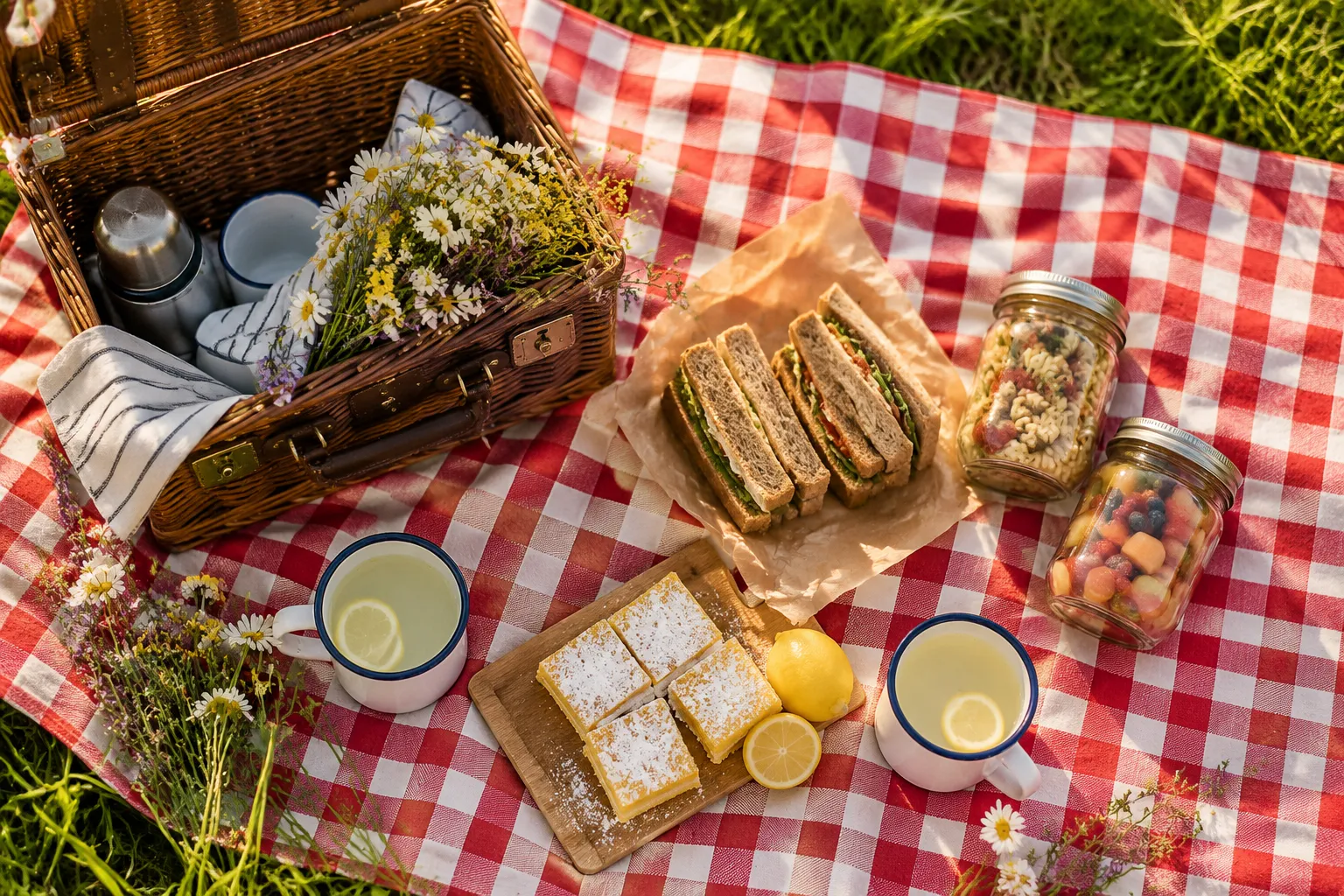
A simple framework keeps the menu from spiraling: one handheld main, two travel-friendly sides, a sweet finish, and drinks that stay cold. That's it. Four categories, four to six items total, scaled to the number of people. Once you know the blueprint, you can swap recipes in and out by season without overthinking it. This is the same skeleton I use for everything from solo park lunches to twelve-person beach gatherings.
Sandwiches on sturdy bread, wraps with tight fillings, savory hand pies, or a frittata cut into squares. The test: can you eat it standing up with one hand? If yes, it's a picnic main.
Aim for contrast. One should be a substantial grain or pasta — a sturdy pasta salad recipe leaning on olive oil and acid, never mayo. The other should be bright and fresh, like a fruit salad or a quick slaw. These are your workhorse picnic side dishes, and they should look as good in the bowl an hour later as they did when you packed them.
Bar cookies, brownies, shortbread, or whole stone fruit. Anything that requires a fork and plate is too much work on a blanket. Layer cakes, cream pies, and anything with frothy meringue should stay home.
Two beverages per person plus water. A big bottle of homemade lemonade, sparkling water, and maybe a thermos of iced tea. Freeze a few water bottles the night before — they double as ice packs and turn into drinks by mid-afternoon, which is the kind of small move that makes the whole basket feel intentional.
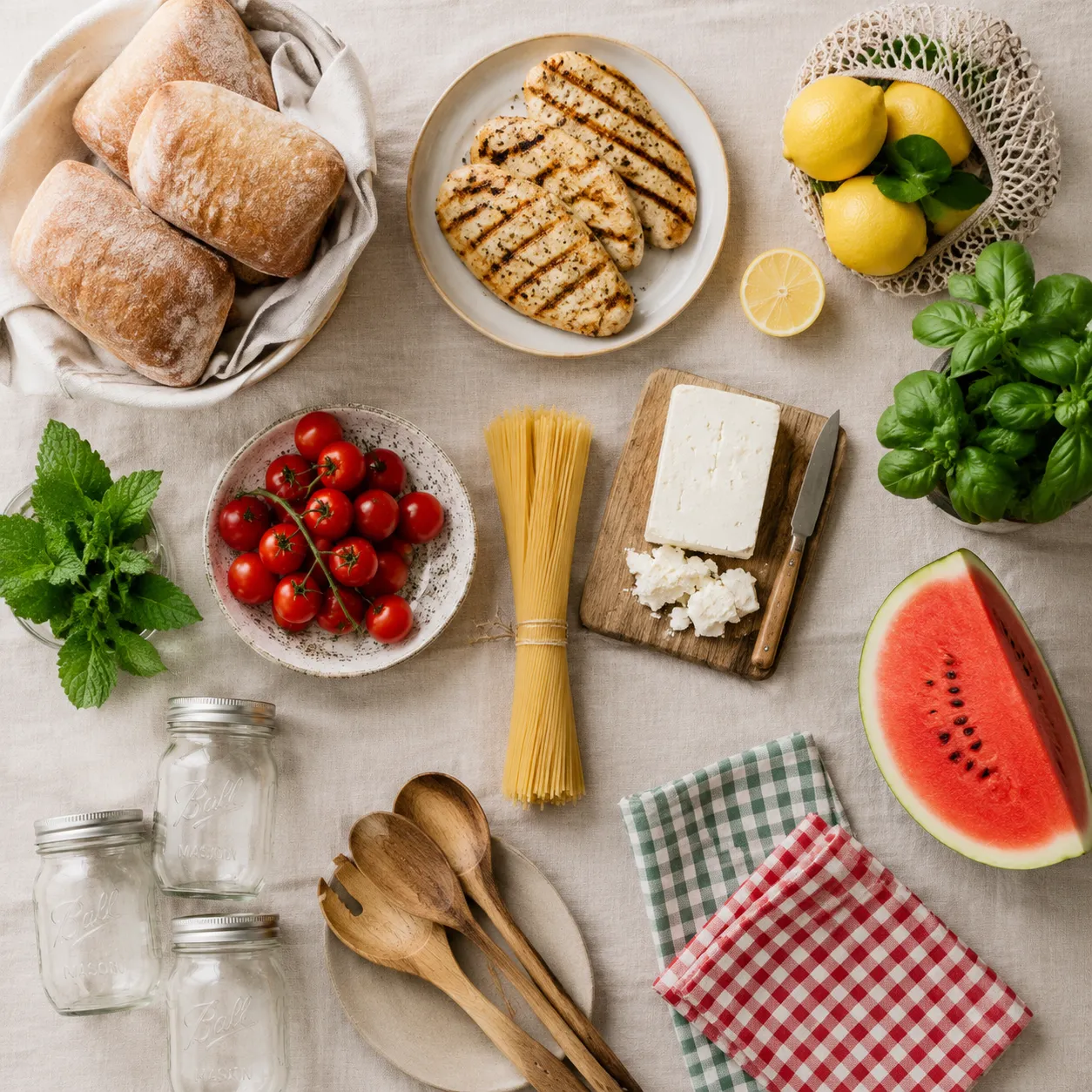
These four recipes are the menu I default to all summer. They're make-ahead, they're forgiving, and every single one tastes better after a couple of hours in the cooler than it does straight from the kitchen. Together they cover every category in the blueprint above and pack into about ninety minutes of active work the day before.
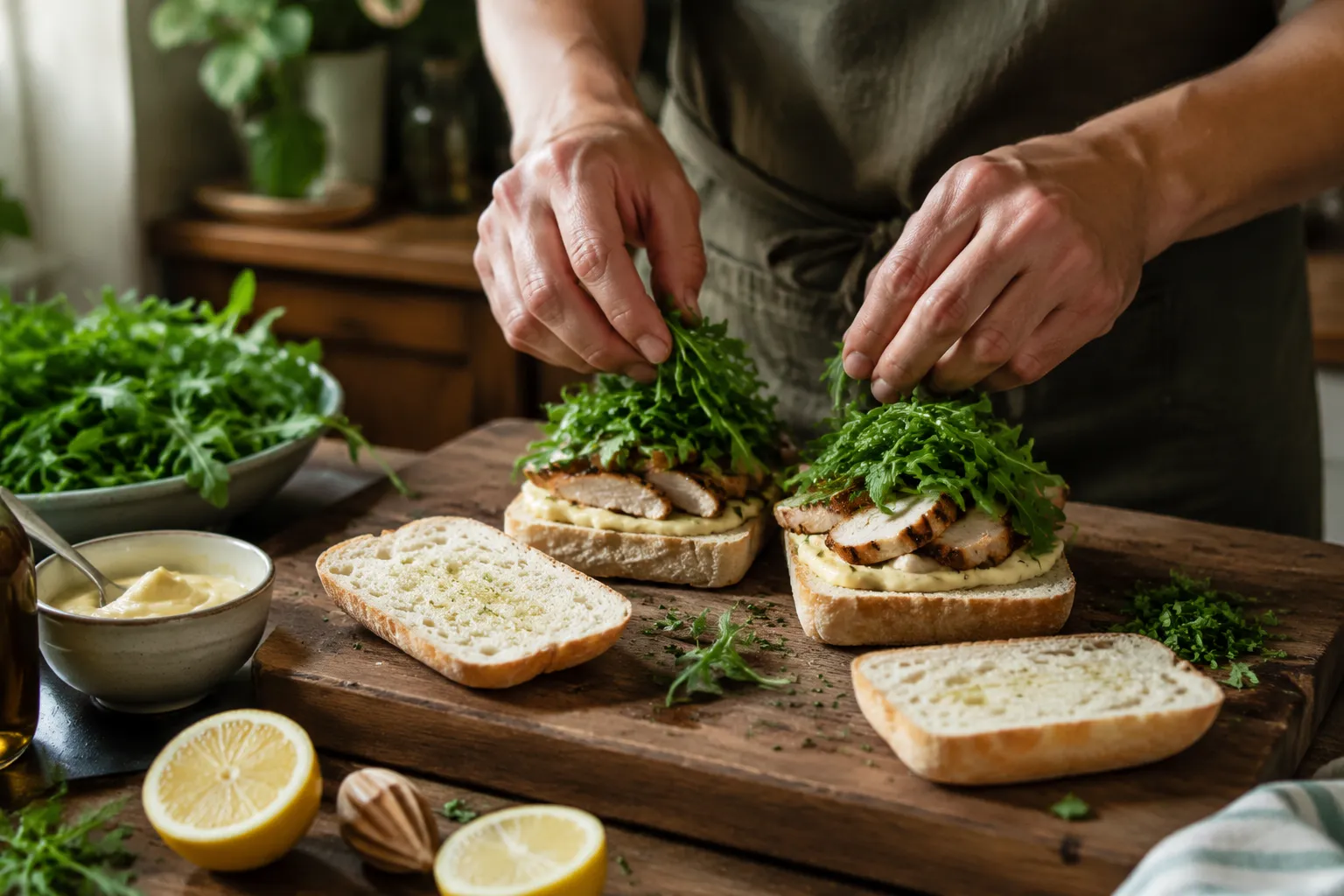
This is my go-to easy chicken sandwich for crowds: shredded rotisserie chicken tossed with lemon zest, olive oil, fresh herbs, and a whisper of mayo, piled onto split ciabatta with arugula. The ciabatta is non-negotiable — soft sandwich bread will collapse, but a good crusty roll holds its shape for four-plus hours. Pack the chicken salad and the bread separately and assemble on-site.
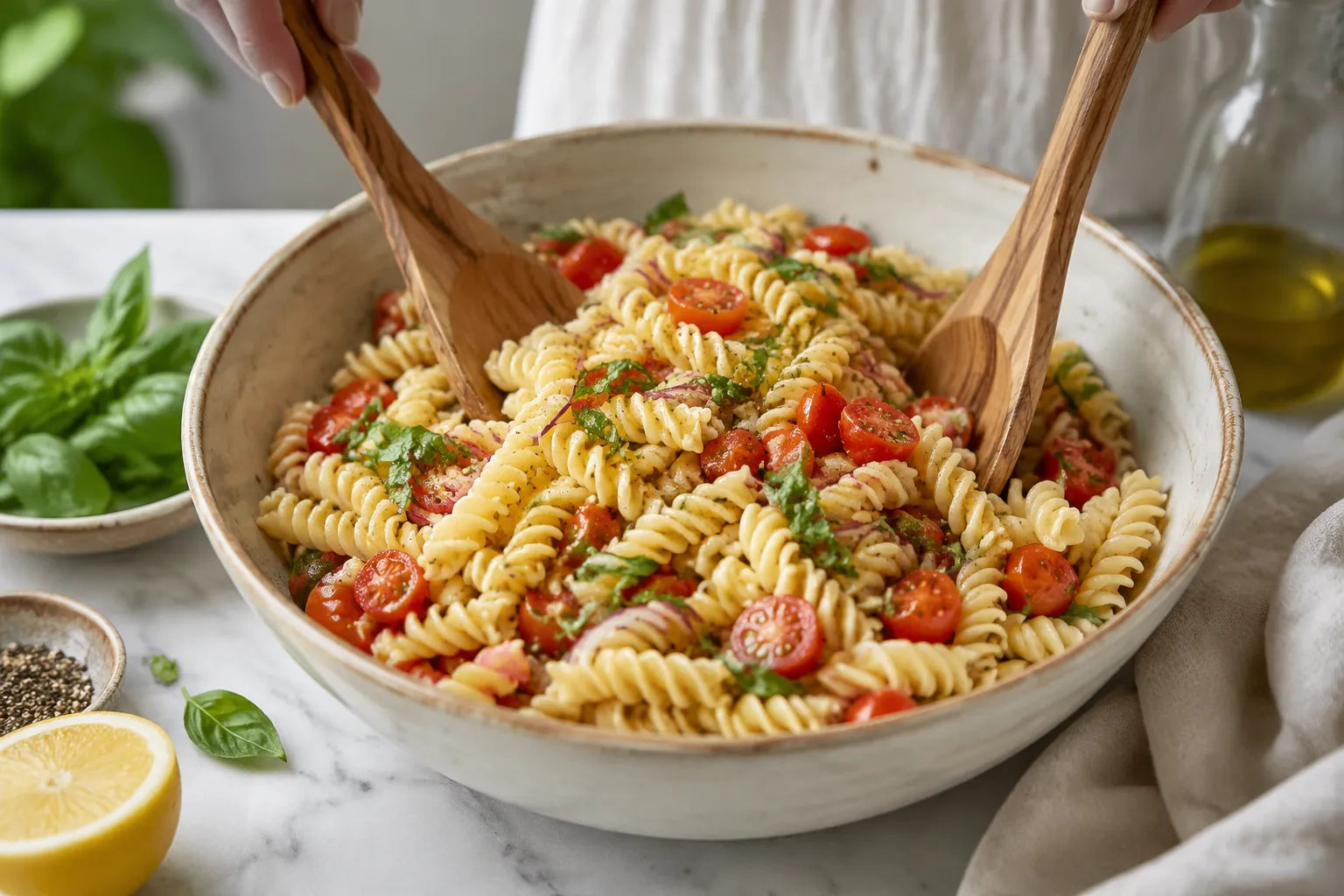
Fusilli or farfalle catches dressing in all the right places. Toss warm pasta with a sharp lemon vinaigrette so it absorbs the flavor, then add halved cherry tomatoes, slivered red onion, torn basil, and good olives. No mayo, no cheese that weeps — just bright, acidic, gets-better-as-it-sits perfection.
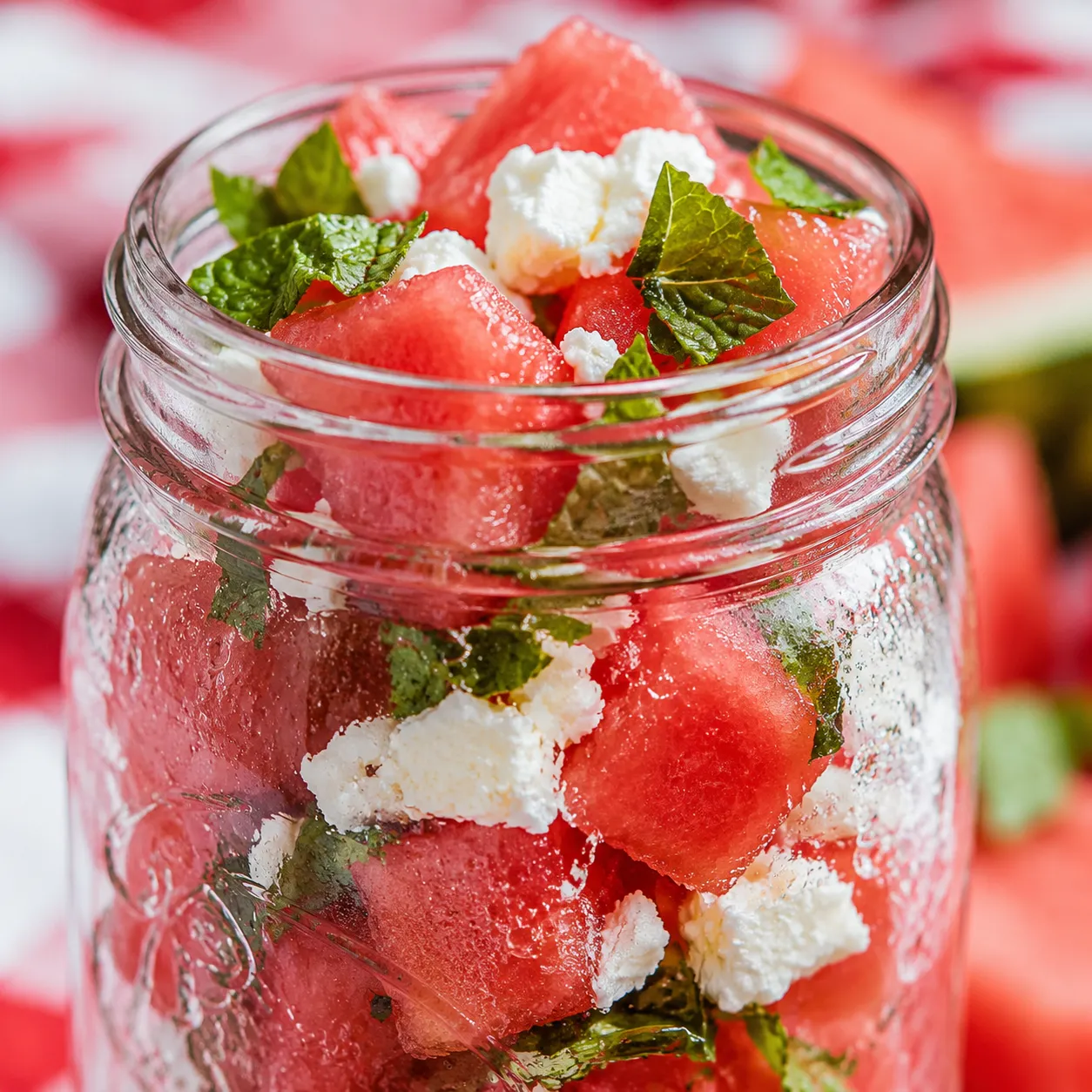
Cubed seedless watermelon, crumbled feta, torn mint, a drizzle of olive oil, and a squeeze of lime. Layer it in mason jars to keep the feta from going pink and the watermelon juice from pooling at the bottom. It's a textbook summer fruit salad — sweet, salty, herbal, hydrating, and gorgeous in a clear jar.
A press-in graham crust, a no-cook lemon-cream filling that sets in the fridge, cut into squares and stacked between sheets of parchment. These are the cleanest no-bake dessert bars to transport — no melting, no frosting smear, no fork required. They survive a bumpy car ride better than just about any other summer dessert I've tested.
Food safety is the boring part, but it's also the thing that actually ruins picnics when ignored. The USDA's two-hour rule is the line you don't want to cross: perishable foods shouldn't sit above 40°F for more than two hours. When the air temperature climbs above 90°F — which is most US summer afternoons — that window shrinks to just one hour. Set a timer on your phone if you're prone to losing track in good conversation.
Layering ice packs like a pro is the simplest way to extend that window. Put frozen gel packs on the bottom of the cooler, your most perishable items in the middle, then another layer of ice packs on top. Cold air falls, so the top layer matters more than people realize. Keep drinks in a separate cooler if you can — every time someone digs around for a seltzer, the food cooler loses precious cold air.
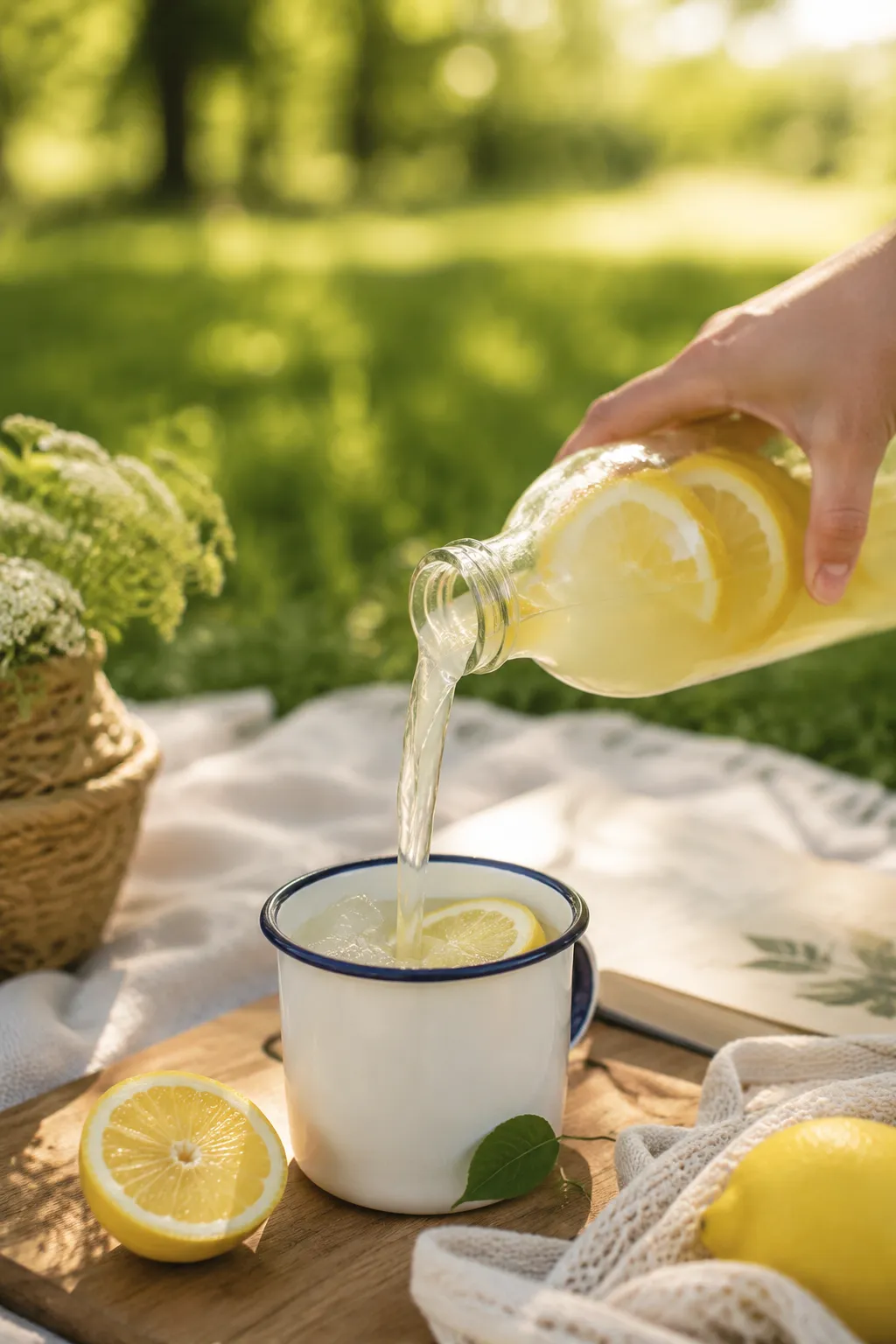
After years of styling outdoor shoots in 95-degree weather, I've picked up a few packing habits that make the difference between a chaotic unpack and a graceful one. None of this requires special equipment, just a little forethought before you walk out the door.
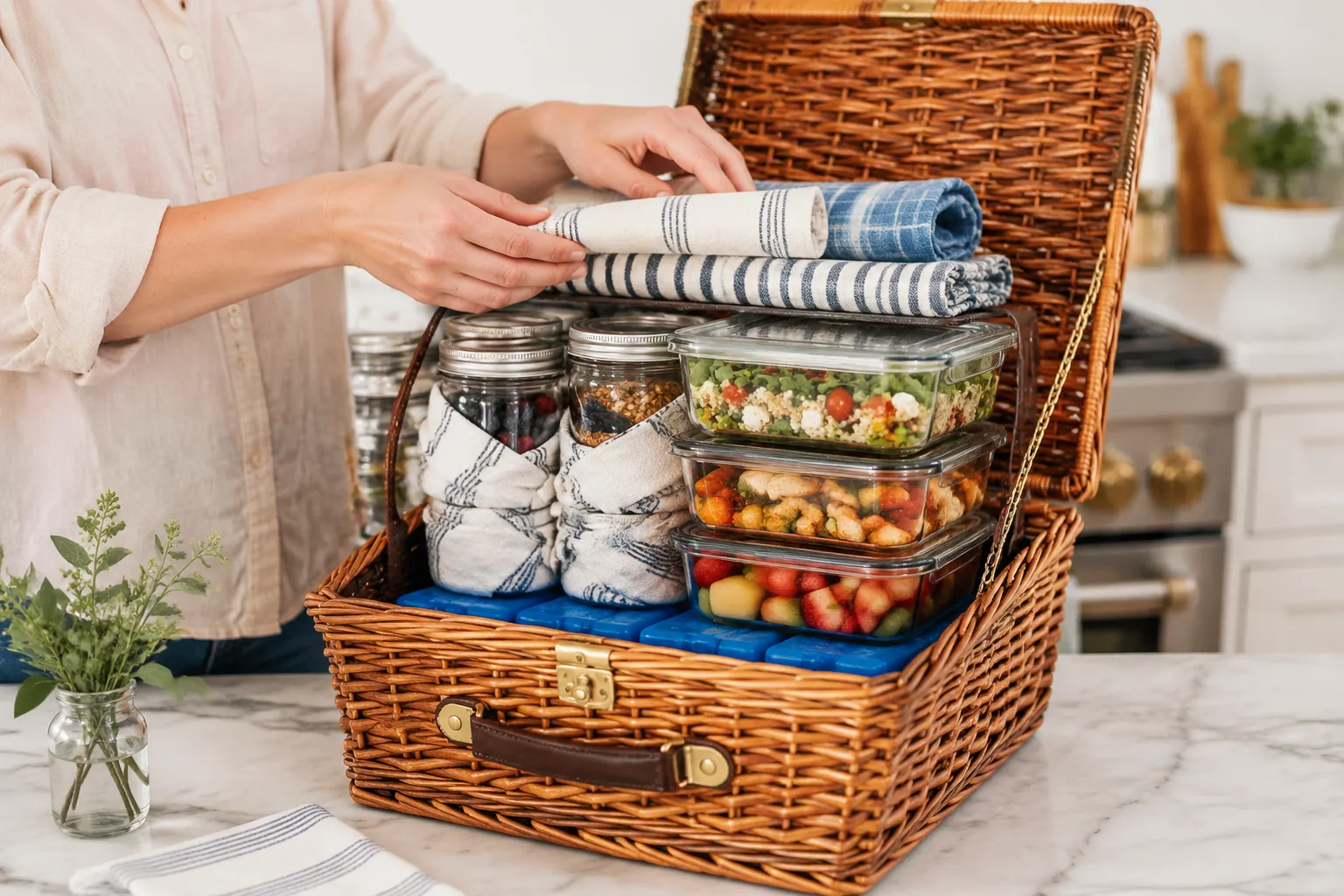
Pack in reverse order of use. The blanket goes in last so it comes out first; the dessert goes in early because you'll eat it last. Sounds obvious, but most people pack in the order they cooked, which is exactly backwards from the order they'll need things on the blanket.
Use mason jars and stackable rectangular containers. Round Tupperware wastes space and rolls around in the cooler. Wide-mouth quart jars are perfect for layered salads — dressing on the bottom, sturdy ingredients in the middle, leaves on top — and they look beautiful set out, like little glass terrariums.
Dress salads on-site, not at home. Pack vinaigrette in a small jar and toss when you arrive. Same with anything involving fresh herbs or avocado: bring them whole or in a sealed bag and assemble at the picnic. Five extra minutes of plating saves you from limp greens and brown edges.
The food does the heavy lifting, but a thoughtful setup is what people photograph and remember. Choose a spot with dappled shade if you can — full sun is brutal on both food and people, while deep shade kills the golden-hour glow. A flat patch under an oak tree, a bluff with a breeze, or a quiet corner of a public park all work beautifully. Walk the area before you commit; ant hills are a deal-breaker.

A simple tablescape with what you already own beats anything from a party store. A linen tablecloth or quilt under the food anchors the visual frame. Cluster small items on a wooden cutting board to create a natural centerpiece — bread, a wedge of cheese, some figs, a small jar of jam. Wildflowers or olive branches in a mason jar add height. Mix metals and ceramics rather than matching everything; the slight chaos reads as intentional and lived-in.
That's the whole formula. A well-loaded basket, a four-recipe menu that travels, ice packs in the right places, and a shady spot. The rest is just showing up with good company and letting the afternoon stretch into evening.
The four-recipe menu is a starting point, not a rule. Once you understand which textures and dressings travel well, you can rotate the components freely based on what's in season or who's coming.
Most components hold beautifully for two to three days in the fridge, which makes this menu great for prepping ahead. The chicken salad keeps tightly covered for up to 48 hours; the pasta salad (without the leafy herbs added) keeps for three days and just needs a fresh basil refresh and a splash more olive oil before serving. The no-bake lemon bars actually improve overnight and last up to five days refrigerated, sliced and stacked between parchment in an airtight container.
For leftovers that came home from the picnic, only return things to the fridge if they stayed cold the whole time — anything that sat above 40°F for more than two hours (or one hour above 90°F) should be tossed, no matter how sad that feels. The watermelon-feta jars don't keep well because the feta starts to weep, so pack only what you'll eat. Lemonade and any sealed drinks are fine to refrigerate and finish within a week.