Antipasto Salad: Classic Italian Antipasto Recipe
Ingredients
Scale
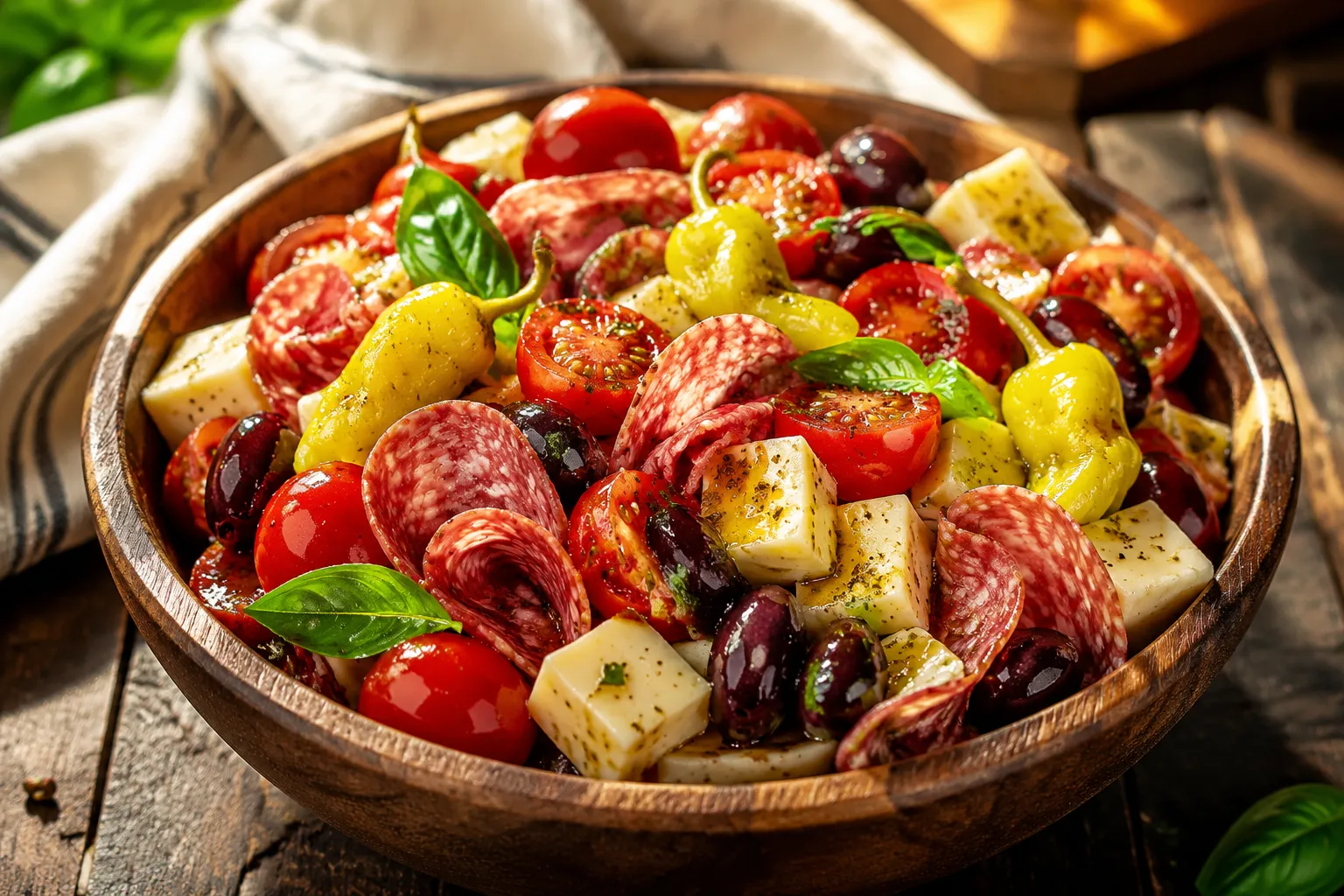
A vibrant antipasto salad packed with salami, provolone, olives, and pepperoncini, all tossed in a zippy Italian vinaigrette. The ultimate party-ready Italian classic.
There is nothing quite like a classic antipasto to kick off a gathering of friends and family. Whether you are hosting a lively summer barbecue, planning a festive holiday dinner, or simply looking for a robust, flavor-packed dish to bring to a neighborhood potluck, this vibrant recipe delivers every single time.
It captures all the magic of an Italian charcuterie board but tosses it together into one cohesive, fork-friendly bowl. We are talking about a glorious mountain of savory cured meats, creamy cheeses, briny olives, and crisp vegetables, all bathed in a zippy, herbaceous dressing.
What makes this specific dish so spectacular is its inherent balance. Unlike a heavy pasta salad that can leave you feeling weighed down before the main course even arrives, this version skips the noodles entirely to let the star ingredients shine. Every bite offers a new combination of textures and tastes: the rich, garlicky bite of salami, the mild creaminess of provolone, the sharp tang of pepperoncini, and the juicy burst of ripe cherry tomatoes. It is a celebration of classic Italian flavors that requires absolutely no cooking, making it a delightfully stress-free addition to your entertaining repertoire.
Before we dive into the chopping and whisking, let's take a moment to appreciate the rich culinary history behind this beloved dish. The concept of the starter course has deep, centuries-old roots in Mediterranean dining, deliberately designed to set the stage for the feast to come.
If you have ever found yourself confused by restaurant menus or family recipe cards, you are certainly not alone. You will frequently see the terms used interchangeably across the internet, but there is a definitive correct spelling. The word translates from Italian literally as "before the meal" (anti meaning before, and pasto meaning meal). Therefore, the proper term is the singular noun, or "antipasti" for the plural form.
On the other hand, antipasta is a very common English misspelling and mispronunciation. Because pasta is such a recognizable word, many people logically assume the phrase means "before the pasta," leading to the creation of the term antipasta salad in casual conversation. While your Italian grandmother might gently correct you if you use the wrong vowel, the truth is that whether you spell it with an "o" or an "a," everyone at the table will know exactly what deliciousness you are referring to.
In traditional Italian dining, the first course is designed to awaken the palate, stimulate the appetite, and encourage lingering, joyful conversation. A classic Italian antipasto is typically served as a sprawling platter of bite-sized, high-quality delicacies. It is an exercise in culinary harmony, carefully balancing salty, sour, fatty, and fresh elements. You will often find cured meats like prosciutto and capicola mingling alongside marinated vegetables, fresh cheeses, and crusty breads. By transforming this concept into a tossed salad, we are taking all of those meticulously curated flavors and ensuring that every single forkful contains a perfect, balanced bite. It is a modernized, highly shareable take on an ancient tradition that still honors the integrity of the ingredients.
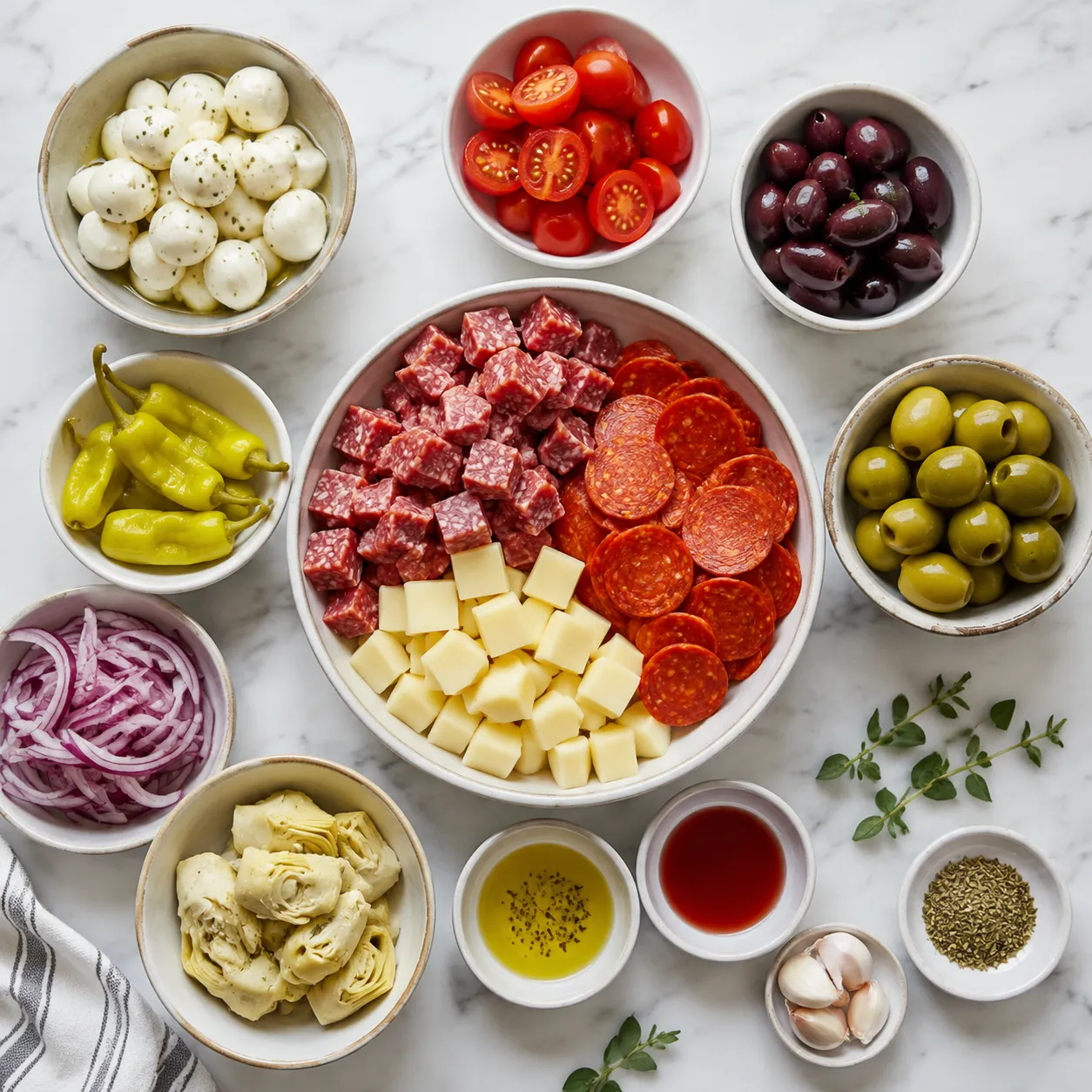
Building a phenomenal dish requires sourcing high-quality components. Because this recipe involves zero cooking, the ingredients have nowhere to hide. Head to your favorite deli counter or local Italian market to gather these essential building blocks.
The foundation of our savory flavor profile relies on a robust selection of cured meats. We highly recommend using a high-quality Genoa salami as your primary meat. Salami provides a rich, garlicky, and slightly fermented flavor that stands up beautifully to a strong vinaigrette. Ask your deli counter to slice it thick—about a quarter of an inch—so you can easily cut it into substantial cubes. Next, add sliced pepperoni for a touch of smoky heat and vibrant color. If you want to elevate the dish even further, you can drape delicate ribbons of prosciutto throughout the bowl just before serving. The contrast between the dense, chewy salami and the melt-in-your-mouth prosciutto creates an incredible textural experience.
To balance the intense saltiness of the cured meats, we need cheeses that offer creamy, mild, and soothing notes. A sharp, aged provolone is absolutely essential. Much like the salami, you want to buy a thick block of provolone so you can cube it yourself. The firm texture holds its shape perfectly when tossed and marinated. To complement the provolone, we also incorporate fresh mozzarella pearls (bocconcini). These bite-sized spheres of sweet, milky goodness act like little flavor sponges, soaking up the tangy dressing. If you cannot find the pearls, you can absolutely use a larger ball of marinated mozzarella and simply tear it into bite-sized rustic pieces.
Now we bring in the crunch, the brine, and the vibrant colors. Cherry tomatoes, halved to release their juices, add a necessary pop of sweetness and acidity. For the briny elements, a duo of pitted Kalamata olives and bright green olives (like Castelvetrano or standard Spanish olives) provides a buttery, salty punch. Thinly sliced red onion offers a sharp, crisp bite that cuts through the richness of the meats and cheeses. Marinated artichoke hearts bring a tender, earthy tang. Finally, no Italian-inspired salad would be complete without a generous handful of sliced pepperoncini. These mild, pickled peppers offer a signature zesty kick that ties the whole bowl together beautifully.
While you could technically reach for a bottle of store-bought dressing in a pinch, taking five minutes to whisk together a homemade Italian vinaigrette will completely transform your salad. Our recipe relies on a base of high-quality extra virgin olive oil and punchy red wine vinegar. We then layer in minced fresh garlic, a robust blend of dried oregano, basil, and thyme (or a pre-mixed Italian seasoning), a pinch of salt, and freshly cracked black pepper. The resulting dressing is bright, herbaceous, and perfectly emulsified. It acts as a marinade, seeping into the cheese and vegetables to create a deeply flavorful dish.
Assembling this masterpiece is incredibly straightforward, but the order of operations and the way you prep your ingredients can make a significant difference in the final texture and presentation.
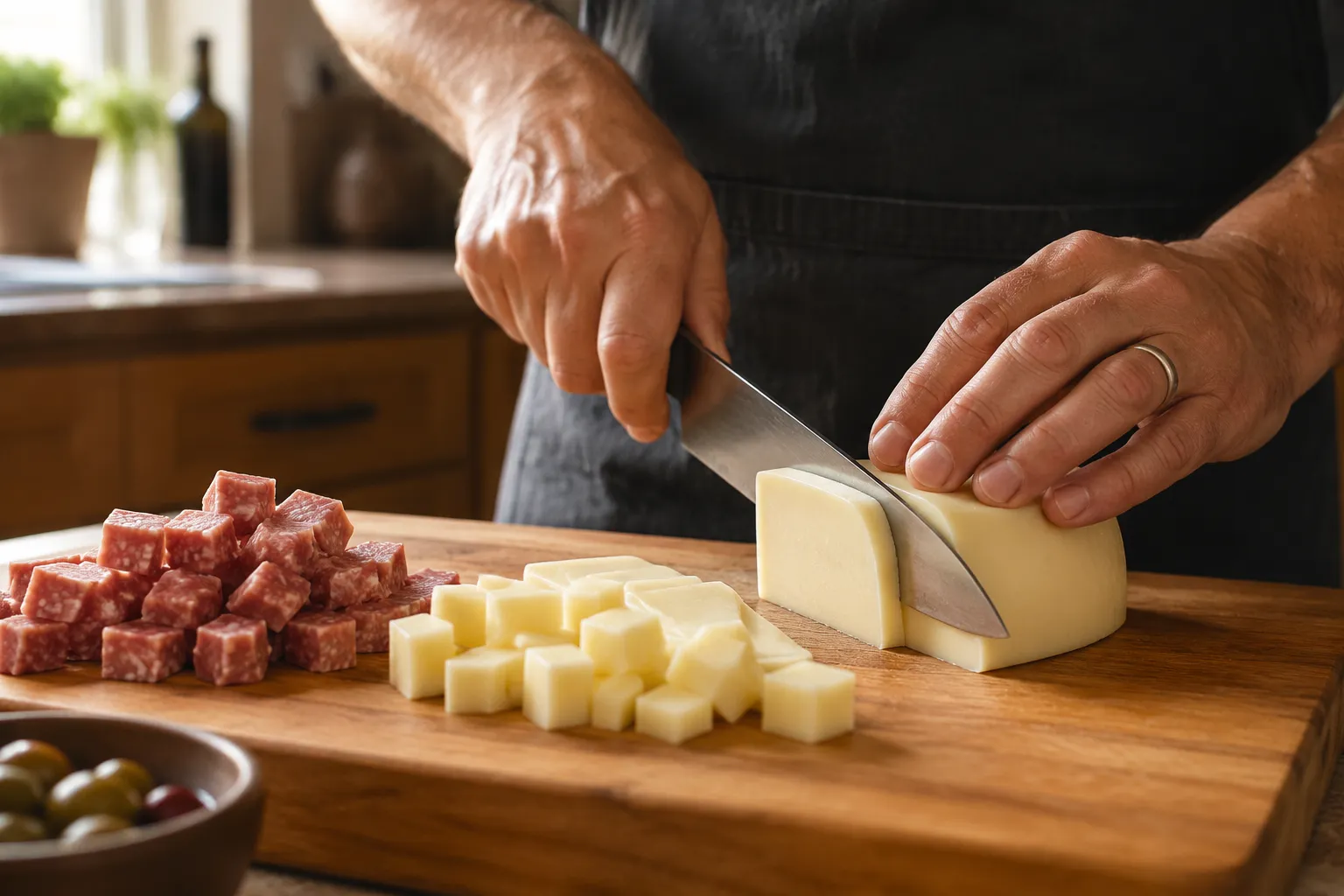
Start by focusing on your hearty ingredients. Take your thick slices of Genoa salami and provolone cheese and cut them into uniform, bite-sized cubes—aim for pieces that are roughly the size of a playing dice. This ensures that they are easy to eat and that you can get a little bit of everything on your fork at once. If your pepperoni slices are large, you can cut them in half or into quarters. Leave the fresh mozzarella pearls whole, as their delicate texture is best preserved when left intact. Place all of your prepped meats and cheeses into a very large, wide mixing bowl.
Next, move on to the fresh and briny components. Wash and dry your cherry tomatoes thoroughly before slicing them in half. If you are using standard-sized olives, you may want to halve them as well, though leaving them whole provides a nice rustic look. Drain your marinated artichoke hearts and give them a rough chop so they are easily distributed throughout the salad. Thinly slice your red onion—if you find raw onion too pungent, you can soak the slices in cold water for ten minutes before draining and adding them to the bowl. Toss the tomatoes, olives, artichokes, onions, and sliced pepperoncini in with the meats and cheeses.
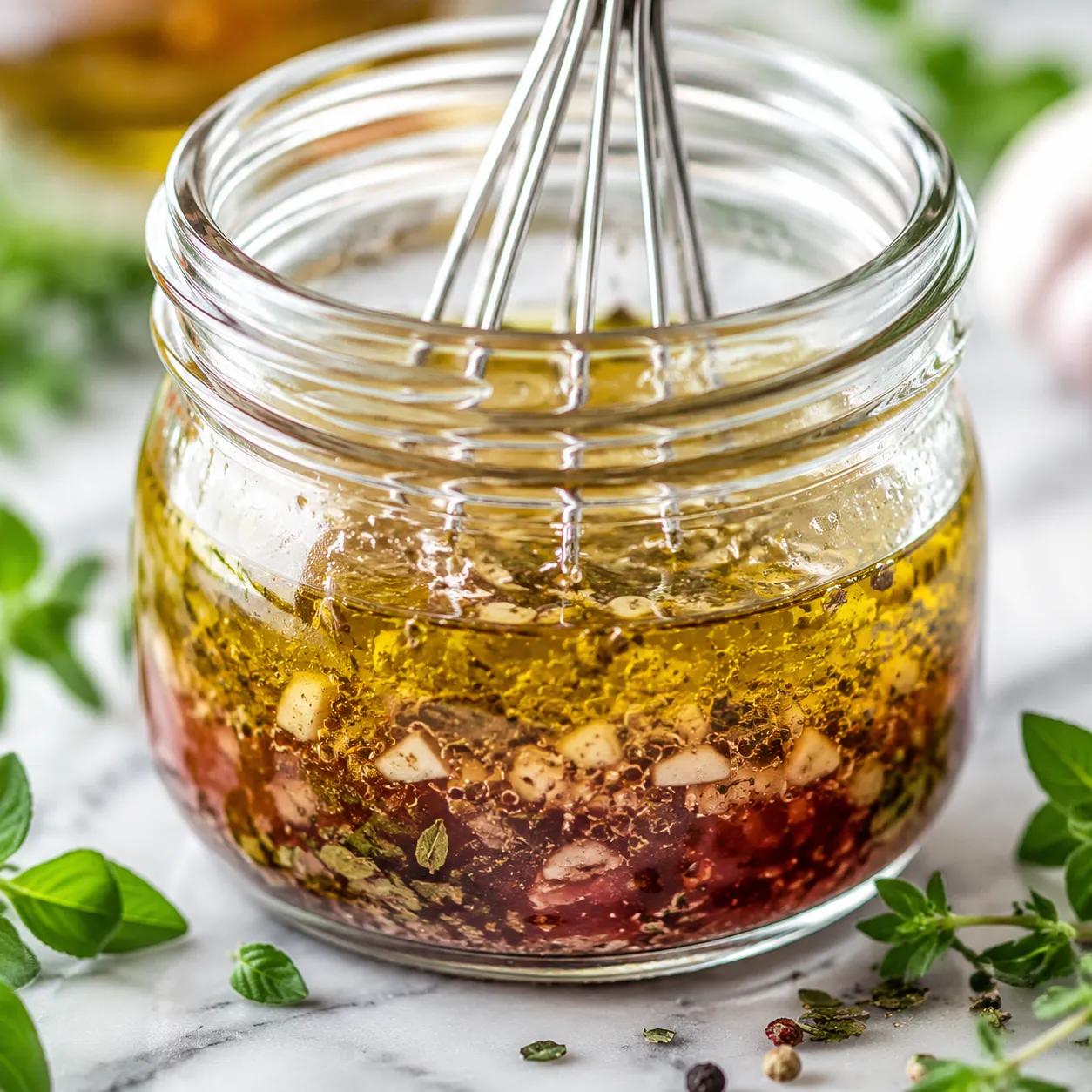
In a small glass jar or a liquid measuring cup, combine your extra virgin olive oil, red wine vinegar, minced garlic, and Italian herbs. If you are using a jar, simply screw the lid on tightly and shake vigorously until the mixture is completely emulsified and slightly thickened. If using a bowl, whisk rapidly until the oil and vinegar bind together. Taste your dressing at this stage—it should be quite punchy and acidic, as it needs to flavor a massive bowl of dense ingredients. Adjust the salt and pepper to your liking. We promise this fresh mixture is miles better than any bottled Italian salad dressing you will find at the grocery store.
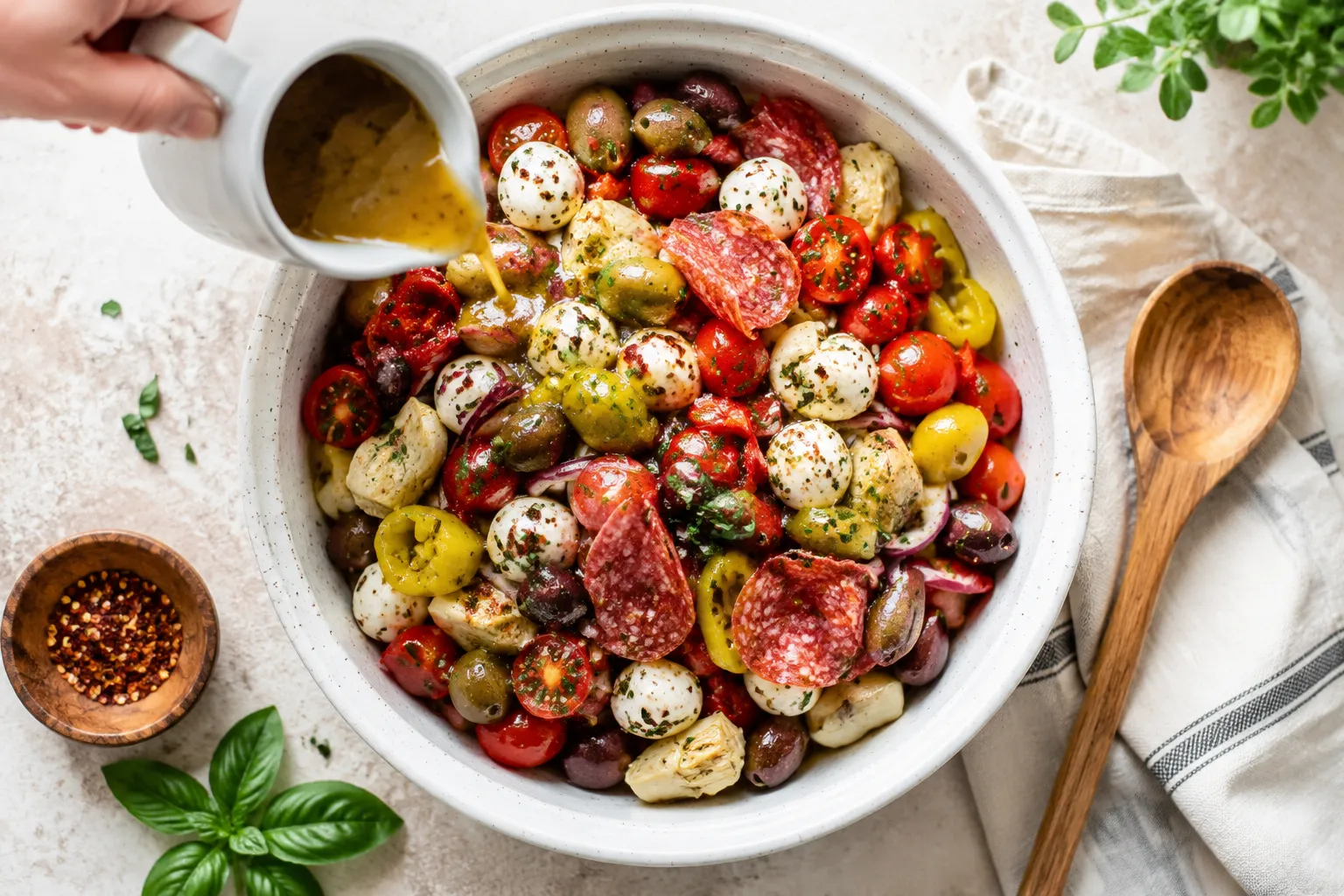
Pour the vibrant dressing over the mountain of ingredients in your mixing bowl. Using two large wooden spoons or salad servers, gently toss everything together. Be careful not to smash the tomatoes or tear the mozzarella pearls. You want every single cube of cheese and fold of meat to be glistening with the vinaigrette.
This resting period allows the ingredients to marinate, marrying the flavors and softening the raw bite of the garlic and onions.
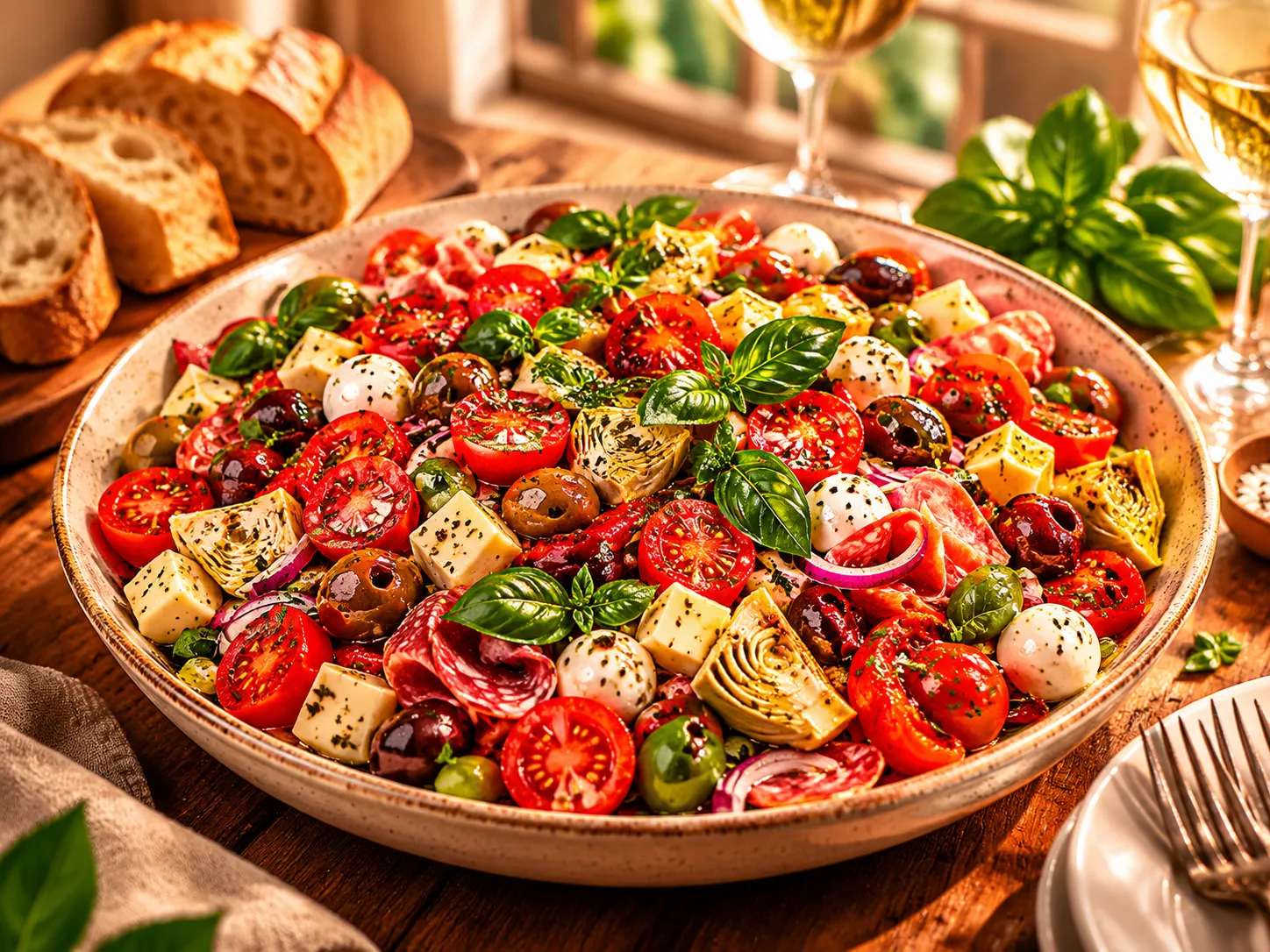
Because this dish is so incredibly robust and loaded with protein and fats, it can easily stand alone as the star of a light summer lunch or serve as the ultimate party appetizer. However, pairing it with the right accompaniments will elevate the entire dining experience to new heights.
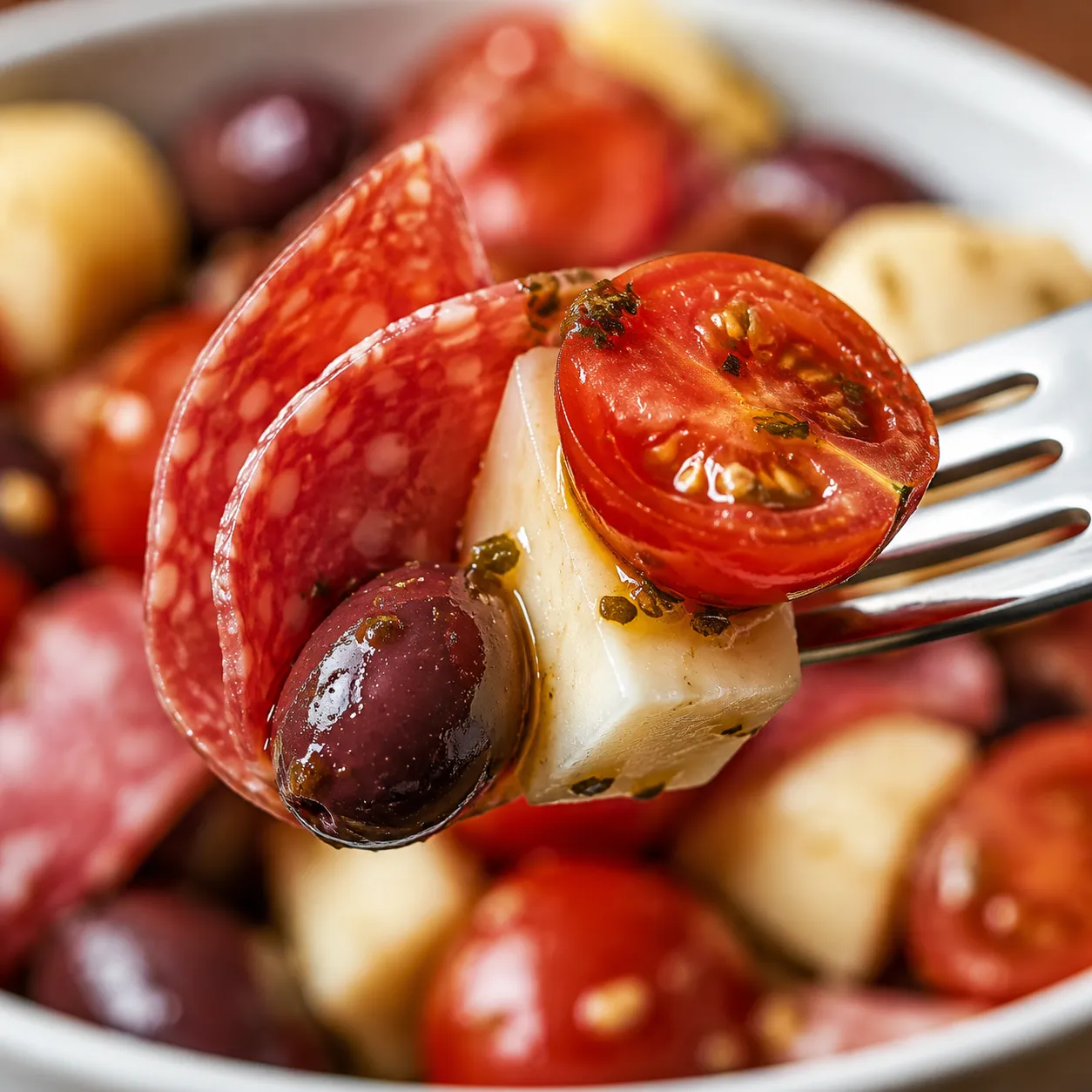
The juices from the tomatoes, the brine from the olives, and the olive oil from the dressing will inevitably pool at the bottom of your serving bowl, creating a wildly flavorful liquid known affectionately as "liquid gold." You absolutely must provide your guests with a way to soak this up. Serve the salad alongside a warm, crusty baguette, slices of toasted ciabatta, or a generous slab of dimpled, sea-salt-flecked rosemary focaccia. If you are hosting a larger cocktail party, you can even serve the salad alongside Caprese skewers for a beautifully themed, highly photogenic Italian spread.
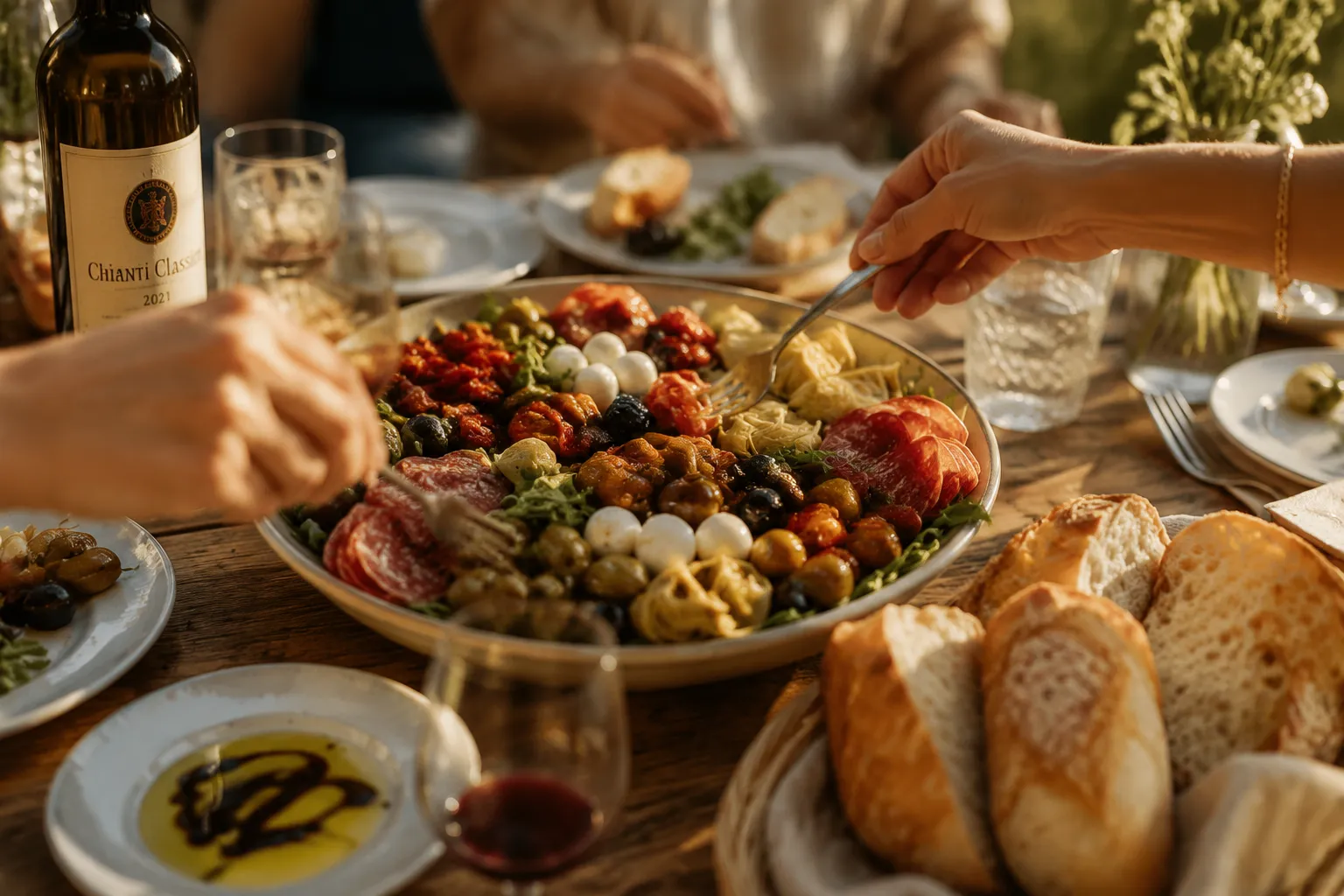
When it comes to beverages, you want drinks that can cut through the richness of the cured meats and cheeses while complementing the acidity of the vinaigrette. A crisp, dry white wine like a Pinot Grigio or a Sauvignon Blanc is incredibly refreshing. If you prefer red wine, opt for something light and fruity, such as a Chianti or a young Sangiovese, which will harmonize beautifully with the Italian flavors without overpowering them. For non-alcoholic options, a sparkling water with a generous squeeze of fresh lemon or a blood orange Italian soda makes for a festive and palate-cleansing pairing.
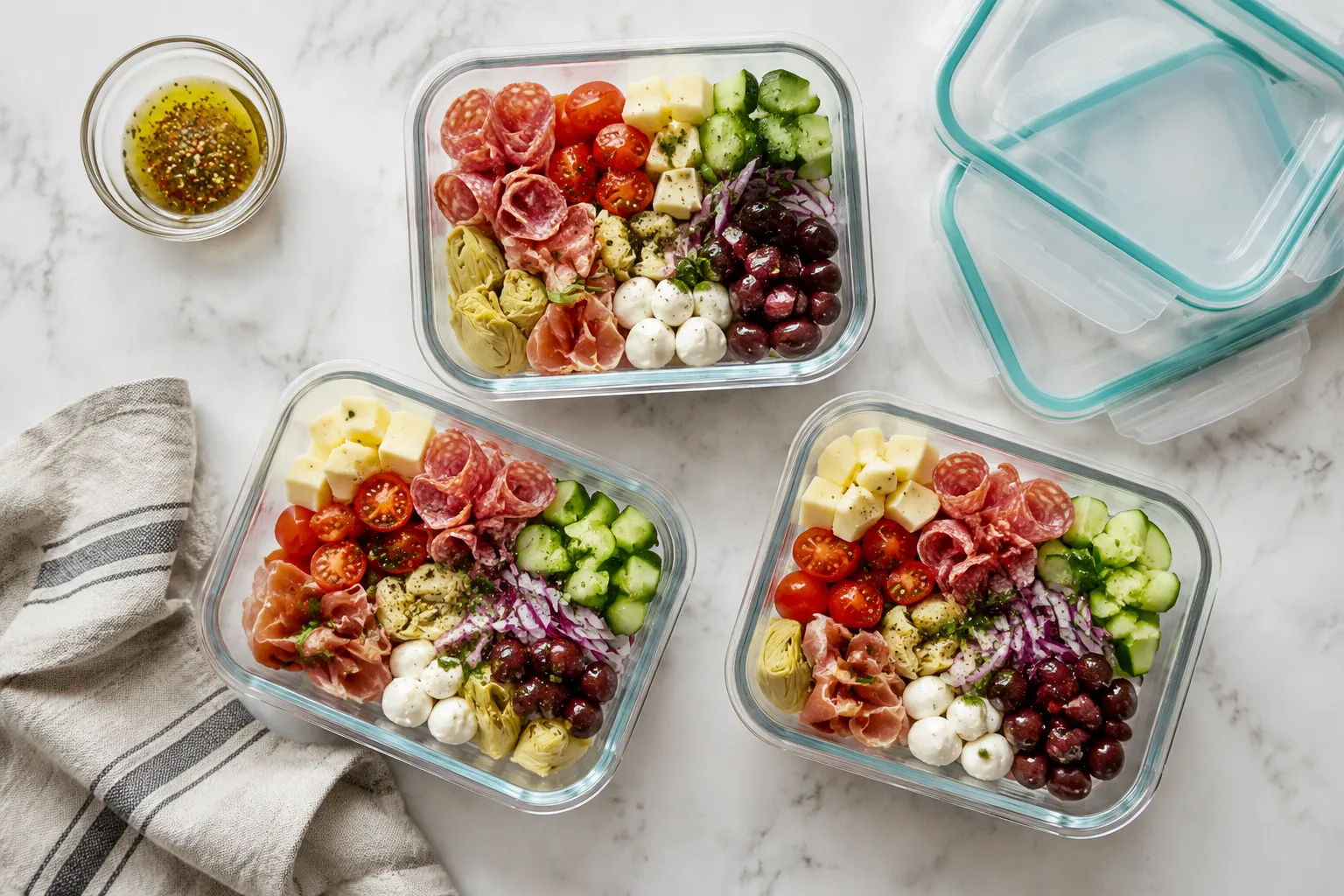
While this is a quintessential party dish, the beauty of this antipasto is its incredible staying power in the refrigerator. Because there are no delicate leafy greens to wilt and turn to mush, it is a phenomenal candidate to make in large batches. Whether you are feeding a crowd on a Sunday afternoon or just looking to elevate your weekday lunches, the flavors will only continue to deepen and develop over time, making every single bite feel like a luxurious trip to a Tuscan deli.
While this recipe is a fantastic baseline, the beauty of this dish is how easily it can be customized to suit your pantry and your personal preferences. Feel free to swap out ingredients based on what looks best at your local deli.
This salad is an absolute meal-prep dream because it completely lacks delicate leafy greens that easily wilt. To store your leftovers, transfer the salad to an airtight glass container and keep it in the refrigerator for up to 4 days. Glass is highly preferable to plastic here, as the strong garlic and vinegar aromas can sometimes linger in plastic containers long after they have been washed.
When you are ready to enjoy the leftovers, you may notice that the olive oil in the vinaigrette has slightly solidified in the cold fridge. Simply let the container sit at room temperature for about 10 to 15 minutes, then give it a vigorous stir to redistribute the dressing and instantly revive the vibrant flavors.