Olive Oil 101: The Ultimate Guide to Choosing & Using It
Ingredients
Scale
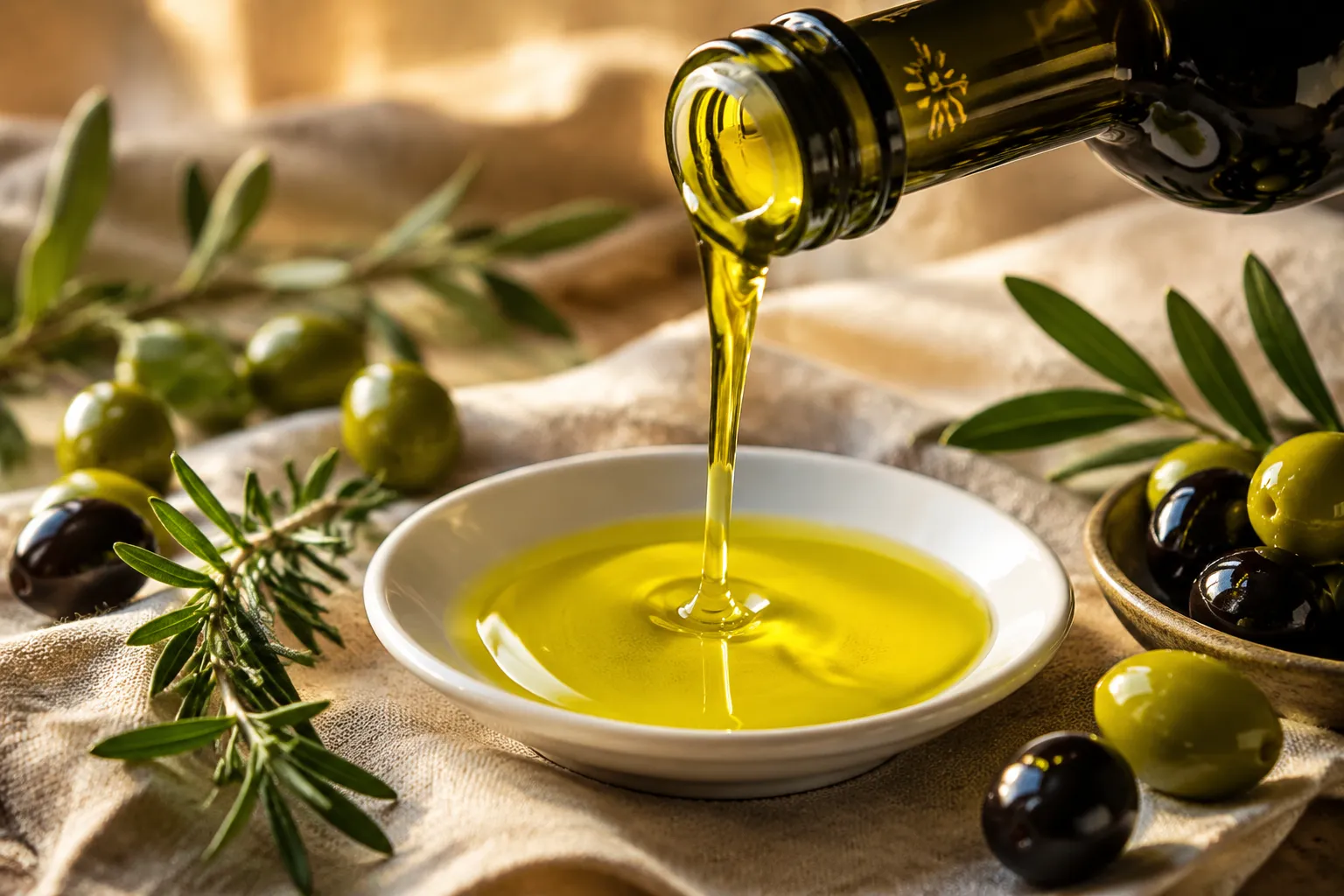
Confused by the olive oil aisle? Here's everything you need to know about choosing, storing, and cooking with olive oil like a pro.
Olive oil is the single most useful bottle in any well-stocked kitchen, and learning how to choose, store, and cook with it is one of the highest-value skills a home cook can pick up. Whether you grew up dipping bread into a pool of green-gold goodness at your favorite Italian spot or you're just starting to lean into Mediterranean cooking, the difference between a forgettable bottle and a great one will change how your food tastes, full stop.
The supermarket aisle, though, can feel like a maze. There are dark bottles and clear bottles, fancy Italian labels that may or may not actually come from Italy, terms like first cold press and extra light, and price tags that swing from bargain bin to seriously splurgy. This guide cuts through all of it. We'll cover the real differences between grades, what to look for on a label, the smoke point myths that scare people away from cooking with EVOO, and the easy everyday ways to put a great bottle to work.
By the end, you'll know exactly which kind of olive oil to grab for which job, how to keep it tasting fresh for months, and a few quick ways to use it tonight, including a five-minute garlic herb dipping oil that turns any grocery store baguette into something restaurant-worthy.
At its simplest, olive oil is just the juice of fresh olives, pressed and separated from the fruit's water and pulp. That's it. No solvents, no chemistry lab, no industrial heat, at least not in the good stuff. The best bottles are mechanically pressed within hours of harvest, then either filtered or left lightly cloudy, then bottled. Everything else on the shelf, from pure to light to pomace, is some version of that same juice that has been refined or blended to extend shelf life or mellow the flavor.
After harvest, olives are washed, crushed (pits and all), and the resulting paste is malaxed, or slowly mixed, to coax oil droplets together. The paste then goes into a centrifuge or a traditional press to separate oil from water and solids. The first run of this process, with no heat applied, is what producers mean by first cold press.
For an oil to be labeled cold-pressed olive oil, the extraction has to happen below roughly 80°F. Heat speeds up yield but burns off the delicate aromas and polyphenols, the antioxidant compounds that give a great oil its peppery finish and most of its health perks. Cold pressing keeps those intact.
A label that reads packed in Italy doesn't mean the olives grew in Italy. The country of origin tells you where the fruit was grown, and growing region drives flavor. Tuscan oils tend to run grassy and peppery, Spanish oils nuttier, Greek oils buttery and bold. Single-origin bottles also mean a shorter supply chain and fresher oil.
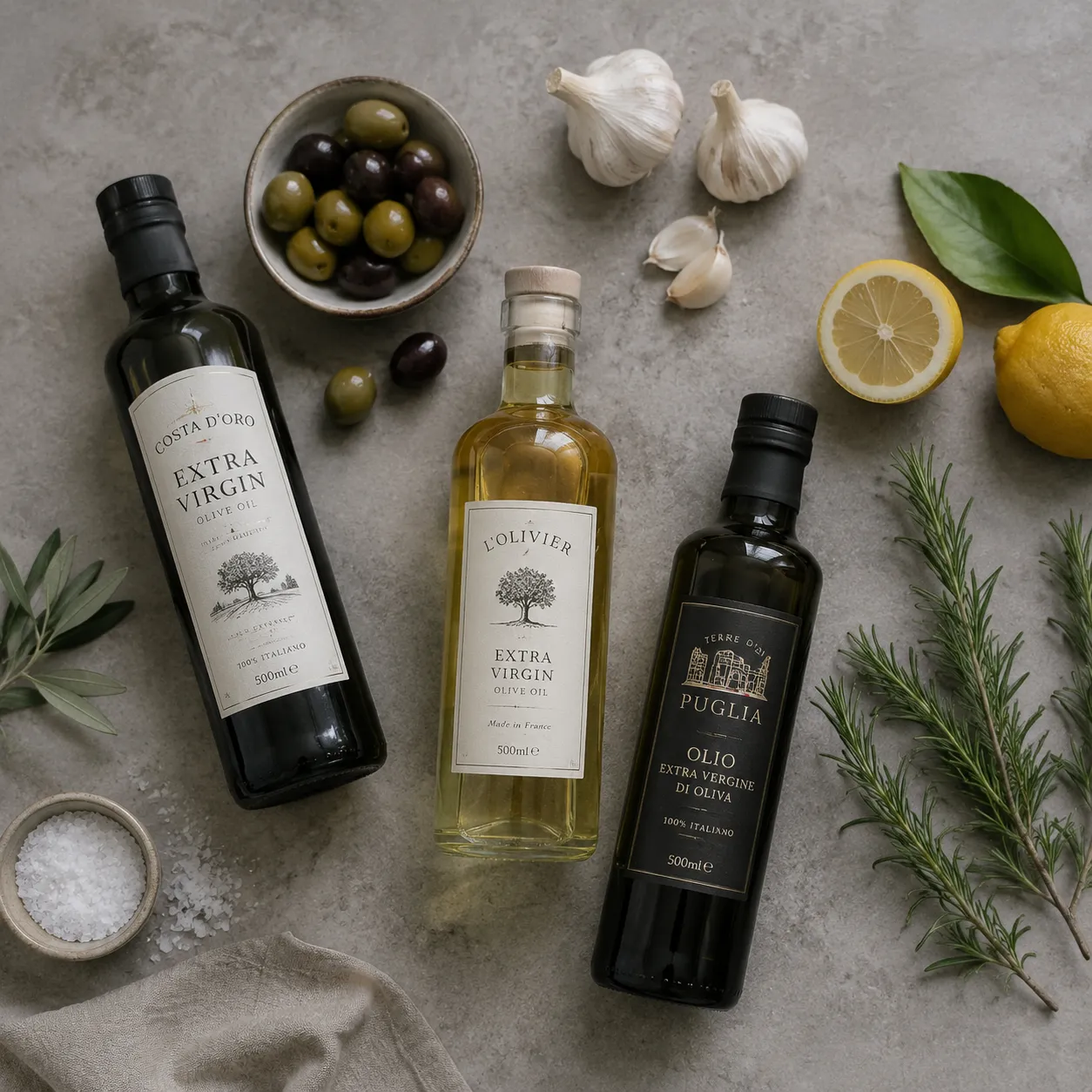
Walk down the oil aisle and you'll see at least four main grades. They aren't marketing fluff. They're tightly defined categories based on how the oil was produced and how it tastes when chemically and sensorially graded. Once the hierarchy clicks, shopping gets a lot less stressful.
Extra virgin olive oil is the top grade. It's mechanically extracted, unrefined, and has to pass both lab tests (free acidity below 0.8 percent) and a sensory panel that checks for defects. EVOO holds onto the most polyphenols and the truest olive flavor, which is why it's the bottle most cooks reach for daily.
One step down. Virgin oil is also unrefined and cold-extracted, but with slightly higher acidity (up to 2 percent) and minor sensory flaws. You'll rarely see it sold in US supermarkets. Most shelves jump straight from extra virgin to plain olive oil.
When labels just say olive oil, pure olive oil, or light olive oil, they're talking about refined oil, usually a blend of refined oil (heat- or chemically processed to neutralize defects) plus a splash of virgin oil for flavor. Light here refers to color and flavor, not calories. It's neutral, has a higher smoke point, and earns a spot in baking or frying when you don't want olive flavor up front.
The bottom rung. Pomace is extracted from leftover olive paste using solvents and then refined. It's cheap, mostly used in commercial frying, and not worth buying for home use when virgin or refined oils are within reach.
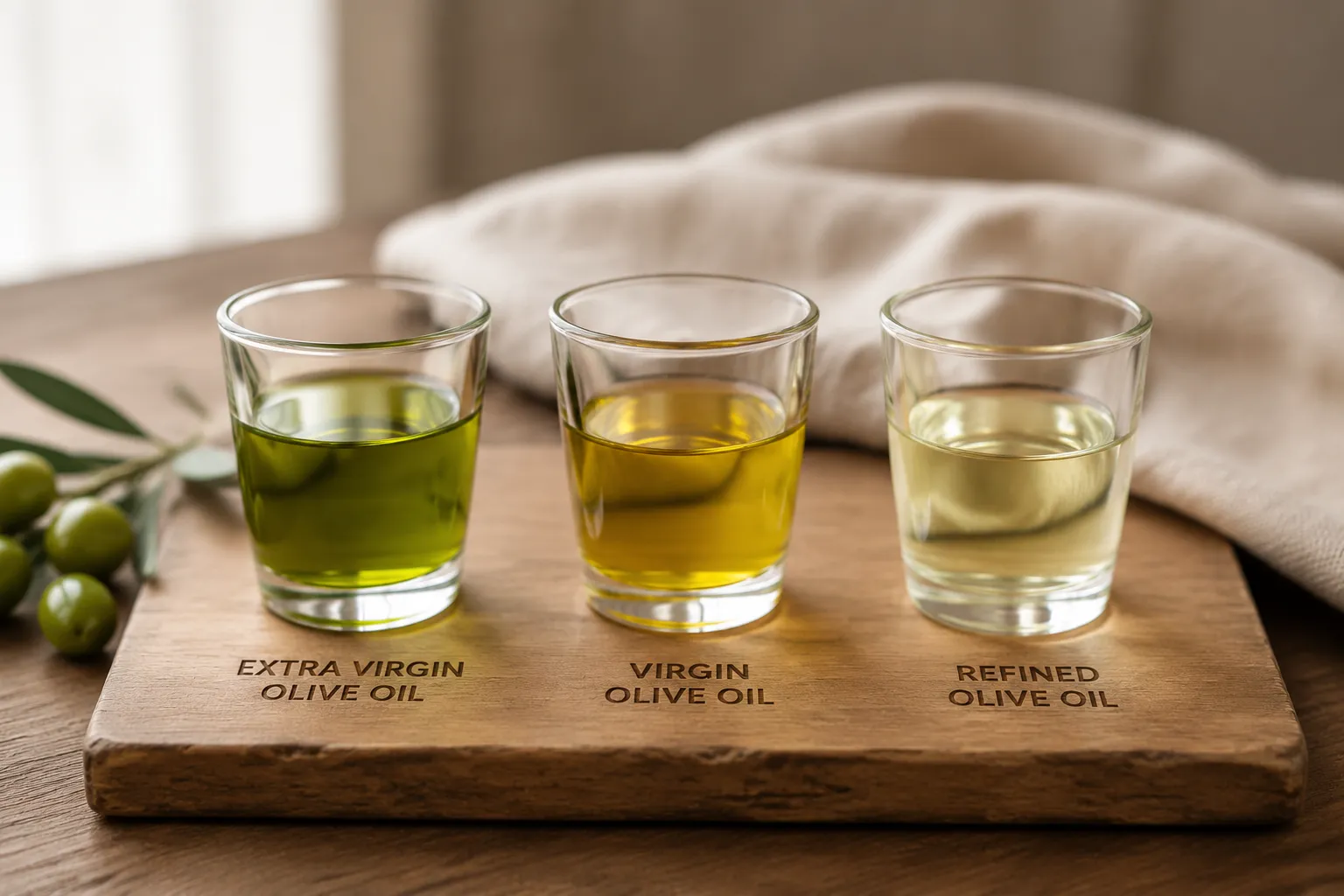
Once the grades are sorted, the next step is decoding the label. Most bottles look impressive in the store, but only a few specifics actually predict quality. Here's how to spot the real deal without overpaying.
The harvest date tells you when the olives were picked. Olive oil is at its best within 12 to 18 months of harvest, and quality slides fast after that. A best by date alone can be misleading, since it's set by the producer and often runs two years past harvest. If you can find a bottle with the harvest date printed on it, grab that one.
Light is one of olive oil's biggest enemies. Clear bottles let in UV rays that oxidize the oil and dull the flavor. Dark green or brown glass, or even tin, protects what's inside. If a so-called premium oil is sitting in clear glass under the store's fluorescent lights, that's a red flag.
Look for third-party seals like the California Olive Oil Council (COOC), the North American Olive Oil Association (NAOOA), Protected Designation of Origin (PDO), or the Italian DOP and IGP marks. These mean the oil has actually been tested by someone other than the brand selling it.
A truly good extra virgin runs roughly $15 to $30 per 500ml bottle. Below $10, you're often getting older, lower-grade oil regardless of what the label claims. The good news: when you're hunting for the best olive oil for cooking everyday meals, a mid-range, single-origin EVOO with a recent harvest date will outperform a flashy boutique bottle every time.
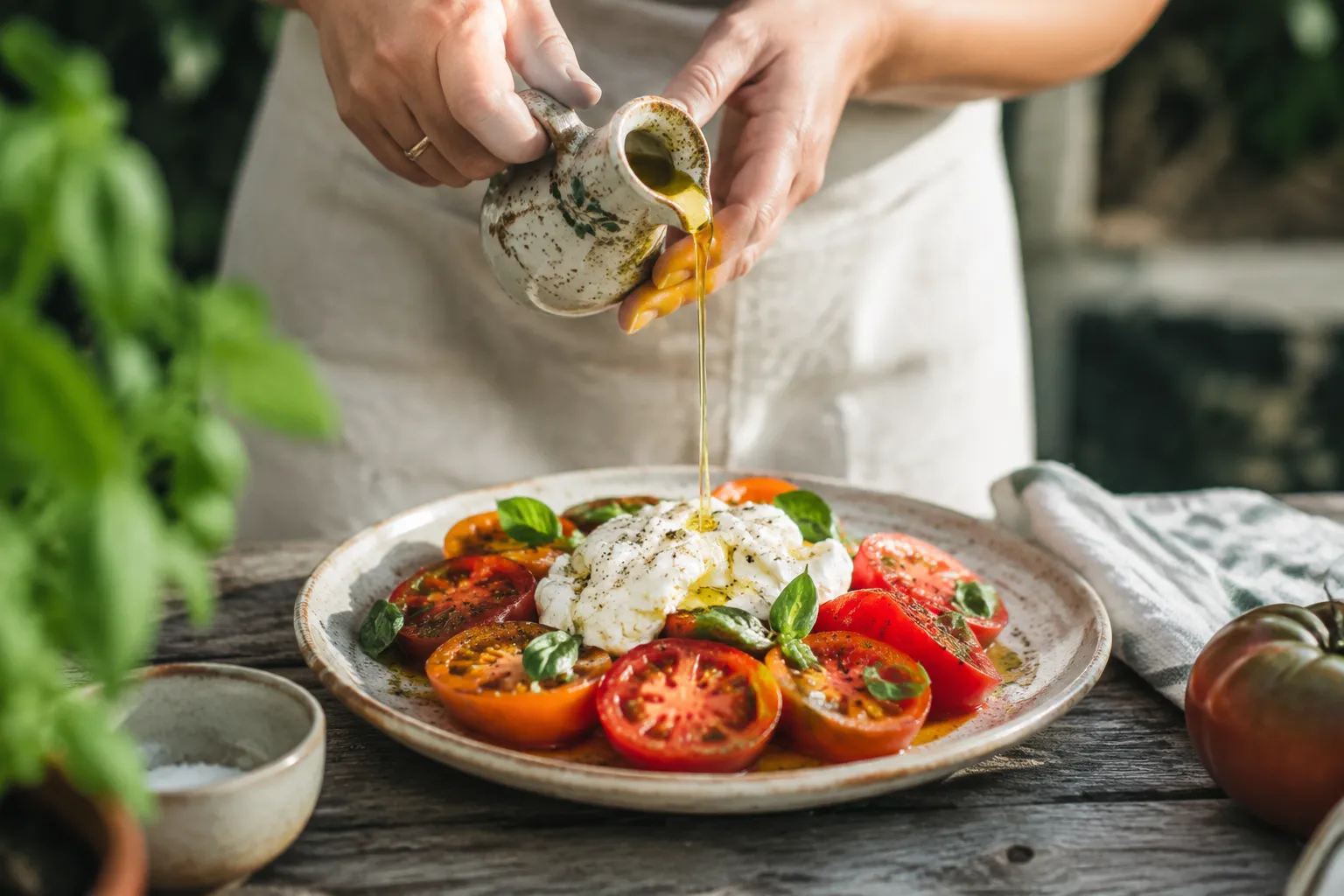
There's a stubborn myth that you should save your good extra virgin olive oil strictly for finishing. The truth is, EVOO is a beautifully versatile cooking fat. It performs at most home temperatures, adds flavor at every stage, and is the backbone of Mediterranean cooking for a reason. Treating it as your default rather than your special-occasion bottle will only make your food better.
For everyday onions, garlic, vegetables, fish, and chicken cutlets, EVOO is your go-to. The medium heat of a typical stovetop sauté (around 300 to 350°F) lands well below the oil's smoke point, and the flavor it adds while cooking is part of what makes the finished dish taste good.
Roasting vegetables, sheet-pan dinners, and even whole chickens at 400 to 425°F? Olive oil handles it. The food itself stays well below the oven temperature because surface moisture keeps things cooler than you'd think, so the oil never reaches scary territory.
This is where a really good bottle shines. A peppery, fruity oil over a simple tomato salad, drizzled across hummus, or finishing a bowl of soup adds complexity that no other ingredient can match. Save your most expensive bottle for these unheated uses where every nuance lands on your tongue.
Olive oil makes incredibly tender cakes, muffins, and quick breads thanks to its liquid fat structure (no creaming step required) and gentle flavor. Use it in citrus loaves, chocolate cakes, and savory focaccia. Reach for a milder bottle if you don't want a strong olive note in sweets.
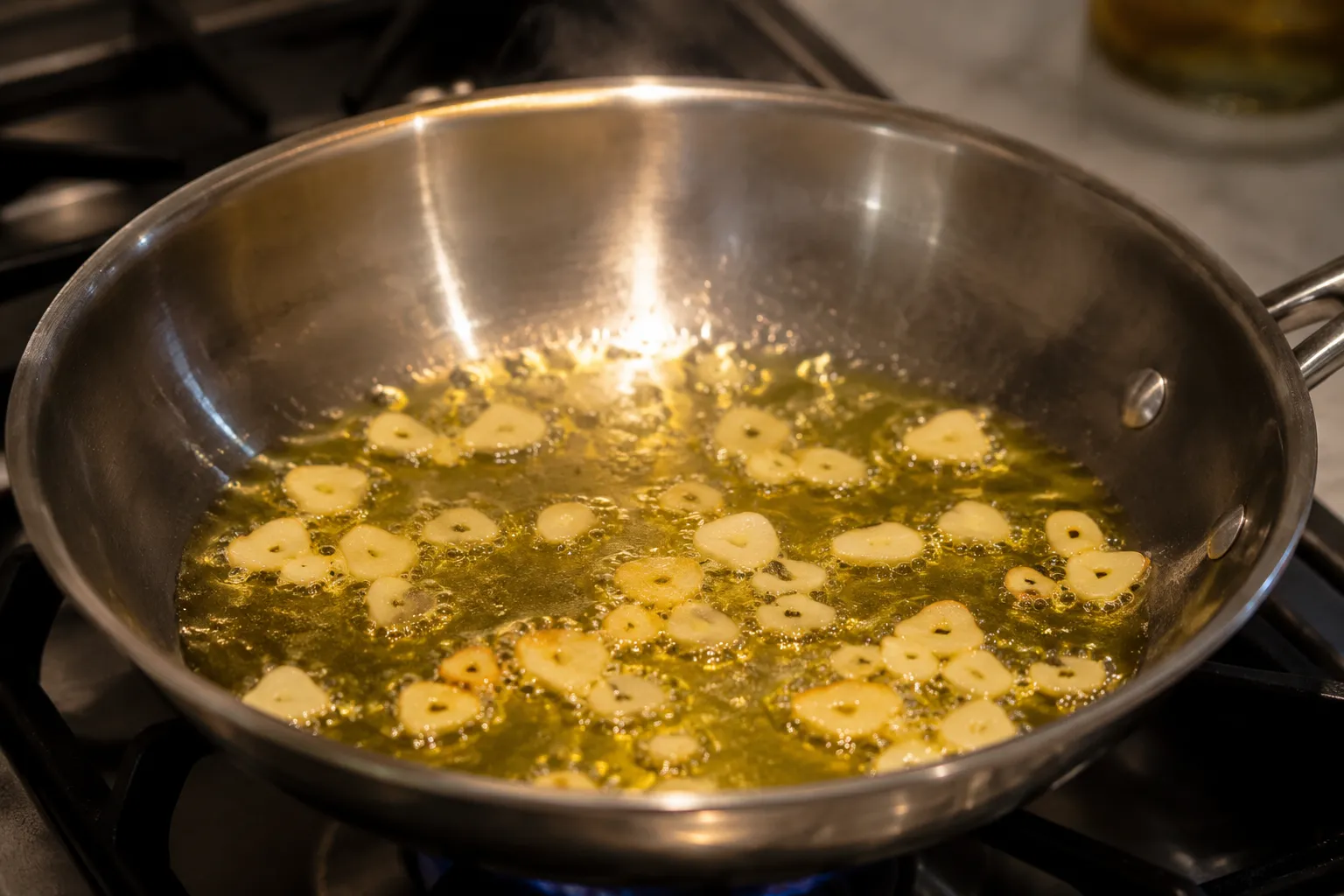
You may have read online that olive oil becomes toxic when heated. That claim has been thoroughly debunked. Multiple peer-reviewed studies have found that high-quality EVOO is actually one of the most stable cooking oils, partly because its rich antioxidant content protects it from oxidation under heat. Cook with it freely.
A good extra virgin's olive oil smoke point lands somewhere between 375°F and 410°F, depending on freshness and quality. That covers nearly every stovetop and oven application a home cook will ever attempt. The fresher and more polyphenol-rich the oil, the more heat-stable it is.
For quick reference: refined olive oil sits around 465°F, avocado oil around 480°F, ghee around 485°F, butter around 350°F, and extra virgin coconut oil around 350°F. EVOO holds its own with most of them and beats butter outright.
There are still moments you'll want a different fat. Deep-frying at 400°F-plus, searing steaks aggressively in cast iron, or wok cooking over screaming heat are jobs for refined olive oil, avocado oil, or another high-smoke-point neutral oil. For nine out of ten home meals, though, a fresh bottle of EVOO is more than up to the task.
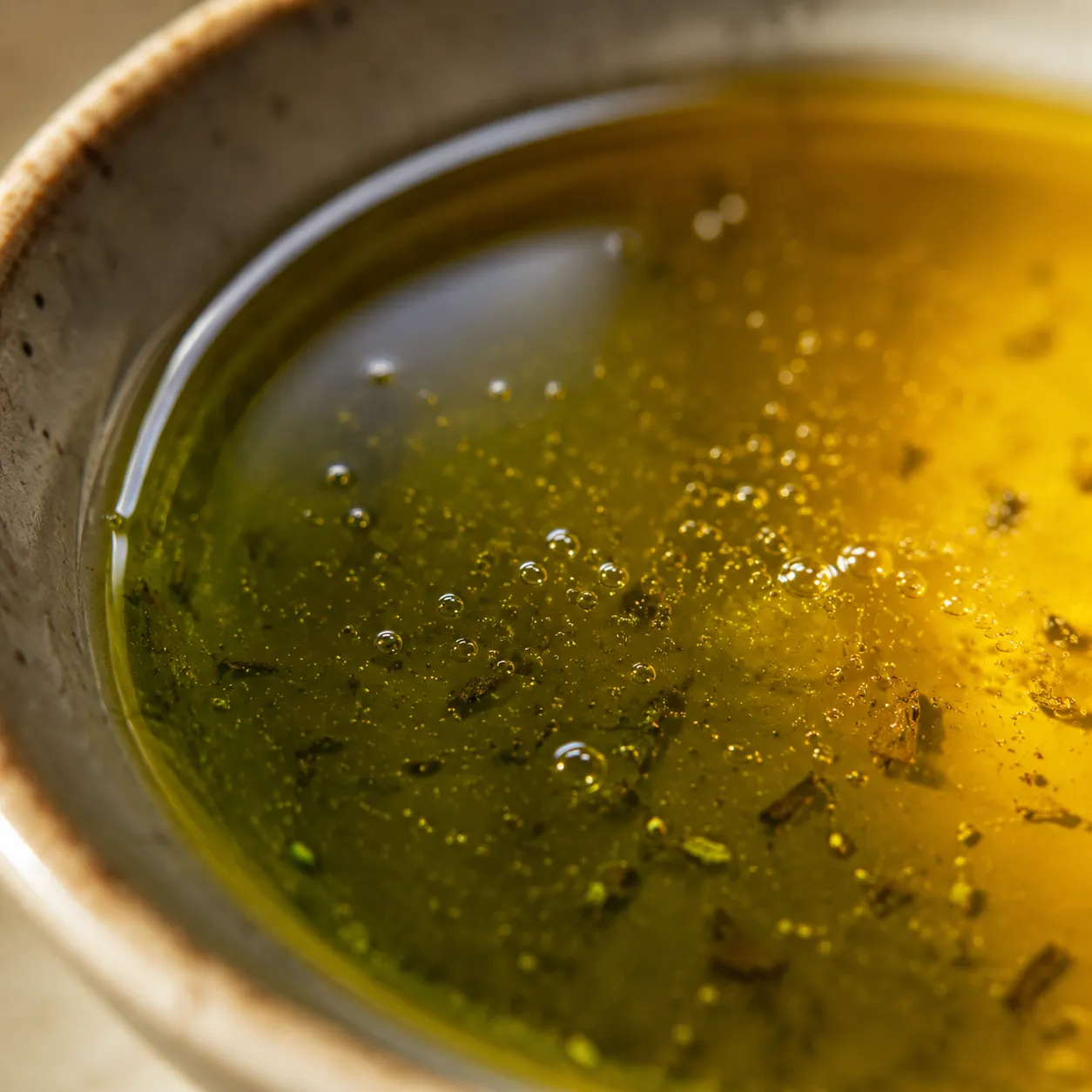
A great bottle of EVOO can lose its punch in just weeks if you store it wrong. The good news is that proper olive oil storage is mostly about keeping it boring: cool, dark, and sealed. Treat it more like coffee beans than a counter-friendly kitchen workhorse and it'll repay you for months.
Oil oxidizes when exposed to light (especially UV), heat (above roughly 70°F sustained), and oxygen, which sneaks in every time you open the cap. Don't park your bottle next to the stove, on a sunny windowsill, or in a clear cruet on the counter for weeks at a time.
Unopened, a quality EVOO holds peak flavor for 12 to 18 months from the harvest date. Once opened, plan to use it within 3 to 6 months. If you bought a giant tin, decant a small bottle for daily use and keep the rest sealed in a cool cabinet.
Pour a little into your palm, warm it briefly, and smell. Fresh oil smells grassy, fruity, or peppery. Rancid oil smells like crayons, putty, old walnuts, or stale pretzels. The taste turns flat and waxy. If it's gone, don't try to cook through it. Toss it and open a fresh bottle.
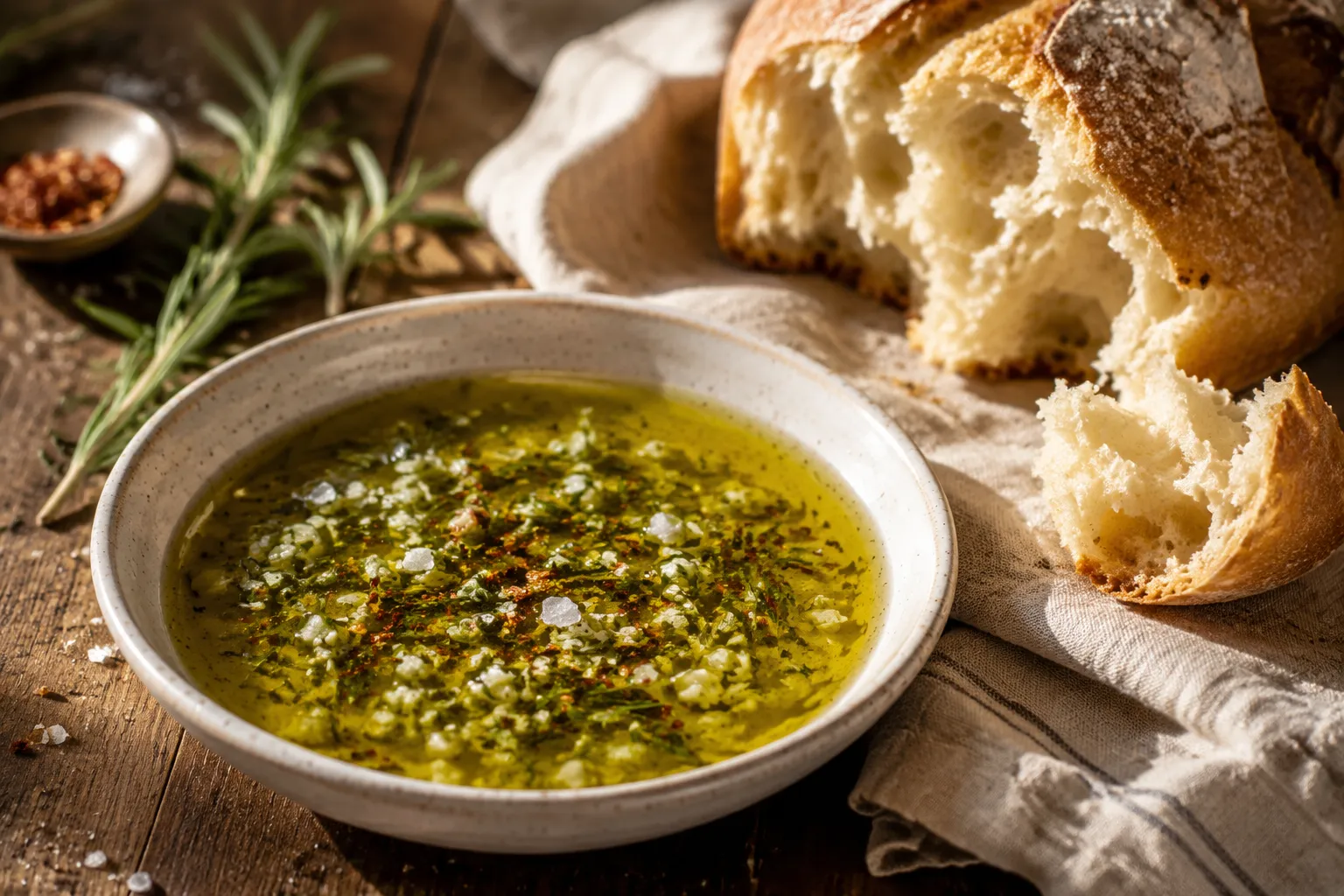
A great bottle is meant to be used, not saved for special occasions. Once you have one stashed somewhere cool and dark, the goal is to put it on something every day. That's how you build the kind of effortless, flavor-forward cooking that defines Mediterranean kitchens.
Whisk 1/4 cup EVOO, 2 tablespoons fresh lemon juice, and a big pinch of flaky salt. That's the whole thing. Toss it with greens, drizzle it over roasted vegetables, or spoon it onto grilled fish. Add Dijon if you want emulsification, a little grated garlic if you want bite.
This is the recipe at the bottom of the post. Five minutes, no cooking, and it makes any loaf of bread feel like a restaurant starter. Mince garlic, stir in rosemary and crushed red pepper, pour over good oil, and finish with flaky salt right before serving.
A spiral of EVOO over tomato soup, a glossy slick on top of soft scrambled eggs, a final spoonful tossed through hot pasta after the heat is off — these are 10-second moves that make weeknight food feel intentional. Keep your good bottle within easy reach (a small dark cruet refilled weekly is fine) and you'll actually use it.
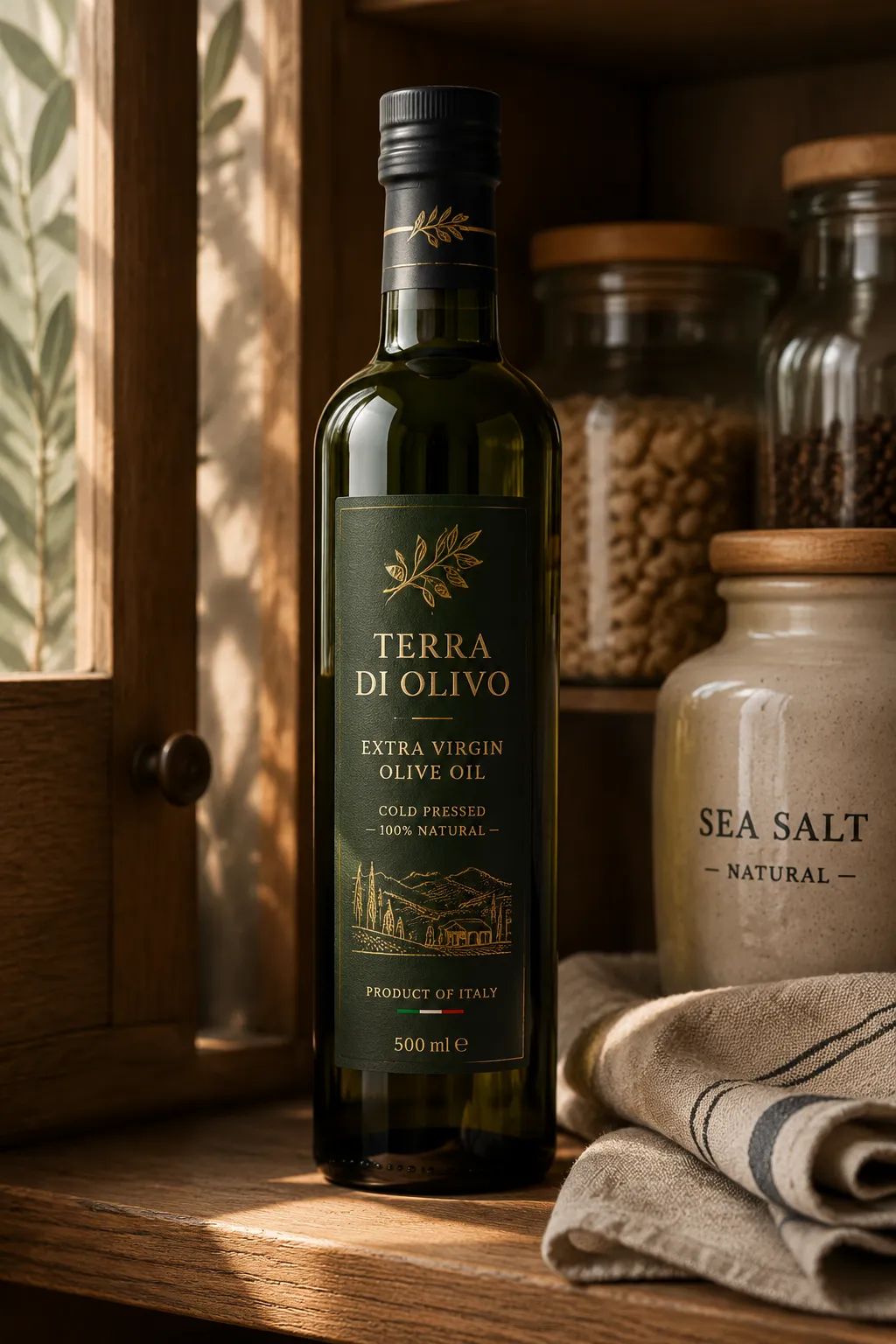
With one good bottle in the cabinet and a few of these everyday tricks in your back pocket, olive oil stops being intimidating and starts being the easiest way to add real flavor to whatever you're making. Whether you're whisking up a quick lemon vinaigrette, finishing a soup, or pulling together that five-minute dipping oil below, the rules stay simple: buy fresh, store it cool, and use it generously.
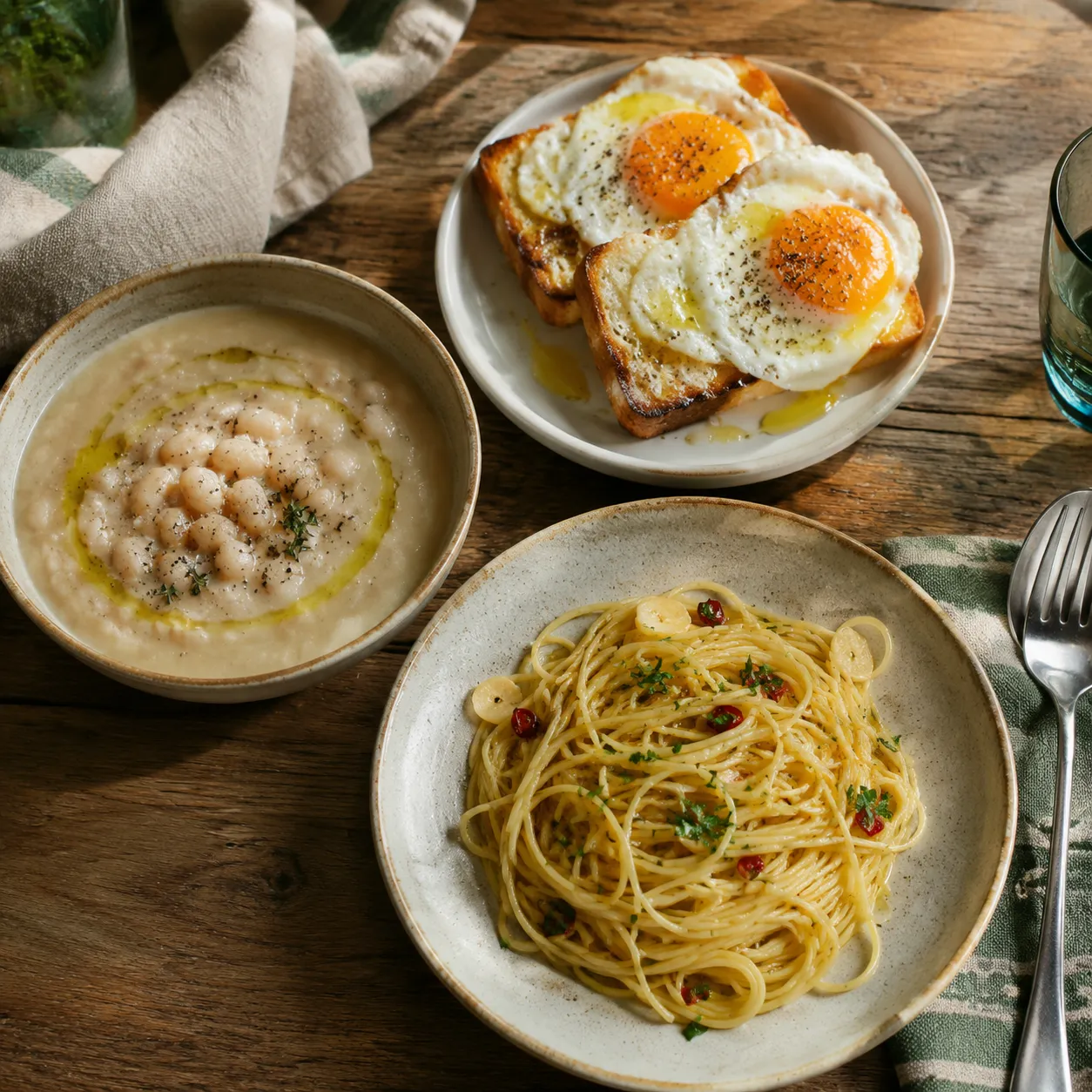
Pour yourself a small spoonful of your best bottle right now and taste it on its own. That peppery tickle at the back of your throat is the polyphenols at work, and it's the whole point of every label rule, storage tip, and harvest date we just covered.
The base recipe is wildly riffable — once you have the ratio of oil to garlic to herb to chili, you can swap any of the supporting players. Use whatever herbs are looking lively in the fridge or whatever cuisine you're craving that night.
Store any leftover dipping oil in a sealed glass jar in the refrigerator for up to one week. The oil will look cloudy and partially solidified when chilled, which is normal — let it sit on the counter for 15 to 20 minutes before serving so it returns to a glossy, pourable state.
Important food safety note: garlic-in-oil mixtures should always be refrigerated and never left at room temperature for extended periods. Raw garlic in oil creates an anaerobic environment that, in rare cases, can support botulism growth. Keep this oil cold between uses and discard any leftovers after a week to be safe.