Figs fruit are jammy, honey-sweet, and surprisingly easy to use once you know what to look for. Here's your friendly guide to buying, storing, and enjoying them.
Why You'll Love This Recipe
It makes figs feel approachable. You’ll learn what to buy, what to avoid, and how to use them without needing a complicated recipe.
It includes a fast appetizer-dessert hybrid. The roasted honey figs take just 15 minutes and work beautifully for entertaining or a quiet night in.
It celebrates peak-season flavor. Fresh figs are naturally sweet, jammy, and fragrant, so the recipe keeps the ingredient list short.
It is flexible. Serve the roasted figs with ricotta, yogurt, ice cream, toast, or a cheese board.
It covers the whole fig question. From varieties to seasonality to eating the skin, this guide gives you practical answers before you shop.
Figs fruit are the kind of market find that can feel a little mysterious at first: soft-skinned, jewel-toned, and almost too pretty to know what to do with. The good news is that once you understand what a good fig feels like, what the different varieties taste like, and how little they need in the kitchen, they become one of the easiest seasonal luxuries to bring home.
Think of this as your friendly field guide to fresh figs: how to shop for them, how to eat figs without overthinking it, and how to turn a small basket into a glossy, honey-roasted appetizer or dessert. We’ll also talk through the difference between fresh and dried figs, the timing of fig season, and which varieties you’re most likely to spot at a US farmers market or grocery store.
What Are Figs? A Quick Introduction to the Fruit
Figs are often treated like any other soft summer fruit in the kitchen, but botanically they are a little more fascinating. A fig is technically a syconium, which means its tiny flowers grow inside a hollow, fleshy structure rather than blooming on the outside. That little bit of plant-world trivia is fun, but for cooking purposes, you can think of figs as tender, edible, honeyed fruit with a soft skin, tiny crunchy seeds, and a lush center.
The flavor of a fresh fig depends on the variety and ripeness, but most are sweet, floral, and gently berry-like, with a jammy texture that feels almost pre-made for cheese boards and toasts. Some taste deeply caramelized, others lean lighter and more melon-like, and the best ripe figs practically collapse when you split them open. Unlike apples or peaches, figs do not continue ripening much after picking, so choosing well at the store matters.
Fresh and dried figs are related, of course, but they behave very differently. Fresh figs are delicate, juicy, and best eaten quickly, while dried figs are chewy, concentrated, and available all year. Dried figs are wonderful in baking, grain salads, chutneys, and snack mixes, but they won’t give you the same soft, rosy interior or fleeting summer feel as a fresh one.
Fresh Fig Ingredients for a Simple Roasted Dish
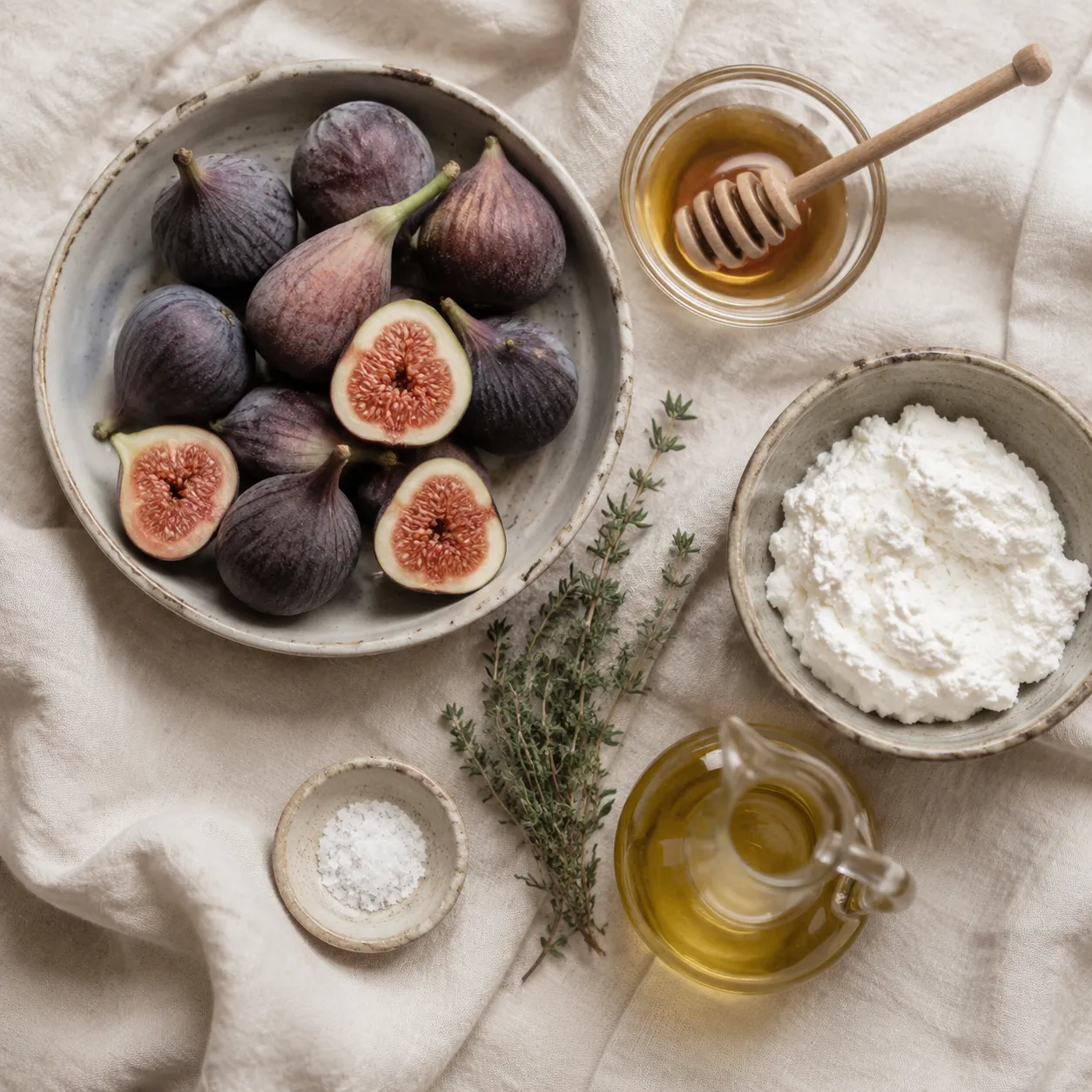
For the easy roasted honey figs later in this guide, you only need a handful of ingredients: ripe fruit, honey, a little olive oil, whole-milk ricotta, thyme, and flaky salt. It is one of those recipes where restraint is the point; the oven warms the figs just enough to loosen their juices and deepen their sweetness. Ricotta adds a creamy, milky base, thyme brings an herbal lift, and flaky salt keeps everything from tasting one-note sweet.
When you’re shopping, look for fruit that feels heavy for its size and gives slightly when pressed, almost like a ripe avocado but more delicate. Skip anything rock-hard, shriveled, sour-smelling, or leaking excessively in the container. A small split in the skin is not necessarily a problem; in fact, it can be a sign of ripeness, especially if the fruit smells sweet and looks plump.
Popular Fresh Fig Varieties
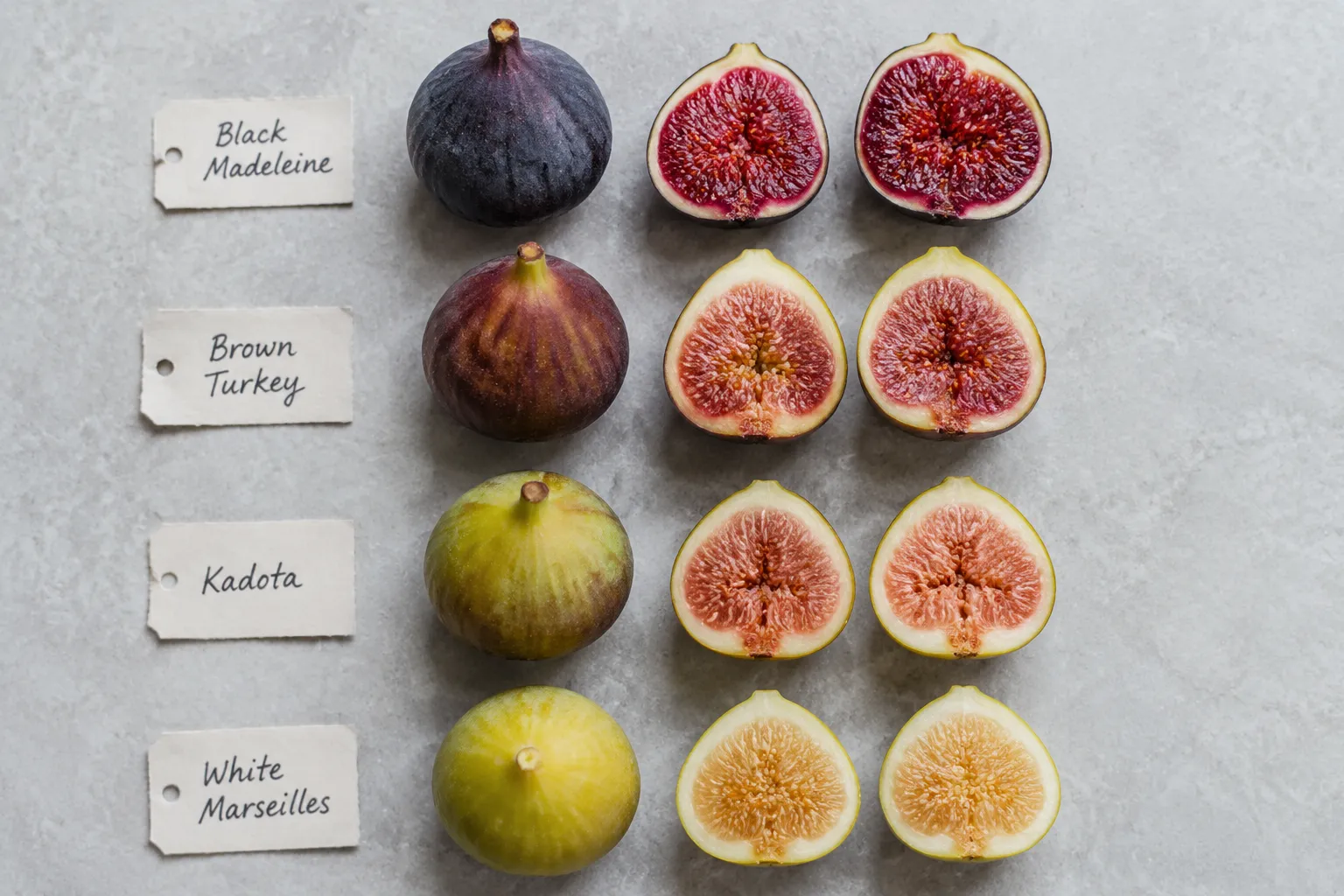
If you’ve only seen one type of fig before, it was probably one of the darker supermarket varieties, but there’s a whole color wheel out there. Black Mission figs are small to medium, with purple-black skin and a rich, jammy center that can taste like berry preserves and honey. They are excellent raw, roasted, or paired with blue cheese because their sweetness is bold enough to stand up to salty, tangy flavors.
Brown Turkey figs are another common US-market variety, with brownish-purple skin, a milder flavor, and a soft pink interior. They are a great everyday fig for snacking, tossing into salads, or slicing over yogurt because they tend to be approachable and not overwhelmingly sweet. If you’re new to figs, this variety is an easy place to start.
Calimyrna figs are typically pale green to yellow outside with a nutty, amber interior, and they are especially beloved when dried. Kadota figs are also green-skinned, with a lighter sweetness that works beautifully in preserves and simple cooked preparations. Adriatic and Sierra figs often have green skin with startling strawberry-red centers; when you find them fully ripe, they are some of the prettiest fruit you can put on a summer plate.
When Are Fresh Figs in Season?
Fig season can be a little different from other summer fruit because many fig trees produce two crops. The first is called the breba crop, usually appearing in early summer on the previous year’s wood. It tends to be smaller and sometimes less abundant, but when the fruit is good, it gives you that first exciting taste of what’s coming.
The main harvest usually arrives in late summer into early fall, which is when you’ll see the best selection at farmers markets, specialty grocers, and some larger supermarkets. In warm regions, the season may stretch longer, especially if the weather stays dry and sunny. California grows the majority of commercial figs in the United States, though you’ll also find local figs in parts of Texas, the Southeast, the Pacific Northwest, and backyard gardens in many mild climates.
Because the fruit is fragile and does not ship as easily as sturdier produce, local figs often taste better than ones that have traveled a long distance. If you spot them at a farm stand, buy enough for the next couple of days rather than stocking up for the week. Their short window is part of the charm.
How to Choose and Keep Fresh Figs
Choosing figs is more about feel and aroma than perfect looks. The best ripe figs should be soft but not collapsing, with smooth or lightly wrinkled skin and a sweet, almost honeyed scent near the stem. A tiny bead of nectar at the blossom end is a lovely sign that the fruit is ready to eat, while a fermented or sour smell means it has likely gone too far.
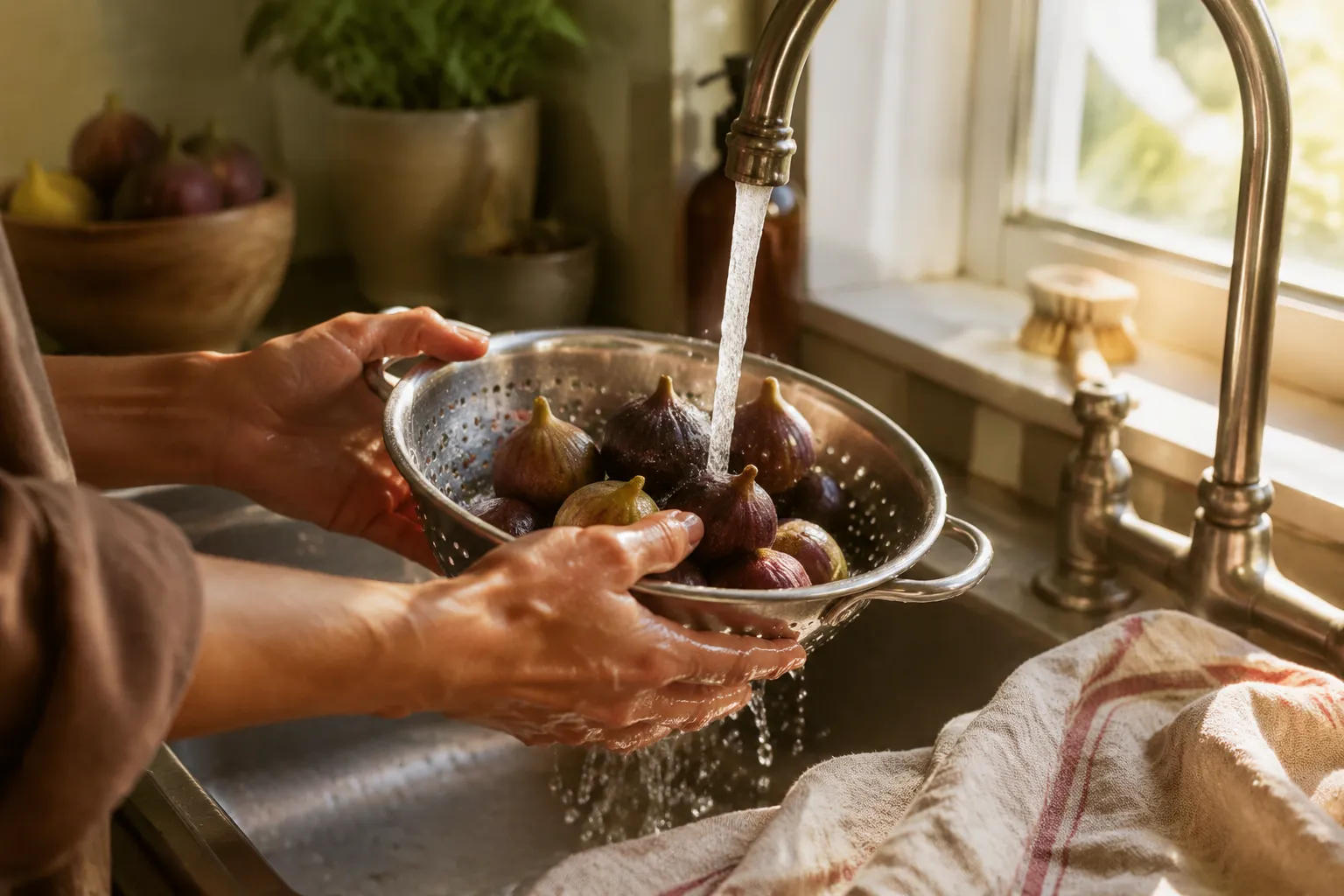
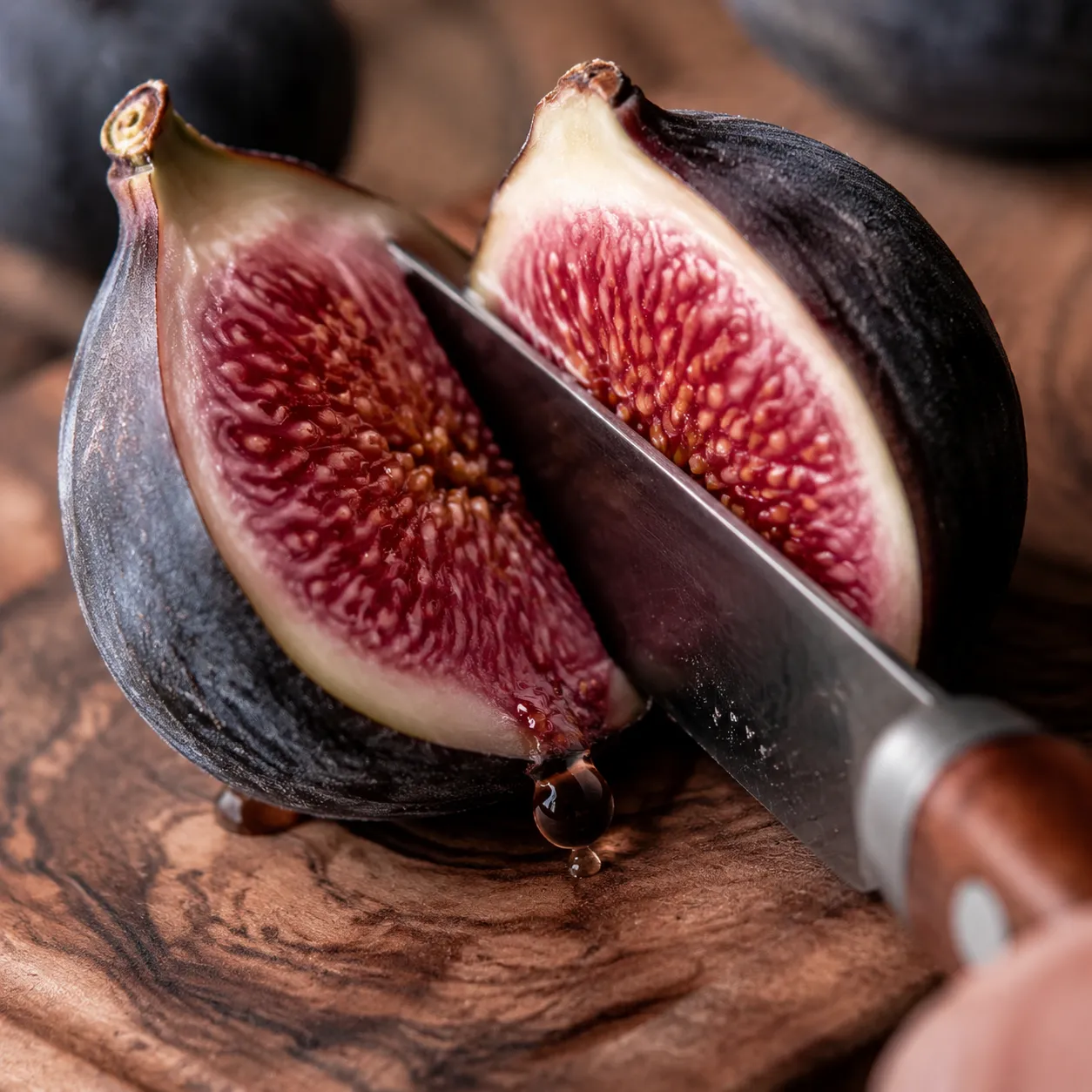
Once you bring them home, handle them gently and wait to rinse until just before eating or cooking. Their skin bruises easily, and extra moisture can shorten their already brief shelf life. If you are slicing them for toast, salads, or roasting, use a small sharp knife so you don’t crush the tender flesh.
You can freeze figs if you have more than you can use, though their texture will soften once thawed. Frozen figs are best reserved for smoothies, sauces, compotes, quick jams, or baked dishes where structure is less important. For raw eating, fresh is always the prize.
How to Eat Fresh Figs Without a Recipe
The simplest way to enjoy a fig is also one of the best: rinse it, trim the stem, and eat it whole. The skin is edible, the tiny seeds are edible, and the texture should be tender all the way through. If the skin seems thick on a particular variety, you can halve the fruit and scoop the center with a spoon, but most fresh figs need no peeling at all.
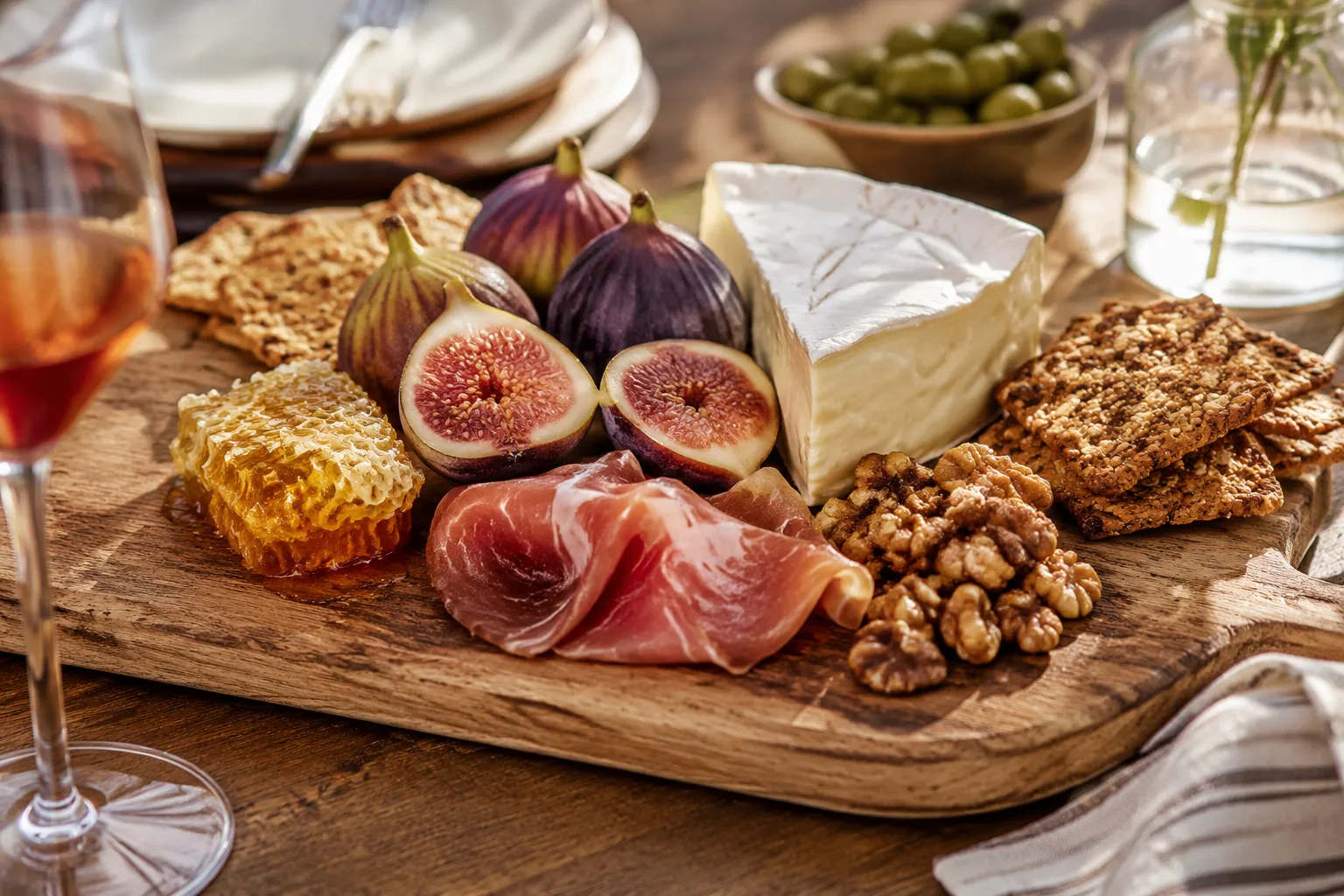
For a no-cook snack, slice figs over Greek yogurt with granola and honey, tuck them onto buttered toast, or quarter them into a bowl of arugula with lemon and olive oil. They love creamy, salty, nutty partners, which is why cheese and charcuterie boards are such a natural fit. Brie, goat cheese, ricotta, burrata, prosciutto, toasted walnuts, pistachios, honey, balsamic glaze, and crusty bread all make figs taste even more like themselves.
If you are building an appetizer board, place whole figs next to a small knife and scatter a few halves around so guests can see the beautiful interior. Add something salty, something creamy, something crunchy, and something bright, like pickled onions or fresh herbs. That balance keeps the board from feeling too sweet and makes the fruit feel intentional rather than decorative.
Easy Ways to Cook and Bake With Figs
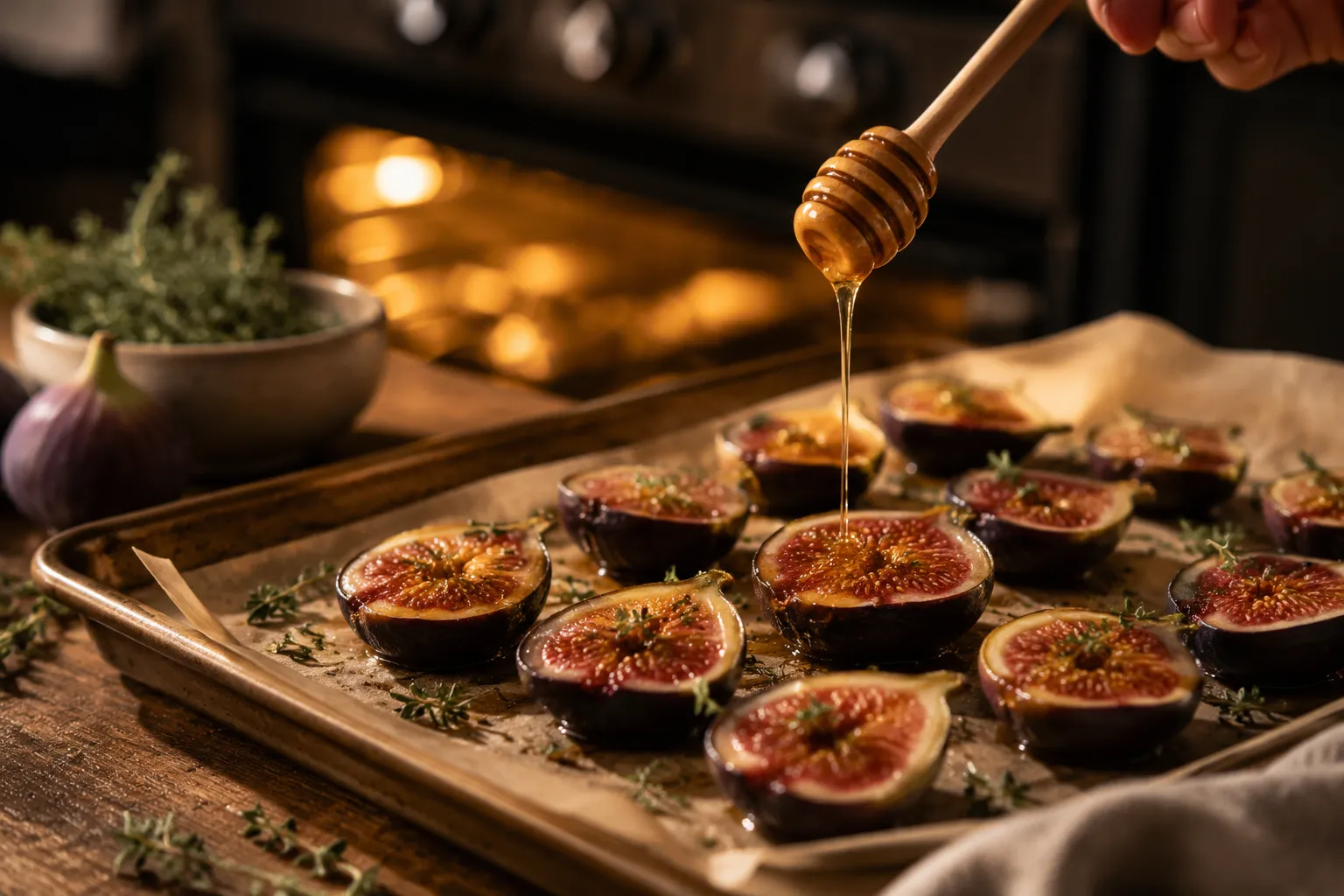
Cooking figs does not require much effort because the fruit already brings sweetness and body. Roasting is the most forgiving method: cut the figs in half, set them cut-side up, add honey or maple syrup, and bake just until they slump and turn glossy. The heat concentrates their flavor, and the juices mingle with the sweetener into a quick pan syrup.
Figs are also excellent on savory dishes where a pop of sweetness is welcome. Add them to salads with bitter greens and blue cheese, layer them on pizza with prosciutto and arugula, or spoon warm roasted figs over ricotta toast for a lazy dinner that still feels special. If you’re collecting fig recipes, start with simple preparations that let you learn the fruit’s flavor before hiding it under too many ingredients.
Baking with figs can go in several directions. Fresh figs are beautiful pressed into cakes, galettes, focaccia, and custardy tarts, where they soften and caramelize at the edges. Dried figs, on the other hand, are ideal when you need a chewy texture and concentrated sweetness in scones, quick breads, oatmeal cookies, or holiday stuffing.
Roasted Honey Figs With Ricotta and Thyme
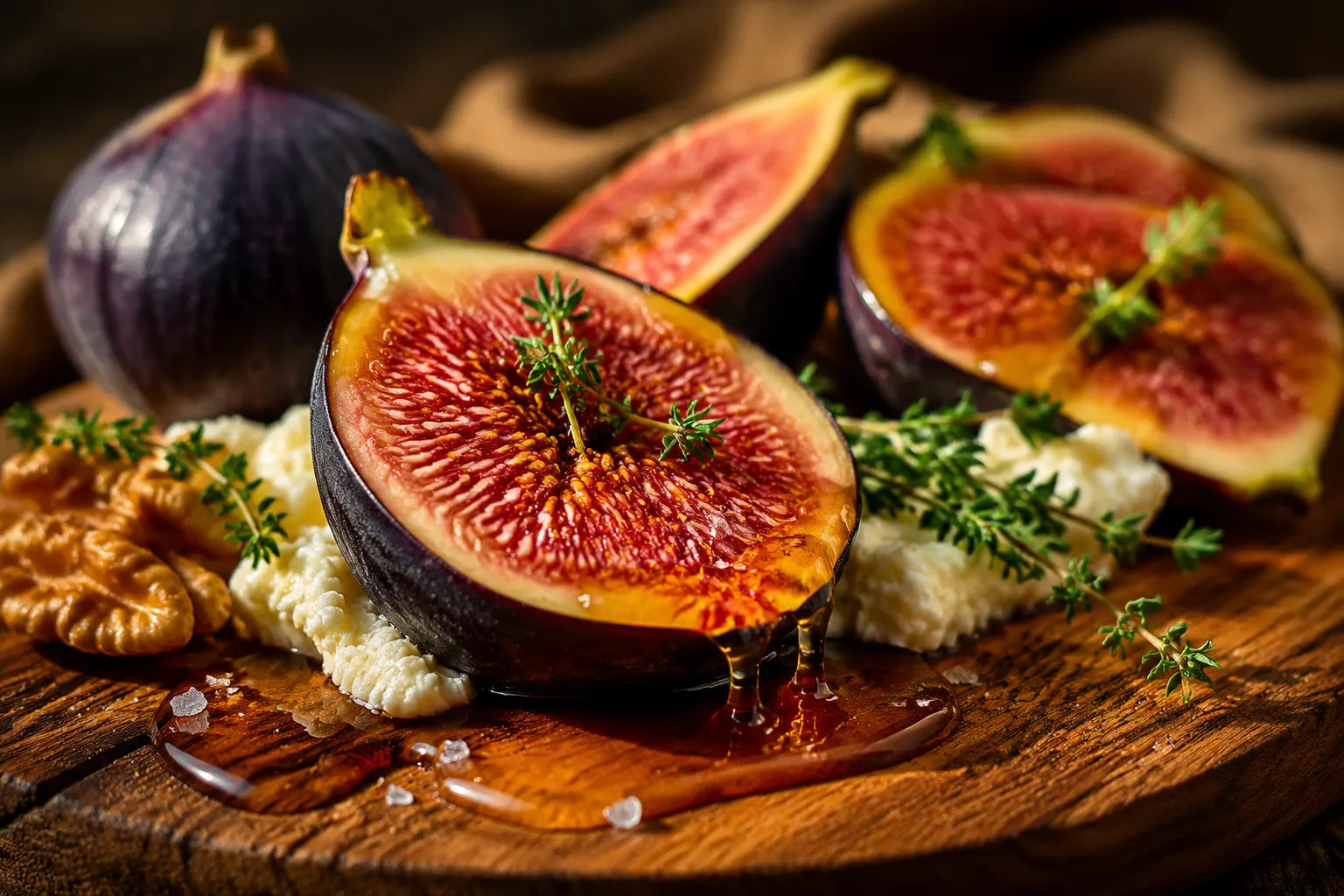
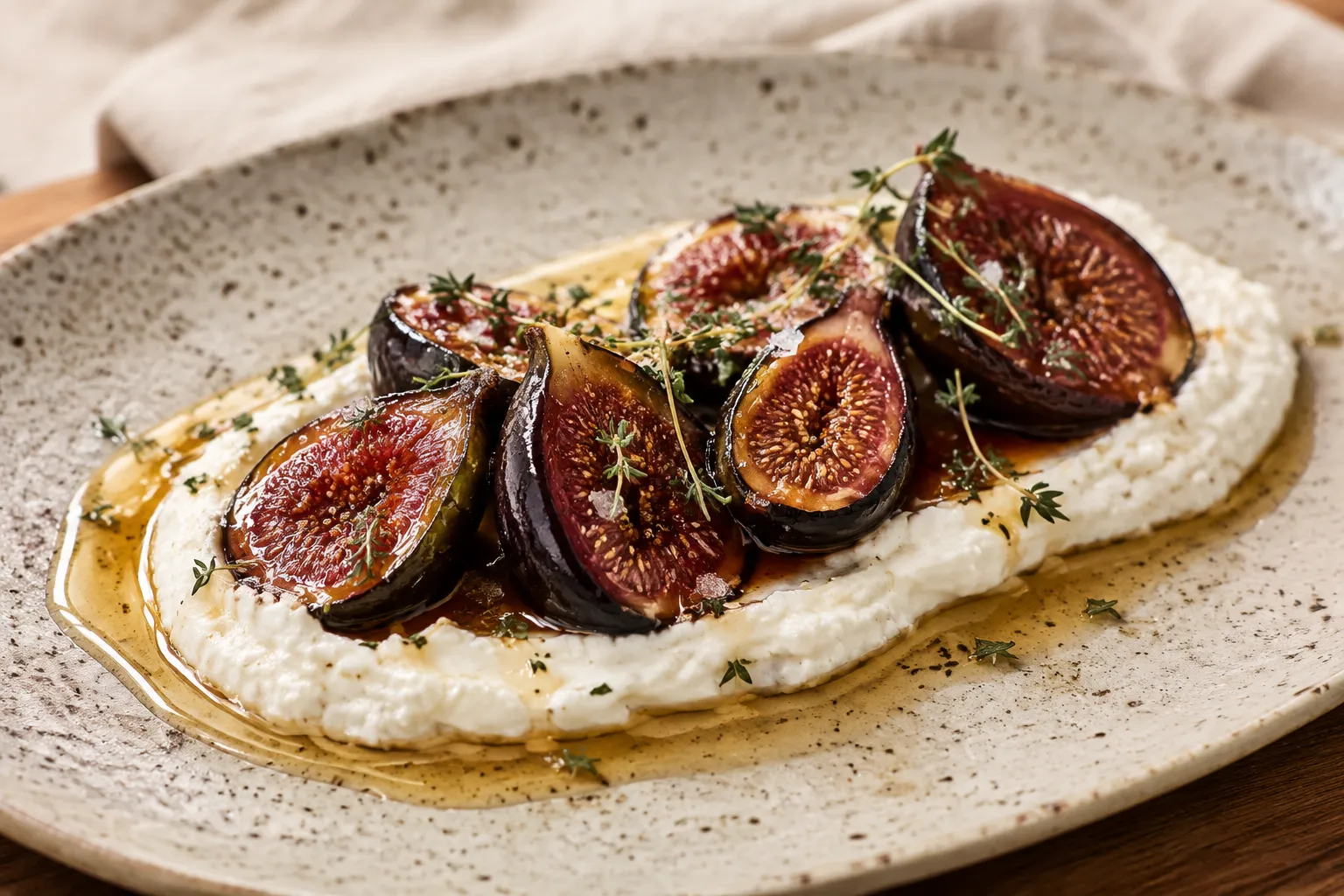
This little one-pan dish is the recipe I recommend making first because it shows off everything that makes figs special. You get warm, jammy fruit, creamy ricotta, golden honey, fragrant thyme, and a pinch of flaky salt in about 15 minutes. Serve it as an appetizer with toasted baguette, as part of a cheese board, or as a not-too-sweet dessert after a late-summer dinner.
For the best texture, use fruit that is ripe but still holds its shape when halved. If your figs are extremely soft, roast them for a minute or two less and move them carefully with a spoon. If they are a little firm, give them an extra minute in the oven and a slightly more generous drizzle of honey.
The ingredient list is intentionally short: eight ripe figs, honey, olive oil, ricotta, fresh thyme, and flaky sea salt. You can warm the ricotta slightly, leave it cool and creamy, or swap in mascarpone for a richer dessert-style version. A little lemon zest is also lovely if your honey is very floral or your figs are especially sweet.
To serve, spoon the ricotta onto a platter and make a soft swoosh with the back of a spoon. Arrange the warm roasted figs over the top, then drizzle with the pan juices so nothing delicious is left behind. Add thyme, flaky salt, and, if you like, a final thread of honey right before the platter hits the table.
Serving Ideas for a Late-Summer Fig Plate
These roasted figs are wonderful with thin crostini, seeded crackers, or grilled sourdough rubbed lightly with olive oil. For brunch, spoon them over thick Greek yogurt or pancakes, or tuck them beside soft scrambled eggs and salty ham. For dessert, add toasted almonds and a small glass of dessert wine, or serve them over vanilla ice cream while the fruit is still warm.
They also slide easily into a larger meal. Pair them with roast chicken, pork tenderloin, grain salads, or bitter greens dressed with lemon. The sweet-savory balance is what makes figs so flexible; they can feel rustic, elegant, or picnic-friendly depending on what you put around them.
Once you’ve cooked with figs a few times, you’ll start seeing possibilities everywhere: a quick skillet sauce, a salad topper, a jammy layer in a sandwich, or a warm bite with cheese before dinner. The fruit may have a short season, but that is exactly why it is worth enjoying with a little extra attention while it’s here.
💡 Expert Tips
Buy figs for softness, not shelf life. A perfect fig should give gently when pressed and smell sweet; very firm figs are usually bland.
Use a sharp paring knife. Figs bruise and crush easily, so a clean slice gives you prettier halves for roasting and serving.
Do not over-roast. You want the fruit warm, glossy, and slumped, not completely collapsed into jam.
Balance sweet with salt. Honey and figs need a pinch of flaky sea salt or a salty pairing like prosciutto or cheese.
Serve soon after assembling. Ricotta is creamiest and the figs are most fragrant while still slightly warm.
🔄 Variations & Substitutions
Once you understand the basic honey-roasted method, you can nudge the dish sweet, savory, or brunchy with just one or two changes. Keep the figs as the star and use additions that complement their floral, jammy flavor.
Balsamic fig plate: Add a few drops of aged balsamic vinegar after roasting.
Goat cheese version: Swap ricotta for whipped goat cheese for tang and structure.
Dessert style: Serve the warm figs over vanilla ice cream with toasted pistachios.
Breakfast bowl: Spoon roasted figs over yogurt with granola and lemon zest.
Herb swap: Try rosemary, basil, or mint in place of thyme.
🧊 Storage & Leftovers
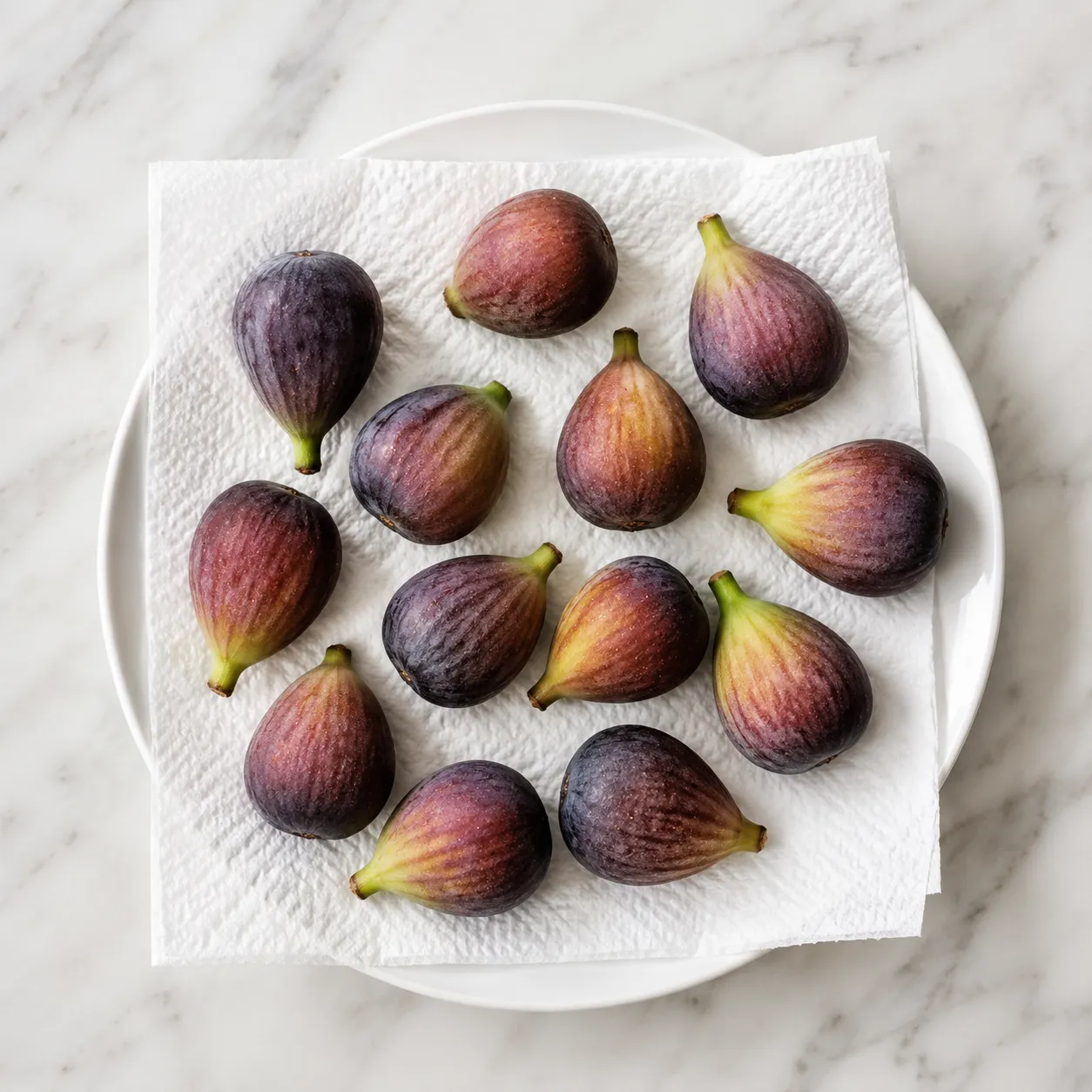
Fresh figs are very perishable, so store them unwashed in a single layer on a paper-towel-lined plate or shallow container in the refrigerator. Cover loosely, avoid stacking, and use them within 2 to 3 days for the best flavor and texture. Wash only right before eating or cooking.
Leftover roasted figs can be refrigerated in an airtight container for up to 3 days. They will soften further as they sit, but they are still delicious spooned over yogurt, oatmeal, toast, or ice cream. Rewarm gently in the microwave or a small skillet, or enjoy them chilled like a quick compote.
Frequently Asked Questions
Are figs a fruit or a flower?
Botanically, a fig is more unusual than a typical fruit. It is an inverted flower cluster called a syconium, which means the tiny flowers grow inside the fleshy structure we eat. That said, in everyday cooking and grocery shopping, figs are treated as fruit. You can slice them, snack on them, roast them, bake with them, or pair them with cheese just as you would other soft seasonal fruits.
Do you eat the skin of a fresh fig?
Yes, the skin of a fresh fig is fully edible, as are the tiny seeds inside. To prepare one, rinse it gently, pat it dry, trim off the firm stem, and eat the rest whole or sliced. Some varieties have slightly thicker skins than others, but most ripe fresh figs are tender enough to enjoy without peeling. If the texture bothers you, simply halve the fig and scoop out the soft center.
How do you know when a fig is ripe?
A ripe fig should feel soft and heavy for its size, but not mushy or collapsed. It may have slightly wrinkled skin, a honey-sweet aroma, and sometimes a tiny drop of nectar at the blossom end. Avoid figs that are rock-hard, very dry, sour-smelling, or leaking heavily. Since figs do not ripen much after picking, it is worth choosing fruit that already feels ready to eat.
How long do fresh figs last in the fridge?
Fresh figs are delicate and best used quickly, ideally within 2 to 3 days of bringing them home. Store them unwashed in a single layer on a paper-towel-lined plate or shallow container in the refrigerator. Cover them loosely so they are protected but not trapped with too much moisture. Wash figs only right before serving or cooking to help preserve their texture.
Can you eat figs raw?
Absolutely. Raw figs are one of the best ways to experience their tender texture and honeyed flavor. Just rinse, trim the stem, and eat them whole, halved, or sliced. They are delicious over yogurt, oatmeal, toast, salads, and cheese boards, especially with creamy cheeses, toasted nuts, honey, or prosciutto. Very ripe raw figs are often sweeter and more aromatic than cooked ones.