Baked Beans Dishes Recipe: Smoky, Saucy & Crowd-Pleasing
Ingredients
Scale
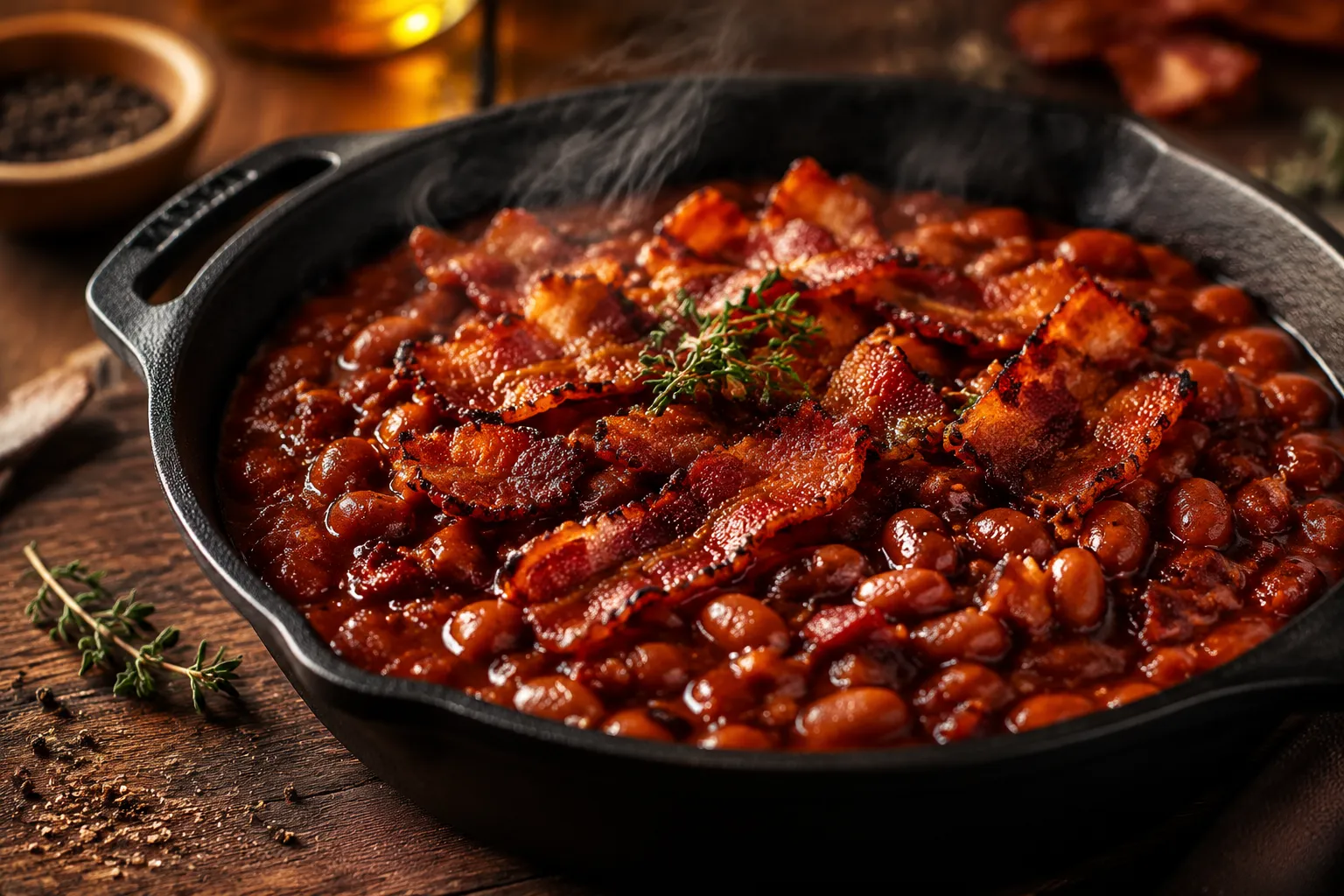
A bubbling, smoky, brown sugar-kissed baked beans dishes recipe with crispy bacon on top, ready for backyard cookouts, potlucks, and Sunday suppers.
This baked beans dishes recipe delivers everything you want in a backyard side: deep mahogany sauce clinging to plump beans, crispy bacon caramelized on top, and that unmistakable sweet-smoky-tangy flavor that makes people scrape the pot clean. It's the dish I make whenever the smoker fires up, the burgers hit the grill, or a potluck shows up on the calendar uninvited. Once you see how easy it is to layer this much flavor from mostly pantry staples, the canned-only version will feel like a distant memory.
What makes these so good is the balance. Brown sugar and molasses bring caramel depth, ketchup and BBQ sauce add tangy bite, smoked paprika and bacon do the smoky heavy lifting, and a splash of apple cider vinegar keeps everything from tipping into cloying territory. You can bake them in the oven, slow-cook them all afternoon, or smoke them low and slow alongside a brisket. They taste better the next day, freeze beautifully, and pair with practically every BBQ classic you can think of.
If you're building out a Memorial Day cookout menu or just feeding the family on a Sunday, this is the side that does the most work for the least effort. Let's get into it.
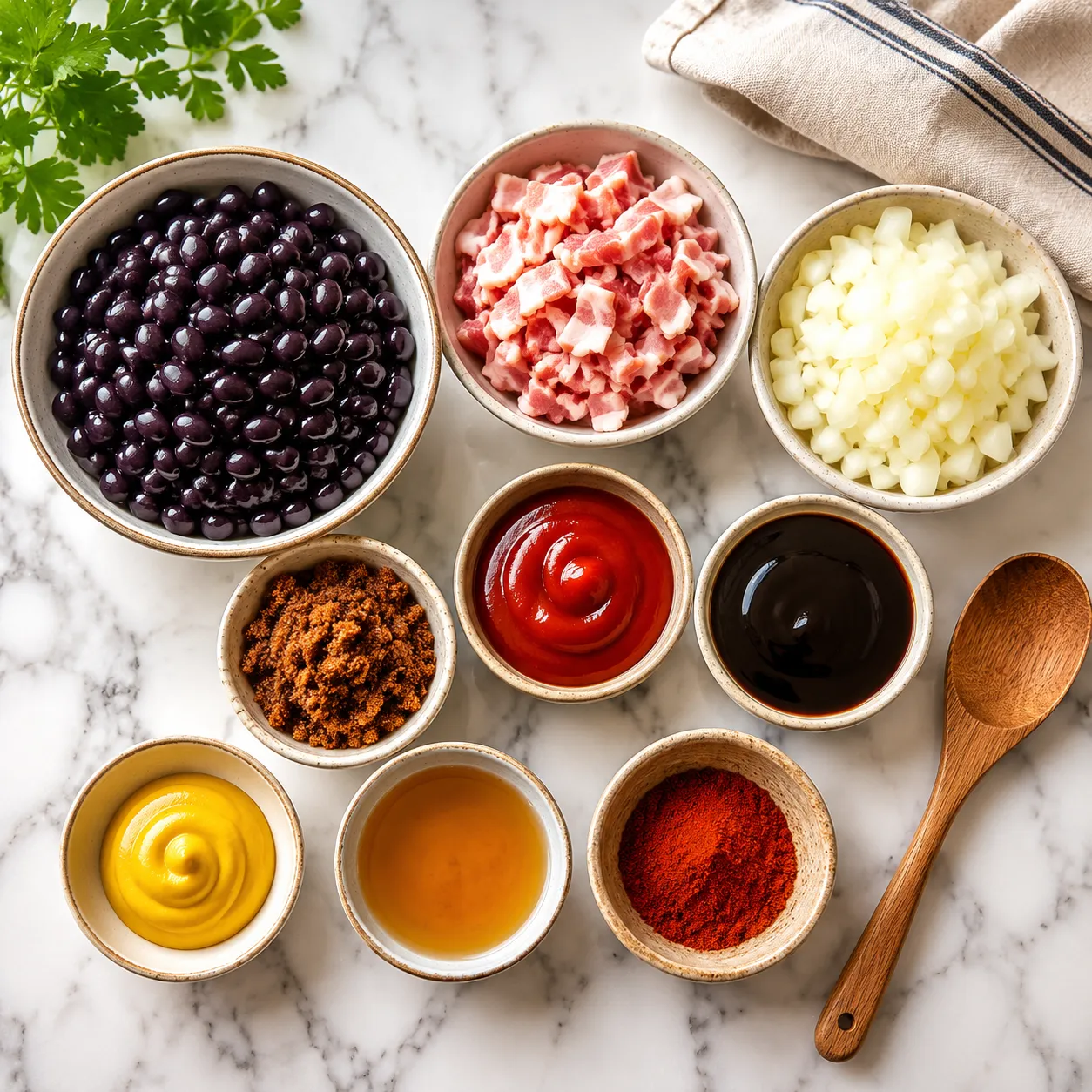
The beauty of homemade baked beans is how much flavor you can pull out of a short, mostly pantry-friendly ingredient list. Most of these items are probably already in your fridge or pantry, with the possible exception of molasses — which I'd argue every home cook should keep around since it's the backbone of countless BBQ sauces and gingerbread cookies.
For weeknights and last-minute cookouts, two big cans of navy or great northern beans are the move. They're tender, hold their shape, and soak up the sauce in about an hour and a half of baking. If you've got the time and want next-level texture, dried beans soaked overnight and simmered until just tender give you firmer, creamier results — plus a richer pot liquor to deglaze with. I'll walk through the dried-bean tweak in the FAQs.
This is where the flavor lives. Dark brown sugar plus molasses gives the sauce that deep, almost-coffee caramel note. Ketchup brings tangy tomato body, yellow mustard adds a sharp little edge, and apple cider vinegar wakes everything up. Whisk it all together and you essentially have a quick homemade BBQ sauce in a bowl — you can absolutely scale this up and brush it on ribs and chicken later in the week.
Thick-cut bacon does double duty here: rendered fat to sweat the onions, and crisp curls on top for that iconic BBQ baked beans look. A diced yellow onion softened in the bacon drippings adds a savory anchor. And a half cup of your favorite bottled BBQ sauce — Sweet Baby Ray's, Stubb's, whatever you love — concentrates the smoky-sweet vibe without making you reach for a dozen extra spice jars. Smoked paprika seals the deal.
The full numbered method lives in the recipe card below, but here's the rhythm so you know what to expect. The whole thing comes together in three quick stovetop moves, then the oven does the rest of the work while you mix drinks or pull together the rest of the spread.
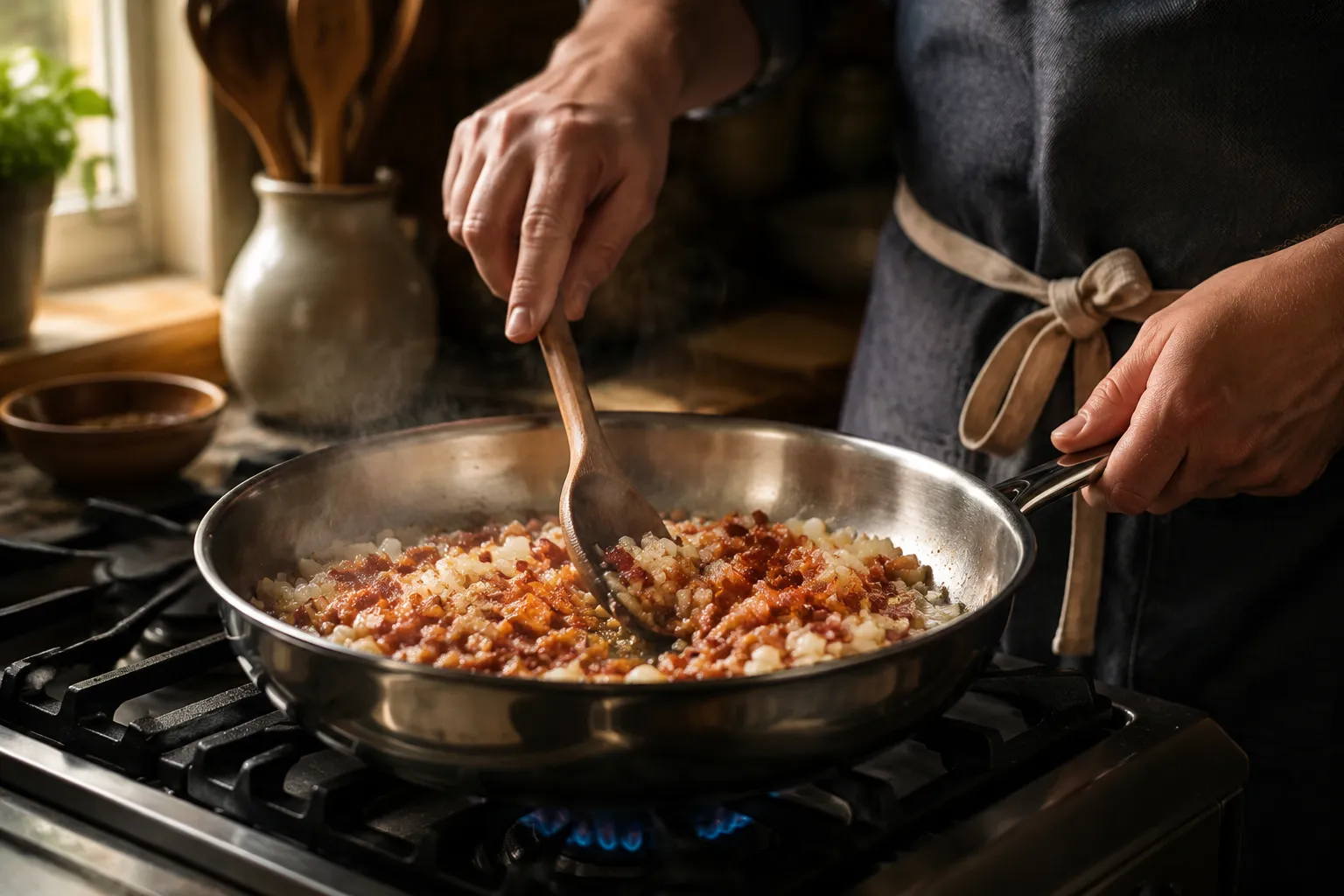
Start by crisping chopped thick-cut bacon in a Dutch oven or oven-safe skillet over medium heat. You want the edges browned but not shattering — they'll finish crisping in the oven. Pull most of the bacon out with a slotted spoon (leaving the fat behind) and sauté the onion right in those drippings until soft and golden at the edges, about 5 minutes. This is the savory backbone of the entire pot.
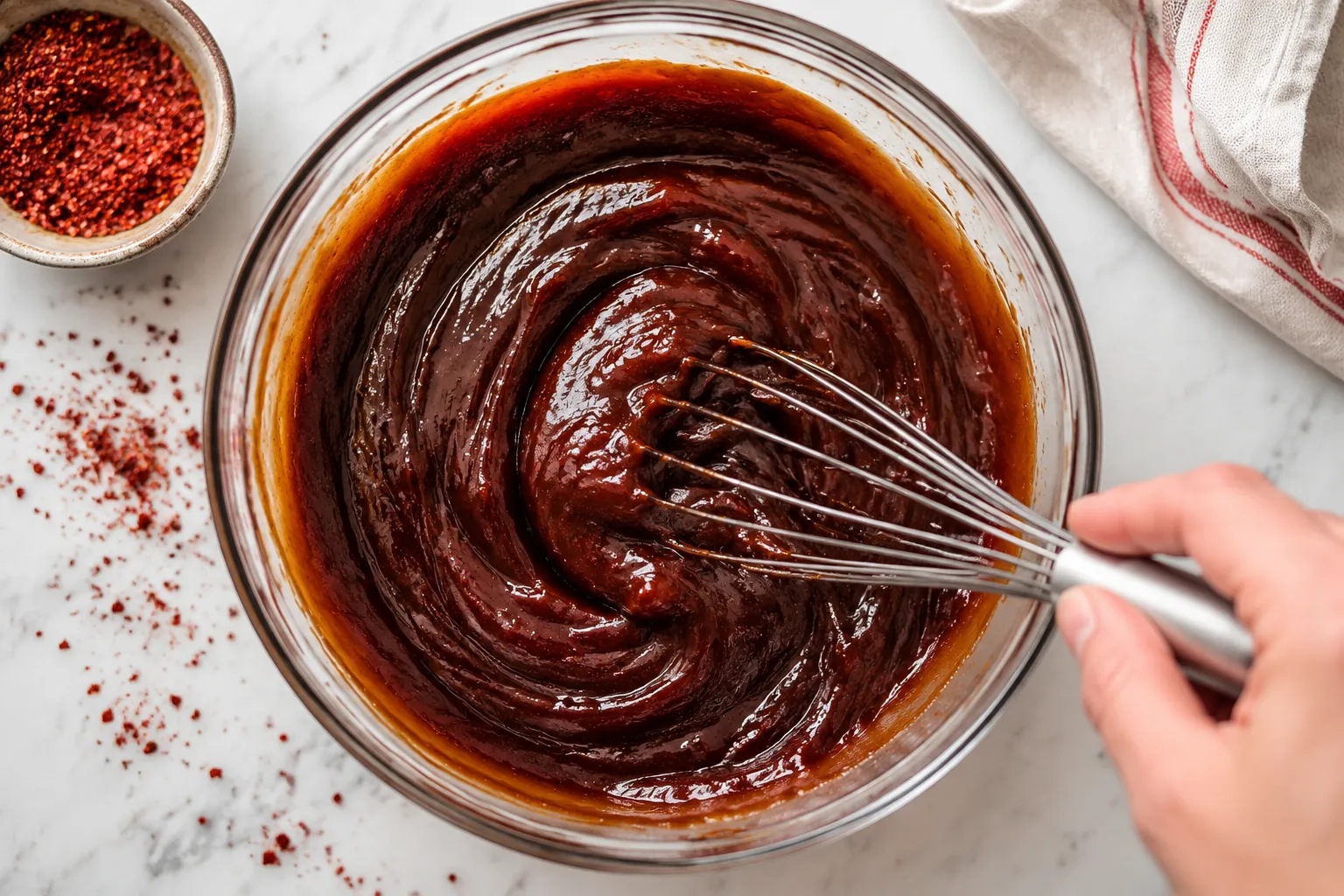
While the onion softens, whisk together the brown sugar, ketchup, BBQ sauce, molasses, mustard, vinegar, and smoked paprika in a bowl. Taste it. It should hit sweet, tangy, and smoky in roughly equal weight — adjust mustard up if you want more bite, or vinegar up if it's reading too sweet. This blend is essentially a shortcut homemade BBQ sauce with extra depth from the molasses.
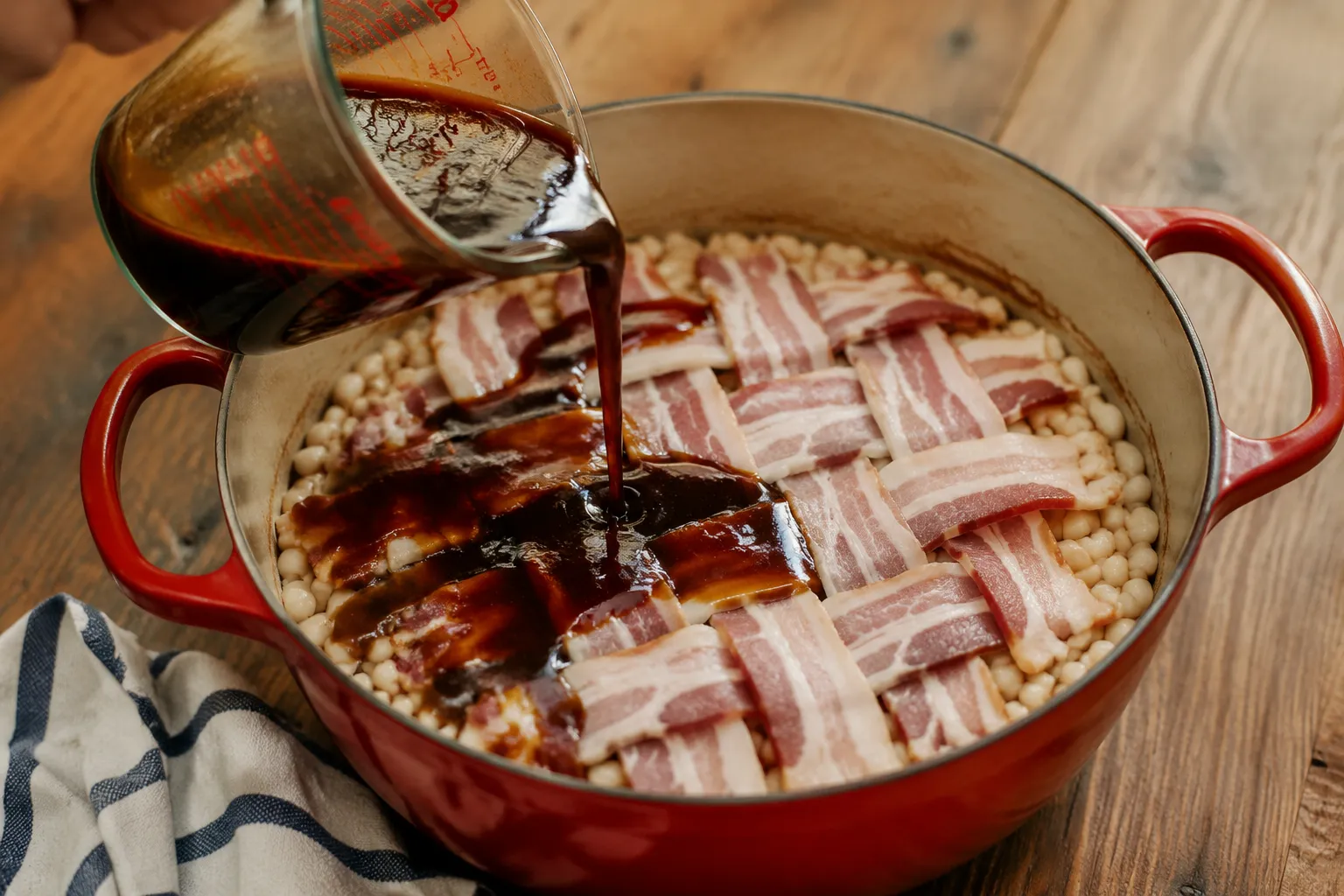
Drain and rinse the beans well, then add them to the Dutch oven with the cooked onion. Pour the sauce over the top and stir gently to coat every bean. Lay the reserved bacon in a loose lattice across the surface — this is what gives bacon baked beans that gorgeous magazine-cover top after they bake.
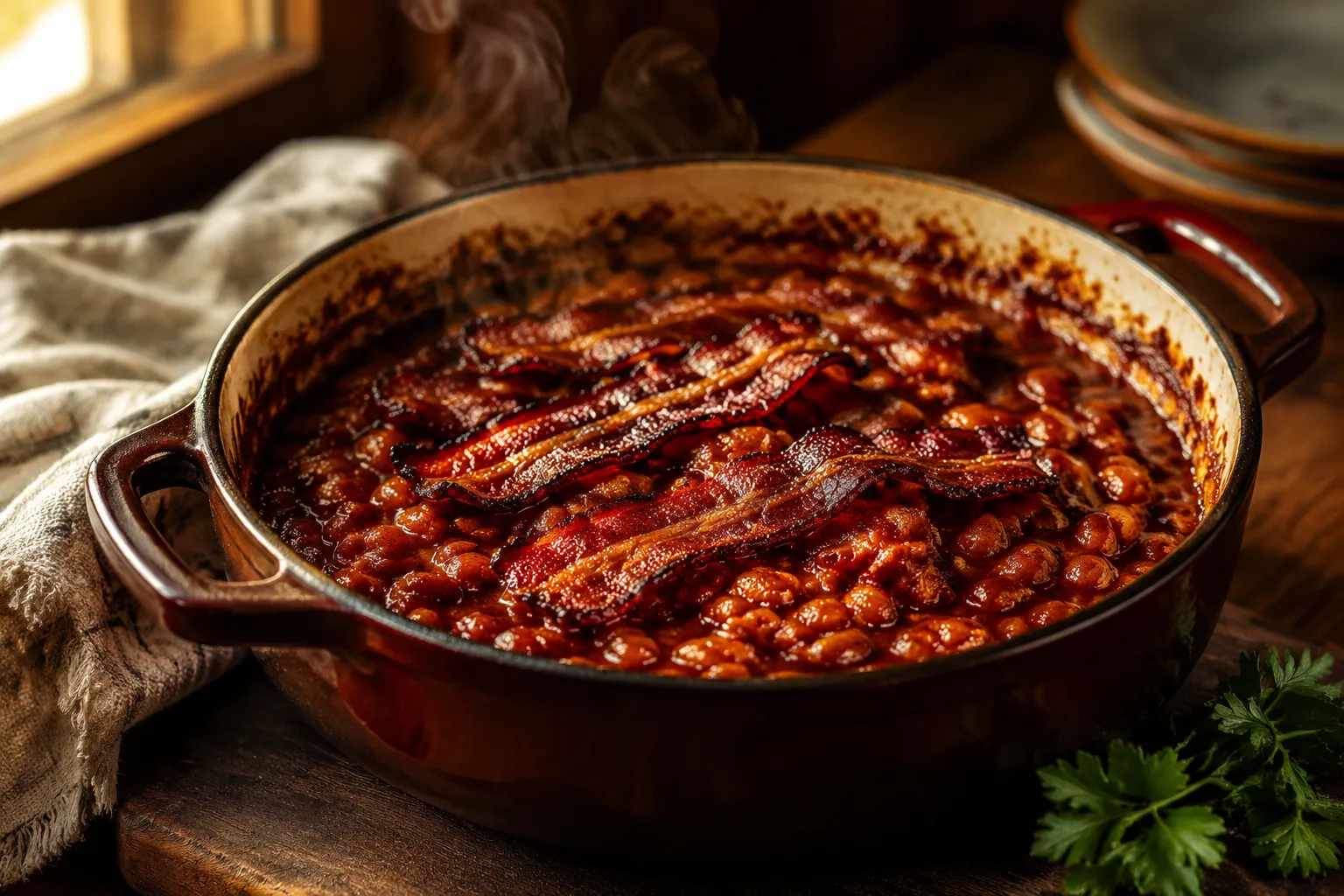
Bake uncovered at 325°F for about 90 minutes, or until the sauce is thick and glossy and the bacon is deeply caramelized on top. If the pot still looks soupy at the 60-minute mark, that's normal — the last half hour is when the sauce reduces and starts clinging. Let everything rest 10 minutes before serving so the sauce sets up to that perfect spoon-coating consistency.
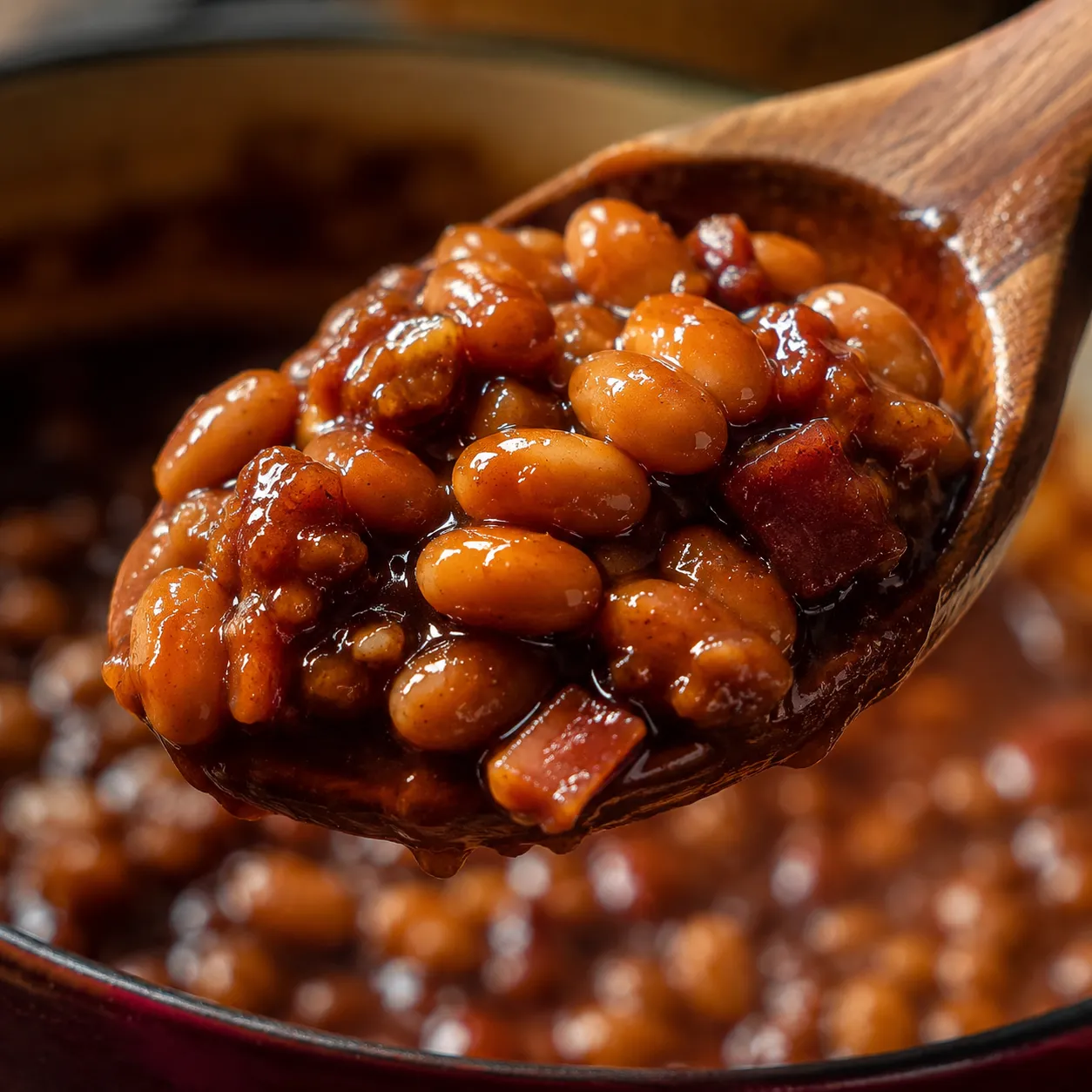
If you've got a smoker fired up for ribs or brisket, slide a cast-iron skillet of these beans in alongside and you'll never go back to oven-only. The smoke penetrates straight through the glossy sauce and adds a depth you genuinely can't replicate any other way. This smoked baked beans recipe variation is the one that gets requested every single Fourth of July at my place.
Hickory and applewood are the classic picks — hickory for bold, traditional BBQ smoke, apple for a sweeter, fruitier finish that plays beautifully with the brown sugar baked beans flavor profile. Pecan splits the difference if you want both. Avoid mesquite here unless you love a heavy hand; it can overpower the sauce in just an hour or two.
Set the smoker to 225°F and assemble everything directly in a cast-iron skillet (skip the lid). Smoke uncovered for 2 to 3 hours, stirring once at the halfway point. The longer, lower cook lets the sauce reduce slowly while picking up smoke at every stage. If it's reducing too fast, tent loosely with foil for the final hour to slow the evaporation.
This is the move that turns a side into a meal. Stir 1 to 2 cups of chopped pulled pork or brisket burnt ends into the beans during the last 45 minutes of smoking. The fat melts into the sauce, the bark gives bonus texture, and suddenly you've got a smoky main course people fight over. Spoon it onto a brioche bun and you've basically built a deconstructed pulled pork sandwich.
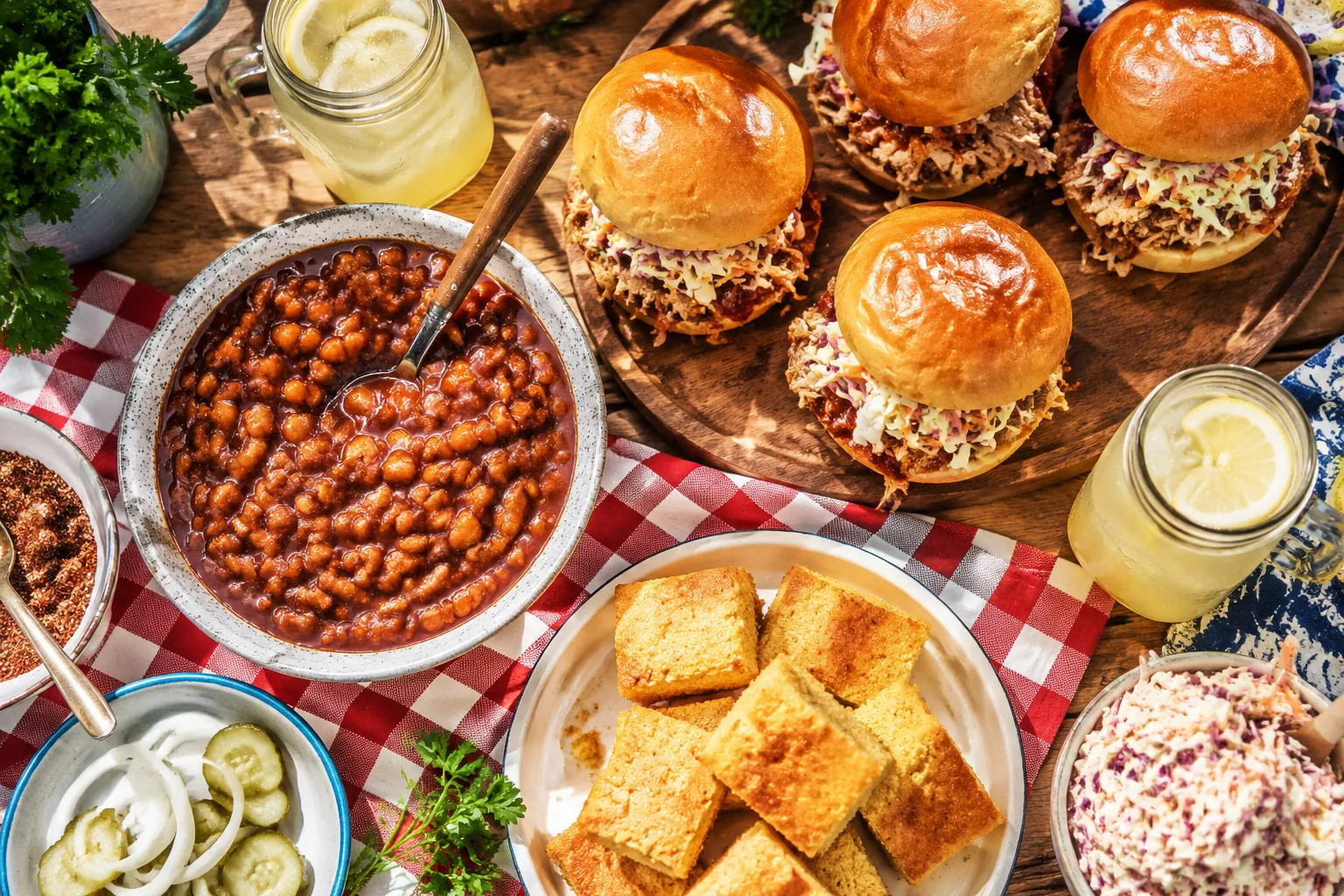
The whole point of BBQ baked beans is that they pair with practically every cookout staple, but a few combinations are downright iconic. The textbook plate is a heap of beans next to pulled pork sandwiches, a tangy classic coleslaw recipe, and a square of buttery cornbread side dish — that's the holy trinity of summer BBQ, full stop. The cool, crunchy slaw cuts the richness, the cornbread mops up sauce, and the beans bridge everything in the middle.
For a casual weeknight, spoon them next to grilled hot dogs, smashburgers, or BBQ chicken thighs. They're also a sneaky-great side dish for cookouts where you've got vegetarians at the table — make a meatless version (skip the bacon, swap in extra smoked paprika and a half teaspoon of liquid smoke), and the beans themselves can serve as a hearty main over rice or with a wedge of cornbread.
If you're putting together a full Memorial Day cookout menu or a Fourth of July spread, plan on a generous half-cup per person and seriously consider doubling the recipe. They always go faster than you think they will.
Make a batch on Saturday, eat them with everything for three days straight, and you'll understand why this baked beans dishes recipe earns a permanent spot in the rotation. They're forgiving, freezer-friendly, and somehow taste even better the next day once the flavors have had time to marry. Whether you're feeding a backyard crowd or just rounding out a Tuesday-night burger, this is the side that quietly does the heavy lifting.
Once you nail the sweet-tangy-smoky base ratio, this recipe takes well to almost any riff you throw at it. Some of my favorites:
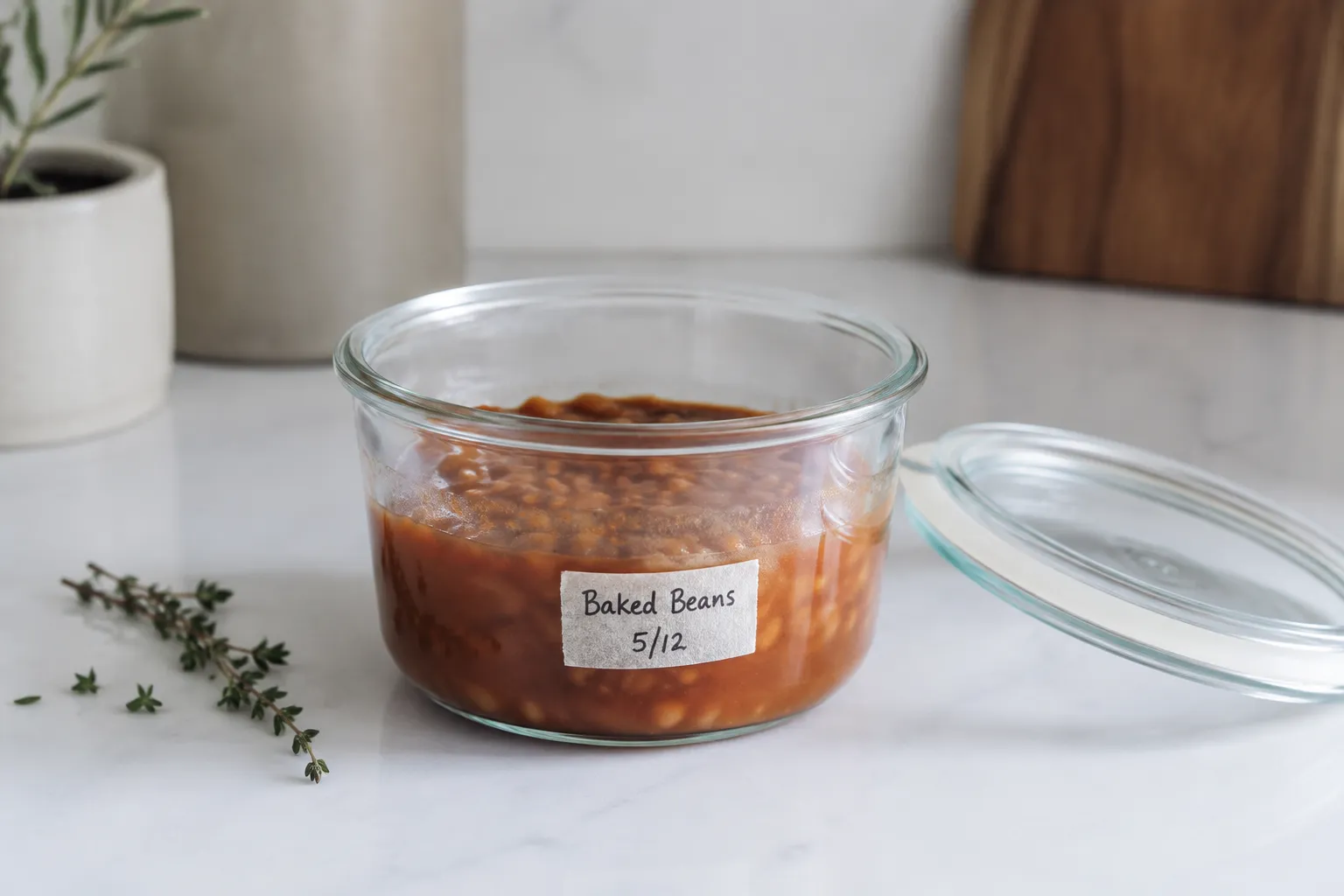
Cooled baked beans keep beautifully in an airtight container in the fridge for up to 4 days — and honestly, the flavor deepens overnight, so leftovers might be your favorite version of this dish. To reheat, transfer to an oven-safe dish, cover with foil, and warm at 325°F for about 20 minutes with a splash of water or broth to loosen the sauce. Stovetop reheating works equally well: low heat, lid on, stirring every few minutes until heated through.
For freezing, portion the cooled beans into freezer bags or rigid containers, leaving an inch of headspace, and freeze for up to 3 months. Thaw overnight in the fridge before reheating for the best texture. Avoid microwaving straight from frozen — the outer beans turn to mush before the center thaws, and you lose that glossy, clingy sauce that makes the dish what it is.