Homemade Creole Seasoning Recipe (5-Minute Blend)
Ingredients
Scale
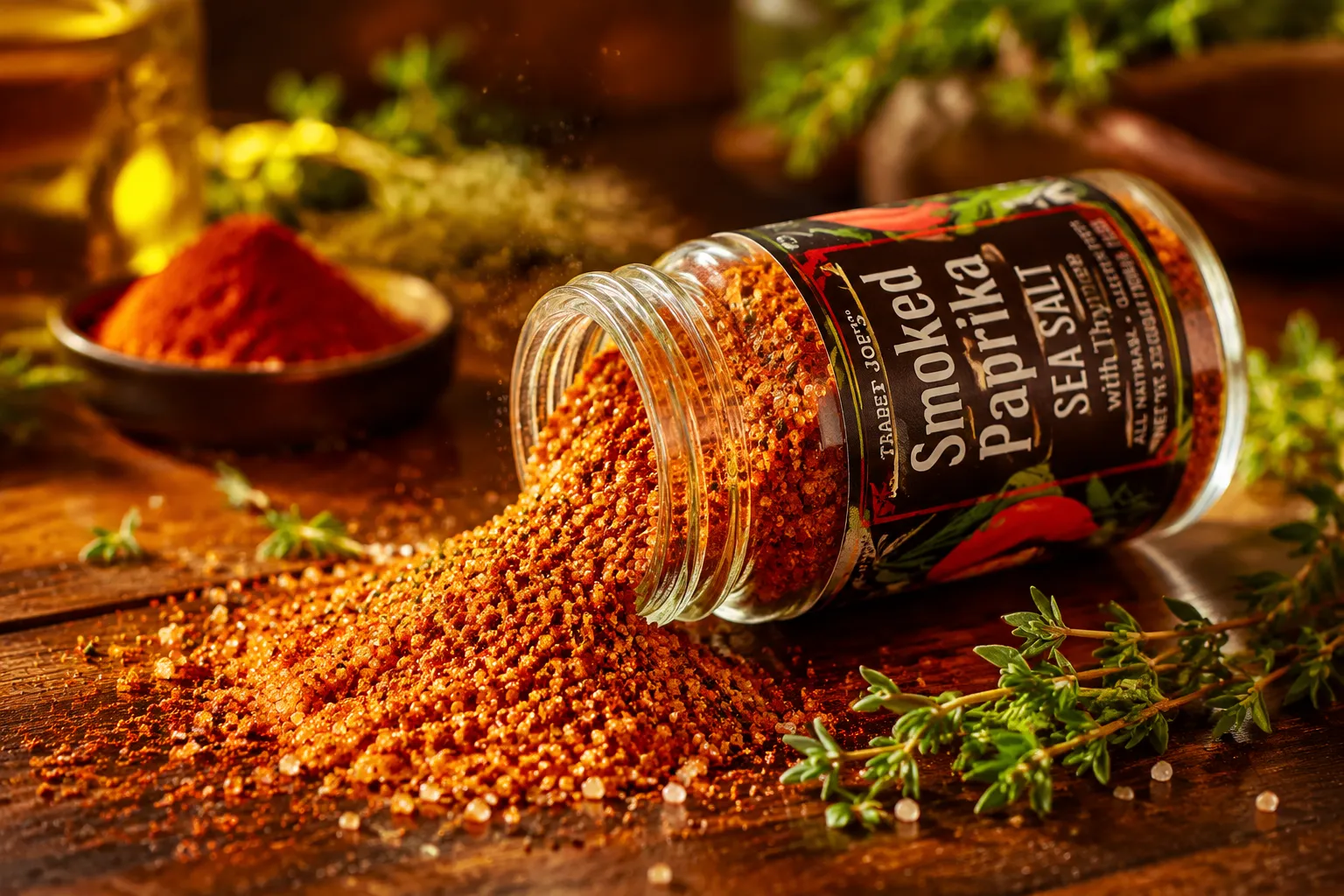
Skip the store-bought jar. This homemade creole seasoning comes together in 5 minutes with pantry spices and tastes bolder, fresher, and more balanced than anything pre-mixed.
If you love bold Louisiana flavor but hate paying eight dollars for a dusty jar of supermarket spice mix, this homemade creole seasoning recipe is about to become a permanent fixture in your pantry. It comes together in five minutes flat with ten spices you almost certainly already own, and the final blend tastes brighter, deeper, and more balanced than anything you can pull off a shelf. No fillers, no anti-caking agents, no mystery "natural flavors" — just real spices in the right ratios.
I started making my own Louisiana seasoning years ago after one too many store-bought tins tasted like nothing but salt and disappointment. Once you mix a fresh batch yourself — herb-forward, smoky, with a slow-building warmth from cayenne and a hit of white pepper underneath — you'll wonder why you ever bothered with the pre-made stuff. It's the kind of pantry essential that quietly upgrades everything from a weeknight chicken thigh to a full pot of red beans and rice, and it costs roughly a quarter of what those tiny jars at the grocery store charge.
This creole seasoning is also infinitely flexible, which is the real magic of making it yourself. Want it spicier? Push the cayenne. Cooking for kids or low-sodium eaters? Pull back the salt or skip it entirely. Need a smokier profile for grilling season? Double the smoked paprika. Same five-minute method every time, same beautifully aromatic result.
Creole and Cajun cooking get lumped together constantly, but the spice blends behind them tell two very different stories. Creole cuisine grew out of New Orleans city kitchens, where French, Spanish, African, and Caribbean cooks worked side by side with European pantries, fresh herbs, and tomatoes. The result is a blend that's herbier, more refined, and friendlier to tomato-based dishes like gumbo z'herbes or shrimp Creole. Cajun food, by contrast, came from rural bayou country settled by displaced Acadians who cooked with what they could trap, fish, or grow — leading to a hotter, smokier, more pepper-driven profile that punches harder right out of the gate.
What that means in your spice jar: a Creole blend leans on dried oregano, thyme, basil, paprika, and a moderate hit of cayenne. A typical cajun seasoning skews heavier on black and white pepper, often with less herb presence and more raw heat. They overlap, sure, and you can swap one for the other in a pinch, but if you're building a tomato-touched stew or a long-simmered jambalaya recipe, the herb-forward Creole version is what you want. For straight-up blackened seasoning territory — think peppery crusts on fish or steak that go almost black in a cast-iron skillet — Cajun is closer to the mark.
The short version: Creole is the city cousin, Cajun is the country cousin, and they both belong to the same delicious family. Once you have this base mix in your pantry, you can lean it in either direction by adjusting the heat and the herb ratio to suit whatever you happen to be cooking that night.
Ten spices. That's it. Every single one is a workhorse you probably already have, and if you don't, they're available at any grocery store for a few dollars each. Full measurements live in the recipe card below, but here's the lineup and what each one brings to the party.
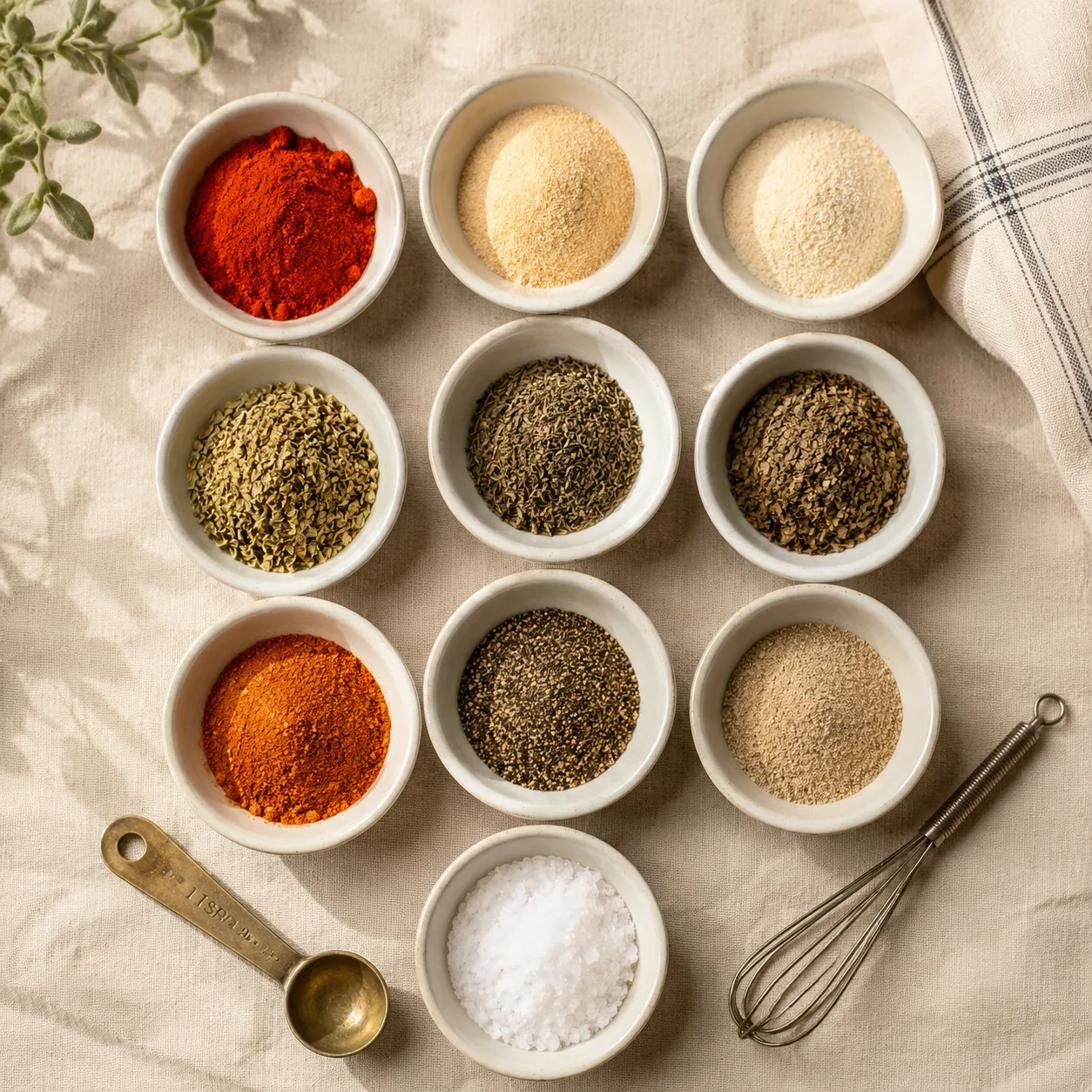
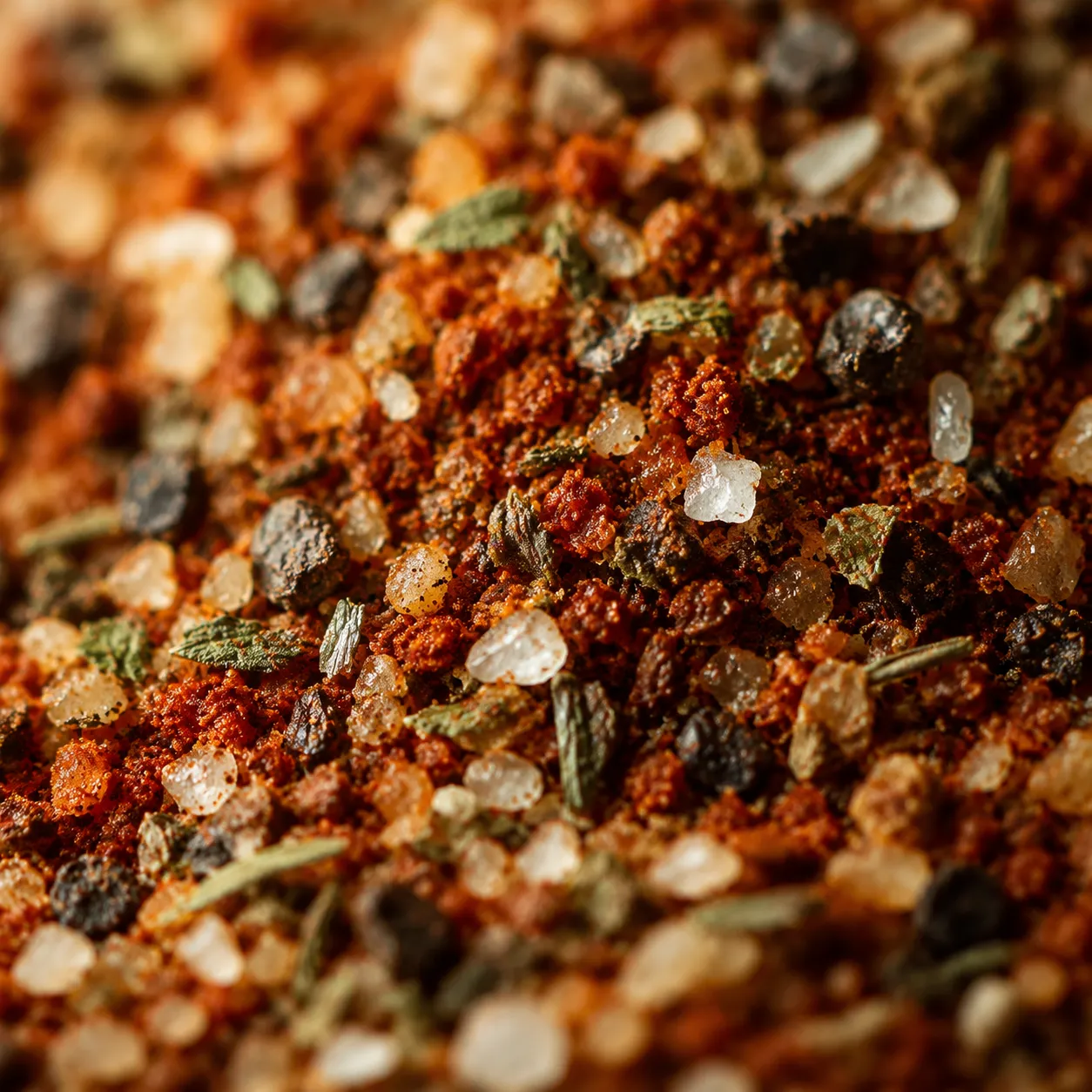
Smoked paprika is the soul of this blend — it provides the deep rust-red color and that subtle campfire whisper that makes the whole thing taste like it simmered for hours. Sweet paprika works in a pinch, but the smoked version is worth seeking out and stocking permanently. Garlic powder and onion powder lay down the savory foundation; dried oregano, thyme, and basil add the herbal lift that distinguishes Louisiana seasoning from a generic chili blend. Cayenne pepper handles the heat, while black pepper and white pepper team up for layered, almost peppery-floral warmth that you can't get from either one alone. Kosher salt rounds everything out and helps the flavors cling to whatever you're seasoning.
Quality matters more than people realize. If your dried herbs have been sitting in the cabinet for two years, they're not going to give you much. Crush a pinch between your fingers — if you don't smell anything immediately, replace it before mixing this blend. The same goes for paprika, which fades faster than most cooks expect. Fresh-tasting spices are the entire point of a homemade mix, so treat this recipe as a good excuse to refresh the older jars in your rack.
If you want to riff, this base takes additions beautifully. A teaspoon of celery seed nudges the blend toward gumbo territory. A pinch of dried mustard adds tang. A whisper of filé powder, if you can find it, gives a truly authentic Louisiana finish. Need a substitution? Sweet paprika can stand in for smoked, regular oregano can swap for Mexican oregano (or vice versa), and table salt can replace kosher — just use about three-quarters as much, since the crystals are finer and pack more salt per spoonful.
This is one of the easiest spice blends you'll ever assemble. The full numbered method lives in the recipe card below, but the rhythm is simple: measure, whisk, store. The whole process takes less time than waiting for a kettle to boil, and cleanup is a single bowl and one whisk.
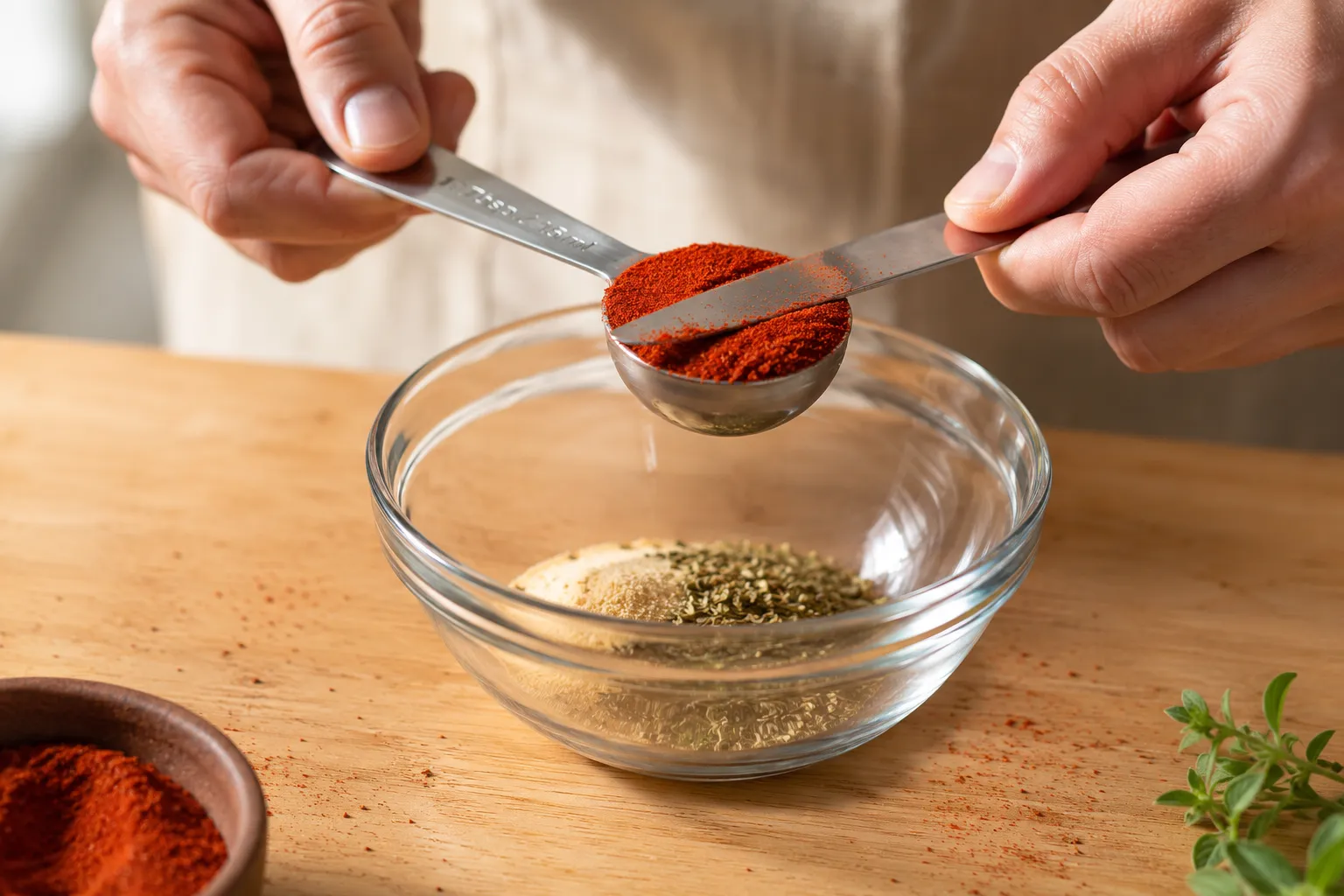
Start by pulling out every jar so you don't lose your place mid-measure — I learned this the hard way after dumping in a double dose of cayenne. A small glass mixing bowl works best because you can see the colors layering as you go, which makes it easy to spot if you skipped something. Use level measurements rather than heaping ones: spice ratios matter here, and a heaping tablespoon of cayenne where there should be a teaspoon will punish you for a long time.
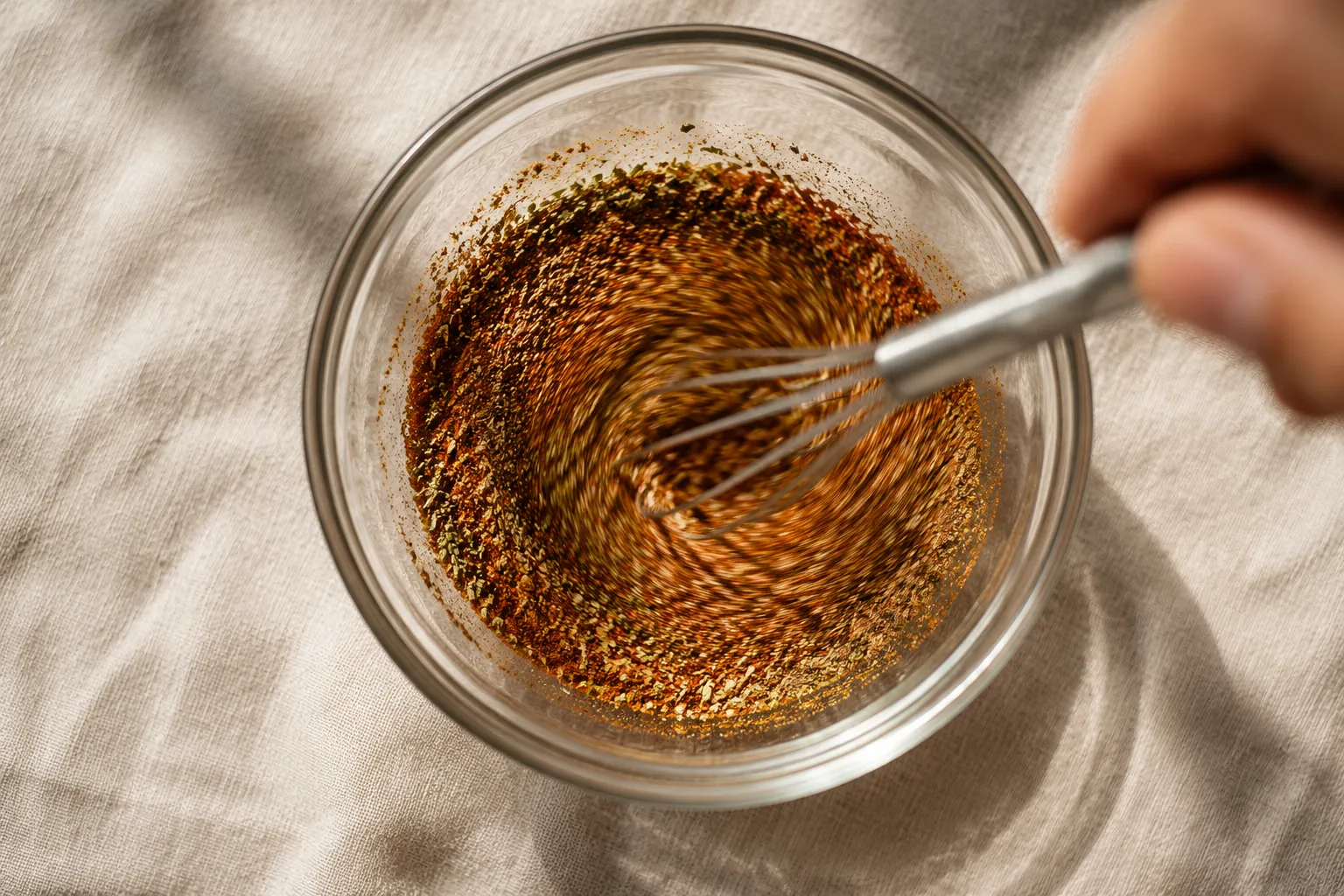
Once everything is in the bowl, whisk it for a solid 30 to 45 seconds. You want the smoked paprika streaks to disappear completely and the herbs to distribute evenly throughout. A mini whisk is ideal, but a fork works fine if that's what's at hand. Give the blend a sniff before you bottle it — it should smell warm, garlicky, and faintly smoky, with the herbs just beginning to bloom from the friction of mixing.
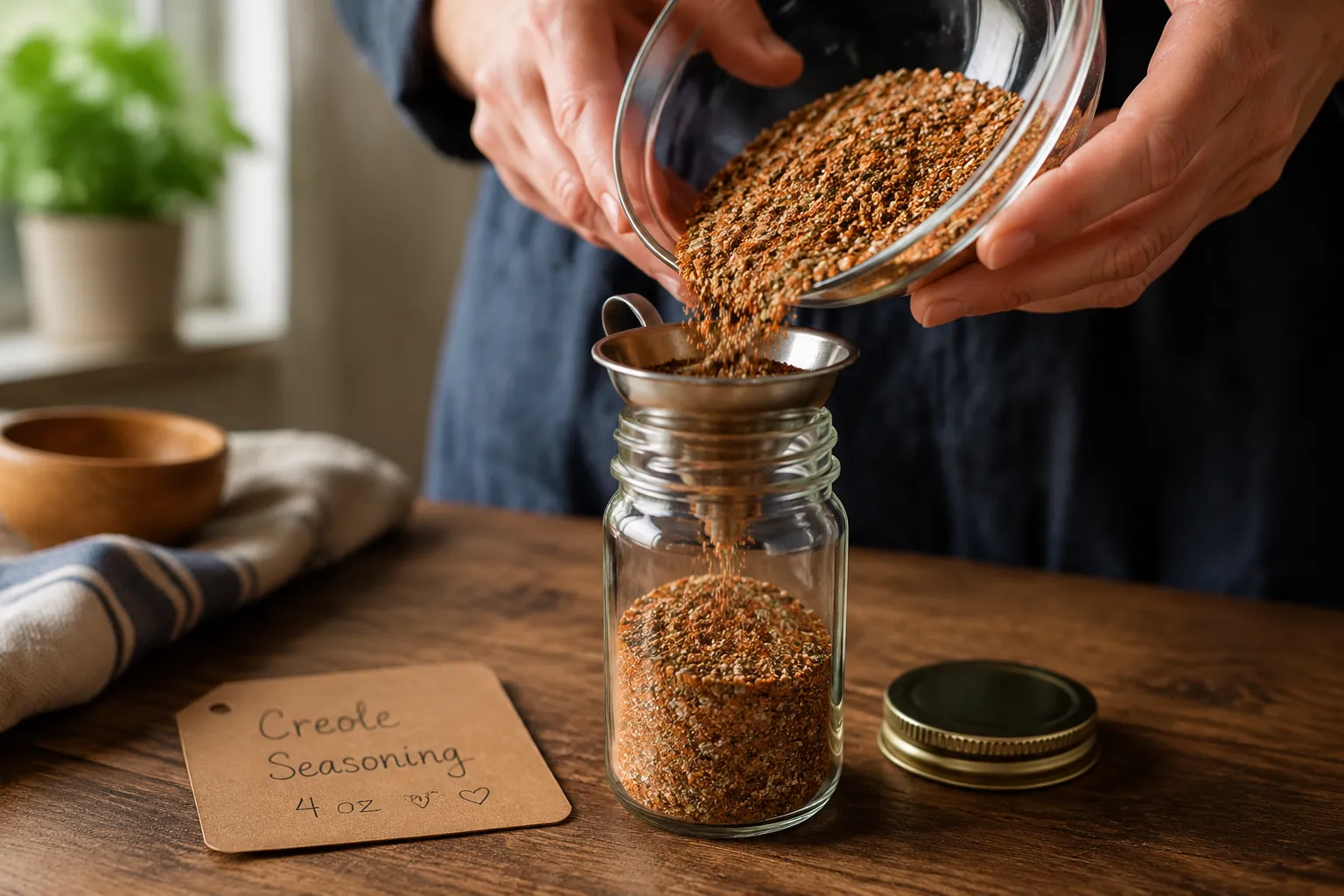
Funnel the finished blend into a clean, dry glass jar with a tight-fitting lid. A four-ounce spice jar holds this quantity perfectly, with a little room to shake. Label it with the date so you'll know when six months have passed and it's time for a fresh batch. That's it — your creole seasoning is ready to go, no resting time required.
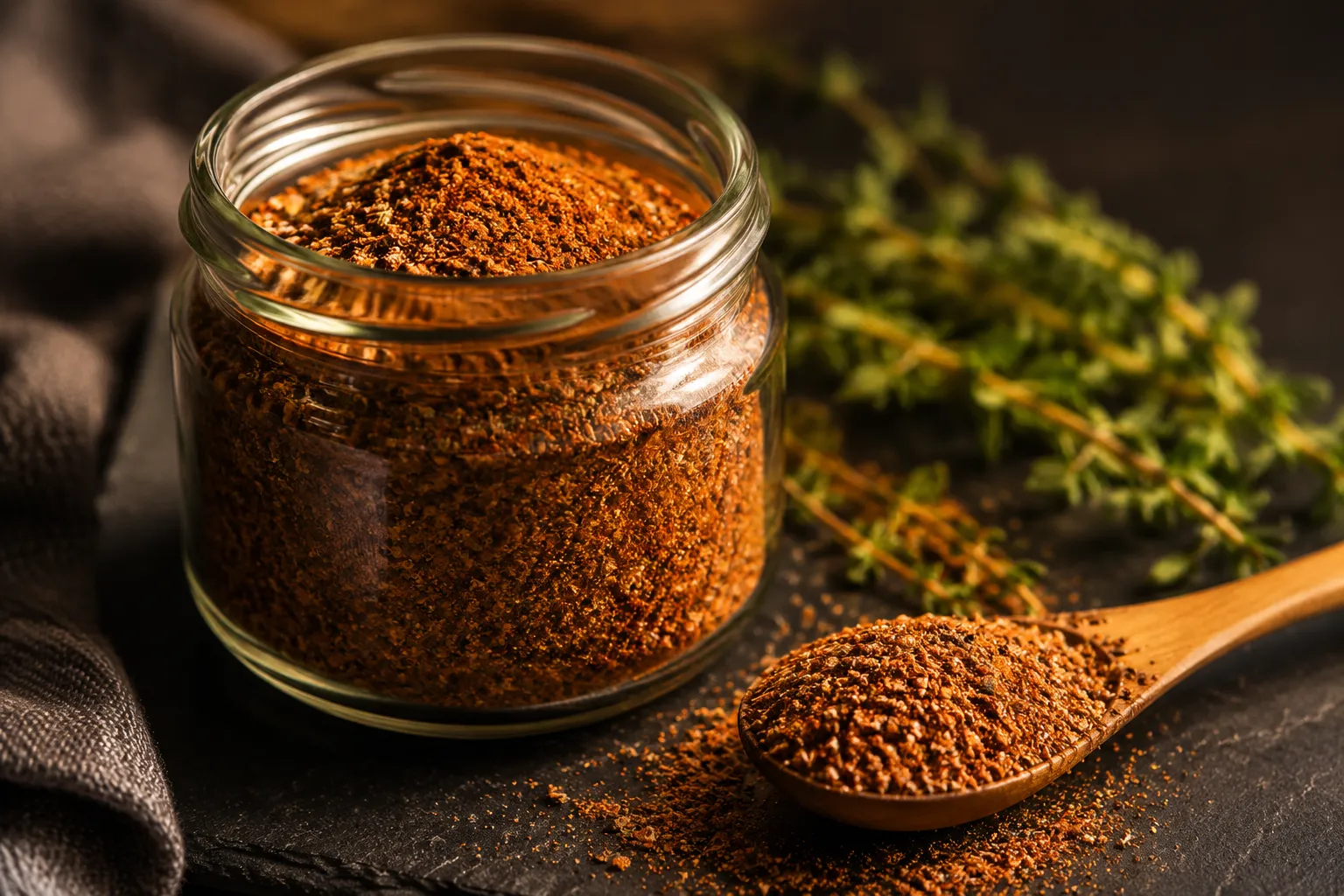
This is the fun part. Once you have a fresh jar at the ready, it shows up in nearly every dinner I cook for the next month — the kind of one-spoon flavor bomb that turns "I have nothing for dinner" into something that actually tastes like dinner.
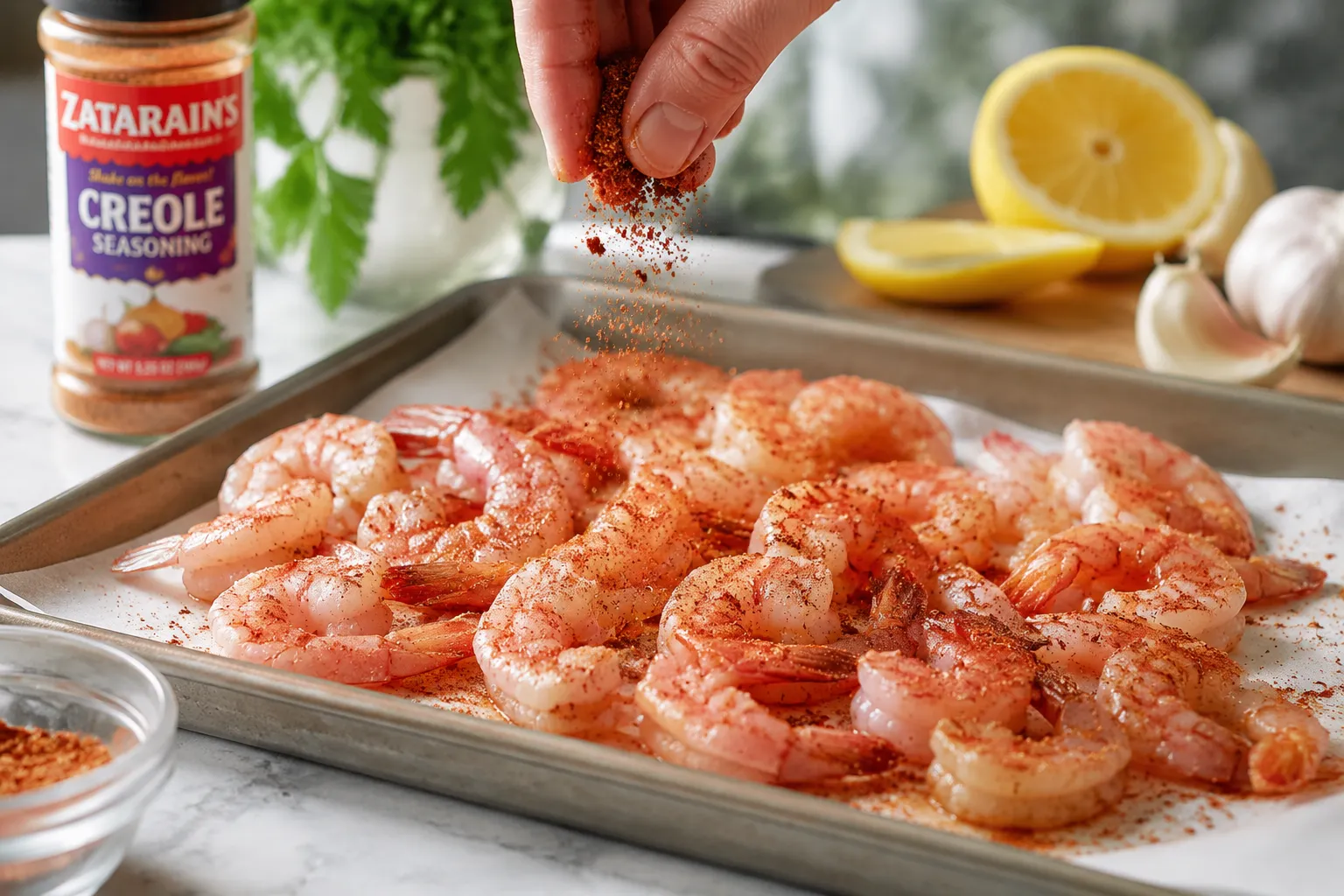
For proteins, it's perfect on shrimp, chicken thighs, salmon, catfish, or pork tenderloin. Toss with olive oil, sprinkle generously, and roast or grill until you have a deeply colored crust. It's the backbone of a good shrimp etouffee, folds beautifully into smoked sausage and rice for a classic jambalaya recipe, and earns a permanent slot in my fried chicken breading. Stir a tablespoon into a pot of red beans an hour before serving for instant depth, or rub it under the skin of a whole roasting chicken for the kind of bird that doesn't need anything else on the table.
Beyond Louisiana classics, this blend punches up almost any savory dish. Try it on roasted potatoes, sweet potato fries, or charred corn straight off the grill. Whisk a teaspoon into mayo for a Cajun-style aioli, dust it onto buttered popcorn, or rim a Bloody Mary glass with it for brunch. It's also a smart shortcut for deviled eggs, creamy pasta sauces, queso, gumbo, and even a quick weeknight chili. Think of it the way you'd think of a homemade taco seasoning — one jar, one spoon, dinner solved.
Once you've made this homemade creole seasoning a single time, you'll understand why it earns a permanent spot in the spice drawer over anything store-bought. The aroma alone — fresh herbs, sweet smoke, a low hum of pepper — tells you everything you need to know before the first taste. Mix a batch this week and you'll be reaching for the jar all season long.
This base recipe is a launching point. Once you understand the herb-to-pepper-to-paprika ratio, you can pull the blend in almost any direction depending on what you're cooking and how spicy your household likes it.
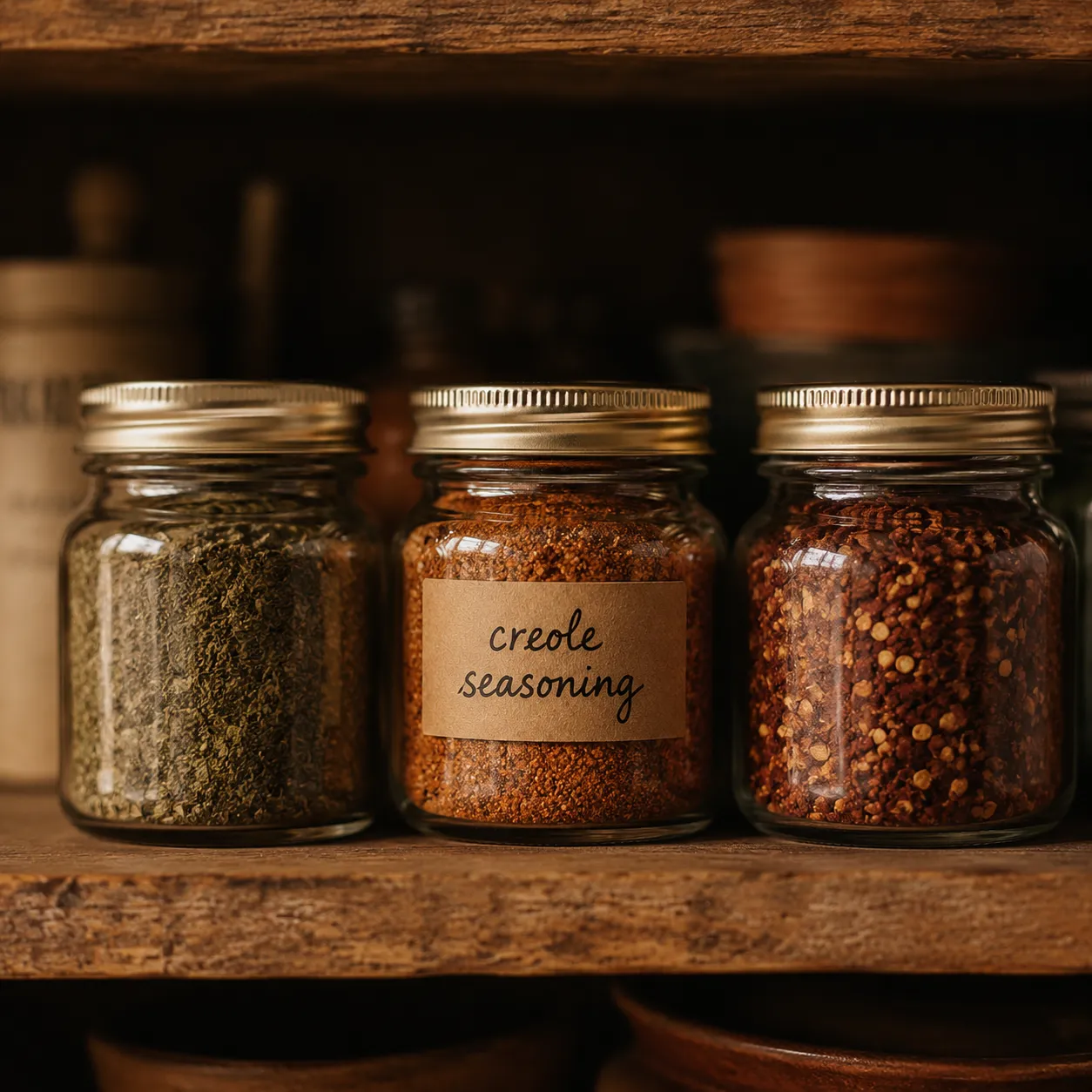
Transfer the finished blend to a clean, completely dry glass jar with a tight-fitting lid and store it in a cool, dark cupboard away from the stove and any direct sunlight. Light, heat, and humidity are the three things that age dried spices fastest, so an interior cabinet shelf is ideal — not the open counter or the rack hanging next to your range. A four-ounce spice jar with a brass or metal lid holds the full batch perfectly with a little headroom for shaking.
For best flavor, use the blend within six months. After that, it's still safe to eat, but the herbs and paprika begin to fade and the cayenne softens. Label the jar with the date you mixed it so you'll know when it's time for a fresh batch. If you double or triple the recipe, store the extra in a separate sealed jar at the back of the cupboard and pull it forward when the first jar runs low. Avoid scooping with a wet spoon, which introduces moisture and shortens shelf life dramatically.