Smoked Pork Shoulder: Tender, Juicy Pulled Pork Recipe
Ingredients
Scale
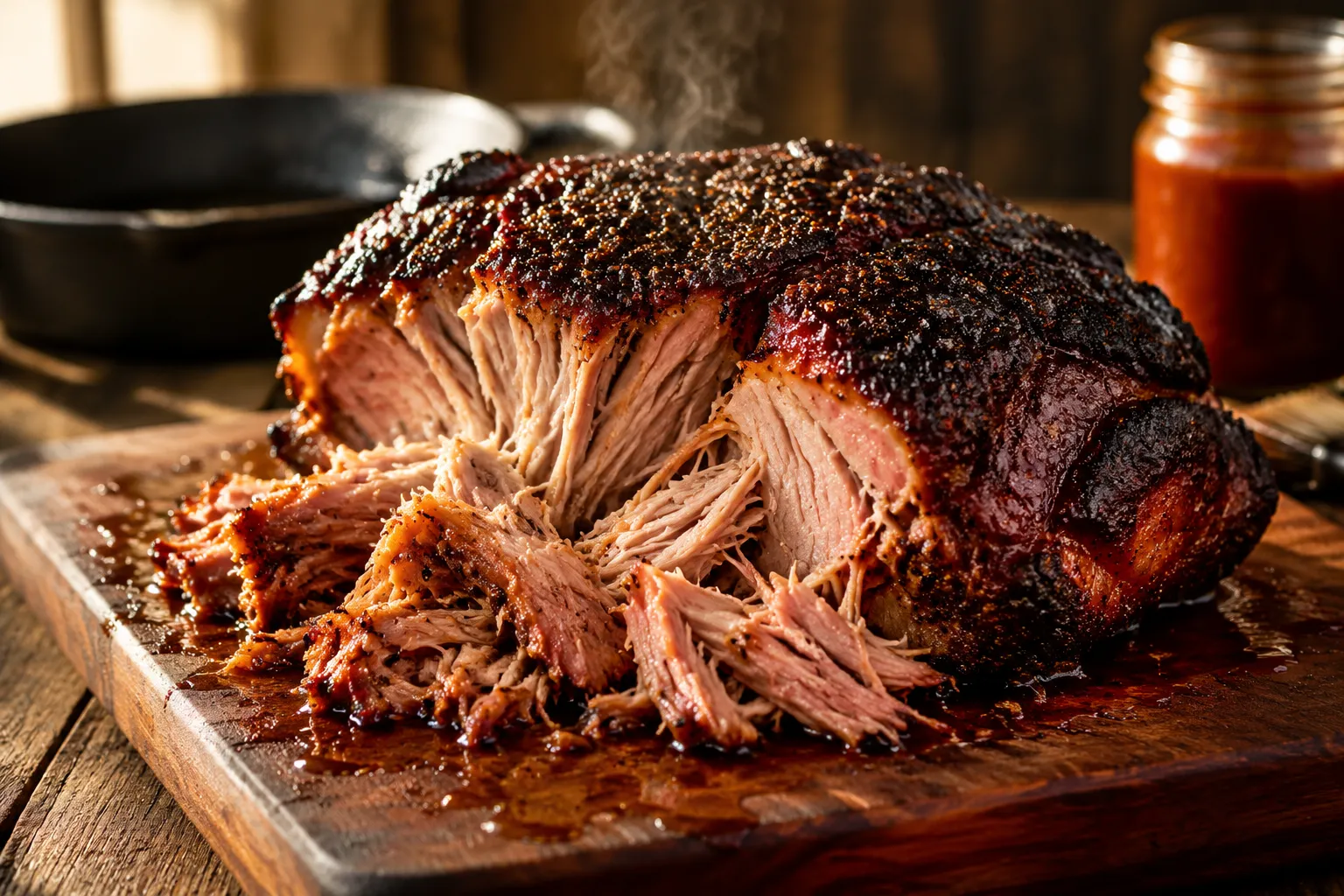
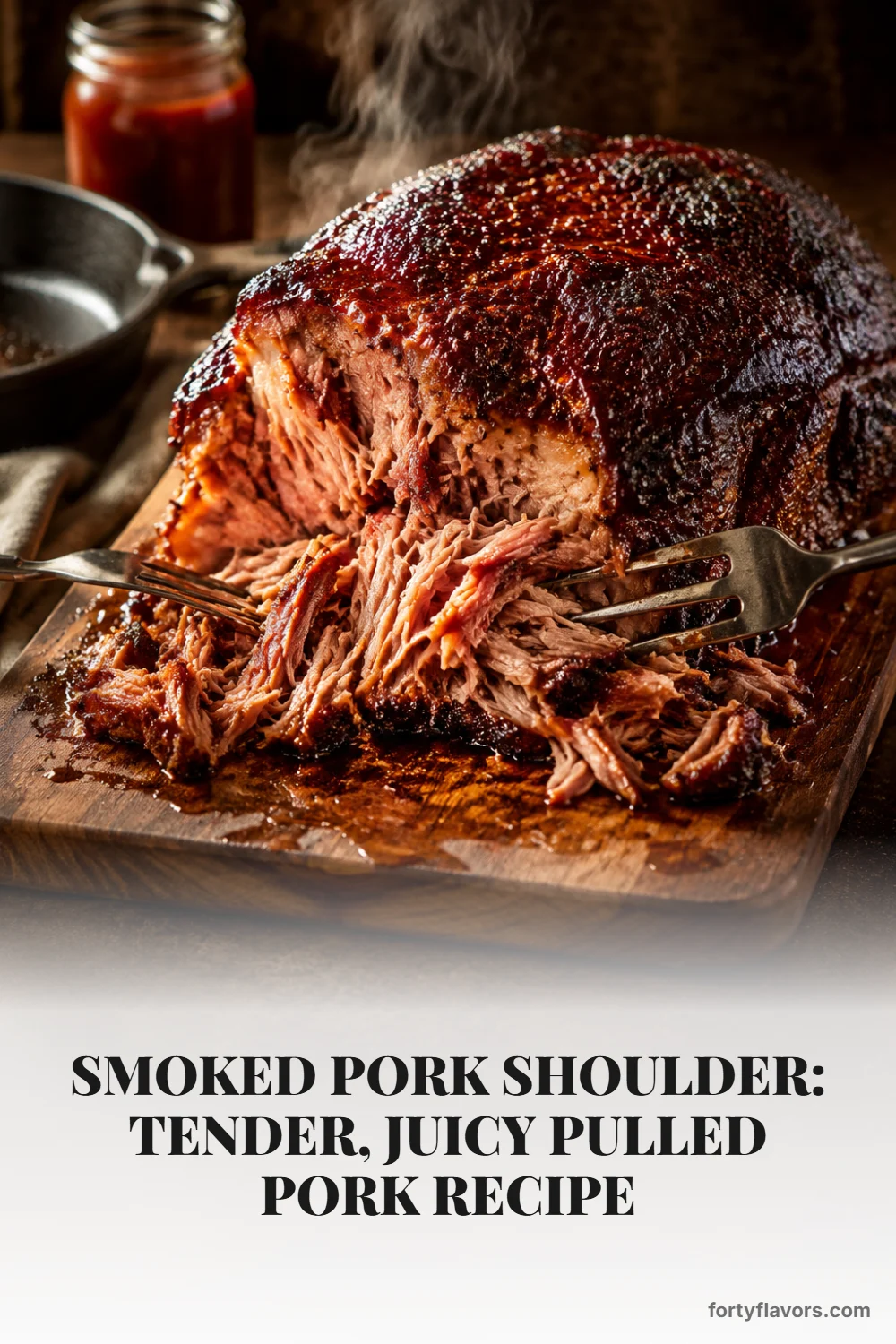
Low-and-slow smoked pork shoulder with a sweet-savory bark, smoky bone-deep flavor, and meat so tender it shreds with two forks. Backyard BBQ, made simple.
A perfectly smoked pork shoulder is the kind of backyard cookout magic that makes the neighbors mysteriously wander over with empty plates. We're talking about a deep mahogany bark crackling under your knife, ribbons of rendered fat melting into shreds of impossibly juicy meat, and a smell that hangs in the yard for hours. If you've ever wondered how barbecue joints get pulled pork that tastes like it was kissed by a campfire and a sugar mill at the same time, the secret is low temps, patience, and a rub that knows what it's doing.
The beautiful part? This is the most forgiving cut on the hog. You don't need a $3,000 offset rig or a competition pedigree — a pellet smoker, kettle grill with a chimney, or even a charcoal drum will get you there. I've cooked this recipe on a windy October morning with a beer in one hand and a thermometer in the other, and it still came out competition-worthy.
Below you'll find everything you need: a sweet-and-savory dry rub, smoke times, internal temperature targets, how to push through the stall, and the best wood for smoking pork shoulder. Let's fire it up.
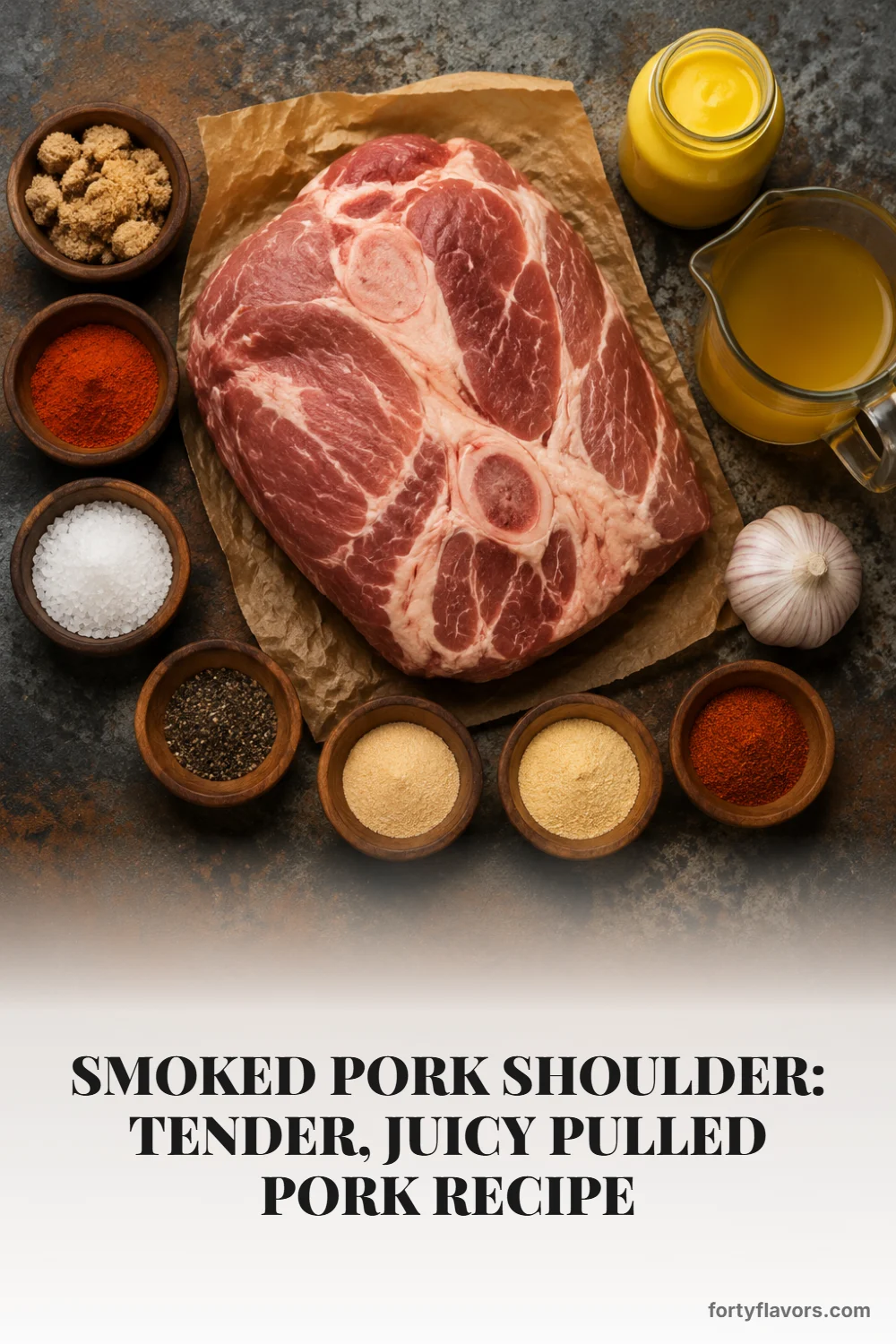
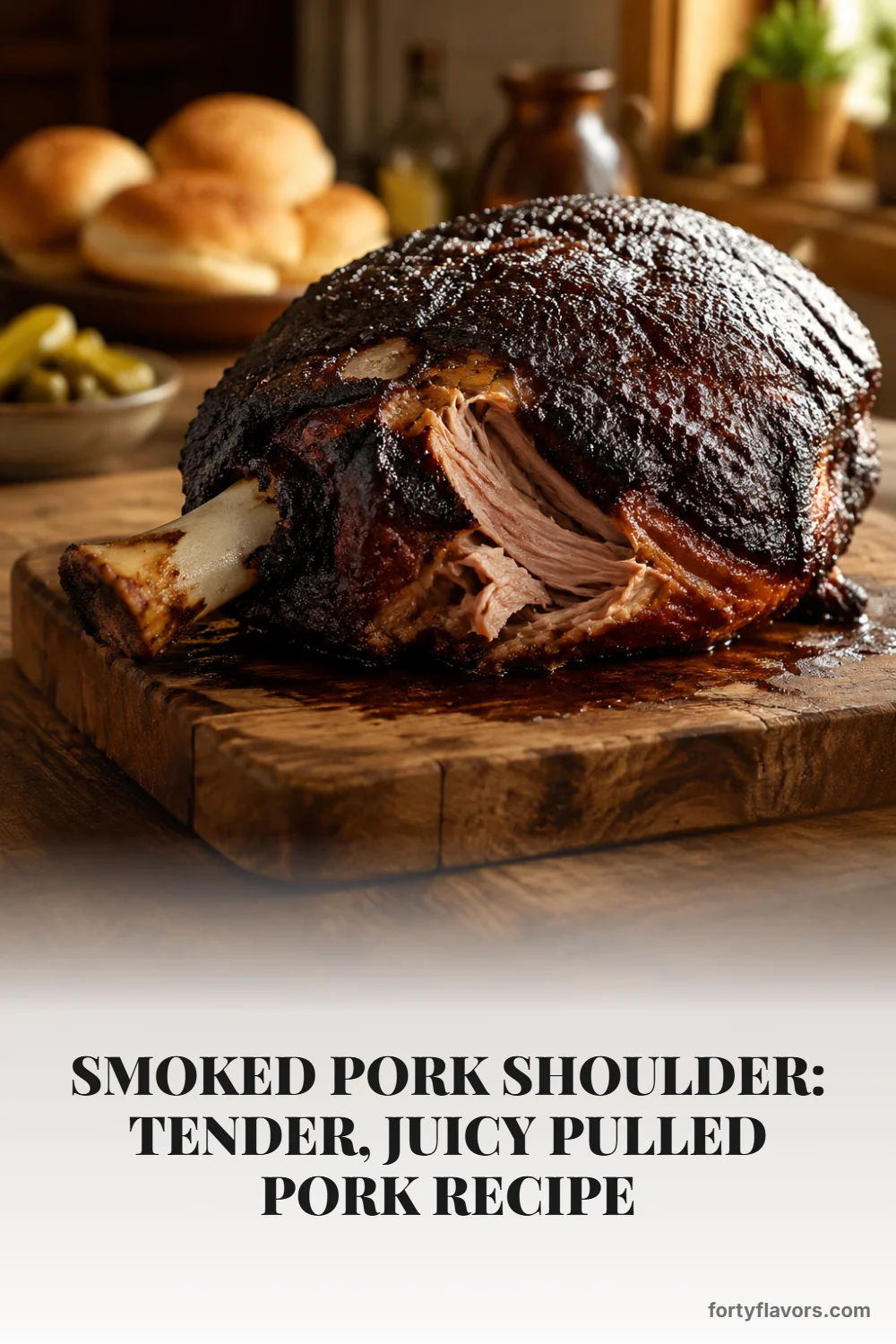
Here's the trick question that trips up every first-timer: a "pork butt" is not the butt at all. Both pork shoulder and Boston butt come from the front shoulder of the pig — the butt is the upper portion (fattier, more marbled, the gold standard for pulled pork), and the picnic shoulder is the lower portion (leaner, with a tougher skin cap). When in doubt, ask your butcher for a bone-in Boston butt.
Always bone-in if you can swing it. The blade bone conducts heat into the center of the roast, helps the muscle hold its shape during the long cook, and gives you that famous "the bone slides clean out" doneness test. Boneless works in a pinch, but it cooks unevenly and loses moisture faster.
An 8 to 10 pound shoulder is the sweet spot. It's big enough to develop a real bark and survive a long smoke without drying, but small enough to fit on a standard smoker and finish in a single day. Anything over 12 pounds and you're looking at an overnight cook (which, frankly, is half the fun).
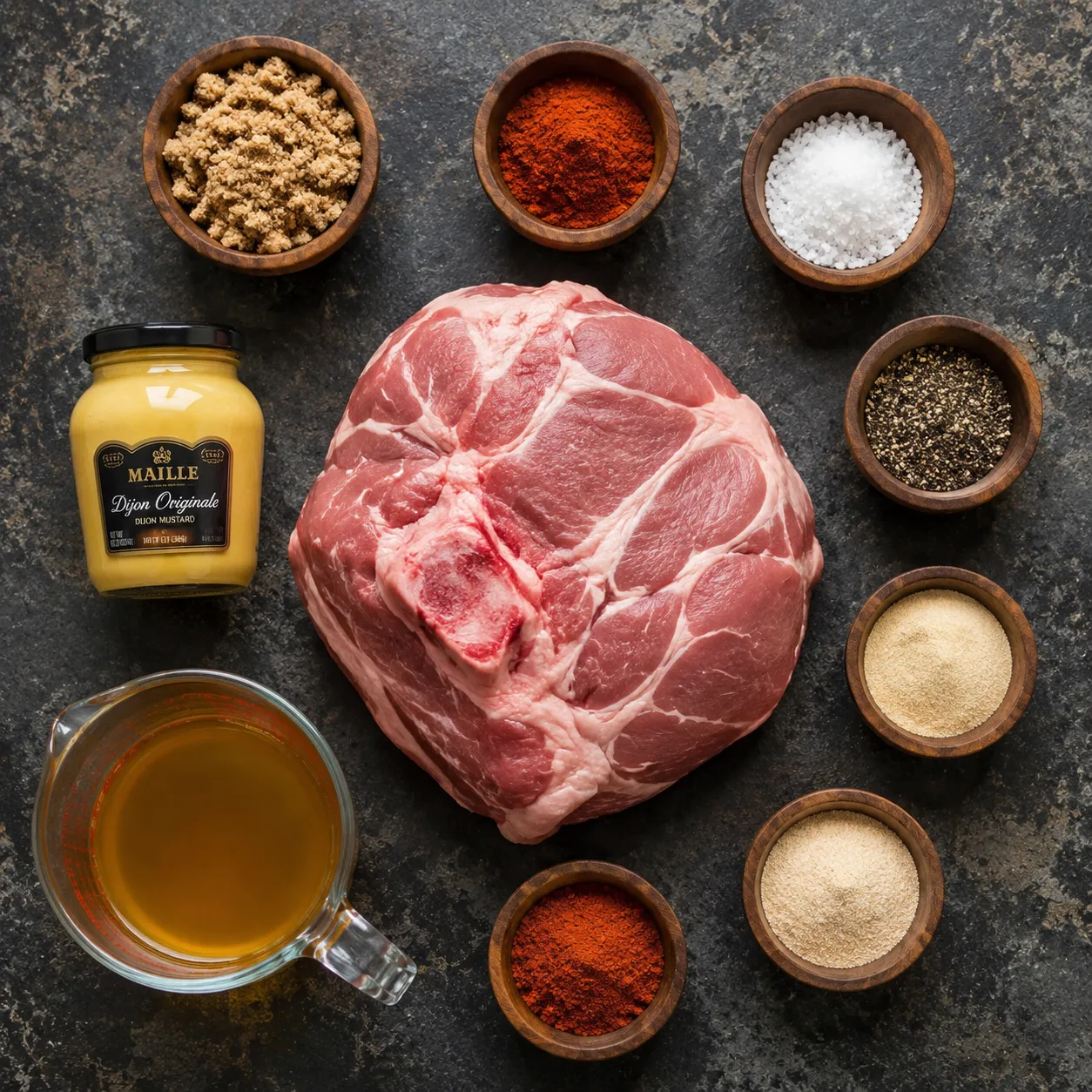
One 8-pound bone-in Boston butt, fat cap roughly 1/4 inch thick. Trim any thick silver skin and gnarly fat pockets, but leave the cap — it bastes the meat as it renders.
This homemade BBQ dry rub is built on brown sugar (caramelization and bark), smoked paprika (color and depth), kosher salt (seasoning all the way through), coarse black pepper, garlic and onion powders, and a whisper of cayenne for warmth. Mix it in a bowl, breaking up any sugar clumps with your fingers.
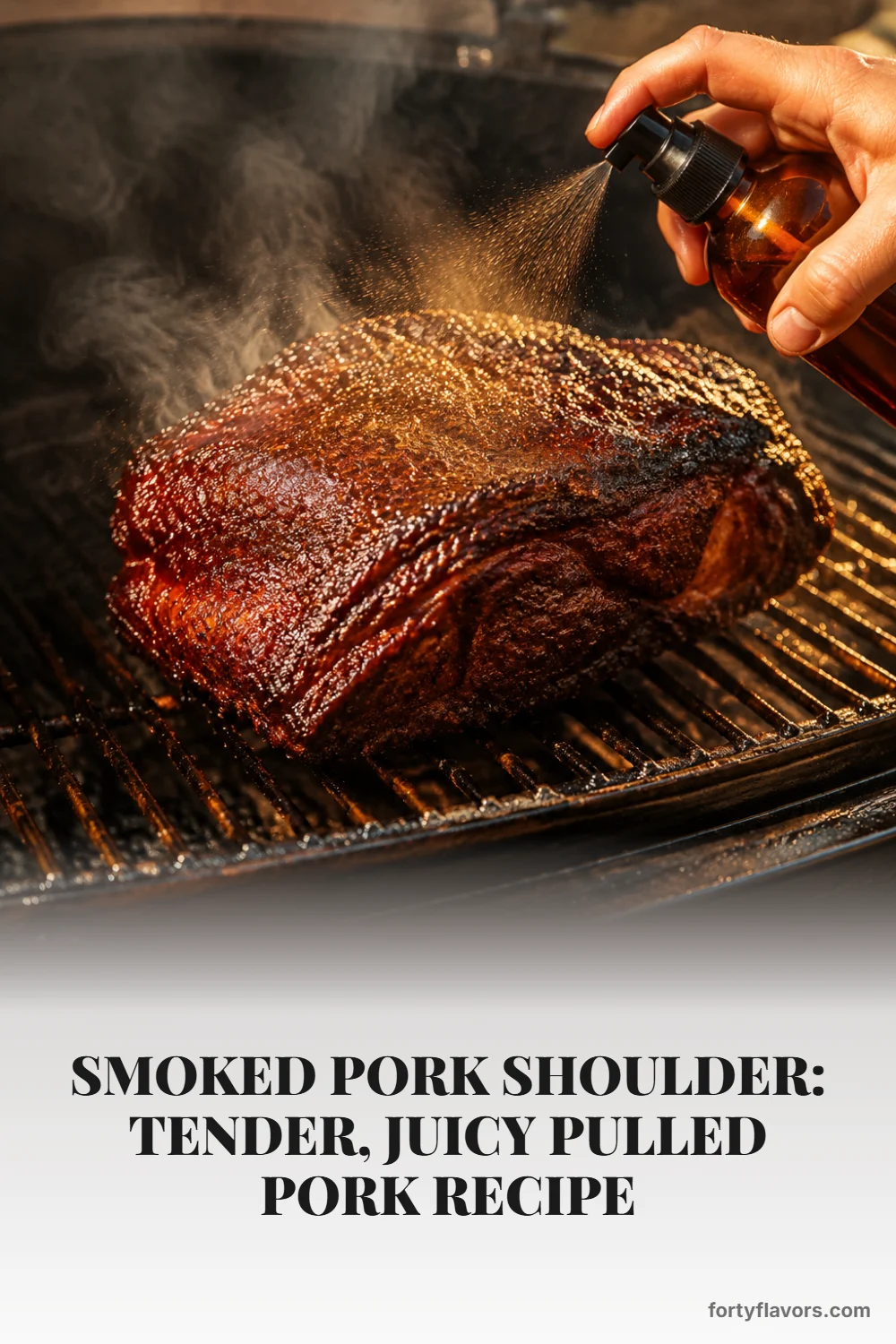
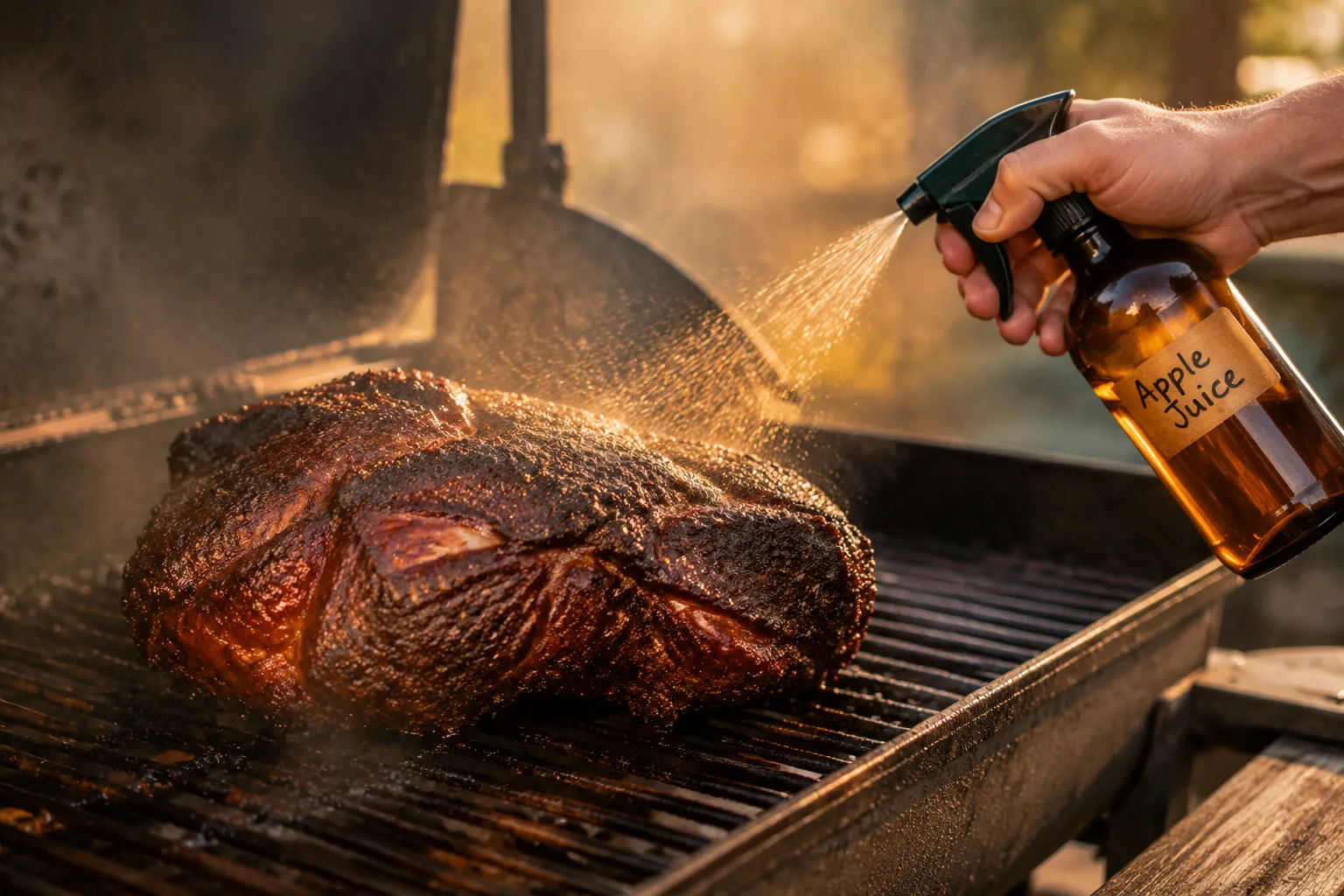
Yellow mustard is the binder — don't worry, it cooks off and you won't taste it. Apple juice goes in a spray bottle for spritzing every hour or so once the bark sets. It keeps the surface tacky, helps smoke cling, and adds a faint orchard sweetness.
The honest answer to how long to smoke pork shoulder: longer than you think, and definitely longer than the internet promised. Plan for 1.5 to 2 hours per pound at 225°F. An 8-pound shoulder typically runs 12 to 16 hours including the rest. Always cook to internal temp, never to the clock.
At 225°F, expect ~90 minutes per pound. Bump the smoker to 250°F and you can shave that down to ~75 minutes per pound. Above 275°F you'll lose some bark quality and tenderness, but it works in a pinch.
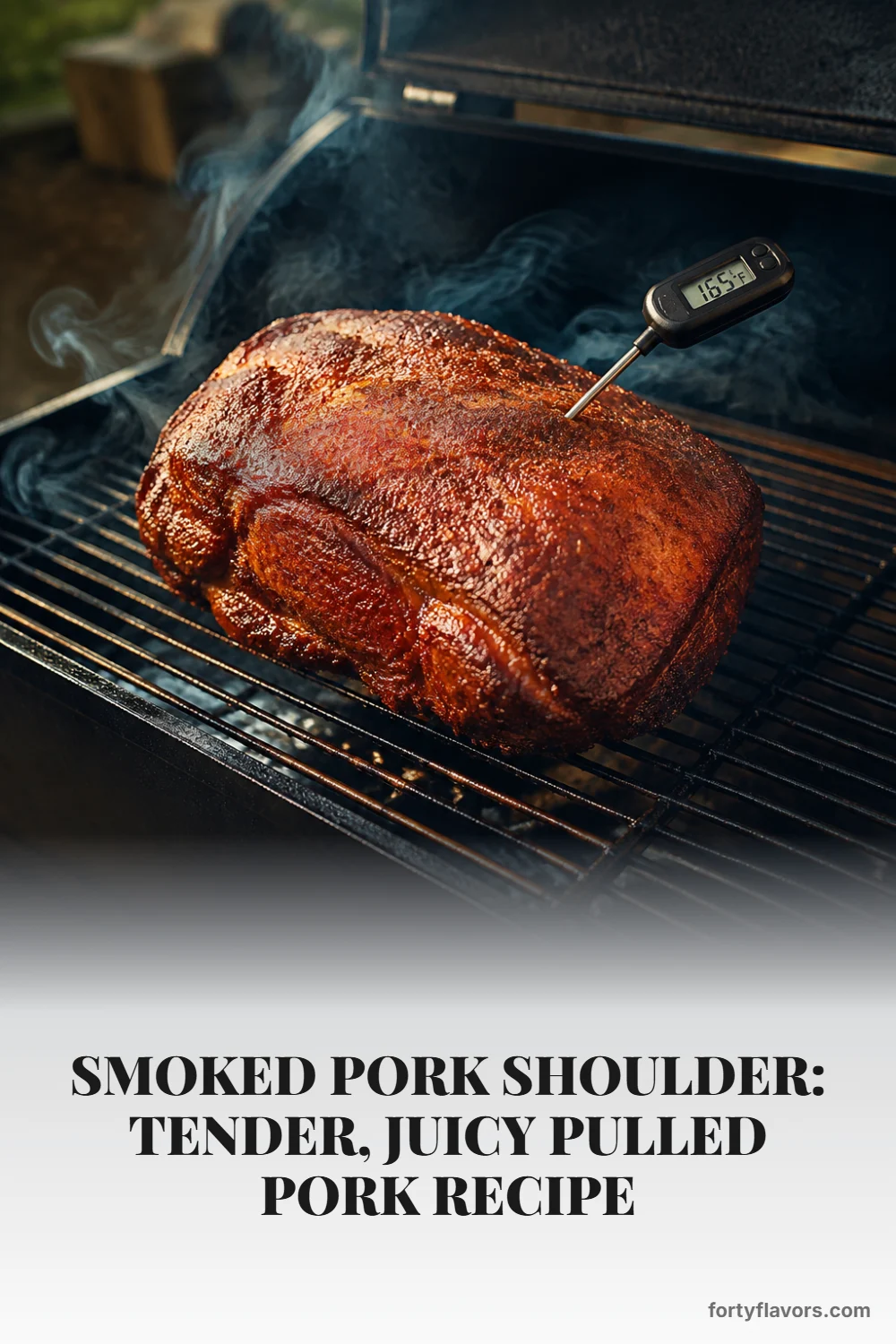
Track three numbers: 165°F (wrap point — bark is set, stall begins), 195°F (sliceable doneness), and 203°F (pull-apart tender, the magic number). The real test is feel — a probe should slide into the meat like it's room-temperature butter.
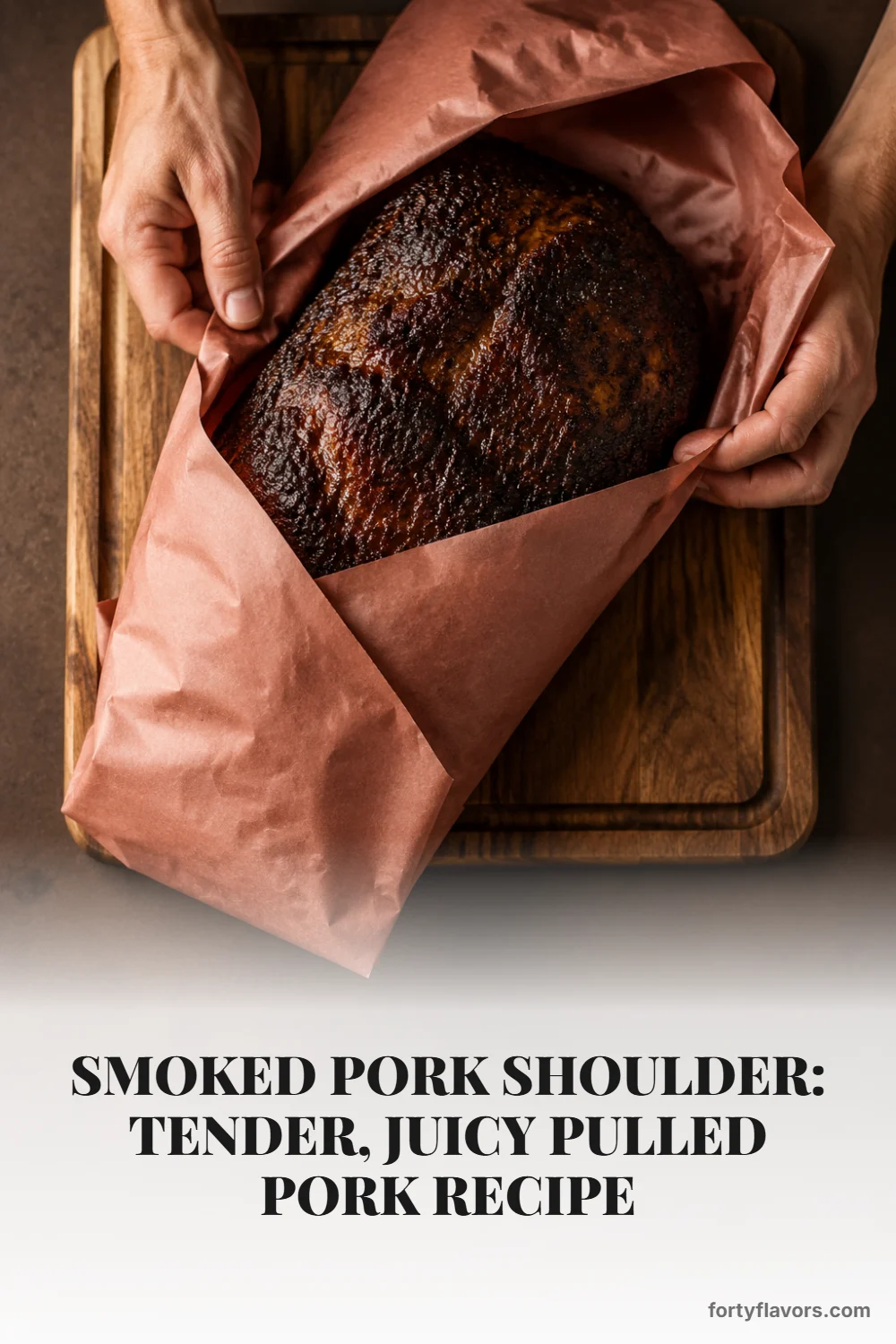
Around 160-170°F the meat's internal temperature flatlines, sometimes for hours, as moisture evaporates from the surface and cools the meat. This is the stall, and it's where most beginners panic. Don't crank the heat. Either wait it out (longer bark) or wrap in butcher paper to push through (faster, still great bark).
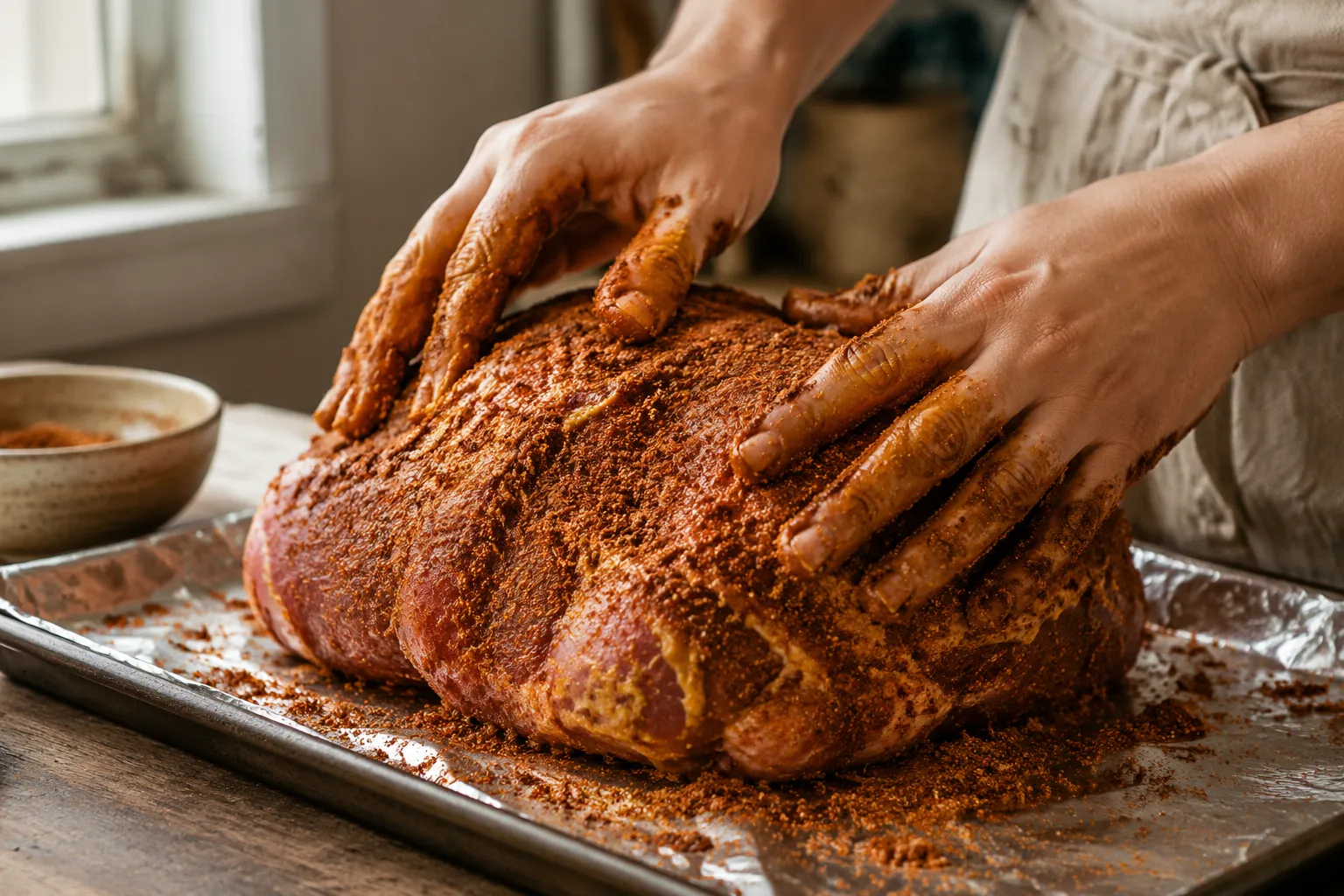
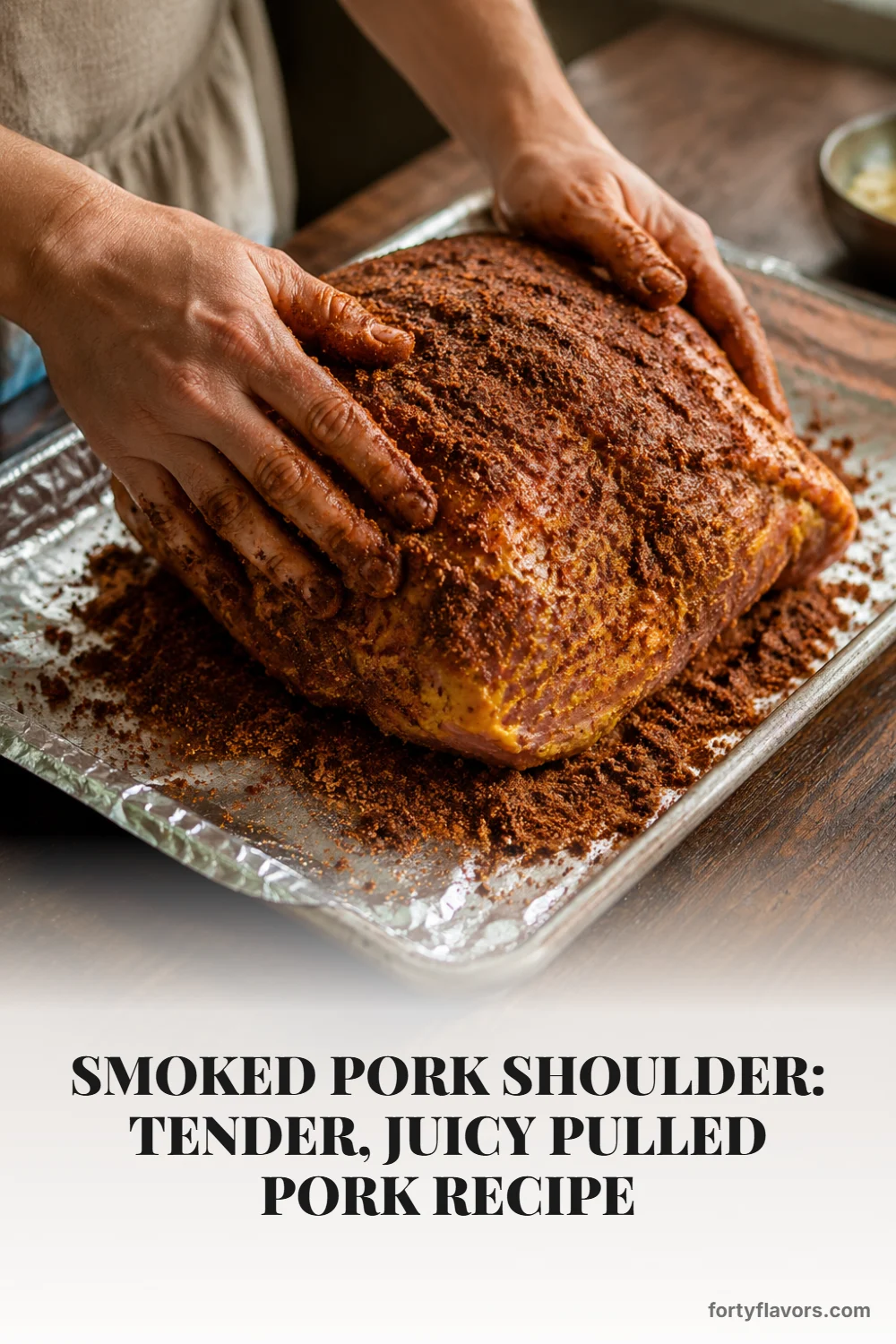
Pat the shoulder dry. Trim the fat cap to about 1/4 inch and remove any loose flaps. Slather all sides with yellow mustard, then dust generously with the dry rub, pressing it in. Let it sit at room temperature for 30-45 minutes while the smoker preheats — or rub it the night before and refrigerate uncovered for a deeper crust.
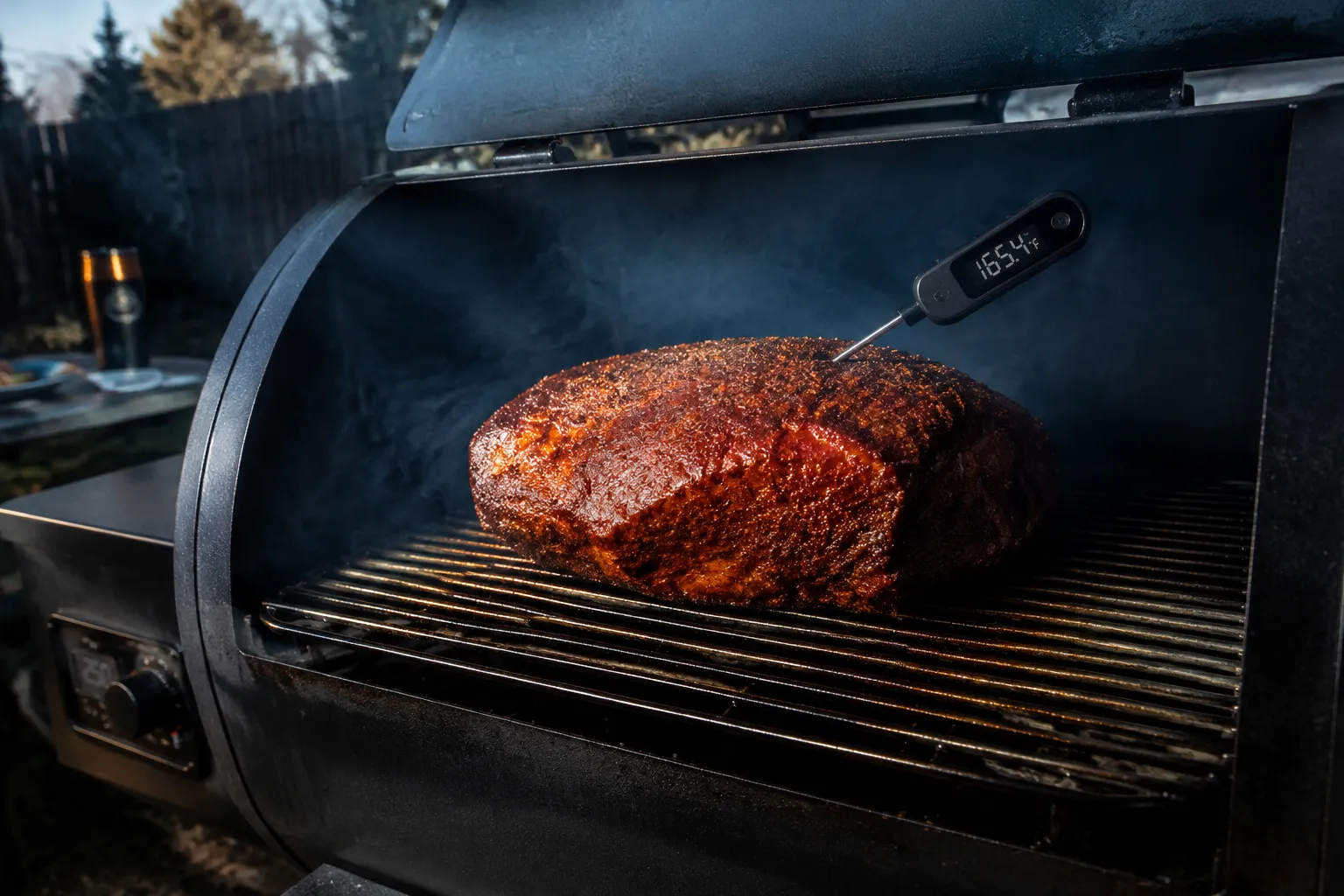
Preheat to a steady 225°F with your chosen wood loaded. You want thin, wispy blue smoke — not thick white billows, which will leave a creosote bitterness. Place a water pan in the chamber for humidity. Put the shoulder fat-cap-up so the rendering fat trickles down through the meat.
After the first 3 hours (no peeking before then — the bark needs to set), start spritzing with apple juice every 45-60 minutes. Around hour 6-7, when the internal temperature reads 165°F and the bark is dark mahogany, pull the shoulder and wrap it tightly in pink butcher paper. Return it to the smoker.
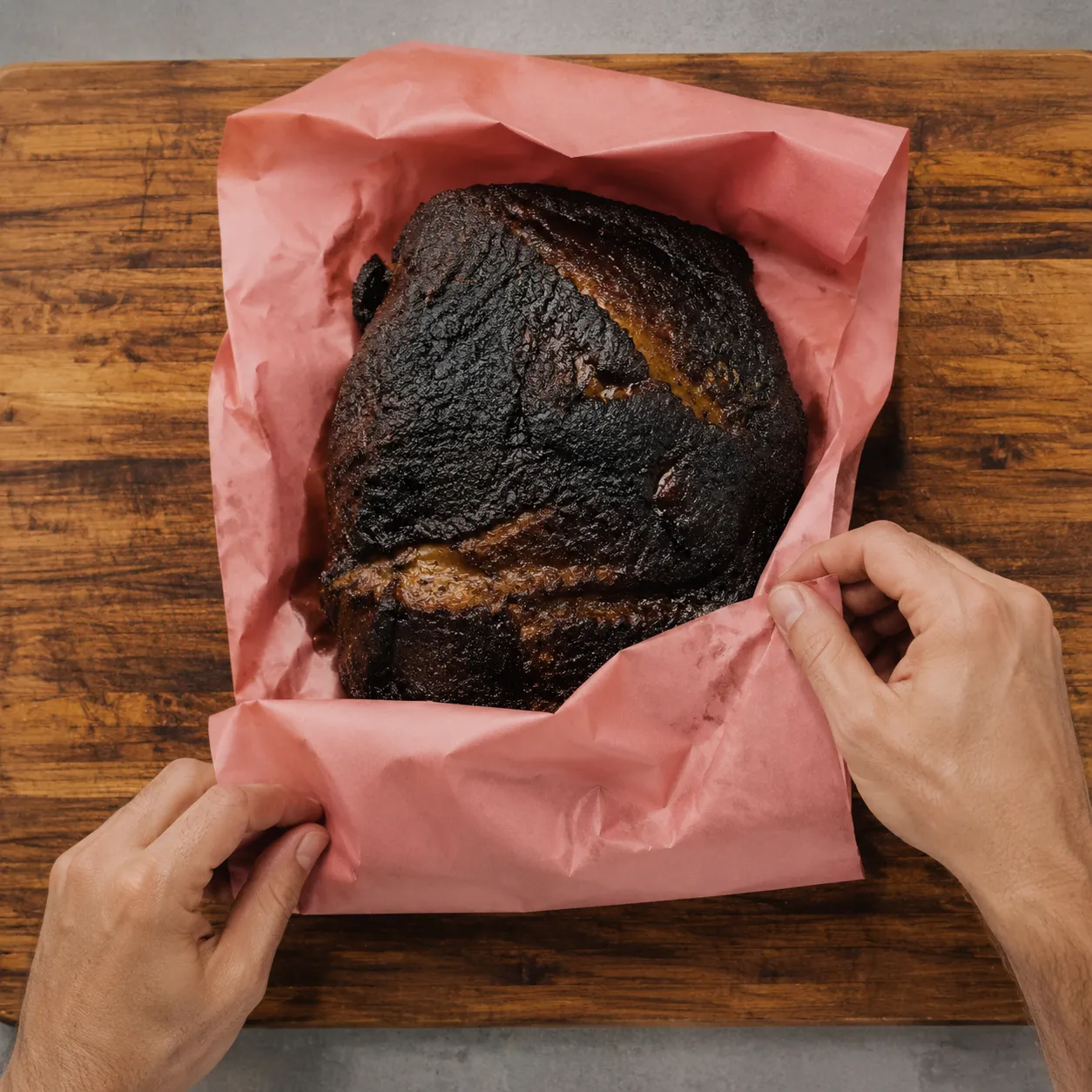
Continue cooking until the internal temperature hits 203°F and a probe slides in with zero resistance. This usually takes another 3-5 hours after wrapping. Pull from the smoker, leave it in the paper, and rest in a dry cooler for at least 1 hour (2 is better). Then unwrap, pull the bone, and shred with two forks or claws, mixing the bark back through.
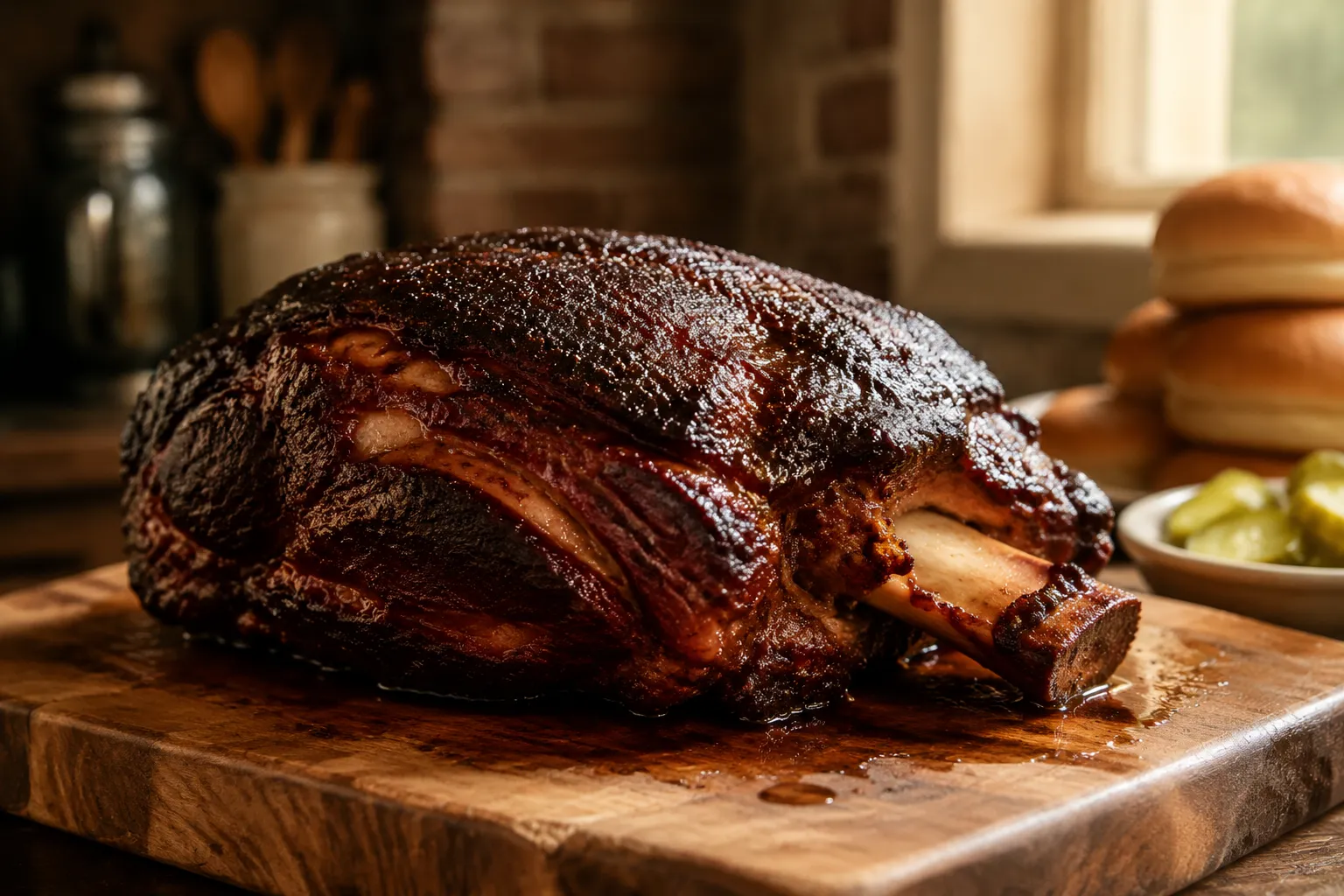
Pork loves fruit and nut woods. Picking the best wood for smoking pork is more about balance than firepower — you want smoke that complements the sweet rub, not bulldozes it. The same woods that work for smoked pork ribs and smoked pork chops translate beautifully here.
Hickory is the classic Southern BBQ wood — bold, bacon-y, slightly sweet. Use it solo if you want that iconic smokehouse flavor. Apple is mild and fruity, perfect for longer cooks where you don't want the smoke to overwhelm. Cherry adds a beautiful reddish-mahogany color and a subtle sweetness. Pecan is like hickory's gentler cousin — nutty, rich, and never harsh.
A 50/50 hickory and apple blend is, honestly, hard to beat for a smoked pork shoulder. Cherry-pecan is another winner if you want competition color and a softer smoke profile. Avoid mesquite for long cooks — it's too aggressive and turns acrid after a few hours.
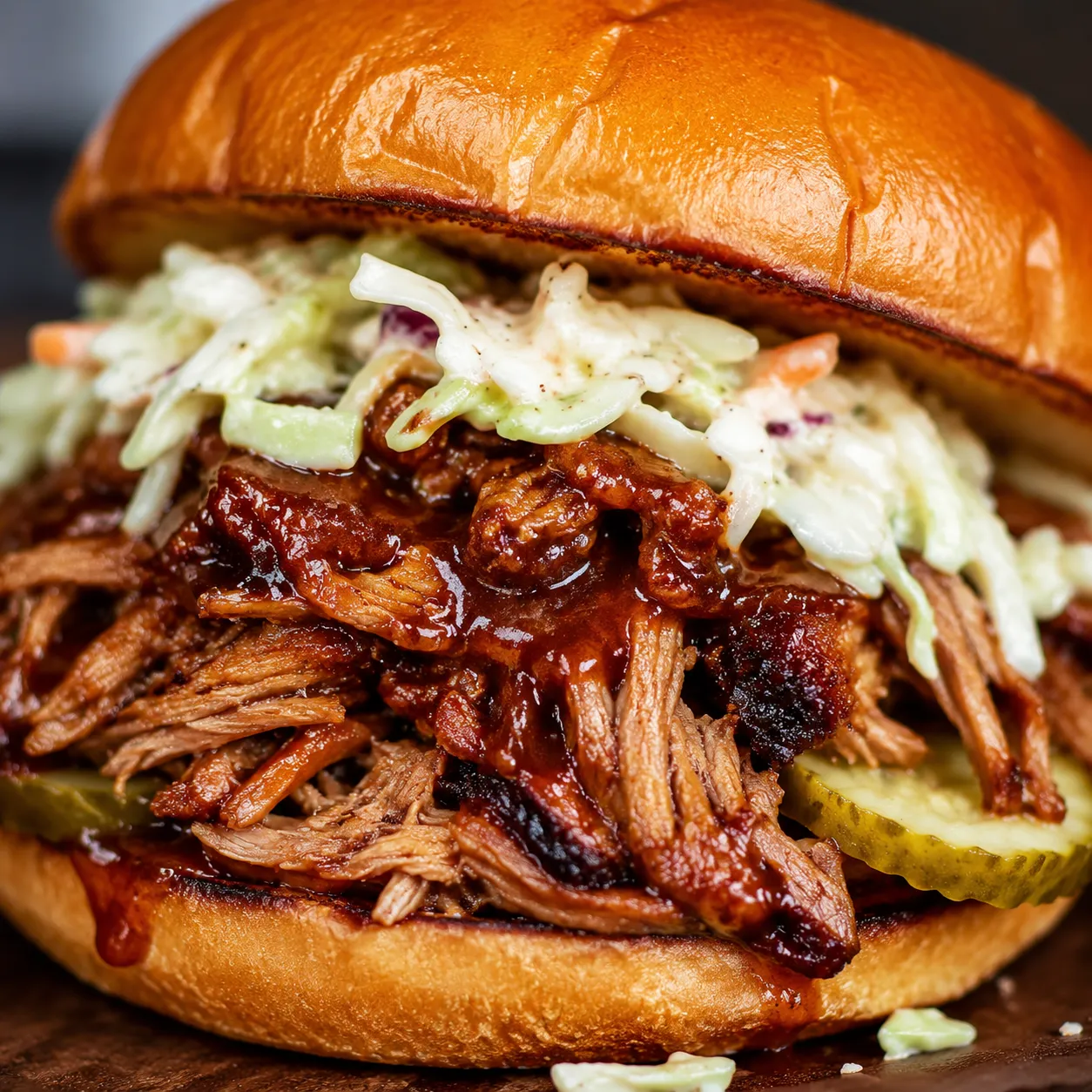
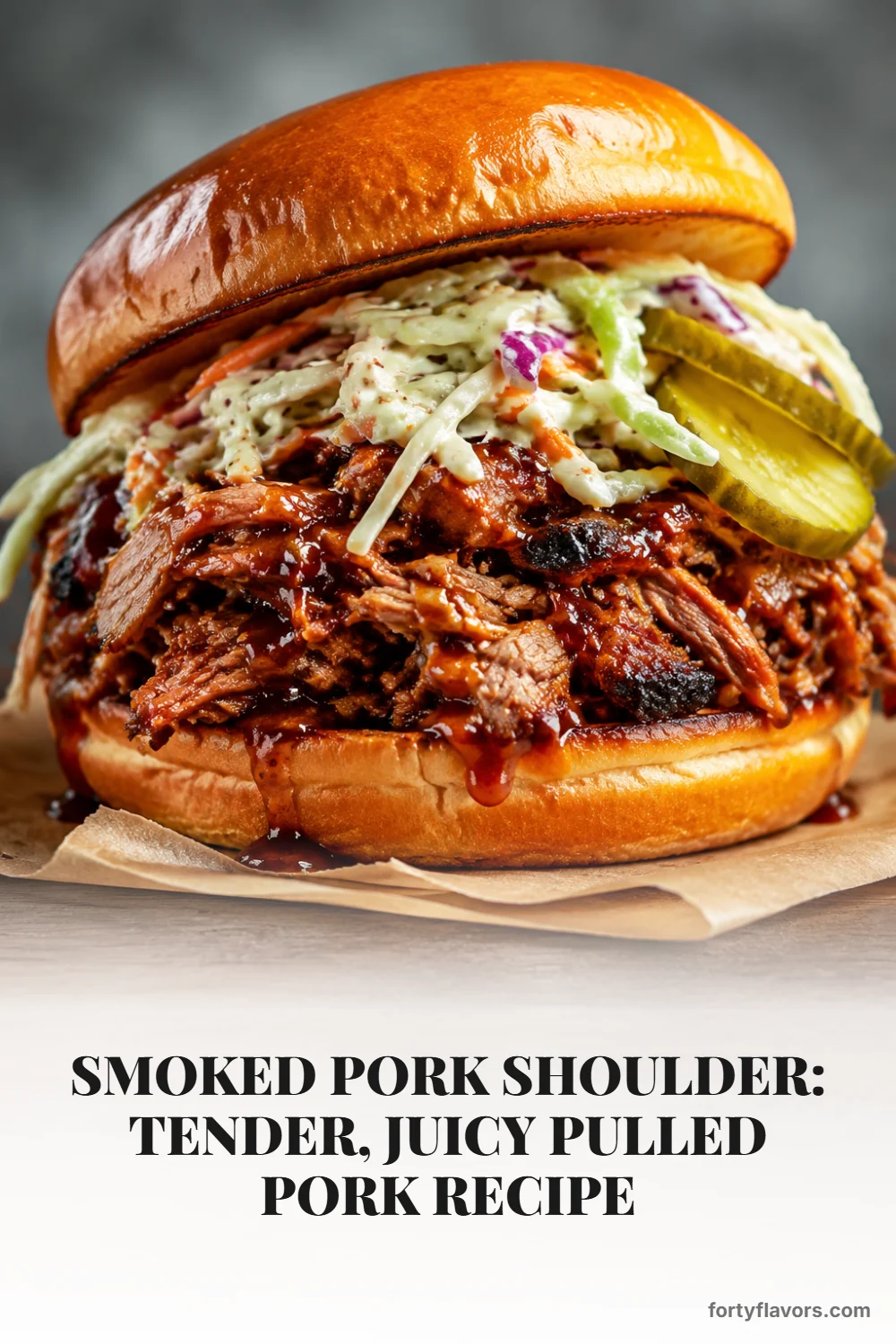
Pulled pork sandwiches on toasted brioche with crunchy slaw and a drizzle of Carolina vinegar BBQ sauce are the move 90% of the time. The vinegar cuts the richness and brightens every bite. Beyond that: pulled pork tacos with pickled red onion and cilantro, loaded nachos, baked potato bowls with cheddar and scallions, breakfast hash with crispy eggs, or pile it onto mac and cheese for a meal that will end relationships in your honor.
For a proper backyard spread, serve alongside cornbread, baked beans, coleslaw, pickles, and white bread for sopping up juices. The leftovers (if any) are arguably better the next day.
Smoking a pork shoulder is less a recipe than it is a relationship with your smoker and a thermometer. Trust the temperature, not the clock. Resist the urge to peek before the bark sets. Let it rest when every instinct screams to tear it apart. Do those three things and you'll turn out pulled pork that makes your neighbors find reasons to walk by your fence.
Once you've nailed the base method, the same shoulder can take you in a dozen directions. Swap rubs and sauces to chase a whole new flavor profile without changing the technique.
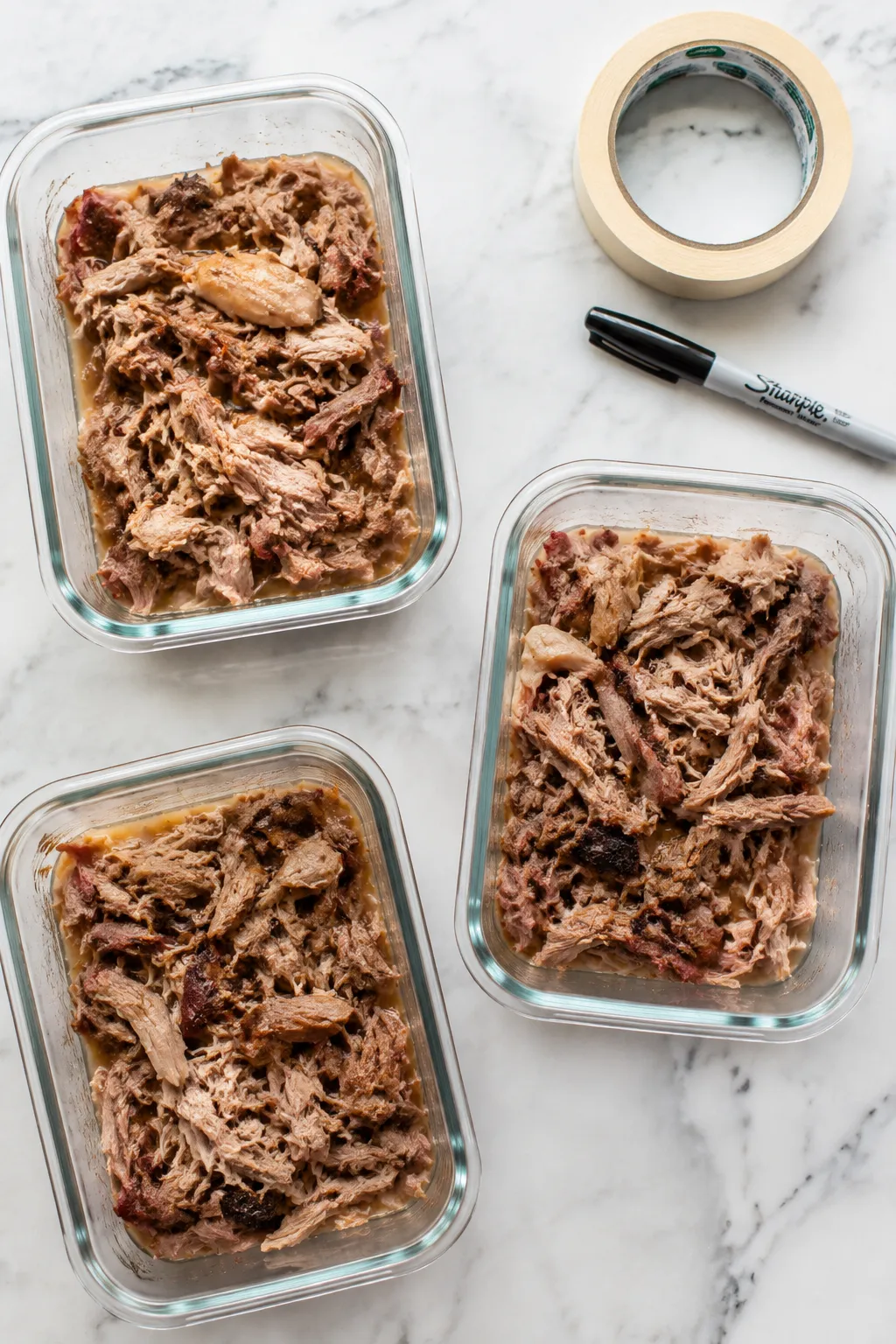
Refrigerate shredded pulled pork in airtight containers with a splash of the cooking juices for up to 4 days. For longer storage, portion into freezer bags or vacuum-sealed pouches (flatten for easy stacking) and freeze for up to 3 months. Always include some of the rendered juices — they're what keeps the meat from drying out on reheat.
To reheat without drying: spread pork in a baking dish, add a few tablespoons of broth, apple juice, or the reserved juices, cover tightly with foil, and warm at 300°F for 20-25 minutes (from refrigerated). For frozen pork, thaw overnight in the fridge first. The microwave works in a pinch — cover with a damp paper towel and heat in 60-second bursts. Avoid boiling or stovetop reheating without liquid; you'll end up with shoe leather.
Hover any image and hit “Pin it” to save it to your Pinterest boards.