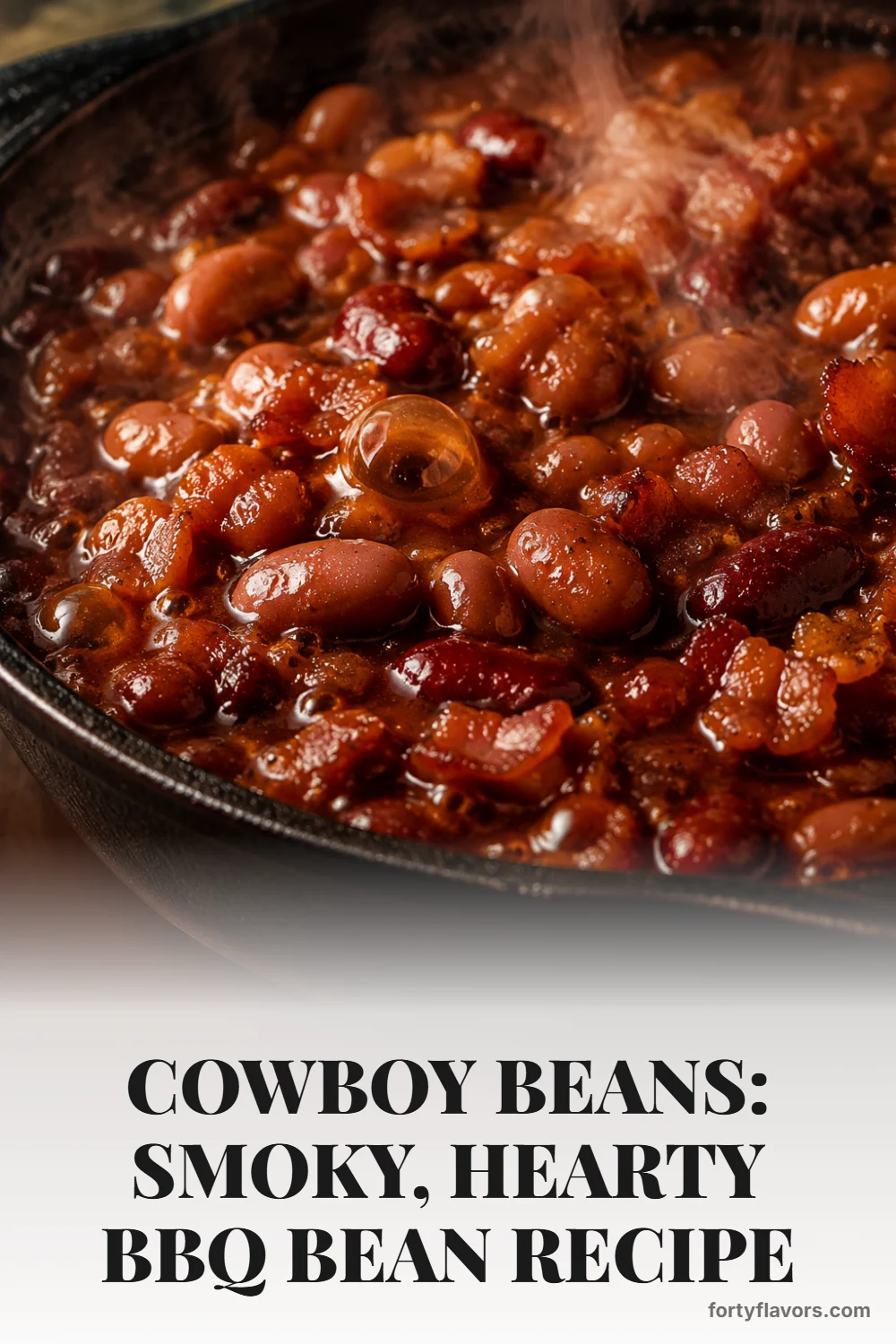
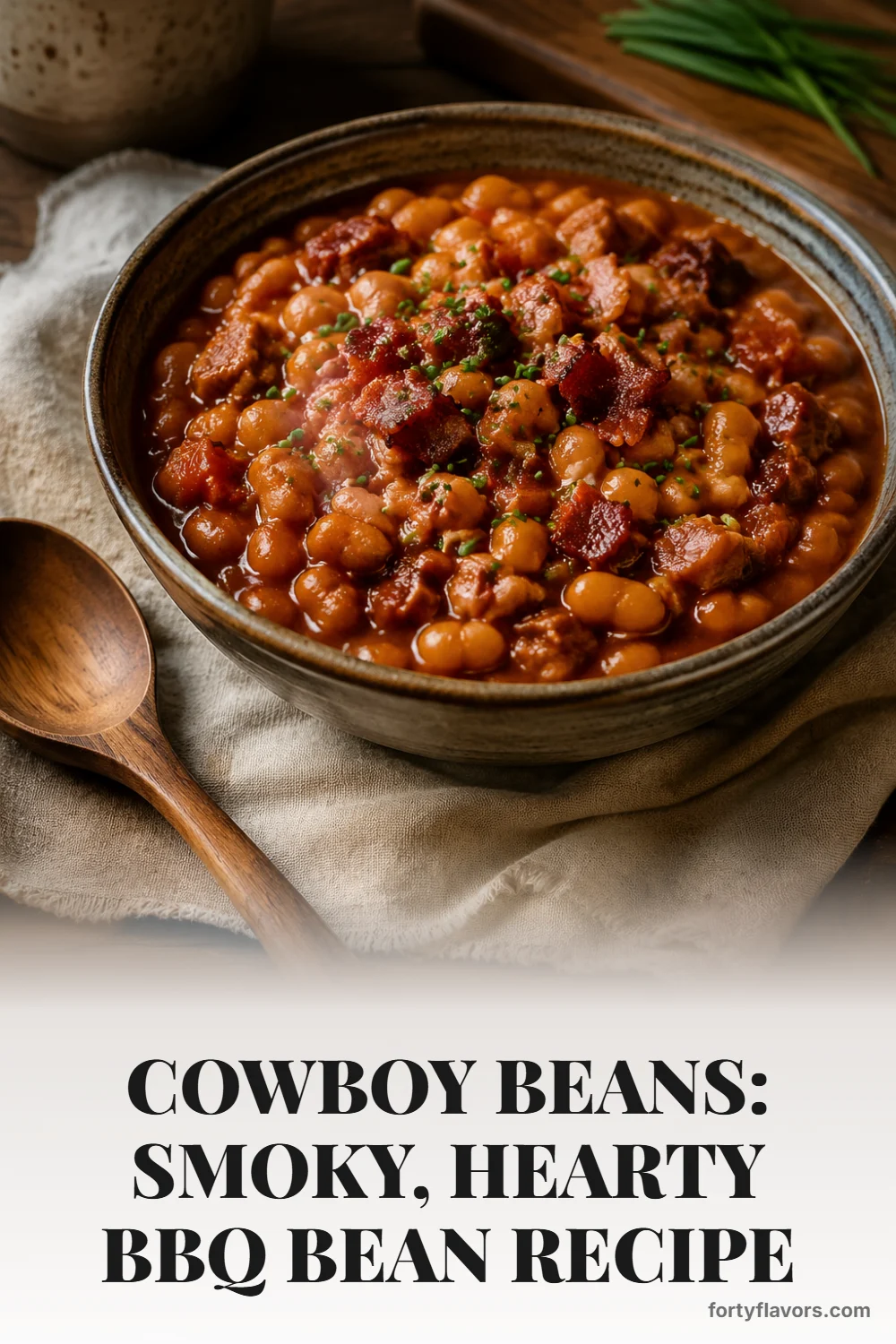
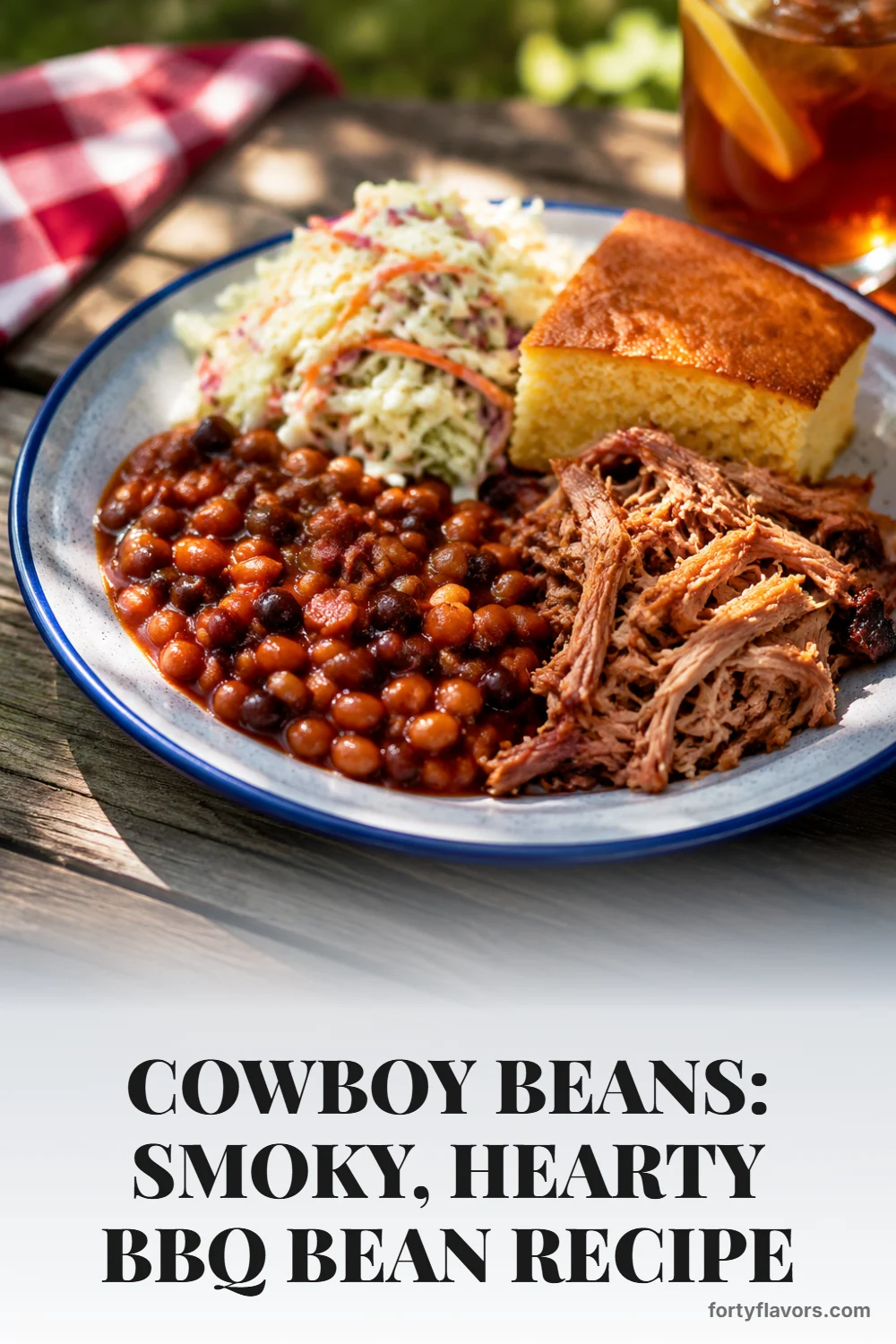
Cowboy Beans: Smoky, Hearty BBQ Bean Recipe
Ingredients
Scale
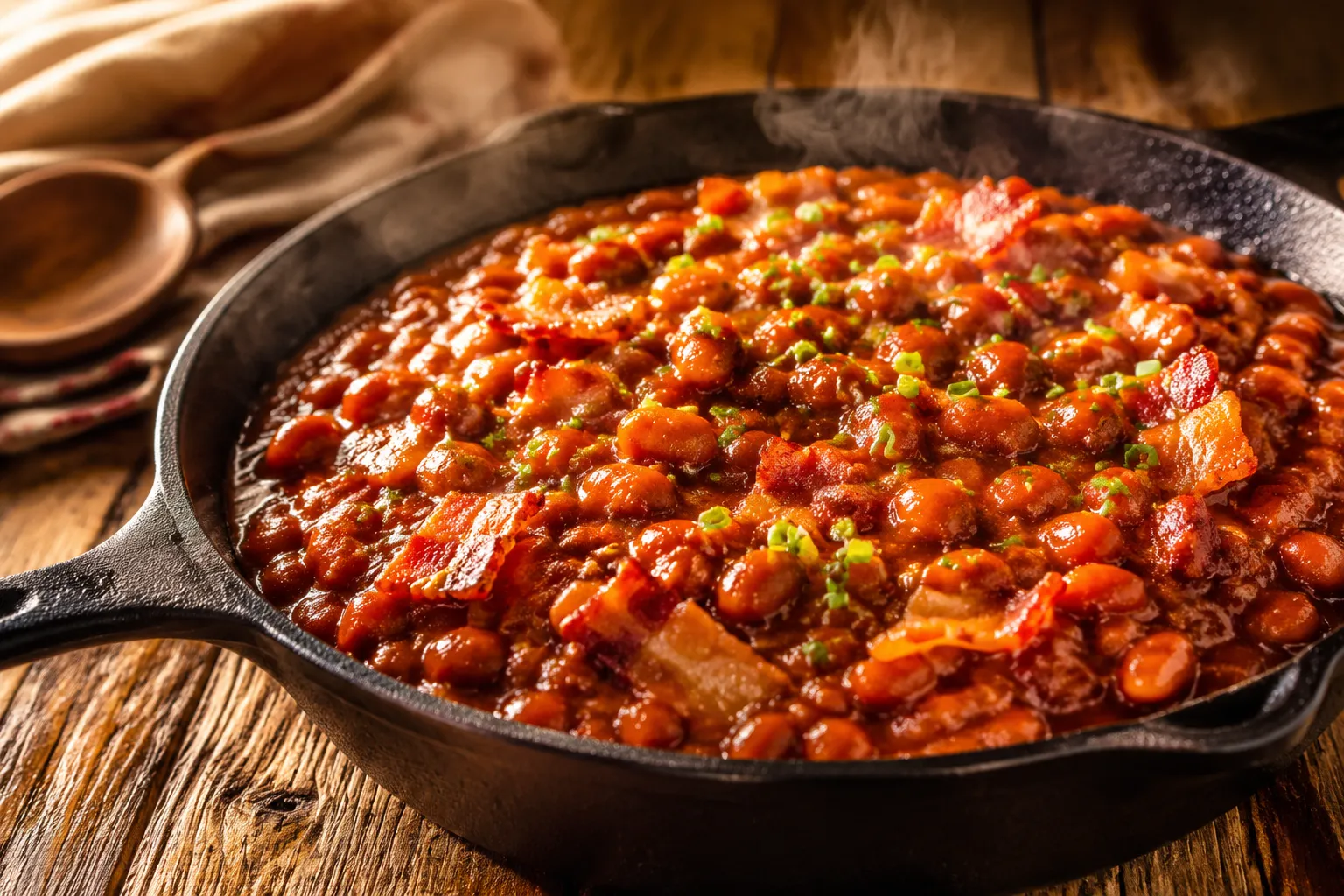
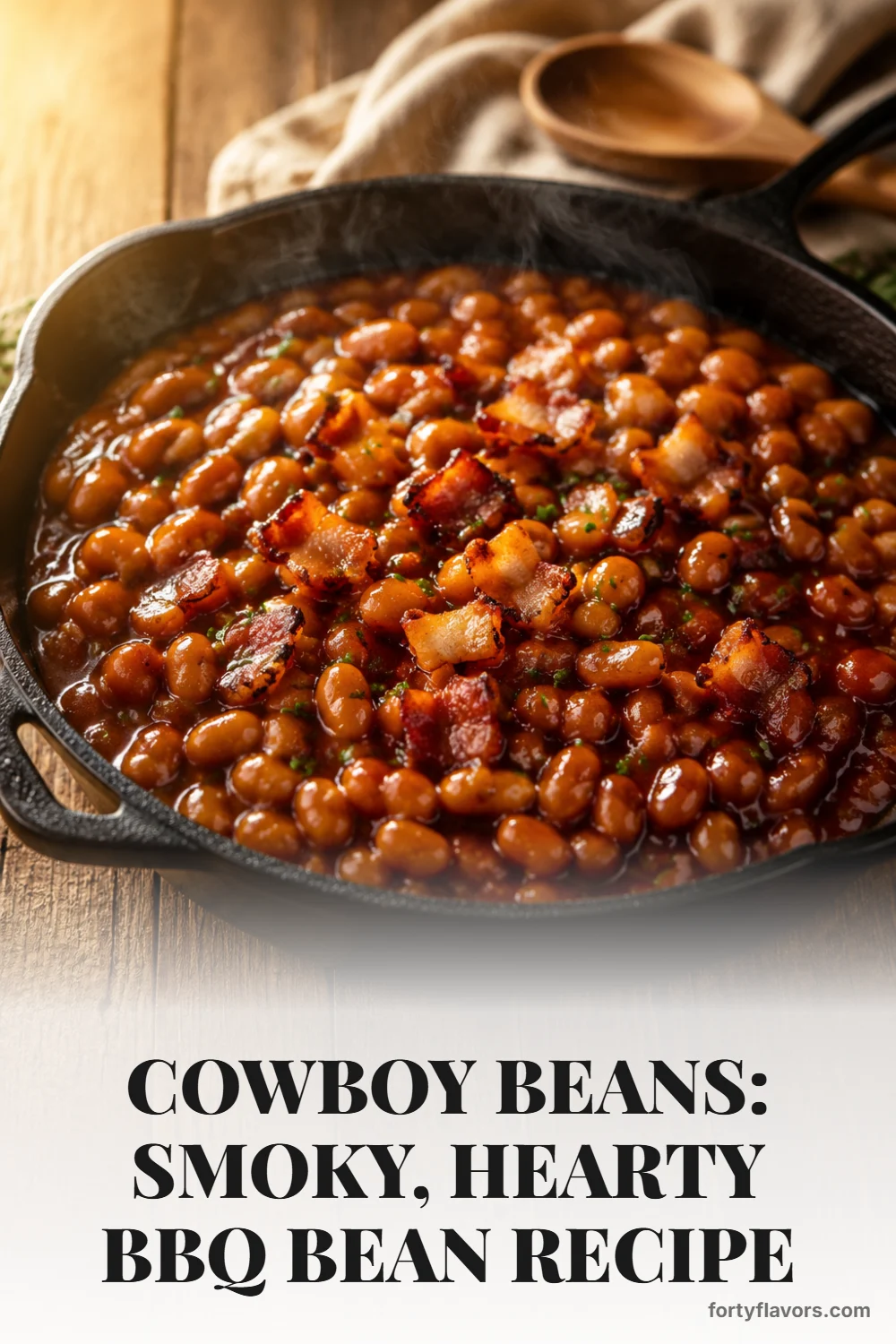
These cowboy beans are smoky, saucy, and packed with bacon and ground beef — the kind of stick-to-your-ribs side dish that steals the show at every cookout.
Cowboy beans are the smoky, saucy, stick-to-your-ribs BBQ beans that make a cookout plate feel complete. They are loaded with crispy bacon, browned ground beef, tender pinto beans, kidney beans, and pork and beans, all simmered together in a sweet-tangy sauce with brown sugar, mustard, Worcestershire, and smoked paprika.
Think of this as the hearty skillet cousin of your favorite baked beans recipe, only faster and meatier. Instead of baking for hours, this stovetop version builds deep, backyard-barbecue flavor in under an hour, making it just as welcome on a weeknight as it is at a potluck or tailgate.
The magic is in the balance: savory beef, salty bacon, sweet brown sugar, tangy ketchup and mustard, and that glossy BBQ sauce that pulls everything together. Serve it beside pulled pork sandwiches, grilled chicken, ribs, burgers, or a warm cornbread recipe, and do not be surprised when people go back for seconds before they touch the salad.
This dish is a hearty American bean skillet made with meat, beans, and a smoky-sweet barbecue sauce. It has the spirit of campfire cooking: simple pantry ingredients, big flavor, and enough substance to feed hungry people after a long day. While the exact origin varies by region and family tradition, the idea is rooted in chuckwagon-style meals where beans, cured pork, and whatever meat was available could stretch into a filling supper.
Today, you will see versions at backyard barbecues, church potlucks, game-day spreads, and weeknight dinner tables. Some are baked until sticky, some are slow-cooked all afternoon, and others, like this one, simmer right on the stovetop until thick and glossy. The result tastes like smoky baked beans but eats more like a full side dish with personality.
Beans have always been practical food: affordable, filling, shelf-stable, and easy to season. In the American West, dried beans could be cooked with salt pork, onions, molasses, or spices over a fire, turning humble ingredients into something deeply satisfying. Modern BBQ beans borrow that same hearty attitude but add the flavors home cooks love now: bacon drippings, ground beef, ketchup, mustard, and bottled or homemade BBQ sauce.
What makes the dish so enduring is that it can be both rustic and celebratory. A pot of beans can sit beside grilled meat at a summer cookout, travel well to a potluck, or become dinner with just toast or cornbread. It is unfussy, generous, and built for sharing.
The difference between these hearty BBQ beans and classic baked beans mostly comes down to meat, texture, and sauce. Traditional baked beans often use navy beans and a molasses-forward sauce, then bake low and slow until tender and sweet. This version usually includes a mix of beans, plus beef and bacon, which makes it chunkier and more savory.
Calico beans are close cousins, too. They typically include several colors and types of beans, often with ground beef and bacon, and they may lean slightly sweeter or more casserole-like depending on the recipe. This skillet version sits right in the middle: bold like barbecue, meaty like chili, and saucy like the best cookout side dish.
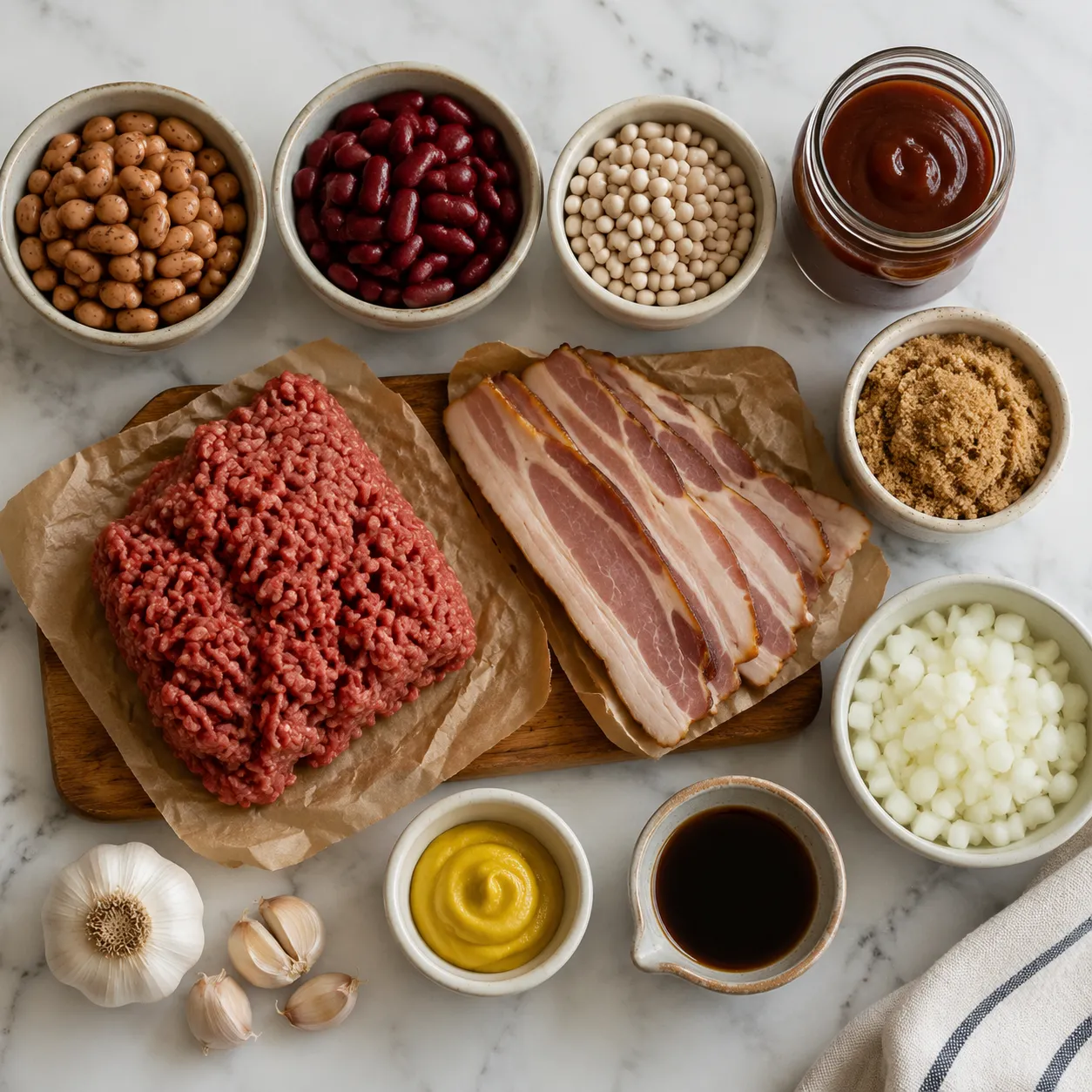
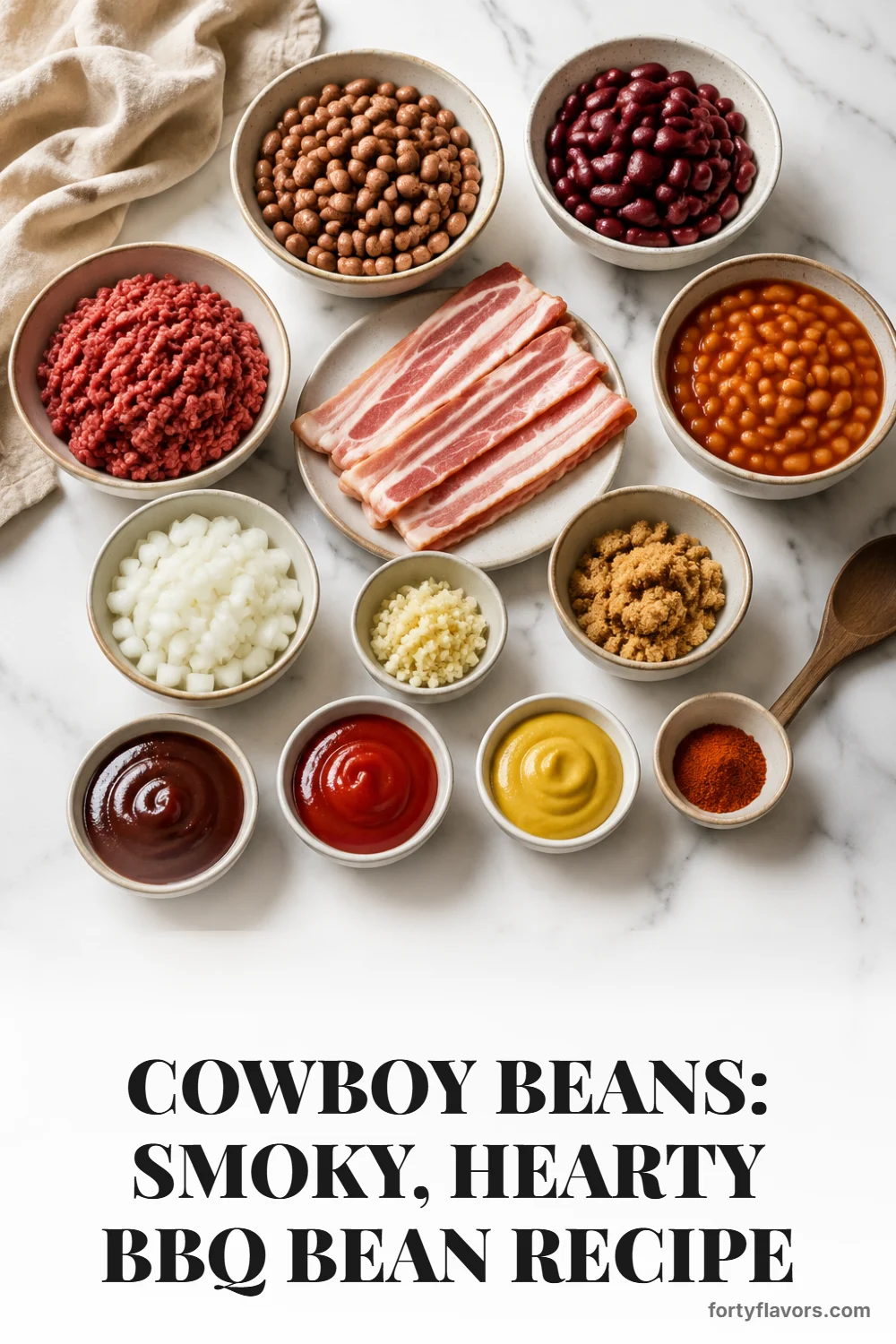
The ingredient list is wonderfully straightforward, but each part has a job to do. Pinto beans bring a creamy, earthy base; kidney beans add color and a firmer bite; and pork and beans provide a saucy, old-school backbone. Using a trio of beans gives the finished skillet more texture than a single-bean side.
For the meat, thick-cut bacon is the flavor starter. It renders in the skillet first, leaving behind smoky drippings that season the onion, garlic, and beef from the beginning. Ground beef turns the beans into something hearty enough to stand up to ribs, brisket, burgers, or even a simple green salad and biscuits.
The sauce is where the sweet-tangy BBQ character comes in. BBQ sauce, ketchup, brown sugar, yellow mustard, Worcestershire sauce, and smoked paprika create a glossy coating that clings to every bean. If you keep homemade BBQ sauce in the fridge, this is a perfect place to use it; otherwise, choose a bottled sauce you already love because its flavor will shine through.
Pinto beans are the heart of this recipe because they turn creamy as they simmer and soak up smoky sauce beautifully. Kidney beans hold their shape and add that deep burgundy color that makes the skillet look extra rich. Pork and beans bring a softer texture and a little built-in sauce, which helps everything come together quickly.
If you are pantry cooking, you have flexibility. Black beans can replace kidney beans for a Southwestern note, and great northern beans can make the mixture lighter and creamier. The key is to use about the same total amount of beans so the sauce ratio stays thick and spoonable.
The sauce should hit sweet, tangy, savory, and smoky all at once. Brown sugar gives that familiar barbecue sweetness, ketchup adds brightness, mustard cuts through the richness, and Worcestershire brings a deep, almost steak-sauce savoriness. Smoked paprika is the small-but-mighty ingredient that makes the whole pot taste like it spent time near a grill.
If your BBQ sauce is already very sweet, start with a little less brown sugar and adjust at the end. If it is spicy or vinegar-heavy, that can be delicious too, especially with the richness of bacon and beef. Taste after simmering, because the sauce concentrates as it reduces.
This cowboy beans recipe is designed to build flavor in layers, all in one big skillet or Dutch oven. You begin by crisping the bacon, then use those drippings to brown the onion, garlic, and ground beef. From there, the beans and sauce ingredients go in, and the whole pot simmers until thick, glossy, and deeply seasoned.
You do not need a long oven bake to get that sticky BBQ finish. The stovetop works beautifully because the wide surface area helps the sauce reduce quickly, while gentle stirring keeps the beans from catching on the bottom. A cast-iron skillet is great for heat retention, but any heavy pan or Dutch oven will do the job.
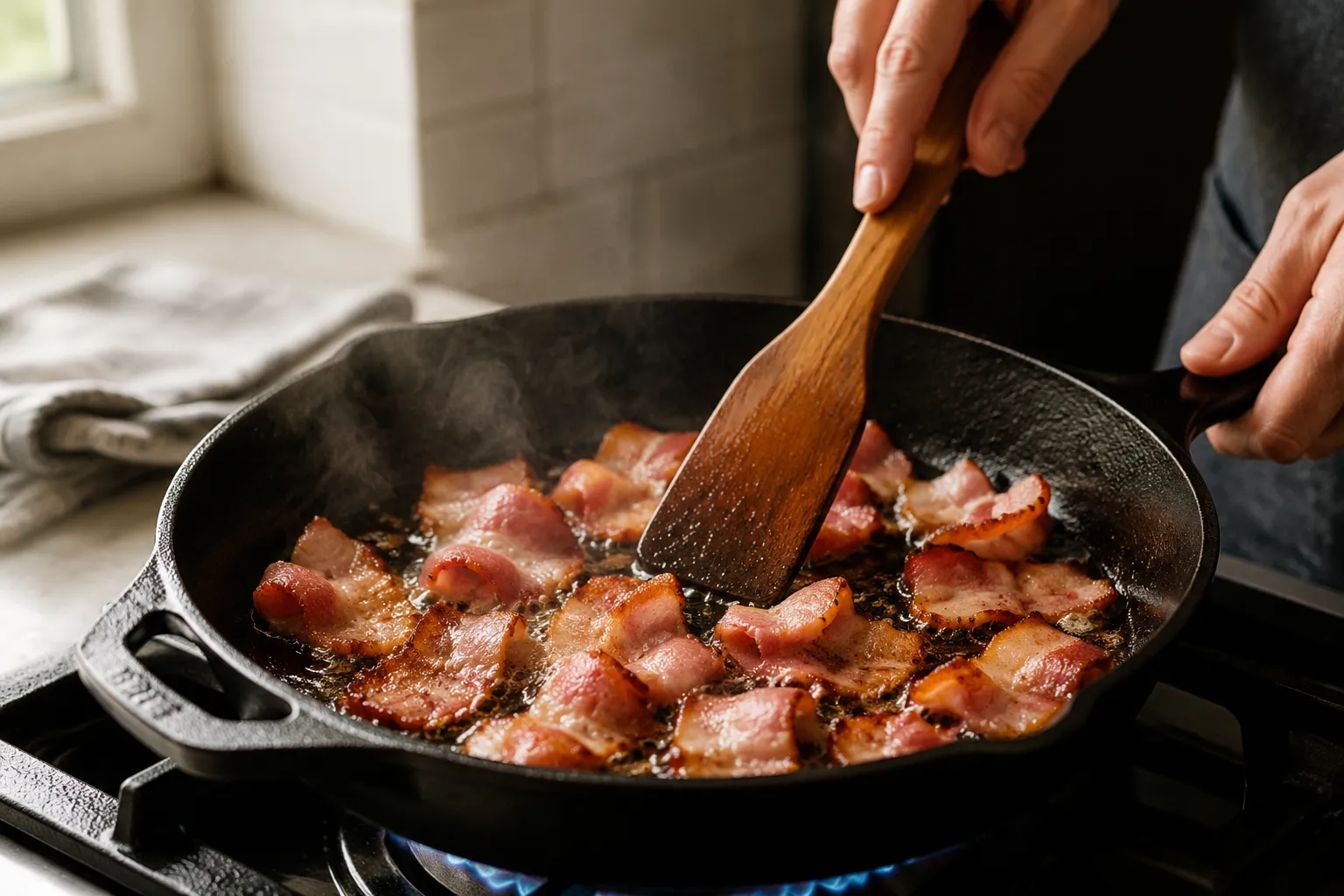
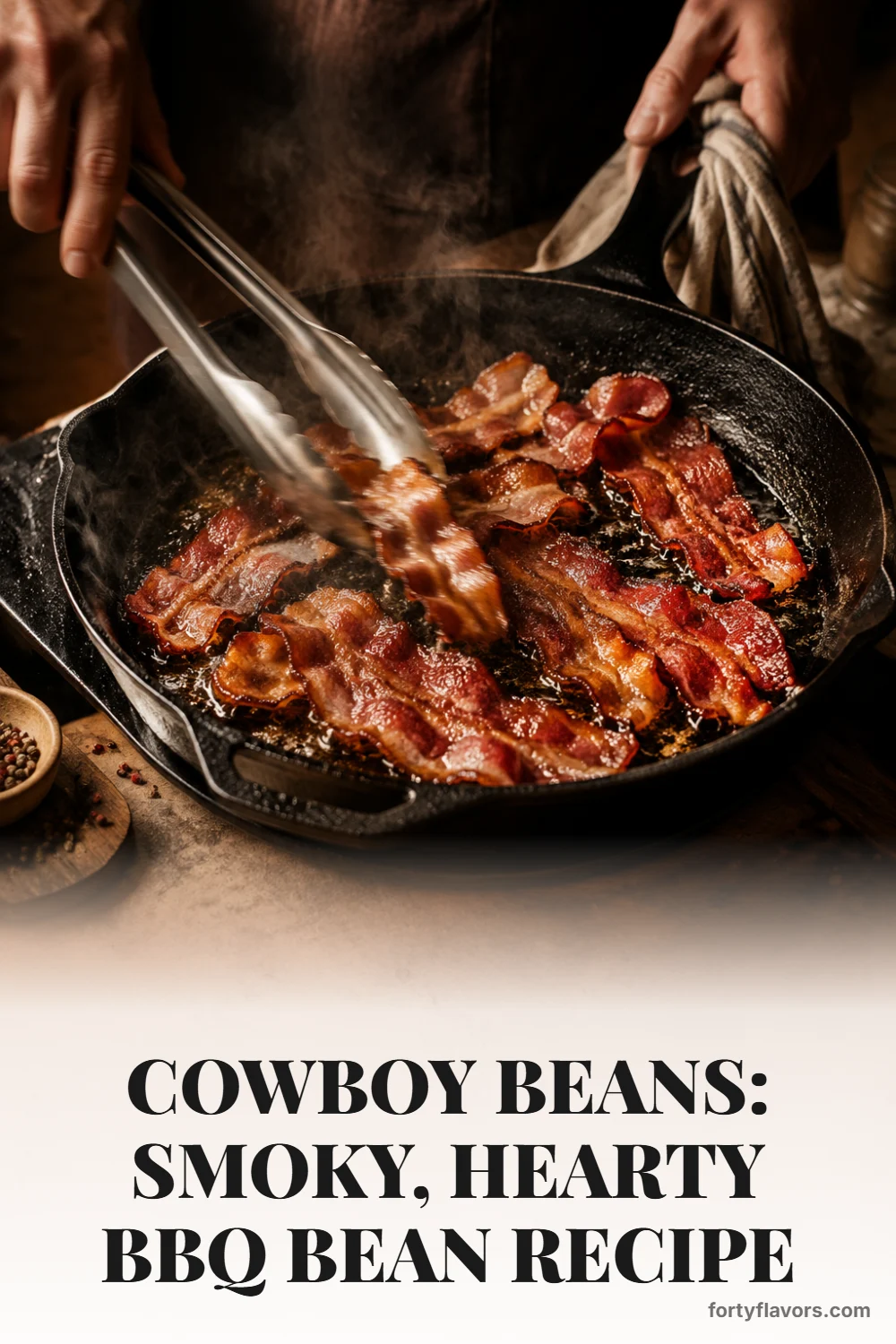
Chopped thick-cut bacon goes into a cold or moderately heated skillet and cooks until the pieces are crisp and the fat has rendered. That rendered fat is liquid gold here, because it becomes the base flavor for everything that follows. Scoop the bacon out once crisp, but leave a spoonful or two of drippings in the pan.
This step is also where you control texture. If you like little crisp pops of bacon in the finished dish, reserve some for sprinkling over the top at the end. If you prefer it fully integrated, stir it all back in before simmering.
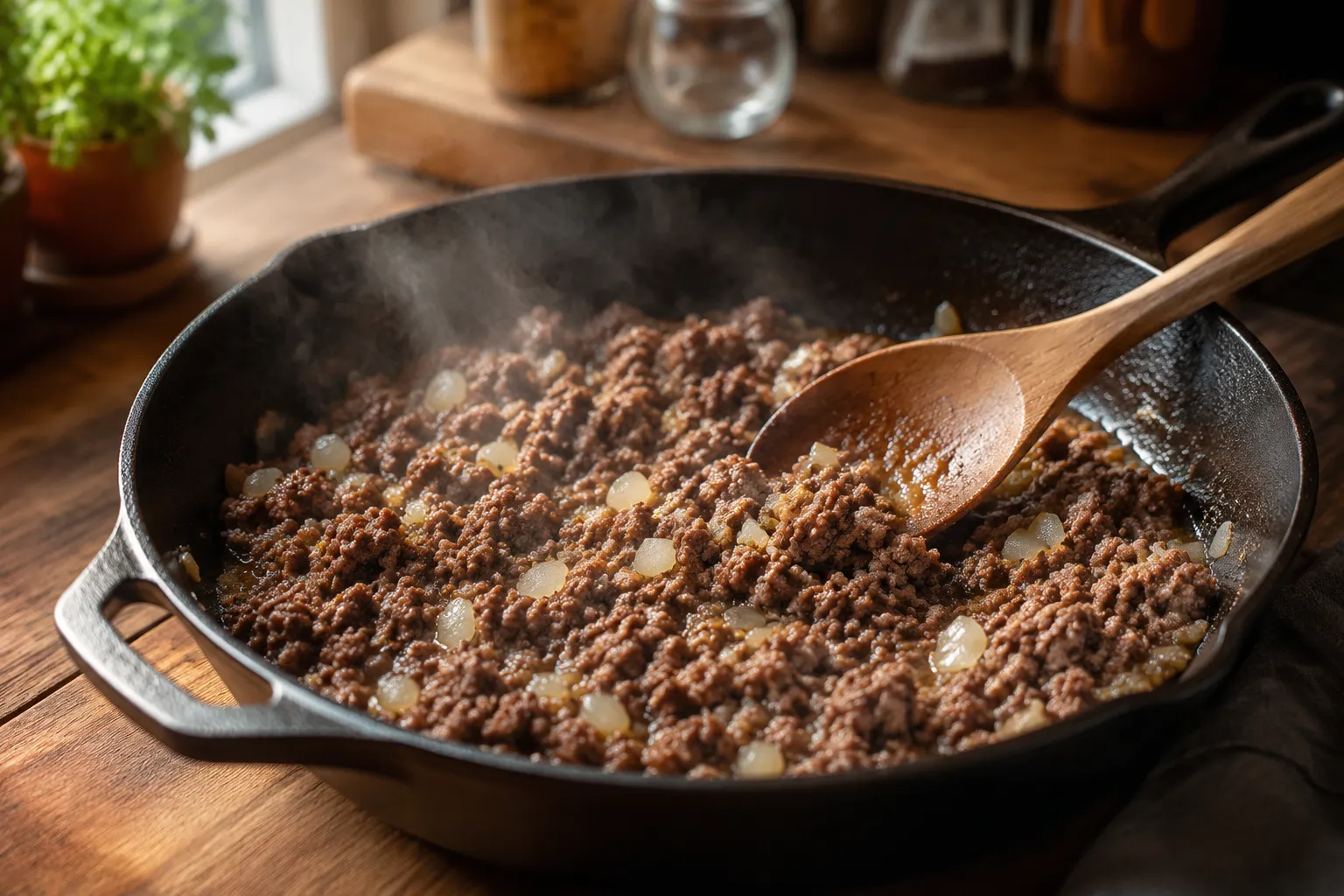
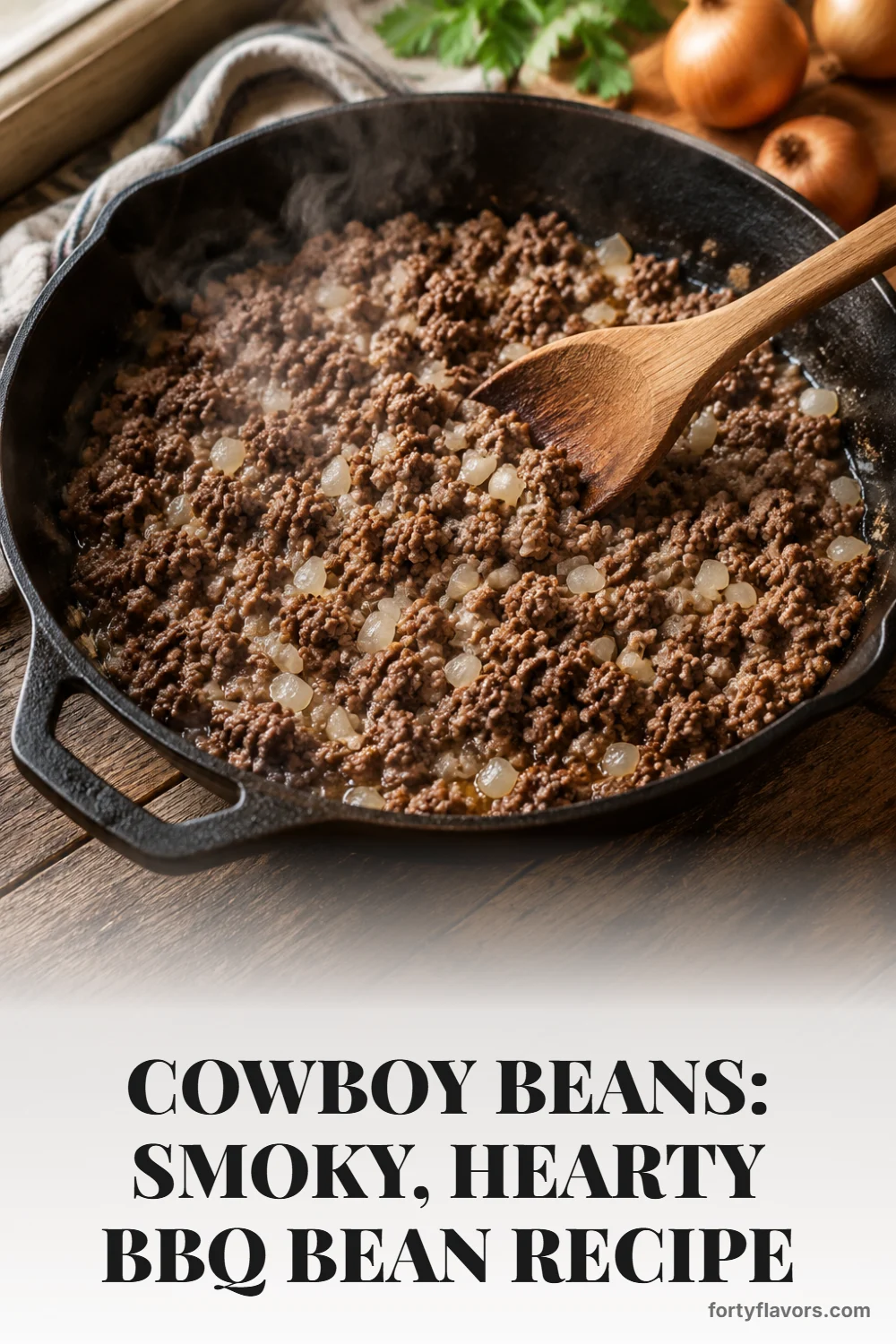
Ground beef and beans are a classic pairing because the beef adds savory richness while the beans carry the sauce. Cook the diced onion in the bacon drippings until softened, then add the beef and break it into small crumbles with a wooden spoon. Let it get a little browned in spots rather than simply steamed; those caramelized bits make a big difference.
Garlic goes in near the end of browning so it stays fragrant and does not burn. If your beef releases a lot of grease, drain off the excess before adding the sauce ingredients. You want richness, not an oily finish.
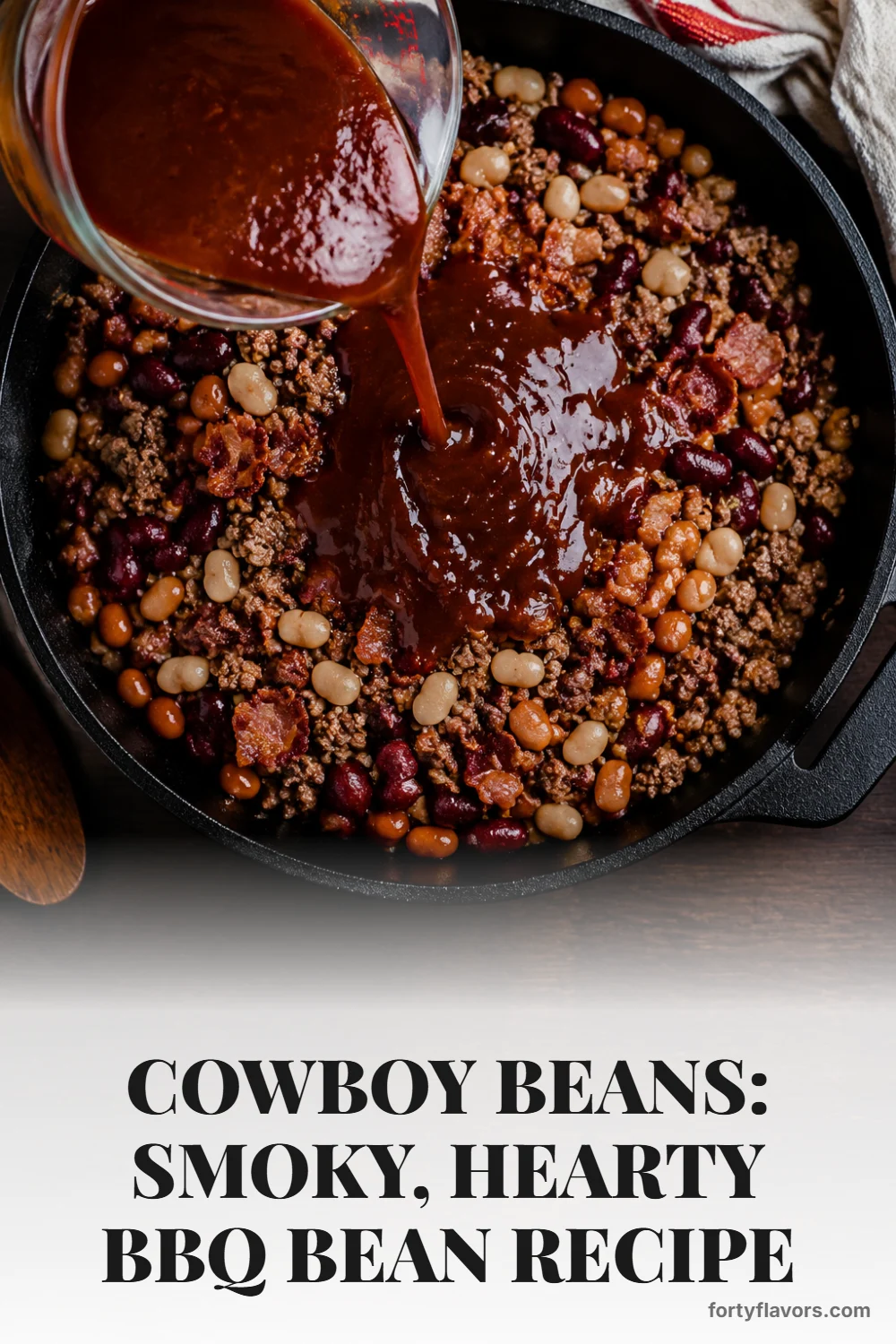
Once the beef is browned, stir in the drained beans, undrained pork and beans, BBQ sauce, ketchup, brown sugar, mustard, Worcestershire, and smoked paprika. At first the skillet will look loose and saucy, but that is exactly what you want. As it simmers uncovered, the sauce thickens and coats the beans instead of pooling underneath them.
Scrape the bottom of the pan as you stir so all the browned bits dissolve into the sauce. Those bits are concentrated flavor from the bacon, onion, and beef, and they help give the finished pot a slow-cooked taste. If you like heat, this is also the moment to add a pinch of cayenne or a diced jalapeño.
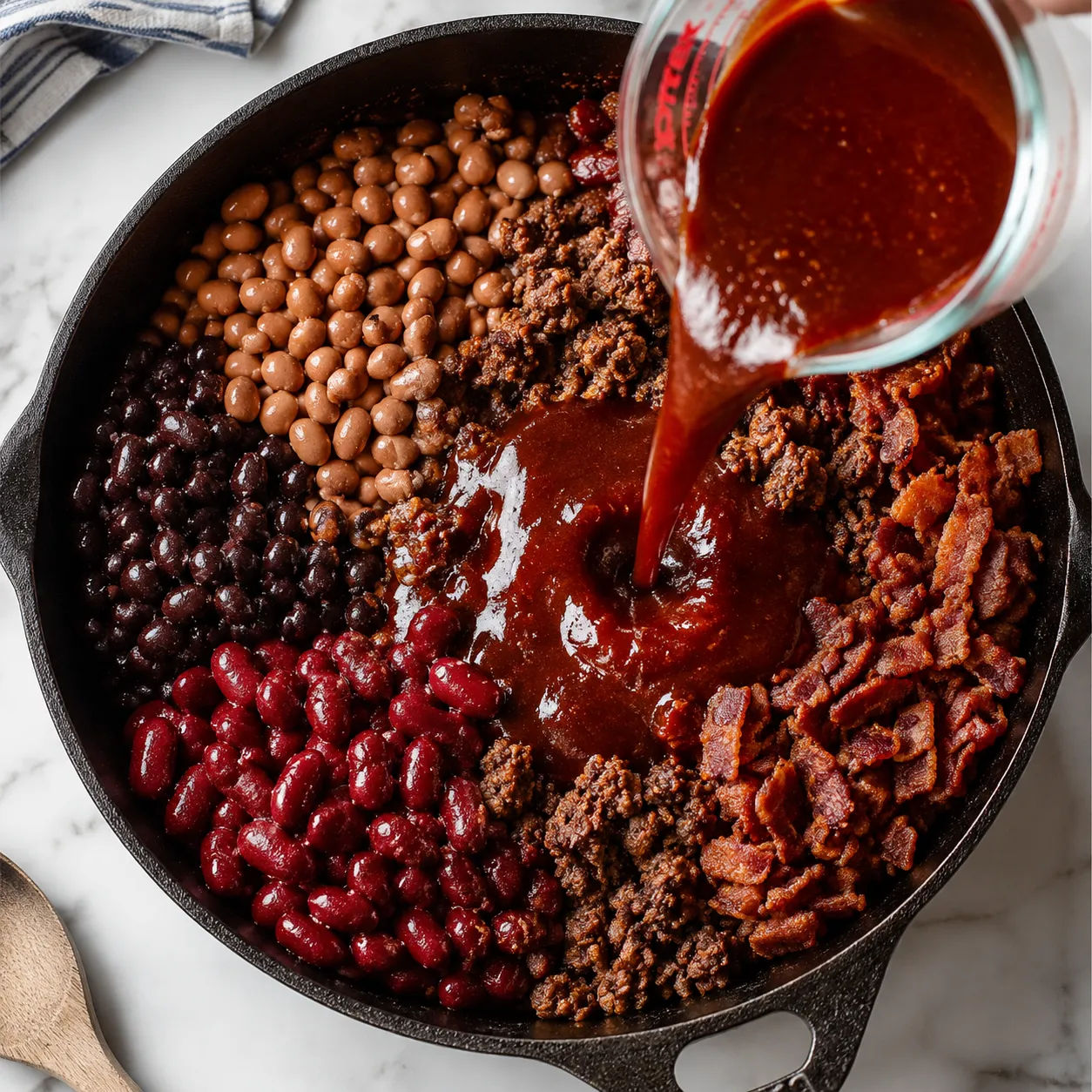
The simmer is short but important. Keep the heat at a gentle bubble, not a hard boil, so the beans stay intact and the sauce reduces evenly. Stir every few minutes, especially around the edges of the skillet where sugars can caramelize quickly.
After about 20 to 30 minutes, the mixture should look glossy, thick, and spoonable. The bacon softens slightly, the beef absorbs the sauce, and the beans taste fully seasoned. Let the skillet sit off the heat for a few minutes before serving so the sauce can settle and cling.
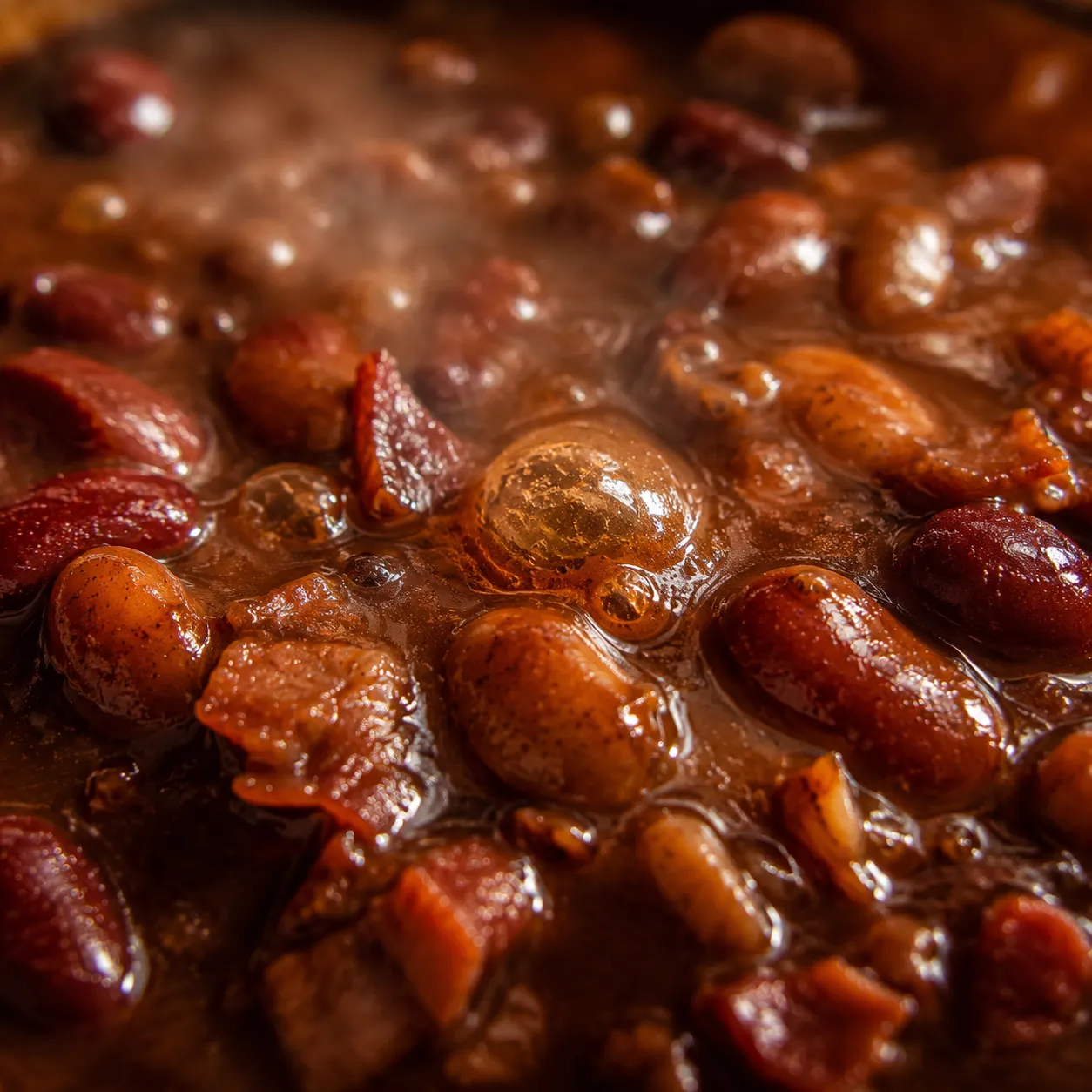
The biggest win here is speed without sacrificing depth. Many old-fashioned versions rely on a long oven bake, which is wonderful when you have the time, but not always practical when the grill is already going and guests are arriving. This stovetop method delivers the same smoky, cozy feeling in about an hour from start to finish.
It also lands in that sweet spot between side dish and main dish. Because there is both bacon and ground beef, the beans feel generous and satisfying, but they still play nicely with everything else on the table. That makes them one of those summer cookout sides people remember because they bring more than just filler to the plate.
The flavor is customizable without becoming complicated. A sweeter BBQ sauce makes the beans more classic and kid-friendly, while a spicy or vinegar-based sauce gives them a sharper, smokehouse-style edge. However you season them, the end result should be bold, saucy, and comforting.
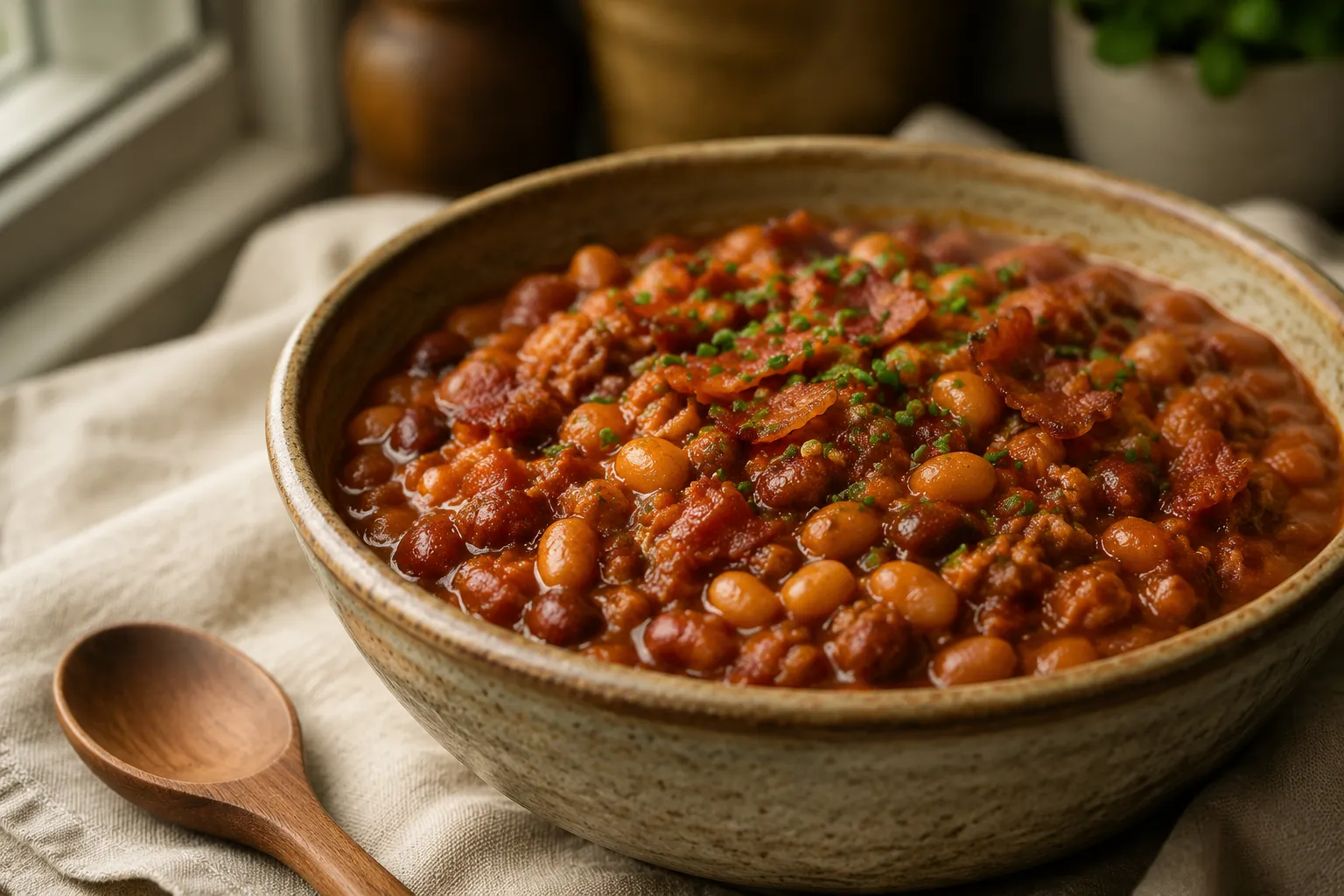
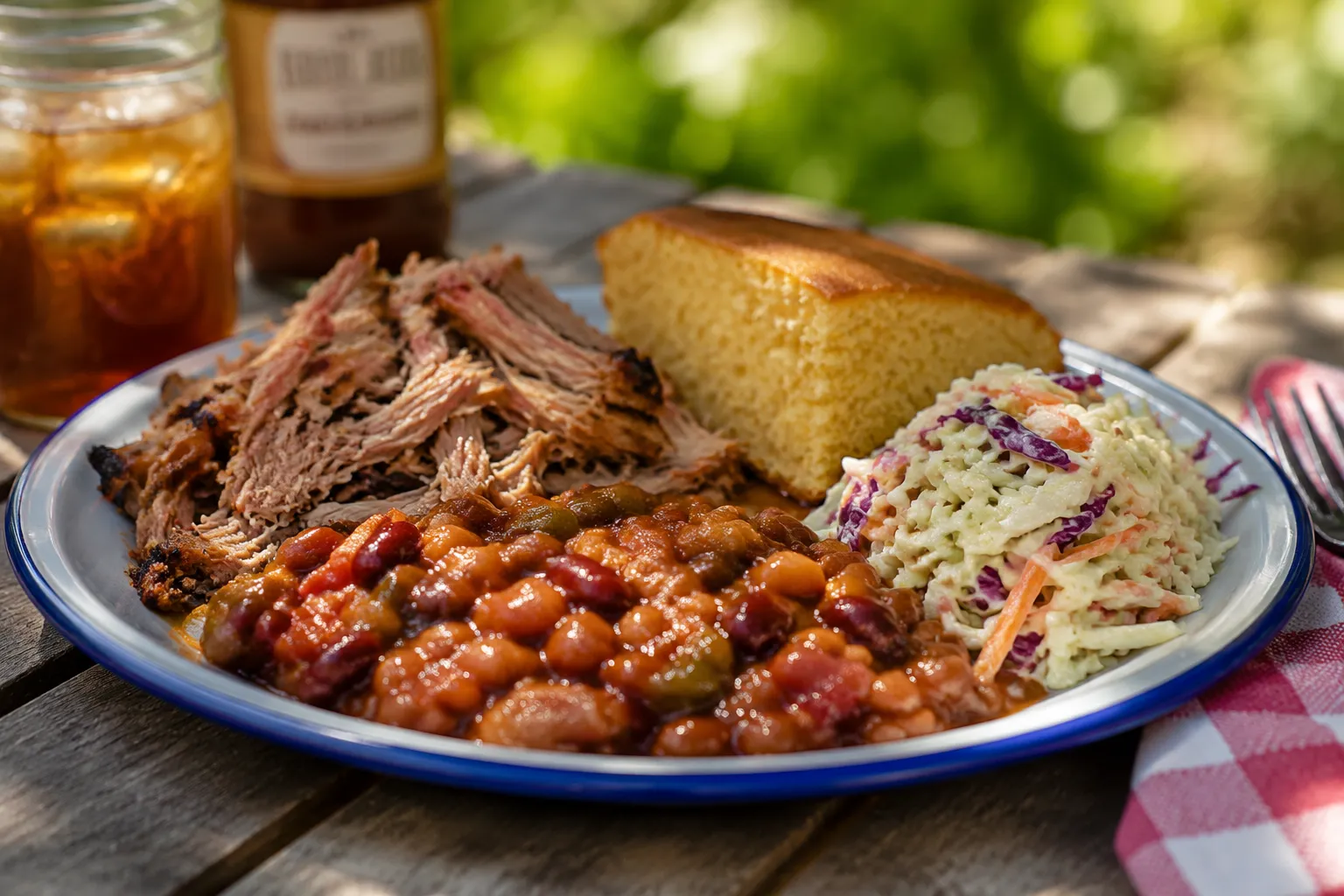
These cowboy beans belong next to all the big BBQ favorites: ribs, brisket, grilled chicken, smoked sausage, burgers, and pulled pork sandwiches. They are rich enough to hold their own against smoky meats, but saucy enough to mingle with slaw, pickles, and potato salad on the same plate. If you are planning a full cookout menu, they are one of the easiest ways to make the spread feel abundant.
Cornbread is the dream partner because it soaks up the sauce without competing with it. A buttery square, a skillet wedge, or even corn muffins make the meal feel complete. Biscuits, Texas toast, or a thick slice of sourdough are also very welcome if you want something for scooping.
For balance, add something crisp, fresh, or acidic. Creamy coleslaw, cucumber salad, vinegary greens, tomato salad, or grilled corn with lime can lighten the plate. That contrast keeps the meal from feeling too heavy and makes the sweet-smoky sauce taste even better.
Although most people think of BBQ beans as a side, this skillet can absolutely become dinner. Spoon it over baked potatoes, pile it onto toast, or serve it with rice for an easy comfort meal. Add a simple salad or roasted vegetables and you have a filling weeknight plate with very little extra work.
It is also a smart recipe when you are feeding a mixed crowd. Meat lovers get the bacon and beef, bean lovers get plenty of texture, and sauce lovers get that glossy barbecue coating in every bite. If you are browsing ground beef recipes for something beyond burgers, tacos, or pasta, this is a cozy, unexpected option.
This is the kind of dish that fits beautifully into a make-ahead menu. The flavors deepen as the beans sit, which means you can cook them earlier in the day, keep them warm, or reheat them gently before serving. If you are juggling grilled meats, salads, and drinks, having the bean side ready before guests arrive is a real gift.
Transport the beans in a covered Dutch oven, a lidded casserole dish, or a slow cooker insert wrapped in towels to help hold heat. Bring extra chopped chives, parsley, or reserved bacon for a fresh finish right before serving. A small garnish makes the pot look intentional and inviting, even after a car ride to the party.
Because the sauce is sweet and sticky, set out a sturdy serving spoon and place the dish on a heat-safe trivet. These little details matter when food is sitting on a buffet table. The beans will stay saucy, hearty, and crowd-ready long enough for everyone to circle back for another scoop.
There is a reason cowboy beans show up wherever people gather around good food: they are simple, generous, and full of big smoky flavor. With a trio of beans, crisp bacon, savory beef, and a sweet-tangy sauce, this skillet turns pantry staples into something that feels special. It is the kind of recipe that tastes nostalgic even if you did not grow up eating it.
Make it for your next barbecue, bring it to a potluck, or serve it as a cozy weekend side with cornbread and slaw. However it lands on the table, expect the skillet to come back scraped clean.
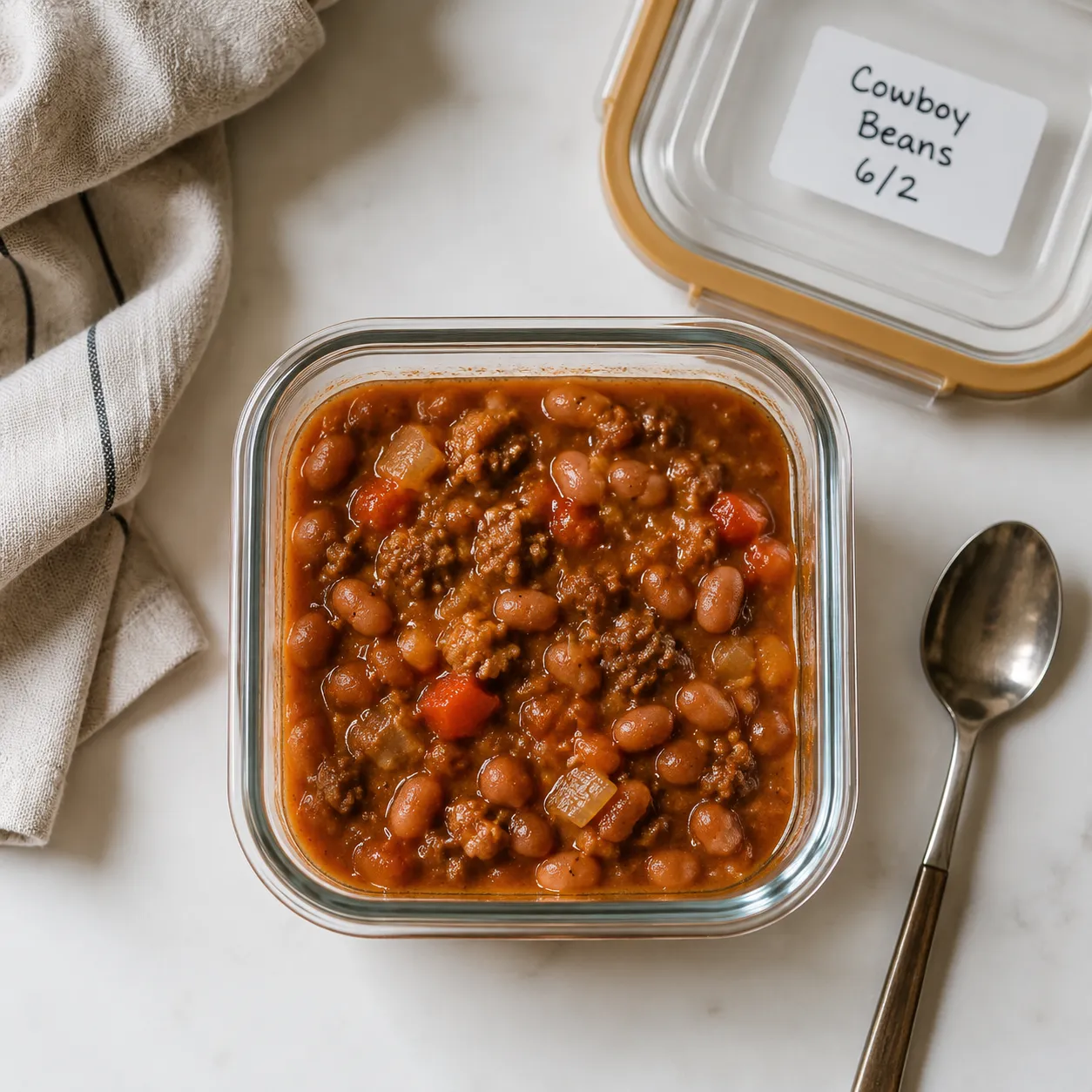
Store leftovers in an airtight container in the refrigerator for up to 4 days. The sauce will thicken as it chills, so reheat gently on the stovetop or in the microwave with a splash of water, broth, or extra BBQ sauce to loosen it back up.
To freeze, cool the beans completely, then portion into freezer-safe containers or bags and freeze for up to 3 months. Thaw overnight in the refrigerator before reheating over low heat, stirring occasionally until hot all the way through.
Hover any image and hit “Pin it” to save it to your Pinterest boards.