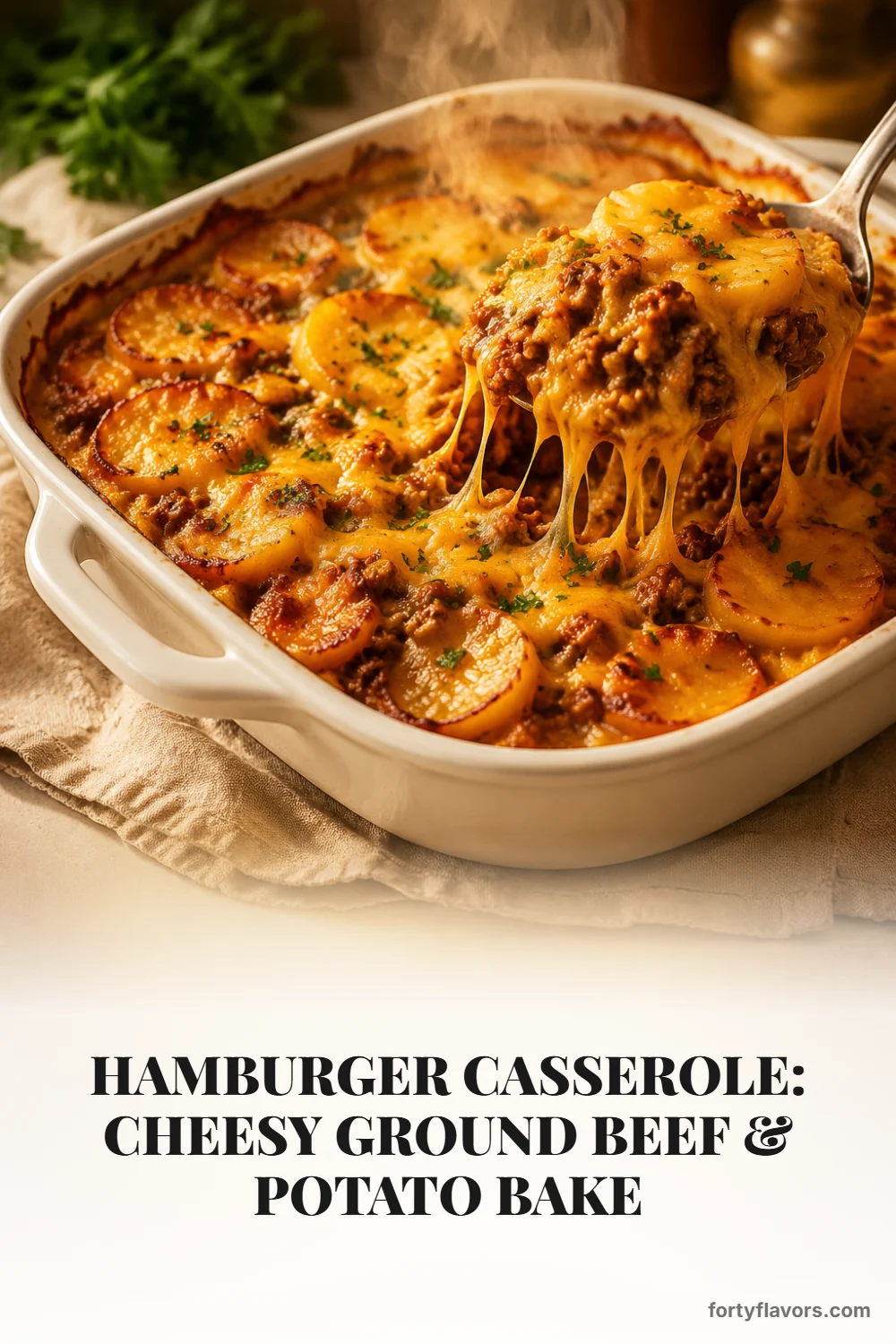
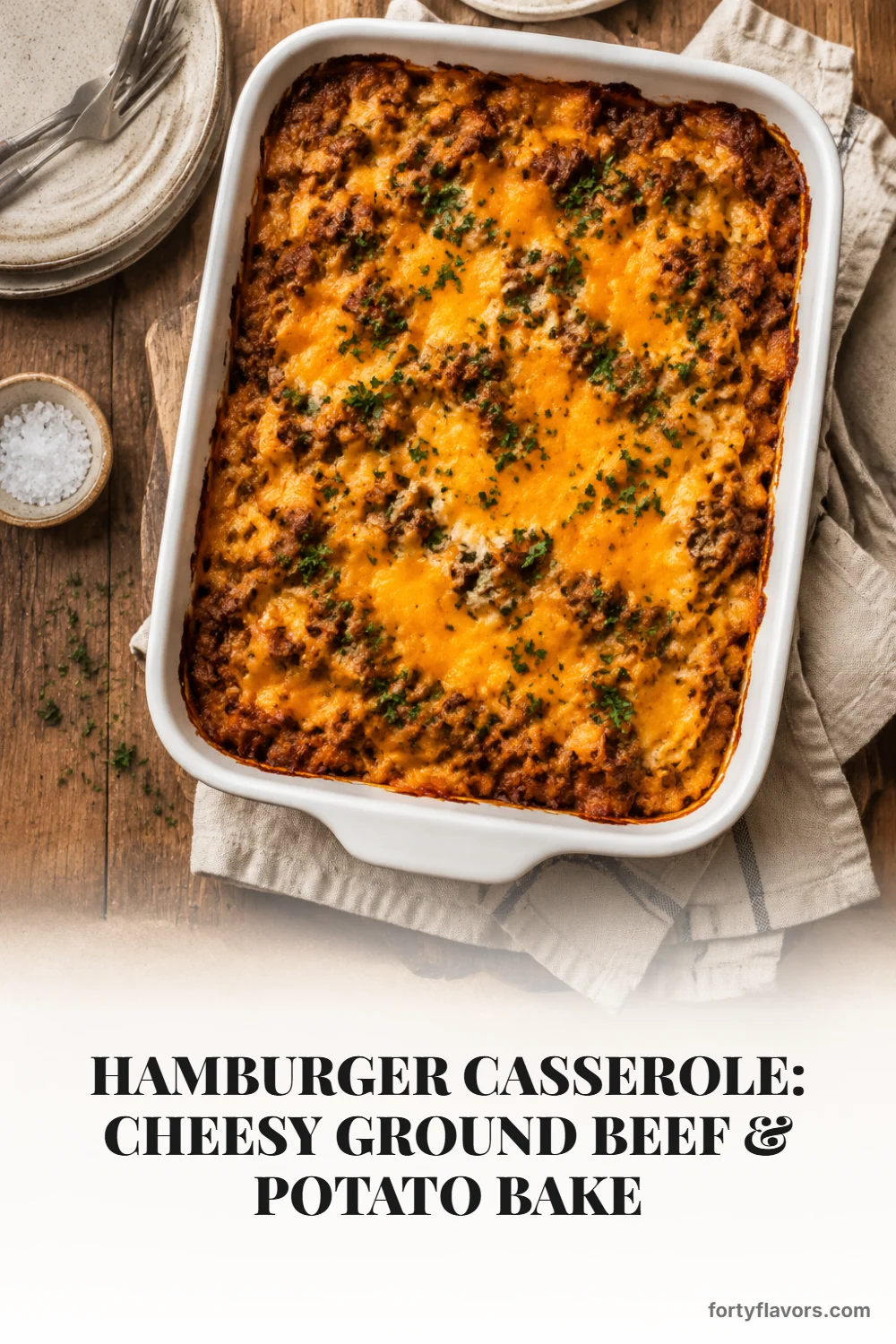
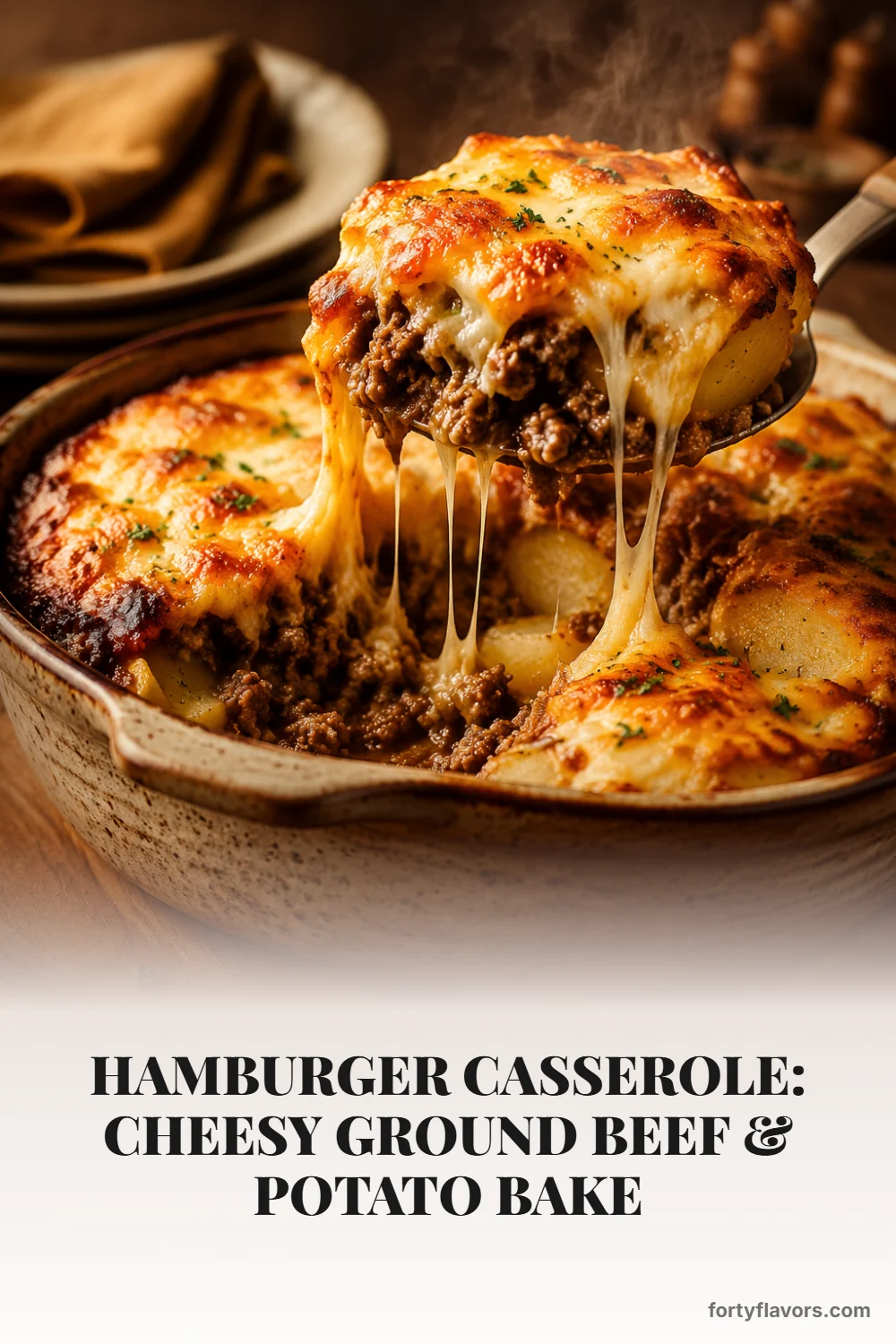
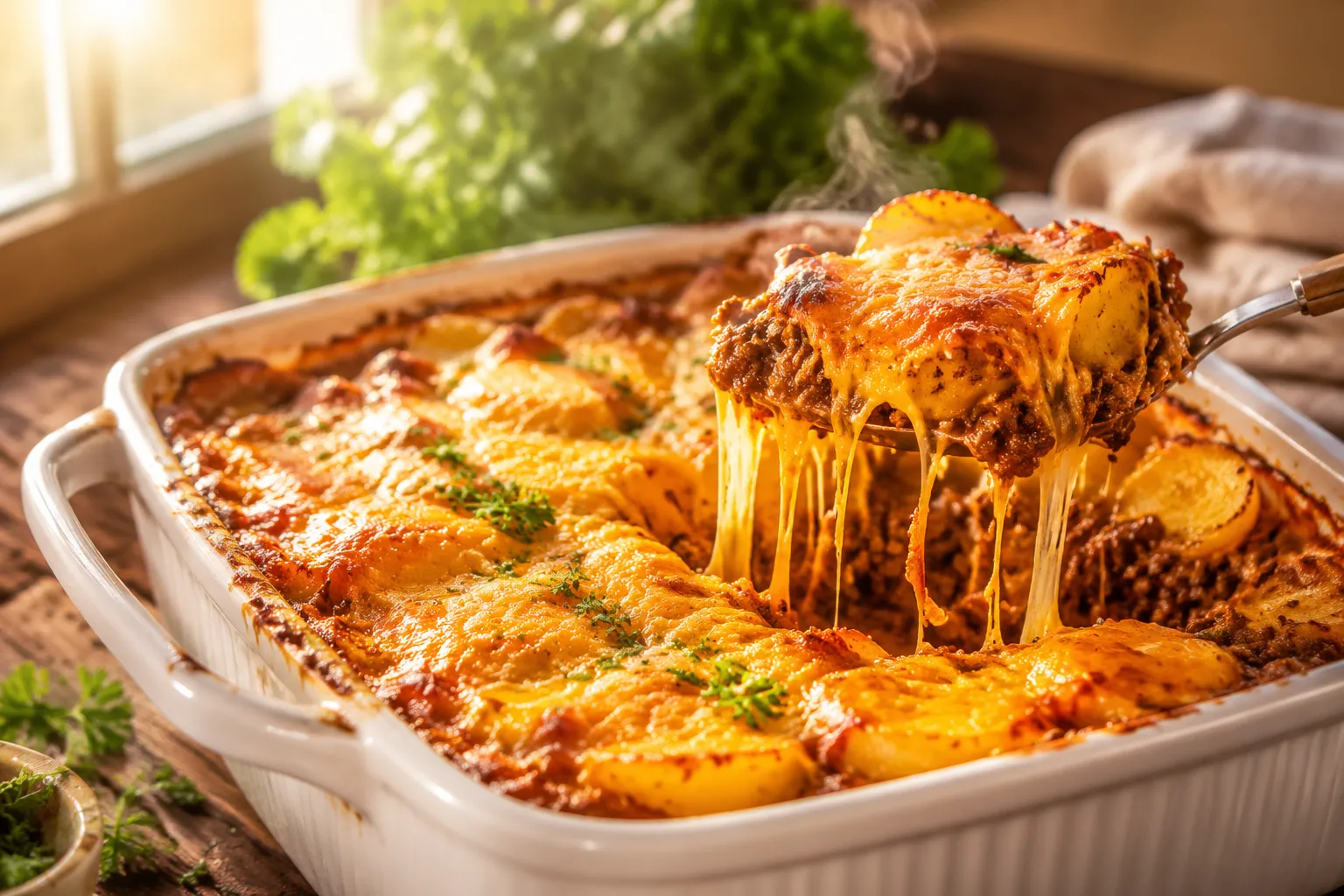
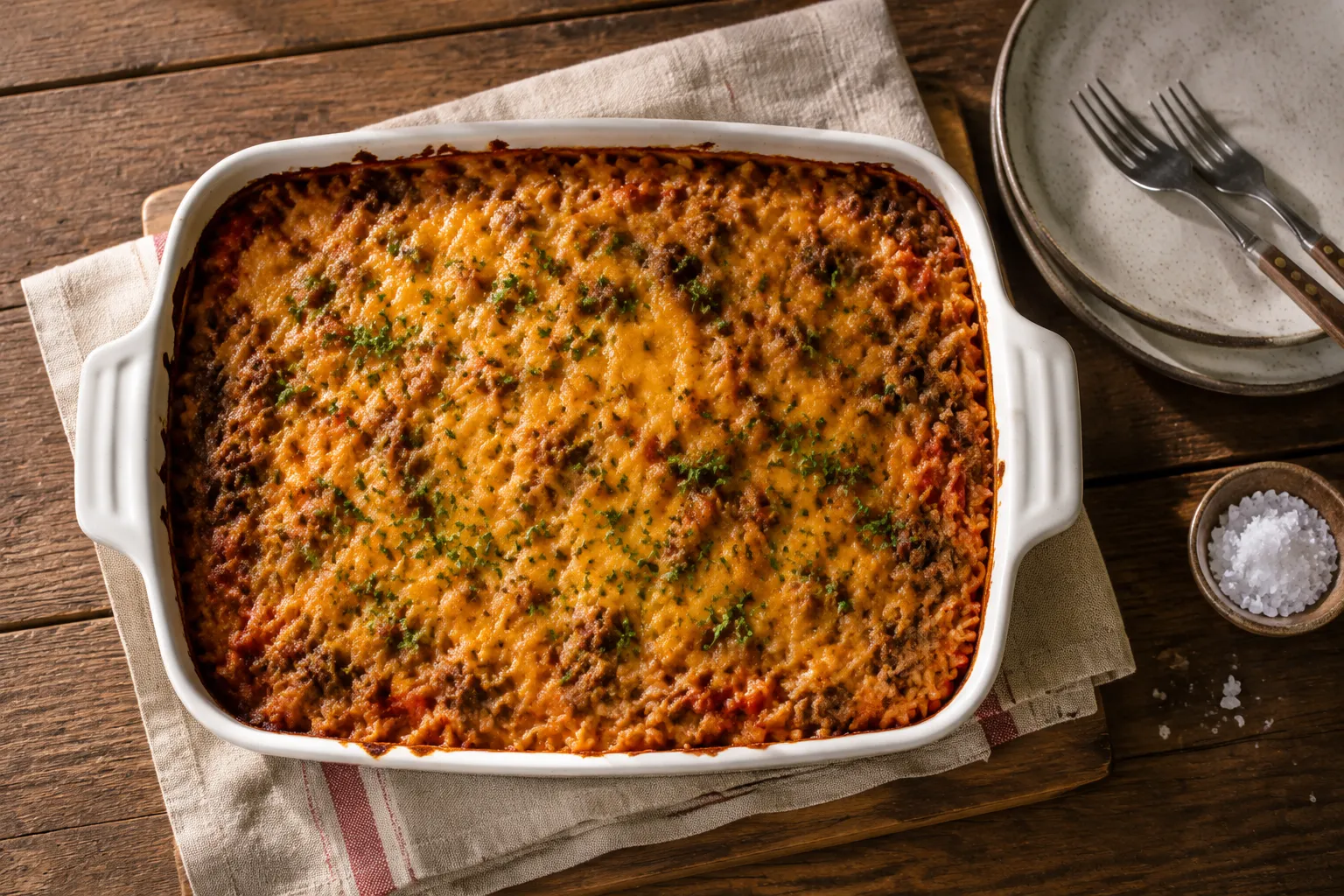
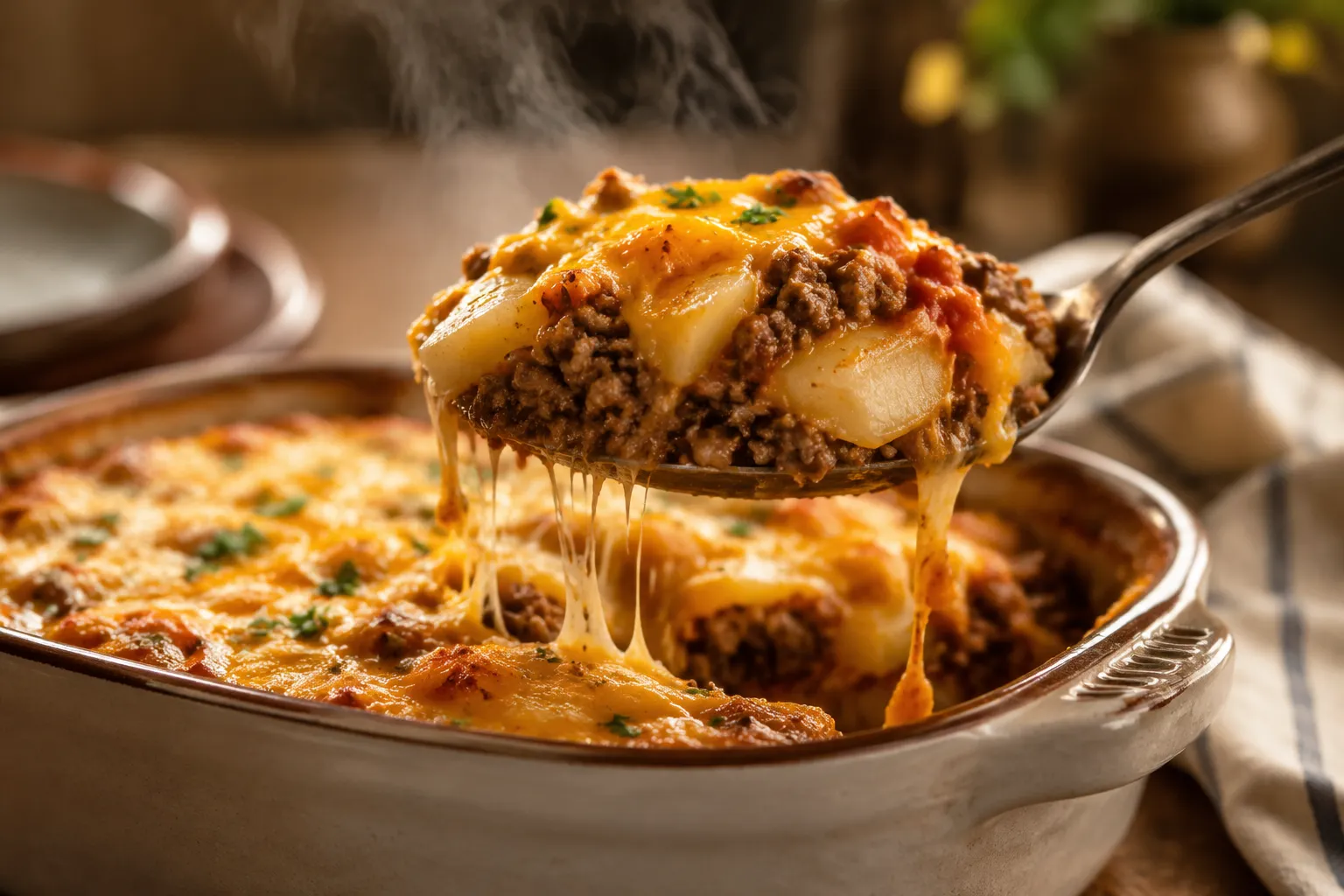
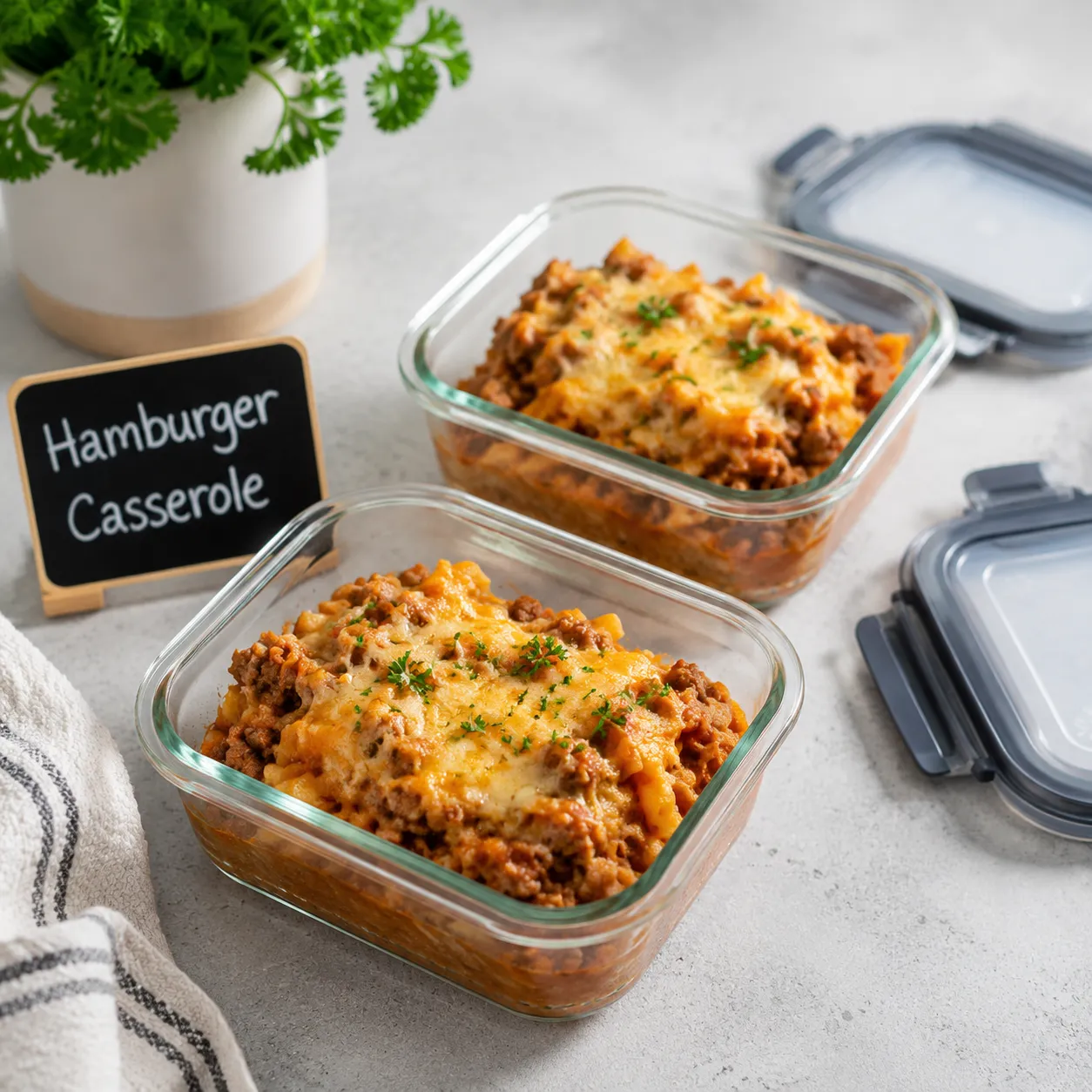
A cozy, layered hamburger casserole with seasoned ground beef, tender potatoes, and a bubbly cheese topping. One pan, big flavor, zero fuss.
Why You'll Love This Recipe
A true one-dish family dinner: Beef, potatoes, sauce, and cheese bake together in one pan for a hearty meal that satisfies big appetites.
Pantry-friendly and budget-minded: The recipe uses familiar staples like ground beef, russet potatoes, canned soup, milk, and cheddar.
Cozy comfort food flavor: Worcestershire, garlic, onion, paprika, and sharp cheddar make the casserole savory, creamy, and deeply satisfying.
Make-ahead friendly: You can assemble it in advance, refrigerate it, and bake when dinner time rolls around.
Great for leftovers: Portions reheat well for lunches or easy dinners later in the week.
This hamburger casserole is the kind of cozy, bubbling dinner that makes a weeknight feel instantly more manageable. It layers savory browned beef, thinly sliced russet potatoes, a creamy garlic-mushroom sauce, and a blanket of sharp cheddar that melts into every corner of the pan. Think old-school comfort food, but with just enough thoughtful seasoning and texture to make it taste like something you planned all day.
It is hearty without being fussy, budget-friendly without feeling plain, and practical enough for busy families who need reliable easy weeknight dinners. If you grew up with a classic ground beef casserole, this version will feel familiar in the best way, but the sauce is a little more balanced, the potatoes bake up tender, and the cheese topping gets beautifully golden. Serve it with a crisp salad or roasted green beans and dinner is done.
What Makes This Cheesy Beef and Potato Bake Special
This dish sits right at the crossroads of ground beef recipes, potato casserole, and full-on comfort food casseroles. The magic is in the layering: the beef brings savory depth, the potatoes soak up the creamy sauce, and the cheddar seals everything together with a golden, bubbly top. Instead of relying only on canned soup for flavor, this hamburger casserole recipe builds in onion, garlic, Worcestershire sauce, paprika, and black pepper so every bite tastes seasoned from the inside out.
The ingredient list is intentionally simple, but the finished casserole feels generous and satisfying. Russet potatoes are starchy enough to soften into the sauce while still holding distinct layers, which gives the bake that classic fork-tender texture. Lean ground beef keeps things hearty, while draining it well prevents the filling from turning greasy. The result is a cheesy casserole that tastes nostalgic, cozy, and completely dinner-table worthy.
Ingredients for a Hearty Ground Beef Potato Bake
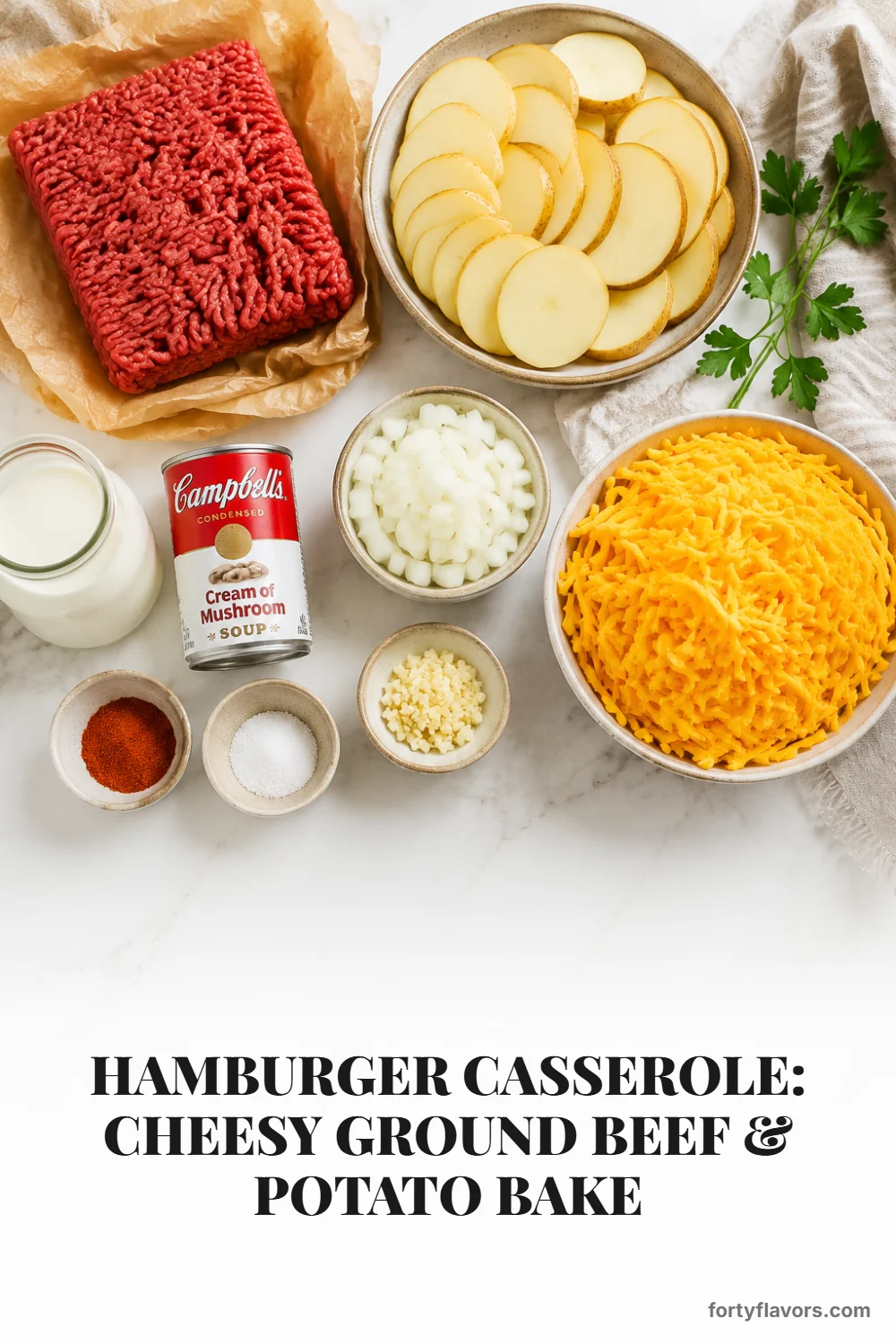
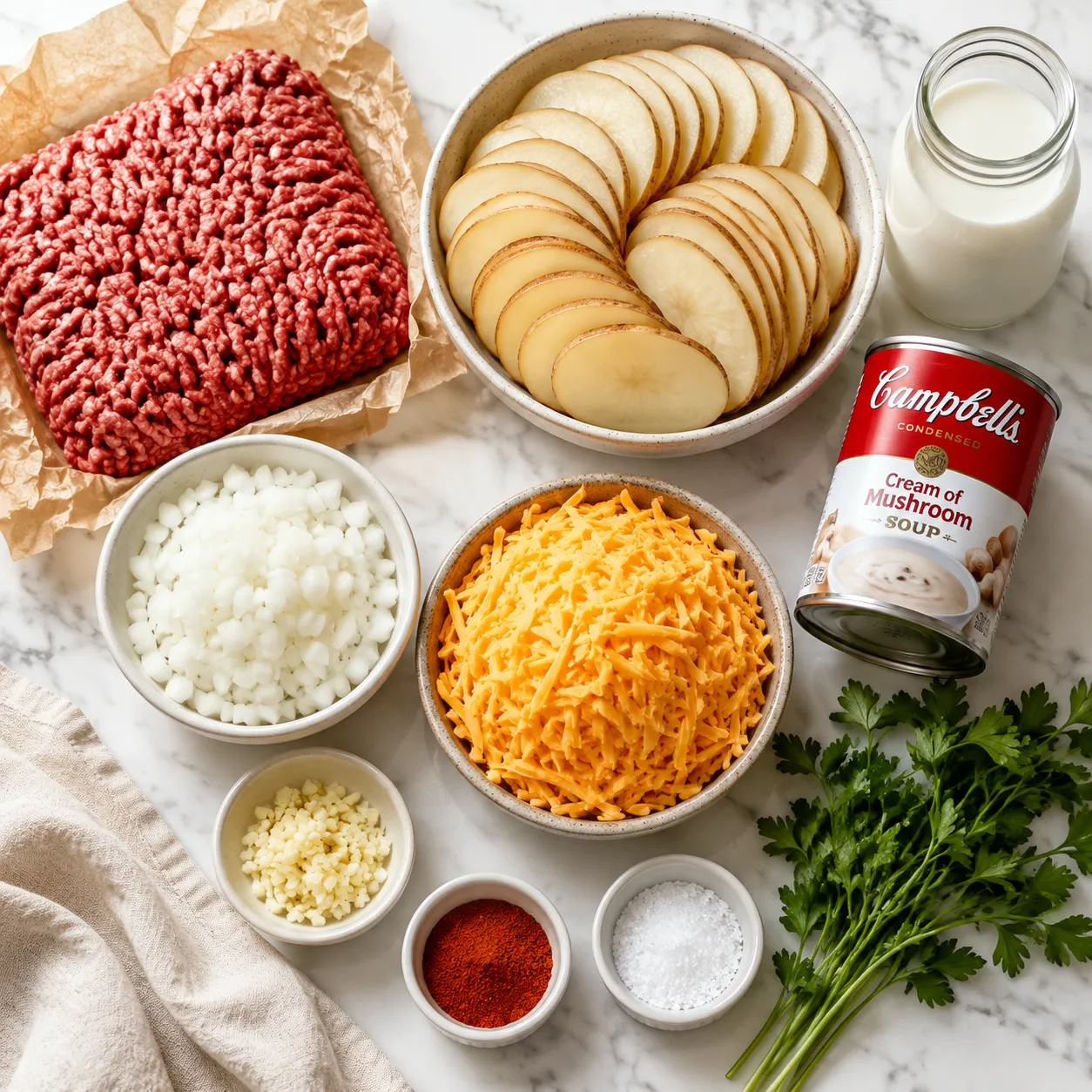
The base begins with lean ground beef, diced yellow onion, and minced garlic. As the beef browns, the onions soften and sweeten, and the garlic blooms into the fat, creating the savory foundation that makes this hamburger potato casserole taste like more than the sum of its parts. Worcestershire sauce adds that little steakhouse-style depth, while paprika brings warmth and color without making the dish spicy.
For the potatoes, russets are the best choice because they cook tender and absorb flavor beautifully. Slice them thinly, about 1/8 inch, so they steam and bake evenly under the sauce. A mandoline is helpful if you have one, but a sharp chef’s knife works too as long as you take your time. Patting the slices dry helps the sauce cling and keeps excess moisture from watering down the pan.
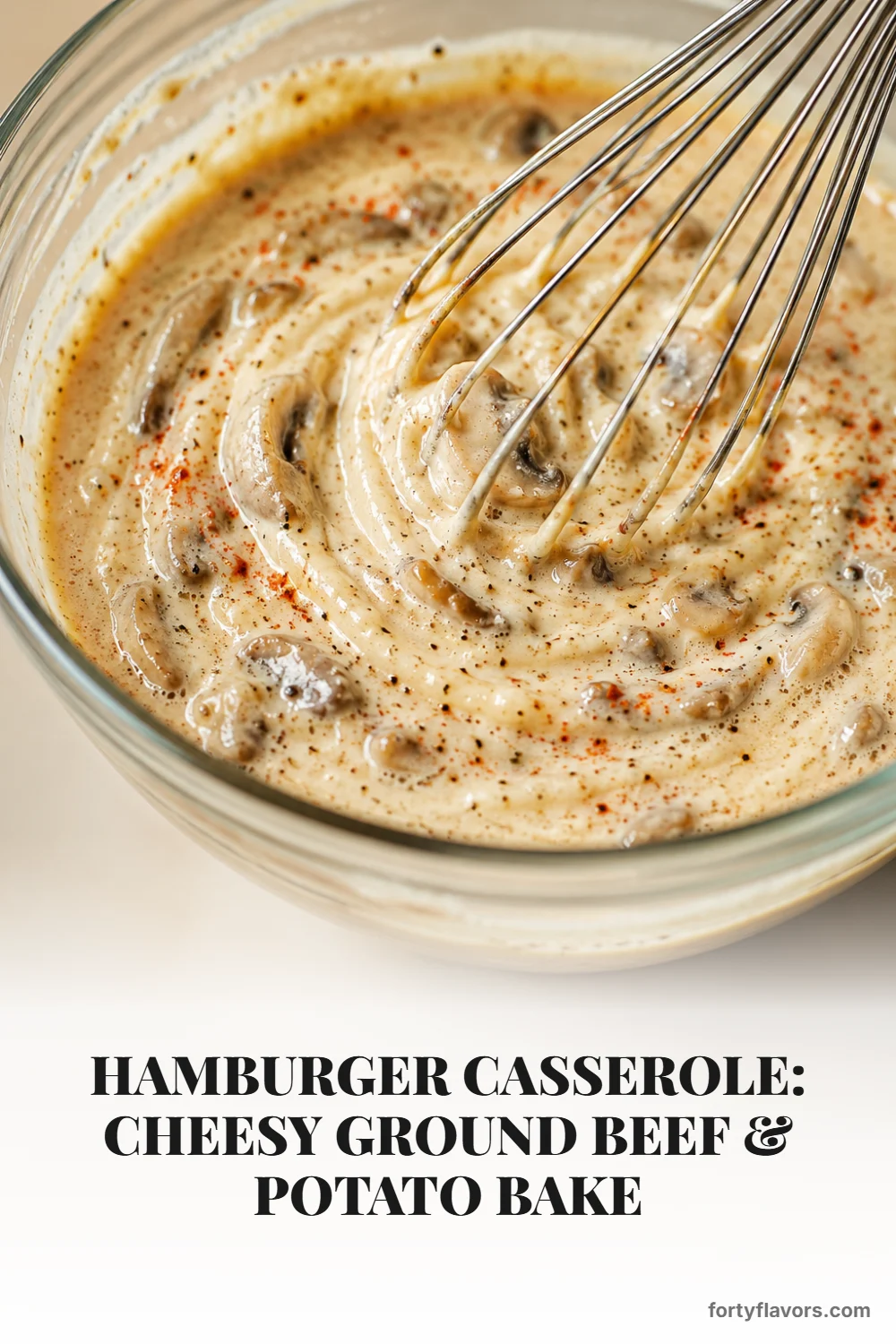
The creamy layer is a practical blend of cream of mushroom soup and whole milk, whisked until smooth. It gives the casserole body, a little umami, and that cozy saucy texture people expect from a classic bake. Sharp cheddar is the finishing touch; it melts well, adds bold flavor, and browns beautifully around the edges. If you love a deeply cheesy ground beef bake, this is where you can be generous with the top layer.
Building Flavor Before the Casserole Goes in the Oven
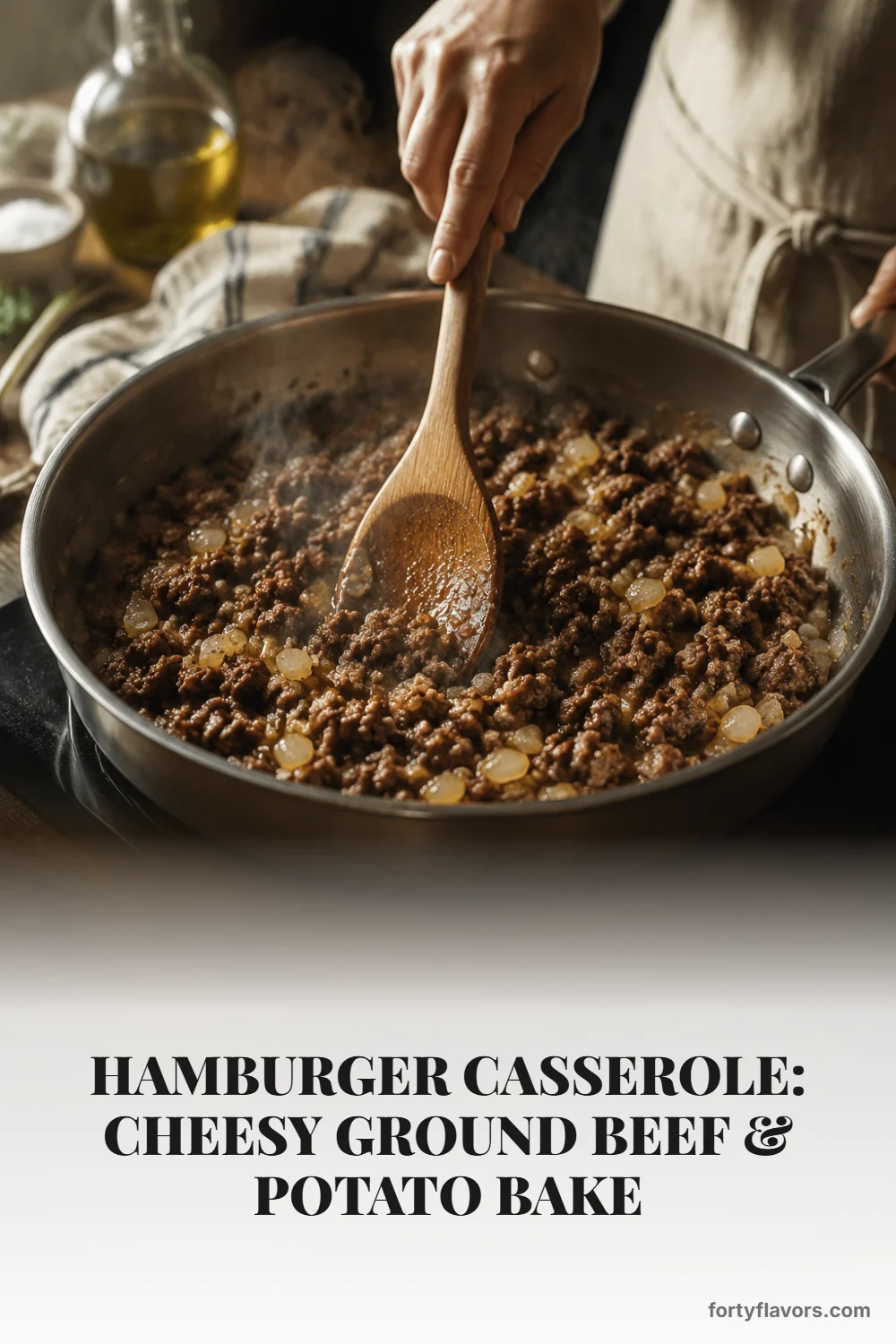
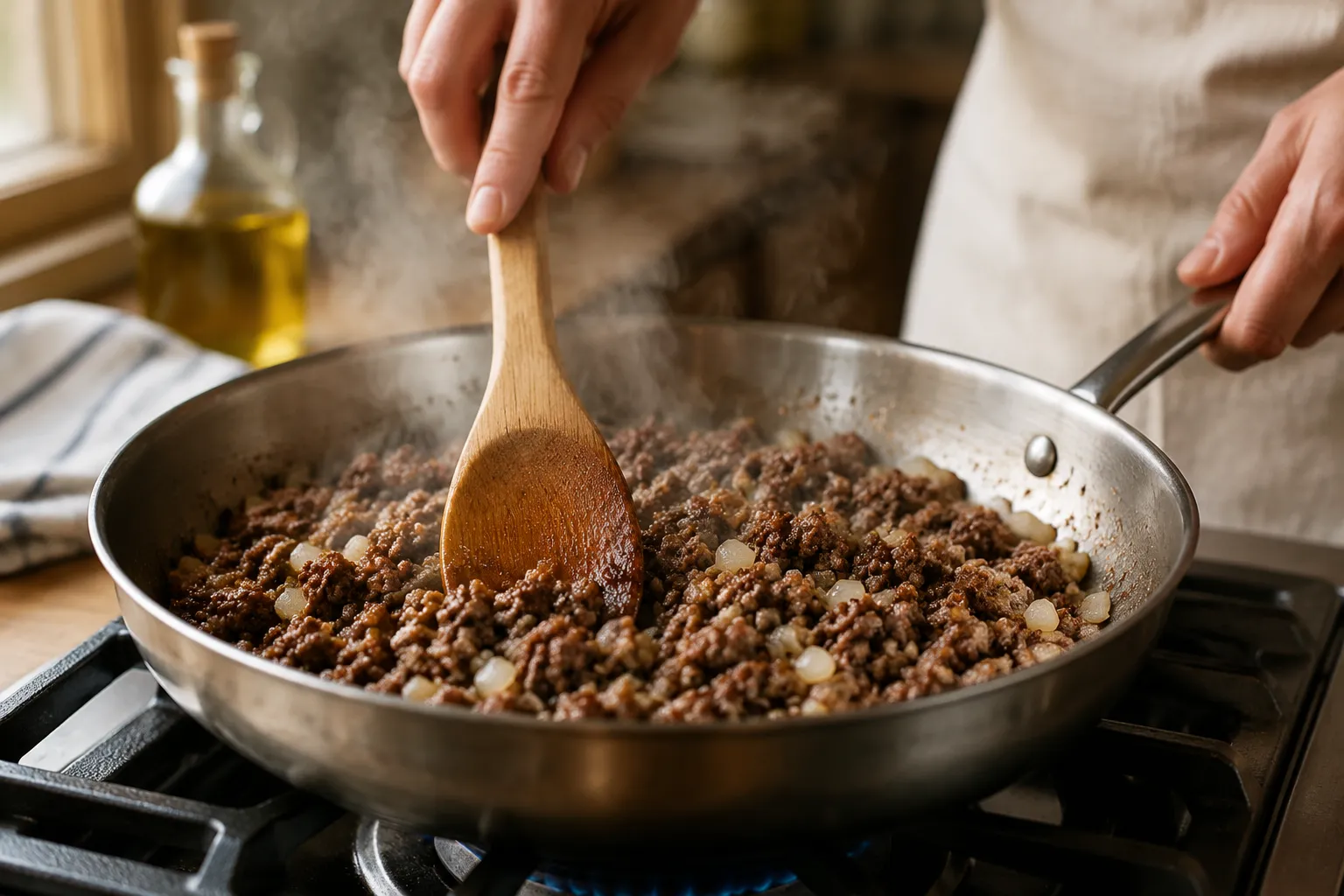
Browning the beef properly is the first big flavor step. Let it hit a hot skillet and cook long enough to develop browned bits before stirring too aggressively; those little caramelized pieces make the filling richer. Once the meat is mostly cooked through, add the onion and garlic so they soften into the beef rather than sitting on top of it. Season at this stage with salt, pepper, paprika, and Worcestershire sauce, because the beef layer carries the flavor throughout the dish.
After browning, drain the beef well. Even lean ground beef can release enough fat to make a casserole feel heavy, and a quick drain keeps the sauce creamy instead of oily. If your skillet has lots of browned bits, stir a splash of the milk into the pan after draining and scrape them up before adding the mixture to the baking dish. That is free flavor, and it belongs in your casserole.
Layering the Potatoes for Even, Tender Results
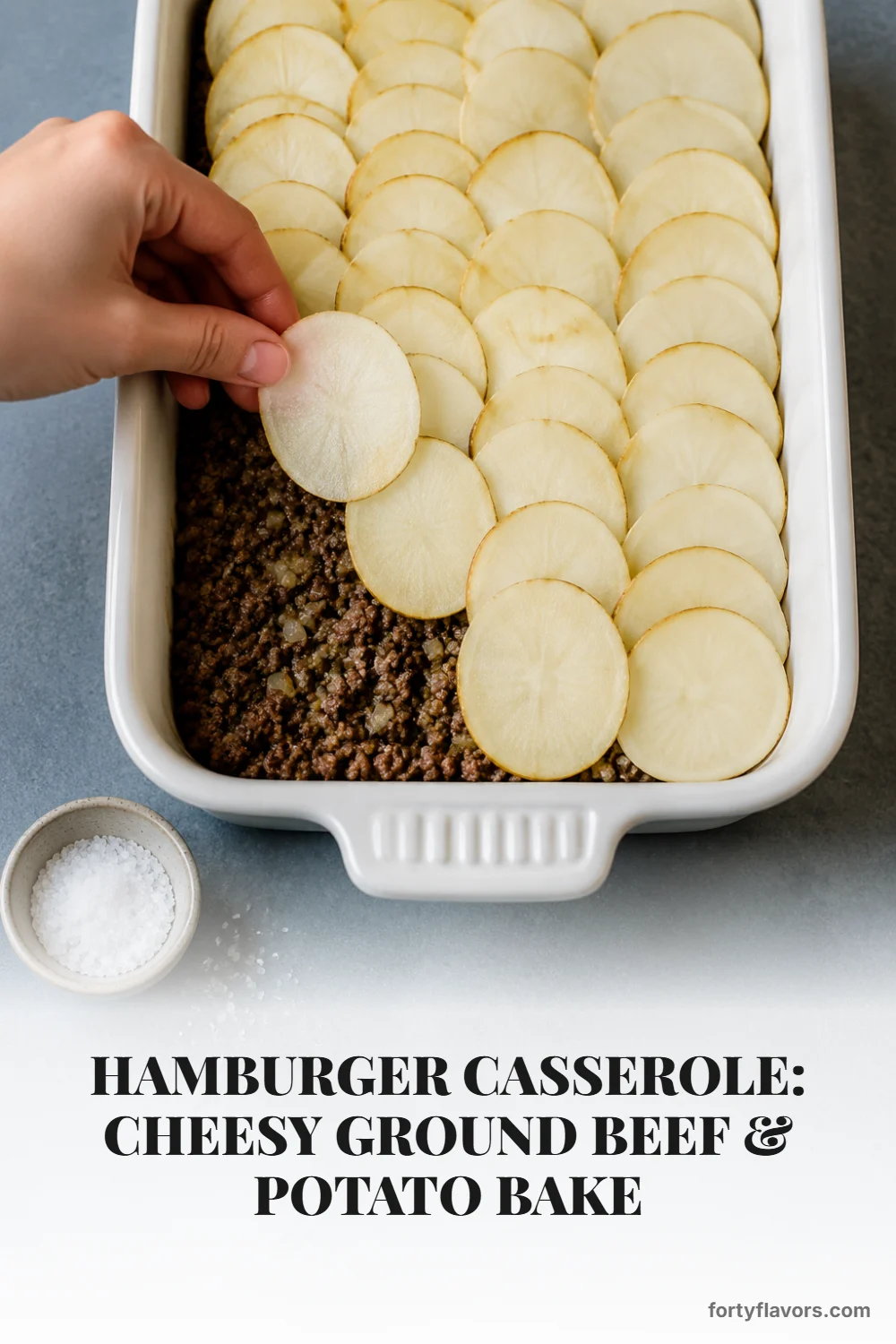
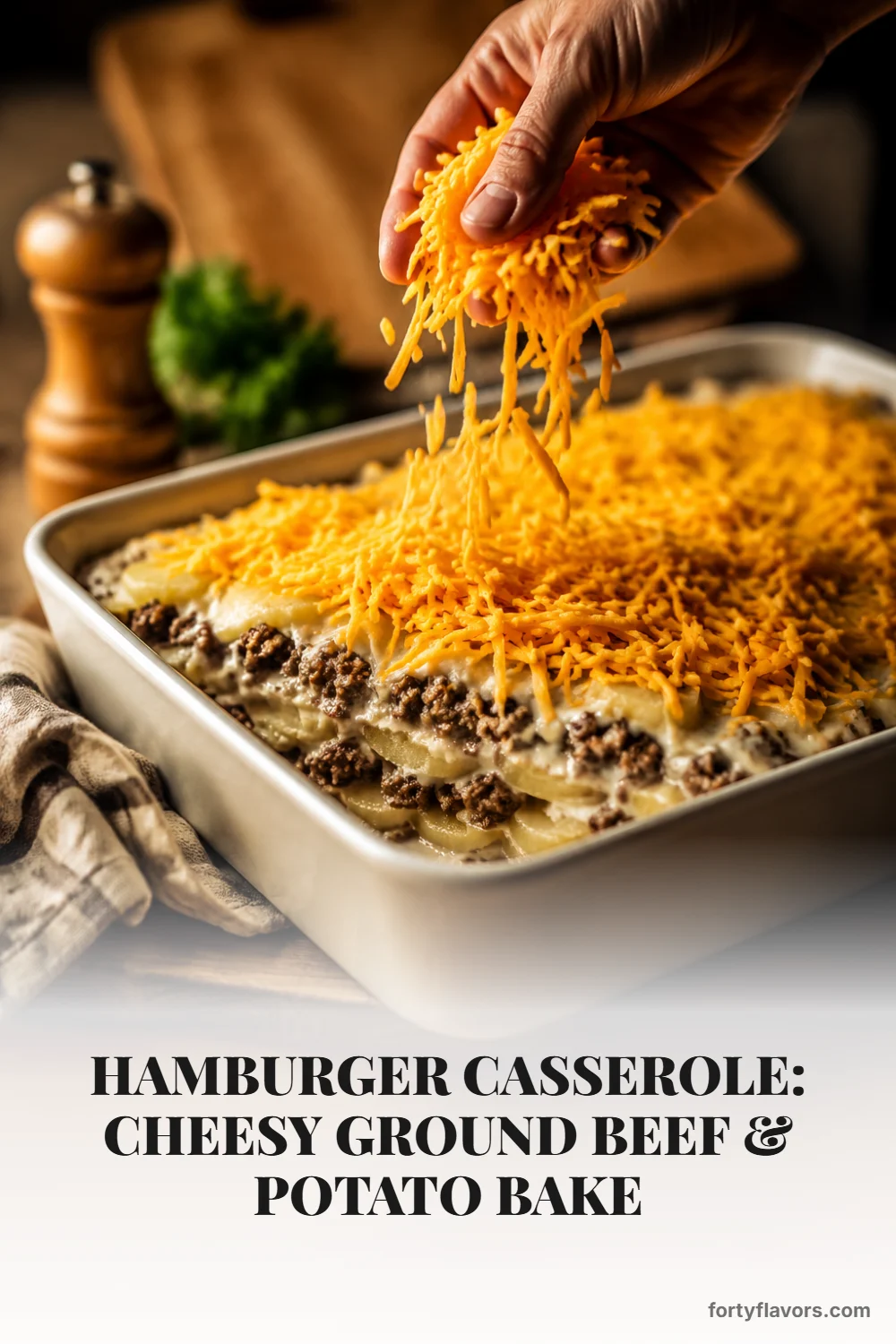
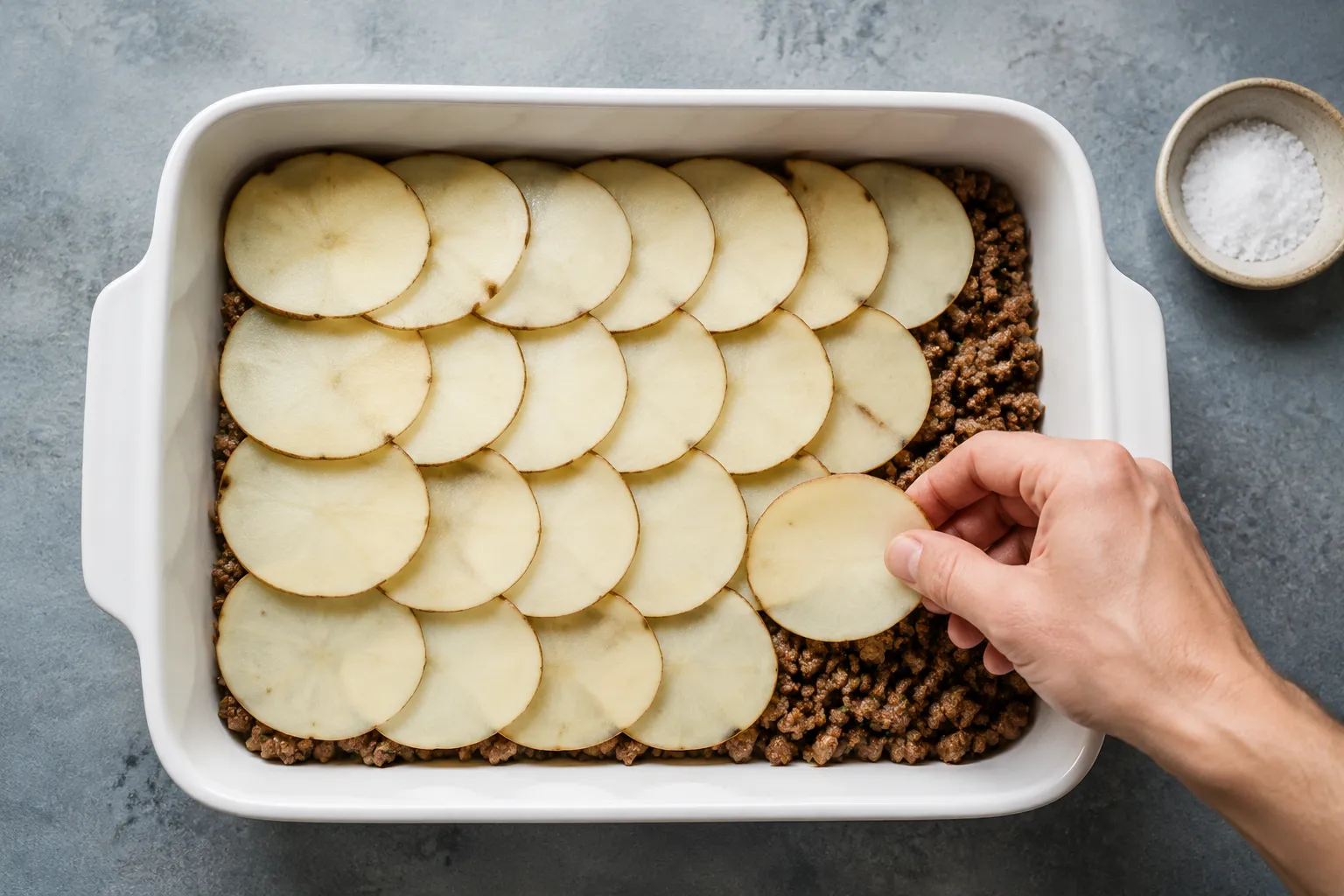
The potato layer is where this hamburger and potato casserole gets its satisfying structure. Arrange the slices in overlapping rows so there are no large gaps, but avoid packing them so tightly that the sauce cannot move between layers. A little overlap gives the casserole that lovely scalloped look and helps the potatoes cook into tender, saucy layers. Seasoning lightly as you layer is also important because potatoes need salt to taste like themselves.
You can create two or three layers depending on the depth of your baking dish. A 9x13-inch dish gives plenty of room for the beef, potatoes, sauce, and cheese without bubbling over too dramatically. If your potato slices vary in thickness, tuck the thicker pieces toward the edges where the heat is stronger and the thinner slices toward the center. This small bit of attention helps every serving come out soft and evenly cooked.
The Creamy Sauce and Cheddar Topping
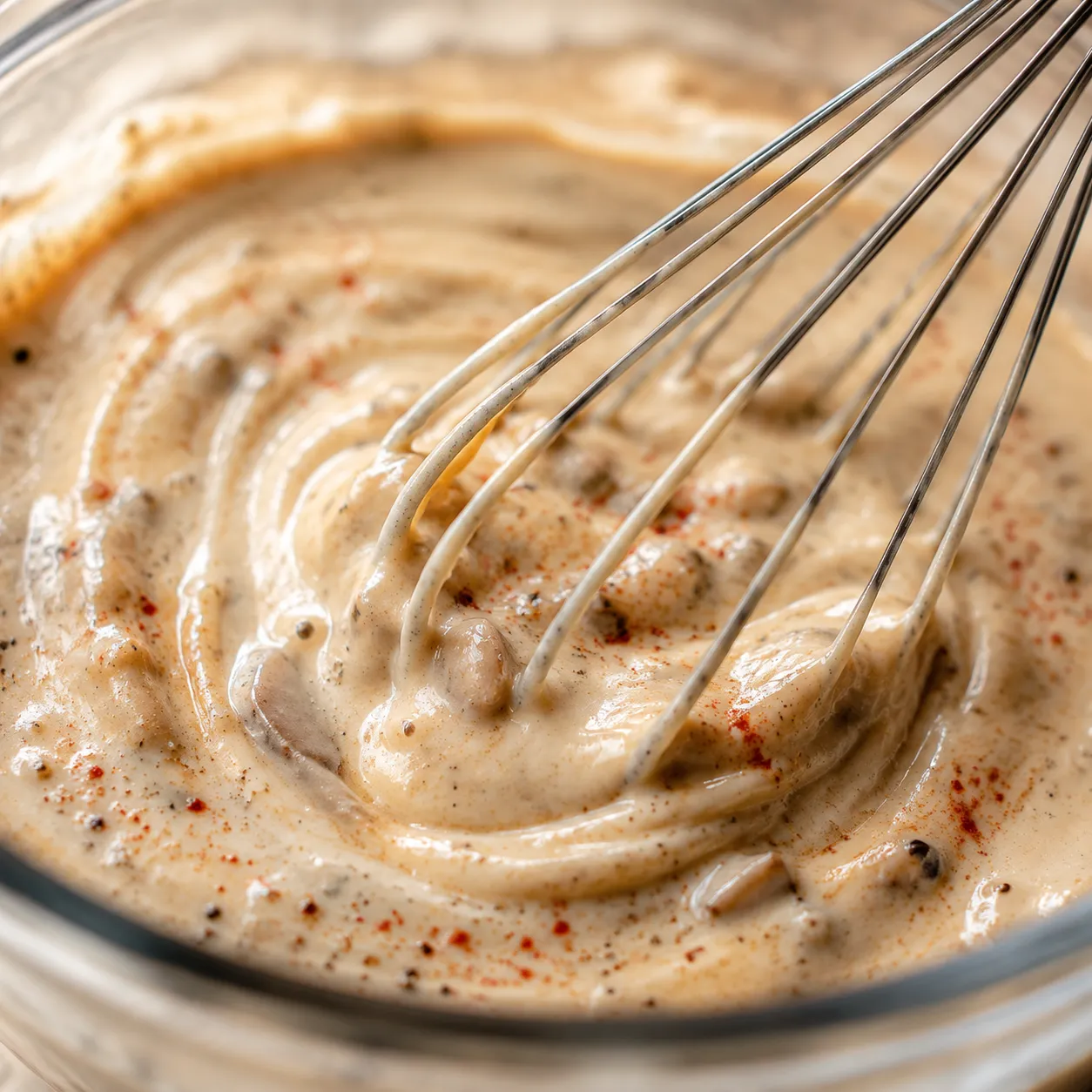
The sauce is deliberately simple, but it does a lot of work. Whisking the cream of mushroom soup with whole milk loosens it enough to seep down through the potatoes and beef, while still baking up creamy and spoonable. Add a pinch of black pepper and paprika to the sauce if you like a little extra warmth. Once poured over the layers, gently tilt the pan so the sauce can settle into the corners.
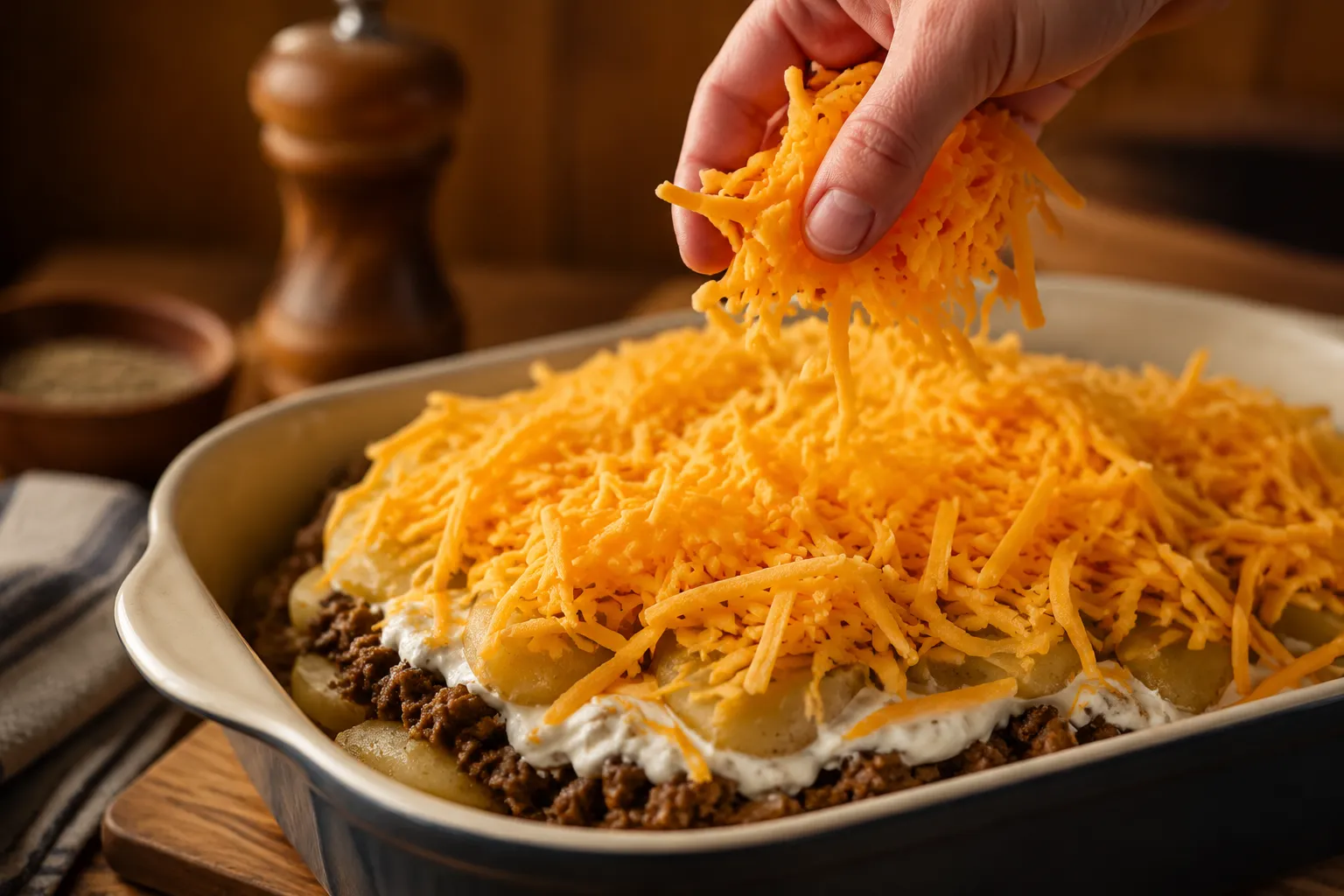
Cheddar goes on near the end of baking so it melts and browns without overcooking. Covering the dish at first traps steam, which helps the potatoes become tender; uncovering it later allows the top to turn golden and bubbly. This is the moment the kitchen starts smelling like classic comfort food, with the beef, garlic, potatoes, and cheese all mingling together. When the top is browned in spots and the sauce bubbles around the edges, you are close.
How to Make This Easy Beef Casserole
The full step-by-step method lives in the recipe card below, but the flow is wonderfully straightforward. Start by browning and seasoning the beef, then layer it with the thin potatoes in a greased baking dish. Pour the creamy sauce over the top, cover tightly, and bake until the potatoes are nearly tender. Finish with cheddar and a final uncovered bake until the cheese is melted, browned, and bubbling.
The most important visual cue is the potato texture. A knife should slide easily through the center of the casserole before you consider it done. If the top is browning faster than the potatoes are softening, loosely tent the dish with foil and give it another 10 minutes. Once baked, rest the casserole before serving so the sauce thickens and the layers hold together.
Serving Suggestions for a Cozy Family Dinner
Because this dish is rich, savory, and filling, it pairs best with something fresh or bright on the side. A crisp green salad with lemony vinaigrette cuts through the cheese and beef beautifully. Roasted broccoli, green beans, carrots, or Brussels sprouts also make the plate feel complete without adding much extra effort. If your family loves bread with dinner, soft rolls or garlic bread are always welcome for scooping up the creamy edges.
For a casual family meal, serve the casserole directly from the baking dish with a big spoon and let everyone claim their favorite corner or middle piece. The edges get a little more browned and caramelized, while the center stays extra creamy. A sprinkle of parsley, chives, or sliced green onions gives the finished pan a fresh pop of color. It is the kind of main dish that feels just as right for Sunday supper as it does for a Tuesday night.
Planning It Into Your Weekly Dinner Routine
This hamburger casserole fits beautifully into real-life meal planning because the ingredients are easy to keep on hand. Ground beef can be thawed overnight, potatoes last for weeks in a cool pantry, and the remaining items are classic refrigerator and pantry staples. If you like having a few freezer-friendly dinners ready to go, this one is especially useful because it can be assembled ahead before baking. That means future you gets a hot, bubbling dinner with very little effort.
It also stretches well, which is helpful when you are feeding hungry kids, teens, or unexpected guests. Six generous servings come from one pan, and you can round them out with salad, vegetables, or bread depending on appetites. Leftovers reheat into a satisfying lunch, especially when warmed gently so the potatoes stay creamy. If you are collecting dependable comfort meals, this deserves a spot in the regular rotation.
A Final Note Before You Bake
The beauty of this recipe is that it asks for ordinary ingredients and gives back something that feels deeply comforting. There is nothing complicated here, just smart layering, balanced seasoning, and enough cheddar to make the whole pan feel special. Follow the thin-slice potato guidance, let the beef brown well, and give the finished casserole time to rest before serving. Those little details are what turn a basic bake into the kind of dinner people request again.
Whether you are feeding a busy household or stocking the freezer for a calmer week, this hamburger casserole brings big flavor with minimal fuss. It is warm, nostalgic, practical, and just indulgent enough to make everyone linger at the table. Add a salad, pass the serving spoon, and enjoy a dinner that tastes like home.
💡 Expert Tips
Slice the potatoes thinly and evenly: Aim for about 1/8 inch so they cook through without needing to be pre-boiled. A mandoline makes this fast, but a sharp knife works too.
Drain the beef thoroughly: Even lean beef releases fat as it browns. Draining keeps the casserole creamy rather than greasy.
Cover, then uncover: Foil is essential during the first part of baking because it traps steam and softens the potatoes. Removing it at the end lets the cheese turn golden and bubbly.
Let it rest before serving: Ten minutes on the counter helps the sauce settle and makes cleaner slices.
Season in layers: Potatoes need salt, so add light seasoning as you build the casserole instead of relying only on the sauce.
🔄 Variations & Substitutions
This casserole is easy to personalize depending on what your family loves or what you have in the fridge. Keep the same baking method, but change the seasonings, cheese, or vegetables to create a new dinner from the same cozy base.
Cheeseburger style: Add a spoonful of mustard to the beef mixture and serve with chopped pickles or diced tomatoes on top after baking.
Tex-Mex twist: Stir in corn, use a little salsa in place of some milk, and swap cheddar for a Mexican-style cheese blend.
Vegetable boost: Add frozen peas, green beans, mushrooms, or bell peppers to the beef layer before baking.
Lower-carb option: Replace some or all of the potatoes with thinly sliced cauliflower florets, knowing the texture will be softer and less layered.
Extra cheesy finish: Mix Monterey Jack with sharp cheddar for a creamier, stretchier topping.
🧊 Storage & Leftovers
Let the casserole cool, then cover the baking dish tightly or transfer leftovers to airtight containers. Refrigerate for up to 4 days. Reheat individual portions in the microwave in short intervals, or warm larger portions covered in a 325°F oven until heated through.
For freezing, the best texture comes from freezing the casserole before baking. Assemble it in a freezer-safe dish, wrap tightly in plastic wrap and foil, and freeze for up to 3 months. Thaw overnight in the refrigerator, then bake as directed, adding 10 to 15 minutes if the dish is still very cold.
Save This Recipe to Pinterest
Hover any image and hit “Pin it” to save it to your Pinterest boards.
Yes. Assemble the casserole fully, cover the dish tightly, and refrigerate it for up to 24 hours before baking. Because it will be cold from the refrigerator, plan to add 10 to 15 minutes to the covered baking time. For the most even baking, let the dish sit at room temperature while the oven preheats, as long as your kitchen is not too warm. Add the cheese near the end as directed so it melts and browns without overcooking.
Do I need to pre-cook the potatoes?
No, you do not need to pre-cook the potatoes as long as they are sliced thinly, about 1/8 inch thick. The covered portion of the bake traps steam inside the dish, which gently cooks the potatoes until tender. If your slices are thicker, the casserole may need extra time in the oven. Check doneness by inserting a knife into the center; it should slide through the potato layers easily.
Can I freeze hamburger potato casserole?
Yes, hamburger potato casserole can be frozen, and it is best frozen before baking for the most reliable texture. Assemble the casserole in a freezer-safe dish, wrap it tightly to protect against freezer burn, and freeze for up to 3 months. Thaw it overnight in the refrigerator before baking. If it still feels very cold when it goes into the oven, add extra baking time and keep it covered until the potatoes are tender.
What ground beef is best for casserole?
An 85/15 lean ground beef is a great choice because it has enough fat for flavor but not so much that the casserole becomes greasy. You can also use 90/10 if you prefer a leaner dish, but be careful not to overcook it while browning. Whatever you choose, drain the beef well after cooking. Removing excess fat helps the creamy sauce stay smooth and keeps the finished casserole from feeling oily.
How do I keep my casserole from being watery?
A watery casserole usually comes from excess moisture in the beef or potatoes. Drain the browned beef thoroughly, pat the potato slices dry if they seem wet, and avoid adding extra milk beyond what the recipe calls for. It also helps to let the casserole rest for about 10 minutes after baking. During that time, the sauce thickens, the potatoes absorb a little more moisture, and the layers become easier to serve.