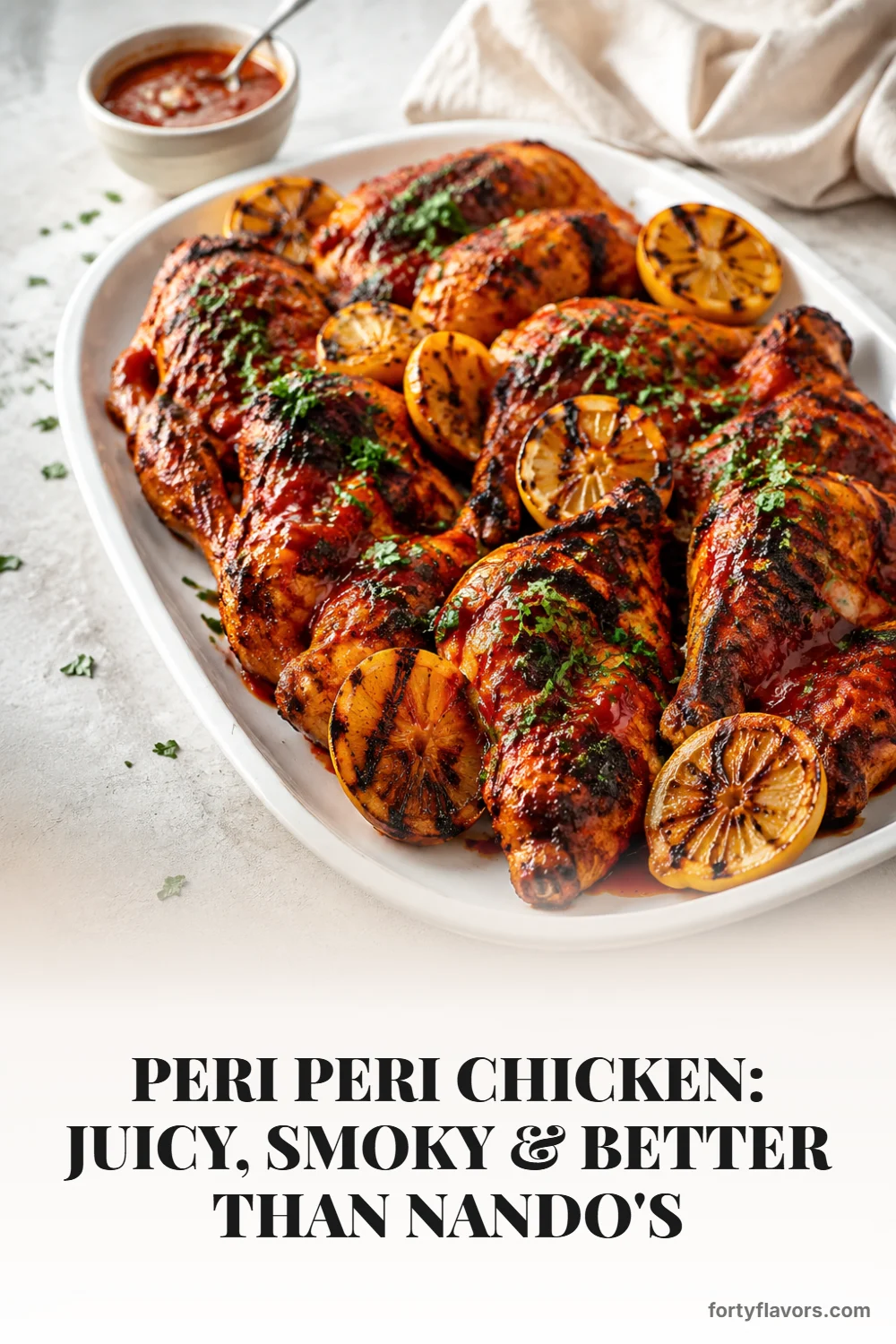
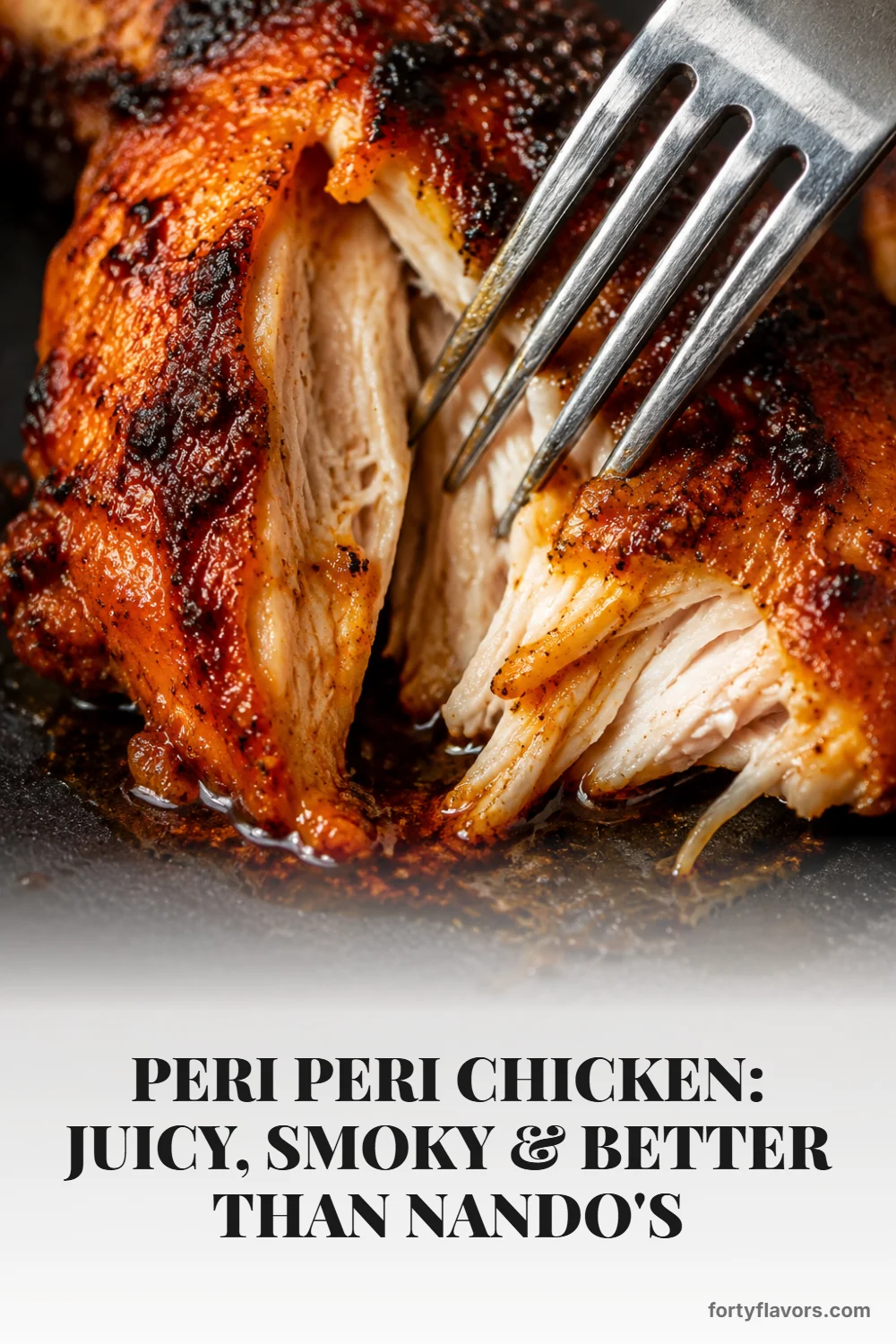

Peri Peri Chicken: Juicy, Smoky & Better Than Nando's
Ingredients
Scale
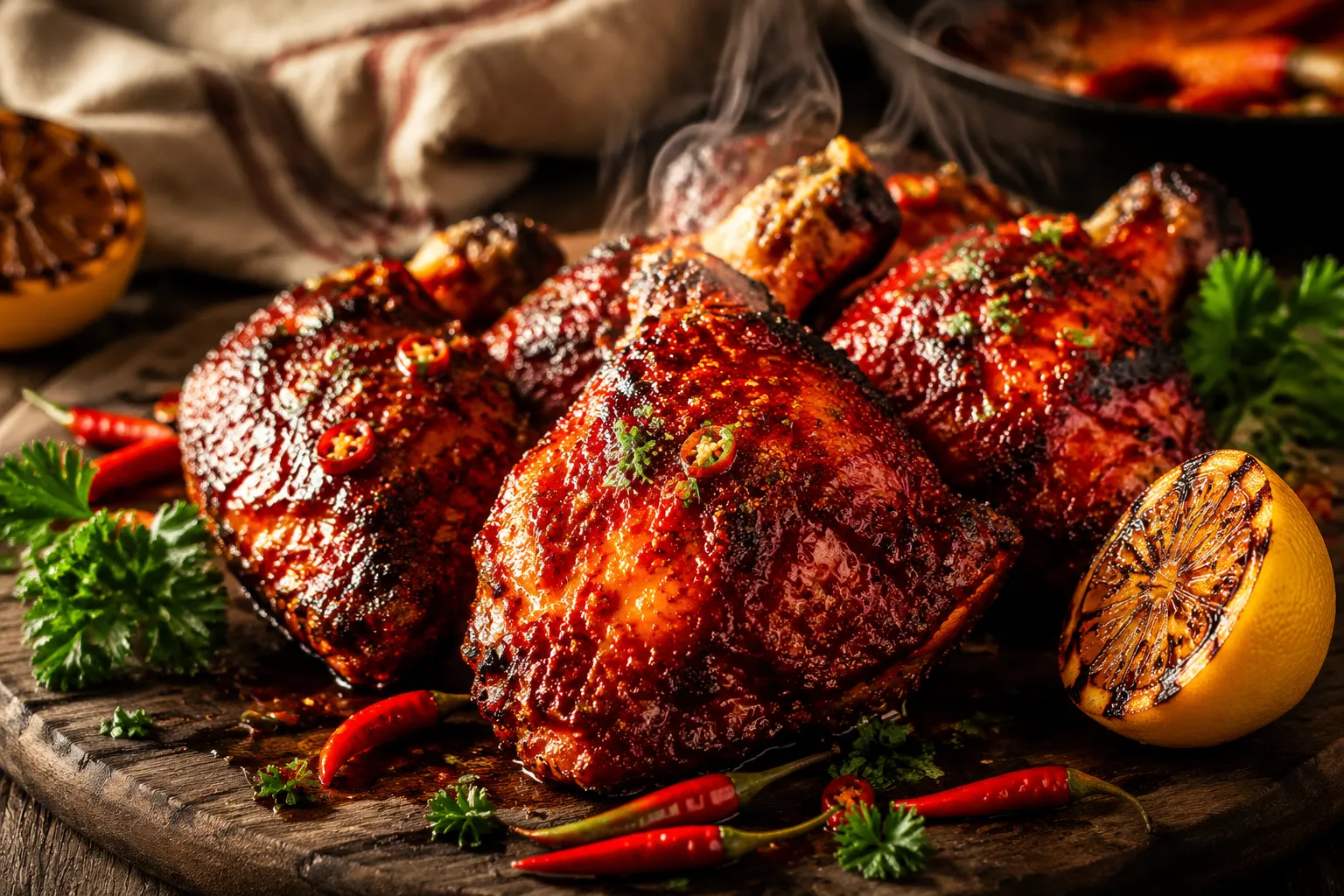
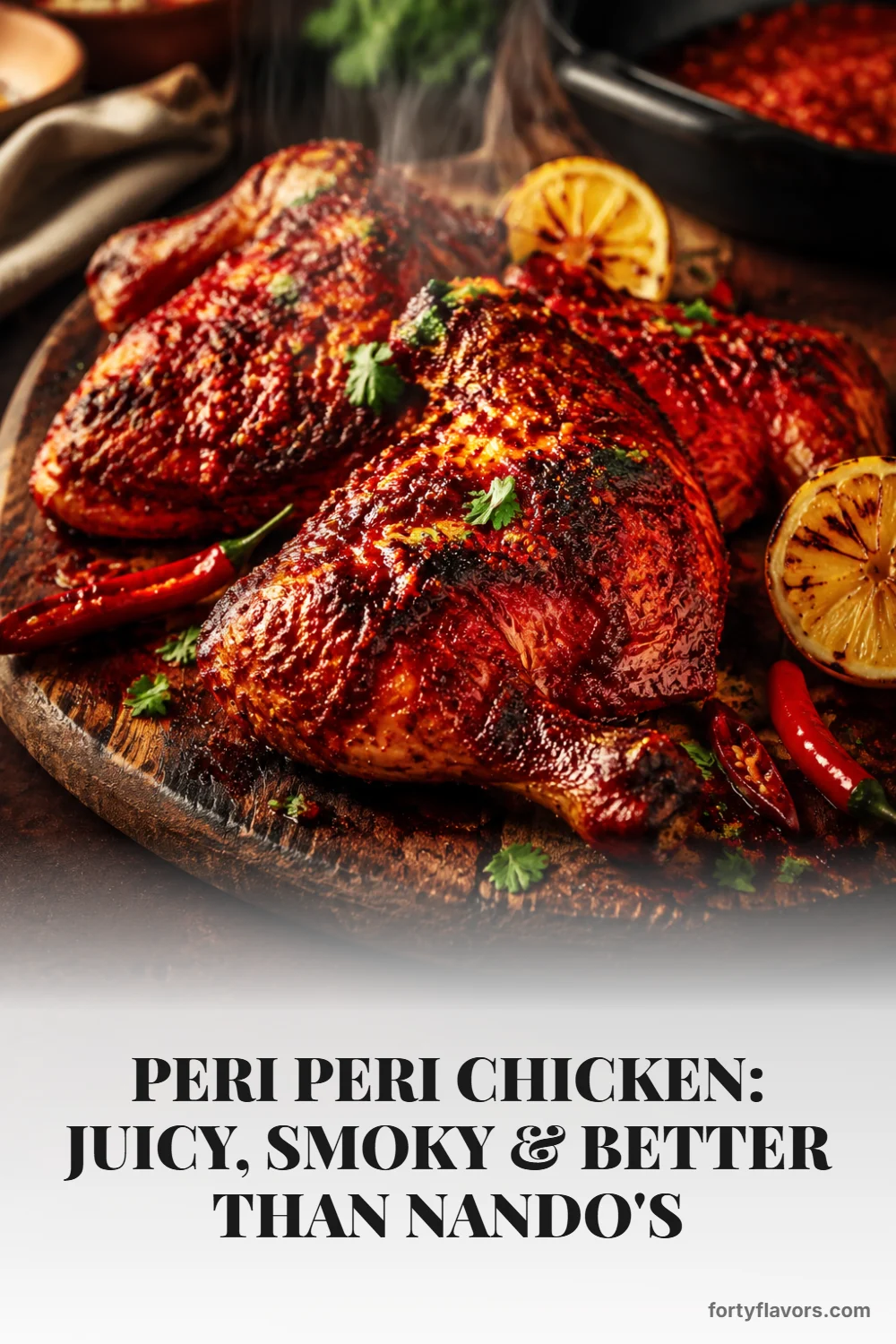
Smoky, spicy, and unbelievably juicy, this peri peri chicken is marinated in a fiery homemade sauce and grilled to charred perfection — better than Nando's at home.
Peri peri chicken is the kind of dinner that announces itself before it ever hits the table: smoky char, garlicky heat, lemony brightness, and that glossy red sauce clinging to every crispy edge. This version is deeply flavored but very doable at home, with a blender marinade that doubles as a basting sauce for a restaurant-style finish. Think Nando's energy, but fresher, juicier, and totally in your control.
The heart of the recipe is a bold peri peri sauce made with red chilies, roasted bell pepper, garlic, lemon, vinegar, smoked paprika, and oregano. It tastes fiery at first, then tangy, savory, and a little sweet from the pepper. Use it on bone-in thighs and drumsticks for the juiciest result, or take the same method to a whole bird if you love spatchcock chicken with crackly skin and even cooking.
This is flexible enough for a summer grill night, a sheet-pan Sunday dinner, or a cast iron situation when the weather refuses to cooperate. However you cook it, the goal is the same: caramelized edges, tender meat, and plenty of extra sauce for spooning over rice, slaw, corn, or warm bread.
Piri piri, also spelled peri peri, refers to both a small hot chile and the vivid sauce built around it. The flavor is often associated with Portuguese-African cooking, especially the movement of chilies, citrus, garlic, and vinegar through Mozambique, Angola, and Portugal. In the U.S., many people first meet it through restaurant-style Portuguese chicken, where the bird is marinated, flame-kissed, and finished with a tangy red sauce.
What makes this different from ordinary hot chicken is the balance. The heat is present, absolutely, but it is layered with acid from lemon and vinegar, smokiness from paprika, a roasted pepper base, and a savory hit of garlic. African bird's eye chili is the classic choice and brings a sharp, clean burn that wakes up the whole marinade. If you cannot find it, fresno chilies plus a pinch of cayenne make a practical swap while keeping the spirit of the dish intact.
The sauce is also more than a coating. It seasons the meat from the inside during marinating, then becomes a glaze as it chars over heat. That two-stage flavor is what gives this peri peri chicken recipe its glossy, tangy, slightly smoky finish.
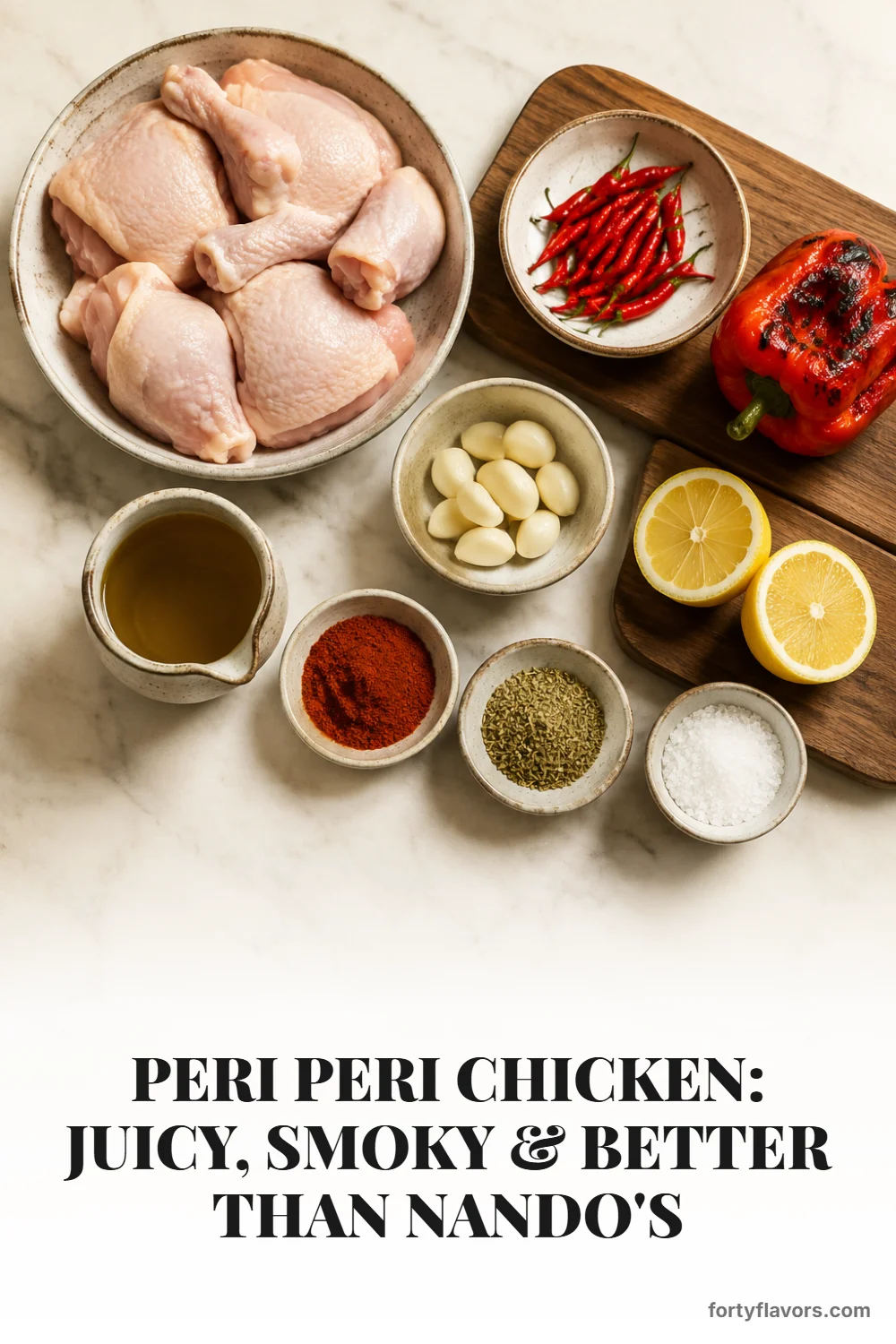
The ingredient list is short, but each piece pulls real weight. Red chilies bring heat, roasted red bell pepper adds body and natural sweetness, and garlic gives the sauce its savory backbone. Lemon zest and juice make everything pop, while red wine vinegar keeps the marinade bright enough to cut through rich chicken skin.
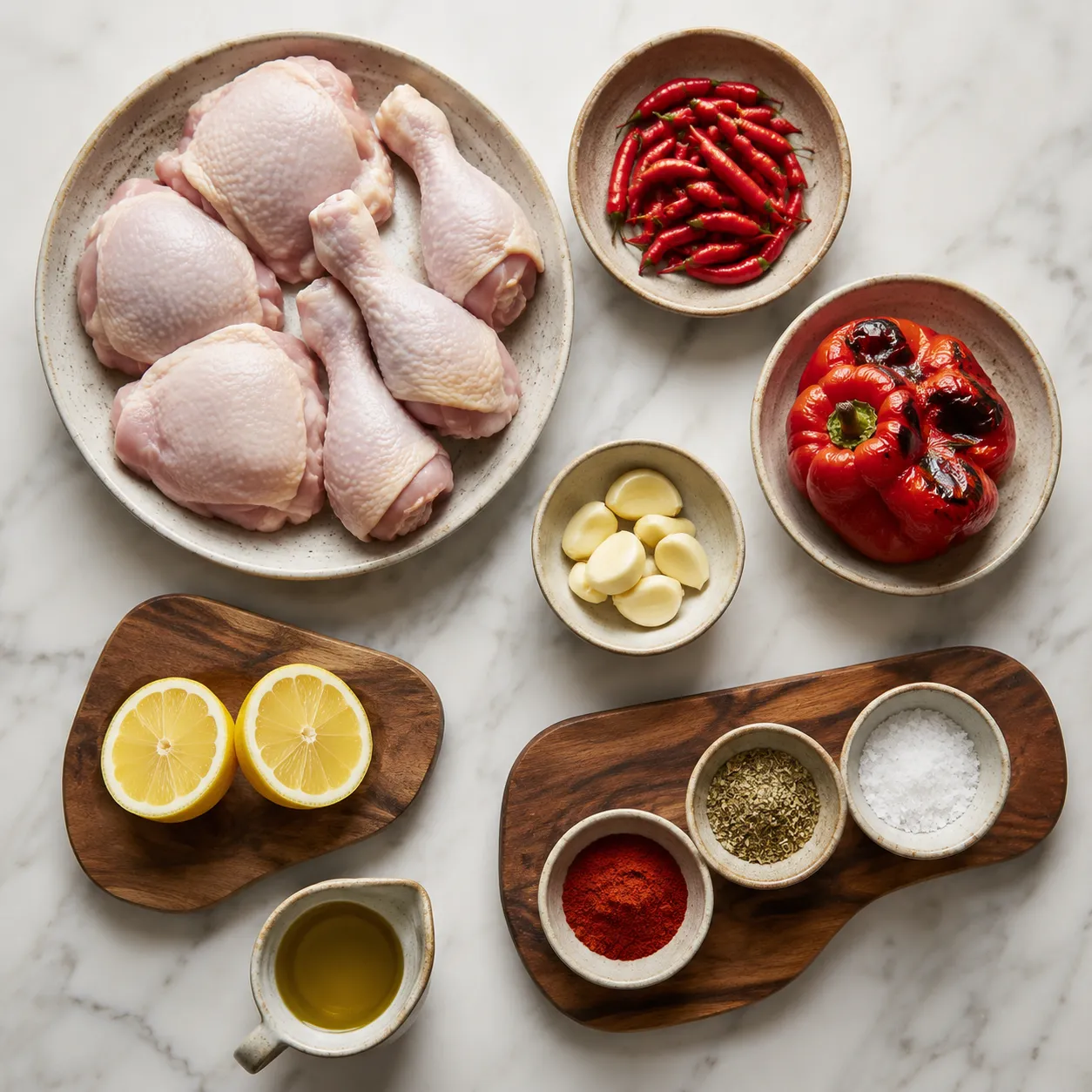
Smoked paprika is what nudges the sauce toward grill-night magic, especially if you are roasting in the oven or searing indoors. Dried oregano adds a little herbal warmth, and olive oil helps the sauce emulsify so it clings to the chicken instead of sliding off. Kosher salt is essential here because the marinade is seasoning several pounds of bone-in chicken, not just decorating the surface.
For the chicken, I like a mix of bone-in, skin-on thighs and drumsticks. Dark meat stays succulent during high-heat cooking, and the skin crisps beautifully under the sticky red glaze. If you are searching for a weeknight shortcut, boneless thighs work well too; just reduce the cook time and watch the internal temperature closely.
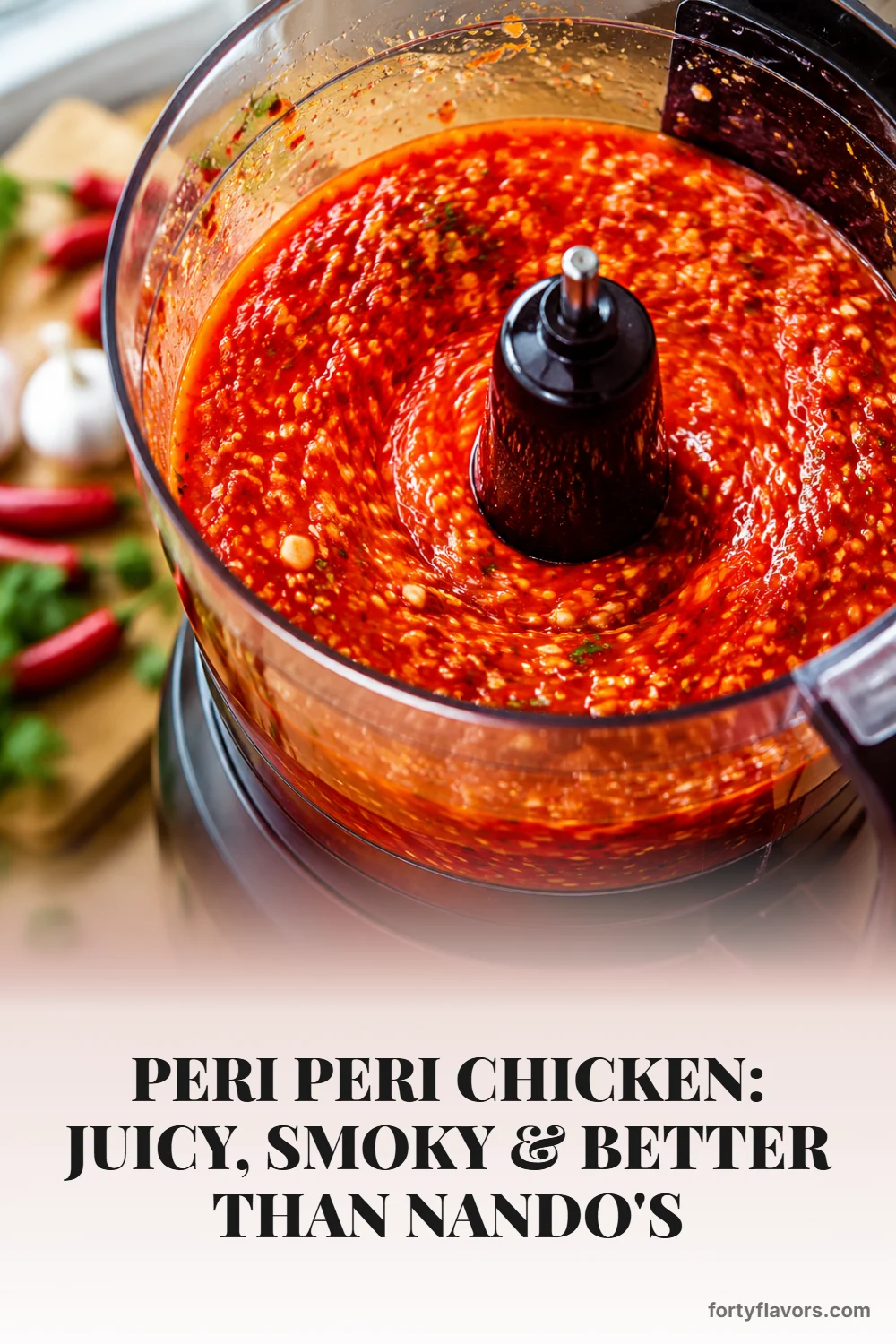
The easiest way to make the sauce is in a blender or food processor. Add the chilies, roasted pepper, garlic, olive oil, vinegar, lemon zest and juice, smoked paprika, oregano, and salt, then blend until mostly smooth. A little texture is welcome; tiny flecks of chili and herb look beautiful and make the sauce feel homemade.
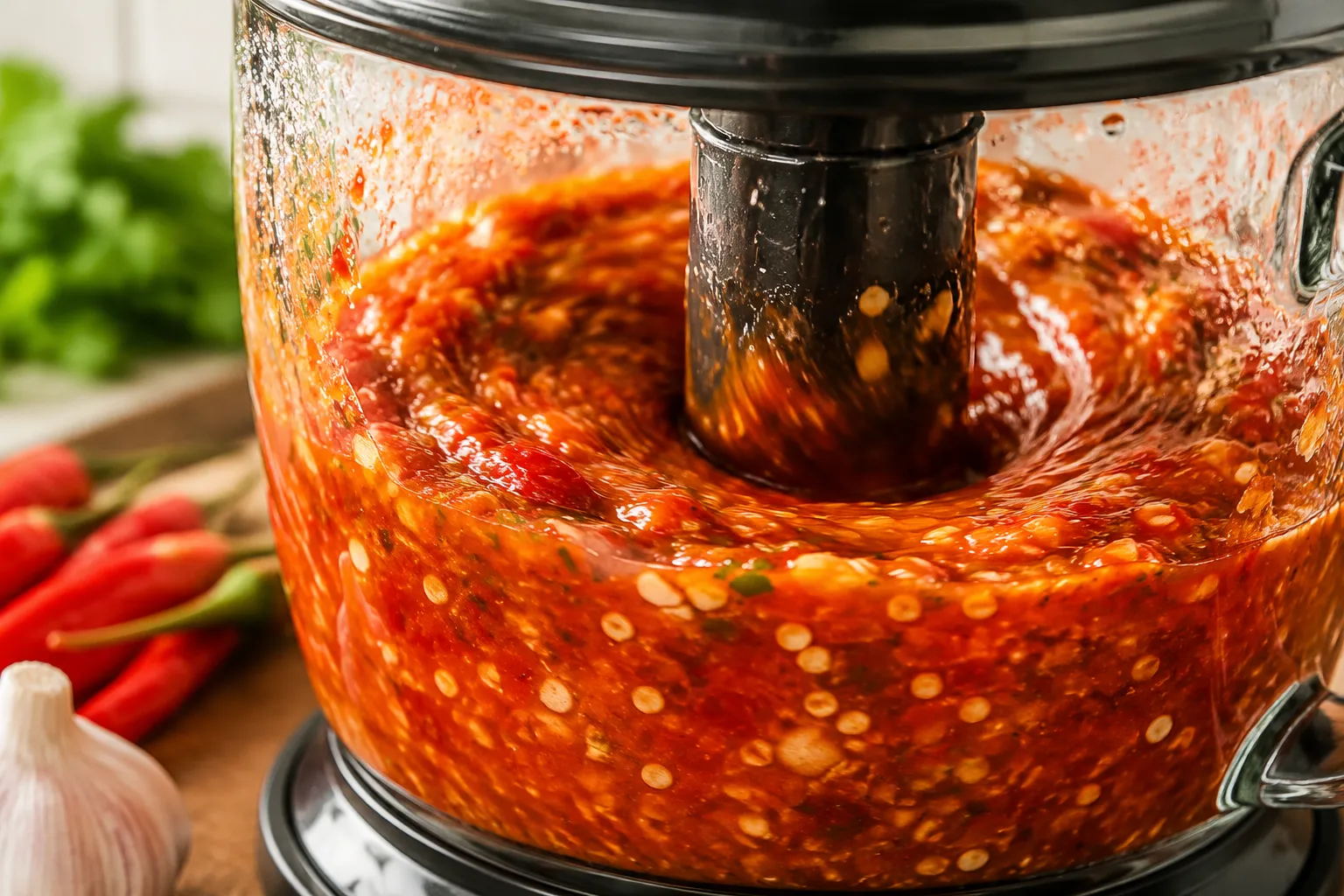
Before the chicken goes in, divide the sauce. Some will touch raw chicken and become the marinade, while the rest stays clean for basting and serving. This small step is the secret to a glossy finish and a safe, spoonable sauce at the end.
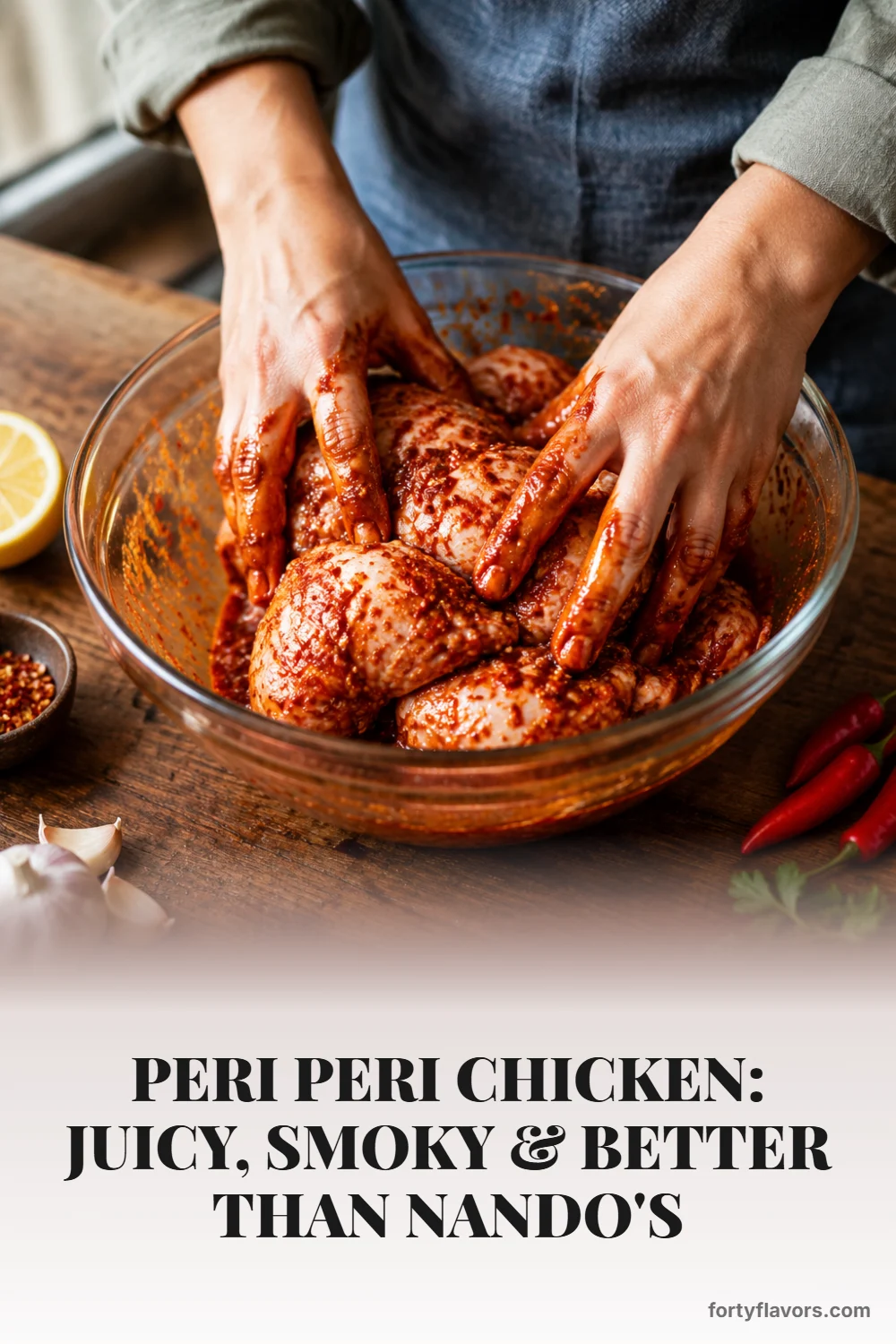
Rub the marinade all over the chicken, getting under the skin where you can without tearing it. The meat should look thoroughly coated, almost lacquered, with sauce tucked into every crevice. This is where the homemade peri peri sauce really starts doing its work, tenderizing and seasoning the chicken as it rests.
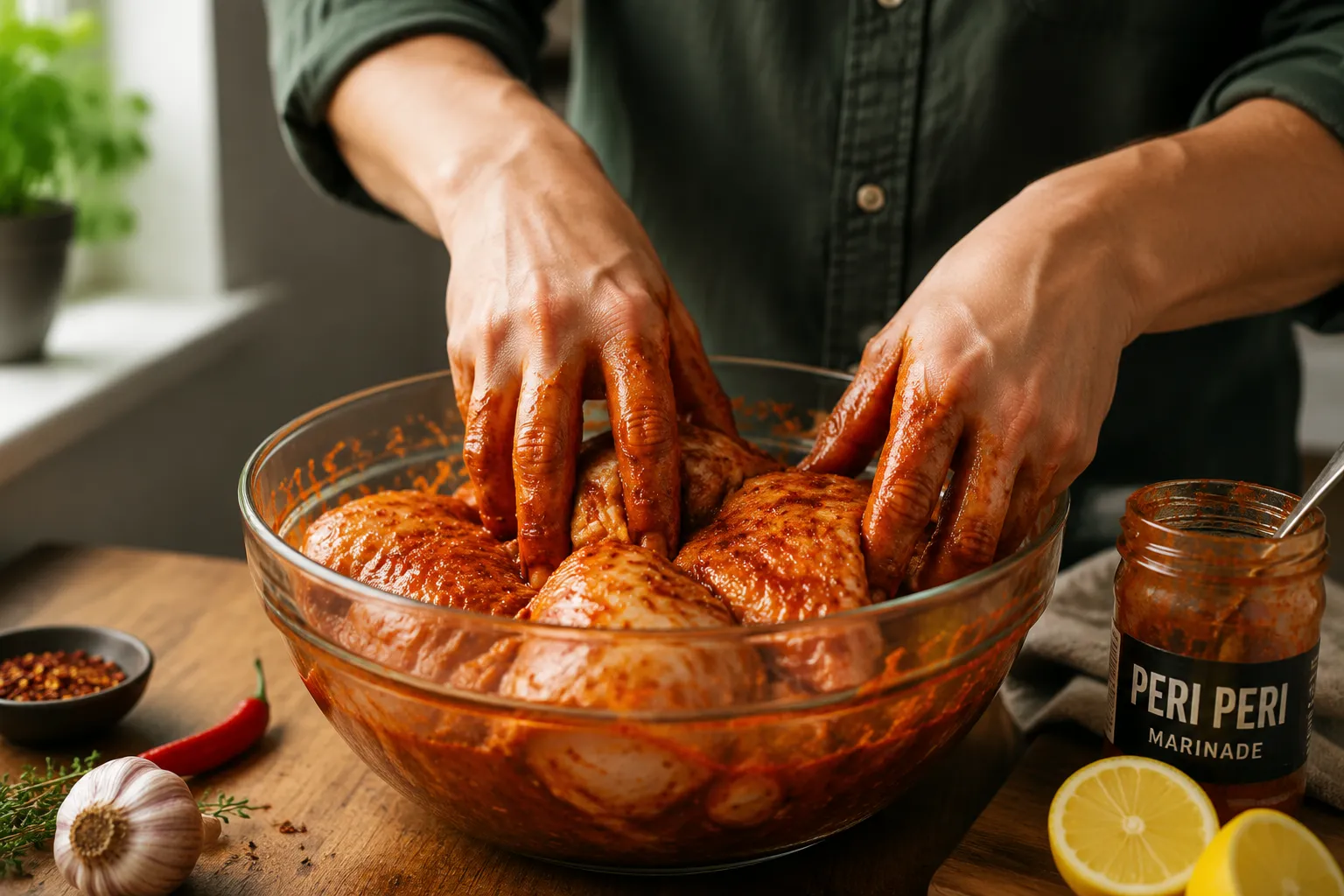
For the best flavor, give the chicken at least 4 hours in the refrigerator. Overnight is even better, especially if you want the lemon, garlic, and chile to move beyond the surface. If you are making peri peri chicken on a tighter schedule, even 2 hours will give you a noticeable payoff, but do not skip the marinating altogether.
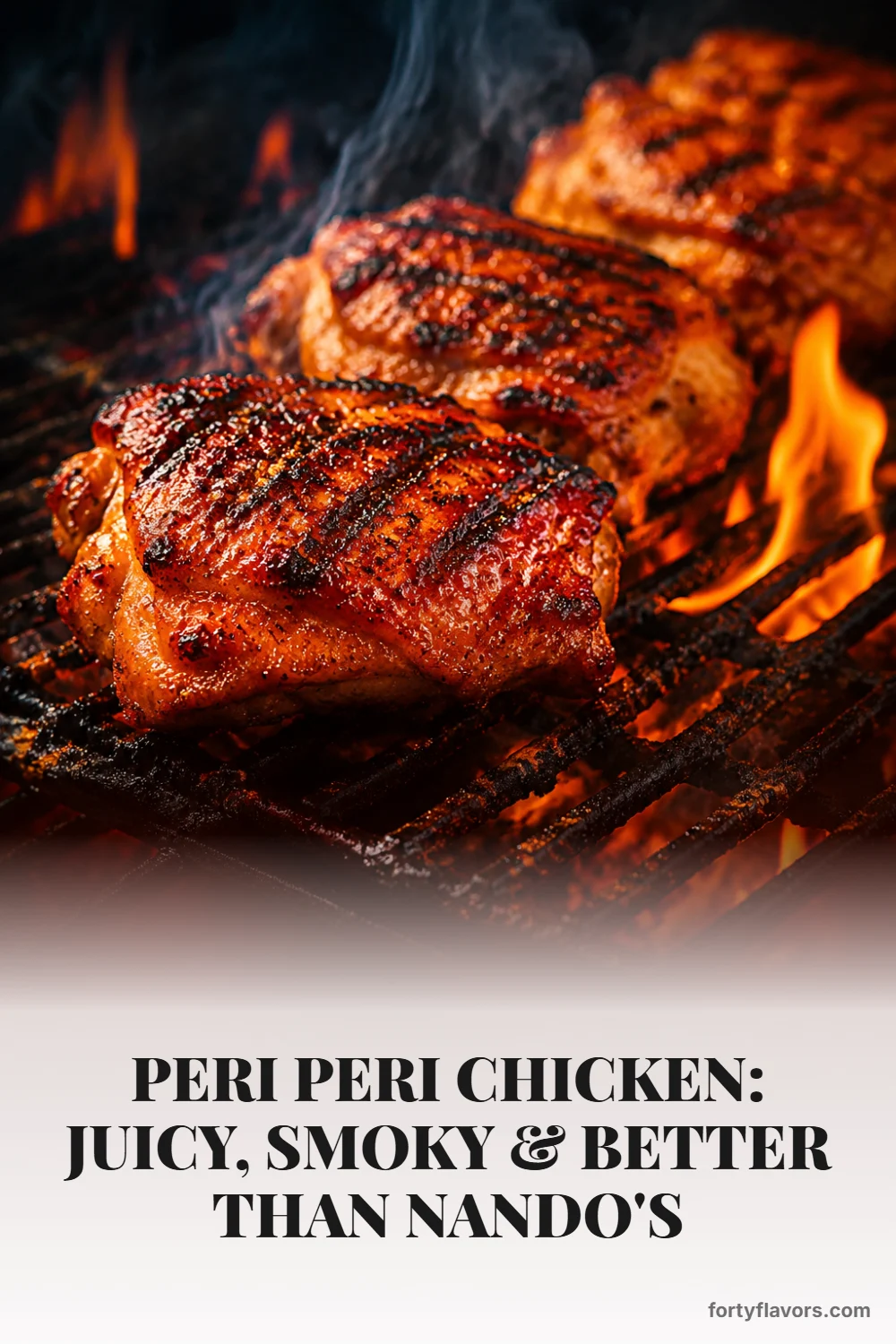
The grill gives you the most dramatic char and that unmistakable smoky edge. Set up medium-high heat with a cooler zone so the chicken can sear first, then finish gently without burning the sugars and spices in the marinade. Start skin-side down until the edges crisp, flip, then move pieces as needed to manage flare-ups.
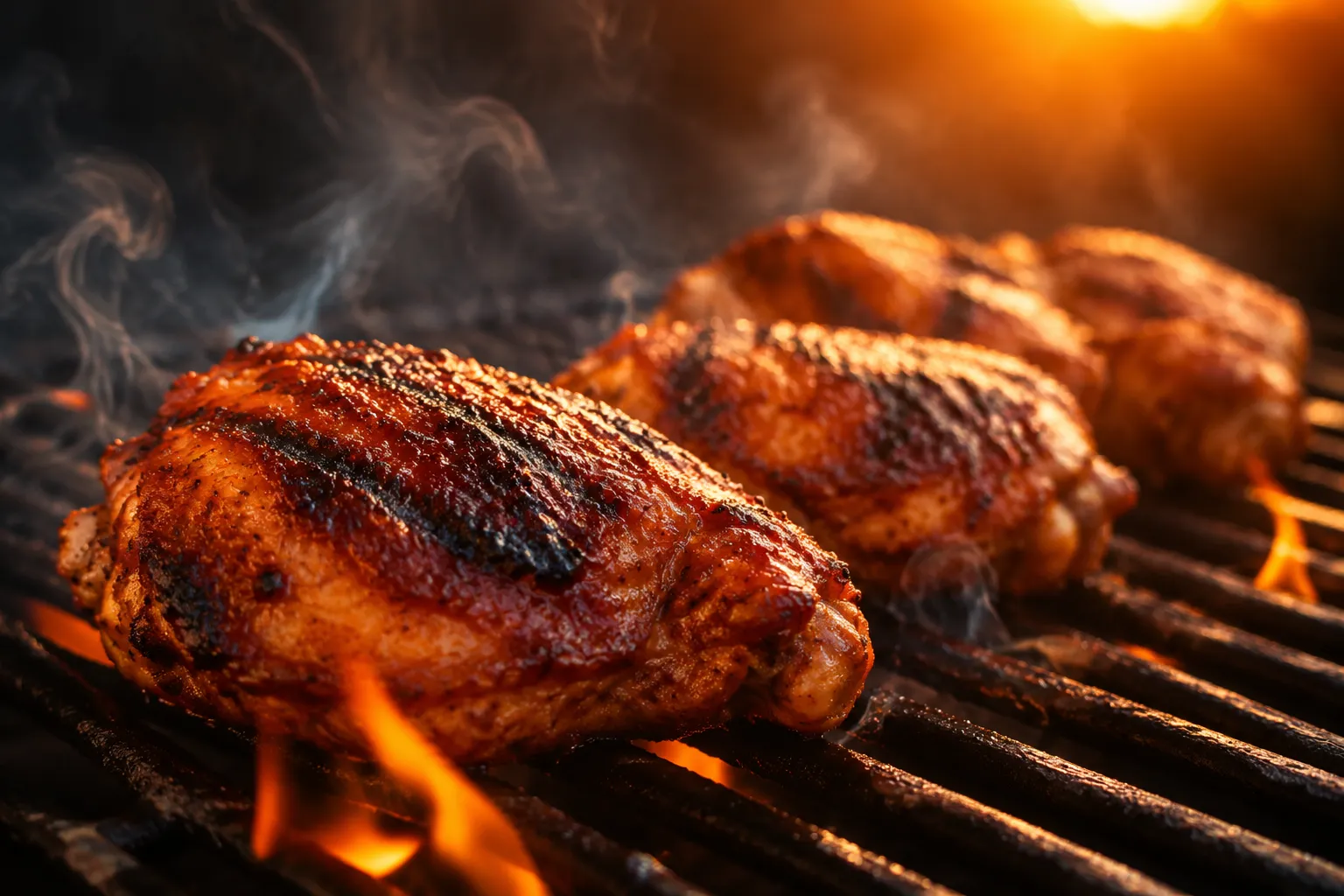
If you love grilled chicken thighs, this method is especially satisfying because the skin gets crisp while the dark meat stays juicy. Baste with the reserved clean sauce during the last few minutes, not the whole time, so the glaze caramelizes instead of scorching. The chicken is done when the thickest pieces reach 165°F, though thighs and drumsticks are often even better around 175°F to 185°F because the connective tissue softens.
For the oven method, roast the marinated chicken on a rimmed sheet pan at high heat. A wire rack helps hot air circulate underneath, but parchment on a sheet pan works if that is what you have. Finish with a short broil to blister the skin, then brush with reserved sauce so it shines.
Cast iron is the indoor route for big flavor. Sear the chicken skin-side down until deeply browned, flip, and finish in the oven so the centers cook through without the outside going too dark. When you are cooking peri peri chicken this way, turn on the vent fan and expect a little sizzle; the reward is a smoky, spicy crust without stepping outside.
Whichever method you choose, resting matters. Give the chicken 5 to 10 minutes before serving so the juices settle back into the meat. Then hit it with one final spoonful of sauce, a squeeze of lemon, and a sprinkle of parsley or cilantro if you like a fresh green finish.
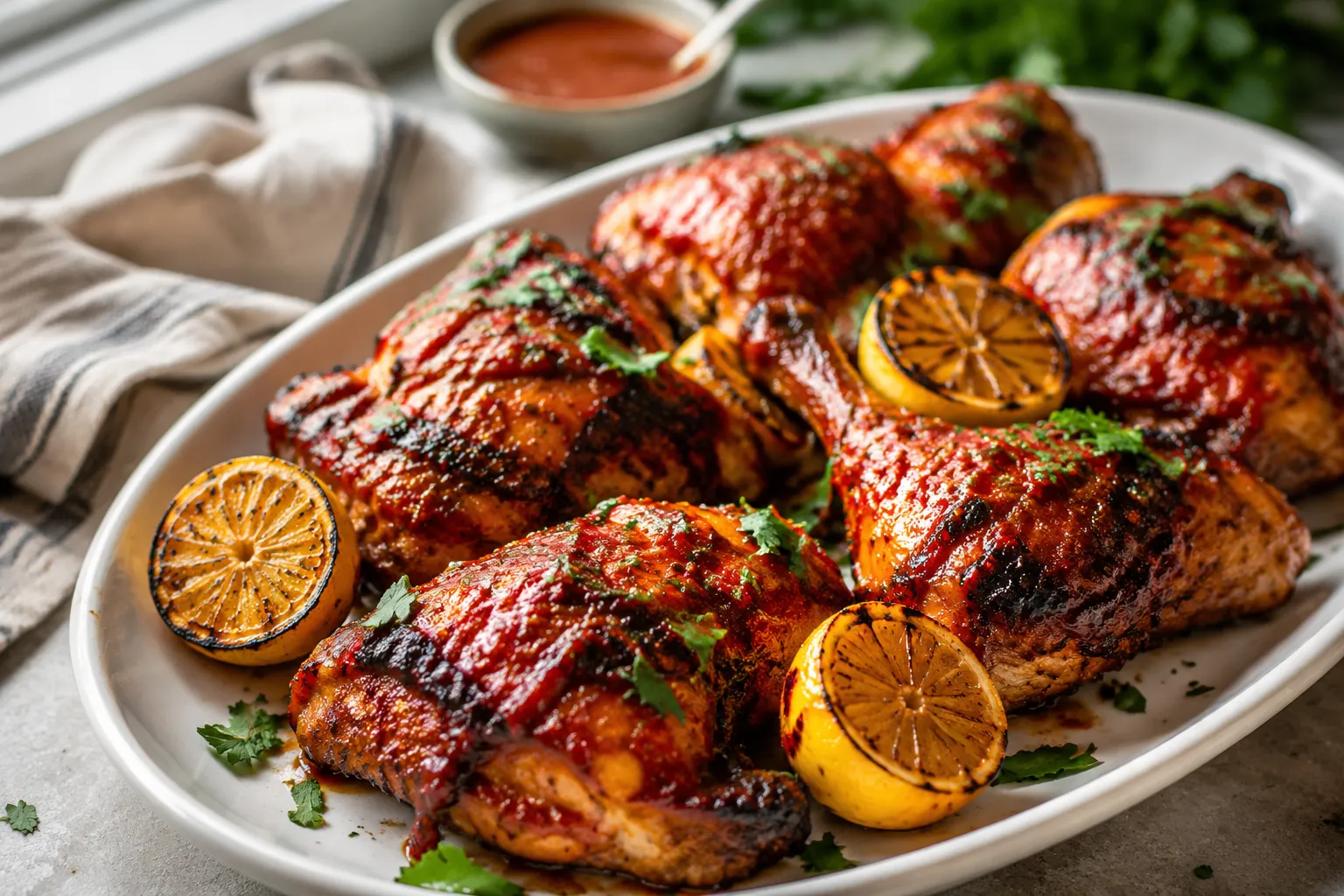
The best visual cue is contrast: dark mahogany char in spots, red-orange glaze in others, and juices that run clear when pierced near the bone. But color alone is not enough, especially with a deeply tinted spicy chicken marinade. Use an instant-read thermometer and check the thickest part without touching bone.
Chicken is technically safe at 165°F, but dark meat becomes more tender when cooked a little higher. Thighs and drumsticks can handle 175°F to 185°F and often taste better there. The marinade protects the exterior while the extra heat helps the meat pull away from the bone more easily.
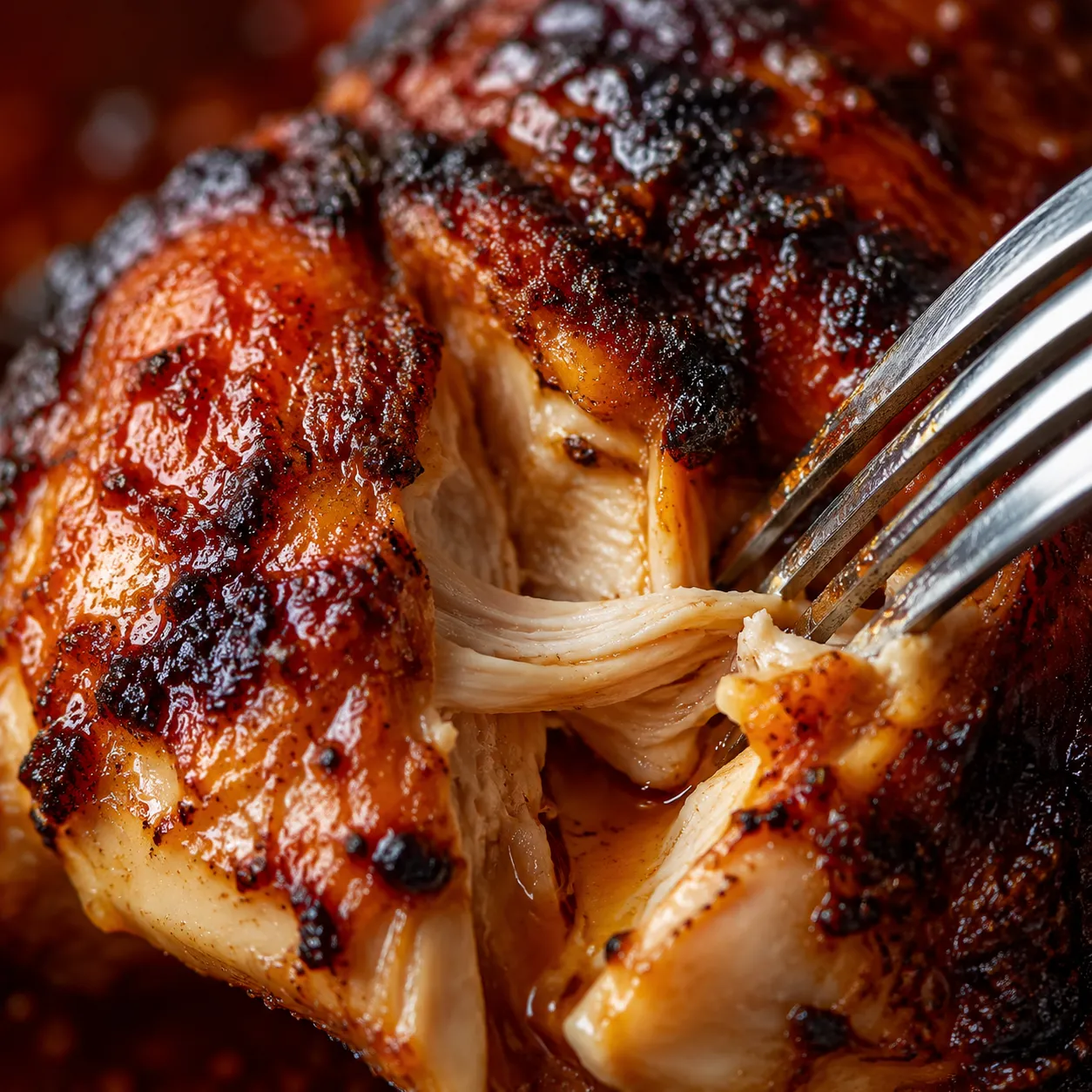
You should also see a few blistered edges and crisp patches of skin. That is where the vinegar, lemon, oil, and paprika have reduced into a savory glaze. If the chicken is cooked through but needs more color, a final minute or two under the broiler or over direct grill heat can bring it to life.
This chicken wants sides that can catch sauce. Fluffy rice is the classic move, especially if you season it with a little turmeric, garlic, lemon, and butter. Spoon the pan juices or extra peri peri sauce over the top and suddenly the rice becomes half the reason everyone goes back for seconds.
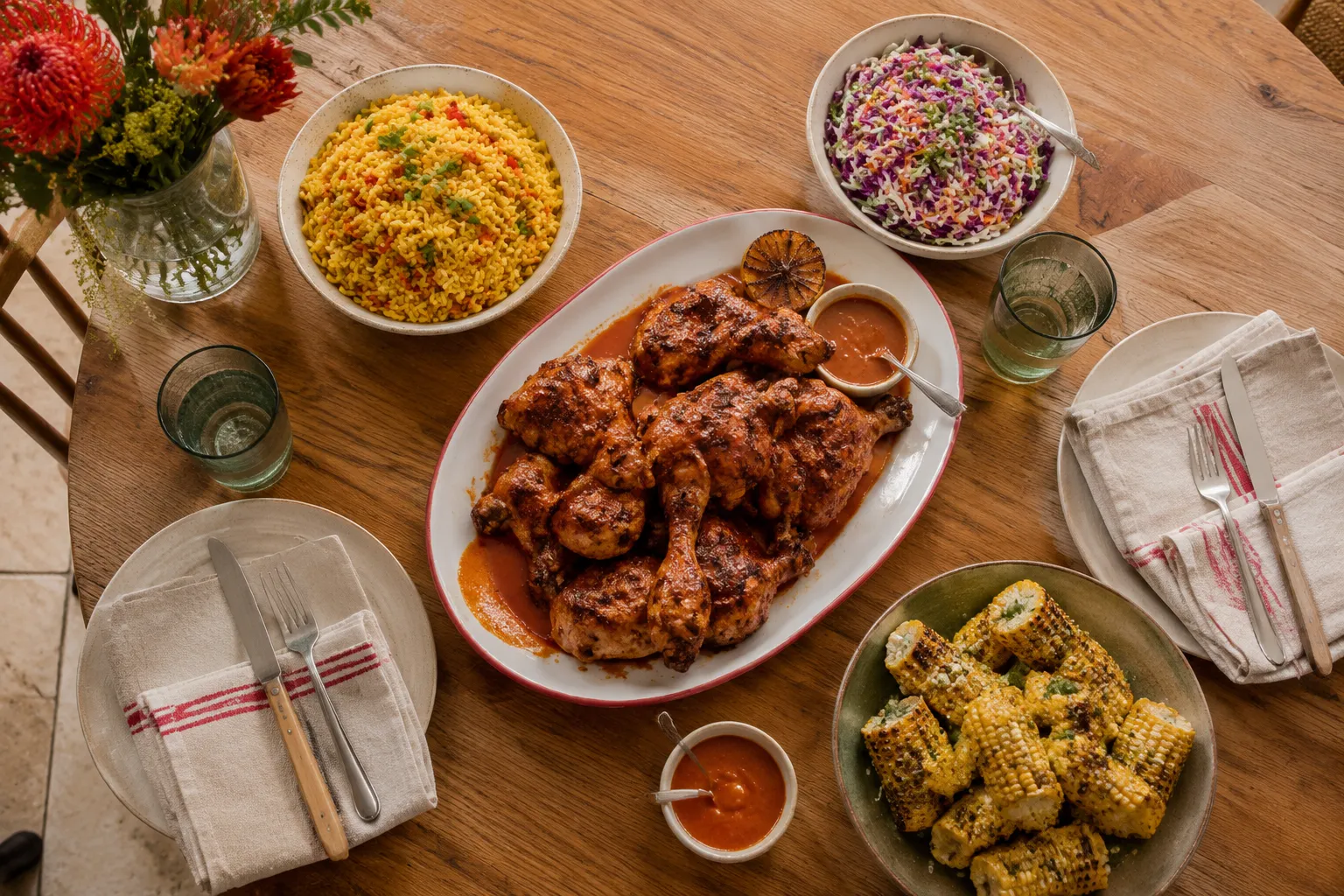
For freshness, add a crunchy slaw with cabbage, carrots, herbs, and a vinegar-forward dressing. Grilled corn is another natural pairing because the sweetness cools the chile heat while still feeling smoky and summery. Warm pita, flatbread, or garlic bread is perfect for swiping through the red sauce left on the platter.
If you want to build a bigger spread, serve it with cucumber salad, roasted potatoes, or charred vegetables. A cooling yogurt sauce is not traditional in every version, but it is wonderful if your chilies run hot. You can also lean into the citrus by pairing the chicken with a lemon herb marinade-style salad of parsley, mint, scallions, and lots of fresh lemon.
For drinks, keep it crisp and cold. Sparkling water with lime, lager, vinho verde, or a bright lemonade all work beautifully against the heat. The meal is bold, but the sides and sips keep it balanced.
The sauce can be blended a day or two before you plan to cook, which makes this an easy dinner-party or weekend grilling recipe. You can also marinate the chicken the night before, then pull it from the refrigerator while the grill heats so it loses some of its chill. That little head start helps the pieces cook more evenly.
Leftovers are a gift. Slice the meat off the bone and tuck it into wraps with slaw, pile it over rice bowls, or chop it into a salad with avocado and crunchy vegetables. The flavor stays big, so you do not need much more than lemon, herbs, and maybe a little extra sauce to make round two feel intentional.
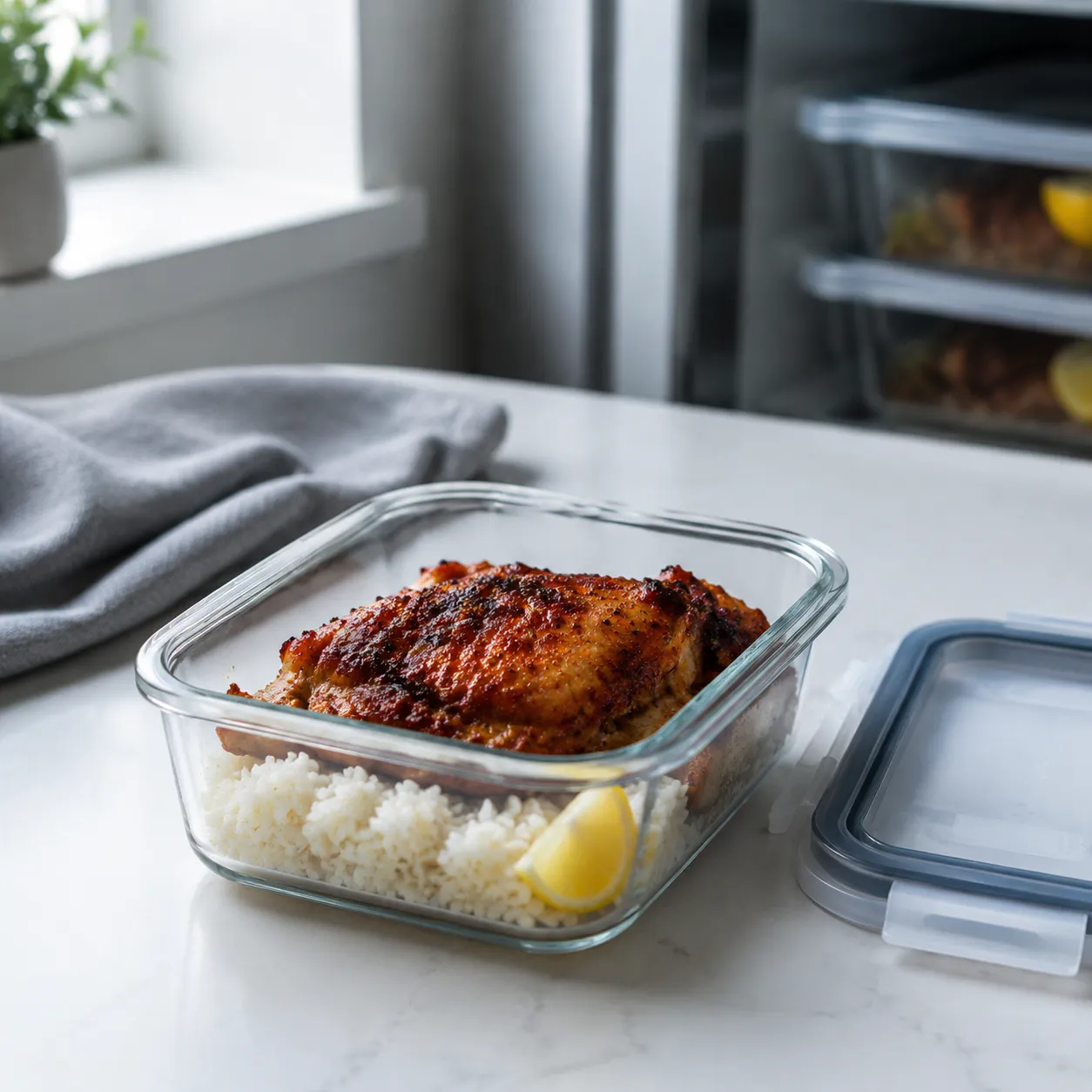
If you are prepping lunches, pack the chicken with rice and a lemon wedge, keeping any extra sauce in a small container. Reheat gently so the meat stays juicy, then add the sauce after warming for the freshest flavor. It is one of those recipes that makes future-you very happy.
Great spicy grilled chicken is all about building flavor in layers: a punchy marinade, enough resting time, real heat, a controlled char, and a final glossy brush of sauce. This recipe keeps those restaurant-style details but uses ingredients you can find and techniques you can repeat. Once you have made the sauce once, it becomes the kind of thing you want to put on everything from shrimp to vegetables.
Serve this peri peri chicken straight from the grill with lemon wedges and a messy pile of sides, and do not be surprised when everyone asks where you bought the sauce. The answer, happily, is that you made it yourself.
This recipe is easy to adjust depending on your preferred heat level, cut of chicken, and cooking setup. Keep the same sauce base, then tweak the chilies, protein, or finish to match your dinner plans.
Store leftover cooked chicken in an airtight container in the refrigerator for up to 4 days. Keep extra sauce in a separate container if possible so you can add it after reheating for the brightest flavor.
To freeze, cool the cooked chicken completely, wrap tightly, and freeze for up to 3 months. Thaw overnight in the refrigerator, then reheat gently in a 325°F oven, covered, until warmed through; uncover for the last few minutes to revive the skin.
Hover any image and hit “Pin it” to save it to your Pinterest boards.