Ham Glaze Recipe: The Best Sweet & Sticky Holiday Glaze
Ingredients
Scale
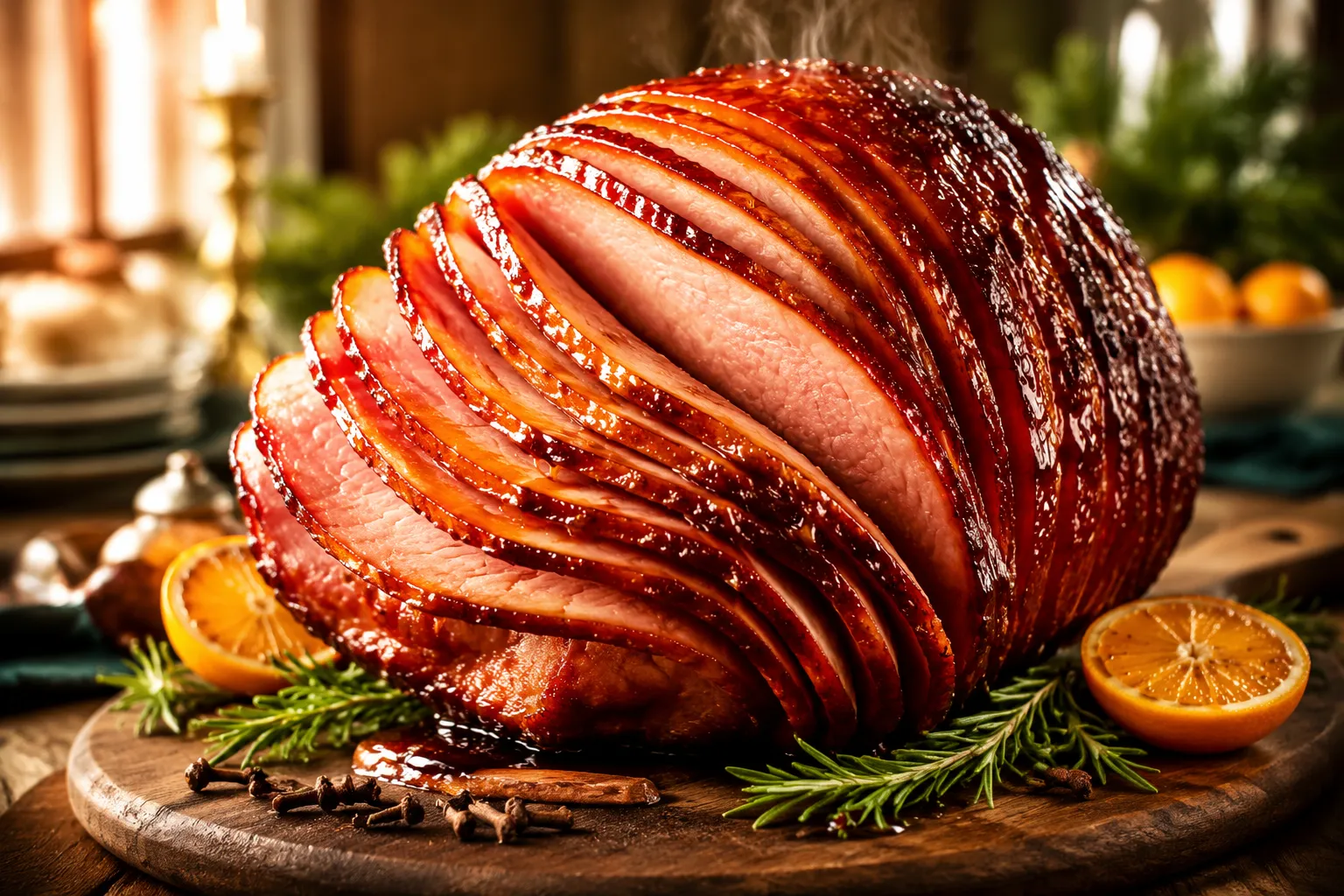
A 4-ingredient ham glaze recipe that turns any spiral or bone-in ham into a glossy, caramelized centerpiece. Sweet, tangy, and brushed on in minutes.
This ham glaze recipe is the four-ingredient secret behind every glossy, mahogany-lacquered holiday ham I've ever served. Brown sugar, honey, Dijon, and butter simmer together into a sticky lacquer that clings to every score line and caramelizes into burnished, candy-edged perfection. It comes together in under fifteen minutes on the stovetop, and it's the kind of small detail that makes guests assume you've been cooking for two days straight.
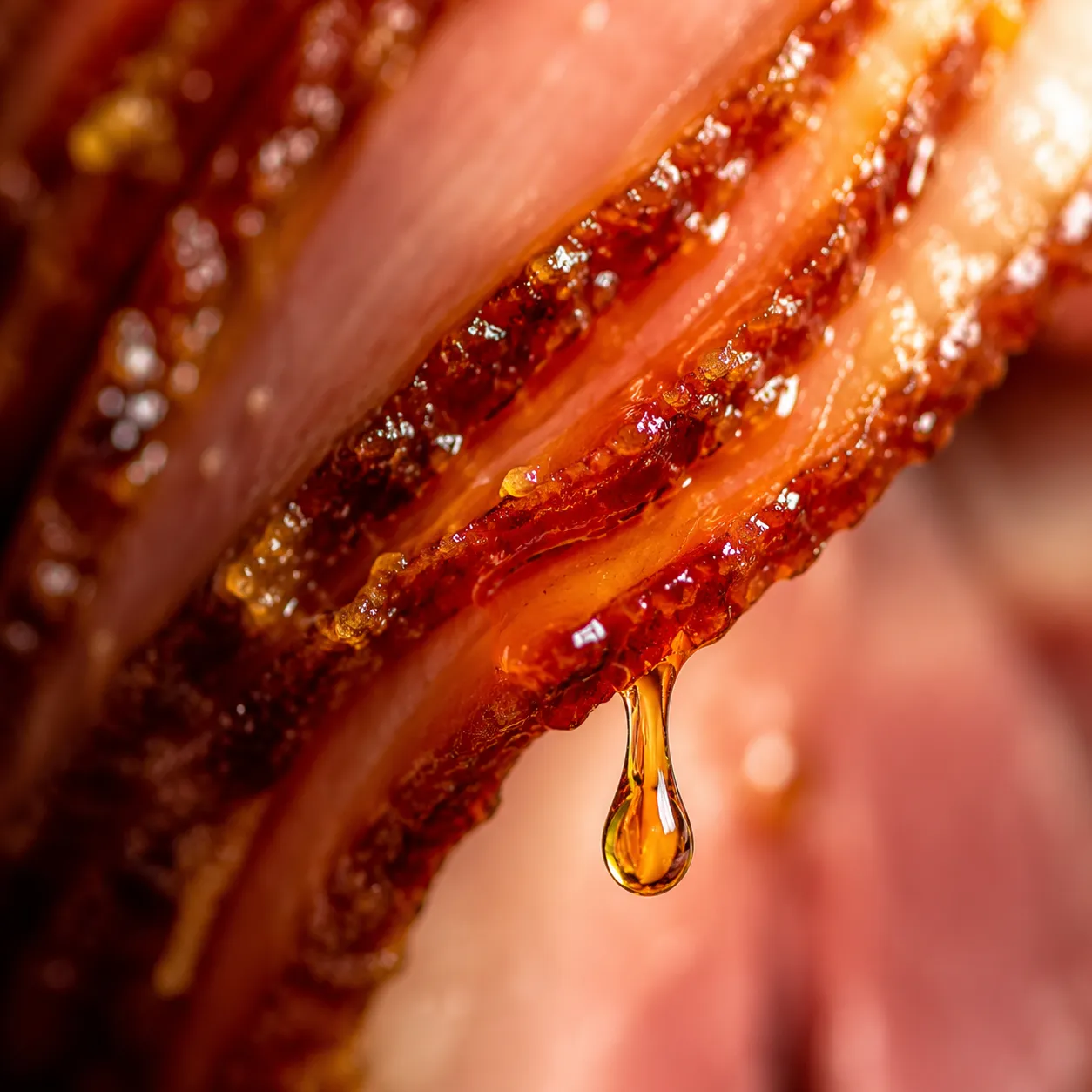
I've made versions of this ham glaze recipe for every Easter ham and Christmas ham on the calendar, and the one rule I keep coming back to is this: simmer the glaze first. Most quick recipes have you whisk raw ingredients in a bowl and brush them on cold, which technically works, but it doesn't give you that lacquered, glass-like finish. A quick stovetop simmer melts the sugar fully, marries the honey and mustard, and thickens the mixture so it actually clings instead of sliding off into the bottom of the pan.
Whether you're working with a pre-sliced spiral ham, a bone-in city ham, or a smaller boneless cut, this glaze plays nice with all of them. It's also wildly flexible — swap in maple syrup, bourbon, pineapple juice, or apricot preserves and you have a brand-new flavor profile without a brand-new recipe to memorize.
The real beauty of a four-ingredient base is that everything is probably already in your pantry on a regular Tuesday, let alone a holiday week. Here's what each component is doing in the glaze, plus a few smart swaps if you want to riff on the original.
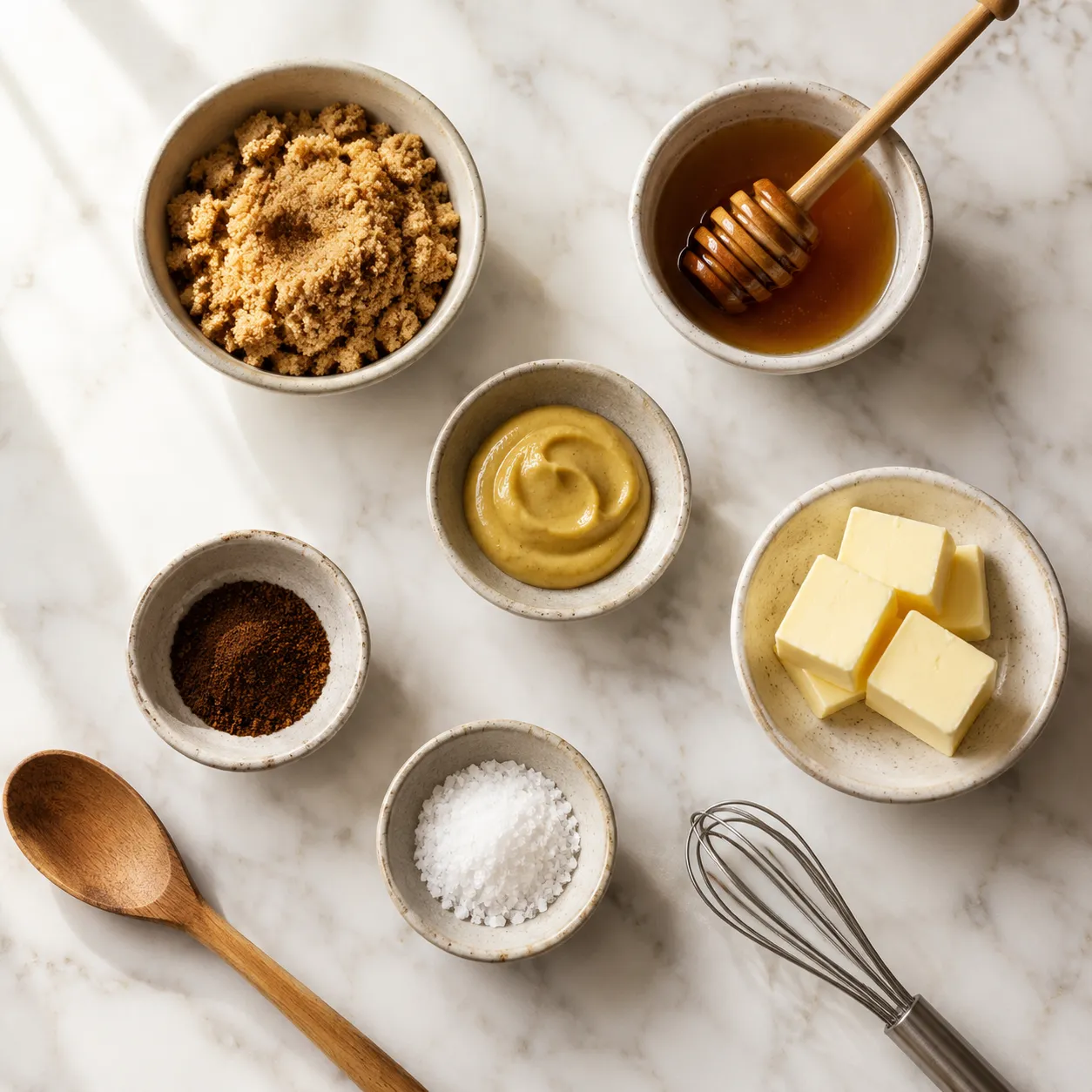
Light brown sugar is the backbone. It melts into the honey for that glossy lacquer and brings a soft molasses warmth without overpowering the meat itself. Dark brown sugar works too if you want a deeper, more bitter caramel note — I lean dark for a smoky bourbon riff and light for a brighter, classic finish.
Honey keeps the texture smooth and adds floral sweetness that bakes into the surface beautifully. Maple syrup is a one-to-one swap and gives you a slightly woodsier honey ham glaze with great affinity for spiral ham. Avoid agave here; it's too thin and won't thicken properly during the simmer.
Dijon mustard is the non-negotiable. Without it, the glaze tastes like dessert frosting. Dijon brings a sharp, tangy bite that cuts through all that sugar and balances the salty cured meat. A spoonful of whole-grain mustard mixed in adds beautiful texture if you like seeing the seeds suspended in the lacquer.
Unsalted butter, ground cloves, and a pinch of kosher salt finish things off. Butter rounds the edges and adds shine. Cloves are the holiday backbone — warm, slightly medicinal, unmistakably festive. If cloves aren't your thing, swap in a half teaspoon of allspice or simmer a cinnamon stick into the glaze and fish it out before brushing.
Optional add-ins worth knowing about: a splash of pineapple juice loosens the glaze and adds tropical brightness, two tablespoons of bourbon deepen everything with smoky vanilla undertones, and a tablespoon of orange zest plus a spoon of apricot preserves gives you a sunny spring version that's gorgeous brushed over a baked ham for Easter brunch.
The technique here splits cleanly into two parts: build the glaze on the stovetop, then double-glaze the ham during the last twenty to thirty minutes of baking. That double brush is what creates the glassy, candy-shop finish you see in magazine spreads. Skip it and you'll still have a delicious ham — but you won't have the showstopper.
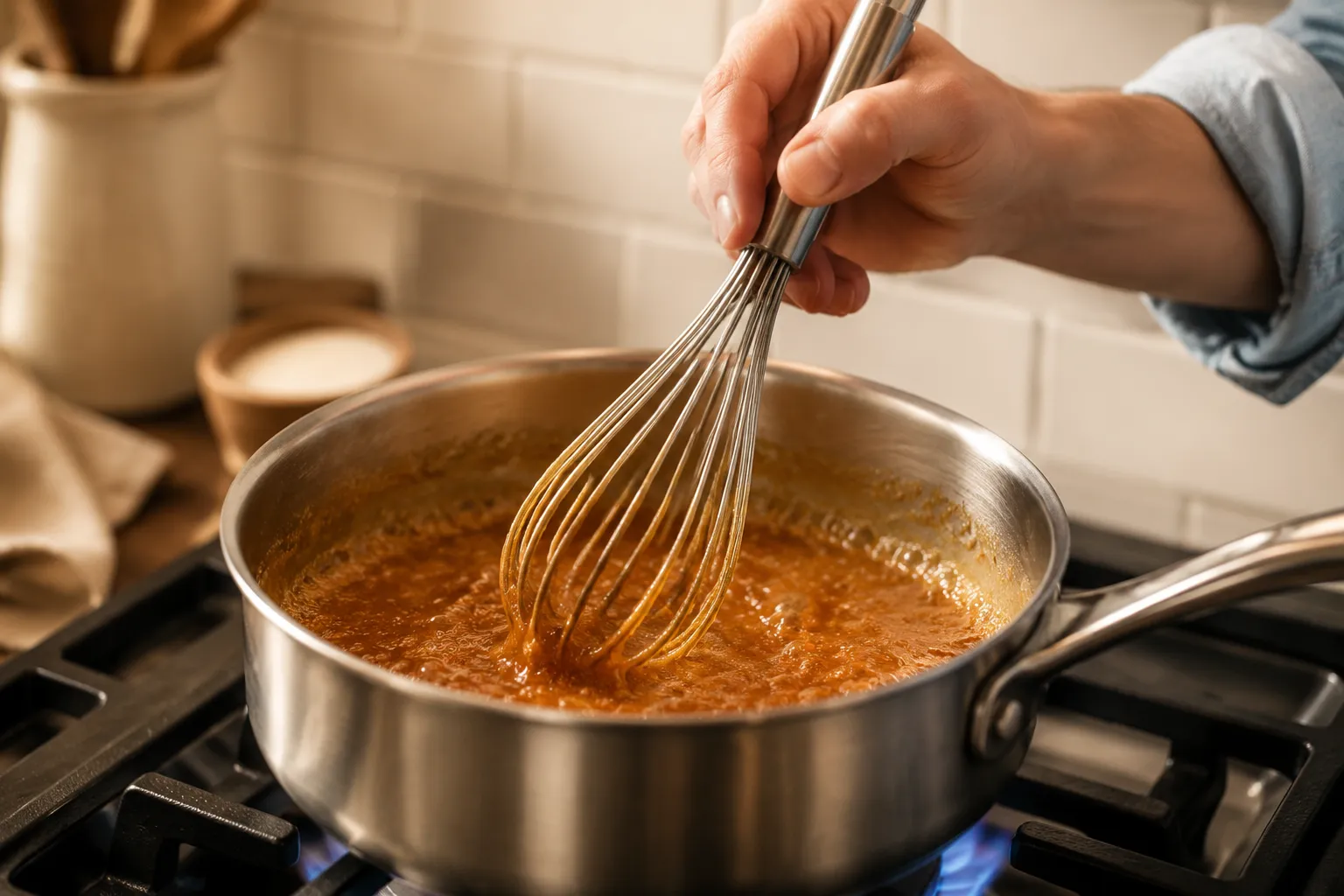
Start by combining the brown sugar, honey, Dijon, butter, cloves, and salt in a small saucepan over medium heat. Whisk constantly as the butter melts and the sugar dissolves — you want a smooth, glossy mixture, not granular. Once it comes to a gentle simmer, let it bubble for two to three minutes until it coats the back of a spoon and thickens just slightly. Pull it off the heat immediately. It will keep thickening as it cools, so don't reduce it too far or you'll end up with toffee that won't brush.
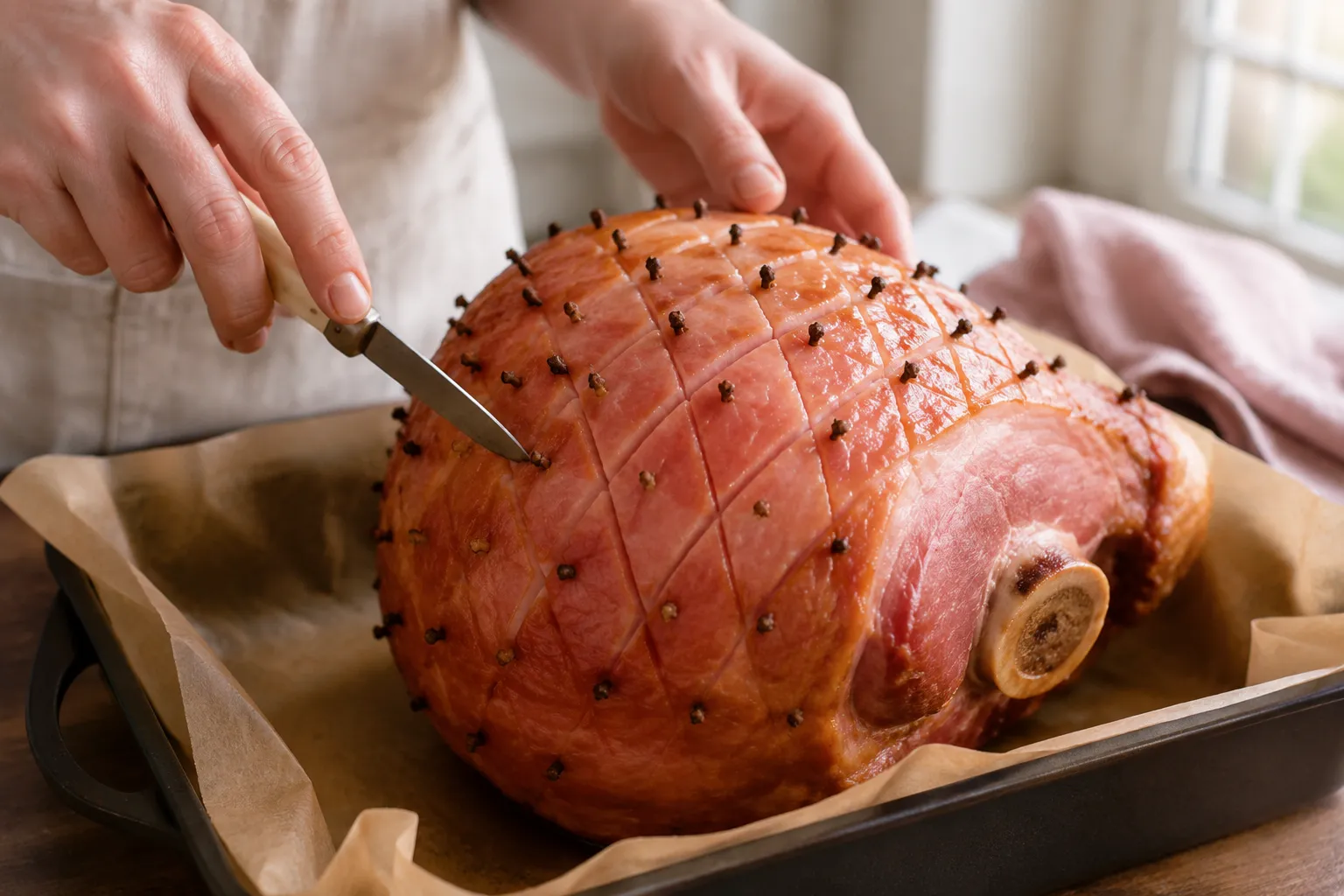
While the glaze cools, prep the ham. If you're working with a bone-in ham that isn't pre-sliced, score the surface in a diamond crosshatch pattern about a quarter inch deep. Those grooves catch the glaze and crisp into beautifully caramelized edges. Stud the corners with whole cloves for that classic studded look, then place the ham cut-side down in a foil-lined roasting pan with a half cup of water or apple cider in the bottom to keep everything moist while it warms through.
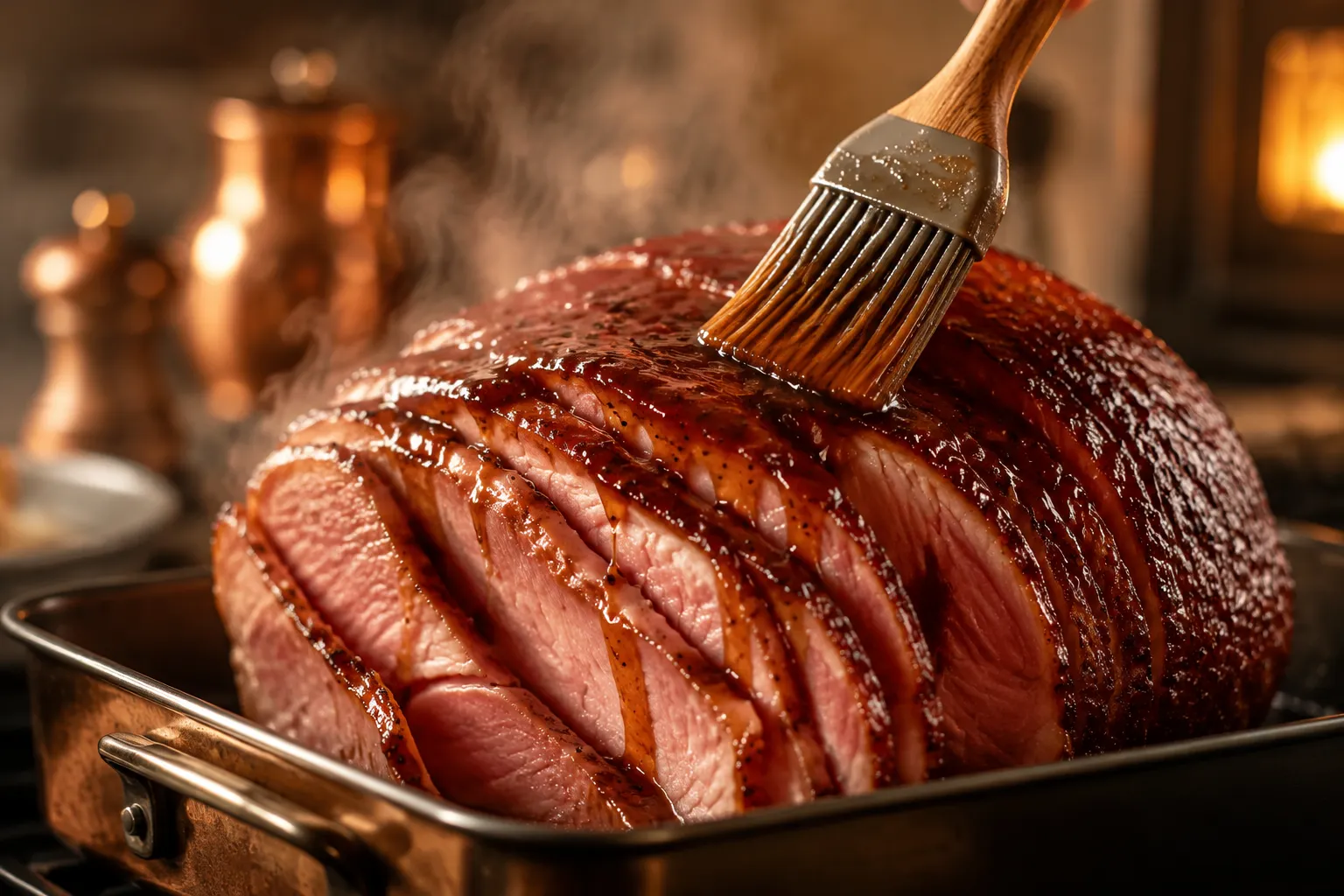
Tent the ham loosely with foil and bake at 325°F, allowing about ten to twelve minutes per pound for a fully cooked ham. When you're down to the last thirty minutes, pull off the foil and brush the warm glaze generously over the entire surface, working it into every score line and between every spiral slice. Slide the ham back into the oven uncovered.
After ten to fifteen more minutes, pull it again and brush on a second coat. This is the layer that creates that signature lacquered finish — you'll watch the surface transform from matte and sticky to glossy and burnished in real time. Return it to the oven for the final five to ten minutes, watching closely so the sugar doesn't scorch. The internal temperature should hit 140°F in the thickest part of the meat, away from the bone.
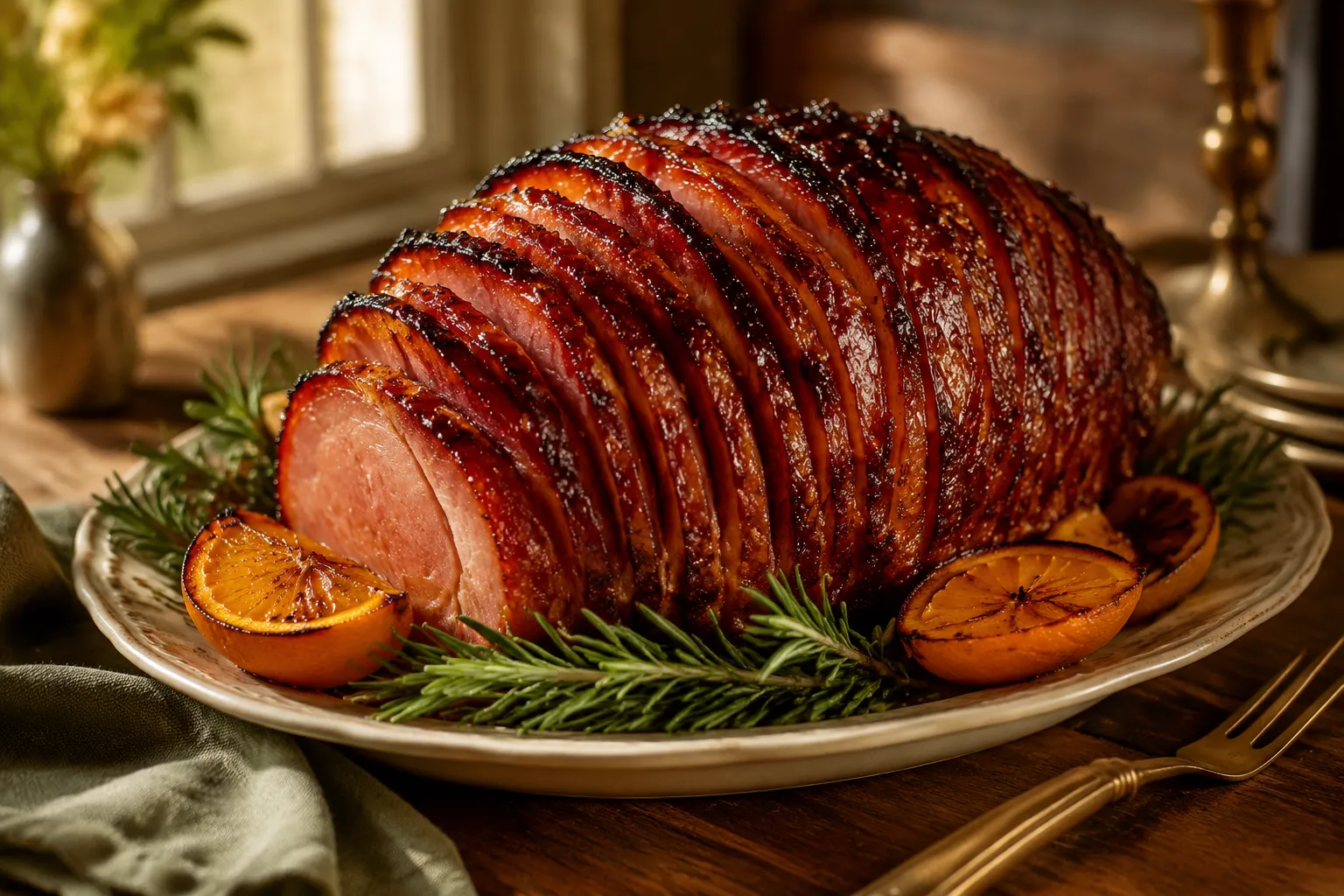
Let the ham rest for a full fifteen minutes before carving. This step is non-negotiable — resting lets the juices redistribute and the glaze set into a true lacquer that won't slide off the moment you make the first slice. Save any drippings from the pan; whisked with a splash of water or chicken stock, they make a quick pan sauce that's incredible spooned over thick slices at the table.
A baked ham anchors the table, but the sides are where you build the meal's personality. For a classic holiday spread, I lean on creamy scalloped potatoes, buttery dinner rolls, and roasted green beans with toasted almonds. The brown sugar glaze plays beautifully against starchy, dairy-rich sides — they soak up the sticky pan drippings without competing for attention. A sharp arugula salad with shaved Parmesan and a lemony vinaigrette is the move if you want something bright to cut through the richness.
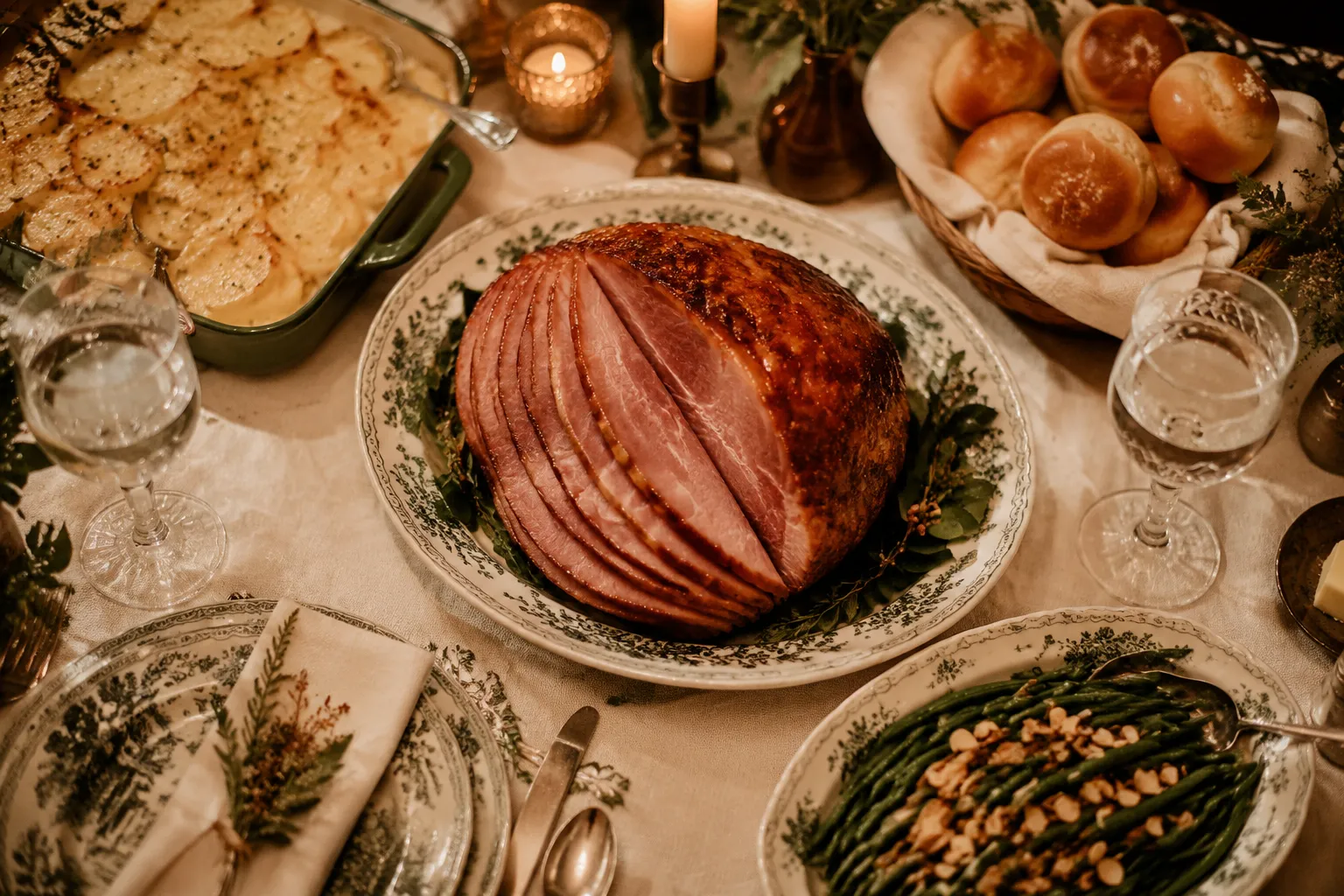
For spring and Easter brunch menus, lighten things up with roasted asparagus, glazed carrots, and a fresh pea salad. Deviled eggs and a warm garlic bread round out the table without overwhelming it. For a Christmas ham dinner, lean into wintry sides — a pan of cheesy hashbrown casserole, braised red cabbage, and honey-roasted root vegetables echo the same flavors that live inside the glaze itself.
Make-ahead options will save you on hosting day. Scalloped potatoes can be assembled a day ahead and baked off while the ham rests, cranberry sauce holds for a full week in the fridge, and dinner rolls freeze beautifully for up to a month. The honey mustard glaze on the ham is the one thing I always make the morning of, but even that base recipe holds for five days refrigerated in a covered jar.
Leftover glazed ham is its own quiet gift — sweet, smoky, already seasoned, ready to drop into a dozen other meals. Slice what you'll eat in the next three days and freeze the rest in airtight bags with a spoonful of reserved glaze tucked in, which keeps the slices from drying out when you eventually reheat them.
For easy leftover ham recipes, I love a slow-simmered split pea soup built around the bone, ham and gruyère croque monsieurs on thick brioche, fried rice with diced ham and pineapple, and a weekend breakfast hash with crispy potatoes and runny eggs on top. The glaze itself, if you made extra, is incredible brushed on roast chicken thighs or pork tenderloin midweek — a good ham glaze recipe earns its keep long after the holiday plates are cleared and the candles are blown out.
Make this once and it becomes the default — four ingredients, fifteen minutes of stovetop work, and a finish so glossy it pulls every eye at the table.
The base recipe is endlessly remixable. Once you have the four-ingredient framework dialed in, you can swap and add to suit the season, the meal, or whatever bottle is open in your pantry. Each of the variations below uses the same simmer-then-double-glaze method — only the flavor profile changes.
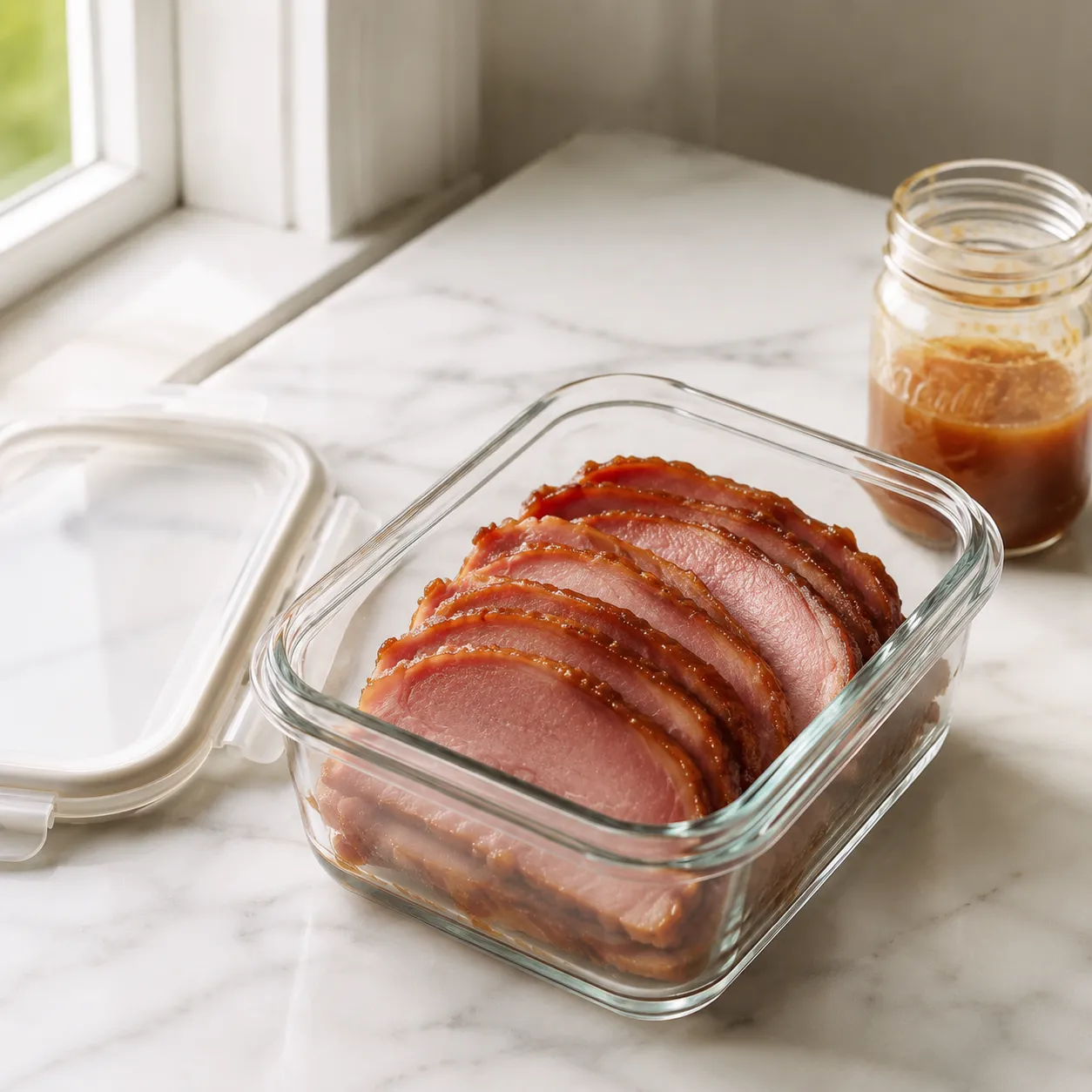
Refrigerate leftover sliced glazed ham in an airtight container for up to 4 days. Tuck a spoonful of reserved glaze (or a splash of water) in with the slices to keep them from drying out — cured ham loses moisture faster than most leftovers because of how the salt interacts with the meat fibers. The glaze itself, kept separate in a covered jar, holds for up to 5 days in the fridge and reheats gently on the stovetop or in the microwave in 15-second bursts until pourable again.
For longer storage, freeze sliced ham in flat freezer bags with parchment between the layers for up to 2 months. Thaw overnight in the fridge before reheating. The best reheating method is low and slow: 275°F oven, slices spread in a single layer with a tablespoon of water and a foil cover, for about 10 minutes. Avoid the microwave at full power — it tightens the proteins and you'll lose that tender, just-baked texture you worked so hard for.