Classic Noodle Kugel: Sweet & Creamy Jewish Comfort
Ingredients
Scale
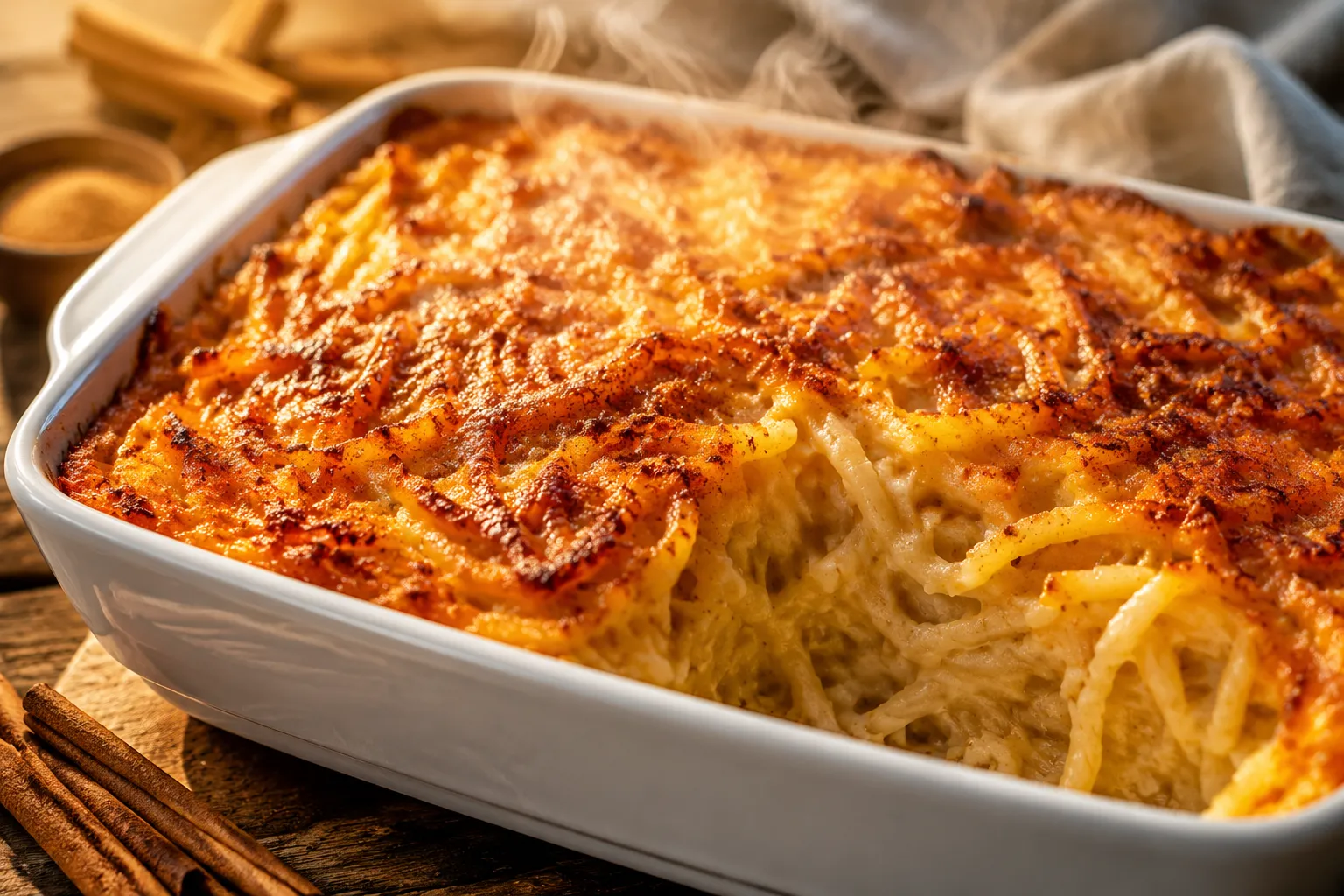
A creamy, custardy noodle kugel with golden cinnamon-sugar top — the ultimate Jewish comfort dish for holidays, brunch, or any cozy night.
If there is one dish that signals "the family is coming over," it's a bubbling, golden kugel pulled fresh from the oven. This is the kind of recipe that has been scrawled on stained index cards and passed across generations of Jewish kitchens — sweet, custardy, fragrant with cinnamon, and impossibly comforting. My version leans into the dreamiest version of the classic: a dual-cheese custard, plump egg noodles, and a crackly cinnamon-sugar cornflake crust that shatters under your fork.
Whether you grew up eating noodle kugel at Rosh Hashanah, Yom Kippur break-fast, or Shabbat dinner — or you're meeting it for the first time — this is a forgiving, make-ahead-friendly casserole that brings serious nostalgia to the table. It's somewhere between a savory side, a sweet pudding, and a brunch bake, which is exactly why it's beloved.
Pair it with brisket and you have a holiday spread. Serve it with coffee the next morning and you have brunch. Either way, it disappears fast.
Kugel is a baked Jewish casserole that comes in dozens of regional and family variations. The word itself means "round" or "ball" in Yiddish — a nod to the original round pots the dish was baked in. At its heart, kugel is a humble pantry pull-together: starch (noodles or potatoes), eggs, fat, and whatever sweet or savory flavorings the cook had on hand.
Kugel traces back roughly 800 years to Ashkenazi Jewish communities in Germany, where it began as a savory bread pudding tucked into the cholent pot for Shabbat. As the dish migrated through Eastern Europe, cooks in Poland and Lithuania introduced egg noodles (lokshen) and, later, sugar and dairy — giving rise to the sweet kugel beloved today.
Sweet kugel is the dessert-leaning cousin: dairy-rich, cinnamon-spiced, often studded with raisins or apples. Savory kugels skip the sugar and lean on schmaltz, onions, and black pepper, sometimes built on potatoes instead of noodles. Today's recipe is firmly in the sweet camp, but I'll show you a savory swap below.
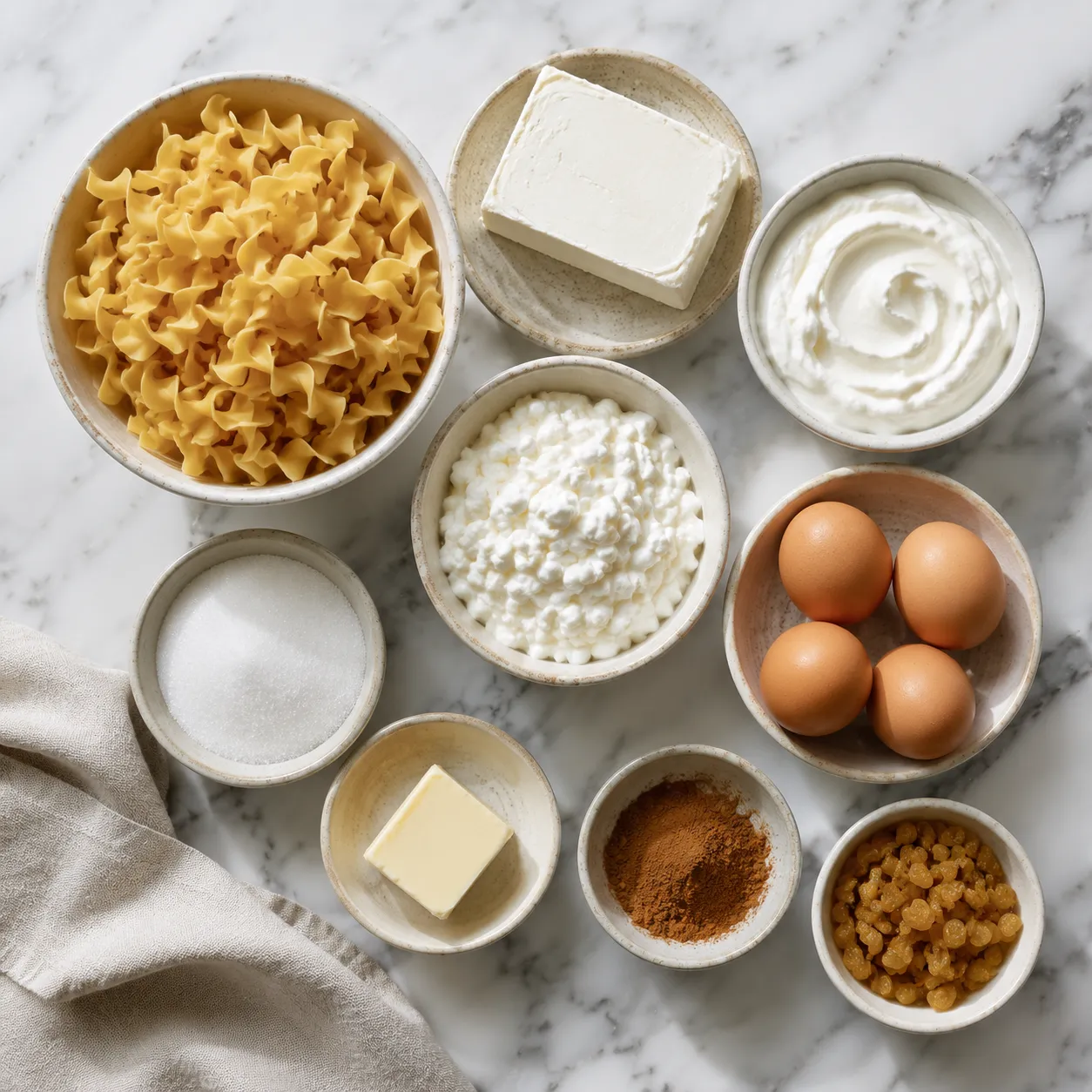
This Jewish recipe relies on simple supermarket staples, but the magic is in the ratios. A blend of cream cheese, sour cream, and cottage cheese gives the custard body without making it heavy, while real butter and vanilla round everything out.
Reach for wide egg noodles — they hold up to the long bake and create those signature ruffled edges that crisp on top. Cook them just shy of al dente; they'll continue softening as they soak up custard in the oven.
The trio of cream cheese, sour cream, and small-curd cottage cheese is what makes this egg noodle casserole feel like cheesecake's savory cousin. Six eggs bind everything into a sliceable custard, while sugar and vanilla bring warmth.
I love a crushed cornflake topping tossed with melted butter and cinnamon sugar. It bakes into a crackly, caramelized crust that contrasts beautifully with the silky noodles below. You can also use crushed graham crackers or simply more cinnamon sugar dusted directly on top.
Don't be intimidated — this is a stir-and-pour situation. The full numbered method lives in the recipe card below, but here's the lay of the land so you know what to expect.
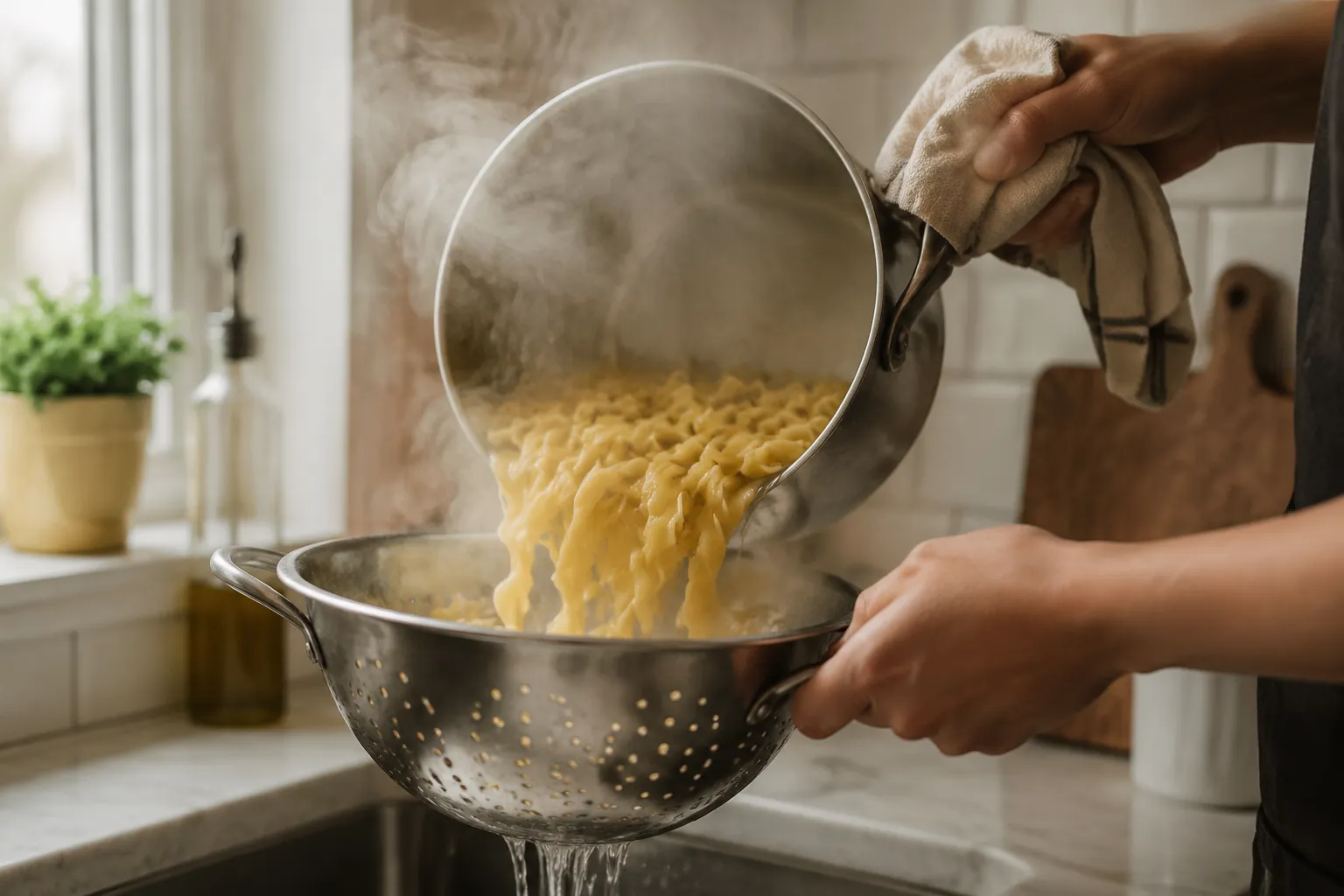
Cook the noodles in well-salted water until just tender, then drain and immediately toss with melted butter so they don't clump. The butter also coats each noodle, which keeps the texture luxurious rather than soggy after baking.
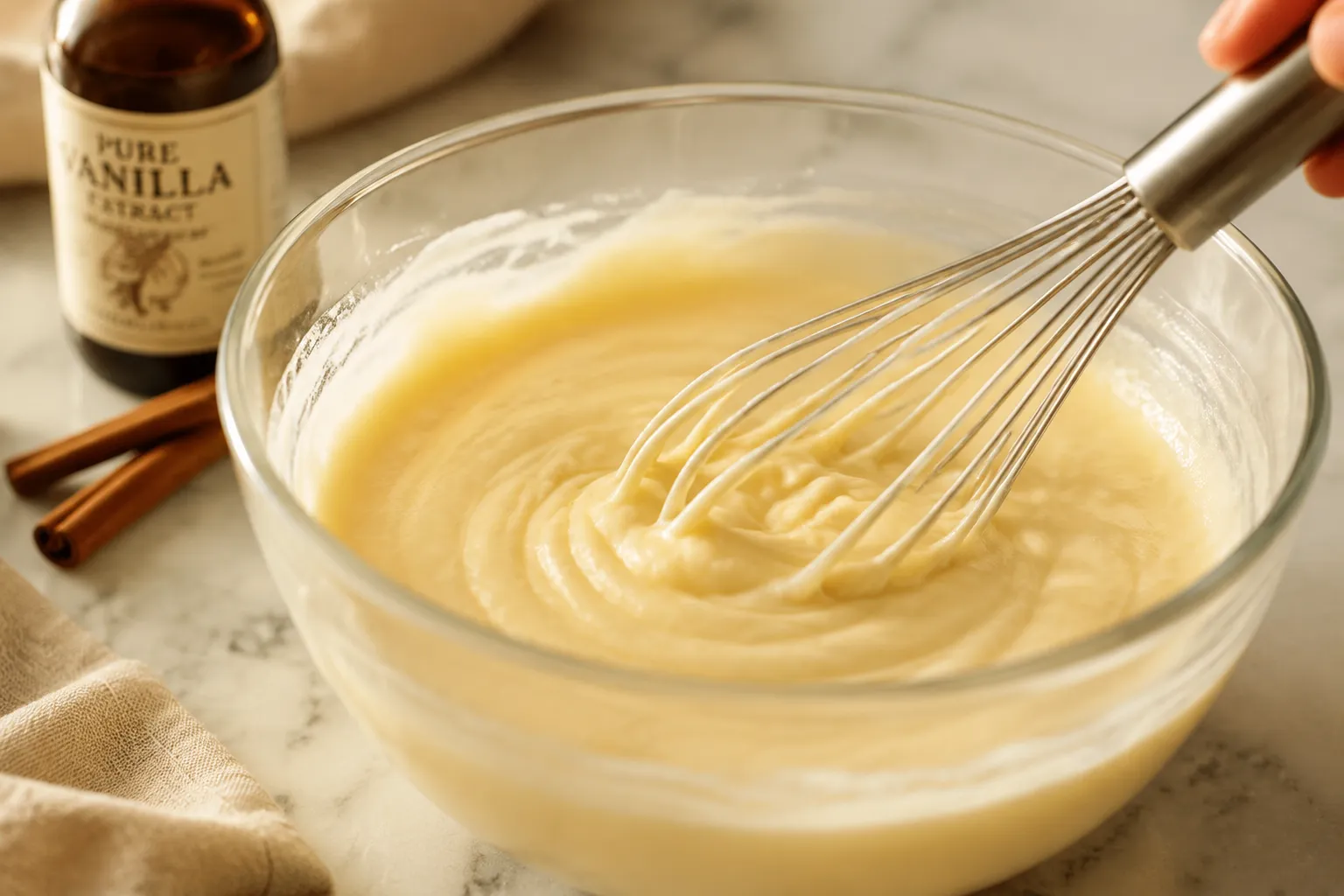
Beat softened cream cheese until smooth before adding the eggs, sour cream, cottage cheese, sugar, and vanilla. Lumps of cream cheese will not melt away in the oven, so take a minute here for a velvety mixture.
Fold the custard into the buttery noodles, scrape into a 9x13 baker, scatter with raisins if using, and shower with the cinnamon-sugar cornflake topping. Bake until puffed, golden, and just set in the center.
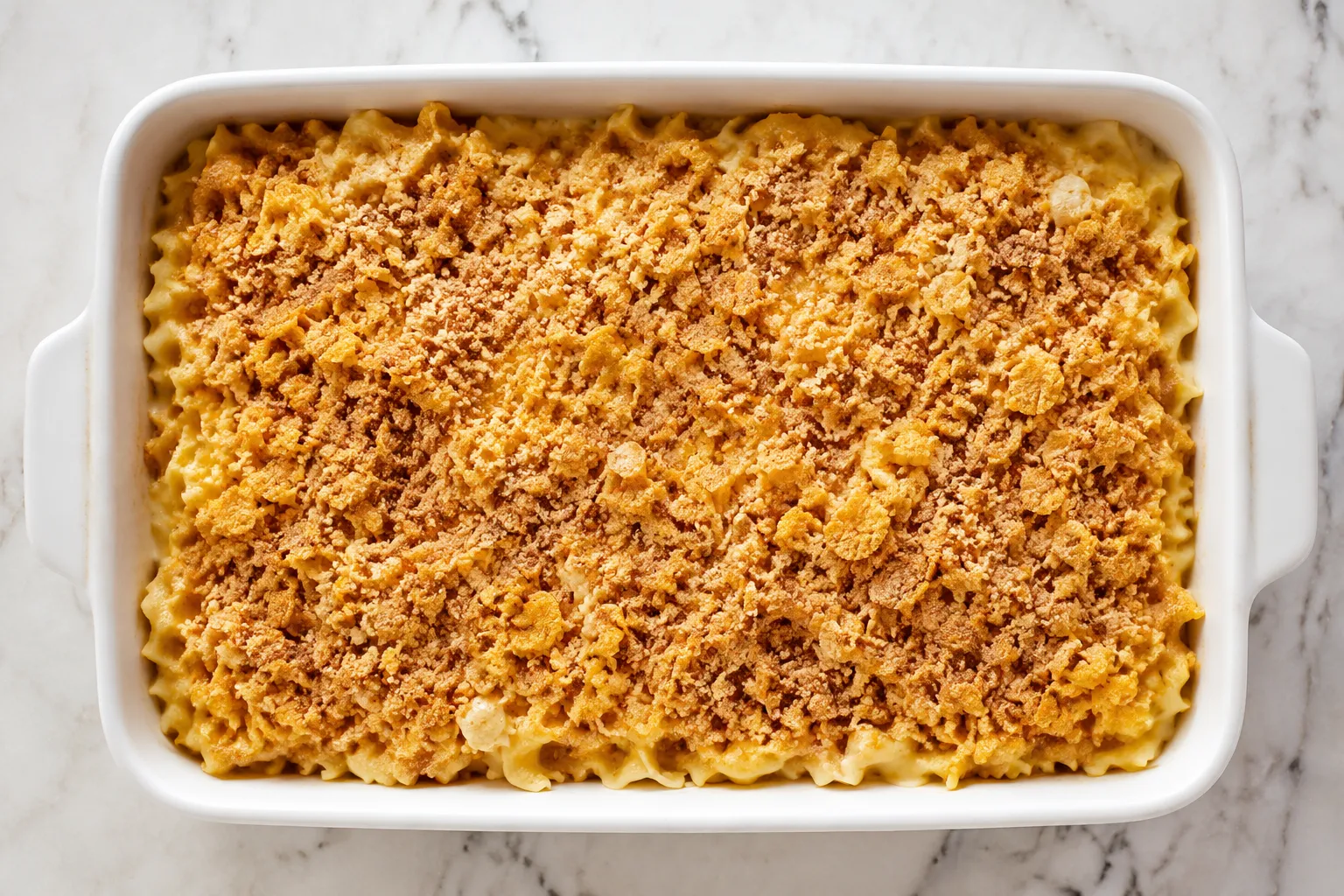
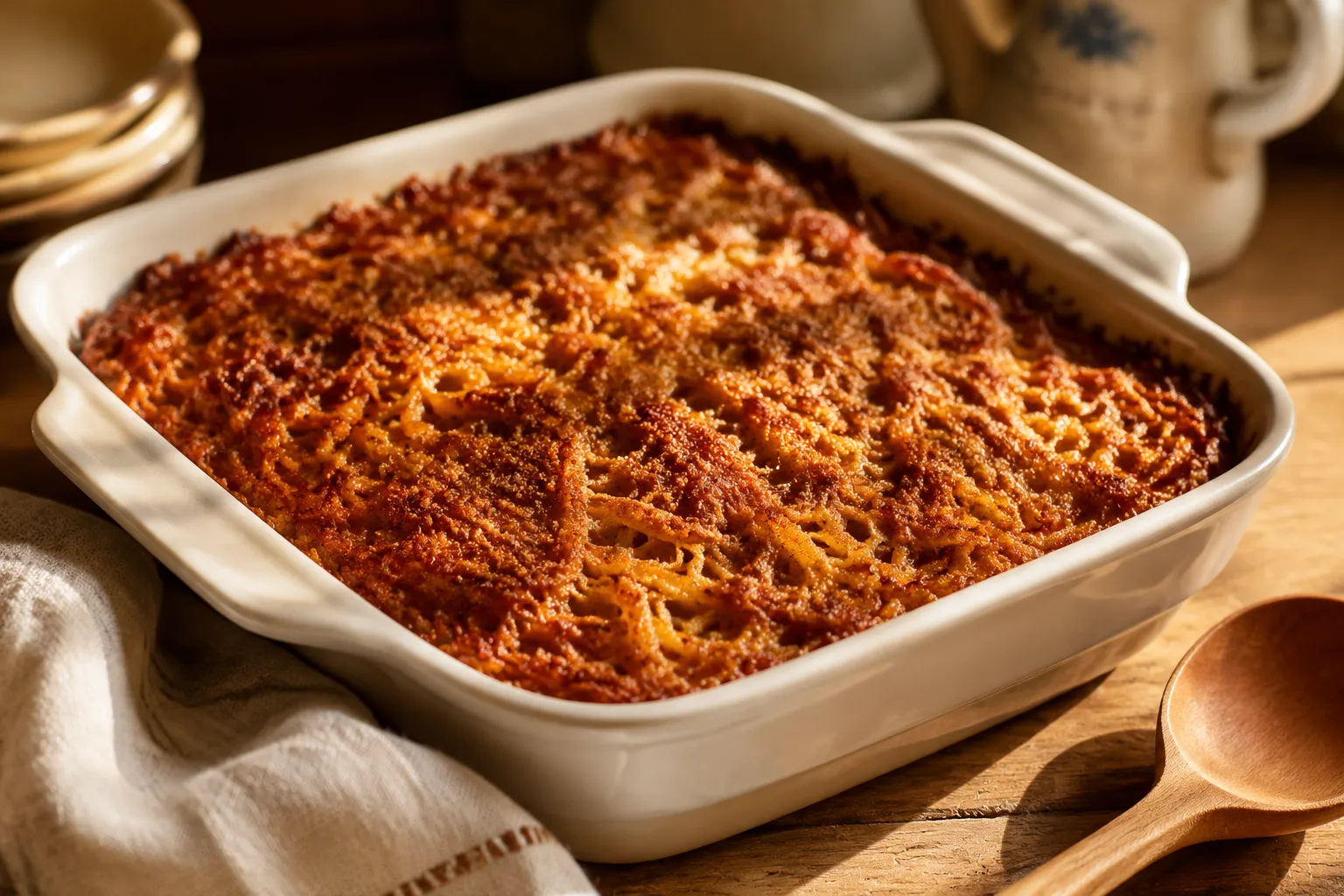
Plenty of recipes treat kugel like an afterthought — boil noodles, dump in eggs, bake. This one treats it like the centerpiece it deserves to be. The dual-cheese base creates a custard that's tangy and rich at once, the way a great cheesecake is. The cornflake crust is the move that pushes it from "grandma's casserole" into "please-email-me-this-recipe" territory. And because it's a true sweet kugel, it can pull double duty as a side dish at dinner and a not-too-sweet dessert with coffee afterward.
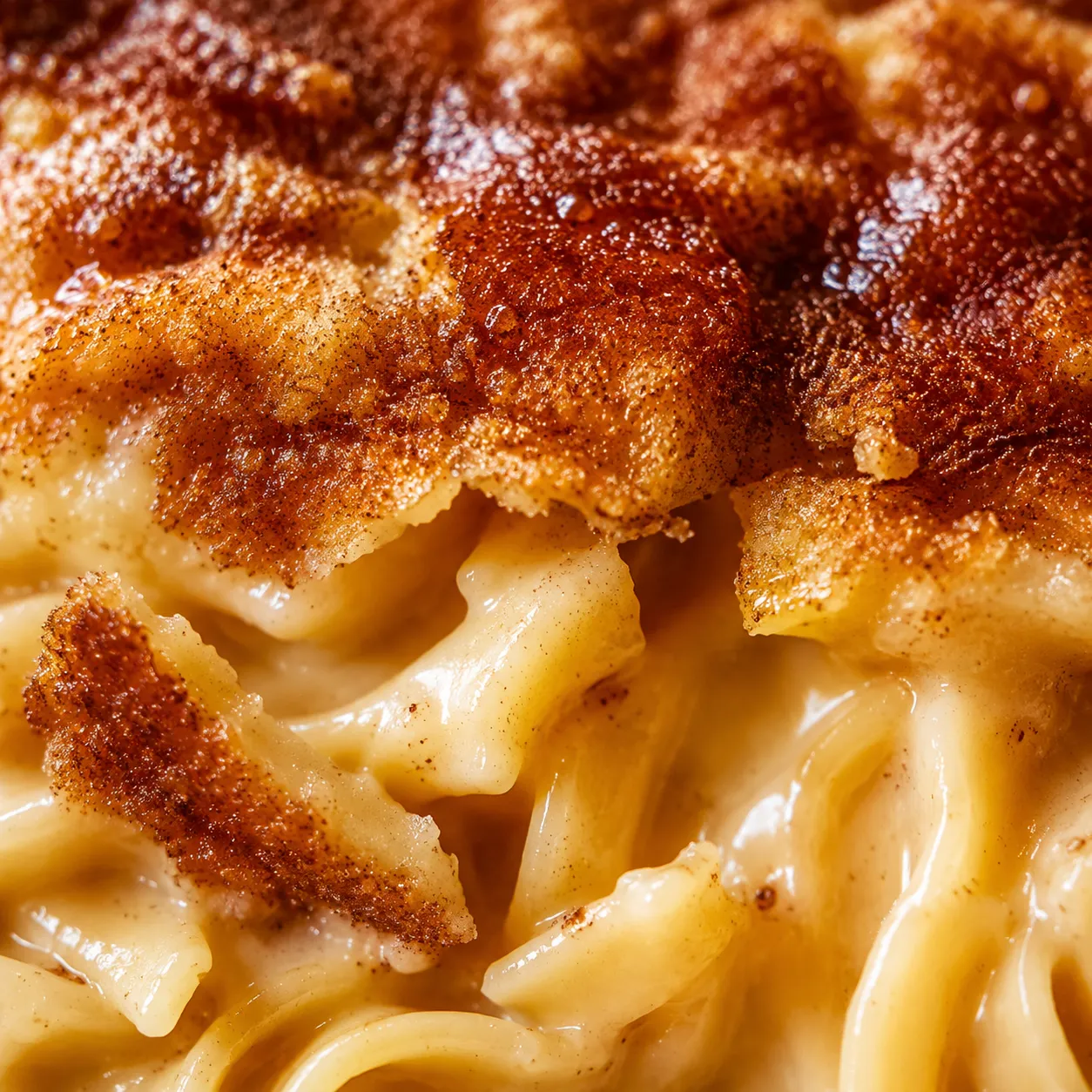
Noodle kugel is one of the most flexible dishes in the Jewish holiday recipes canon. For Rosh Hashanah or a Shabbat dinner, serve it alongside brisket, roast chicken, or honey-glazed carrots. At a Yom Kippur break-fast, it shines next to bagels, lox, whitefish salad, and a big platter of cucumbers and tomatoes. It's also one of my favorite Hanukkah sides — the sweetness balances latkes and applesauce beautifully.
Don't overlook brunch: a warm square of kugel with strong coffee and fresh berries is genuinely transcendent. Some families even serve cold leftover slices like Passover desserts the next day, drizzled with a little honey or sour cream.
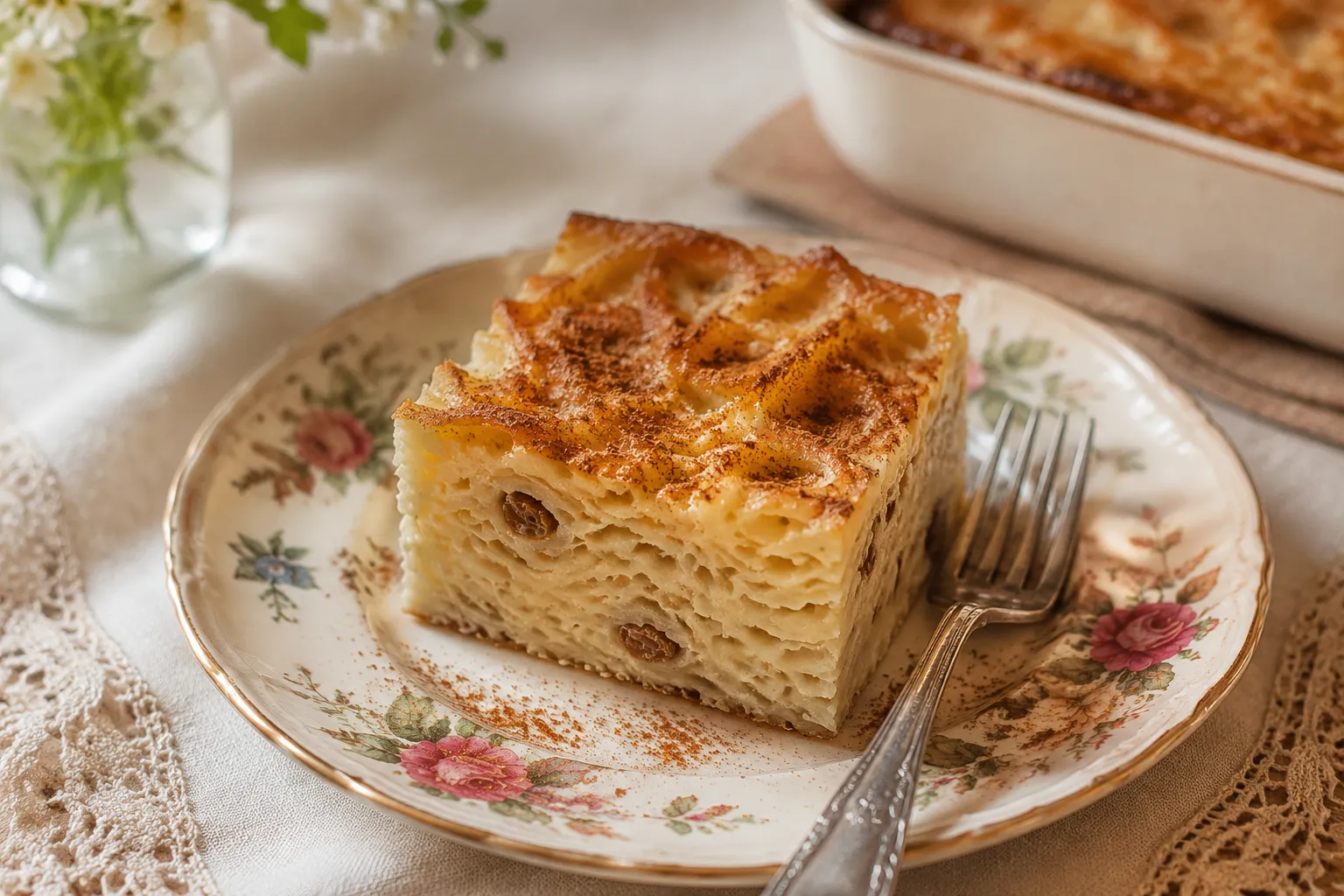
The best part about kugel? It actively wants to be made ahead. You can assemble the entire casserole the night before, refrigerate it covered, and slide it into the oven an hour before guests arrive. The noodles drink up the custard overnight, which only deepens the flavor and improves the texture. For busy holiday cooking, that kind of wiggle room is gold.
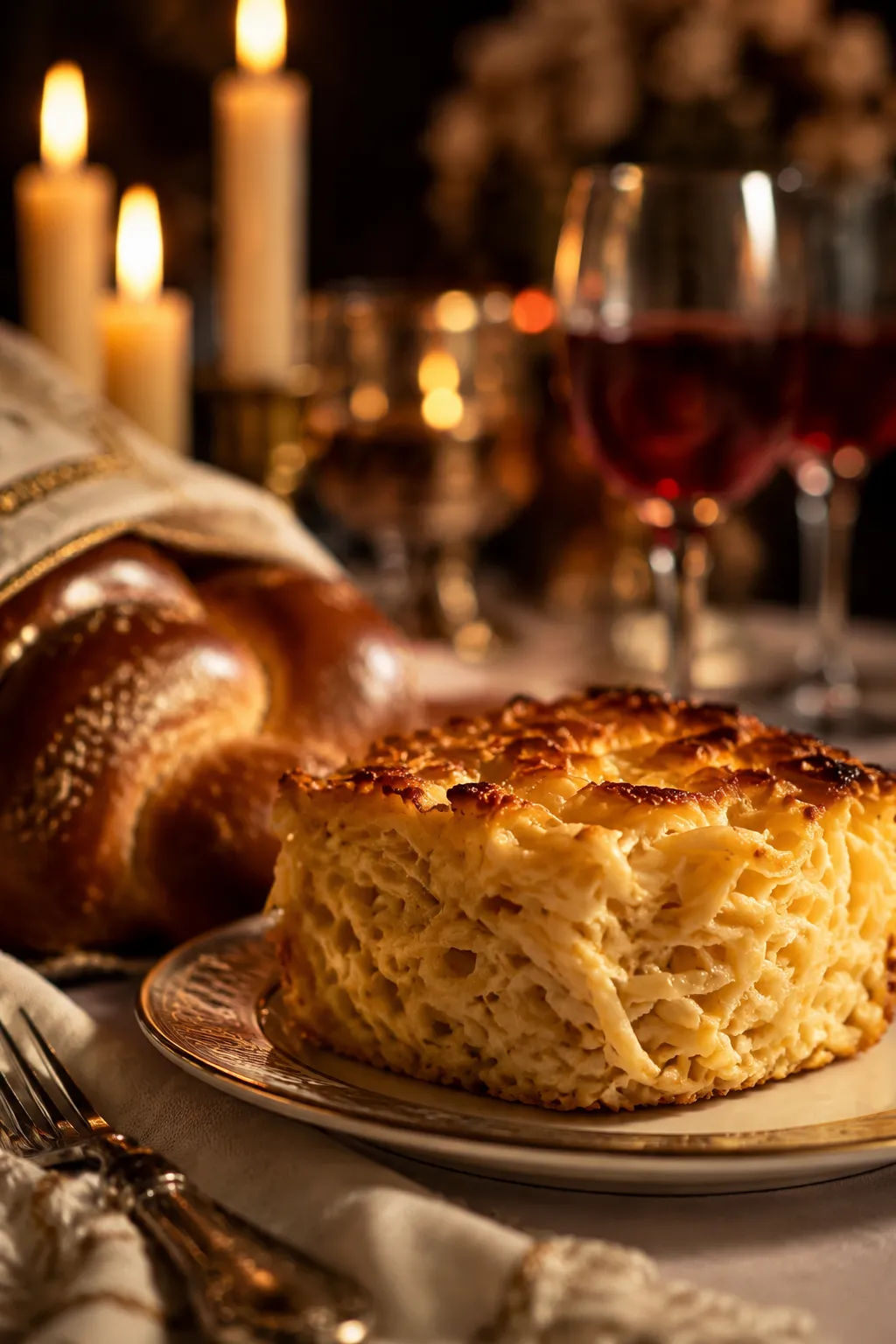
However you serve it — warm from the oven with steam still rising, at room temperature on a buffet, or chilled the next morning — this kugel earns its place in your permanent rotation. It's the kind of recipe that gets requested year after year, and the kind that, eventually, becomes the version your own family considers "the" recipe.
The beauty of kugel is its adaptability — every family has "their" version. Start with this base recipe, then make it your own with these riffs:
Refrigerator: Cover leftover kugel tightly and refrigerate for up to 4 days. The flavor actually deepens overnight, making leftovers arguably better than the original.
Freezer: Cool completely, wrap the dish (or individual portions) tightly in plastic wrap and foil, and freeze up to 2 months. Thaw overnight in the refrigerator before reheating. To reheat: Cover with foil and warm at 325°F for 20-25 minutes, then uncover and broil 1-2 minutes to revive that crispy cinnamon-sugar top.