Beef Wellington Recipe: Classic Showstopper Made Easy
Ingredients
Scale
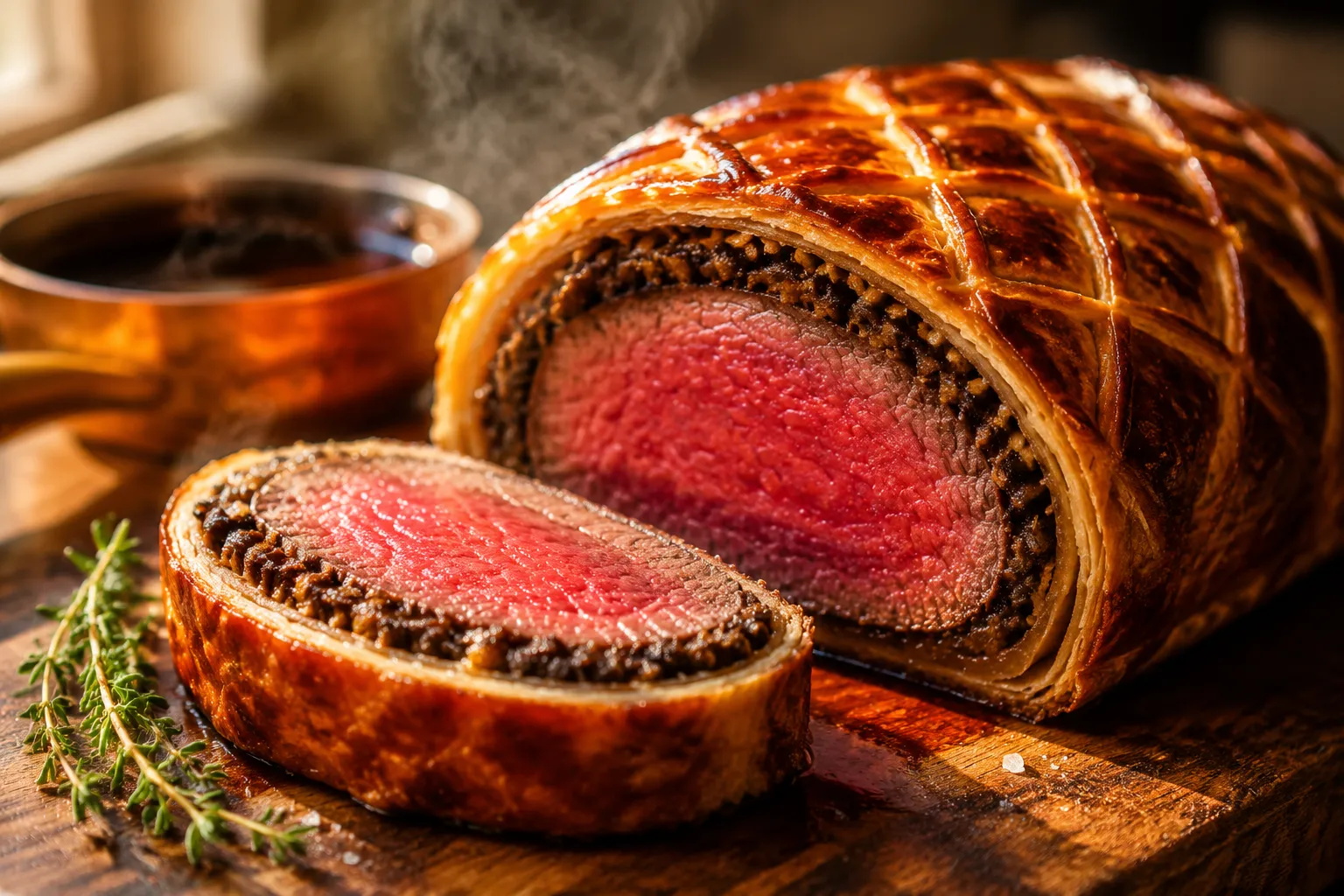
A foolproof beef wellington recipe with buttery puff pastry, savory mushroom duxelles, and a perfectly pink center. Restaurant-quality results without the stress.
There's nothing quite like slicing into a golden, glistening beef Wellington and watching that rosy pink center reveal itself to a table full of expectant guests. This classic beef wellington recipe wraps a buttery seared tenderloin in an earthy layer of mushrooms, salty prosciutto, and a sheet of shatter-crisp puff pastry, and it has been the ultimate dinner-party flex for decades. If you've ever wanted to attempt the dish but felt intimidated by Gordon Ramsay shouting through your television, this is the version that will finally get you there.
I've made this dish more times than I can count for Christmas Eve, anniversaries, and quiet "I just felt like it" Sundays, and the method below removes every single thing that usually trips home cooks up. We dry the mushroom duxelles within an inch of its life, build a moisture barrier with prosciutto, chill the assembled log so the pastry stays distinct from the meat, and lean on a meat thermometer like our reputations depend on it. The result is restaurant-quality slices with a crackly bronzed crust and a perfect pink interior, every single time.
Best of all, this is one of the few holiday dinner ideas you can fully assemble a day in advance. Slide it into the oven straight from the refrigerator while you uncork the wine, dress the table, and pour something for the cook. Dinner essentially finishes itself.
Beef Wellington is the iconic British centerpiece of a tender beef fillet coated in sharp Dijon mustard, blanketed in a finely chopped mushroom paste, wrapped in cured ham, and baked inside golden puff pastry. The dish dates back to the early 19th century and has been associated, somewhat shakily, with Arthur Wellesley, the first Duke of Wellington. Whatever its true origins, it became a hallmark of formal dining in London hotels and roast Sunday traditions across England, then earned international superstar status thanks to Gordon Ramsay's Hell's Kitchen tirades.
What makes the dish work is its architecture. Each layer plays a specific role: the seared tenderloin contributes a beefy crust and juicy interior, the duxelles delivers a forest-floor depth of flavor, the prosciutto acts as a salty moisture shield, and the pastry locks everything in while crisping into golden shards. When those four layers are built thoughtfully, this beef wellington recipe delivers a single bite that tastes like a multi-course meal.
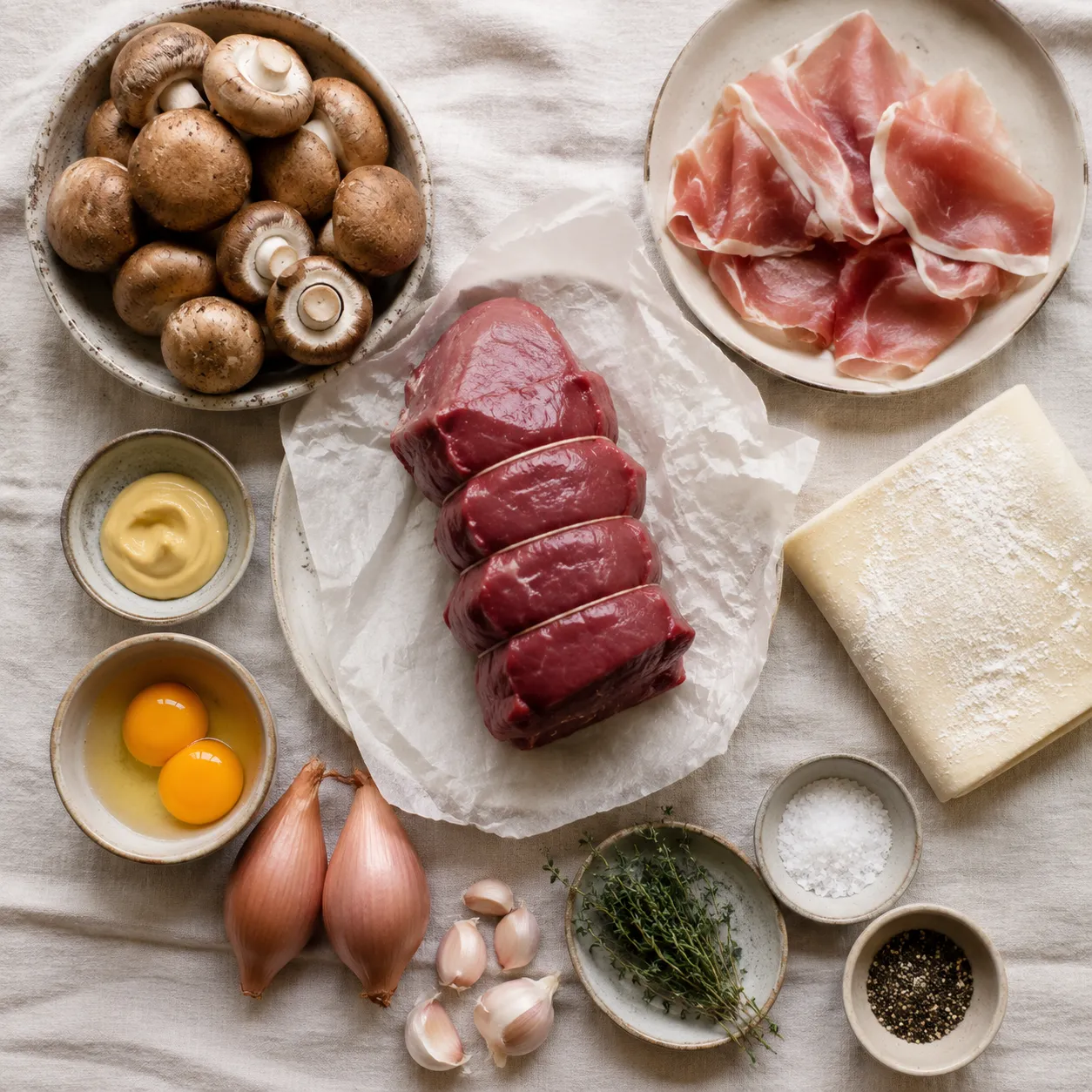
The ingredient list is short, but every choice matters. Start with a 2-pound center-cut beef tenderloin, sometimes labeled chateaubriand. Look for an even cylindrical shape, deep ruby color, and visible marbling. If you want a deeper primer on selecting and trimming, this beef tenderloin guide is a great starting point. Tie the roast at 1-inch intervals with kitchen twine before searing so it holds its shape under the pastry.
For the mushroom duxelles, cremini (baby bella) mushrooms are the workhorse choice, with enough umami to stand up to the beef without overpowering it. A handful of minced shallots, two cloves of garlic, fresh thyme, and a knob of unsalted butter round it out. The mushrooms should be chopped impossibly fine, almost to a paste, which is a job for your food processor unless you genuinely enjoy thirty minutes of knife work.
Round out the build with thin slices of prosciutto di Parma, a smear of sharp Dijon mustard, and one sheet of all-butter puff pastry. The all-butter detail matters: vegetable-shortening pastry will get the job done, but butter is what delivers that golden, blistered shatter that makes this beef wellington recipe taste like a special occasion. You'll also need two large egg yolks for the egg wash and flaky sea salt for finishing.
The process moves through five clear stages, with built-in chilling time between each. Read through once before you start so you know what's coming, line a sheet pan with parchment, and clear plenty of counter space. None of these steps are difficult on their own; the magic is in the sequence.
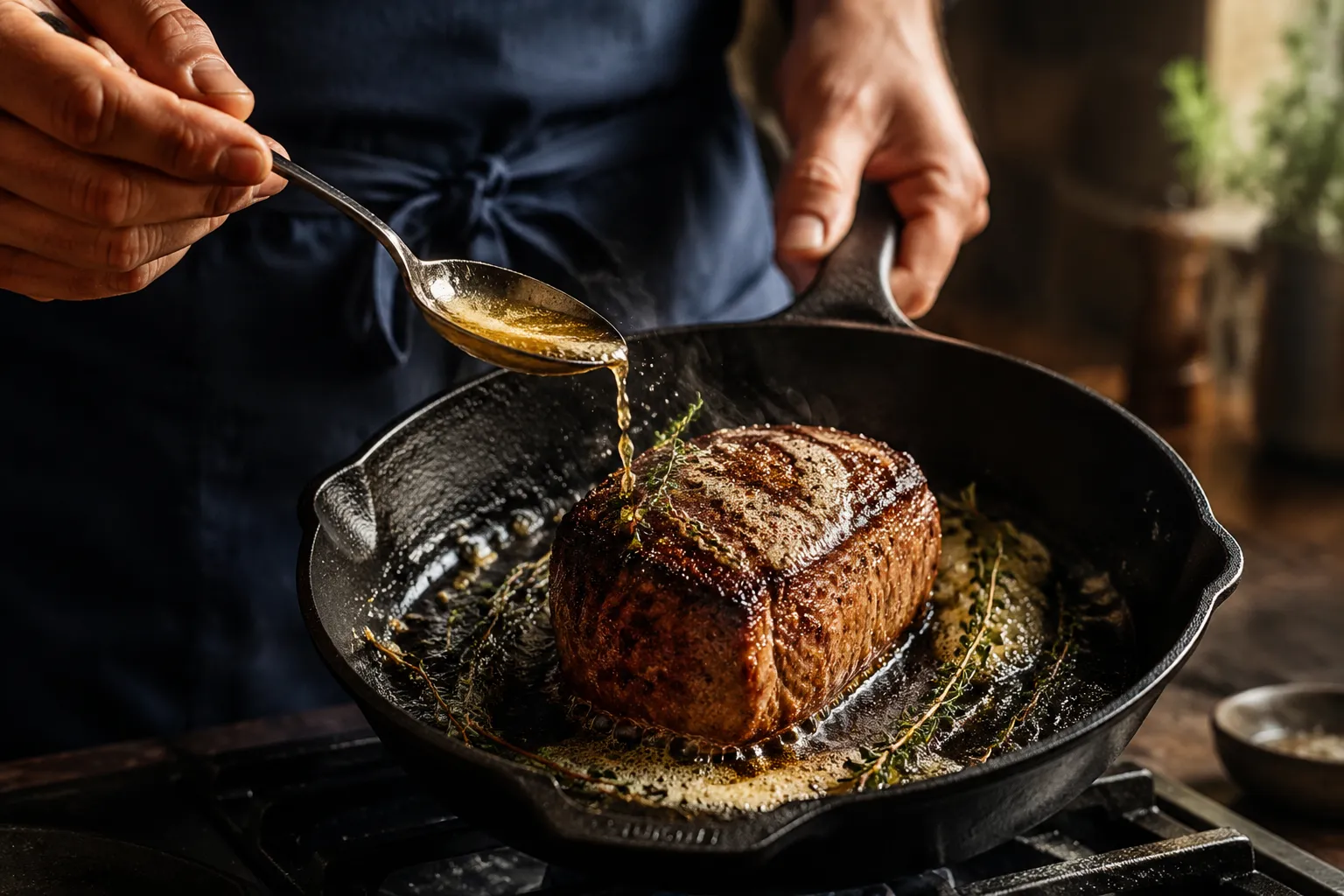
Pat the tied tenderloin completely dry, season generously with kosher salt and black pepper, and let it sit at room temperature for 30 minutes. Heat a cast iron skillet over high heat with a tablespoon of neutral oil until it's just shy of smoking, then sear the roast on all sides — including the two ends — until a deep mahogany crust forms, about 2 minutes per surface. Off heat, brush the seared roast all over with Dijon mustard while it's still warm. The mustard sets up tacky and adds a subtle horseradish-y bite to every finished slice. Slide the tenderloin onto a plate and refrigerate while you build the next layer.
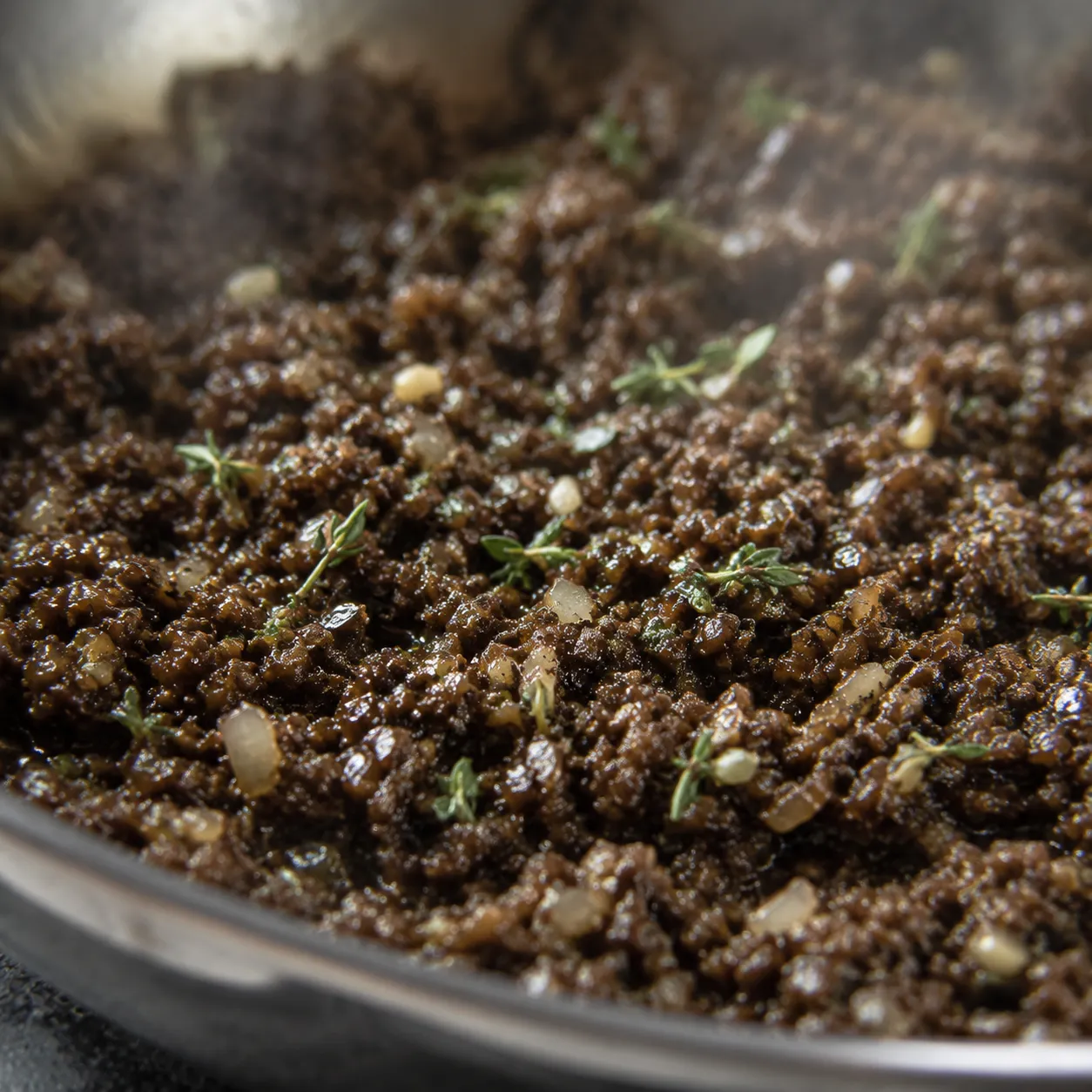
Pulse the cremini mushrooms in a food processor in batches until they look like wet coffee grounds — uniform but not pureed. Melt butter in a wide skillet, sweat the shallots and garlic until soft and translucent, then add the mushrooms along with a few sprigs of fresh thyme. Cook over medium heat, stirring often, until every drop of liquid has evaporated and the mixture pulls away from the pan in a dark, glossy mass. This takes a full 15 to 20 minutes; do not rush it. Season with salt and pepper, then spread the duxelles on a plate to cool quickly.
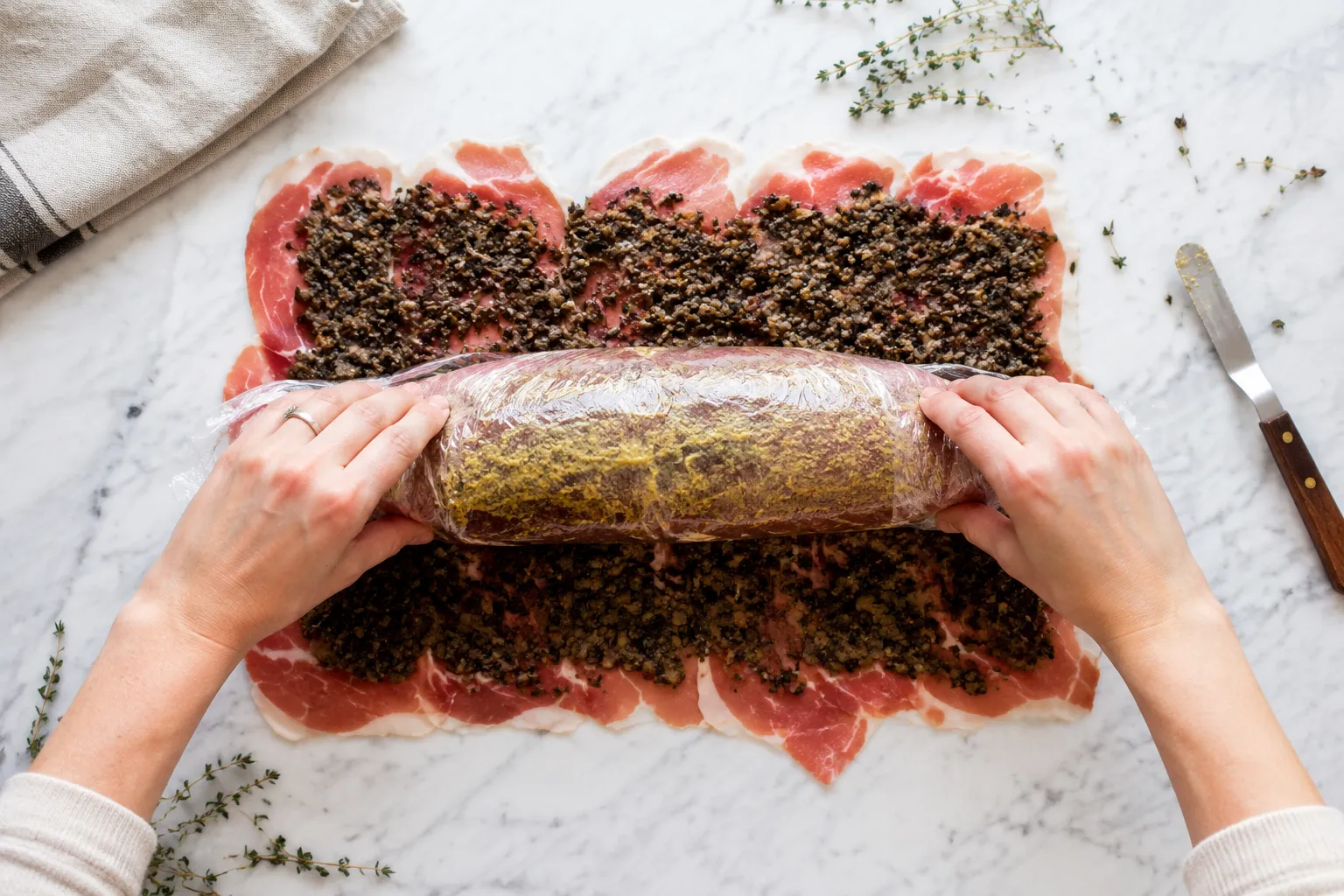
Lay a 14-inch sheet of plastic wrap on the counter and shingle the prosciutto slices in two slightly overlapping rows to form a rectangle large enough to wrap your beef. Spread the cooled duxelles in a thin, even layer across the prosciutto, leaving a half-inch border. Snip the kitchen twine off your tenderloin, place it along one long edge of the prosciutto, then use the plastic wrap to roll the prosciutto-duxelles tightly around the beef the way you'd roll sushi. Twist the ends of the plastic to compress everything into a snug log, and refrigerate for at least 20 minutes to firm up.
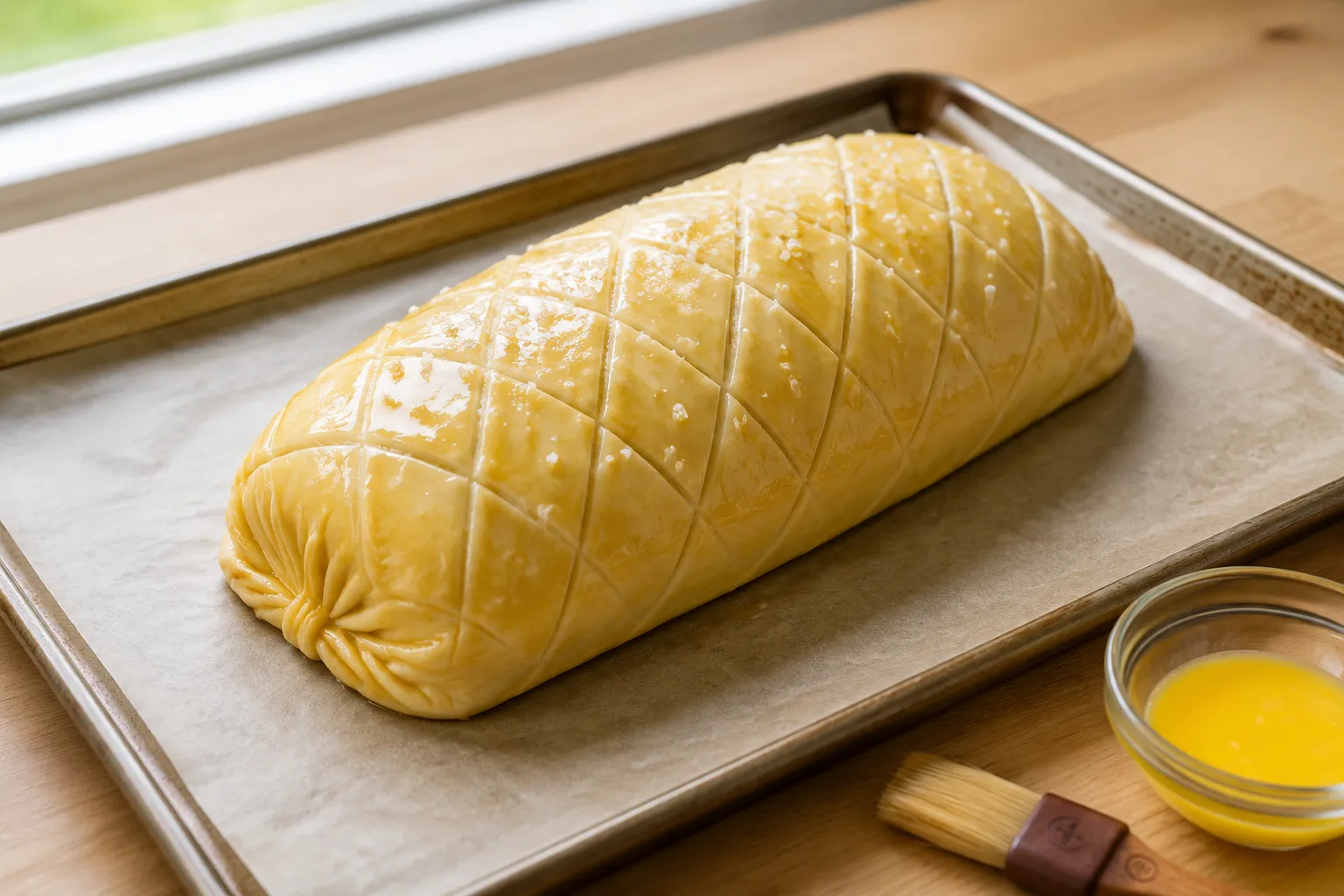
Roll the puff pastry on a lightly floured surface into a rectangle slightly longer than your beef and roughly 12 inches wide. Unwrap the chilled log, place it along one short edge of the pastry, and roll the dough up and over the top, sealing the seam with a brush of egg wash. Trim any excess pastry from the ends, fold them under like a wrapped gift, and transfer the assembled Wellington to a parchment-lined sheet pan, seam-side down. Brush the entire surface with beaten egg yolk, score a shallow diamond pattern using the back of a paring knife, and finish with flaky sea salt. If you'd like more pastry-handling practice for future projects, browse some easy puff pastry recipes to build your confidence.
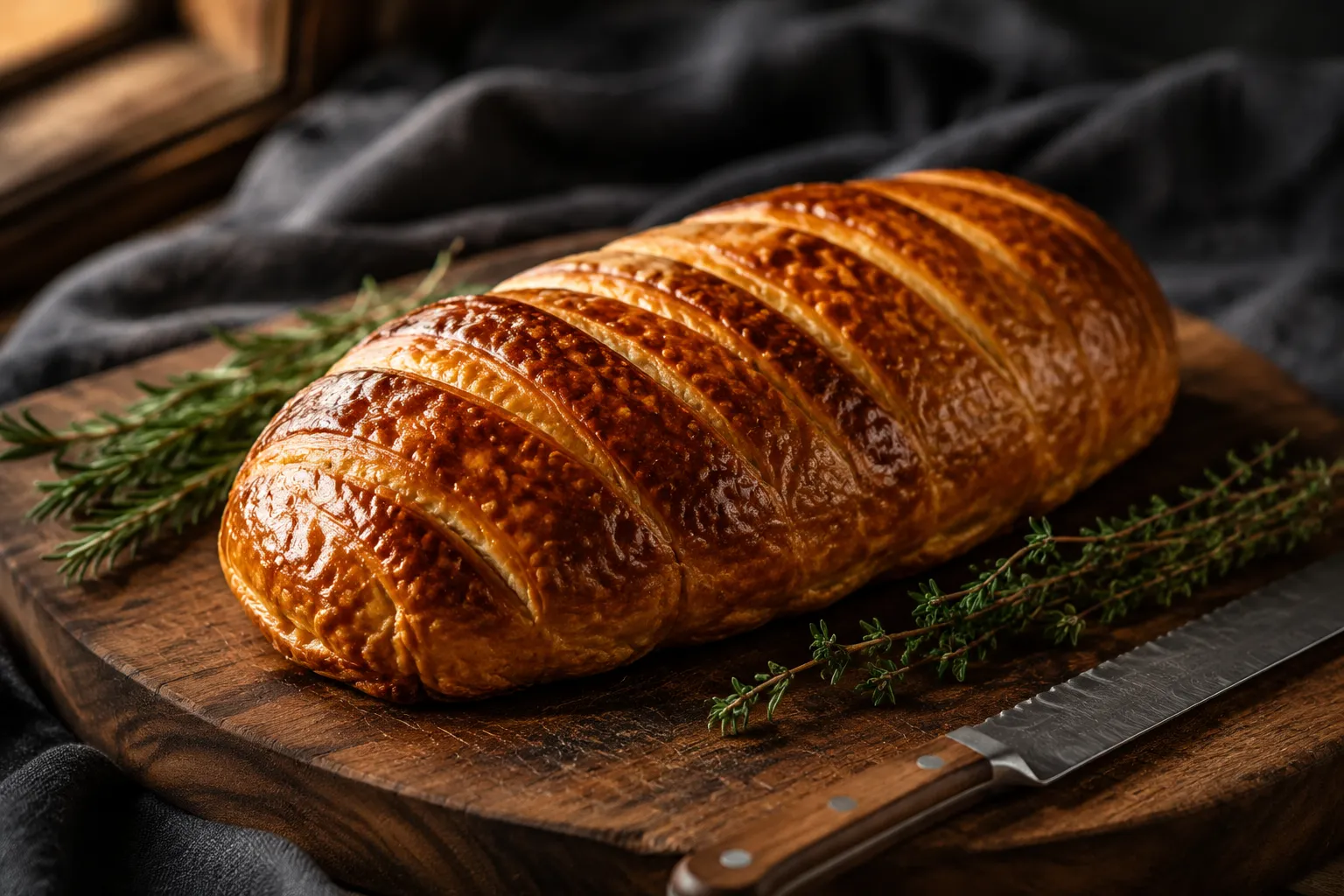
Chill the assembled Wellington for another 15 to 20 minutes while your oven preheats to 425°F with a sheet pan inside on the middle rack. Slide the Wellington (still on its parchment) onto the preheated pan and bake for 35 to 45 minutes, until the pastry is deeply golden brown and an instant-read thermometer pushed into the center reads 125°F for a true medium-rare. Let it rest, undisturbed, for at least 10 full minutes before slicing — carryover heat will gently bring the interior up to a perfect 135°F. A serrated knife slices the crackly pastry cleanest, so save the chef's knife for the salad.
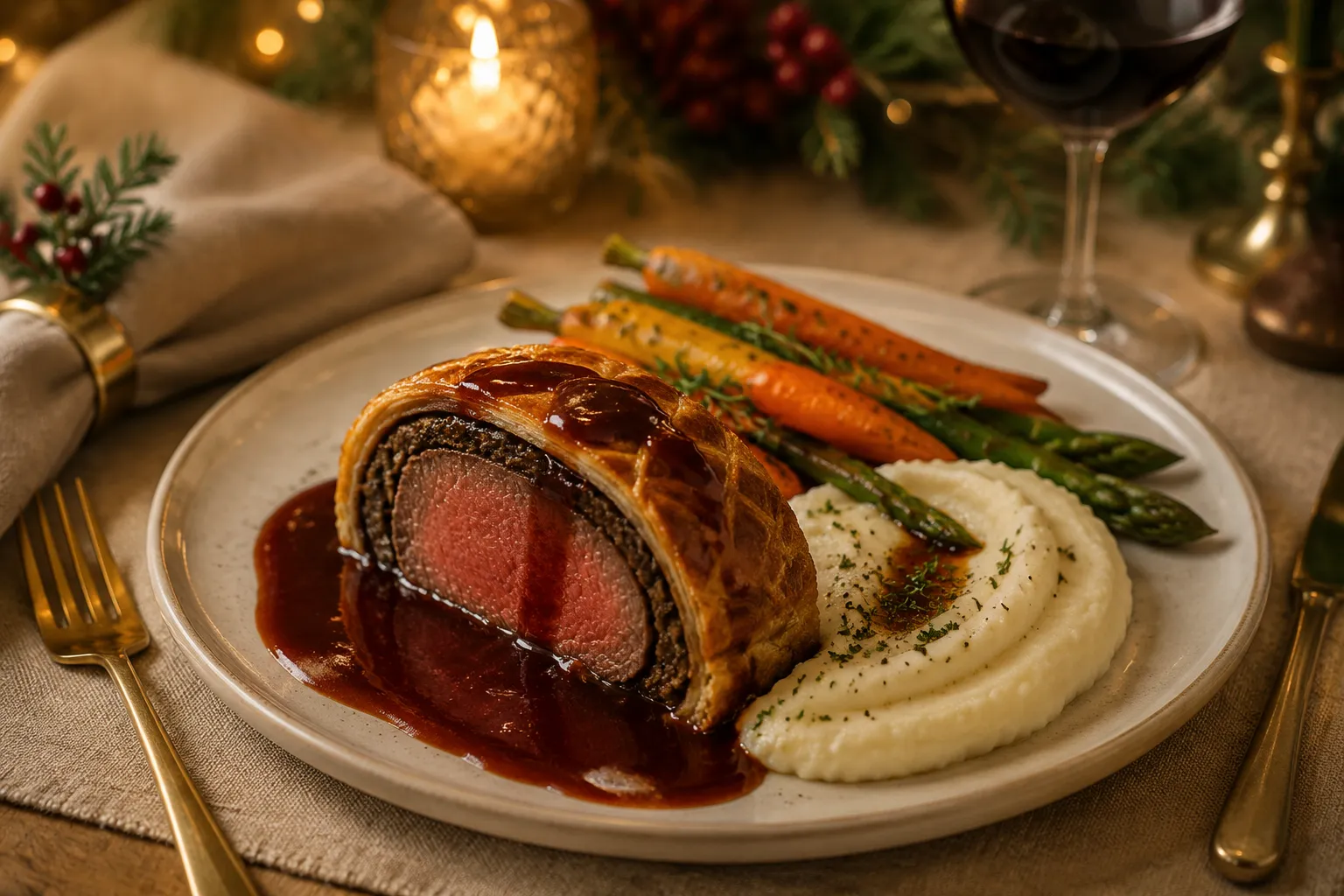
A beef wellington recipe this special deserves equally thoughtful sides. The classic move is a homemade red wine sauce built from the pan fond, beef stock, shallots, and a full-bodied dry red — it pools beautifully against each pink slice and pulls every flavor on the plate together. Make it in the same skillet you used for searing so you capture every browned bit, and finish with a knob of cold butter for gloss right before serving.
For the starch, you cannot beat roasted garlic mashed potatoes; their creamy richness and mellow sweetness are a perfect counterpoint to the savory pastry. A simple side of roasted asparagus, honey-glazed carrots, or buttered haricots verts adds color and freshness without competing for attention. If you're hosting a larger holiday crowd, a crisp wedge salad or shaved fennel-and-citrus salad makes a smart starter while the main rests on the board.
On the wine front, lean into structured reds with enough tannin to handle the prosciutto and beef: Bordeaux, Brunello di Montalcino, California Cabernet Sauvignon, or a serious northern Rhône all sing alongside this dish. Pour one glass for the cook before guests arrive — house rule, no exceptions.
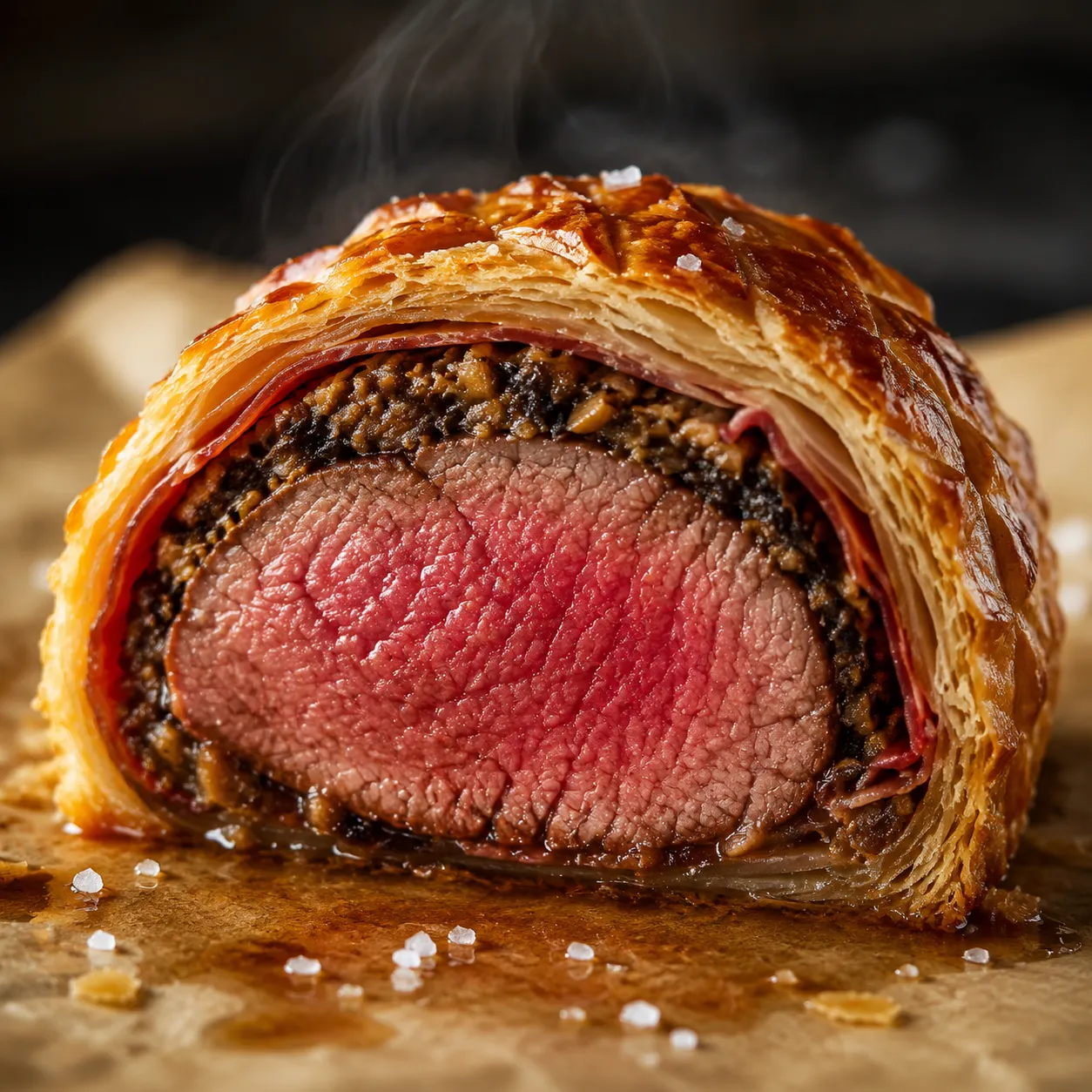
Pulling a perfectly bronzed Wellington out of the oven is one of the most satisfying moments in home cooking, and once you've nailed this beef wellington recipe a single time, the mystique dissolves. The trick was never restaurant magic; it was simply a dry duxelles, cold pastry, and an honest thermometer. If you make this for a holiday, snap a photo of that first rosy slice and tag me — I never get tired of seeing them.
The classic build is hard to improve on, but Wellington is forgiving once you understand the architecture. A few fun directions to take it:
To make ahead, fully assemble the Wellington through the pastry-wrap stage, place it on a parchment-lined sheet pan, cover loosely with plastic wrap, and refrigerate up to 24 hours. Wait to apply the egg wash, score the top, and add flaky salt until just before baking — this keeps the pastry crisp rather than weeping. Bake straight from the fridge as directed; no need to bring it back to room temperature.
Leftover baked Wellington keeps in an airtight container in the refrigerator for up to 3 days. Reheat slices on a parchment-lined sheet pan in a 350°F oven for 10 to 12 minutes to recrisp the pastry; the microwave will turn the crust gummy. To freeze, wrap the unbaked, fully assembled Wellington tightly in plastic and foil and freeze on a flat sheet for up to 1 month, then bake from frozen at 400°F for 50 to 65 minutes, checking that the internal temperature reaches 125°F for medium-rare. Freezing leftover baked Wellington is not recommended.