The Best Dressing Recipe (Classic + Vegan Options)
Ingredients
Scale
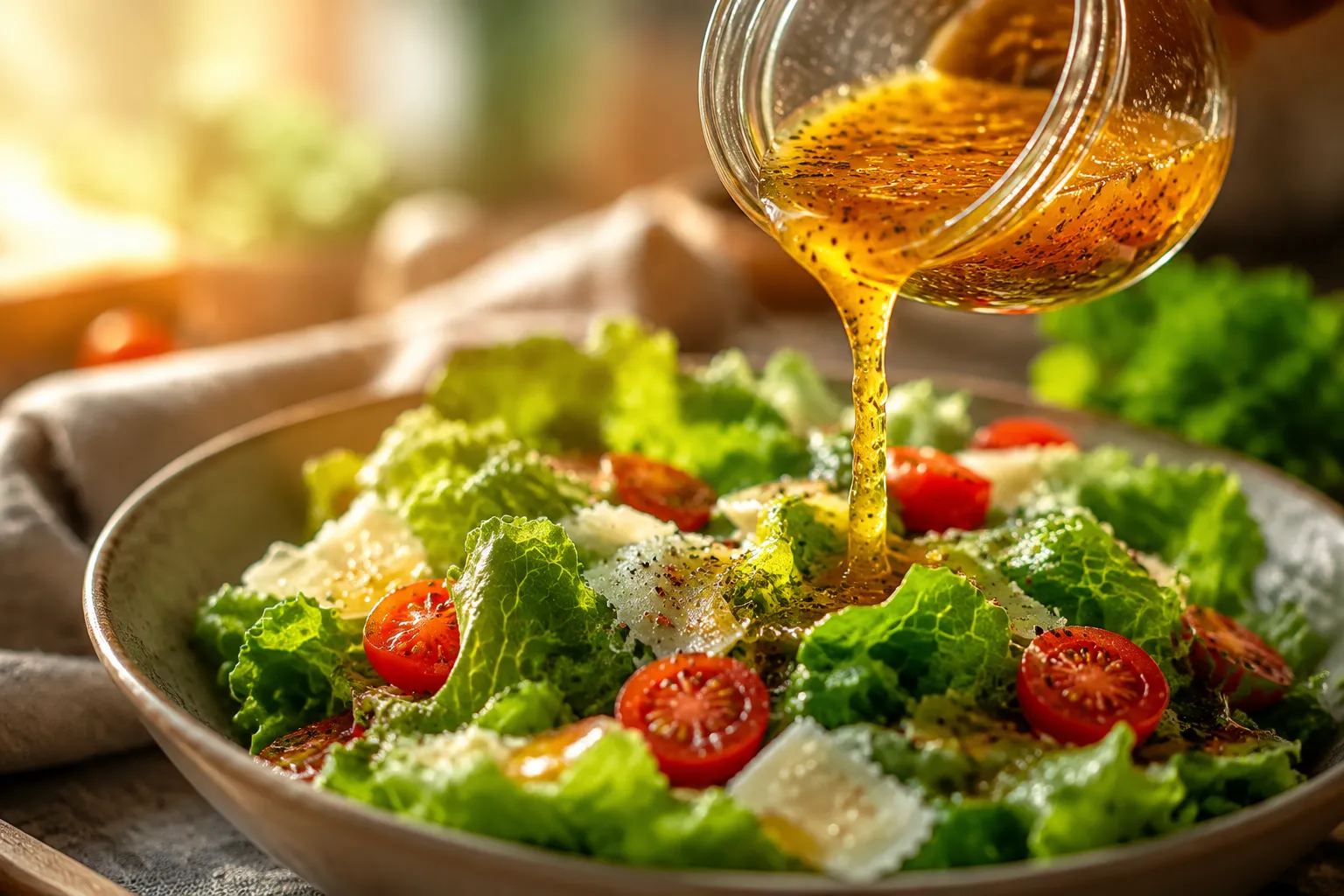
One bowl, one whisk, five minutes. This dressing recipe is the only formula you need, with a classic creamy version and a vegan swap that tastes just as rich.
A great dressing recipe is the difference between salad-as-obligation and salad-as-the-best-thing-on-the-table. This is the one I've been making on repeat for years — a five-minute, one-jar workhorse built on a forgiving ratio that adapts to whatever's in your fridge. Whisk it tonight, and watch it turn a sad bowl of greens into the dish everyone fights over.
What I love most is that this dressing recipe pivots two ways. Keep it classic with extra-virgin olive oil, bright lemon juice, and a spoonful of Dijon mustard for that creamy-when-emulsified vinaigrette feel. Or swap one ingredient and you've got a luxe vegan dressing that genuinely competes with anything dairy-based — no sad, watery imitation. Both versions store beautifully, both come together with a whisk and a bowl, and both will ruin store-bought bottles for you forever.
If you've ever stared at a half-empty bottle of ranch wondering why it doesn't taste like the diner version, the secret is almost always the same: balance. Fat, acid, salt, and a touch of sweet, all working in tune. Once you get the ratio in your bones, you'll be tweaking on instinct — swapping toward balsamic vinaigrette one night and a creamy ranch dressing from scratch the next.
The beauty of this approach is that everything lives in your pantry already. There's no specialty hunting, no obscure vinegars, no equipment beyond a bowl and a whisk. Here's what you'll be reaching for and why each piece earns its spot in any homemade salad dressing worth keeping in the fridge.
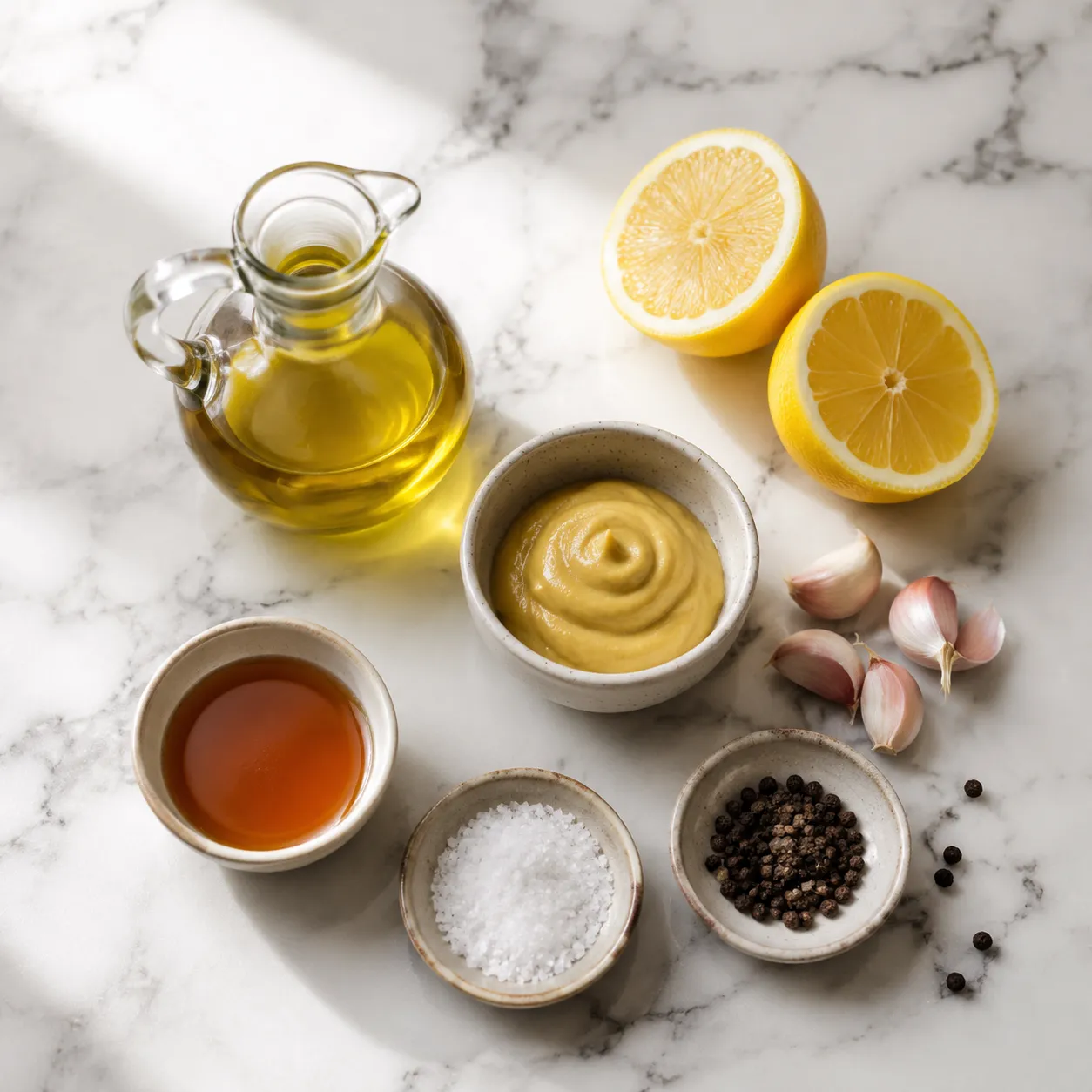
Extra-virgin olive oil is the body of the whole thing — choose one you'd happily sip from a spoon, because its flavor is going to lead. Lemon juice or apple cider vinegar brings the bright, sharp acid that wakes up every leaf it touches; lemon leans into lighter, summery versions, and apple cider vinegar feels heartier and more savory. Dijon mustard is the unsung hero — it adds bite, but more importantly, the lecithin in mustard helps emulsify the oil and acid into a glossy, unified sauce instead of an oily slick.
A tiny grated garlic clove delivers a sharp pop without the chunky raw-garlic sting (a microplane is your friend here). Maple syrup or honey rounds out the whole thing — just a teaspoon to a tablespoon, depending on how tart your acid is. Finally, kosher salt and freshly cracked pepper to taste. For the vegan version, you'll add a spoonful of tahini and, if you want a Caesar-style depth, a sprinkle of nutritional yeast. That's it. Seven core ingredients, infinite riffs.
There are exactly three moves to making a perfect dressing, and once you know them you can build any flavor on this same scaffolding. The trick isn't fancy technique — it's order of operations and a steady hand. Numbered steps live in the recipe card below, but here's the philosophy behind each one.
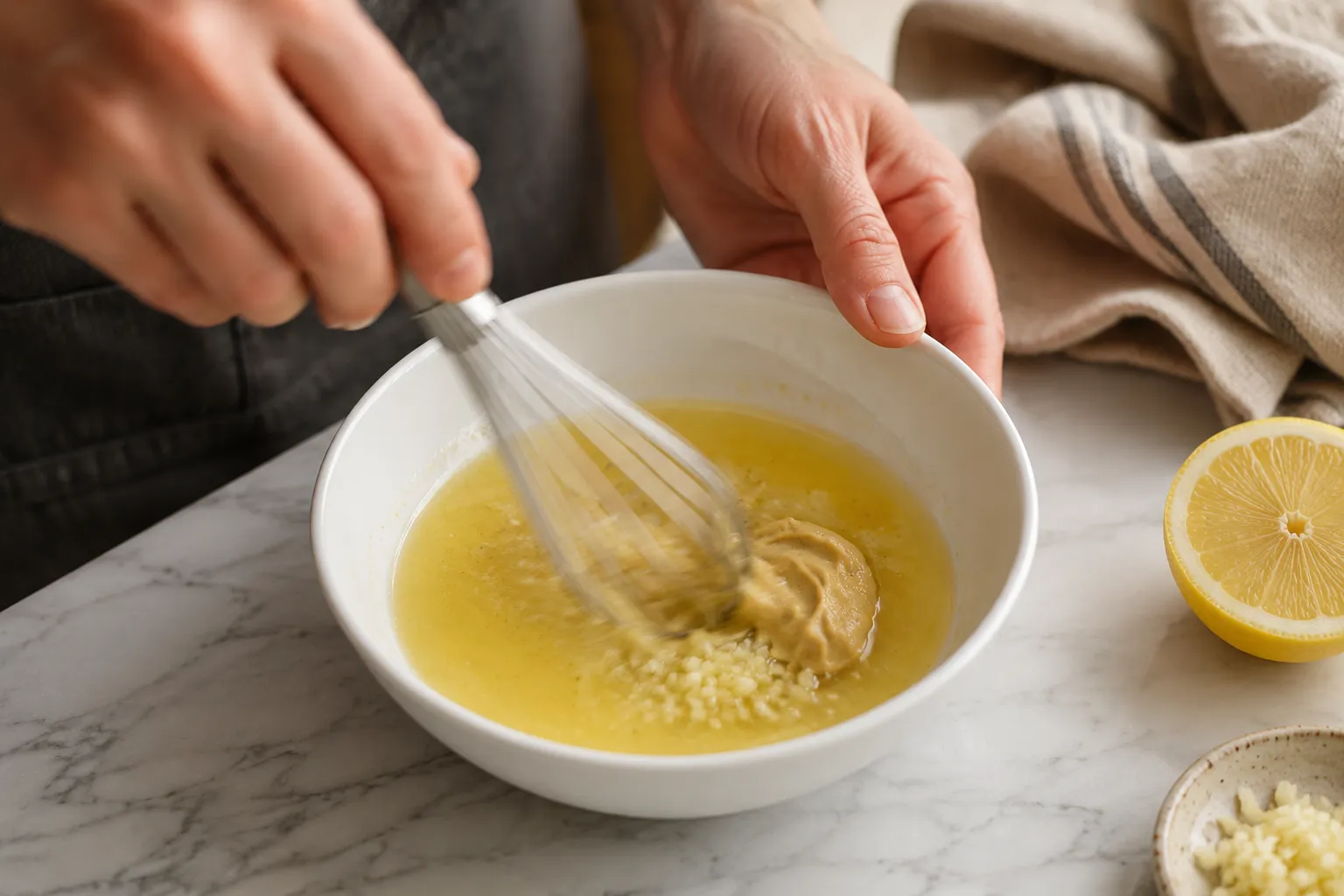
Start with the acid and the flavor builders. In a small bowl or wide-mouth jar, whisk your lemon juice or vinegar together with the Dijon, grated garlic, sweetener, salt, and pepper. Take ten extra seconds here to dissolve the salt and bloom the garlic into the acid — it makes a real difference in the finished flavor, and the Dijon goes from a tight paste to a smooth slurry that's ready to accept the oil.
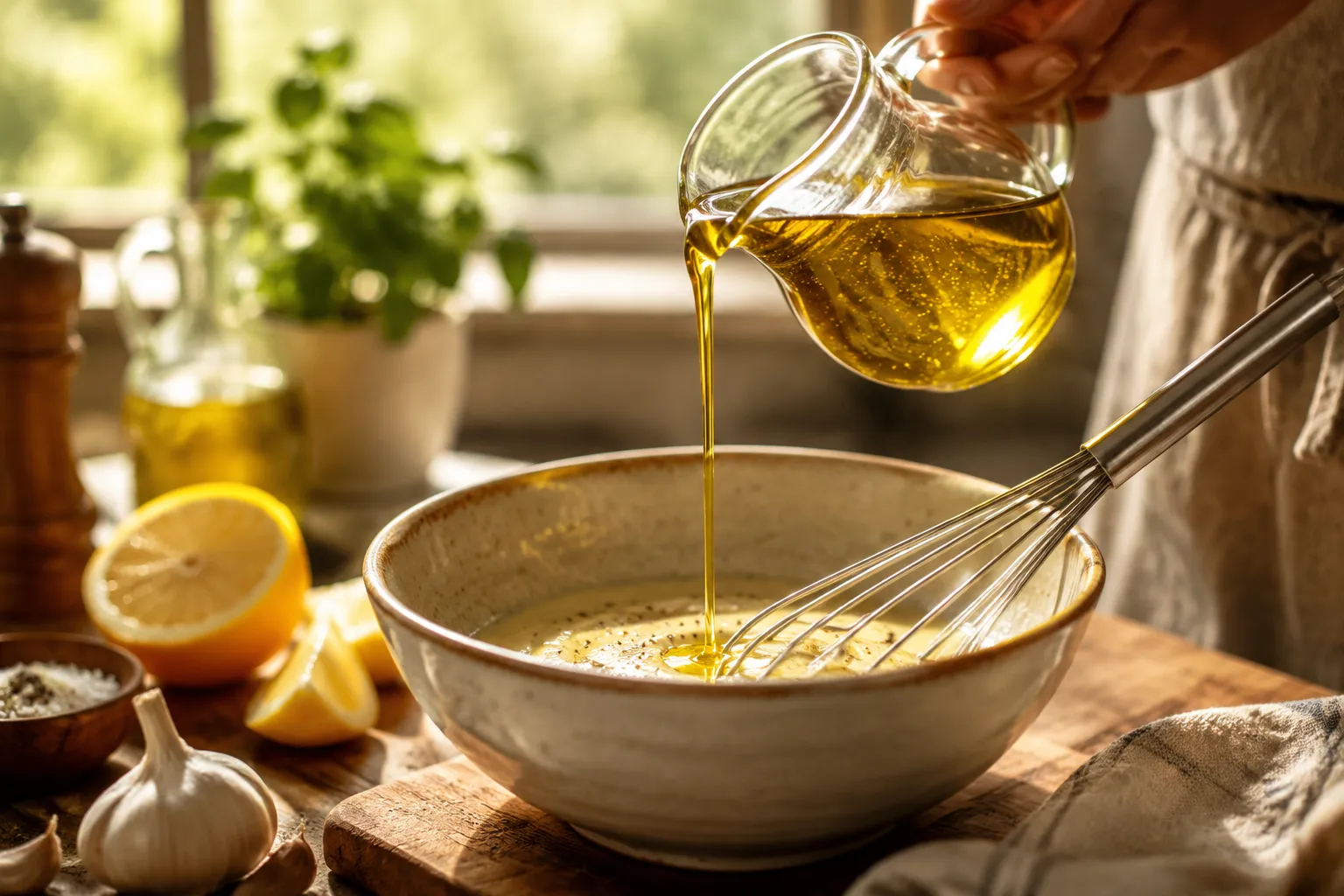
Stream in the olive oil slowly while whisking. This is where dressings live or die. If you dump the oil in all at once, it pools on top and refuses to combine. Pour in a thin, steady ribbon while whisking briskly, and within thirty seconds you'll see the mixture turn pale, glossy, and slightly thick — that's a real emulsion forming. (If you're using a jar, just add everything and shake hard for a full 20 seconds; the mustard does the heavy lifting.) For more on building stable emulsions that don't break overnight, our deep dive on olive oil emulsion tips is the rabbit hole worth falling into.
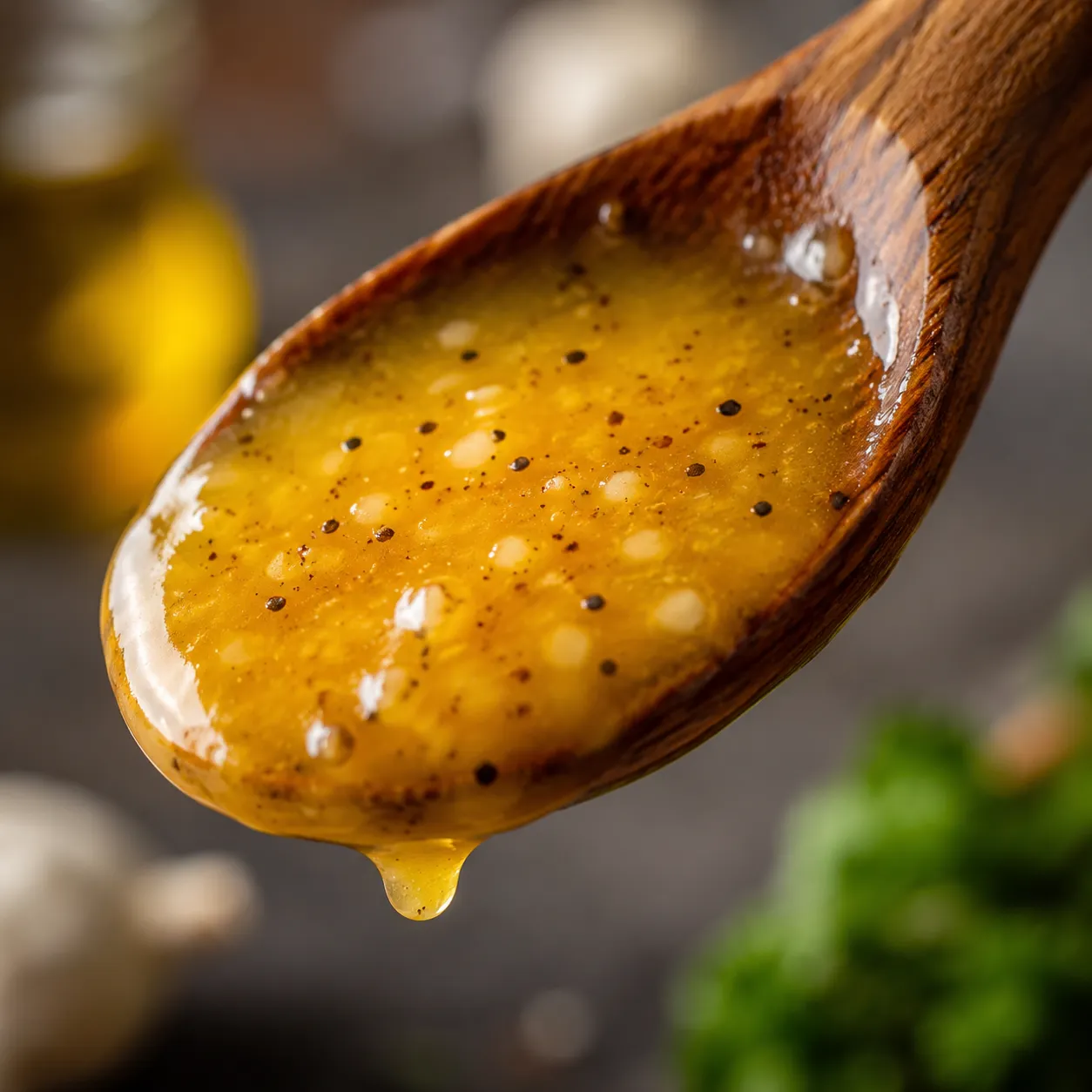
Taste, then taste again. This is the step everyone skips, and it's the single biggest upgrade you can make. Dip a leaf of whatever lettuce you're serving — not a spoon, since the leaf carries the dressing the way it actually will at the table — and see what's missing. Flat? More salt. Too sharp? A drizzle more oil or a pinch more sweetener. Muddy? A squeeze more lemon. The whole adjustment takes thirty seconds and turns "pretty good" into "I need to write this down."
Going dairy-free here is just as easy and, honestly, just as delicious. The classic version is technically vegan if you swap honey for maple syrup, but if you want a true creamy dressing — the kind that clings thick to kale and turns a grain bowl into dinner — you'll want to add body the dairy-free way.
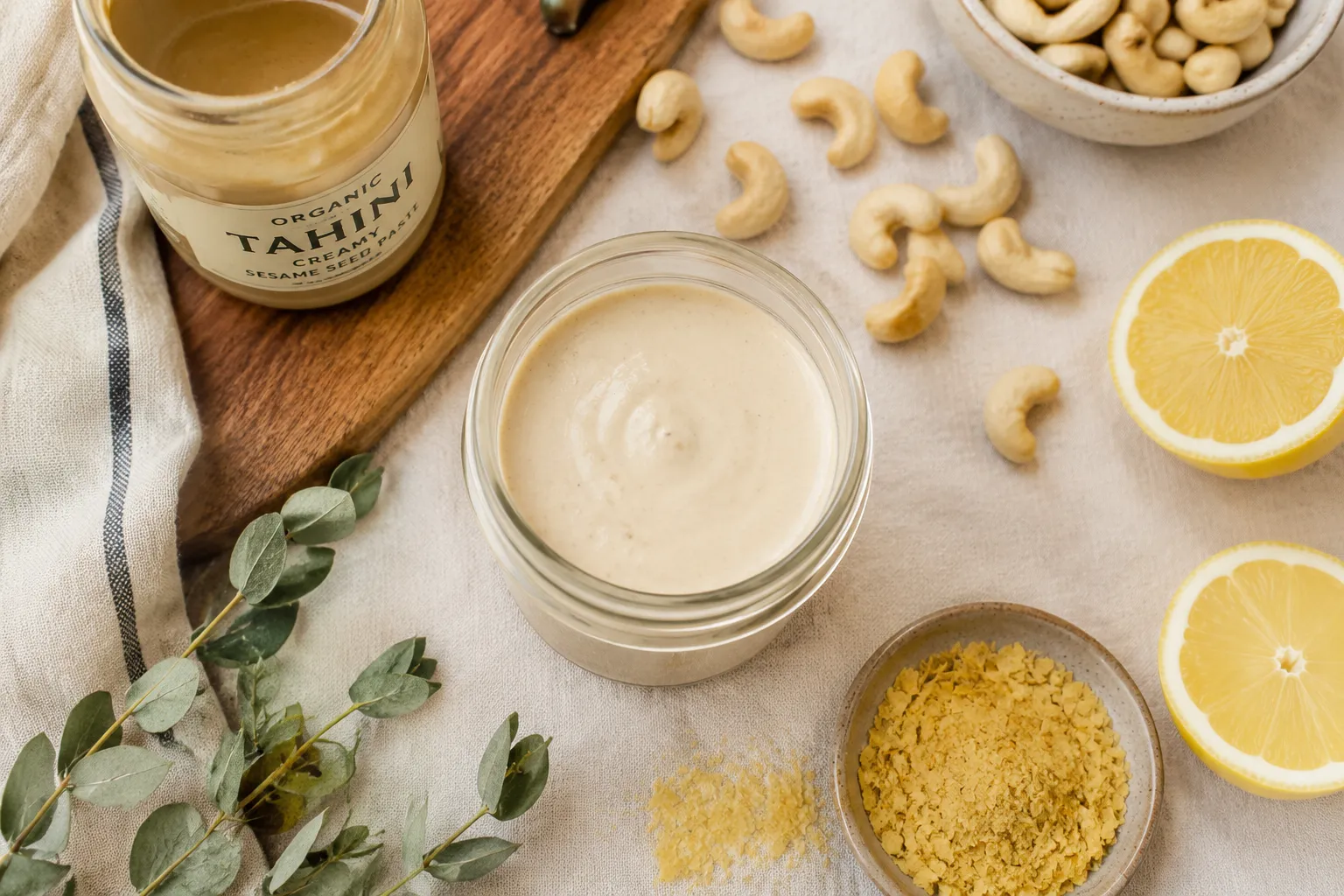
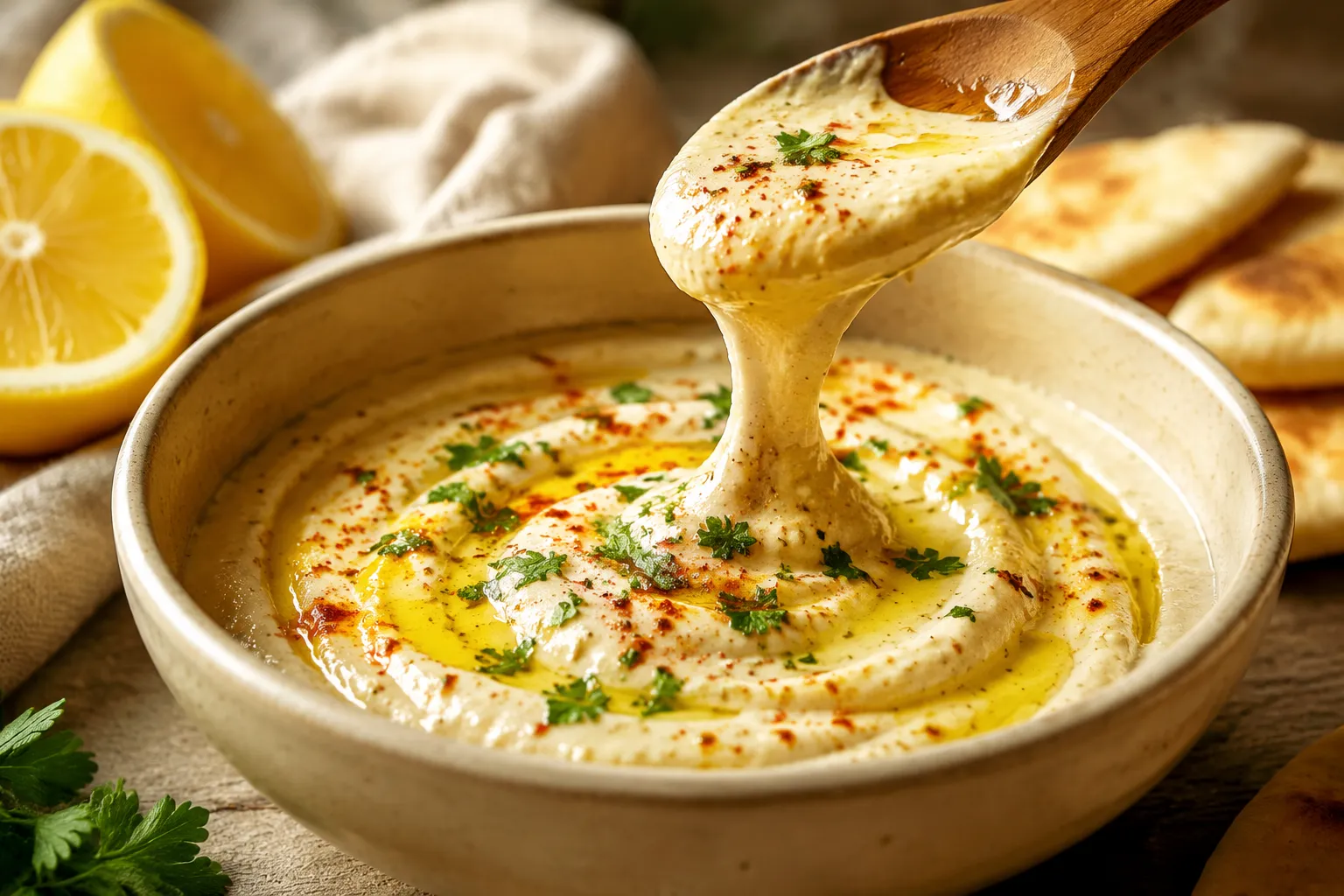
For an effortless tahini dressing, replace 2 tablespoons of the olive oil with 3 tablespoons of well-stirred tahini and add 2 to 3 tablespoons of water to thin. The sesame paste brings nutty depth and that velvety mouthfeel you'd otherwise get from yogurt or buttermilk. Stir in a tablespoon of nutritional yeast for the savory, almost-cheesy umami that makes a vegan caesar dressing taste like the real deal — bonus points if you mash in a teaspoon of capers or a dab of white miso for that anchovy-adjacent funk.
If you want it even creamier, soak 1/3 cup raw cashews in hot water for 15 minutes, drain, and blend everything together in a high-speed blender until silky. The cashew version is what I reach for when I'm dressing roasted vegetables or using it as a dip — it has that thick, spoon-coating richness that holds up to bold ingredients without thinning out. Either way, you end up with something you'd happily eat off a fork.
This is the part where you realize you didn't make "salad dressing" — you made a multi-purpose flavor weapon. Once this dressing recipe lives in your fridge door, you'll find yourself reaching for it three times a day.
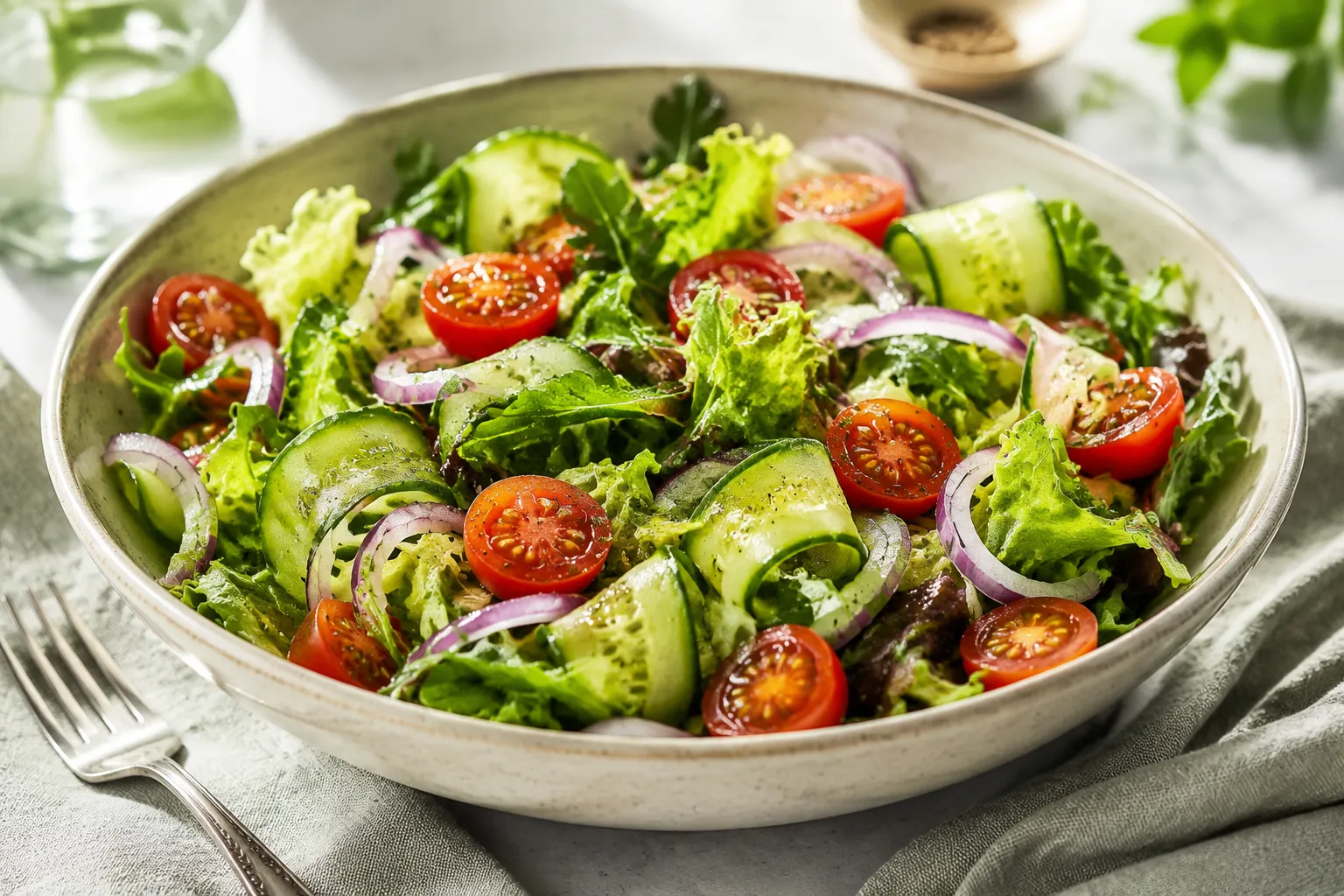
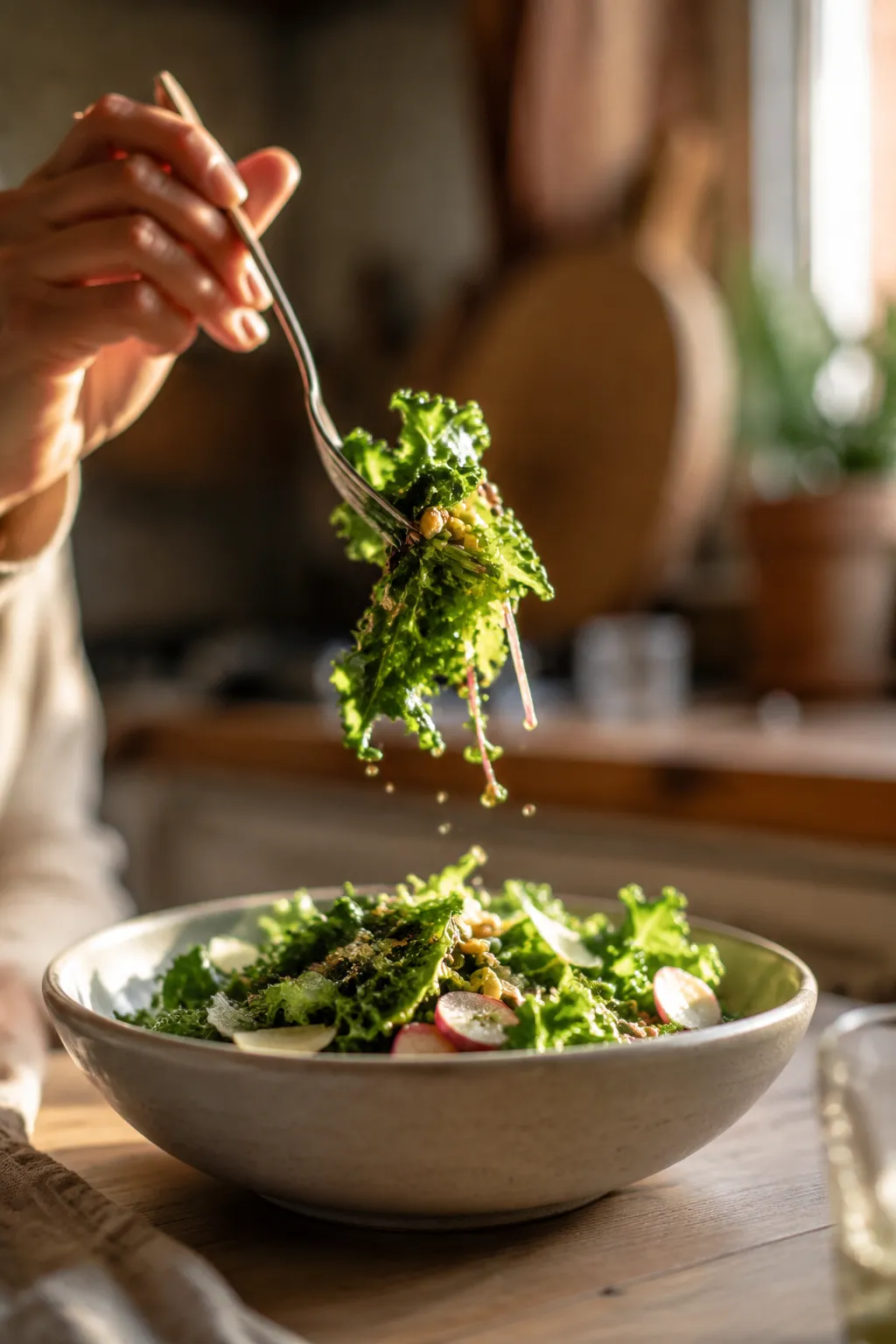
The obvious move is green salads — chopped romaine, baby greens, sturdy kale massaged for a minute first. But it shines just as bright on warm grain bowls with farro, quinoa, or brown rice; the residual heat blooms the garlic and brings out the olive oil's pepperiness. Roasted vegetables love a post-oven drizzle — try it on charred broccoli, sweet potatoes, or roasted cauliflower, where it acts more like a sauce than a dressing.
Spoon the creamy vegan version onto sandwiches and wraps in place of mayo, use it as a dip for raw veggies and pita, or thin it slightly and use it as a marinade for chicken, tofu, or shrimp. I keep a jar going next to a batch of garlic bread on weeknight pasta nights for impromptu dipping. It even works as the base for a quick pasta salad — just toss with cooked short pasta, cherry tomatoes, and herbs, then chill until dinner.
Once you've made it twice, you'll never go back. The whole point of mastering one base recipe is that "what should we eat" becomes a non-question — there's always a jar in the fridge, and there's always something to put it on.
A jar of this dressing is the kind of small kitchen habit that genuinely changes how you eat. It's faster than driving to the store for a bottle, cheaper than the artisanal stuff, and it tastes like something a chef made on purpose — because, with this formula in your back pocket, you basically did.
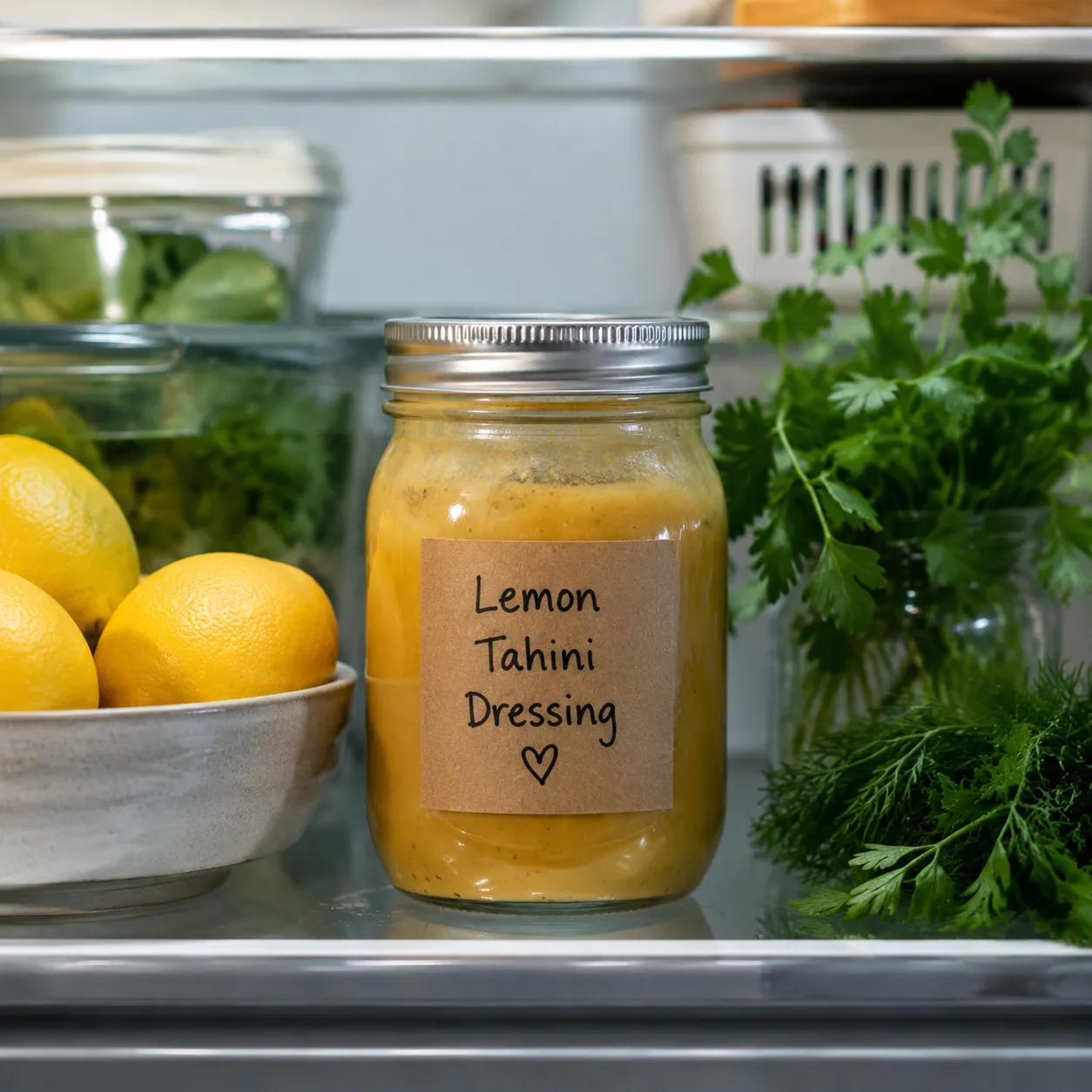
Make a batch this weekend, label the jar, and you'll have salads, bowls, and weeknight rescues sorted for the next week. Once this dressing recipe is in rotation, you'll start collecting your own variations — a green-herb version with parsley and chives, a spicy one with chili crisp, a creamy ranch dressing from scratch with buttermilk and dill. The ratio holds. The whisk obeys. The salads, finally, deliver.
This formula is a launchpad, not a destination. Once you've nailed the base ratio, swap acids, sweeteners, and aromatics to take it in any direction. Here are the riffs I rotate through most.
Store the classic version in a sealed glass jar in the refrigerator for up to 2 weeks. The olive oil may cloud or solidify slightly when chilled — that's totally normal. Pull the jar out 10 minutes before serving and give it a vigorous shake to re-emulsify and bring it back to a pourable consistency.
Creamy or dairy-based versions (with buttermilk, yogurt, or fresh herbs blended in) are best within 5 to 7 days. The vegan tahini and cashew variations also keep about a week, though they tend to thicken in the fridge — just whisk in a teaspoon of warm water at a time to loosen before serving. Freezing isn't recommended for any version: oil-based dressings break when thawed, and creamy ones go grainy.